Tag Archives: Red Baron

Aviodrome, the Aviation museum of The Netherlands

A couple of months ago we visited for a second time the Luchtvaart Museum Aviodrome, the Aviation museum of The Netherlands, located in Lelystadt, a village on reclaimed land of the former Zuiderzee. The village was founded in 1967 and named after Cornelis Lely, the civil engineer behind the Afsluitdijk dyke. Shortly after, the construction of a local airport started and the first flights took place in 1971, in which today is the biggest general aviation airport in The Netherlands.
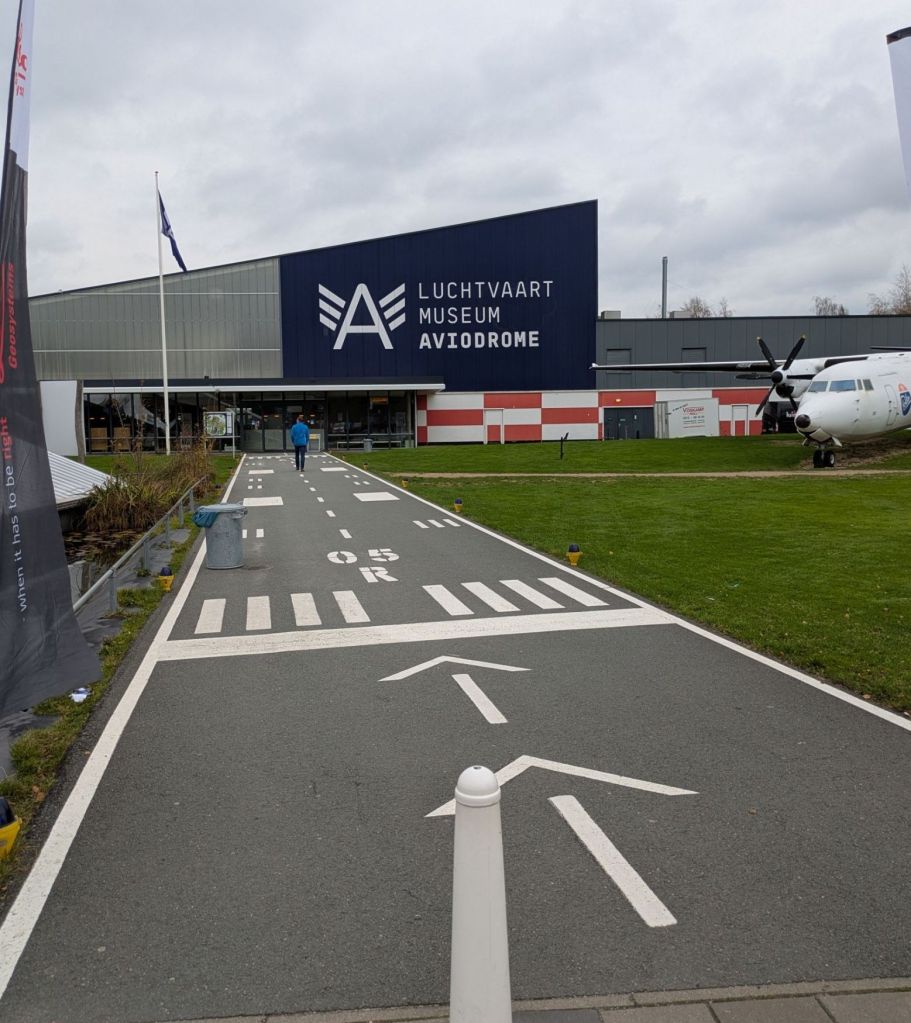
The museum is organized around 4 sections: the main indoor exhibition with a chronological tour through aviation history with a particular focus on Dutch contributions, the outdoors exhibition with a former KLM Boeing 747 open for visits as the main attraction, a hangar with some old aircraft with a Douglas DC-2 as main attraction and a replica of how Schiphol airport looked like in 1928.

Indoor exhibition

The main exhibition starts with the dawn of aviation from Da Vinci, to Montgolfier, to the Wright brothers, including some replicas and plenty of interactive games for kids to play with and understand some basics of aerodynamic, flight control, etc. Then the focus of the museum is on the Dutch side of aviation with the main characters of Anthony Fokker (aircraft designer), Frederick (Frits) Koolhoven (an automobile engineer turned aircraft designer) and KLM Royal Dutch Airlines with a focus on its first president Albert Plesman (who remained its CEO for 35 years until his death).

Some of the aircraft in the collection that I liked the most were the ones below:
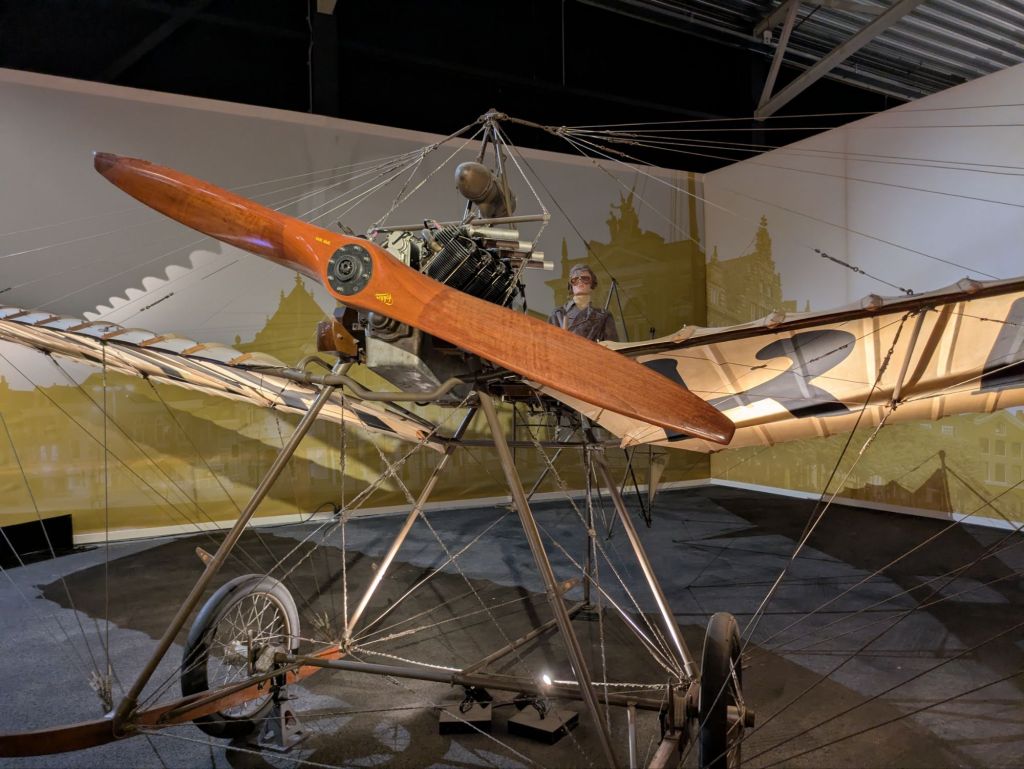
Fokker Spin: Fokker’s first airplane.
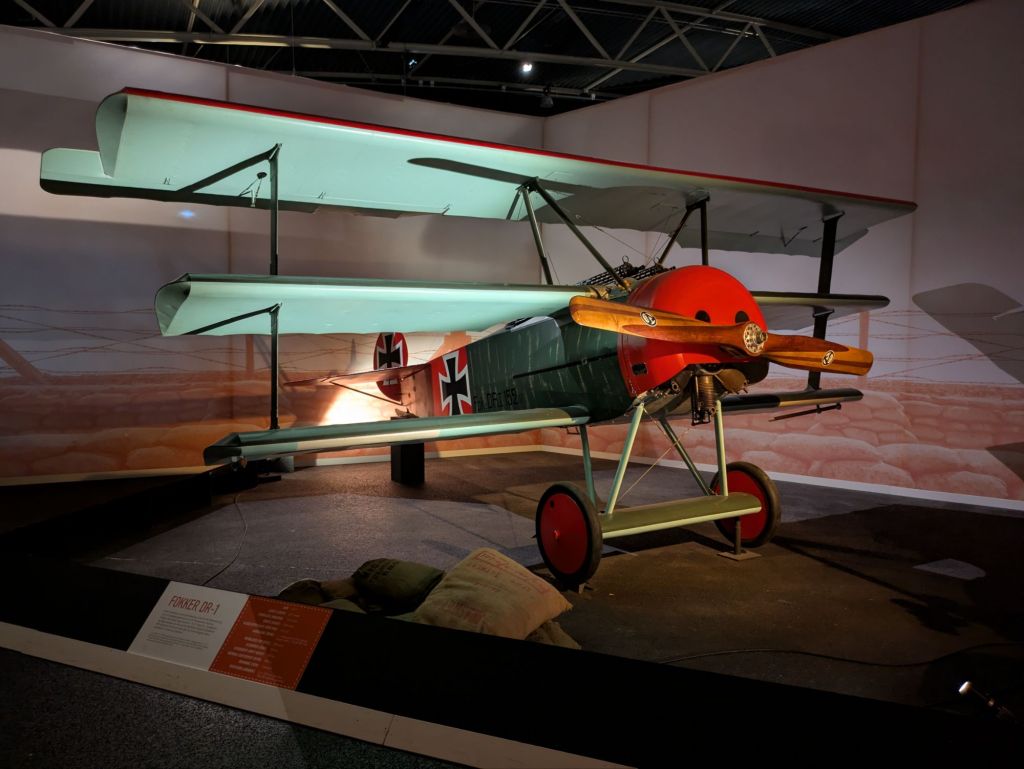
Fokker Dr.1: the famous triplane. The one flown by Manfred von Richthofen, the “Red Baron“, who created the aura with the nickname and red coloured plane to intimidate opponents in the air, who would immediately know they had such an effective ace on their tail!
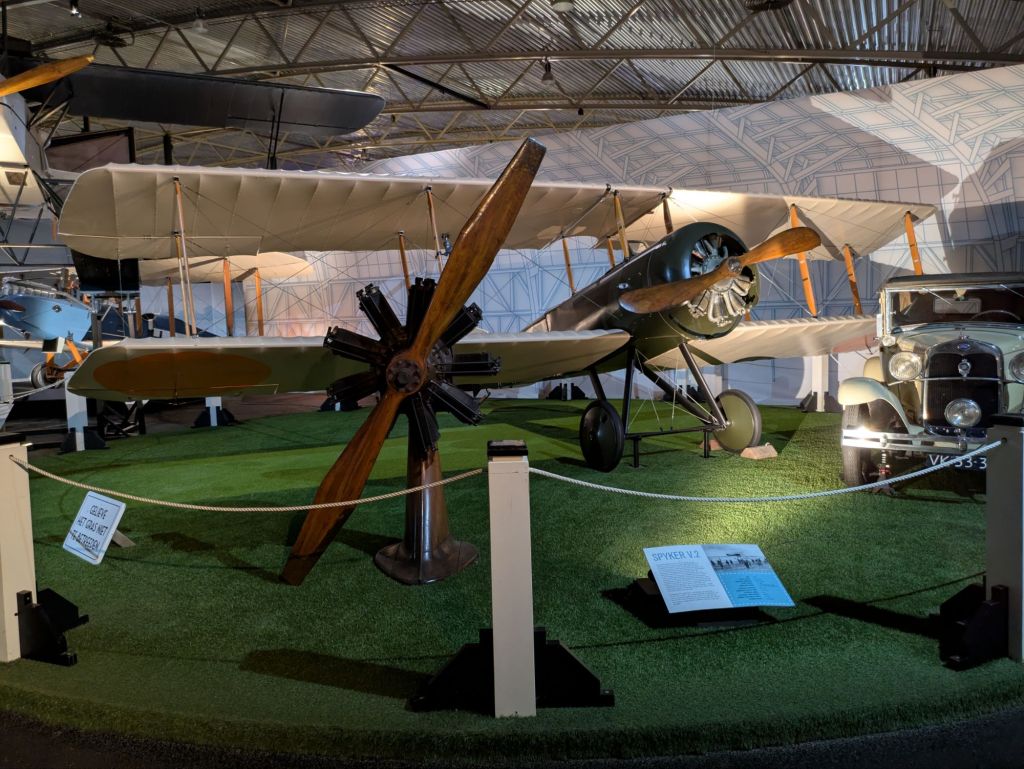
Spyker V.2: the first aircraft designed in the Netherlands to be produced in series.
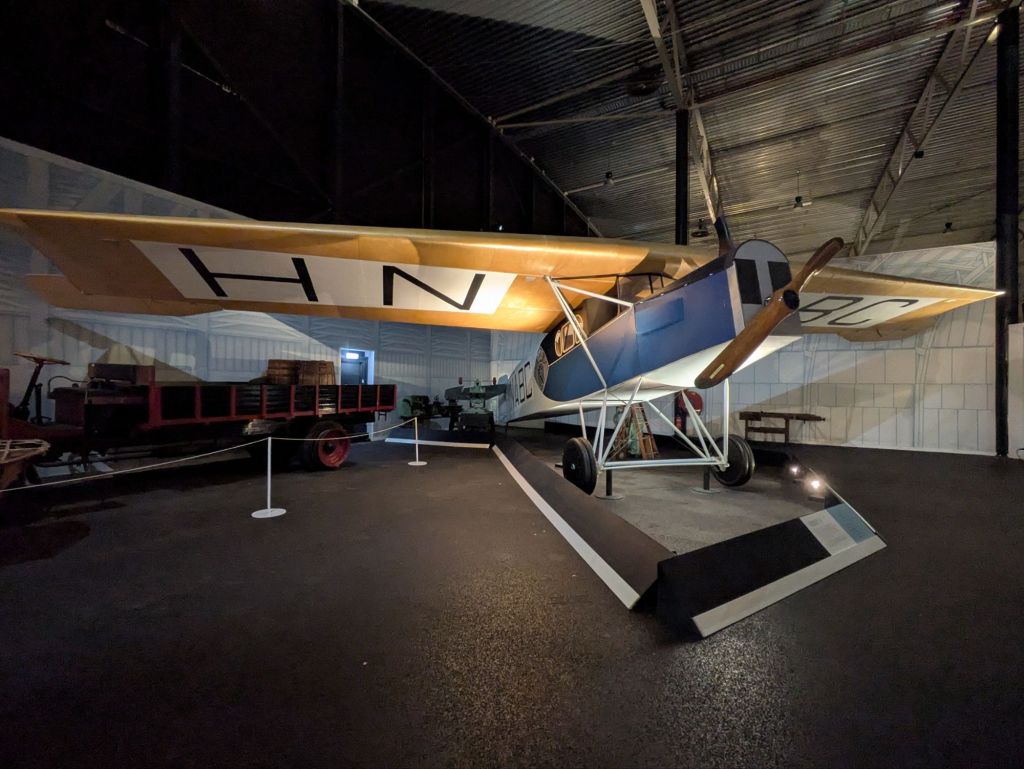
Fokker F.II: the first aircraft acquired by KLM with which KLM connected The Netherlands with England; also the first passenger airplane with a closed cabin.
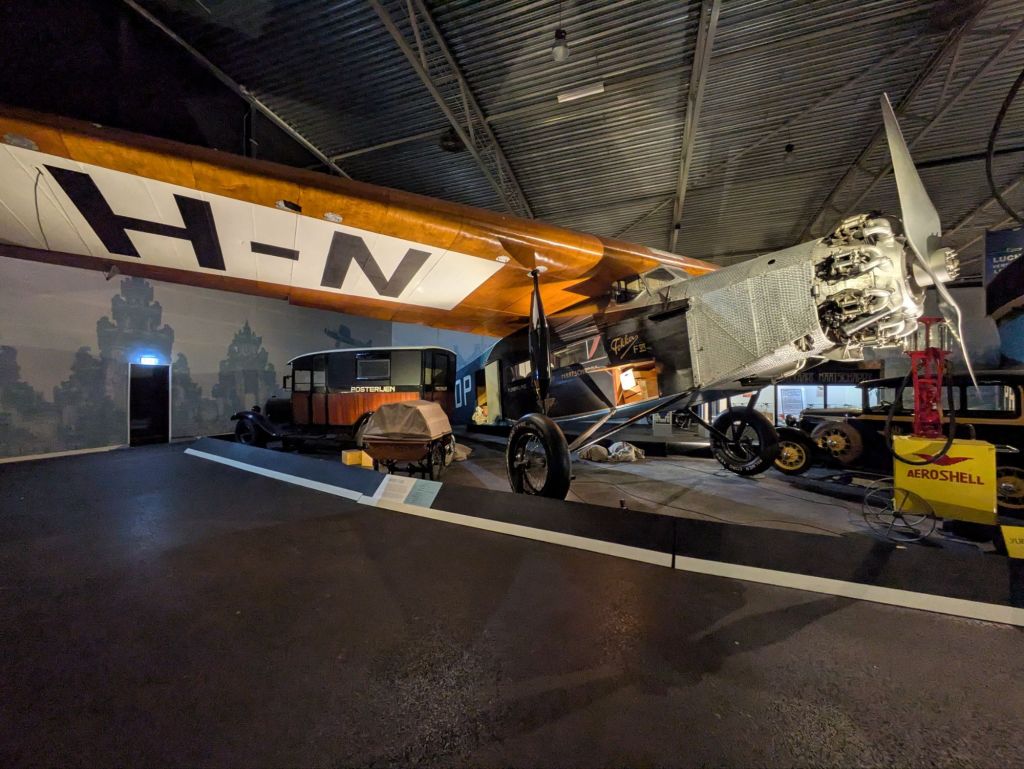
Fokker F.VII: which flew for the first time between The Netherlands and the Dutch East Indies, in 1924.
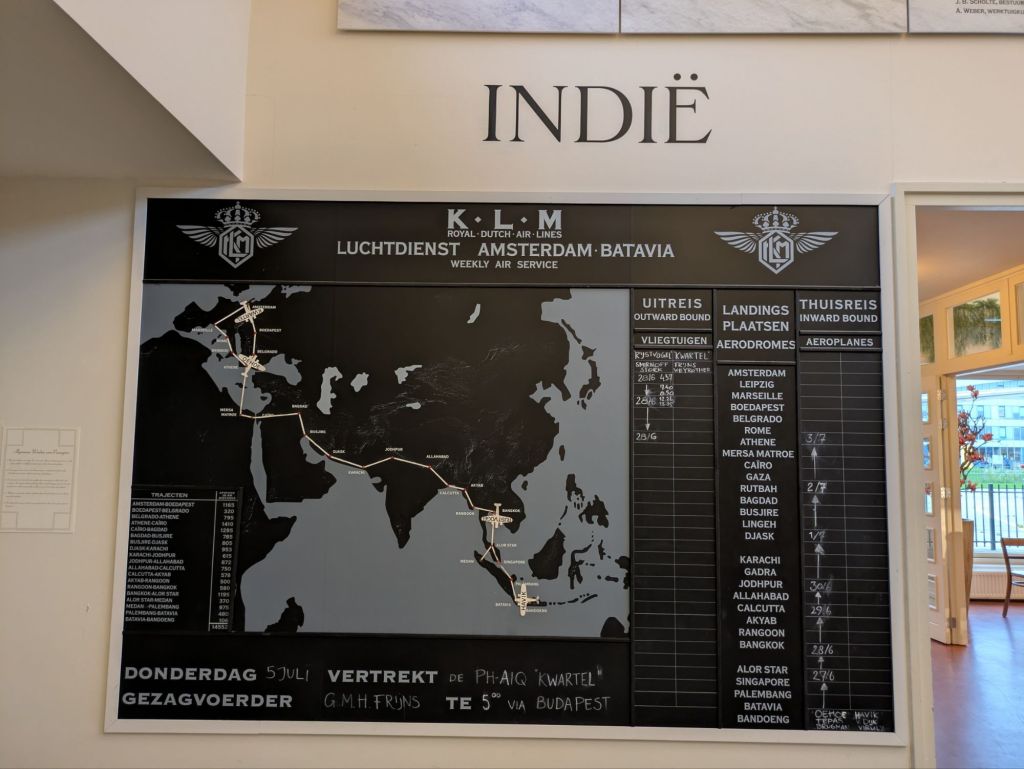
Route from Amsterdam to Batavia (1933).
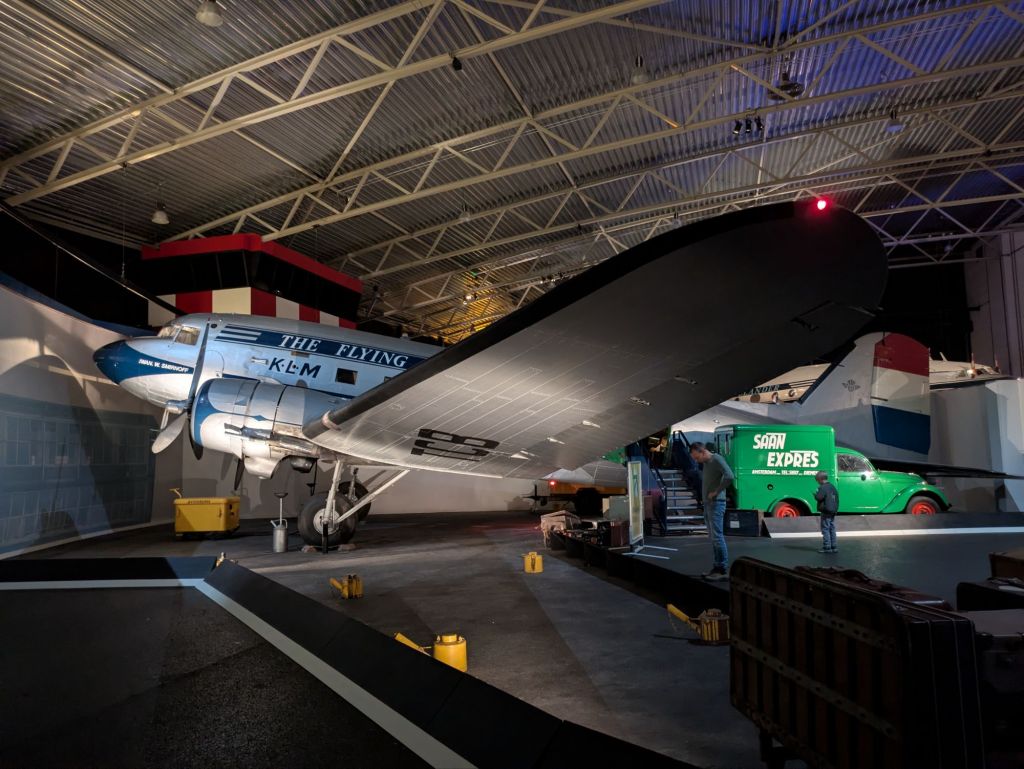
Douglas DC-3: which KLM flew before WWII and until 1973.
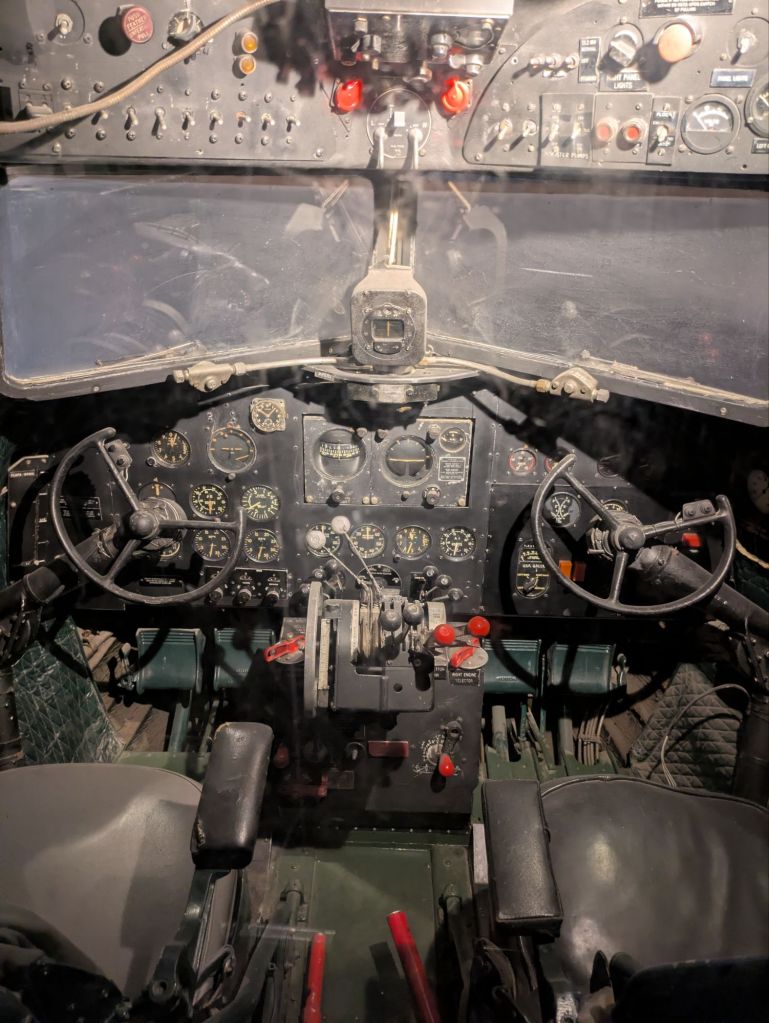
Douglas DC-3 fight deck.
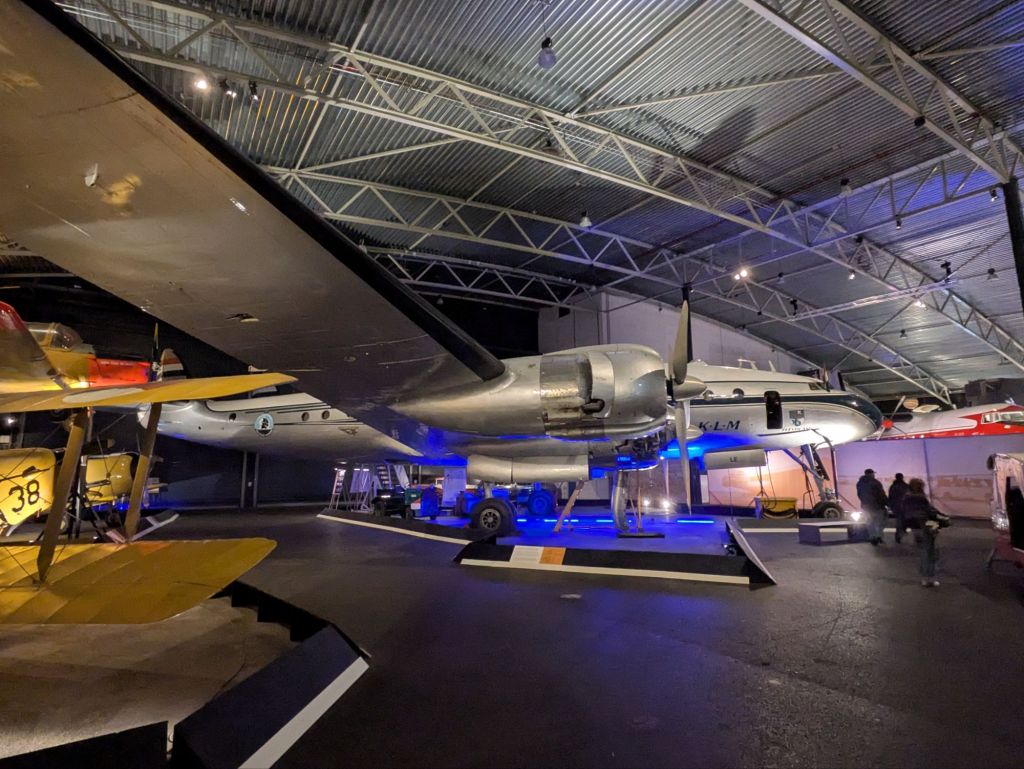
Lockheed L-749 Constellation.
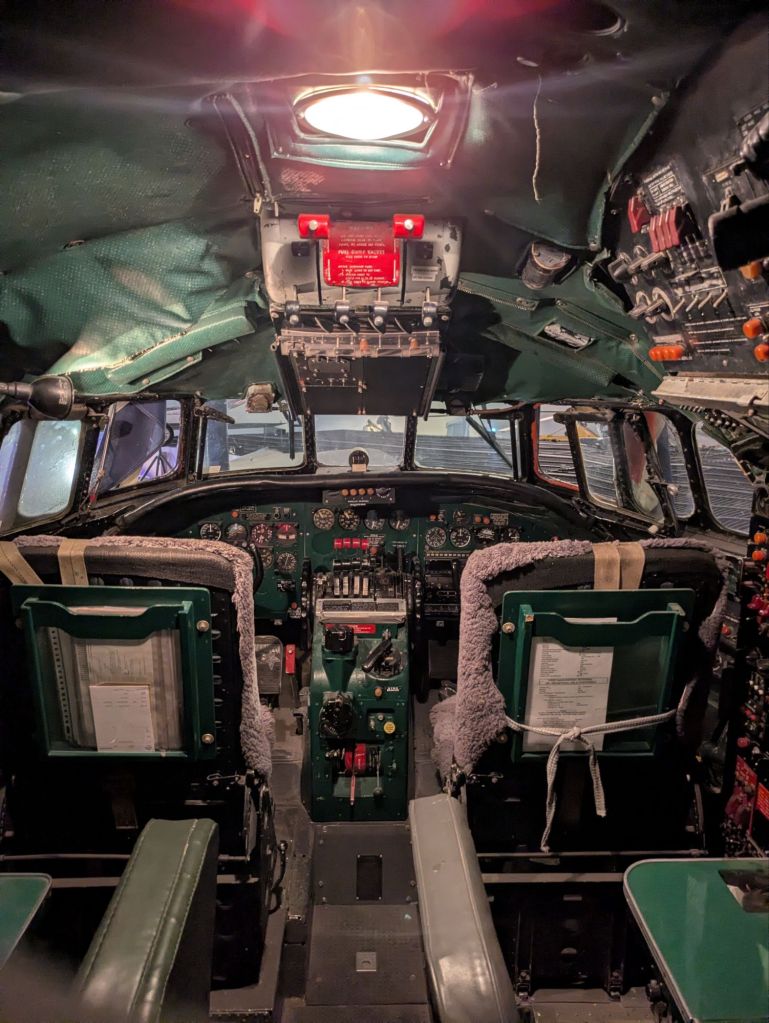
Lockheed L-749 Constellation flight deck.

Outdoors exhibition (747)

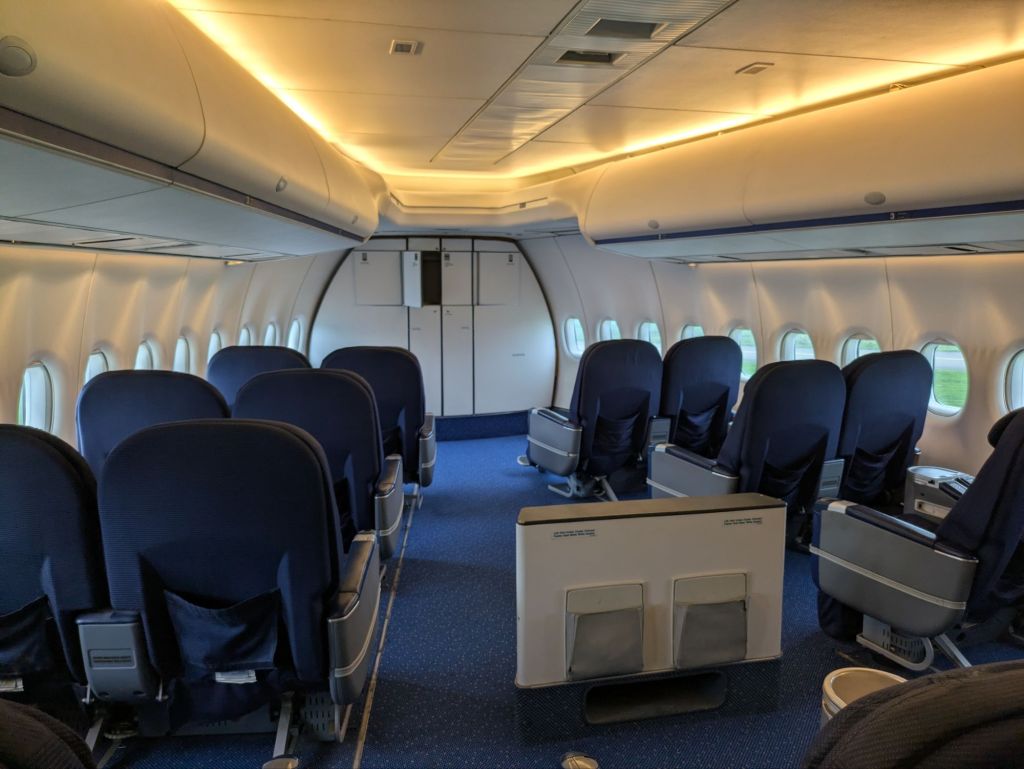
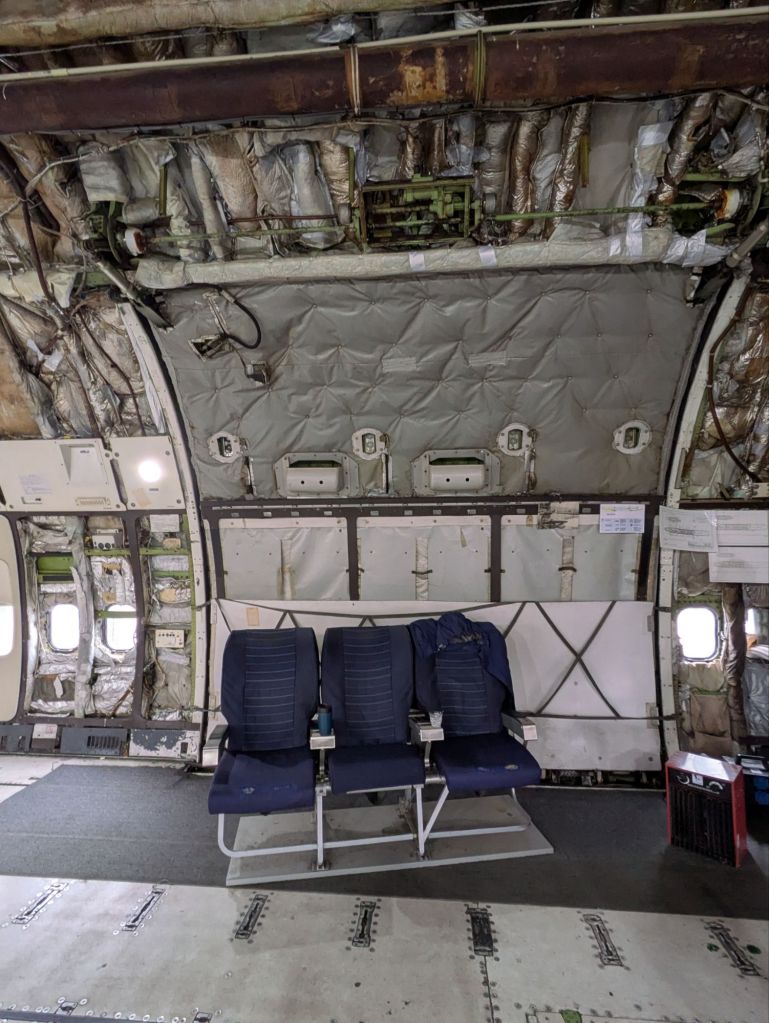
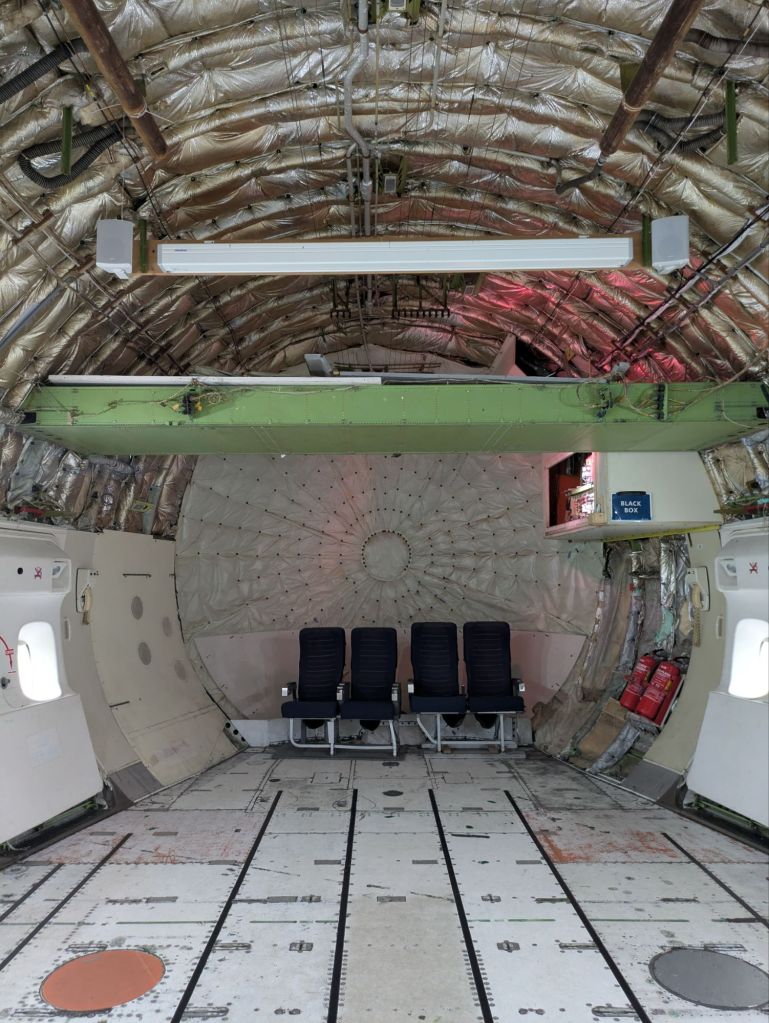
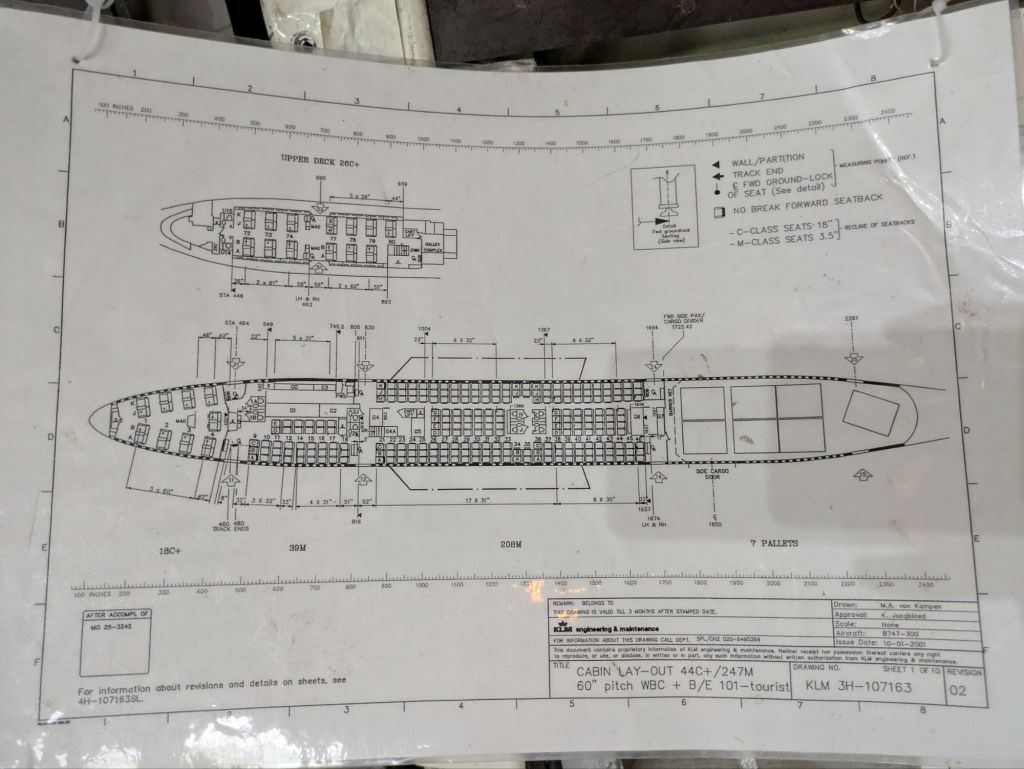
In the outdoors exhibition there are a few aircraft like a Fokker 100, a DC-4, an Antonov An-2, but the star is a former KLM Boeing 747 in combi configuration, where visitors can walk through the cargo deck, the economy and business classes and take a look into the flight deck. I leave some pictures below.
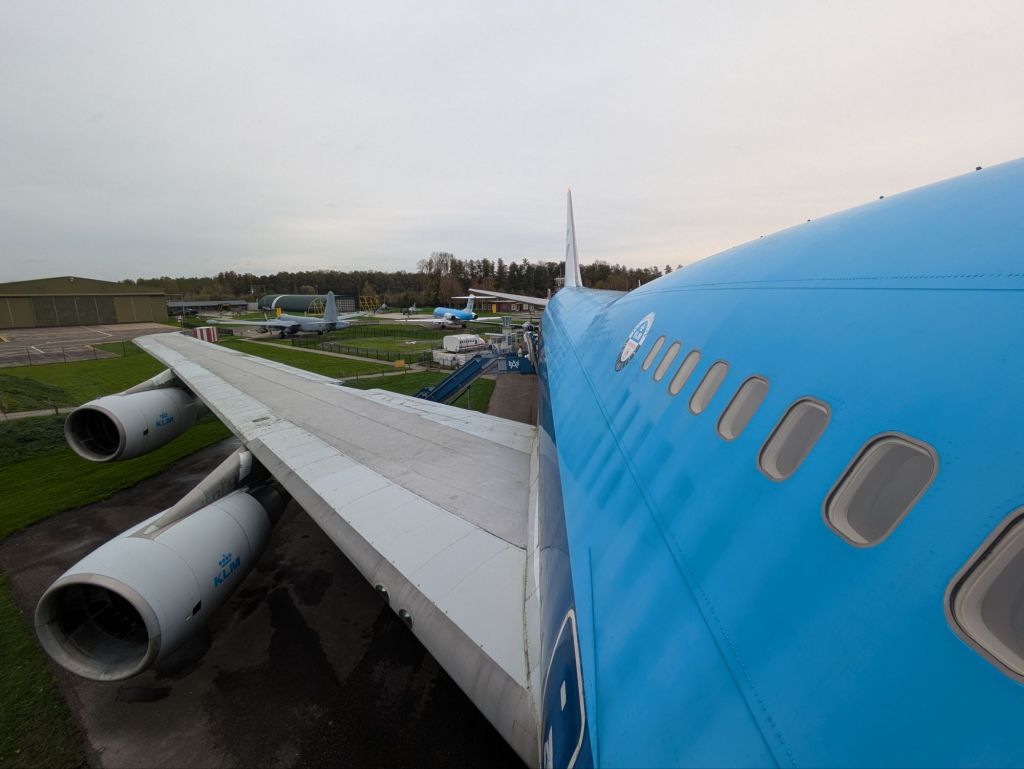
Boeing 747 from the upper deck.
747 flight deck.
747 business class cabin on the main deck.
Cargo door in the rear fuselage.
Rear pressure bulkhead.
747 combi layout.
Antonov An-2.
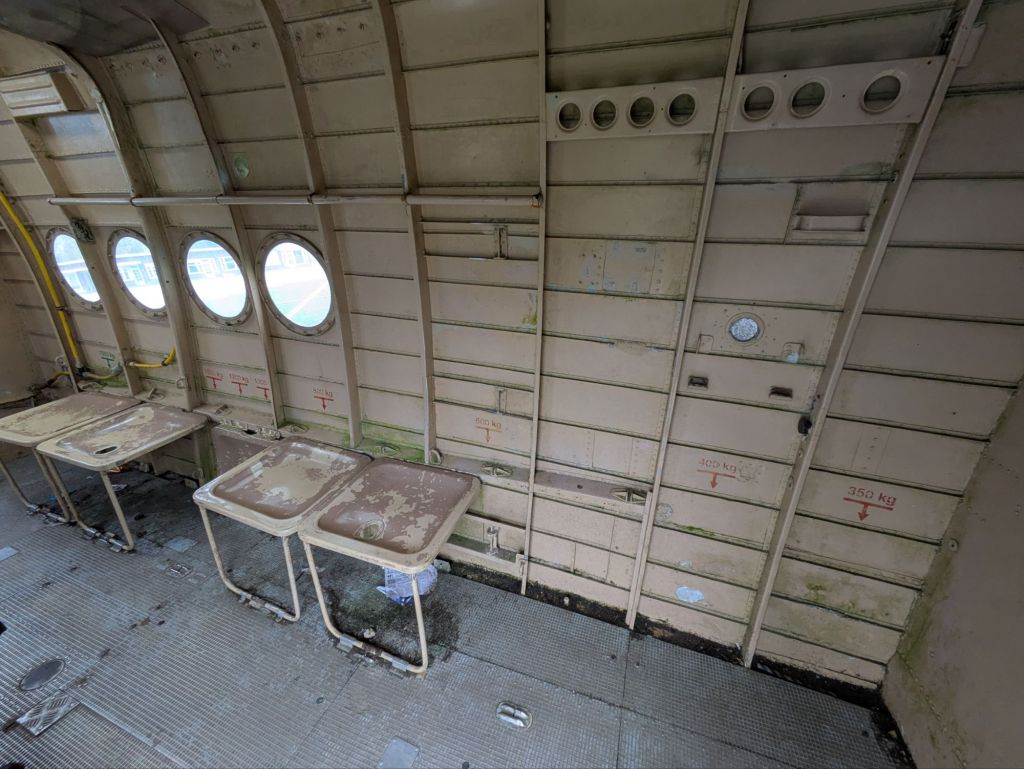
Running loads written on the An-2 inner fuselage.

Hangar (DC-2)

The main item in the hangar is the DC-2 called “Uiver” that won the handicap competition of the MacRobertson Air Race (to commemorate Melbourne centenary celebrations) flying from London to Melbourne in 1934 (and came second in speed) covering 19,877km in 90 hours and 17 minutes. (The one in the exhibition is not the original Uiver as it crashed years after the race in operation; but another DC-2 restored and painted in the same colors)
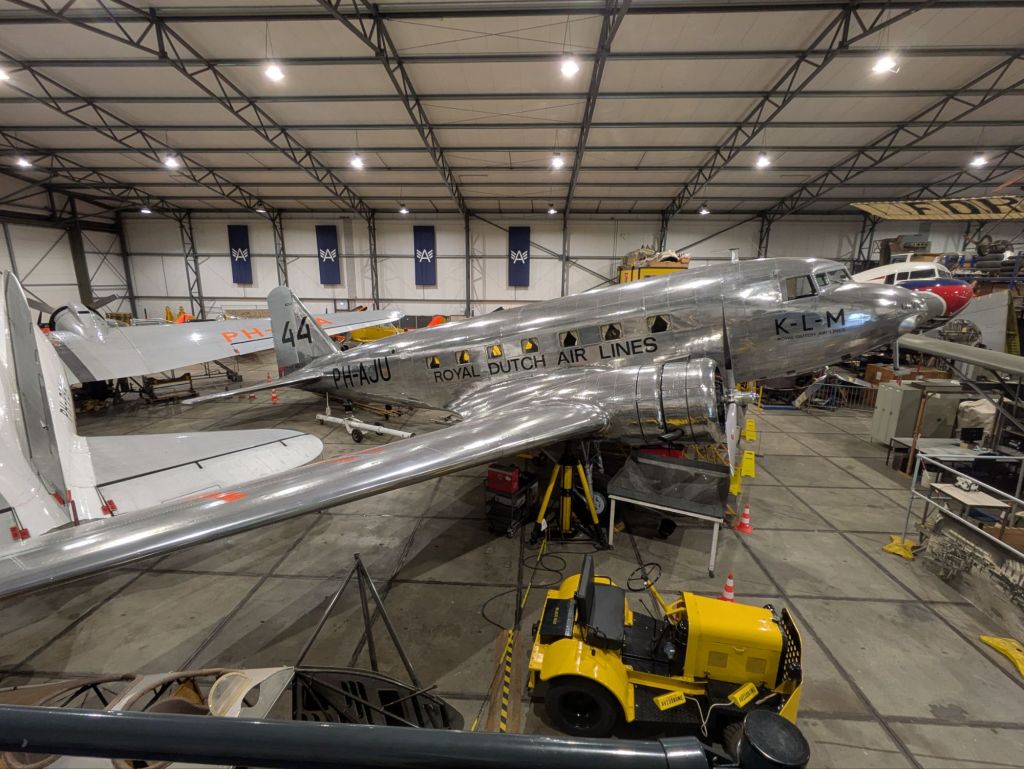
DC-2 Uiver

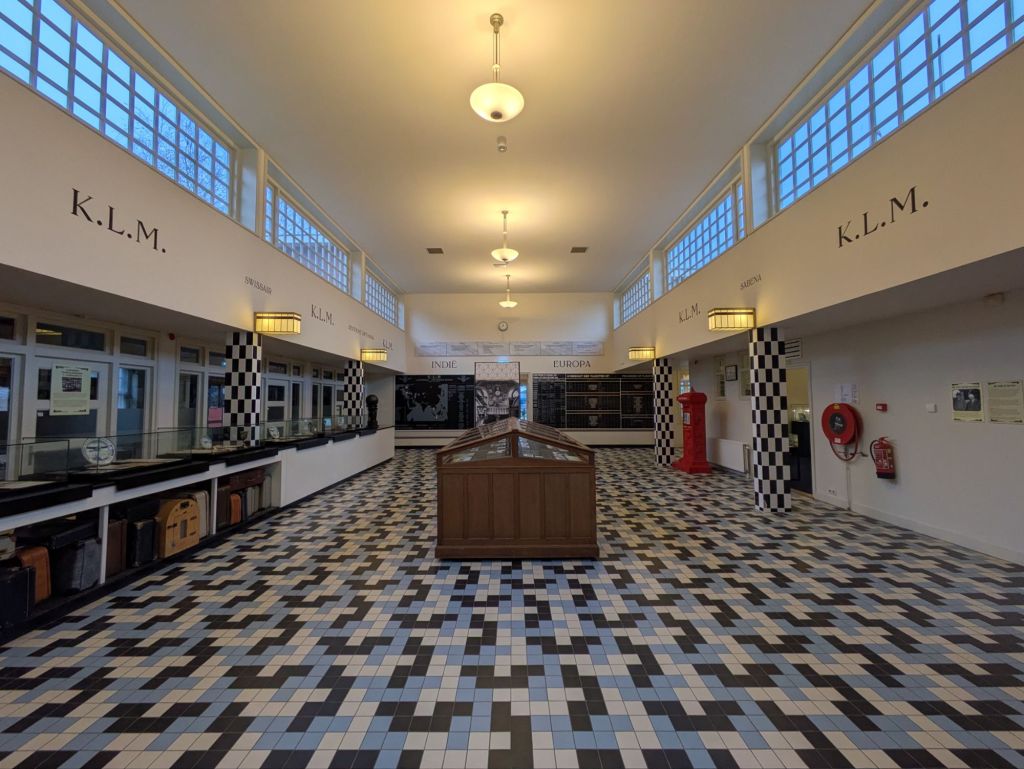
Schiphol airport 1928 replica

I leave some pictures below of what was the hall with the counters of the different airlines, a schedule of KLM route to Batavia and some posters with references to the legendary ghost ship The Flying Dutchman.
The museum is great. For the international visitor it misses some panels’ translations. But you can easily follow most of it and spend as many hours as you please.

1 Comment

Filed under Aerospace & Defence

WWI aces: Fonck and Baron von Richthofen

In an old post about French aviation pioneers I had already written about René Fonck. He was the top French (and allied) ace during WWI, second only to the Red Baron, Manfred von Richthofen. In a previous post I wrote about the Musée de l’Air et de l’Espace, in Le Bourget. In that museum you may find a section dedicated to WWI aces.

There is an article in the Wikipedia about WWI aces. Figures with the top 2 aces match: 80 for the Red Baron and 75 for Fonck, not so for the 3rd, as in the museum Mannock is credited with 73 and in the Wikipedia is only credited with 61, even if the claim of 73 is referenced.

I wanted to write this article for a couple of reasons:

  1. Despite of the fact that aviation has just over a century of history, I find that there are lots of controversies as to the history of aviation, while it should ideally be rather easy to get the facts right with the information technologies at our disposal nowadays and possibly having the records of the different happenings still in existence. We are not talking about archaeology here.
  2. At this respect, museums play an important role in trying to get history right. In relation to the aces and the official figures about the 2 top aces, the museum in Le Bourget seems to get them right. The 3rd ace seems not to be so correct, but this does not bother me. What bothers me is the reference attached to Fonck’s victories tally in the panel at the museum, which claims that counting not officially recognised victories the tally could reach 127 (from 75 official ones). The museum then fails to mention that von Richthofen also has a number of claimed victories unaccounted for.

What is the role of the museum here? Trying to educate and teach about aviation, convey some history facts or rather play a game in such a way that a French ace seems to be on top no matter what?

I would expect more fact-based independent treatment of information on the part of museums and historians.

1 Comment

Filed under Aerospace & Defence