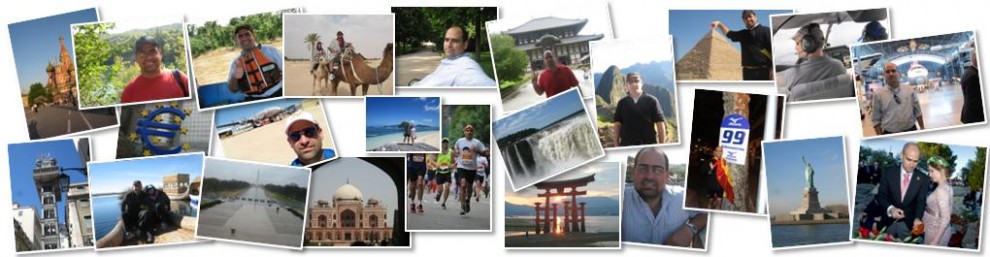
Time to look back and reflect on how the year which is about to end developed. Brief recap of my 2025. (*)
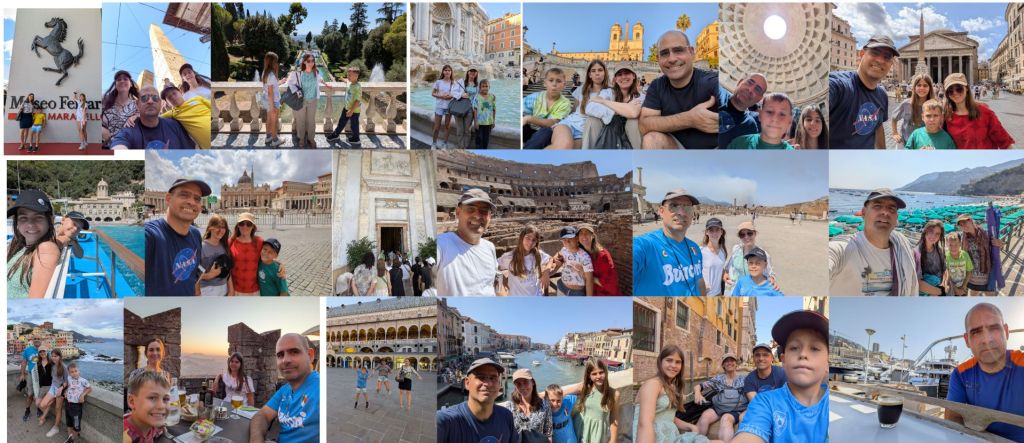
The main experience that we enjoyed together in this 2025 was the road trip we did to Italy during the summer holidays. We spent three weeks driving along the Cote d’Azur, Modena, Bologna, Roma, Orvieto, Assissi, Napoli, Pompei, Sorrento, Aquila, Attri, Loreto, Urbino, San Marino, Ravenna, Venezia, Padova, Verona, Milano… It was a trip full of museums, churches, cathedrals and basilicas (the 2025 jubilee in the Catholic Church and the Jubilee of Youth during our visit brought many young people with their chants and dances, it also enabled us to learn many things), beautiful landscapes, architecture, Roman ruins, bathing in different beaches (including an excursion and sleeping at a boat in the Port Hercule of Monaco), delicious food, lots of sun, a bit of running, and having fun with the kids.
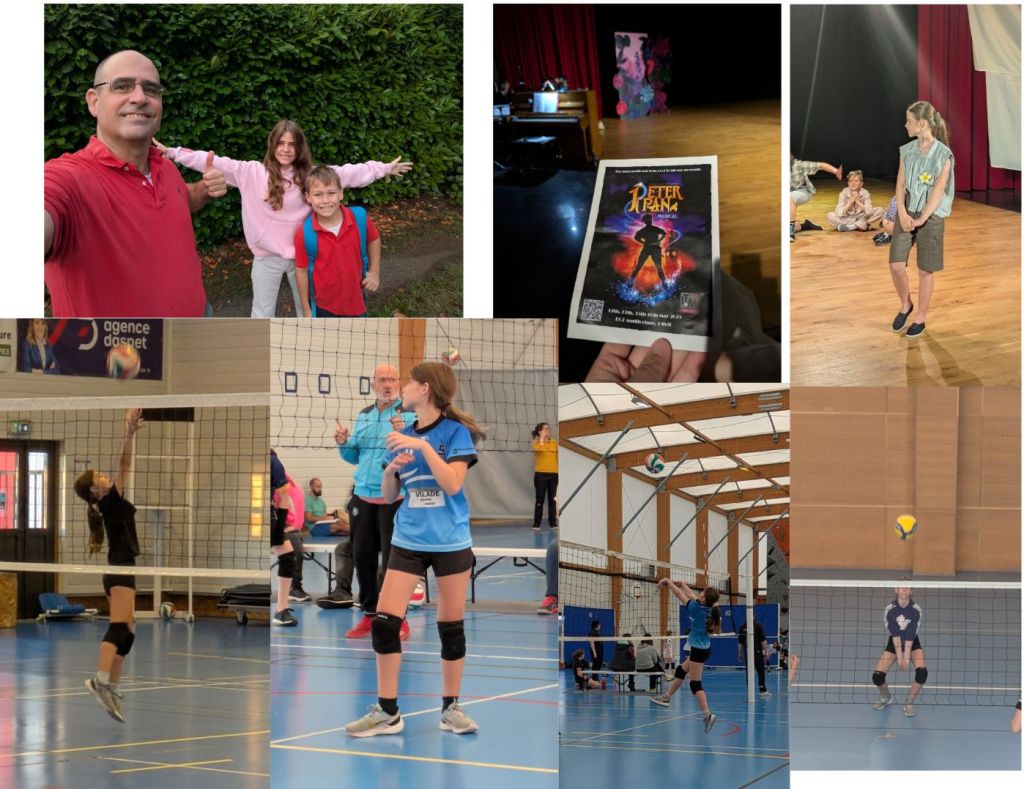
Family. Andrea is now 12 years old and David, 9.
Andrea did very well in grade 6 and has also started grade 7 well, with very good marks. She especially enjoys Science, Maths and researching for her History assignments. She continues to take Spanish lessons, to play piano and volleyball in the village team. A highlight of her school year was the musical they put together in the school, Peter Pan.
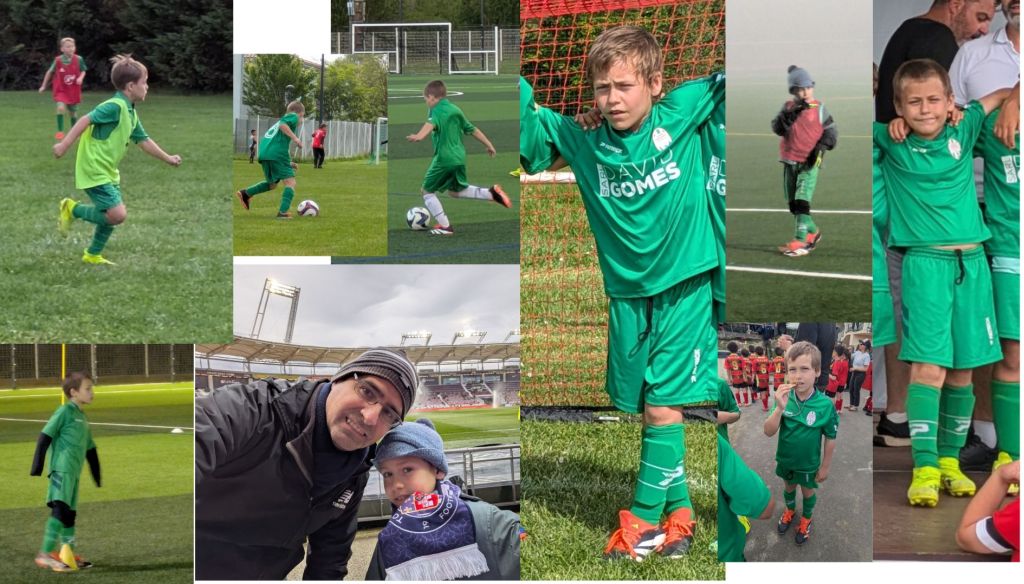
David now loves most of all football, playing it in the school, with the village team or in video games. He is also a very good student in his grade 4, where he enjoys Math and French. He is very helpful at home and he is now in his third year of Spanish lessons. They both spent several weeks alone with my parents in Madrid during school holidays, which they loved.
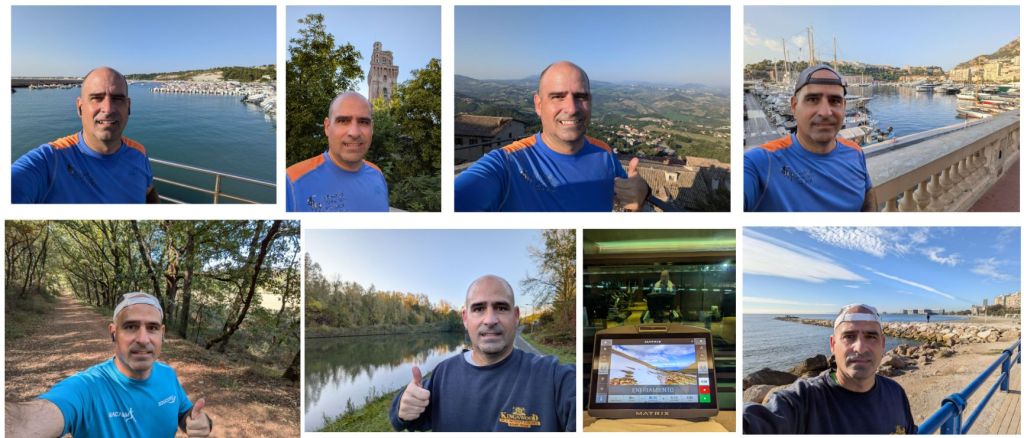
Running: My objectives for 2025 were to avoid injuries and to complete at least another marathon, and I managed to achieve both. I kept a good habit of running without pushing too much to avoid injuries, including adapting the marathon training plan I followed in the Autumn. I ran over 1,200km in 2025, not as much as I would have liked but at the level of 2024. Finally, on November 30th I completed my 25th marathon in Alicante.
Following a mantra I try keep to the letter (when in good health), “the running shoes, always in the suitcase”, the year 2025 caught me running in: Torrelodones, Galapagar, La Grau-du-Roi, Cannes, Tuscany, Marcelli, San Marino, Padova, Monaco, Tournefeuille, Châteauroux, Péronne, Wijchen, Beijing, Shanghai, Shenzhen, Alicante, Elche and San Sebastián, plus the tens of times I trained in my village, in Blagnac and Toulouse.
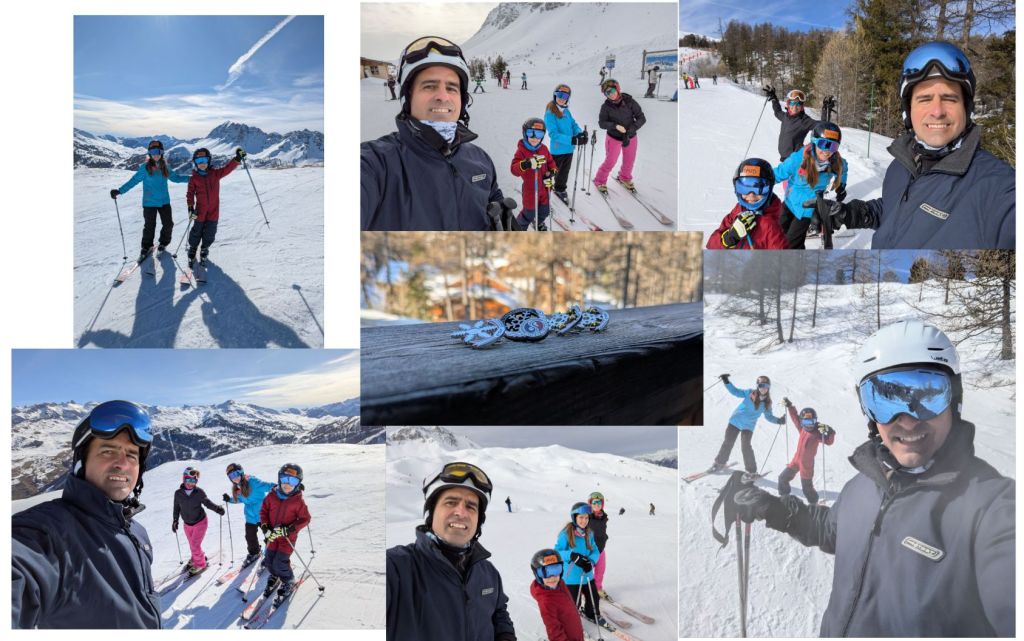
Skiing. In 2025 we went again with the family for a week to our favourite resort at Vars, in the Southern Alps. This year again we could enjoy much time skiing with the kids out of their skiing lessons. They are more daring and at ease especially skiing off tracks, and sometimes it’s difficult to keep pace with them. This year Andrea got her 3ème étoile medal and David his 2ème one (levels from the French ESF).
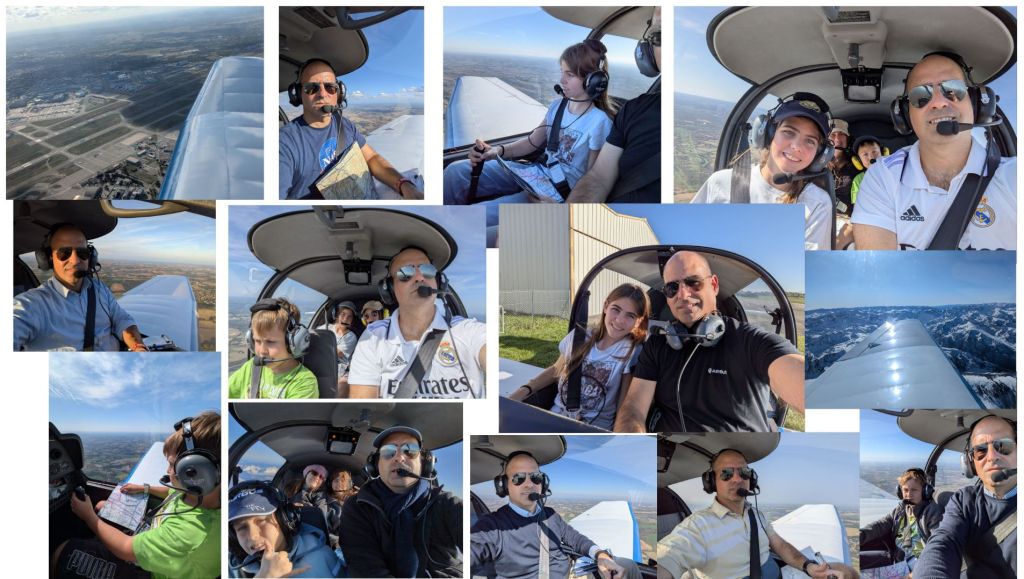
Flying. This year I managed to fly more than in 2024. I did some training flights and some others with the kids, including a nice flight excursion we did along the Lot and Dordogne valleys. In October I also had to renew my French language radio competence (FCL 055) and in November I renewed the licence by experience after flying with the instructor (SEP (single-engine piston) qualification).
In all, this year I have flown 13 flight hours, 12 flights and 30 landings. This takes my total experience to 228 flight hours and 369 landings since I started taking lessons back in 2011. Hopefully in 2026 we can take part in some excursions abroad.
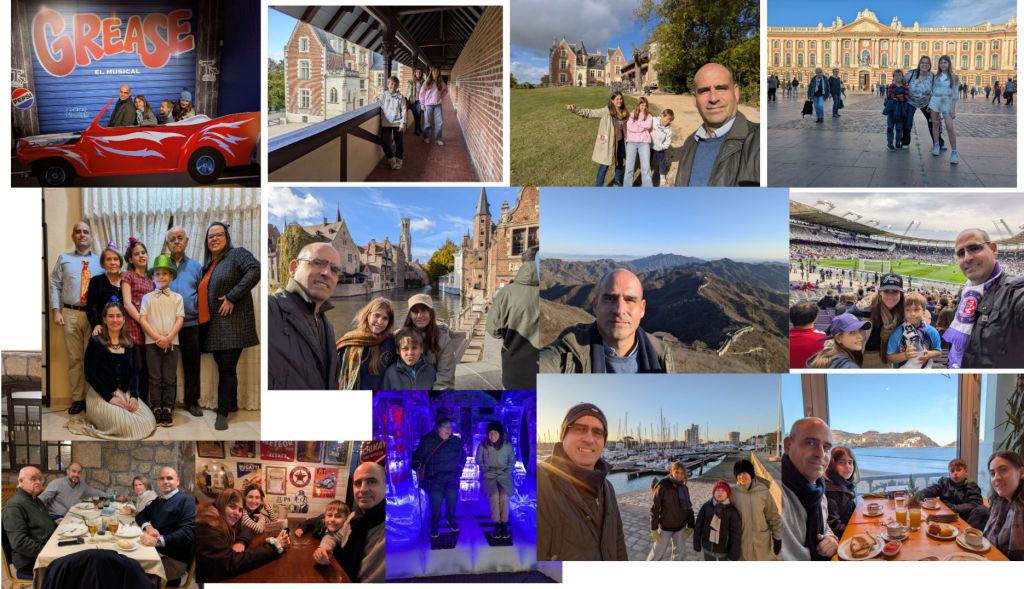
Travelling. Apart from the unforgettable trip to Italy, in this 2025 either alone or with the family we continued to visit some new and old places: Aix-en-Provence, Vars, Saint-Rémy-de-Provence, Arles, Nîmes, Burgos, Bourges, Fontainebleau, Montargis, Paris, Amboise, Brugge, Dunkerque, Pierrefonds, Beijing, Shanghai, Guangzhou, Shenzhen, Chengdu, Elche, Alicante, Wijchen, Rijswijk, Saint-Quentin, La Rochelle, Bordeaux, San Sebastián…
Reading. In this 2025, I managed to read a bit more than last year, in all 17 books, mostly in Spanish with the rest split in English and French (2 books in each language). I’m also happy to have read other 5 books of the Great Books curriculum for the bachelor in arts of Saint John’s College, a list I have been using as a reference for years. For the detailed list of books, see the post I wrote about my 2025 reading list with a brief description of each one.
Other cultural activities:
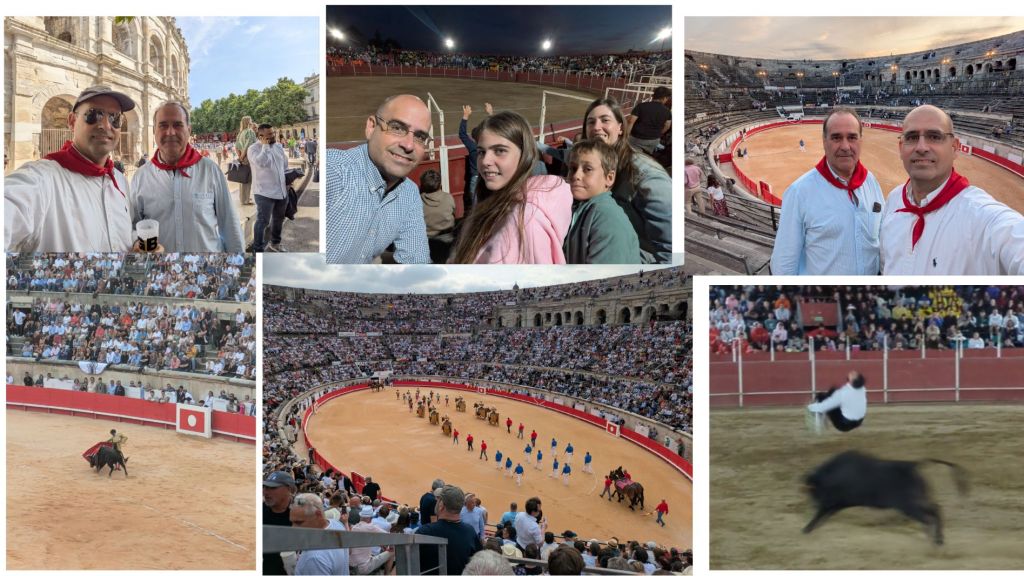
Bullfighting. This year again, together with Luismi, we went to Nîmes to attend its Feria de Pentecôte, in particular a corrida (same wording in French) with the following bullfighters: Morante de La Puebla (who had an incredible 2025 and retired in October; in Nîmes he did a good job but wasn’t lucky with the bulls), Talavante and the young Marco Pérez, the latter two were awarded 2 ears and exited through the puerta grande.
Later, in July we went with the family to a concurso de recortadores at Las Navas del Marqués (Ávila), a contest in which 12 men went into the arena one by one to dodge the bull when running towards them in impressive ways, including jumping over it. The winner was Paquito Murillo, who had been Spanish champion of that variety in the past.
I also renewed my membership to the foundation Toro de Lidia to keep supporting the art.
Theatre. We started the year with a great musical in Madrid, Grease (thanks to a wonderful invitation from my sister Beatriz!) and the Pantomime show in Pibrac where they played Rapunzel (which was hilarious). At the end of the school year we also attended the great show put up by the kids of the school with Peter Pan.
Other shows: we went with the family a few times to the cinema, with Formula 1 being the movie we liked the most. We also went to a concert of the string quartet Mascarade. We also went a couple of times to see matches from the Toulouse FC at the stadium, against Montpelier and Metz. Those were great fun especially for the kids. What we want to do in 2026 is to rather see the rugby team with the family and possibly more music concerts.
Museums. This year again we took benefit of every trip to visit as many museums and castles as we could (some of them were visited for a second or third time): Arles theater and amphitheater, Saint Remy Provence St Paul Mausole (where Van Gogh was interned), Palais Jacques Coeur and Cathédrale in Bourges, Château Fontainebleau, Panthéon, Notre Dame, Musée du Louvre and Les Invalides in Paris, Sainte-Marie-Majeure in Marseille, Abbazia di San Fruttuoso, Museo Enzo Ferrari Modena, Museo Ferrari Maranello, Basilica di San Petronio and Basilica di San Domenico in Bologna, Archiginnasio di Bologna, Lamborghini Museo in Sant’Agata Bolognese, Casa Museo Luciano Pavarotti, Basilica di San Francesco in Assisi, Abbazia di San Pietro in Perugia, Duomo di Orvieto, Villa d’Este in Tivoli, Pantheon, Chiesa di Sant’Ignazio di Loyola, Santa Maria sopra Minerva, Chiesa di Sant’Agnese in Agone, Musei Vaticani, St. Peter’s Basilica, Basilica di San Giovanni in Laterano and Scala Santa, Basilica di San Clemente al Laterano, Terme di Caracalla, Colosseum, Roman Forum and Palatine Hill, Basilica di Santa Maria Maggiore, Basilica di San Paolo fuori le mura, Catacombe di San Callisto, Napoli Sotterranea, Duomo di Napoli, Pompeii, Abbazia di Montecassino, Basilica di Santa Maria di Collemaggio in L’Aquila, Duomo di Atri, Santuario della Santa Casa in Loreto, Palazzo Ducale in Urbino, the towers Cesta and Guaita in San Marino, the Basilica de San Vitale, Galla Placidia, the Orthodox Baptistery, Sant’Apollinare Nuovo and the Basilica de St Francesco in Ravenna, the Basilica di San Marco, Correr Museum and the Palazzo Ducale in Venice, Château du Clos Lucé in Amboise (where Da Vinci lived his last years), Stadhuis and the Basilica of the Holy Blood in Brugge, Aviodrome museum, Museum Dunkerque 1940 Operation Dynamo, Château de Pierrefonds, Great Wall of China in Mutianyu, the Palacio de Altamira and Torre de la Basílica de Santa Maria in Elche, Aachen Rathaus, Netherlands ice sculptures Festival, Wonder van Empel, Château de Compiègne, Basilique Saint-Martin de Tours, Cathédrale Saint-André de Bordeaux.
Blogging. This is the 16th year since I started the blog in February 2010. This year I wrote just 9 blog posts, in line with the past years since 2020. It helps me to structure some ideas in some posts, to dig into some topics other times, and as a personal repository to which I come back every now and then. The blog received just over 20,800 visits, a bit more than in 2024 (in line with the past few years) and over 533,000 views since 2010.
Work. No changes in the scope of the work this year (A330neo product marketing since January 2023), neither in the team, so it was a stable year in that front.
Since 2023 the markets keep being quite active, and in 2025 we had a good year for the A330neo in terms of aircraft orders.
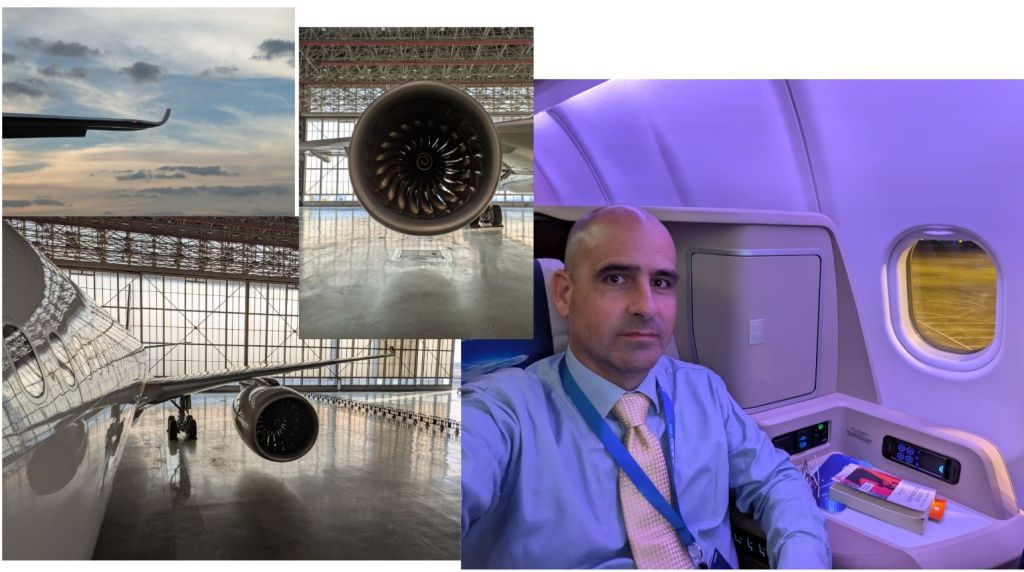
This year I had the opportunity to join a great demo tour where we rented the aircraft from an airline and we visited different pages to showcase the A330neo with colleagues from Airbus and Rolls-Royce to varied groups of customers or institutional representatives. That was a very intense week but full of new experiences. These included the first time I flew an airline’s A330neo! (I had only flown before the Airbus A330neo flight test aircraft).
Now it’s time to rest, celebrate with the family and hope for the best in 2026. For the moment we have just a few days in Madrid to enjoy with family and friends and a planned skiing week in Vars; hopefully that will be just the beginning of another memorable year.
I wish you the best for 2026, enjoy it!
(*) You can see here my 2010, 2011, 2012, 2013, 2014, 2015, 2016, 2017, 2018, 2019, 2020, 2021, 2022, 2023 and 2024 recaps.

 The Blog by Javier