This is a short post to share some locations to follow the steps of the Dutch painter Vincent van Gogh in Provence, in Arles and Saint Rémy de Provence.
Van Gogh was born in 1853, and at the age of 27 he decided to become an artist, to which he dedicated the next and last decade of his life. During that time he was financially supported by his brother Theo, with whom he moved.
In February 1888, he left Paris seeking the light and colors of Provence and settled in Arles, where he invited his friend Gauguin and where he hoped to establish the “Studio of the South“.
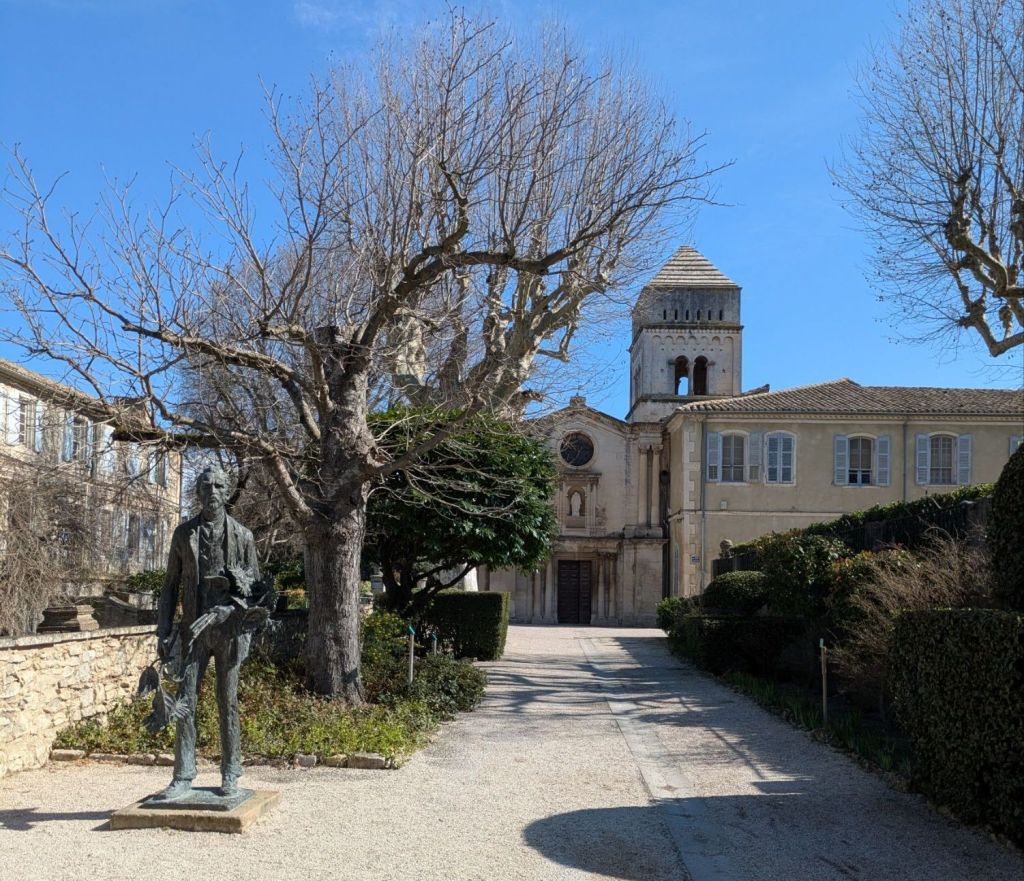
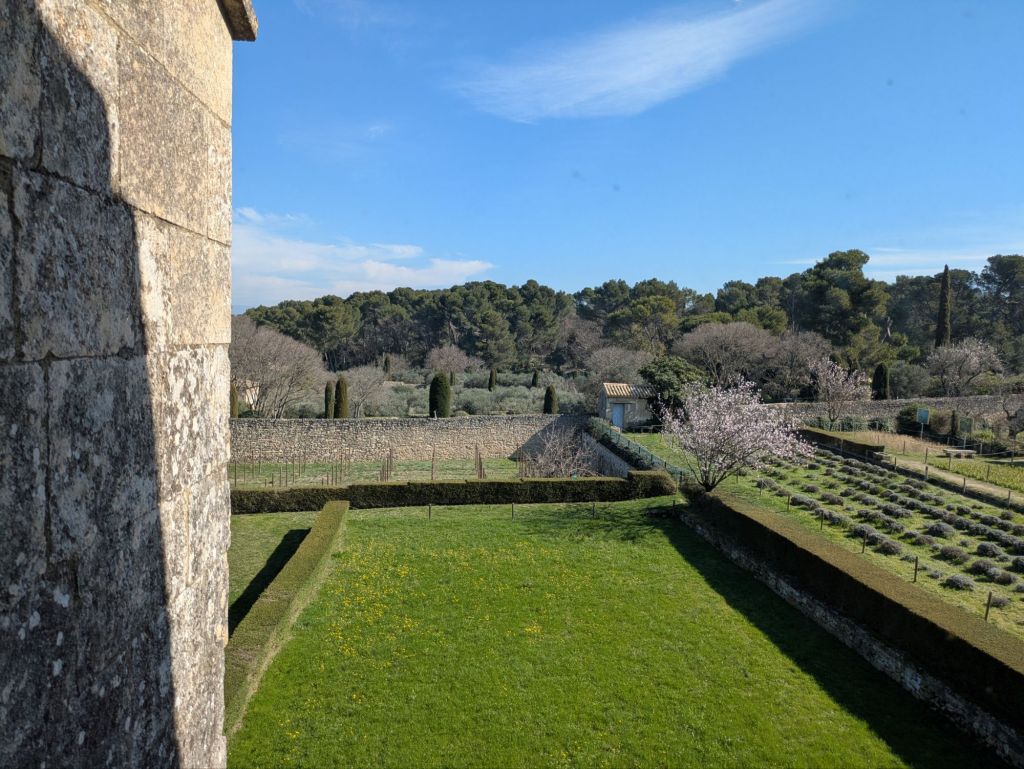
After a mental crisis in Arles, during which he cut off part of his ear, he interned himself to the Saint-Paul-de-Mausole asylum for treatment and rest. The asylum nowadays is open for visits and is located in Saint Rémy. The village and its surroundings provided several of the landscapes he painted.
Between Arles and Saint Rémy he spent just around two years but was the most productive period of his life with over 200 paintings (out of ~900 in his career).
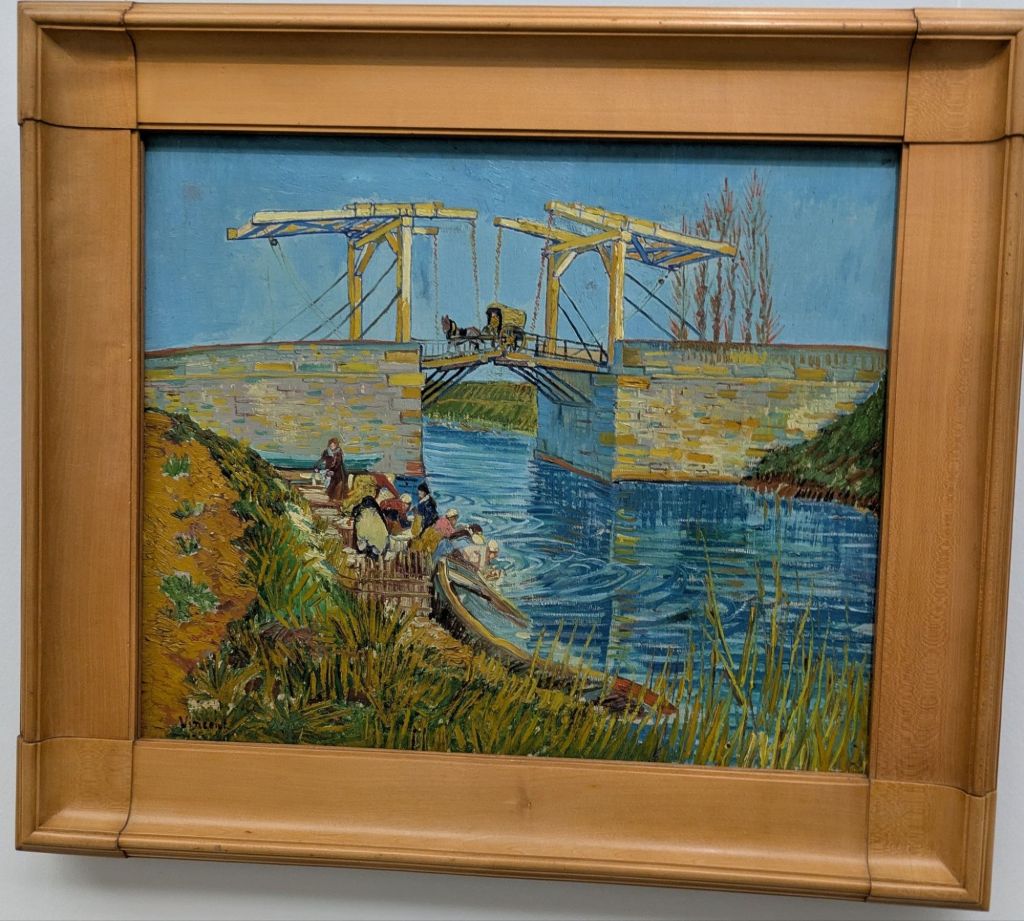
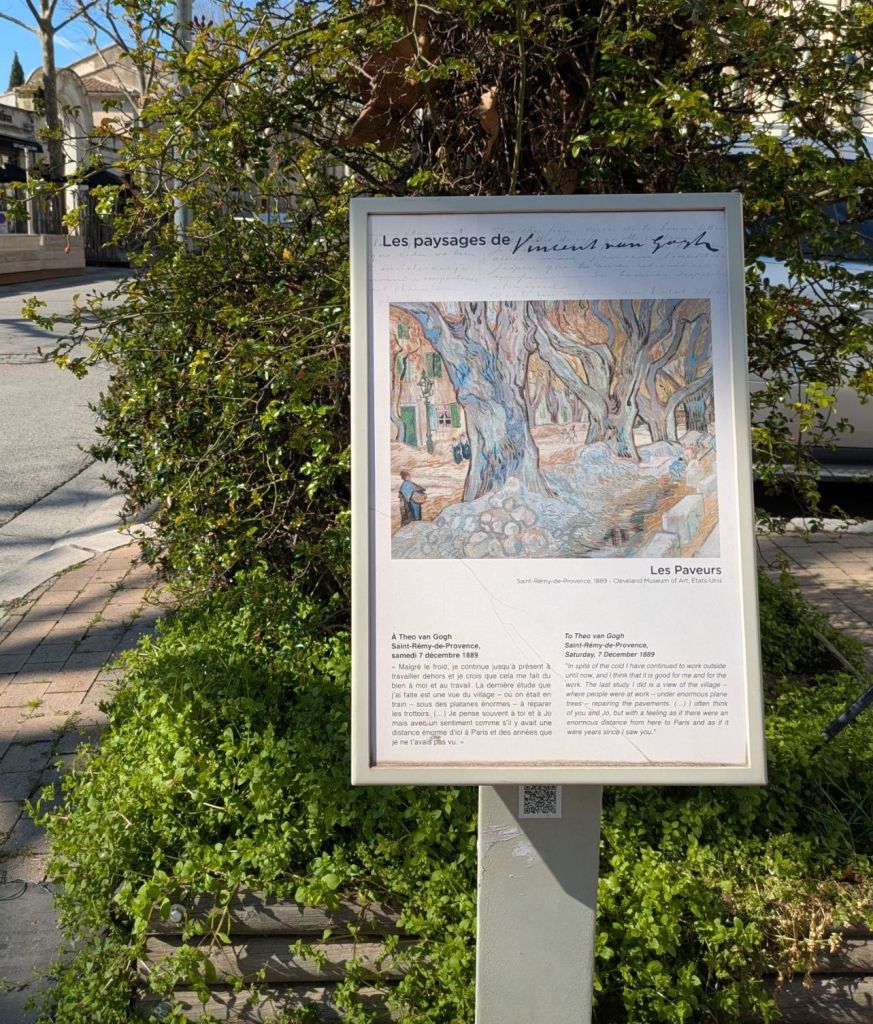
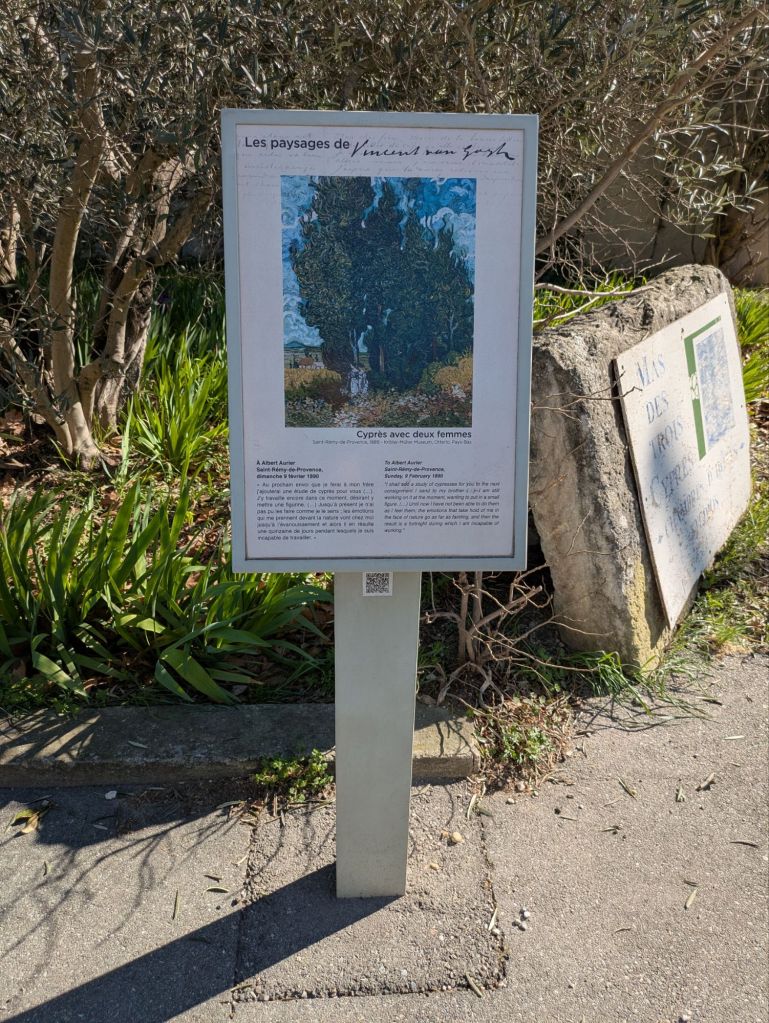
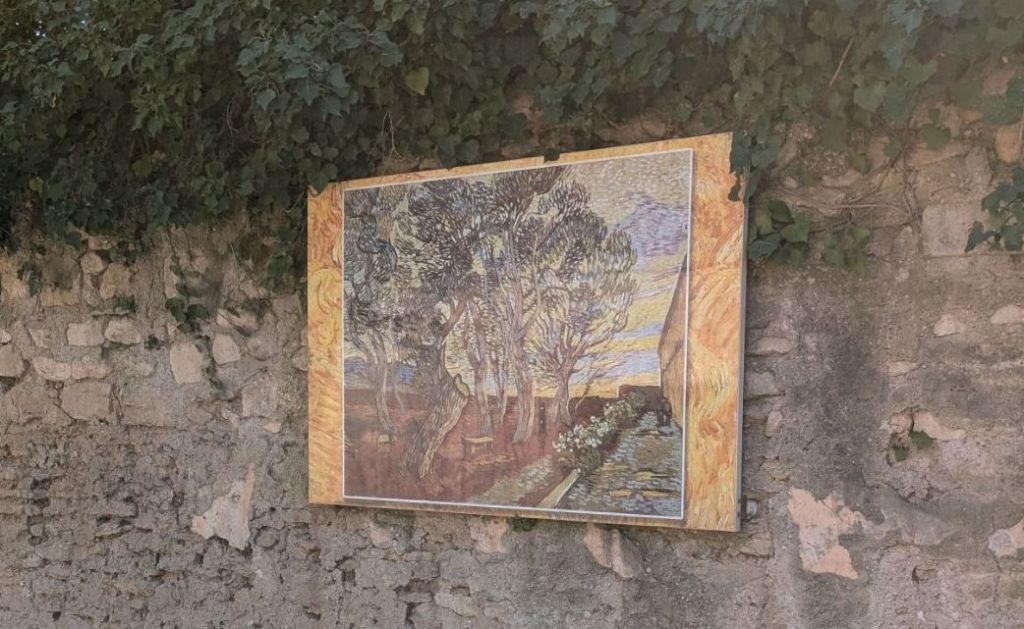
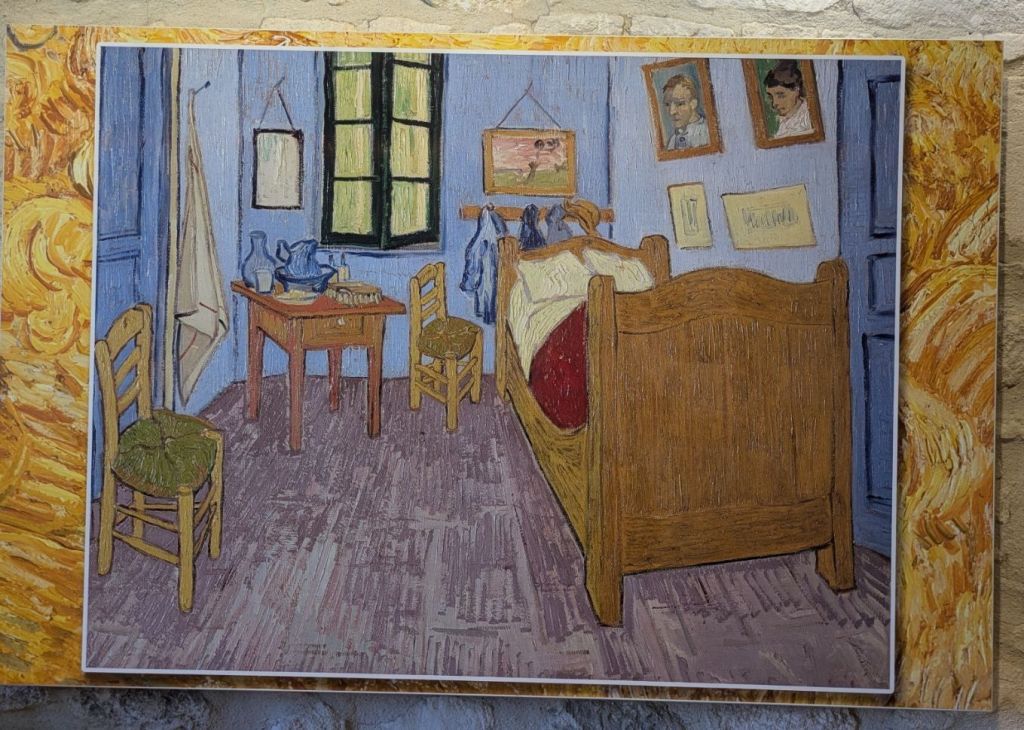
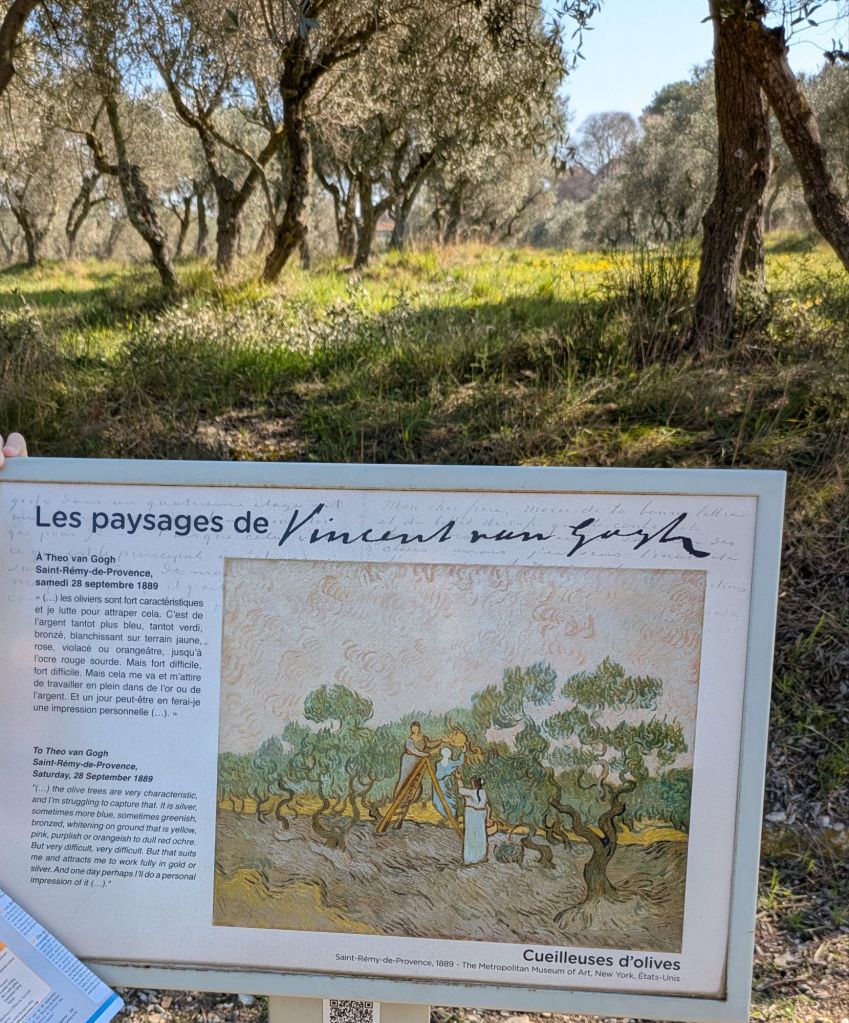
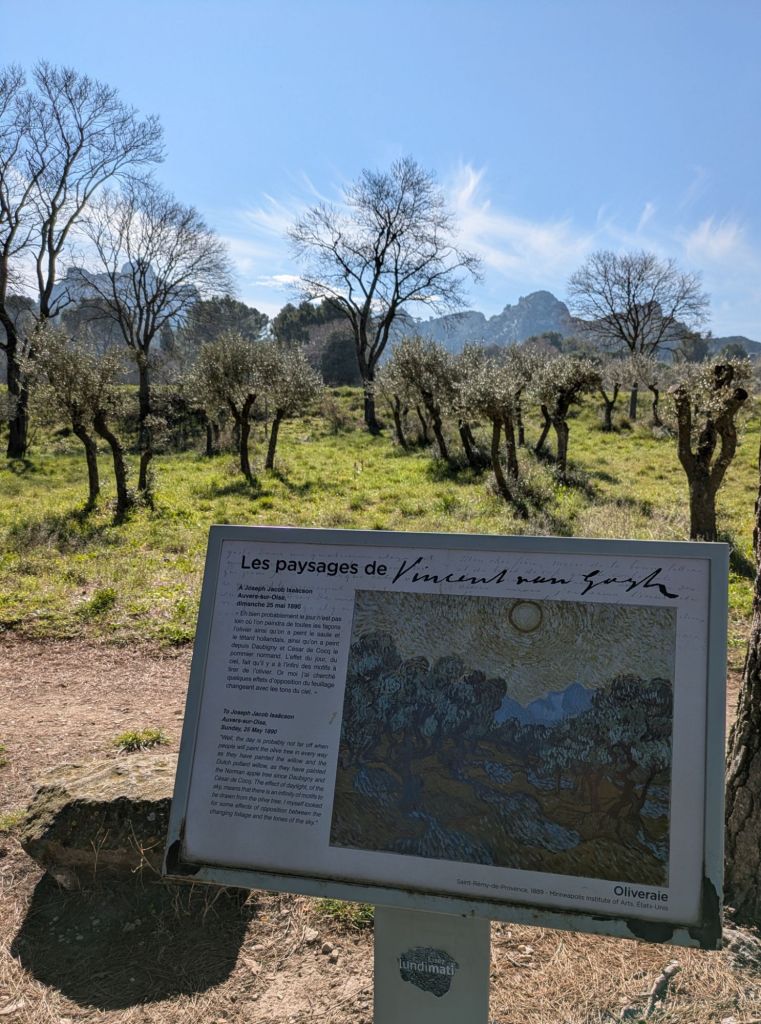
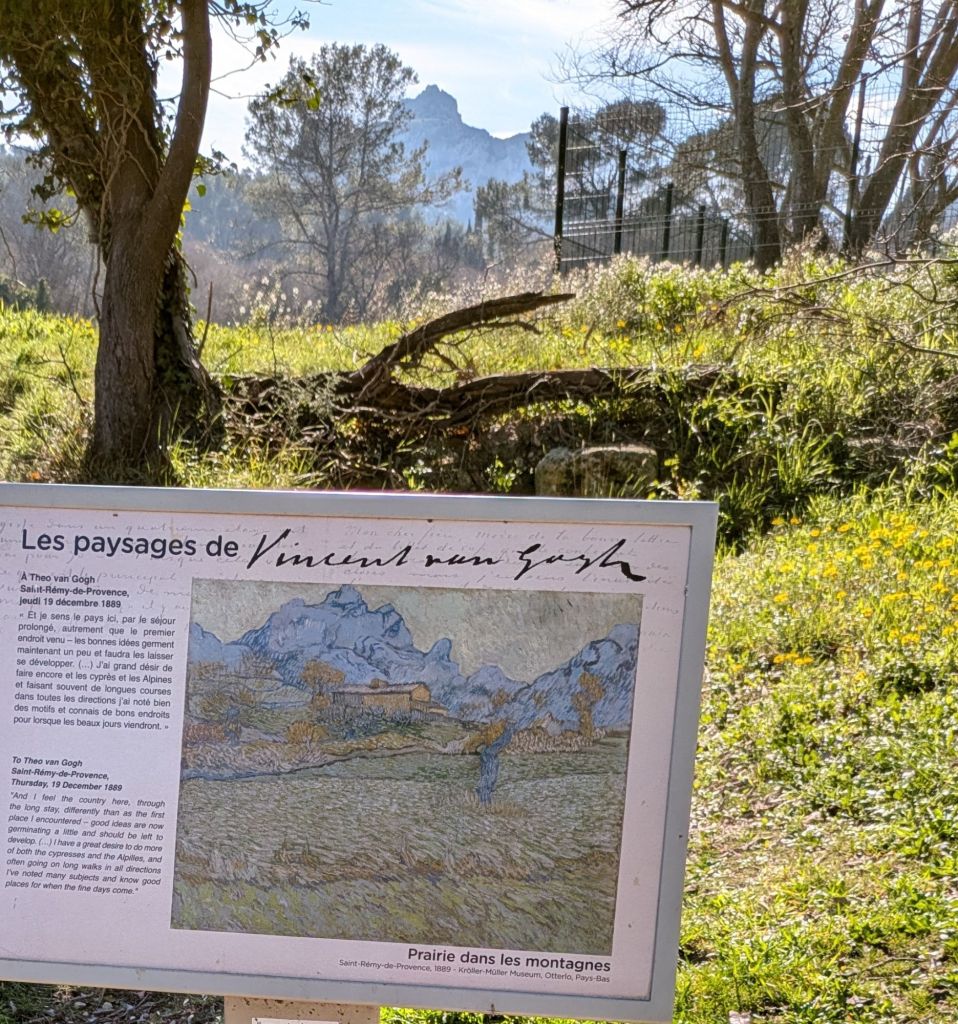
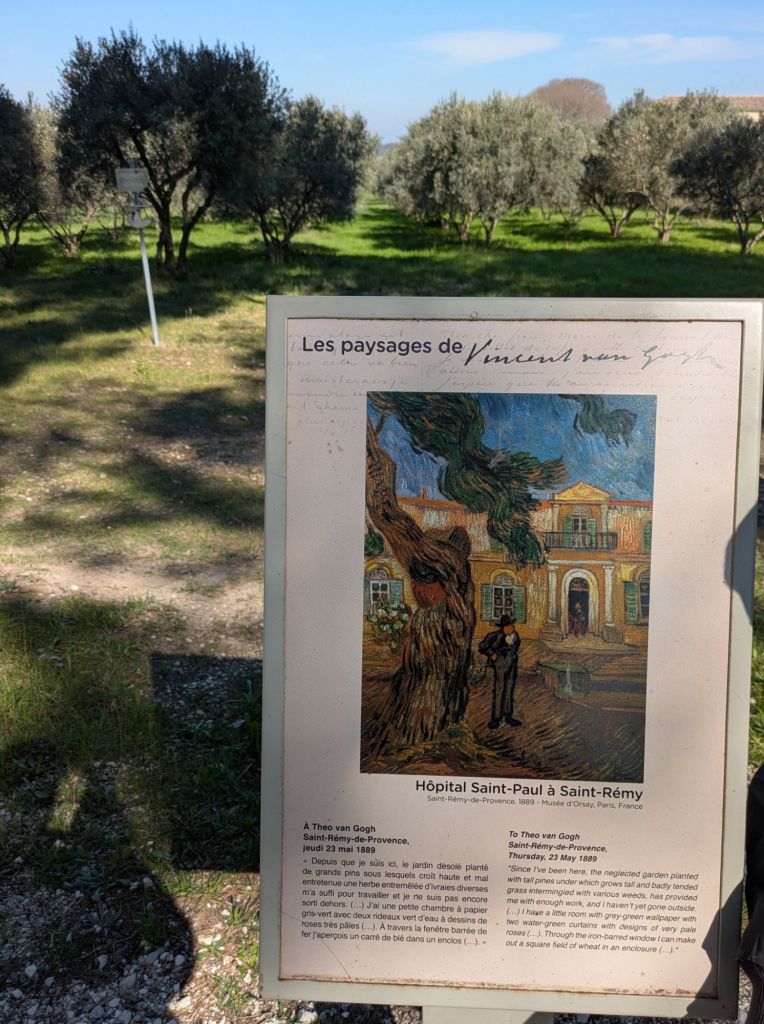
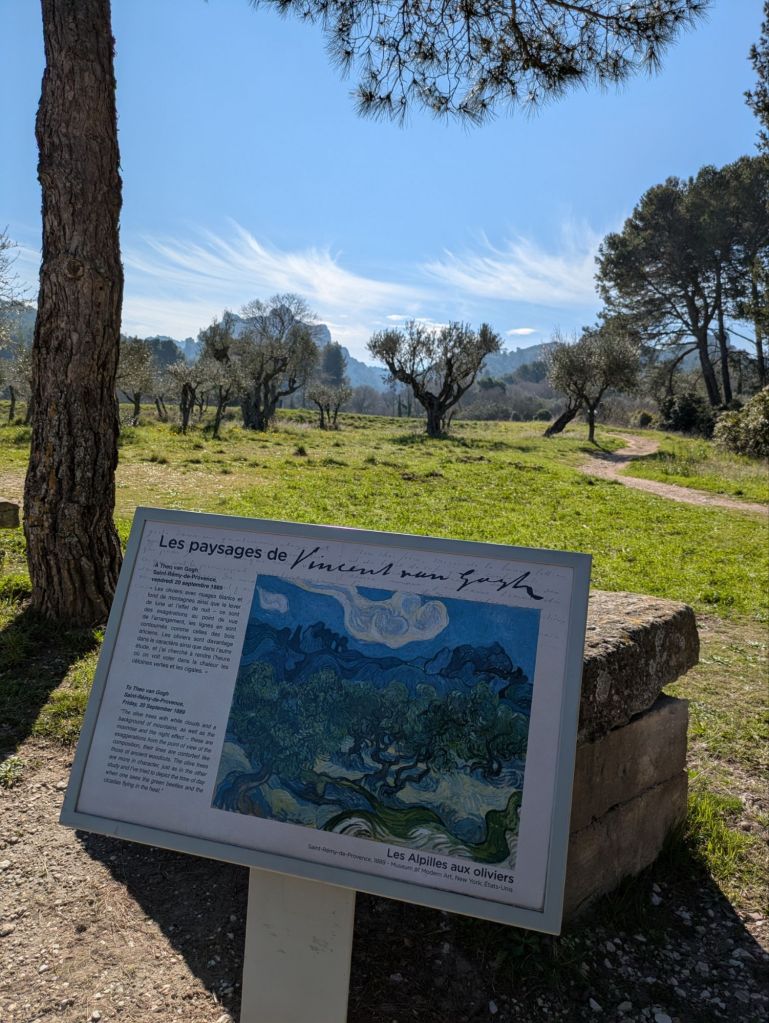
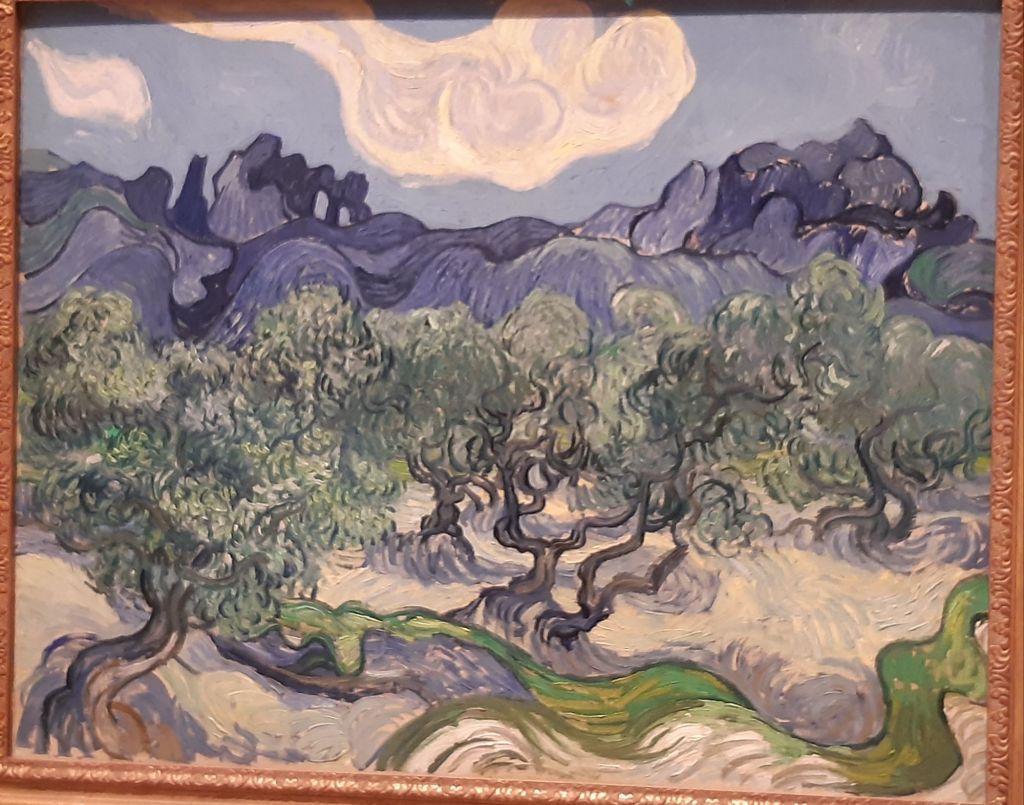
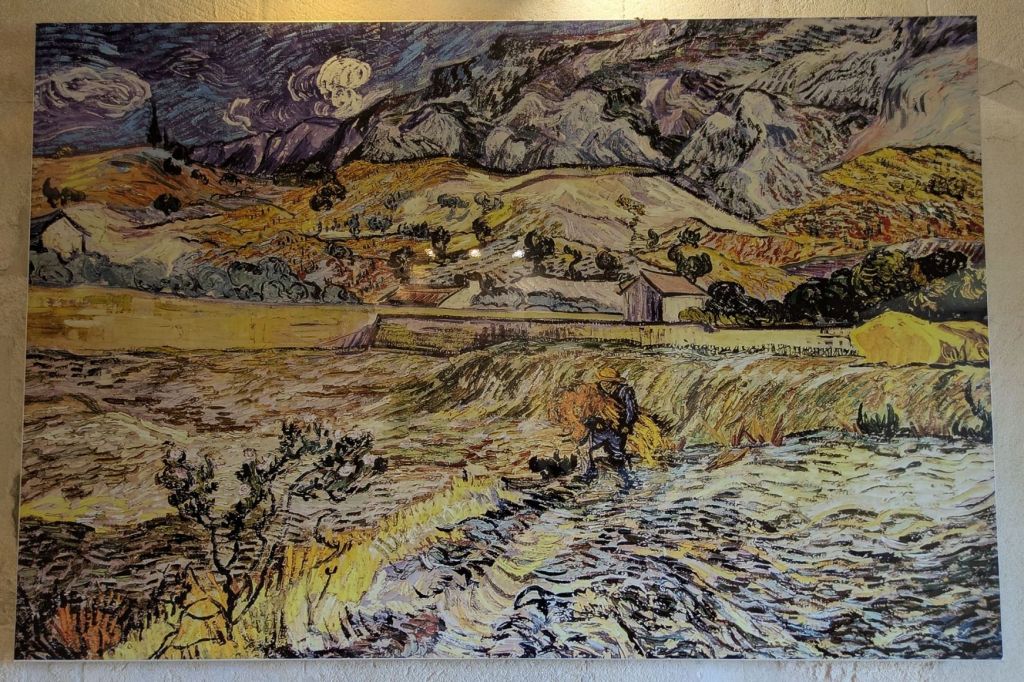
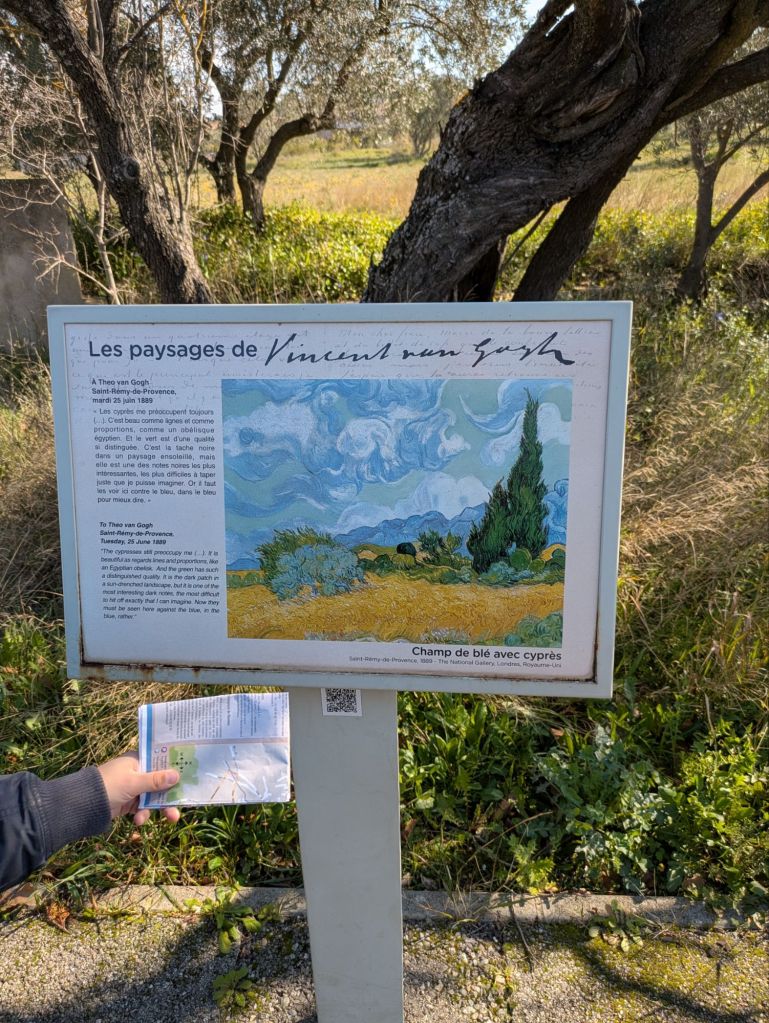
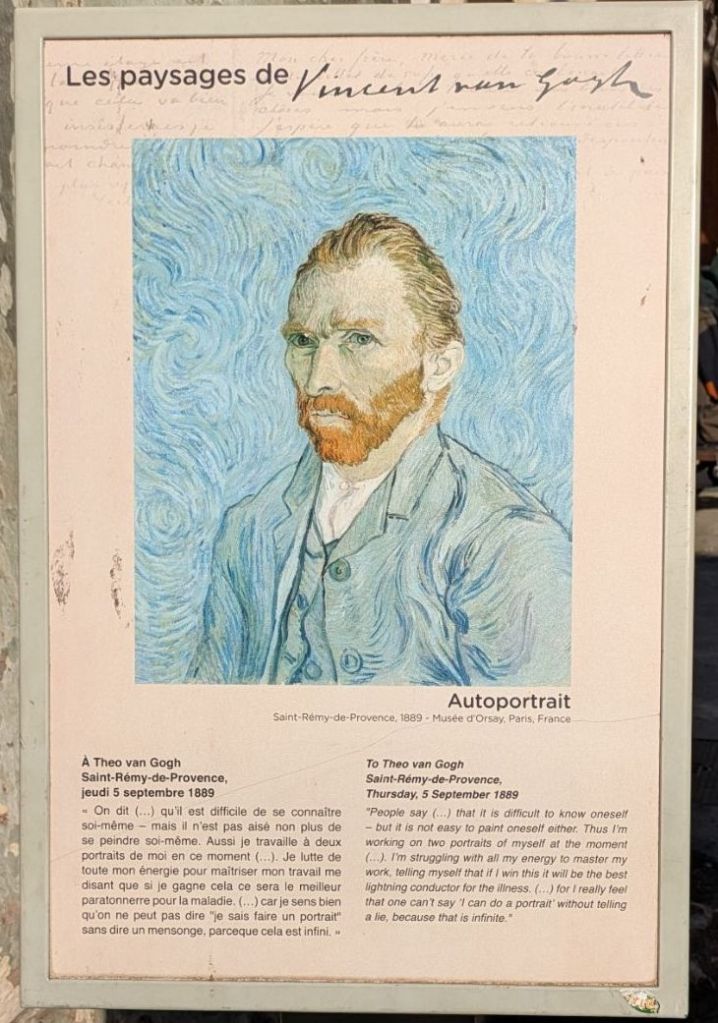
The best museums to see his paintings are the Van Gogh museum in Amsterdam, the Kröller-Müller museum in Otterlo (Netherlands), the Musée d’Orsay in Paris, and the Metropolitan and MoMA in New York. And a good complement to those museums is to visit Arles and Saint Rémy in Provence, where in some places together with the landscapes there are panels with copies of the paintings to relate to one another. In Arles there is also a small museum, the Fondation Vincent van Gogh, about his life and style.
I will share some of those examples below.
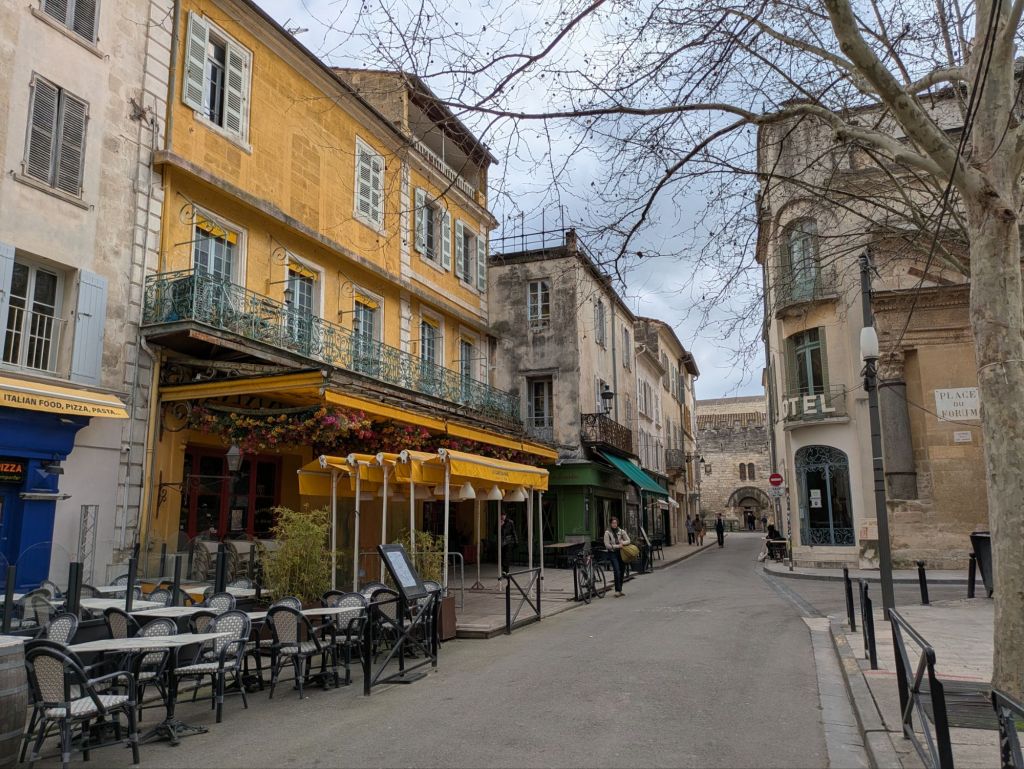
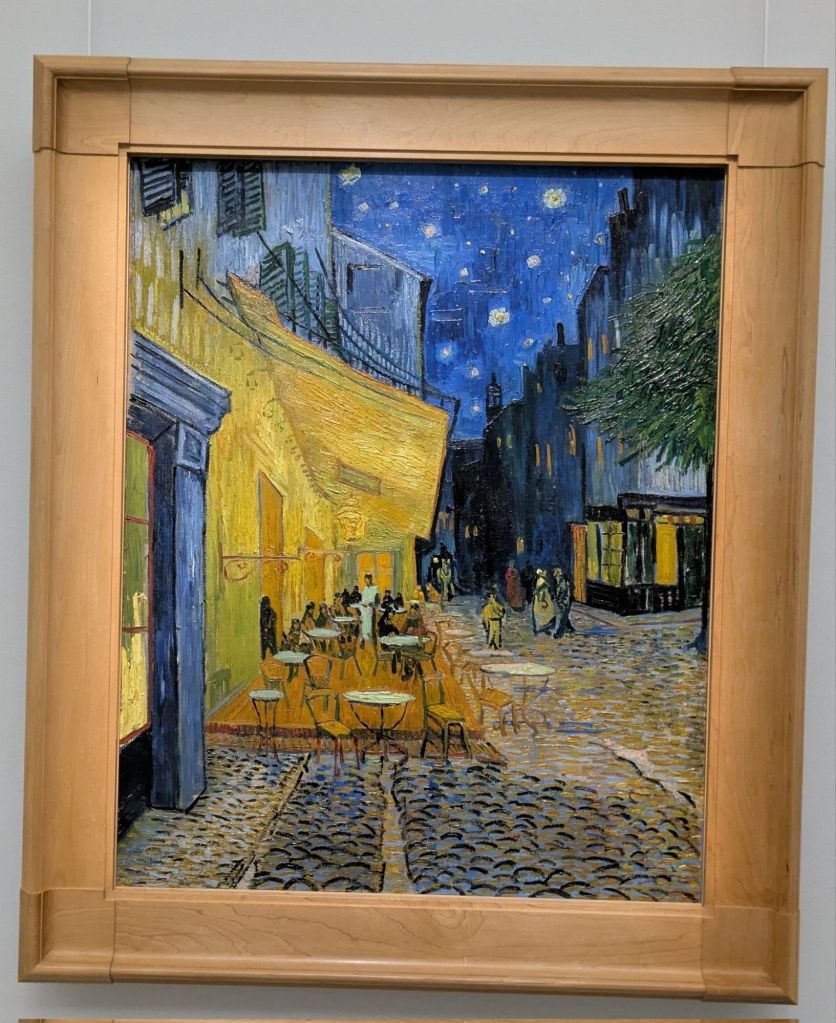
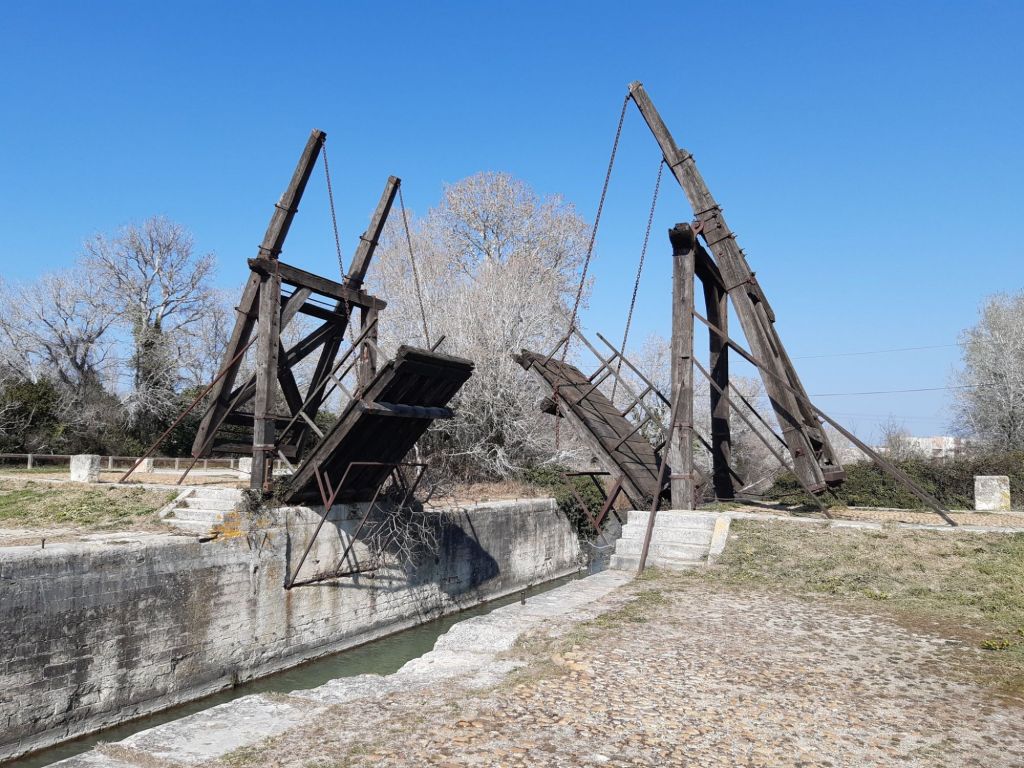
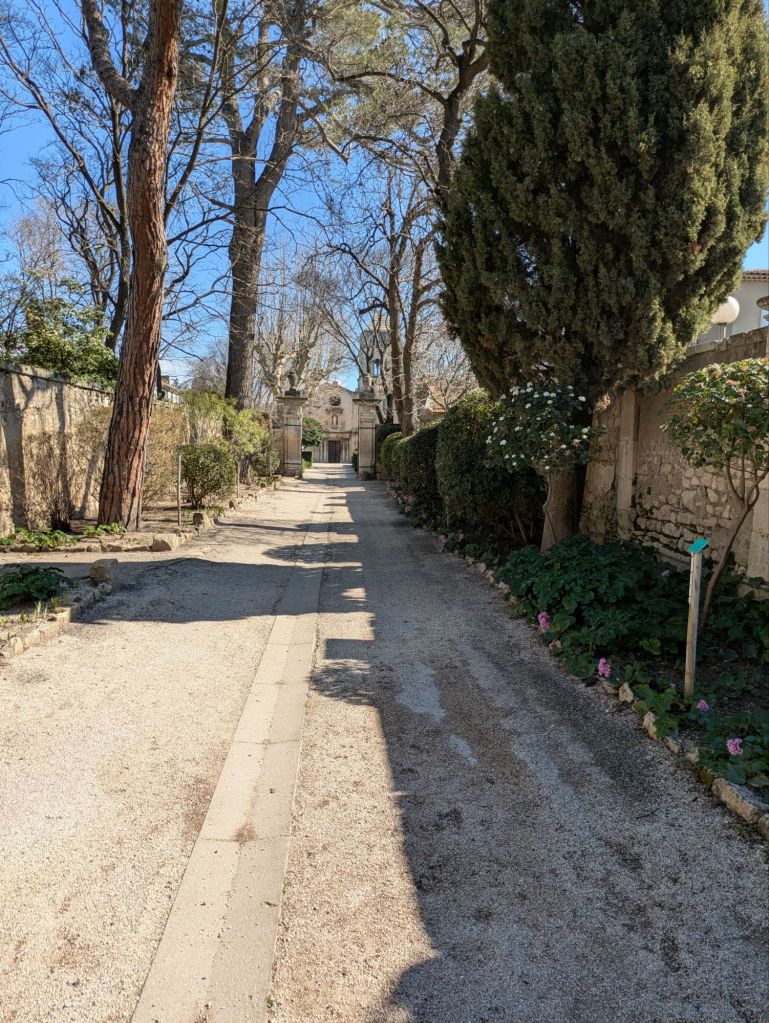
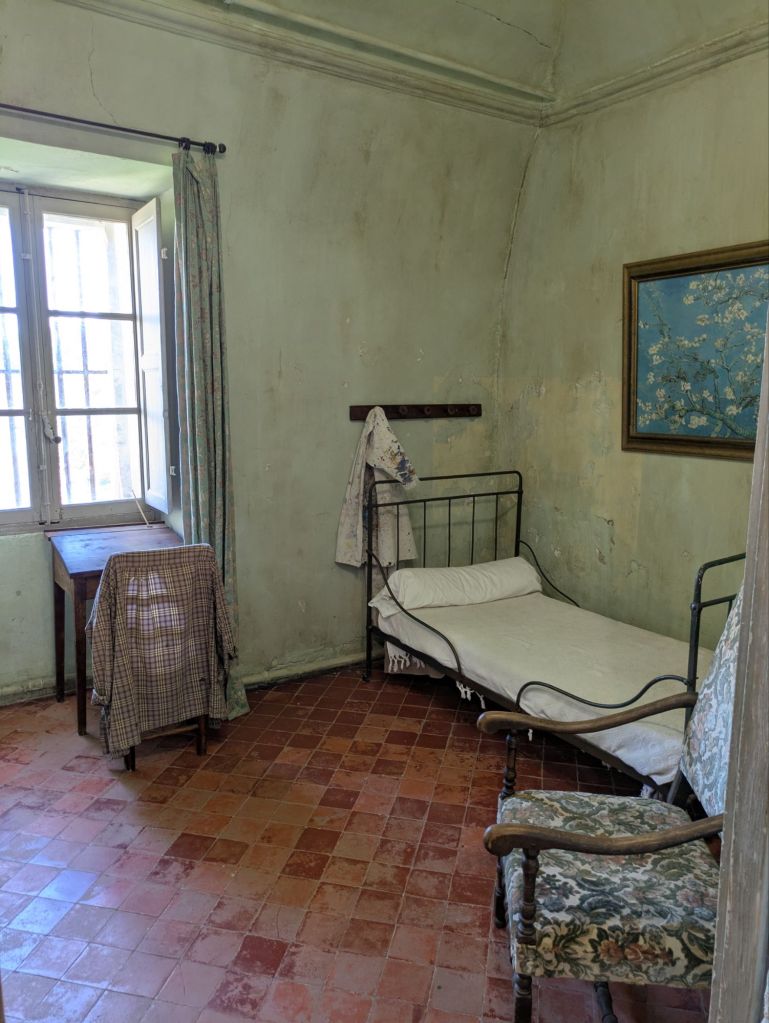
Cafe La Nuit at the Place du Forum, Arles.“Terrace of a cafe at night (Place du Forum)” (Kröller-Müller)Pont de Langlois (South Arles)“Pont de Langlois” (Kröller-Müller)“Les Paveurs”“Cyprès avec deux femmes”Entrance to the Hôpital Saint-Paul de MausoleVan Gogh’s room in the asylum.“Cueilleuses d’olives”“Oliveraie”“Prairie dans les montagnes”“Hôpital Saint-Paul de Mausole”“Les Alpilles aux oliviers”“Les Alpilles aux oliviers” (MoMA)View from his room at the asylum.“Champ de bl锓Champ de blé avec cyprès”
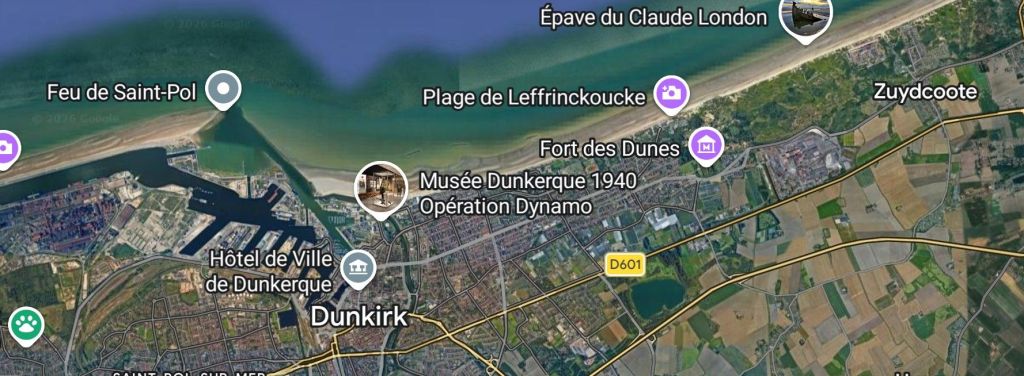
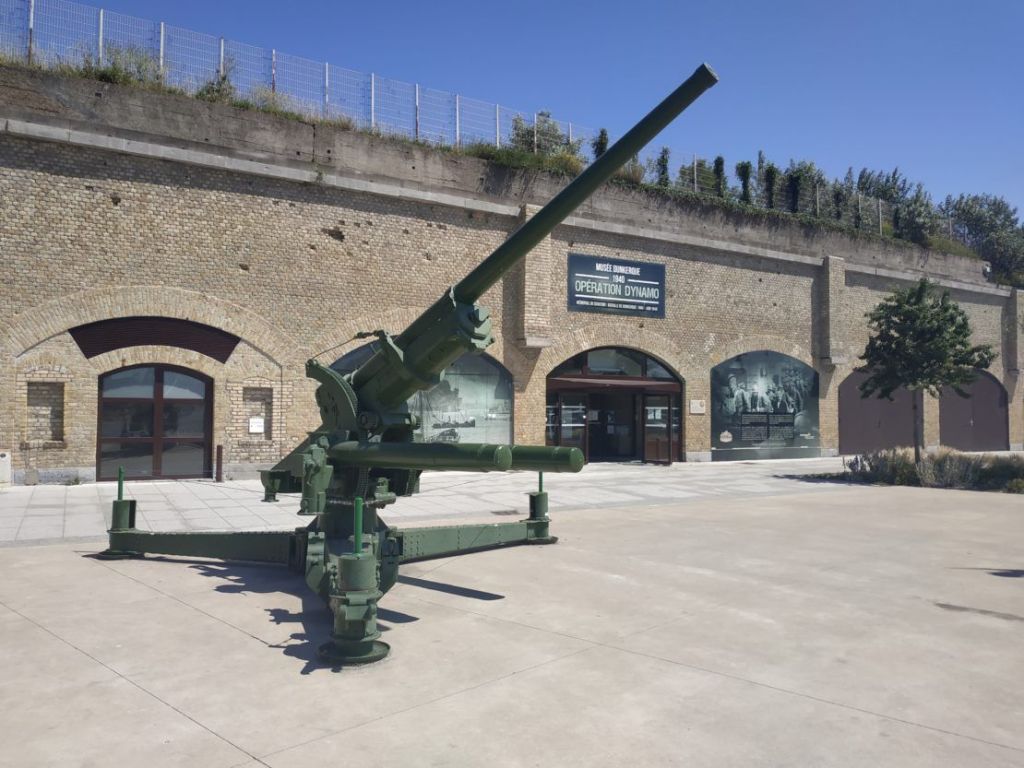
Last October, we visited Dunkirk, the harbor, the beaches, the nearby village Zuydcoote and the museum Musée Dunkerque 1940 – Opération Dynamo. Dunkirk is a town in the North of France, by the North Sea which is 10 km from the border with Belgium, which had been historically affiliated to Flanders or France (for the last 360 years).
In the Dunkirk evacuation (Operation Dynamo), which took place between 26 May and 4 June 1940, at the beginning of the Second World War, over 338,000 allied soldiers were evacuated from the beaches and harbour of Dunkirk.
After Germany invaded Poland in September 1939, France and the British Empire declared war on Germany. The British Expeditionary Force (BEF) was sent to help defend France. After the Phoney War of October 1939 to April 1940, Germany invaded Belgium, the Netherlands, and France on 10 May 1940. In just a few weeks, the German troops advanced fast and cut off allied troops around Dunkirk. In just over a week the evacuation took place.
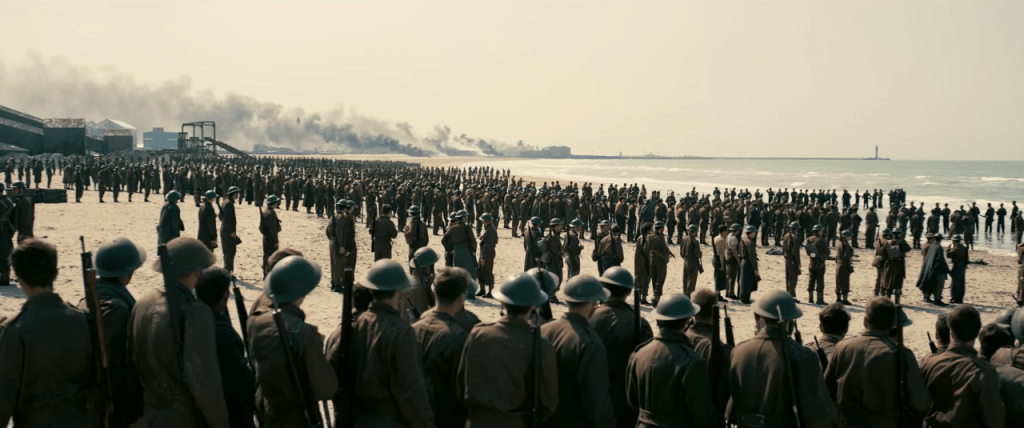
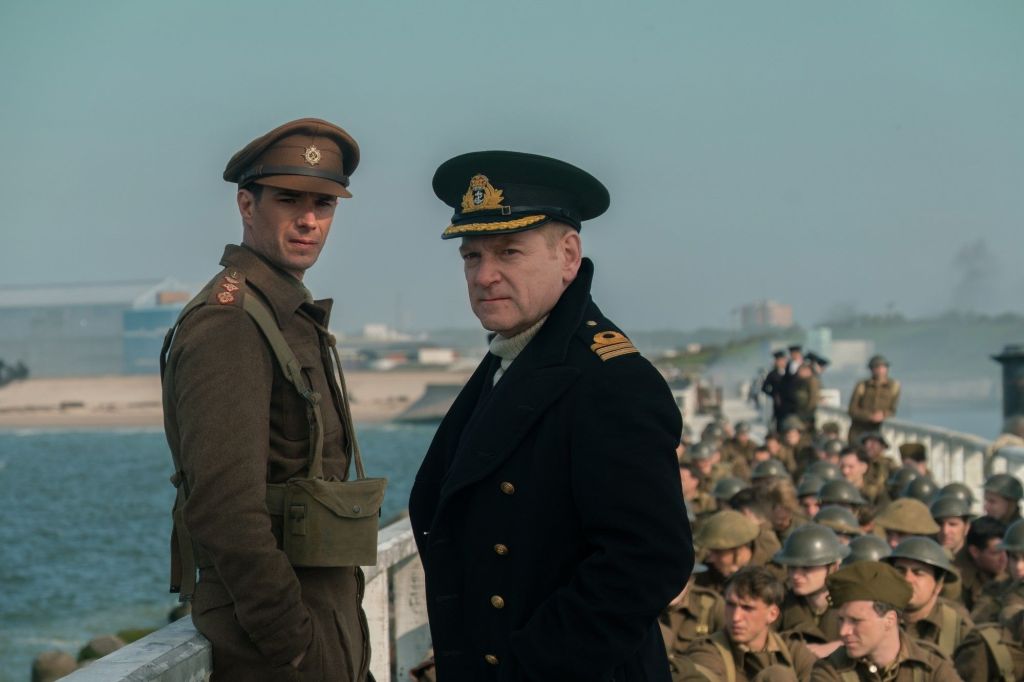
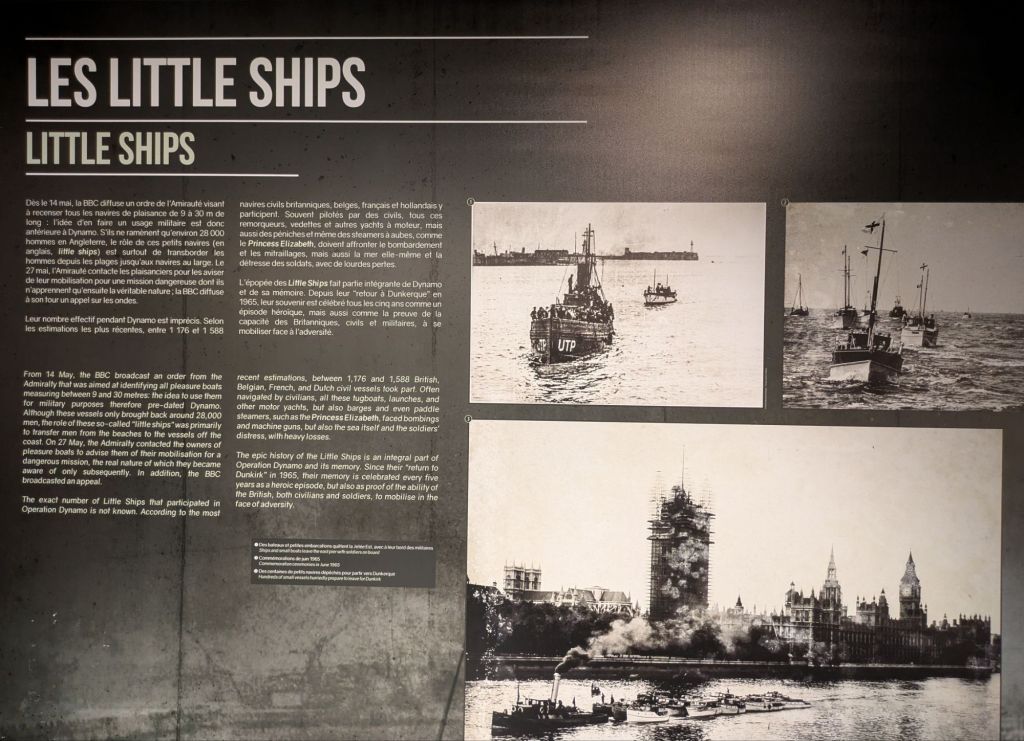
Even if the Dunkirk evacuation had been represented in movies before, it was in 2017 with Christopher Nolan‘s movie that made the iconic images of the beaches and piers with lines of soldiers waiting to be rescued, the bombing of those and the ships by the Luftwaffe airplanes or the courageous Little Ships of Dunkirk, the flotilla of fishing boats, merchant ships and yachts, widely known to the public.
The visit of the museum is a must if you want to make sense of the operation, as just by visiting the harbour or the beaches you cannot get much information other than the dimensions of the place.
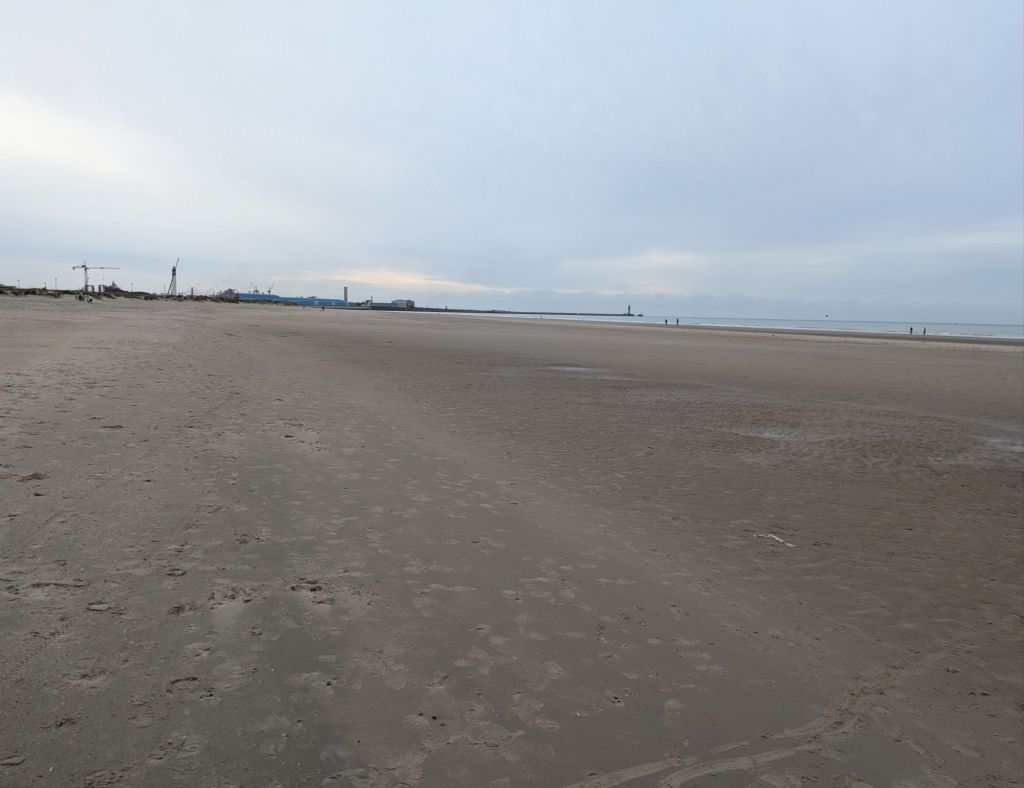
Musée Dunkerque 1940 – Opération DynamoMalo-les-bains beach with the pier at the back
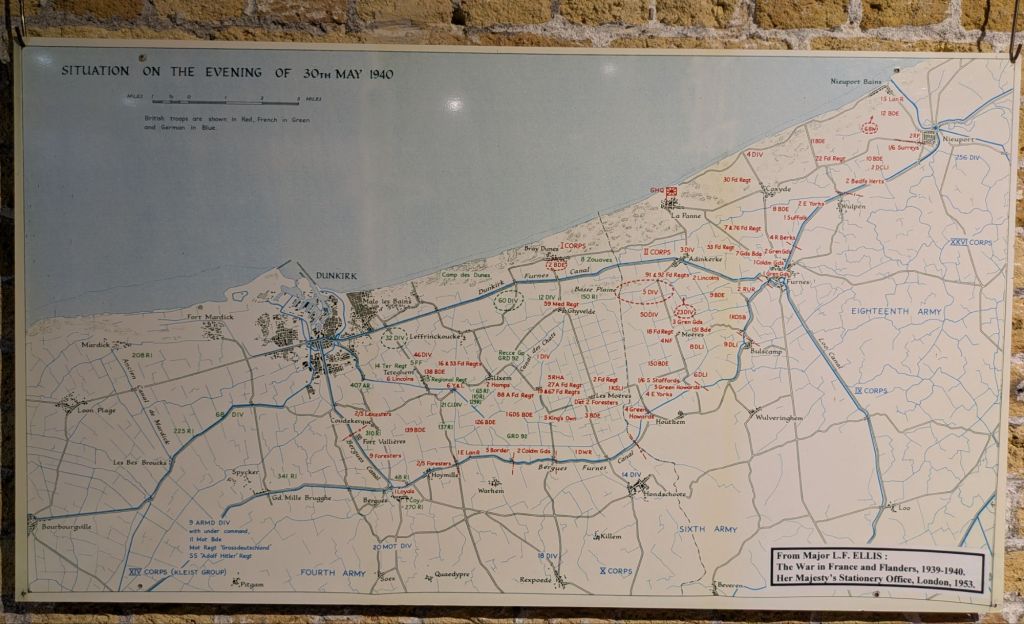
In the museum there is a detailed account of the beginning of the war and the advances of the German troops and how the evacuation went day by day.
Situation on the evening of 30th May 1940 (British forces in red, French forces in green, German forces in blue).
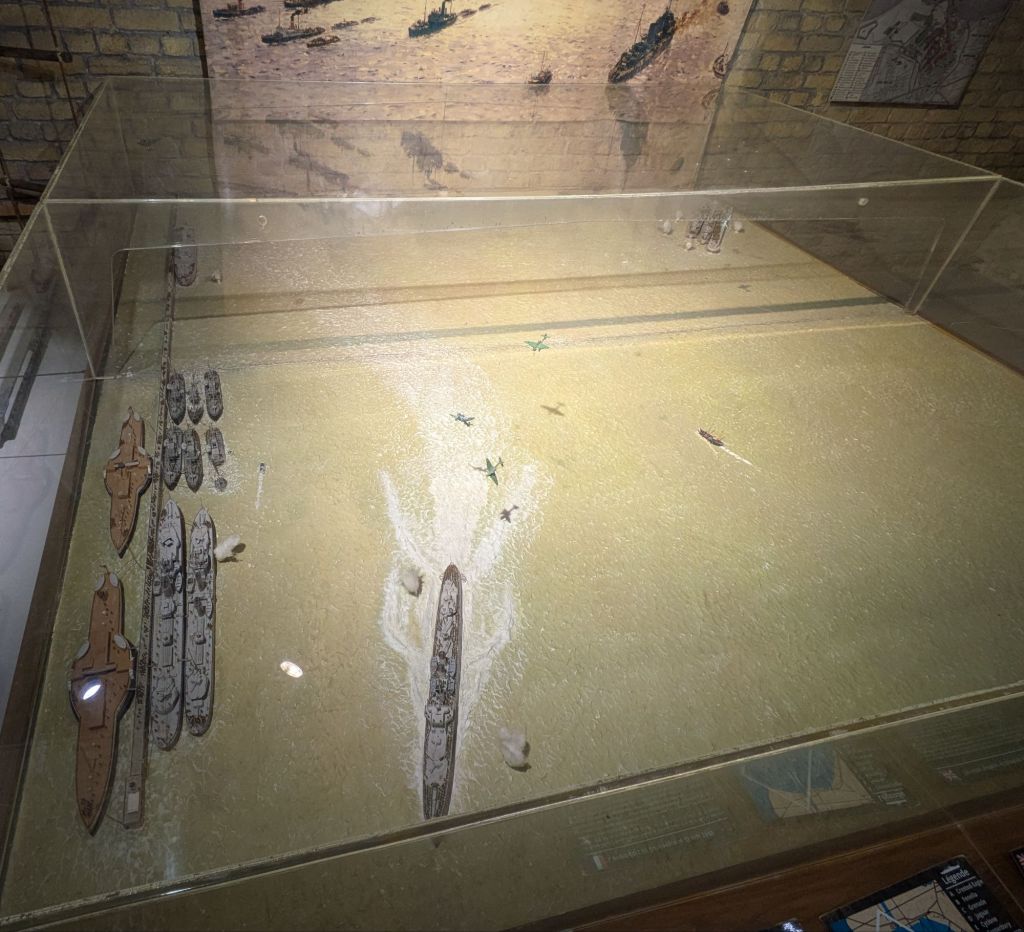
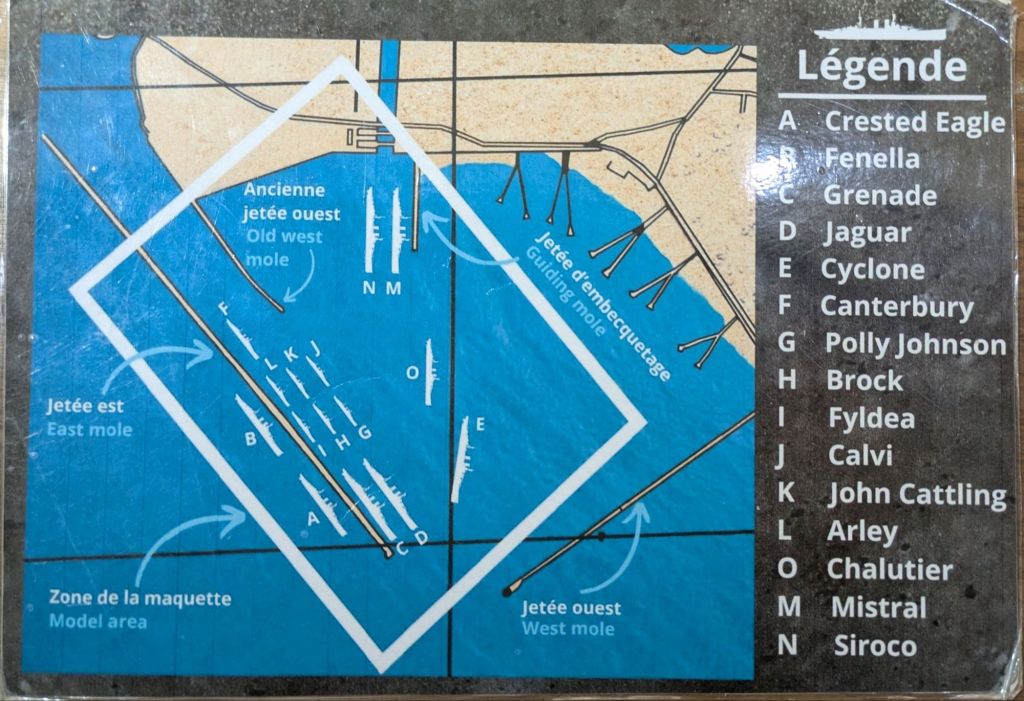
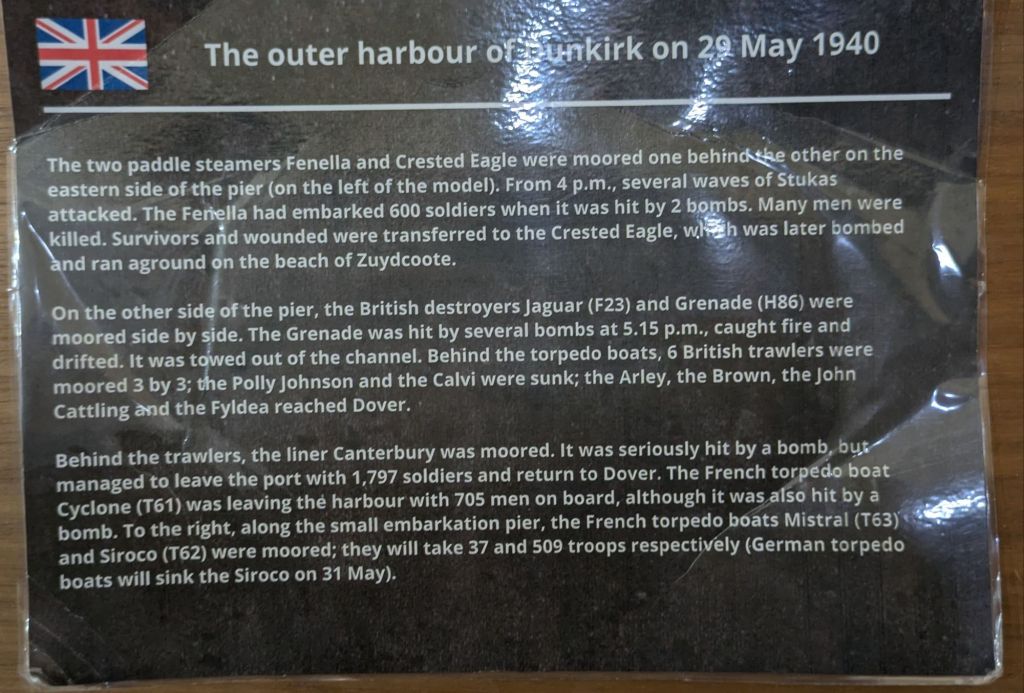
In this mock up at the museum there is the situation of the different allied ships at both sides of the Malo pier, with the names in the legend and a description of the different bombs they received in those days.
As it is mentioned above the Crested Eagle ship ran aground on the beach of Zuydcoote, a few kilometers North of Dunkirk. We went there by car but could not see anything of the remains, possibly because of the tide.
Looking at the numbers, most of the soldiers could be evacuated, though there are different views on whether it was a successful operation.
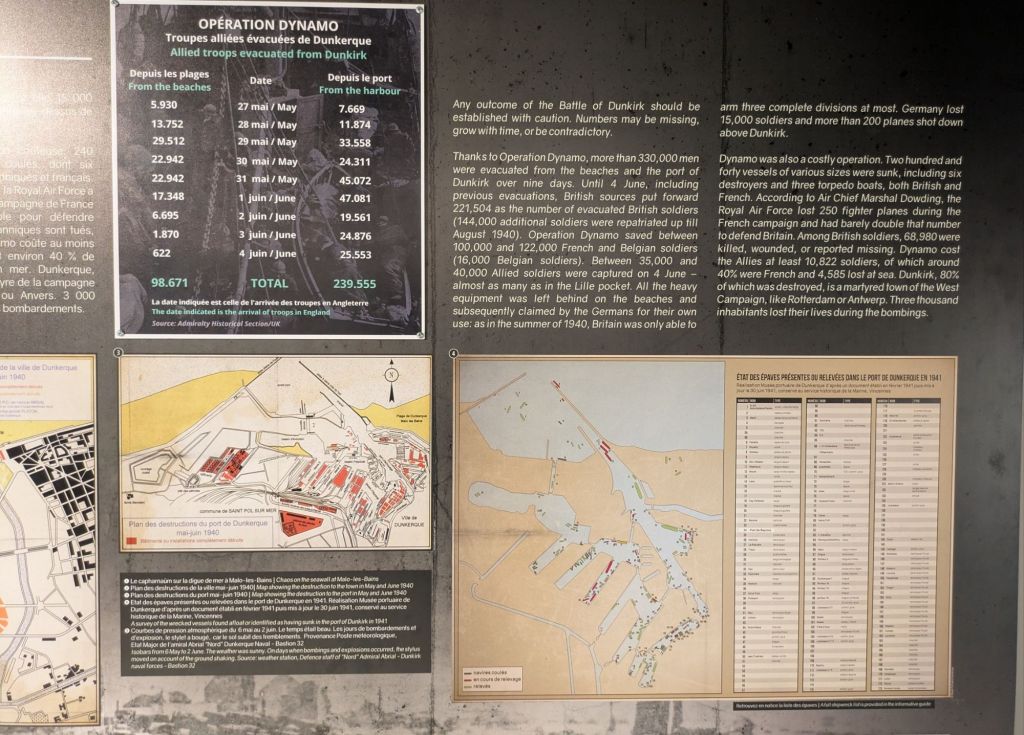
The big numbers shown in the panel at the museum: ~239,000 (71%) allied troops evacuated from the port and 98,000 (29%) from the beach; hence the lion’s share were evacuated from the port. Of the overall ~338,000 soldiers evacuated around ~28,000 (8%) were so thanks to the ~1,200 to 1,600 “little ships” involved, following orders from the Admiralty broadcast by the BBC (as seen on the movie). About 35 to 40,000 were taken as prisoners and there were around ~11,000 losses (87% evacuated, 10% prisoners, 3% losses).
In terms of nationalities: ~221,000 British soldiers (65%) were evacuated and between 100-122,000 (35%) French and Belgian soldiers (this comes as a point of conflict in the movie, where British soldiers had priority to get into the ships).
Figures of the Operation Dynamo
Looking at the material losses, the Allies lost around 240 ships of different sizes, including 6 destroyers and 3 torpedo boats, and around 250 aircraft fighters in the wider French campaign. Also 80% of the town of Dunkirk was destroyed.
Looking at the Little Ships part of the operation, even if in the overall picture their contribution in terms of soldiers evacuated was just 8%, it represented a boost in the morale and a success in the mobilization of civilians to support the evacuation.