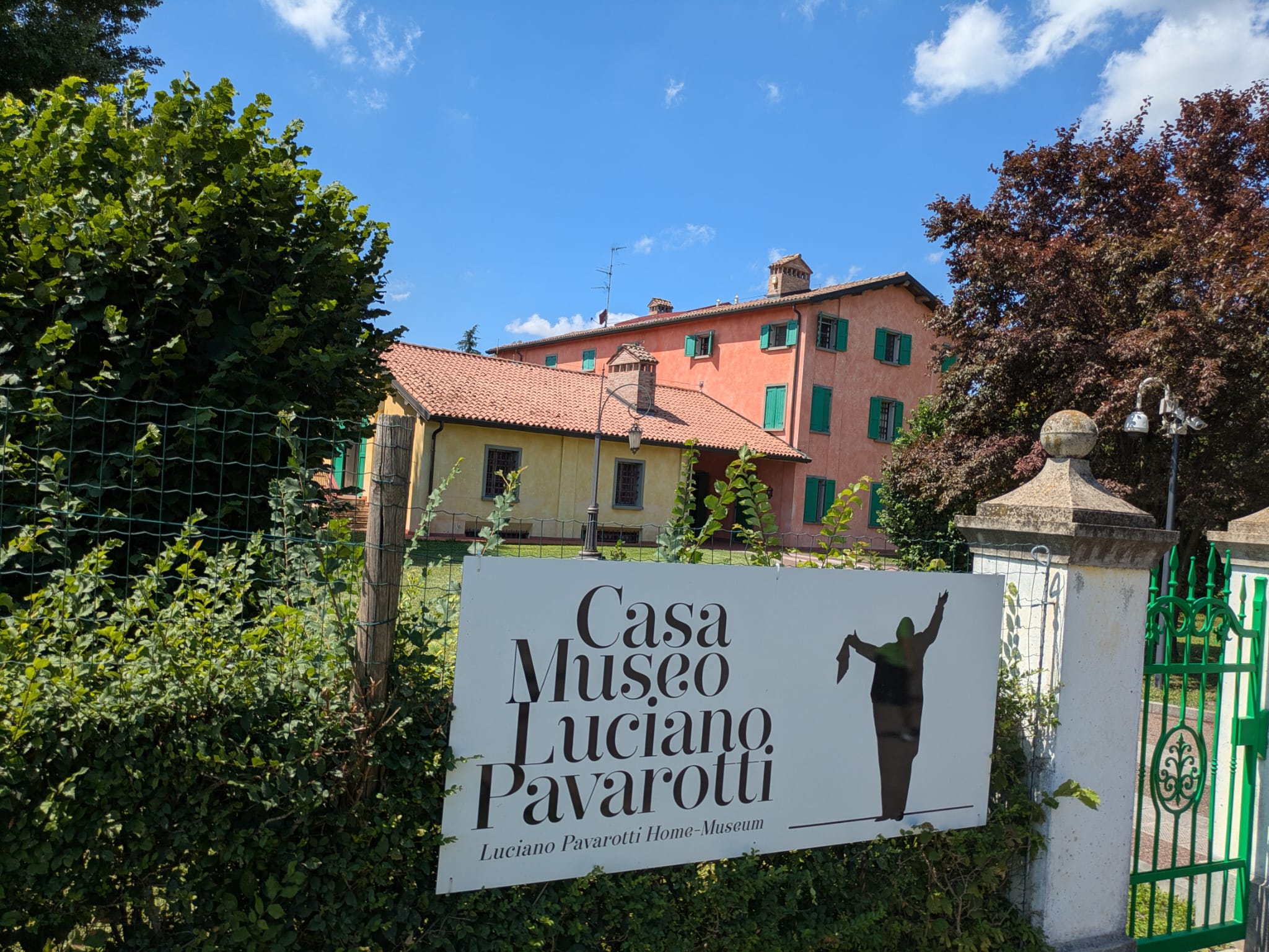
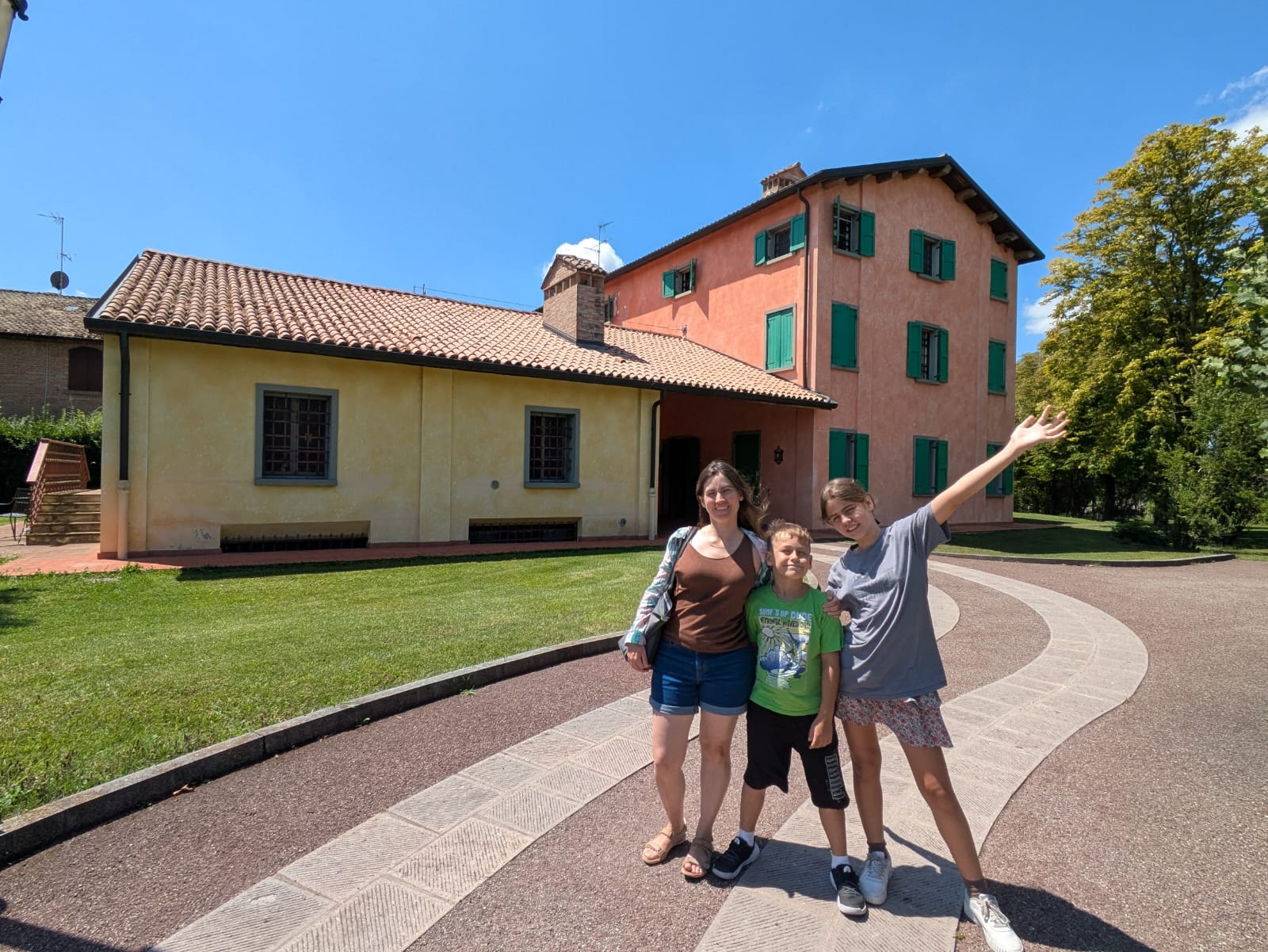
In the summer of 2025, during our holidays in Italy, we visited the Casa Museo Luciano Pavarotti, near Modena, the house where the great tenor spent the last years of his life. One of greatest names in the history of opera. In this post I share some of the pictures we took during the visit and a bit about the Maestro’s extraordinary life.
From Modena to the world
Luciano Pavarotti was born in Modena on 12 October 1935. His father Fernando was a baker and an amateur tenor, and his mother Adele worked in a tobacco factory. He grew up listening to his father’s records of the great tenors of the time and sang with him in Modena’s Corale Rossini choir.
Becoming a professional singer was not his first plan. He trained as a teacher and even worked in an elementary school for a couple of years before, encouraged by his mother, he committed to singing, studying with Arrigo Pola and later with Ettore Campogalliani.
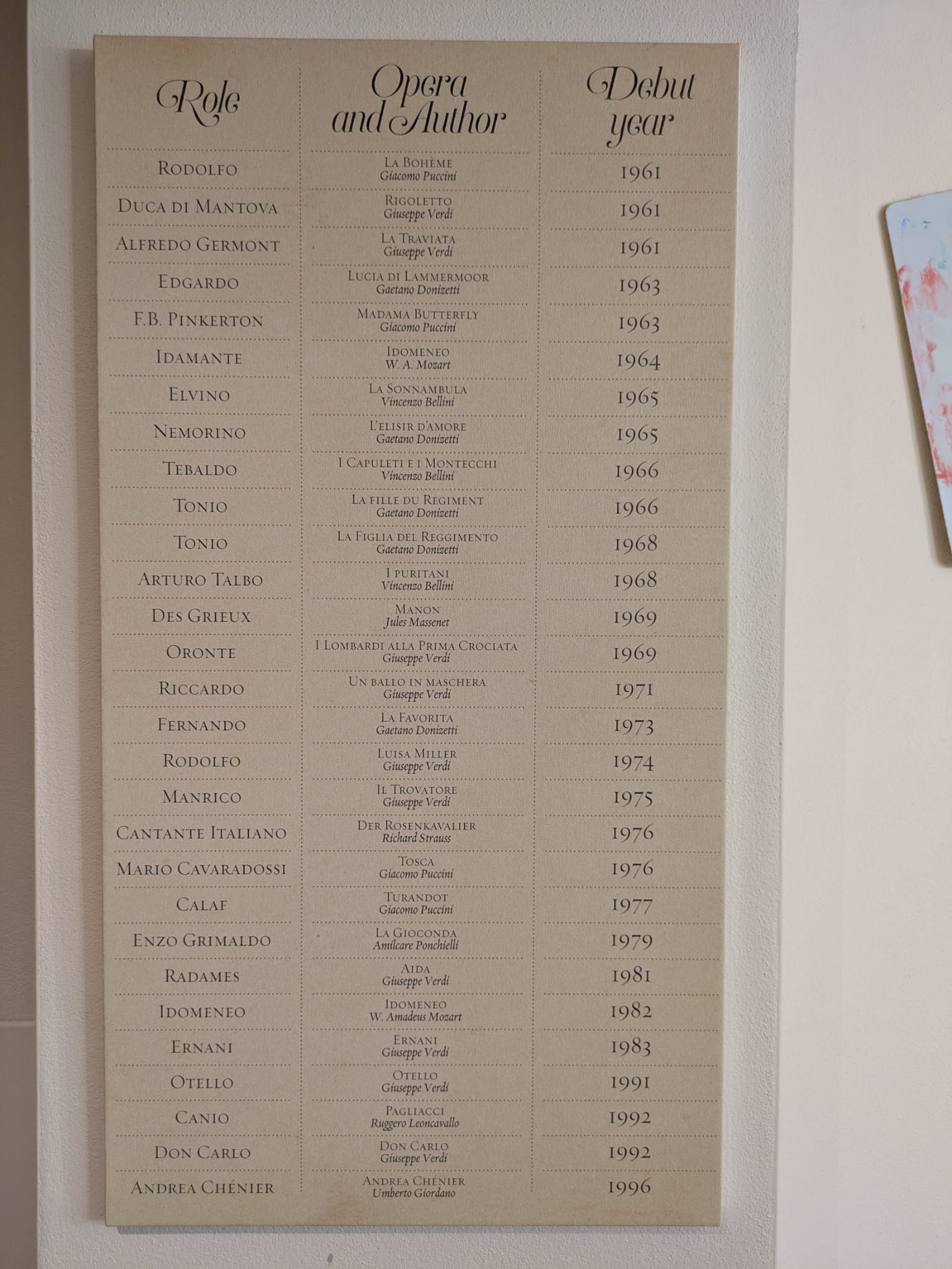
In 1961 he won the Achille Peri singing competition, and on 29 April of that year he made his operatic debut in Reggio Emilia as Rodolfo in Puccini’s La Bohème. From there his career took off: the Royal Opera House in London in 1963; La Scala in 1965, in a La Bohème conducted by Herbert von Karajan and soon every major opera house in the world.
The Three Tenors and a new audience for opera
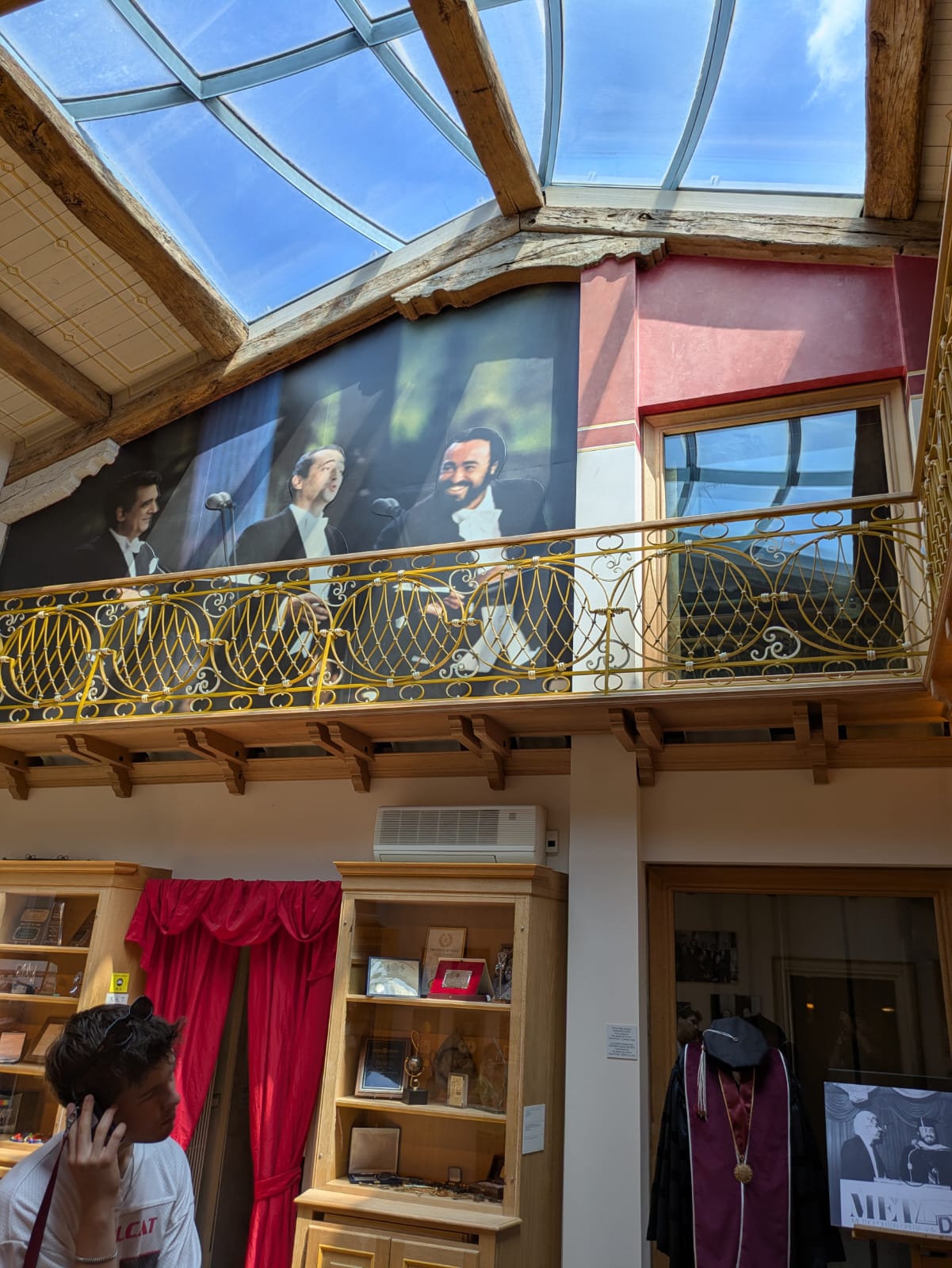
Pavarotti took the opera out of opera theatres. On 7 July 1990, on the eve of the football World Cup final, he sang with Plácido Domingo and José Carreras at the Baths of Caracalla in Rome, conducted by Zubin Mehta. That first Three Tenors concert became a global phenomenon and brought opera to millions of people who had never set foot in a theatre. The large photo mural above the hall celebrates that concert.
Pavarotti & Friends
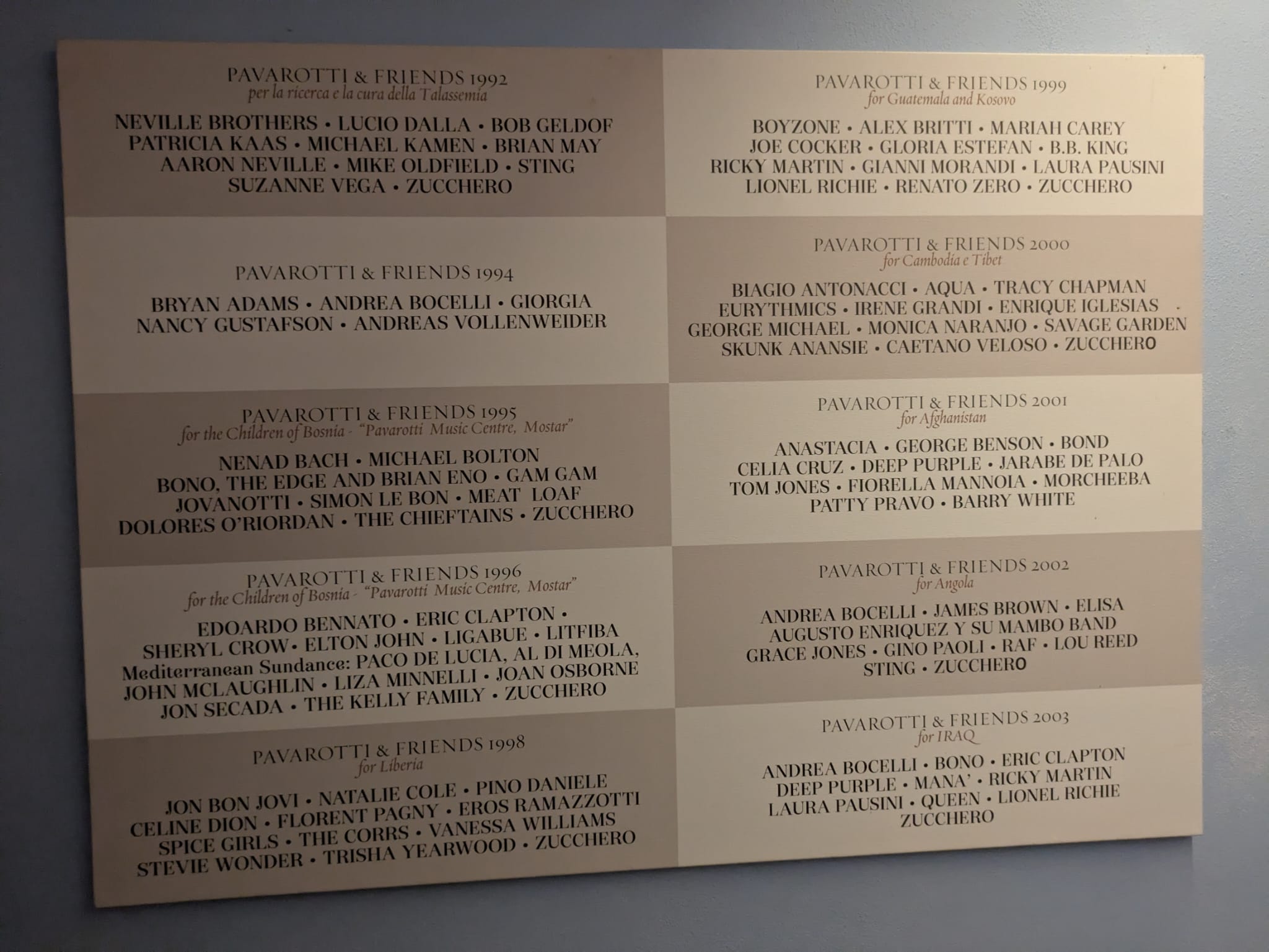
Between 1992 and 2003 he organised ten editions of Pavarotti & Friends, charity concerts held in Modena in which he shared the stage with pop and rock stars, from Bono, Sting or Eric Clapton to the Spice Girls, Queen or Deep Purple, raising money for humanitarian causes such as the children of Bosnia, Kosovo, Afghanistan or Angola. A panel in the museum lists them all.
Visiting the house
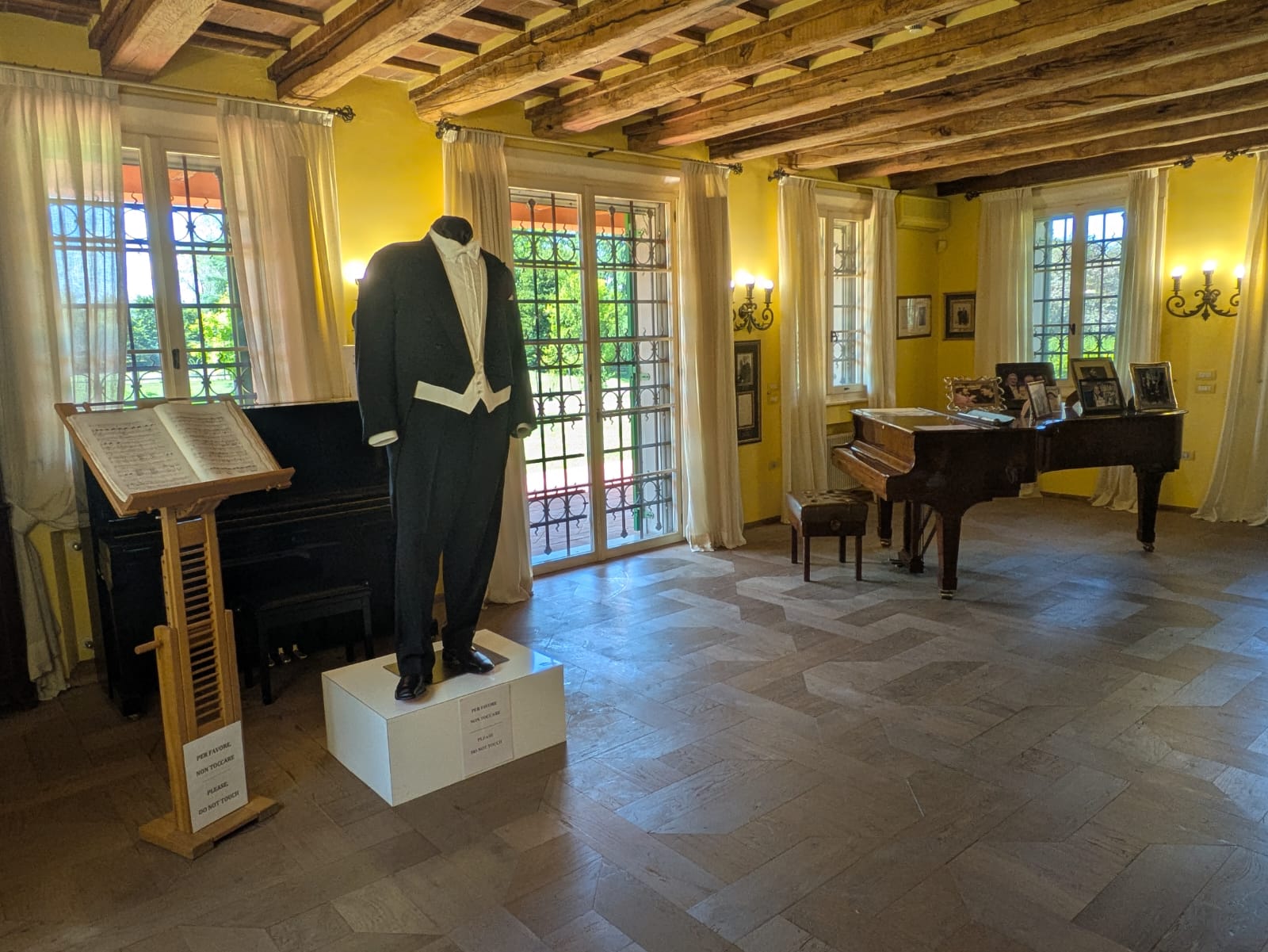
The museum is not just a collection of memorabilia: it is his actual home, built in the early 2000s, where he lived his last years with his wife Nicoletta and their daughter Alice, and which has been kept as it was. The main living room holds his Steinway piano, where he received friends and gave free lessons to young singers, his concert tailcoat and his famous white handkerchief.
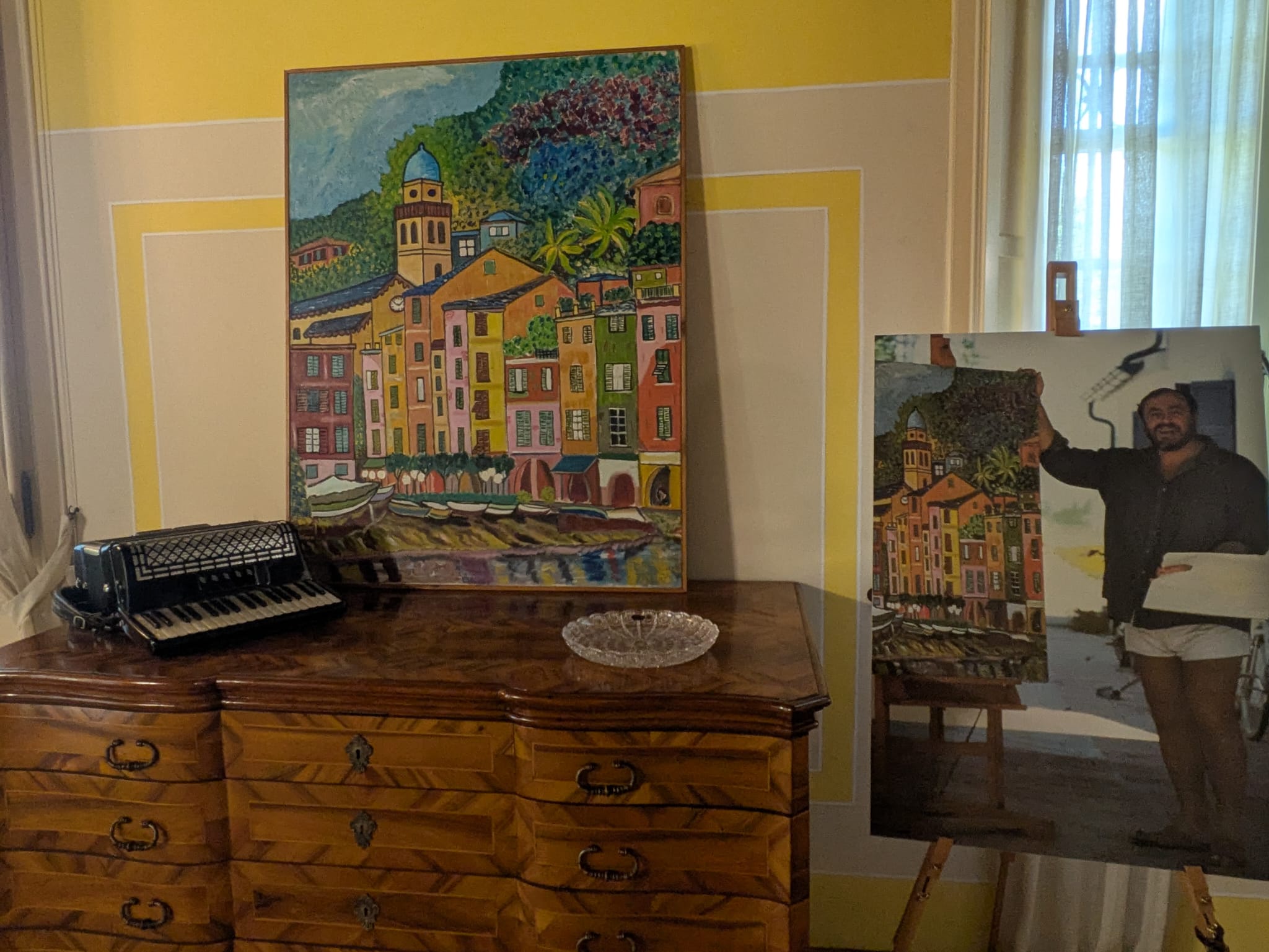
He also painted. His colourful paintings, sometimes signed with the pseudonym LUPA, hang all over the house. Next to this view of Portofino there is a photo of him working on that very painting, and his accordion.
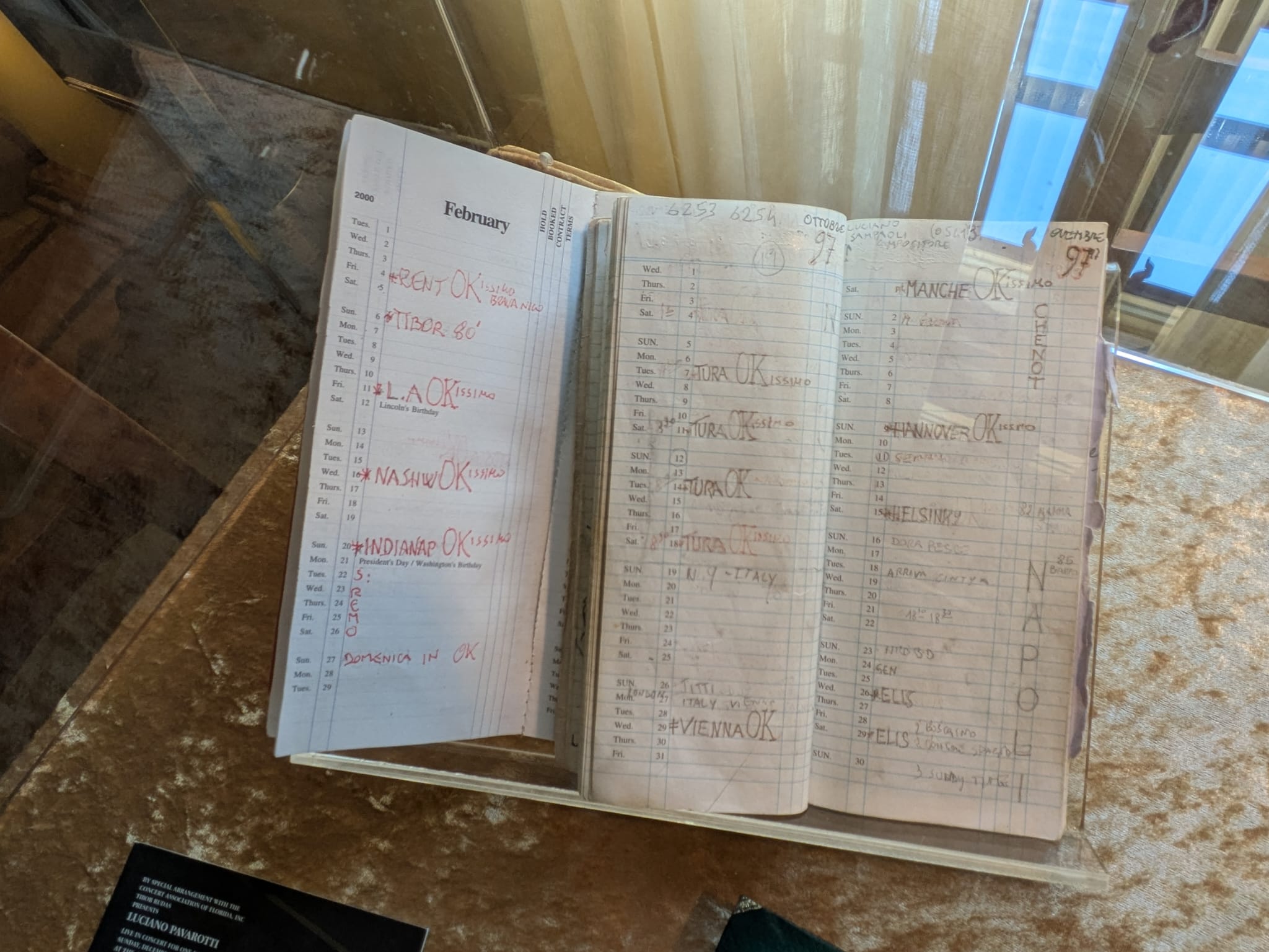
Another curiosity are his working agendas, filled with tour dates that he marked “OK” as each concert got confirmed: L.A., Nashville, Indianapolis, Vienna, Hannover, Helsinki…
A nice surprise for a Spaniard: among the letters from world personalities on display, one from King Juan Carlos I, dated January 1998, thanking Luciano for an “extraordinary” concert at the Teatro Real and for his “generous and selfless collaboration”.
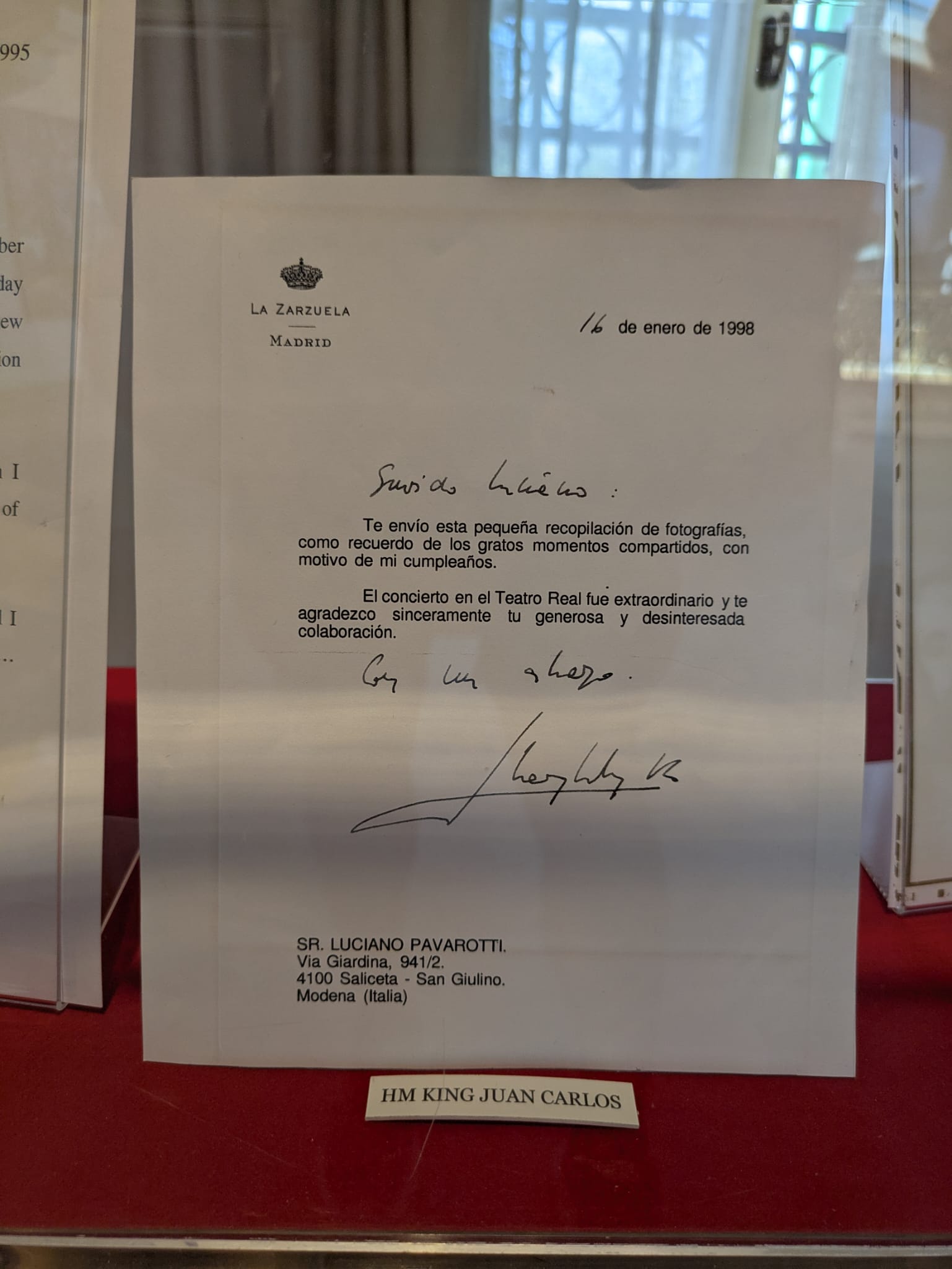
That concert was held on January 5th, to commemorate the 60th anniversary of King Juan Carlos. It was another concert with the Three Tenors and part series of concerts on the eve of January 6th (the Epiphany, celebrated in Spain as the day of the (three) Kings) organized by Plácido Domingo since 1991. An article from the paper El Mundo described the programme as follows: “Candide” by Leonard Berstein, main arias from operas such as “Tosca”, “Samson and Delilah” and “Cavalleria Rusticana”, as well as popular songs like “Granada”, “Caminito” and “Moon River”.
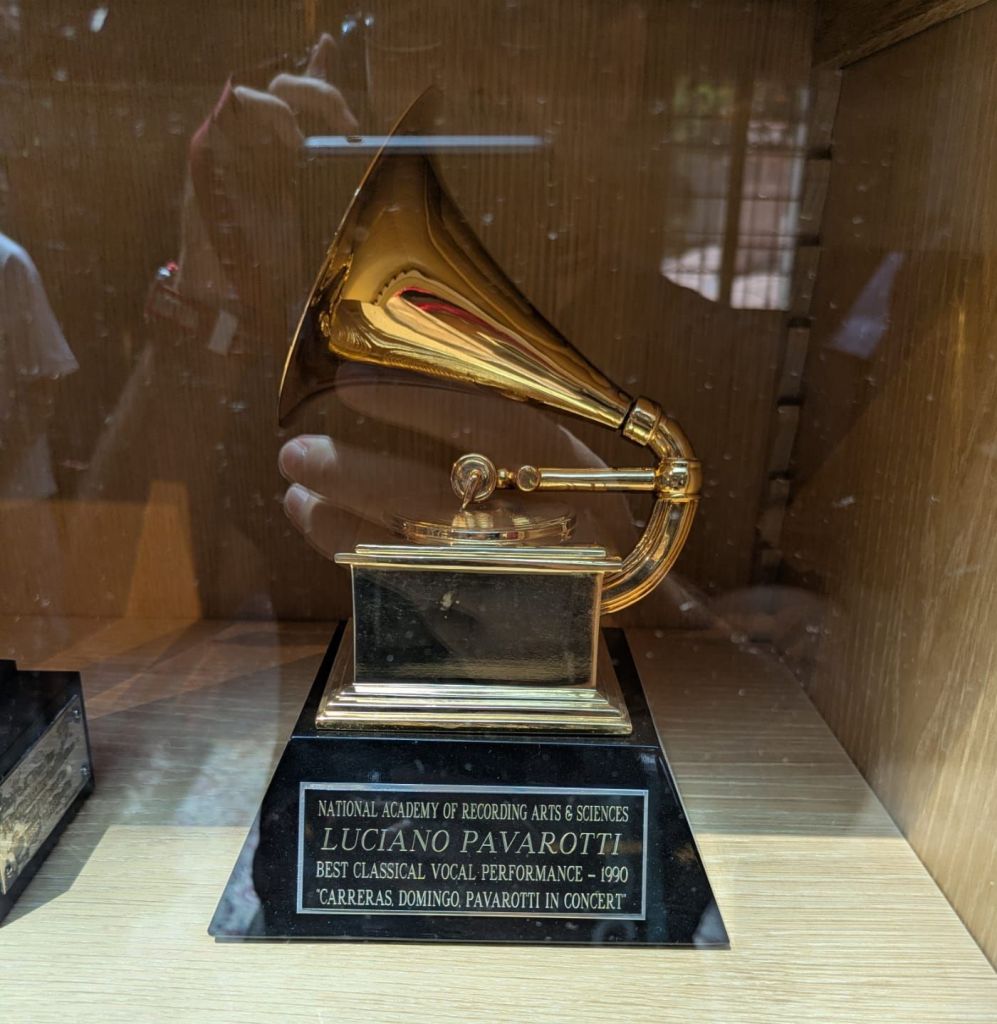
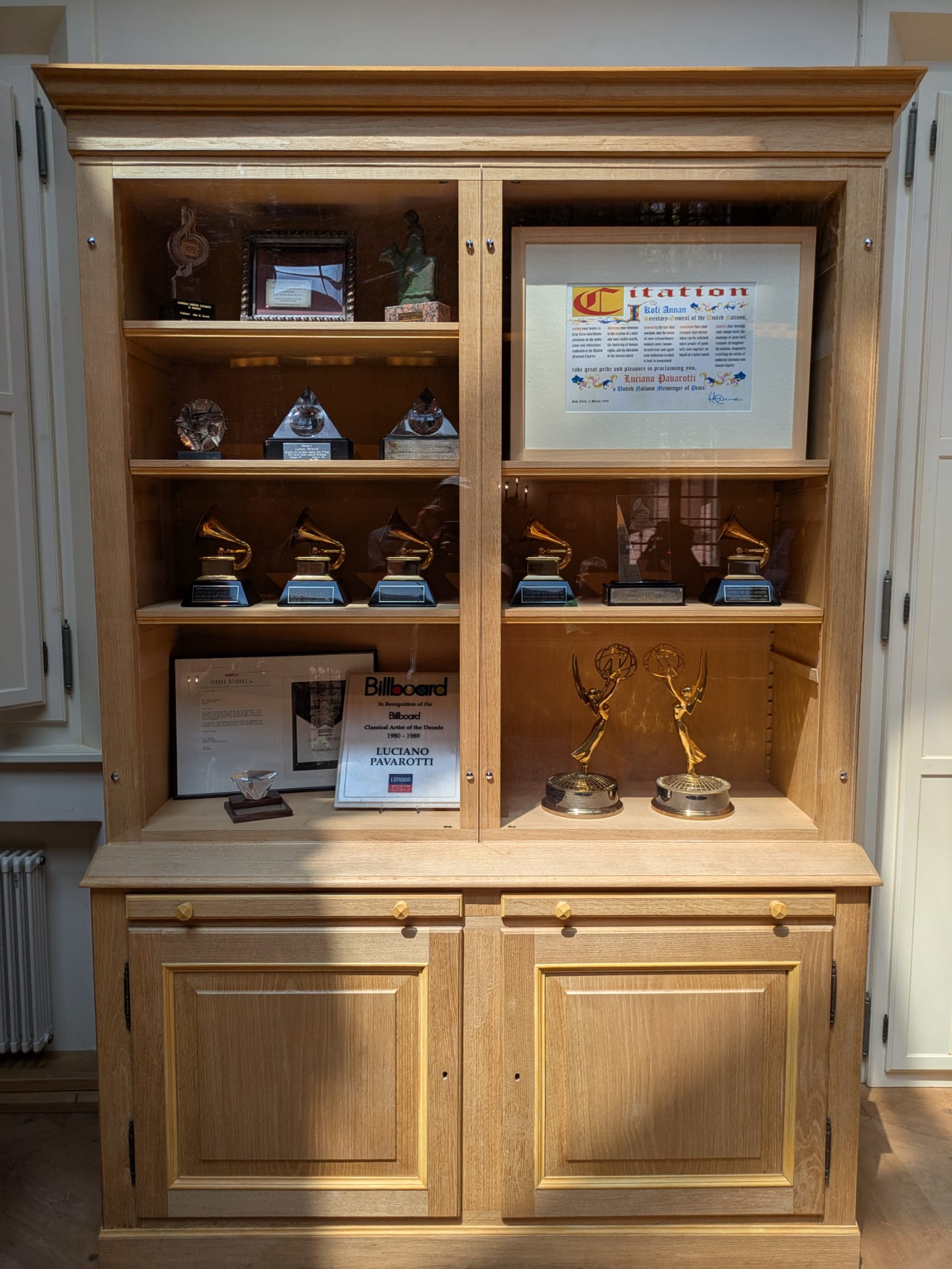
The trophy cabinet is impressive: his five Grammys (including the 1979 one for ‘O sole mio and the 1990 one for the first Three Tenors concert), two Emmys, the Billboard award for Classical Artist of the Decade 1980-1989 and many other honours.
Costumes, roles and caricatures
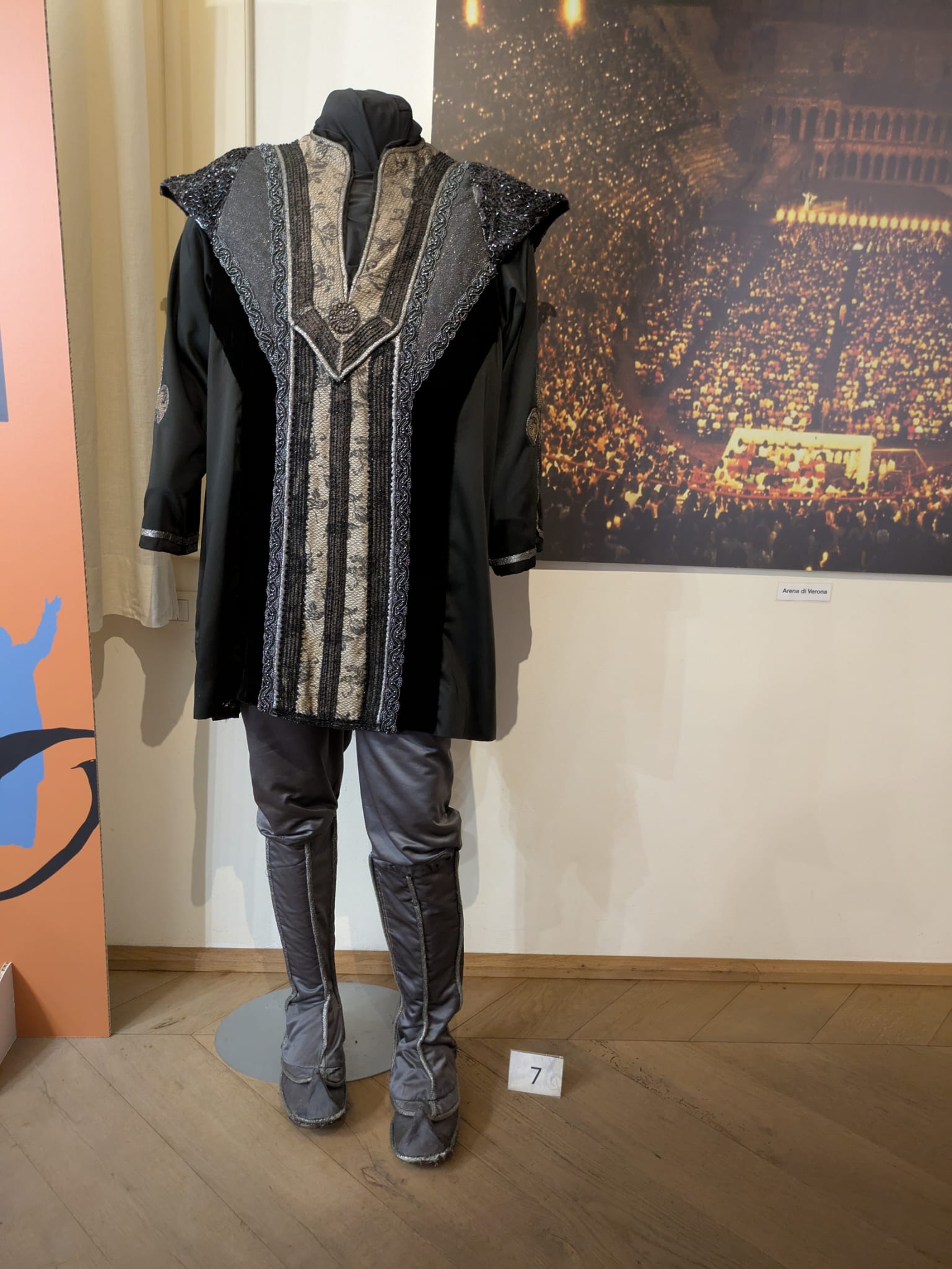
A couple of rooms display costumes from some of the 29 roles he performed between 1961 and 1996. The one below is one from Turandot (Puccini) which includes the famous aria “Nessun Dorma”, displayed in front of a photo of a performance at the Arena di Verona in 1977.
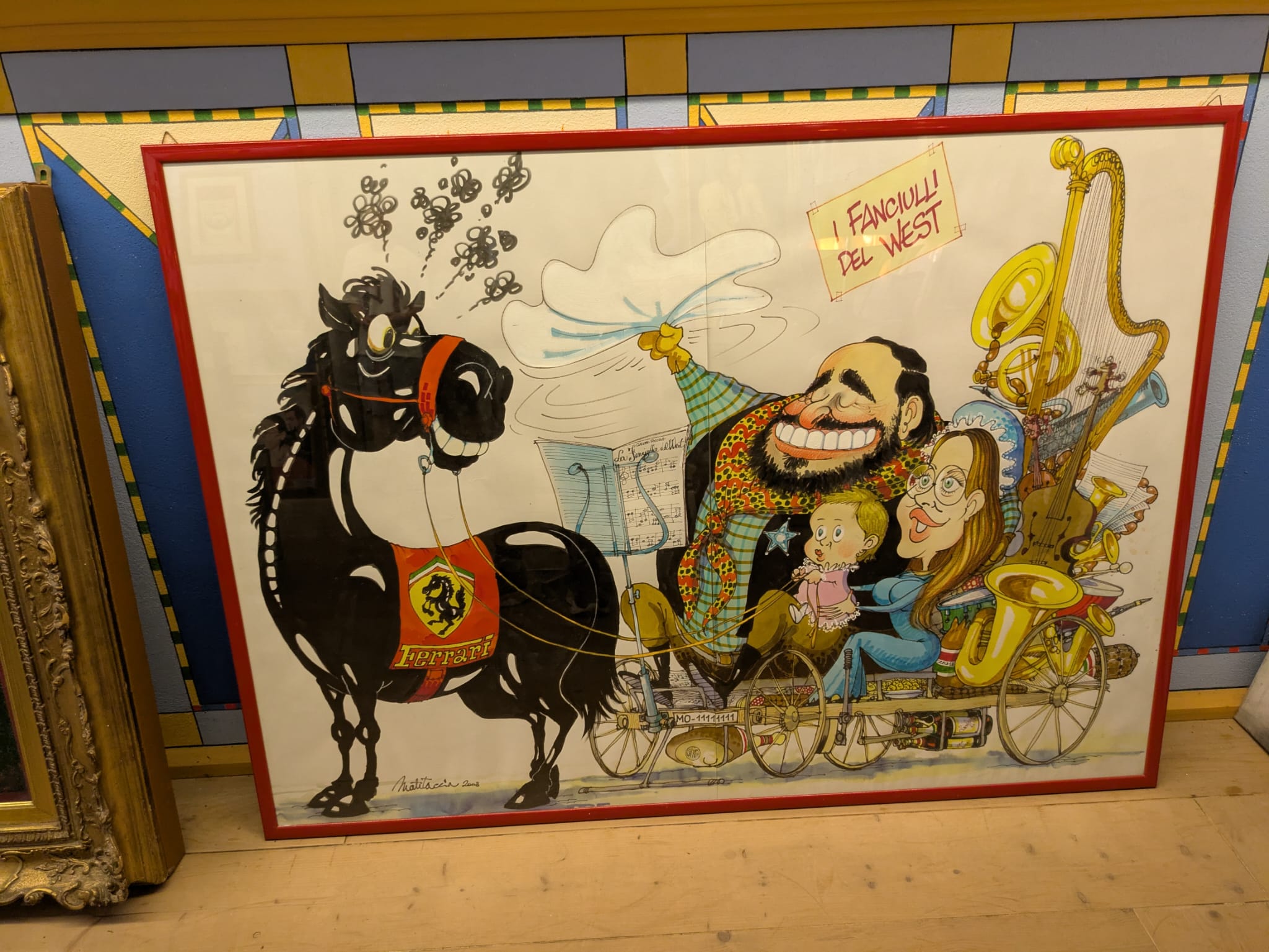
And since the museum is in Modena, land of Ferrari: a caricature of the family as “I fanciulli del west” (a reference to one of Puccini’s opera), with the horse wearing a Ferrari blanket.
The connection with Puccini
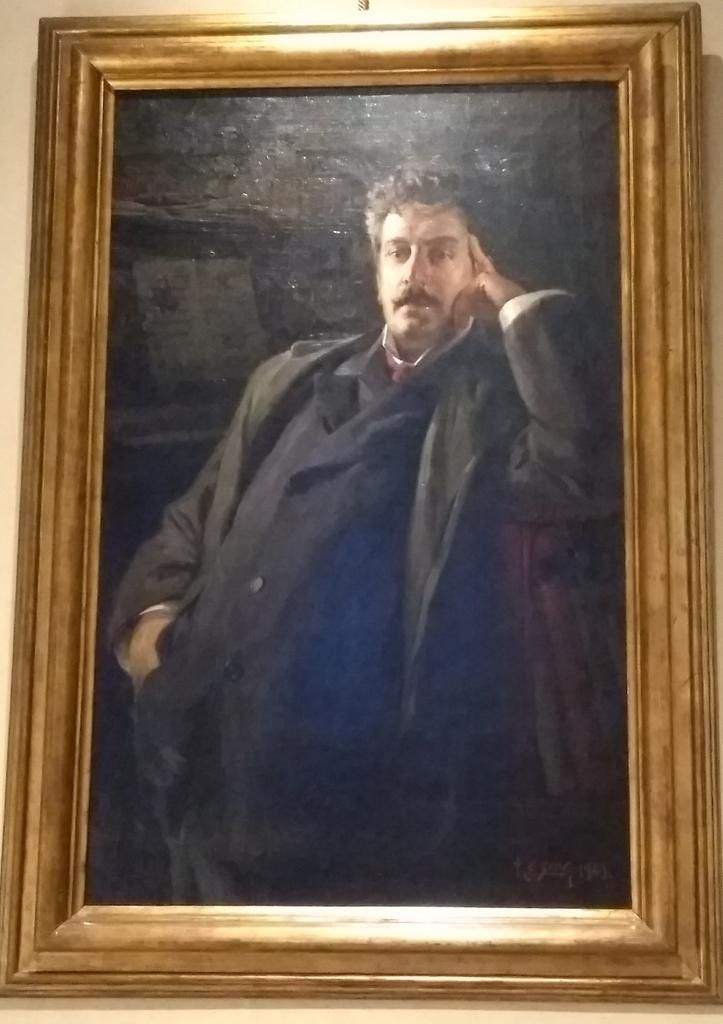
Puccini (born in 1858) created some of the greatest characters in opera; Pavarotti gave many of them their most famous voice. His debut was Rodolfo in La Bohème, and “Nessun dorma”, from Turandot, became his signature aria: his last major public appearance was singing it at the opening ceremony of the 2006 Winter Olympics in Turin.
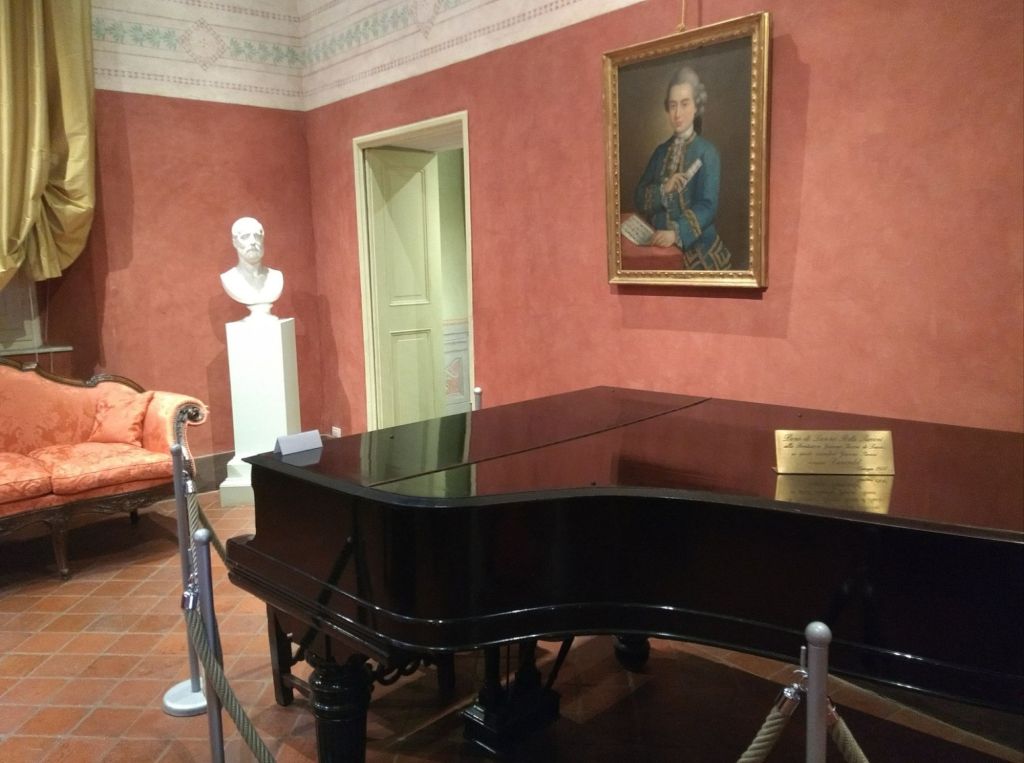
A few years earlier, in 2019, during a trip to Tuscany we visited the birthplace of Giacomo Puccini in Lucca. Two generations, two houses less than two hours apart, one same musical language.
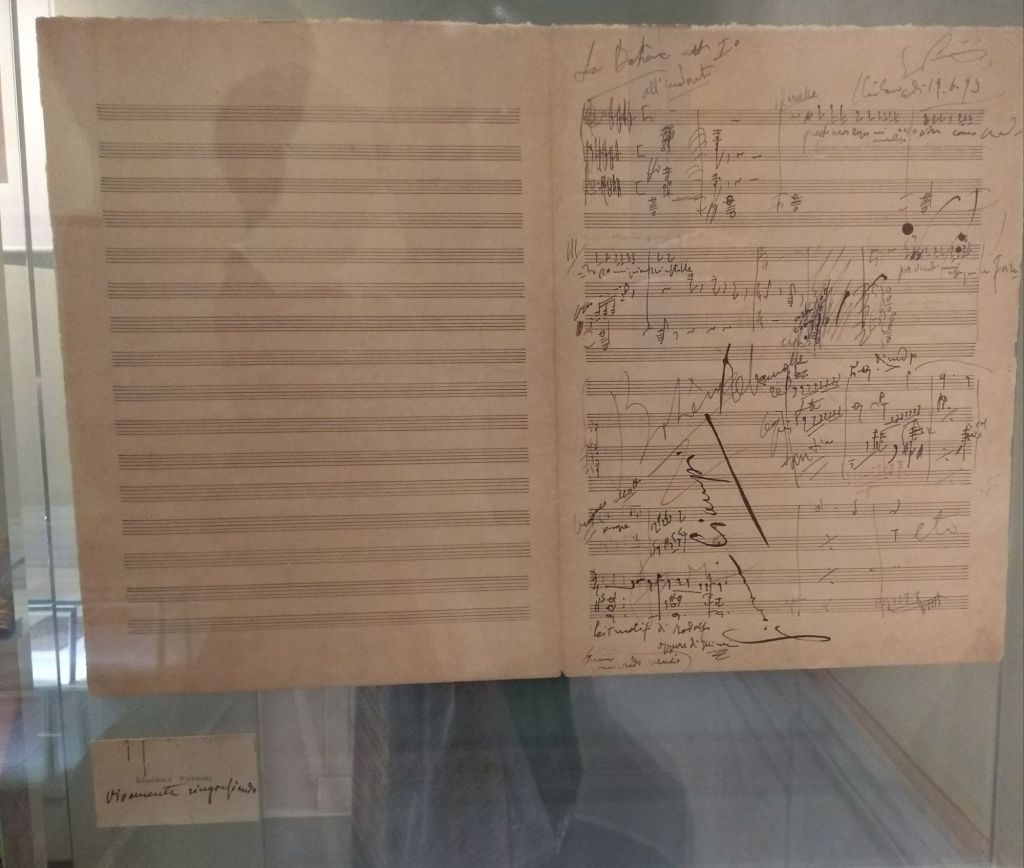
This sketch was rediscovered and presented at the museum in 2012. At the top right is the heading “La Bohème atto I°” with “all’ moderato” (or similar), the date “Lucca 19.6.93,” and Puccini’s signature. Visible text includes the opening of Act I (“questo mar rosso mi ammollisce…” — Marcello’s lines about painting the Red Sea), plus other melodic and harmonic sketches, crossings-out, and annotations such as “leitmotif di Rodolfo. Oppure di Mimì. Buono ma credo vecchio.” There are also tempo indications, waltz-like ideas, and notes that later fed into Act III (Mimi’s illness). The small display card below identifies it as by Giacomo Puccini and references the marking “Vigorosamente impetuoso” (vigorously impetuous).
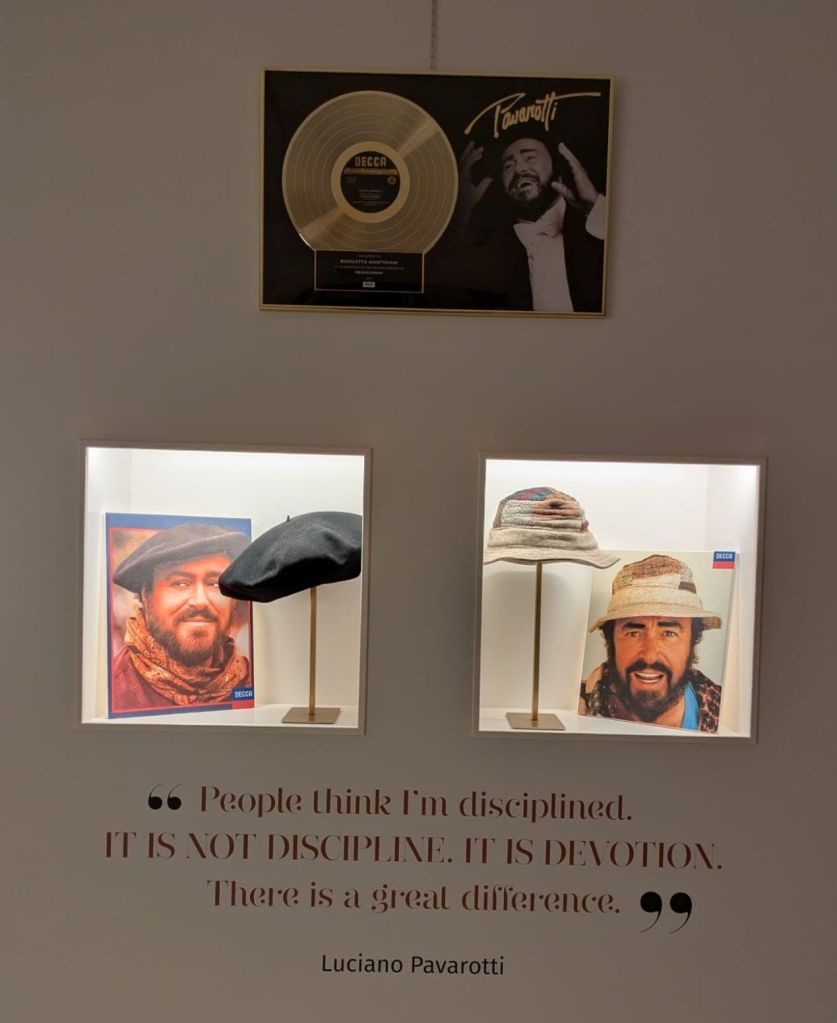
Pavarotti died in Modena on 6 September 2007. Visiting his house you feel closer to the person than to the myth: the teacher who almost did not become a singer, the painter, the perfectionist. One of the walls carries his quote: “People think I’m disciplined. It is not discipline. It is devotion. There is a great difference.“
If you are anywhere near Modena, don’t miss it.


