Tag Archives: engineering

Château du Clos Lucé (Amboise): Leonardo da Vinci’s last home

This is a post about the Château du Clos Lucé in Amboise, the place where Leonardo da Vinci spent his last three years (1516-1519) and where he died, a guest of King Francis I, who had appointed him “premier peintre, ingénieur et architecte du roi” (“first painter, engineer and architect to the king”).

I first visited it with the family in December 2018, during a Christmas road trip to The Netherlands with a stop over in the Loire. We returned in late October 2025, seven years later.
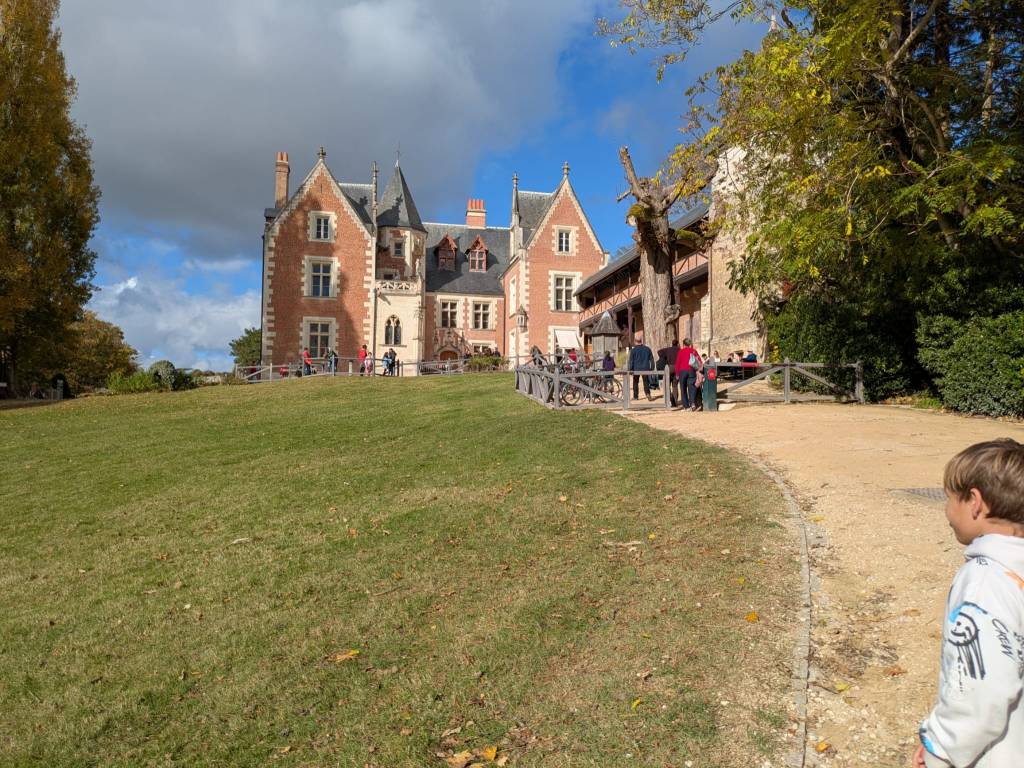
The château, built of pink brick and tuffeau stone.

The estate was given by Louis XI to Étienne le Loup in 1471, who built the manor then known as Château du Cloux. In 1490 it was bought by Charles VIII and became a summer house of the kings of France; Louise of Savoy, regent of France, raised her children there, among them the future Francis I. In 1516, after the death of his patron Giuliano de’ Medici, Leonardo accepted the king’s invitation and travelled to France with a few pupils and three of his paintings, including the Mona Lisa.

The château stands about 400 metres from the royal Château d’Amboise, and the visit shows the entrance to an underground passage that connected the two. Legend has it that Francis I used it to visit Leonardo.

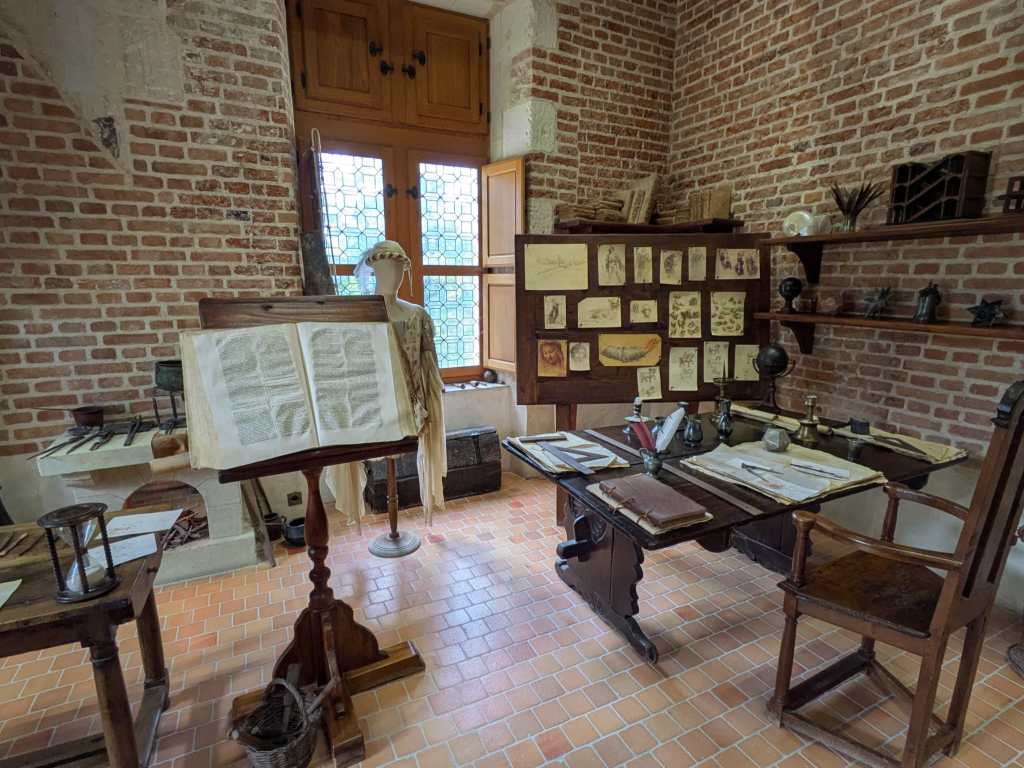
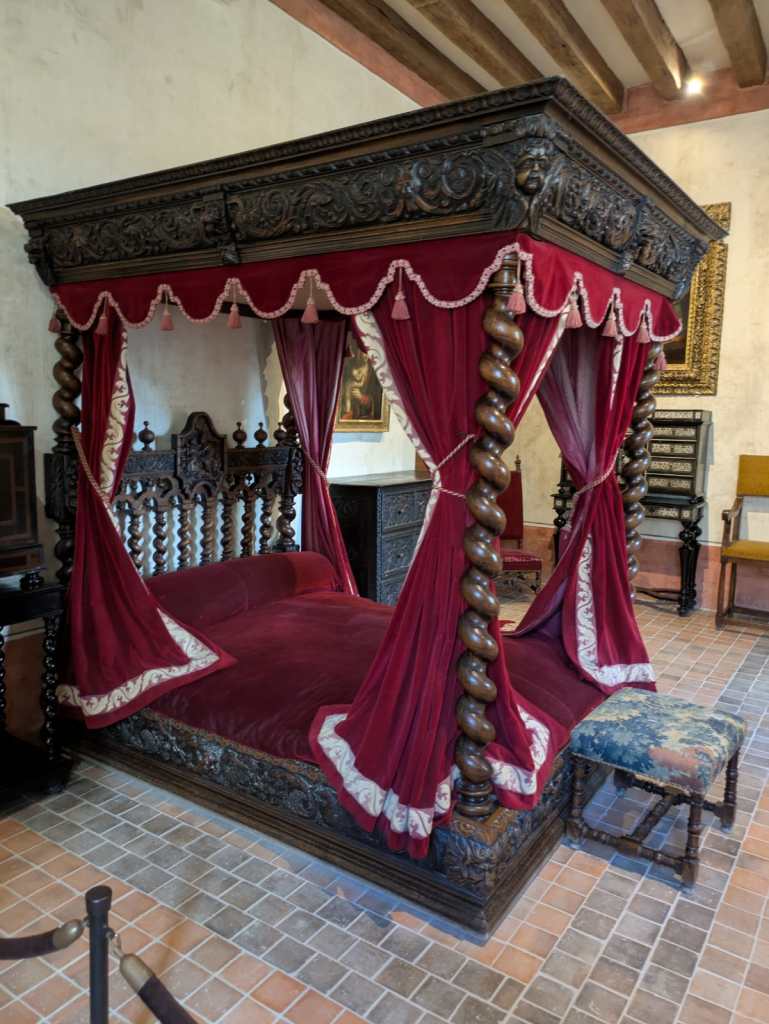
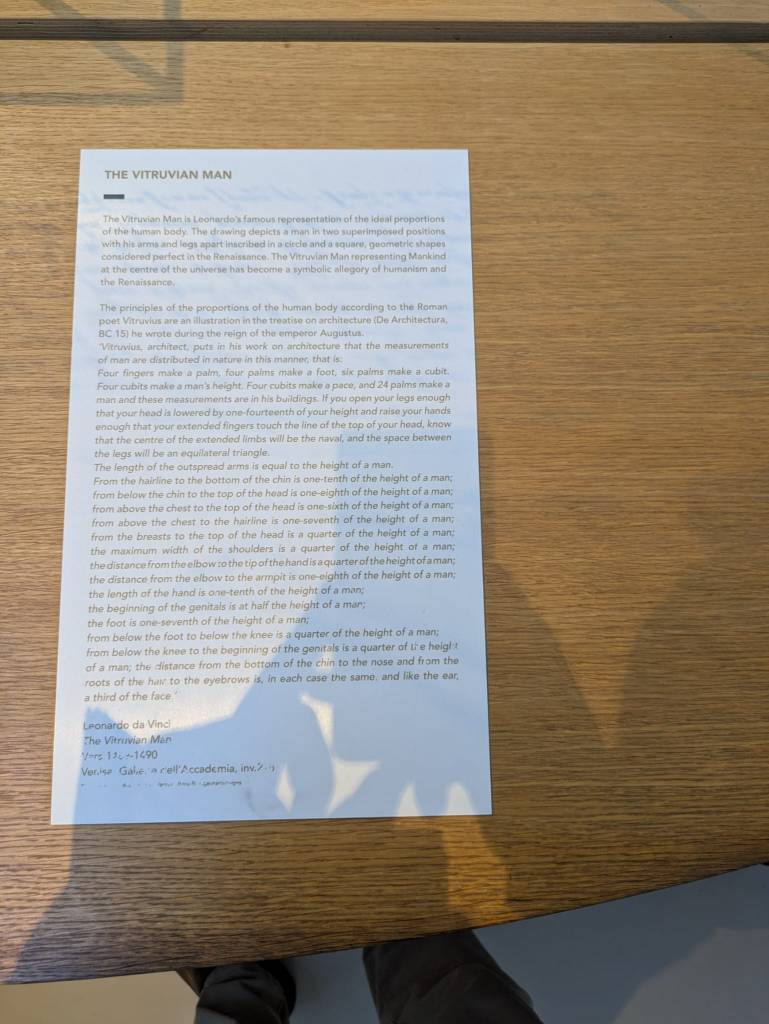
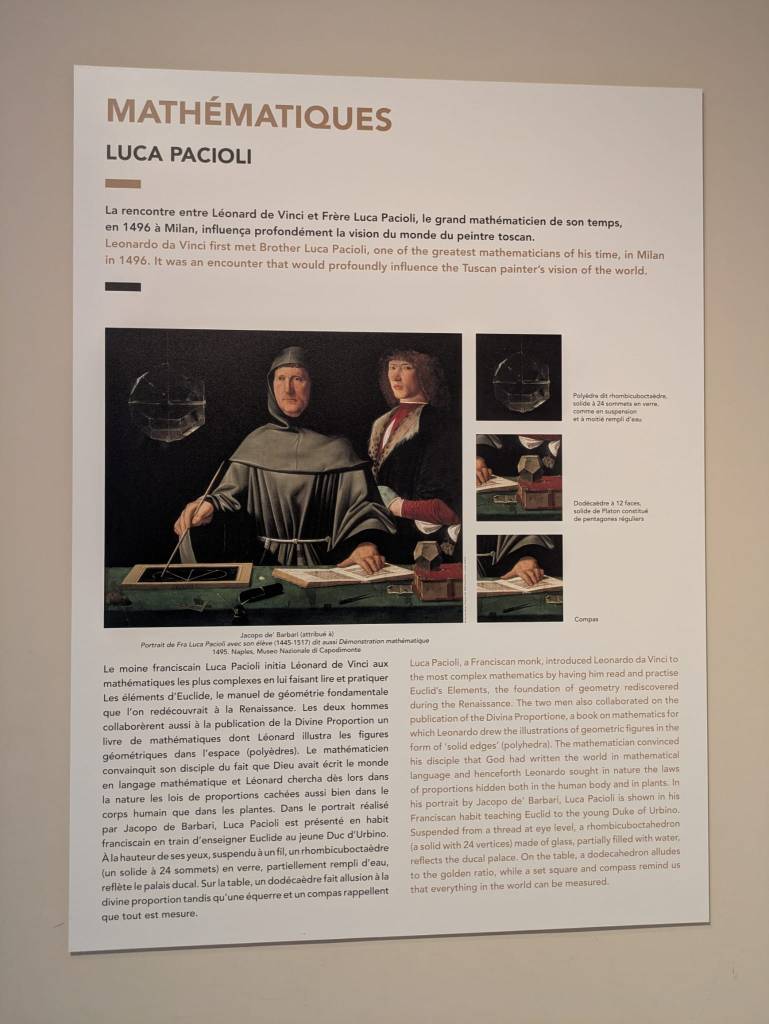
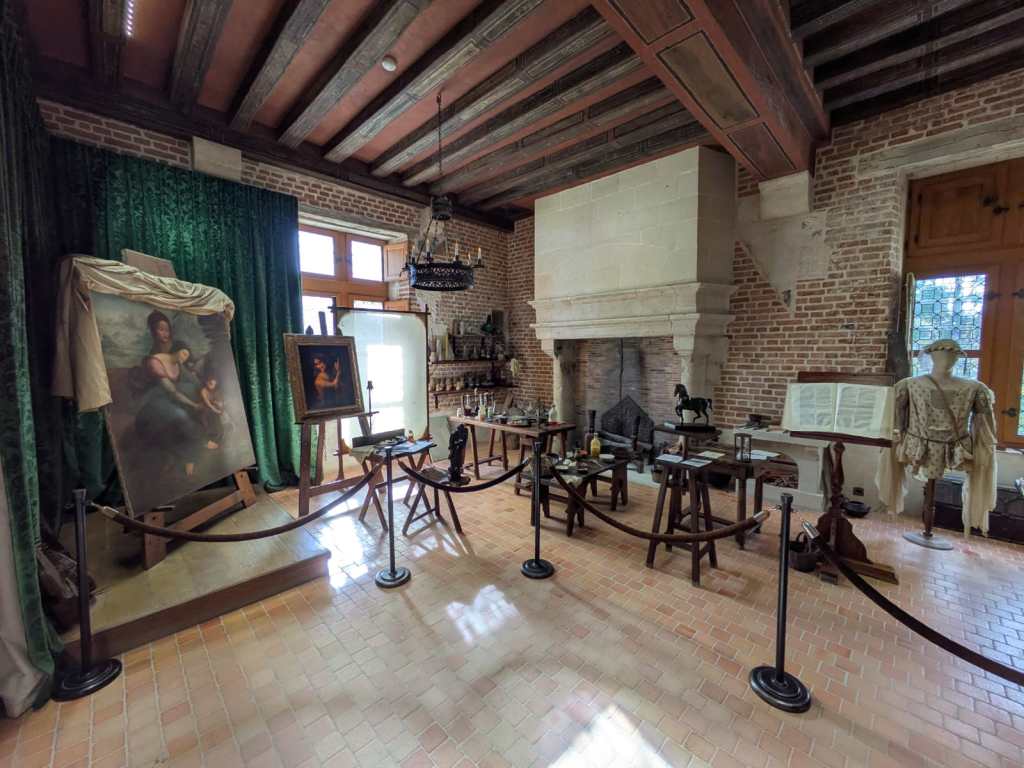
Today Clos Lucé is a museum dedicated to Leonardo. The bedchamber, the studio (bottega) and the study are evocations decorated with period furniture, as no description of his rooms has survived. The museum holds a collection of 40 models built from his drawings, didactic panels (the Vitruvian Man, his encounter with the mathematician Luca Pacioli…), immersive projections of his works, and a hologram recreating the visit of Cardinal Louis of Aragon: thanks to the account of the cardinal’s secretary, Antonio de Beatis, we know that the Mona Lisa, the Virgin and Child with Saint Anne and the Saint John the Baptist, all three now at the Louvre, were kept here at the time.
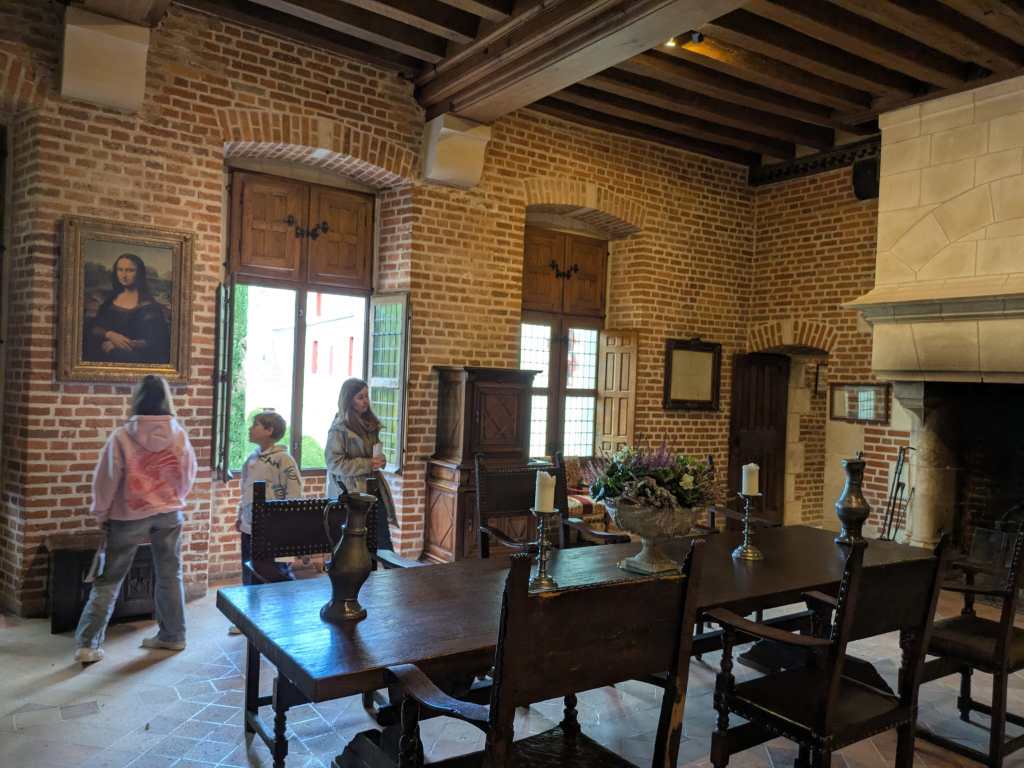
The great hall, furnished in period style; on the wall, a copy of the Mona Lisa.
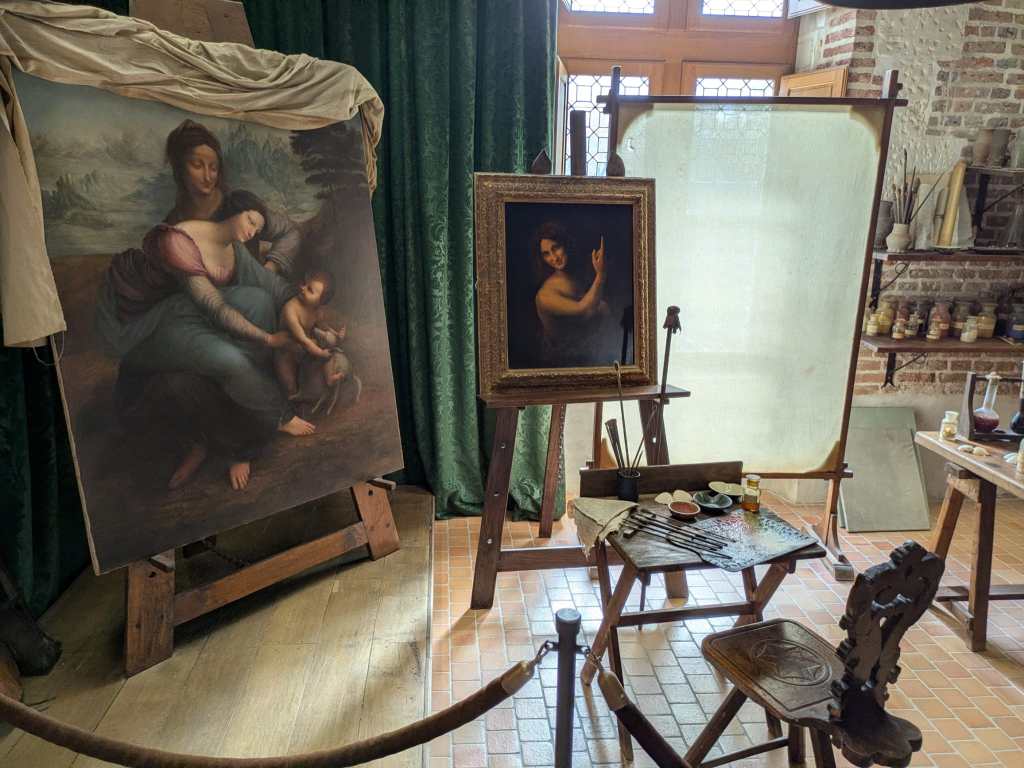
The studio or bottega, with copies of the Saint Anne and the Saint John the Baptist on the easels.
Brushes and pigments in the studio.
The study.
The bedchamber and the bed where Leonardo passed away.
Panel on the Vitruvian Man.
Panel on Luca Pacioli, who introduced Leonardo to mathematics in Milan in 1496.
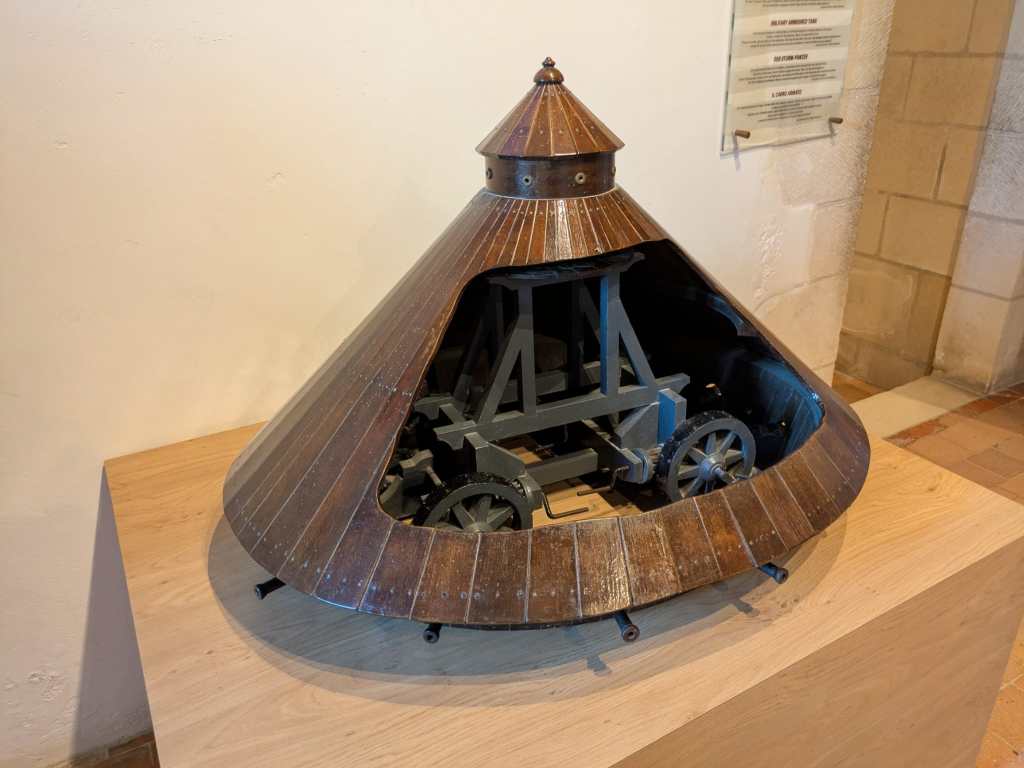
Model of the armoured vehicle.
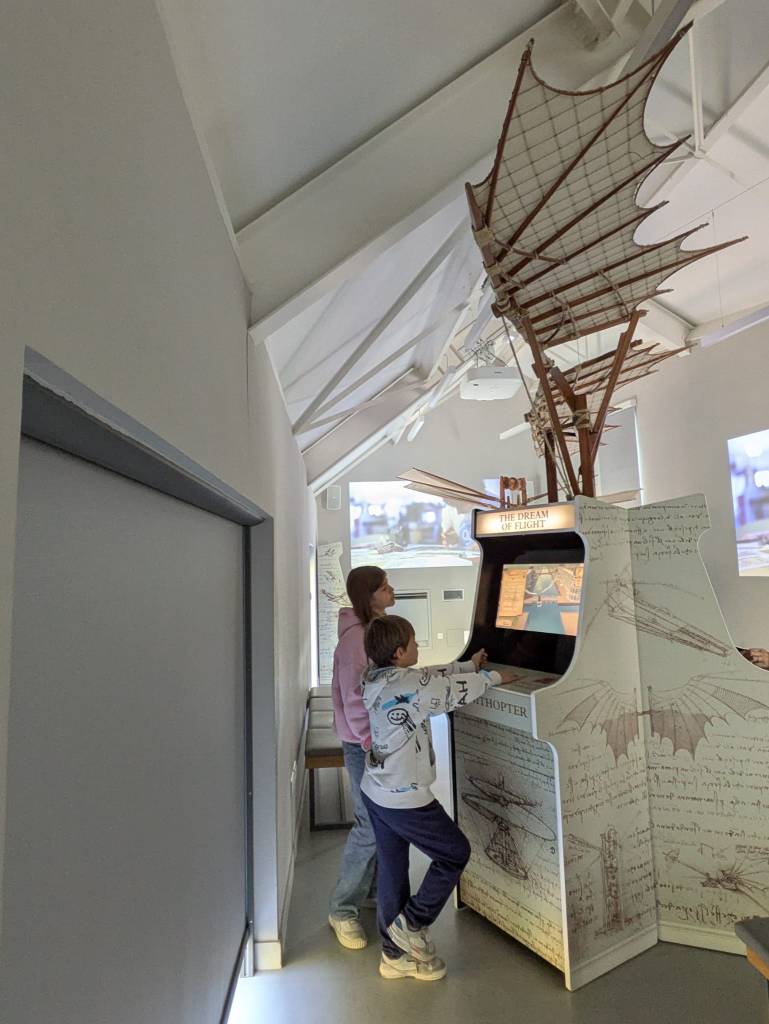
“The dream of flight”: the kids try out an ornithopter.
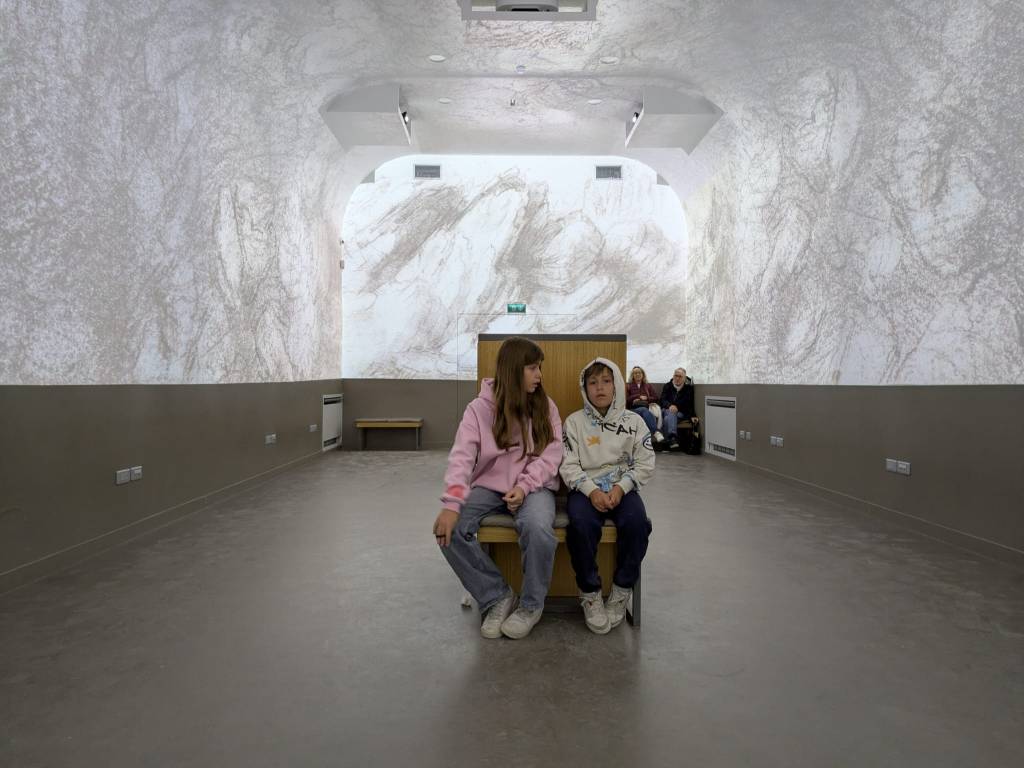
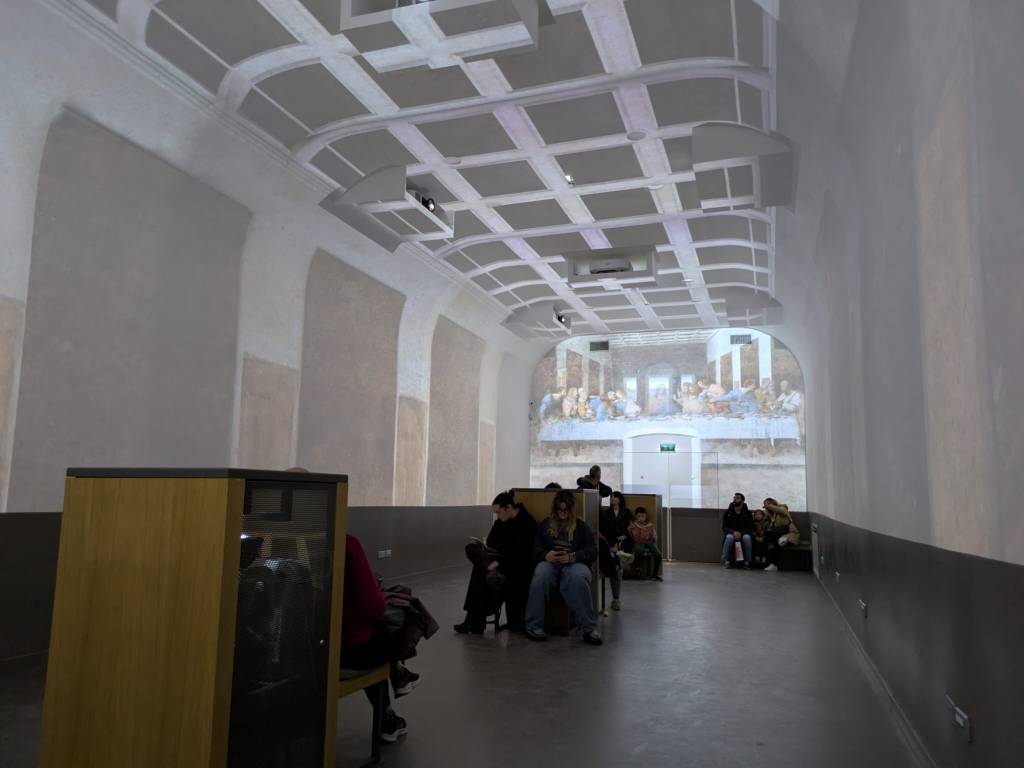
The immersive projection room.
The Last Supper, projected in the immersive room.
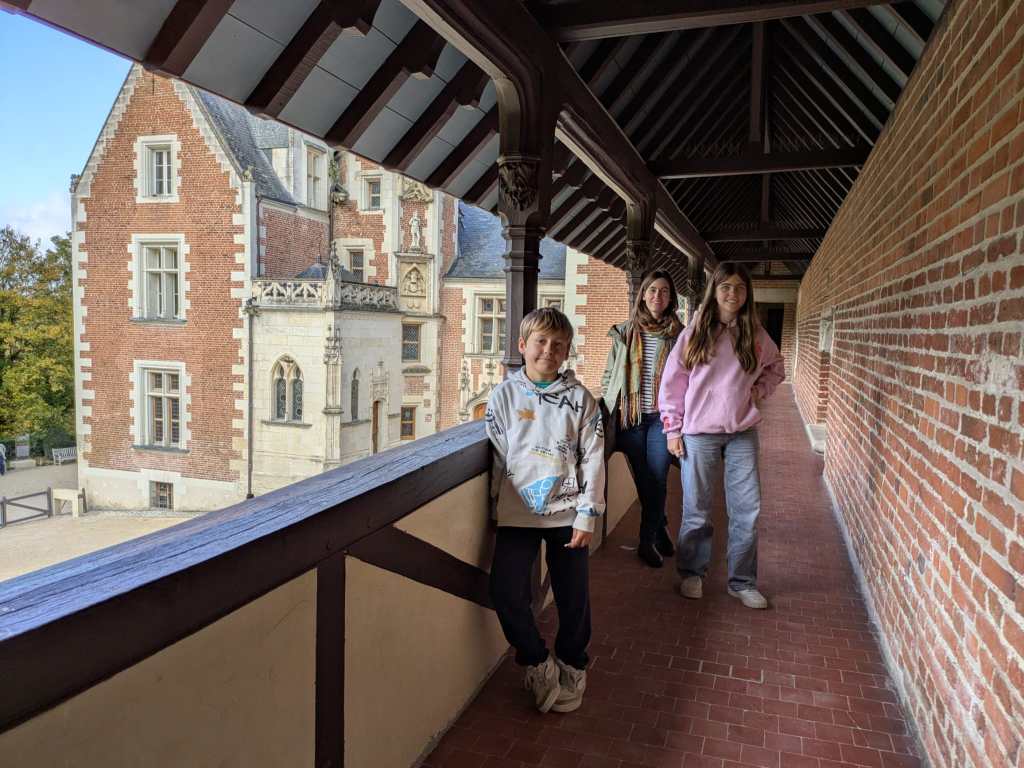
The covered gallery.

In the park, crossed by the Amasse stream, more models and life-size constructions bring his engineering drawings to life: the self-supporting bridge, the armoured vehicle, flying machines…
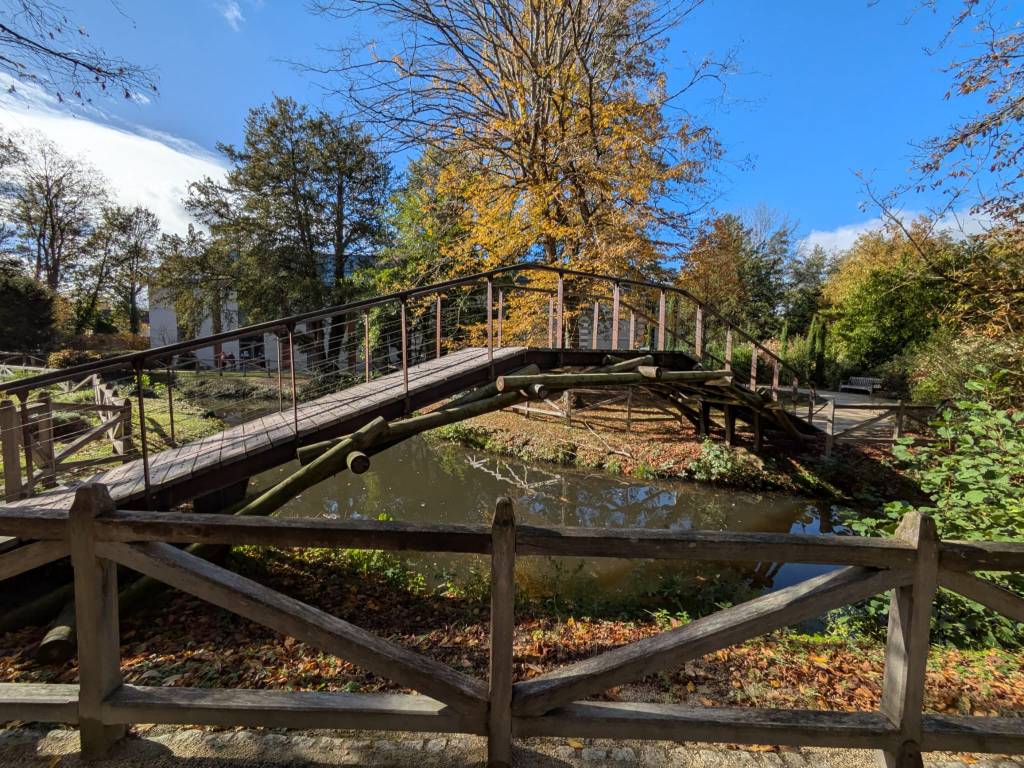
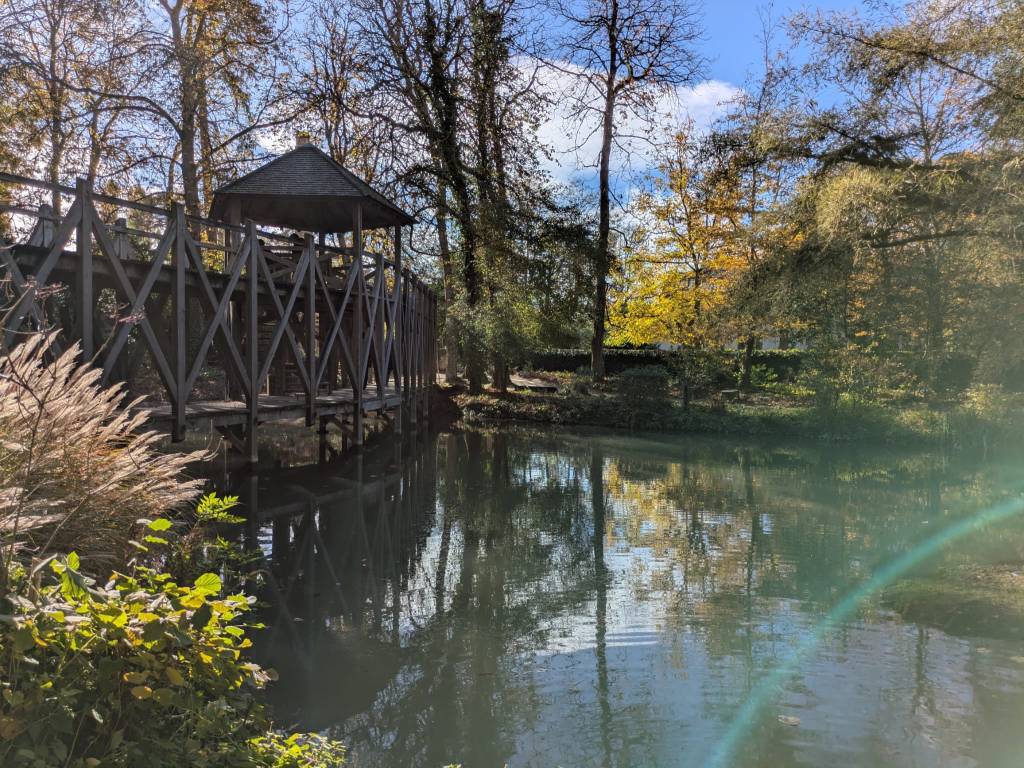
A bridge over the Amasse, in the park.
The pond in the park.

After the 2018 visit we wondered about the balance between the artistic and the military engineering sides of Francis I’s patronage. As Luca put it neatly: Leonardo was invited to be the DARPA of sixteenth-century France. Reading Walter Isaacson‘s “Leonardo da Vinci” biography, which I started soon after, confirmed the impression from the very first pages: when Leonardo pitched himself to Ludovico Sforza in Milan decades earlier, his letter deals almost entirely with military engineering, and painting is mentioned almost as an afterthought. The biography is worth reading on its own (I reviewed it in my 2019 reading list), and it helps understanding the origin of the designs and objects at Clos Lucé.
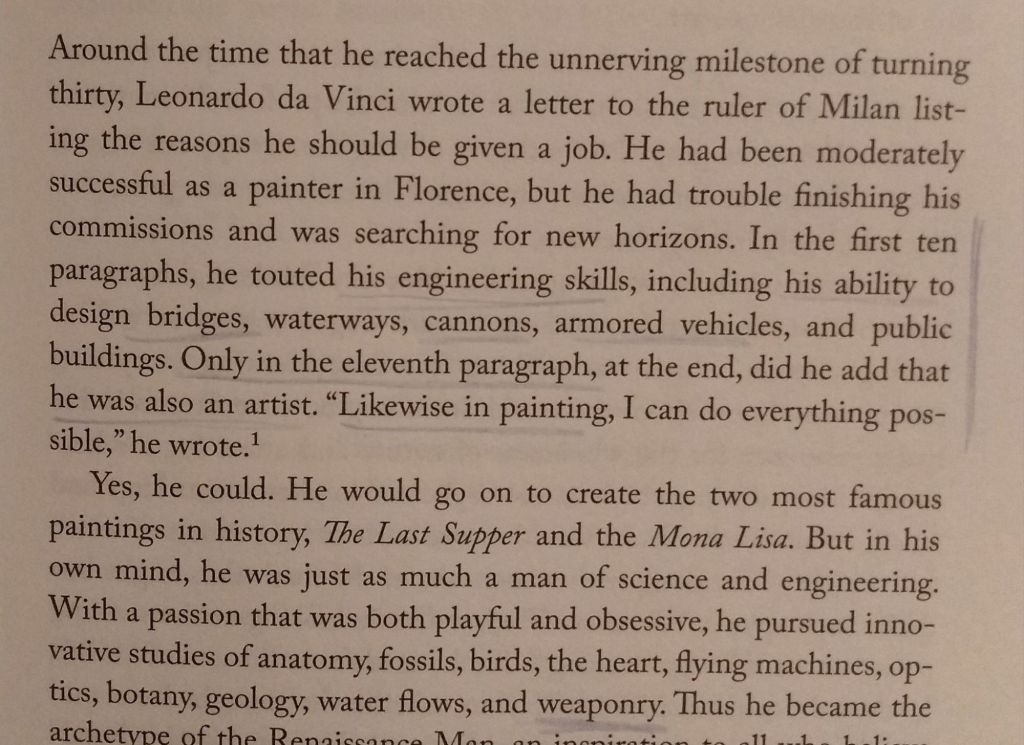
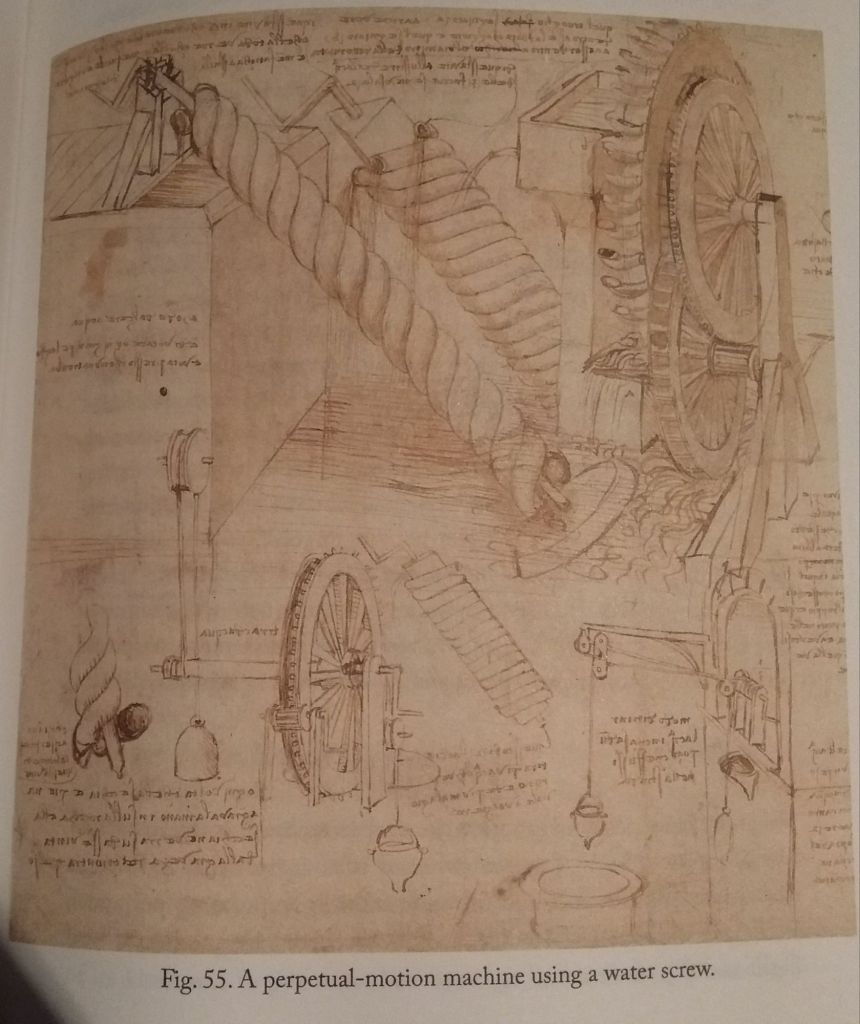
Extract from Walter Isaacson biography of Leonardo.

Back in 2019, to celebrate the 500th anniversary of the death of Leonardo we made a couple of other visits following his trail during a summer trip to Tuscany: we stopped at Vinci and Anchiano, where he was born, and visited the Museo Leonardiano; and at the Uffizi gallery in Florence we saw some of his original works.
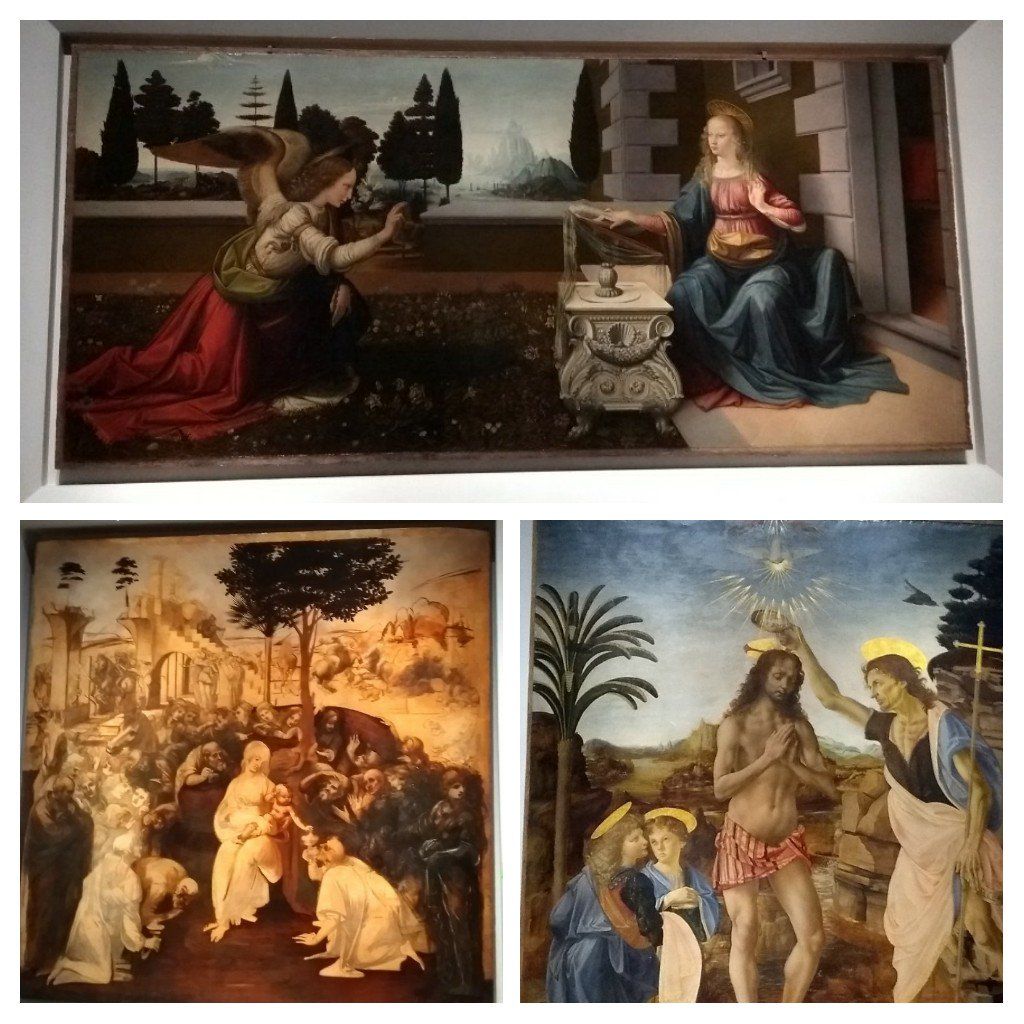
Some of Leonardo’s master pieces at the Uffizi gallery: The Annunciation, The Adoration of the Magi, The Baptism of Christ.

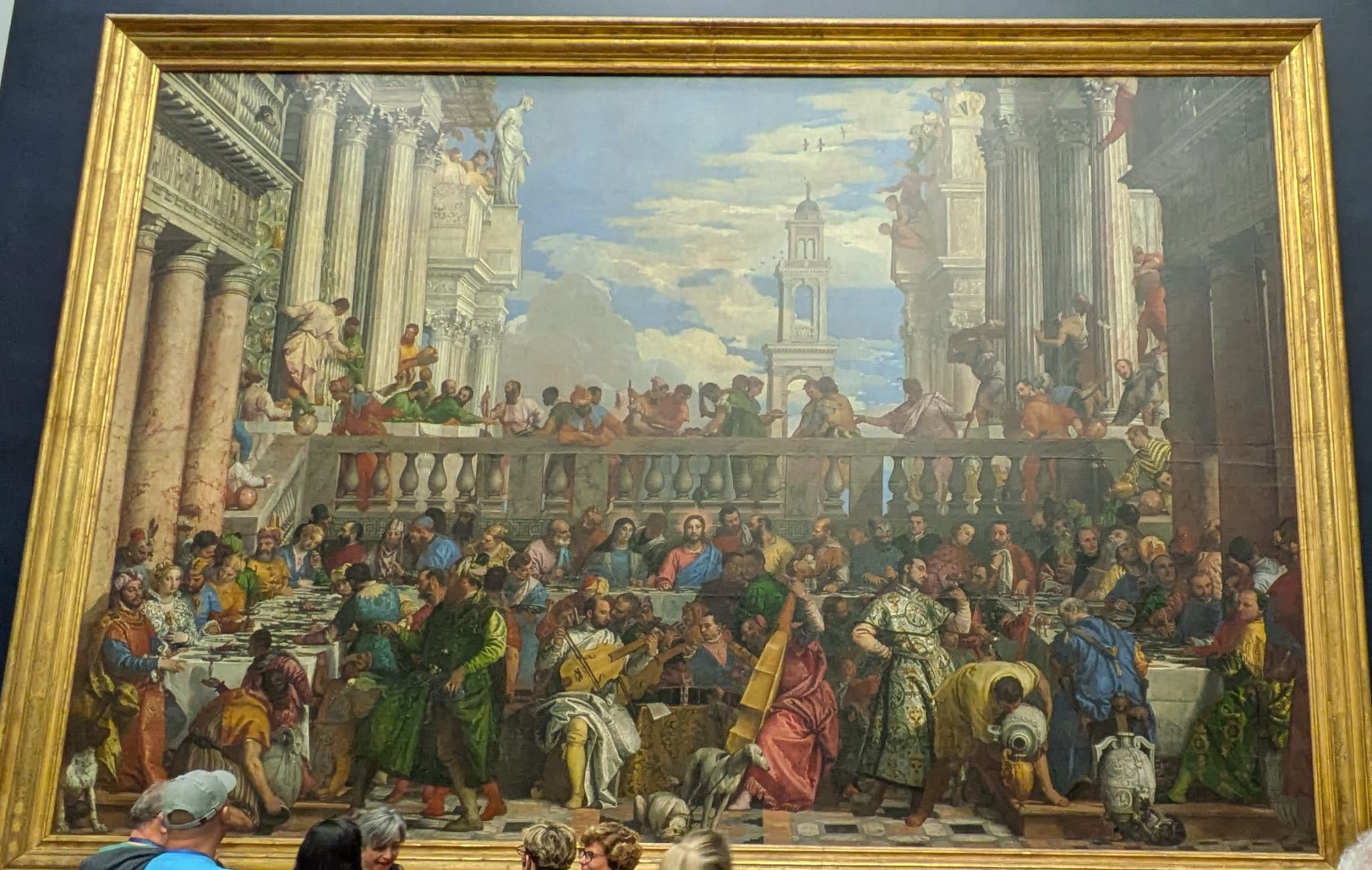
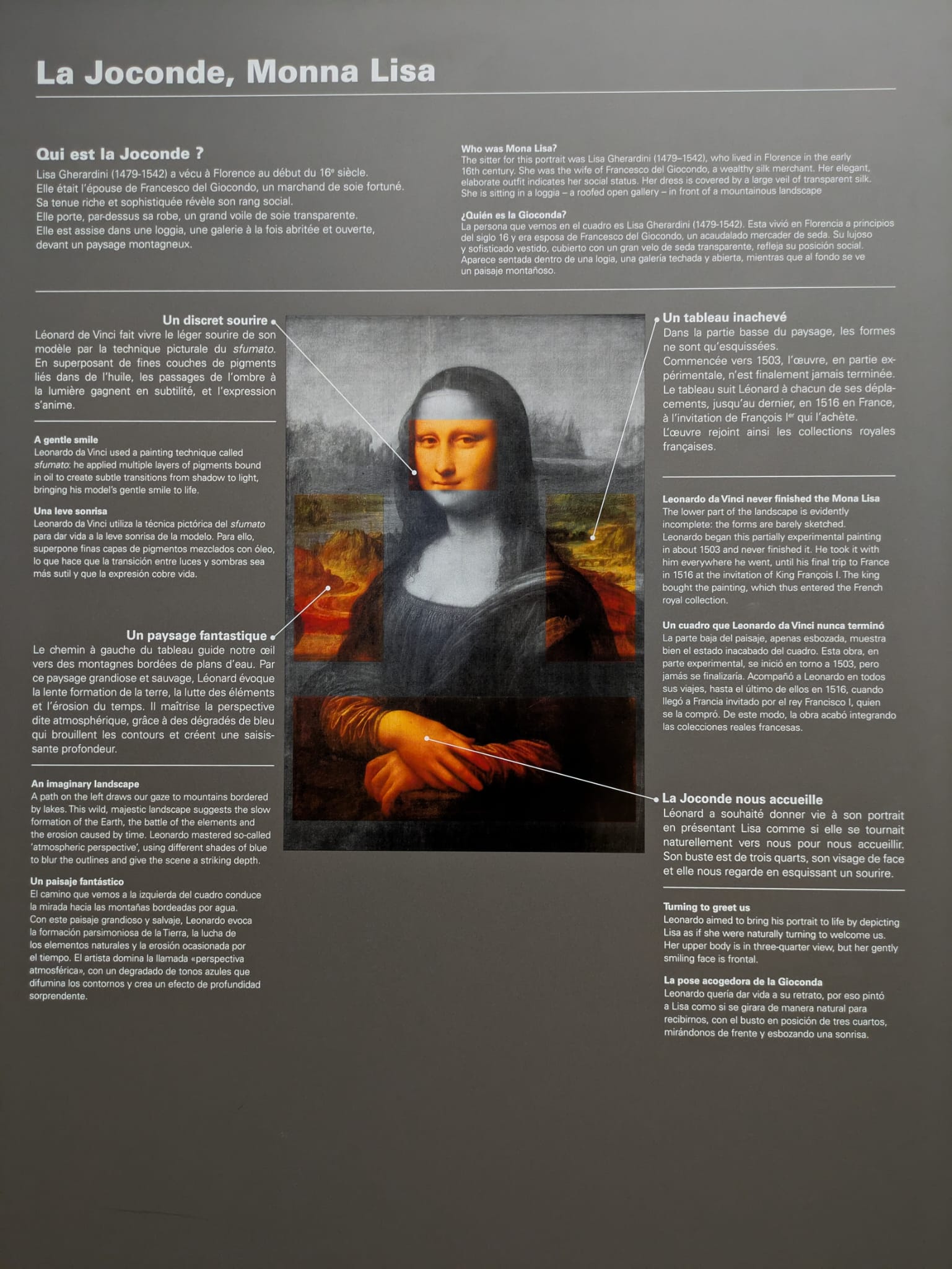
Years later, also in 2025, during the trip that took us Paris, we visited the Louvre for the first time with the kids and they could stand in front of the Mona Lisa: the very painting Leonardo brought with him to Amboise and that Francis I bought, which is how it entered the French royal collection. Today it hangs in the Salle des États, facing Veronese’s “Wedding Feast at Cana”.
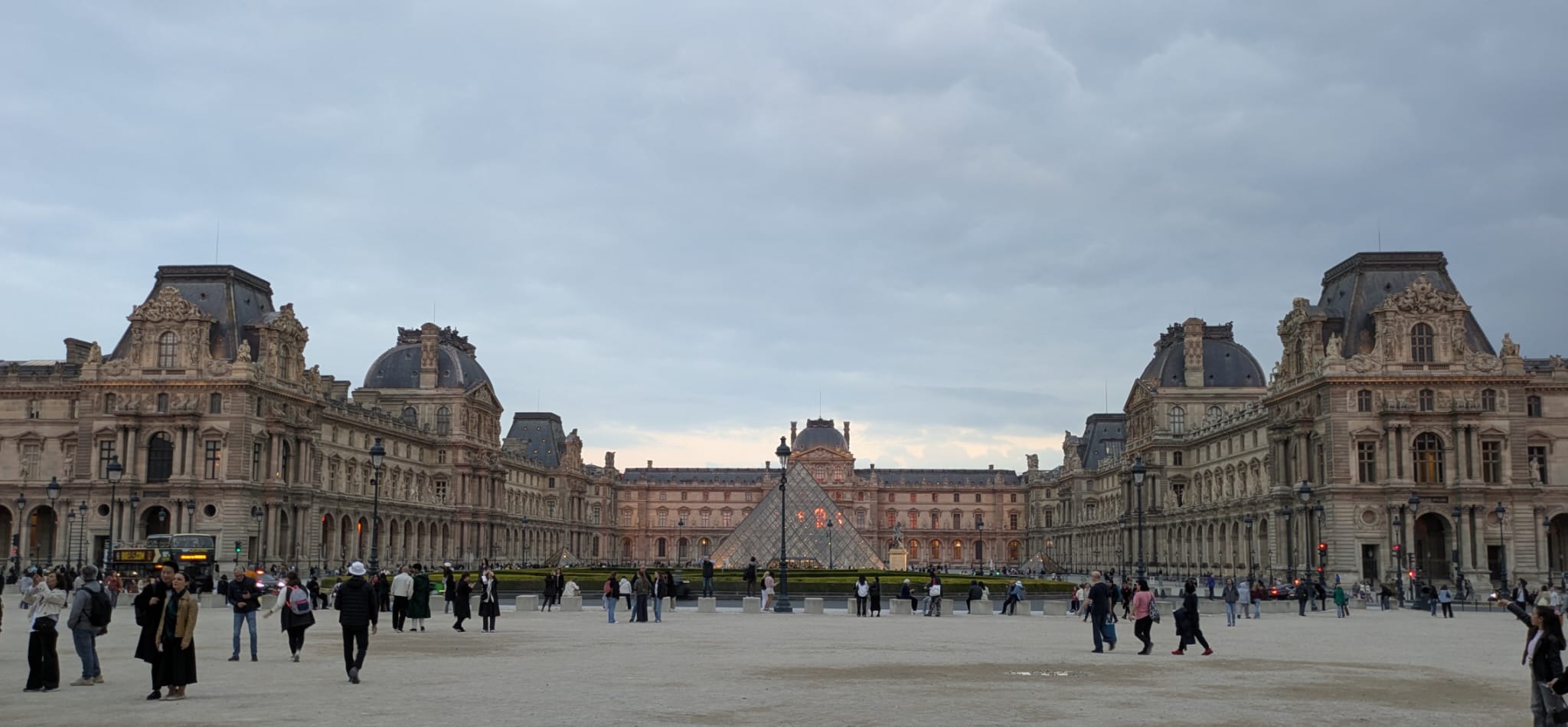
The Louvre.
The Mona Lisa panel at the Louvre: Leonardo took the unfinished painting with him on all his travels, until his final move to France in 1516.
Veronese’s “Wedding Feast at Cana”, facing the Mona Lisa in the Salle des États.

In 2025, we also visited the village of Romorantin where Leonardo had plans to build the ideal city, but that project could not be pursued and there are no traces of it other than a small model in the village’s museum. What we still miss seeing in person is the Last Supper in Milano.

As the site itself puts it, together with his birthplace in Vinci the Clos Lucé is the only known home Leonardo ever had. That, the machines in the park and the immersive center make it a must visit for those wanting to enjoy Leonardo’s legacy.
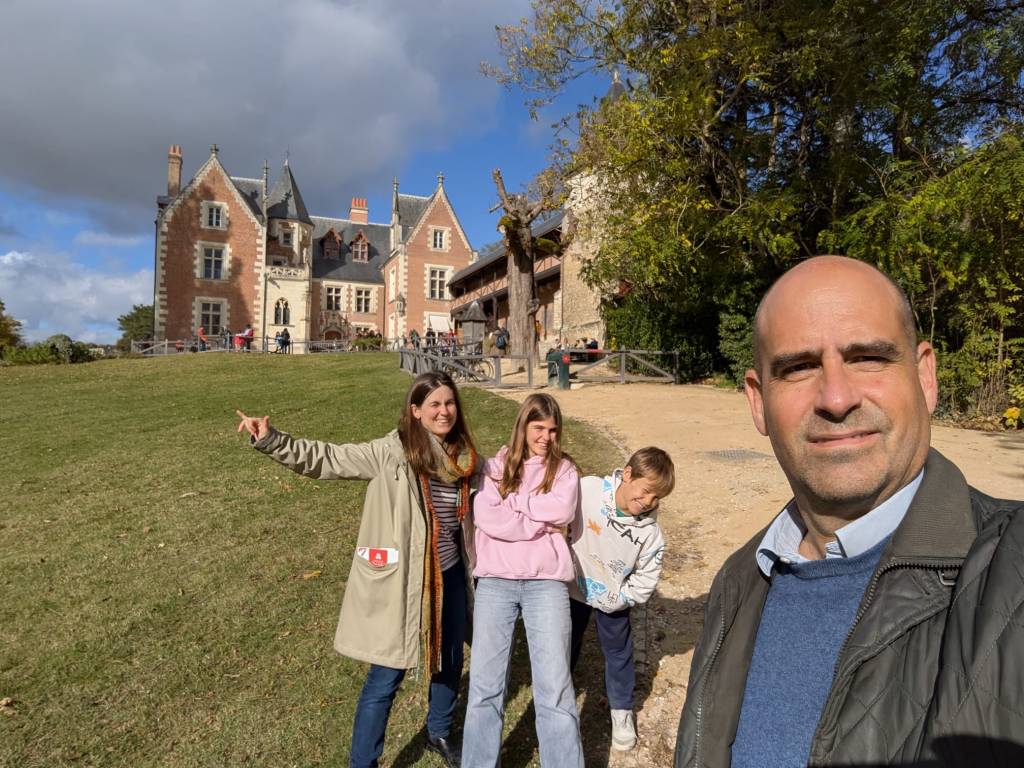
The family at the Château du Clos Lucé.

Leave a comment

Filed under Books, Travelling, Uncategorized

So much for composites…

Few weeks ago I was talking to a stress engineer from Eurocopter Spain about the different activities they performed. He was looking forward to the future work in relation to the latest EC 175, a helicopter built in cooperation with China for civilian and parapublic markets, mainly to support oil and gas exploration and search and rescue missions.

“At last we’re back to metal structures…”

He mentioned this in relation to apparent problems given by composites ones in their use in helicopters. This reminded me of a teacher (at engineering school) and former (very senior) colleague at Airbus Military, who was never seduced by the massive application of composites and he always called for their introduction following his mantra:

“Technology (in the context of application of science), is the most powerful means to increase the effectiveness-to-cost ratio.”

Which not always calls for the use of the latest technology available.

So much for the hype of composites…

Leave a comment

Filed under Aerospace & Defence

Neil Armstrong and engineering

While on holidays I read the following tweet from my brother:

Some weeks have passed by since I last wrote in the blog, and today I just wanted to pay homage to Neil Armstrong. In the wonderful obituary dedicated to him in The Economist, he is portrayed as having “engineer’s reserve, mixed with a natural shyness” and someone who didn’t like to be treated as a hero (though as the article goes “the struggle against heroism seemed particularly futile”).

The obituary quotes a self description he made at an address to the America’s National Press Club in 2000 (podcast here):

“I am, and ever will be, a white-socks, pocket-protector, nerdy engineer, born under the second law of thermodynamics, steeped in steam tables, in love with free-body diagrams, transformed by Laplace and propelled by compressible flow.”

I love that description and we may appreciate him even more for his humbleness, but, as the tweet of my brother says, thanks to figures like his, even if due to a collective achievement, there are students that are encouraged to become engineers. Three videos:

The arrival to the Moon…

Neil Armstrong’s address at his college at Purdue University praising the engineering profession:

A nice and short tribute to him I found surfing the web:

Leave a comment

Filed under Aerospace & Defence

What was my childhood dream job?

Some days ago, I got an email from a source-of-ideas-for-blogs service called Plinky, from which I have already picked some good ideas to write about in posts in the past (on charities, advice…).

The question I liked this time from the email was:

“What was your childhood dream job?”

I don’t know whether I have been posed this precise question many times or not, what I know is the answer to it and that I have given that answer many times to other questions.

When I was a child I wanted to be an astronaut. I don’t know exactly why, but that was my dream job. Surely, I can recall memories of toys related to space, such as a model of the Challenger that my brother and I played with (I presume it came before the accident), or toys related with Star Wars, etc.

This passion, among other factors, led me to study aerospace engineering, and then work for Airbus, which is not working as an astronaut but is still working in the aerospace business. Many times, I have been asked why I studied what I did, sometimes by corporate HR quizzers, and this is what came as a response.

Would I still want to be an astronaut?

Sure! But, yes, I am not pursuing it. I guess I am just waiting for the moment when commercial space flight costs not 20M$ but about 100k$, and if by then I can afford it I guess I would pay for enjoying a stunt out there.

7 Comments

Filed under Aerospace & Defence