Tag Archives: marathon

Elche – Alicante marathon 2025

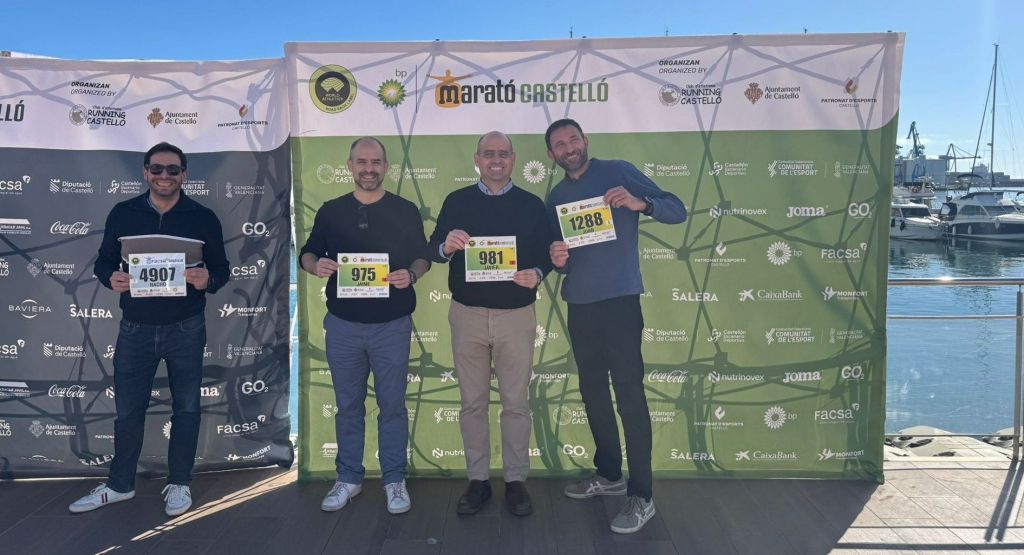
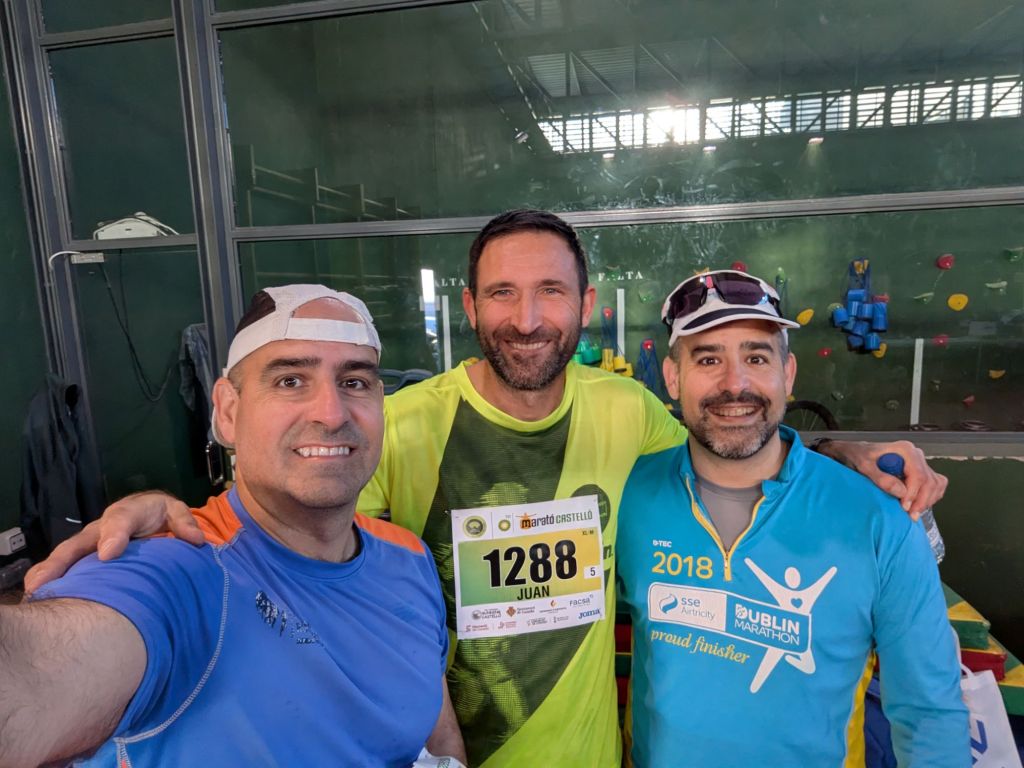
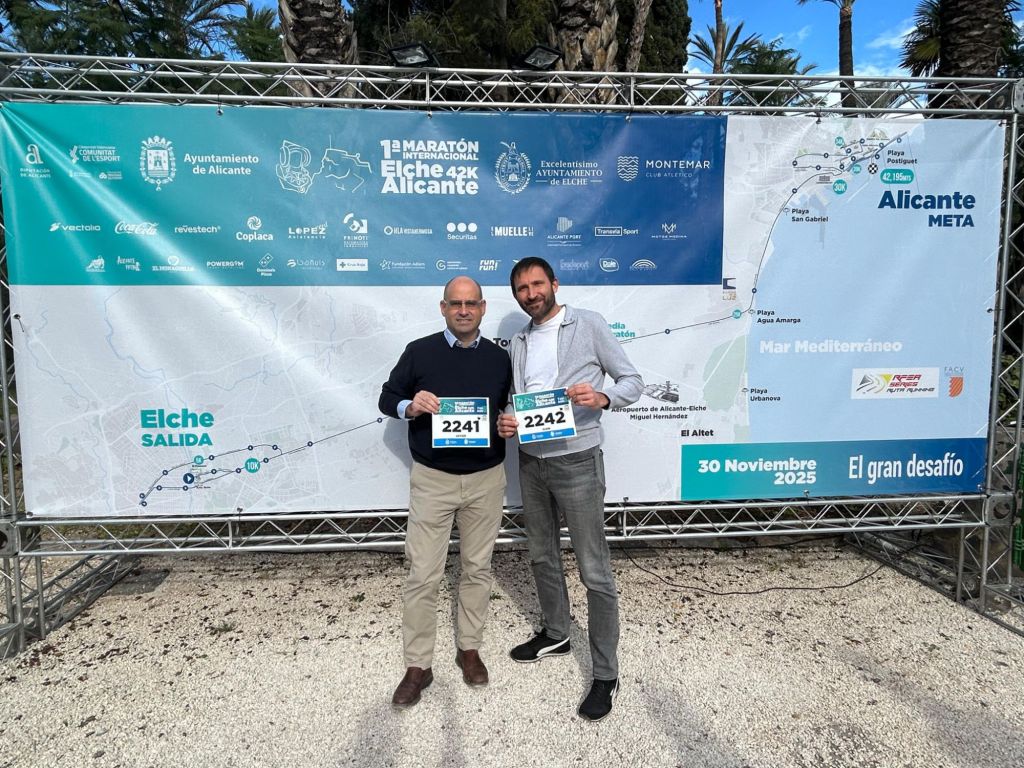
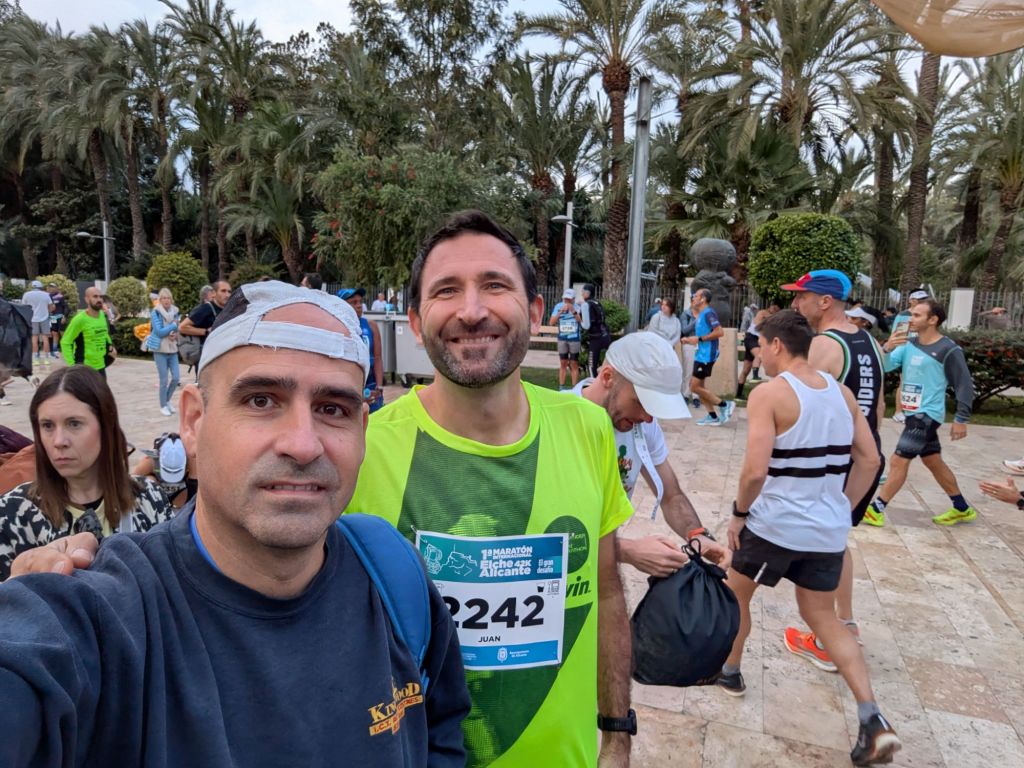
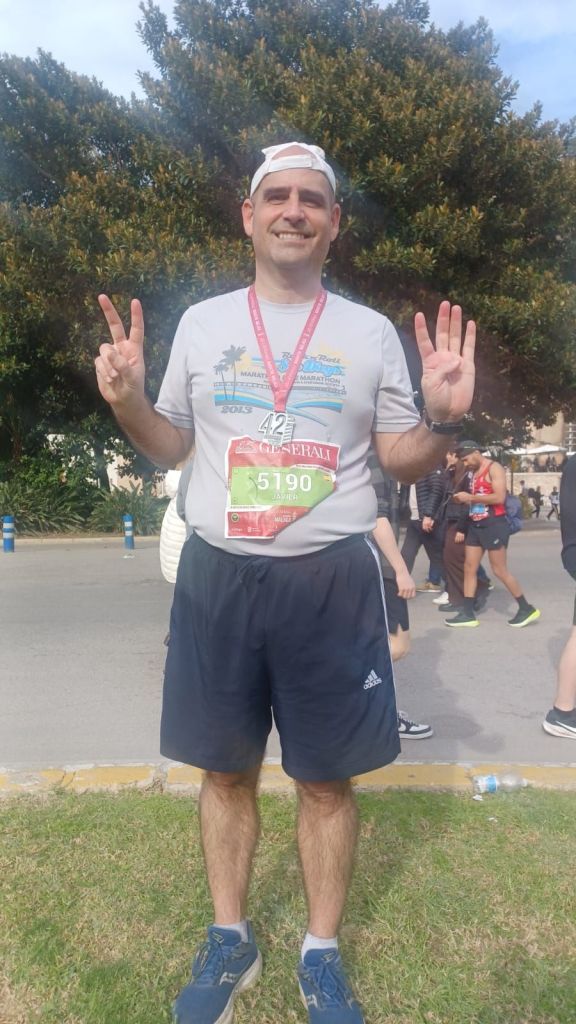
Last Sunday, November 30th, together with my friend Juan we traveled to Alicante to take part in its marathon, with over 3,000 runners registered in the distance.

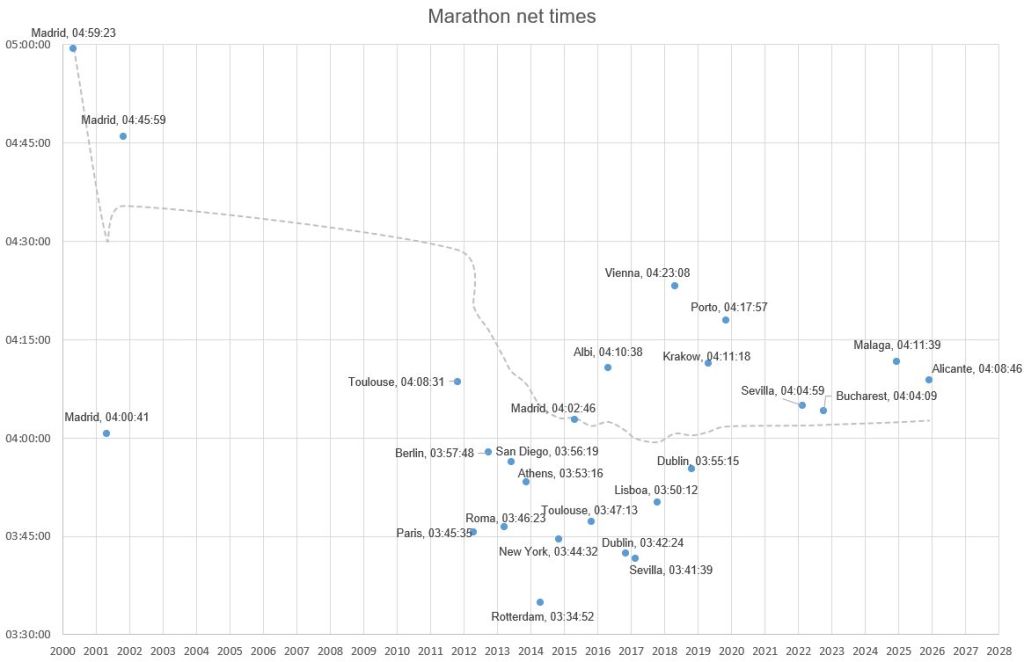
We picked Elche – Alicante following our series of marathons abroad (to combine tourism with long distance running) that has taken some of us to run together in Paris, Berlin, Roma, Athens, Rotterdam, New York, Sevilla (x3), Madrid, Millau, Dublin (x2), Lisboa, Vienna, Krakow, Porto, Bucharest, Malaga and now Alicante (in bold those run with Juan).

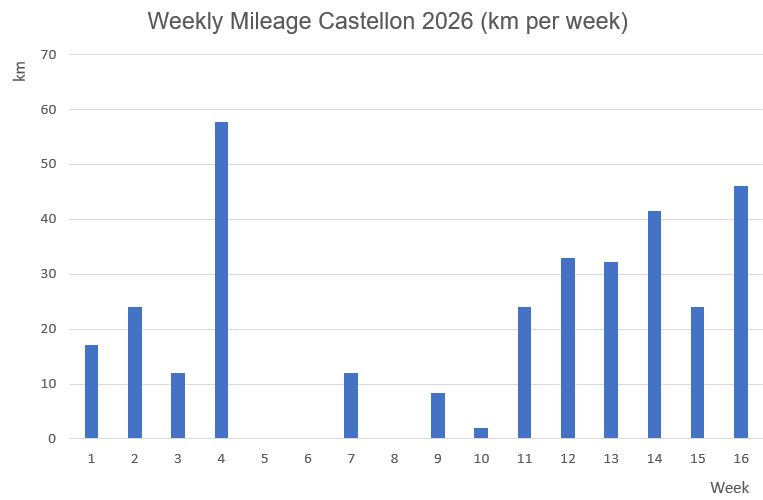
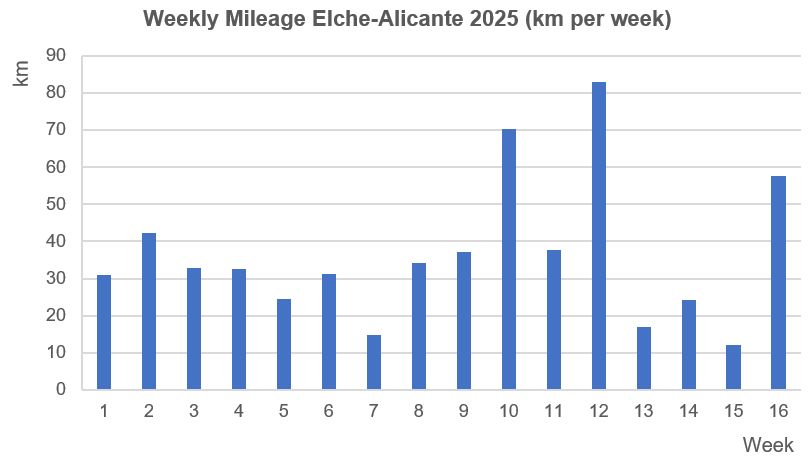
To prepare for this marathon I followed the same 16-week training plan I had used in the past. I started with the plan in mid August during our holidays in Italy. In the end I arrived to Alicante with 540km in the legs in those 16 weeks, a bit less than I would have liked. For some months I felt the Achilles tendon of the left leg a bit sensitive, hence I decided to run a moderate weekly mileage for over a month before starting with the long runs. I also chose to skip the series training, as being overweight (94kg the day after the race), the series would hurt the tendon. By mid October I started to run some long runs. Not many though, just 3 over 20km: 27km, 30km and 30km. I then had some business travel during which I managed to run some days even if on the treadmill. With that training behind and the experience of the last 3 marathons I was somewhat confident in being able to complete the marathon in a time between 4h05′ and 4h15′ even if the final mark was uncertain.

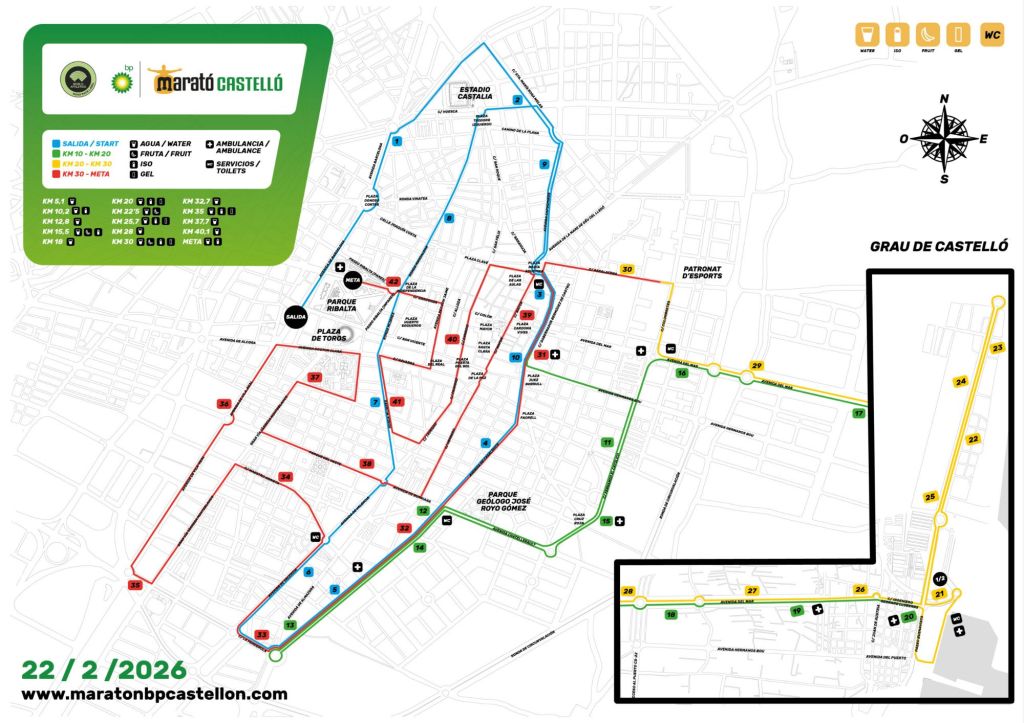
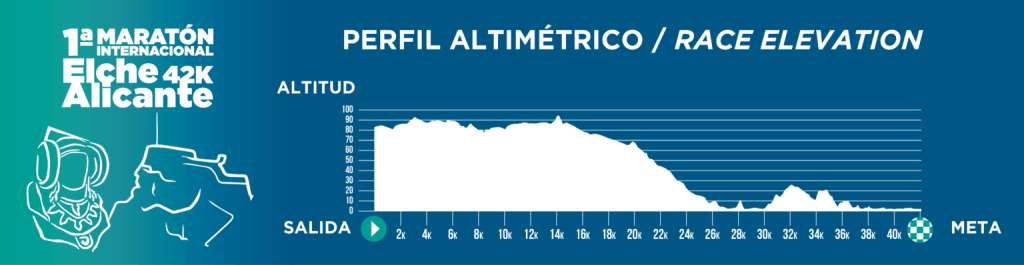
The profile from Elche to Alicante was rather flat on each of the cities and with a 10km descending stretch from one to the other. The race started in Elche by the castle and finished by the port in Alicante. We stayed in Alicante and we counted with another friend, Nacho, to bring us to Elche on the morning of the race.

Race profile

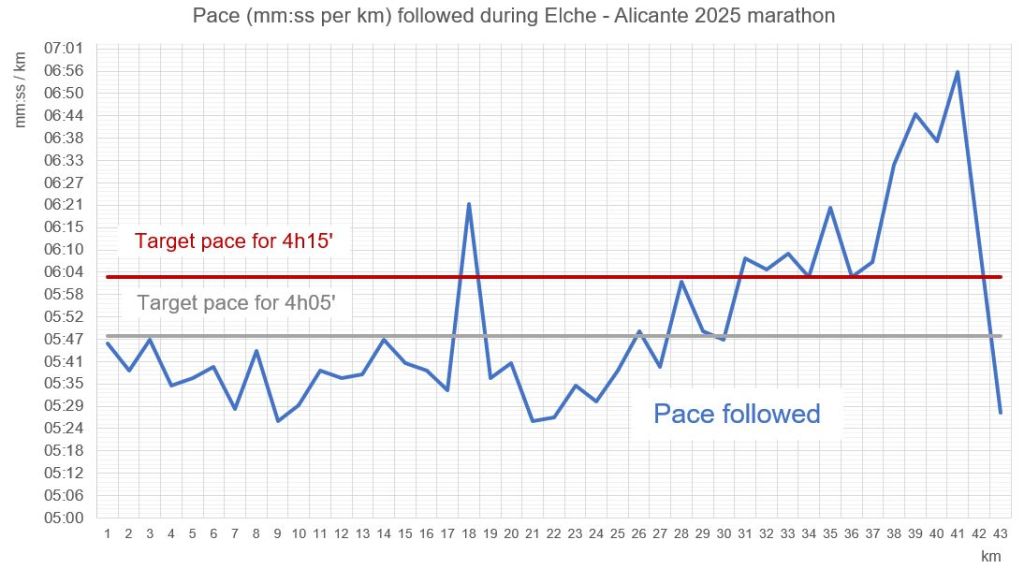
The temperature was a bit fresh in the morning (~8°C), the sky was clear and it would be a bit warmer towards the end of the race, though the temperature did not exceed 19°C. My strategy was to start at a pace just below 6min per km, and then, if I felt well, accelerate a bit after some kilometres to build up some margin during the descent part of the circuit so that I could target a time below 4h15′. There were pacers for times aiming at every 15-minute mark and I started a bit behind the 4-hour pacers, which I kept at a short distance until the km 25.

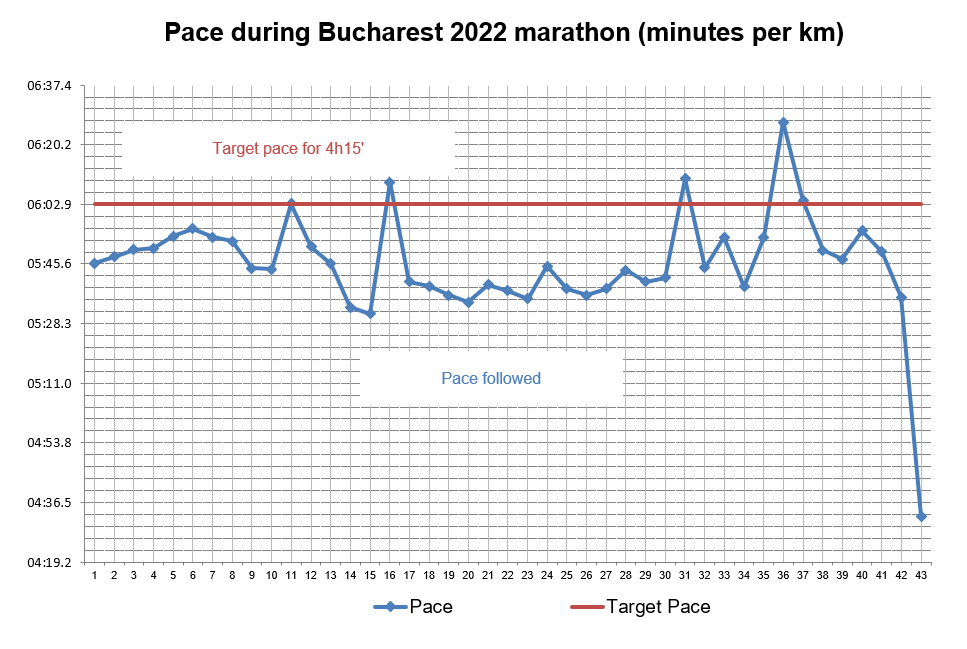
The race started at 9:00am and Juan departed a bit ahead, hence we wished luck to each other and ran separately. I ran at comfortable and faster paces than I had targeted until the km 25. I didn’t feel any pain in the tendons. Then from the km 30 I started running at paces above 6:00/km, but I still felt good, focused and running one km after another. Until km 37… During the 4 kilometres between 38 and 41 I was unable to keep those paces and I slowed down to ~6:40/km, until I gathered some strength for the last 1.2km.

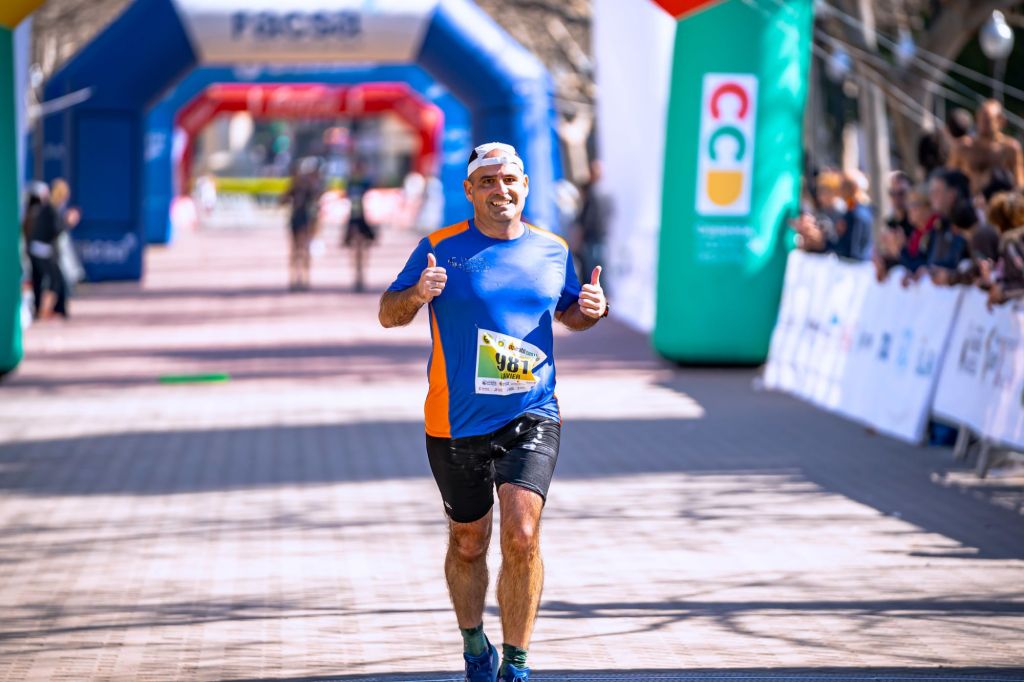
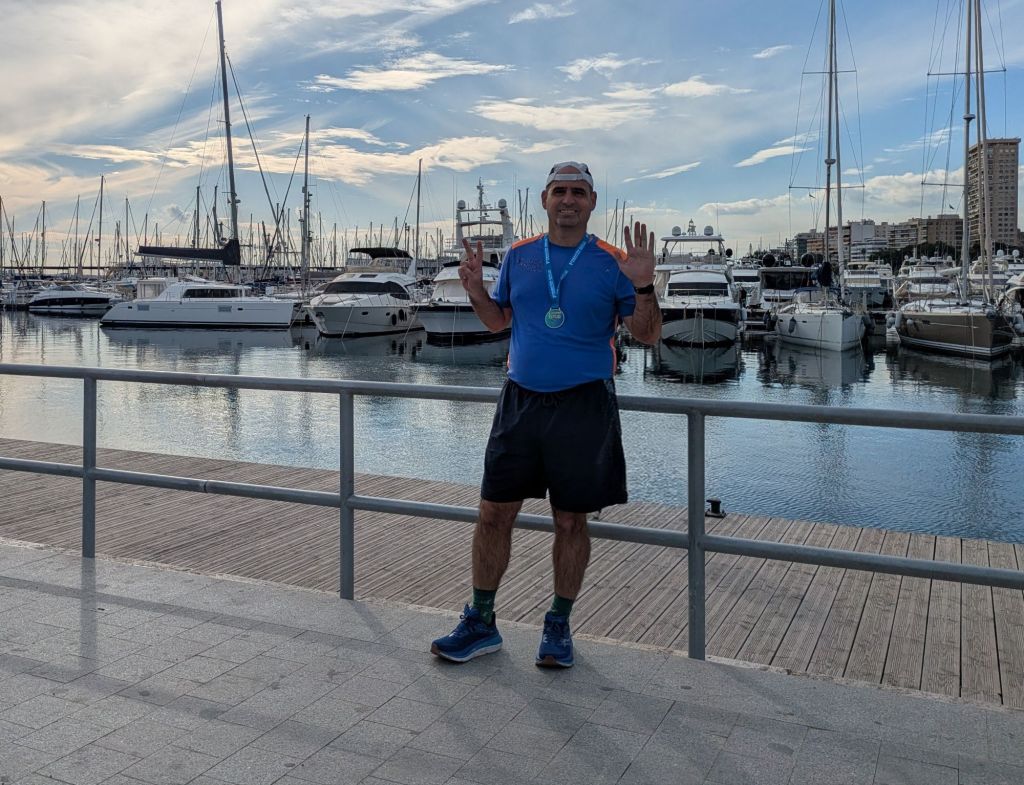
That last kilometre of the race felt great, as always. Seeing the finish line arches from afar and sprinting towards them, feeling proud of having done it again without having gone through much suffering during the race itself.

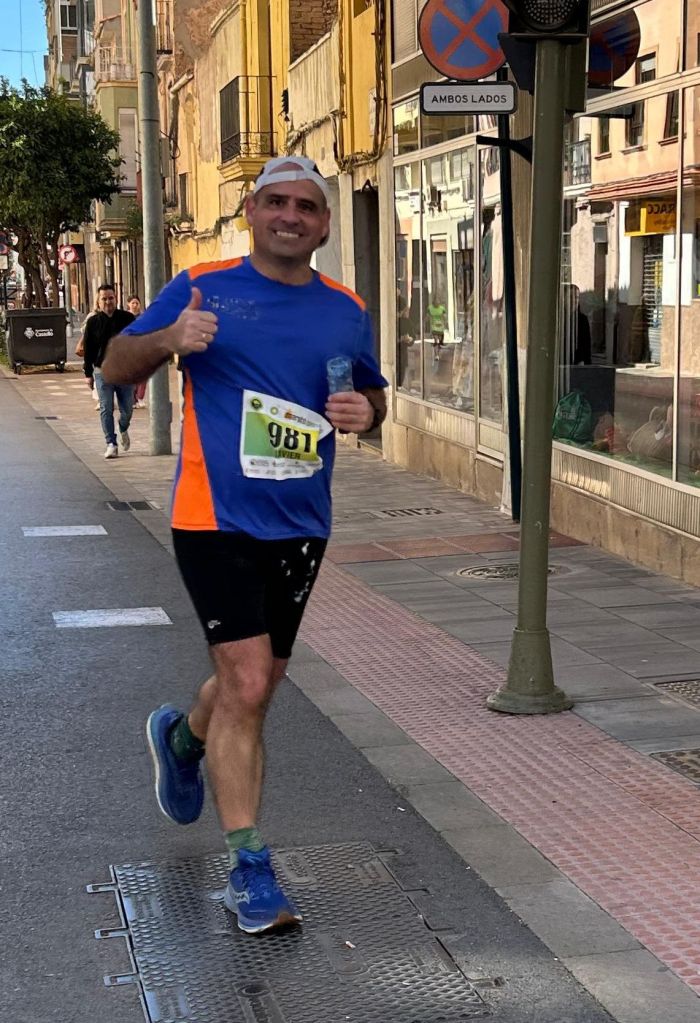
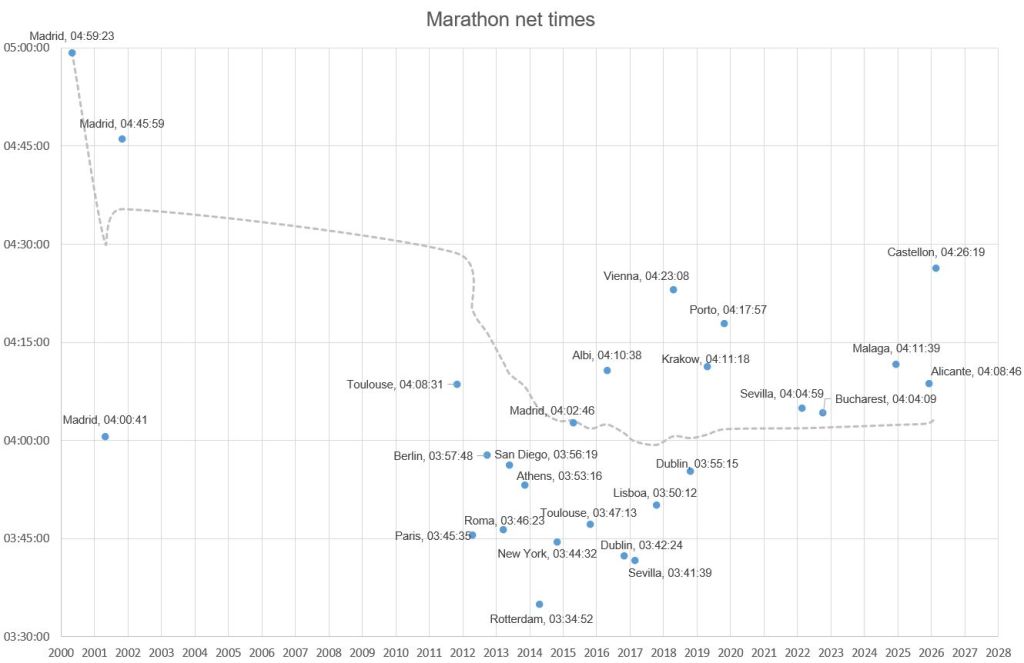
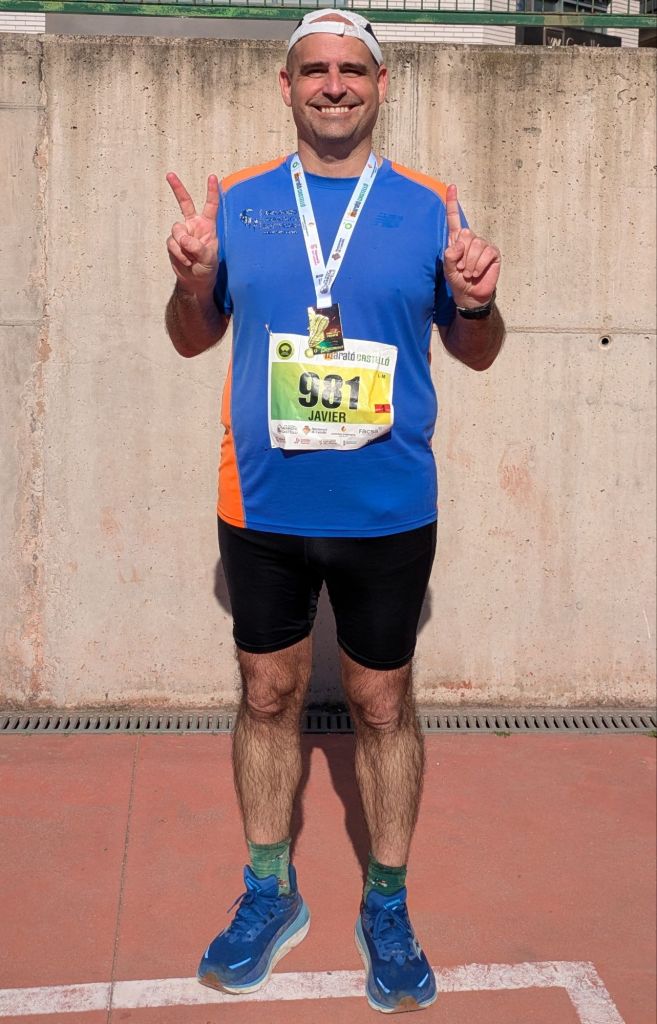
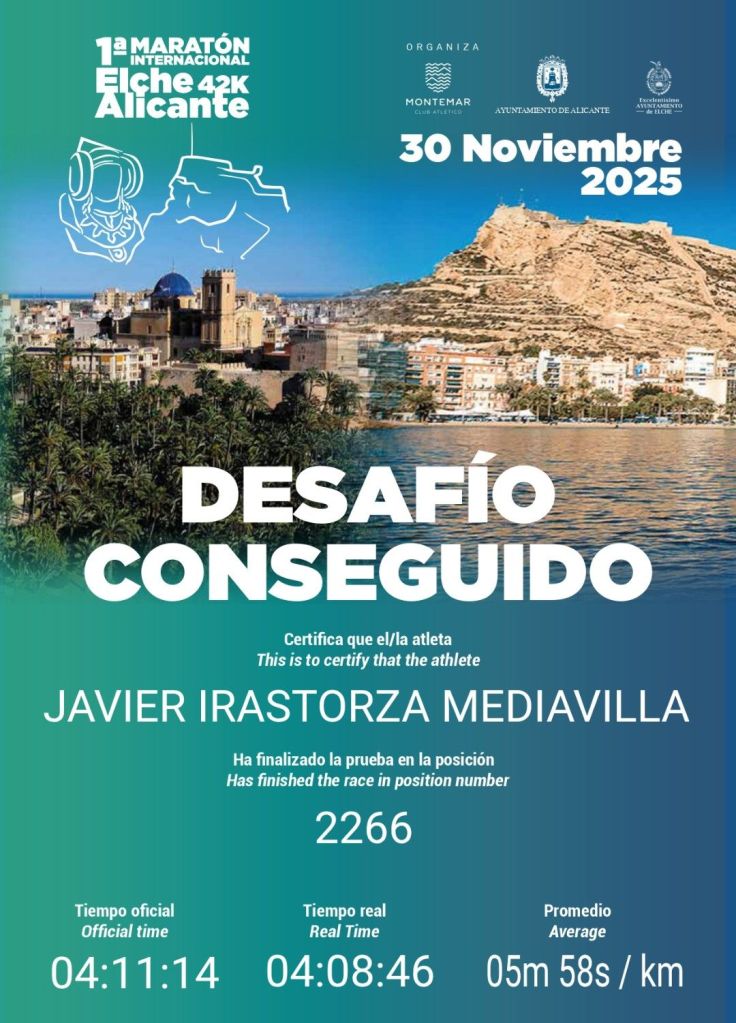
In the end, I clocked a net time of 4h08’46”, a time about what I expected given the weight with which I arrived at the race and the incomplete training that I followed, even nearly 3 minutes faster than the last marathon (Málaga). This has been my 25th marathon completed, easy to say today but not so on April 30th 2000 when I started in the distance in Madrid.
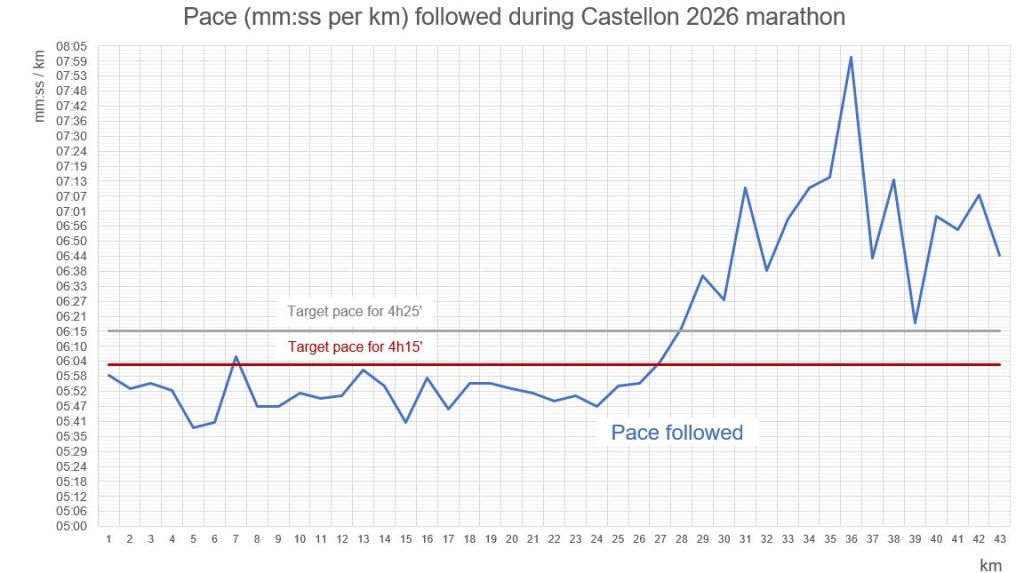
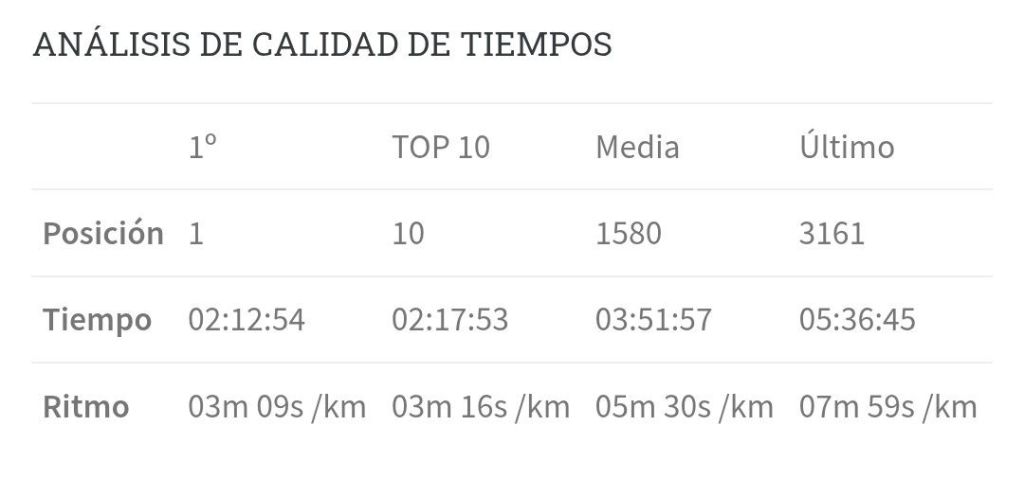
With those 4h08’46”, I was again above the 4-hour mark and finished in the 2,266th place out of 3,161 finishers (28% percentile). That time makes it my 8th worst marathon, though with a positive feeling of having completed another marathon 1 year later and a bit faster than the last. I am now looking forward to the next one.

This was the first marathon organized between Elche and Alicante. The organization of the race was rather good. They only underestimated the amount of trucks needed to provide a smooth wardrobe service for the runners’ bags. The circuit was good. They included plenty of water supply (with bottles) posts, isotonic drinks, some food (bananas and dates; a bit late in the race though) and gels (though I carried myself enough of those). It was a great experience.

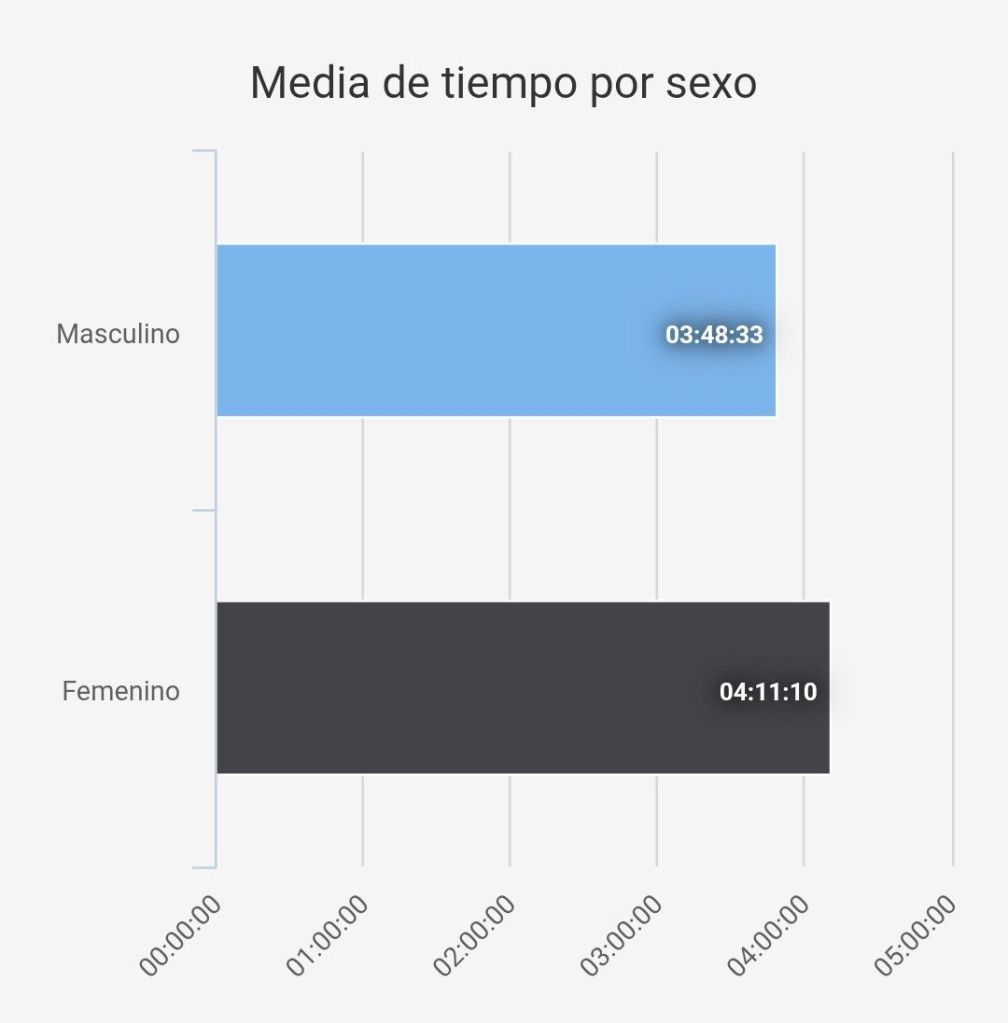
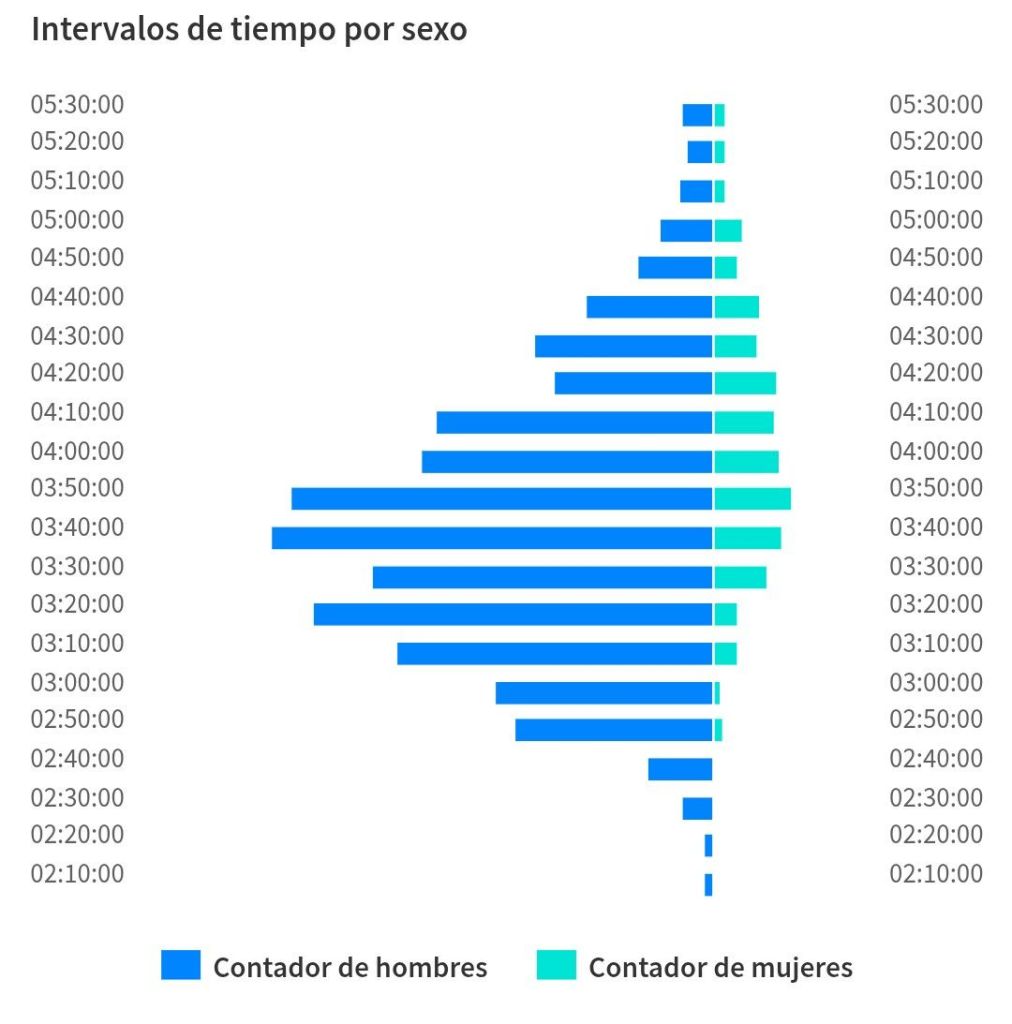
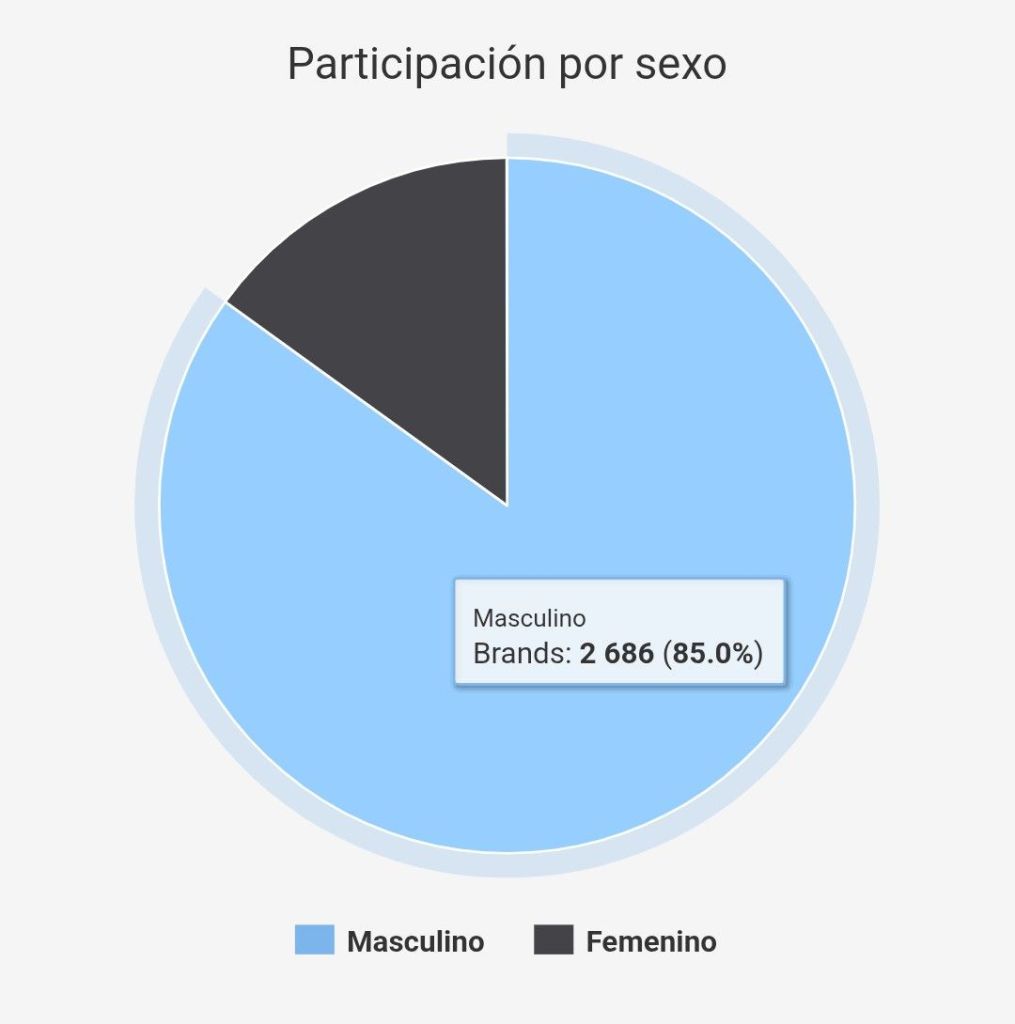
I leave below some charts with statistics of the race:

  • The average finish time was just below 3h52′. For the men 3h48′, for the women 4h11′. You can also see the distribution of runners by their times by splits of 10 minutes.
  • 85% of the participants were men.

Leave a comment

Filed under Sports

Marathon world record evolution (2025)

Last time I checked all-time men’s best marathon times and the world record evolution was in 2014 ahead of running Rotterdam marathon (post back then). In this blog post I’m going to make an update, share some charts and review some statistics. For that purpose, I use the website “Track and Field all-time Performances” (maintained since years ago by Peter Larsson).

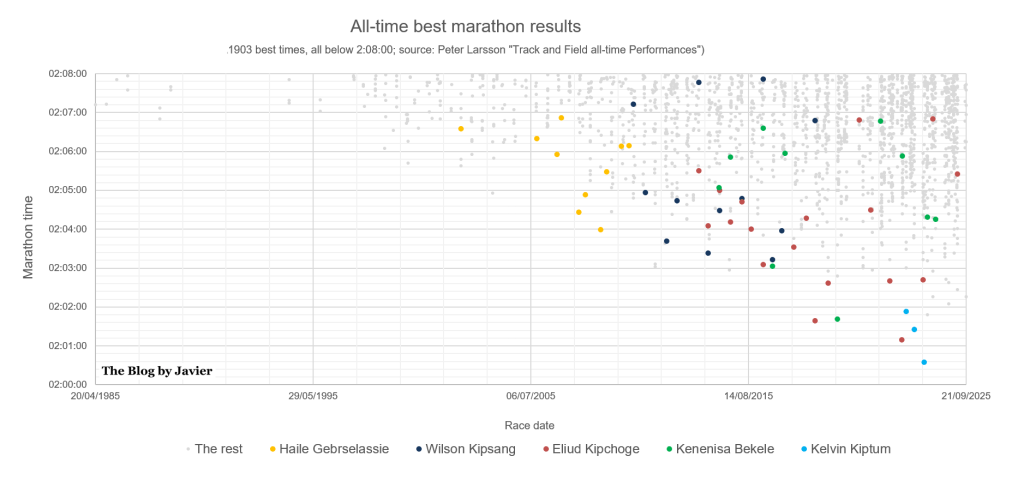
With the data of all-time best men’s marathon I plotted the chart below with the best 1,903 times, i.e., all those below 2h08′ and their dates, highlighting marathon times by Haile Gebrselassie, Wilson Kipsang, Eliud Kipchoge, Kenenisa Bekele and Kelvin Kiptum.

Some stats in relation to those 1,903 times under 2h08′:

  • Countries of which athletes achieved most such times: Kenya 853 times or 44.8%, Ethiopia 570 times or 30.0%, Japan 114 (6.0%), Morocco 44 (2.3%), Eritrea 41 (2.2%), Israel 20 (1.1%), France 20 (1.1%), Uganda 19 (1.0%). Those are the top 9 countries, there are another 34 from which athletes have run below 2h08′ (for a total of 43 countries).
  • There are 742 athletes that have run below 2h08′. The individuals who have done so more often: Eliud Kipchoge 18 times, Sisay Lemma 17, Tsegay Kebede 15, Tamirat Tola 13, Abel Kirui 13, Wilson Kipsang 12, Bernard Kiprop 12, Evans Chebet 12, Benson Kipruto 12, Laban Korir 11, Emmanuel Mutai 11, Amos Kipruto 11, Birhanu Legese 11, Kenenisa Bekele 10, Haile Gebrselassie 10, Leul Gebrselassie 10, Deso Gelmisa 10…

Now, if we raise the bar to see the times at or below 2h05′, we find 231 times:

  • Countries of which athletes achieved most such times: Kenya 108 times or 46.8%, Ethiopia 98 times or 42.4% (both combined 89.2%!), Tanzania 4 (1.7%), Belgium 4 (1.7%), Netherlands 3 (1.3%). Those are the top 5 countries, there are another 11 from which athletes have run at or below 2h05′ (for a total of 16 countries).
  • There are 124 athletes that have run at or below 2h05′. The individuals who have done so more often: Eliud Kipchoge 14 times, Tamirat Tola 8, Wilson Kipsang 8, Sisay Lemma 7, Amos Kipruto 6, Birhanu Legese 6, Leul Gebrselassie 5, three athletes with 4 times including Kenenisa Bekele, 14 athletes with 3 times including Kelvin Kiptum, Dennis Kimetto, Geoffrey Mutai and Haile Gebrselassie, 23 athletes with 2 times including Patrick Makau…
  • Which are the fastest marathons? The cities where most of those 231 times at or below 2h05′ have been achieved are: Berlin and Valencia with 35 each, London and Dubai with 27 each, Rotterdam 18, Amsterdam and Chicago with 15 each, Tokyo 14. Those are the top 8 cities (accounting for 81% of those 231 times), there are other 16 cities where such fast times have been achieved.

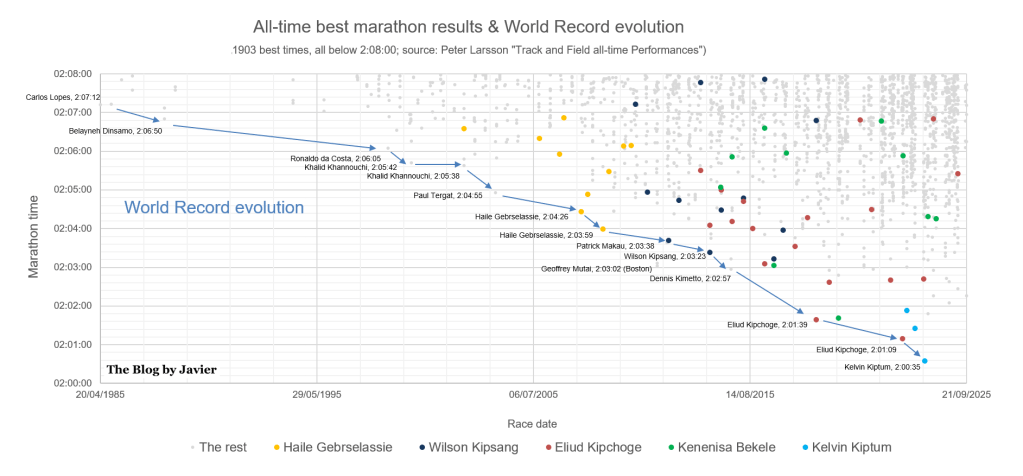
Now let’s look at the evolution of the World Record since 1985 in this other chart:

Some comments to the chart:

  • In the last 40 years, the record has been beaten 13 times.
  • The current world record was set by Kelvin Kiptum in Chicago in 2023 with 2h00’35” at the age of 23.9. He sadly passed away in a car crash a few months later. His career was very promising, having run only 3 marathons, all three in less than 12 months, all 3 below 2h02′. 3 of the best 7 times, 1 of the only 4 men having run below that mark.
  • The record that lasted the most was Dinsamo’s 2:06:50 in 1988, which took just over 10 years to be beaten by Ronaldo da Costa in 1998.
  • 3 athletes have set the world record twice: Khalid Khannouchi, Haile Gebrselassie and Eliud Kipchoge.
  • The biggest improvement of the record was made by Eliud Kipchoge who took 1’18” off Dennis Kimetto’s previous record.
  • Geoffrey Mutai ran in 2h03’02” before 3 world records set the bar below his time, however, as he achieved that in Boston 2011 (downhill and point to point race) it didn’t count for the record.

What is the best age to run marathons?

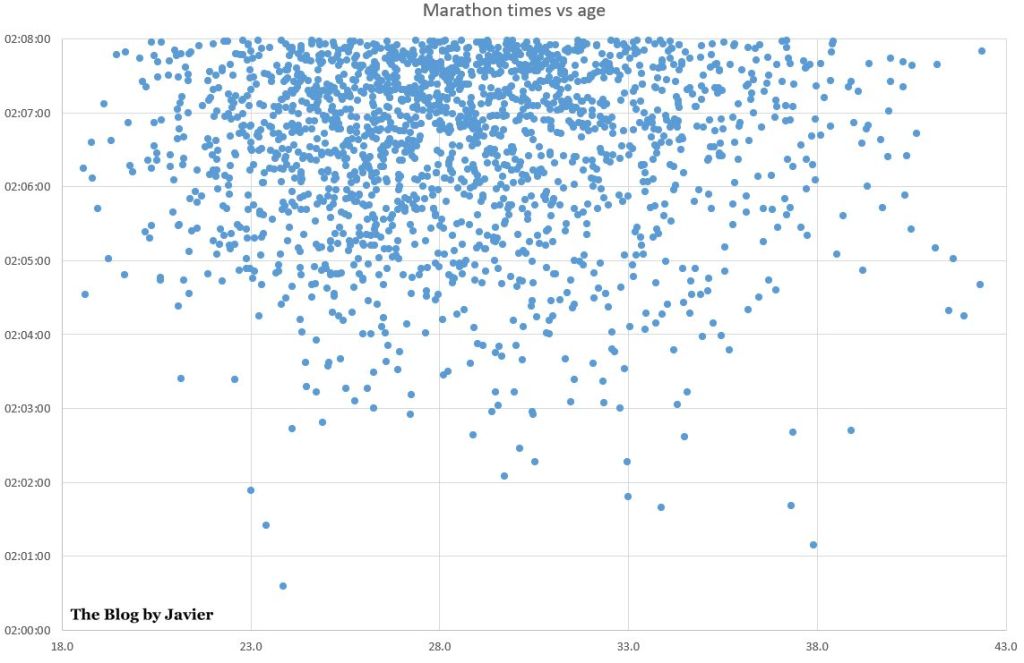
I plotted this other chart looking at the best 1,903 marathon times vs the age the runners had at the time of completing each of those races.

Most of the times below 2h08′ are achieved between 23 and 33 years old, but indeed most of the best ones are achieved between 28 and 39 years old, with the exception of the 3 marathons ran by Kelvin Kiptum, including his current world record.

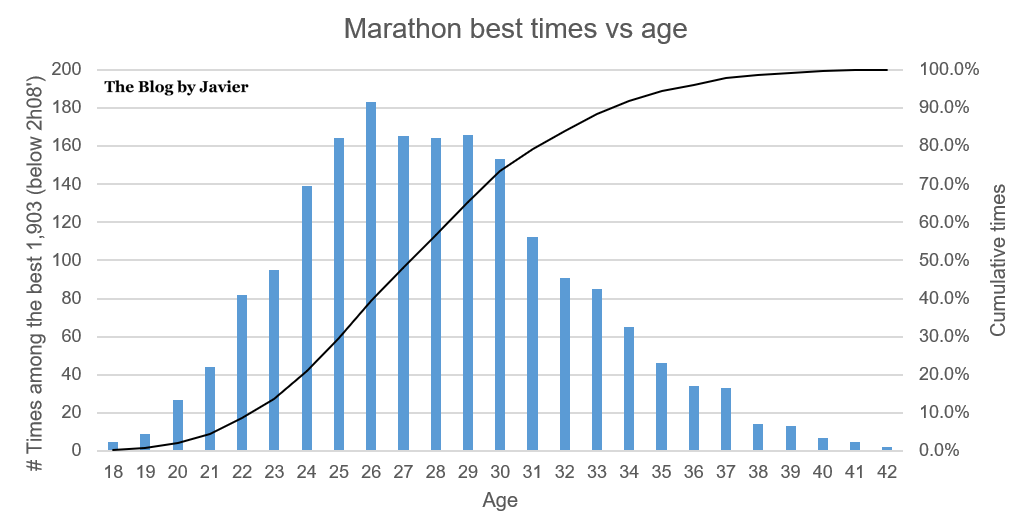
Another interesting chart to relate best times and age is the histogram below. In that one we can see that effectively most of the times below 2h08′ are achieved between 24 and 30 years old, and between 23 and 33 (both included) 80% of those times are achieved.

Leave a comment

Filed under Sports

Malaga marathon 2024

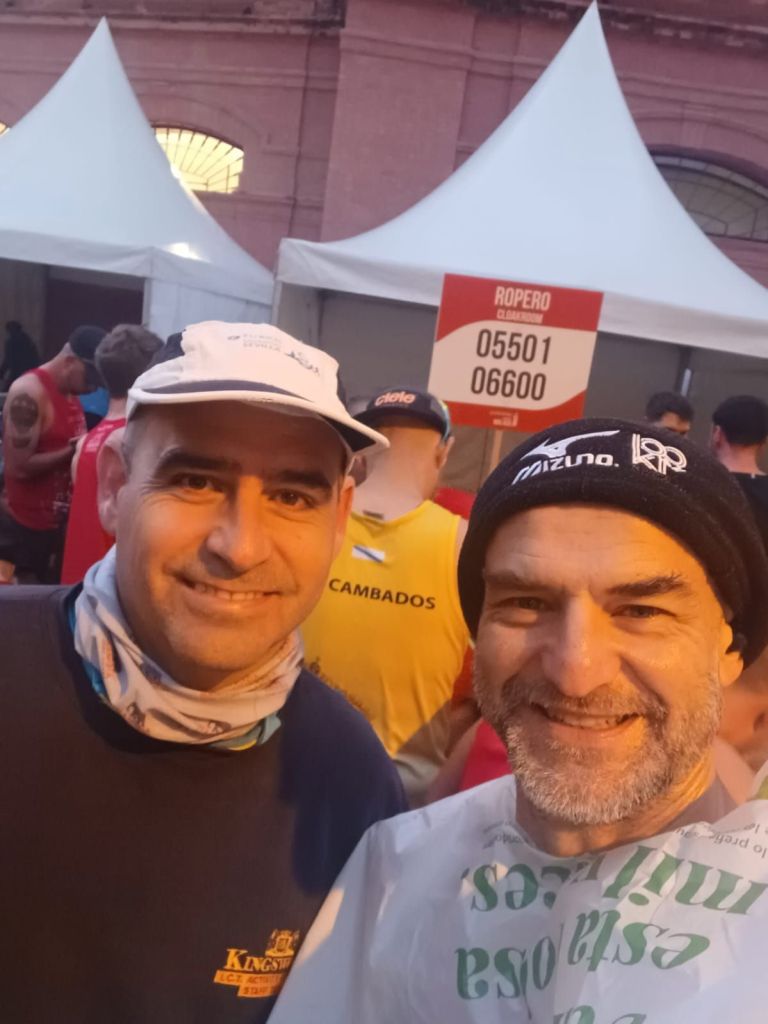
Last Sunday, December 15th, together with my friend Manuel we traveled to Malaga to take part in its marathon, with around 6000 runners registered in the distance.

We picked Malaga following our series of marathons abroad (to combine tourism with long distance running) that has taken some of us to run together in Paris, Berlin, Roma, Athens, Rotterdam, New York, Sevilla (x3), Madrid, Millau, Dublin (x2), Lisboa, Vienna, Krakow, Porto, Bucharest and now Malaga (in bold those run with Manuel).

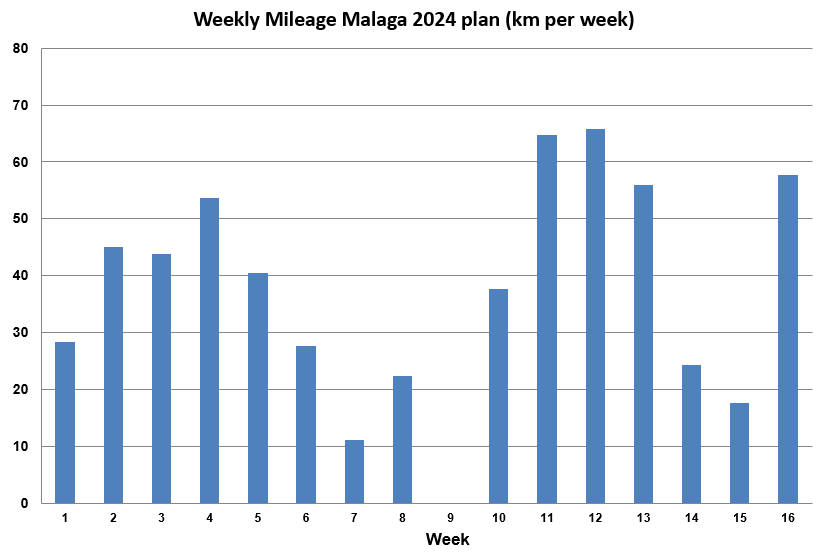
To prepare for this marathon I followed the same 16-week training plan I had used in the past. Just before those 16 weeks of the plan, thanks to a running challenge we followed in the company, I cumulated +200km in 4 weeks between mid May and June. Then at the end of August I started with the plan. In the end I arrived to Malaga with 554km in the legs in those 16 weeks, a bit less than I would have liked. I trained quite well in September, doing most of the series sessions and all long runs, but in early October I had a calf contracture that slowed me for a couple of weeks. At the end of October I resumed the plan but discarded the series sessions while maintaining the long runs… until two weeks before the race when I had another injury in the other calf. I stopped for a few days and resumed with some short runs before the race day. In those 16 weeks I averaged 37km per week, completed 8 long runs (including 4 above 20km; 22km, 30km, 30km and 26km – with positive feelings especially in this last one) and 11 sessions of series, though not enough of them to get a bit faster. Provided that I didn’t get injured again, I was confident in being able to complete the marathon in a time between 4h05′ and 4h15′ even if the final mark was uncertain.

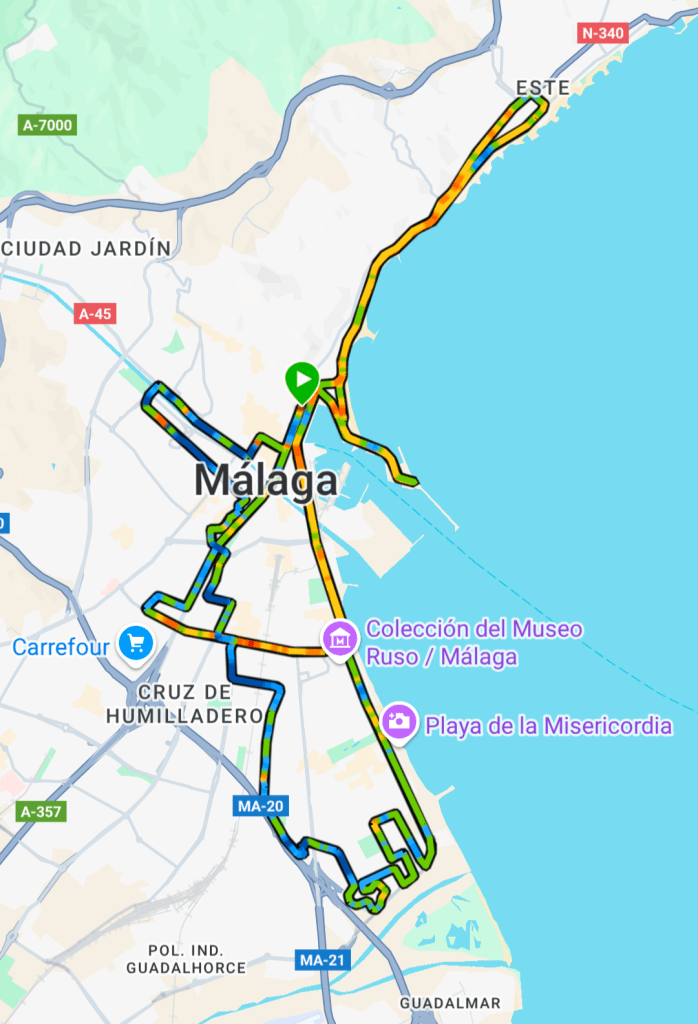
The profile in Malaga is rather flat. The organization prepared a circuit mainly composed of long avenues, mostly by the seaside, which allowed to run at constant pace. The race started and finished in the Paseo del Parque, in front of the iconic Banco de España building, and I stayed for an extended weekend at an apartment at walking distance from the place.

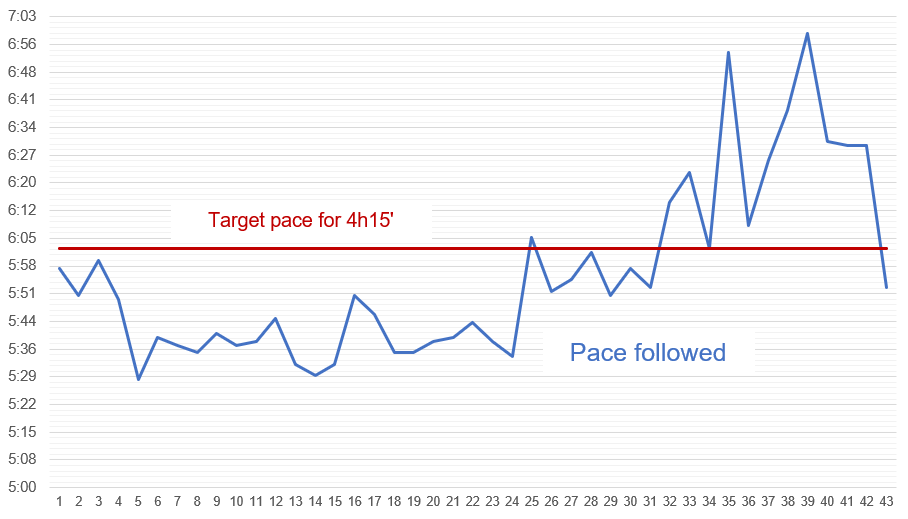
The temperature was a bit cold in the morning (~6°C), the sky was clear and it would be a bit warmer towards the end of the race, though the temperature did not exceed 16°C. My strategy was to start at a pace just below 6min per km, and then, if I felt well, accelerate the pace at mid-race so that I could target a time below 4h15′. There were pacers for times aiming at every 15-minute mark and in the end, I didn’t quite followed that strategy but ran just after the 4-hour pacers at a short distance until the km 23.

The race started at 8:30am and Manu departed from a different box, hence we wished luck to each other and ran separately. We ran with the participants in the half marathon, that made the first half of the race a bit more crowded.

I ran at a comfortable pace until the first half, but I started to feel the same pain in the calf that made me stop a couple of weeks before since km ~16. At km 23 or so the pain became stronger and I softened the pace, fearing that I would have to do some walking later on. Luckily I saw a volunteer with Reflex spray at km 25 and got a good dose of it. A few minutes later the pain mostly disappeared and I could continue running even if at a slower pace. At km 32 I got the calf sprayed again with Reflex and even if I had some difficulties in the last ~6km I could manage the timing to be below the target of 4h15′.

The last 2 km of the race were superb. The race goes through the city centre including Plaza de la Constitucion and calle Marques de Larios with the crowd surrounding and cheering the runners. I kept my pace in the last few hundred metres as by then I had muscle pain in both lower legs so I could not give it a last sprint.

In the end, I clocked a net time of 4h11’39”, a time about what I expected given the weight with which I arrived to the race (93kg) and the injuries I went through during the training weeks, but slower than the last two marathons I ran in 2022 (Sevilla and Bucharest). This has been my 24th marathon completed, easy to say today but not so on April 30th 2000 when I started in the distance in Madrid.

Pace during Malaga 2024 marathon (minutes per km)

With those 4h11’39”, I was again above the 4-hour mark and finished in the 4279th place out of 5733 finishers (25% percentile). That time makes it my 5th worst marathon, though with a positive feeling of having completed another marathon 2 years later and following a 2023 marked by injuries as well. I am now looking for the next one.

The organization of the race was great. The circuit showed a beautiful city. They included plenty of water supply (with bottles) posts, isotonic drinks and food (bananas and oranges), I just missed gels (though I carried myself enough of those). The finish line was great, the wardrobe service was close to the start and finish line (by the bullfighting arena). It was a great experience.

2 Comments

Filed under Uncategorized

Bucharest marathon 2022

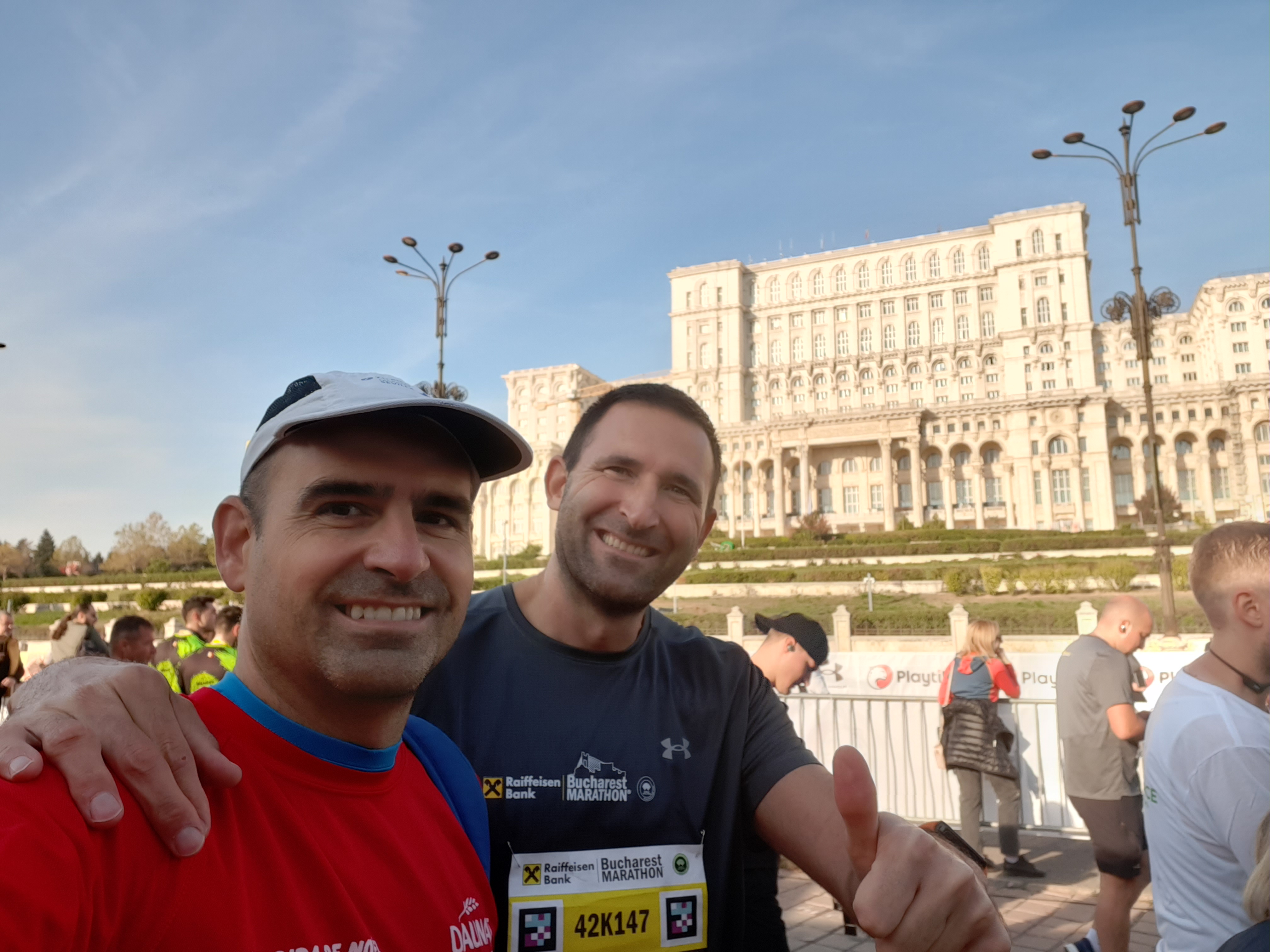
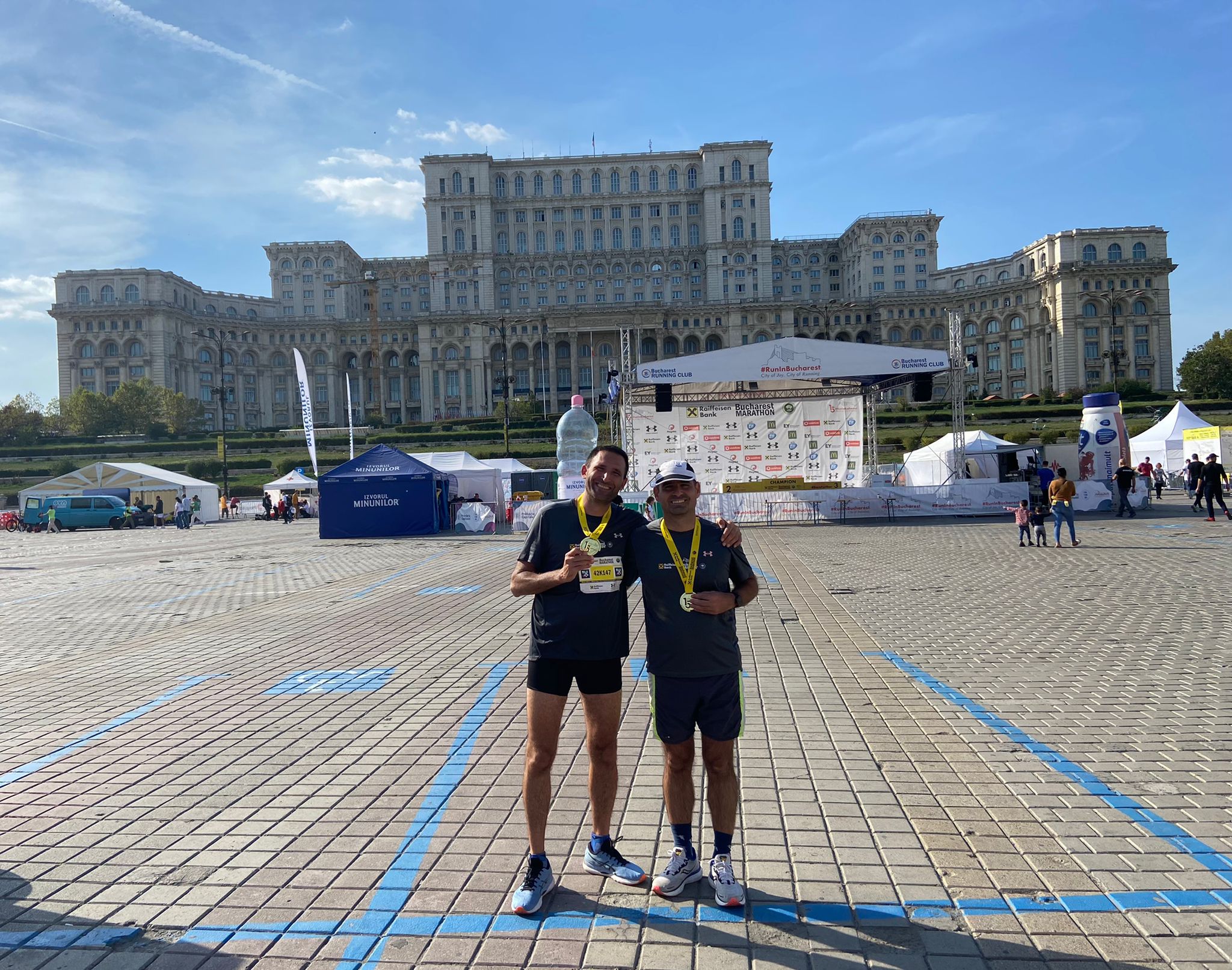
Last Sunday, October 9th, together with my friend Juan and my brother Jaime, we traveled to Bucharest to take part in its marathon, with around 700 runners registered in the distance.

We picked Bucharest following our series of marathons abroad (to combine tourism with long distance running) that has taken some of us to run together in Paris, Berlin, Roma, Athens, Rotterdam, New York, Sevilla (x3), Madrid, Millau, Dublin (x2), Lisboa, Vienna, Krakow, Porto and now Bucharest.

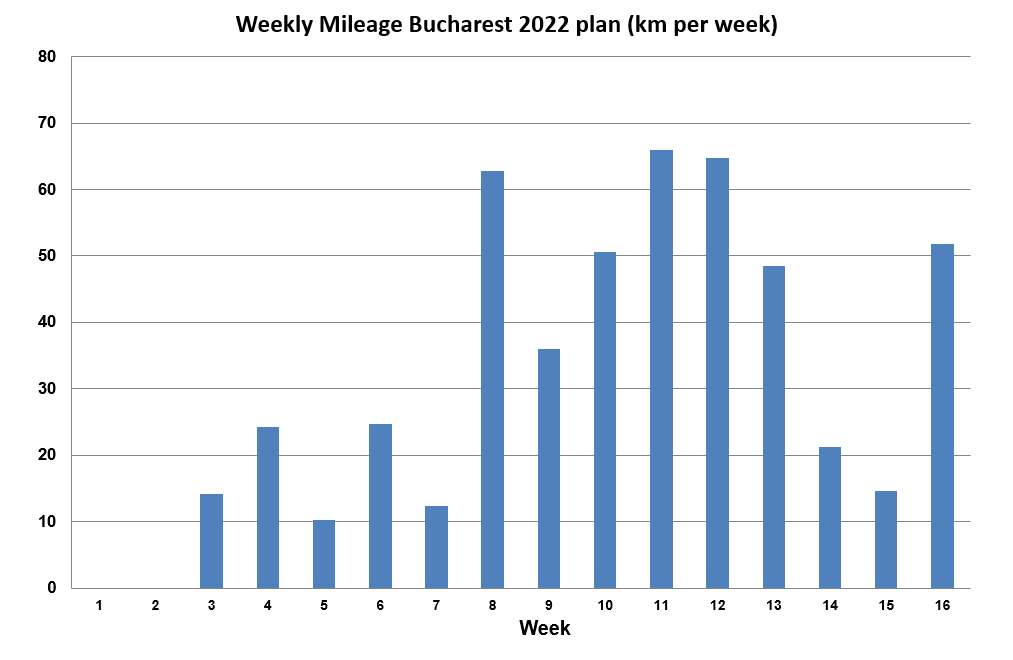
To prepare for this marathon I followed the same 16-week training plan I had used in the past. Just before those 16 weeks of the plan, thanks to a running challenge we followed in the company, I cumulated ~240km in 4 weeks between end May and end June. Then I kicked off slow with the plan as I had some weeks in which I traveled due to family and work. In the end I arrived to Bucharest with less mileage (460km) in the legs in those 16 weeks than I would have liked. I trained quite well between August and especially September. In those 16 weeks I averaged 35km per week, completed 4 long runs (of 22km, 27km, 30km and 21km – with positive feelings especially in this last one) and a few sessions of series, though not enough of them to get a bit faster. I was confident in being able to complete the marathon in a time between 4h05′ and 4h15′ even if the final mark was uncertain.

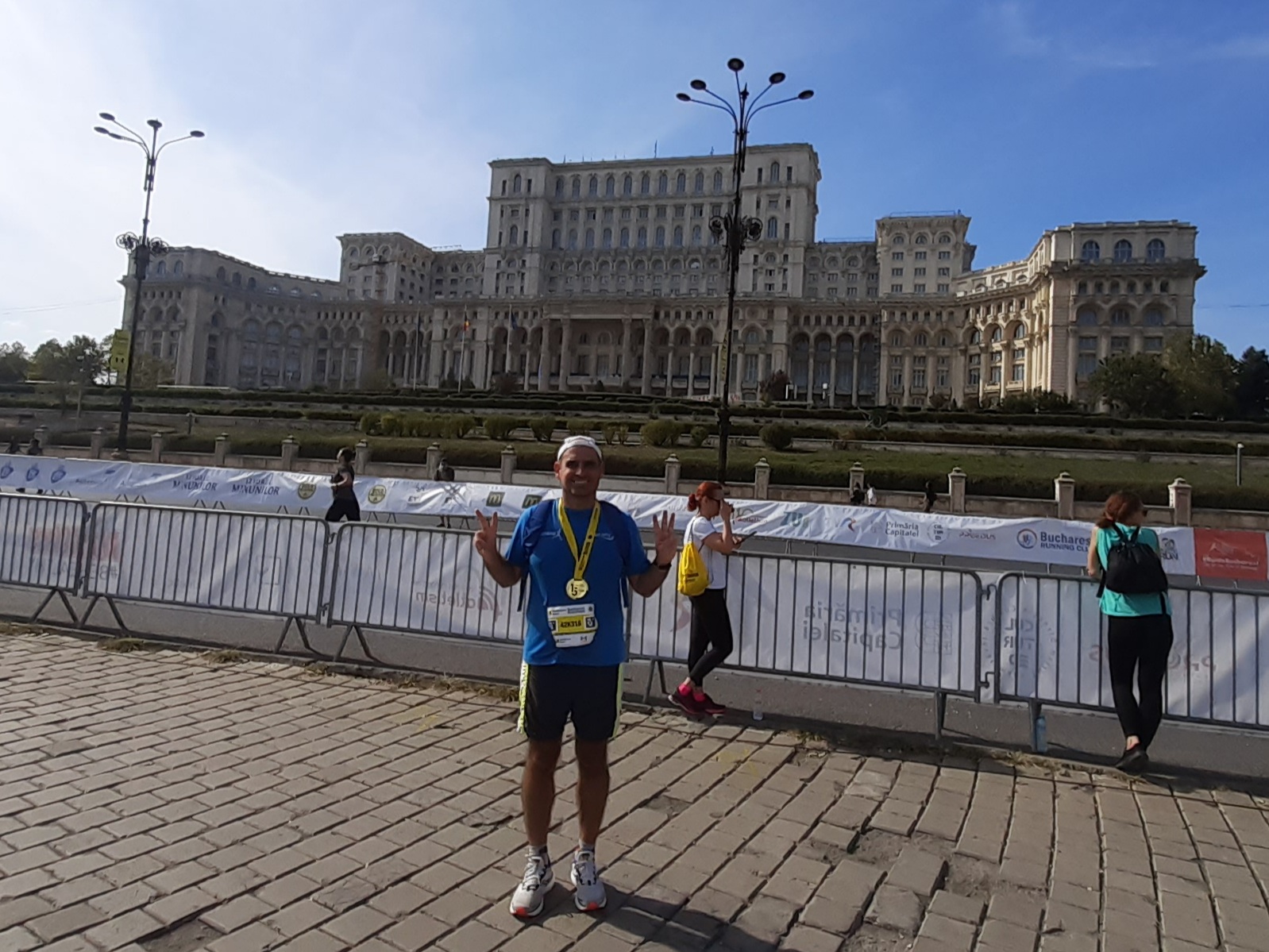
The profile in Bucharest is rather flat. The organization prepared a circuit mainly composed of long avenues, allowing us to run at constant pace though there were up to eight sharp U-turns. The race started and finished in the Constitution square, in front of the iconic Parliament building. And we stayed the weekend at an apartment at walking distance from the place.

The temperature was mild in the morning, the sky was clear and it would be a bit hot towards the end of the race, though the temperature did not exceed 22°C. My strategy was to start at a pace just below 6min per km, and then, if I felt well, accelerate the pace at mid-race so that I could target a time below 4h15′. There were pacers for times aiming at every 15-minute mark and even though I did not follow any of them they were useful as references at every U-turn (i.e., I could see how far I was from each of the 4h00 and 4h15 pacers as I ran always in between them).

The bad news of the weekend was that my brother Jaime fell sick and by Saturday afternoon the throat ache he developed did not allow him to swallow without strong pain. He stayed in the apartment and finally took the decision not to take part in the race on Sunday, as in a marathon you need to constantly drink and eat.

The race started at 9:30am and we ran together with the participants in the half marathon and the relay race. That made the first half of the race a bit more crowded. For the first 13-14 kilometres Juan and I ran together, all the way up to the Arch of Triumph and down to the Romanian Athenaeum. Up until then we had averaged ~5’50″/km including a technical stop. Then, Juan softened his pace and stayed behind.

I kept my pace for a few kilometres including the stretch in the Cișmigiu Gardens where I found it difficult to run with the narrower paths (compared to the big avenues of the rest of the race) and the irregular ground. From the km 18 I increased the pace and averaged ~5’40″km in the next 13 kilometres until the km 30 mark. In that stretch we ran long kilometres by the Dâmbovița river, we passed the half marathon by the Parliament, we ran by the iconic Bucharest Fountains (by then we were no longer a crowd but a flow of isolated runners and some small groups)…

At the km 31 the race circuit went back to the Bulevardul Unirii, where we first turned to the East all the way to the National Arena (by the km 36) and then took a U-turn to head West back to the Parliament building. The circuit was quite straightforward in that last quarter of the race. There I felt the legs a bit stiffer, but I managed to keep a constant pace which was only slowed down at a supply post and a medical stop that made me lose some 30 seconds. I averaged 5’55″/km from the km 31 to the 41.

In all those kilometres I had seen the pacers of 4h00 not very far away and the 4h15 at increasing distances behind me. I started to make the numbers in my head and realized that I could well be somewhat below 4h05 and set that as an objective for the last kilometres, to try to run a faster marathon than my previous one in Sevilla.

The last 3 km of the race are superb. The race goes back to the Bulevardul Unirii and you have the view of the imposing Parliament building at the end of it, where you know that the Finish line is located. I kept my pace along the 40th and 41st kilometres and only gave it all at the last 1,200 metres.

In the end, I clocked a net time of 4h04’09”, a time better than what I expected and a bit faster (45″) than in Sevilla earlier this year (where I finished stronger but did a slower first half). Bucharest 2022 has been my 23rd marathon completed, easy to say today but not so on April 30th 2000 when I started in the distance in Madrid.

With those 4h04’09”, I was again above the 4-hour mark and finished in the 317th place out of 640 finishers (50% percentile). That time makes it my 9th worst marathon, though with a better time than the last three marathons and with a very positive feeling all along the race (for a second marathon in a row), thus, I am already thinking on getting again more serious with the series training to target a time under 4 hours in the next marathon, possibly next spring.

The organization of the race was great. The circuit showed a magnificient and beautiful city. They could have included some more water supply posts, but at least we could get water bottles to administer the water ingestion in between posts. I also missed some gels provided by the organization or more isotonic drinks; but with what they provided and the three gels I took I could manage the race well. The finish line was great, the wardrobe service was close to the start and finish line, there were even some puffs where to sit and rest by the finish area… It was a great experience.

Looking forward to the next race, that one with Jaime running with us again.

3 Comments

Filed under Sports

Maratón de Sevilla 2022

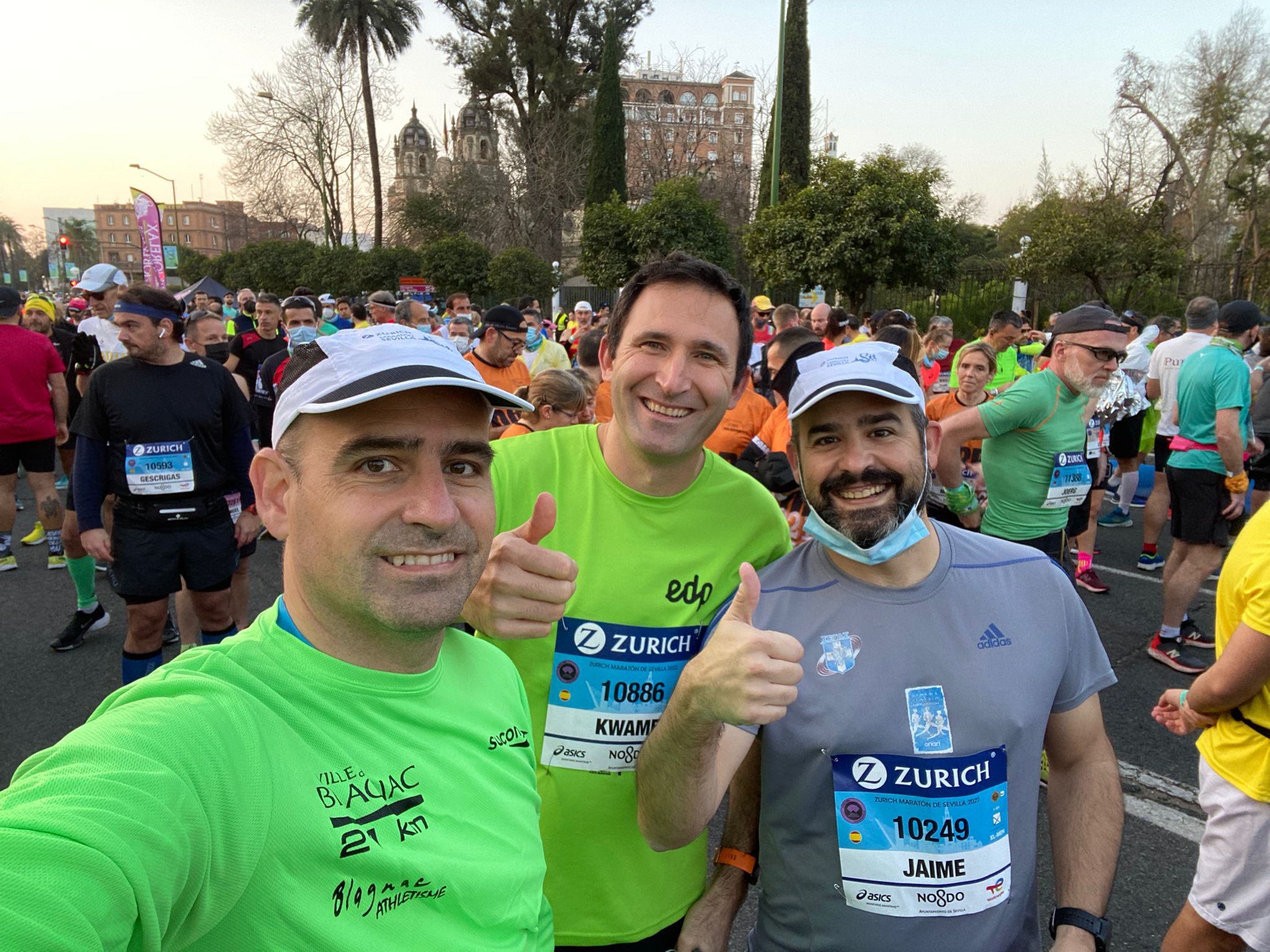
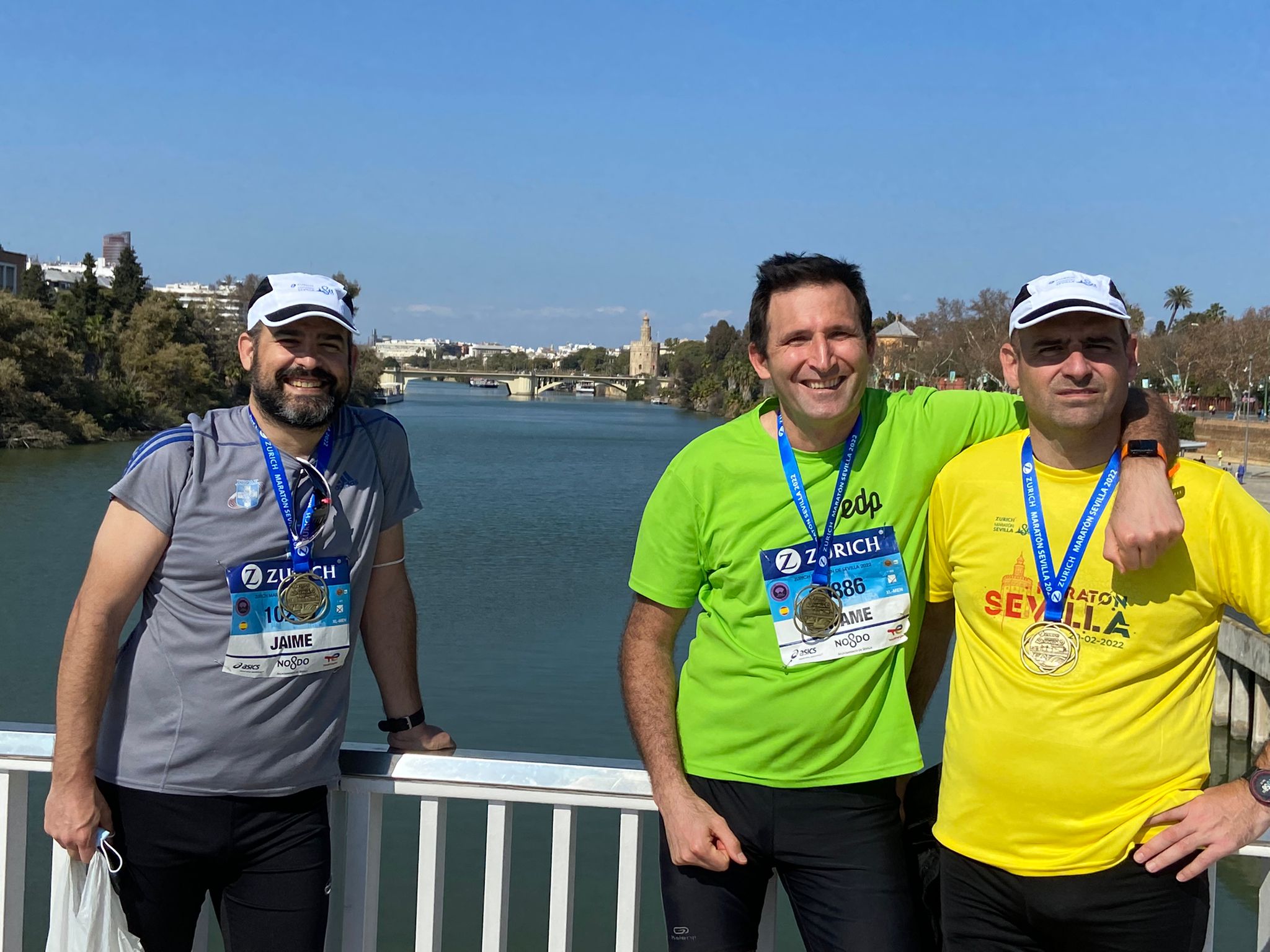
Last Sunday, February 20th, together with my friend Juan and my brother Jaime, I took part in the Sevilla marathon, with over 10,000 runners registered.

Following two years of not having taken part in any marathon due to restrictions imposed by the Covid-19 pandemic, the three of us subscribed to the marathon following our series of marathons abroad (to combine tourism with long distance running) that has taken us to run together in Roma, Athens, Rotterdam, New York, Sevilla, Madrid, Millau, Lisboa, Vienna, Krakow, Porto and now Sevilla, again.

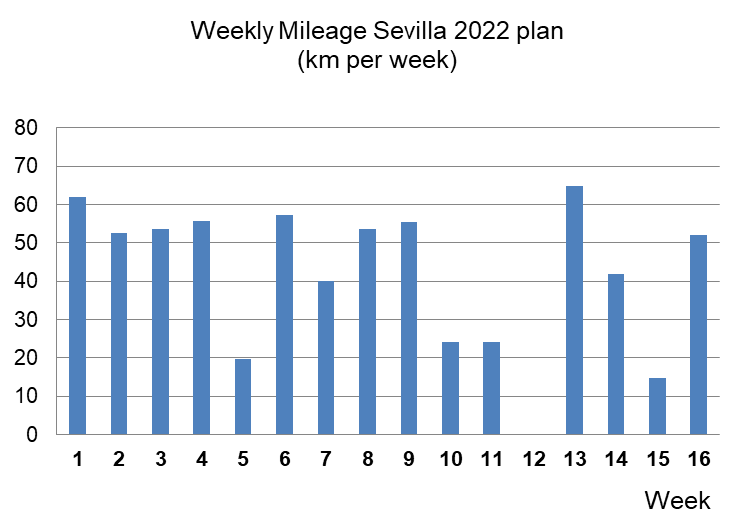
To prepare for this marathon I followed the same 16-week training plan I had used in the past. I arrived to Sevilla with more mileage (629km) in the legs than in the case of the last few marathons. I trained quite well in November, December and the first week of January. Then, I caught Covid-19 and had to stop running for about 10 days. During the last two weeks of the plan, with workload and work-related travel, I found it difficult to train, but most of the training was already done. In those 16 weeks I averaged over 41km per week, completed 5 long runs (of over 21km, twice 23km, 27km and 30km) and a few sessions of series, though not enough of them to get a bit faster. The negative note was that in the last long run over 21km (just two weeks before the race) I finished very weak and with bad feelings for the race in terms of targeting a pace at or below 4 hours, but still with the confidence of being able to finish it even if the final time was uncertain.

The profile in Sevilla is rather flat. The organization changed the circuit in comparison to the previous times we had taken part in the race. It did not start and finish at the athletics stadium in La Cartuja, but close to the Parque Maria Luisa.

The temperature was fresh in the morning, the sky was clear and it would be a bit hot towards the end of the race, though the temperature did not exceed 19°C. My strategy was to start with a pace just below 6min per km, so that I could target a time slightly below or around 4h15′, with no pacers for that time.

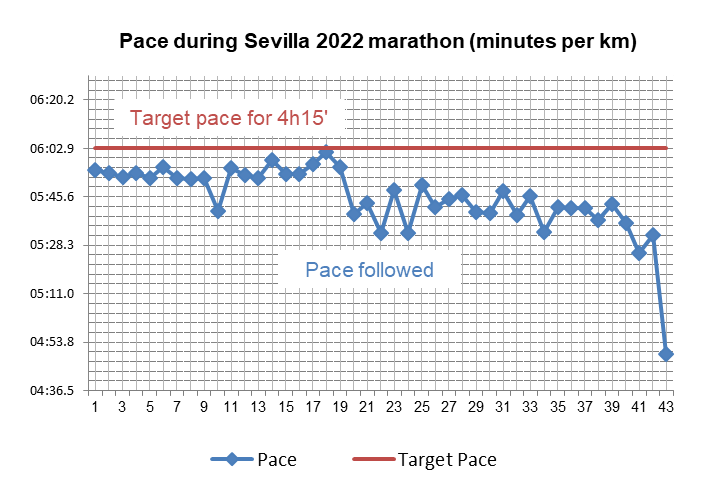
Despite the 10,000 runners taking part in the race, we could easily run from the start at the targeted pace. For the first 16-17 kilometres we ran the three of us together, then my brother Jaime went ahead and Juan and I kept running together until about the half marathon, which we crossed in 2h04’59” net time (at a pace of 5’55” per km). Then, Juan softened his pace and stayed behind. I increased my pace in the second half, finding my brother again at around the km 28 and, after exchanging a few words about how we were doing at that moment, I went forward.

In the second half of the race I found myself quite at ease with the pace and averaged 5’41” per km to achieve a negative split; completing the second half of the marathon in just few seconds below 2 hours.

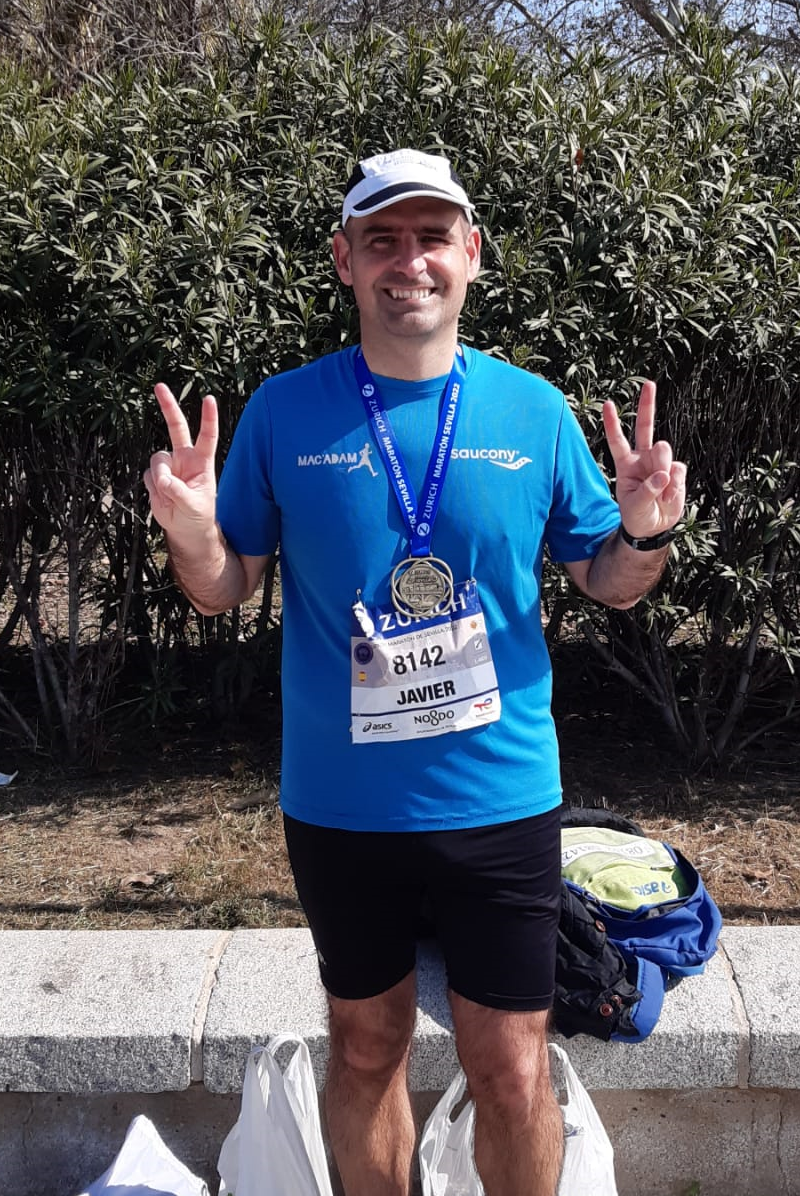
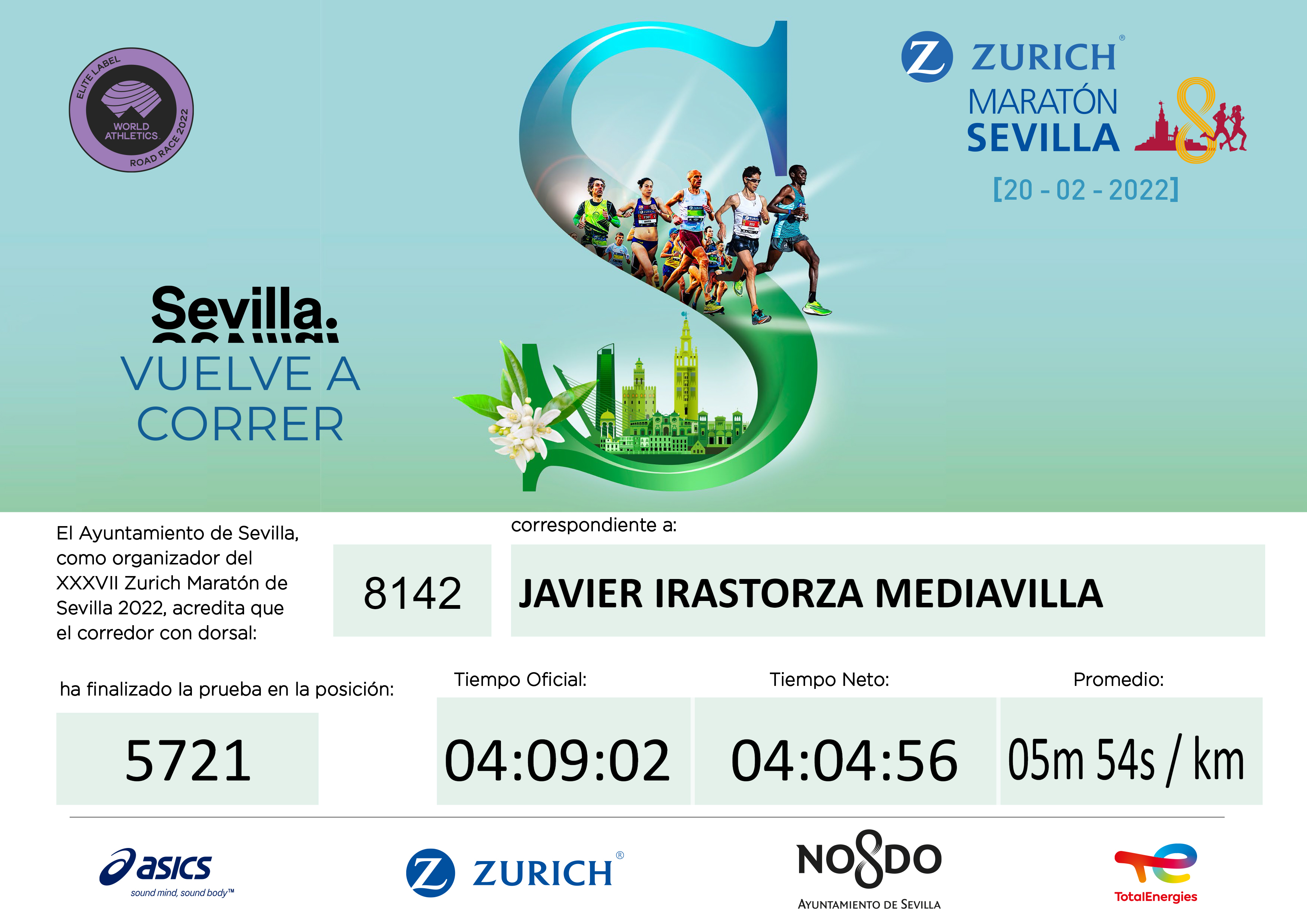
In the end, I clocked a net time of 4h04’56”, a time better than what I expected (~4h15′). Sevilla 2022 was my 22nd marathon completed, easy to say today but not so on April 30th 2000 when I completed my first one in Madrid.

With those 4h04’56”, I was again above the 4-hour mark and finished in the 5664th real place (or 5721st official place, in the bottom half, though the percentile is not yet clear as the results are temporary), while I overtook over 1,200 runners in the second half of the race. That time makes it my 8th worst marathon, though with a better time than the last two marathons and with a very positive finish, thus, I am already thinking on getting again under 4 hours in the next marathon, possibly next autumn.

This marathon left me some memorable moments:

  • seeing my cousin Marileo and her kids while we passed in front of her house,
  • running several kilometres with Juan and Jaime,
  • the good feelings of the second half marathon.

The organization of the race was great. There were supply posts of water and isotonic drinks very often, thus we did not need to carry bottles at any moment. They provided a very handy and light cap to protect us from the sun. And there were plenty of music stations to cheer us up in the second half of the race.

The marathon in itself was also a success as the winner Asrar Abderehman set a new race record with 2:04:43 (making Sevilla the 13th world fastest marathon) and the Spanish Ayad Lamdassem set a new national record with 2:06:25.

1 Comment

Filed under Sports

Maratona do Porto 2019

Last Sunday, November 3rd, together with my friends Juan, Manuel and my brother Jaime, I took part in the Porto marathon, with nearly 4,000 runners registered.

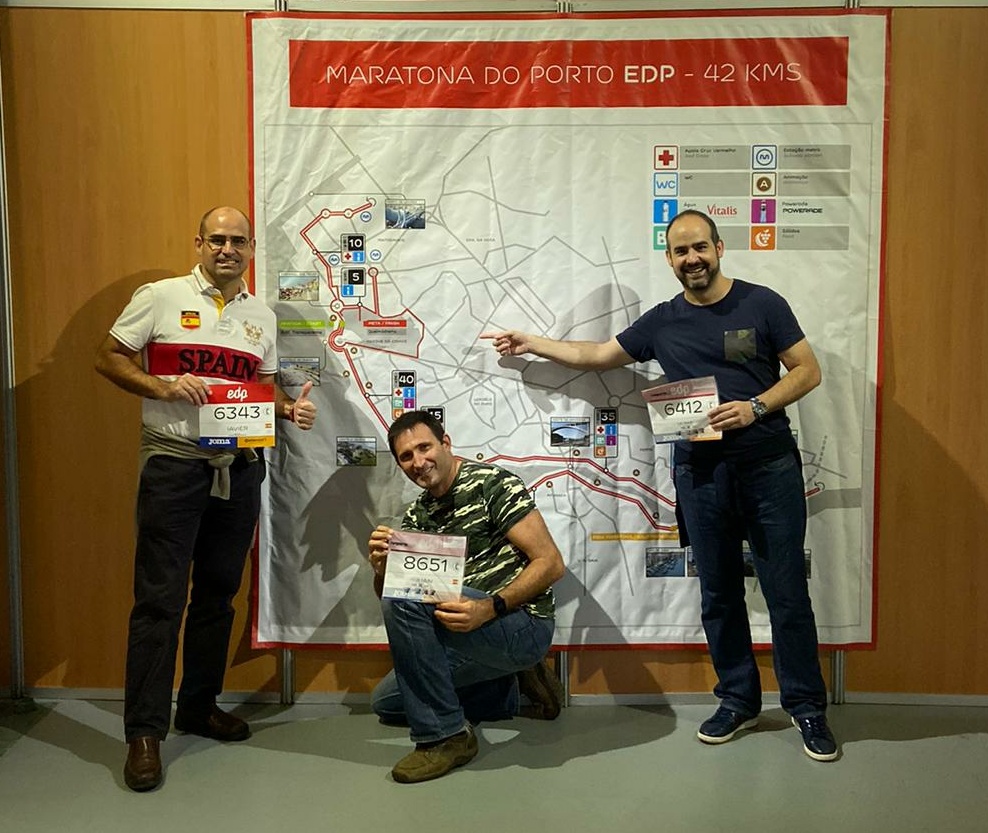
Porto_Expo

The four of us subscribed to the marathon following our series of marathons abroad (to combine tourism with long distance running) that has taken us to run together in Roma, Athens, Rotterdam, Sevilla, Madrid, Millau, Lisboa, Vienna, Krakow and now Porto.

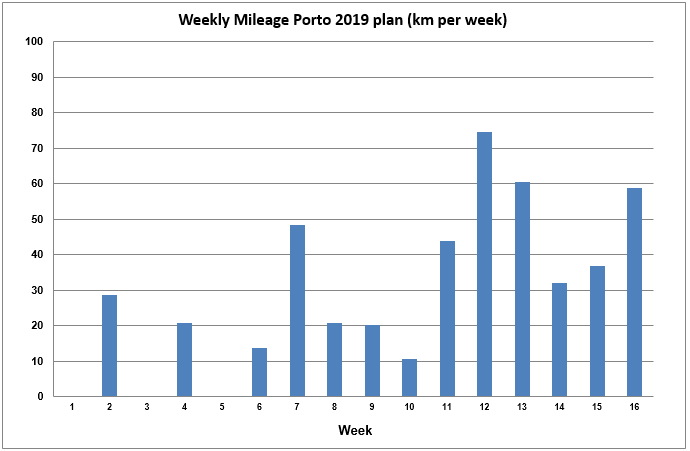
As with the previous marathons in the past two years, I arrived to Porto short of training, with just 427 km in the legs (in the previous 16 weeks), a new minimum and some 30 km less than for Krakow and 20 less than for Vienna, a solid between 200 and 300 km less than when I have closely followed the training plans in the past years. As you can see below, I found myself at 6 weeks before the race without having consistently trained for two weeks in a row and about 10-12 kg overweight, and then I put myself to the business of mitigating the damage. The same story than for the previous two marathons.

Weekly_mileage_Porto

In those last weeks of the plan I averaged 50 km per week, but I only did a couple of long runs while running some trail races (of 24 and 26 km) and did only complete 2 series sessions the week before the marathon. Meanwhile, I lost some 4 kg (but still at 89 kg) and arrived with the confidence of being able to finish it even if the final time was uncertain.

Recorrido

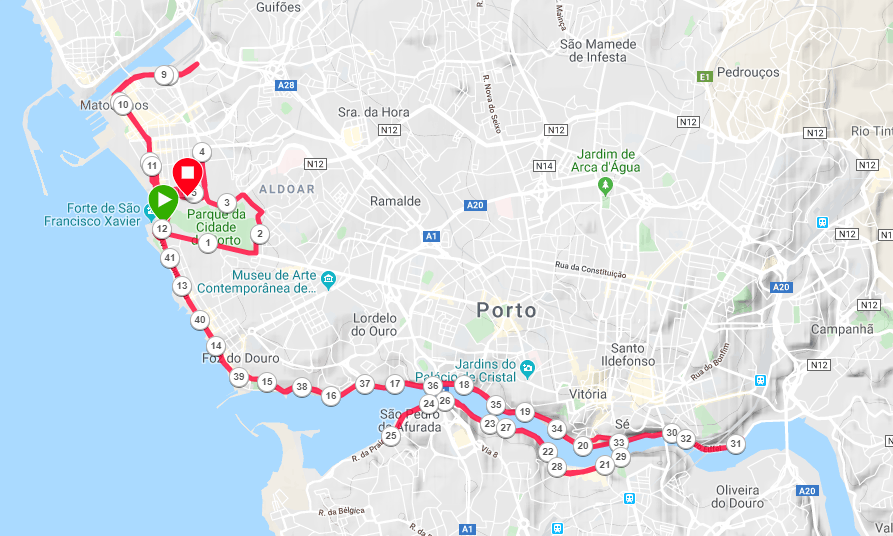
The profile was nearly flat with a few short climbs. The race started at a park close to Matosinhos village and then goes towards Porto by the road following the coast with great views of the waves breaking at the shore. Once in Porto the marathon goes back and forth on both sides of the river, to later come back to the same park. Before the race I thought I would not like the passing many times over the same places but it helped to mentally break the race into pieces.

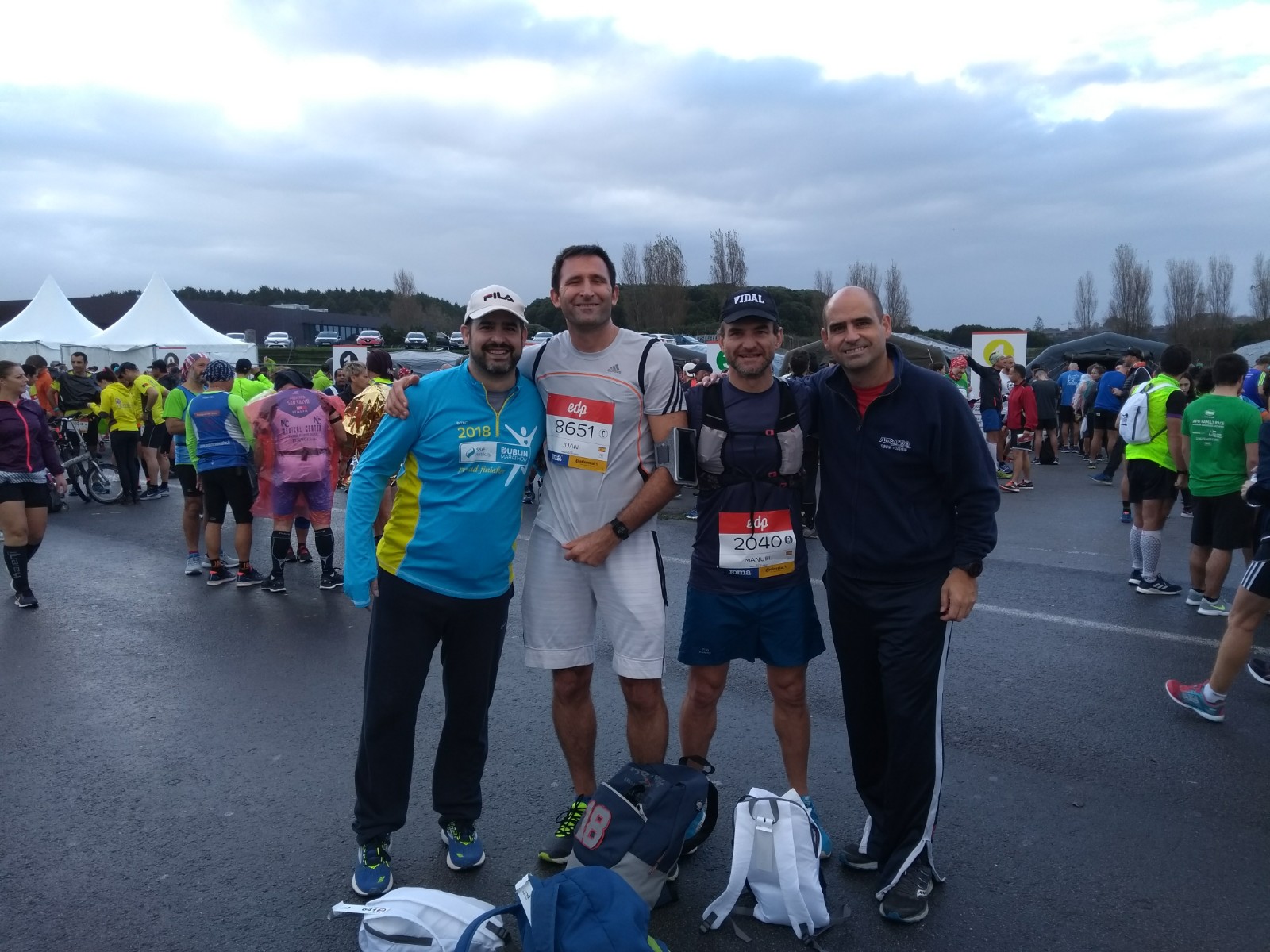
Pre_race

The temperature was fresh, the sky was mostly covered and it could rain but did it only for a few minutes. My strategy was to start with the 4h15′ pacers until I could not keep up with them, hoping to come with them until the km 30 and then see.

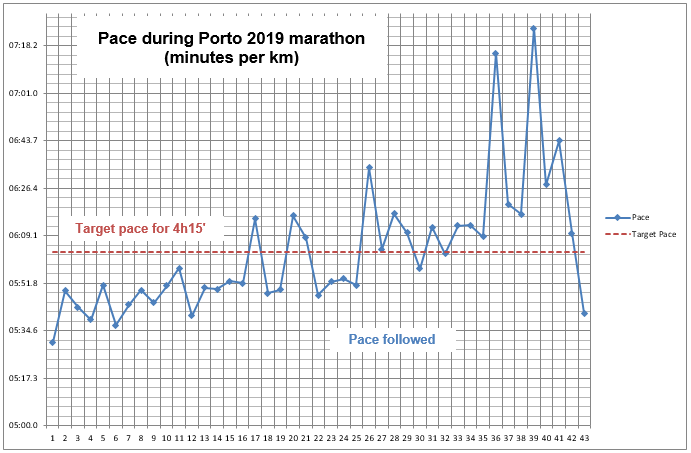
With just 4,000 runners taking part in the race, we could easily run after the first kilometre and I quickly caught the pacers. Then, I started running a few metres in front of them and a few seconds faster than the target pace until around the km 25. I continued at about the target pace until the km 32, when the pacers overtook me. I then continued to follow a softer pace but found myself quite comfortable till the end, with a couple of kilometres taking longer due to stopping some seconds at the water and food supply posts.

Pace_Porto_2019

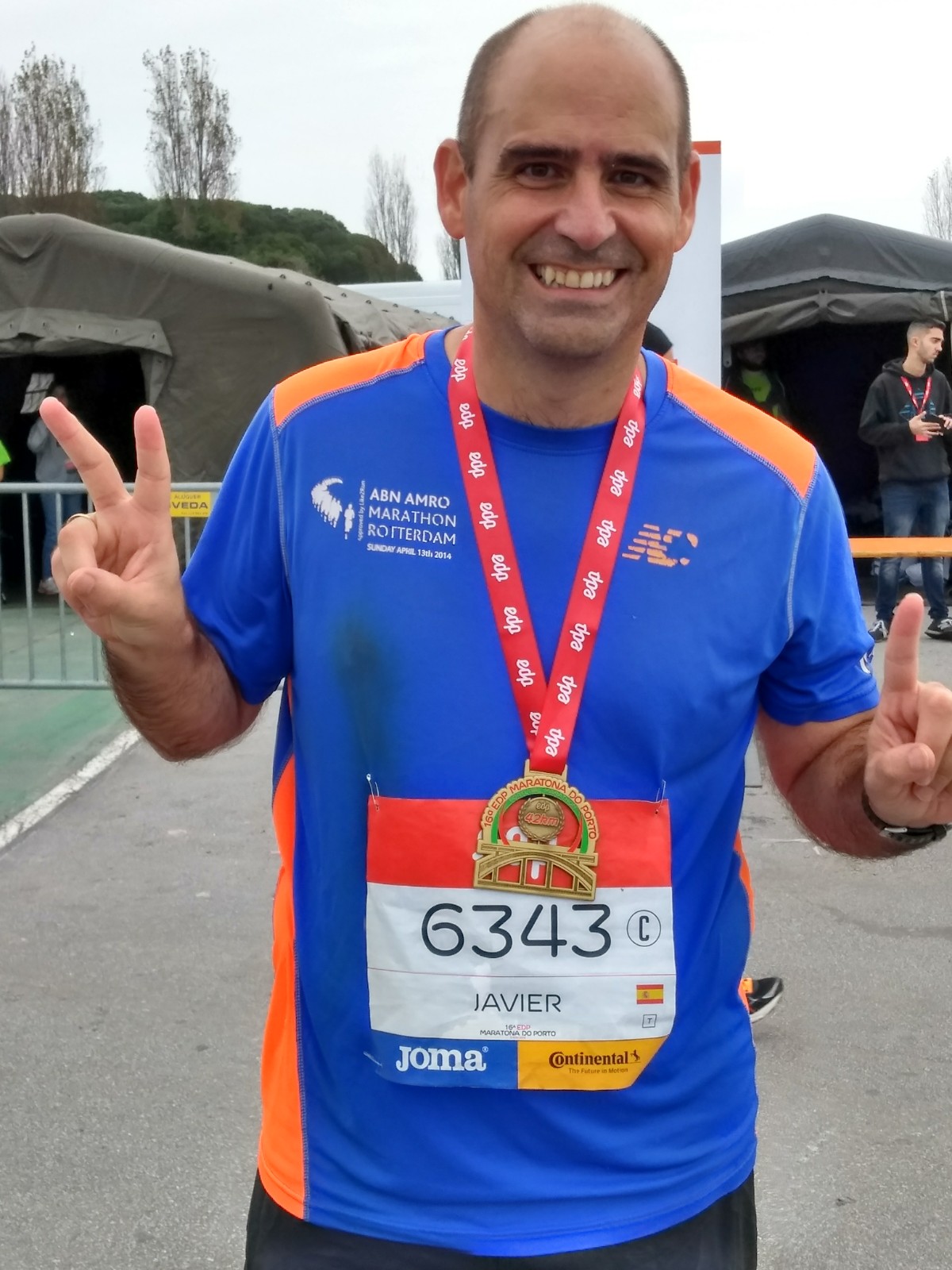
In the end, I clocked a net time of 4h17’57”, a time around of what I expected (~3′ worse than 4h15′) in view of the lack of training and overweight. It was my 21st marathon completed, easy to say today but not so on April 30th 2000 when I completed my first one in Madrid.

Porto_Medal

With the 4h17’57”, I was again above the 4-hour mark, and finished in the 2442nd place of the 3804 finishers, that is in the percentile 36% (bottom half). That time makes it my 4th worst marathon, after 2 of the first 3 that I did almost 20 years ago and that of Vienna a year ago.

Times_comparison_Porto

This marathon left me some memorable moments:

  • as the circuit has runners going in different directions in both sides of the road for most of the time, I could see the winner, my brother a couple of times, my friends Juan and Manuel, the former world champion Marti Fiz.
  • just after the km 32 the race enters into the tunnel “da Ribeira” for around 150m in which the organization had placed several screens and speakers playing the theme from Vangelis for the film “Chariots of fire”. That was overwhelming.

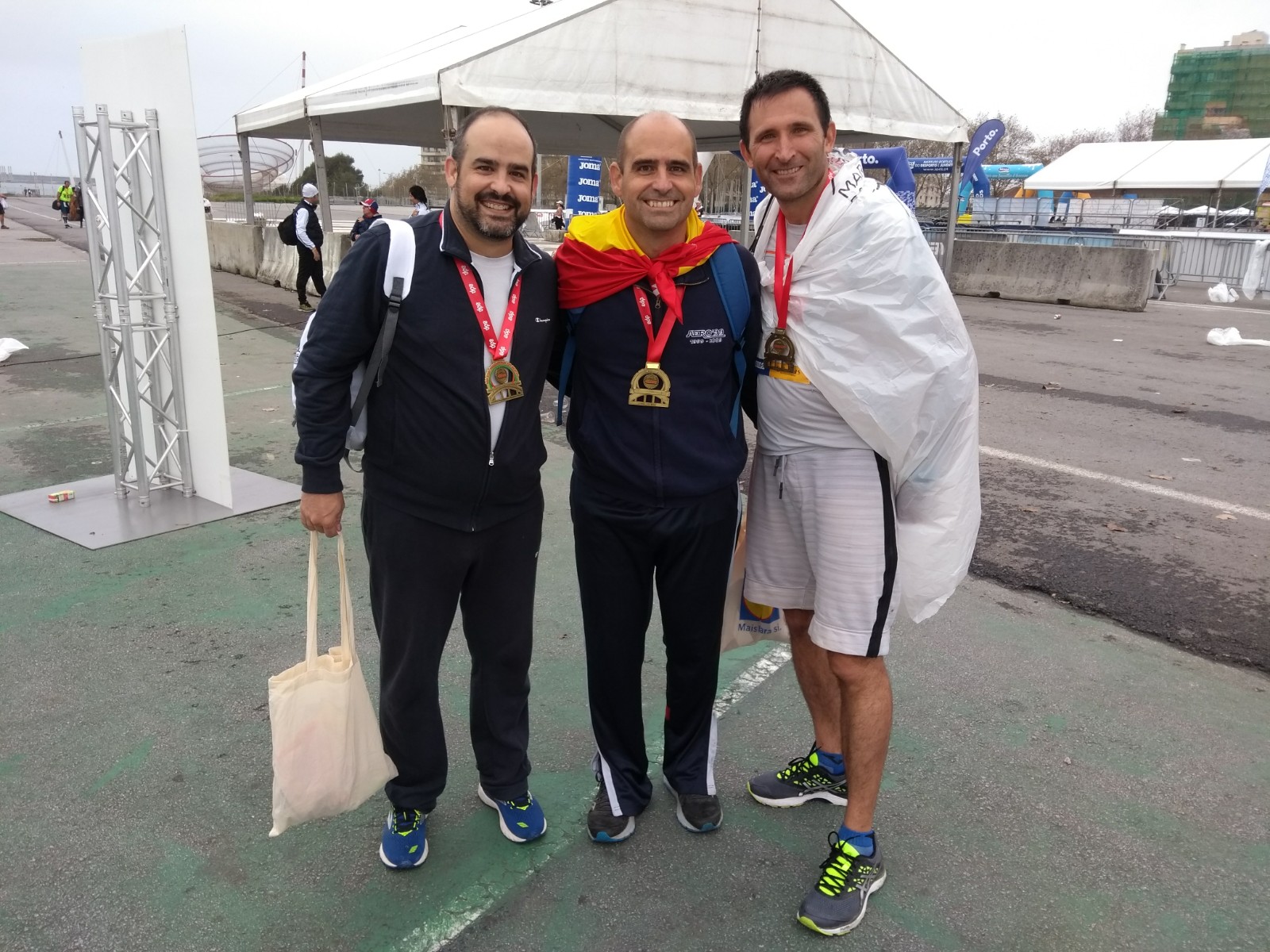
After crossing the finish line, I stayed in the park cheering fellow runners as they approached the last metres of their race while I waited for Juan and my brother.

Post_race

Medals

Leave a comment

Filed under Sports

Krakow marathon (2019)

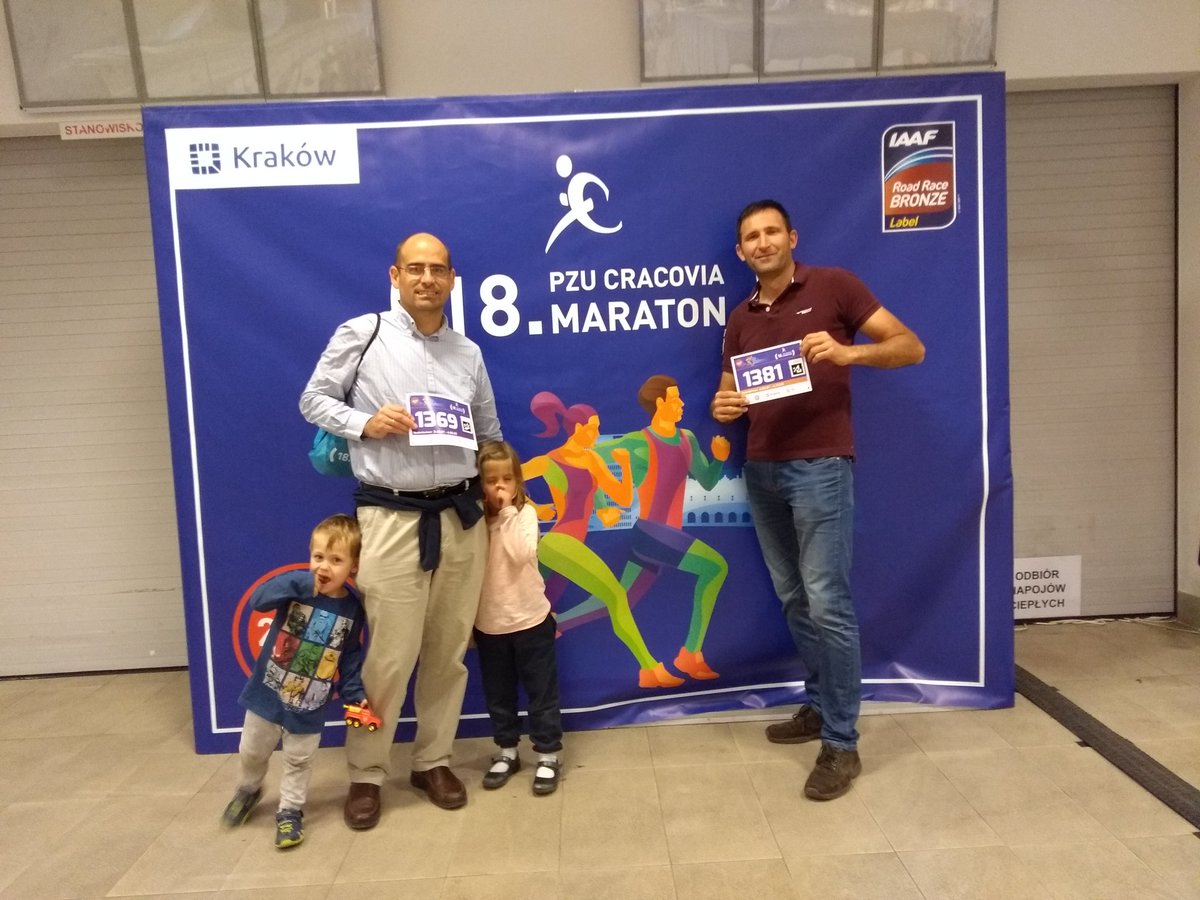
Last Sunday, April 28th, together with my friend Juan and my brother Jaime, I took part in the Krakow marathon, with above 6,300 runners registered.

Krakow_running_bib

The three of us subscribed to the marathon following our series of marathons abroad (to combine tourism with long distance running) that has taken us to run together in Athens, Sevilla, Madrid, LisboaVienna and now Krakow.

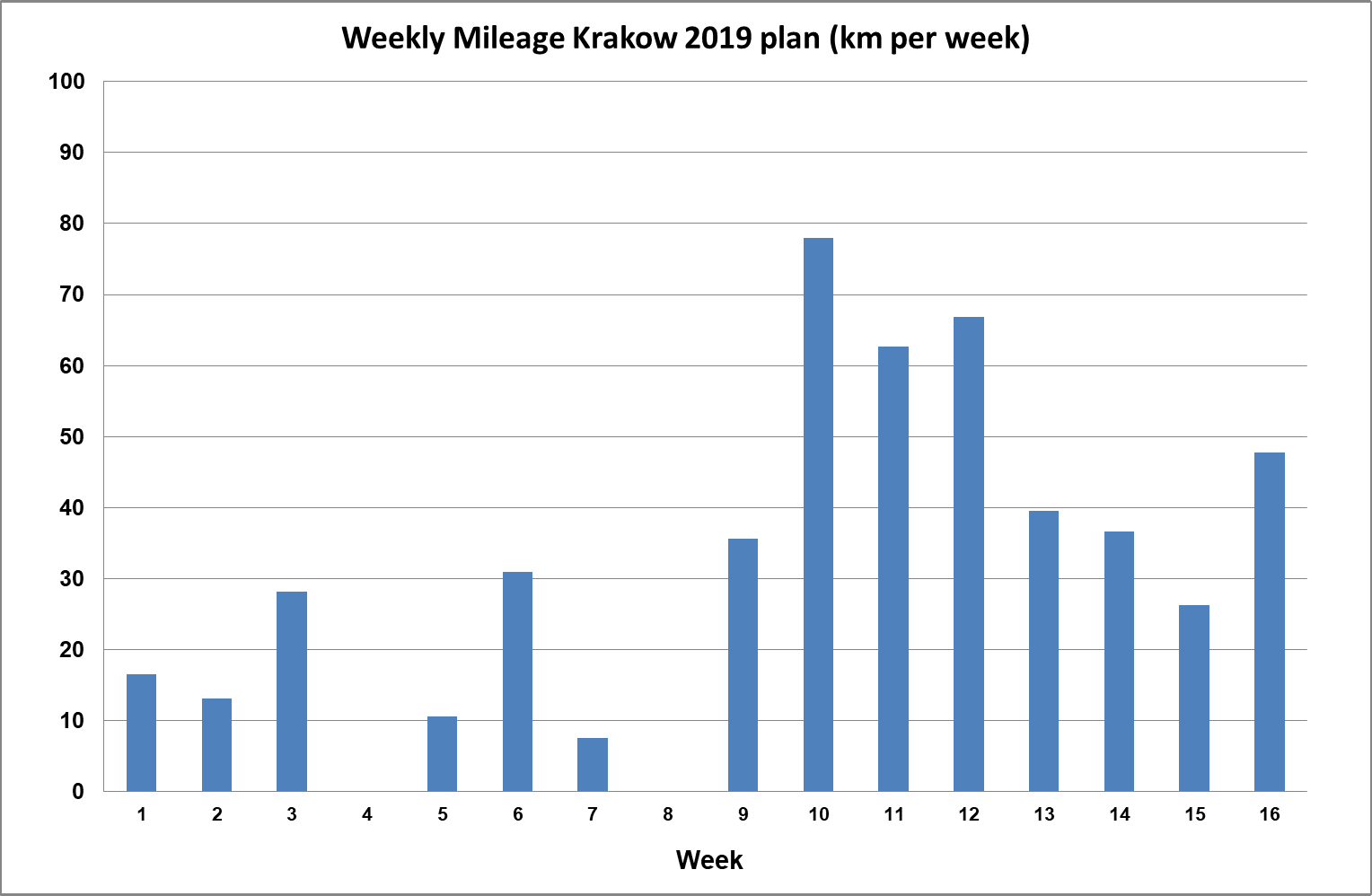
As with the previous two marathons in 2018, in Vienna and Dublin, I arrived to Krakow short of training, with just above 458 km in the legs (in the previous 16 weeks), some 15 km less than for Dublin and 10 more than for Vienna, but between 200 and 300 km less than when I have closely followed the training plans in the past years. As you can see below, I found myself at the end of the 8th week of the plan (beginning of March, just after the skiing break) without having trained much and with 8 weeks to go and about 10-12 kg overweight, and then I put myself to the business. The same story than for the previous two marathons.

Krakow_2019_mileage

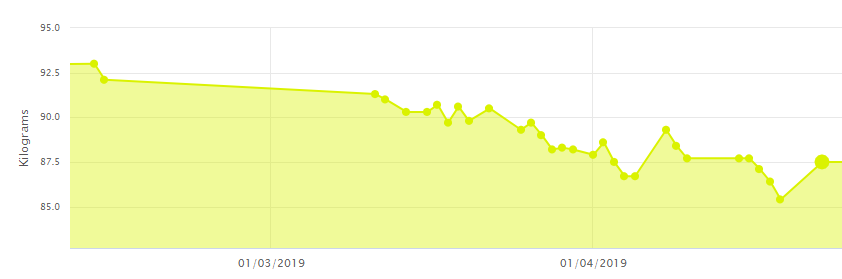
In the 8 weeks prior to the marathon week I averaged 49 km per week, but I only did a couple of long runs (of 25 and 27 km) and didn’t complete series sessions as after the increase of volume in the 10th week I started having pain in the hip, so I kept up the volume, softened the pace and forgot about the series. In the last 3 weeks, however, I did not keep up with the good volume of the previous ones. Meanwhile, I lost some 6 kg and arrived with the confidence of being able to finish it even if the final time was uncertain.

Weight_loss_Krakow

The profile was nearly flat with a few short climbs. The temperature was fresh (10 degrees Celsius at the departure time), the sky was covered and it rained from the beginning to the end. My strategy was to start with the 4-hour pacers until I could not keep up with them, hoping to come with them until the km 30 and then see. Juan started the race with me and we ran together for about 14 km ahead of the pacers.

Krakow_6

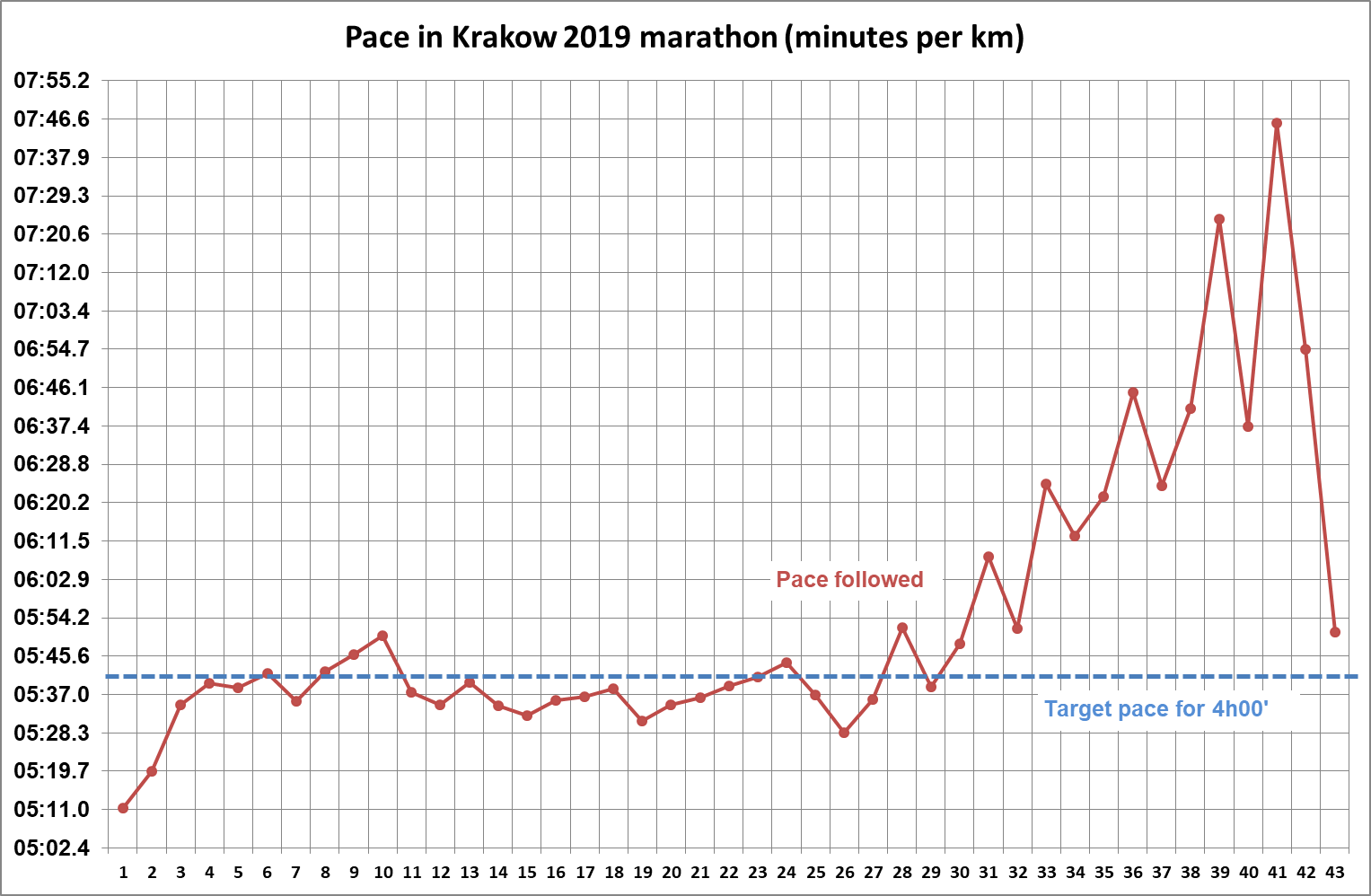
With less than 6,000 runners taking part in the race (a few hundreds of those registered didn’t start), we could easily run from the beginning and in fact we did the first couple of kilometres a bit faster than intended so we softened the pace. Since then we ran more or less at the target pace (5’41” per km), at the km 14 Juan dropped a bit backwards as he had announced much earlier, and at the km 26 I was caught by the first of the 4-hour pacers, the last of which overtook me at the km 29. I tried not to lose much distance with them but after the km 32 I was feeling the legs much stiffer and I started to soften the pace with only 10 km to go and the only mental objective of finishing the race.

Krakow_2019_pace

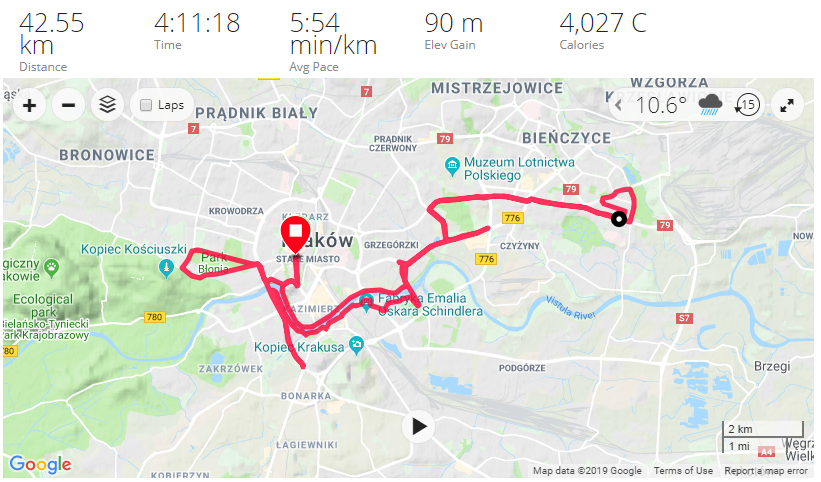
In the end, I clocked a net time of 4h11’17”, a time around of what I expected (5-10′ worse than 4 hours) in view of the lack of training and the rain; it was a tough day of running (a bit better than the feelings in Vienna though). It was my 20th marathon completed, easy to say today but not so on April 30th 2000 when I completed my first one in Madrid.

Krakow_2019_Garmin

Krakow_medal

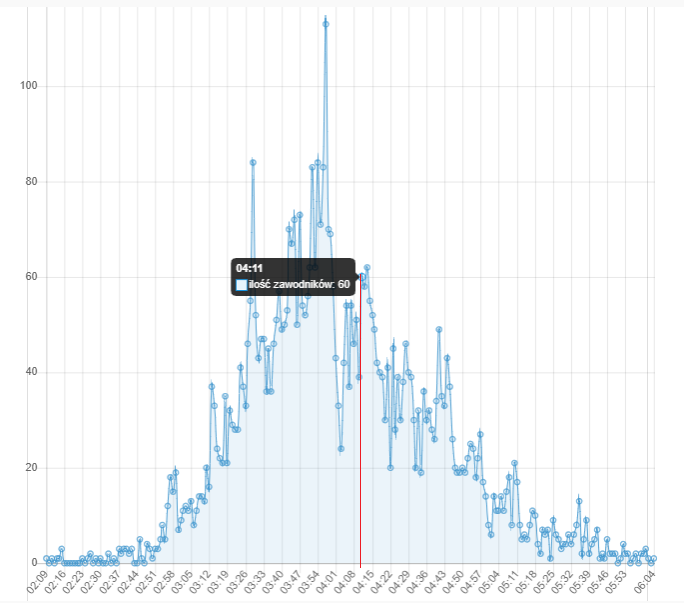
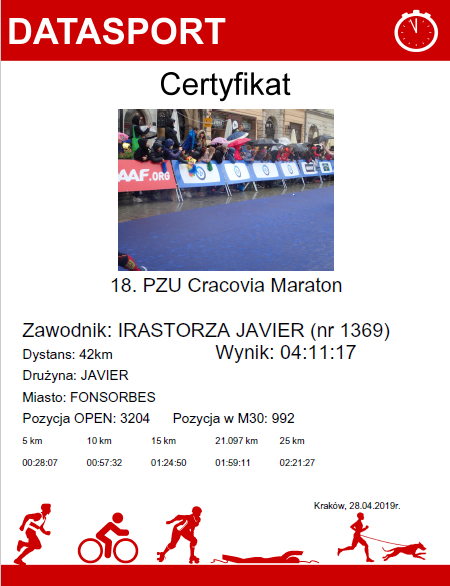
With the 4h11’17”, I was again above the 4-hour mark, and finished in the 3204th place of the 5184 finishers (see the diploma below), that is in the percentile 38% (bottom half). That time makes it my 4th worst marathon, after 2 of the first 3 that I did almost 20 years ago and that of Vienna a year ago.

Krakow_2019_percentile

Krakow_diploma.PNG

Times_comparison_krakow

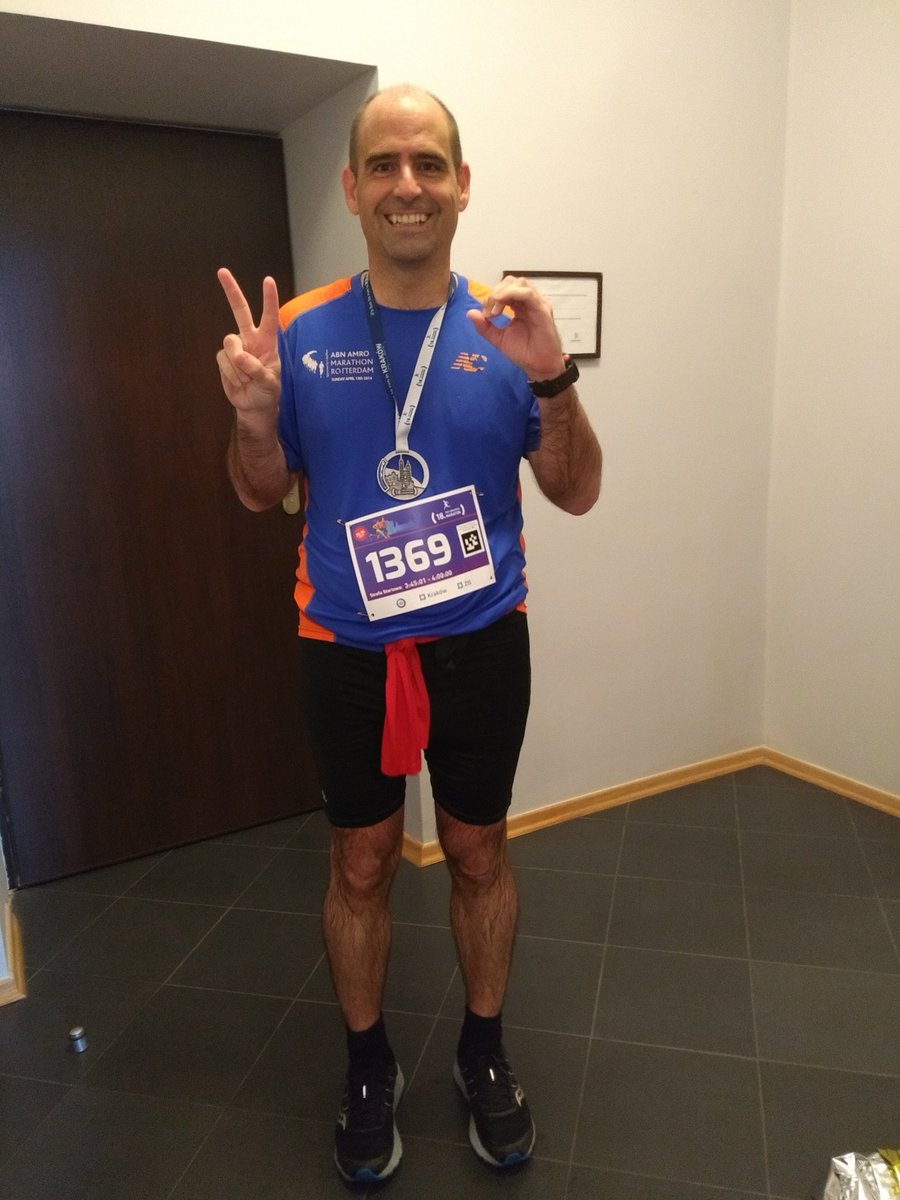
After crossing the finish line, I crossed the market square of Krakow, entered the hotel, took a picture with the finisher medal (above), took a shower and waited for Jaime and Juan to share the experiences of each other and start thinking of the next marathon.


Leave a comment

Filed under Sports

Dublin marathon (2018)

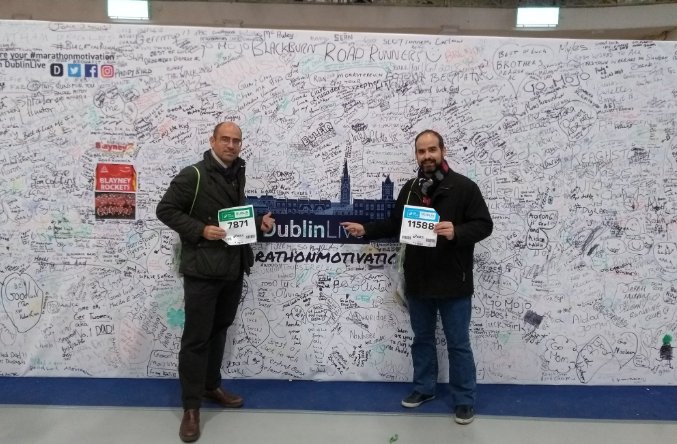
Last Sunday, October 28th, together with my brother Jaime (see here his post about it), I took part for a second time in the Dublin marathon, the “Friendly marathon” according to one of their lines, the 4th largest marathon in Europe with about 18,000 people registered, above 16,000 finishers.

Dublin_0

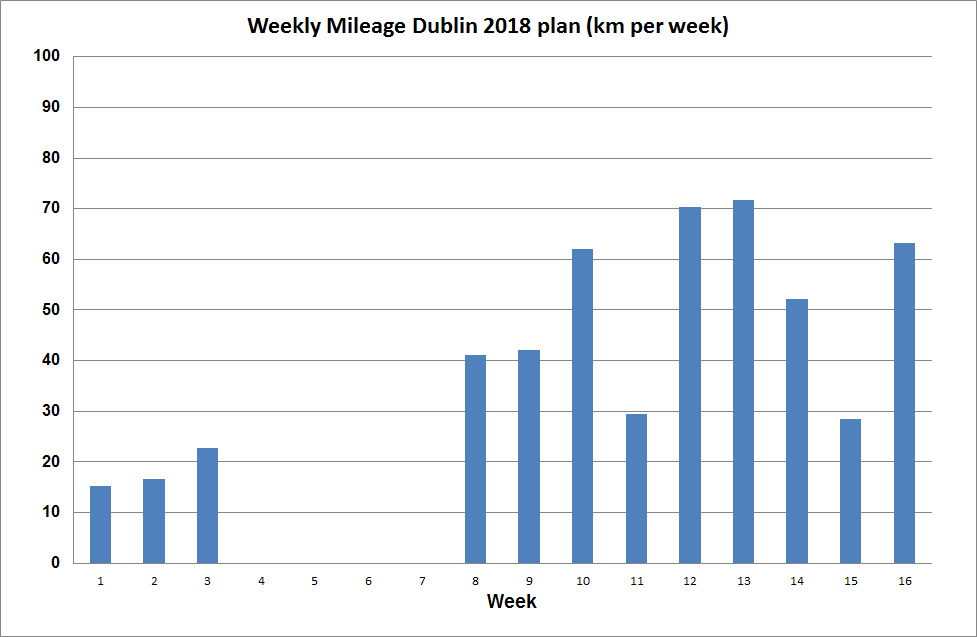
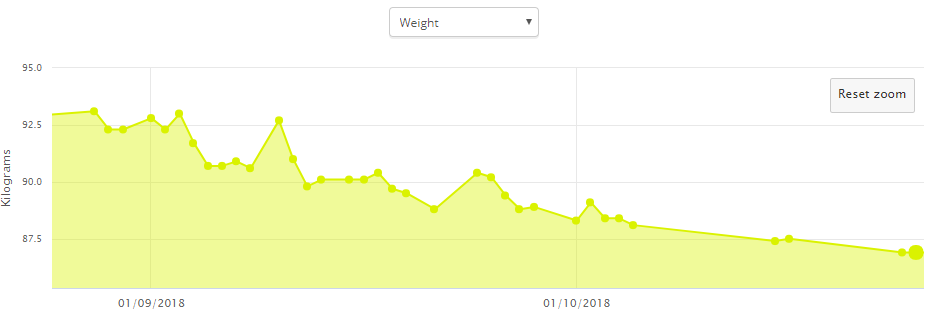
Jaime and I subscribed to the marathon after the good experience I had in Dublin two years ago (see here my post about it), when I ran it with Serna. After the bad experience in Vienna last spring (see here) I wanted to have better prepared this marathon, but I did not. I arrived to Dublin with just above 470 km in the legs (in the previous 16 weeks), some 70 km more than for Vienna but between 200 and 300 km less than when I have closely followed the training plans in the past years. As you can see below, I found myself at the end of August or the beginning of the 8th week of the plan without having trained much and with 9 weeks to go and about 10-12 kg overweight, and then I put myself to the business.

Dublin_2018_mileage

In the 8 weeks prior to the marathon week I averaged 50 km per week, but I missed many long runs on weekends and wasn’t able to complete good series sessions until the last 3-4 weeks. In any case, I could complete some trails, lose some 6 kg and arrive with the confidence of being able to finish it even if the final time was uncertain.

Weight_loss_Dublin

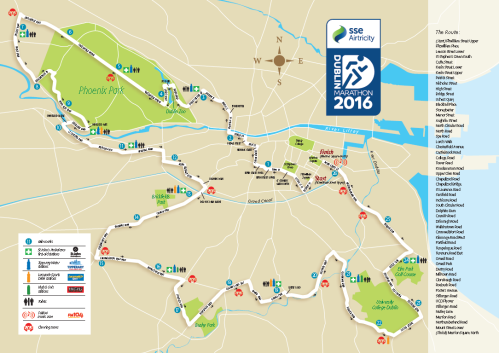
The circuit of the marathon was the same as in previous years.

dublin-route

From experience, I knew that the profile was not flat with a few climbs but that the crowd, with plenty of Dubliners cheering at the runners, and the cold weather (5 degrees Celsius at the departure time) would help in keeping us running at pace. My strategy was to start with Jaime from his box and run together with the 4-hour pacers until I could not keep up with them, hoping to come with them until the km 30 and then see.

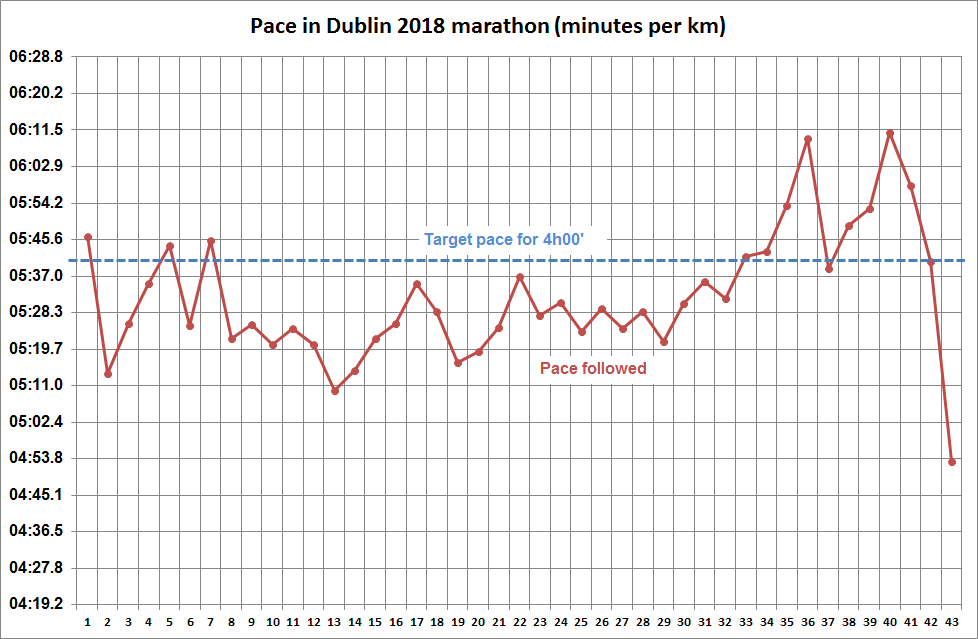
Due to the big crowd of runners at the start of the race, it took me some 3 kilometres to get to the pacers, with whom I lost contact after the km 6 due to a short technical stop, but I quickly recovered the gap. I skipped taking a bottle of water at the supply station around km 10, and got to some distance ahead of the pacers. I then doubted what to do, whether to wait for them (to actually run between them) or keep going ahead pacing myself. As in 2016, I took the second option and I went ahead, running consistently a bit faster than the target pace for a 4-hour marathon (5’41” per km) until the km 33, and only then, at km 34, I felt that it was a bit harder to sustain that pace so I softened a bit, not much, and I kept some strength to run a faster last 1.5 km to enjoy the last crowded streets.

Dublin_2018_pace

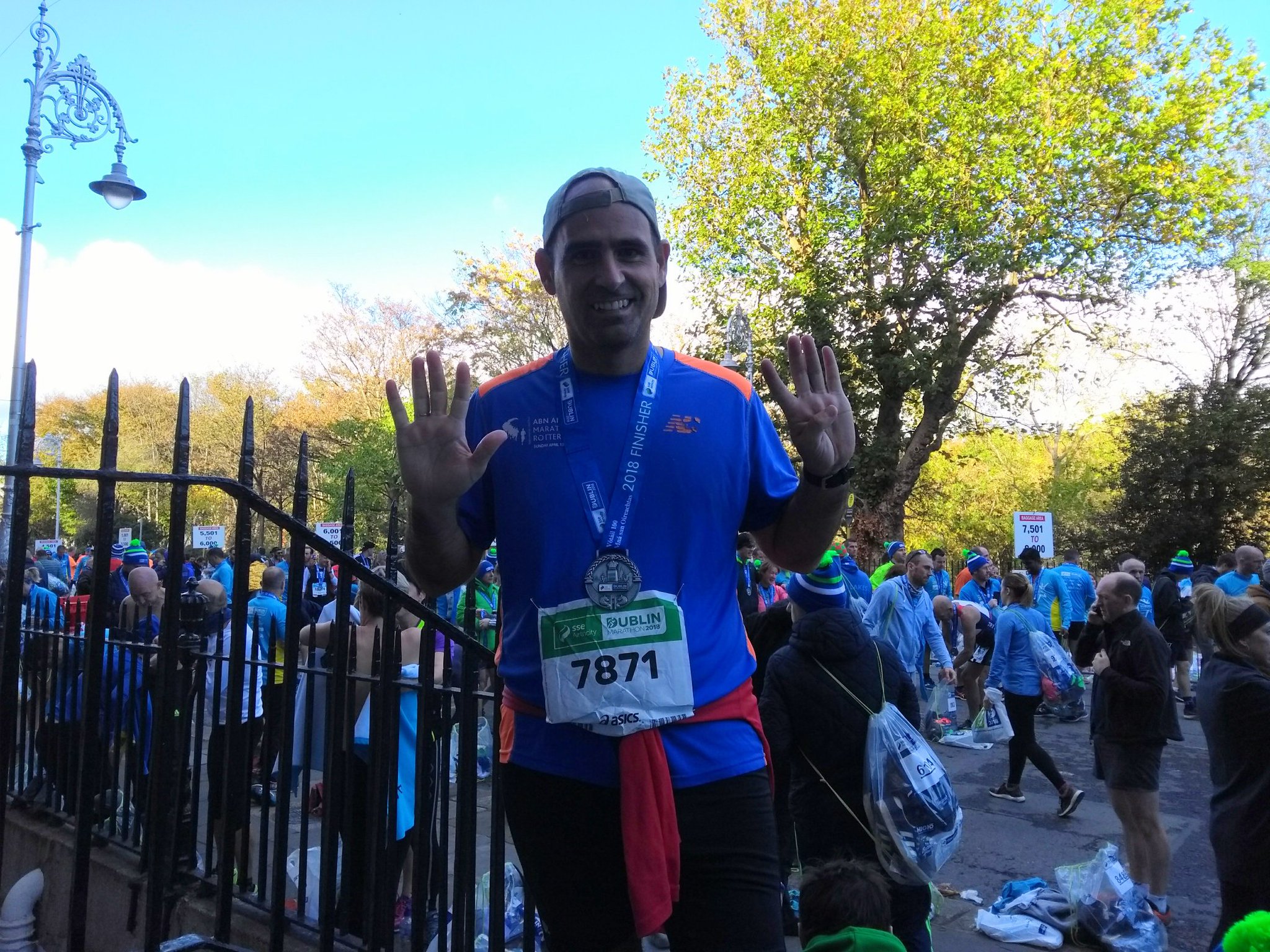
In the end, I clocked a net time of 3h55’15”, better than expected and with great feelings while running all along the race, as it was the case in 2016. It was my 19th marathon completed, easy to say today but not so on April 30th 2000 when I completed my first one in Madrid.

Dublin_2

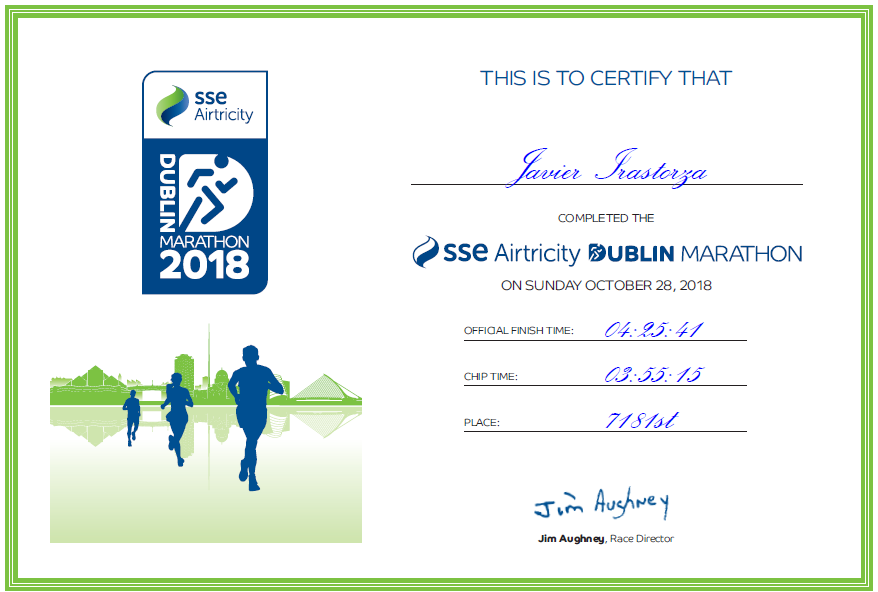
With the 3h55’15”, I was again below the 4-hour mark, and finished in the 7181st place of 16236 finishers (see the diploma below), that is in the top 44%, just in the upper half. That time makes it my 10th best marathon, just in the median of the 19 I have completed.

Dublin_2018_certificate

Times_comparison

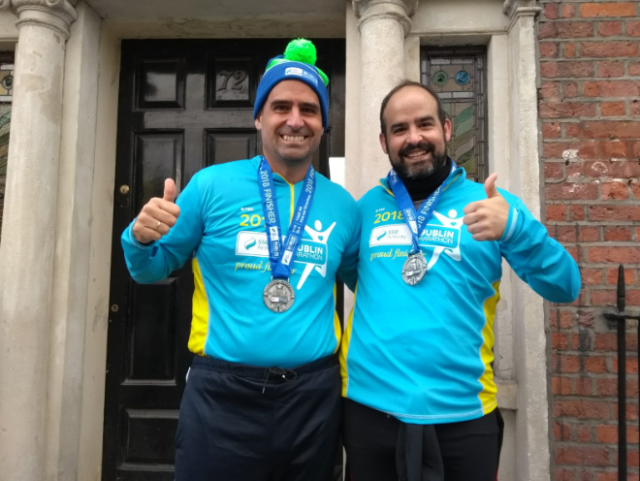
At the finish line, I changed clothes and waited for Jaime to take a picture with him and share the experiences of each other before going to our hotel. It may not have been the last time to run in Dublin.

Dublin_3

1 Comment

Filed under Sports

Vienna City marathon 2018

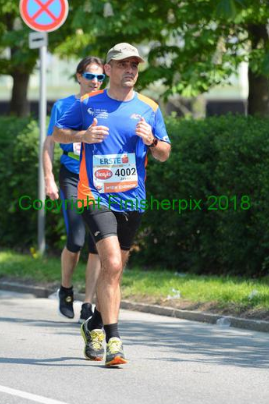
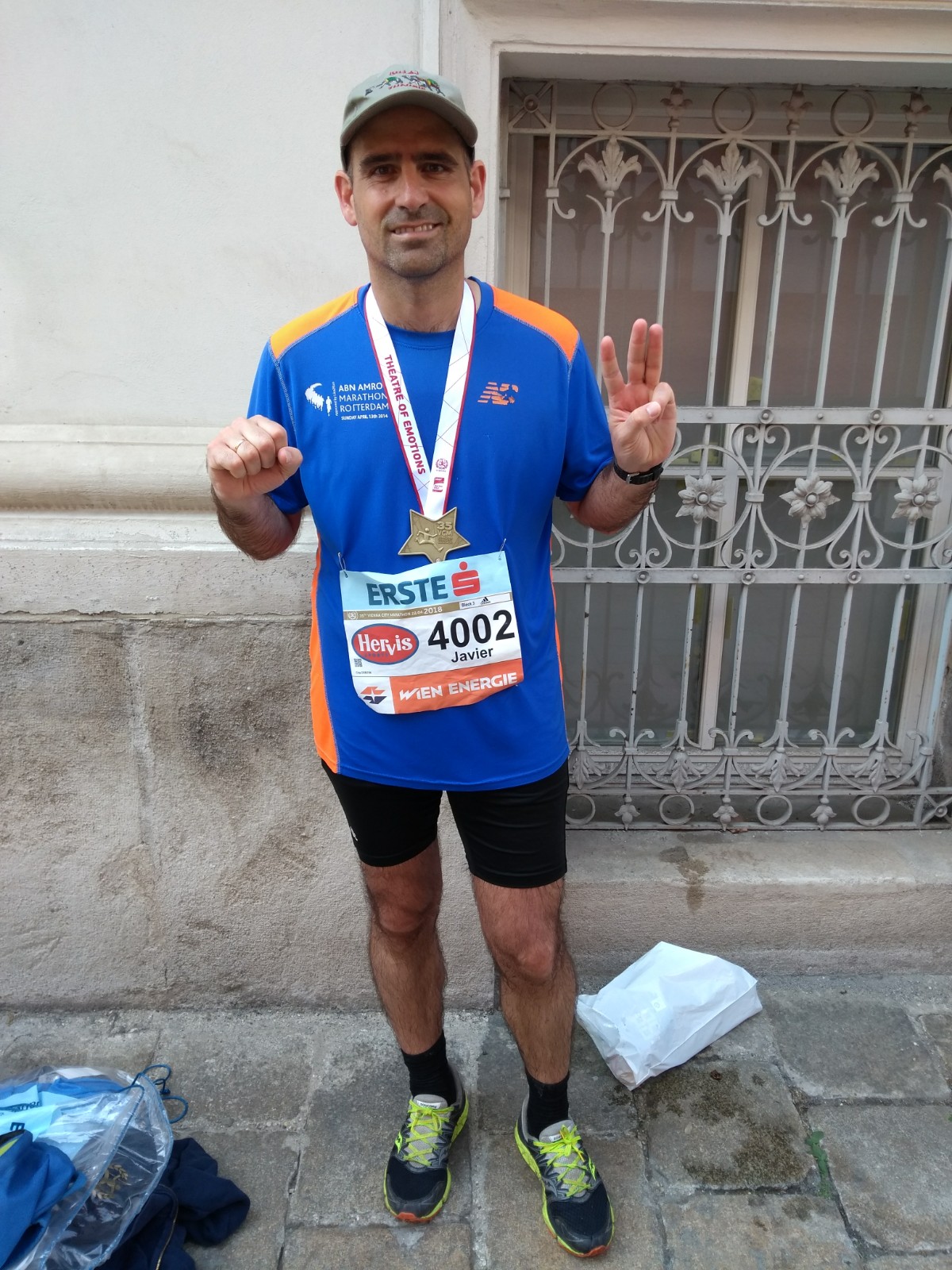
On Sunday April 22th, together with my friend Juan and brother Jaime, I took part in the Vienna City Marathon.

Riesenrad

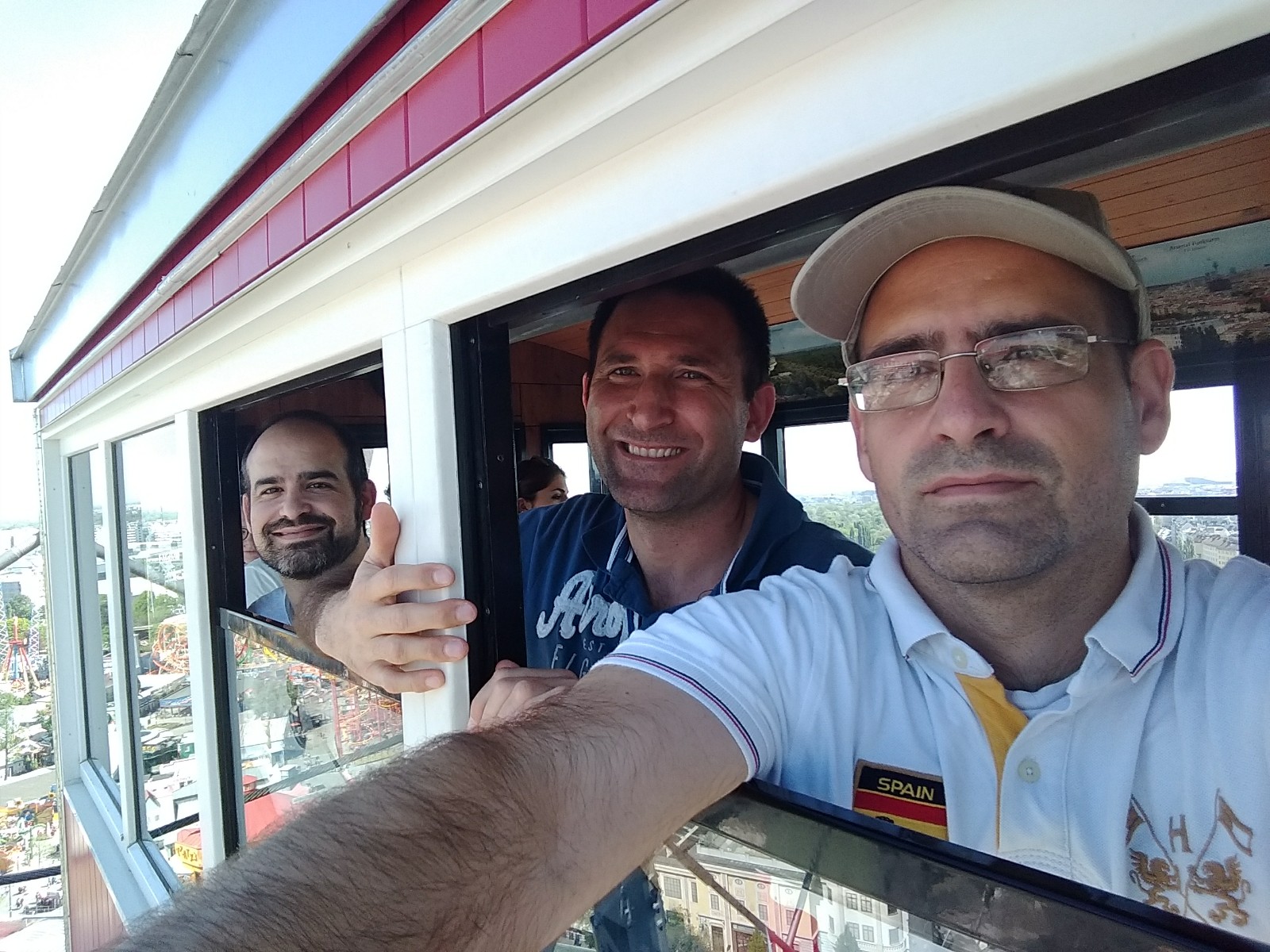
At the Wiener Riesenrad in the Prater amusement park.

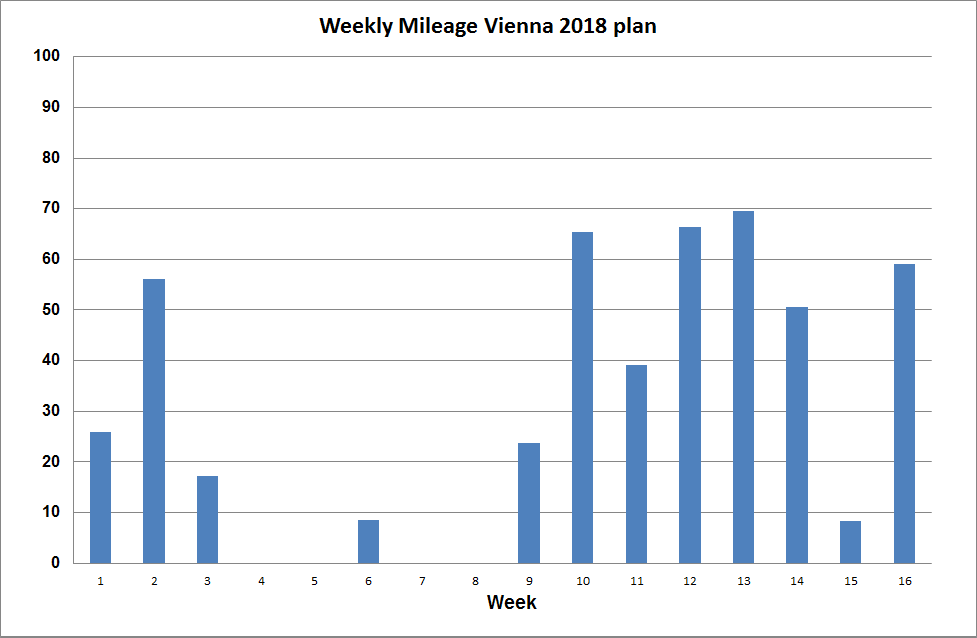
Since some years ago, I always follow the same 16-week training plan to prepare for the marathons. That lead to a start of the plan at the beinning of January. However, I got the flu at the end of January and that got me for a week in bed. It continued with an otitis and then skiing holidays at the end of February. It was not until the beginning of March that I managed to clock some serious training for some weeks in a row. By then the objective had come to get a level of fitness to finish comfortably the race, no more. In the two half marathons I did in the month and half before the race I could already see that my fitness level was the worst in years…

Vienna_mileage

During the 16 weeks of the nominal training plan, I completed:

  • 447 km of running, thanks to a streak of 5 weeks from March in which I averaged 58 km per week.
  • 13 series / intervals training sessions, out of the 28 included in the plan, and many of those I did were not the ones included in the plan but softer sessions trying to catch up.
  • 4 long runs of over 20 km, 2 half marathons and one session of 28 km plus one of 31 km.

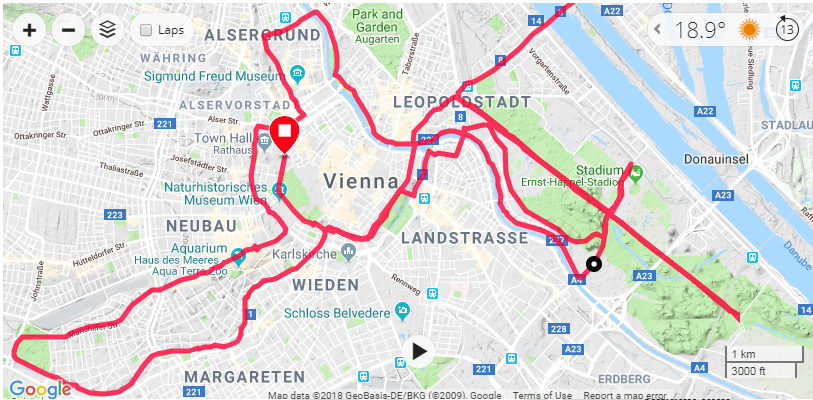
The circuit of the marathon would take us from the International Centre to the Prater, the parks by the Danube river, and then to the city centre to make another excursion through the outskirts of the city, this time to the Schönbrunn Palace and back to centre, then back to the park by the river and back again to the centre to finish by the Rathaus. The organization wanted to show off a bit of the centre and mix it with classical music being played at some points, to match their motto Theatre of emotions.

Circuit

The circuit was flat. The only inconvenient of the race was the heat of the day. That Sunday several marathons took place in Europe (Madrid, London…). In all of them the main issue was the heat. We had almost 19° C when I started, it went up to 27° C or more by the end. The organization did not spare the provision of water but when the heat hits like that you need to focus on not getting suffocated and run at a softer pace.

Vienna_3

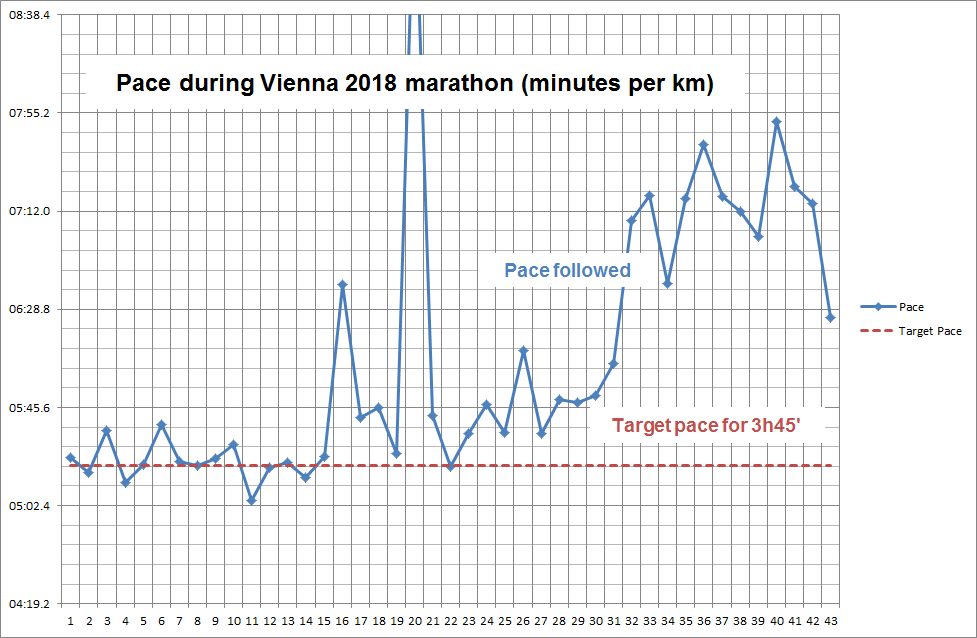
My race strategy was clear: to complete the marathon comfortably at a pace slightly slower than the one I am used to; for that purpose I would try to run a 3h45′ marathon for while to fall back at the second half of the race targeting a 3h55′ or 4h marathon. I quickly found that it would be hard to be under 4 hours. Just before the half marathon point I had to make technical stop which cost me a few minutes. Since then I ran at about 5’45” per km for a few more kilometres.

Pace_Vienna

In my mind I started figuring that I could encounter my brother Jaime, since he had started about 15 minutes before from a different block and was shorter of training. And so it happened. At about the km 30 I saw him at a cross road and I caught him about 5 minutes later. He told me to continue ahead as he was suffering and struggling with the pace (see here his post about the race). I told him that by then I would no longer be under 4 hours but rather 4h06′, 4h16′ or 4h26′, so I’d rather stay with him and finish another marathon together as we had done in Madrid in 2015 or in Millau the same year.

Vienna_5

From then on we ran at about 7’15” per km till the end. They were about 11 kilometres of keeping a soft but steady pace under the sun, drinking at every supplies post, chasing the few shades along the circuit and getting prepared for the finish line.
Vienna_4

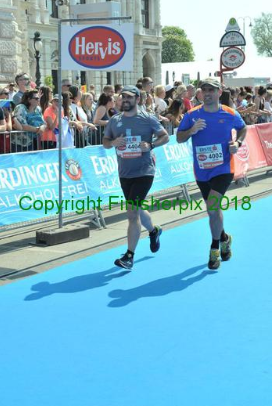
In the end, I clocked a net time of 4h23’08”. It was my 18th marathon completed. It is  great feeling of accomplishment to finish a race in such conditions even if with a discrete time, and always happy to still be able to complete them, even more together with my brother and friends.

Finish

With the 4h23’08”, my worst marathon since 2001, I finished in the 3236th place, out of 5434 finishers, in 40% percentile, down in the lower half.

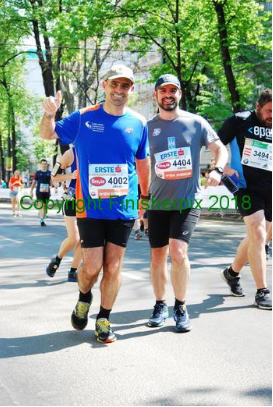
At the finish line we took some pictures with Jaime and with our friend Juan and Balint, a Hungarian fellow that Juan had met in a previous marathon in Madrid.

2 Comments

Filed under Sports

Maratona de Lisboa 2017

On Sunday October 15th, together with my friend Juan and brother Jaime, I took part in the Maratona de Lisboa.

marathon_expo

Retrieving the bibs at the marathon expo.

Since some years ago, I always follow the same 16-week training plan to prepare for the marathons. That lead to a start of the plan at the end of June 2017. However, I suffered an otitis in July which took over a month to recover from and forced me more or less to stop. I took again the training plan in mid-August, when there were only 10 weeks left. I then had a clear objective: to get a level of fitness to finish comfortably the race, no more.

Lisboa_weekly_mileage

During the 16 weeks of the nominal training plan, I completed:

  • 520 km of running, thanks to a streak of 7 weeks between mid-August and end September in which I averaged 56 km per week.
  • 14 series / intervals training sessions, out of the 28 included in the plan, a mere 50% and not with the fastest paces of the last years.
  • 8 long runs of over 20 km, with 2 of them of 31 and 32 km, and another two days of 28 km split in morning and afternoon double session trainings.

Another good thing of the training season is sharing the progress of it with my brother Jaime and Juan, which helped in overcoming the inertia to stay quiet and to go out to train. See how Jaime explained his own experience in his blog here.

IMG_20171015_074548374

At the departure area before the race.

The circuit of the marathon would take us from Cascais to the West for about 6 km and then back to Lisboa passing again through Cascais and Estoril, along the road that follows the coast line running through the Forte de São Bruno de Caxias or along the Torre de Belém to finish at the Praça do Comércio.

Circuit_profile

The circuit was rather flat except some ups and downs in the first half. The main inconvenient of the race would be the heat. Even if the organization advanced the race departure time in a good last minute decision, at 8 am the temperature was already above 17° C, which at the end must have been around 30° C.

Cascais_2

My race strategy was clear: to complete the marathon comfortably at a pace I was used to; for that purpose I would try to run a 3h45′ marathon, a time around which I had already finished 6 marathons. At the beginning I tried to catch the 3h45′ pacers but I found it impossible after having departed a bit behind them. I kept clocking kilometres at a higher pace than I should till km. 15 and still I passed the half marathon mark in 1’30” faster than the pace for 3h45′, however the pacers were running still faster, much faster than required for a 3h45′ though.

Pace_Lisboa

From the km 30 I felt that I was not able to run at the target pace (5’20” per km), and decided to soften the pace to a more comfortable one, around 5’40” which from 37 to 41 became more of a 6’00” with some more time lost in the water stations.

Lisboa_2

During the last kilometres I wondered whether I would still make a time below 3h50′, which I did not for a matter of seconds. But I still ran at a comfortable pace. This one was a marathon to run for the pleasure of running, now that I can. I had not particular objective. I crossed the finish line at the Praça do Comércio with a great feeling of accomplishment in 3h50’12”, my 17th marathon.

IMG_20171015_120007621_BURST000_COVER

With the 3h50’12”, I finished in the 1,289th place, that is about the upper 28% of the 4,670 finishers. See the diploma from the race below.

Diploma

I then waited for my brother Jaime and Juan to see them finishing and to cheer them for one last effort.

Finisher_duo

Finisher_trio

Leave a comment

Filed under Sports