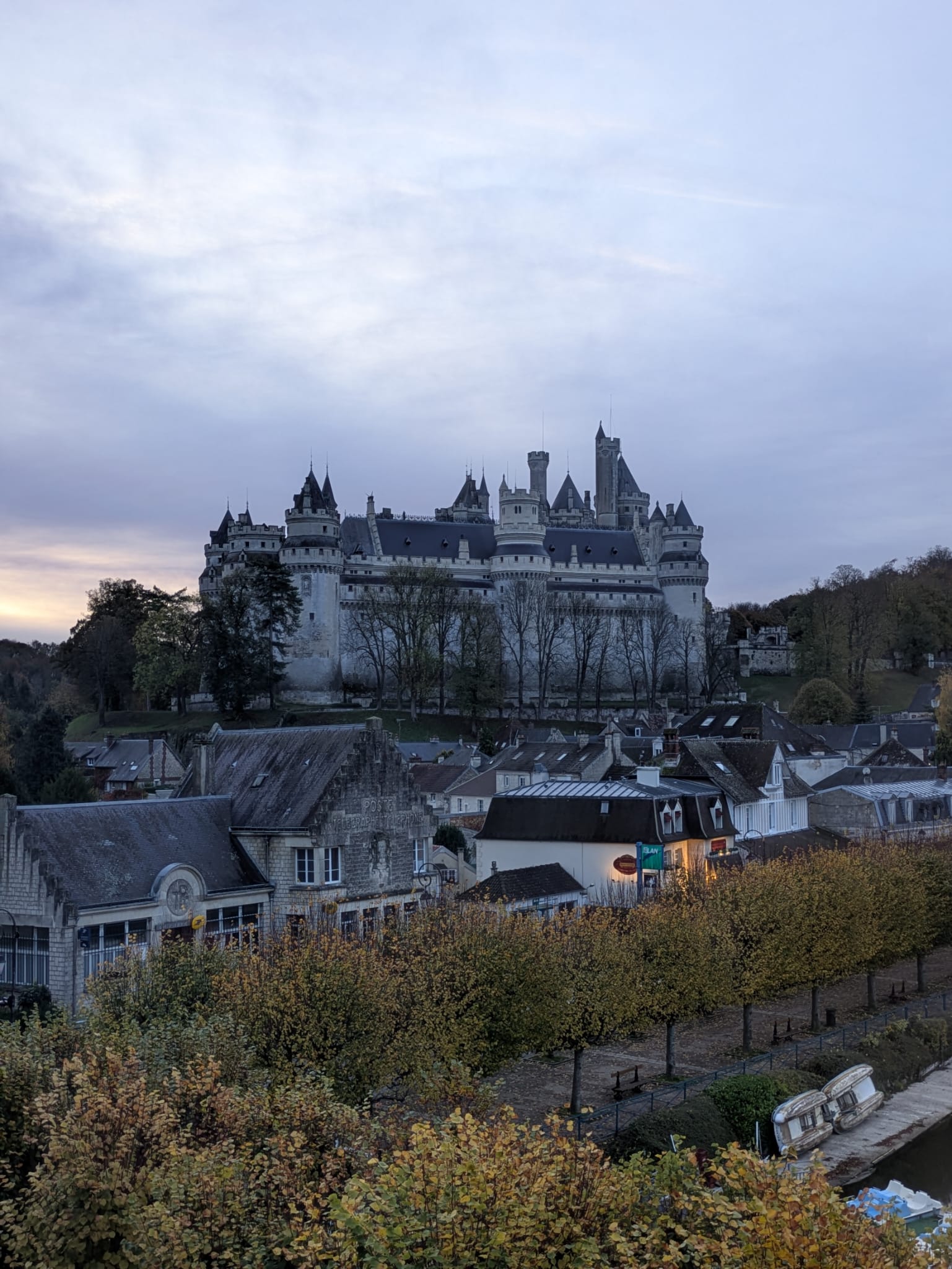
Last year, during our autumn road trip through the north of France, we made a stop by the Château de Pierrefonds, at the edge of the Compiègne forest. It looks like a fairy tale castle, with its big round towers and drawbridge. However, most of the castle we see today is a 19th-century reconstruction.
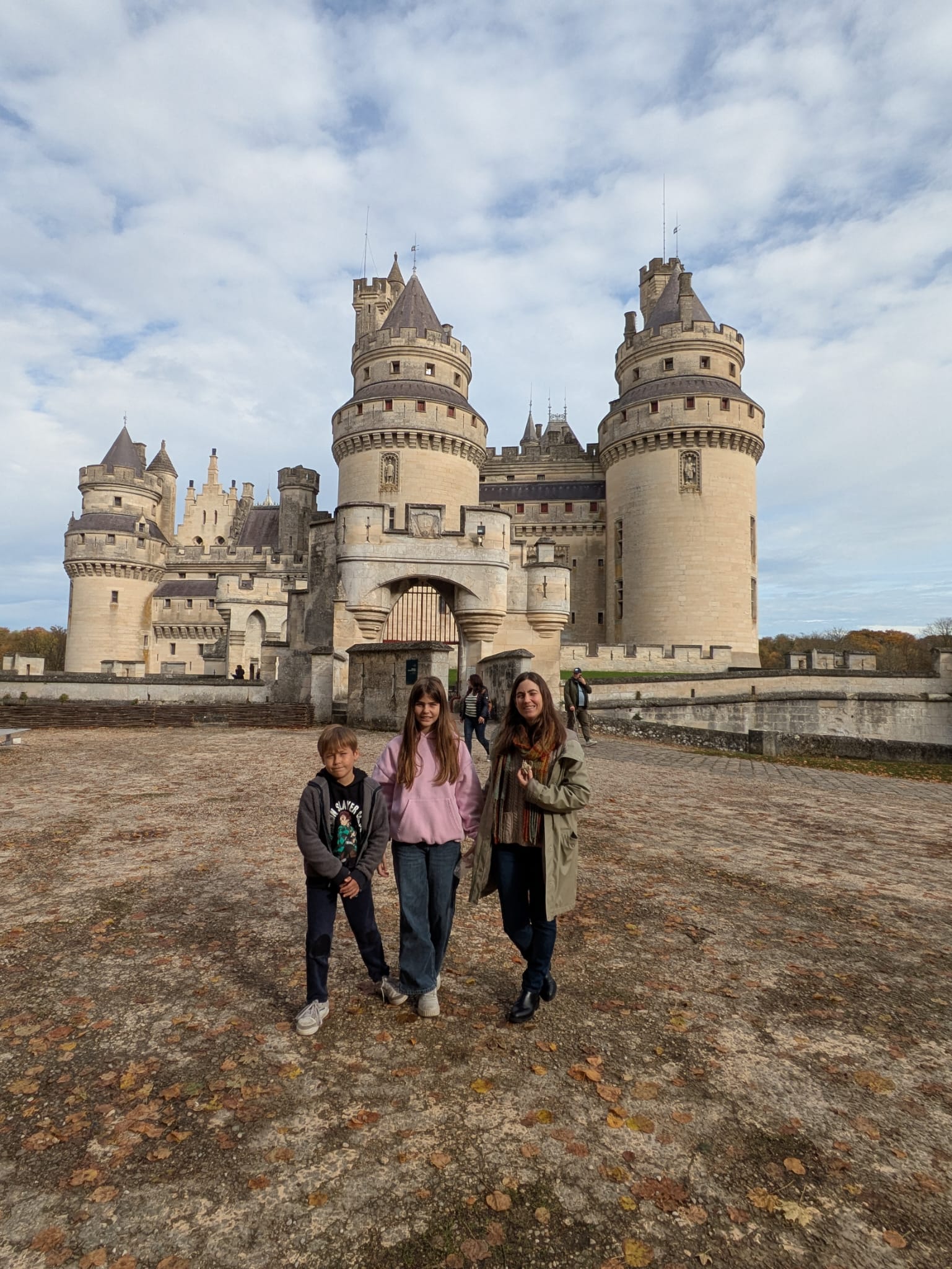
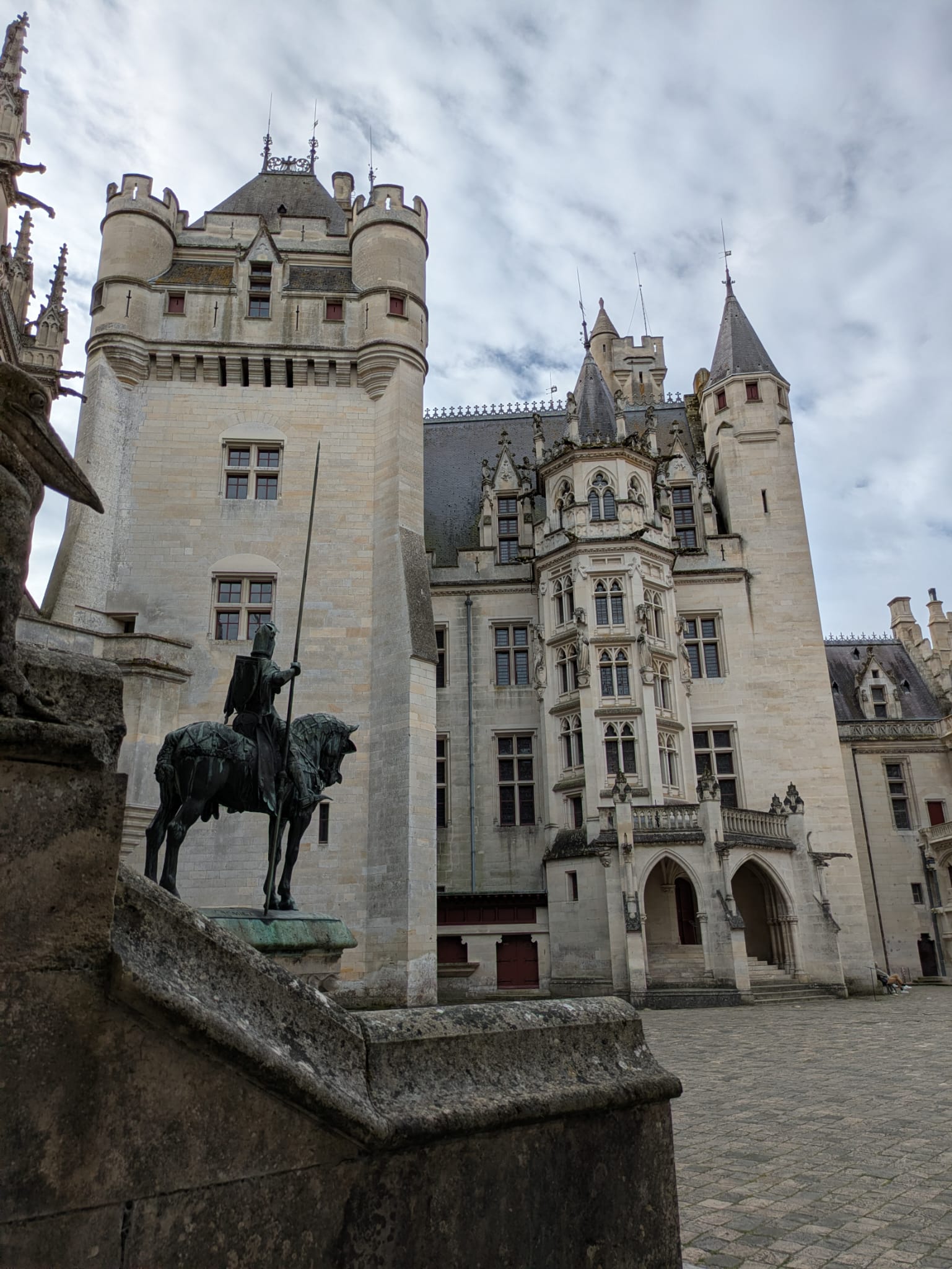
The castle was rebuilt between 1393 and 1407 by Louis I, Duke of Orléans, brother of king Charles VI, who needed a stronghold in the region. Each one of the big towers is named after one of the Nine Worthies, the model heroes of the Middle Ages.
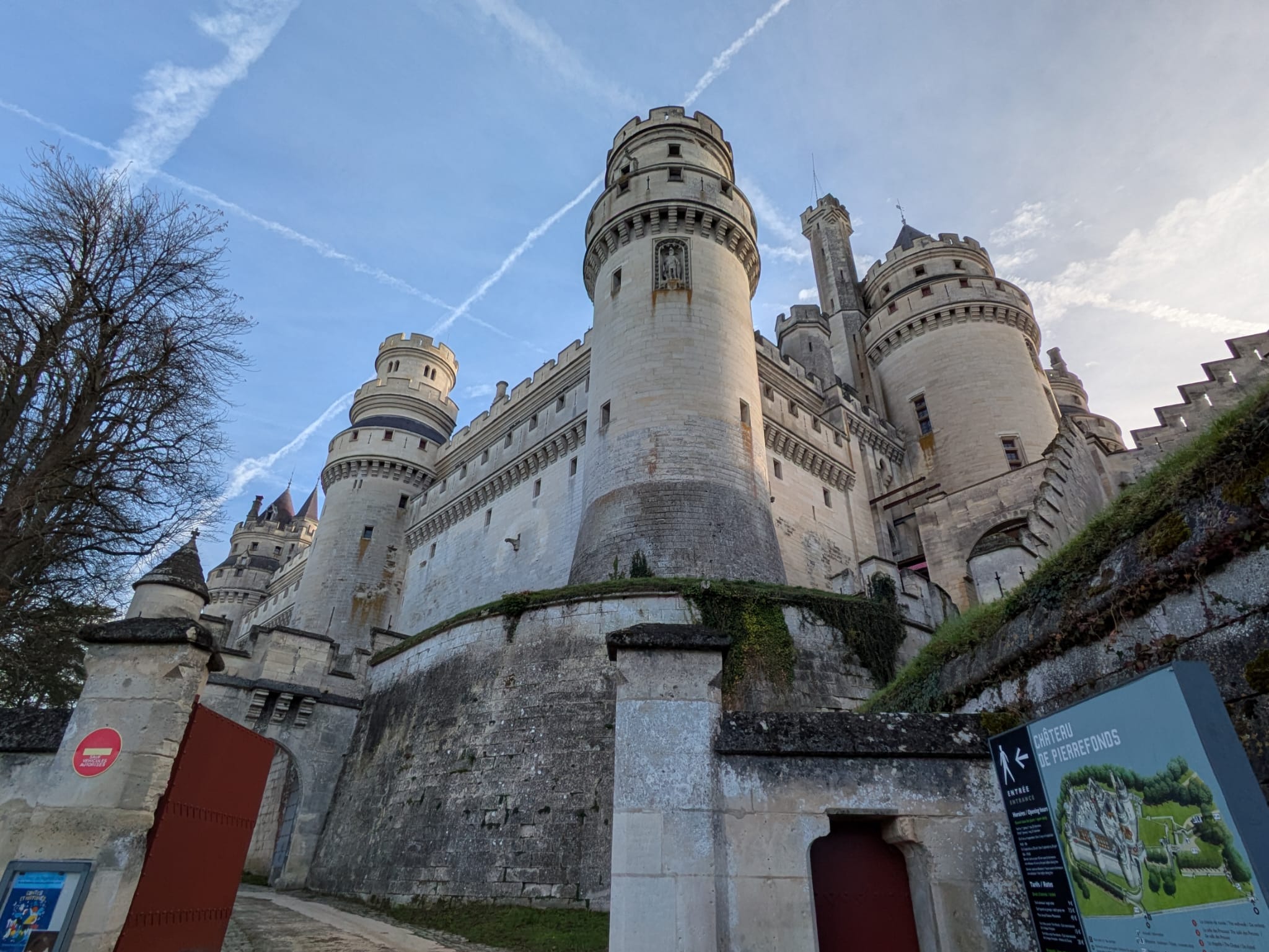
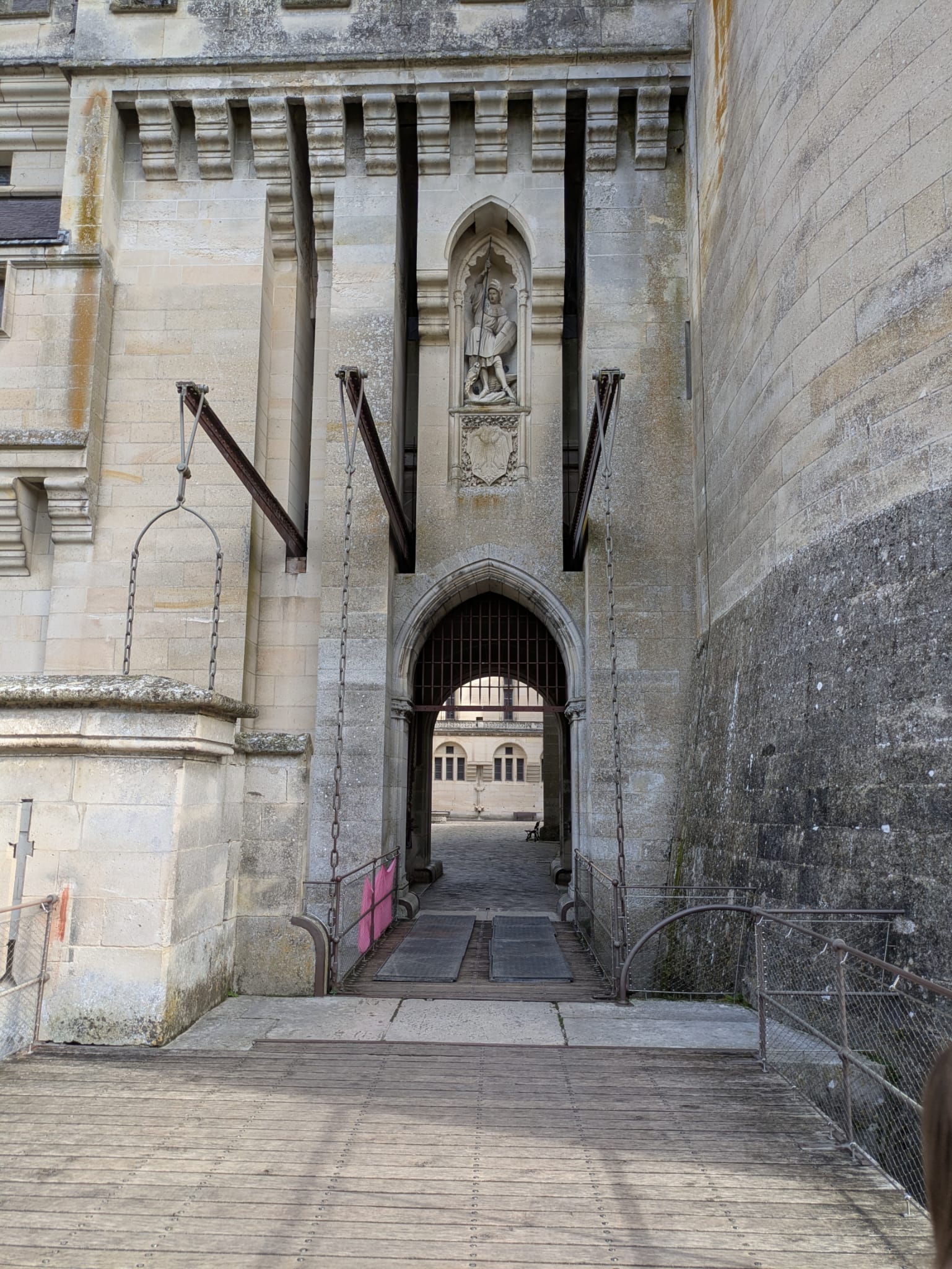
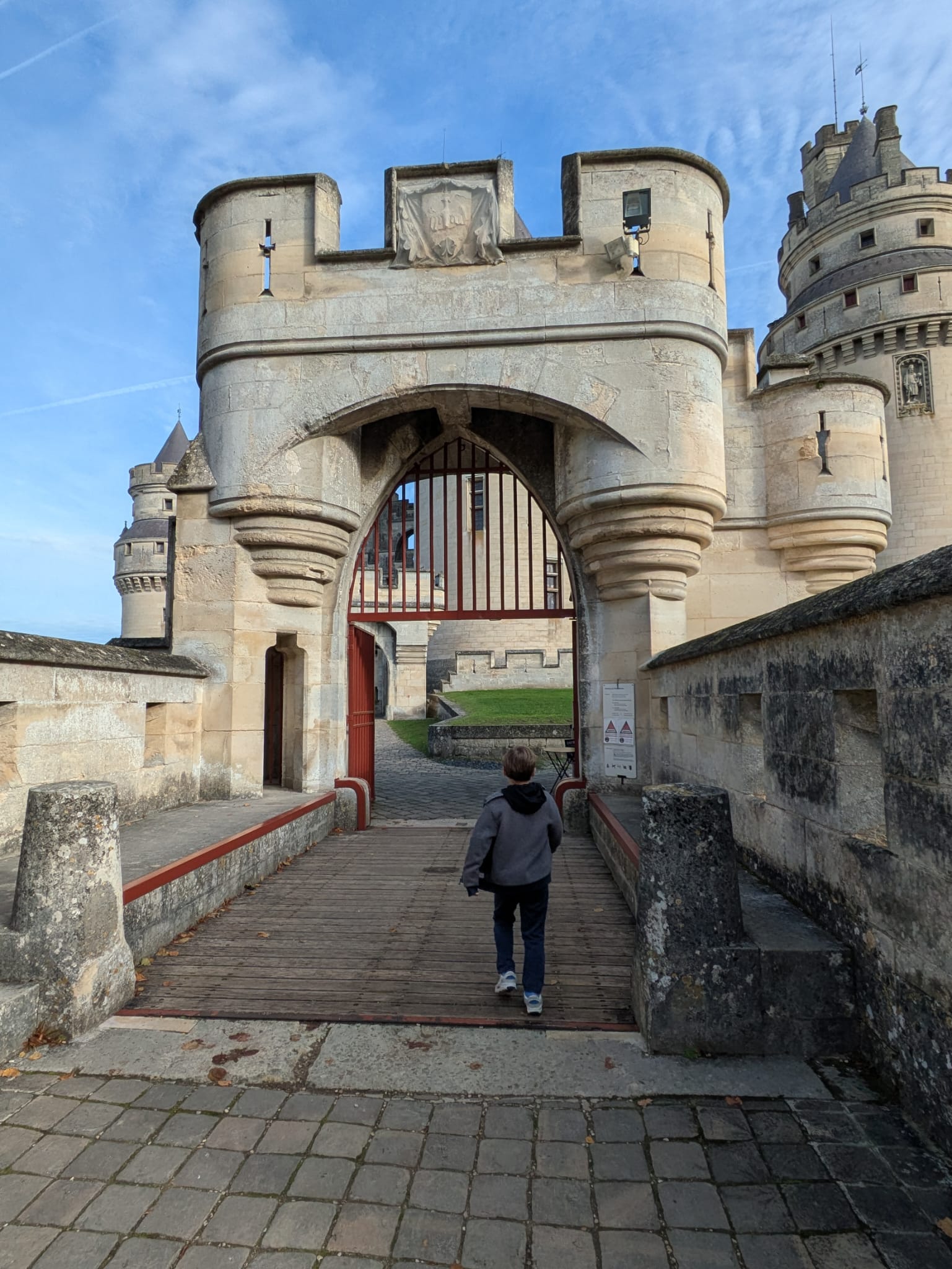
In 1617, the castle belonged to François-Annibal d’Estrées, who had joined the party of the discontented around the Prince of Condé. Cardinal Richelieu, then secretary of state for war, had it taken and ordered its demolition, so that it could not serve again as a rebel stronghold. The walls were so thick that the wreckers left the work half-done. The castle stayed a ruin for more than two centuries, visited by walkers and painted Corot, among others. Napoleon I bought the ruins in 1810 for less than 3,000 francs.
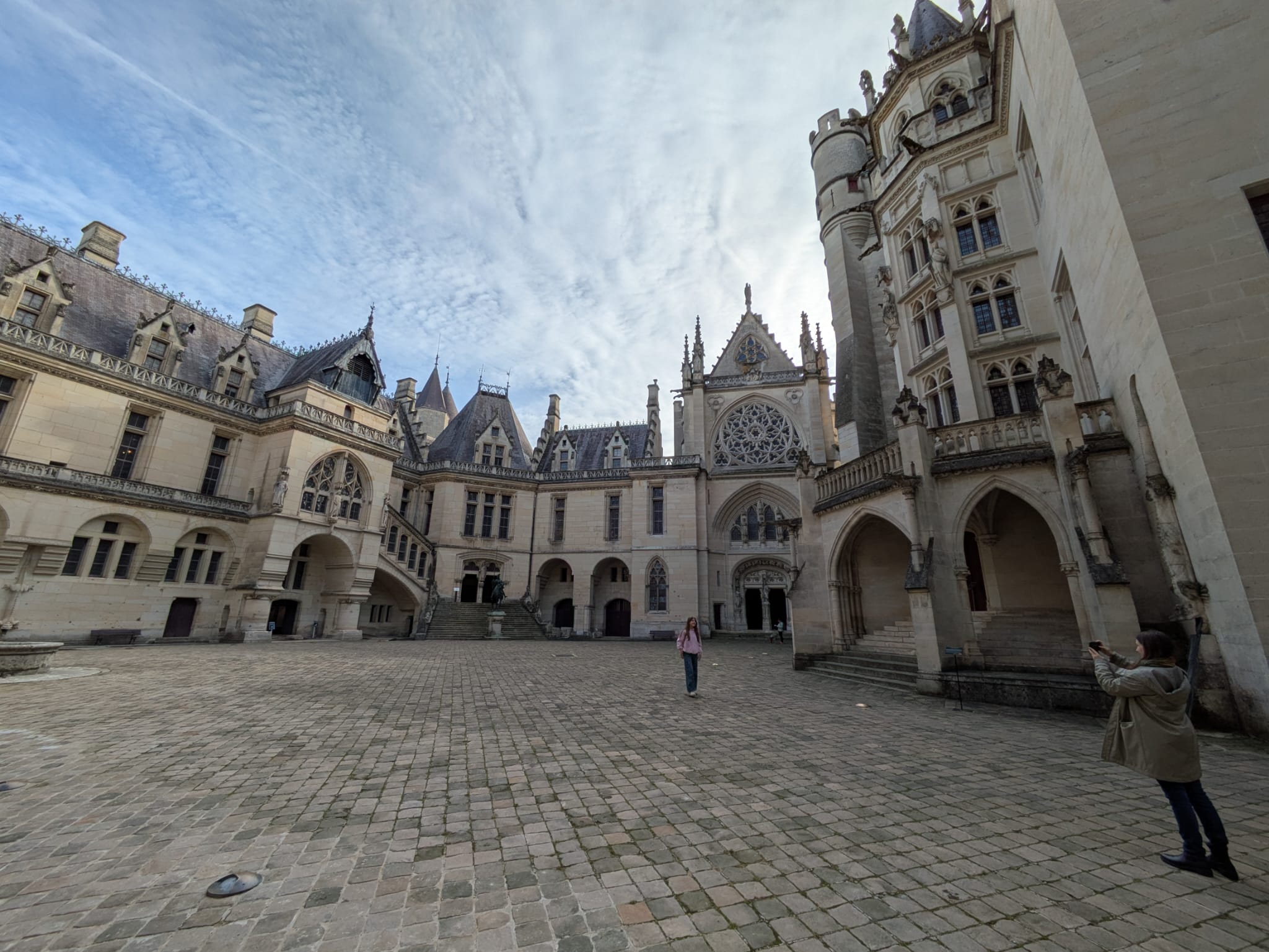
In 1857, Napoleon III asked Eugène Viollet-le-Duc to restore the castle (the architect carried out other important renovation projects such as Notre-Dame, Mount Saint Michel or the walls of Carcassonne). What started as a modest repair grew in 1861 into a complete reconstruction, to turn it into an imperial residence. The works continued after the architect’s death and stopped in 1885, unfinished. Outside, Viollet-le-Duc followed the military architecture of the 14th century; inside he gave free rein to his imagination, mixing styles from Romanesque to Art Nouveau.
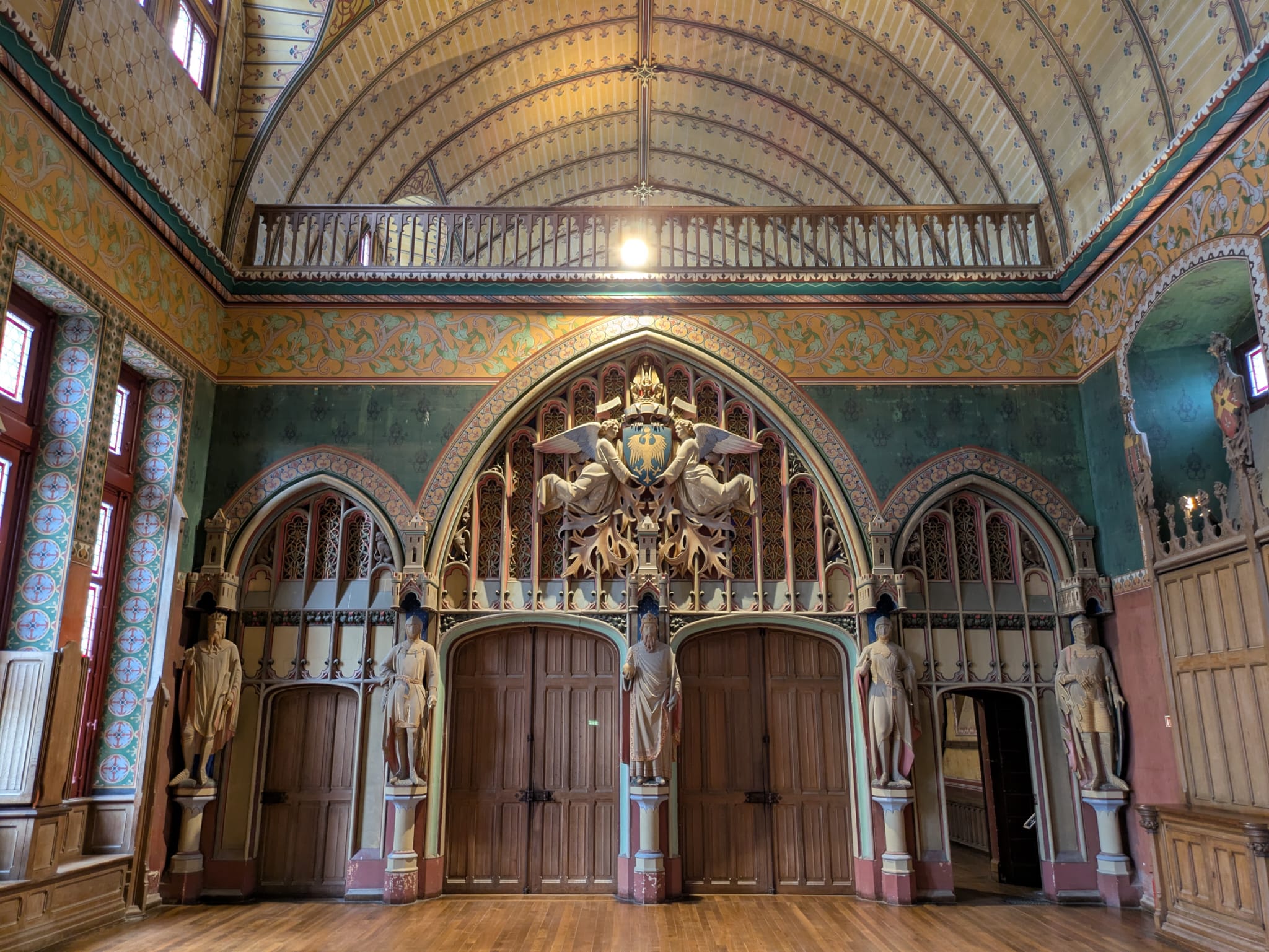
The most impressive room is the Salle des Preuses, a hall over 50 metres long conceived for receptions. Above its monumental fireplace stand the nine Preuses, the heroines mirroring the heroes of the towers.
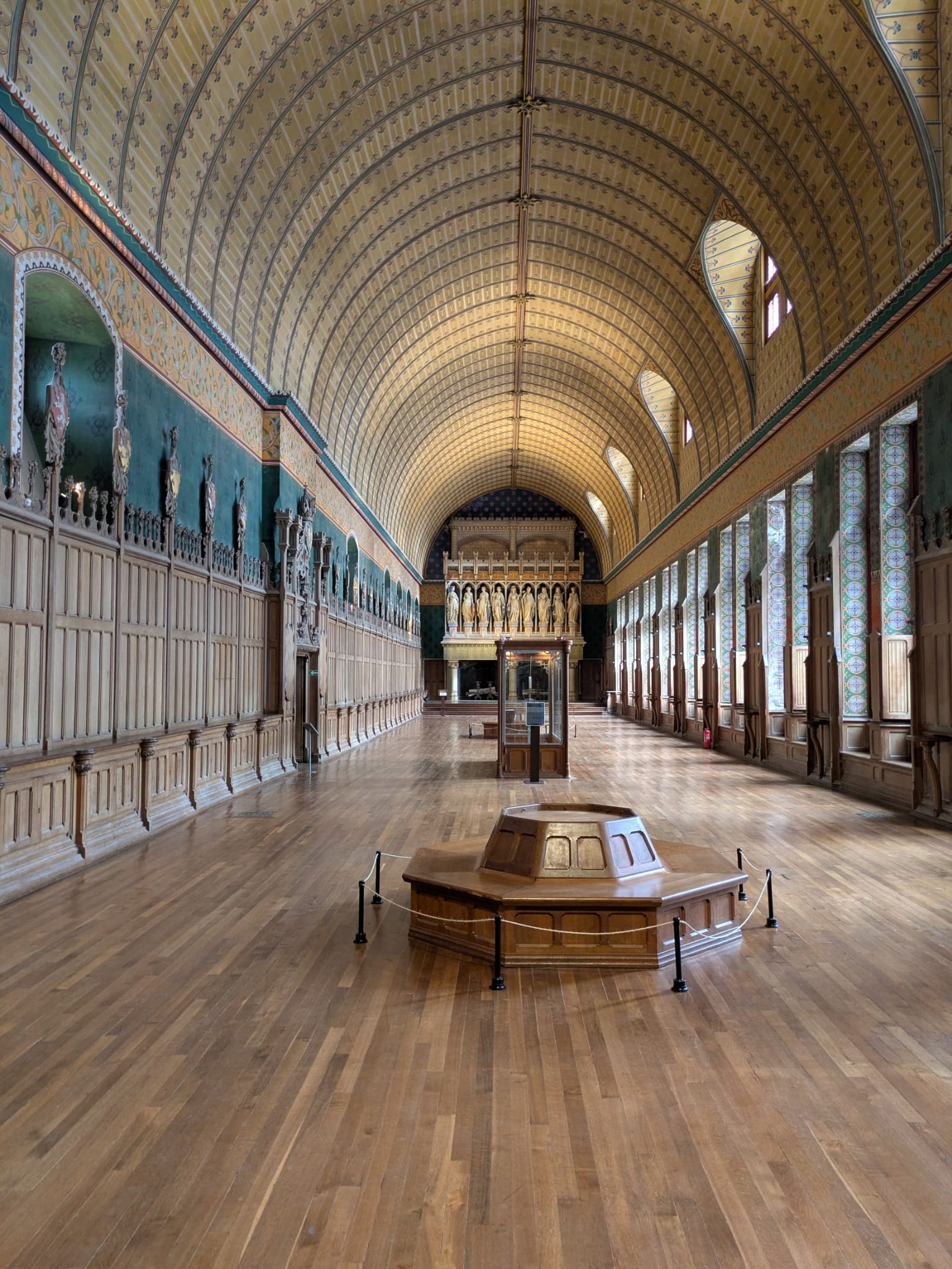
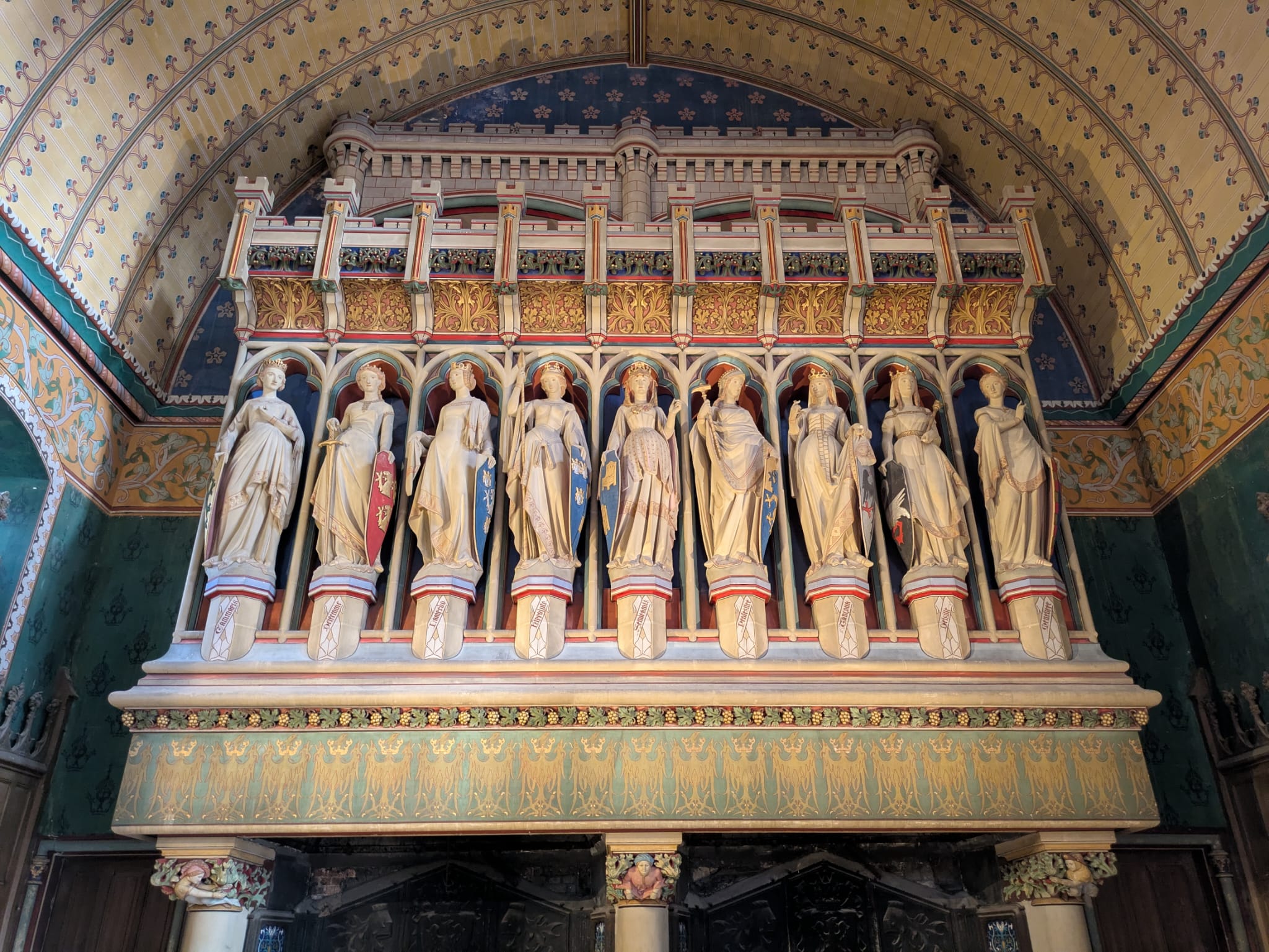
Their faces are those of Empress Eugénie and the ladies of her court. From left to right: Thamarys (the wife of Marshal Canrobert), Cinopé (Princess Murat), Lampetto (Duchess of Malakoff), Hippolyte (Baroness of Pierres), Sémiramis (Empress Eugénie herself, in the centre), Penthésilée (Duchess of Cadore), Teuca (Duchess of Bassano), Déiphyle (Countess of La Poeze) and Ménalippe (Mademoiselle Carette, the empress’s companion, the only one without a crown, as she was not noble).
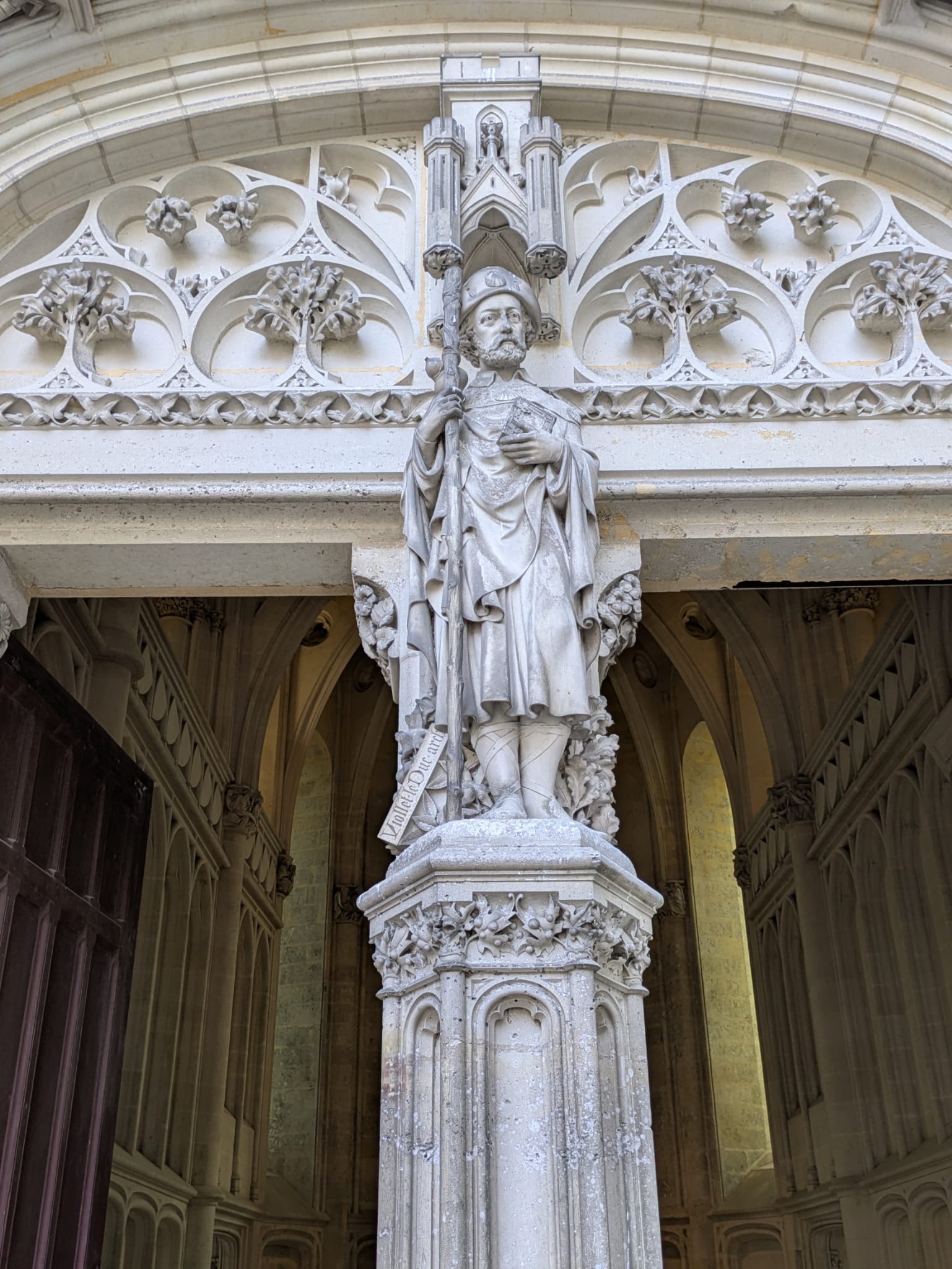
Viollet-le-Duc left some personal touches. At the entrance of the chapel he had himself portrayed as a pilgrim of Santiago de Compostela. And his favourite animal, the cat, is hidden many times in the sculptures of the courtyard.
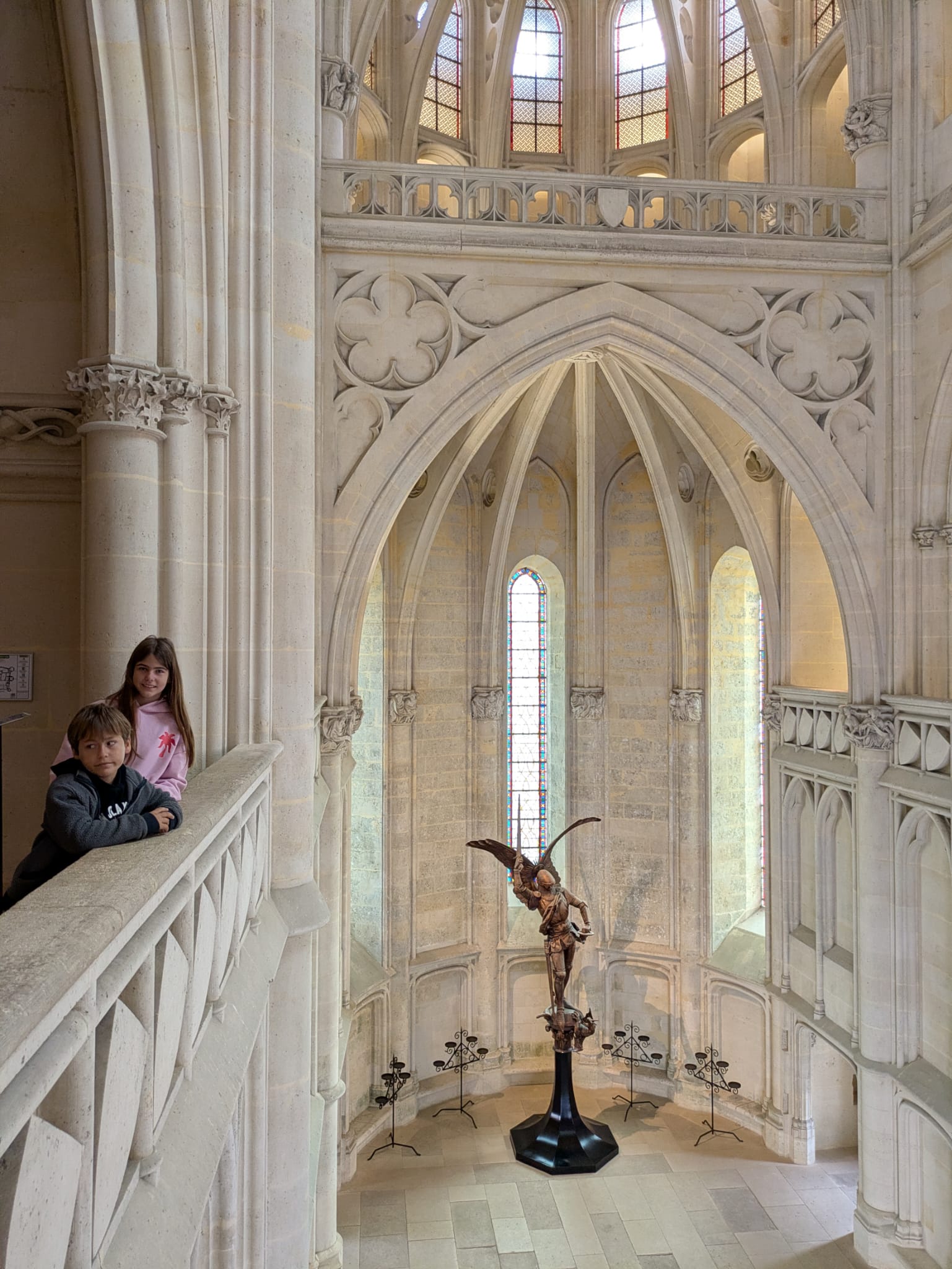
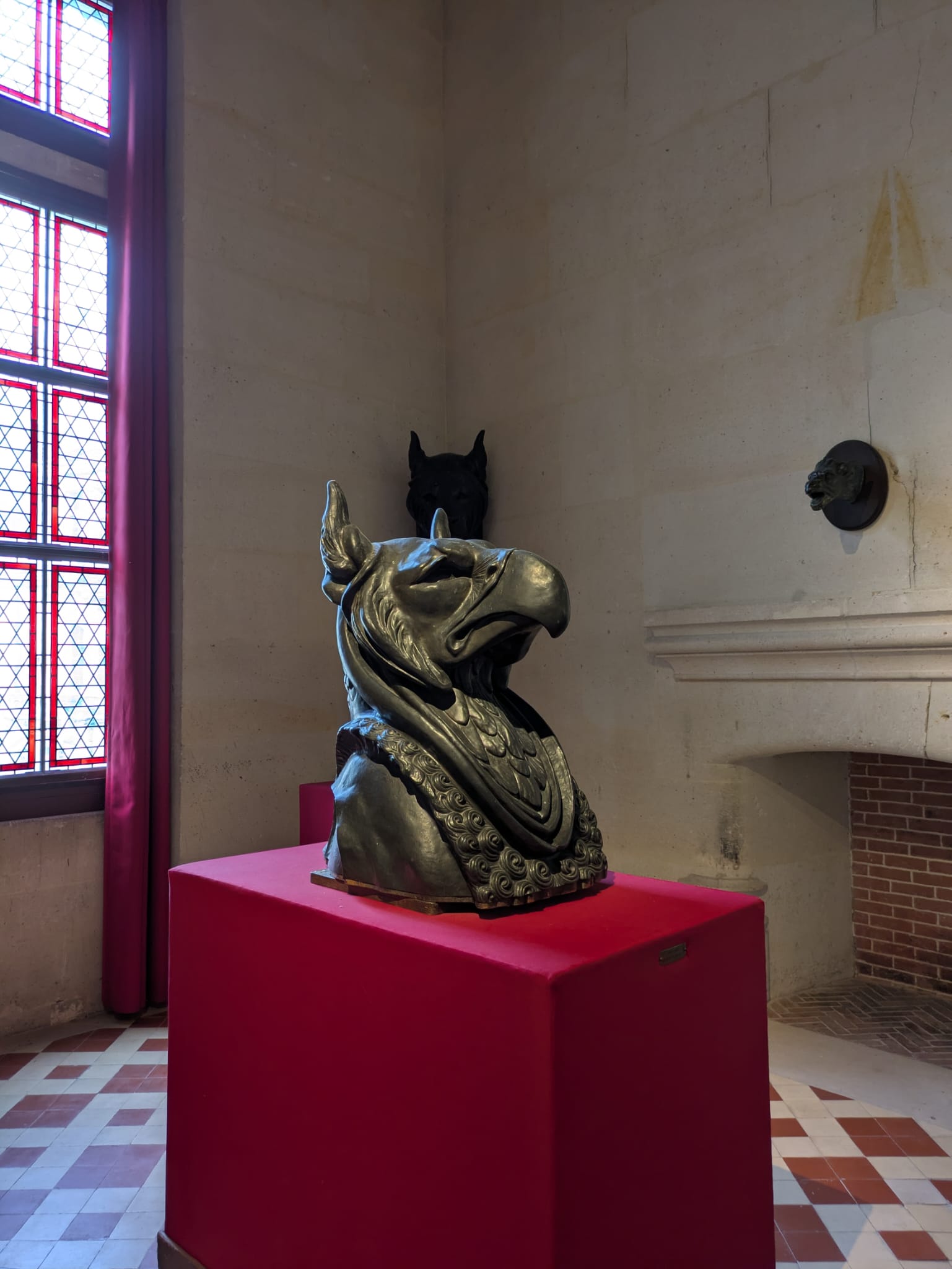
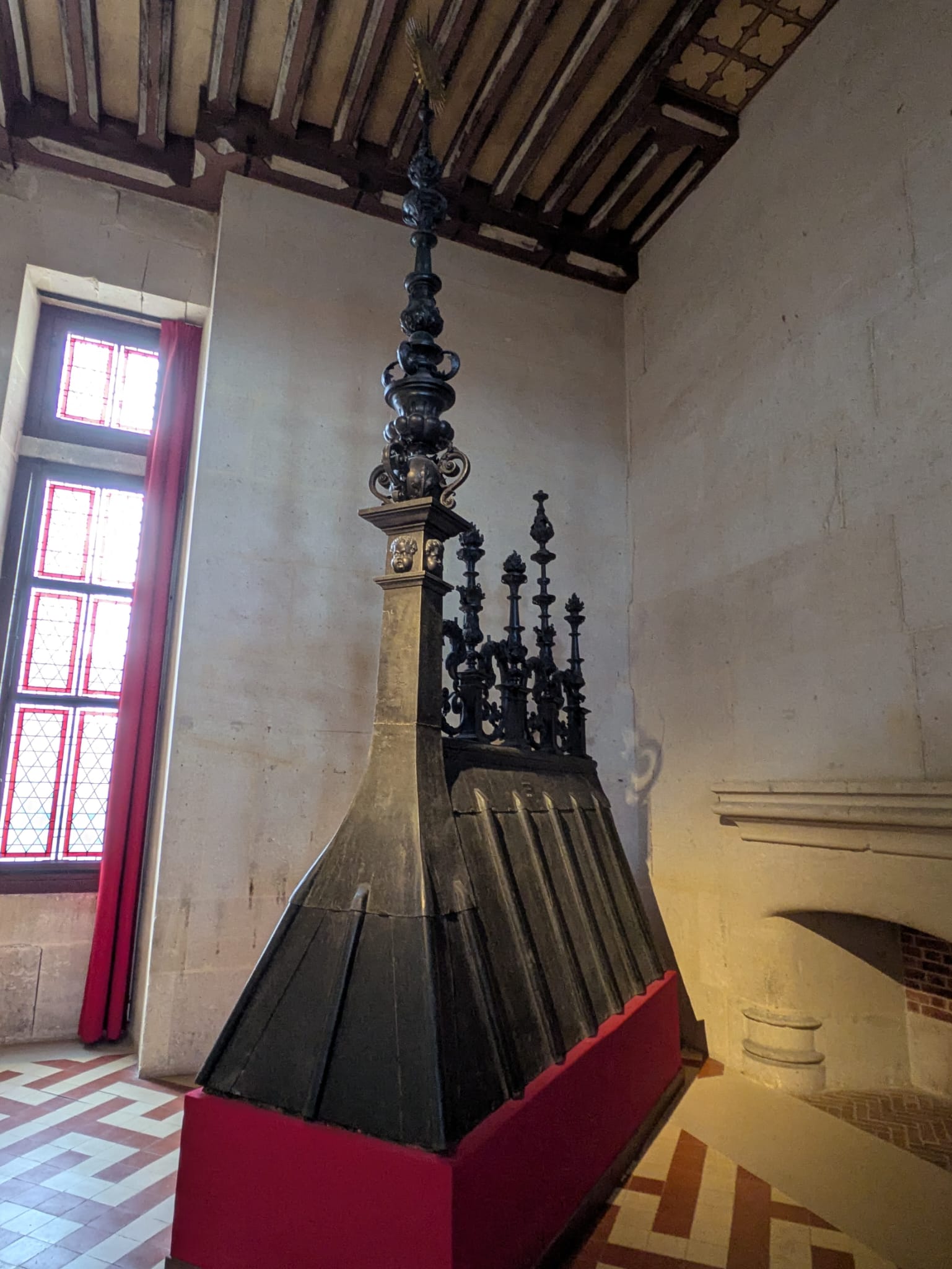
All the metal ornaments of the roofs (ridge crests, finials, the archangel of the chapel) were made by the Monduit workshops (famous for several works including Statue of Liberty in New York, the spires of several cathedrals or the Grand Palais in Paris) in lead and copper. A collection of their work is displayed in the castle.
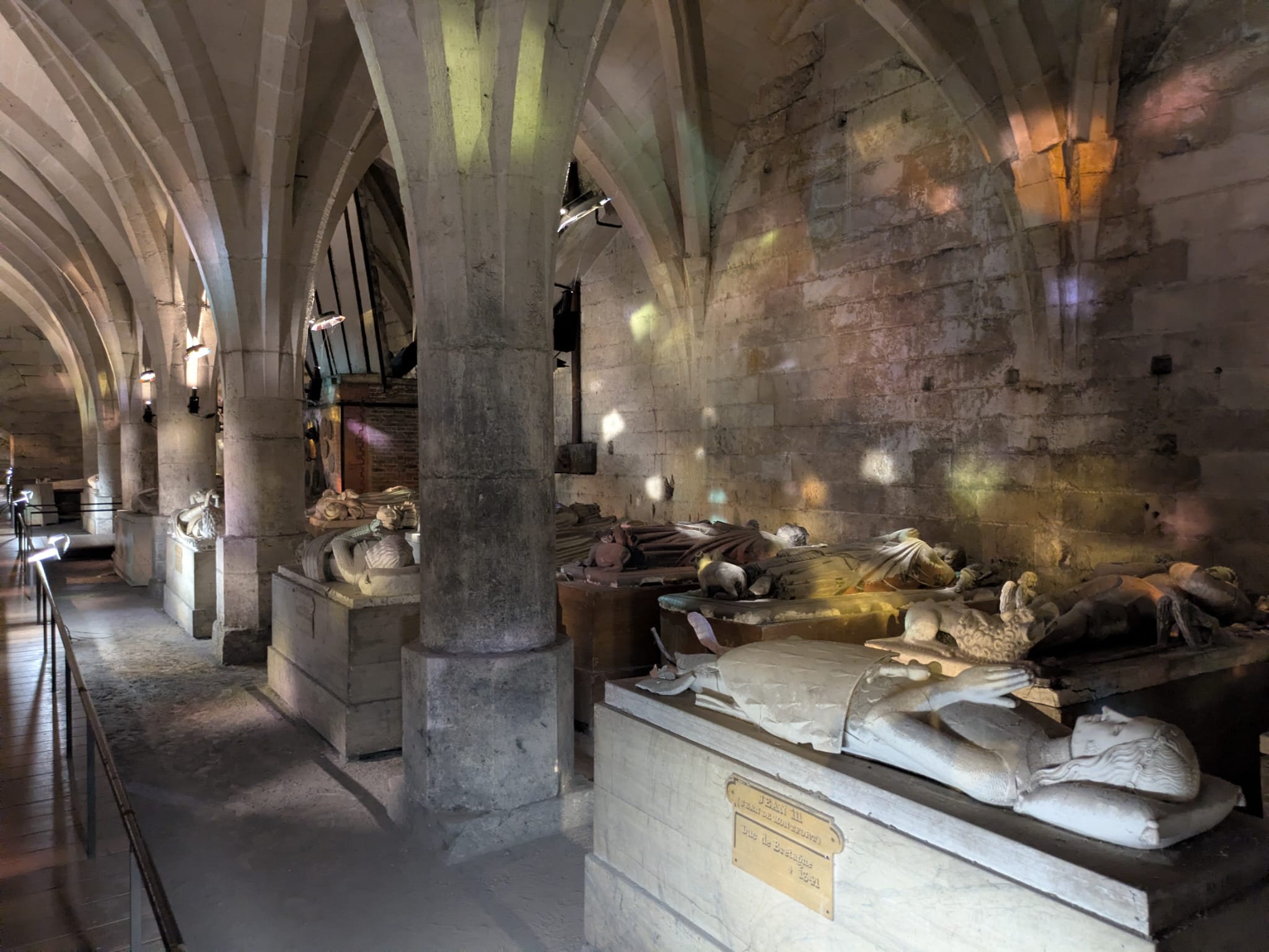
In the cellars there’s yet another impressive collection: the “Bal des Gisants” (the ball of the recumbents), a collection of about one hundred plaster casts of the funerary statues of kings, queens and princes of France. The casts were made at the request of king Louis-Philippe for his museum at Versailles and deposited at Pierrefonds in 1951. The light and sound installation makes the visit a small spectacle.
The castle looks so complete that it is often used as a film set: it was Camelot in the BBC series “Merlin”, and appears in “The Man in the Iron Mask” (1998), among others.
A literary curiosity. In “Twenty Years After“, the sequel of “The Three Musketeers“, Dumas has Porthos marry a rich widow and take the name “du Vallon de Bracieux de Pierrefonds“, with the title of baron. The real musketeer who inspired the character, Isaac de Porthau, had no link with the place, and by the time of the novel the castle was already a ruin. Dumas simply borrowed a name that sounded good.
All in all, a very recommended visit: a medieval fortress as the 19th century dreamed it.