St. John’s College is the third oldest college in the United States, founded in 1696 as King William’s School in Maryland.
In 1937 Stringfellow Barr and Scott Buchanan implemented their big idea, the New Program, which the college still follows today.
At the heart of St. John’s is a liberal arts curriculum focused on reading and discussing many of the greatest books and most important questions in history. This is perhaps the most distinctive undergraduate curriculum of any college in America.
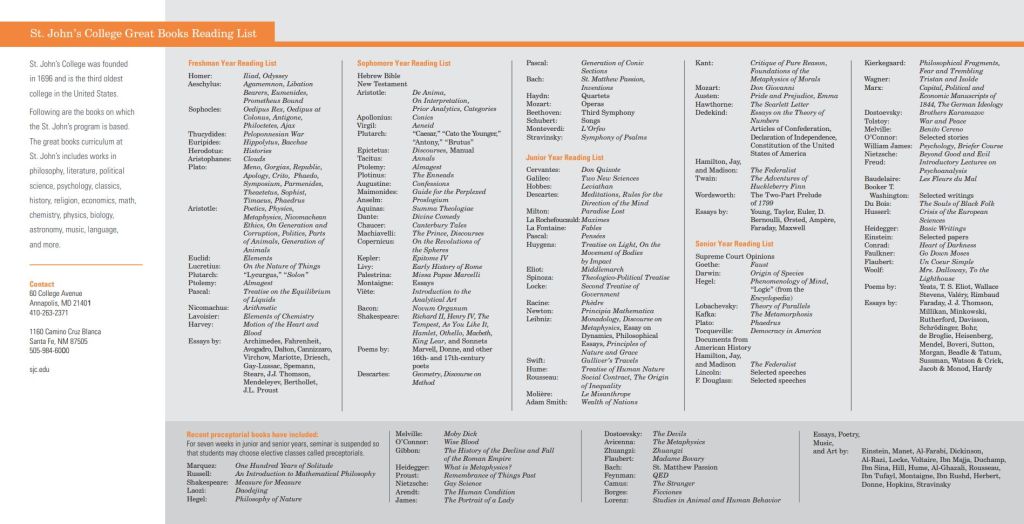
The program can be consulted on their website and it’s subject to some changes (mostly in the elective books which count with some more recent ones). The version I use is this one from some years ago:
St. John’s College Great Books Reading List.
As you can see, the undergraduate program reading list follows some chronological order in the selection of its books for the different years; Freshman, Sophomore, Junior and Senior. In all, the program requires reading over 160 great books in the curriculum and over 20 elective ones.
Scott Buchanan, an American philosopher and educator, met Mortimer J. Adler and Richard McKeon while working at the People’s Institute in New York in the 1920s. There they conceived the idea of setting up this kind of Great Books curriculum, which they pursued with different degrees of success in different institutions. Buchanan tried it at the University of Virginia, the University of Chicago and finally succeeded at St. John’s College. Adler worked on such an initiative together with Buchanan and Robert Maynard Hutchins at the University of Chicago.
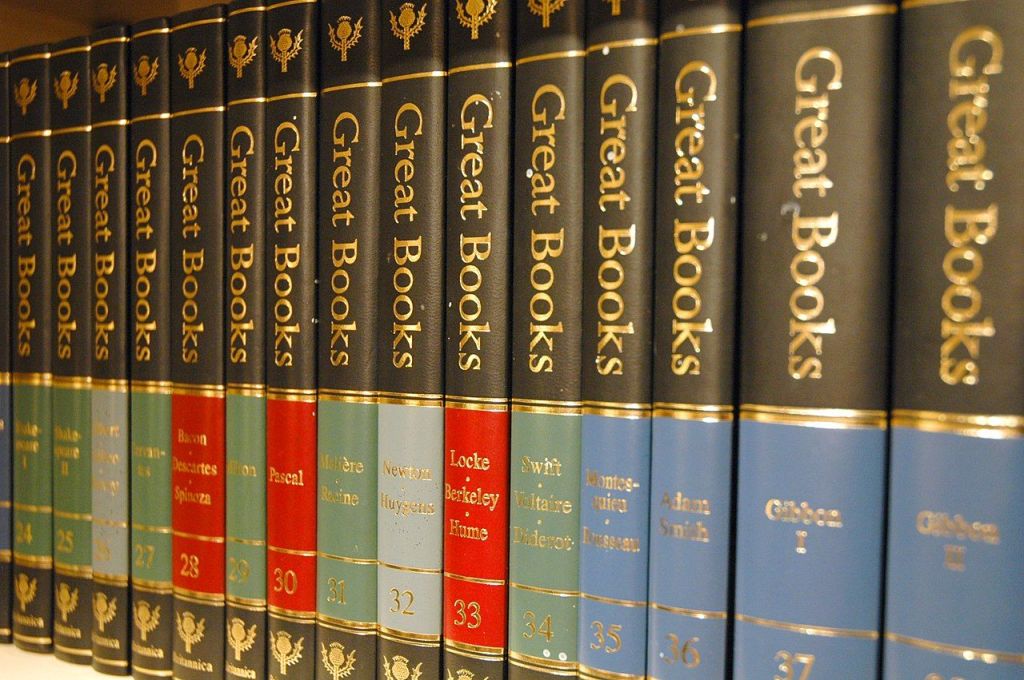
Adler and Hutchins later worked to launch the Great Books of the Western World book series, originally published in 1952 by the Encyclopædia Britannica, with 52 volumes in the first edition and 60 in the 1990 edition. This collection eventually sold a million copies. In the presentation of the first edition, Hutchins said:
“This is more than a set of books, and more than a liberal education. Great Books of the Western World is an act of piety. Here are the sources of our being. Here is our heritage. This is the West. This is its meaning for mankind.“
The Great Books of the Western World (2nd edition, 1990) in 60 volumes. Credit: Rdsmith4.
Time to look back and reflect on how the year which is about to end developed. Brief recap of my 2025. (*)
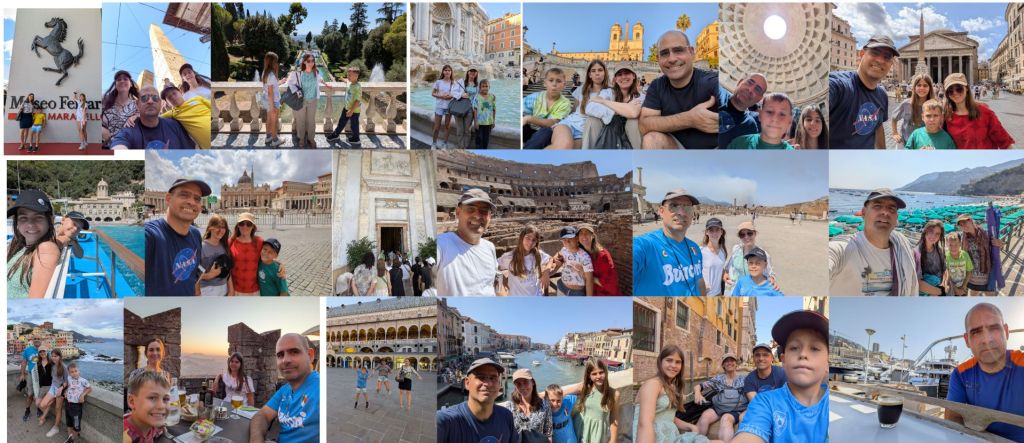
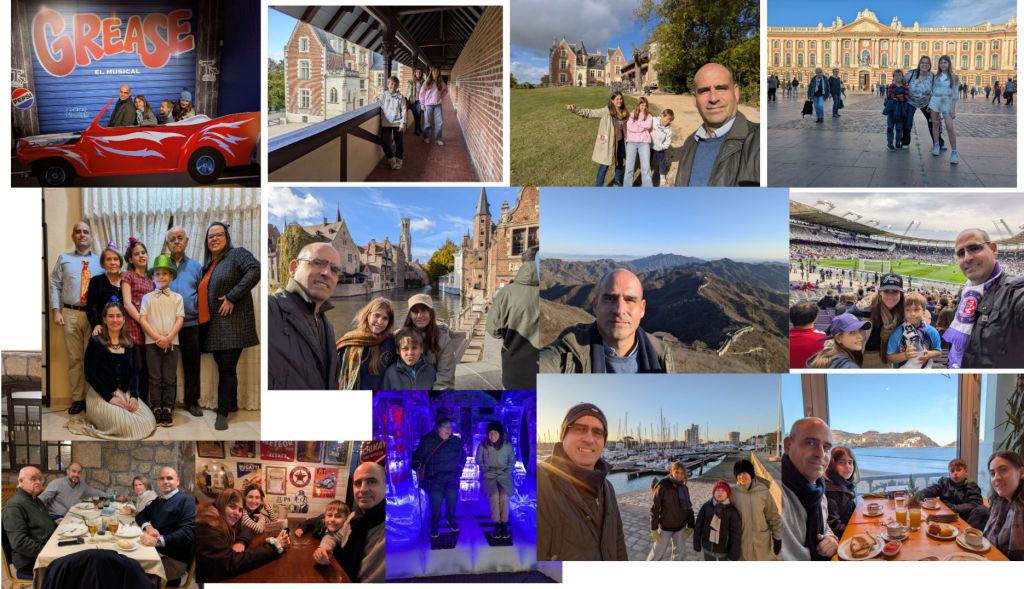
The main experience that we enjoyed together in this 2025 was the road trip we did to Italy during the summer holidays. We spent three weeks driving along the Cote d’Azur, Modena, Bologna, Roma, Orvieto, Assissi, Napoli, Pompei, Sorrento, Aquila, Attri, Loreto, Urbino, San Marino, Ravenna, Venezia, Padova, Verona, Milano… It was a trip full of museums, churches, cathedrals and basilicas (the 2025 jubilee in the Catholic Church and the Jubilee of Youth during our visit brought many young people with their chants and dances, it also enabled us to learn many things), beautiful landscapes, architecture, Roman ruins, bathing in different beaches (including an excursion and sleeping at a boat in the Port Hercule of Monaco), delicious food, lots of sun, a bit of running, and having fun with the kids.
Traveling in Italy.
Family. Andrea is now 12 years old and David, 9.
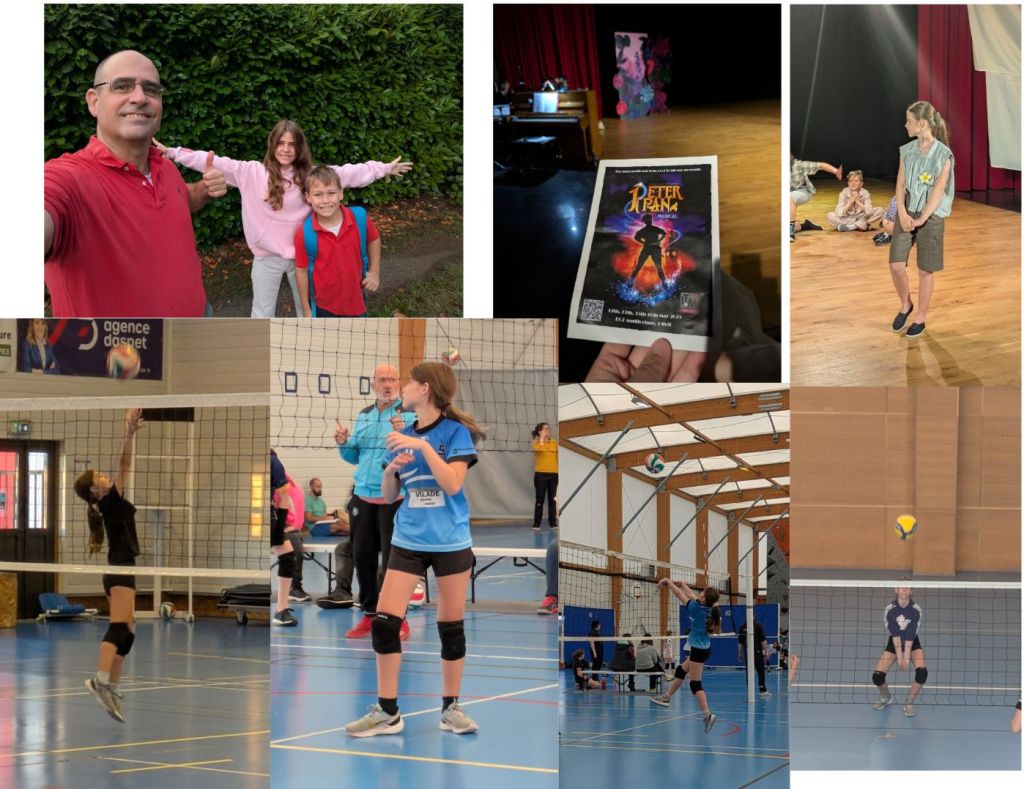
Andrea did very well in grade 6 and has also started grade 7 well, with very good marks. She especially enjoys Science, Maths and researching for her History assignments. She continues to take Spanish lessons, to play piano and volleyball in the village team. A highlight of her school year was the musical they put together in the school, Peter Pan.
Andrea in 2025
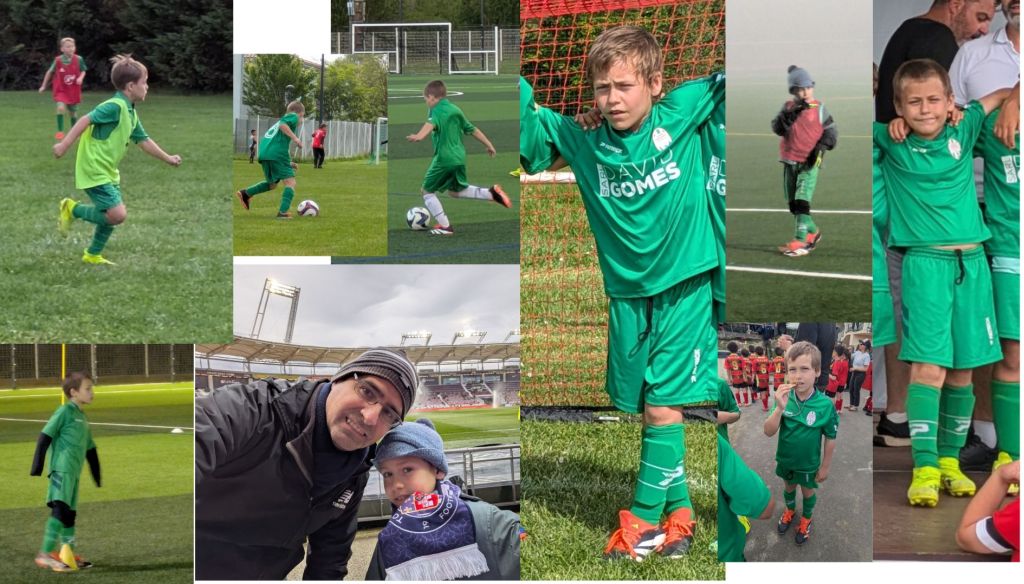
David now loves most of all football, playing it in the school, with the village team or in video games. He is also a very good student in his grade 4, where he enjoys Math and French. He is very helpful at home and he is now in his third year of Spanish lessons. They both spent several weeks alone with my parents in Madrid during school holidays, which they loved.
David in 2025
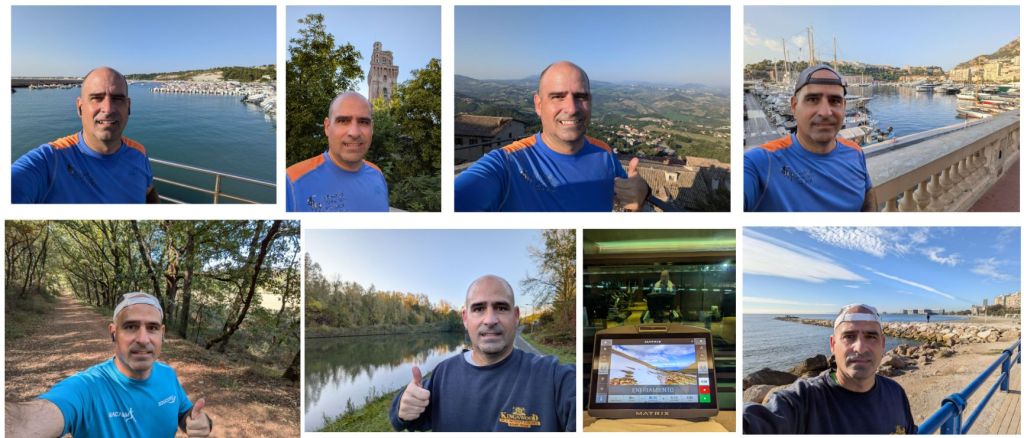
Running: My objectives for 2025 were to avoid injuries and to complete at least another marathon, and I managed to achieve both. I kept a good habit of running without pushing too much to avoid injuries, including adapting the marathon training plan I followed in the Autumn. I ran over 1,200km in 2025, not as much as I would have liked but at the level of 2024. Finally, on November 30th I completed my 25th marathon in Alicante.
Following a mantra I try keep to the letter (when in good health), “the running shoes, always in the suitcase”, the year 2025 caught me running in: Torrelodones, Galapagar, La Grau-du-Roi, Cannes, Tuscany, Marcelli, San Marino, Padova, Monaco, Tournefeuille, Châteauroux, Péronne, Wijchen, Beijing, Shanghai, Shenzhen, Alicante, Elche and San Sebastián, plus the tens of times I trained in my village, in Blagnac and Toulouse.
Running in places.
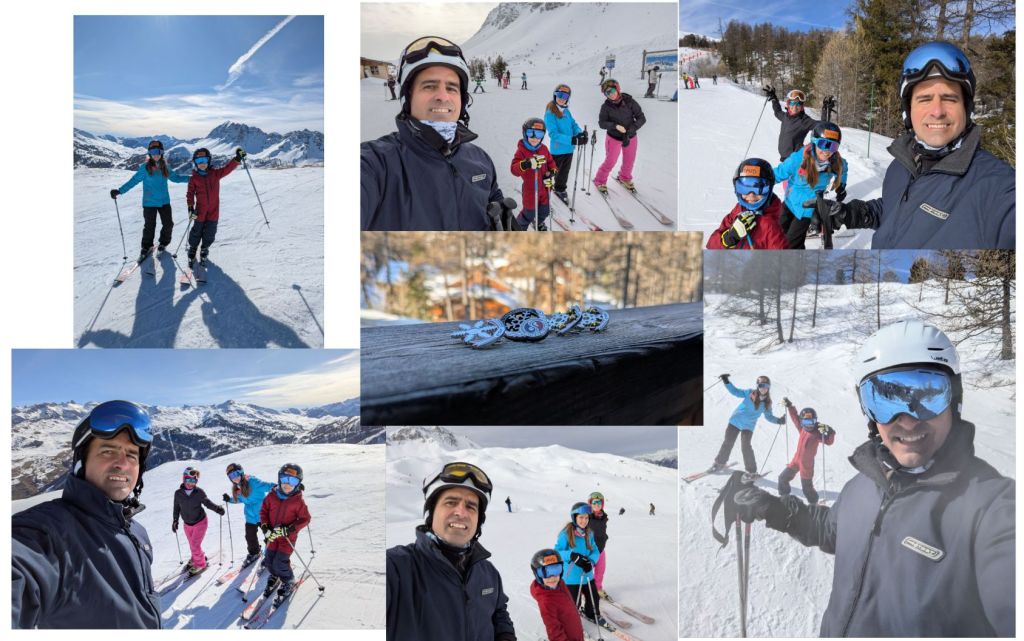
Skiing. In 2025 we went again with the family for a week to our favourite resort at Vars, in the Southern Alps. This year again we could enjoy much time skiing with the kids out of their skiing lessons. They are more daring and at ease especially skiing off tracks, and sometimes it’s difficult to keep pace with them. This year Andrea got her 3ème étoile medal and David his 2ème one (levels from the French ESF).
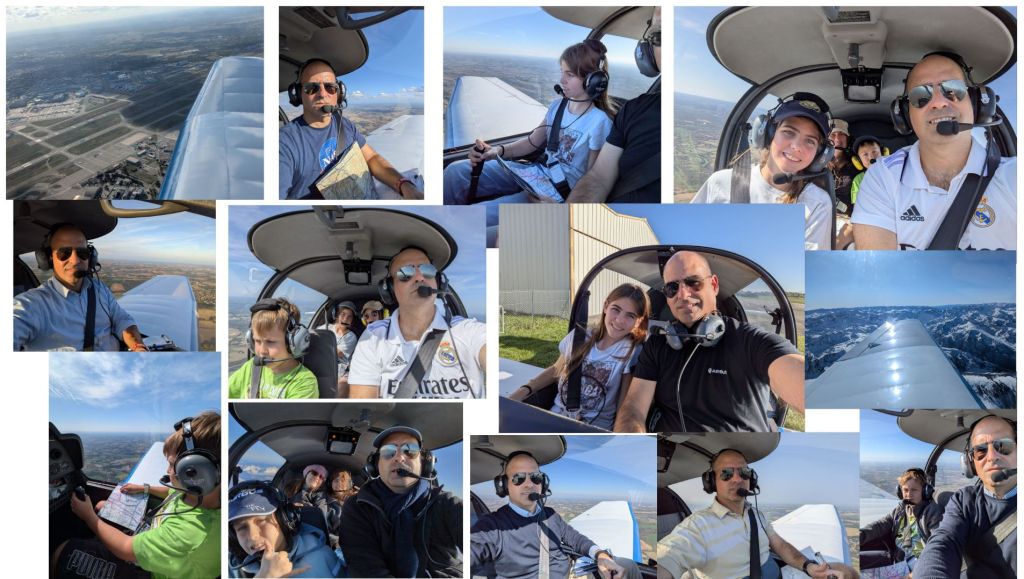
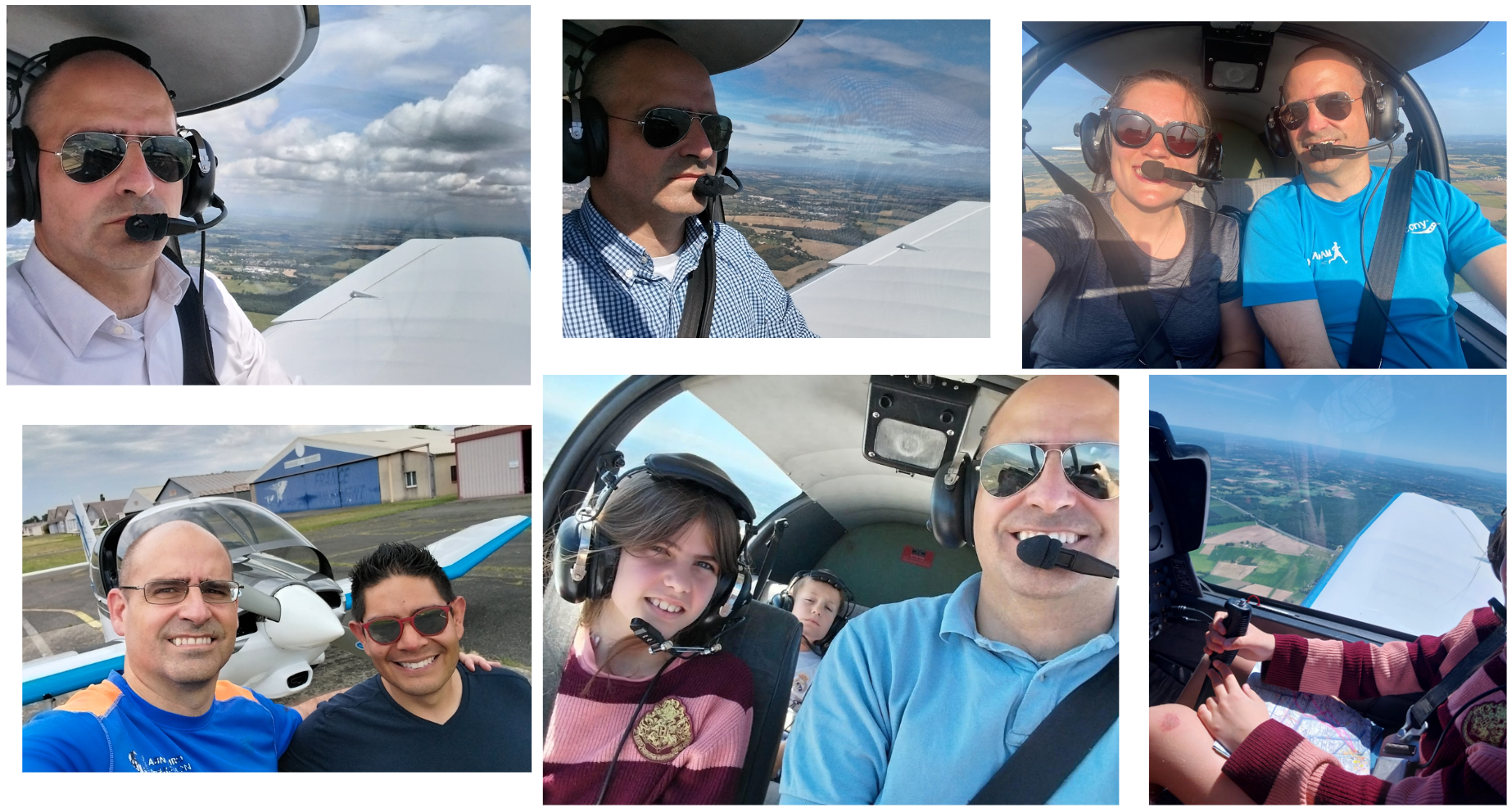
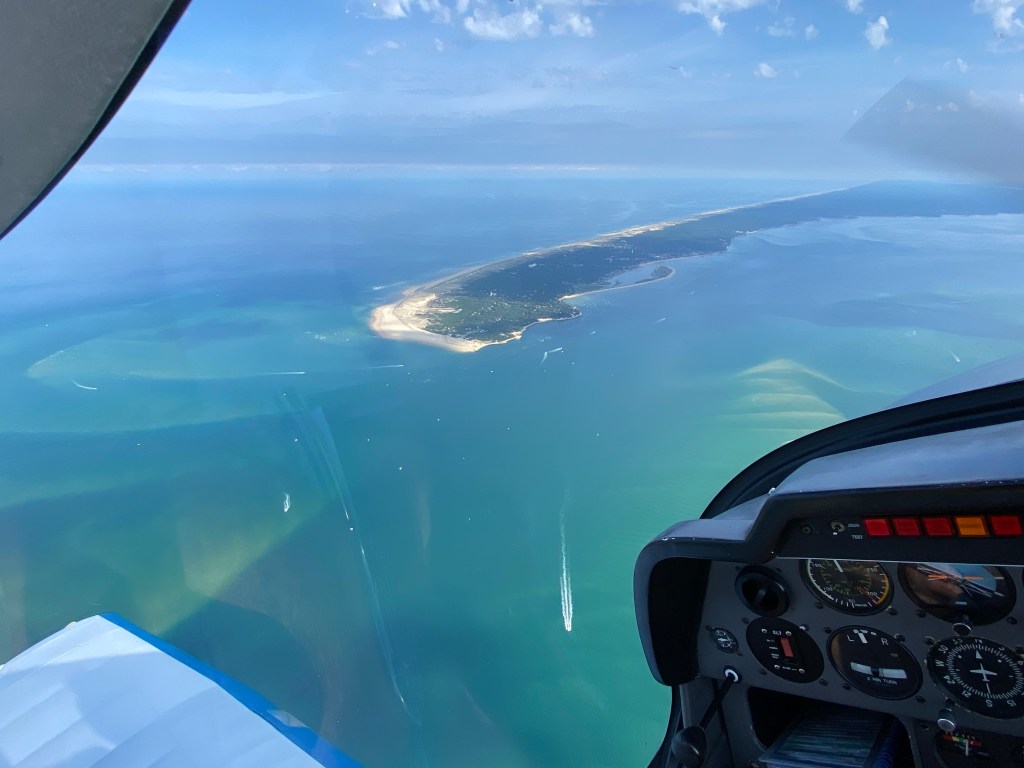
Flying. This year I managed to fly more than in 2024. I did some training flights and some others with the kids, including a nice flight excursion we did along the Lot and Dordogne valleys. In October I also had to renew my French language radio competence (FCL 055) and in November I renewed the licence by experience after flying with the instructor (SEP (single-engine piston) qualification).
In all, this year I have flown 13 flight hours, 12 flights and 30 landings. This takes my total experience to 228 flight hours and 369 landings since I started taking lessons back in 2011. Hopefully in 2026 we can take part in some excursions abroad.
Flying in 2025
Travelling. Apart from the unforgettable trip to Italy, in this 2025 either alone or with the family we continued to visit some new and old places: Aix-en-Provence, Vars, Saint-Rémy-de-Provence, Arles, Nîmes, Burgos, Bourges, Fontainebleau, Montargis, Paris, Amboise, Brugge, Dunkerque, Pierrefonds, Beijing, Shanghai, Guangzhou, Shenzhen, Chengdu, Elche, Alicante, Wijchen, Rijswijk, Saint-Quentin, La Rochelle, Bordeaux, San Sebastián…
Reading. In this 2025, I managed to read a bit more than last year, in all 17 books, mostly in Spanish with the rest split in English and French (2 books in each language). I’m also happy to have read other 5 books of the Great Books curriculum for the bachelor in arts of Saint John’s College, a list I have been using as a reference for years. For the detailed list of books, see the post I wrote about my 2025 reading list with a brief description of each one.
Other cultural activities:
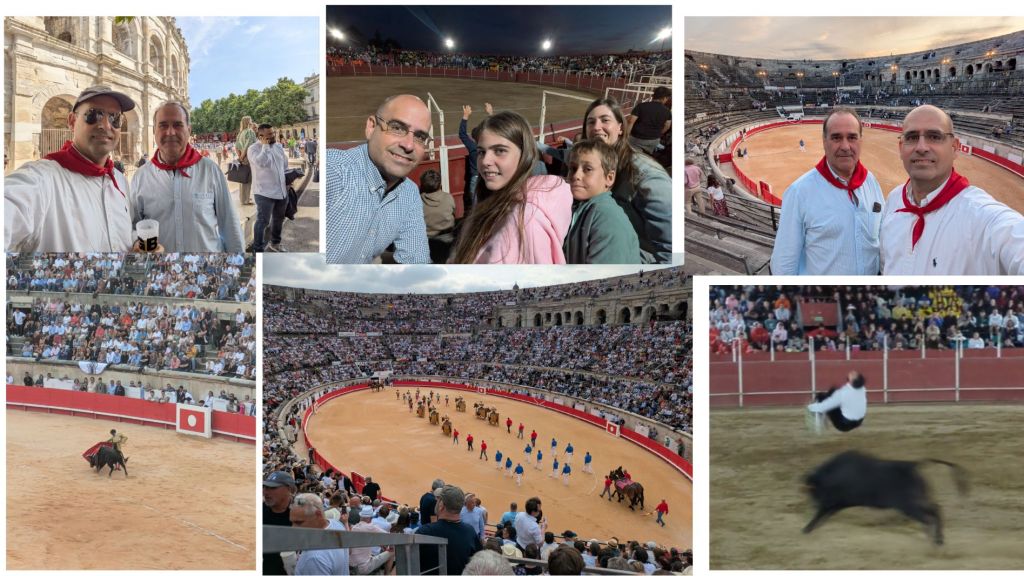
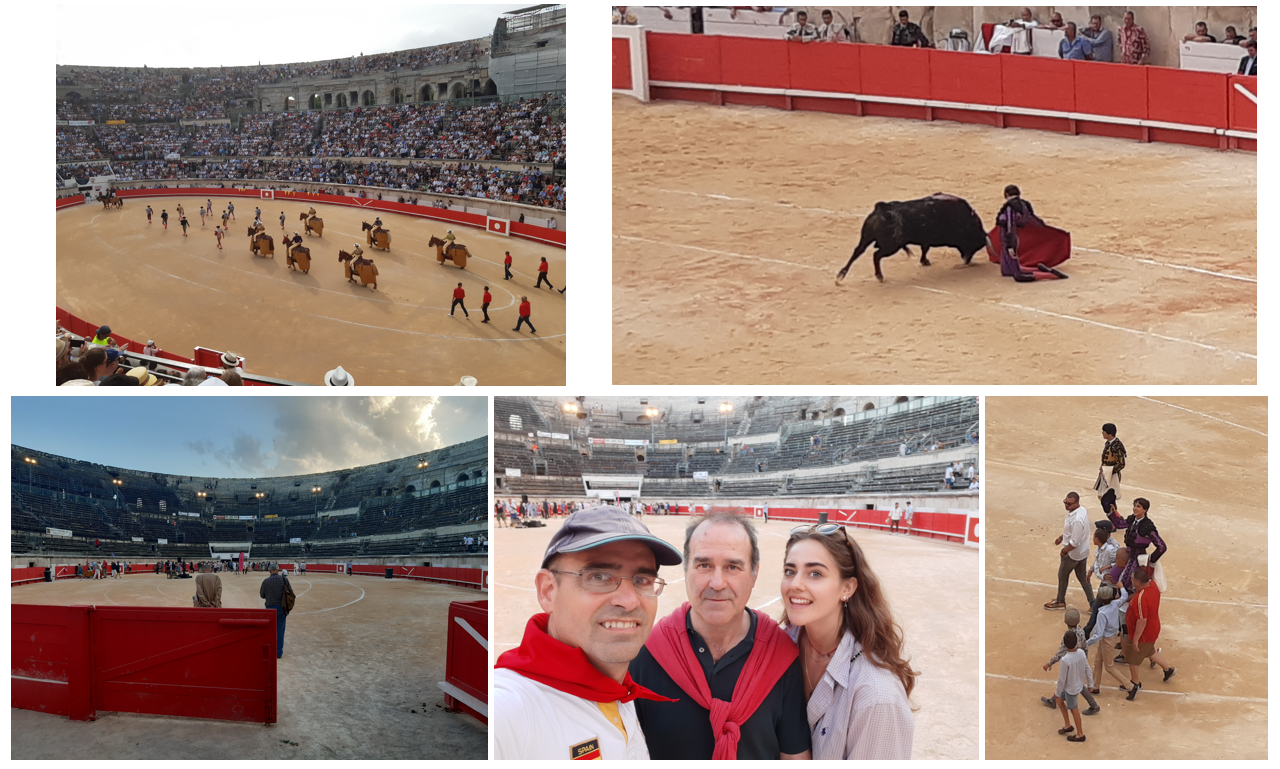
Bullfighting. This year again, together with Luismi, we went to Nîmes to attend its Feria de Pentecôte, in particular a corrida (same wording in French) with the following bullfighters: Morante de La Puebla (who had an incredible 2025 and retired in October; in Nîmes he did a good job but wasn’t lucky with the bulls), Talavante and the young Marco Pérez, the latter two were awarded 2 ears and exited through the puerta grande.
Later, in July we went with the family to a concurso de recortadores at Las Navas del Marqués (Ávila), a contest in which 12 men went into the arena one by one to dodge the bull when running towards them in impressive ways, including jumping over it. The winner was Paquito Murillo, who had been Spanish champion of that variety in the past.
I also renewed my membership to the foundation Toro de Lidia to keep supporting the art.
Theatre. We started the year with a great musical in Madrid, Grease (thanks to a wonderful invitation from my sister Beatriz!) and the Pantomime show in Pibrac where they played Rapunzel (which was hilarious). At the end of the school year we also attended the great show put up by the kids of the school with Peter Pan.
Other shows: we went with the family a few times to the cinema, with Formula 1 being the movie we liked the most. We also went to a concert of the string quartet Mascarade. We also went a couple of times to see matches from the Toulouse FC at the stadium, against Montpelier and Metz. Those were great fun especially for the kids. What we want to do in 2026 is to rather see the rugby team with the family and possibly more music concerts.
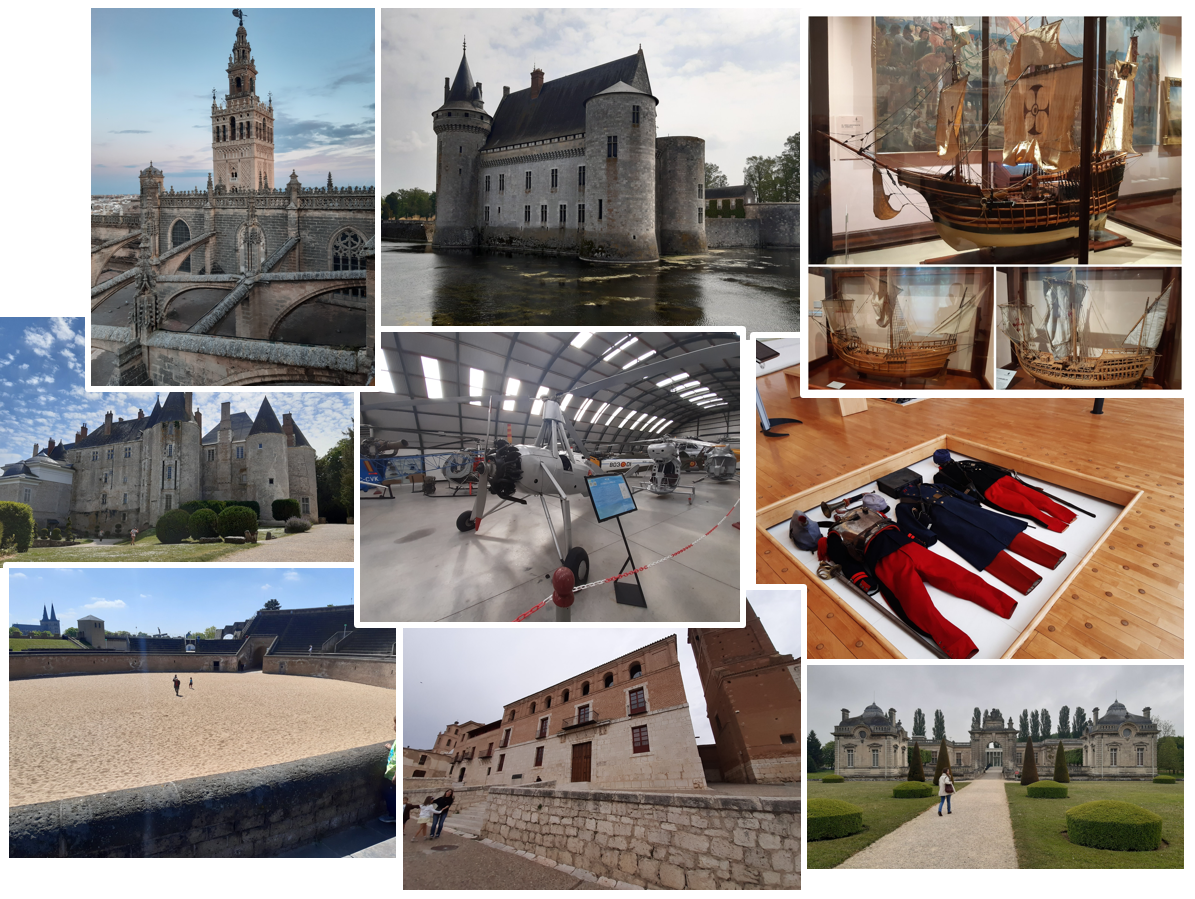
Museums. This year again we took benefit of every trip to visit as many museums and castles as we could (some of them were visited for a second or third time): Arles theater and amphitheater, Saint Remy Provence St Paul Mausole (where Van Gogh was interned), Palais Jacques Coeur and Cathédrale in Bourges, Château Fontainebleau, Panthéon, Notre Dame, Musée du Louvre and Les Invalides in Paris, Sainte-Marie-Majeure in Marseille, Abbazia di San Fruttuoso, Museo Enzo Ferrari Modena, Museo Ferrari Maranello, Basilica di San Petronio and Basilica di San Domenico in Bologna, Archiginnasio di Bologna, Lamborghini Museo in Sant’Agata Bolognese, Casa Museo Luciano Pavarotti, Basilica di San Francesco in Assisi, Abbazia di San Pietro in Perugia, Duomo di Orvieto, Villa d’Este in Tivoli, Pantheon, Chiesa di Sant’Ignazio di Loyola, Santa Maria sopra Minerva, Chiesa di Sant’Agnese in Agone, Musei Vaticani, St. Peter’s Basilica, Basilica di San Giovanni in Laterano and Scala Santa, Basilica di San Clemente al Laterano, Terme di Caracalla, Colosseum, Roman Forum and Palatine Hill, Basilica di Santa Maria Maggiore, Basilica di San Paolo fuori le mura, Catacombe di San Callisto, Napoli Sotterranea, Duomo di Napoli, Pompeii, Abbazia di Montecassino, Basilica di Santa Maria di Collemaggio in L’Aquila, Duomo di Atri, Santuario della Santa Casa in Loreto, Palazzo Ducale in Urbino, the towers Cesta and Guaita in San Marino, the Basilica de San Vitale, Galla Placidia, the Orthodox Baptistery, Sant’Apollinare Nuovo and the Basilica de St Francesco in Ravenna, the Basilica di San Marco, Correr Museum and the Palazzo Ducale in Venice, Château du Clos Lucé in Amboise (where Da Vinci lived his last years), Stadhuis and the Basilica of the Holy Blood in Brugge, Aviodrome museum, Museum Dunkerque 1940 Operation Dynamo, Château de Pierrefonds, Great Wall of China in Mutianyu, the Palacio de Altamira and Torre de la Basílica de Santa Maria in Elche, Aachen Rathaus, Netherlands ice sculptures Festival, Wonder van Empel, Château de Compiègne, Basilique Saint-Martin de Tours, Cathédrale Saint-André de Bordeaux.
Blogging. This is the 16th year since I started the blog in February 2010. This year I wrote just 9 blog posts, in line with the past years since 2020. It helps me to structure some ideas in some posts, to dig into some topics other times, and as a personal repository to which I come back every now and then. The blog received just over 20,800 visits, a bit more than in 2024 (in line with the past few years) and over 533,000 views since 2010.
Work. No changes in the scope of the work this year (A330neo product marketing since January 2023), neither in the team, so it was a stable year in that front.
Since 2023 the markets keep being quite active, and in 2025 we had a good year for the A330neo in terms of aircraft orders.
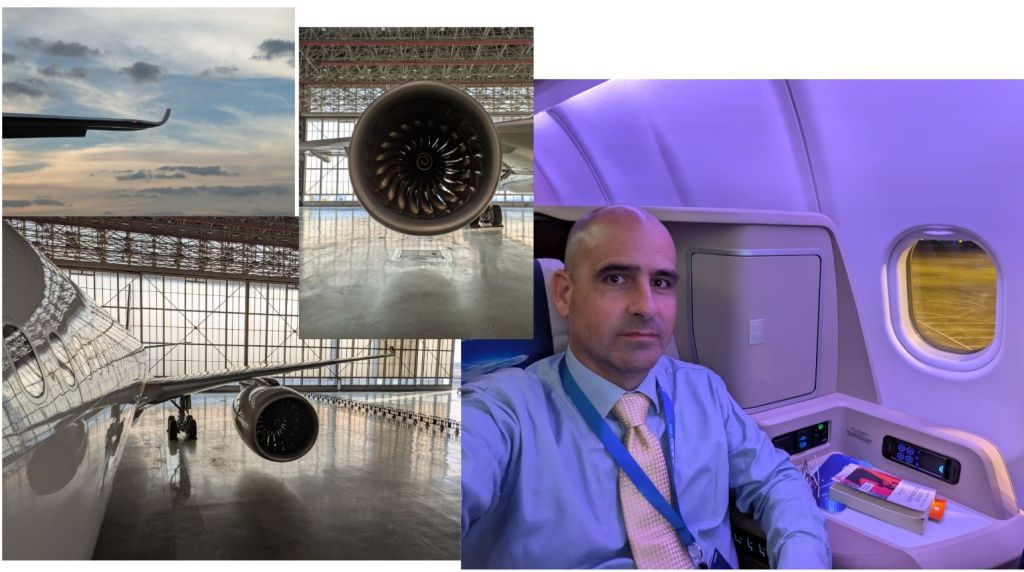
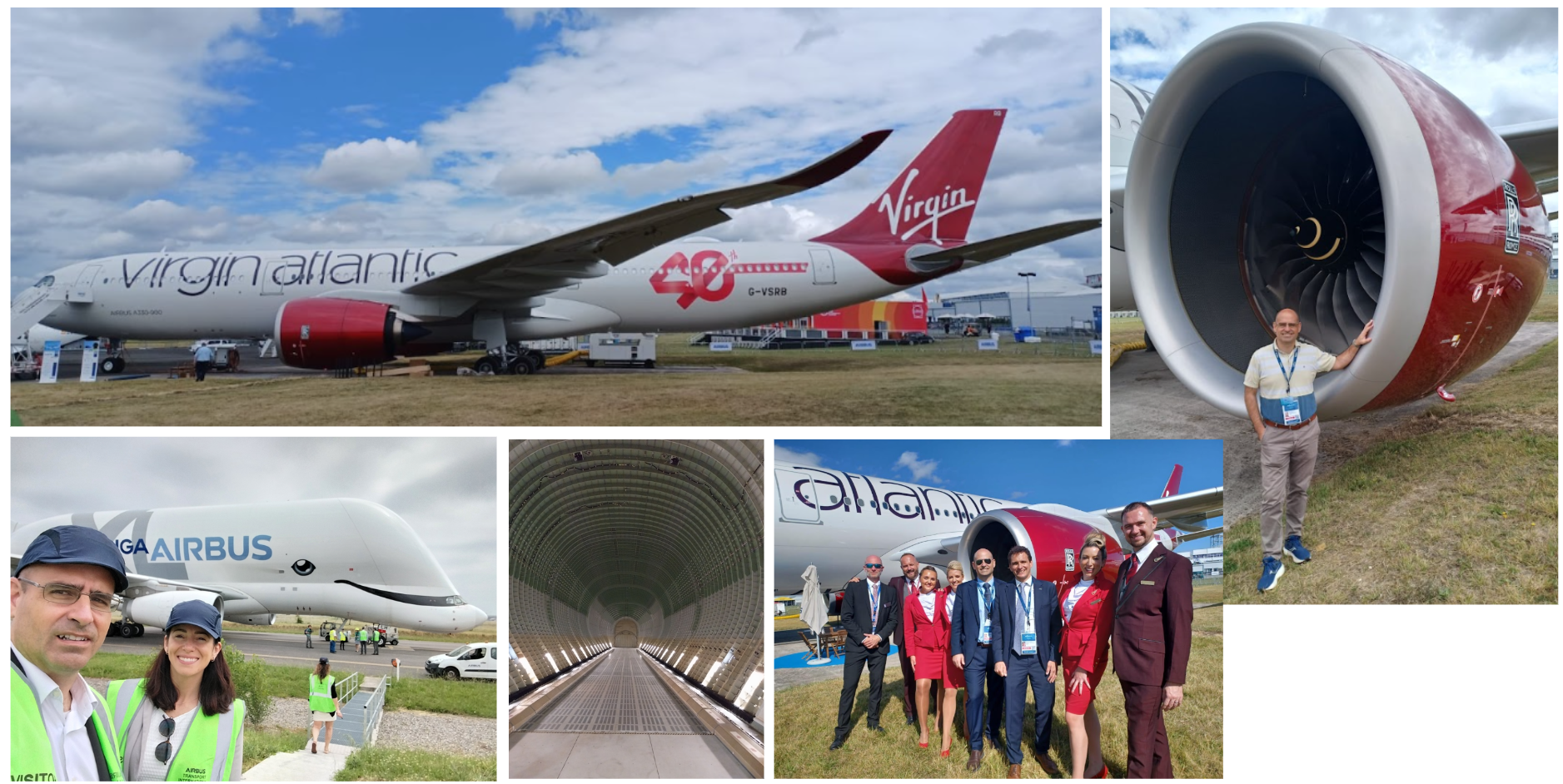
This year I had the opportunity to join a great demo tour where we rented the aircraft from an airline and we visited different pages to showcase the A330neo with colleagues from Airbus and Rolls-Royce to varied groups of customers or institutional representatives. That was a very intense week but full of new experiences. These included the first time I flew an airline’s A330neo! (I had only flown before the Airbus A330neo flight test aircraft).
Working on the A330neo.
Now it’s time to rest, celebrate with the family and hope for the best in 2026. For the moment we have just a few days in Madrid to enjoy with family and friends and a planned skiing week in Vars; hopefully that will be just the beginning of another memorable year.
In this post I wanted to share the list of books I read along the year (1) with a small comment for each one. I have also included a small rating from one to three “+” depending on how much I do recommend its reading.
“Gobierno omnipotente” (Omnipotent Government: The Rise of the Total State and Total War) by Ludwig von Mises (++): Written in 1944, the book shares a critique of state interventionism and central planning on their diverse varieties (socialism, Marxism, nationalism, Nazism), analyzing similarities and differences among them, and the economic and social disasters generated by them in the first half of the XX century, including disastrous wars. [Twitter thread]
“El origen de las especies” (On the origin of species) by Charles Darwin (++): In this famous book written in 1859, Darwin shares his theory of natural selection and survival of the fittest. The book includes numerous examples of evolutionary changes, variations, mutations in different species across the world, counter points and many references to previous studies on the topic (the theory didn’t occur to him out of the blue, but this book is more a compendium of different elements supporting it). The laws that in general terms define evolution are: growth with reproduction, heritage, variation (due to changes of life conditions, use or lack of use), a rate of growth so great that leads to the fight for survival and as a consequence of this natural selection determined by a divergence of characters and the extinction of the less perfect forms. The 6th edition that I read includes as well a review of previous criticisms made to his first editions. The book also includes a discussion of how evolution can still work with the divine creation of a short number of different forms that later evolve. [Twitter thread]
“La mayor ocasión que verá el siglo XXI” by Rafael Acedo (+++): Rafael Acedo is one of my former bosses at Airbus Military and most importantly a senior executive of the company that held different positions, in particular in Programme management and Engineering. This book tells with a unique point of view the fascinating story of the genesis of the A330 MRTT (multi role tanker transport) aircraft. The book offers a blend of technical aspects of the design and development, insight into the sales campaigns with their various requirements that shaped the products, the personnel selection searching for the right engineers to lead those developments, the leadership struggles and styles at CASA and with the integration into EADS… It is an excellent book.
“A room of one’s own“, by Virginia Woolf (+): This short book is based on 2 lectures given in 1928 about women and writing. It emphasizes the need for financial independence, a room without interruptions, access to education and time (“give her hundred years“) for women to shine in literature. [Twitter thread]
“Tractatus logico-philosophicus” by Ludwig Wittgenstein (-): Essay written in 1918 about language, logic, mathematics and their limits, and how the meaning of the world, ethics, mysticism are outside of what can be expressed. The language used and writing style make for a very difficult read even if it is a very short book. [Twitter thread]
“La cuestión P vs. NP” by Jordi Delgado Pin (-): This is a short book from a collection of Mathematics books I started reading some years ago. This particular one is an introduction to computational complexity, and the analysis of the time it takes to solve problems. Too technical for a reader that it’s not into programming like myself. [Twitter thread]
“Elements” by Euclid (++): The book I read is Simson’s translation of 1774, and includes the books I to VI, XI and XII of the geometry manual of the 3rd century BC by Euclid, a classic of Western civilization. Throughout the different books Euclid departs from few definitions, postulates and axioms and goes into graphically calculating different distances, angles, surfaces, etc., with the help of what has been proven before. Some of those exercises are studied in a high school technical drawing course (e.g., how to circumscribe a circle about a triangle) many others are technical drawing on steroids. [Twitter thread]
“Faust” by Goethe (+): Written in 1832, the book is a dramatic poem (in rhyme in the original German) where Faust makes a pact with the devil Mephistopheles to grow in knowledge and live all kinds of experiences; including the love of Grechten and Helen, various parties and military conquests. [Twitter thread]
“Politics” by Aristotle (++): The book, written in the IV century BC, offers a critique of Plato’s Republic, and it’s essay on constitutions for different states, forms of government (monarchy, aristocracy, democracy, oligarchy, tyranny), on virtues, citizens, the separation of powers, the different magistracies, about private property, slaves, women, the natural inequalities among individuals… [Twitter thread]
“Peter Pan” by James M. Barrie (++): Narrated form (1911) of the play (1904) about the adventures of Peter Pan, Wendy, Hook, Tinker Bell… Peter Pan is today a character of world fame, a boy who refuses to grow up and goes to live in Neverland. An aviation angle: his passion for flying and the fact that to fly the only thing which is required are happy thoughts. [Twitter thread]
“Dinero, crédito bancario y ciclos económicos” (Money, bank credit and economic cycles) by Jesús Huerta de Soto (+++): Huerta de Soto is a Spanish economist of the Austrian School of economics. The book, written in 1998, calls for a system of free banking with 100% reserve requirement for deposits, the elimination of central banks and a return to the gold standard. To arrive at those proposals the book analyzes the business cycles and how fractional reserve banking distorts investments decisions, capital allocation, creates inflation and crises. The book offers a comprehensive historical overview of several authors and schools of thought (back to the Middle Age), with numerous citations and an extensive bibliography. [Twitter thread]
“Historiones de la Geografía” by Diego González (+++): The book is a collection of short stories and curiosities about islands, remote territories, unique borders, time zones… Very much like the blog Fronteras (in Spanish) but now compiled in a book, with the fresh style of its author Diego.[Twitter thread]
“La energía nuclear salvará el mundo” (Nuclear energy will save the world) by Alfredo García (+++): A brilliant exercise in popularizing nuclear energy, the science and technology behind it, its unique safety levels (contrary to popular beliefs and the defamation campaigns against it; in particular I loved the detailed analysis of how there’s no risk with eating fish from Fukushima! Much less than with eating bananas), the most well-known accidents (their origin, an account of what happened and what not! i.e., it turns out that most of those accidents are success stories despite how they have stayed in the collective memory), waste management, the need for nuclear energy in the energy decarbonization path, new technologies… The author, Alfredo , works at a nuclear plant and is very active in Twitter / X, follow him (in Spanish) for more information.[Twitter thread]
“Annals” by Tacitus (+): Written around 102 AD, it describes year by year (consulship by consulship), from the death of Augustus in the year 14 to the fall of Nero in 68, with large gaps not preserved. The book mainly deals with the reigns of Tiberius and Nero. Every year it gives an account of the relevant events of the empire: about wars and their development, conquests and appointments in the provinces; discussion of some laws being passed, trials, betrayals, notable executions and suicides in Rome. [Twitter thread]
“Cyrano de Bergerac” by Edmond Rostand (+++): Written in 1897, the book is a theatre play entirely in verse, which is based on some true characters of the XVII century and which has as themes the choice (that Roxane has to make) between beauty (Christian) and the talents, the words and the pen of Cyrano. Along the play the characters exhibit honor, humor, the Gascon spirit, freedom (“panache“). Only by the end, when it might be too late, Roxane discovers what had been going on and how wrong she was. A very amusing and dynamic opening. [Twitter thread]
“Human Action, a treatise on economics“, by Ludwig von Mises (+++): Written in 1949, Human Action is the main work of Von Mises (4 volumes), an economist from the Austrian school. In the book he defends that human action is directed to reduce current uneasiness, that there’s a time preference, that humans are beings that show social cooperation that allows division of labor, which enables individuals to save and accumulate capital. This will lead to an increase of productivity, increasing added value, offering better products at lower prices, the beauty of capitalism, the market economy, prices, consumer satisfaction as the ultimate goal and profits only accrued when that has happened… as opposed to government intervention, socialism and lack of economic calculation, leading to miss allocation of capital, increase in poverty, etc.
“Réconciliation. Mémoires” by King Juan Carlos I & Laurence Debray (+++): In this rare autobiography by a king, Juan Carlos talks about childhood in exile (Italy, Switzerland, Portugal) and in Madrid during the Franco regime (where he was raised away from his family). The formation of his family in the 1960s and his relationship with other royal houses. He shares some of his exchanges with Franco and the dictator left to the future king some of the reforms to be made. He talks about coronation, how he shaped the government that would launch the transition to democracy and the following modernization of Spain. He also discussed his abdication, his current retirement in Abu Dhabi and he explains the sadly limited relationship he has now with his son, king Felipe VI. An overarching theme in the book is the importance of the Crown for the unity of the country and its long term vision. Finally, he explains that he is publishing this book to counter the attacks on the Crown by the current socialist government and its revisionism of History.
This year I read more than in 2024, with a good habit in the first half of the year and the last 3 months, but struggling to find continuity in the summer months, when I was stuck with Annals. In the end I read 17 books and nearly 7,300 pages (~20 pages a day on average), most of them in Spanish with a couple of books in English and another couple in French. Among them I read 5 books out of the Great Books list.
A resolution for 2026 will be to keep the habit, for which I will be following these two tips that I share every year:
a blog post from Farnam Street blog “Just Twenty-Five Pages a Day“, which was published well after I had adopted such an approach to reading but captures it very well,
the Wikipedia article about the Pomodoro Technique, which enables you to efficiently use the last hours of the day.
Another question that I have got a few times is about the source of the list of some of the classics that I read. That one comes from yet another blog post from Farnam Street blog. That post mentioned the Great Books curriculum for the bachelor in arts of Saint John’s College in Annapolis. You can get the list from the Wikipedia or directly from the college website. As I am not reading exclusively those books I advance at a pace of 5 to 8 books out of that curriculum per year, thus it will take me other 20 years to finish the program.
Time to look back and reflect on how the year which is about to end developed. Brief recap of my 2024. (*).
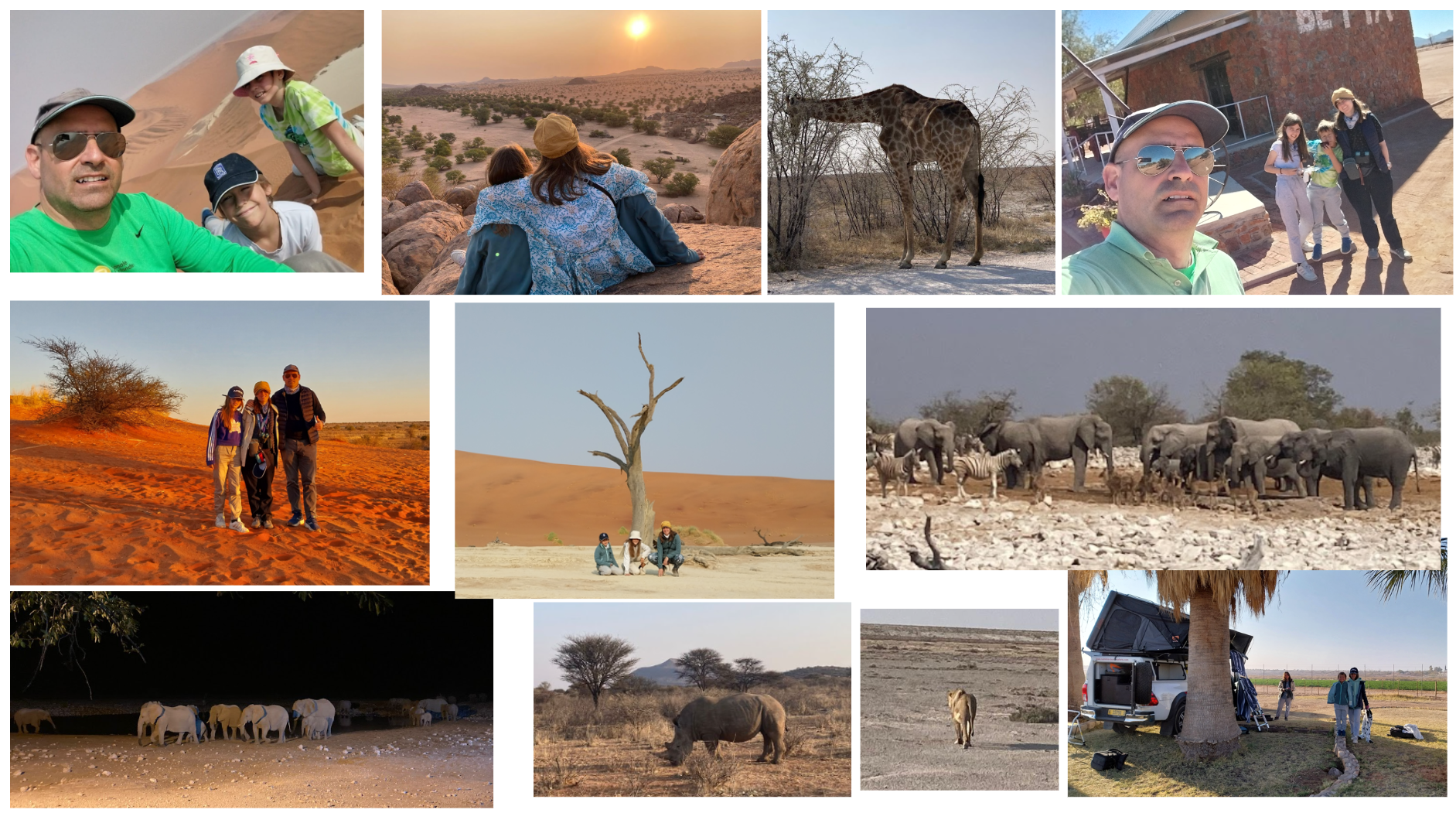
The main experience that we enjoyed together in this 2024 was the road trip we did to Namibia during the summer holidays. We spent over two weeks driving up and down the country along solitary and unpaved roads, through deserts, mountains, canyons, along the coast… We did a bit of camping and enjoyed great hotels and resorts. We did some boat excursions and various game watching safaris at different parks. An unforgettable trip.
Namibia
Family. Andrea is now 11 years old and David, 8. Andrea just started secondary and is proving to be a responsible and good student. She loves drawing, researching for her school homework and clothes. She now has her own smartphone and starting playing volleyball in the village team. She is in her 3rd year of Spanish lessons, which now she also studies in the school. This year she is volunteering to take part in the school play at the end of the year. David continues to enjoy building Lego sets, playing video games but most of all he loves football, which he is now playing with the village team. He is also a very good student in his grade 3, where he enjoys Math and French. He is very helpful at home and he is now in his second year of Spanish lessons. They’re both taking piano lessons and this 2024 they have spent several weeks alone with parents in Madrid during school holidays, which they loved.
Running: After an end of 2023 marked by injuries, I just wanted to get again into the running habit and completing another marathon, which I did! In all, I run just 1,250km in 2024, more than in 2023 but less than I would have liked. I still had some injuries now and then but I could cope with them and I ran the marathon of Malaga in December, my 24thmarathon.
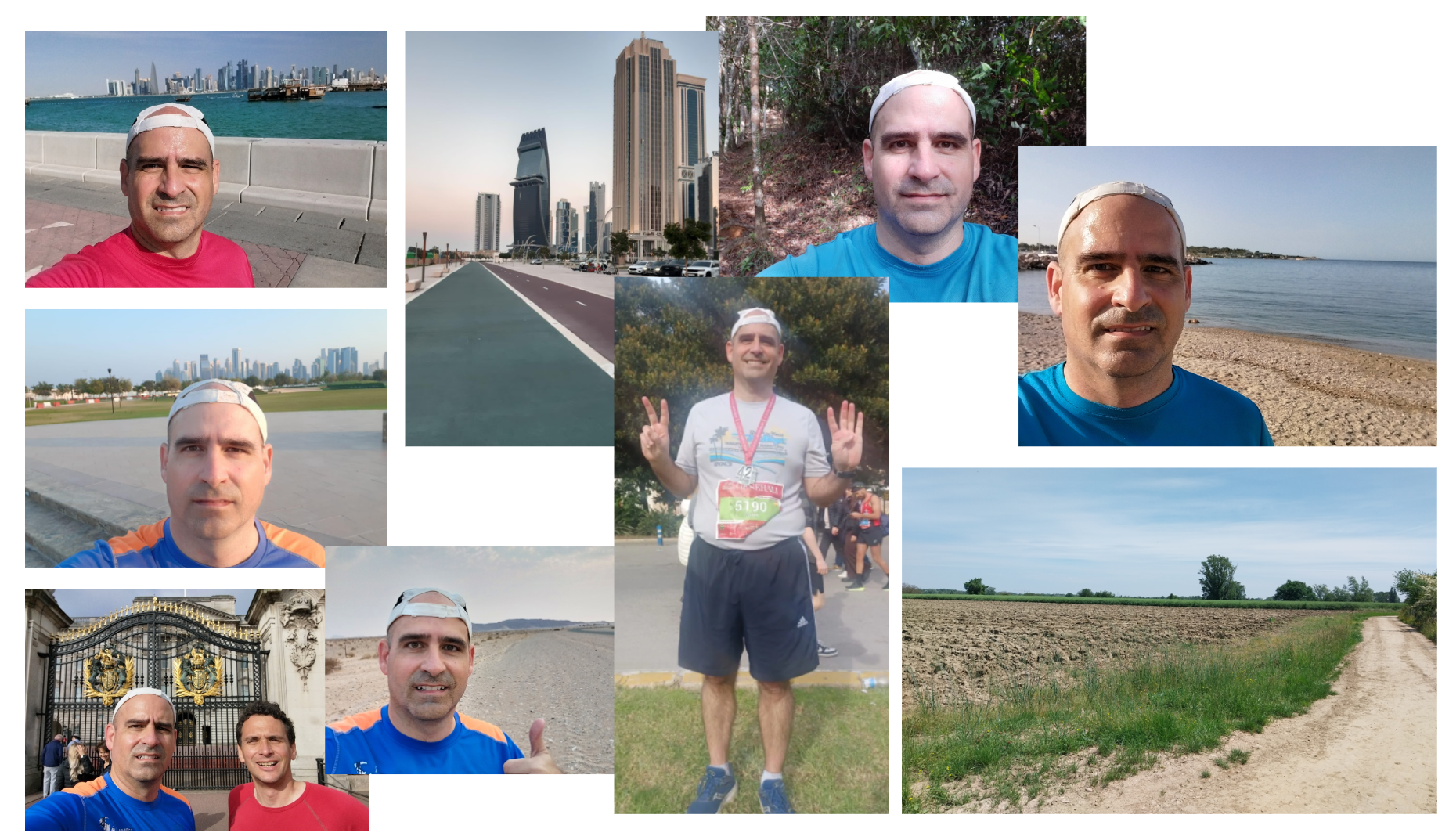
Following a mantra I try keep to the letter (when in good health), “the running shoes, always in the suitcase”, the year 2024 caught me running in: Torrelodones, Miranda de Ebro, Brunei, Doha, Galapagar, Athens, London, Namibia (Sossusvlei, Swakopmund, Damaraland, Ethosa), Helsinki, Madrid, Málaga, the Netherlands (Wijchen), San Sebastián, plus the tens of times I trained in my village, in Blagnac and Toulouse.
Running around
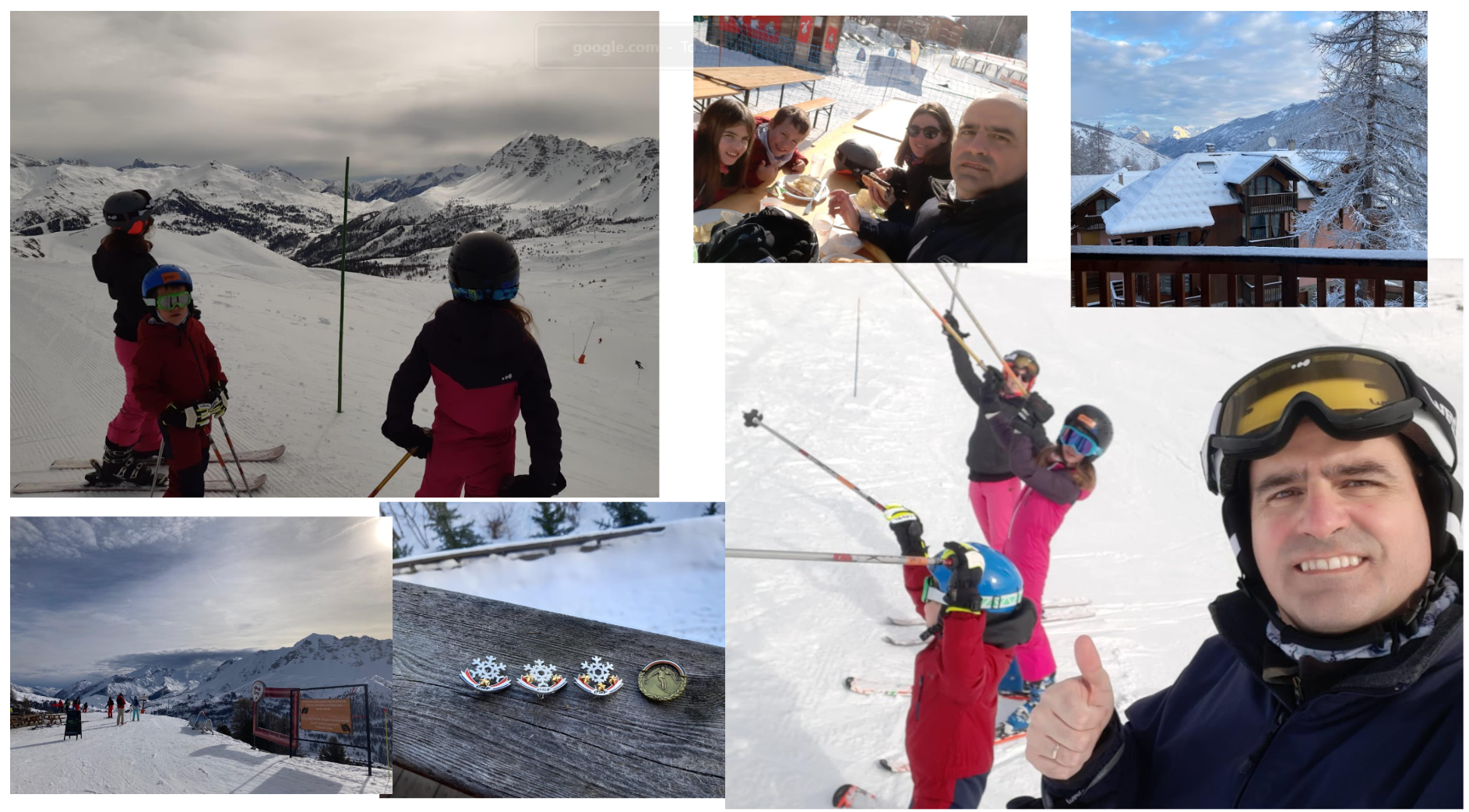
Skiing. In 2024 we went again with the family for a week to our favourite resort at Vars, in the Southern Alps. This year again we could enjoy much time skiing with the kids out of their skiing lessons. They are more daring and at ease especially skiing off tracks, and sometimes it’s difficult to keep pace with them. This year Andrea got her 2ème étoile medal and David his 1ère one (levels from the French ESF).
Skiing in Vars (Alps)
Flying. This year I did not manage to fly as much as I wanted. I kept up with the recency requirements doing some training flights and some others with the kids. This year I also flew for the first time with Rodrigo and Harriet-Eve. I am sure that in 2025 I will have the chance to fly with more colleagues.
In all, this year I have flown just 5 flight hours, 7 flights and 15 landings. This takes my total experience to 215 flight hours and 339 landings since I started taking lessons back in 2011. In 2025 I will need to renew the SEP (single-engine piston) qualification, that will certainly require more flying in the coming months, hopefully with some excursions abroad.
Flying with friends and family
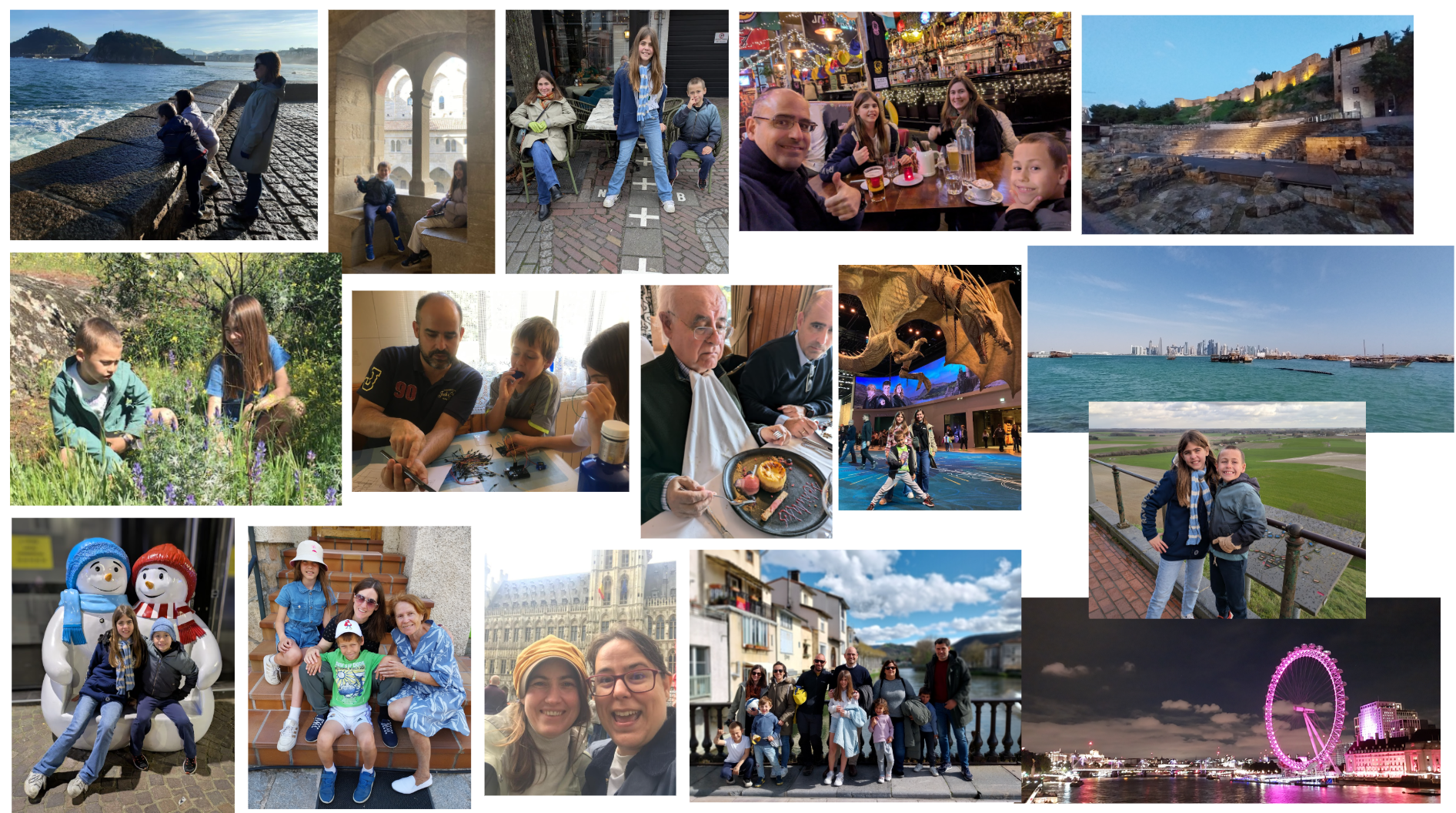
Travelling. Apart from the unforgettable trip to Namibia, in this 2024 either alone or with the family we continued to visit some new and old places: Brunei, Aix-en-Provence, Vars, Avignon, Doha, Paris (including another visit to the Parc Asterix which the kids loved), Madrid, Vic-Fezensac, Helsinki, London (including a great trip with the family to visit Harry Potter’s studios), San Sebastian, Málaga, Wijchen, Rijswijk, The Hague, Waterloo, Reims, Saint-Quentin, Poitiers, Bordeaux…
Traveling
Reading. In this 2024 I didn’t read as much as I would have liked to, but I managed to read 10 books with a good mix between reading in English, French and Spanish. I’m also happy for having read other 4 books of the Great Books curriculum for the bachelor in arts of Saint John’s College, I list I have been using as a reference for years. For the detailed list of books, see the post I wrote about my 2024 reading list with a brief description of each one.
Other cultural activities:
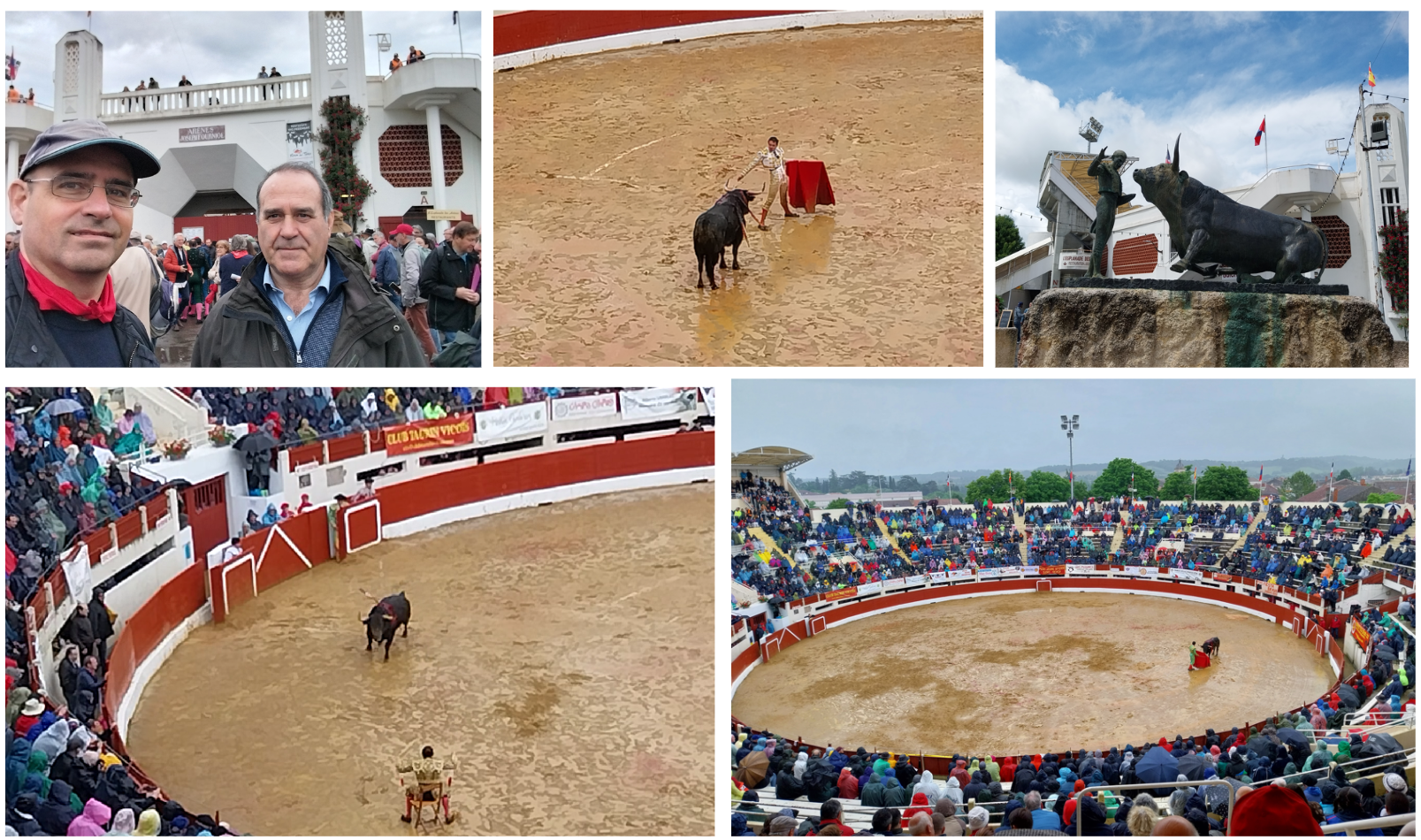
Bullfighting. This year again, together with Luismi, we went to Vic-Fezensac to attend its corrida concurso (same wording in French) with very strong bulls from different breedings. This year it was especially tough for the bullfighters as it was raining all the morning. Despite that, we saw a good show, with Sánchez Vara (that we had seen in previous occasions) and the Colombian Juan de Castilla who was awarded an ear, and left quickly after the 5th bull as he would be fighting in another corrida in the afternoon at Las Ventas (Madrid). I also renewed my membership to the foundation Toro de Lidia just a few days ago to keep supporting the art.
Bullfighting at Vic-Fezensac
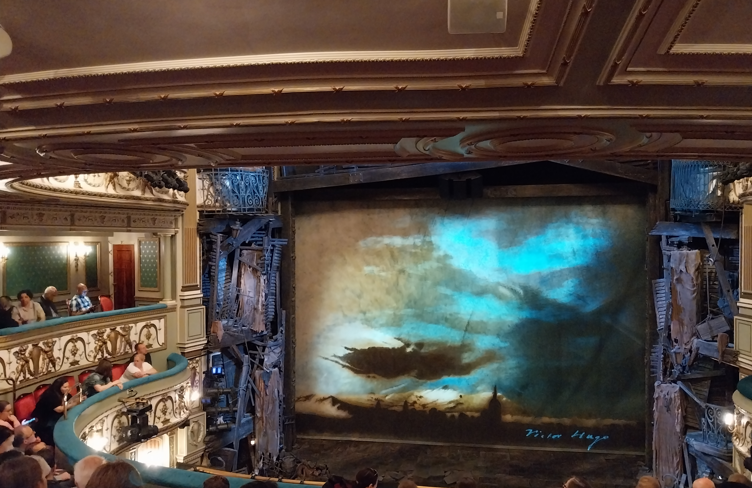
Theatre. We started the year with two musicals in Madrid: School of Rock (thanks to a wonderful invitation from my sister Beatriz!) and Fabiolo connection (which was hilarious). Luca and the kids then attended Aladdin by the Secret Pantomime Society in Pibrac. At the end of the school year we also attended the great show put up by the kids of the school with Shrek. I took the opportunity of a trip to London to attend Les Misérables (a great recommendation from by brother Jaime, and something I had been wanting to do since I read the book years ago).
Les Misérables in London
Cinema. After years of nearly not having gone to the cinema (small kids!) this year we have started to go more often, with or without the kids (5 or 6 times from memory?). My favorite movie this year was The Count of Monte-Cristo.
Museums. This year again we took benefit of every trip to visit as many museums and castles as we could, among them: Fondation (Victor) Vasarely (Aix-en-Provence), Palais des Papes and Pont d’Avignon, Kolmanskop ghost town (Namibia), Finish Aviation museum (Helsinki), Tower Bridge, British Museum, Tate Modern, Harry Potter Warner Bros studio London, Westminster Abbey, Casa natal Pablo Picasso, Museo Picasso, Roman theatre in Málaga, Alcazaba Palace and Castillo de Gibralfaro in Málaga, Centre Pompidou Málaga, Waterloo battlefield museum 1815, Kröller-Müller museum (NL), Escher in the Palace (The Hague).
Blogging. This is the 15th year since I started the blog in 2010. This year I wrote just 7 blog posts, in line with the past years since 2020. The blog received just over 20,700 visits, a bit more than in 2023 (in line with the past few years) and over 512,000 views since 2010.
Work. No changes in the scope of the work this year (A330neo product marketing since January 2023) but we have had quite a few changes higher up in the organization and more closely we bid our farewell to Anna and welcomed Andoni.
Since 2023 the markets have been very active. If in 2023 we at Airbus broke a new record of aircraft orders, this 2024 has also been very active and positive, with many sales and campaigns.
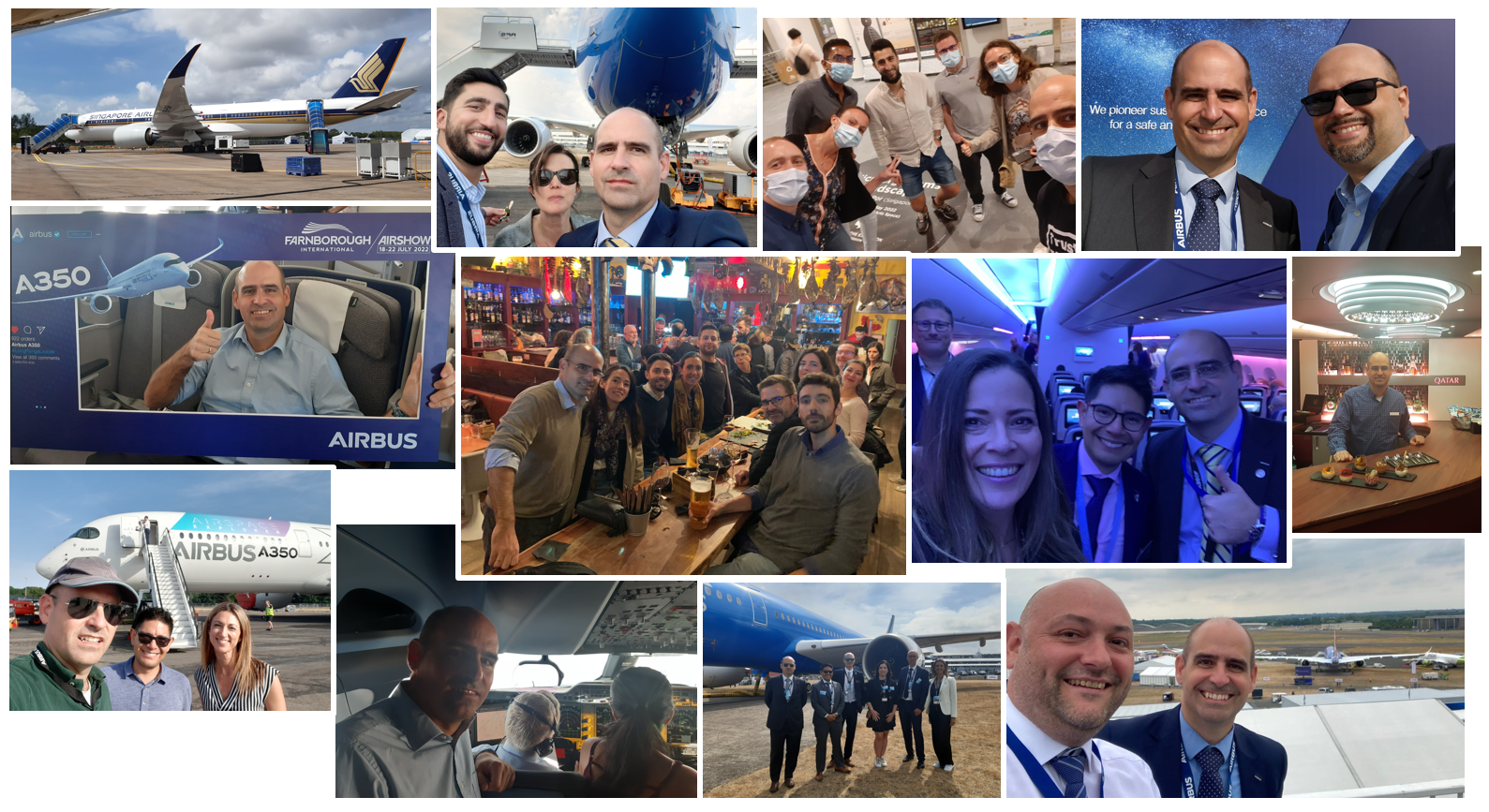
This year I had the opportunity to attend the Farnborough airshow, where I could showcase a Virgin Atlantic A330neo together with colleagues from Airbus and Rolls-Royce and the airline crews, at times showing the aircraft non-stop for hours to many different and varied groups of customers or institutional representatives.
Working in aviation means fun!
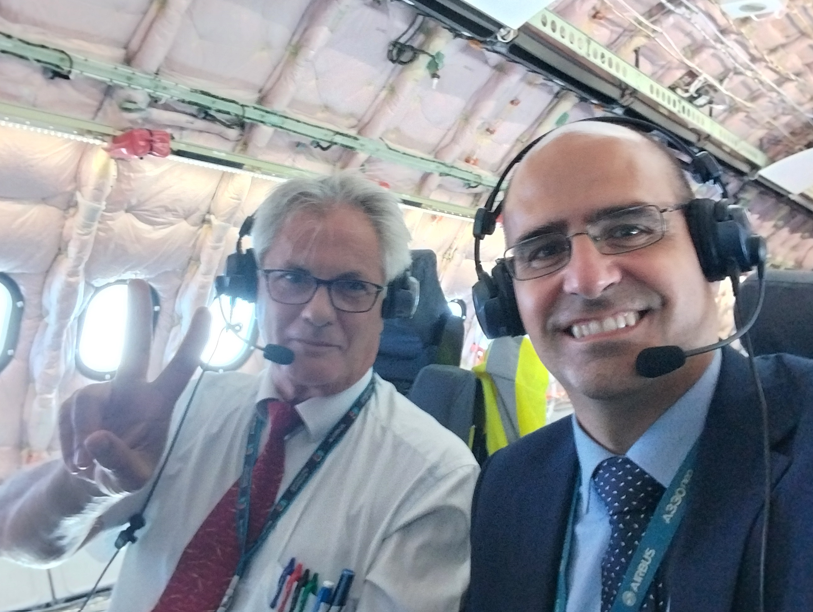
This year, on July 3rd I flew for the first time onboard an A330neo, with our flight test aircraft MSN 1795.
My first flight onboard the A330neo with Jose
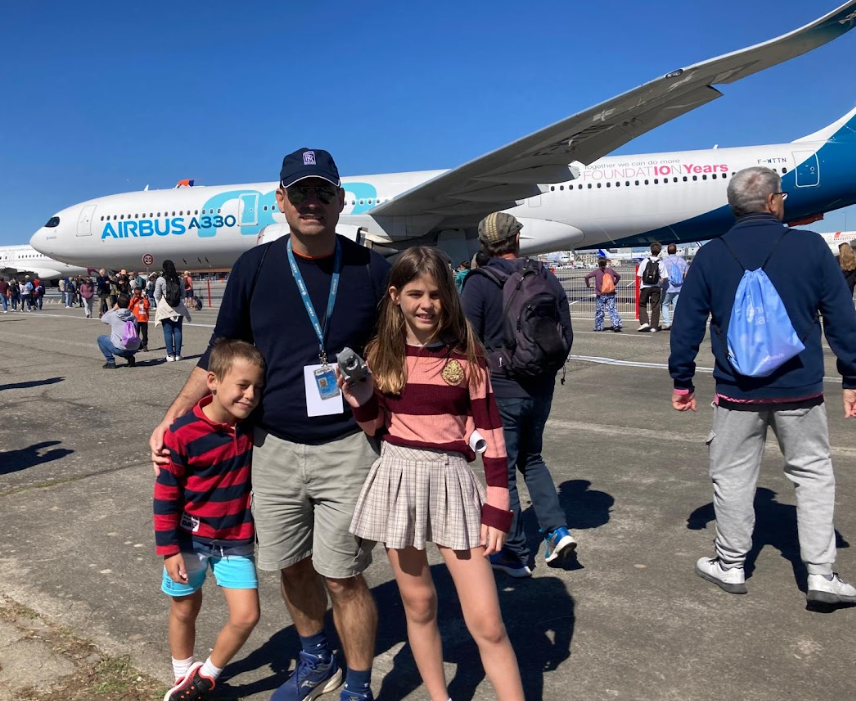
In September came another highlight of the year with the organization of the Airbus Family Day, when we spent a whole day touring Airbus facilities in Toulouse with the kids.
2024 Family Day at Airbus in Toulouse
Not everything was positive in 2024: the father in law of one of my best friends passed away as did the father of my boss. The Russian invasion of Ukraine continues to create havoc in many families, in autumn we received a short visit from Lena and her family. Hopefully in 2025 that war comes to an end.
On the positive side, some family and friends had new babies and got married in this 2024!
Now it’s time to rest, celebrate with the family and hope for the best in 2025. For the moment we have just a few days in Madrid to enjoy with family and friends and a planned skiing week in Vars; hopefully that will be just the beginning of another memorable year.
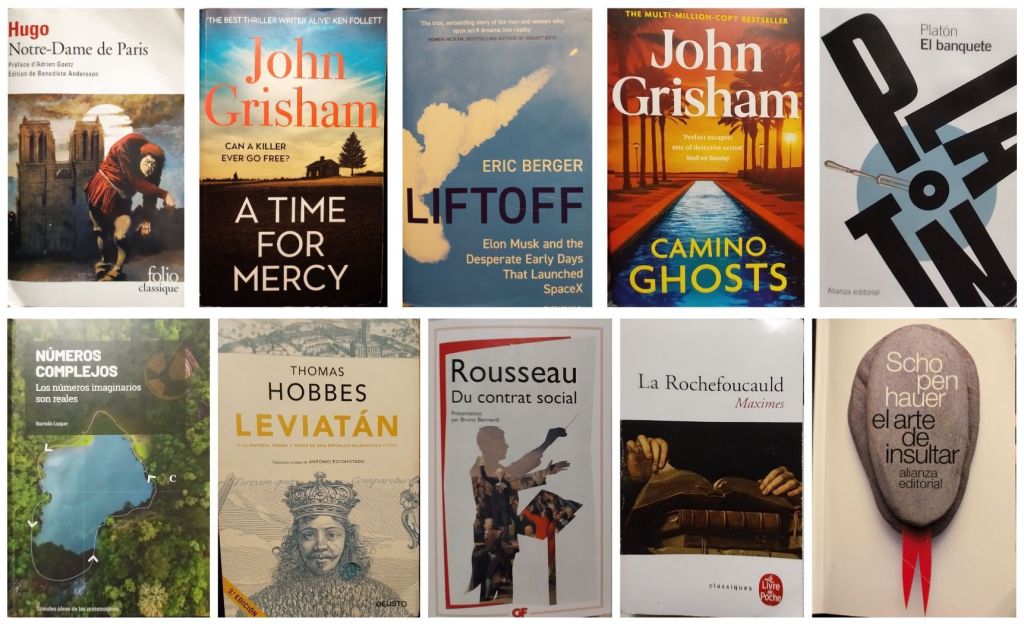
In this post I wanted to share the list of books I read along the year (1) with a small comment for each one. I have also included a small rating from one to three “+” depending on how much I do recommend its reading.
“Notre-Dame de Paris” (The Hunchback of Notre-Dame) by Victor Hugo (++): this is the second book of the author I have read after Les Misérables. The key theme and word of the book is the fatality, Quasimodo’s fate in his attraction for the street artist Esmeralda. The book is set in the Paris of the XV century with very detailed descriptions and maps of its streets, buildings, atmosphere and especially of the cathedral (which I guess can be delicious for the history of art lover, though sometimes it is quite dense). The plot narrates the interconnected lives of Quasimodo, his caretaker the priest Frollo, Esmeralda, Gringoire and the captain Phœbus de Châteaupers, the love some have for others and its impossibility. The plot also denounces the injustice suffered by those in the lower classes with some undue legal processes (a recurrent theme for Hugo). What I liked the most was the unbending commitment of Quasimodo in the last part of the book, to the very end of his life.
“A time for mercy” by John Grisham (++): this is another legal thriller around the courtroom in Clanton, with the lawyer Jake Brigance defending a minor convicted of capital murder (of his mother’s partner after months of abuses and threats). As in some of his books of 20+ years ago, he takes time to guide the reader through the jury selection process and later laying up the strategy for the ambushes that will happen during the trial.
“Liftoff” by Eric Berger (+++): I received the book as a gift from my friend Asier and quickly started reading it. The book tells the story of SpaceX in its early years. It takes time to dwell in the details of some of its first engineers, the technical challenges they faced and what they went through (administrative burdens, financing troubles, changes of location, first failures…) up to the first successful launch of the Falcon 1 in its 4th flight and some insights into SpaceX’s transition towards the Falcon 9 program. The book is energising, and exudes passion for engineering and the extreme dedication of those individuals. [Twitter thread]
“Camino ghosts” by John Grisham (+): this is a legal thriller linked to Grisham’s character Bruce Cable (a bookshop owner and old books collector in South Florida) with an old lady author descendant of African slaves as the centre of the plot (Lovely Jackson) and an enchanted little island off the coast where her ancestors lived. At the time of the novel a real estate development company wants to work on the island to build some housing and a resort. Lovely wants to preserve the island off the hands of the developers and claims the property of the island which triggers the legal action. This is one of the books I have liked the least by the author (after having read over 25 of his) mixing beliefs in black magic, enchantments on the island, misticsm and the praise of the oppressed political agenda of the past decade.
“El banquete” (Symposium) by Plato (+): this book is a short dialogue after a banquet in which several attendees to the meal are asked to give a speech praising love and Eros, the Greek god. These praises include the controversial relationship at that time between minor pupils and their adult instructors. One of the last passages of the book includes the praise by the young and ambitious Alcibiades of his instructor Socrates, as the latter didn’t attend to the approaches of the former as Socrates was focused on his search for truth.
“Leviatán” (Leviathan) by Thomas Hobbes (++): published in 1651 (during the English civil war), the book portrays the republic as a mortal God (Leviathan) needed for the defence of the individual. The book discusses different types of government (with monarchy as the preferred one for the author) and the relationship between the civil power and the Church (to which christians have an allegiance and commandments to follow), for which the author discusses in depth different passages of the Bible.
“Números complejos” by Bartolo Luque (++): this is a short book from a collection of Mathematics books I started reading some years ago. This particular one was written by an Applied Math teacher I had at the engineering school. It explains the appearance of complex numbers from Heron of Alexandria up to the the first labeling of imaginary by Descartes. The book explains some of their applications such as the Zhukovsky transformation (very much used in aerodynamics), the art of Escher and goes into the Riemann hypothesis. The book doesn’t spare mathematical expressions thus it is not recommended to the untrained reader. [Twitter thread]
“Du contrat social” by Jean-JacquesRousseau (+++): written in 1762, the book describes how the people in a community (the Sovereign) come to be organized (Social pact) in order to be defended and have their natural rights as individuals upheld. The book discusses different forms of government (monarchy, aristocracy and democracy), which of those forms suit best to different countries based on their size and wealth, who is the legislator, different types of laws. [Twitter thread]
“Maximes” by La Rochefoucauld (++): La Rochefoucauld was a duke in XVII century France (also known as Prince de Marcillac). In 1665 he published the first edition of the reflections known today as his “Maximes”, out if which some originated from his acquaintances at the time. Once drafted he shared the volume with friends and continued to edit them with additions and removals. The present edition includes all those and some of the exchanges and critiques of the volume made at the time. The topics of the reflections are virtues and vices of humans, with the particularity that the author takes a rather sceptical view on human nature pointing at the weaknesses, the pride being at the centre of many of our actions… and even portraying sloth as our main virtue (!) as it subdues our passions preventing us from taking action and falling prey of our vices more often. [Twitter thread]
“El Arte de insultar” by Schopenhauer (+): the book wasn’t really written as such by Schopenhauer but it is a compilation of rants he wrote throughout his different publications. In the book the insults and rants are classified per topic in alphabetical order. Which are the most recurrent subjects? Other philosophers (in particular Hegel), the French language, women (several times, placing women as a secondary sex), university professors / deans, journalists, writers… [Twitter thread]
This year I read a bit more than in 2023 but not as much as I would have liked, as I found myself not finding time sometimes during the year and other times I was stuck with a couple of books.
A resolution for 2025 will be to keep the habit and read a bit more, for which I will be following these two tips that I share every year:
– a blog post from Farnam Street blog “Just Twenty-Five Pages a Day“, which was published well after I had adopted such an approach to reading but captures it very well, – the Wikipedia article about the Pomodoro Technique, which enables you to efficiently use the last hours of the day.
Time to look back and reflect on how the year which is about to end developed. Brief recap of my 2022. (*)
The personal memory from this 2022 was having my father back at home after nearly two months in hospitals, including a couple of days at the emergency room. He suffered a heat stroke at the end of June and only came back from it mid August. Those were testing times for him but also for the family, especially for my mother and brother who lifted the lion’s share of the caring for him during those months.
Family. Andrea is now 9 years old and David, 6. Andrea has been learning piano for most of the year, she enjoyed very much climbing, reading, singing in the school choir, drawing anddoing handcraft. She also started taking Spanish lessons once a week since the fall, on top of the Dutch lessons they both take every second week.
David is now nearly fluent in English and they both talk to each other in that language. He is improving with his reading and writing and very eager with maths. He started to play video games, is very fond of football and wants to help with anything, especially if it involves the use of tools (that probably comes from his maternal grand father).
Sports
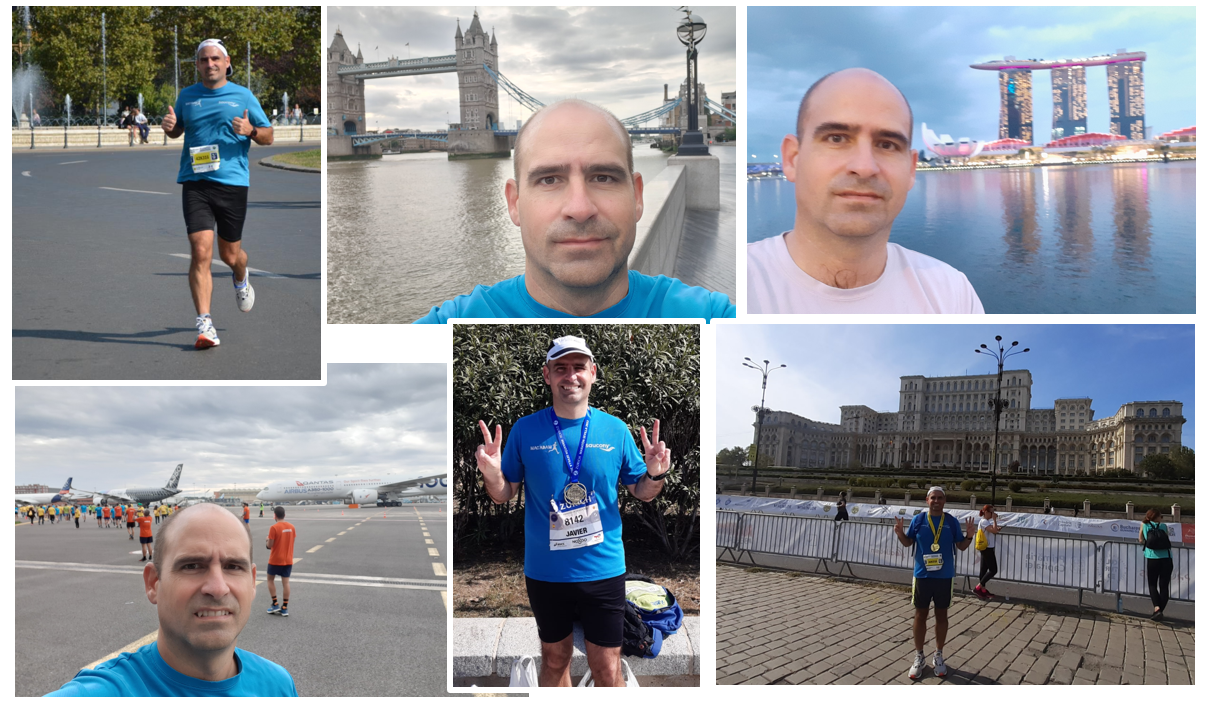
Back to marathoning! After not having taken part in any marathon in 2020 and 2021 (breaking a 9-year streak), in 2022 I completed 2 marathons: Sevilla and Bucharest. Those were great and emotional experiences. With them I have now completed 23 marathons.
This year, together with some work colleagues we participated in a month-long sports (running and biking) challenge fighting against hunger in the spring and in the fall we ran the 15km-long Airbus charity run.
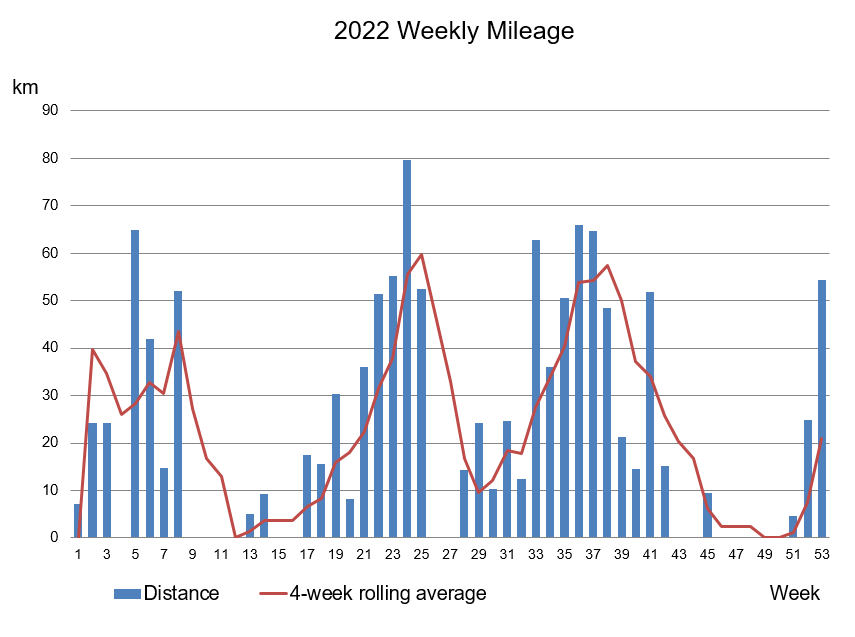
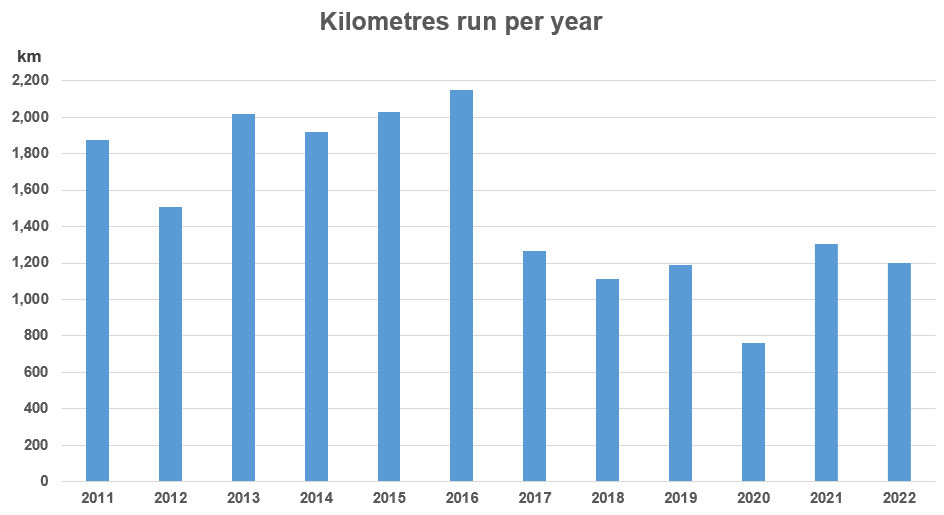
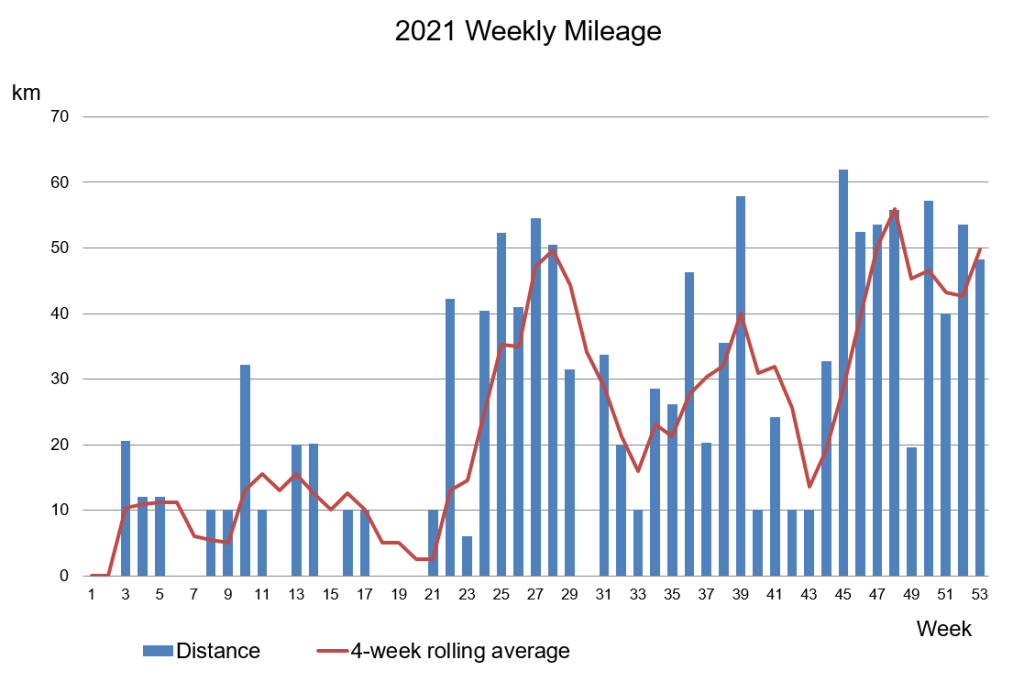
I ran 1,200km in 2022, around 100km less than in 2021. You can see below that I alternated periods of heavy training with some weeks of not running, due to illness, injuries, travelling or resting after the races.
Following a mantra I try keep to letter, “the running shoes, always in the suitcase”, the year 2022 caught me running in: Galapagar, Singapore, Seville, La Châtre-Langlin, Fontainebleau, Wijchen, Pontoise-lès-Noyon, Isla, Derby, Hamburg, London, Torrelodones, Almuñécar, Hyères and Bucharest, plus the tens of times I trained in my village, Blagnac and Toulouse.
With those 1,200 kilometres run in 2022, this is the sixth year in a row that I struggle to add more mileage, as I used to do between 2011-2016… One would say whether it is due to the arrival of the second child (spring 2016), the moving of houses (summer 2017) or just getting older (!), but something has made it more difficult. Hopefully in 2023 I can break that trend.
Other sports:
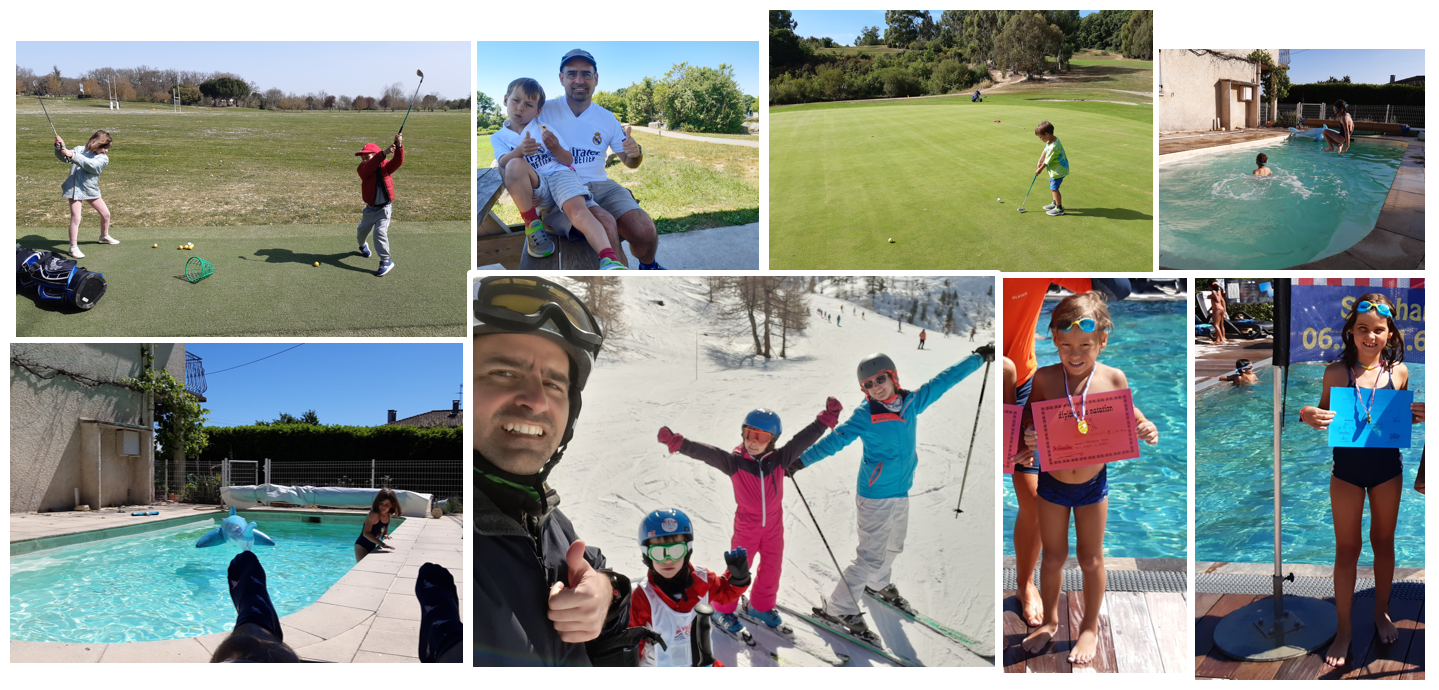
Skiing. After the cancellation of our plan in 2021, in 2022 we could go back with the family for a week to our favourite resort at Vars, in the Southern Alps. If in 2020 it was the first time I descended some tracks with Andrea, in this 2022 it was the first time that the four of us descended some tracks altogether. That was a great experience. This year Andrea got her Flocon medal and David his Ourson one (levels from the French ESF).
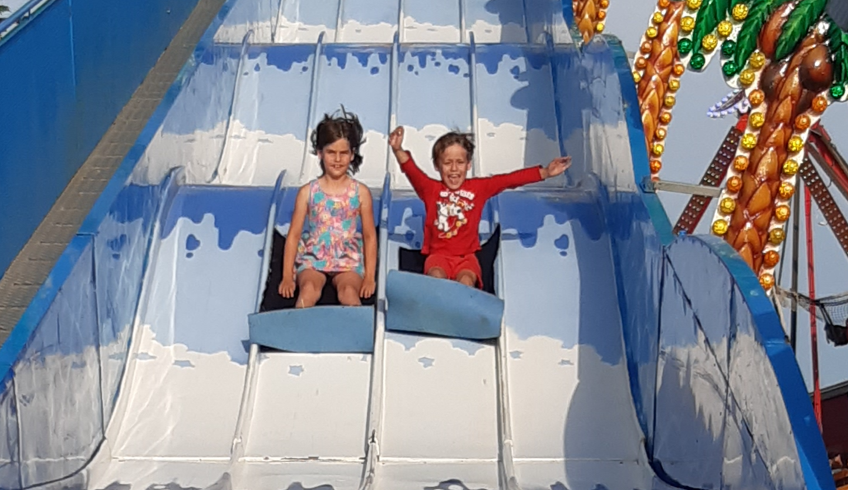
Swimming. On top of enjoying the pool at home, this year we went to the beach at three different locations: Isla (North of Spain), Almuñécar (South of Spain) and the Presque-ile des Giens (France). The kids loved it. During the holidays, they also took some swimming lessons to improve their style.
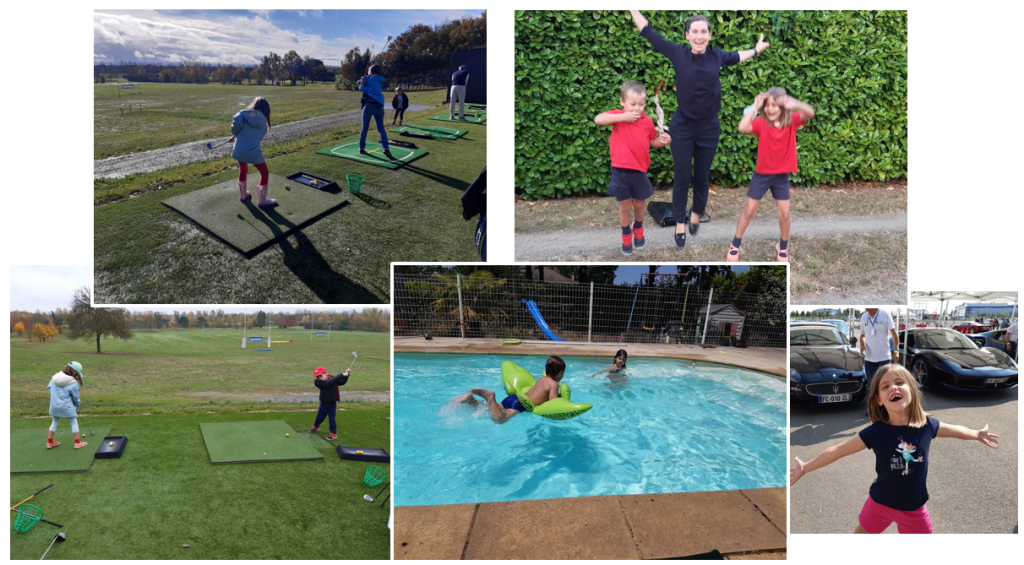
Golf. The whole family started taking golf lessons last year and for half of the year 2022 we continued doing so, though after the summer the kids wanted to quit.
Climbing. Both Andrea and David are very fond of climbing, so now, at almost every school holidays break they follow some climbing stage.
Real Madrid. Even if David and I did not have to play for it, we did enjoy watching a few football matches together supporting our favourite team all the way to winning the 14th Champions’ League, another memorable hapenning of this 2022.
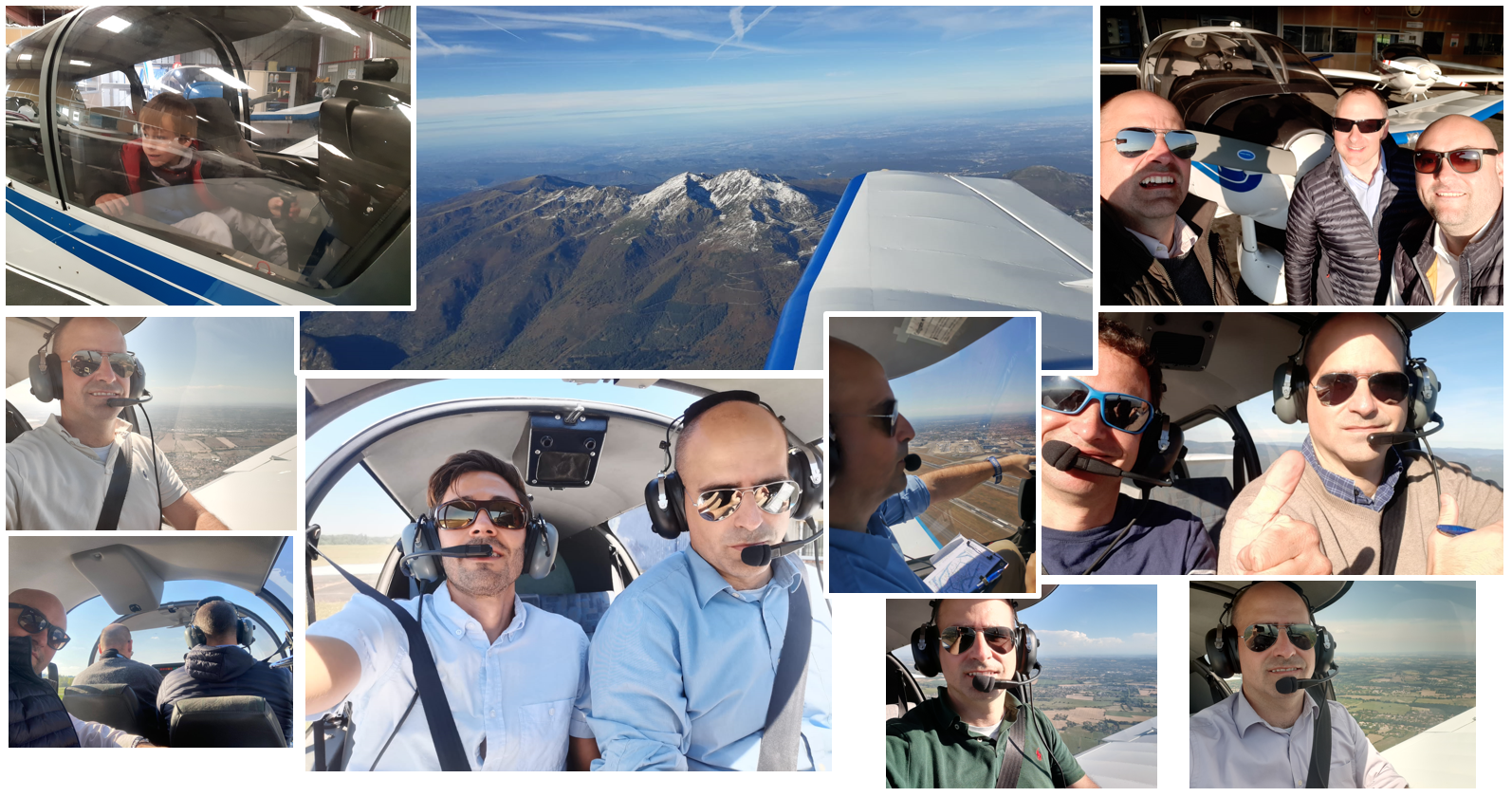
Flying. Unfortunately, this year I haven’t flown much, just 7 flights and 13 landings (the least in 12 years of flying). This takes the total to just above 192 flying hours and 300 landings since I started taking lessons back in 2011.
Together with our Aviation Society we were planning some excursions for the summer time but for different reasons a couple of them were cancelled and I could not join another. Therefore all the flying this year has been around our South West region.
On the positive side:
I renewed the FCL055 qualification that allows me to speak in English to the ATC when flying abroad, this will permit me to attempt long excursions next year again.
This year I flew for the first time with a few colleagues: Iain, Scott, Emilio and Marcellin. I am sure that in 2023 I will have the chance to fly with more colleagues.
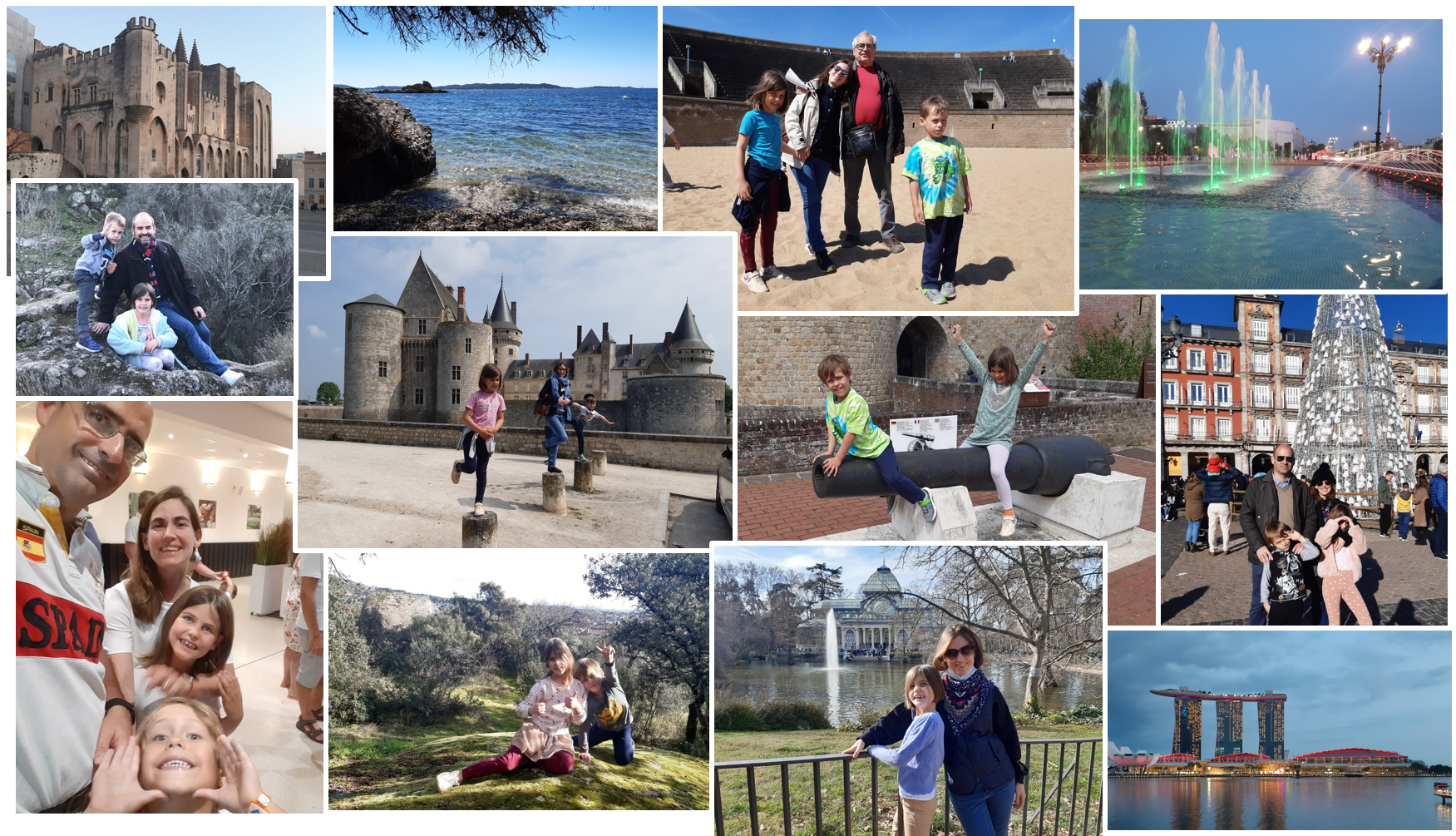
Travelling. After many restrictions during the pandemic, especially in 2020, in 2021 we started to travel more and in 2022 we had the chance to visit some new and old places: Singapore (first time for me), Spain (Seville, Santoña, Isla, Madrid (a few times), El Escorial, Bailén, Almuñécar, Las Navas de Tolosa, Tordesillas, San Sebastian), France (Gap, Vars, Avignon, Sully-sur-Loire, Fontainebleau, Péronne, Château de Blérancourt, Meung-sur-Loire, Nimes, Presque-ile des Giens (there we had great week at the beach in the French Riviera)), Germany (Xanten, Hamburg (first time for me, and where we were very warmly hosted by Burkhard!), Munich), the Netherlands (Wijchen), England (Derby, London (it was quite some time since the last time I was in London), Farnborough), Romania (Bucharest) and Pakistan.
In some of those trips we had the opportunity to meet some friends from the university and the high school that we had not seen in a few years. That opportunity to continue reconnecting felt good.
Work. The year 2022 marketing our Airbus widebody aircraft has meant lots of fun and a great learning experience. The everyday work is already quite interesting and exchanging with the team I learnt new things everyday.
This year, with the picking up of the aviation activity and the opening up of many countries, I had the opportunity to meet many of our colleagues working abroad, to give several presentations to customers about our products (remote or onsite), to welcome a few of them and show our A350 final assembly line, host in Toulouse and visit our colleagues from Rolls-Royce in Derby, fly with the press on one of our A350 flight test aircraft during the Airbus Summit, and especially take part in the air shows of Singapore and Farnborough, where I could showcase different A350s, from Singapore Airlines and ITA Airways, respectively. Those air shows have been real highlights of the year, at times showing the aircraft non-stop for hours to many different and varied groups of customers or institutional representatives.
These activities gave me the opportunity to fly for the first time on an A350 (!).
At the beginning of the year, one of our colleagues, Alex, switched departments and we reshuffled the activities within the team and that made it much more interesting, including the working hand in hand in particular with Raphael and Cedric.
At the end of the year, another of our colleagues, Florian, announced his departure and this offered another opportunity to grow. Following a recruitment process, in which a few colleagues participated, I was selected and from January 2023 I will change again the scope of the activity focusing now on the A330neo (back to it after having spent 4 years (2015-2019) working in its development!), working hand in hand with Anna and Raphael.
Reading. I started 2022 reading at a good pace until summer, then I got stuck with the second volume of Le Vicomte de Bragelonne and a series of trips interrupted my pace, and it took me months to recover it. In the end I completed just 13 books, the least since 2015 and read just above 4,800 pages, also the least in the last 6 years. For the detailed list of books, see the post I wrote about my 2022 reading list with a brief description of each book.
Other cultural activities:
Bullfighting. This year again together with Luismi, his family and my family we went to Nimes for a weekend to enjoy its Feria, and in particular to attend the corrida de toros with Roca Rey, currently the most successful bullfighter. The experience and his performance were simply splendid. Roca Rey performed together with José María Manzanares and Alejandro Marcos, and with bulls provided by García Jiménez. He was awarded three ears, hence, he was borne triumphantly aloft through the main gate, “Puerta de los Cónsules” at Nimes Roman amphitheater. The atmosphere in the city those days was ecstatic.
Museums. This year again we took benefit of every road trip to visit as many museums and castles as we could, among them: the Naval and Aviation museums in Madrid, the museum of the battle at Las Navas de Tolosa, the Great War musem at Péronne (finally! I had tried to visit it before but is always closed during Christmas), Château de Meung-sur-Loire, Château de Blérancourt (which includes the Franco-American museum), Château de Sully-sur-Loire, the visit of the roofs at Seville Cathedral and the Roman settlement at Colonia Ulpia Traiana (Germany).
Shows. In the past two years with the pandemic we had not gone to any show; in this 2022 I loved going to the cinema again, with some work colleagues to watch Top Gun Maverick (superb!) and the musical Malinche, about the conquest of Tenochtitlan, produced by the artist Nacho Cano, which was another great experience.
Blogging: This is the 13th year since I started the blog, but I didn’t manage to write much, only 5 blog posts in 2022. The blog received just above 21,200 visits in 2022 (the least since 2012) and over 473,000 since I started it in 2010.
Not everything was positive in 2022: a former work colleague passed away, so did the parents of other friends and colleagues, plus the Russian invasion of Ukraine which created havoc in many families, including the many refugees host in the region. Hopefully in 2023 that war comes to an end.
On the positive side, some colleagues and friends had new babies and got married in this 2022!
Now it’s time to rest, celebrate with the family and hope for the best in 2023. This year we will participate again in the San Silvestre Vallecana in Madrid running along tens of thousands of other runners in the evening of this December 31st as a farewell to the year. For the moment we have just a couple of planned trips for 2023, to the Netherlands and another skiing week in Vars, but hopefully many more activities will make it memorable as well.
In this post I wanted to share the list of books I read along the year (1) with a small comment for each one and links to some Twitter threads where I shared some passages that caught my attention while reading the books. I have also included a small rating from one to three “+” depending on how much I do recommend its reading.
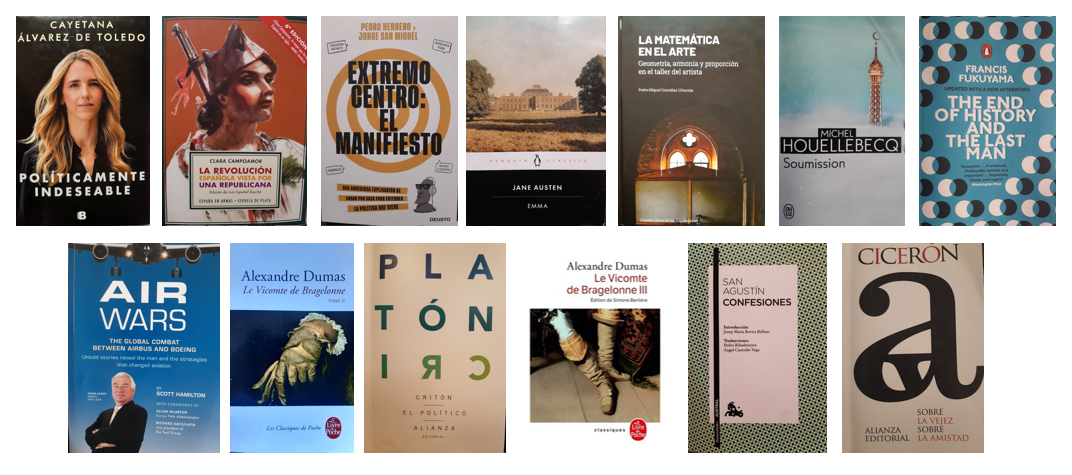
“Políticamente indeseable” (by Cayetana Álvarez de Toledo) (+++): The book is partly an autobiography and partly an essay where the author (a politician of the Spanish Popular Party) recollects memories from her childhood, to her settling in Spain around 25 years ago, her career as a journalist and to the current status of Spanish politics (to the end of 2021). The book is a call against nationalism, collectivism, tactics, and in favour of reason, freedom and individual responsibility. [Twitter thread].
“La revolución española vista por una republicana” (by Clara Campoamor) (+++): The author is described in the Wikipedia as follows: was a Spanish politician, lawyer and writer, considered by some the mother of the Spanish feminist movement. In this book she describes her memories and provides an analysis of the months prior to the onset of the Spanish civil war (1936-39) and its first months, with emphasis on the government rearguard that she lived through. The irrationality on both sides that she describes is devastating, to the point that she fled Spain fearing for her life, while she was a Republican, was in Madrid (under the Republican side until the end of the war) and she still felt in danger from the Republican side. [Twitter thread].
“Extremo centro: el manifiesto” (by Pedro Herrero and Jorge San Miguel) (+++): I started following the authors (who formerly worked for the Spanish political party Ciudadanos) in social media and in a podcast they started years ago. In this book they condensed many of the ideas they have come up along these past years. They offer many interesting analyses and various proposals around the caring for others, in favour of the creation of culture, creating ties with the community… Something special about the book is the fresh and provocative language they use together with a kind of “cards” that they have used to represent some stereotypes of characters of the Spanish public life. [Twitter thread].
“Emma” (by Jane Austen) (+): I wanted to read Emma as this is the book from Austen included in the GreatBooks curriculum for the bachelor in arts of Saint John’s College (see section at the bottom of the post). However, chronologically Emma came after Sense and Sensibility and Pride and Prejudice, so I arrived to Emma after having read the other two. The plot is around Emma’s willingness to play matchmaking with her acquaintances (even if her skills on that front are unimpressive) and her own negative views on marriage. Once again, as with the previous two Austen books, I found the narrative very slow, quite dense and too detailed. On the positive side: the plot and Emma’s situation are turned upside down at the very end of the book. [Twitter thread].
“La matemática en el arte” (by Pedro Miguel González Urbaneja) (+++): This is a book from a collection of 40 short books on mathematics that my mother gifted me with in 2019. My idea is to read a few of those books per year. This one offers a review of the influence of mathematics and the Greeks on art since the Renaissance. Some of the artists that are looked at in the book are: Della Francesca, Pacioli, Alberti, Dürer, Leonardo, Raphael, Gaudí… [Twitter thread].
“Soumission” (Submission) (by Michel Houellebecq) (++): I remember that when the book was published back in 2015 it created some controversy in France. I only got interested in the book more recently after having heard some positive reviews of it. The book tells the story of a university professor during the fictional transformation of a France governed by the Muslim Brotherhood, where the public university becomes Islamic, hence the profressor first resigns from his position and then after wandering around France for some time he yields in to the times, submits himself, prepares to convert to Islam and comes back to the university. When reading it I did not find it so provocative as to create the noise it did in 2015. [Twitter thread].
“The End of History and the last man” (by Francis Fukuyama) (+++): First published in 1992, after the end of the Cold War and fall of the Soviet Union, the book’s case is that after old regimes and the failure of fascist and communist totalitarianisms, liberal democracy and capitalism stand out as the remaining system at the end of History. [Twitter thread].
“Air Wars. The global combat between Airbus and Boeing” (by Scott Hamilton) (+++): The author is the editor of Leeham News and Analysis, a reference blog on aerospace industry. This book starts out as a biography of John Leahy (former chief operating officer for Customers at Airbus – retired in 2017) and frames it on the background of Airbus and Boeing competition during the last ~40 years until 2021. It is a very good read for anyone who has been working in the industry in the past years as it will trigger many memories. [Twitter thread].
“Le Vicomte de Bragelonne“, tome II (by Alexandre Dumas) (++): This book is the second tome of the sequel to Twenty Years After and continues the Dumas’ story on the musketeers (see below). This is the book that I liked the least of the series. There is very little action with the musketeers and to my taste far too many amorous intrigues at the court of Louis XIV (I found it slow, almost as Jane Austen’s books). However, it serves the purpose of introducing the characters and jealousies that will be key in the development of the last book of the series.
“Critón” (Crito) and “El Político” (Statesman) (by Plato) (++): These are two dialogues that show (1) the ethics of Socrates after being tried (the trial being described in a different dialogue, Apology) where he abides by the outcome of the trial even if unjust to the point that he resists Crito’s offer to flee and explains that he has to live up to his principles to the end; and (2) a criticism of politicians and the differentiation of what a statesman should be in contrast to sophists. Plato offers how the city should be governed and the preferences of some systems (monarchy, oligarchy, democracy) over others depending on whether the laws are respected or not, although he goes into less detail than in Republic. [Twitter thread].
“Le Vicomte de Bragelonne“, tome III (by Alexandre Dumas) (+++): This was the last of the five books that make up the story of the three musketeers, after The Three Musketeers, Twenty Years After and the first two volumes of Le Vicomte de Bragelonne. In all they make up for over 4,200 pages of reading and with no doubt it is among my favourite books or series of books. In this final book Aramis tries to strike a coup that could have changed the history of France with the man in the iron mask, the twin brother of Louis XIV, Philippe, who had been concealed and imprisoned from birth by his father, Louis XIII, and his mother, Anne of Austria. However, Fouquet (finances superintendent) rejects taking part in that plot even if he would have benefitted from it. That part of the book is thrilling. The last ~300 pages of the book are dedicated to giving an ending to each of the main characters: Aramais, Porthos, Athos and his son Raoul and d’Artagnan; some parts of this last section can be quite moving as by now one is attached to these characters.
“Confesiones” (Confessions) (by Saint Augustine) (++): The first half of the book is a kind of biography of Saint Augustine until his conversion to cristianism and the death of his mother (Saint Monica); there he confesses the struggles he goes through, how with the help of Saint Ambrose and some friends he quits his previous lifestyle and gets baptized. From that point the confessions take the form of shared reflections on memory, time, evil or how to interpret the Creation in the Bible (book of Genesis). [Twitter thread].
“Sobre la vejez” (Cato the Elder on Old Age) and “Sobre la amistad” (Laelius on Friendship) (by Cicero): Cicero was a Roman politician, lawyer and philosopher who lived first century BC. In these books and through dialogues he uses the characters of Cato the Elder and Laelius to explain the goodness of (1) old age, where different complaints against old age are addressed one by one, such as the lack of activity, strength, health…; and (2) friendship, which is shown as making life more enjoyable, bringing the best in people, not to be used as an excuse for wrongdoings and the only thing around which there is a consensus on its utility. [Twitter thread].
I started 2022 reading at a good pace until summer, then I got stuck with the second volume of Le Vicomte de Bragelonne and a series of trips interrupted my pace, and it took me months to recover it, as always, thanks to the rigorous approach following these two tips:
a blog post from Farnam Street blog “Just Twenty-Five Pages a Day“, which was published well after I had adopted such an approach to reading but captures it very well,
the Wikipedia article about the Pomodoro Technique, which enables you to efficiently use the last hours of the day.
Even so, in this 2022 I managed to read just 13 books, the least since 2015 (when I adopted the approach described above). In terms of pages I read just over 4,800 pages, also the least in the last 6 years. Fun fact: even if I only read 3 books in French language, they accounted for over 42% of the pages I read.
Another question that I have got a couple of times is about the source of the list of some of the classics that I read. That one comes from yet another blog post from Farnam Street blog. That post mentioned theGreat Books curriculum for the bachelor in arts of Saint John’s College in Annapolis. You can get the list from the Wikipedia or directly from the college website. As I am not reading exclusively those books I try to advance at a pace of 5 to 8 books out of that curriculum per year, thus it will take me around 20 more years to finish the programme.
Time to look back and reflect on how the year which is about to end developed. Brief recap of my 2021. (*)
If I had to pick a couple of personal and positive memories from this 2021 they would be:
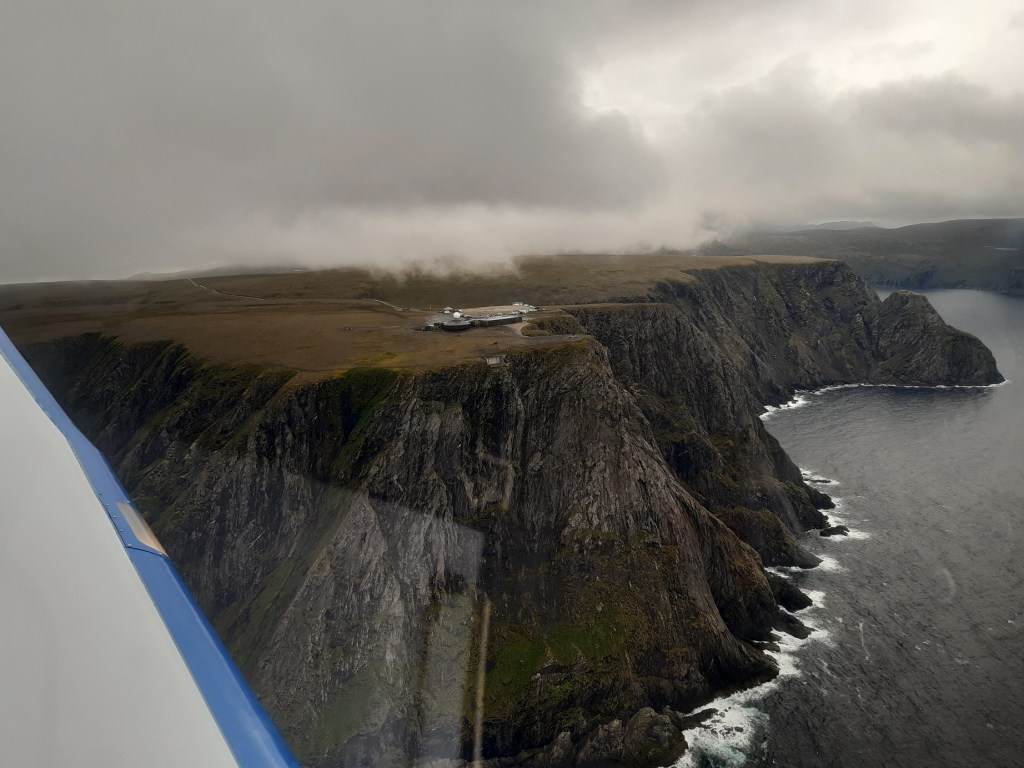
Flight excursion to Norway, when three general aviation planes went together from Toulouse to the North Cape in Norway. That was a great experience in which in we flew for over 46 hours in 7 flying days, with a maximum over 9 hours the last day. We completed 15 flights.
North Cape (Norway) from our plane
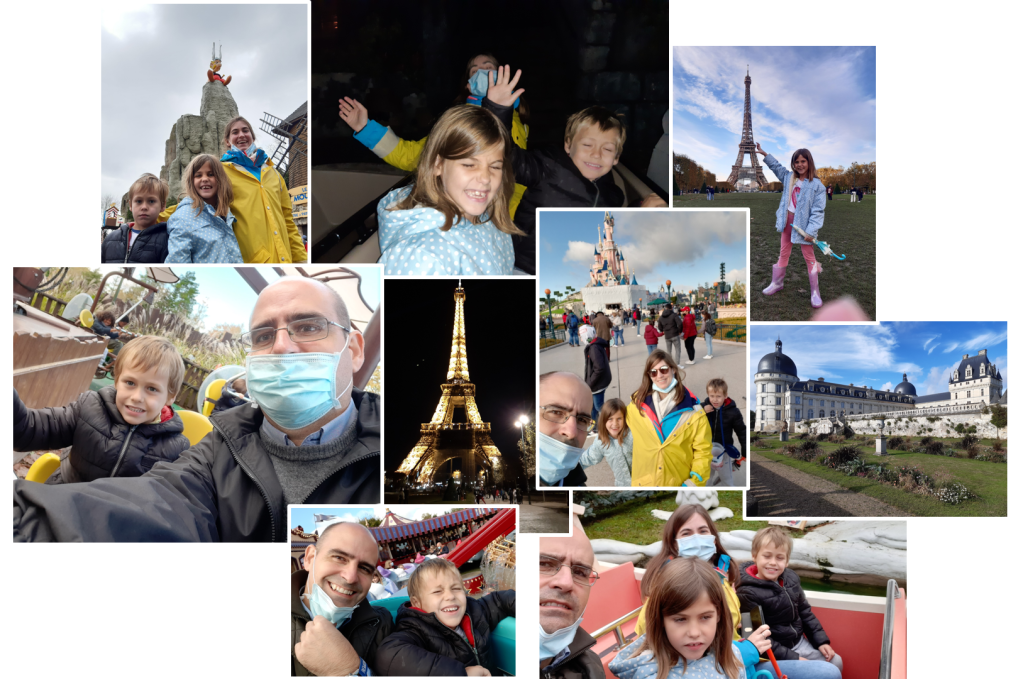
Family trip to Paris during the autumn school break, when we took the opportunity to visit with the kids the Eiffel tower, Disneyland park for a second time and the Parc Asterix for the first time. We had plenty of fun with the kids in those days.
Family: Andrea is now 8 years old and David, 5. Andrea has been learning piano for most of the year, she enjoyed very much climbing, reading, singing in the school choir or doing handcraft. David learned this year to ride his bike, he’s becoming confident with English language, and started to write, read and do some math. This year we couldn’t go skiing together to the Alps (as stations were mostly closed in France), so we just went skiing one day in the Pyrenees. On the other hand, since September we started taking golf lessons altogether, though what the kids enjoyed the most was the swimming season during the summer, even if this year the weather wasn’t the best for that purpose.
Reconnecting: in our experience 2021 has been a more relaxed year than 2020 was, even if not back to normal. We did not travel far but we made some trips and excursions, we met everyone of our closer family (we visited them and received visits at our place), started to reconnect with some cousins and several friends that we hadn’t seen in two or more years. It felt great.
Flying: Thanks to the aforementioned excursion to Norway this year I flew 30 flying hours, more than in any of the past 10 years. I also took part in another flight excursion to Biscarrosse flying for the first time with my colleague Thomas. During the excursion to Norway I flew for the first time with Jérémie and later with Andrea, the flight instructor with whom I renewed the license for two more years.
Running: even if I did not complete any single race in 2021 (even if I was registered in two) the year has been positive in this front. Following over a year of either not finding the motivation or not keeping the habit to run, since the end of May, the chatting about the sporting activities we had done the previous day(s) with a couple of work colleagues (Alex and Patrick) helped to build up the frequency of runs.
From then on, I exchanged with my brother on the idea of getting back into shape to start marathoning again in a not too distant future. With that I found myself with serious mileage cumulated from June to September (a bit less in end July and August due to different trips and visits). We then registered for the Sevilla marathon (taking place in February 2022) and started the 16-week training plan in November… in the end I have run over 1,300km in 2021, with less than 230km till the end of May and 920km in the second half of the year.
Travelling: After so many months of restrictions, in October 2021 I flew commercial for the first time in two years! I felt like a kid in a first flight. A month later, I flew again. Hopefully traveling becomes soon the norm again.
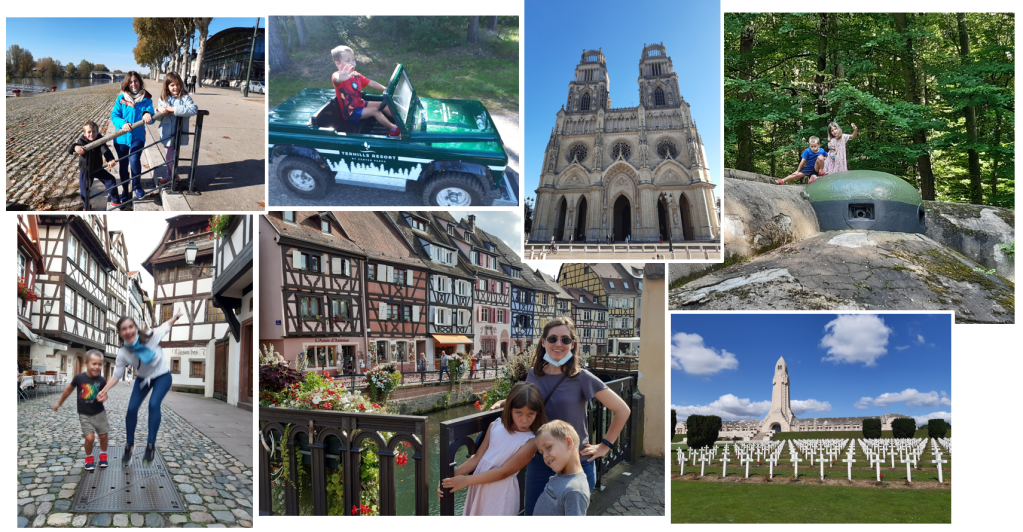
This year we visited some new and old places: Biscarrosse, Mazamet, Montpellier, Grignan, Lyon, Besançon, Colmar, Strasbourg, the Ligne Maginot at Schoenenbourg, Verdun, Hoge Kempen national park in Belgium (where we spent a few days with the family to celebrate the 50th anniversary of my in-laws), Maastricht (so many years ago since the last time!, where we met Luca’s friends for a wedding), Doncourt-lès-Conflans, Tønder (Denmark), Trondheim, Bodø and Alta (Norway), San Sebastián, Madrid (first beer in a terrace there in 2 years!), Chateauroux, Valençay, Paris (Disneyland again! and Parc Asterix), Orleans, Milano (18 years later!)…
Reading: I started 2021 reading at a good pace until summer holidays, then a couple of trips interrupted my rhythm and it took me months to recover it in the last two months. In the end I completed 20 books and read above 6,500 pages (about half of last year). For the detailed list of books, see the post I wrote about my 2021 reading list with a brief description of each book.
Blogging: This year in February was the 11th anniversary of the blog, but I didn’t manage to write much; only 8 blog posts in 2021. The blog received just above 22,000 visits in 2020 (the least since 2012) and over 450,000 since I started it in 2010.
Work: This year the commercial activity of the company started to pick up, so it became more interesting with more customer facing activities, including visiting them by both Luca and me, in our different roles (she switched jobs). And we even launched a new product, the A350F freighter aircraft.
Now it’s time to rest, celebrate with the family and hope for the best in 2022. This year again there will be no running the San Silvestre Vallecana in Madrid with tens of thousands of other runners in the evening of this December 31st (even if we subscribed to it), but a lonely ~10km run in our village. We have a couple of planned trips for 2022: to Sevilla for the marathon and another skiing week in Vars (hopefully this year is not cancelled!), let’s cross fingers so that we can accomplish those two plans and the many more that should follow.
Other than that, my wishes for 2022 are simple and basic: that the critically of the pandemic fades away in a short time and that the general public and economy can get to their normal lives.
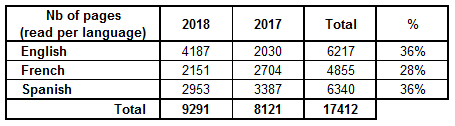
Three years ago, I wrote a couple of blog posts where I reflected on the mix of languages I used when reading books between English, French and Spanish and about the format of the books I read, whether electronic or paper books. In the past two years I have updated the figures in dedicated blog articles and this post, written after having shared last week my 2018 reading list, is just a follow up update of those two tables and a third one:
Reading language
From 2010 to mid-2015 I read mostly in English. From mid-2015 I have started to read more in Spanish than in the past (mainly classics) and in French. In terms of books the mix for 2018 was English 48%, French 26% and Spanish 26%. However, last year I thought that the mix would be better measured in terms of pages read, as the books can vary quite a bit in their length. Thus, in terms of pages: English 45%, French 23% and Spanish 32%. Since then I also compile that bit of information in a different table.
Reading format
In 2018 I did not read any book in electronic format, all were in paper format. As I estimated here the amortization of the e-reader in about 20 e-books read with it, I am still just above half way through achieving that. I already anticipated it in the blog post from last year:
Seeing, the stock of paper books that I have in the shelves, I doubt that I will read many e-books in the near term.
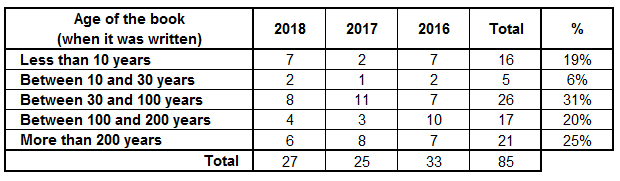
Age of the books
Since 2016, I decided to focus more on reading classics and books that have aged well, i.e., that their impact on society has not faded after having made it to the best selling positions of the literature pages for the current the year. Thus, I try to limit the proportion of books that I read from the last 10 or 30 years. This can be tracked as well:
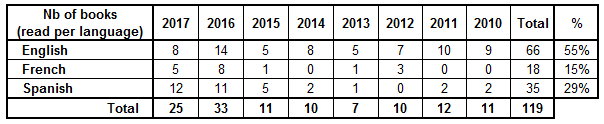
Two years ago, I wrote a couple of blog posts where I reflected on the mix of languages I used when reading books between English, French and Spanish and about the format of the books I read, whether electronic or paper books. Last year I made an update of those stats and this post, written after having shared last week my 2017 reading list, is just a follow up update of those two tables:
Reading language
From 2010 to 2015 I read mostly in English. From mid 2015 I have started to read more in Spanish than in the past (mainly classics) and in French. In terms of books the mix for 2017 would be English 32%, French 20% and Spanish 48%. However, this year I thought that the mix would be better measured in terms of pages read, as the books can vary quite a bit in their length. Thus, in terms of pages: English 25%, French 33% and Spanish 42%.
Reading format
In 2017 I mostly read books in paper format, with a single book in electronic format. As I estimated here the amortization of the e-reader in about 20 e-books read with it, I am still just above half way through achieving that. Seeing, the stock of paper books that I have in the shelves, I doubt that I will read many e-books in the near term.






 The Blog by Javier