Author Archives: Javier Irastorza

Torrelodones: iniciativas vecinales

El pasado 10 de junio se emitió el reportaje “Reiniciando España: La Política” en “Salvados”. Aparte de los mensajes que transmiten, me llamó la atención y gustó porque en él se hablaba de Torrelodones.

En primer lugar entrevistan a Manuel Milián Mestre, ex-diputado y uno de los fundadores del PP, que admite que por su rebeldía y posiciones morales por encima de los intereses del partido tuvo que dejarlo.

Hace una radiografía de la política en los grandes partidos demoledora. Deja una serie de frases escuchadas en un partido y otro que dan una buena imagen de lo que se prima en ellos: “el que se mueve no está en la foto”, “el que me desafía la paga”, “el que se vuelve una mosca cojonera acaba perdiendo la batalla”. Define la situación actual como “darwinismo político”, “en el partido triunfan los oportunistas en este momento, se imponen los mediocres”, “áurea mediocritas”, de la meritocracia a “el codazo y el amiguete”…

A continuación se entrevista a la alcaldesa, Elena Biurrun, de una asociación de vecinos que se hizo con la alcaldía. Este hecho ya mereció un artículo en el New York Times hace algo más de un año. Durante la entrevista se mencionan una serie de hechos que muestran la desvergüenza a la que llegan los políticos con el dinero público: comidas y desayunos protocolarios, coche blindado con chófer, clientelismo. Revisando la política de gastos en su primer año consiguieron un superávit de 5,4 M€. Menciona la alcaldesa que se redujo el sueldo en un 20% hasta 49.500€ brutos anuales, pero es que en el mismo pueblo en 2007 el alcalde en aquel momento en el primer pleno se subió el sueldo un 30% hasta 91.445€, solo por detrás del entonces alcalde de Barcelona, y muy por encima del de Madrid o la presidenta de la Comunidad de Madrid y también por encima del presidente del gobierno.

La alcaldesa anima a ciudadanos de otros municipios a emprender iniciativas similares, asociarse y defender lo público. En este sentido siempre me ha llamado la atención la poca predisposición que hay en España al asociacionismo, a participar en distintas iniciativas, a dedicar un tiempo voluntariamente para trabajar desinteresadamente en algo por el beneficio común. En el caso de Holanda, sin embargo, esto sí se hace y es muy valorado por la población y las empresas. Es casi una obligación social el pertenecer a alguna o varias asociaciones, es normal que los estudiantes dediquen casi un año en medio de sus estudios universitarios a volcarse trabajando para alguna asociación. No nos vendría mal tomar ejemplo.

Minifútbol

Alguna vez he escrito en este blog sobre el Mini. Voy a retomarlo en este post sobre Torrelodones y la participación ciudadana, especialmente estos días en que el Minifútbol ha celebrado su 40º cumpleaños.

La historia del Mini se puede leer con detalle en su página web, pero básicamente se puede resumir en que nació en 1971 cuando una serie de amigos de la infancia comenzaron a organizar una competición en la finca de uno de ellos para poder reunirse en las tardes de verano. Con algunos periodos de interrupción, el Mini continúa hoy organizando un serie de campeonatos de fútbol para todas las edades, ambos sexos, en verano y en invierno.

Hay algo que distingue al Mini de cualquier otra competición futbolística, y es su carácter social, que se traduce en su decálogo. En este post quiero destacar algunos de los puntos que marcan el Minifútbol:

  • Lo importante son los compañeros, los de tu equipo y el rival, por ello en cada competición cada jugador se inscribe individualmente y con un sorteo se determina la composición de cada equipo. Cada año jugarás con 7 u 8 personas distintas, permitiéndote conocer a más gente del pueblo y jugar contra antiguos compañeros.
  • Todo jugador debe participar un mínimo de tiempo en cada partido.
  • No hay lugar a comportamientos antideportivos ni duras entradas, para lo cual se han introducido una serie de modificaciones en el reglamento.
  • La asistencia a los partidos como signo de compromiso con el grupo.
  • El voluntariado de la organización.

Y para acabar este post, tras alabar estas 2 iniciativas vecinales de Torrelodones, os dejo un extracto de un chotis sobre Torrelodones, interpretado por los vecinos Camilo Sesto y Rocío Dúrcal dentro de otra iniciativa que surgió hace unos 14 años cuando se editó un CD con canciones sobre el pueblo.
Leave a comment

Filed under Miscellanea, Sports

Playing Golf in Scotland: St. Andrews & Durness

According to the Wikipedia “The Old Course at St. Andrews is considered by many to be the “home of golf” because the sport was first played on the Links at St. Andrews in the early 1400s”. Thus, we could not skip a visit to St. Andrews when we visited Scotland last week.

Even though none of us plays golf, the place breathes a special air of tradition that anyone can feel. We loved the visit. The views of the course are wonderful. Its placement close to the beach and the village make it all the more enjoyable. The possibility of crossing through was also inviting (even if hazardous).

Close the St. Andrews Links there is a small field where putts and balls can be rented for just one pound in order to play 18 holes in a green and make small tournament with friends. So we did. We had lots of fun “playing golf”, though I am afraid I came in last, with 76 strokes. See in the tweet below the complete results of our competition:

As a complement to visiting the Old Course, there is the British Golf Museum just 50 metres from it. The museum is wonderful. I will have to come back to it one day, as we had to visit it in a rush (it closes at 17:00 – free of charge).

Durness

A couple of days later, completing our tour by the Northern coast of Scotland we arrived at Durness. Walking by the beach we discovered a golf course. My friend Maicol mentioned that it would be a good plan to play.

At the beginning we were doubtful as in Spain you need a licence to play in a golf course, but we gave it a try and went to ask. What a positive reply! “Visitors are always welcome at Durness Golf Club”, “you don’t need any licence to play here”, “you need to pay just 10 pounds to play”, “a set of clubs can be hired for just 5 pounds”… we had a plan! 2 hours of playing golf for just 30 pounds altogether.

Again, there, the views of the course at the seaside were wonderful. Especially the last hole, where you needed to avoid the ball falling down the cliffs into the Atlantic Ocean to reach the green. We highly recommend paying a visit to the club.

This slideshow requires JavaScript.

6 Comments

Filed under Sports, Travelling

Pájara no, pajarón (sudden collapse)

Yesterday I ran the “Trail du Confluent” (13km), a lovely countryside race in Pinsaguel which I had already run last year. I had one of the worst experiences ever while doing sport, if not the worst. I suffered what in Spanish we call pájara and in English would be collapse.

From the km 4-5, I started feeling weaker and at the end I was almost incapable of running. I had only had one such previous experience cycling about 13 years ago, when after biking for 60km we made a pause and my cousin Unai had to literally push me on my bike from his for over 10km back to home as I could not cycle anymore.

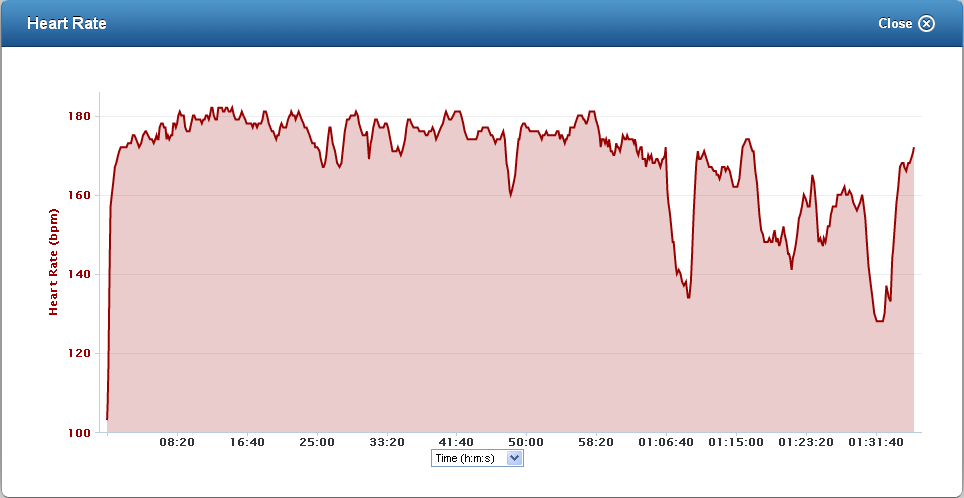
These collapses happen from time to time to runners or bikers, and to avoid them it is recommended to eat and drink well before and during the race. I ate and drunk but I guess it was not enough. Other possible causes could be:

Heart rate during the race.

In fact, during the race and feeling already weak and underperforming I noticed that I was not the only one in such low condition. Last year with 1h22′ I came in 103th in the end (among 237 finishers), this year the 103th needed 1h32′ (the winner also need 1h compared to 56′ last year). With my disastrous time, 1h36′, I came in 141th of 254 finishers.

Nevertheless, it is not worth it to worry much about it. This is sport: there are days for glory and days of wandering around like an underdog. Continue training, sleeping, drinking and eating well and the next race will be a different story.

1 Comment

Filed under Sports

Highland Games (Handicapping)

We all have heard the concept of handicap applied to golf. That is a way of levelling off the game by adjusting net score to each player skill.

Markinch Highland Games programme

During our last holidays in Scotland, we attended to the Markinch Highland Games. Apart from weight throw games, pipe demonstrations and traditional dancing contests, one thing especially caught our attention: the application of handicapping to athletics races.

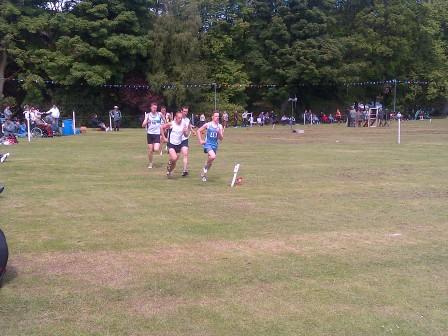
Runners of different ages (or simply speed) were competing together starting at different points to compensate for their different skill. Let me show you an example. Take a look at the roster of participants in a 800 metres race below.

The number at the left of the names is the bib number, while the number at the right side of each name indicates the handicap. Even though this was a nominally 800 m race, no runner completed 800 m. The fittest runners started 35m ahead of the 800 m starting line, while the least fit started 190 m ahead. That is, some ran 765 m while others completed 610 m.

800 m Open Handicap roster

This clearly makes the race more attractive to spectators, what I am not so sure is the opinion of the fastest in case he or she cannot recover the 155 m lead of the slowest during the race…

Highland Games race

1 Comment

Filed under Sports, Travelling

Flight destination: Corsica

I often use a version of Eleanor Rooselvet‘s famous quote “do one thing that scares you everyday“. It’s not that I try to do something that scares me, but something which either brings me out of the comfort zone or that I simply would tend to procrastinate.

Today’s scary thing is flying together with my friend Asier and his flight instructor, Jean-Louis, to Corsica. Prior to taking the decision of joining this “adventure” about 2 months ago, I had barely made 10 flights amounting to less than 8 flight hours… in the last week I was learning with my instructor, Thierry, the basics of flight navigation, the use of charts in flight, the use of VOR, etc., in order to profit the most from this experience. It definitely feels less scary now. And then, I’ll always have Jean-Louis by my side at the time of piloting the airplane. I’m happy to be stretching the comfort zone.

In the previous days I also learnt a lot with Asier on how to plan the route, noting headings, altitudes, radio frequencies, air spaces, aerodromes, etc.

Planning the flight to Corsica.

The head of the MBA I studied in Seville used to describe it as a “experiences accelerator”; in the context of flying this trip to Corsica (a group activity of the Airbus Aviation Society I belong to) really feels like such an experience accelerator.

If everything goes well, we’ll be in Propriano (LFKO) before 15:00. Then we could have one or two days of visiting the island, either by car… or by plane. Ajaccio, where Napoleon was born; Bonifacio; the dolmens close to Ajaccio… I’ll keep you updated when we’re back :-).

1 Comment

Filed under Aerospace & Defence, Travelling

Where do you come from?

WordPress introduced a feature showing the geographical origin of the visits to the blog back in February (find below a map offered by WordPress – the host service of this blog). After 3 months, I decided to take a look at those stats.

Readers’ origin map provided by WordPress.

In these three months the blog received slightly above 7,700 visits; over 2,000 came from the United States and above 1,300 came from Spain (my country of origin). The top ten countries of origin summed up 75% of the visits (USA, Spain, UK, France, Germany, Canada, NL, Australia, Ireland & India). Following the famous “80/20 rule” or a Pareto distribution, the top 20% of the countries of origin summed up 85% of the visits (out of 117 countries).

Pareto distribution of blog readers per country of origin.

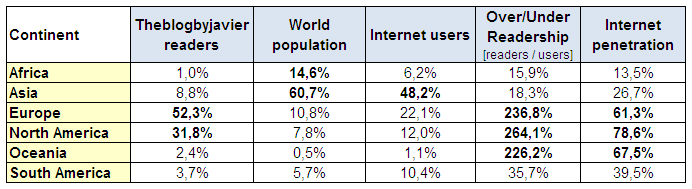
Finally, I had the curiosity to analyze the origin by world region. For this purpose, I compared the proportion of readers to the proportion of world population, internet users and internet penetration per region (internet users/population).

Blog readers, world population, internet users and internet penetration.

Europe, mainly due to Spain (my family and most of friends’ origin), is overrepresented (higher % of readers in relation to internet users). The other two regions overrepresented among readership are North America and Oceania, this must be due to the fact that most of the blog’s articles are written in English. Those three regions are also the ones where internet penetration is the highest.

China. In the last 3 months my blog only received 8 visits from China, that is 0.1% of the visits. China with over 1.3 billion inhabitants represents almost 20% of the world population; it counts with over 500 million internet users, over 22% of  the total; and the internet penetration is above 38%. China is clearly underrepresented among the countries of origin of the readers of the blog (0.5%). Shall I start writing more about China or in chinese language?

1 Comment

Filed under Twitter & Media

In search of paradise

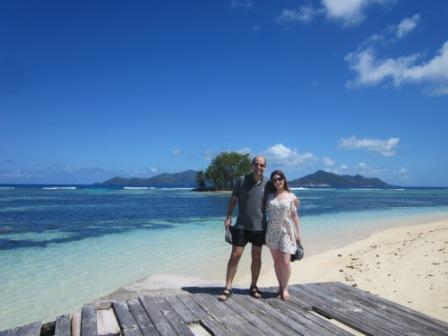
After visiting Seychelles with Luca (or part of them; 3 islands out of 155), I had two discussions with my sister and a friend about which islands would be more paradisiacal…

Seychelles, Maldives, French Polynesia, Galapagos, Hawaii… feedback is welcome in order to target more efficiently future holiday destinations (always bearing in mind that Torrelodones is in another league).

This slideshow requires JavaScript.

1 Comment

Filed under Travelling

Engaged

Some of you already know it, to the rest: Luca and I are engaged.

Finally engaged.

The wedding is foreseen sometime in the Spring 2013. News will follow.

8 Comments

Filed under Miscellanea

Aerogeek dentist

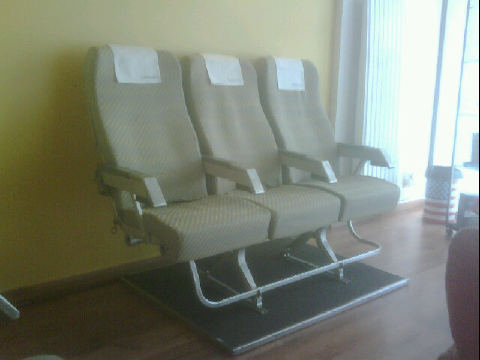
Some time ago I wrote about the impact of Airbus in the employment in the Toulouse area. Some weeks ago I went to a dentist in Blagnac, a village close to Toulouse (where Airbus is in fact based). There I could see how Airbus is impacting Toulouse area in other ways. I then tweeted the following with the picture below attached:

https://twitter.com/#!/javierirastorza/status/185795207676182530

Waiting room seats.

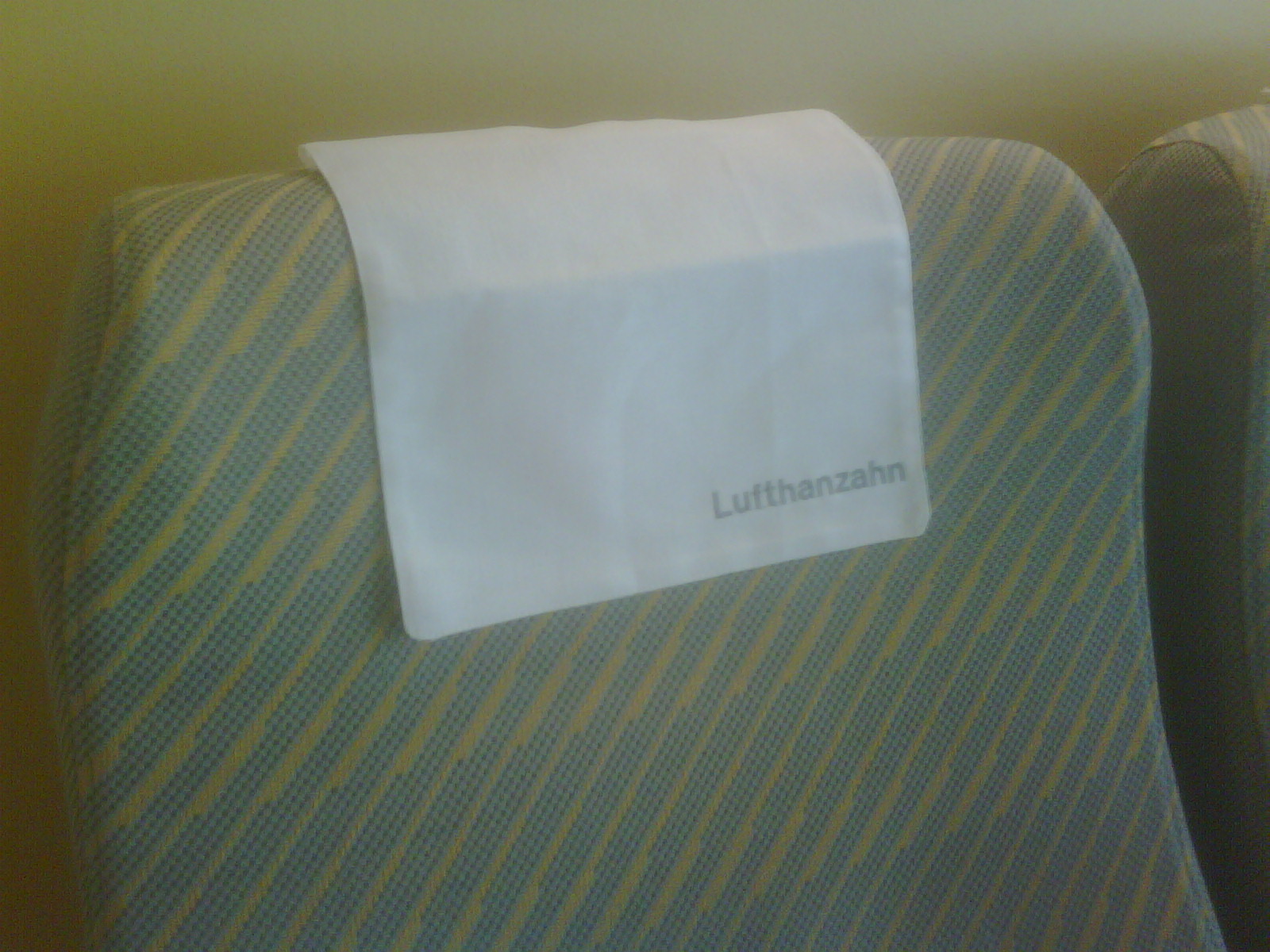
What I missed in that first visit was the geek details of the cloth covers of the seats. Take a closer look in the pictures below…

"Briteeth" Airways.

"Lufthanzahn".

Definitely, my dentist must be another aerogeek.

2 Comments

Filed under Aerospace & Defence, France

Ballot papers in France

Today there is the first round of the Presidential elections in France. According to the latest polls, it seems that Hollande is going to win with Sarkozy coming second and the two going to the second leg of the elections.

After my flying class today, I took the opportunity to go to one of the “bureau de vote” installed at the city hall in Capitole square. As I did 7 years ago while living in Aachen (then with the election between Merkel and Schröder), I wanted to check first-hand how the voting works here in France.

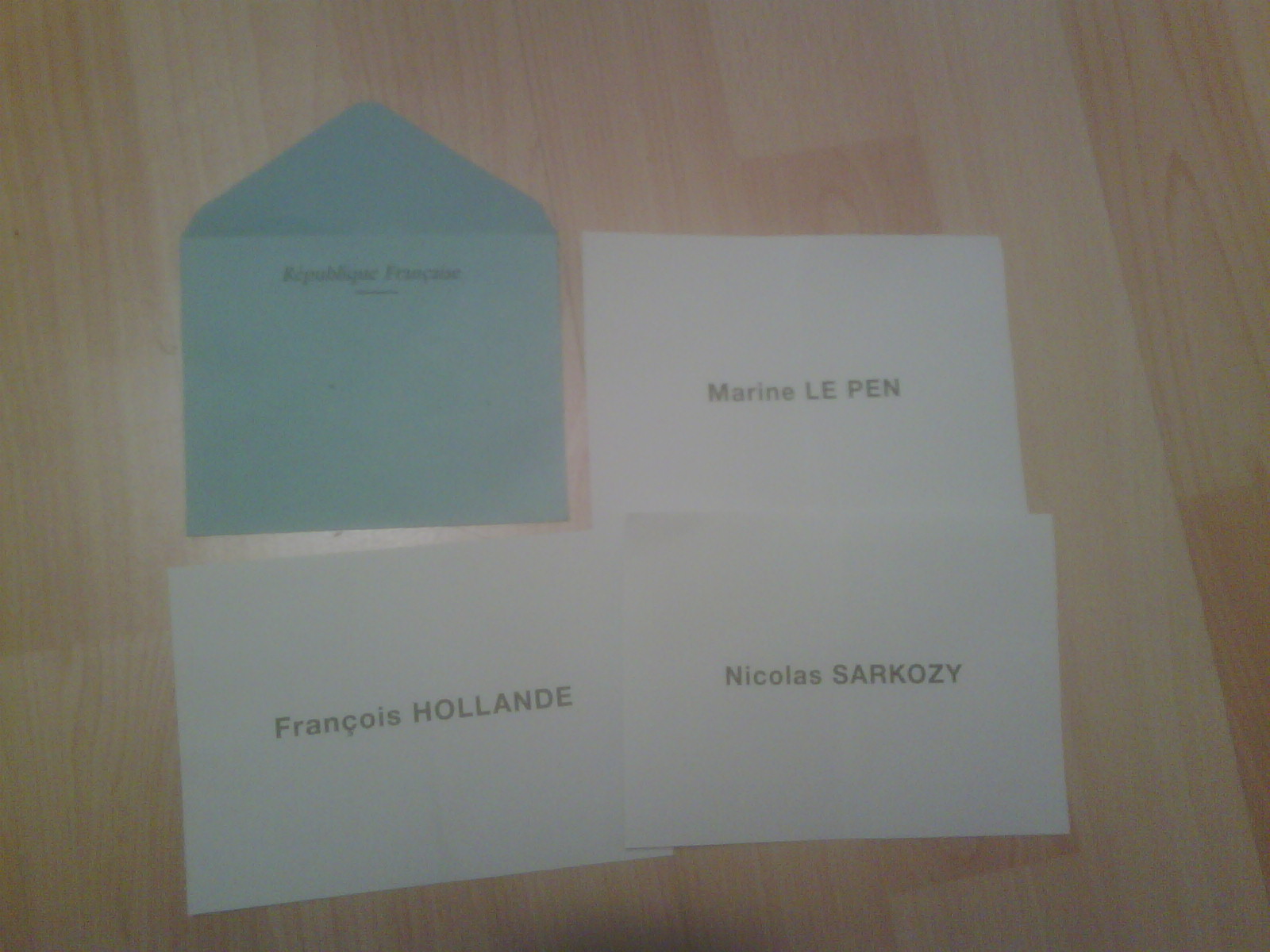
Well, it is very simple and very much like in Spain, even simpler. There were just 10 small stacks of ballots, one stack per candidate. The ballots are much simpler than in Spain. Just white papers with the name of the candidate. No name of the party, no fancy logo of the party. The envelope: simpler as well, just a small blue envelope reading “République Française”, nothing mentioning like “Presidential election 2012”, first or second round…

French Presidential election 2012: Ballot papers.

It raised my attention that there were many isoloirs, these cabins with curtains where you decide which ballot you place in the envelope. There are those as well in Spain. I did this detour today with a colleague coming from the Spanish Basque Country, he mentioned that in his village people also uses those cabins. However, in the village where I come from in Madrid, people almost never uses them. While I agree that their presence is a must, the need to use them is sad.

Finally, the rest of the process is the same. The voter comes to the table, hands her ID to the president of the table, the name is checked in the list and the voter places her vote in the urne.

1 Comment

Filed under France, Miscellanea