Category Archives: Travelling

Sequoia National Park

When planning our honeymoon, with main destination California, it early became clear that other national parks were optional but the must visit would be the Sequoia National Park.

The schedule of the trip was tight and we were not up to long walks or hiking routes, however, with a good map and a car we could reach many of the sights in the west part of the park (be aware that within the park there are no gas stations, so you better fill up the tank beforehand).

We slept over at Montecito Sequoia Lodge and before breakfast I took the opportunity to run in the forest. It wasn’t a long run, just 8km, but it was wonderful though the climbing part was tough as I went up until Big Baldy (2,503m) where the 360º sights of snow-covered mountains and valleys were superb (it’s a pity that I did not take the photo camera for that morning run).
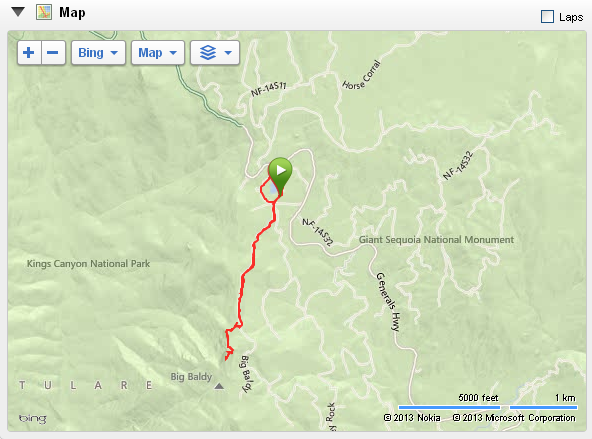
Run from Montecito Lodge to Big Baldy.

Run from Montecito Lodge to Big Baldy.

After breakfast, we spent the day driving through the park seeing most of the highlights of the park and dozens if not hundreds of sequoia trees. The biggest one is the General Sherman Tree, if not the oldest nor the tallest nor the widest (as there are other trees claiming those records).
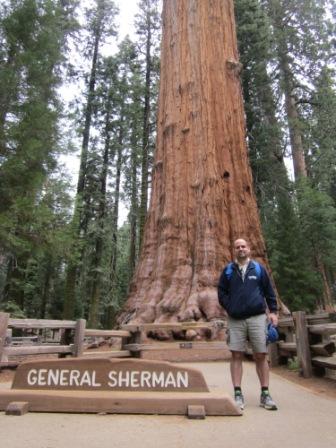
General Sherman Tree.

General Sherman Tree.

It is the biggest by volume, with 1,487 cubic metres, with an estimated age between 2,300-2,700 years and about 1,900 metric tones of estimated mass (that is 10 times the weight of a blue whale or almost 200 times that of an elephant). You can see some explanation about the tree in the sign post from the park pictured below:
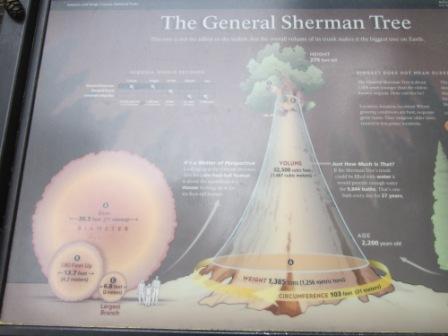
Sherman tree explanation.

General Sherman tree explanation.

There are many other stunning sequoia trees living or fallen, that make the visit to the park special, even if at the end of the day you end up not deviating the sight from the road to see one more sequoia.

Apart from the trees, there are many other worthy things to do or to see, including the stunning views from Moro Rock, or the different meadows you could walk by.

Enjoy some other pictures we took at the park:

This slideshow requires JavaScript.


P.S.: By the way, Luca had just learn before this trip that you need not to go to California to see sequoia trees, but that in the region of Cantabria (Spain) you can see them as well! At the Monte Cabezón.

Leave a comment

Filed under Sports, Travelling

Bubba Gump Shrimp Company

If in a previous post I described the feast of garlic we had in The Stinking Rose, now I will tell you about the shrimp feast we had in Bubba Gump Shrimp Company restaurant.

The restaurant is part of a franchise with about 40 restaurants in the world, half of them in the USA and the other half overseas (for the readers of the blog living close to one of them, this post will be nothing surprising).

If you were wondering: yes, the restaurants are named after the movie Forrest Gump. We learnt from the Wikipedia that just one year after the release of the movie, the idea came up and the licensing and setting up such a restaurant chain began.

When I saw the movie I didn’t particularly like it very much. I thought it was too much of it. But then after some years I caught some sympathy for the character of Forrest because of being yelled “Run Forrest” at some times by someone thinking very funny of himself when you passed-by running and he was drinking some beer with his friends.

So, during the last trip to California I didn’t hesitate in trying out one of these restaurants, and we visited the one at Pier 39 in San Francisco. I loved the experience! (No need to say that I have always loved shrimps…)

Before entering the restaurant the chances are that you may take some picture as the one below (this one is from the Universal Studios restaurant, though):

Bench alike the bus stop of the movie Forrest Gump.

Bench alike the bus stop of the movie Forrest Gump.

The restaurant is fully decorated with images and memorabilia from the movie. I had not watched the movie in years, but it was nice to be reminded of it in that way. Catching up passages when seeing pictures, reading catchy sentences…

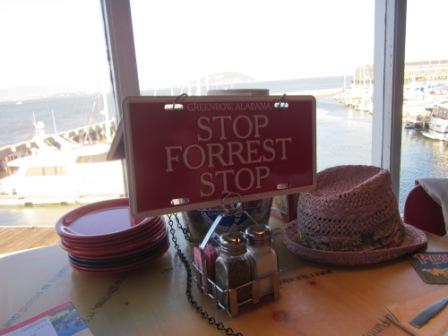
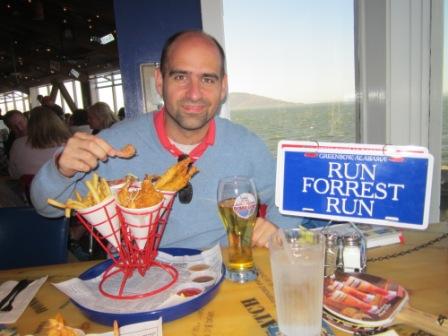
Some of those catchy phrases have turned into very useful things. E.g., in some restaurants it’s hard to catch the eye of an elusive waiter, no matter whether you want to order, to pay, or to ask anything. If they want to, the waiters will manage to avoid making eye-contact with you. In Bubba Gump restaurants this stress is eliminated by the introduction of two signs with the texts “Stop Forrest Sop”, to call for the waiter, and “Run Forrest Run”, to let him know you are OK.

"Stop Forrest Stop" signpost to call for a waiter.

“Stop Forrest Stop” signpost to call for a waiter.

Shrimp feast at Bubba Gump restaurant.

Shrimp feast at Bubba Gump restaurant.

Another thing that we kind of liked was the small quiz presented to us by the restaurant manager: she asked some 5 questions about the movie for us to earn the already ordered meal! (I think we failed the test, but they allowed us to eat anyway :-)).

Finally, I admire the fact of having built up a whole franchise based just in a passage from a movie. You may think of the many movies with which you could try that (e.g. a “007 Martini Bar” where all cocktails from James Bond movies are prepared and the place is decorated with memorabilia from the movies) but then I cannot recall having seen such opportunities being chased.

1 Comment

Filed under Travelling

Eating garlic at The Stinking Rose

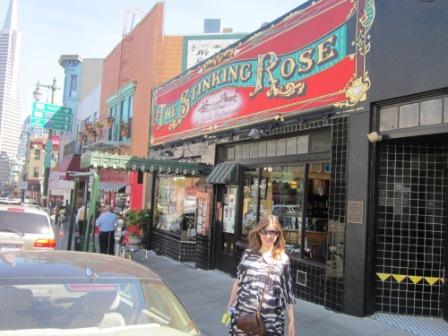
Looking for a book shop in San Francisco we saw the exterior of The Stinking Rose restaurant:

The Stinking Rose, at 325 Columbus Street (San Francisco).

The Stinking Rose, at 325 Columbus Street (San Francisco).

It first caught Luca’s attention, and we went to check the menu and whether there was any description in the guide (which there was). The restaurant is a garlic restaurant started by an Italian some decades ago, meaning that all their dishes included garlic! I loved that and immediately tried to persuade Luca to get in.

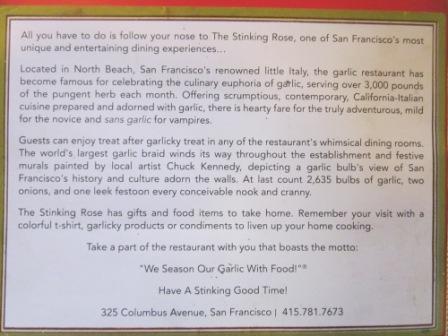
I think that instead of giving a thorough description of the restaurant by me I can show you the description of the restaurant made by them:

Description of the restaurant.

Description of the restaurant.

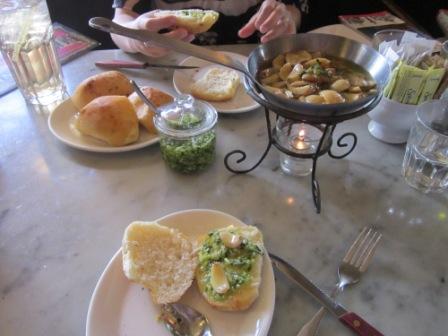
Have you seen that sentence: “We Season Our Garlic with Food”? Take then a look at the first dish we ordered: garlic bread, with minced garlic with herbs plus garlic…

A good starter.

A good starter.

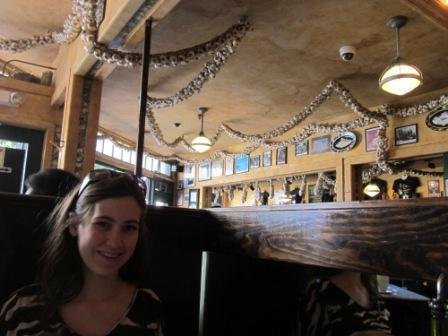
Finally, take a look at how the interior is decorated with garlic bulbs all over the place (it reminds me to “Museo del Jamón” in Spain):

Garlics all over the place!

Garlic bulbs all over the place!

I guess that many of the readers will think “yuck!”, as Luca did at the beginning. Well, this is because you have never tried it… do so the next time you are either in San Francisco or Los Angeles.

2 Comments

Filed under Travelling

Chaudes-Aigues and Trail des Capucins

Some weeks ago Luca and I spent a weekend in the Central Massif in France, a plateau the size of Castile and Leon, with an average height of around 600m.

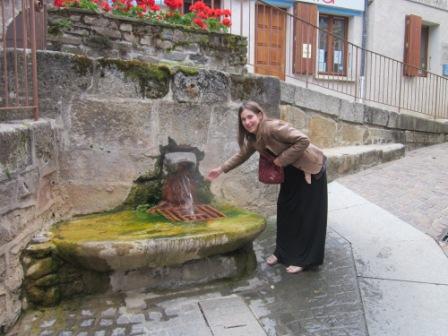
On Friday we went to Chaudes-Aigues where we wanted to spend the saturday in a spa. The village, in the region of Auvergne, has less than 1,000 inhabitants, a couple of hotels and restaurants and its famous for its hot springs. With over 30 different springs starting from 45ºC to 82ºC, the latter is supposed to be one of the hottest ones in Europe (if not the hottest as proudly announced in the signpost close to it).

spring

Luca by the 82ºC hot spring in Chaudes-Aigues (arguably the hottest in Europe… the spring as well).

Another curious thing of Chaudes-Aigues is a network of hot water going through private houses built back in the year 1,332, which is still working today though only in those original houses.

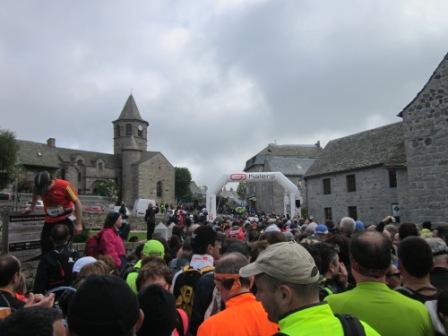
On Sunday morning, we woke quite early to cover the distance to Nasbinals, another little commune in the region of Aubrac where I wanted to run a ~18km trail.

Start line of the trail.

Start line of the trail.

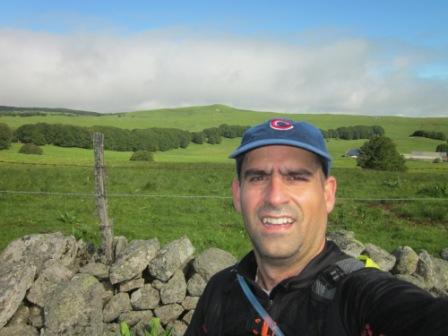
I started the trail in the back of the pack so I took the first kilometres without stress trying to run with the crowd and only overtaking other runners where possible and moderately easy. In that way I could enjoy at some points the views offered by the circuit of the trail, which at points was through closed forests but at some others was through open countryside.

Fields of Aubrac.

Fields of Aubrac.

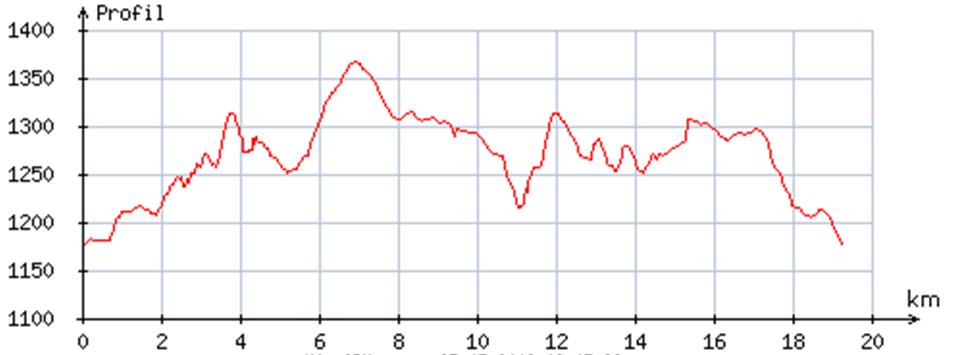
I was running with the water bag and carried some vanilla-flavoured energetic gels, so I did not have any problems with supplies, I didn’t need to use those provided by the organization. One good point of the trail is that the route was very well marked, however, the measuring of the distance wasn’t. The trail was supposed to be 18 kilometres long, and when my GPS-watch indicated 17.75km I saw a signpost saying “Arrivée 2 km”. In the end I measured 19.60 km, but I guess the organization knows this, as in their own web, when showing the altitude profile, the distance they have measured is clearly over 19km.

Profile of the race “Trail des Capucins” (over 19km instead of the announced 18km).

Profile of the race “Trail des Capucins” (over 19km instead of the announced 18km).

It is not such a big issue, though you may have been managing your strength resources to have a last good kilometre and instead you find out that there are still 2 more to go! It would be as easy as to announce the trail as a 19km or 19.6km instead of 18km.

In the end it took me over 2 hours and 12 minutes, and ended the 255th out of 810 runners. A good run for a Sunday morning.

Even if not of very good quality, you can find below a short video I recorded around the 8th kilometre to give a glimpse of how these trails are:

I uploaded the video

Leave a comment

Filed under France, Sports, Travelling

B-52 Stratofortress, nuclear disarmament and The Boneyard

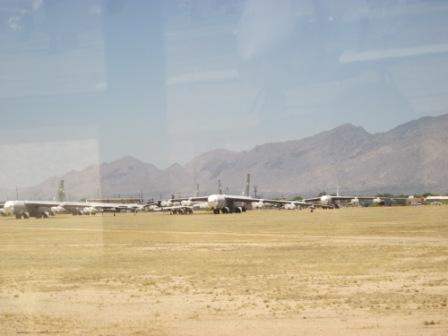
One of the oldest flying aircraft in the US air force is the bomber B-52 Stratofortress, built during the 1950s. Over 700 of them were built during a decade with only above 70 today being used in the active or reserve forces. The retired ones are either in museums or in The Boneyard.

Part of B-52 retired fleet.

Part of B-52 retired fleet.

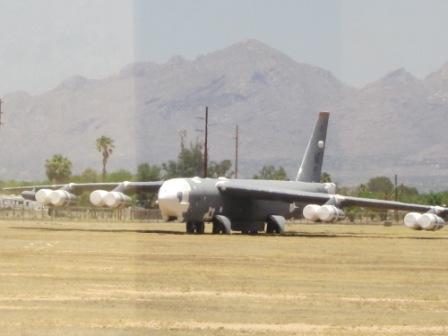
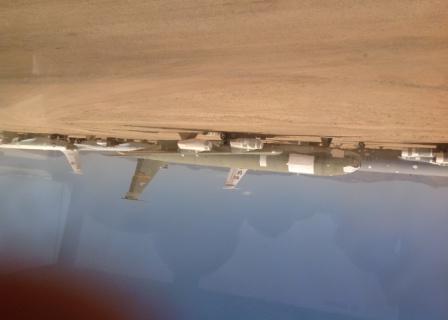
During the visit to AMARG, the guide explained us one historical anecdote taking the following picture as the departing point:

B-52 Stratofortress without horizontal tail plane.

B-52 Stratofortress without horizontal tail plane.

The curiosity of the picture: as you can see the aircraft has no horizontal tail plane (HTP). 

The story went as follows: as part of Arms Control and Disarmament agreements between the USA and USSR, the USA had to retire a certain number of B-52 aircraft from service (over 300 of them). At some point a soviet delegation visited The Boneyard at Tucson to witness the retirement of those A/C. However, they said that being the AF base right there, side by side of the boneyard, the USSR could not have any guarantee that those B-52s would not be immediately put back into active service just after the soviets had left the city, and thus required that Americans dismantled the HTPs from all B-52s that were to be retired as part of the agreements. In that way they could always check via satellite image whether they had those HTP on or off…

Later on I checked the story in the Wikipedia where you may see the whole background of the START agreement. Some of the aircraft were chopped into 5 pieces. Those you cannot see in the guided visit to Davis-Monthan AFB but you can see them in satellite image here:

Leave a comment

Filed under Aerospace & Defence, Travelling

The Boneyard

The US Air Force’s 309th Aerospace Maintenance and Regeneration Group (AMARG), known as “The Boneyard”, is one of the places that I had wanted to visit since many years ago. Luca and I visited it a couple of weeks ago.

The Boneyard is an aircraft and equipment storage facility located at Davis-Monthan AF Base near Tucson (Arizona). The are over 4,000 military aircraft stored at the place. Most of them come from the USA (not only from the air force, but from other services as well) but there are some aircraft from foreign countries. The aircraft are stored for several reasons and in different conditions.

  • Some of them are maintained waiting for a possible future use of them (be it with US armed forces or through some foreign military sale, that is the case of several old versions of C-130, F-16).
  • Other aircraft are kept so their parts can be used as spare parts for other active flying aircraft (e.g. C-130, KC-135).
  • Finally, there are aircraft which are stored waiting to be scrapped so the metal can be reused somewhere else.
KC-135 partly scrapped.

KC-135 partly scrapped.

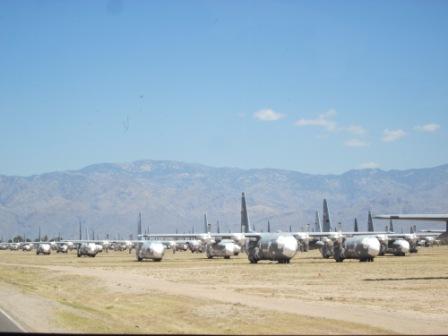
Hundreds of C-130.

Hundreds of C-130.

There are whole fleets of retired aircraft: C-141 Starlifter (retired once the C-17 took over their role), half of the C-5 Galaxy fleet (the A versions, due to budget constrains and fleet strategic decisions), the Vietnam-era helicopters Hueys and Cobras

The Boneyard can be visited with a guided tour organised by the Pima Air and Space Museum (I will write about this museum in another post).  The tour is made with a bus which goes through the Boneyard very slowly and making several stops (though guests cannot exit the bus). The guides are veterans from the US armed forces, who have flown or maintained some of those models that you get to see. The wealth of knowledge that they have about them, the anecdotes and stories that they tell during the tour are worth much more than the 7$ that the tour costs.

The place is impressive, overwhelming. Not only there are thousands of aircraft but the seeing of them fully aligned, whole fleets of different models helps you put things into perspective:

  • World commercial airliner fleet (over 100 pax) has about 16,000 aircraft vs. the 4,000 at The Boneyard.
  • The largest airline fleets have about 1,200 aircraft.
  • Spanish AF has 14 C-130 Hercules vs. the hundreds of them you see at The Boneyard.
  • The dozens of retired Lockheed C-5A Galaxy that you can see there have a combined payload capacity of over 5,000 tonnes… which is more than the complete payload capability of any other air force in the world except the US one…

You may want to take a look at satellite images from the Boneyard here:

6 Comments

Filed under Aerospace & Defence, Travelling

San Diego Marathon

“The next time you’re in the USA, run a marathon there”. Those were the words from by brother Jaime after he took part in Chicago marathon in 2011.

It has taken me 2 years to go back there. This time for my honeymoon. This did not stop me to follow the advice. I went through a website with all the marathons in California and found that San Diego Rock’n’Roll marathon was taking place on the very last day of the trip. Perfect! That way the muscle soreness of the following days would not interrupt the tourism activities.

June 2nd, the day of the race was only one month and a half after March 17th, when we ran Rome marathon, thus I did not follow any special training plan for this marathon. I just tried to keep the form with which I arrived to Rome by running often, though I didn’t do any series session and only one long run… I paid for that.

The atmosphere was very good but only in some neighbourhoods, in others not so many people cheering the runners. Along the road 163, during the steepest (up to 6% along 1km) and longest (about 4km) climb there was almost nobody. Even if the overall profile is a descent I found the course quite tough. The times of the first 3 runners seem to say the same (2h15 for the winner, 20 minutes more for the second…). The other thing that I didn’t like much was the solid or the lack of abundant and varied solid supplies along the course. I thus only relied on my 3 energetic gels and drinks.

Course of San Diego marathon as recorded by my Garmin.

Course of San Diego marathon as recorded by my Garmin.

San Diego marathon profile.

San Diego marathon profile.

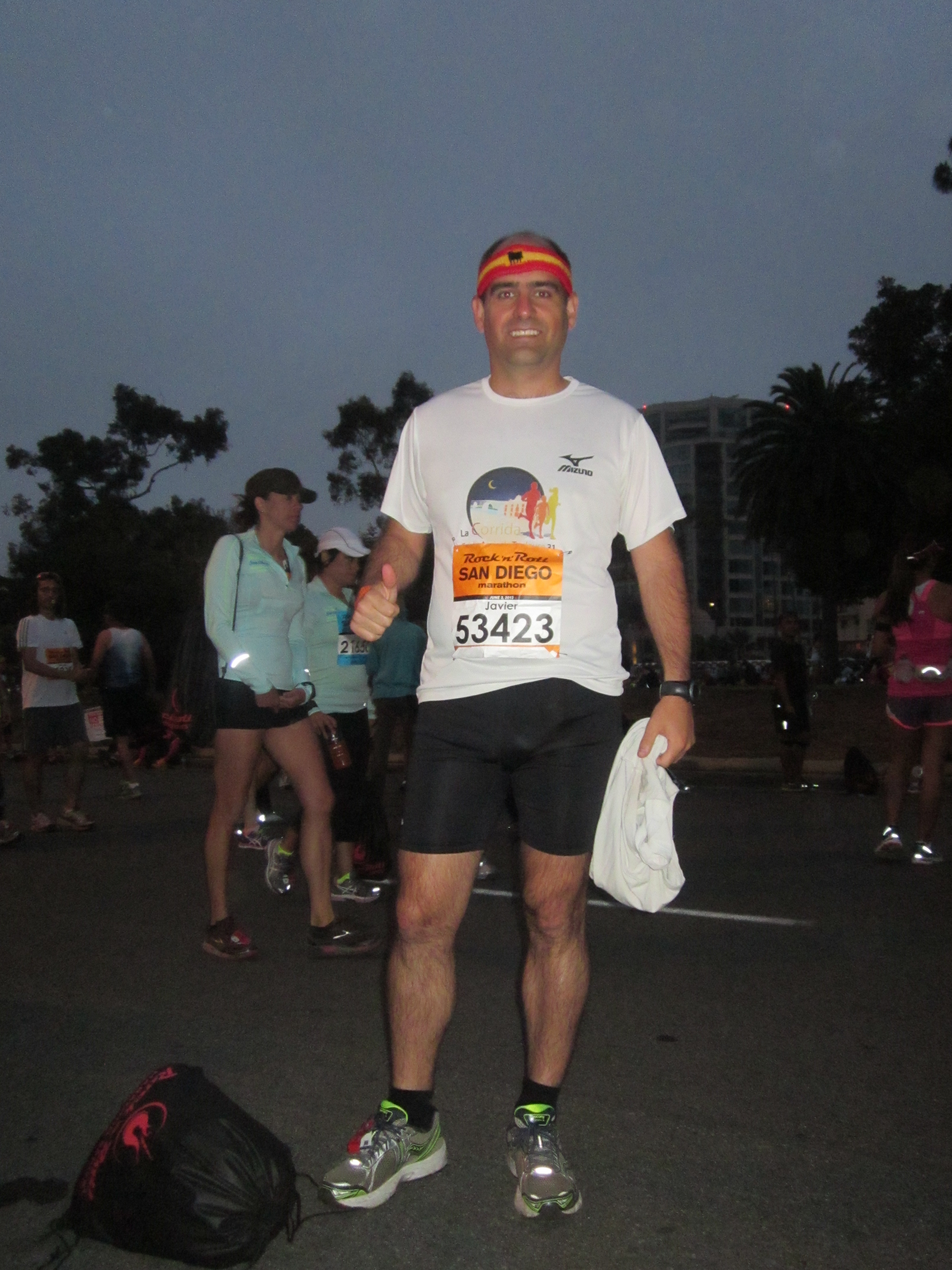
At 5:30am, before departing.

At 5:30am, before departing.

I went quite well at the expected pace (below 5’20” / km) for the first 28 kilometres, then I started to miss endurance and right afterwards the long climb “killed” me. I, however, did not stop and kept running up, if very slow (most of the runners in my time -between 3h45 and 4h- where walking during those kms). I’ve gone through much tougher situations in the last years, thus I only thought “well, slow the rhythm and the climb will finish at some point, keep up”.

Running at some point of San Diego marathon.

Running at some point of San Diego marathon.

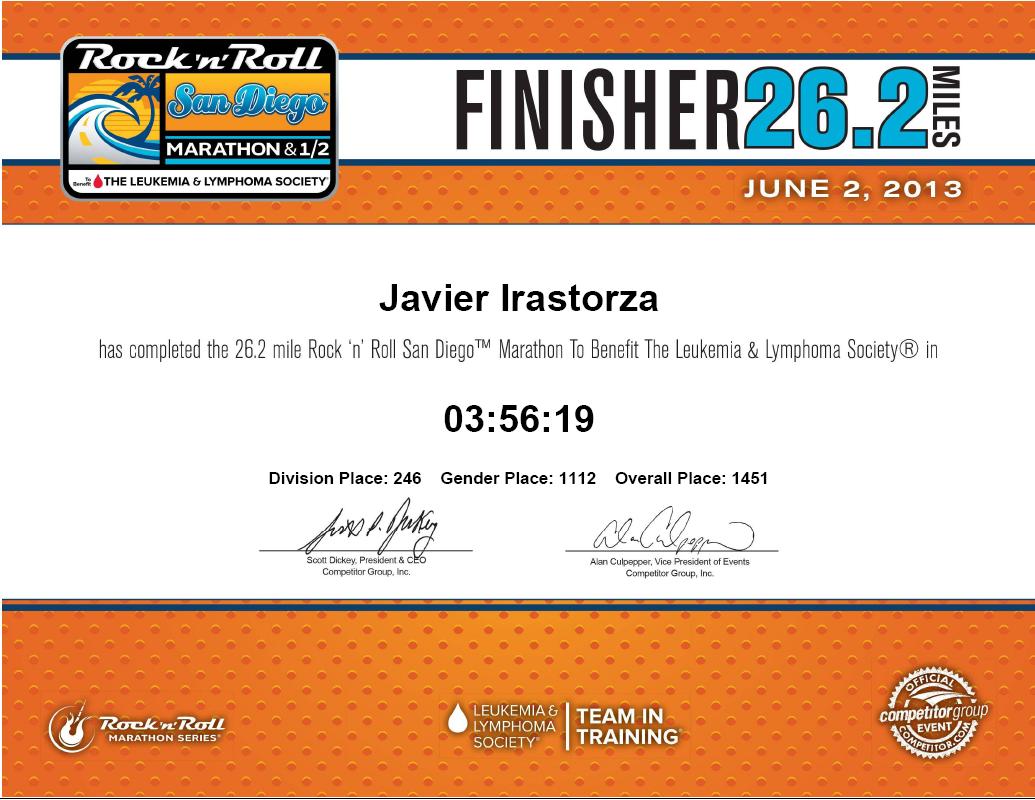
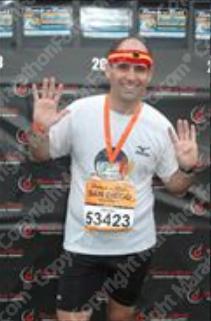
In the end I finished in some 3h56’19” as clocked by the official chip (see the report of the race as recorded by my Garmin here). I was happy enough with the result and with having finished the second marathon in the year, another sub-4-hour marathon (the 4th in a row under 4h) and the 9th overall.

San Diego marathon finisher diploma.

San Diego marathon finisher diploma.

San Diego marathon medal.

San Diego marathon medal.

9 marathons!

9 marathons!

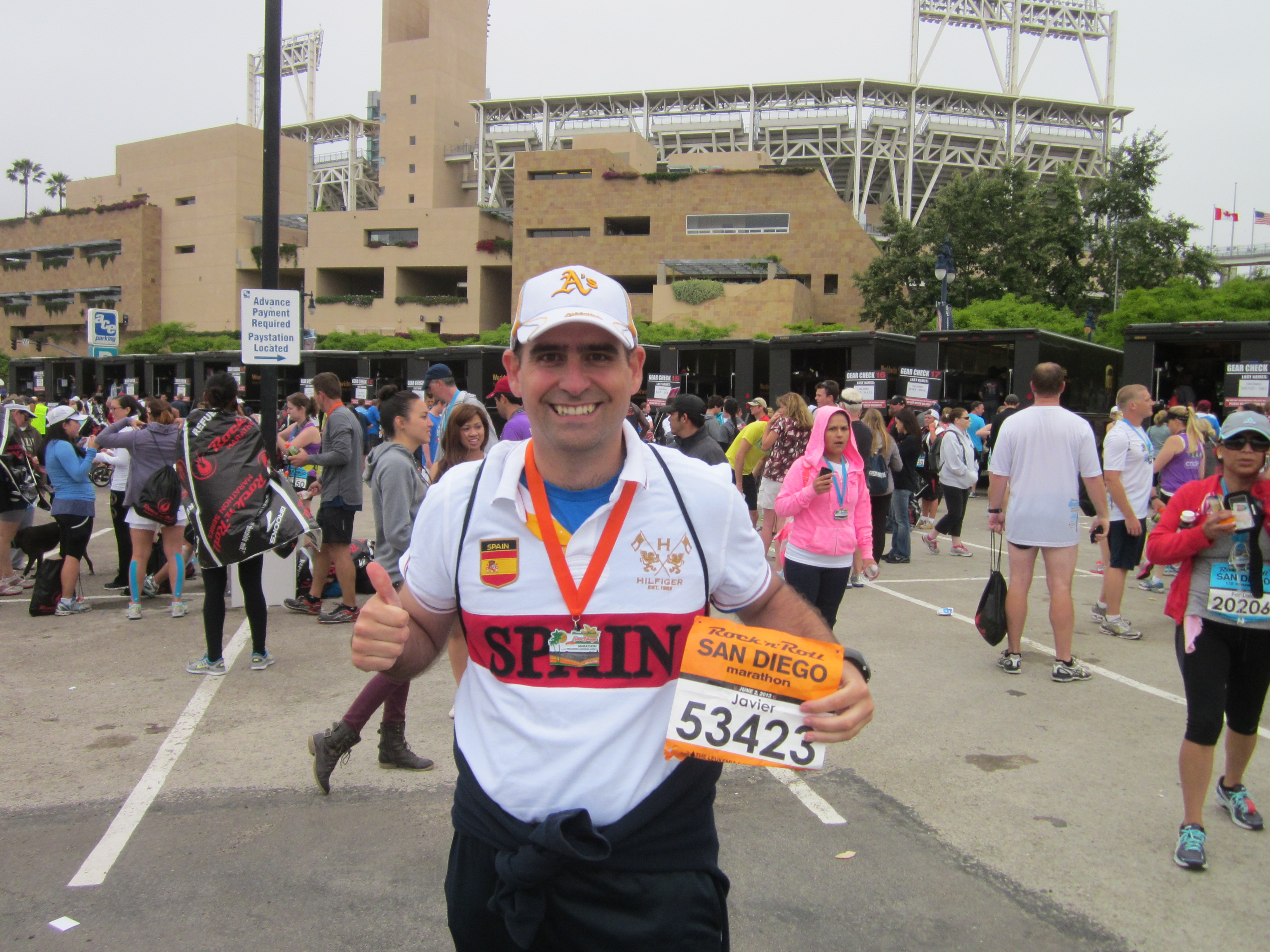
Enjoying the feat.

Enjoying the feat (behind me: San Diego Padres baseball stadium).

3 Comments

Filed under Sports, Travelling

Air Force Flight Test Center Museum at Edwards AF Base

During the recent honeymoon trip to the USA, Luca and I managed to visit 5 aerospace museums, 3 airplane assembly lines, 2 US air force bases and 1 space observatory… be sure some of the coming posts will be related to that side of the trip.

Air Force Flight Test Center Museum at Edwards AF Base

Since we were going to visit California and we would be around the desert of Mojave I thought that we could make a detour to visit Edwards Air Force Base, where the Flight Test Center of the USAF is located.

The Flight Test Center has got a museum which is open to the public, for which identification is needed and no carry on items able to take pictures of videos are permitted. The museum is free and opens 5 days a week. On top of that there is a monthly guided visit of the air base, flight line included. This tour is offered only once a month and you have to subscribe with some time in advance.

Several dozens of aircraft have first flown at Edwards and that, together with Rogers dry lake is what makes the place so special.

First Flights Wall at Edwards AFB (public domain image).

Some very famous flights at Edwards: the Bell XS-1 which first reached the speed of sound with “Chuck” Yeager at the controls, the test campaigns of the YC-130 (Hercules), C-17 Globemaster III (and the prototype YC-15 from which it got many features), testing of the Space Shuttle, testing of today’s state of the art fighters F-22 and F-35… take a look at the wall to get an idea.

Rogers Dry Lake is by itself a national historic landmark. The lake formed thousands of years ago, and today it’s mostly dry along the year and the strength of the ground permits it to have several unpaved very long runways in its lakebed. The longest one being over 12 kilometers long. It also has the world’s greatest compass rose marked into the lake to help flight test pilots guide themselves. It was there, in the lake, where the now retired Space Shuttle would land in its return from space.

Rogers Dry Lake at Edwards (public domain image).

The exhibit at the museum displays a replica of the XS-1, the first 2 F-22 prototypes, an exhibit about the formation of the lake, the history of the base, some remarkable test pilots, etc. The outdoors display has as a highlight a Lockheed SR-71 Blackbird (a classic in US aviation museums).

Lockheed SR-71 Blackbird at Edwards (public domain image).

The area of the base is of 1,200 km2 (this is about 1/7th of the region of Madrid). The visit to it, museum included, lasts about 3 hours. There are veterans offering explanations at the museum and at one restoration hangar within the base. Our guided tour was led by a young aerial photographer, Jet Set  (what a name! :-)), who made if very enjoyable.

Along the flight line of the base, for the pleasure of European-based spotters (who don’t have the chance to see them often), were some test F-35s, F-22s, C-17s, Global Hawks, F-16s, etc. Apart from some aircraft flying around. I, however, missed seeing the B-2 that was somewhere “hidden” in the base (next time!).

Edwards AF Base entrance.

Edwards AF Base entrance.

Rosamond Dry Lake (a lake close to Rogers Dry Lake).

Rosamond Dry Lake (a lake close to Rogers Dry Lake).

YC-15

YC-15.

3 Comments

Filed under Aerospace & Defence, Travelling

Alcatraz

After many weeks here I am, back with the blog. Married and with a honey moon just finished, you can bet that most of the coming blog posts will be related to experiences we have lived during the trip. I will post them randomly, as I get to write them, without theme or chronological order…

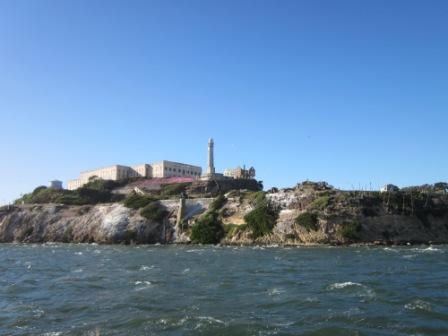
Alcatraz Federal Penitentiary

This was one of the visits that we had arranged in advance. As you probably know Alcatraz was a high-security federal prison which is now closed, quite famous for having hosted some specific inmates such as Al Capone. There were many facts and stories about the prison that I wasn’t aware of before coming and called my attention. To name a few:

  • The fact of being a federal prison versus a state prison made that many of the inmates were not particularly dangerous in my eyes (as in serial killers, let’s say) but offenders of federal crimes such as tax evasion. On the one hand we could think tax evaders not as especially dangerous types so why would you put them in such a place, on the other hand and seeing the levels of corruption we suffer nowadays, it could be exemplary to put tax evaders right away in maximum security prisons, as indeed they’re committing a crime against all of us.
  • Contrary to some vague image I had in my mind, also due to being a federal prison instead of a state one (with fewer resources) made conditions in Alcatraz even better for the inmates (such as food).
  • The fact that within the island some officers’ families were living at that time, kind of uneasy feeling. But hearing the memories of some of the girls whose father worked at the prison, the island felt to them as an ideal place to live!

Together with the ticket you get an audio guide which provides a terrific amount of information and voices that really get you into the atmosphere and do guide you through the place. You get to see the cells of some famous inmates, isolation cells, the library, dinning room, you receive explanations about riots that happened within the prison and escape attempts, etc.

We took one of the night tours (and we recommend doing so), which departs late in the afternoon and includes a whole series of extra activities at night once the general visit is finished: a detailed explanation of the June 1962 Alcatraz escape (possibly the only successful one), a demonstration of the cells’ doors’ opening and closing system (see the video below), the hospital, etc. In the end we spent over 3 hours in the island.

See some of the pictures we took below:

Alcatraz from afar.

Alcatraz from afar.

Up close view of Alcatraz.

Up close view of Alcatraz.

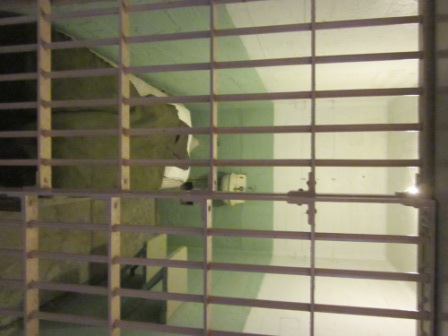
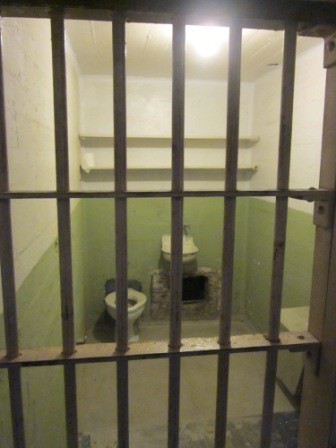
One of the cells.

One of the cells.

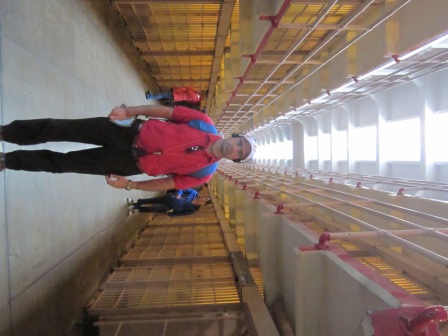
In one of the corridors.

In one of the corridors.

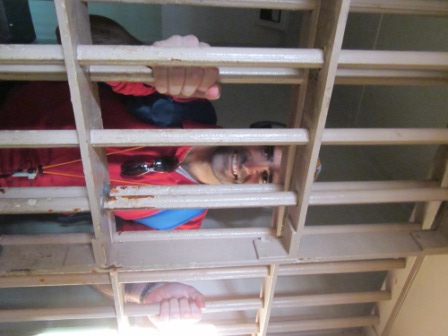
Behind the bars.

Behind the bars.

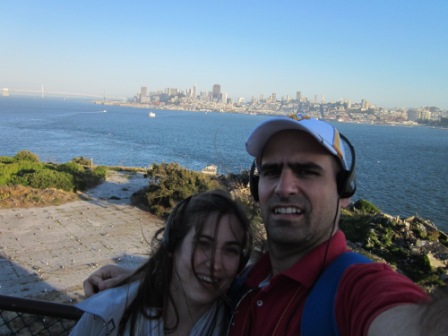
Great views of San Francisco from the island.

Great views of San Francisco from the island.

Hole used in the June 1962 escpae.

Hole used in the June 1962 escape.

Listen to the slamming of the cells doors (the guide made some emphasis to us trying to think what did that sound convey us):

Leave a comment

Filed under Travelling

El Cosmonauta in Hollywood

Last May 14, it took place the premier of the movie “El cosmonauta”. You can read about the event that took place in the cinema Callao in the post from the blog of the project.

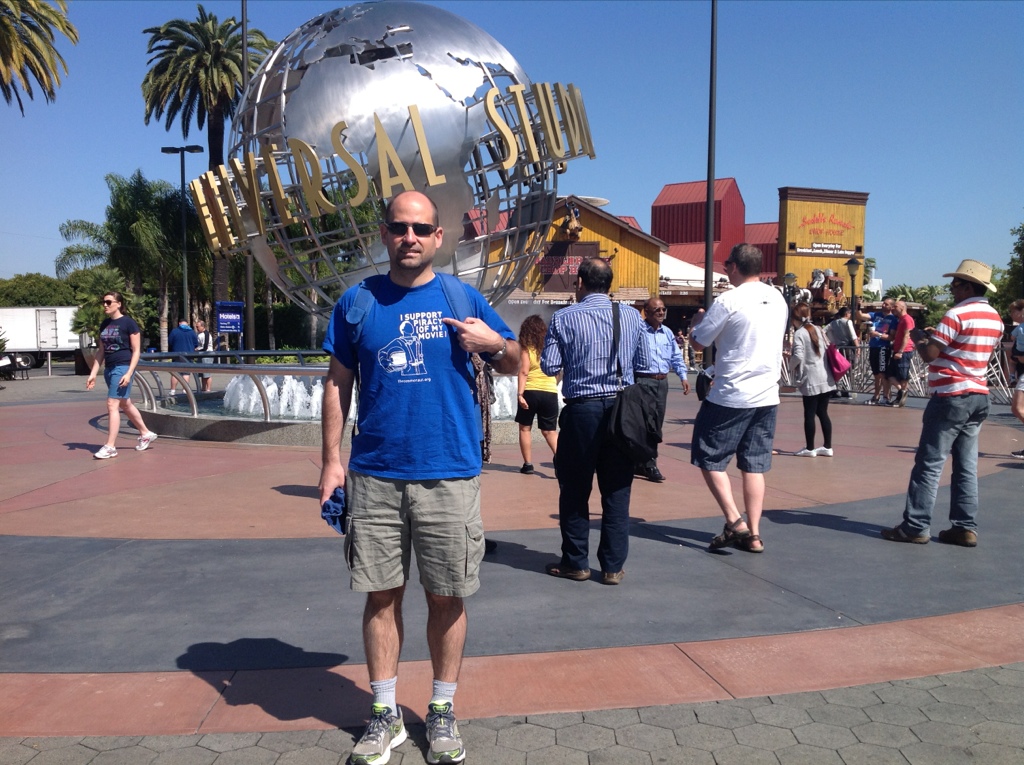
That same day Luca and I were visiting Hollywood and the Universal Studios theme park, and yes, you can imagine which t’shirt did I dress for the occasion: “I support piracy (of my movie)”.

El Cosmonauta in Hollywood ("I support piracy")

El Cosmonauta in Hollywood (“I support piracy”)

PD: during the whole day I only got one comment from Universal’s staff :-).

Leave a comment

Filed under Movies, Travelling