Tag Archives: Roma

Las Puertas Santas

En el verano de 2025 hicimos un viaje de tres semanas en coche por Italia. Estando en Roma, tras visitar el Museo Vaticano fuimos a visitar la Basílica de San Pedro y en ella empezamos a aprender sobre las Puertas Santas.

Las Puertas Santas son accesos especiales en algunas catedrales o basílicas católicas que simbolizan el paso de una vida marcada por el pecado a una renovada en la gracia. Se inspiran en las palabras de Jesús en el Evangelio de Juan: “Yo soy la puerta: quien entre por mí se salvará”. Se abren solo en periodos designados y al cruzarlas y bajo determinadas condiciones habituales (confesión, comunión, oración), se obtiene la indulgencia.

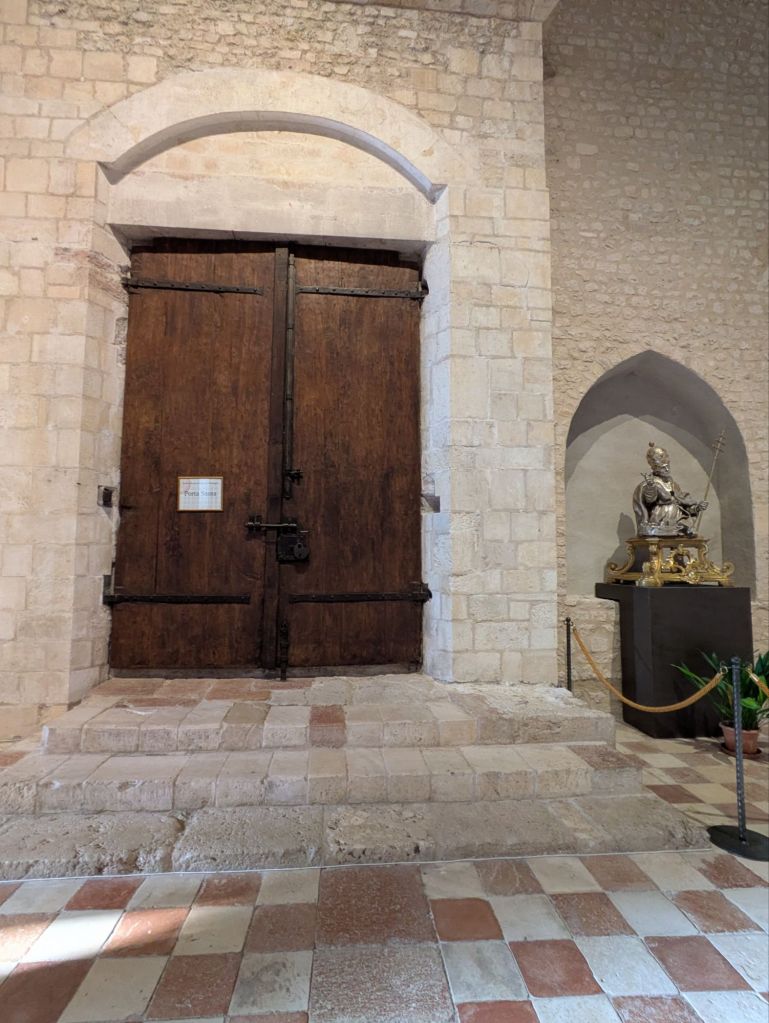
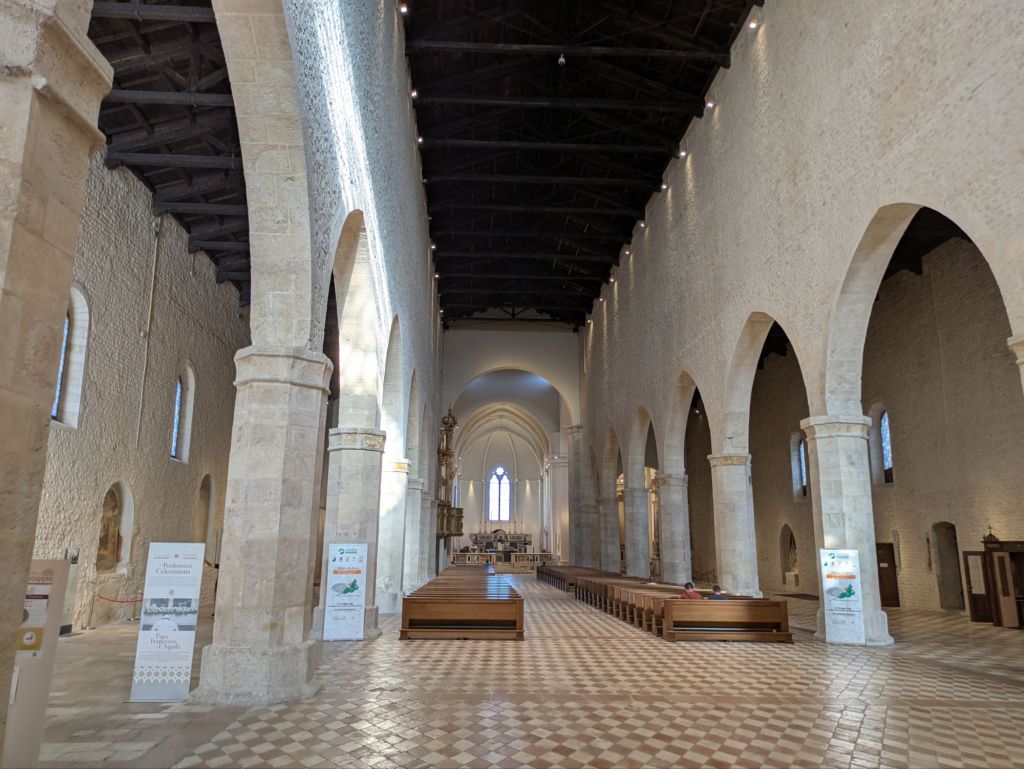
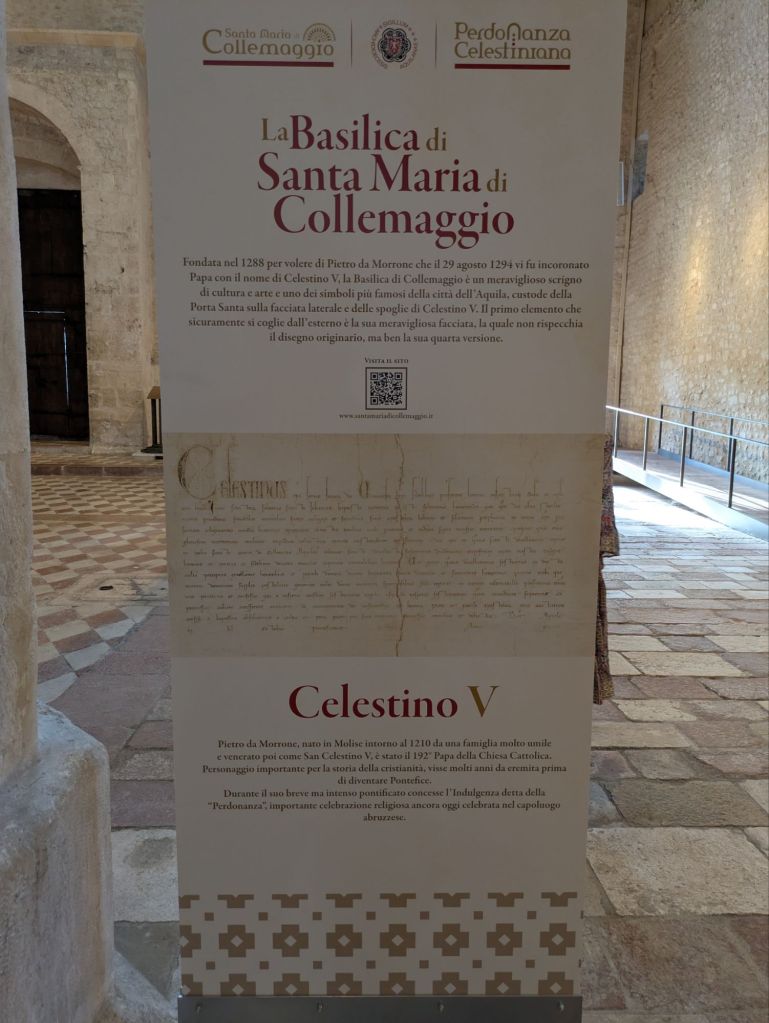
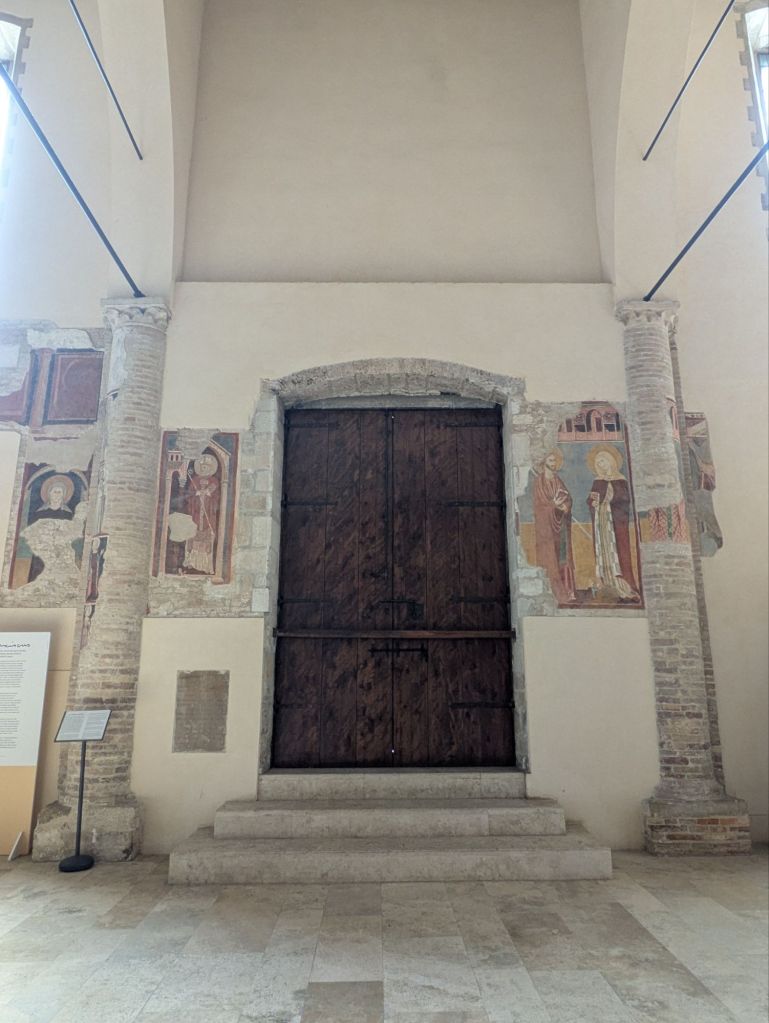
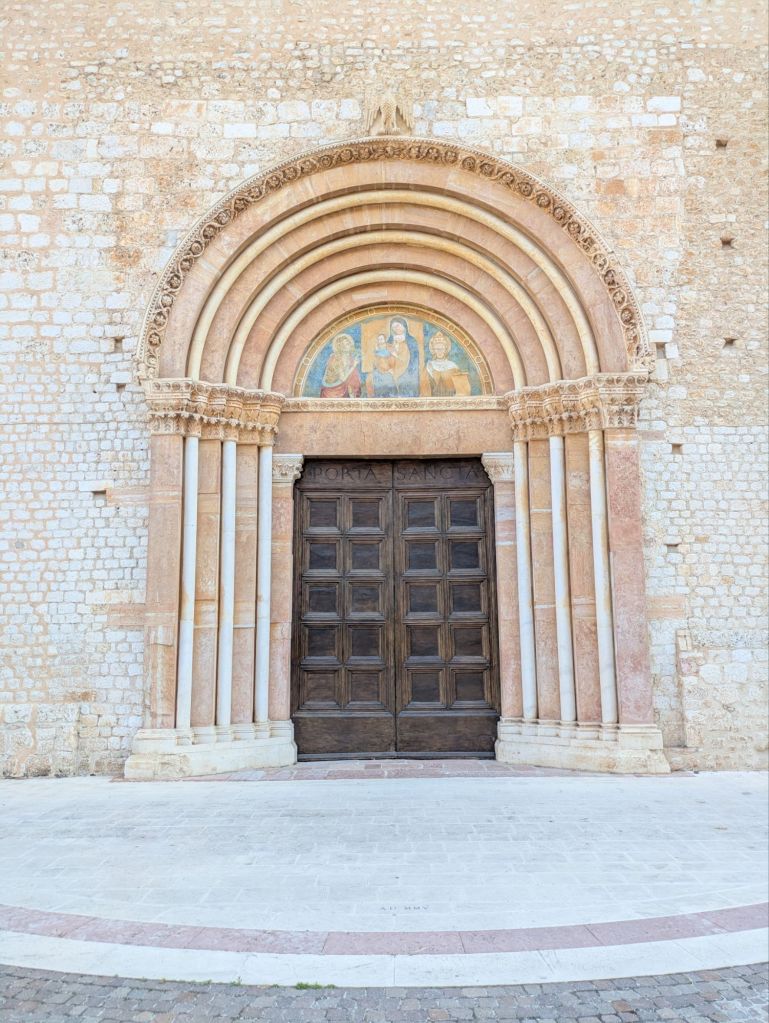
La primera Puerta Santa que cruzamos en aquel viaje en 2025 fue la de San Pedro, pero cronológicamente la primera que existió fue la de la Basílica de Santa María de Collemaggio, en L’Aquila, localidad que también teníamos en nuestra ruta para visitar una semana más tarde. En 1294 el Papa Celestino V, poco después de su coronación en esta basílica, emitió la Bula del Perdón (Inter sanctorum solemnia), concediendo indulgencia plenaria a quienes entraran por una puerta determinada, se confesaran, comulgaran y rezaran. La puerta se abre anualmente desde las vísperas del 28 de agosto hasta las del 29. La Perdonanza Celestiniana, reconocida por la UNESCO como Patrimonio Cultural, está considerada un precedente del Jubileo universal. El Papa Francisco fue el primer Papa en abrirla personalmente (2022).
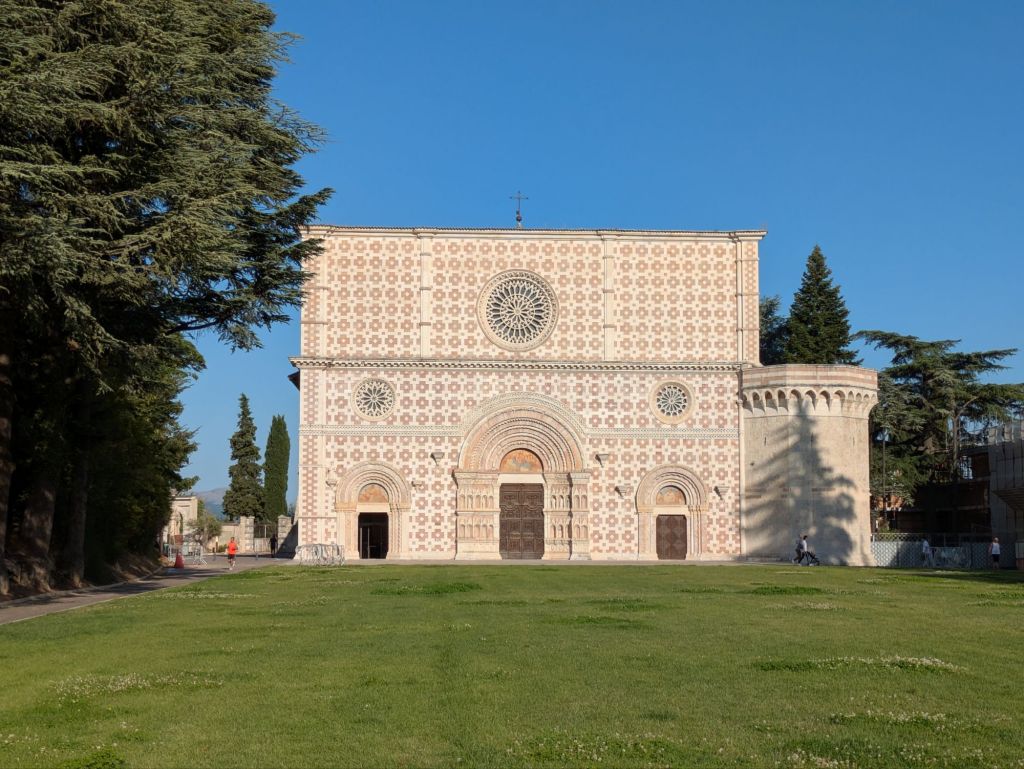
Basílica de Santa María de Collemaggio, en L’Aquila
Puerta Santa en la Basílica de Santa María de Collemaggio, en L’Aquila
Basílica de Santa María de Collemaggio, en L’Aquila

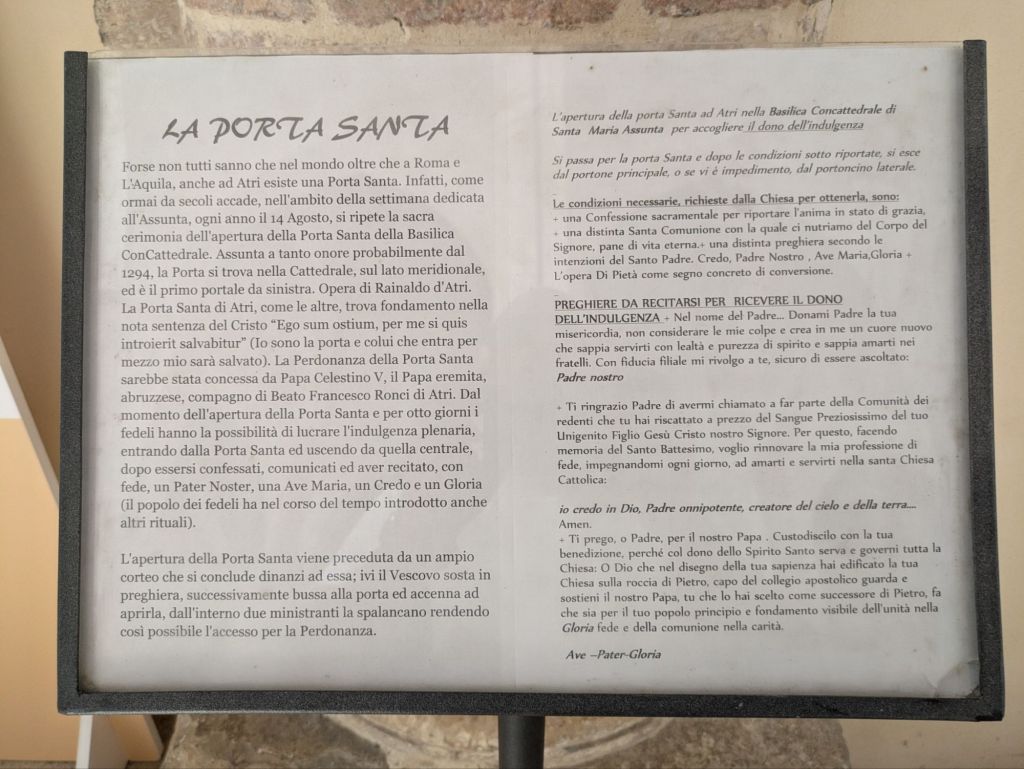
Cronológicamente la siguiente Puerta Santa documentada es la de la Catedral de la Asunción de María en Atri, también en la región italiana de Abruzzo, así que la incluimos en nuestro itinerario. La primera vez que se abrió fue en 1295, el privilegio se atribuye a Celestino V o a Bonifacio VIII, y se abre cada año el 14 de agosto, en el marco de la fiesta de la Asunción, y permanece abierta hasta el 22. Quienes la cruzan, cumpliendo las condiciones habituales, obtienen la indulgencia plenaria durante esos ocho días.
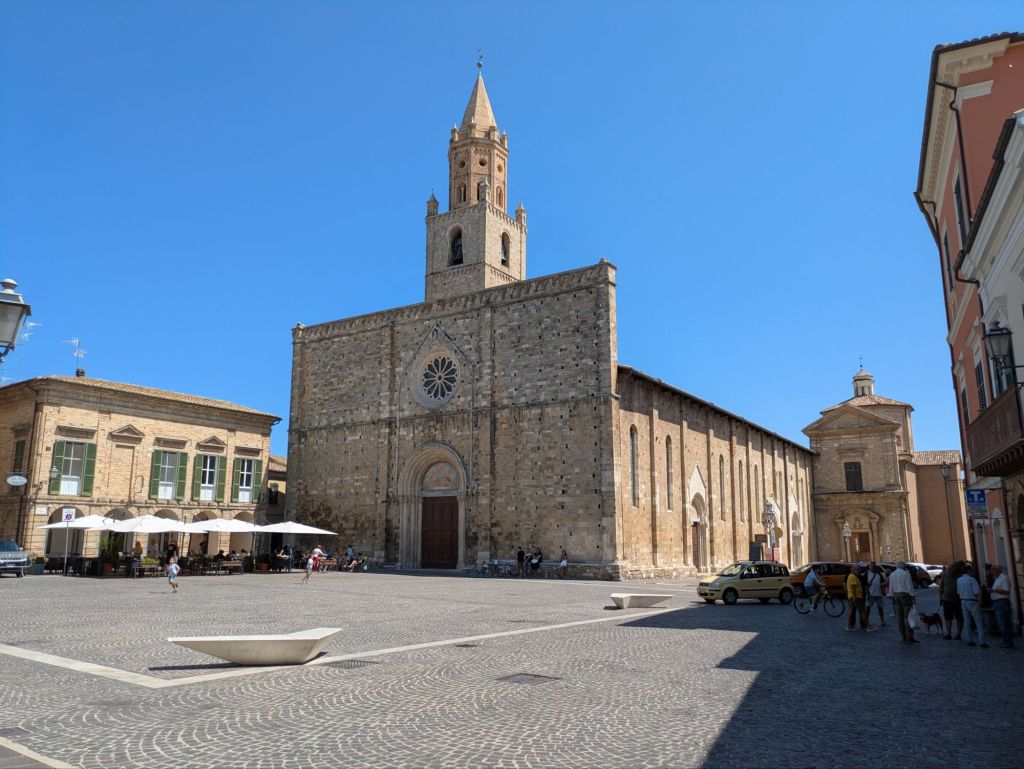
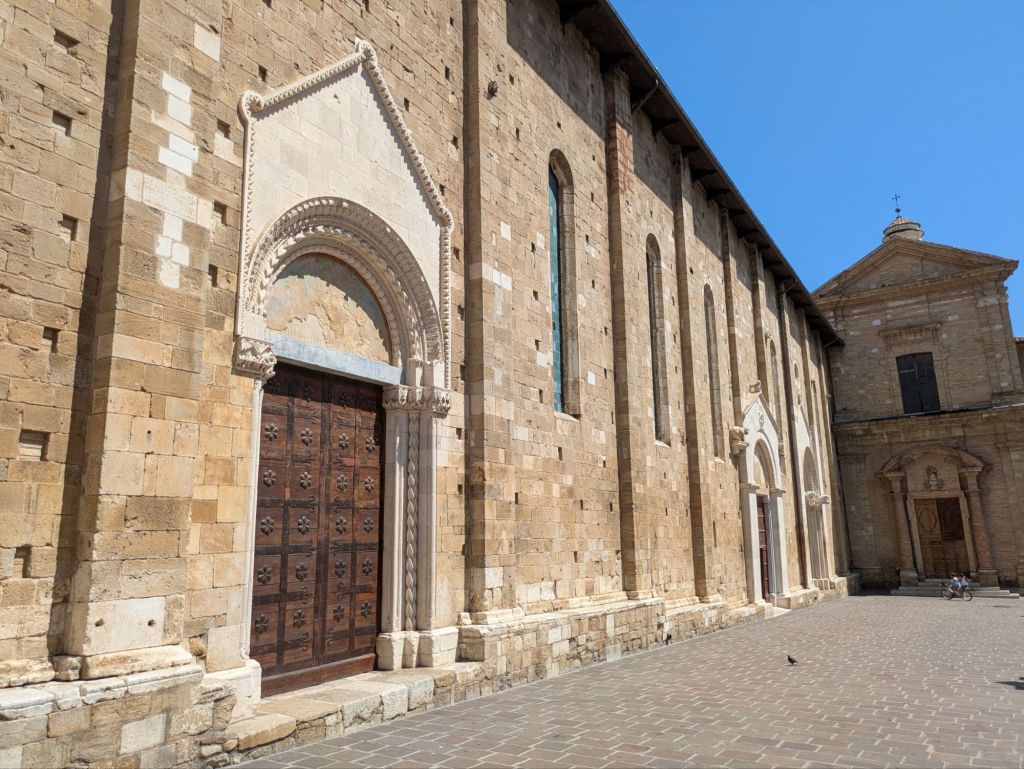
Catedral de la Asunción de María en Atri
Puerta Santa en la Catedral de la Asunción de María en Atri

Las siguientes Puertas Santas documentadas fueron las creadas en Roma ligadas a la tradición del Jubileo.

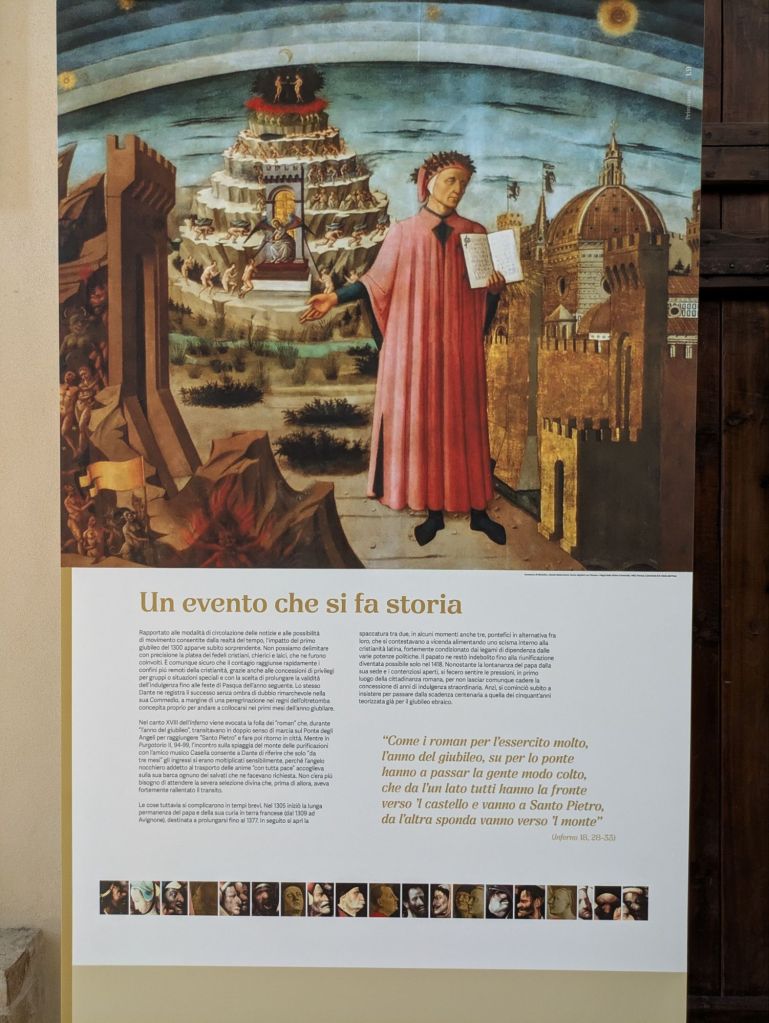
El primer Jubileo cristiano lo proclamó Bonifacio VIII en 1300. La práctica de abrir una puerta física como rito jubilar se documenta a partir del siglo XV: en 1423 el Papa Martín V abrió la primera en la basílica de San Juan de Letrán. Alejandro VI consolidó el rito en 1500 al extenderlo a las otras tres basílicas mayores de Roma.

En la Iglesia católica, el Jubileo puede ser ordinario (cada 25 años, y 2025 lo fue, por eso encontramos las Puertas Santas abiertas en Roma) y extraordinario (celebrando algún hecho destacado, por ejemplo, en 1983 proclamado por Juan Pablo II para conmemorar el 1950º aniversario de la redención).

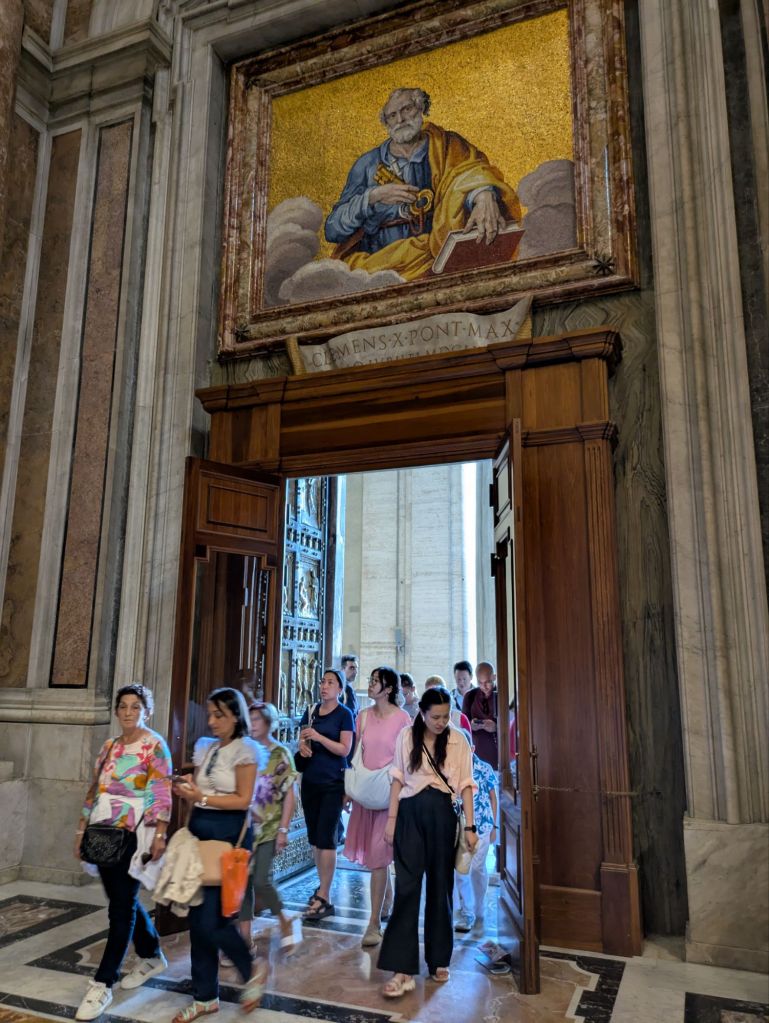
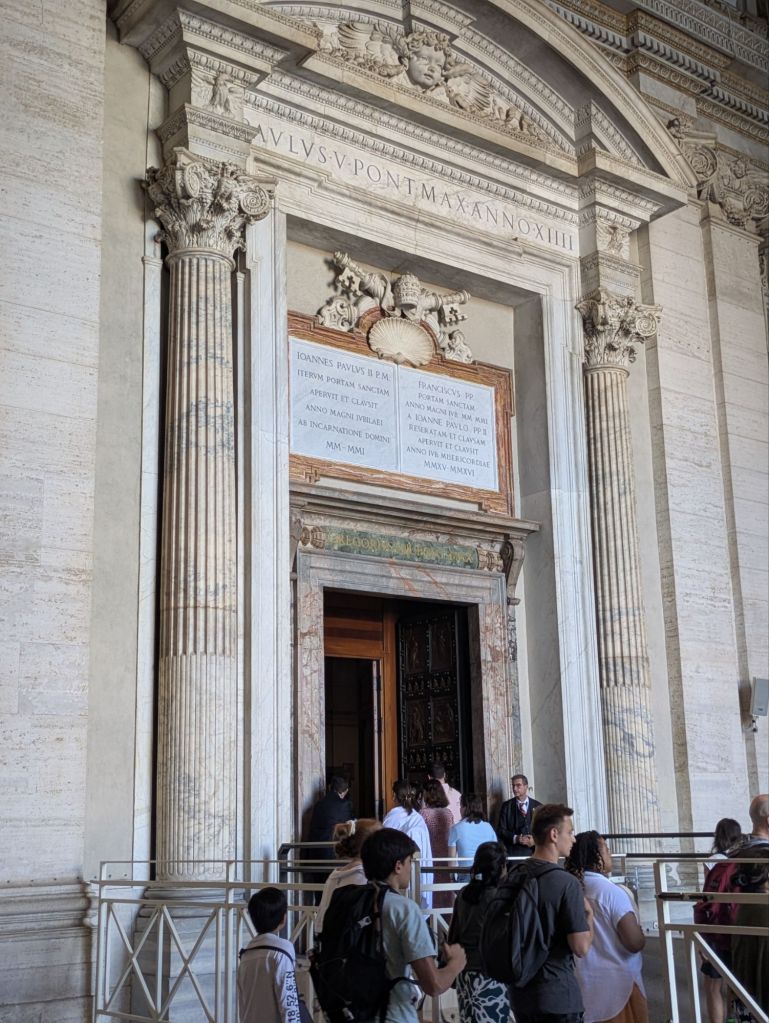
El año del Jubileo ordinario comienza con el Papa golpeando con un martillo tres veces para abrir la Puerta Santa de la Basílica de San Pedro: Aperite mihi portas justitiae, ingressus in eas confitebor Domino (“Abridme las puertas de la justicia; entrando por ellas confesaré al Señor”).

Para el Jubileo de 2025 (cuya bula papal fue Spes non confundit, “La esperanza no defrauda“, conocido como Jubileo de la esperanza) así lo hizo el Papa Francisco el 24 de diciembre de 2024, marcando oficialmente el inicio del Año Santo. Unos días más tarde fue abriendo las Puertas Santas de las otras tres basílicas mayores.
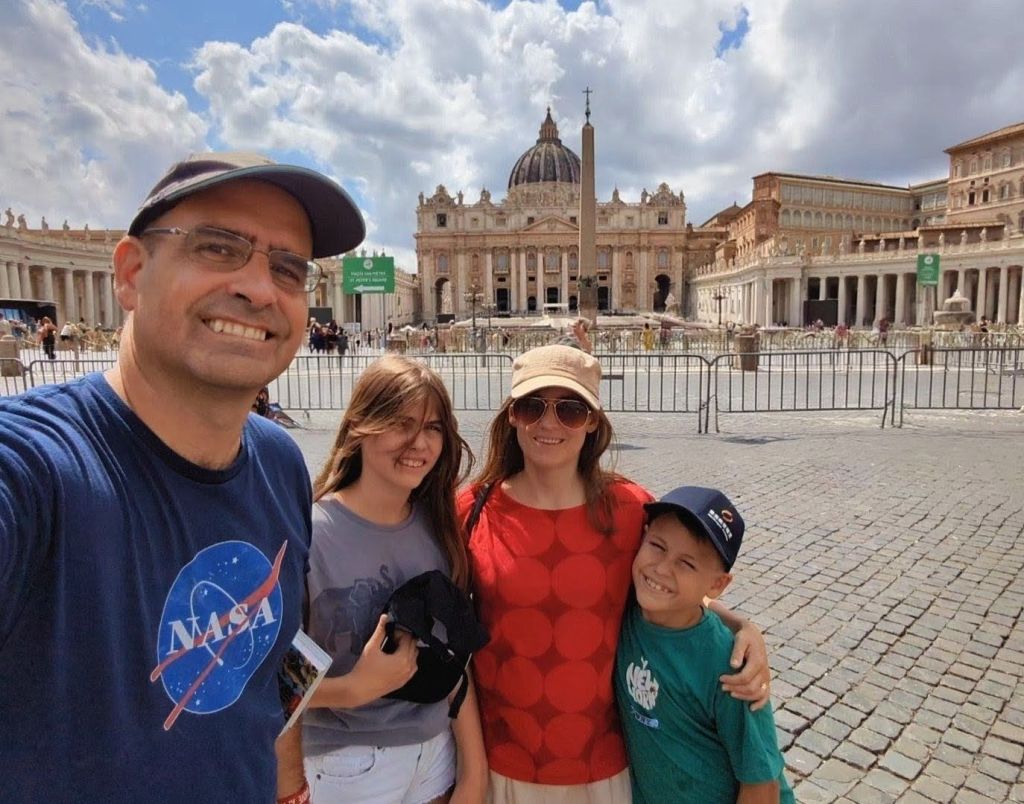
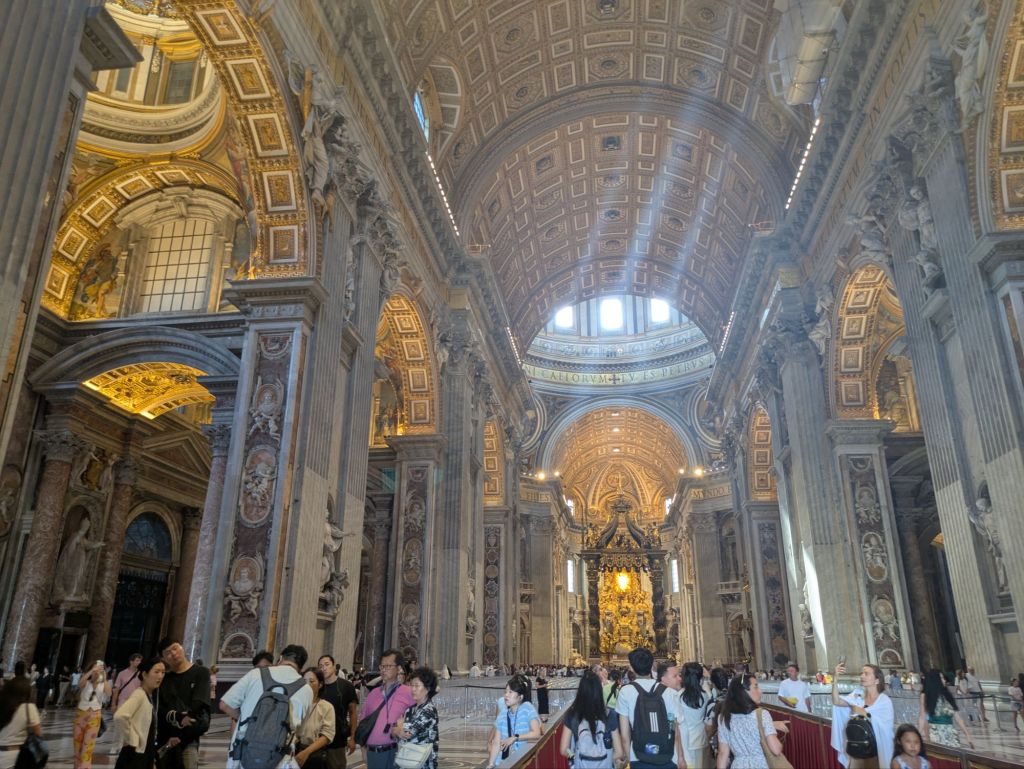
Basílica de San Pedro
Puerta Santa en la Basílica de San Pedro, Roma
Basílica de San Pedro
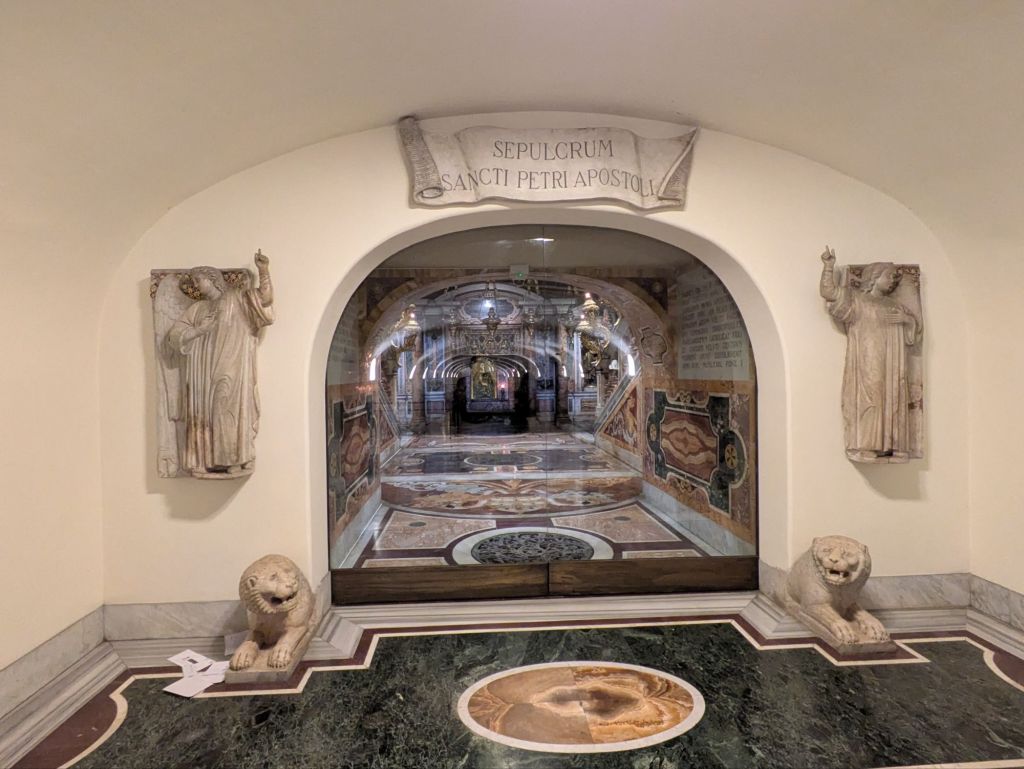
Sepulcro de San Pedro

Durante los días que estuvimos en Roma en agosto de 2025, también visitamos las otras tres Basílicas mayores.

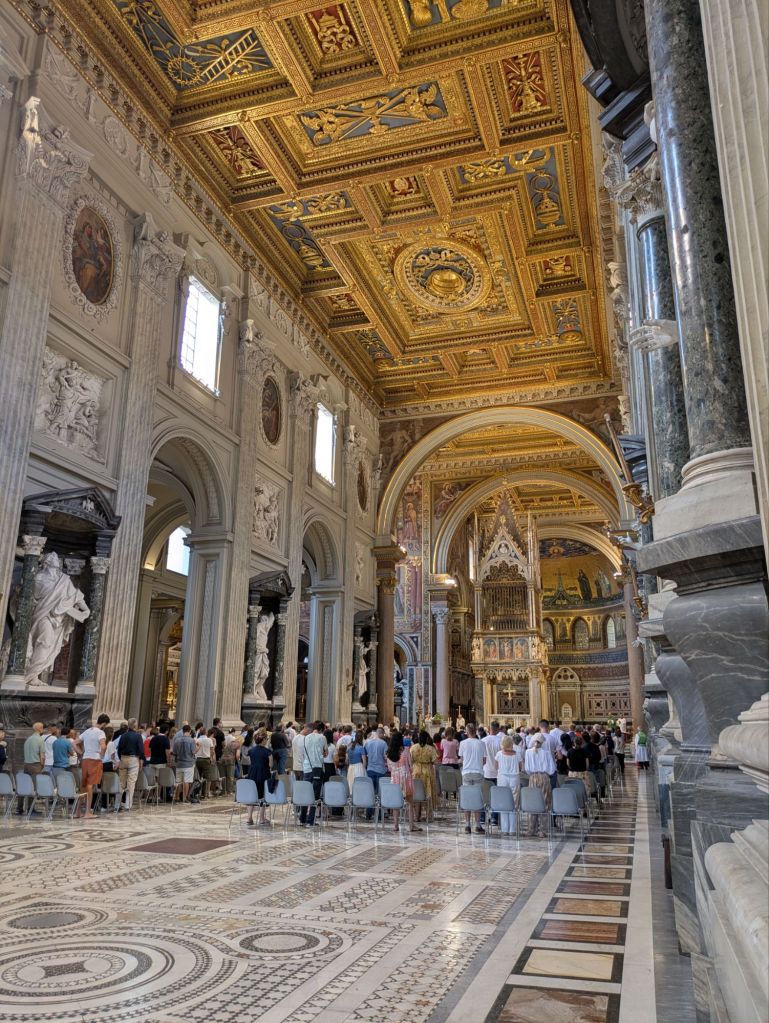
Archibasílica de San Juan de Letrán

La Catedral Archibasílica Papal del Santísimo Salvador del Mundo y de los Santos Juan Bautista y Juan Evangelista en Letrán, Madre y Cabeza de todas las Iglesias de la Ciudad y el Mundo, es más conocida como Archibasílica de San Juan de Letrán. Es la catedral de Roma, donde se encuentra la sede episcopal de su obispo, el Papa. Fue fundada en el año 324 y es la basílica más antigua de Occidente.
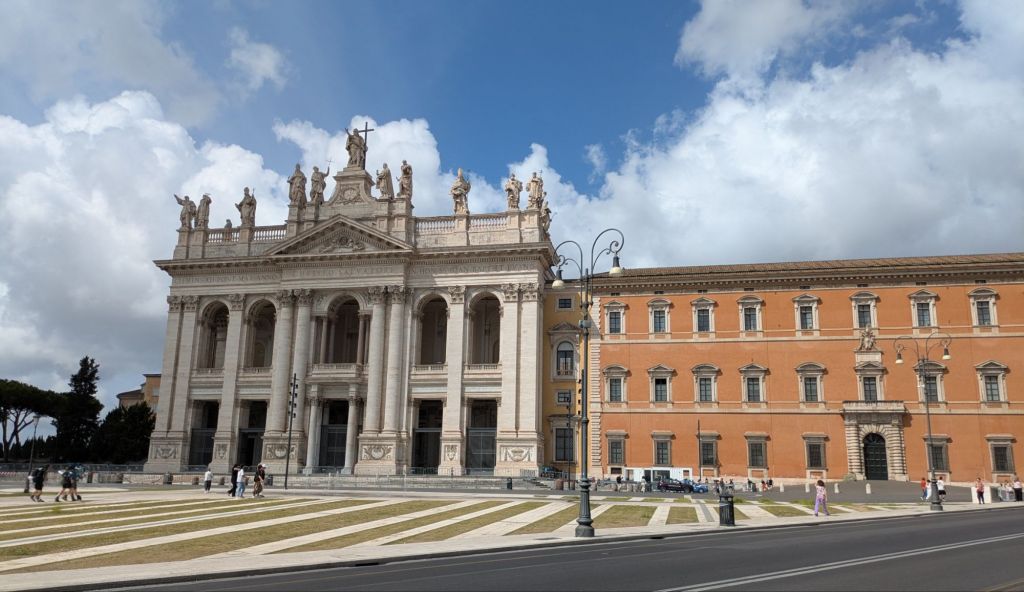
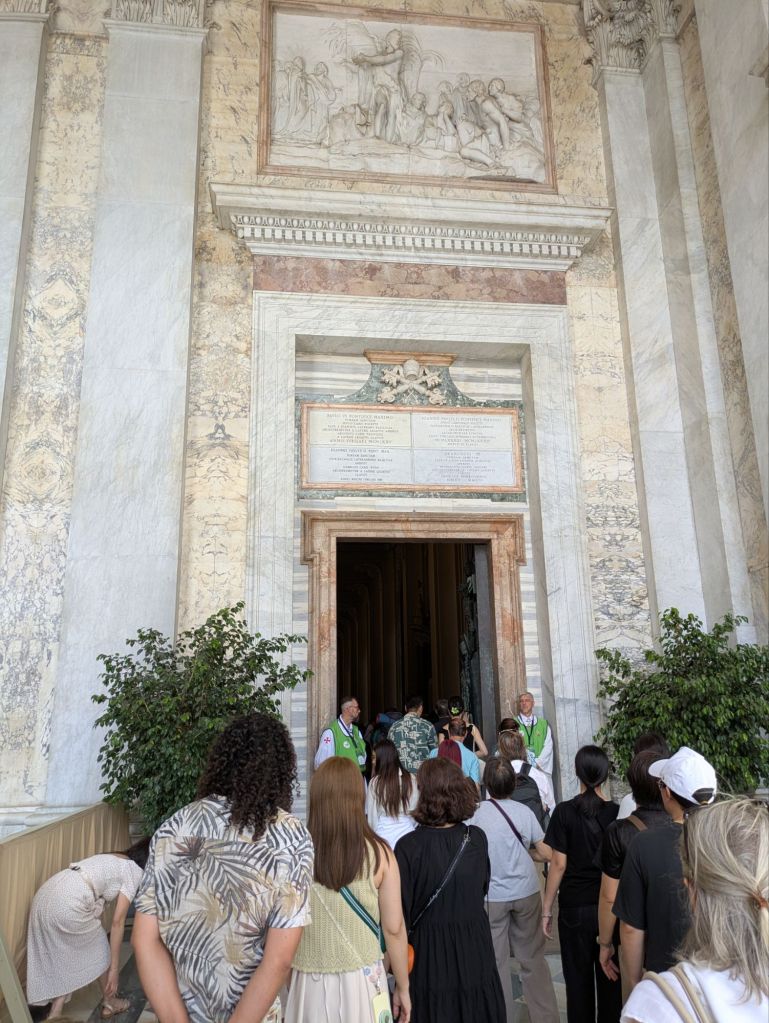
Archibasílica de San Juan de Letrán, Roma
Puerta Santa en la Archibasílica de San Juan de Letrán
Archibasílica de San Juan de Letrán

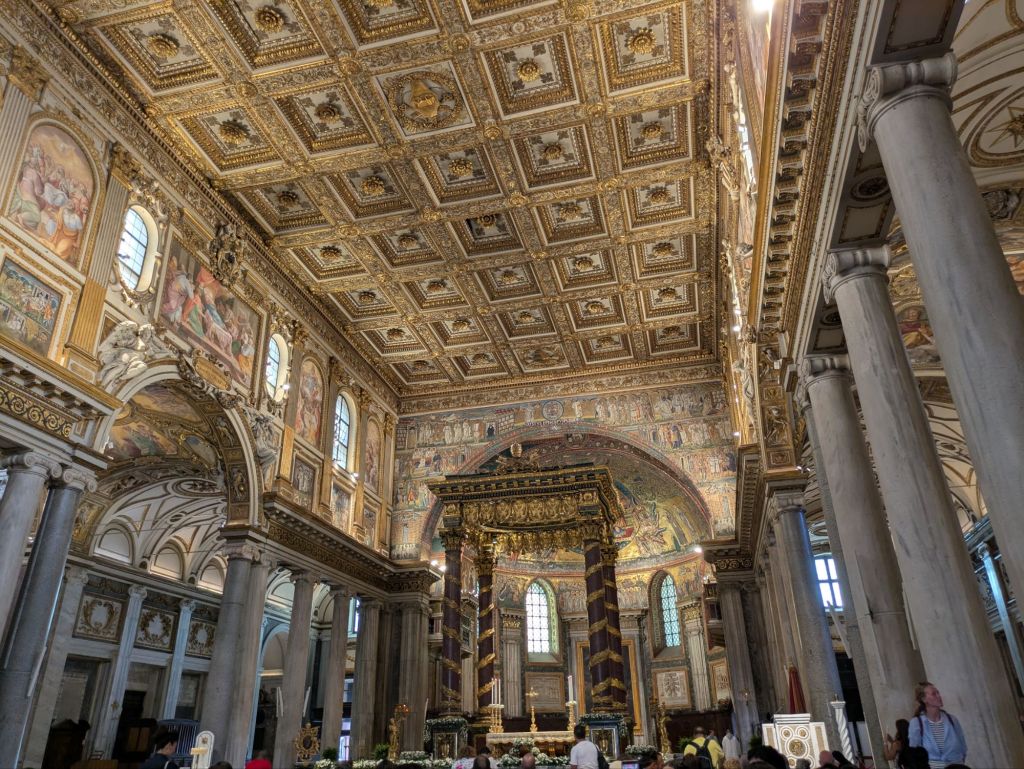
Basílica de Santa María la Mayor

También conocida como basílica de Santa María de las Nieves y Basílica Liberiana. Después de que el papado de Aviñón acabase formalmente y los Papas regresaran a Roma, la Basílica de Santa María la Mayor se convirtió en residencia temporal de los papas debido al estado de deterioro en que se encontraba el Palacio de Letrán.
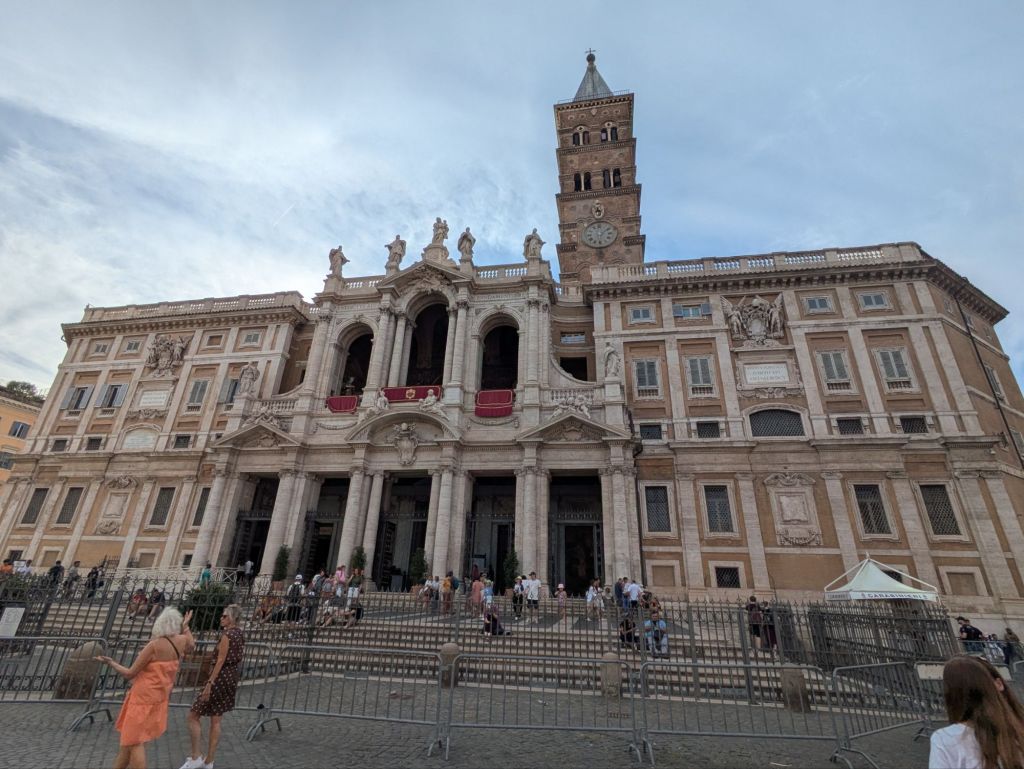
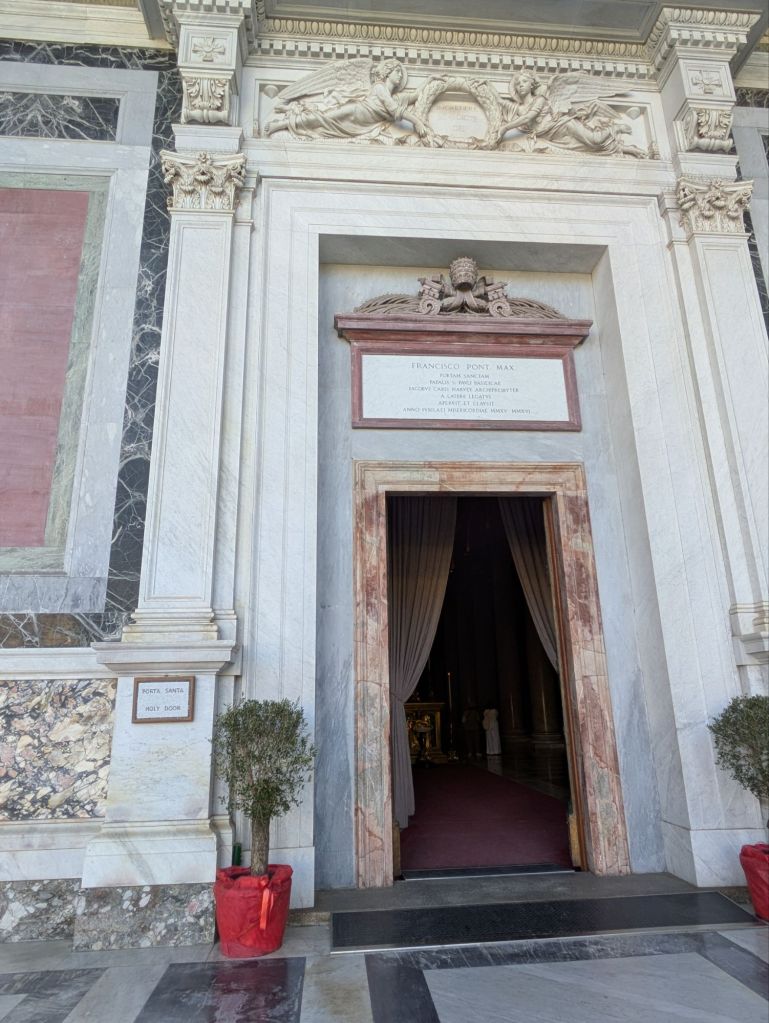
Basílica de Santa María la Mayor, Roma
Puerta Santa en la Basílica de Santa María la Mayor, Roma
Basílica de Santa María la Mayor, Roma

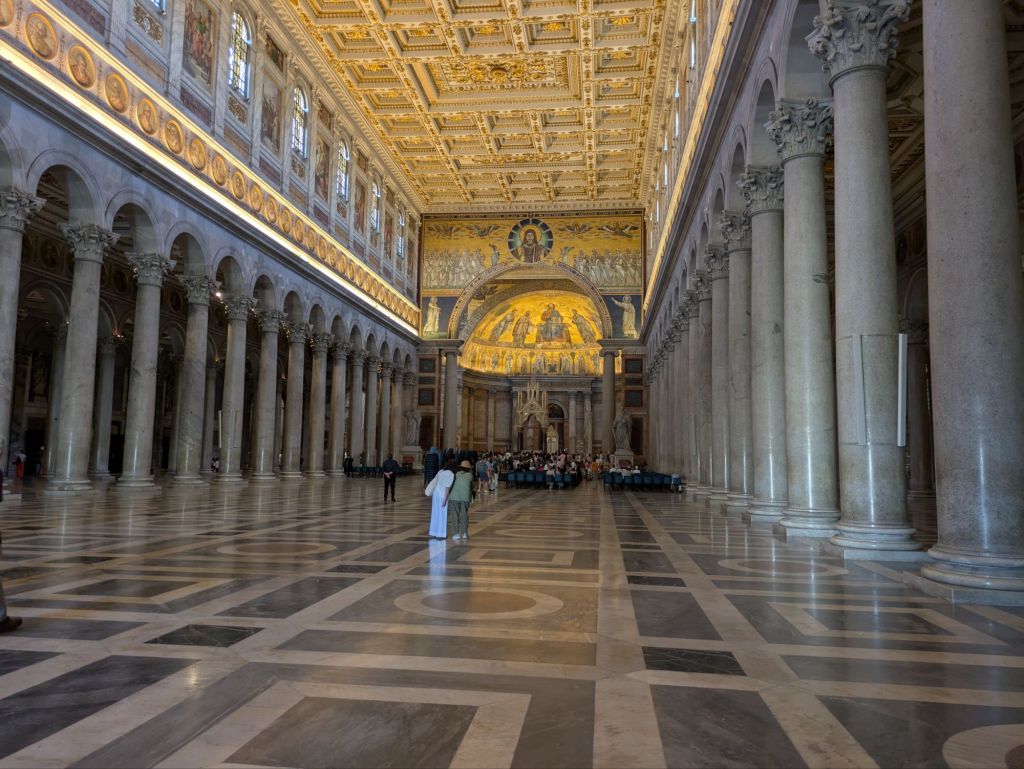
Basílica de San Pablo Extramuros

Fue fundada en el año 386 en el lugar donde el apóstol Pablo fue enterrado. La Basílica representa la tipología de la arquitectura paleocristiana.
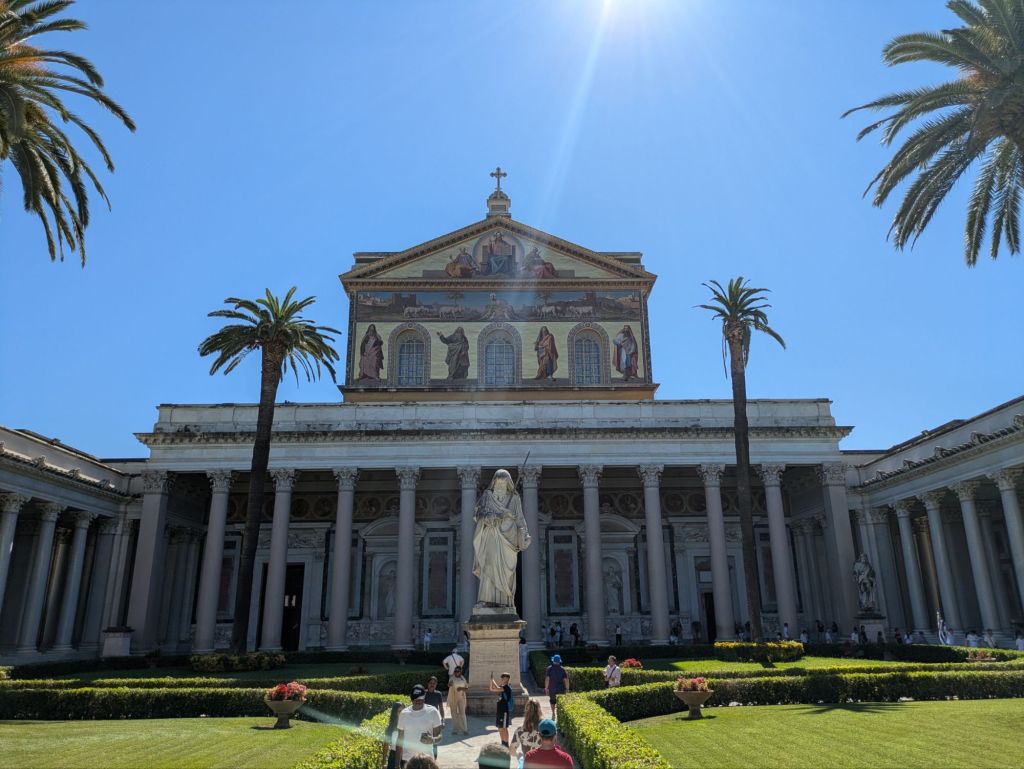
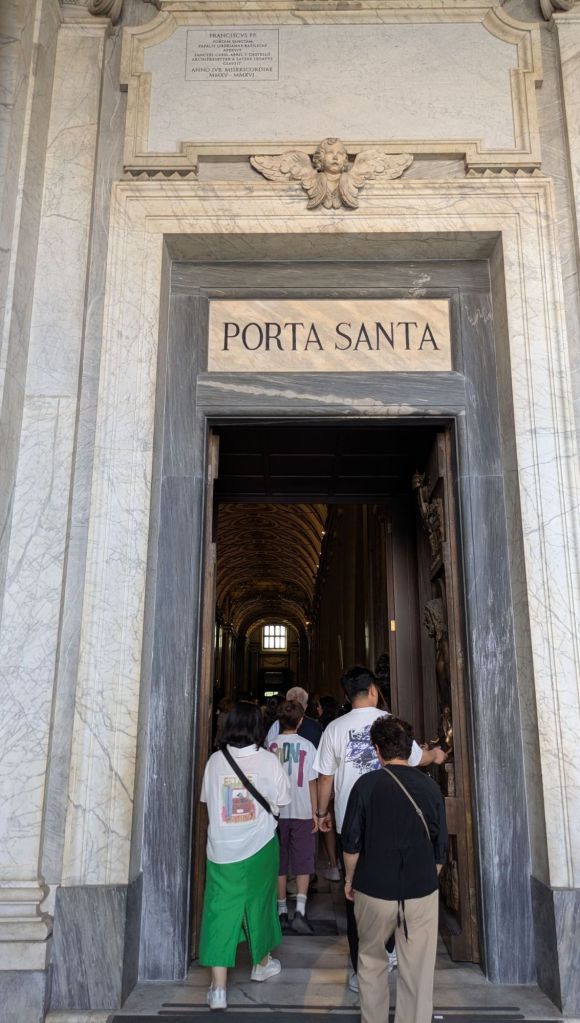
Basílica de San Pablo Extramuros, Roma

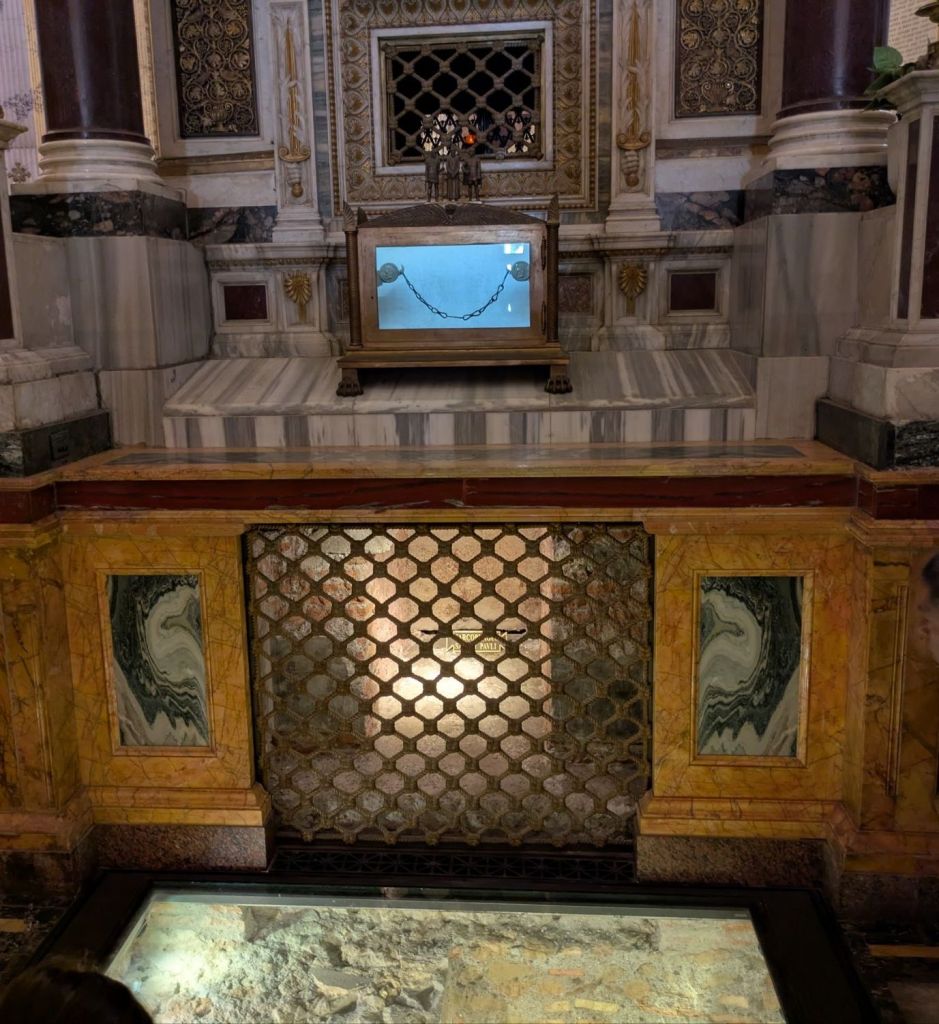
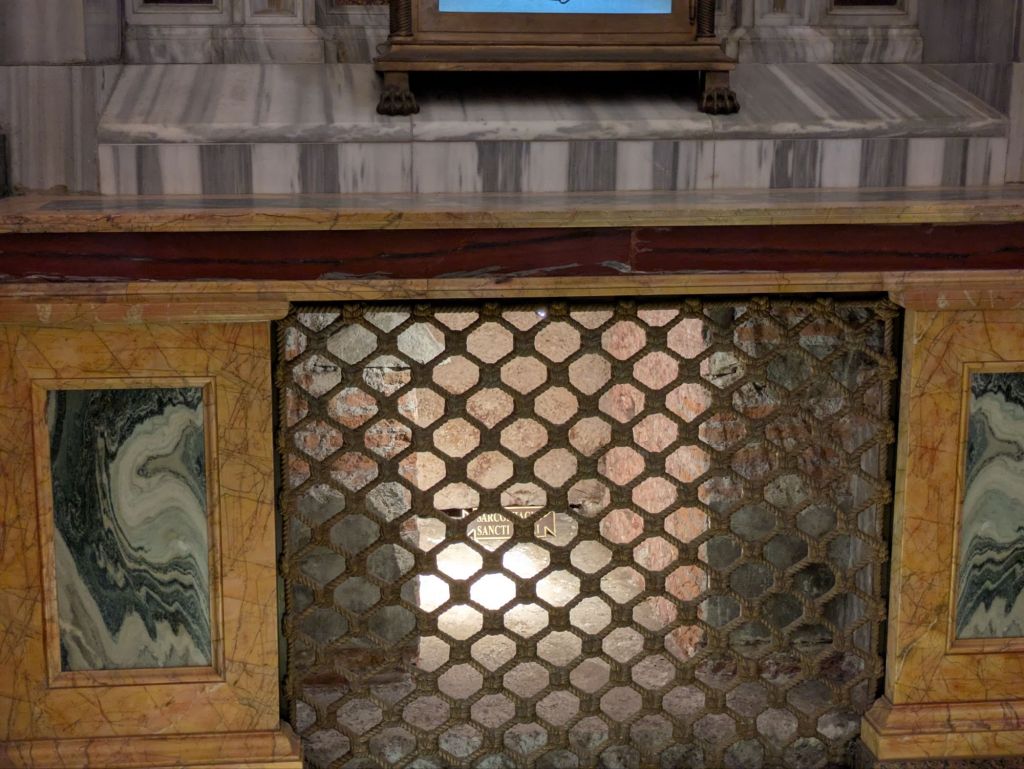
Sepulcro de San Pablo
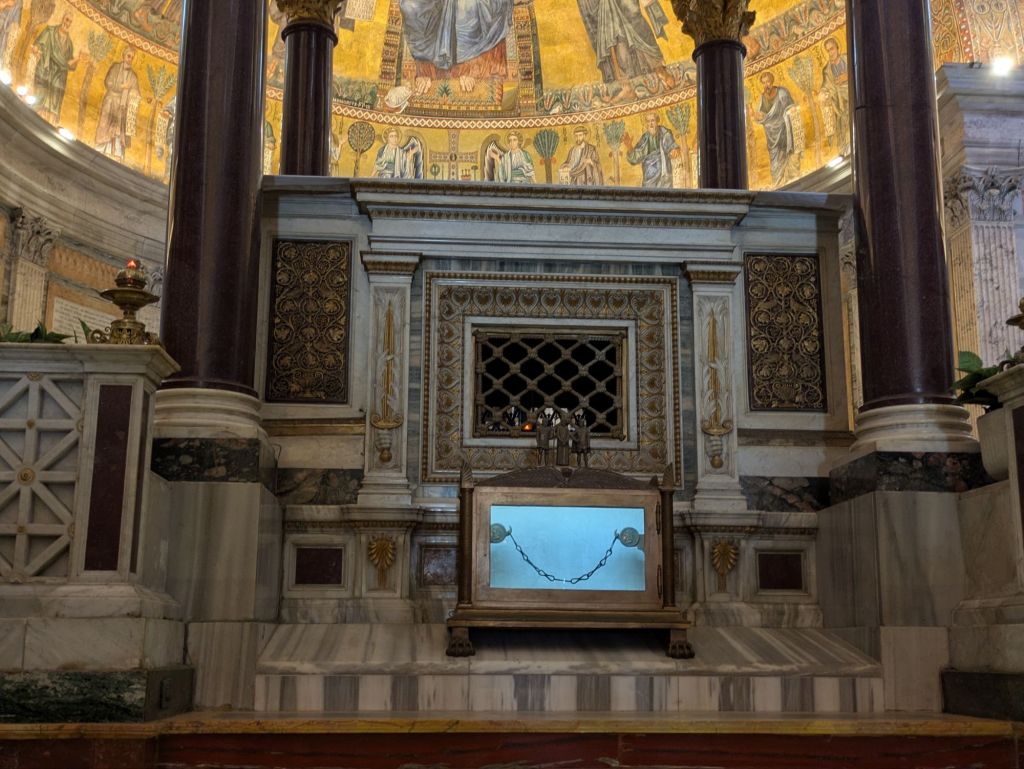
Trozo de las cadenas con las que ataron a San Pablo durante su cautiverio

Fuera de Italia hay otras dos Puertas Santas permanentes.

En España, hay una en la Catedral de Santiago de Compostela, que se abre en el Año Santo Compostelano, que se celebra cuando el 25 de julio, fiesta del Apóstol Santiago, cae en domingo.

La tradición del Año Compostelano tiene su origen en el privilegio de Calixto II (1122), confirmado por Alejandro III (bula Regis aeterni, 1179):  La Puerta Santa (también llamada del Perdón), situada en la Plaza de la Quintana, se abre al inicio de estos años y permanece abierta durante todo el año. Aunque el origen exacto de la puerta física es discutido, la actual parece que es del siglo XVI. Cruzarla forma parte del rito con el que los peregrinos obtienen la indulgencia plenaria. El próximo Año Santo Compostelano será en 2027. Recuerdo que con el colegio fuimos a Santiago de Compostela en el Año Jacobeo de 1993 (la secuencia es cada 6-5-6-11 años).

En Canadá, hay una en la Basílica-Catedral de Notre-Dame de Québec. Fue autorizada e inaugurada en diciembre de 2013 con motivo del 350º aniversario de la parroquia, la primera diócesis católica en América del Norte al norte de la América española. Esculpida en bronce por Jules Lasalle, muestra a Cristo con los brazos abiertos y a la Virgen. Se abre durante jubileos o años santos diocesanos designados (como el de 2013-2014 o el de 2023-2024 por el aniversario de la diócesis) y otorga la indulgencia plenaria en esos periodos.

Por lo que he visto, leyendo en agosto de 2025 y ahora para escribir este post sobre Puertas Santas, no hay otras Puertas Santas permanentes, pero ha habido temporales, por ejemplo, en el santuario de San Juan María Vianney en Ars (concedida por Benedicto XVI en 2007) y la de la Universidad Pontificia de Santo Tomás en Manila (2010).

Finalmente, me extrañó que no hubiese Puertas Santas en Hispanoamérica, en lugares como la Basílica de Guadalupe en México o la Catedral de Lima.
2 Comments

Filed under Travelling

Crossing the Rubicon

The expression “crossing the Rubicon” means passing a point of no return. It relates to the crossing of the river Rubicon by Julius Caesar in January (~10th) 49 BC. During last summer holidays in Italy we reenacted that crossing.

The crossing of the Rubicon by Caesar is described by Suetonius in his book “The lives of the Caesars” (we have at home a recent translation by the historian Tom Holland).

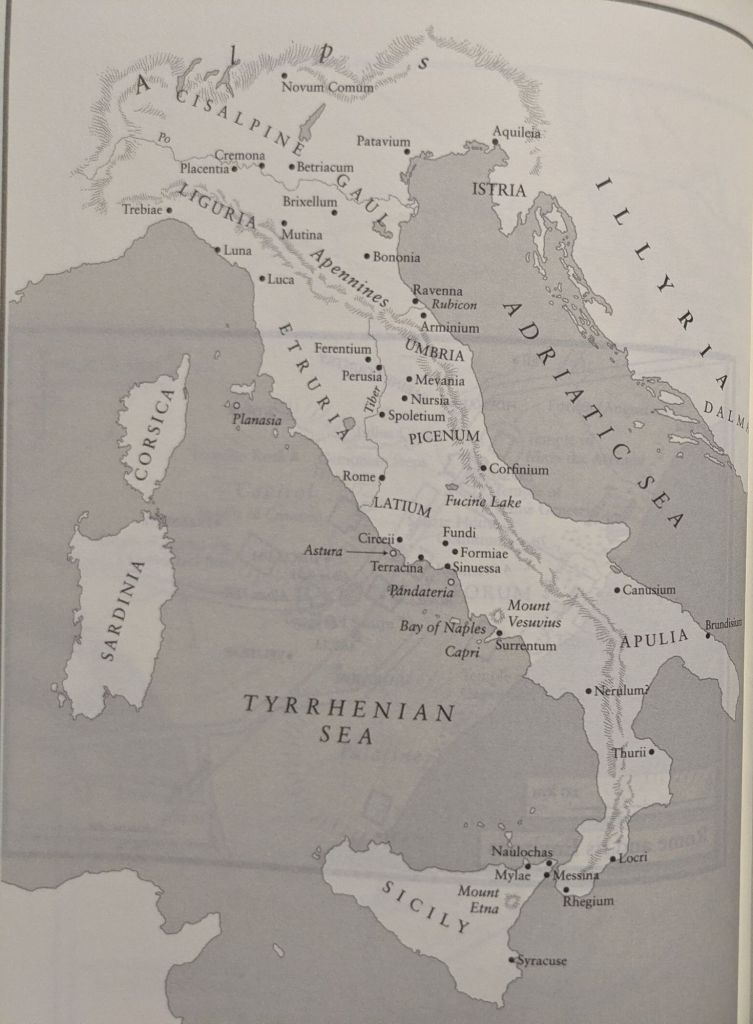
Map of Italy

In the map, the river Rubicon can be seen South of Ravenna, flowing to the Adriatic sea. The river later was called Fiumicino until the 20th century when the name changed back to Rubicon.

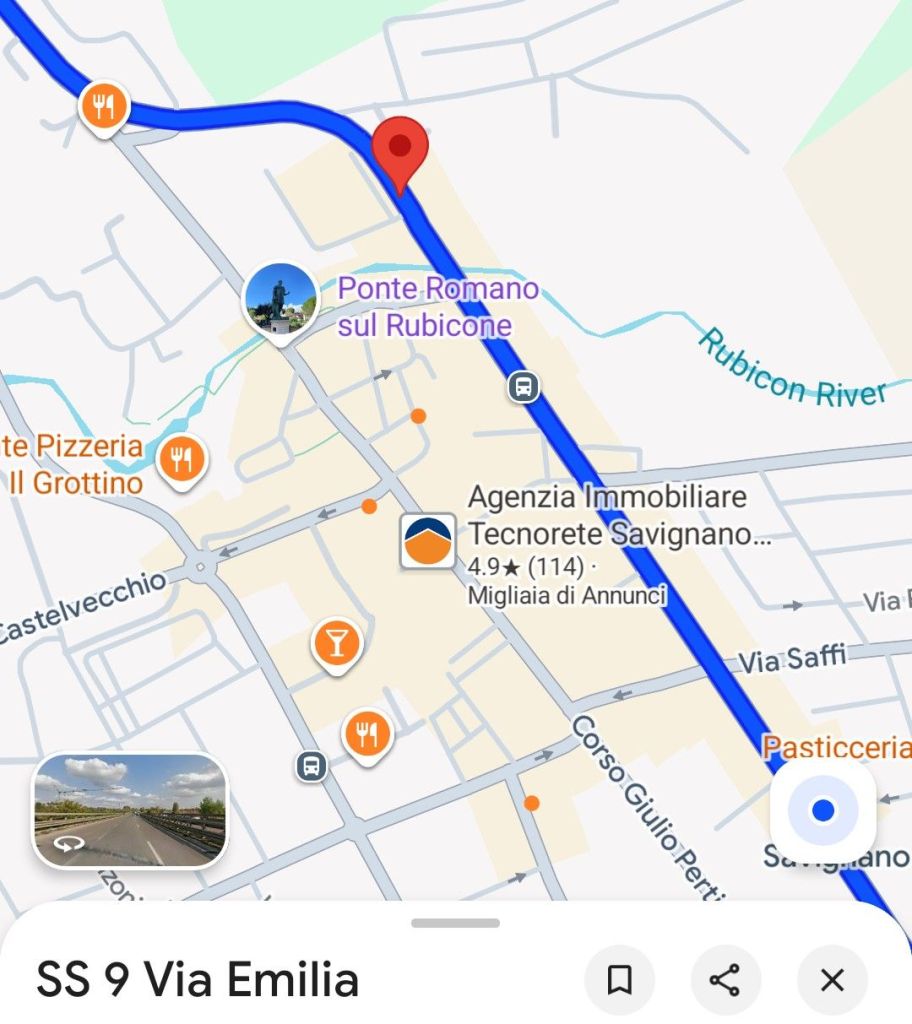
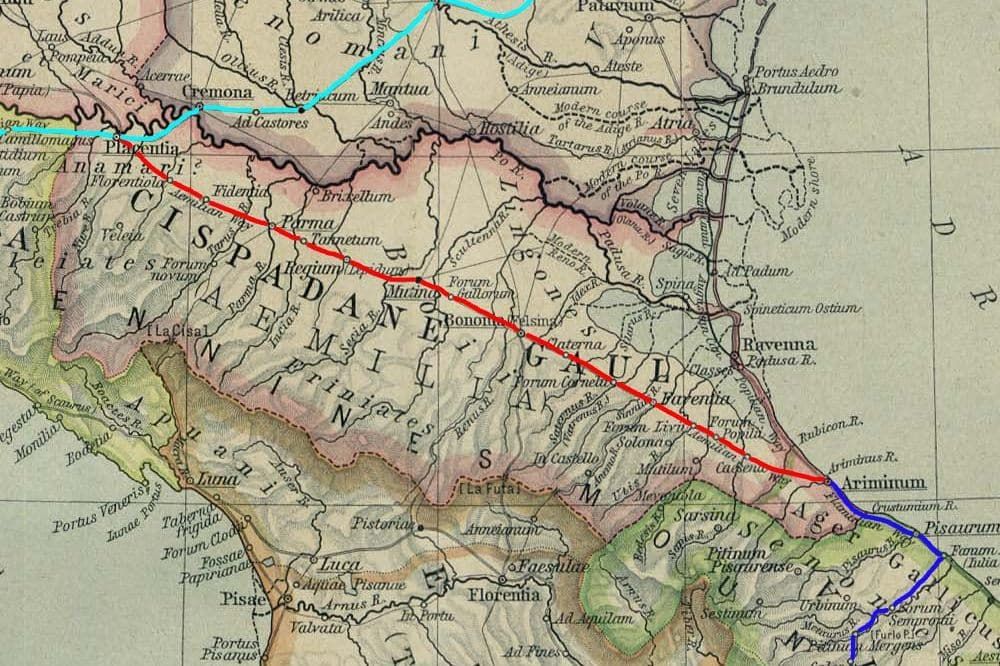
The course of the river is not the same as it was two thousand years ago and the exact location of the crossing is not surely known, though the more credible location is in the village which today is known as Savignano sul Rubicone. The former Roman road Via Emilia connected Bologna with Rimini, and the path is more or less preserved in the SS9 road, which crosses the Rubicon river in Savignano.

Via Emilia

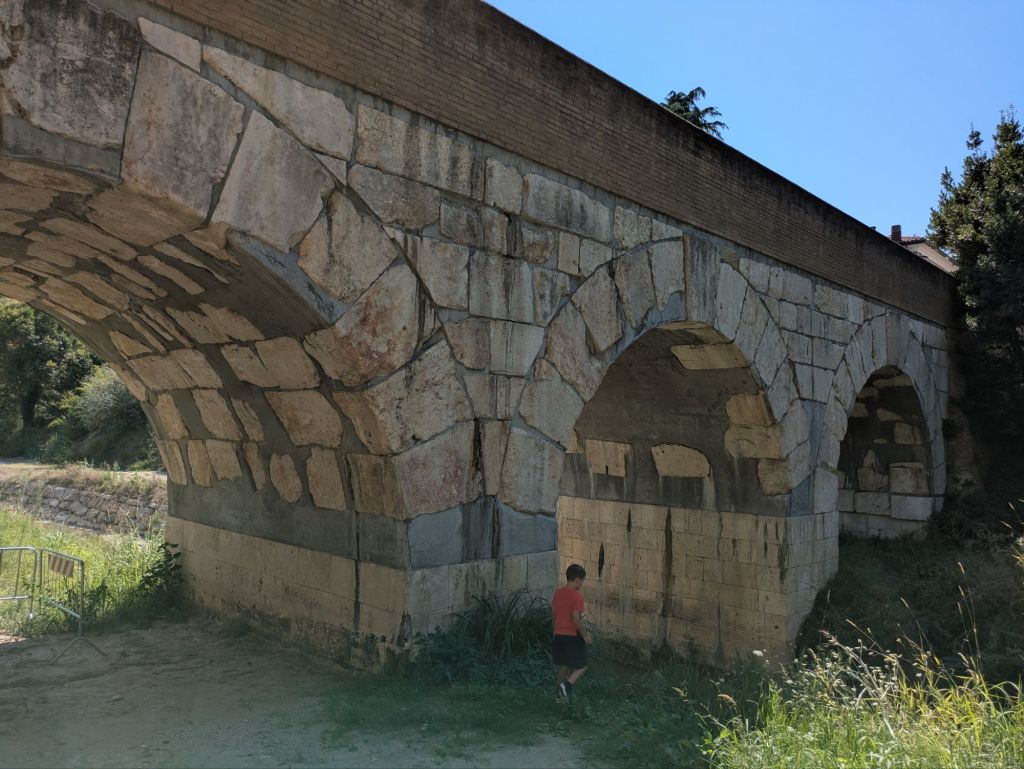
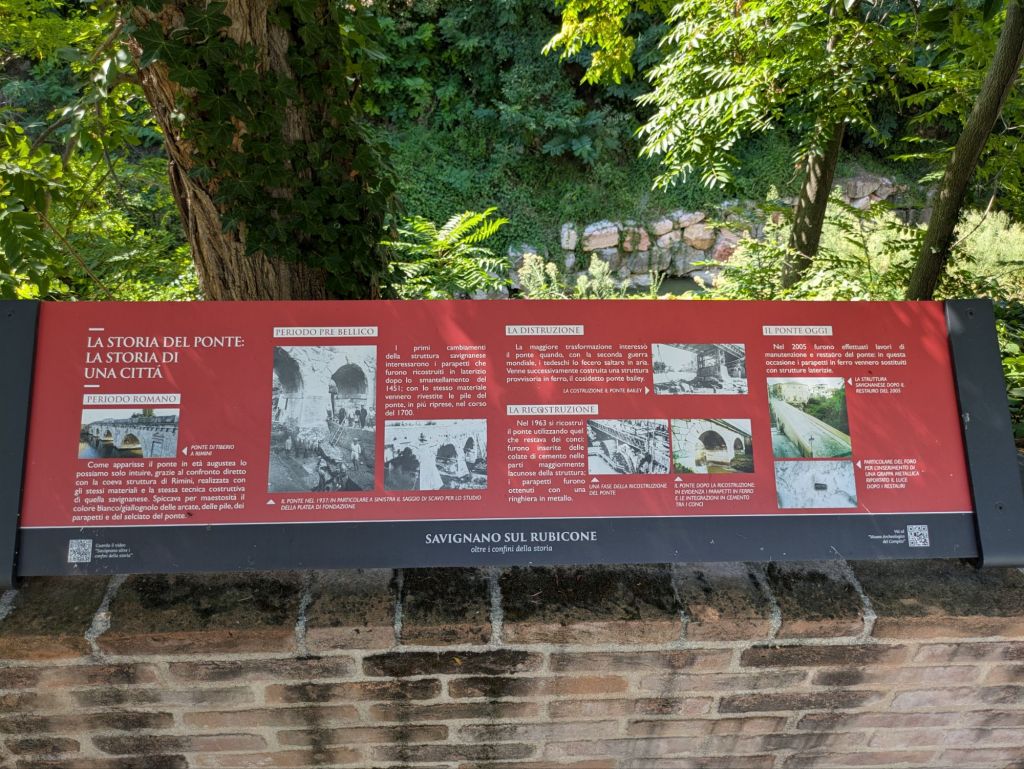
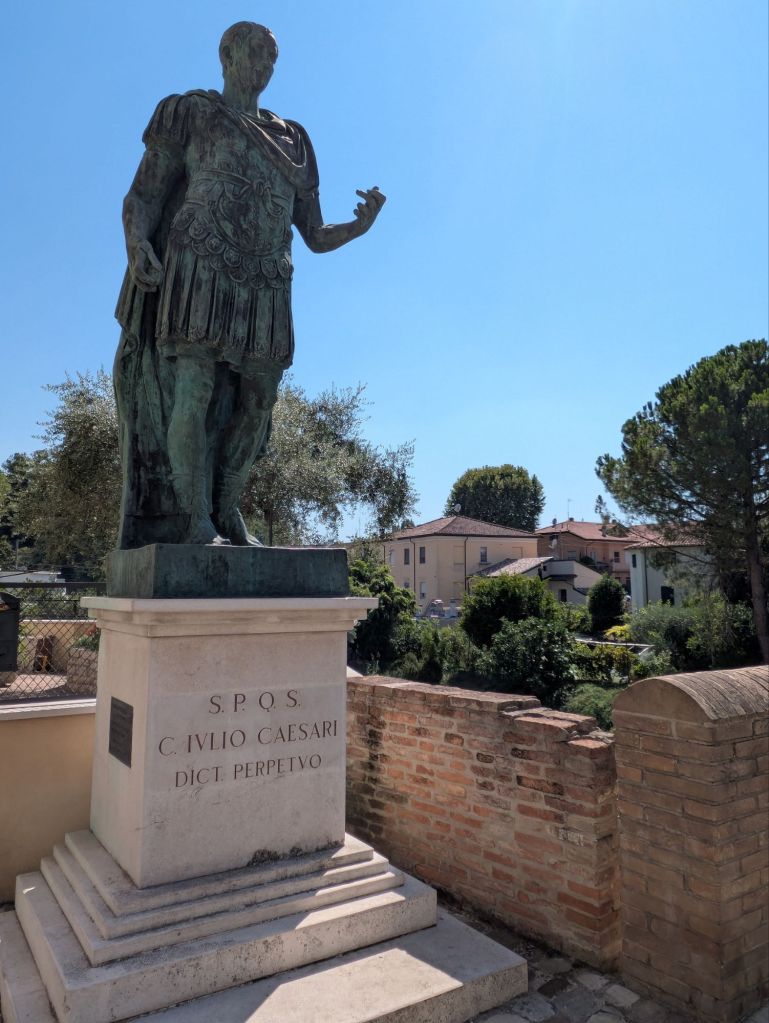
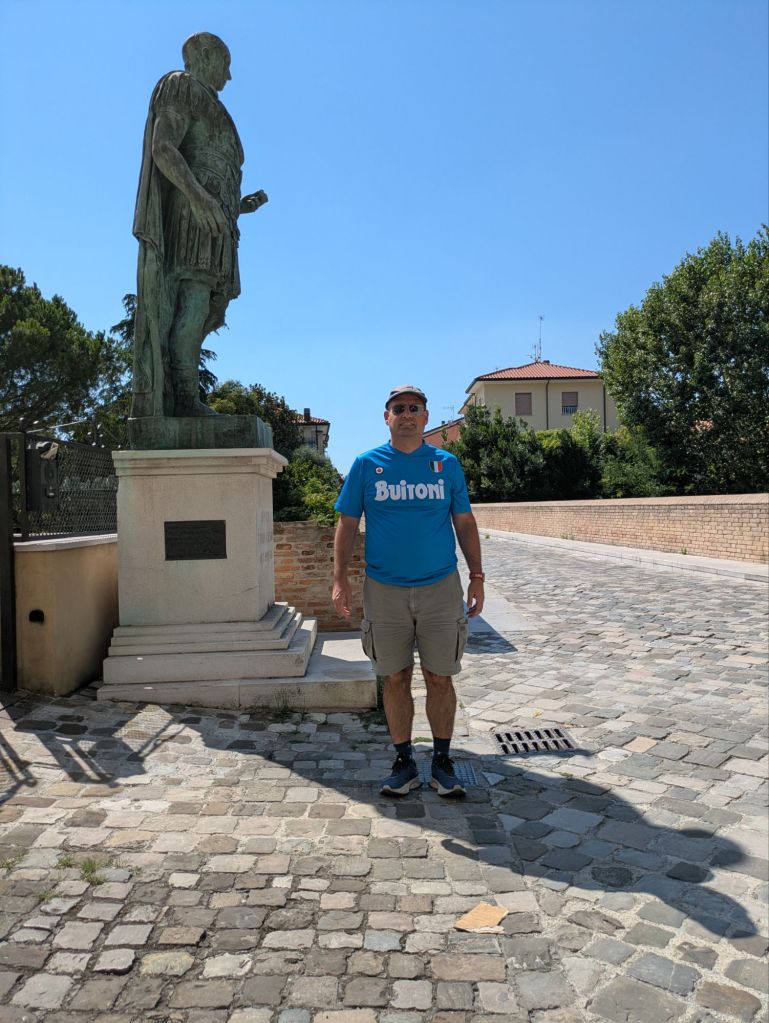
In the path of the former Via Emilia across the river there is a Roman bridge (which has gone through several renovations) where a statue of Julius Caesar is located.

Roman bridge over the Rubicon
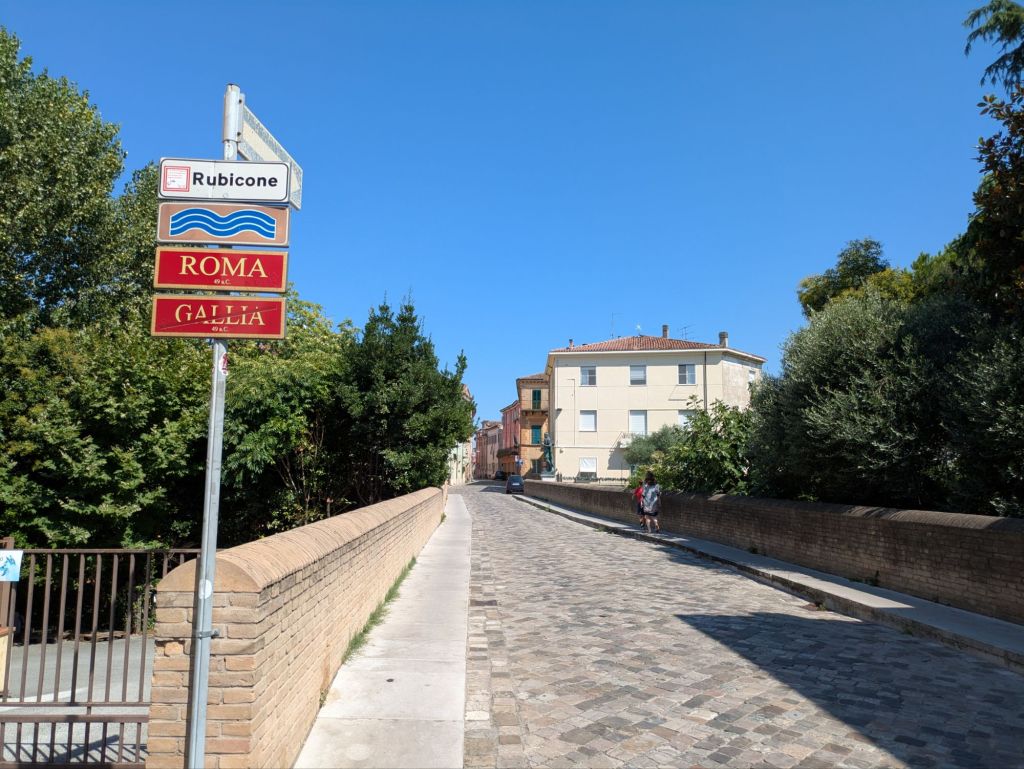
The bridge over the Rubicon marking the border between Roma and Gallia (Cisalpine Gaul)
“Senatus Populusque Senensis (“The Senate and People of Siena”) / Gaius Julius Caesar / Perpetual Dictator”
After crossing the Rubicon

I leave below some excerpts from Suetonius describing the events:

[…] he wrote letters to the senate, pleading with them not to deprive him of the special privilege granted him by the people; either that, or the senate should oblige other generals as well to divest themselves of their armies (he proposed this because he took for granted – or so it is thought – that he would find it easier to summon his veterans when the need arose than Pompey would to summon his raw recruits). Even as he was offering to disband eight of his legions and the command of Gaul north of the Alps, however, he demanded it as a condition from his enemies that he keep two legions and the province of Cisalpine Gaul, or else one legion and Illyria, until such time as he had become consul.

[30] When, however, the senate refused to engage with this proposal, and his enemies declared that they would never haggle over the security of the republic, he crossed into Nearer Gaul; there, after a circuit of the local courts, he made his base in Ravenna, with the intention of pressing his claim by armed force should the senate launch a crackdown on the tribunes of the plebs who were championing his cause. Such, at any rate, was the pretext he gave for civil war; but others think he had different motives. Gnaeus Pompey frequently used to say of him that because, as a private citizen, his income would be insufficient to complete the projects he had embarked upon, and to satisfy the expectations which the prospect of his return had aroused among the people, his goal was upheaval and chaos. Others say that he dreaded being compelled to give an account of all the auspices he had ignored, all the laws he had broken and all the tribunician vetoes he had flouted during his consulship – for Marcus Cato had repeatedly declared, and on oath too, that he would impeach him the moment he disbanded his army, and it was popularly anticipated that, should he return as a private citizen, then he would be obliged to answer the charges against him just as Milo had done, amid a ring of armed men. Evidence for this is provided by Asinius Pollio, who records that, as he gazed at the corpses of his enemies where they lay strewn across the battlefield of Pharsalus, he uttered these words: ‘They were the ones who wanted this – for not all my great achievements would have prevented them from finding me, Gaius Caesar, guilty, had I not had my army to turn to for backing.’ Some think he was so seduced by the habit of command that, after weighing up his own strength against that of his enemies, he seized the opportunity to grasp after the absolute power that he had been craving since the earliest years. This, it seems, was the opinion of Cicero, who writes in the third book of On Duties that two lines from Euripides were forever on Caesar’s lips (the translation is Cicero’s own):

For if the law must be broken, then let it be broken with the aim of winning a throne. Otherwise, show the law respect.

[31] So it was, the moment news reached him that the tribunes’ veto had been overridden and the tribunes themselves had fled the city, he ordered his cohorts to advance, but under cover, so as not to rouse suspicion; meanwhile, keeping his own intentions disguised, he attended a public festival, inspected the plans for a gladiator school which he was planning to have built, and hosted a well-attended dinner party, as he invariably did. Then, after the sun had set, and mules taken from a nearby mill had been harnessed to his carriage, he set out in the utmost secrecy, with only a modest retinue as company; for a while – because his torches had gone out, and he had lost his way – he blundered about, until, as the sky began to lighten, he located a guide, who led him on foot to where he needed to be; catching up with his cohorts on the banks of the Rubicon, the river which marked the frontier of his province, he paused for a while, revolving in his mind the sheer enormity of what he was contemplating, before turning to those nearest to him and saying: ‘Even now we could turn back. But once we have crossed that tiny bridge, everything will have to be decided by war.’

[32] Then, as he was hesitating, a wondrous thing happened: nearby him, a figure of remarkable size and beauty abruptly appeared, sitting and playing on a pipe; and when some of his soldiers – trumpeters and shepherds who had run to listen to the music, the apparition snatched the advance with a mighty blast, and crossed over to the far bank. Then Caesar spoke. ‘Let us go where we are summoned both by divinely authored signs and by the wrongs our foes have done us. The die is cast.’³⁹

[33] And so his army crossed the Rubicon; and he welcomed the tribunes who, following their expulsion from Rome, had come to join him, summoned the soldiers to an assembly, and then, weeping and tearing the garments from his breast, called on them to pledge him their loyalty. Some have thought that he went so far as to promise each and every one of them equestrian status – but this is incorrect. What actually happened is that, while he was giving his rallying cry to the troops, he would point again and again to a finger on his left hand, insisting that he would gladly tear the ring from it if only it would provide to those who were backing him in defence of his honour commensurate reward; but because those on the margins of the assembly – who could see him better than they could hear him – based their understanding of what he was saying on his gestures rather than on his words, the story spread that he had promised them all the right to an equestrian ring, plus 400,000 sesterces each.

[34] Here, in the order they happened, are the most significant things he went on to do. He seized Picenum, Umbria and Etruria; he defeated and then set free Lucius Domitius, the man who, on the outbreak of civil war, had been named his successor and had garrisoned Corfinium against him; he advanced along the Adriatic coast to Brundisium, which had been serving the consuls and Pompey as their bolthole, and from where they were planning to cross to Greece. Then, after the failure of all his various stratagems to block their escape, he made his way back to Rome and summoned the senate to discuss affairs of state, before heading for Spain, where he moved against three of Pompey’s legates (Marcus Petreius, Lucius Afranius and Marcus Varro), who between them commanded a formidable army. ‘First,’ as he had put it to his friends before setting out, ‘we will target the army without a general – and then, on our return, the general without an army.’ Sure enough, although he was delayed by having to lay siege to Massilia when the city closed its gates against him, and by a serious shortage of grain supplies, it did not take him long to bring everywhere under his control.

[35] From Spain he returned to Rome, then crossed to Macedonia, where he blockaded Pompey for almost four months behind massive siege works, before eventually defeating him in battle at Pharsalus and pursuing his fugitive rival to Alexandria…

[Note 39: In Latin, iacta alea est. According to Plutarch, in his life of Pompey, the phrase was ‘Let the die be cast’ (anerrhiphtho kybos): a quotation in Greek from the comic playwright Menander. Some editions of Suetonius, following this, accordingly amend Caesar’s famous saying to iacta alea esto.]

Leave a comment

Filed under Travelling