Category Archives: Travelling

A guesstimate about Egypt

Very often when we are with the family dining over the table and someone comments on any topic, you’ll hear my father say “give me a number… come on, you should be able to tell me an order of magnitude”. This is what is called a “guesstimate”, from the Wikipedia:

“Guesstimate is an informal English word derived from guess and estimate, first used by American statisticians in 1934 or 1935. It is defined as an estimate made without using adequate or complete information, or, more strongly, as an estimate arrived at by guesswork or conjecture.”

In this post I just wanted to share a “number”, a guesstimate, I worked while in Egypt.

When we left our stuff in the cruise boat, Luca and I were told by our guide that there were 300 such boats cruising the Nile. We certainly could appreciate that there were many in the harbour, and later we could see the traffic through the river. On one of the conversations we started to build our guesstimate: Can we guess how many tourists come to Egypt every year? If there are 300 boats at any moment, if in our boat there are 21 + 19 + 10 double rooms, if… if…

This slideshow requires JavaScript.

Here it is:

  • 300 boats at any moment in the Nile.
  • If our boat was the average boat size: 50 double rooms, thus 100 tourists per boat.
  • If 90% occupancy rate was the average during high season (4 months?); 70% during low season (8 months).
  • If 4 days was the average stay of tourists in the boat:
    • This is 30 rotations during high season; 60 rotations during low season
  • Assuming that 50% of tourists don’t go to Luxor & Aswan, just stay in Cairo, Alexandria, Sharm el-Sheikh…
  • Assuming that of the remaining 50% that go to Luxor, 30% connect between cities in other modes of transport different from boat (plane, bus, taxi, train…)

My guess is that there would be ~ 6 million visitors to Egypt every year.

Later on, I checked with Wikipedia rankings, and the real figure is about 12 million… so my guess is just 50% of the total… way far, sure, but in the order of magnitude, thus I’m quite happy with it.

You never know, maybe the input of the 300 boats was wrong; it could be that there are really 600 boats and my guess would have been just correct! (Please, if you find out that there are indeed around 600 cruise boats in the Nile, let me know ;-))
5 Comments

Filed under Travelling

Democracy in Tunisia?

Luca and I visited Tunisia last summer. Now that the country is going through revolts, the president Ben Ali has fled country, etc., I find it interesting to remember some of the thoughts and a conversation we then had.

During our trip we had a wonderful guide called Mohammed. We found it funny that he repeated many times some of its explanations. The good thing is that they have stuck in the memory. Some are irrelevant to this post such as “the North of the country produces the citrus fruit”; but others are related to the current situation.

Several times, he praised Habib Burgiba, the first president of the republic, for having modernized the country, extended suffrage to women (“before than in Switzerland!”) and provided free basic education to everyone. He also mentioned that about 20% of the members of the parliament were women.

Habib Burgiba was then judged by some medical experts as not in conditions to run the country, thus the charge was taken by Ben Ali, one of his ministers, and the president until this week.

Travelling through the country, my attention had been caught by the many pictures you could see of the president showing him as a kind of saviour (could you imaging such pictures of the prime minister in every corner of your country?).

This slideshow requires JavaScript.

In the way to the Sahara, we stopped at a service station and were having some chips and refreshments when our guide, Mohammed (who was fasting as it was Ramadan), came to us to chat. I then intentionally posed him the question: “Mohammed, you mentioned that there were 20% of women in the parliament, Ben Ali is in office for 23 years, this means he must have won 4 or 5 elections; do you elect him?”

He smiled, and softly replied, as if someone was going to listen, “there are elections, but they are not real. There is someone who acts as an alternative, but everybody knows that the president is going to win… it’s not a real democracy, it’s like in all Arab countries; there are no real democracies… well, may be with the exception of Lebanon, but then, they are not Arabs but Phoenicians…”

Let’s see if this time they finally get to have a real democracy, they deserve something better, at least Mohammed does.

1 Comment

Filed under Travelling

Big Mac in Aswan

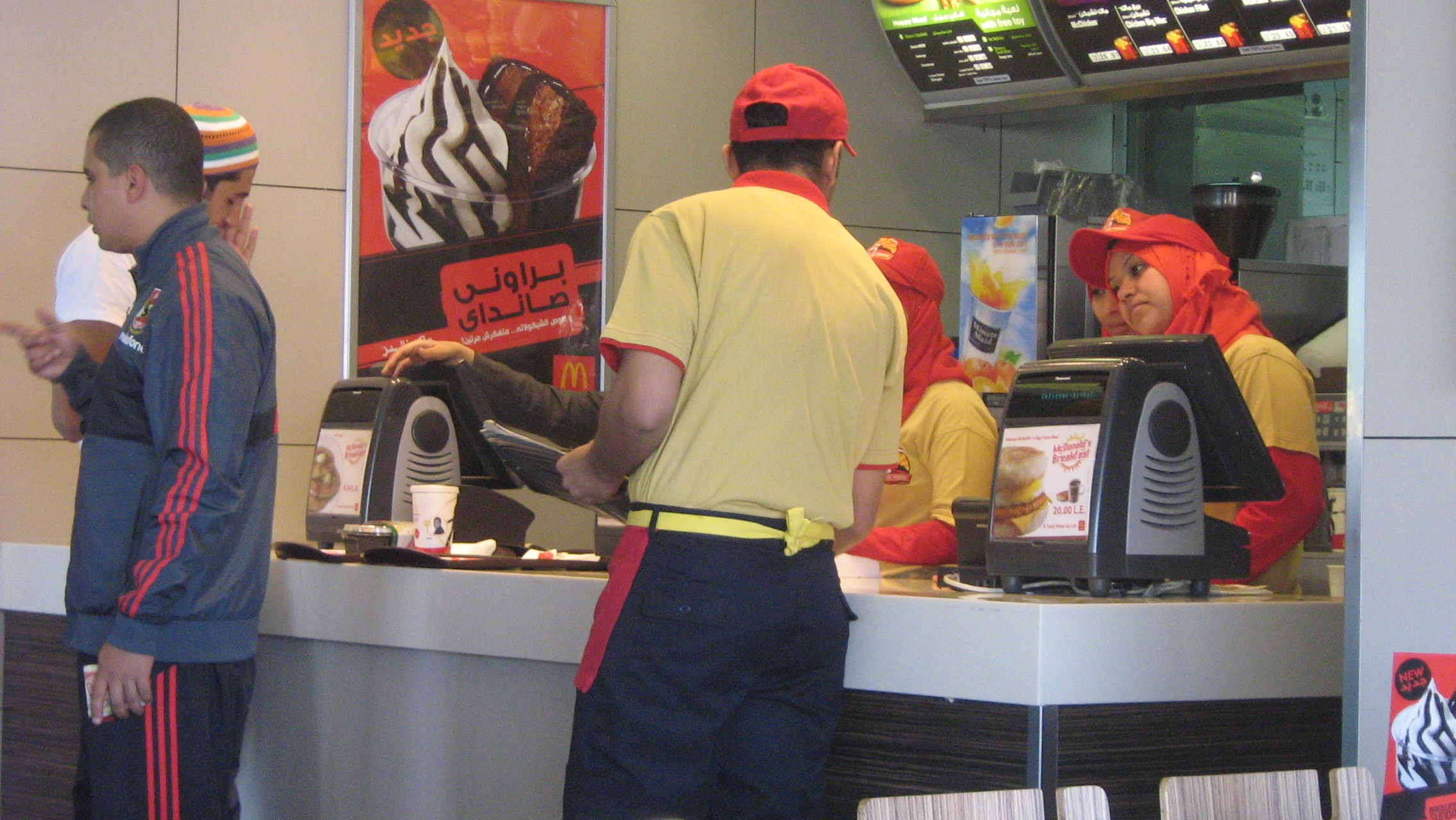
While in Aswan, Egypt, I went to a McDonald’s restaurant. When I finished my meal I went to the counter to ask “What is the price of a single Big Mac?”, “16.5 Egyptian pounds”.

I wanted to check The Economist‘s Big Mac index, their exchange-rate scorecard (see a detailed explanation), for the case of Egypt.

Already in the last list published it can be seen that they used a 13.0 pound price, while I was given 16.5 pound (probably because I went to a more touristic McD restaurant than the average). At the time of writing the post the exchange rate is: 1 E£ = 0.1726 US$.

The reference is always the price of the hamburger in USA (average of Atlanta, Chicago, New York and San Francisco), which in the latest publication of the index was 3.73$.

The dollar cost at the exchange rate of the hamburger was 2.848$; according to that, the Egyptian pound is 24% undervalued against the dollar (in relation to Aswan prices). The Economist normally calculates as well the implied purchasing power parity of the dollar: 4.42 (=16.5/3.73) while the actual exchange rate was 5.79 (=1/0.1726).

Finally, I wanted to remark 3 other things that caught my attention in the restaurant:

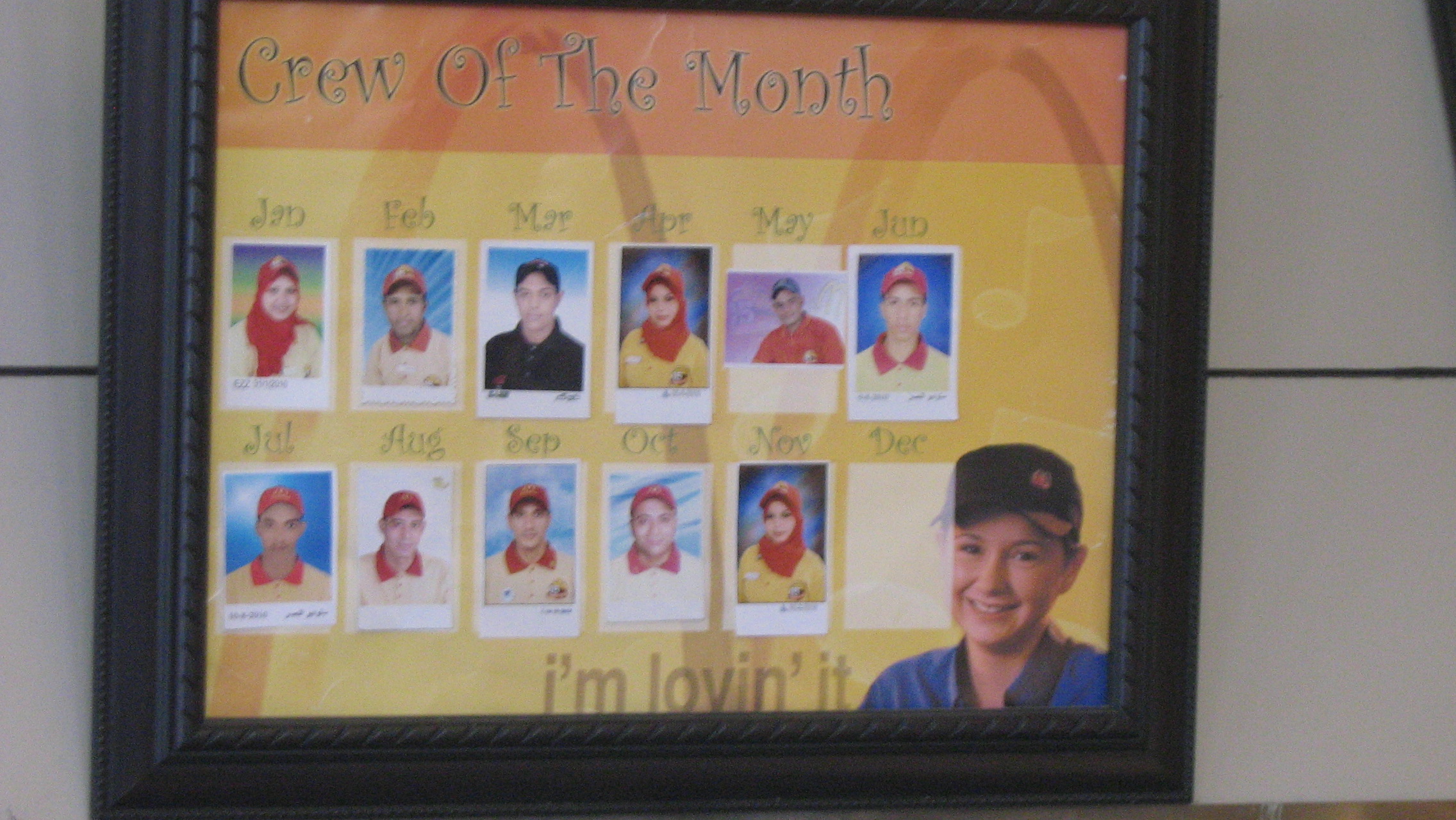
  • They had an employee of the month award and published it.
  • The uniform of the global company made local.
  • They provided delivery service… I wish they did that in Europe.

1 Comment

Filed under Economy, Travelling

Archaeologists

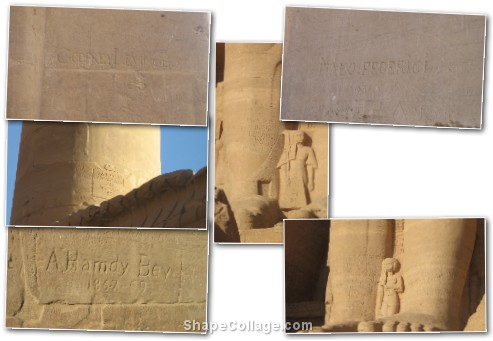
There is no doubt that archaeologists have done and continue to do a great and exhaustive work in Egypt… (yes, there is a “but” coming) But, while visiting several temples last week, I really got sick of seeing their signature in the middle of the statues, walls, hieroglyphics, etc…

Signatures from archaeologists ar various sites in Egypt.

Can you imagine that a conservator / restaurateur from the Louvre museum had just signed in the middle of La Gioconda while performing some work on the painting? Like: “L. Bernard, 1835” in the cheek or the forehead, where there is plenty of space.

I want to think that this was the norm in XIX and early XX century and that nowadays it is not happening, otherwise: archaeologists, please refrain from doing that!

As Luca put it: these were people who failed to understand their place in history. After all, to the general public Lecaros, Black, Hamdy Bey, Federici, Levinge, etc., are completely unknown names (luckily! imagine how many of their signatures and in what places would have been needed for them to be stars!).

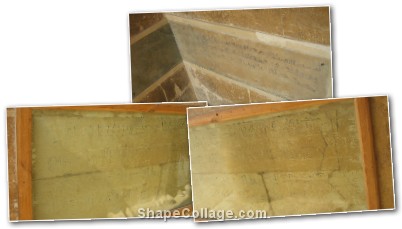
Having said that… who knows, maybe around the year 5,464 someone visiting these places may find a plaque honouring these signatures, like the one that can be seen today in Saqqara outlining the first “graffiti” in history, yet another inscription from another archaeologist in the year 1,232 BC, Hadnakhte, who wrote, on the wall of an already then 1,500 years old building, the following: “on a pleasure trip west of Memphis”.

Hadnakhte's graffiti in the House of the South, Saqqara.

3 Comments

Filed under Travelling

The first bloggers

I found while visiting some tombs in the Valley of the Kings and temples in Luxor that the Egyptian pharaohs were the first bloggers.

There are paintings older than the hieroglyphics from Egypt but, unless I am mistaken, we don’t know whether they just capture scenes of daily life/gods or relate to the story of a single individual (and in if that was the case, who is he?).

In the case of the pharaohs, they inscribed (or those working for them) in the walls and columns what had happened to the pharaoh in his life, apart from stories related to gods. Some months later or the next year they would come back and update it with the latest achievements (wars, victories, offers to different gods…).

Luckily, today we can just store our storyline (or whatever we may want to write about) in the internet and save ourselves the effort of gathering up to 134 columns as in the Great Hypostyle Hall in Karnak, Luxor (larger than St. Peter’s Basilica in Rome and St. Paul’s Cathedral in London together – some pictures below).

This slideshow requires JavaScript.

4 Comments

Filed under Travelling

Special assistance vs. free ride

This morning, at Cairo airport I found something I hadn’t seen since 2007 when I went to Moscow sometimes: passion for wheelchairs.

During the last week in Egypt, Luca and I have seen just 2 wheelchairs (in fact, she saw 2, I can only recall having seen one at Giza).

How many thousands of people we may have seen during this week? 1,000, 2,000, 10,000? No idea. But having been all day in the streets, museums, temples, etc., where there were crowds, I guess they were many. Let me use 2-3 thousands for simplification.

I know, this may be not a statistically relevant sample, but let me say there is a user of wheelchair per 1,000 inhabitants (there may be published stats on this out there; I didn’t check).

As you know, airline companies offer special assistance to get on board their aircraft. Yesterday, we found at the boarding gate 10 wheelchairs. We flew aboard a B777-200 with no more than 50-60% seats occupied, about 200-250 passengers. That is, 4-5% of passengers required special assistance in the form of a wheelchair.

As, I said, these are not statistically relevant samples, but these numbers bring to me some (provocative) thoughts:

  • At the airport we found 50 times more wheelchairs than in the outside world! That is what I call passion for them.
  • What is it so attractive in wheelchairs at airports? It’s a free ride (some body actually pushes it!), you get to avoid long queues and board first
  • Why don’t they all use wheelchair outside the airport? Nobody pushes it! The fact that streets and facilities are not adequately prepared might be a deterrent as well (just for people who can walk despite some difficulty).
  • It could happen that those flying are not the ones we found in touristic places and streets in Egypt… however, the factor of 50 is strikingly high to be explained only because of that, plus it would be strange for them to venture taking international flights and not wandering through the city.

Having said that, I’m totally in favour that this special assistance is provided because there will always be people who do need it. I wrote this post just out of surprise of seeing a queue of 10 wheelchairs, something I hadn’t seen in 3 years.

4 Comments

Filed under Travelling

Home

By now, most of you are aware that I moved recently to Toulouse. Some of you may have read about the process of finding my new flat.

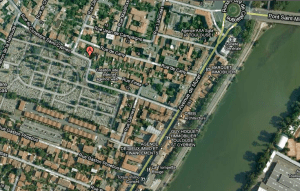
I live in the Rue du Cimetière Saint-Cyprien, close to the city centre. Going back and for to work takes about 20 minutes, there is traffic as they say here, but nothing compared to larger cities.

My street.

The flat is what they call a T3; this is a living room plus 2 bedrooms. The kitchen is way larger than my cooking skills will ever ask for. It has an open-air private parking lot…

… but really, what makes me call it home is this view:

Sweet home.

1 Comment

Filed under Travelling

On top of my gift list

The other question I liked about this week’s Plinky email was:

“What’s at the top of your gift wish list right now?”

Normally I would almost always say “a trip, a holiday trip”. Since I have just moved to France, I came here 3 times in the last 3 weeks; I have been in Poland, Barcelona and The Netherlands in the last month as well… what do you think I would ask for?

Yes, yet another holiday trip: to refresh my mind, get a good pack of unforgettable moments, discover new places, etc… and the nice thing about this is: that I will get it! Right now a friend, my partner and I will go to Egypt for a week…

“À bientôt, Toulouse!”

Leave a comment

Filed under Travelling

My first visit to Poland (EADS PZL)

PZL (Państwowe Zakłady Lotnicze – State Aviation Works) was the main aircraft manufacturer in Poland. With the fall of communism, the company was divided and some years ago Airbus Military acquired for EADS part of it, which since then is called EADS PZL.

This week I visited EADS PZL facilities both in Warsaw (where they produce C-295 outer wings, most of Airbus Military electrical harnesses, PZL-130 Orlik trainer airplane…) and Mielec (where the aviation services unit is located) in which was my first visit to Poland ever.

Frankly, I found Warsaw a quite nice place to live even though we could visit the old town only by night. We especially liked the couple of good restaurants we visited: Fukier (apparently the restaurant of choice of Felipe Gonzalez, Madeleine Albright, Naomi Campbell and us, of course) and U Kucharcy (where traditional Polish food is cooked in between the tables where customers are seated).

EADS PZL ZUA, the aviation services unit in the South of Poland (Mielec) operates dozens of aircraft in fire fighting and agriculture missions in places ranging from Sudan, Iran, Egypt, Chile… This unit is made up of a different class of people; adventurous pilots and mechanics that learn a language in few weeks and off they go to their next assignment in another corner of the world living by the aircraft in tents at ad-hoc built “bases” close to forests. Enjoy this video of a PZL M-18 Dromader in a demonstration flight:

I loved this visit. It was impressive to see the tens of Antonov 2 and PZL Dromaders, and we were offered a flight around the skies of Mielec in a Piper Seneca V, which I had the chance of piloting for a while.

To my fellow EADS workers: if you have the chance of spending some time working for PZL, do not doubt it, go for it.

This slideshow requires JavaScript.

6 Comments

Filed under Aerospace & Defence, Travelling

The most profitable roulette

Last weekend I attended Riaza’s local festivities with some friends who have a house there. Riaza is a small and beautiful village in the province of Segovia famous for its main square.

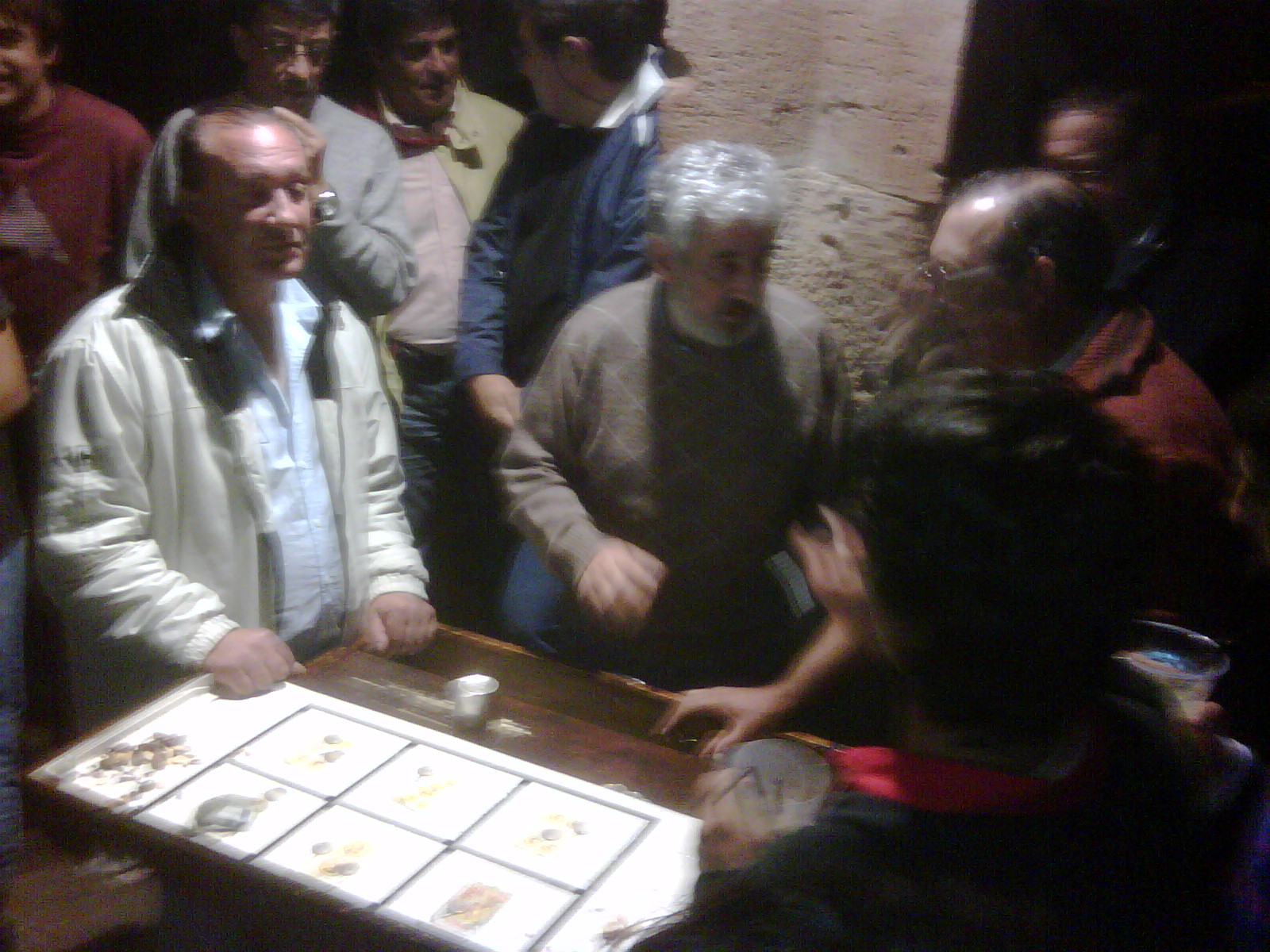
One of my friends raised to me the issue of a game being organized by some locals. It was a kind of casino roulette, but very much simplified…

Instead of 36 numbers plus zero, there were only six. Instead of using an actual roulette, they used just a six-sided die and small cup. Instead of casino coins, bets were placed directly with cash, starting from one euro. Instead of using a green clothed table they used a small wooden board with the images of 6 Spanish playing cards; with numbers 1 to 6.

Prize. We did not know how they came up with the amount of the prize, but it was perfectly established to maximize their benefits and attract as many players as possible. In case you bet for the right number, they gave you 4 times the amount you bet plus your stake, i.e., you bet 1 euro and are lucky, you then walk away with 5 euros.

If they had offered more money, the expected value for the organizers would have been zero or a loss. Have they offered less (e.g., to just double the bet) and not so many people would have been tempted by the game.

Offering 4 times the stake to the players, means  to them a mathematical expectation of -0,17 € for a one-euro bet. For the organizers means the opposite: a business with an expected profit of 17% of all the amounts at stake.

Compare this to the business of a casino with a French roulette, with 37 numbers, in which the expected profit for the casino is 2.7% (where the prize for hitting the number is 35 times the amount you bet). This local game is 6 times more profitable than the casino!

The next question is: how much money could they make out of it? I first saw them at 2:30 am of Sunday morning. At 3:30 am they were still there, though at 4:30 am they were not. Let me assume they hold the village-casino for about 8 hours a day (from 20 pm to 4 am, being conservative, i.e., assuming they are not out there during most of day time).

The highest amount we witnessed at the table at one single round was in excess of 40 € (including a 20€ note), but I assume they had some collaborators among the crowd. The lowest amounts were around 6-8 euro per round. Let’s assume the average to be around 10€ per round.

Each round we witnessed lasted very short time: less than a minute, though we did not measure it. Let’s assume there was exactly a minute, and that they kept that rhythm during the 8 hours…

  • They would have earned about 1.67€ per round.
  • About 100€ per hour (33€/hour per person, taking into account that they were three organizers).
  • 800€ per day.

By organizing the game for four or five days during the festivities they managed to take home their monthly salaries for the three of them out of this simple game.

Some times it is surprising how easy a business can be.

4 Comments

Filed under Investing, Miscellanea, Travelling