Category Archives: Economy

The end of private property

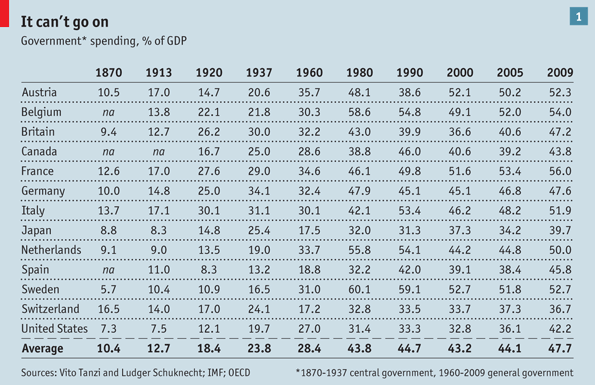
Last Saturday, while reading the last issue of The Economist at home, I found the following table with the evolution of government spending for some countries:

Government spending as % of GDP, source: The Economist

You can see that the trend is upwards for all countries.

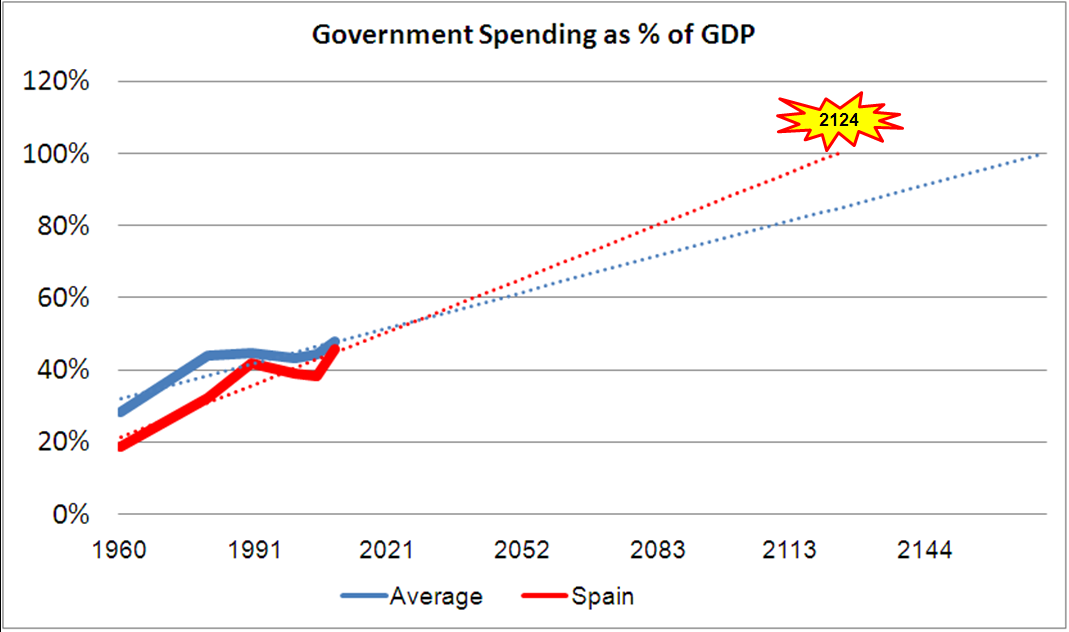
In one of my favourite books, “Augustine’s Laws“, the author goes on extrapolating several trends in the defense and aerospace industry. I did the same with this table for the average of these countries and the particular case of Spain, for obvious reasons.

When will government spending reach 100% of GDP?

Extrapolating the trend, this would occur in Spain  the year 2124 (for the average of the countries in the table it would happen in 2171). What would that mean? By 2124 every euro spent in Spain would be spent by the government (local and central), not a dime spent by individuals. The end of private property.

Government Spending as % of GDP, extrapolation

That is not necessarily worrisome: we would be provided a home by the state, food to eat (the trend doesn’t say whether we would have to eat in public canteens or we would receive vouchers to get stuff from grocery shops), clothing, etc… We would become a kind of communist country in the end. Don’t worry, United States would join us some years later. I guess the last country in joining this pan communist block would be Switzerland, but its time would come, too. No Cold War this time.

In case you wanted to start-up a business, you’d better do it soon: I guess some years before the doomed 2124 it would be prohibited to launch such kind of initiatives. Good luck with your venture! I’ll just look forward to a pleasant and quiet 9-13 position in such an administration. 🙂

Leave a comment

Filed under Economy

Impact of Airbus in Toulouse employment

Some days ago, I attended for the first time a meeting of Rosemasters club in Toulouse. We were about 20 people attending. During the introduction round we discovered that there were 5 Airbus employees among us, which was 25% of us (plus 2 former employees). This could be expected given the importance of Airbus in the city of Toulouse… but, how important is it really?

I had read in some studies about the impact of air transport and aerospace industries in the economy of a given region; taking into account direct employment, indirect and induced. You may take a look at the report “The National Economic Impact of Civil Aviation” [PDF, 1.5MB] prepared by DRI•WEFA, to see some multipliers (Table 1 in page 8).

In the study, we can see that in the case of the USA, for every aerospace job there are 1.9 indirect jobs created and 1.5 induced jobs; thus one aerospace job creates 3.4 jobs.

If we use the same figures for the case of Toulouse:

  • Airbus and  EADS employ over 21,000 people here;
  • there would be another 41,000 indirect (employment generated in the businesses that supply goods and services to the aerospace sector) and
  • 32,000 induced jobs (employment in other sectors generated thanks to the income spent by direct and indirect aerospace-related employees) thanks to the activity of EADS in the region, in total ~73,000 extra jobs.

These together with the 21,000 jobs from EADS make up for a total of ~94,000 jobs.

Toulouse is a city of ~440,000 inhabitants, with 1.1 million living in the metropolitan area: ~9% of the population of the metropolitan area has a job created directly or indirectly thanks to EADS activity… if we talk about families, between 25-30% of the families depend on a job created directly or indirectly thanks to EADS activity.

No doubt, aerospace is a strategic sector for the region.

4 Comments

Filed under Aerospace & Defence, Economy, France

Algunas cifras de la industria cultural

Hace unos días leía una noticia con cifras sobre estimaciones del valor de las descargas de un estudio encargado por la Coalición de Creadores e Industrias de Contenidos (CCIC). En ella hablaban del orden de 10.000 millones de euros al año. Y, claro, pensé “¿se han vuelto locos?”

Con este post no pretendo argumentar en contra de la Ley Sinde, ni explicar porque puede ser una mala ley, o aportar un grano de arena en el sentido de hacia donde crea yo que debe ir la industria cultural, ni defender que las descargas no son ilegales, etc… No. Para eso, ya hay otra serie de personas que han escrito muy buenas entradas en sus respectivos blogs o artículos en periódicos (Enrique Dans, Julio Alonso, Juan Carlos Rodríguez Ibarra, Jesús Encinar, etc…).

En este post solo quiero juntar una serie de cifras para que veamos lo absurdo y disparatado de las estimaciones que se hacen y publican desde la industria cultural. Así que voy a repasar el espectro cultural de mayor facturación a menor.

Libros

El sector editorial facturó en 2009 3.109 millones de euros (dato de la Federación de Gremios de Editores de España).

  • Es cierto que en 2009 cayeron las ventas un 2,4% respecto a 2008, pero es que hubo una crisis de por medio (!), quiero recordar en el 2009 el PIB de España cayó un 3,6%.
  • De hecho en los últimos 10 años las ventas del sector editorial han aumentado un 19,3%.
  • En 2009 se editaron 76.213 títulos, un 4,4% más que el año anterior. Si la oferta de libros crece a ese ritmo, necesariamente los ingresos por libro, en media han de disminuir. Cada vez la oferta cultural es mayor y como publicaba en un post Jesús Encinar, el valor de las obras debe tender a cero.
  • El libro digital todavía solo representaba un 1,64% de la facturación total.
  • Del orden del 28% de las ventas son debidas a libros de texto no universitario… es decir, año tras año se hace pagar a las familias españolas ~870 millones de euros en libros de texto del colegio porque se ha cambiado una coma, porque la forma de sumar y restar es diferente a como era en 2008, y porque la Historia desde el paleolítico a la transición y entrada en Europa ha cambiado (nunca se llegaba a más en las clases de Historia)… (esto sí es piratería).

La literatura no se acaba.

Cine

En el caso del cine los datos son del Ministerio de Cultura, encontrados vía el blog Periodistas 21. El cine en 2009 facturó 671 millones de euros:

  • Un 8.4% más que en 2008.
  • Un 35% más que hace 10 años. Esto es un crecimiento anual del 3.1%.
  • El cine español recaudó 104 millones de euros en 2009 frente a 69 millones en 1999. Esto es un 51% más que hace 10 años (!) o un 4,2% más cada año.
  • El cine español en estos 10 años ha mantenido constante su cuota de mercado frente al norteamericano, y si acaso la ha aumentado (15,55%).
  • En 2009 había un 22.1% más de salas que en 1999.
  • Alguien dirá que en 2009 hubo menos espectadores: 110 millones frente a 131 en 1999.
    • A mí esto lo que me sugiere es que el coste medio por entrada en 1999 eran 3,8€ (630 pesetas) mientras que en 2009 eran 6,1€, un 61.1% mayor! Esto es un incremento anual del 4,9% (¿a quién le han subido el sueldo los últimos 10 años un 4,9% al año?)

Ayudas al cine

En el año 2009 se aprobaron en los presupuestos 87 millones de euros en ayudas al cine (de los que se ejecutaron 76 millones).

  • Esto es el cine español ingresa en taquilla 104 millones y recibe en subvenciones 87 millones. Es decir, el 46% de los ingresos procede de las subvenciones.
  • En 2009 se realizaron 135 largometrajes íntegramente españoles, frente a 44 en 1999 (!), esto es más de 3 veces más o un crecimiento ininterrumpido del 12% al año.
  • Si la producción de largometrajes aumenta a ese ritmo (12% año), naturalmente resulta insostenible que cada película pueda vivir de los ingresos de taquilla por mucho que estos aumenten (4,2% al año) a un ritmo mucho mayor que la economía y los salarios de los consumidores. A este ritmo, el valor de las películas de nuevo debe tender a cero.

El cine no se acaba.

Música

Ventas de discos

De nuevo desde el blog Periodistas 21, he accedido a las cifras de Federación Internacional de la Industria Discrográfica (IFPI), quien para España usa las cifras de Promusicae (PDF).

  • En 2009 ingresaron 211 millones de euros. Un 17% menos en 2008, y un 71% menos que en 2001. Esto es un -11,8% al año.
  • En ese mismo informe se indica que las ventas digitales aumentaron un 10,6%, hasta los 32 millones de €… (eso es no querer ver una tendencia).

SGAE

La SGAE ingresó en 2009 317 millones de euros (canon incluido), un 5,1% menos que en 2008.

  • De ellos, 27,67 millones de euros fueron gracias al canon digital, un 9% de la facturación. Esto es un 72,9% más que en el año anterior.
  • De ellos, más de 120 millones de euros provenientes únicamente por el pago de tasas de cadenas de televisión y radio, un 37% de su facturación total.
  • Los derechos de autor generados de la venta de discos y otras obras en soporte físico (CD y DVD fundamentalmente) ascendieron a 20,46 millones de euros, un 30,5% menos que en 2008. Las cifras de SGAE hablan de ingresos de 60 millones en 2000. Esto supondría una caída del 66% o un -10% anual.
  • Si de los 211 millones de la venta de discos, solo 20,46 millones fueron a parar a los autores, hay un 90,3% del negocio que se lo están quedando los intermediarios (hay que tener en cuenta que los 20,46 M€ corresponden solo a SGAE y hay otras sociedades, que entre todas suponen un 28% del mercado… luego realmente el procentaje que se queden los intermediarios debe ser del orden del ~87%)
  • La SGAE repartió 346 millones de euros (un 6,1% menos que en 2008) entre sus 32.106 socios nacionales y los 181.099 artistas extranjeros representados por otras sociedades; esto es una media de 1.623 euros por artista (suponiendo que lo repartiesen a partes iguales… pero no es así, el 1,73% de los autores se reparte el 75% de los ingresos).

Canon digital

Los ingresos totales por el canon digital en 2009 fueron de 93 millones de euros, entre todas las sociedades de gestión.

El Gobierno publicó una Orden ministerial en 2008, donde determinaba unos límites para compensación equitativa por copia privada de entre 37,2 y 34,8 millones de euros para la modalidad de reproducción de libros, y de entre 75,4 y 80,6 millones de euros para la modalidad de reproducción sonora y audiovisual.

***

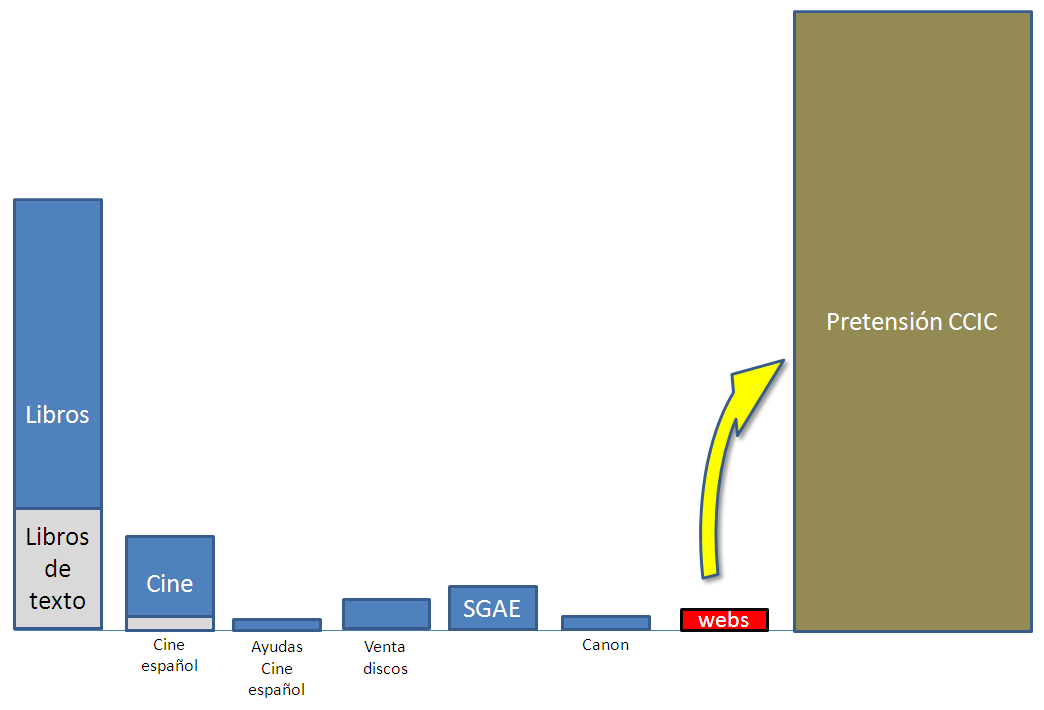
Una vez hecho este repaso vemos que toda esta industria cultural apenas superó los 4.000 millones de euros… lejos de los 10.000 que pretenden hacernos creer que están perdiendo debido a las descargas. Estos 4.000 millones se producen después de que el sector editorial y el del cine, que son de largo los mayores, hayan crecido en los últimos 10 años.

Por último, leía en otro artículo hace unos días que a través de estudios de Nielsen y de publicidad se llegaba a que la cifra de volumen de negocio que pueden manejar unas 300 páginas de descargas es de  entre 150 y 170 millones de euros anuales.
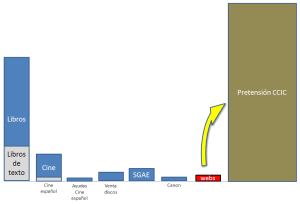
Comparación volúmenes de negocio de la industria cultural.

Si tomamos esas cifras como buenas, y dado que ese es el camino que indica la demanda, la industria lo tendría muy fácil: replicar esas páginas de enlaces y dar ese valor añadido que ofrecen las actuales páginas. Con mejores versiones/grabaciones de las películas conseguirían ganar en tráfico. Si lo hicieran bien se llevarían esos 150 millones de euros (verían como nunca son 10.000 millones).

Ah, y una vez hiciesen eso, imagino que tendrían la vergüenza torera de devolver el canon, dado que el Tribunal de la UE declara que dicha tasa es ilegal y no se puede aplicar a empresas y profesionales que adquieren equipos y soportes de reproducción de contenidos digitales ya que el uso que le dan es ajeno a la copia privada”.

13 Comments

Filed under Economy

Big Mac in Aswan

While in Aswan, Egypt, I went to a McDonald’s restaurant. When I finished my meal I went to the counter to ask “What is the price of a single Big Mac?”, “16.5 Egyptian pounds”.

I wanted to check The Economist‘s Big Mac index, their exchange-rate scorecard (see a detailed explanation), for the case of Egypt.

Already in the last list published it can be seen that they used a 13.0 pound price, while I was given 16.5 pound (probably because I went to a more touristic McD restaurant than the average). At the time of writing the post the exchange rate is: 1 E£ = 0.1726 US$.

The reference is always the price of the hamburger in USA (average of Atlanta, Chicago, New York and San Francisco), which in the latest publication of the index was 3.73$.

The dollar cost at the exchange rate of the hamburger was 2.848$; according to that, the Egyptian pound is 24% undervalued against the dollar (in relation to Aswan prices). The Economist normally calculates as well the implied purchasing power parity of the dollar: 4.42 (=16.5/3.73) while the actual exchange rate was 5.79 (=1/0.1726).

Finally, I wanted to remark 3 other things that caught my attention in the restaurant:

  • They had an employee of the month award and published it.
  • The uniform of the global company made local.
  • They provided delivery service… I wish they did that in Europe.

1 Comment

Filed under Economy, Travelling

My 2009 tax receipt

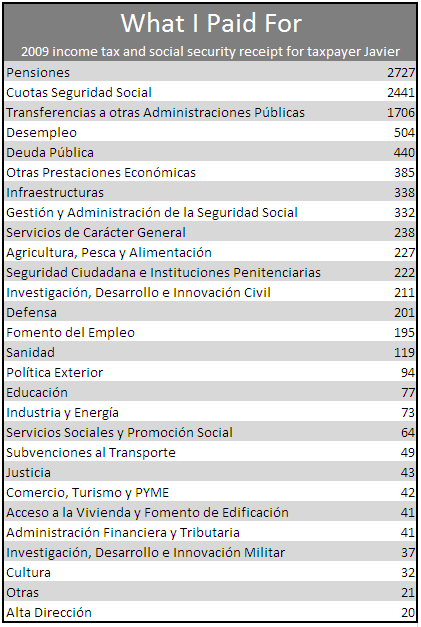
Some days ago, my friend Bruno tweeted a very interesting article about a proposal by the American think tank Third Way to enclose a kind of tax receipt detailing the taxpayer the use the administration had given to her funds (see the original receipt in the previous link).

Therefore, this post is not an original idea but the application of that proposal to the case of Spain and me as the taxpayer.

To build the “tax receipt” I used 2009 figures. The source I used for a detailed breakdown of Spain’s budget is the same one than a I used in a previous post: a good infographic from lainformacion.com.


My 2009 income tax and social security receipt.


Some curiosities:

  • I (and you too) paid more than double for unemployment subsidies (504 €) than to foster employment (195 €),
  • I spent 440 € to pay off public debt,
  • I paid 119 € for health… I consider that cheap; in 2009 I actually went to the doctor couple of times and got some vaccines partially subsidized.
  • I paid 201 € in defence and 37 € in defence-related R&D… taking into account that my salary partially comes from there, I wouldn’t mind more of it to be spent there.

One final remark: the government when decreased functionaries salaries in spring was looking with those measures to cut ~15.000 million € in about 1.5 years… this would mean about 220 € per inhabitant / year… where would you take those 220 € from my 2009 bill?

3 Comments

Filed under Economy

Is talent really worth it? (Book review)

I am subscribed to The Economist since about 3 years ago. It not only provides with very interesting articles every week and lots of new ideas, but from time to time I am asked to take part in surveys. As a way to show appreciation they normally offer a study, a book, etc…

The latest book that I received from them and read is “Pay check. Are top earners really worth it?”, by David Bolchover.

The book is ferocious critique of CEO’s and finance workers’ pay. The average CEO in the USA earned in 1980 42 times the average blue-collar salary, while by 2000 this multiple increased to 531 times!

The book makes a clear difference between entrepreneurs, true generators of wealth, and the top management of multinational companies. He argues that there are three necessary conditions to award a high pay to the CEO:

  • Enough revenues available.
  • The CEO should have a measurable and substantially positive impact in the company (e.g. like one could defend the impact of a sports star within a team).
  • We would need to demonstrate beyond reasonable doubt that his abilities are extremely rare making him difficult to replace (could Jordan be replaced in Chicago Bulls?).

More often than not, this is not the case.

The favourite excuse being used to award exorbitant salaries is the scarcity of “talent”. The origin of the “talent” ideology seems to be the 1998 article from McKinsey “The War for Talent”.

Some of the extreme cases cited in the book…

  • Lehman Brothers CEO at the time of bankruptcy, Dick Fuld, who in his 15 years as CEO pocketed $466 million ($34M in 2007) before filing the largest bankruptcy in history (with $613 billion in debts), placing him as the worst CEO in American history according to Portfolio magazine.
  • Oil companies BP and Shell which both CEOs missed the objectives in 2008 yet still managed to be handed the undeserved bonus by the compensation committee from each company!

The author states that today, the main enemy of capital is… “talent”, those undeservingly taking the money away from shareholders and calls for shareholder activism to revert this situation and bring the money to whom it belongs (us, the shareholders… either directly or through investment and pension funds…).

I do recommend this book (~125 pgs.).

3 Comments

Filed under Books, Economy, Investing, Personal development

Where do they pay lower taxes?

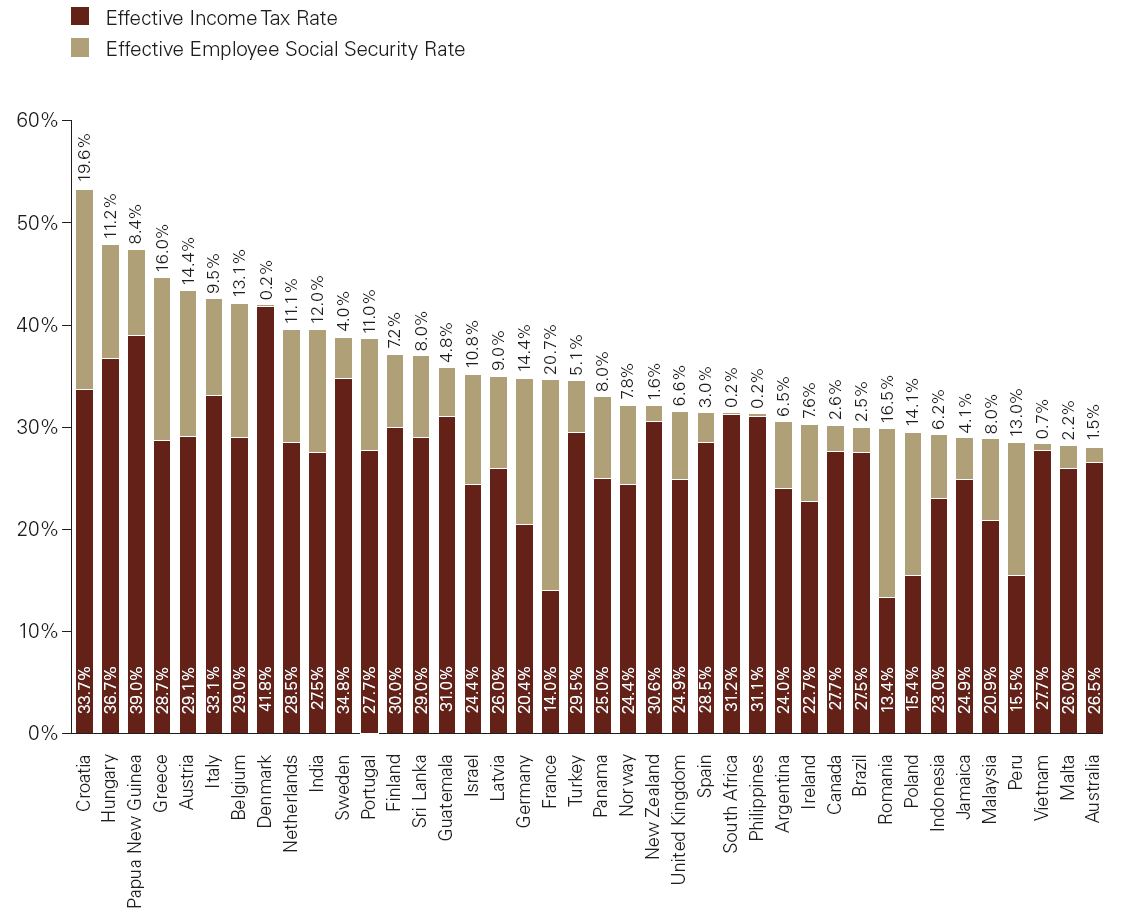
A friend posted in Facebook yesterday’s Daily chart from The Economist; she was very disappointed of finding Hungary such high in the ranking.

The chart comes from KPMG’s “Individual Income Tax and Social Security Rate Survey 2010”. I found it very interesting:

  • it contains several charts of rates of income tax and social security rates for different levels of income (high ones by the way),
  • coloured maps of the different regions in the world according to their level of taxation,
  • for some countries you may find graphics with the evolution of taxation levels with income,
  • capital gains tax, and
  • some country-specific information for several ones.


Effective Income Tax and Social Security rates.


What if you could pay Social Security in Philippines (0.2%) and Income Tax in Romania (13.4%)?

1 Comment

Filed under Economy

How rain determines olive tree economics in Tunisia

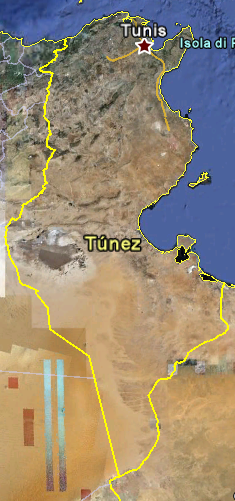
“The North of Tunisia is the most fertile region. There it rains about 1,000mm per year. In the middle about 200mm. The South is almost deprived from rain with only between 0-50mm of rain”. More or less these were the words we heard from Mohammed, our guide in Tunisia for 3 days, no less than 3 times. You can “see” that with Google Earth already.

Tunisia.

He also went on to explain that the olive leaves are a symbol of wealth and that Tunisia was one of the main producers (5th in the World, after Spain, Italy, Greece and Turkey). So, after hearing all these explanations and seeing so many olive trees in the fields along the road trips, I started to notice the difference between the olive trees in the North and the South, and mainly the difference in the distance in which they are planted from one another.

Seeing the landscape I thought that (even if they did it unconsciously) these people were using some scientific approach there. I must say that I have no clue about agriculture and olive trees, but let me elaborate.

  • “1 mm rain a year” means that in one square meter during one year 1 liter of water is collected.
  • The surface from which each of the trees is collecting water must be proportional to the distance (d) between them: (π/4)*d² [m²].
  • I assume the water (volume) one olive tree needs along the year must be proportional to its size (volume)… then, the water they can collect is limited by the rain (mm) and the distance among trees: k*(π/4)*d²*r. Where “r” is the quantity of rain measured in mm of water, “d” the distance and “k” a constant.
  • Their size may be limited by the rain (if in the South is too dry?), by the distance if they are too close to each other, by genetics of these kind of tree (?)…

So, imagine that we are in two regions in which the annual rain is over the minimum so the olive tree can realize to its “own potential” (olive trees having the same size), then:

  • The farmer in the region with less rain must be aware that he shall plant the trees with a distance (d2) between them of: d2 = d1*√(r1/r2), where “d1” is the distance in the rainy region [m], and “r1” and “r2” are the quantity of rain in each regions [mm].
  • So, if I see olive trees the same side in the North (1,000mm, region 1) and Middle (200mm, region 2) of Tunisia, the larger distance in the Middle region should be around √5 = 2.23 times the distance in the North.

As we go to drier regions (Middle, region 2, or South, region 3), it may be that the final size of the tree is smaller and the distance will have to be larger.

  • If the less than 0-50mm in the South was still enough to have large olive trees, then the distance should be over 20 times the distance that we see in the North. However, I cannot tell you, since we didn’t go the most Southern part of Tunisia.
  • If the 200mm of the Middle is not enough water to have that large olive trees then, you could either calculate the size of the tree by planting at different distances in relation to the sizes and distance in the North, or knowing the maximum size you may get you could get the distance at which you have to plant the tree…
    • tree2 = tree1*(r2/r1)*(d2/d1)²… if I guess the distance is about double (by seeing in the pictures), then (for a rain of r2=200mm) the tree2 near the Sahara would have a volume of about a tenth of the tree in the North. May well be true by seeing the pictures below.
    • If we knew beforehand that the tree would only get to reach a tenth of the size, we could calculate that the distance would need to be double.

Even though I am sure there are many more aspects impacting the growth and productivity of olive trees, if I were in Middle / South Tunisia starting from scratch and not knowing anything: I could start sizing the number of trees I could plant in my garden or how big they would grow, how much olives I would get from my land, etc…

Apologies to the experts in the field for the charade that I may have just written, but it was fun playing with the numbers.

This slideshow requires JavaScript.

7 Comments

Filed under Economy

Project managers and Pencils

Today I was attending a project management course at Airbus. After some introductions, the teacher came to the always controversial (within such a technological company) comment that “the project leader needs to have experience in project management not in the technical issues related to the project”… she then cited aircraft as an example: “nobody within Airbus may know every technical detail of an aircraft which counts with hundreds of thousands parts, yet there is someone managing its development…”

That example seems very clear. Tonight, while listening to a TED Talk on the exchange of ideas, by Matt Ridley, I got the thread to a way better example: that is the essay “I, Pencil: My Family Tree as told to Leonard E. Read” by Leonard E. Read, which can be found at the Library of Economics and Liberty.

I believe this a much better example because of exactly the same reasons Mr. Pencil gives:

“[…] I have a profound lesson to teach. And I can teach this lesson better than can an automobile or an airplane or a mechanical dishwasher because—well, because I am seemingly so simple.

[…] Simple? Yet, not a single person on the face of this earth knows how to make me.”

Then, the pencil goes explaining where all its components are coming from…

“[…] My family tree begins with what in fact is a tree, a cedar of straight grain that grows in Northern California and Oregon. Now contemplate all the saws and trucks and rope and the countless other gear used in harvesting and carting the cedar logs to the railroad siding. Think of all the persons and the numberless skills that went into their fabrication: the mining of ore, the making of steel and its refinement into saws, axes, motors…”

If it’s clear that nobody knows how to make simple pencil, clearer will be for any other case of a more complex product.

There is indeed a Mr. President of the pencil company, there may even be a Pencil Programme Manager, but as Pencil says: “There is a fact still more astounding: the absence of a master mind, of anyone dictating or forcibly directing these countless actions which bring me into being.”

Leave a comment

Filed under Aerospace & Defence, Economy

Highest house prices in 300 years

I remember having seen this graphic in an article published in NRC Handelsblad (Dutch leading newspaper) on November 2007, “Highest house prices in almost 300 years”.

Highest house prices in almost 300 years, published in NRC Handelsblad, 10 Nov. 2007.

Now, some thoughts come to mind:

  • Once adjusted for inflation, we see the prices have moved during last 300 years in a range from 500k€ – 2.5 M€… so, the highest price is merely 5x the lowest price. In other words, house prices are relatively stable… Should it be otherwise? What worth/assets are extracted from a house?
  • If you would have put those 500k€ in the year 1650 in some stock or deposit that assured you a 1.5% above inflation, by the time the article was published, end 2007, you would have around 103 M€, 40 times the price of that house at highest housing peak in Dutch history… there will still be people considering houses a good investment.
  • Not to mention what would have happened to the family who had set up a business back in 1650 and had continued with it all along these 300 years.

Already that summer, in August 2007, we had a warning on the ongoing bubble in the stock markets…

Note: the translation of the graphic was provided by Google and later checked by Luca… (it wasn’t me, not yet).

6 Comments

Filed under Economy, Investing