Category Archives: Travelling

Flight excursion to Menorca and Mallorca

Last weekend, with Luca and our children, we took one of the aeroclub’s DR-400 to make a flight excursion from Toulouse (France) to the islands of Menorca and Mallorca, in Spain. The excursion was part of a “Fly out” organised by the Aviation Society of the Airbus Staff Council in which 5 aircraft would make the same trip.

The main purpose of the flight was to visit Menorca, and we flew to Mallorca to refuel before coming back. It is an excursion that in the Society we had been trying to make since 2015 but we have had to cancel it due to bad or uncertain meteorological conditions several times. The flight includes a leap over the sea of about 1 hour from the East of Bagur (in Gerona) to the North of Menorca and, as there are no safe landing spots in that area, you want to have more or less certain good weather along the route both the day of the departure and return flights.
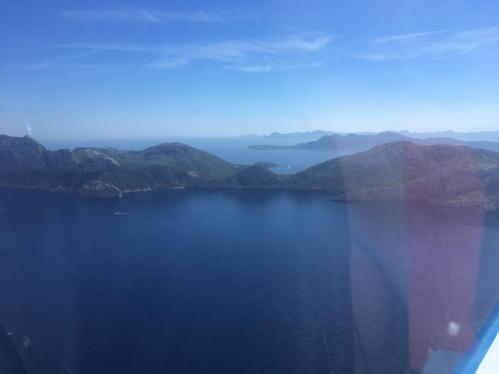
22. a Formentor, Alcudia, Cap Farrutx

Cape Formentor, Alcudia & Cape Farrutx.

We made 4 flights.

Toulouse Lasbordes (LFCL) – Perpignan (LFMP)

Flight duration: 1h11’.
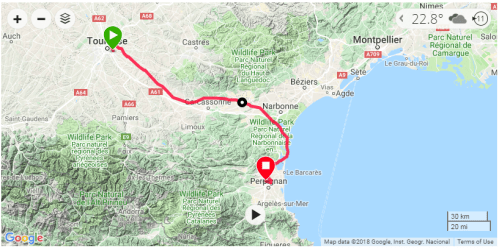
Flight_route_LFCL_LFMP

We included this first stop over Perpignan just to refuel the aircraft to the maximum before flying over the sea all the way through Menorca, so in case of bad weather or any other problem at the destination we could make a comeback to France or somewhere else in the Spanish coast. We selected Perpignan instead of other viable options such as Ampuriabrava for various reasons, among them lower cost of fuel and landing fees.

In the way to Perpignan the sky was overcast (OVC) at a low level around Carcassonne, and, as I did not want to fly on top for that leg, this forced us to fly just at 1000 ft above ground and to follow the highway to Narbonne rather than taking a more direct route to Perpignan over the mountains. You can see the route we followed above.

It was the first time I landed at Perpignan, but finding the field from the way points NL (in the coast) and NF was trivial. Once in the vicinity we integrated directly into the circuit for runway 31, closer to the fuel pump. There, we had a quick lunch and prepared for the following flight.
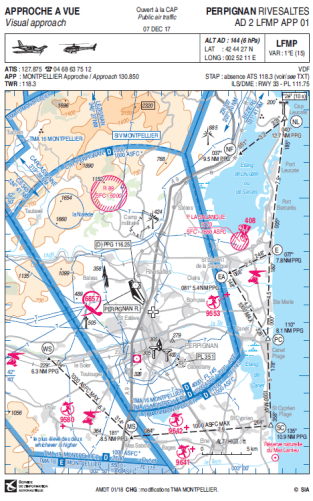
Perpignan_chart

Find the Garmin record of the flight here.

Perpignan (LFMP) – San Luis (LESL)

Flight duration: 1h56’.
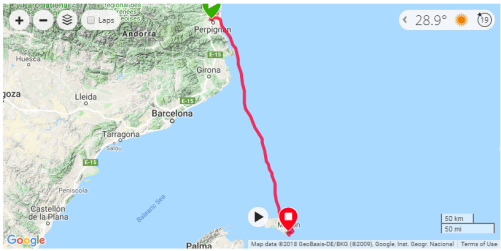
Flight_route_LFMP_LESL

Just after the take-off from Perpignan we took a right turn towards the East and reached the coast South of waypoint EA. From then on we started climbing up to 5500 ft, the altitude selected for the flight over the sea (the highest, the better). In order to keep a high altitude you need to avoid the TMA from Barcelona, otherwise they may ask you to descend below 3000 ft. Thus, we went to the capes of Bear, then Creus and from then on South East heading to pass about 10 nm East of the VOR at Bagur. From then on we followed a series of IFR waypoints (NEMUM – AGENA – VERSO – TOSNU – SARGO).
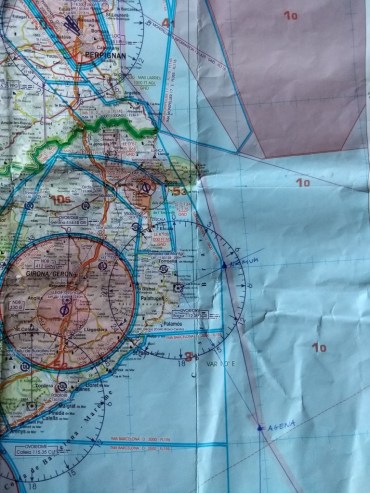
TMA_BCN

Flying above the sea is not particularly eventful. You mainly need to maintain the altitude and attitude and the heading stable, as it is very easy to loose references with the difficulty to distinguish the horizon.

As far as radio communications are concerned: we were first transferred with the Gerona traffic control and then to the one of Barcelona. The communications were held in Spanish. Easy, as long as you have a flight plan and follow the announced route. Those frequencies were mainly used by commercial flights going to/from Barcelona or Palma, mainly Vueling flights. Also good to know is that as you fly away from Barcelona at some points you may not be heard by the control; no worries, keep going and sending the messages.

About an hour later we had in sight the North of the island of Menorca, the cape of Cavalleria. But before that, approaching the way point of SARGO (about 25 nm or 14 minutes from the shore) you need to descend down to below 2500 ft, though the control will ask to go down to 1000 ft AMSL as that is the limit of the air space class A around the main airport in Menorca, Mahon.
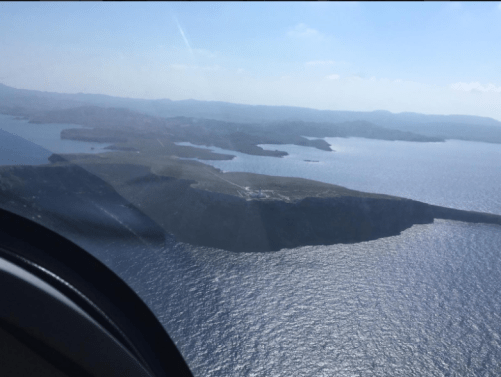
Cavalleria

Cape of Cavalleria.

Once in sight of the shore we requested to follow the coastal line to the East down to the East Corridor for Mahon in order to reach San Luis from the East (the control had however proposed to surround the island around the West and South).
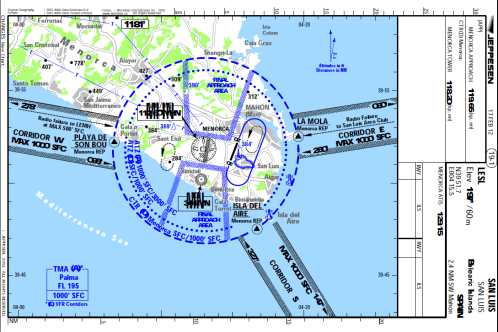
San Luis_chart

Following that route we took the opportunity to take some nice pictures of the coast, the lighthouses and the fortress of Isabel II at La Mola.

San Luis is a non-controlled aerodrome without radio. Therefore, you must stay connected to the frequency of Mahon and land at your discretion, with a circuit to the East of the runway (02/20). The aerodrome is managed by the Aero-club of Menorca. In their site you may find contacts and charts (old ones being in use). There are not official fees but a contribution is expected; 10 euros for landing, 5 for parking. These are paid at the restaurant by the apron, which serves very decent menus and where the staff will be happy to help you calling for  taxi.

We spent the remaining of Friday afternoon and all Saturday enjoying the beach and the hotel’s pools, including a beer on Saturday night with the colleagues from the Society at a bar by the beach, Es Corb Mari (in Son Bou).

Find the Garmin record of the flight here.

San Luis (LESL) – Son Bonet (LESB)

Flight duration: 1h10’.
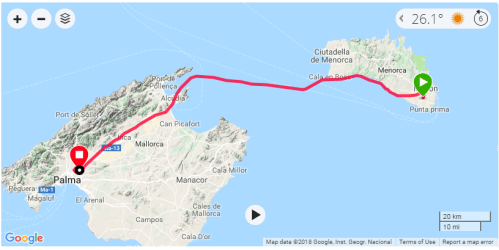
Flight_route_LESL_LESB

As the aerodrome of San Luis doesn’t have a fuel pump we could refuel at the main airport of Mahon, but as it requires to contract handling (with expensive fees) we preferred to fly down to Son Bonet (in Mallorca island), which landing fee is less than 7 euros, no handling contracting is required and there is free parking for a stay below 2 hours.

We filed the flight plan on the phone with Menorca airport (at this time the number for flight plans being: +34971157138). On ground, we were already connected to the frequency of Menorca and right after take-off we were cleared to turn West and cross the axis of the airport in our way to the West corridor which took us to the South coast of the island up to the cape and lighthouse of Artrutx.

From Artrutx we flew over the sea towards the bay of Pollensa (making use of its VOR), in Mallorca, and then we flew within the inner side of the island following the road from Alcudia to Mallorca by way of Inca. When leaving Inca we passed with the frequency of Son Bonet (123.5) around which English is mainly spoken as there are quite a few helicopters flying in and out. Finding the aerodrome coming from the road was trivial and we easily integrated into the circuit for runway 23.

At Son Bonet we paid the landing fees (~ 7 euro) and filed the flight plan at the small office by the parking. We refuelled (~3.05 euros per litre of Avgas 100LL) and had some lunch before the long  flight to Toulouse.

Find the Garmin record of the flight here.

Son Bonet (LESB) – Toulouse Lasbordes (LFCL)

Flight duration: 3h04’.
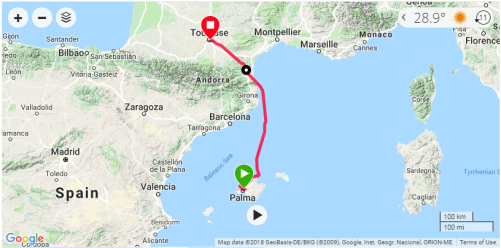
Flight_route_LESB_LFCL

Once we were ready at Son Bonet, we got on board and departed from runway 23 again, took a right turn to the West during the climb to fly North of Son Moix on the way to Esporles to reach the coast of Tramuntana in order to fly along it up to the cape of Formentor.
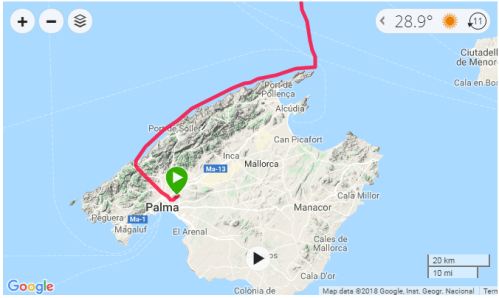
Flight_route_LESB_LFCL_2

In the past, we had visited several spots along the way of this coast on the ground. The landscapes are remarkable. This time we wanted to get a view of them from the plane, which was breath-taking.

Once we reached Formentor we took a heading to the North and followed another series of IFR waypoints (KENAS – SULID – AGENA – NEMUM) to reach the East of the above mentioned VOR of Bagur, cape of Creus and enter back into French air space. This time, as the weather was clearer than during the first flight of the excursion, we maintained 5500 ft altitude until we had exited the TMA of Carcassonne.

Find the Garmin record of the flight here.

Some general remarks:

All the navigation logs were again prepared using the tool Mach 7, and during the flight we used the help of the AirNav Pro on the mobile phone (no tablet, though it would be easier). For Spain we had 1/1.000.000 chart from AIR MILLION (Editerra) and the 1/500.000 from Rogers Data. Neither of them has the IFR waypoints marked on them, so you need to write them down yourself in advance.

VFR aerodrome charts in Spain are retrieved from the site of ENAIRE, which in my opinion is less user friendly than the French equivalent. The charts themselves are comprised of too many different documents to handle; it is better to have a simple single PDF of 2-8 pages s in the French case for VFR. On top of that, not all small aerodromes have the information in ENAIRE, try googling about them or contact the local club.

1 Comment

Filed under Aerospace & Defence, Travelling

Normandy landings on June 6, 1944. D-Day.
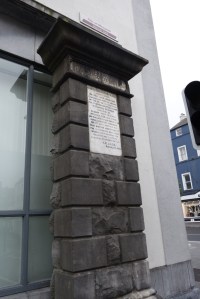
Today, June 6th, we commemorate the anniversary of the Normandy landings during World War II in 1944, what is often referred to as D-Day.

A few weeks ago, we visited “Omaha beach“, one of the beaches where Americans landed, which you may have seen as, along with many documentaries, it was staged in the film “Saving Private Ryan“. The beach is about 6 kilometres long and extends through different villages. And it is not the only beach where Allied forces landed, as there were Americans landing at Utah beach as well, together with British landing at Sword and Gold beaches, more to the East, and Canadians at Juno beach.

Omaha_1

The Germans had fortified the hills, built barracks, installed obstacles in the beach and planted thousands of mines.

The landings, part of the Operation Overlord, code named Neptune, started at 6:30am, and they continued for weeks. Just on D-Day Allied forces counted 10,000 casualties with over 4,000 confirmed dead, with similar figures in the German side.

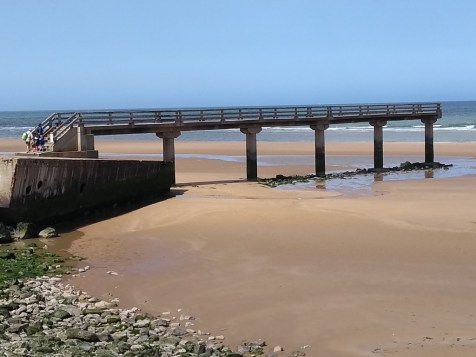
After the first days, a bridge, “Mulberry” was built to offload vehicles from boats coming from the United Kingdom. Some days during the summer up to 24,000 men or 3,000 vehicles crossed that bridge. An aerodrome was built uphill to evacuate the injured. The original bridge was brought down in the following winter by strong sea tides. Today a relic has been built, with some of the original concrete blocks visible in low tide.

Omaha_7

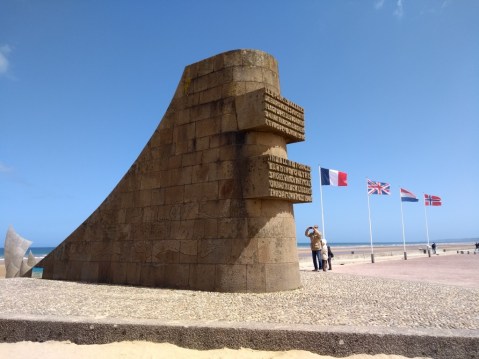
Today, there are several monuments along the beach, one of them Les Braves Omaha Beach Memorial. It is a sculpture that symbolizes wings of hope, freedom, fraternity.

Omaha_5

In front of it there is a monument to the 1st US Infantry Division. It has the following inscription engraved in it:

No mission too difficult.

No sacrifice too great. Duty first.

Forced Omaha beach at dawn 6 June.

Omaha_6

By the monument visitors leave candles, flowers and some written notes. Most of them stand by in silence watching the vastness of the beach, thinking of the sheer numbers of people involved in the operation and what awaited them, praying for their lost ones. Occasionally a bus comes with veterans, relatives of soldiers who fought there, you name it, and trumpet plays Taps.

Nearby, a panel reminds the lyrics of the song “Remember Omaha” by Jean Goujon.

Leave a comment

Filed under France, Travelling

Château de Chenonceau

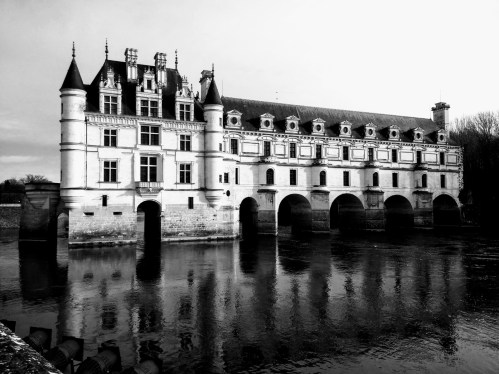
During our last Christmas road trip, we made a stop by the Château de Chenonceau, one of those castles of the Loire valley that stands out among the rest and which we had wanted to visit it on ground since we flew over it in 2015.

Chenonceau_family

As the brochure of the visit tells, and the different panels along the rooms and corridors let you grasp, the Château de Chenonceau is a Ladies’ castle, due to the several women that left a mark in its configuration and history.

The first castle did not cross the river Cher, and was located at the small island between the gardens, where today stands alone the Marques tower (see the aerial view below), built after the castle was burnt down to punish the Marques family, the first proprietors of the castle.

The Marques family facing problems, the chamberlain of the king, Thomas Bohier and his wife Katherine Briçonnet, maneuvered to get in possession of the castle, which they started to rebuild to their taste, used if to host French nobility and to project an image of themselves.

Chenonceau_aerial

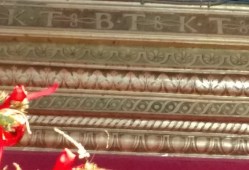
They adopted common initials (TBK) that they displayed around the castle.

IMG_20171228_124000130

They created an aspirational personal motto while building the castle: “S’il vient à point, me souviendra” (i.e. if I get to the end of this construction, I will be remembered).

IMG_20171228_115416510 - Copy

Years later, in 1535, being the castle in possession of Bohier’s son, it was taken by the king Francis I (to cancel out unpaid debts). After his death, his son, king Henri II gave it as a present to his mistress Diane de Poitiers in 1547. It was Diane who built the bridge to join the castle with the opposite river bank, and it was that move that started to make it unique.

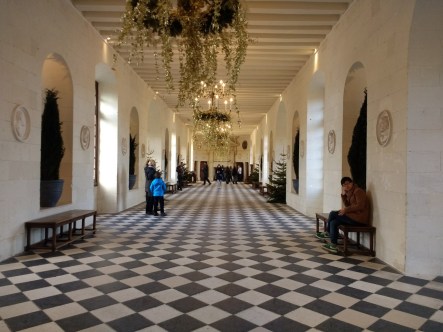
At the death of Henri II, her widow, Catherine de Medici, forced Diane to exchange Chenonceau for another castle, the Château Chaumont, and made Chenonceau her favourite residence and a place full of intrigues for the years to come. She closed the bridge into a gallery (multi-storied), she added several rooms and bedrooms, made gardens more magnificent, gathered art collections and hosted parties.

Corridor

IMG_20171228_120958621

Ever since, the castle was to be linked to French royal family and later French nobility. There is a telling name of the power of the running family, that of the “Five Queens’ Bedroom“, named after Catherine de Medici’s two daughters and three daughters-in-law:

  • Daughters: Queen Margot (wife of Henri IV), Elizabeth of France (wife of Philippe II of Spain),
  • Daughters-in-law: Mary Stuart (wife of Francois II), Elisabeth of Austria (wife of Charles IX) and Louise of Lorraine (wife of Henri III).

IMG_20171228_120157427

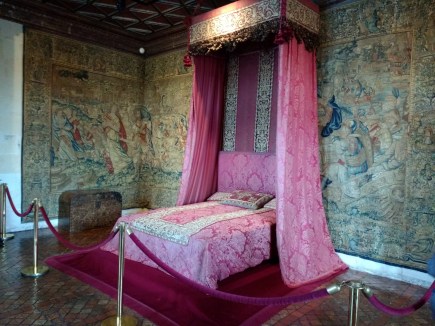
Once a widow, after her husband was assassinated, Louise of Lorraine, would retire herself to pray at the castle. A room would be decorated in black, being that another of the landmarks of the castle, under restoration at the time of our visit, though.

Further women would contribute to the enlightenment of the castle in the following centuries, renovating it, bringing in artists and writers such as Montesquieu, Voltaire or Rousseau. It even played the role of hospital where over 2,000 injured were attended during Second World War.

IMG_20171228_125855410-EFFECTS

1 Comment

Filed under France, Travelling

Belén Monumental de San Lorenzo del Escorial

La semana pasada aprovechamos nuestra estancia en Madrid para acercarnos a San Lorenzo del Escorial para pasear con los niños.

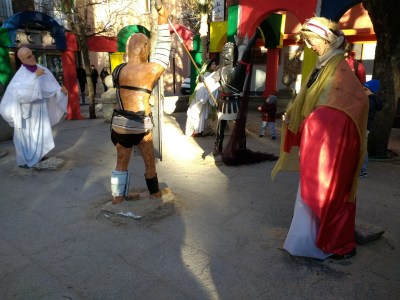
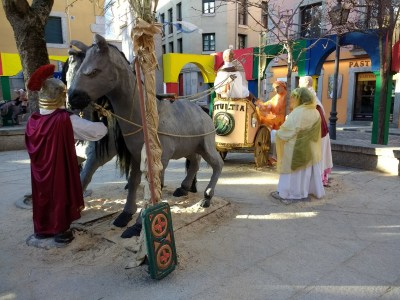
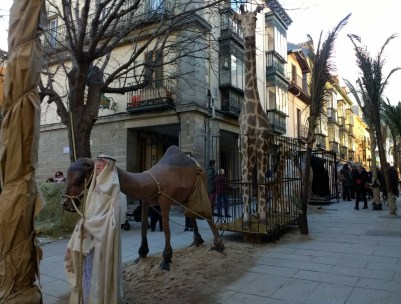
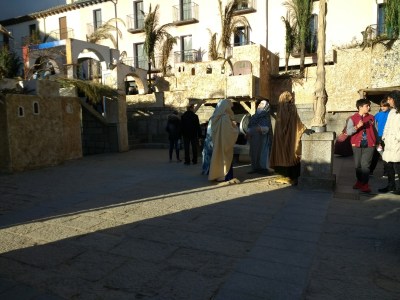
En fechas navideñas el Escorial cuenta no sólo con el impresionante monasterio y su lonja como atractivos para dar un paseo, sino con el tradicional Belén Monumental realizado por los voluntarios de Mariano Pardo, “Pardito”, que llevan 21 años realizando dicho Belén, y que forma ya parte del folclore cultural de la Sierra en estas fechas.

En esta entrada quería dejar una serie de fotos de la visita.

IMG_20180103_164505786_HDR

Fachada oeste del monasterio.

IMG_20180103_161814852_HDR

Nacimiento.

IMG_20180103_161951173

IMG_20180103_162343396

¿Herodes?

IMG_20180103_162419224

Soldados romanos.

IMG_20180103_162628839

Gladiadores.

IMG_20180103_162635584

Biga.

IMG_20180103_162225146

IMG_20180103_163223072

Río, molino, patos…

IMG_20180103_161555254

Poblado.


Leave a comment

Filed under Travelling

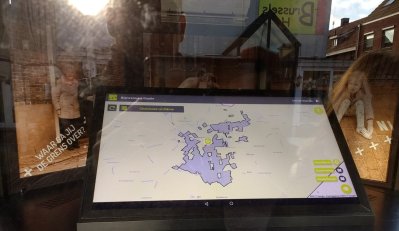
Baarle-Hertog and Baarle-Nassau

A few days ago, we visited the villages of Baarle-Hertog (Belgium) and Baarle-Nassau (The Netherlands). I tweeted a short thread about it that you can see below:

Briefly:

  • The village is divided between Belgian and Dutch exclaves in a very intricate border, including several exclaves which are no more than a few houses or a farm. The Belgian part of the village itself is an exclave in The Netherlands, a few kilometres from the border (such as Llivia from Spain within France, or Treviño of Castile within the Basque country in Spain).
  • The borders were defined in the Maastricht Treaty in 1843. In 1995 a commission clarified the borders.
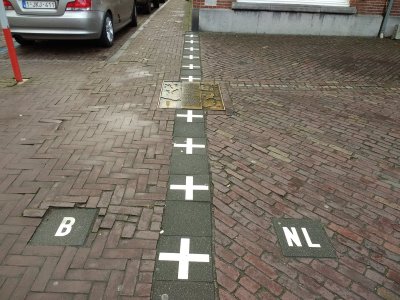
  • There are marks in the ground that show where the border goes, indicating which side belongs to which country. The panels of the streets or the numbering of the houses also help you to locate where you are.
  • There is a bike route which takes you through the different border lines.

Baarle_1

Baarle_2

Baarle_3

Baarle_4

Baarle_5

Once I tweeted that thread, the beauty of Twitter made it that a friend, Miguel, referred me to a series of posts about that village written by the blogger Diego González who hosts a blog about borders.

On top of that, I had taken the idea to visit that village from yet another retweet from another friend, Pablo.

You can see in that tweet below the different posts (in Spanish).


Leave a comment

Filed under Travelling

Kilkenny

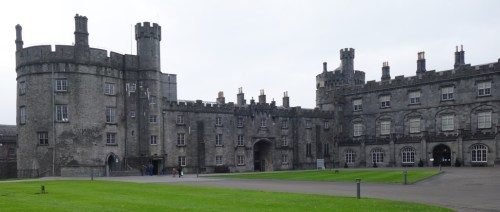
Kilkenny is a small town of about 24,000 inhabitants by the river Nore in the province of Leinster. The city is best known by its Castle, built by William Marshal, 1st Earl of Pembroke (Wales), at the turn of the XII to XIII centuries on the location of a previous fortification built by his father-in-law Richard de Clare, 2nd Earl of Pembroke (of the 1st earldom creation), better known as Strongbow, one of the leaders of the Norman invasion of Ireland in 1170.

dsc02341 dsc02339

The castle was later purchased by James Butler (3rd Earl of Ormond) in 1391 and would be the Butler’s family main residence for the following 6 centuries, until they left it in 1935 and in 1967 was sold to the municipality for 50 pounds.

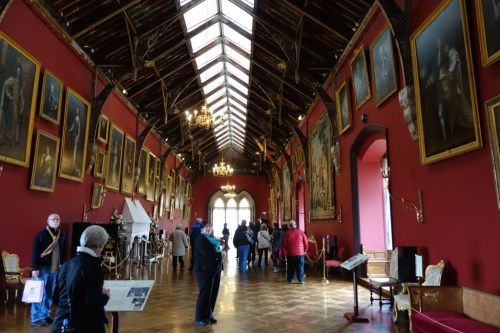
The castle went under a strong restoration which sought to re-build most of the rooms to what they would have looked like at some points in their history. Today, the castle is open for visits. At the basement, the foundations from the XIII are still visible; other than that, the castle resembles more a XIX century palace, with dining rooms, halls, a library, a “Chinese” room and the large picture gallery with its wooden ceiling, fire place with marble from Carrara, etc.

dsc02334

Picture gallery.

From the visit, I took the following takeaways more or less linked to Spain:

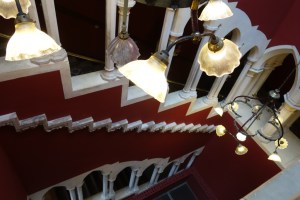
  • The “Moorish” staircase, created by the architects Deane and Woodward, which resembles very much to the style seen at constructions in Cordoba, Sevilla or Granada.

dsc02330

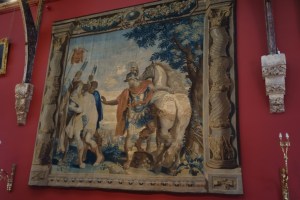
  • The tapestries. Several tapestries, located at the tapestry room and at the picture gallery, show the story of Decius Mus, a Roman consul in 340 BC who sacrificed himself through the ritual of devotio to allow for the victory of his army at the battle of Vesuvius. After 300 years in display, the tapestries needed to go through some conservation work, which was entrusted to the Real Fabrica de Tapices in Madrid.dsc02336
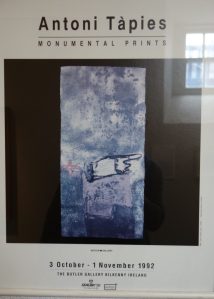
  • The Butler gallery at the basement of the castle offers space to contemporary art. In it there is a collection of the posters of some prominent artists for whom an exhibition was organized, one of them the Spanish Antoni Tapies, in 1992.

dsc02337

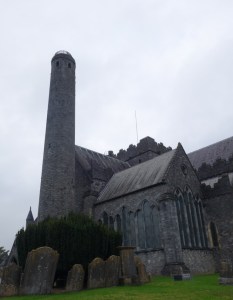
Other than the castle, another highlight of Kilkenny is St. Canice’s Cathedral, the second largest in Ireland, after St. Patrick’s in Dublin. It was built in the XIII century at the location where St. Canice had built a small monastery back in the VI century. The cathedral has a typically Irish round tower, with the uniqueness that this is one of the only two in the country that can be climbed to the top.

dsc02357

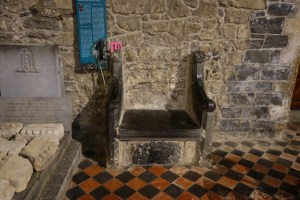
Some of the main attractions that can be found inside the cathedral are several tombs of the Butler family, an archive with the names of all the Irish who lost their lives in the World War I, or the stone throne of St. Kieran.

dsc02349

Kilkenny was as well for a decade, 1642-1652, the seat of the Irish Catholic Confederation, or the “Confederation of Kilkenny”, which following the Rebellion of 1641, established itself as a self-government, until the conquest of Ireland by Oliver Cromwell (1649-1653).

dsc02358

Stone marking the place were the Confederation Hall stood.

During the visit, after having walked through the lively High, Parliament and St. Kieran streets, I went to look for Tynan’s Bridge House, a pub established in 1703 where I wanted to have taken a beer. I found the pub, but closed.

dsc02360

… and talking about beer, it is in Kilkenny that the beer Smithwick’s is brewed and the brewery can be visited, though I didn’t. Smithwick’s was acquired by Guinness in 1965. We visited Guinness brewery in Dublin some days later (I may write about it one day), which is a giant museum but lacks the artisanal touch that I experienced when visiting Bowmore whisky distillery in Sctoland. I wonder whether at Smithwick’s that would have also been the case.

dsc02362

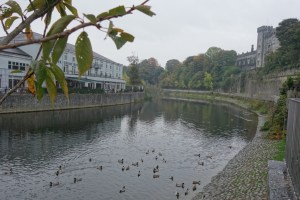
Nore river.

dsc02344

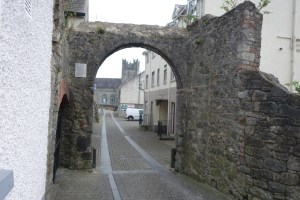
Black Gate.

Leave a comment

Filed under Travelling

Rock of Cashel

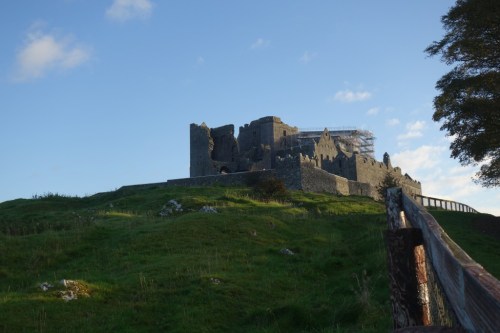
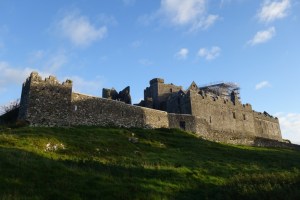
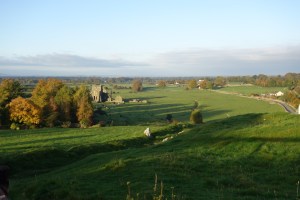
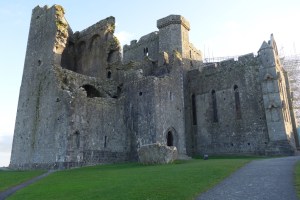
Cashel is a small town of about 4,000 inhabitants, in the county of Tipperary, on the way from Kilkenny to Limerick, which is dominated by the Rock of Cashel, a eclesiastical site on the top of a hill which was once the seat of the over kings of Munster, ever since the Eóganacht, the descendants of Eógan Mor came to prominence around the 4-5th centuries AD.

dsc02364

Conall Corc, a descendant of Eógan Mor, is said to be the founder of the Cashel kingship and according to the tradition St. Patrick baptised the grandsons of Conall Corc at Cashel in the 5th century AD.

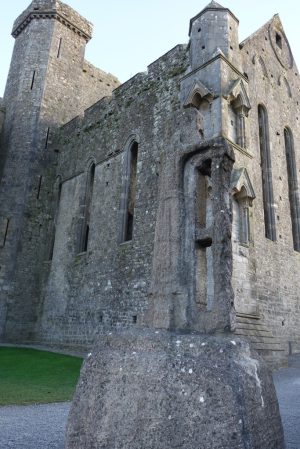
Replica of St. Patrick's Cross.

Replica of St. Patrick’s Cross.

Today, the Rock of Cashel is a historical site that can be visited in about an hour. The entrance is 7 euros (free if your B&B happens to have a voucher, ask for it).

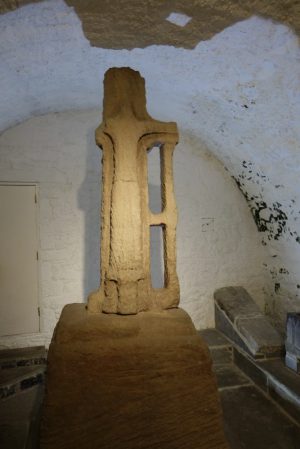
The main historical constructions remaining are the round tower (from c. 1100), Cormac’s chapel (consecrated in 1134, though at the time of my visit it was under restoration and not open for visit), the Cathedral (from 1270), St. Patrick’s Cross (from 12th century) and a replica of it in the garden, and the Hall of the Vicars Choral (from the 15th century).

Original St. Patrick's Cross.

Original St. Patrick’s Cross.

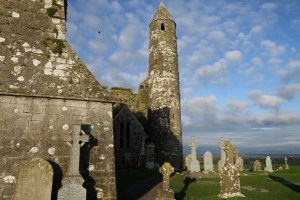
Round Tower.

Round Tower.

Cathedral.

Cathedral.

dsc02371

The views of the surroundings from the Rock are impressive, as impressive is the view of the Rock as one approaches it from the bottom of the village, especially from the “Path of the Dead” connecting the Rock with the R505 road at the south-west of the hill. I discovered this path during my early morning run before sunrise, this allowed me to enjoy the view of the Rock with the first rays of light of the morning sun. A nice experience.

dsc02365 dsc02363 dsc02366

Finally, another highlight that I wanted to have visited in Cashel was the Bolton Library collected by the archbishop Theophilus Bolton from 1730 to 1744. The library was recommended in the guide and according to a local brochure was the finest outside of Dublin, including works by Swift,  Dante, Calvin, Erasmus, or Machiavelli. The pity is that since a couple of years ago the library is not anymore housed in Cashel, as the building didn’t meet the best conditions for the preservation of the books. Today the books are conserved at the University of Limerick.

Bolton Library.

Bolton Library.

Leave a comment

Filed under Travelling

Glendalough

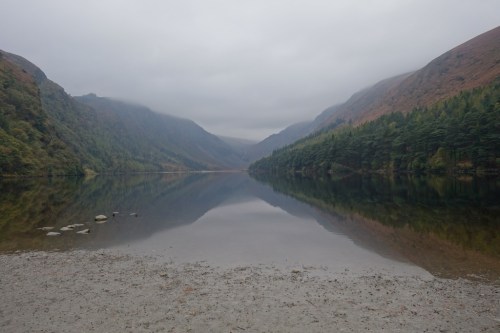
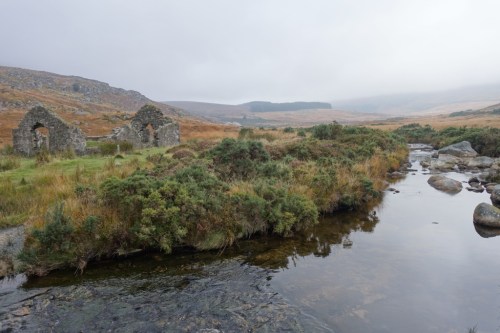
The first stop I made in my trip to Ireland last week was to visit Glendalough (Gleann Dá Loch, meaning “Valley of two lakes”), in the county of Wicklow, where there is a monastic settlement dating from the Middle Ages, when it was founded by St. Kevin.

The entry to the settlement it’s free and several routes are proposed to visit the place including some walking trails (from 1 to 11 km) around the lower and upper lakes.

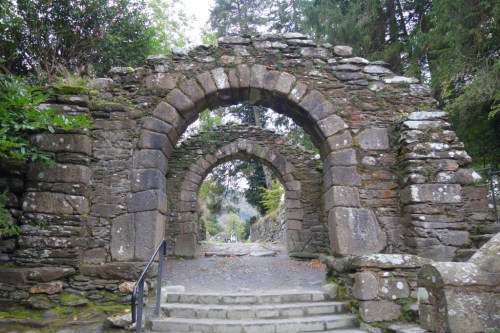
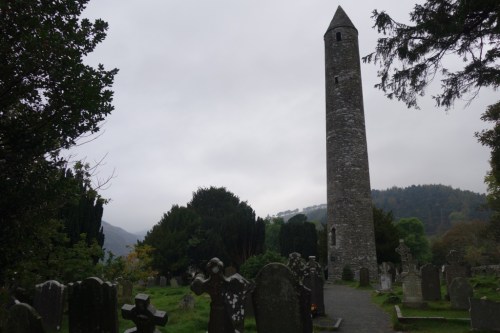
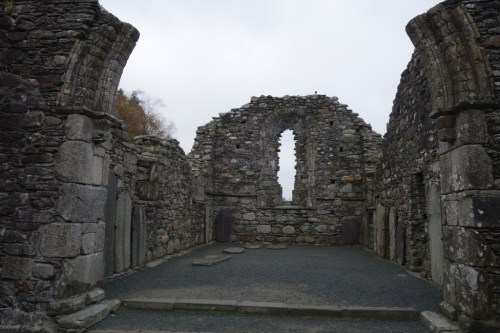
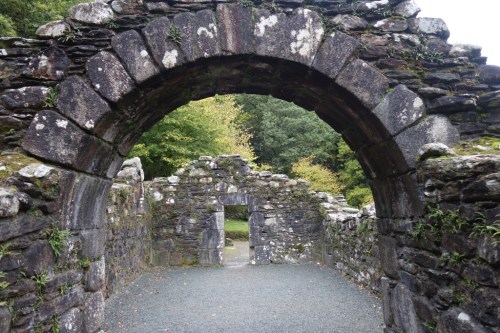
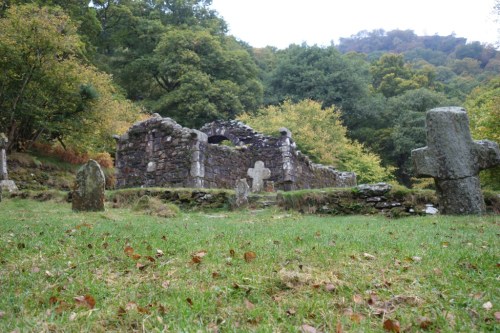
Some structures from the X to the XIII centuries remain today, such as the Gateway (unique in Ireland due to its two stories and double arch), the Round Tower (with over 30 m of height and an entrance at 3 m to protect it in case of attack), and the Cathedral.

Gateway

Gateway

Round Tower

Round Tower

Cathedral of St. Peter and St Paul.

Cathedral of St. Peter and St Paul.

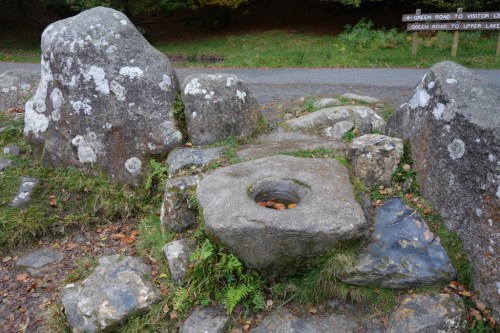
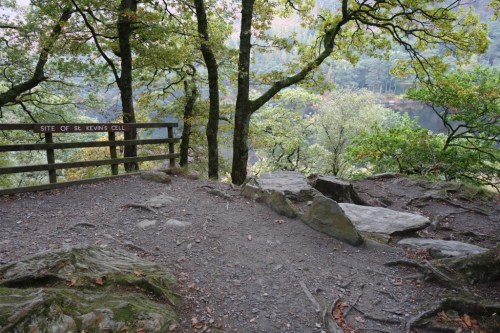
On the way to the upper lake, it is found the Deer Stone (where St Kevin would have fed some infants with milk from wild a deer), St. Kevin’s Cell (small circular structure where he retired to pray and meditate) and Reefert Church (Righ Fearta, the “burial place of the kings”, where members of the once important O’Toole family would have been buried).

dsc02306

Deer Stone.

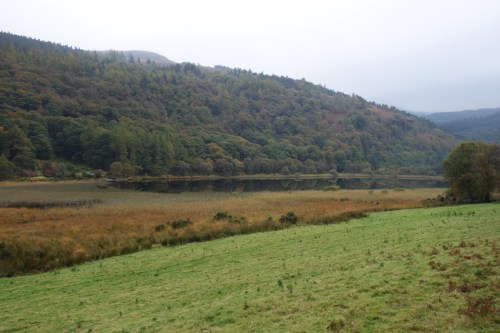
Lower lake.

Lower lake.

St. Kevin's Cell.

St. Kevin’s Cell.

Reefert Church.

Reefert Church.

Reefert Church.

Reefert Church.

Upper lake.

Upper lake.

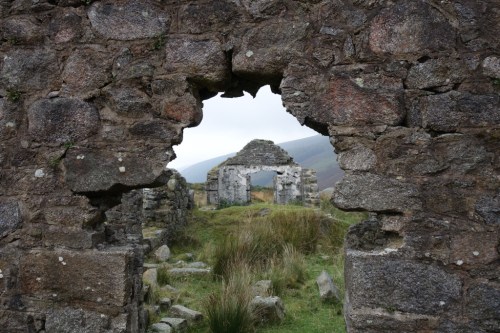
Leaving on my way to Kilkenny, I still had time to enjoy the views of the valley and find some other ruined churches along St. Kevin’s Way, a pilgrim path that starts at Hollywood and crosses the Wicklow Gap to arrive at Glendalough.

Wicklow Gap.

Wicklow Gap.

dsc02324

The previous night I stayed at the Trooperstown Wood Lodge just a few kilometres from the monastic site and more than recommended. The lodge is run by the same people who manage a nearby restaurant, The Wicklow Heather, which not only serves great food and has a good atmosphere but it’s decorated around Irish literature, especially its “Writers Room”, where customers may discover some of Irish authors and its writings.

This slideshow requires JavaScript.

In the morning I went for a short run from the lodge across the river and nearby forest, in the southern part of the Wicklow Mountains. Thus, you can imagine that the complete experience was wonderful and I can only recommend to visit the place.

Leave a comment

Filed under Travelling

Kronborg castle and Hamlet

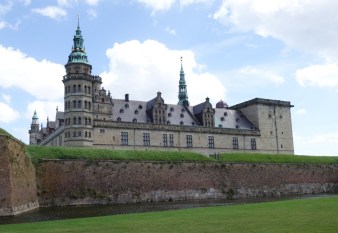
Kronborg castle.

Kronborg castle.

Last August I went together with my daughter Andrea on a trip to Denmark to visit my sister Beatriz, who lives there. Among the cultural visits that we made, we decided to go to the Kronborg castle, in Helsingør. This is known as well as the “Hamlet castle“, referred to in Shakespeare‘s play as Elsinore.

This year 2016 is the 400th anniversary of the death of William Shakespeare, which happened on April 23rd 1616. A series of activities are organized along the year and across the globe to commemorate it. As you can imagine some of those activities take place at the Kronborg castle, therefore in this year, once in Denmark, the visit of that castle was a must.

The visit was superb:

  • There were several actors impersonating the different characters of the play. You would find them at different spots of the castle.
  • There was as well a stage put in place at the courtyard of the castle where in the evenings Hamlet is played (this year produced by Peter Holst-Beck). During the day, the actors were rehearsing the play. An extra of the visit then was to watch some passages of the play. In fact, one exhibition at the castle displayed some of the many renowned actors that have played Hamlet at Kronborg along the years.
  • Other activity included the performing of a puppet show at a room in the castle, together with the characters of the king and the queen (similar to the Act 3 scene 2 of the play).
  • And, of course, another performance consisted of an actor impersonating Hamlet, skull in hand at the ballroom of the castle, acting his lines “To be, or not to be: that is the question…”

This slideshow requires JavaScript.

It was certainly a great visit which I strongly recommend, as for DKK 90 (or about 13 euros) you will spend a very entertaining couple of hours.

Hamlet, the play

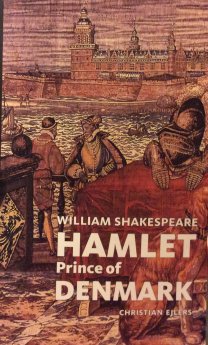
hamlet_bookAt the end of the visit, my sister and I bought copies of the book Hamlet at the castle shop: an edition by Christian Ejlers which includes some pictures of the tapestries with images of different kings of Denmark that can be found in the castle.

A few days after we concluded the trip, I started to read the book, which with 135 pages and despite its difficult old English language it reads in a few hours (spread in a few days in my case).

The plot of the book is rather well-known (no spoiler here): Hamlet’s father, the previous king, has recently died and Hamlet is profoundly affected by his death. A ghost of his father appears to him and this sets Hamlet into the search of who has killed his father.

I wanted to share some passages of the book that called my attention:

Do not, as some ungracious pastors do,

Show me the steep and thorny way to heaven;

Whiles, like a puff’d and reckless libertine,

Himself the primrose path of dalliance treads,

And recks not his own rede.” (Ophelia to her brother Laertes)


“And these few precepts in thy memory

See thou character. Give thy thoughts no tongue,

Not any unproportioned thought his act. […]

Give every man thy ear, but few thy voice;

Take each man’s censure, but reserve thy judgement. […]

Neither a borrower nor a lender be;

For loan oft loses both itself and friend,

And borrowing dulls the edge of husbandry…” (Polonius)


“Ay, sir; to be honest, as this world goes, is to be one man picked out of ten thousand.” (Hamlet)


To be, or not to be: that is the question:

Whether ’tis nobler in the mind to suffer

The slings and arrows of outrageous fortune,

Or to take arms against a sea of troubles,

And by opposing end them? To die: to sleep; […]

ay, there’s the rub;

For in that sleep of death what dreams may come

When we have shuffled off this mortal coil, […]

But that the dread of something after death,

The undiscover’d country from whose bourn

No traveller returns, puzzles the will

And makes rather bear those ills we have

Than fly to others that we know not of?

Thus conscience does make us cowards of us all;

And thus the native hue of resolution

Is sickled o’er with the pale cast of thought, […]” (Hamlet)


“Let me be cruel, not unnatural:

I will speak daggers to her but use none;

My tongue and soul in this be hypocrites; […]” (Hamlet)


“[…] May one be pardon’d and retain the offence? (King Claudius)


“[…] your fat king and your lean beggar is but

variable service, two dishes, but to one table; […]

A man may fish with the worm that hath eat of a

king, and cat of the fish that hath fed of that worm. […]

Nothing but to show you how a king may go a

progress through the guts of a beggar” (Hamlet)


“My words fly up, my thoughts remain below:

Words without thoughts never to heaven go.” (King Claudius)

A classic, a short book, at times quite entertaining and intriguing, even if it requires some effort, it is a must read, strongly recommend. May be in your own language or a version with a more modern language (I later picked up a Spanish version that I found at my parents’ which was much easier to read… and you could clearly see that translations were not literal).

Let this post be my particular homage to the figure of William Shakespeare in this 400th anniversary.

2 Comments

Filed under Books, Travelling

Museu do Futebol (São Paulo)

Referring to the different waves and streaks that football teams experience, the Argentinean Jorge Valdano made popular the sentence “A team is just a mood (1).

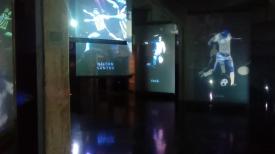
The Football Museum (Museu do Futebol) at the Sao Paulo‘s municipal Pacaembu stadium is an invitation to go through those moods, re-live some of those past moments anchored in the collective memory, by way of recorded sounds, cheering chants, radio excerpts of goals narrations, videos and interviews about the most important goals of Brazil history.

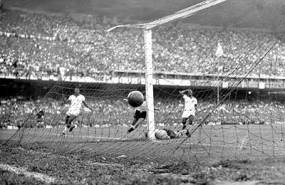
el-maracanazoYet, in my opinion, the most impacting mood, very well caught in the museum, is the transition from euphoria to depression, from music to complete silence, the tragedy of the losing the last match of 1950 World Cup between Brazil and Uruguay. A match that Brazil just needed to draw, started winning, yet lost it. The Maracanazo. In just 90 seconds, in a dark room you get submerged into the happiness of the day that would see Brazil win the first of many World Cups at the newly built Maracanã and then how the mood at the stadium changed with the first goal of Uruguay, then the second and at the end the final whistle from the referee.

Nevertheless, no matter how impacting the Maracanazo was for Brazil and football history, and how well captured it is at the museum, it would be unfair not to mention that in the museum there are many other very positive and happy moods of Brazilian football captured very well, too. If I went to think of Brazil, I would first think of happiness, football, music, dance; and those are experiences that accompany you along the museum.

The museum itself is centered around Brazil’s national football team, the only one which has won 5 World Cups to date, the country which practically at any point in time has one of the best 2 or 3 players of the World, the country of Pelé, Garrincha , Roberto Carlos, Ronaldo, Zico, Romario, Tostao, Rivaldo, Rai, Djalma Santos, Didi, Pepe, Gerson, Carlos Alberto, Rivellino, Socrates, Cafu, Bebeto, Rivaldo, Ronaldinho, Neymar… you name them.

DSC_0323The visit starts with a room where some players are picked as the most important to Brazil’s history; some images and biography of each one of them is offered.

The following room is dedicated to the goals, the main ingredient of the game. The 30 most celebrated goals in Brazil’s history are recorded and narrated by the authors or journalists (in Portuguese, English or Spanish). Several interactive screens are available for visitors to go through the different goals. There are also some desks where to listen to radio narrations recorded at the time of some of those goals.

See some of them in the video below (2).

The following rooms are dedicated to recordings of the chants of all the main teams competing at the Brasileirao; to Charles Miller, the man who introduced football in Brazil; and to a collection of pictures the years in which football was introduced in Brazil, showing life in Brazil at the time.

DSC_0326The largest space is dedicated to the World Cups, all of them, not only the ones won by Brazil. Some context of the society, cultural movements and events going on at the time are shown, together with images of the Brazilian team competing at the championship, the winners, some charismatic players and vivid images of the competition. That is another room where to wander with time enough to be captivated by the evolution of football, the players and events of the times.

There is another space dedicated to the couple Pele and Garrincha: with them playing together in the field, Brazil never lost a match (out of some 40 joint appearances). Some personal objects, pictures and videos of their best tricks are shown.

The last rooms are dedicated to football rules, some statistics, women in football and the chance to try a penalty kick against a featured Julio Cesar, where your shot’s speed is measured (and then compared to a Roberto Carlos’ shot).

DSC_0336

(1) “Un equipo es un estado de ánimo”.

(2) The video is unrelated to the museum but contains some of the goals among those 30.

1 Comment

Filed under Sports, Travelling