The Peter Principle

The Peter Principle says: “In a hierarchy, every employee tends to rise to his level of incompetence“.

The Peter Principle.

The book, by Laurence J. Peter, is a hilarious account of situations that arise in companies and institutions of why and how people are promoted, cornered, etc., or in his words is a treatise on hierarchology.

You probably have heard about the principle at some time. The author exposes a lot of other related concepts with invented jargon, including plenty of examples that we may have seen in our companies. The account of those seemingly contradicting, irrational, incomprehensible situations but which are so familiar to us is what makes the book hilarious.

Some of those other concepts and ideas introduced by the book:

  • The percussive sublimation: when someone is kicked upstairs to get him out of the road and unblock other promotions.
  • The lateral arabesque: when an incompetent employee is given a new and longer title and is moved to an office in a remote part of the building (easier in larger hierarchies).
  • Peter’s inversion: when internal consistency is valued more highly than efficient service (“xxx is methodical, consistent, he co-operates, is steady…”).
  • Pretty pass: getting out from under an incompetent to go up the ladder in a parallel circumvallation.
  • Flying T formation: organizations with plenty of VPs with few workers at the bottom… (I’m sure you can picture the T in your mind… and your organization).
  • Occupational incompetence is everywhere (a universal phenomenon).
  • In time, every post tends to be occupied by an employee who is incompetent to carry out its duties.
  • Work is accomplished by those employees who have not yet reached their level of incompetence.
  • You be the judge. Look at the mirror and ask whether… (there are no exceptions to the principle).

Years later, professor Edward P. Lazear, from Stanford Graduate School of Business, published the paper “The Peter Principle: A Theory of Decline“,  where he analyzed the principle and substantiated it with mathematical formulae. As he describes in the abstract of the paper:

Some have observed that individuals perform worse after being promoted. […] Being promoted is evidence that a standard has been met. Regression to the mean implies that future ability will be lower, on average. Firms optimally account for the regression bias in making promotion decisions, but the effect is never eliminated. Rather than evidence of a mistake, the Peter Principle is a necessary consequence of any promotion rule. […] Usually, firms inflate the promotion criterion to offset the Peter Principle effect, and the more important is the transitory component relative to total variation in ability, the larger the amount that the standard is inflated.

If your promotion has been reject, you find yourself overwhelmed with your current job, you have consciously decided to go along in the office with minimum effort trying to be unnoticed, are happy with your current job and do not wish to be promoted by any standard… go and read the book 🙂

***

I have already mentioned sometimes in the blog that every time that I pass by an airport (and that is often) I try to go to the book shop to see if I can grab something interesting. I was after this book since I read about it in another book “Management gurus” in 2010 (of which I already wrote a review – in that post I remarked 4 punching books I wanted to read, one was this) and found it two years later at Dubai International airport, this only reinforces that habit :-).
2 Comments

Filed under Books

Visiting the CERN & Higgs boson

I visited the CERN (European Organization for Nuclear Research), in Geneva, some months ago (I already wrote some posts about two of its museums: Patek Philippe & Science). The CERN and the Large Hadron Collider (LHC) have been widely in the media lately due to the detection of the Higgs boson.

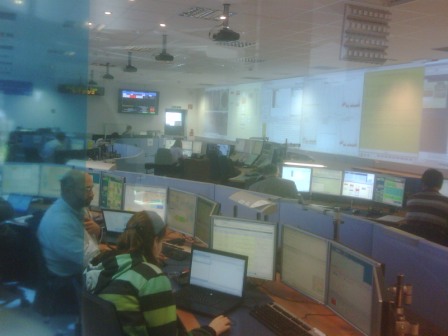
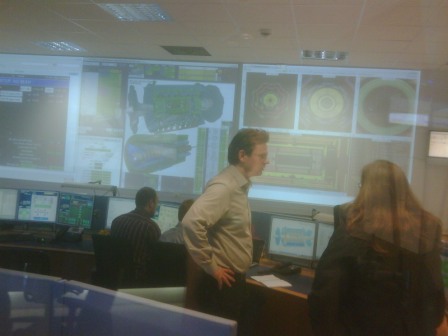
The visit was very interesting despite of the fact of not being able to descend into the under ground to see the tunnels that appear in the media so often. In fact, as we were informed by the researcher who guided our visit, all those images are from archives as at the moment radiation down there is high due to the experiments and no one can get down, everything is controlled from above the ground, being this monitoring room the closest you can get (including researchers from ATLAS, pictured in the photos).

ATLAS monitoring room

ATLAS monitoring room

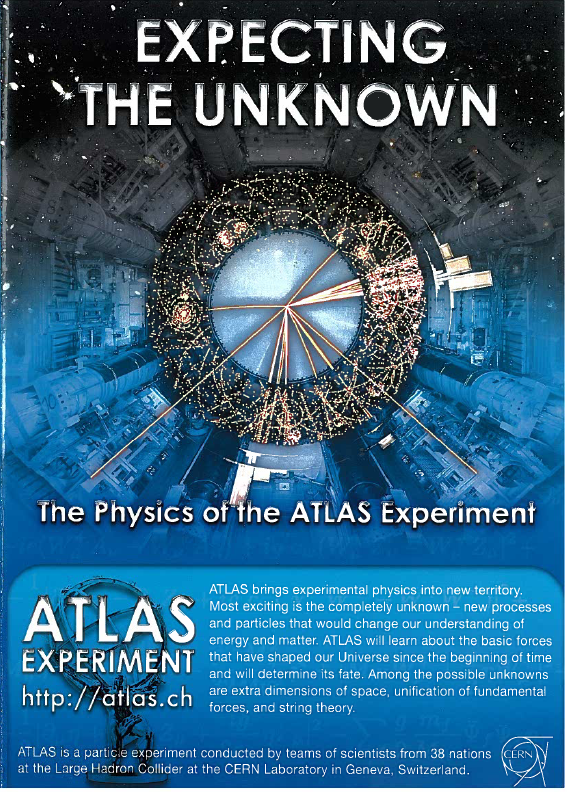
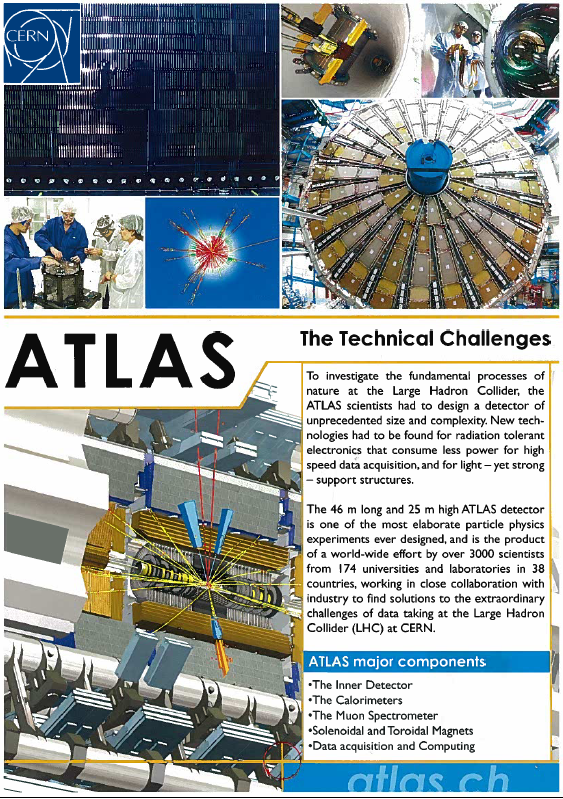
As I said, tours and explanations were given by researchers contributing some of their time to science outreach: I found that fantastic, even if to some eyes the discourse might seem dull. To complement the visit some videos were displayed and I collected some brochures, that I have scanned and can now share in the blog (you see how timely the visit was!). If you are interested in the brochures, click on the links and you can retrieve them from Google docs:

Guided visits are free of charge but limited in number and group size, thus you need to make a reservation prior to going there. Needless to say that I strongly recommend the visit.

By the way, I’ve seen in many places people criticizing the Higgs boson nick as “God Particle”. The explanation is simple and funny and can be found here.

The book in which this nick first appeared, “The God Particle: If the Universe Is the Answer, What Is the Question?” is a tremendous piece of divulgative physics by the physicist Leon Lederman. I loved it because of the anecdotes he explains of his experiments, the humour he uses and the passion he transmits. I recommended this book once five years ago in Toastmasters, got it borrowed by a member and returned it after a week: “Javier, it’s not *that* easy, funny and entertaining” (obviously the person didn’t read more than 5% of it). Nevertheless, I continue to recommend it, especially if you know some teenager thinking about studying Physics.

1 Comment

Filed under Education, Travelling

A380 & Patrouille de France in Blagnac for the Tour de France

Yesterday (July 20th 2012) the Tour de France departed from Blagnac, the village close to Toulouse which hosts Airbus HQ. In a place wich such an aeronautical tradition what better way to start the race than with an aerial exhibition: the A380 in formation flight with the Patrouille de France (Dassault/Dornier Alpha Jet).

This post is just to share the short video I took from the office (comments in French by my colleague Sylvain):

Leave a comment

Filed under Aerospace & Defence

On why blog posts are read

Yesterday I wrote a post about the curiosity of seeing which blog posts are read more at different points in time. I pinpointed the case of a blog post related to taxes in France and Spain. I guessed that, referrals from the blog itself aside, this was due to the economic situation in Spain.

Now take the other top posts at the moment (prior to these last 2 posts were published):

Current Top Posts as of July 7th 2012.

Leave a comment

Filed under Twitter & Media

Brain drain or bank run?

A curiosity that comes with having a blog is that sometimes certain post starts to be read more and more and you keep wondering why. One plausible reason is clear and self-fulfilling: since the most read posts in the last few days appear at the right of the blog, readers may opt to read one of those after having read the post that brought them to the blog.

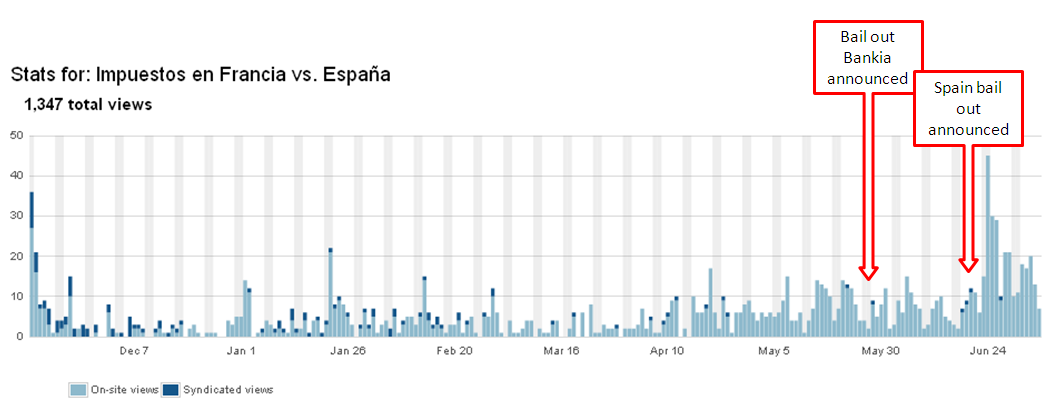
One of those post that it’s being read more and more recently is a comparison I made about income tax rates between Spain and France. I wrote it because I had some work colleagues who asked me about that, and instead of writing always the same answer I could refer them to the blog post.

See the stats below:

Stats of the post related to France income taxes.

In this particular case, and since the post it’s written and titled in Spanish, I decided to check the stats with the dates of the announcements of the bail outs of Bankia and Spain.

Another thought I have is: since the title is relatively vague “Taxes in Spain and France” (it does not mention “income” even if it only refers to income taxes), this keeps me wondering whether people arriving at this post are tempted to emigrate from Spain or to relocate their savings… brain drain or bank run? Sigh (as in lament).

To have a better view on that, and taking into account that my blog is not a special reference nor its low readership is representative of Spain, we could simply check with Google Trends. I started to look for it, but Google’s answer was “Your terms […] do not have enough search volume to show graphs”. Sigh (as in relief).

2 Comments

Filed under Economy, Twitter & Media

Elections législatives in France

Second round of Elections législatives in France; as I did for the first round of the presidential elections two months ago, I went last Sunday morning to my bureau de vote to see how the process, the ballots, etc., were this time.

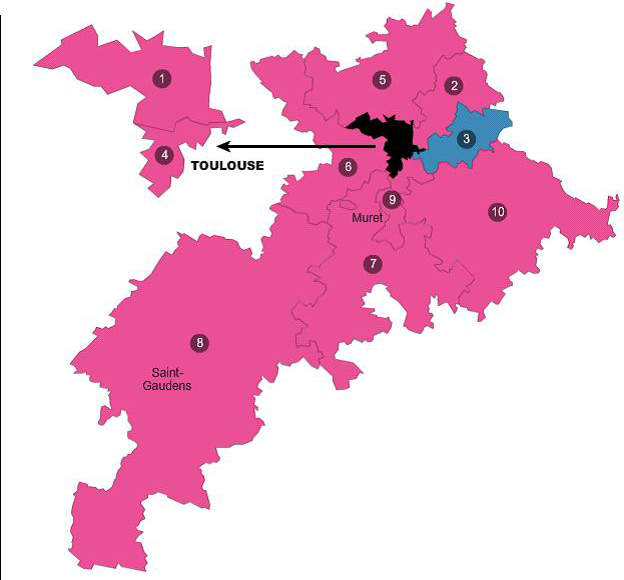
The striking difference with the elections to the congress in Spain is that in France each seat is circumscribed to a specific area, i.e., Haute-Garonne, the department where Toulouse is located has 10 circumscriptions, each one of them sends one and only one representative to the National Assembly in Paris. For each of those seats there is an election, with first and second round, for which absolute majority is required.

Let’s go back to Spain: e.g. the province of Madrid has 36 seats in the parliament, in the last November elections citizens from Madrid voted to the list of a party which proposed 36 names and, depending on the number of votes that each party obtained, those 36 seats were distributed according to the D’Hondt method (see a discussion on the method here – in Spanish). You will now see the effect.

In Madrid last November, the Popular Party obtained 50.84% of the vote (absolute majority), Socialist PSOE obtained 26.03% followed by UPyD (10.29%) and IU-LV (8.04%). The seats 36 were awarded as follows: 19 for PP, 10 PSOE, 4 UPyD and 3 IU-LV.

In the first round of the Elections législatives in Haute-Garonne:

  • In the 1st circumscription: the Socialist Party obtained 43.63% of the votes, followed by UMP (23.34%), Front National (9.96%) and Front de Gauche (9.01%)…
  • In the 2nd circumscription: the Socialist Party obtained 46.38% of the votes, followed by UMP (21.63%), Front National (12.46%) and Front de Gauche (7.86%)…
  • In the 3rd: UMP (35.14%), Europe Écologie Les Verts (22.24%), Divers gauche (21.36)…

If in the first round no candidate obtained an absolute majority in her circumscription (this only happened in the 8th circumscription, where the Socialist Party won the seat in the first round) a second round was needed. Only those parties with more than 20% of the vote in the first round competed in the second round; sometimes there were 2 candidates and in few cases 3.

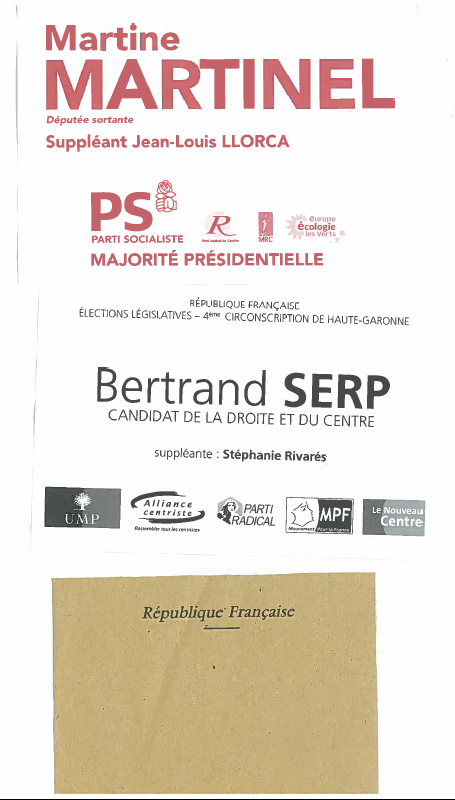
In the week from the first to the second round, those parties not qualifying could elect to support one of the candidates in the second round and that was in the end reflected in the ballot papers, where you can see that the Socialist candidate of my circumscription was backed by 3 parties apart from PS and that one of the UMP by another 4 parties.

In the second round, the socialist party candidates who in the first round had obtained around 45% of the vote were collecting around 65% of the vote, beating one by one the other candidates except for the 3rd circumscription where the UMP won (and the 8th where there wasn’t a 2nd round).

This in the end gave the PS 9 out of 10 seats (90% of the seats) while in the case of Madrid, the PP obtained with about 50% of the vote 19 out of 36 seats (53% of the seats). This is the striking effect and main difference that the second round system provokes.

Result of the elections in Haute-Garonne.

I also found interesting the freedom at the time of arranging the information provided in the ballot paper, it seems that only size and white background are required.

The Socialist ballot doesn’t mention for which circumscription the candidate is competing (they may consider it redundant information, as the voter knows in which circumscription she lives) while they introduce the subtle message “Députée sortante” to let the voter know who won last time or who represented and worked for them during the last term. On the other hand, the UMP not being able to use the last-winner message opts for the inclusive “Candidat de la droite et du centre”. Note as well the difference in the colour, red vs black / grey, I guess that the latter was compromise among the different parties.

Ballot papers and envelope for the second round in the 4th circumscription of Haute-Garonne.

4 Comments

Filed under France

Scotland

On the 2nd of June I flew in the morning from Toulouse to London Gatwick. At more or less the same time Luca flew from Amsterdam, our friend Elena from Madrid and Maicol drove from Bournemouth, in the South of England. From then on, we embarked into the adventure of seeing as much as possible of Scotland in a week. There we go!

Day 1: Gatwick, York, Riding Mill.

Day 1

At first we encountered heavy traffic in the road, thus we arrived to York later than we wished. We could have a walk around the city. We then followed to Riding Mill where we would sleep at the Low Fotherley Farm, the first of the many Bed & Breakfasts that we would be hosted at. This is a feature which I loved of the trip: those breakfasts! I also enjoyed much the suppers at pubs.

Day 2.

Day 2: Scottish Borders, Markinch, St. Andrews, Edinburgh

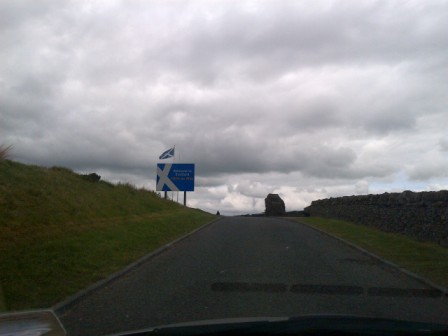
We continued our way to the North, making our first stop at the Scottish Borders, listening for the first time to the pipes and starting to see Scottish flags (St. Andrew’s cross). We then reached Edinburgh and passed it as we wanted to reach Markinch to witness the Highland Games, of which I already wrote one post.

Scottish Borders.

We then went to St. Andrews to visit the Old Course, which I explained in a post about golf in Scotland, and back to Edinburgh where we arrived just in time for dinner.

Day 3.

Day 3: Edinburgh, Stirling, Glamis, Cairngorms, Balmoral, Aberdeen

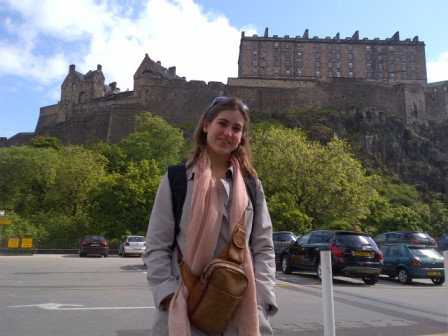
In Edinburgh we slept near Arthur’s Seat, but we decided to skip the trekking to the hill and head to the city centre. We then visited the Castle, where they were getting prepared for the Military Tattoo (where this year an official name for A400M may be given!).

In the castle we saw Mons Meg cannon, St. Margaret’s chapel, the Great Hall, the Scottish War Memorial, the One O’Clock Gun firing at 13:00, the Stone of Scone… We then went down to walk along the Royal Mile to see some more highlights of the city, such as the Cathedral or the statue to Adam Smith.

Edinburgh Castle.

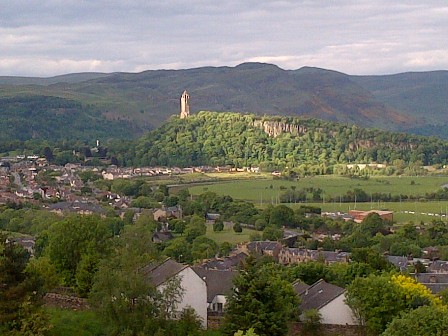
We then went to visit the Stirling Castle, but was already closed (as were Glamis Castle and Balmoral, which we also passed by later on in the day). We took a look of the views of the fields around the castle, where many battles central to Scotland’s history were fought, among them those involving William Wallace and Robert the Bruce, who has a statue just at the entrance of the castle.

Fields at Stirling.

Instead of taking the fastest way by the coast to Aberdeen, we decided to take the route through the national park of the Cairngorms, where the highest mountains of Scotland are. There we saw plenty of deers (we almost bumped onto some of them suddenly crossing the road!), cows, rabbits, etc.

Cairngorms.

Day 4: Aberdeen, King’s College, Loch Ness, Badbea, Dunnet Head, Thurso.

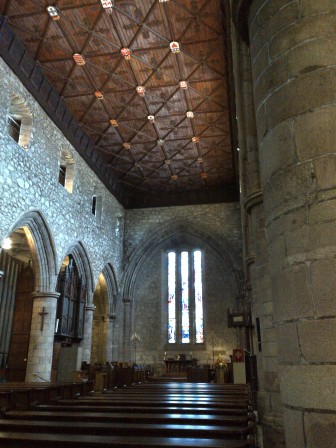
In the morning we took a walk around Aberdeen, the silver or granite city. It was a pity that the cathedral and other places were closed. We could visit the Maritime Museum. We then headed for the beach. We did not take a bath yet, as we were not enough in the North. Close to the beach we saw the football stadium of Aberdeen football club, one of the two which defeated Real Madrid in a Cup winners’ Cup (Recopa) final in one of the four times it took part in the competition. We then went to see King’s College, founded in 1495, with its idyllic campus. Close to the university we visited St. Marchar’s Cathedral where we enjoyed its heraldic ceiling with the coat of arms of many European kingdoms of the time (including Castile, Leon, Navarra…), and where a quarter of William Wallace is supposed to be buried in the walls.

St. Marchar’s Cathedral heraldic ceiling.

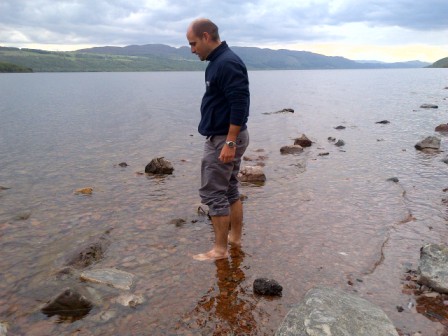
Nessie, at Loch Ness.

Once we left Aberdeen we went to Inverness and crossed it to see the Loch Ness, and we did found Nessie!

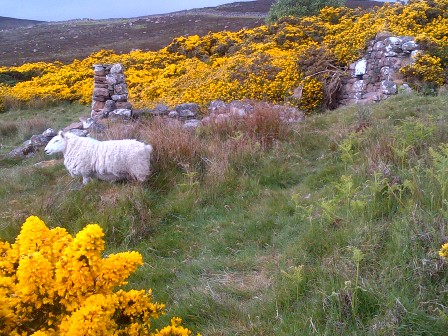
On the way to the north coast we stopped at Badbea, a former village by the cliffs of the east coast established during the Highland Clearances, a dark episode in Scottish history.

Badbea (what it’s left of it).

We finally reached Thurso, on the north coast, but that was not enough, we needed to reach Dunnet Head, the northernmost point of the island (being this the one and not John o’Groats). There we could see the lighthouse and some fortifications built during WWII.

Day 5.

Day 5: Thurso, Bettyhill, Durness, Ullapoll.

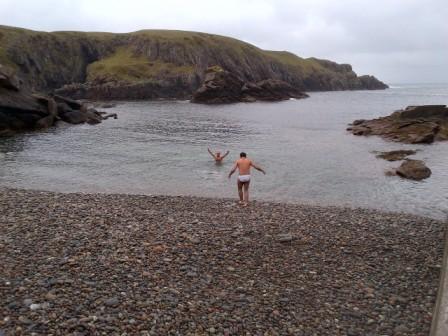
We departed from Thurso and started our tour along the north coast of Scotland, one of the requirements for the trip. We made some stops along the way, to see some sight spots, to have a swim at the North Sea (close to Bettyhill), to visit the Smoo Cave at Durness, to see Durness’ beach and unexpectedly to play golf at Durness Golf Club, as I already explained in an earlier post.

Having a bath at the North Sea.

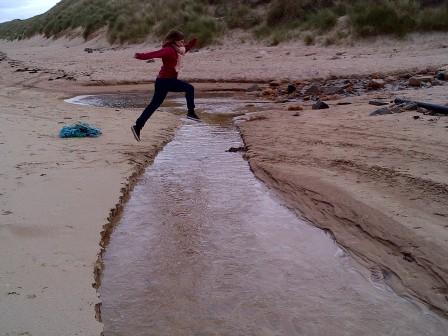
Luca “flying” at Durness beach.

Day 6.

Day 6: Ullapoll, Isle of Skye, Glencoe, Goban.

We had been recommended the visit of the Isle of Skye, as the most beautiful of the islands. After almost rounding it completely we do not recommend the visit. We had some lunch at Portree, which we didn’t either find particularly beautiful. Sincerely, we found dozens of more beautiful spots driving down the west coast of Scotland.

Continuing with our tour we made two short stops: at Glencoe, to visit the memorial of the massacre, where most of the MacDonald clan was killed, and at Goban, a nice port city.

Day 7.

Day 7: Islay

In Islay the main attraction was to visit Bowmore distillery, which I described in an earlier post. We had a walk around the village and then went on to visit the other villages of the island, Port Ellen and Porthaven, where we had some coffee.

Day 8.

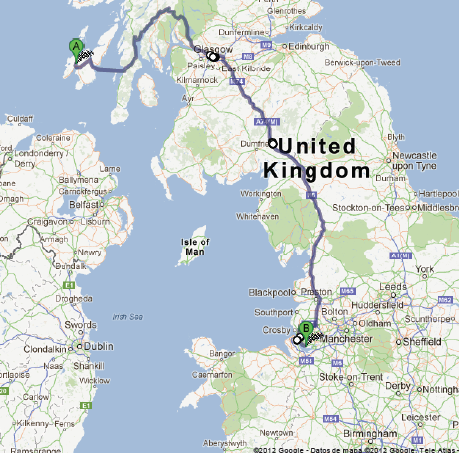
Day 8: Islay, Glasgow, Lockerbie, Liverpool.

On the way to Liverpool we stopped to have a walk in Glasgow, where we had lunch at the restaurant “The Willow Tea Room“, designed by Charles Mackintosh in 1904. Later on, as we saw in the road the signpost of Lockerbie we drove by to see if there was any memorial of the tragedy with the Pan Am Flight 103 which exploded on air; we didn’t find it.

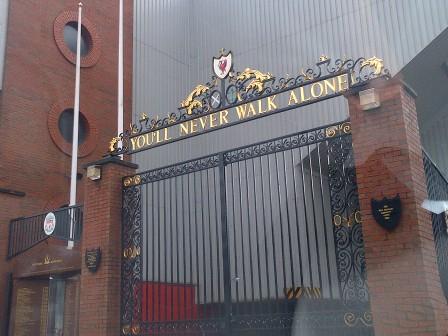
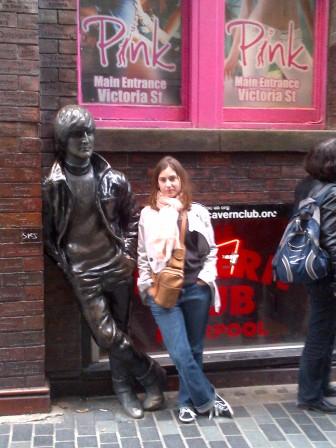
In Liverpool we went by Anfield, though we were late for taking on any guided tour. This is something for which I’ll have to come back. We then moved to the centre to visit The Cavern Club (where The Beatles made their first performance) and have some dinner.

Anfield, “You Will Never Walk Alone”

Luca at The Cavern Club.

Day 9.

Day 9: Liverpool, Gatwick.

This was the last day of the tour, with the only goal to get to Gatwick in time for our flights. The only remarkable thing we saw were some paratroopers being dropped from a C-130J-30 from the UK Royal Air Force, some miles to the East of Brize Norton air base.

1 Comment

Filed under Travelling

Bowmore distillery

On our last trip to Scotland, a visit to a Scotch whisky distillery was a must. But, which distillery should we visit? Location was not a problem, we would travel throughout the whole of Scotland, thus, we decided to cross some inputs to make our decision.

Making a good use of the Wikipedia we found out that only a few distilleries in the whole of Scotland were producing their own malt:  Balvenie, Kilchoman, Highland Park, Glen Ord, Glenfiddich, Bowmore, Laphroaig, Springbank, and Tamdhu. Fewer of them opened their doors to visits. Three of those were located in Islay island, which Luca had already suggested. We then decided to target the oldest one of them: Bowmore, founded in 1779.

The visit was superb, even if due to lack of rain in the previous weeks they had stopped malting (for which they need tons of water coming from the local river). We had the chance of visiting all corners of their facilities: malting barns, we entered into the kiln (like an oven where they burned the peat which smoke provides the characteristic peatty flavour of Islay whisky),  the mash tun, the tun room where the wash back is made (so far the process is practically the same as for producing beer!), the stillhouse and the warehouse, where there were cask from up to 1957!

One curiosity which I enjoyed: whisky casks normally have been used beforehand either for producing bourbon in the USA (where in some states the law allows only to use them once for bourbon production – the cask selling for ~100$ each) or for producing sherry in the South of Spain (these were in higher demand as they may have been used more times and give more flavours and aroma to the whisky – the cask selling for 500-1,000$ each). You can also take a short visit to the distillery in their website.

We immediately became fans of Bowmore, buying some small bottles of 12, 15 and 18 years old single malts, some glasses, coasters, a flask, beer made out of malt and casks from Bowmore, “peatty” honey…

This slideshow requires JavaScript.

Note: I must admit that in our becoming fans of Bowmore, or in general Islay whisky, we may have been biased as Luca’s surname, “Veen”, means in Dutch “peat”.

4 Comments

Filed under Travelling

Torrelodones: iniciativas vecinales

El pasado 10 de junio se emitió el reportaje “Reiniciando España: La Política” en “Salvados”. Aparte de los mensajes que transmiten, me llamó la atención y gustó porque en él se hablaba de Torrelodones.

En primer lugar entrevistan a Manuel Milián Mestre, ex-diputado y uno de los fundadores del PP, que admite que por su rebeldía y posiciones morales por encima de los intereses del partido tuvo que dejarlo.

Hace una radiografía de la política en los grandes partidos demoledora. Deja una serie de frases escuchadas en un partido y otro que dan una buena imagen de lo que se prima en ellos: “el que se mueve no está en la foto”, “el que me desafía la paga”, “el que se vuelve una mosca cojonera acaba perdiendo la batalla”. Define la situación actual como “darwinismo político”, “en el partido triunfan los oportunistas en este momento, se imponen los mediocres”, “áurea mediocritas”, de la meritocracia a “el codazo y el amiguete”…

A continuación se entrevista a la alcaldesa, Elena Biurrun, de una asociación de vecinos que se hizo con la alcaldía. Este hecho ya mereció un artículo en el New York Times hace algo más de un año. Durante la entrevista se mencionan una serie de hechos que muestran la desvergüenza a la que llegan los políticos con el dinero público: comidas y desayunos protocolarios, coche blindado con chófer, clientelismo. Revisando la política de gastos en su primer año consiguieron un superávit de 5,4 M€. Menciona la alcaldesa que se redujo el sueldo en un 20% hasta 49.500€ brutos anuales, pero es que en el mismo pueblo en 2007 el alcalde en aquel momento en el primer pleno se subió el sueldo un 30% hasta 91.445€, solo por detrás del entonces alcalde de Barcelona, y muy por encima del de Madrid o la presidenta de la Comunidad de Madrid y también por encima del presidente del gobierno.

La alcaldesa anima a ciudadanos de otros municipios a emprender iniciativas similares, asociarse y defender lo público. En este sentido siempre me ha llamado la atención la poca predisposición que hay en España al asociacionismo, a participar en distintas iniciativas, a dedicar un tiempo voluntariamente para trabajar desinteresadamente en algo por el beneficio común. En el caso de Holanda, sin embargo, esto sí se hace y es muy valorado por la población y las empresas. Es casi una obligación social el pertenecer a alguna o varias asociaciones, es normal que los estudiantes dediquen casi un año en medio de sus estudios universitarios a volcarse trabajando para alguna asociación. No nos vendría mal tomar ejemplo.

Minifútbol

Alguna vez he escrito en este blog sobre el Mini. Voy a retomarlo en este post sobre Torrelodones y la participación ciudadana, especialmente estos días en que el Minifútbol ha celebrado su 40º cumpleaños.

La historia del Mini se puede leer con detalle en su página web, pero básicamente se puede resumir en que nació en 1971 cuando una serie de amigos de la infancia comenzaron a organizar una competición en la finca de uno de ellos para poder reunirse en las tardes de verano. Con algunos periodos de interrupción, el Mini continúa hoy organizando un serie de campeonatos de fútbol para todas las edades, ambos sexos, en verano y en invierno.

Hay algo que distingue al Mini de cualquier otra competición futbolística, y es su carácter social, que se traduce en su decálogo. En este post quiero destacar algunos de los puntos que marcan el Minifútbol:

  • Lo importante son los compañeros, los de tu equipo y el rival, por ello en cada competición cada jugador se inscribe individualmente y con un sorteo se determina la composición de cada equipo. Cada año jugarás con 7 u 8 personas distintas, permitiéndote conocer a más gente del pueblo y jugar contra antiguos compañeros.
  • Todo jugador debe participar un mínimo de tiempo en cada partido.
  • No hay lugar a comportamientos antideportivos ni duras entradas, para lo cual se han introducido una serie de modificaciones en el reglamento.
  • La asistencia a los partidos como signo de compromiso con el grupo.
  • El voluntariado de la organización.

Y para acabar este post, tras alabar estas 2 iniciativas vecinales de Torrelodones, os dejo un extracto de un chotis sobre Torrelodones, interpretado por los vecinos Camilo Sesto y Rocío Dúrcal dentro de otra iniciativa que surgió hace unos 14 años cuando se editó un CD con canciones sobre el pueblo.

Leave a comment

Filed under Miscellanea, Sports

Playing Golf in Scotland: St. Andrews & Durness

According to the Wikipedia “The Old Course at St. Andrews is considered by many to be the “home of golf” because the sport was first played on the Links at St. Andrews in the early 1400s”. Thus, we could not skip a visit to St. Andrews when we visited Scotland last week.

Even though none of us plays golf, the place breathes a special air of tradition that anyone can feel. We loved the visit. The views of the course are wonderful. Its placement close to the beach and the village make it all the more enjoyable. The possibility of crossing through was also inviting (even if hazardous).

Close the St. Andrews Links there is a small field where putts and balls can be rented for just one pound in order to play 18 holes in a green and make small tournament with friends. So we did. We had lots of fun “playing golf”, though I am afraid I came in last, with 76 strokes. See in the tweet below the complete results of our competition:

As a complement to visiting the Old Course, there is the British Golf Museum just 50 metres from it. The museum is wonderful. I will have to come back to it one day, as we had to visit it in a rush (it closes at 17:00 – free of charge).

Durness

A couple of days later, completing our tour by the Northern coast of Scotland we arrived at Durness. Walking by the beach we discovered a golf course. My friend Maicol mentioned that it would be a good plan to play.

At the beginning we were doubtful as in Spain you need a licence to play in a golf course, but we gave it a try and went to ask. What a positive reply! “Visitors are always welcome at Durness Golf Club”, “you don’t need any licence to play here”, “you need to pay just 10 pounds to play”, “a set of clubs can be hired for just 5 pounds”… we had a plan! 2 hours of playing golf for just 30 pounds altogether.

Again, there, the views of the course at the seaside were wonderful. Especially the last hole, where you needed to avoid the ball falling down the cliffs into the Atlantic Ocean to reach the green. We highly recommend paying a visit to the club.

This slideshow requires JavaScript.

6 Comments

Filed under Sports, Travelling