Amphitheater of El Djem (video)

Last August Luca and I visited the amphitheater in El Djem, Tunisia. It is the biggest one in Africa and the 4th in the World. It could host up to 35,000 spectators who came mainly to watch chariot races and gladiator shows… and as some of you may know, it was used to film some parts of the movie “Gladiator“, by Ridley Scott.

As I have done before, instead of just sharing some pictures of the amphitheater, I prepared a small video, I hope you like it. I did enjoy preparing it.

2 Comments

Filed under Movies, Travelling

How rain determines olive tree economics in Tunisia

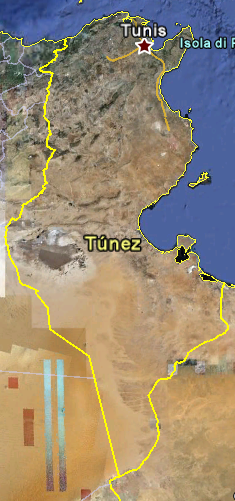
“The North of Tunisia is the most fertile region. There it rains about 1,000mm per year. In the middle about 200mm. The South is almost deprived from rain with only between 0-50mm of rain”. More or less these were the words we heard from Mohammed, our guide in Tunisia for 3 days, no less than 3 times. You can “see” that with Google Earth already.

Tunisia.

He also went on to explain that the olive leaves are a symbol of wealth and that Tunisia was one of the main producers (5th in the World, after Spain, Italy, Greece and Turkey). So, after hearing all these explanations and seeing so many olive trees in the fields along the road trips, I started to notice the difference between the olive trees in the North and the South, and mainly the difference in the distance in which they are planted from one another.

Seeing the landscape I thought that (even if they did it unconsciously) these people were using some scientific approach there. I must say that I have no clue about agriculture and olive trees, but let me elaborate.

  • “1 mm rain a year” means that in one square meter during one year 1 liter of water is collected.
  • The surface from which each of the trees is collecting water must be proportional to the distance (d) between them: (π/4)*d² [m²].
  • I assume the water (volume) one olive tree needs along the year must be proportional to its size (volume)… then, the water they can collect is limited by the rain (mm) and the distance among trees: k*(π/4)*d²*r. Where “r” is the quantity of rain measured in mm of water, “d” the distance and “k” a constant.
  • Their size may be limited by the rain (if in the South is too dry?), by the distance if they are too close to each other, by genetics of these kind of tree (?)…

So, imagine that we are in two regions in which the annual rain is over the minimum so the olive tree can realize to its “own potential” (olive trees having the same size), then:

  • The farmer in the region with less rain must be aware that he shall plant the trees with a distance (d2) between them of: d2 = d1*√(r1/r2), where “d1” is the distance in the rainy region [m], and “r1” and “r2” are the quantity of rain in each regions [mm].
  • So, if I see olive trees the same side in the North (1,000mm, region 1) and Middle (200mm, region 2) of Tunisia, the larger distance in the Middle region should be around √5 = 2.23 times the distance in the North.

As we go to drier regions (Middle, region 2, or South, region 3), it may be that the final size of the tree is smaller and the distance will have to be larger.

  • If the less than 0-50mm in the South was still enough to have large olive trees, then the distance should be over 20 times the distance that we see in the North. However, I cannot tell you, since we didn’t go the most Southern part of Tunisia.
  • If the 200mm of the Middle is not enough water to have that large olive trees then, you could either calculate the size of the tree by planting at different distances in relation to the sizes and distance in the North, or knowing the maximum size you may get you could get the distance at which you have to plant the tree…
    • tree2 = tree1*(r2/r1)*(d2/d1)²… if I guess the distance is about double (by seeing in the pictures), then (for a rain of r2=200mm) the tree2 near the Sahara would have a volume of about a tenth of the tree in the North. May well be true by seeing the pictures below.
    • If we knew beforehand that the tree would only get to reach a tenth of the size, we could calculate that the distance would need to be double.

Even though I am sure there are many more aspects impacting the growth and productivity of olive trees, if I were in Middle / South Tunisia starting from scratch and not knowing anything: I could start sizing the number of trees I could plant in my garden or how big they would grow, how much olives I would get from my land, etc…

Apologies to the experts in the field for the charade that I may have just written, but it was fun playing with the numbers.

This slideshow requires JavaScript.

7 Comments

Filed under Economy

EVM in 40 minutes

Two years ago, I found an excellent free online 40-minute course about Earned Value Management. It was in the website of the UK Ministry of Defence (MOD) Acquisition Operating Framework (AOF).

Some days ago, I wanted to check it again and it was still available. If you are interested in the topic, check it.

Earned Value Management course at UK MoD AOF.

I have never seen an EVM course as good as this one, no matter how beautiful the name the consultancy training company gives it.

Some time ago I also read a well-structured book on project management, “Guide to Project Management“, by Paul Roberts. I recommend this one too.

Leave a comment

Filed under Aerospace & Defence, Education, Personal development

Saving 1,700€ with a hair clipper

Often, after I have cut my hair, it is raised within a conversation the issue of the hair clipper and me cutting it by myself… Last time this happened was couple of weeks ago, and then I decided to reflect on it, make some numbers and write a small post about it.

I bought a Philips hair clipper machine at sometime around 2000-2002 (say 2001). It cost around 20€, though I remember we paid for it in pesetas (1 euro = ~166 pesetas). Since I had started losing some hair, the haircut I was already having was pretty simple: shaving it down to around 9-12mm. Beginning 2002 barber shops were charging about 8.5€ (I do not know how much do they charge now… assuming the price increased with inflation now it should be about 10-10.5€). That was the main driver behind the purchase: the payback time would be extremely quick, between 2 and 3 hair cuts.

In the last 10 years I may have had around 120-130 hair cuts (every 3-4 weeks). These, at the market price would have cost ~1,210€. However, there are some more aspects to take into consideration.

Time. When I used to go to a barber shop, the whole process (home door to home door) would take around 1 hour and a half (90′ – transport, waiting, cutting, transport), while now it takes no more than 20′ (maximum). Then and now, I take a shower afterwards, so I will keep it out of the comparison. This means that now I am saving 70′ each time I have a hair cut… counting the 130 cuts of the last ten years, these amount to 150 hours (about 15 hours / year). I will value these hours on the cheap side, since half of this time I was a student, so let us say 5€/hour. The time savings amount to another ~750€.

This time was my time. However, in about 2/3 of the cuts I counted with the help of either my mum or my partner. They contribute less time as preparation and clean up is done by myself, so let me say they spent about 10′ (~60 hours of their time in 10 years). Let me value their time as 3 times as expensive as mine (this way I am conservative in the business case comparison). This would be an extra cost of 215€ (no matter that it never implied a cash outflow… thanks!).

The price of the electricity of the couple of light bulbs and the clipper used when cutting hair at home (when at the barber’s it is included in the price) is almost negligible (at ~0.1kW/h). I started the calculations, but they amount to less than 1€. The water used in cleaning up is also quite cheap (at about 0.0013€/liter). Assuming each time I used 10 liters in cleaning up (maximum), this makes another ~1.7€.

Finally, I am not including in the calculation the cost of transportation to the barber shop and environmentally aspects of that transportation. We could think that in the 70′ free time that I am given due to cutting it at home I can engage in an equally transport-intensive activity with the same environmentally unfriendly consequences.

If we add up all the savings and costs… -20€ (clipper) +1,210€ (cut price) + 750€ (my time) -215€ (family time) -1€ (electricity) -1.7€ (water) = ~1,722€. After 10 years, the cumulative positive cash flow of that tiny 20€ investment back in 2001 is over 1,700 euros. Ah, and it never required any maintenance.

Do you still want to go to the barber shop?

7 Comments

Filed under Investing

Management Gurus (book review)

According to the Wikipedia a guru is someone “regarded as having great knowledge, wisdom and authority in a certain area, and who uses it to guide others”. The term comes from Sanskrit (गुरु), where gu means darkness & ru means light.

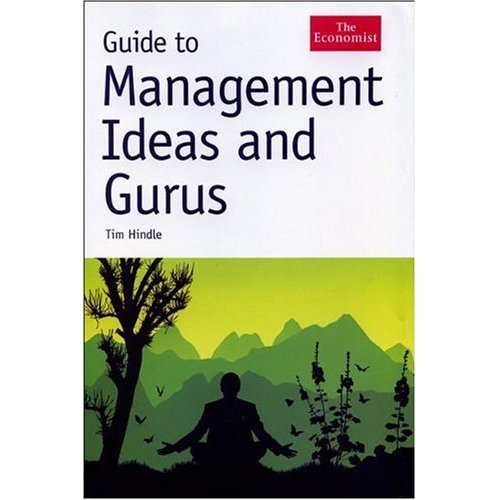
I mention this because during these last holidays I read a book about gurus, “Guide to Management Ideas and Gurus“, by Tim Hindle (322 pgs.).

Guide to Management Ideas and Gurus, Tim Hindle.

About two years ago The Economist used to send within a weekly alert a profile about a management idea and one guru, all of them coming from this book. Since then I had wanted to buy this book, which I found last June at a Schiphol airport book shop.

The book first reviews about a hundred management ideas, e.g., benchmarking, core competence, kaizen, lean production, SWOT analysis… Later it provides a short profile of over 50 authors or gurus, from Taylor and McGregor to Peter Drucker, Tom Peters, C.K. Prahalad… From each idea and author you get two pages. It is a good refresher of different concepts you may have studied and also helps relating some ideas and authors to others, interlinking them.

Along the book there is also bibliography related to each idea and from each author. In total I guess there are over 200 books and papers suggested. Also, it is very handy that from each author the book gives two or three notable quotations, from which you can get a quick idea of what is going to come. So now, after reading it I have a book with lots of marked pages, underlined parts and books and papers to look for.

I wanted to extract some ideas from three of those “gurus”:

  • C. Northcote Parkinson a naval historian famous for his book “Parkinson’s Law“, which can be stated as “Work expands to fill the time available for its completion”.
  • Laurence Peter a Canadian teacher famous for his book “The Peter Principle“, which can be phrased as “In a hierarchy, every employee tends to rise to his level of incompetence”.
  • Robert Townsend a former director of American Express famous for his book “Up the Organisation” with a more clarifying subtitle “How to Stop the Corporation from Stifling People and Strangling Profits”, where he is harsh on the vanity and stupidity of executive leaders.
  • Though not a “guru” from the ones profiled in the book, Scott Adams “Dilbert” comic strip is cited in at least a couple of times, take a moment to check it.

You can be sure that I have marked these three books in the to-read list.

4 Comments

Filed under Books, Personal development

Skunk Works

It is known by nearly everyone in aviation industry the Lockheed Martin department: Skunk Works. It has its own website and it is were many planes have originated since World War II. We all have heard about the strict security rules and stories about how suddenly new aircraft were unveiled. Other companies have tried to establish similar departments; Boeing with its “Phantom Works” and EADS with its “Innovation Works”.

However, it was not until during my last holidays that I came to know the origin of the word, reading the book “Guide to Management Ideas and Gurus“, by Tim Hindle.

The name skunkworks originates from a cartoon series called “Li’l Abner” by Al Capp. The story is explained as well in the Wikipedia:

“[…] The “Skonk Works” was a dilapidated factory located on the remote outskirts of Dogpatch, in the backwoods of Kentucky. According to the strip, scores of locals were done in yearly by the toxic fumes of the concentrated “skonk oil”, which was brewed and barreled daily by “Big Barnsmell” (known as the lonely “inside man” at the Skonk Works), by grinding dead skunks and worn shoes into a smoldering still, for some mysterious, never specified purpose. […]”

Sometimes industry names come from the least expected place.

4 Comments

Filed under Aerospace & Defence, Books

Bill Clinton endorsing Kiva (video)

Some months ago, I gave a loan through Kiva to Fizuli Agdjabayov, a man who has a small transport business in Azerbaijan. Yesterday I got an email with the latest post of one of Kiva’s blogs about a visit of a Kiva fellow to Azerbaijan.

I especially liked the two videos that Yelena Shuster, the fellow, had prepared about her visit. I immediately thought about sharing these with you through the blog; this is what I am doing with this post. Enjoy the video:

I believe that seeing these fellows visiting the entrepreneurs in person is the best way to gain confidence about this system. By chance, on a trip to Peru, I could visit as well an entrepreneur that had received a loan through Kiva; then I wrote about that experience in a previous post in this blog.

The second best way to gain confidence on initiatives like Kiva is by seeing Bill Clinton endorsing them in an interview. I came across the following video while watching Yelena’s, in it Bill explains how Kiva works:

3 Comments

Filed under Helping others, Investing

A400M and B787 static tests

Airbus Military completed on July 22nd in Getafe (Spain) one of the most extreme cases of its A400M structural tests: the maximum wing up bending until reaching the ultimate load, defined as 150% the most extreme load the plane is expected to experience while in service.

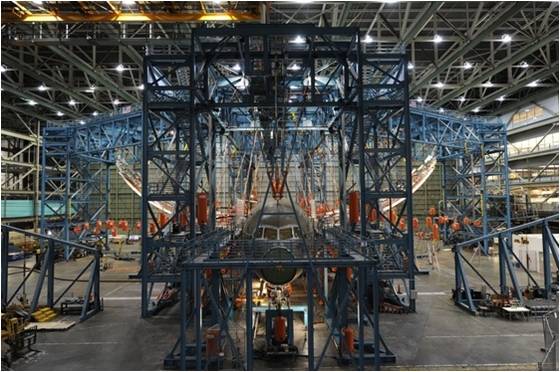
Some months ago, another development aircraft the Boeing 787 achieved the same.

Even though, the loads that A400M will experience in service will be higher than those that the 787 will face and thus the ones tested in each case were consequently different, see the difference in the flexion of each wing.

As engineers working in military developments will never be tired of explaining: a military aircraft is a completely different animal, not just a civil one painted in military camouflage.

2 Comments

Filed under Aerospace & Defence

Monkey Investors

Just a few weeks ago I wrote a post about the Wall Street Monkey. Remember that the story was based on Burton G. Malkiel’s book, “A Random Walk Down Wall Street”, where he suggested that a blindfolded monkey throwing darts to select stocks wouldn’t do worse than professional fund managers.

I watched yesterday TED Talk by Laurie Santos, “A monkey economy as irrational as ours”, where she explains how she studied whether our mistakes were due to a badly designed environment or badly designed minds.

She made several studies with apes, introducing the use of money to them… and she found that apes show the same irrational behaviours regarding risk taking as we humans do…

I loved especially the following passage around minute 16:30…

“… we can actually give the monkeys a financial currency and they do very similar things we do. They do some of the smart things we do, some of the kind of not so nice things we do like stealing and so on… but they also do some of the irrational things we do; they systematically get things wrong and in the same ways that we do.

This is the first take-on message of the top… if you saw the beginning of this and you thought: “…oh! until I go home and hire and put a monkey as financial advisor … they were cuter than ours…”, don’t do that: they’re probably gonna be just as dumb as the human one you already have!

At least, apes would charge us less… just a couple of grapes.

“A monkey economy as irrational as ours”, by Laurie Santos.

1 Comment

Filed under Books, Investing

Nimrod: endless development, never delivering

Aerospace and Defence programmes are formidable undertakings full of complex developments, new technologies, changing requirements that make them difficult to manage and keep in control. This is not new and lead Norman Augustine to write his famous “Augustine’s Laws” of which I already wrote a post in this blog.

Few months ago I was having lunch with my colleagues while we were discussing about some current defence programmes with sound cost overruns and delays. One of us challenged the rest with the question of what was the programme in the direst situation. Among the answers came the British Nimrod Maritime, Reconnaissance and Attack (MRA) Mk 4 aircraft programme.

The programme called for the upgrade of existing Mk 2 aircraft. The upgrade involves extensive (80%) reconstruction of the airframe, plus incorporation of many new components, including engines, wings, landing gear and general systems, as well as new flight deck and detection systems. The contract was awarded in January 1997. The original order was for 21 aircraft.

Nimrod modifications.

One of my colleagues jokingly said “that programme is just the perfection of the British A&D business model: charging money to the tax payers without delivering a single aircraft, being paid simply for developing”. We all laughed at the comment, sure.

In 2002 the contract was reduced to 18 aircraft. In 2004 the in-service fleet requirement was reduced to 12 aircraft, including the 3 prototypes. By 2008 BAE had only been contracted to for 9 aircraft in addition to the development contract. In 2009 the Defence Equipment Minister announced that it was not necessary to upgrade the 3 development aircraft.

When first ordered the programme had an estimated cost of 2 billion pounds; by 2006 the estimation was of ~3.8 billion pounds (+90%). When ordered the first delivery to the Royal Air Force (RAF) was scheduled for 2001, with the Initial Operational Capability (IOC) in 2003, on the delivery of the 7th aircraft.

BAE Nimrod.

Last week we could read in the British press that the air force chiefs to the Strategic Defence and Security Review had proposed to cancel the Nimrod programme in order save money under current budgetary pressures. The measure would “only” save now 200 million pounds, as most of the development and acquisition costs (~95%) have already been paid. The savings would come in the longer term, due to the saving of operation and support costs related to that fleet.

If this cancellation becomes effective, that would be consummation of that model: being paid (180% of initially estimated costs) for developing of a fleet of aircraft (along a period twice as long as initially expected) to end up not having to deliver those aircraft (not 21, not 18, not 12, not 9… not a single one).

Aside from this humorous note, that would be a very sad happening for BAE engineers, managers and technicians.

5 Comments

Filed under Aerospace & Defence