Tag Archives: Madrid

Mi adiós a Ibercaja

Llevaba tiempo queriendo cerrar una cuenta de Ibercaja por varios motivos: cobran por las tarjetas, cobran por las transferencias realizadas por internet, hace años me colaron un seguro de vida al pedir un crédito para irme de Erasmus, tiene pocas oficinas, etc.

Hasta ahora no había cerrado esa cuenta porque seguía pagando un préstamo, y no quería cancelar el préstamo porque al principal que me quedaba por pagar le podía sacar una rentabilidad mayor invirtiéndolo que el interés que me cobraba la caja. Pero en junio terminé de pagarlo.

Hace unos días transferí casi todo el dinero restante a ING. Pregunté si seguía necesitando la cuenta de Ibercaja asociada, y me confirmaron que no, que al tener la cuenta Nómina de ING con sus tarjetas (gratuitas) asociadas no era necesario. La comercial de ING me ofreció que ellos me realizaban la gestión de cerrar la cuenta de Ibercaja: “No, gracias, prefiero ir en persona”. Para eso había dejado 22,53€.

Esta mañana, antes de ir al trabajo, he pasado por la oficina más cercana (c/ Francisco Silvela, Madrid).

–  Hola, venía a ver cuánto dinero hay en la cuenta.

–  22,53€.

–  Perfecto, quería retirarlo.

–  ¿22 euros ó 22,53?

–  22,53€.

El hombre de la caja recoge el dinero, hasta el último céntimo y me lo da.

–  Tiene que firmar aquí.

–  Ahora quería cancelar esta tarjeta que me han enviado, que no he pedido ni activado y me dicen que me quieren cobrar 17€ ahora en octubre.

Comprueba unas cosas en el ordenador, me señala otros dos papeles donde debo firmar…

–  Y, por último, quería cerrar la cuenta.

[El orden de retirar primero el dinero, cancelar luego la tarjeta y por último cancelar la cuenta era premeditado: para evitarle la tentación de inventarse un “cargo por cancelación” dado que él vería que ya no quedaba dinero y para que fuese lo más parecido a una muerte anunciada]

–  … No puede ser, tiene que ir a su oficina (Las Rozas, a 22km de Madrid).

–  ¿Cómo que tengo que ir a un pueblo donde no vivo ahora para cerrar una cuenta? Deme una hoja de reclamación que voy a poner una queja.

–  Espere… voy a llamar a la oficina de Las Rozas a ver si me autorizan.

Esperamos a que llegue el fax… A quienes vivimos en Madrid, esto de tener que ir de Madrid a Las Rozas puede no parecer tan extraño, pero ¿si hubiese abierto la cuenta en Sevilla? Me parece estúpido pretender que cada persona haya de ir a cerrar una cuenta donde la abrió… En Ibercaja parecen serlo.

Llega el fax:

–  Usted tenía un seguro de vida… ¿relacionado con un préstamo?

–  Sí, me obligaron a abrirlo. No lo quiero.

–  Además, tiene una libreta.

–  No lo sé, si en algún momento la tuve no sé donde está.

–  Necesito que traiga la libreta, si no, no podemos cerrar la cuenta.

[Este fue el mejor momento… me costó no reírme: ¿qué debía pensar el cajero? “Si le retengo unos días hasta que encuentre la libreta, igual se lo piensa, recapacita y quiere volver a ser nuestro cliente”… esto es como entienden el servicio al cliente – ni que hablar de no cobrar por realizar transferencias, ni por las tarjetas, horarios de apertura, horarios de atención telefónica, etc.]

–  No me ha entendido: no tengo esa libreta ni se la voy a traer.

–  … Bueno, si un día la encuentra corte la banda magnética…

Firmé un último papel y salí del banco sonriente.

Aunque muy pocos, hay días en que el ir a un banco o caja puede hacer que tu día empiece de la forma más feliz.

29 Comments

Filed under Miscellanea

Is a hassle-free airport possible?

Some years ago on trip to India, I remember having passed through the security check just before getting into the airplane at Schiphol airport in Amsterdam. However in the subsequent flights I have taken from there I never saw this again… until last summer, on another trip to a non-Schengen destination, Tunisia.

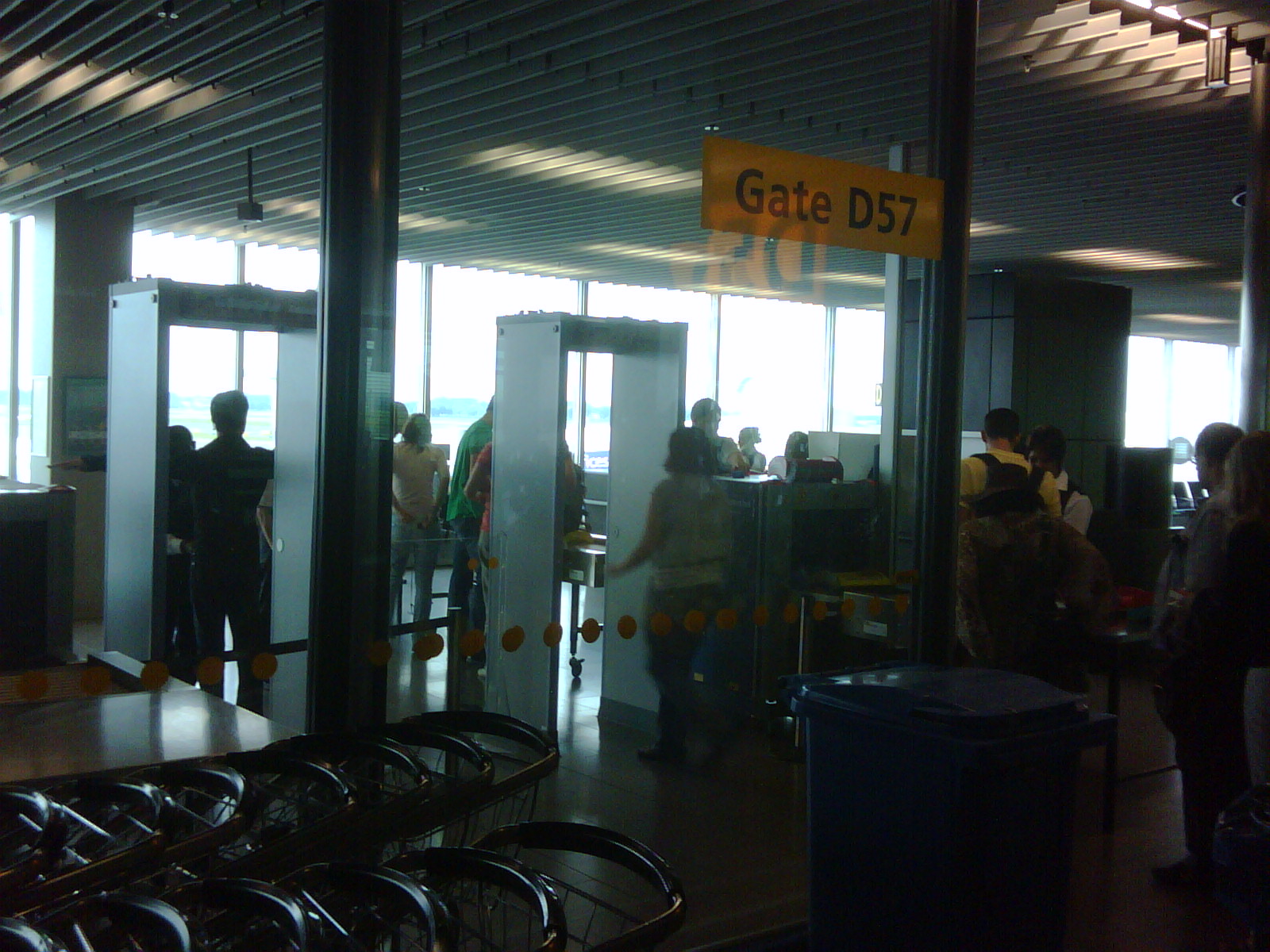
Here is the picture I took.

X-ray scanners and metal detectors at Schiphol, Amsterdam.

As you can see, in terminal 1 departures D of Schiphol airport, the security control is located just where each boarding gate is.

You can imagine how much this measure reduces the hassle passengers experience in airports. To take that flight, we arrived at the airport, dropped our luggage, showed our boarding pass and passport to an official (no long queue, no removing of personal belongings…), walked to our boarding gate and only there we made a small queue for the security control… The difference: that queue is composed of just the people who will come in your flight, you are seeing the airplane out there, there is no rush, they are seeing you, you are not missing the plane…

I tried to get the numbers from Madrid-Barajas airport but I did not find them (if any one has better estimates or a reliable source, please feel free to contribute), nevertheless, from having seen the different terminals I can figure out that:

  • It may have around 230 boarding gates among all the terminals (over 60 between T1, T2 and T3, around 90 in T4 and over 60 in T4S).
  • It may have no more 50 than x-ray scanners…

If you wanted to install 2 per boarding gate, you would need to invest in buying and staffing more than 4 times the number of x-ray scanners and metal detectors than the ones that there are now… It would be so easy… if just air traffic controllers did not suck up a whole 30% of AENA yearly costs [pdf, 741 Kb] (~1bn€)…

3 Comments

Filed under Aerospace & Defence

Studios are more profitable than flats

Two weeks ago I was having some drinks with a good friend of mine. Talking about books we were reading we ended up talking about investments.

He had the idea of buying a small studio in order to rent it, because the margin you could get in a small studio compared to its price was larger than if you did the same with a larger apartment.

I wanted to test the argument with idealista.com, the leading real state website in Spain. Apart from the many ways in which you can screen and sort out houses, the site has a very handy piece of information which is the average price per square meter of your selection either for rental or sale.

I restricted my searches to the district “Centro” in Madrid. I then looked for average prices of “studios” of “less than 60m2” and “flats” of “more than 80m2”, both for rental and for sale. The minimum sample of houses was 175 and the maximum over 700, so I believe they can be considered a good sample for this little study. I then looked for the averages:

  • Studio of less than 60m2:
    • Rental: ~17 €/m2 per month.
    • Sale:  ~4,287 €/m2.
  • Flat of more than 80m2:
    • Rental: ~13 €/m2 per month.
    • Sale:  ~4,295 €/m2.

As you can already see, the price per square meter is very slightly higher in the case of flats (~0.2%) while the price of rental is much higher in small studios (~31%).

What is the profitability of the case?

We can make the calculation with these per square prices. If you buy the small studio and put it for rent, you would earn from it 12 times 17€ per year (204€), this is 4.8% return on the asset, which in this case is a square meter valued at 4,287€. For the larger flat the earnings would be 3.6%. Thus, as my friend said renting small studios is a whole 31% more profitable than renting larger flats.

Paid by itself? My friend also mentioned that you could even get a mortgage that it was cheaper than the monthly rent and thus really not needing to dedicate ~100k€ to the purchase of the prize, but paying the flat simply with the monthly rent incomes.

That case also holds true with current low interest rates. I checked the case for a small studio of 25m2 and you could charge about 425 euros while the mortgage would be around 322 (25 years). This case would not be true anymore if you want to pay the studio in a shorter time, or interest rates rise.

This  case also excludes the extra costs that house ownership has (repairs, improvements in the building, idle time between renters…). So we should see the figure 4.8% as a ceiling.

I still would prefer investing in stocks, where returns have been higher throughout history and avoids you the hassle of dealing with the problems involved with real state…

1 Comment

Filed under Investing

De Feria en Feria

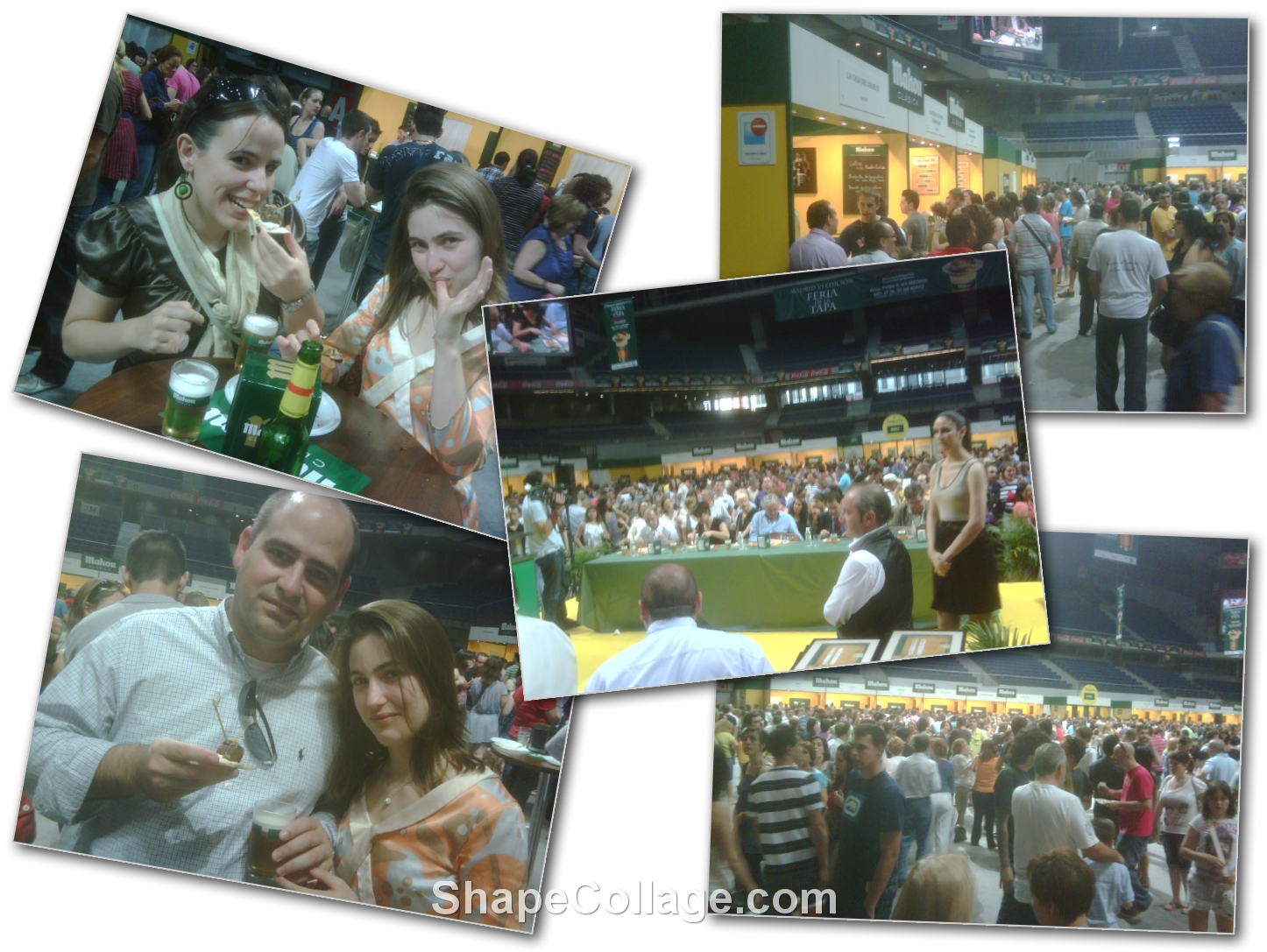
Last weekend, on top of attending family visits and a wedding, I could spare some time in two different fairs: the “VI Feria de la Tapa de Madrid” and the “LXIX Feria del Libro de Madrid”. Both experiences, as it was expected, were a success.

Posters of "VI Feria de la Tapa" and "LXIX Feria del Libro" of Madrid.

In the gastronomic fair I had lunch on Saturday and supper on Sunday, the day it closed. There were 38 restaurants and taverns from the Madrid region represented in the fair, and each one of them brought 4 or 5 different tapas. By chance, while we were there on Sunday evening it was taking place the contest to elect the best tapa… My first thought was “it’s not a bad contest to be judge”, later I thought it better… one thing is to take 6 or 7 tapas at your will and rhythm, and a very different one is to take 38 tapas in a row! Anyway, the judges didn’t look bad at all.

VI Feria de la Tapa.

On Sunday I went to the book fair (I will come more times this year, until June 13th) and I had another please surprise. During the first smooth walk along the stands I stopped by the one of Ecobook bookshop and I asked about a book just to see if they had it by chance, and, they did have it! The book is “Confusión de confusiones” (of which I had already referred to in another post).

This book was written by the Spanish Jose de la Vega and is the first book about the stock market. Once I finish it I’ll write more about it, now I leave here the link of a blog about it.

3 Comments

Filed under Books, Miscellanea

Bits of the World in Brazil

While in Brazil last Easter, I read in my guide that in the city of Sao Paulo lived the largest Japanese ethnic group outside Japan. My first thought was: that’s not surprising; by heart I made the following reasoning “if Sao Paulo is among the six or seven biggest cities in the World and we exclude Tokyo and Chinese cities… there is a chance of 15-20% of it being Sao Paulo”.

Later on I was told that in Sao Paulo also lived the biggest communities of several other nationalities… yes, the same rationale could apply (I guess it would come a point where not every nationality could have their largest community abroad in Sao Paulo… but I found no way to prove that).

This may give us an idea of the diversity of the city as well as the country, Brazil… and that is something you keep feeling when you visit it… you suddenly see something and tell yourself “I have seen that somewhere else…”. Like if there were wormholes connecting different parts of the World… Be it music, food, architecture, clothing, traditions…

Let me focus on some examples:

The first two examples are related to Japan.

  • See the Japanese traditional gates (or Torii), both in Japan (this case in the island Miyajima) and in the Japanese neighbourhood in Sao Paulo.
  • Note the striking similarities of procedures used to push people into the subway coaches both in Sao Paulo and Tokyo (in this case I was later told by my sister that in a TV programme about Spanish living abroad it was commented that the metro of Sao Paulo was inspired by the one in Tokyo).

Japanese gates, Torii, in Sao Paulo and Miyajima.

People queueing in Sao Paulo and Tokyo subways.

The next striking example is one that I already posted about: the Banespa tower in Sao Paulo compared to the Empire State Building in New York (you almost wouldn’t notice the difference if it wasn’t for the height of ESB).

Banespa Building (photo by Felipe Mostarda) and Empire State Building (photo by David Shankbone).

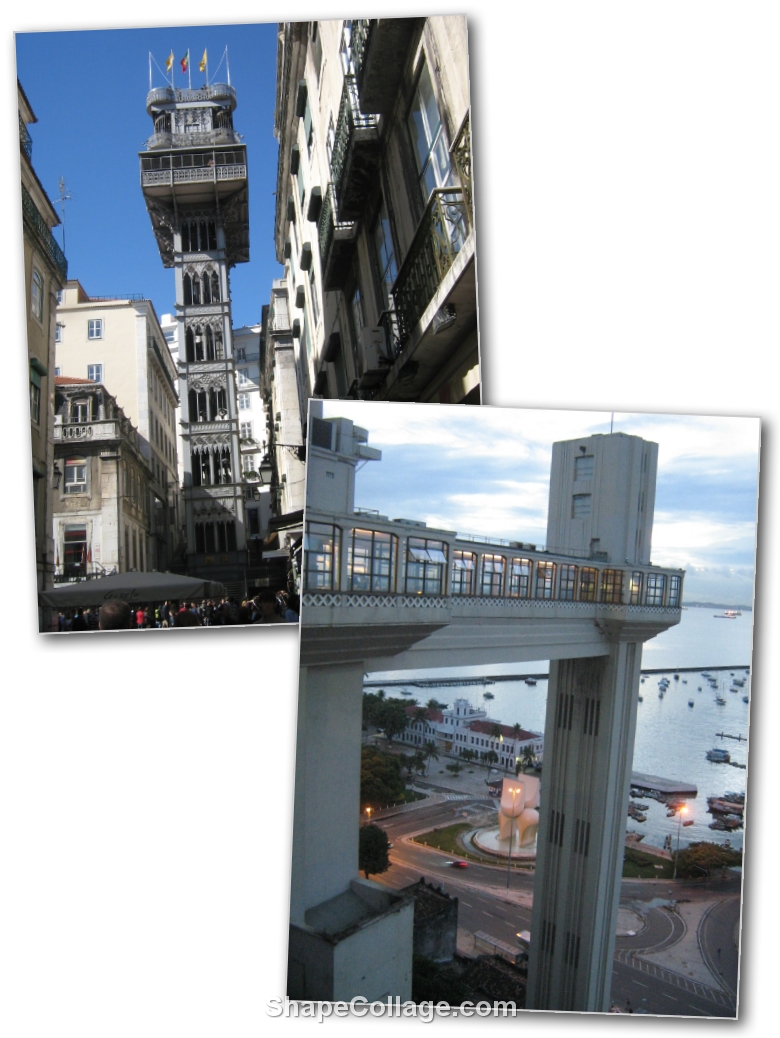
Other very similar example is found between two elevators: the Lacerda elevator in Salvador de Bahia and the elevator of Santa Justa in Lisbon… here the main difference is the queue and pricing… in Lisboa you may wait 30 minutes and pay over 1 euro, while in Salvador you wait less than a minute and pay 0,15 R$ (this is 6 euro cents!)…

Elevators of Santa Justa (Lisbon) and Lacerda (Salvador).

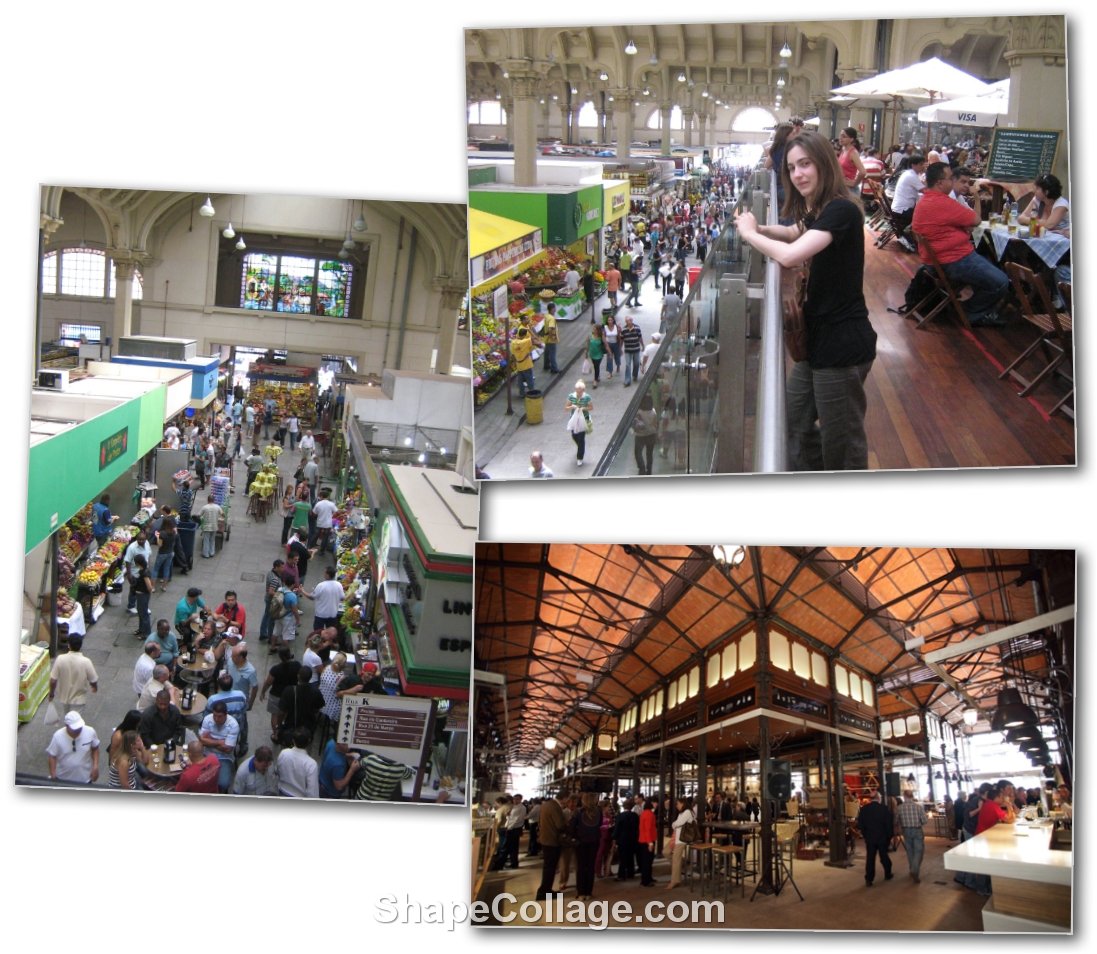
Similar experiences can be found as well inside two different markets: the Sao Paulo Municipal Market and Mercado de San Miguel in Madrid, the first one offering a wider variety of products (including good Spanish jamón in the “Emporio Arabe”?!?) and the latter a more upscale atmosphere. (If at the market in Sao Paulo, do not miss the codfish pastel and mortadella sandwich at Hocca bar!!).

Municipal markets in Sao Paulo and Madrid.

Lastly you all know the Cristo Redentor in Corcovado Mountain, Rio de Janeiro… there is a similar Christ in Lisbon, just at the opposite riverside from Praça do Comerço (though I admit that in this case it is in Lisbon where you think “oh, I’ve seen this somewhere else”).

Christs in Rio de Janeiro (being overhauled) and Lisbon.

3 Comments

Filed under Travelling

A Tale of Two Cities…

I’ve just finished reading the book “Hidden Madrid. A walking guide”, by Mark & Peter Besas, two Madrileños originally from New York. The book is terrific. It has hundreds of tales, anecdotes, curiosities, pictures, etc… of the city of Madrid:

  • The origin of futbolin.
  • The suicide mission of Eloy Gonzalo at Cascorro.
  • The voices of Palacio de Linares (Casa de America).
  • The origin of Atocha.
  • The miracles of San Isidro.
  • The priviledges of Paco the dog…

Last month I read a similar book about New York, written by another New Yorker (this one originally from Ohio), John Keatts, “Tales of New York: Some Will Surprise You”.

We met John at the Circle Line boat tour around the island of Manhattan last December. He was our guide. He not only had a very pleasant voice but kept telling more and more facts, stories and anecdotes about the city and the persons who marked the history of NY during the 3-hour journey.

He mentioned that he had written a book with these stories and when we were leaving the boat, my partner Luca saw him handing his book to someone, so we decided to stop and buy it. Another terrific book. As he puts it in his web:

  • A poor farm boy who began a simple ferry boat service, and became a millionaire
  • A renowned bridge-builder whose work on a statue would change his life
  • A newspaper man who seized an opportunity
  • A man whose building forced our skyline upward…

And yet a month before I read “How to survive Holland”, by Martijn de Rooi. Another wonderful book explaining many facts (traditions, food, history, sightseeing, sports…) about the Netherlands delivered with some self-deprecating humour and irony.

All three books are strongly recommended.

1 Comment

Filed under Books, Travelling