Category Archives: Books

Around the world in 80 days

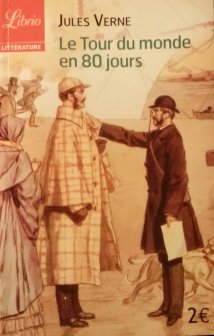
VerneSome months ago, I purchased several books in French language in order to practice it. Among them I included a couple of Jules Verne, one of them being “Le Tour du monde en 80 jours” (“Around the world in 80 days“), published in 1873.

I was more or less acquainted with the story due to having watched back when I was a child in the 80s the animated TV series “Around the World with Willy Fog“, a Spanish and Japanese production in which the characters were played by animals (a lion, a dog, a cat, a mouse, a fox…). I loved that series. On the contrary, I don’t recall having ever watched the movies from 1956 or 2004, therefore when reading the book vivid images from the animated characters came continuously to my mind.

The plot of the story is rather simple: Willeas Fog, a character about whom not much is known, bets with his colleagues of the Reform Club in London that he is able to travel around the world in 80 days, and so he does embark himself in such endeavor with his assistant, Passepartout (“Rigodon” in the TV series).

A the same time,  there is an ongoing investigation of a robbery of the Bank of England which makes a police investigator, Fix (Dix in the TV series), to follow Fog all along the trip (as he is considered a suspect), waiting for an authorization coming from England to arrest him before he evades justice. The reader is conflicted by the suspicion laid upon Fog, as all the acts of the character in the story describe an orderly, honest, compassionate person; even if not much is known about him, his profession, origins or his past.

Several stories occur to the trio along the way that takes them to Paris, Egypt, India, Hong Kong, Japan and United States and these help to get to know a bit those different countries and its traditions. As the book draws to a close, the tension is increased…

… and there I leave my review in order to not spoil the book for future readers.

I marked a couple of passages which I liked (in French)…

L’imprévu n’existe pas”, Willeas Fog.

Les passeports ne servent jamais qu’à gêner les honnêtes et à favoriser la fuite des coquines”, agent Fix.

“Quant à voir la ville, il n’y pensait même pas, étant de cette race d’Anglais qui font visiter par leur domestique les pays qu’ils traversent”.

“- […] Vous avez garde l’heure de Londres, qui retarde de deux heures environ sur Suez. Il faut avoir soin de remettre votre montre au midi de chaque pays (Fix).

– Moi ! toucher à ma montre ! jamais ! (Passepartout)

-Eh bien, elle ne sera plus d’accord avec le soleil.

Tant pis pour le soleil, monsieur ! C’est lui qui aura tort !

“Il ne voyageait pas, il décrivait un circonférence”.

“- […] Mais vous êtes un homme de cœur ! (sir Francis Cromarty).

– Quelquefois, quand j’ai le temps” (Fog).

I recommend the book as I very much enjoyed the about 10 hours that took me to read it. And I could not finish this review without sharing a video of one of the chapters of that TV series of my childhood (in Spanish):

http://www.youtube.com/watch?v=2yPn3rqqb7k


1 Comment

Filed under Books

El sol de Breda

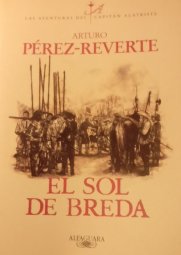
ElSolDeBredaHace un par de semanas leí en la recién creada web Zenda libros, gracias a un retuit de Arturo Pérez Reverte, una entrevista que le hizo Miguel Munárriz en 1998 a Pérez Reverte con motivo de la publicación de “El sol de Breda”, la tercera entrega de la serie de libros sobre el personaje del Capitán Alatriste.

Dicha lectura no pudo ser más oportuna, dado que ese mismo día estaba terminando otro libro y en casa tenía un ejemplar de “El sol de Breda”, que no es mío, pero que había tomado prestado las últimas navidades de casa de mis padres. Así que me decidí a leerlo.

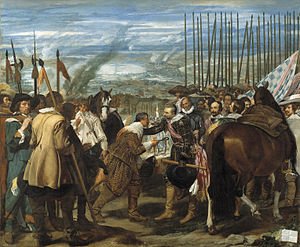
El sitio a la ciudad de Breda, actualmente en los Países Bajos, duró casi un año entre 1624 y 1625. Quizá el mayor testimonio del mismo se trata del cuadro del pintor Diego VelázquezLa rendición de Breda o “Las Lanzas”, que se exhibe en el Museo del Prado.

El libro de Perez Reverte ofrece una ficción basada en los hechos reales de dicha batalla. Mezcla personajes reales como el propio pintor, el escritor Francisco de Quevedo o el general italiano Ambrosio Spínola, al frente de los tercios de Flandes, con personajes ficticios como el Capitán Alatriste o Íñigo Balboa, un joven adolescente apadrinado por Alatriste a quien sirve en el tercio Viejo de Cartagena como mochilero aprendiendo el oficio de soldado.

El libro se supone basado en las memorias de Balboa, y establece una descripción del sitio y de las batallas con todo lujo de detalles, desde las inclemencias del tiempo, las condiciones en las trincheras, las heridas de guerra, el miedo, la incertidumbre, la falta de alimentos, etc.

Como curiosidad me llamó la atención la correspondencia ficticia entre Quevedo y Alatriste y Balboa, y la relación entre Balboa y Velázquez para describirle el sitio de Breda y que el pintor pudiese realizar su cuadro.

Por otro lado, me imagino que deberé leer algún otro libro de la serie de Alatriste para conocer mejor al personaje, dado que si bien es uno de los principales caracteres, tampoco se centra del todo en él.

Por último, quería compartir algunos pasajes del libro en los que Pérez Reverte vierte su siempre crítica visión de España, el carácter de los españoles y sus constantes luchas internas:

“[…] y a ello hemos de añadir la decadencia de la propia España, donde un rey bien intencionado e incapaz, un valido inteligente pero ambicioso, una aristocracia estéril, un funcionariado corrupto y un clero por igual estúpido y fanático, nos llevaban de cabeza al abismo y a la miseria, con Cataluña y Portugal a punto de separarse de la Corona, este último para siempre. Estancados entre reyes, aristócratas y curas, con usos religiosos y civiles que despreciaban a quienes pretendían ganar honradamente el pan con sus manos, los españoles preferíamos buscar fortuna peleando en Flandes o conquistando América, en busca del golpe de suerte que nos permitiese vivir como señores, sin pagar impuestos ni dar ni golpe.

“[…] y como de costumbre, según esas mismas lenguas y sus tierras de origen, tomaban partido unos contra otros, valencianos a una parte y andaluces de la otra, leoneses frente a castellanos y gallegos, catalanes, vascongados y aragoneses cerrando para sí mismos y por su cuenta, y los portugueses, que alguno teníamos, viéndolas venir agrupados y en rancho aparte. De modo que no había dos reinos o regiones de acuerdo; y mirando hacia atrás; uno no lograba explicarse lo de la Reconquista salvo por el hecho de que los moros también eran españoles.”

“Y pronunciada en castellano, la palabra reputación era entonces mucha palabra. No en balde los españoles peleamos siglo y medio en Europa arruinándonos por defender la verdadera religión y nuestra reputación; mientras que luteranos, calvinistas, anglicanos y otros condenados herejes, pese a especiar su olla con mucha Biblia y libertad de conciencia, lo hicieron en realidad para que sus comerciantes y sus compañías de Indias ganaran más dinero; y la reputación, si no gozaba de ventajas prácticas, los traía al fresco. Que siempre fue muy nuestro guiarse menos por el sentido práctico que por el orapronobis y el qué dirán. De modo que así le fue a Europa, y así nos fue a nosotros.”

“A ellos, españoles de lenguas y tierras diferentes entre sí, pero solidarios en la ambición, la soberbia y el sufrimiento, y no a los figurones retratados en primer término del lienzo, era a quien el holandés entregaba su maldita llave.”

LasLAnzas

Estos párrafos los escribió Perez Reverte en 1998 pretendiendo haber sido escritos en el siglo XVII pero son perfectamente aplicables a 2016.

Nota: este libro en la edición que yo tengo tiene unas 250 páginas, con letra grande, líneas espaciadas, cómodo de leer. En su lectura habré invertido unas 7 horas, ideal para unas cortas vacaciones.

2 Comments

Filed under Books

Montolieu, “village of books”

Yesterday, I was referred via a tweet from my friend Javier to an article about a village in Spain, Urueña, a village with more book shops than bars. I strongly suggest the reading of that article (here, in Spanish) as the village seems to be wonderful, a destination for a future trip to Spain.

The article refers to a couple of other such “Village of Books”:  Wigtown (United Kingdom), Tuedrestand (Norway) and Fontenoy-la-Joûte (France). This reminded me of another village of books in the South West of France which we visited last November, Montolieu. What best occasion than to share some lines and pictures about Montolieu than today April 23rd, the International Day of the Book.

In fact, it is interesting to know that there is an International Organisation of Book Towns (see here the article about it in the Wikipedia in English and French – more descriptive). There are about 40 such villages, a couple of them in Spain, some 7 of them in France; the first one to become such a Village du Livre in France was Bécherel, the second, Montolieu, in 1989.

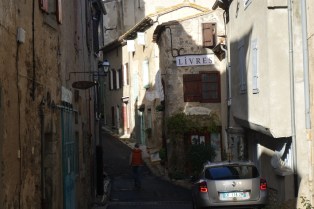
Montolieu 1Montolieu is located some 20 kilometres North from Carcassonne in the Aube department (1), and it has about 800 inhabitants, 15 book shops and a museum about book making (Musée des Arts et Métiers du Livre). We visited a few book shops, made some purchases, walked around the village and had a traditional lunch over there.

However, when we visited the village it was almost winter time, freezing, and the village was nearly deserted. I imagine that Montolieu is best visited in spring or summer, in order to enjoy lunch in a terrace and longer walks between the book shops (not all were open in last late November).

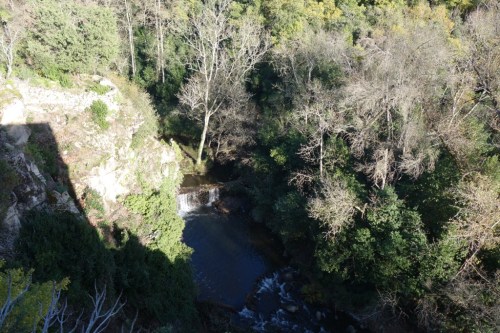
Until we come there again, I leave some pictures from that first visit.

Montolieu 2

Montolieu 4

Montolieu 3

(1) It is also just 5 km South from Saissac and not far from Lastours, two other small villages in the region with nice castles. See here a post I wrote about a flight excursion we did over the Cathar castles with some pictures of them.

Leave a comment

Filed under Books, France, Travelling

El ingenioso hidalgo don Quijote de la Mancha

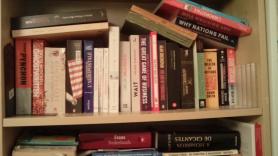
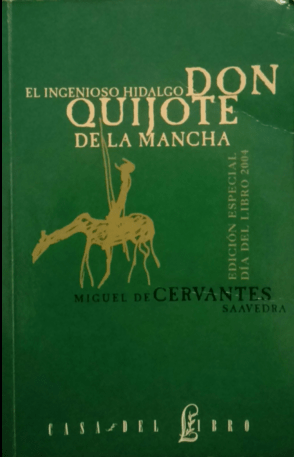
BookShelfDesde hace un par de años tenía en mi estantería de “libros a leer con prioridad” una edición de bolsillo con las dos partes de “El ingenioso hidalgo don Quijote de la Mancha” publicada por la Casa del Libro en 2004 con motivo del cuarto centenario de la publicación de la primera parte (1605).

El pasado mes de marzo, conversaba en red con mi primo Javier sobre la dimensión de la celebración del cuarto centenario de la muerte de Miguel de Cervantes (22 de abril 1616). Y en ese momento pensé: “Javi, antes de pensar en homenajes, estaría bien leer finalmente el Quijote”, así que me propuse leerlo en el algo menos del mes y medio que quedaba desde el 11 de marzo en que acabé el libro con el que estaba en aquel momento y el 22 de abril (aunque finalmente lo terminé el pasado 13 de abril (*)). Y ese, leer su principal obra, y escribir esta entrada sobre la misma, es mi homenaje personal a Cervantes.

Quijote

En esta entrada no pretendo hacer un resumen ni un análisis de la obra sino sólo (1) confirmar por mi parte lo monumental de la misma: decenas de historias se van sucediendo añadiendo personajes y lugares, recreándose en historias o anécdotas paralelas, haciendo uso de multitud de figuras retóricas en una prosa cargadísima a la vez que rítmica, llena de guiños, giros y refranes, (2) compartir un par de reflexiones que me han llamado la atención durante la lectura y (3) dejar algunas frases o pasajes que me han resultado curiosos.

Los molinos. Si hay una imagen icónica de la locura de don Quijote en el imaginario popular es la de él mismo luchando contra molinos de viento creyendo que son gigantes. Mi sorpresa fue cuando vi que en toda la historia esto ocurre una vez. Don Quijote embiste  a un molino. Se da en su segunda salida, en  la primera aventura que tiene desde que sale con Sancho Panza (antes había hecho una primera salida en solitario). En el capítulo octavo (8) de cincuenta y dos (52) de la primera parte.

En el segunda parte, lucha contra otro molino, aunque esta vez es un molino de agua (aceña) y no va subido en rocinante, sino en una barca que queda destrozada por las ruedas del propio molino. En este caso no cree que sea un gigante, sino un castillo o fortaleza donde tienen encerrado a algún desaventurado que debe ser liberado. Esta historia del segundo molino se encuentra en el capítulo 29 de 74 de la segunda parte, me temo que sea el hecho de estar más cerca del final, lo que hace que haya recibido poca o ninguna prensa (como la mayor parte del resto de historias).

Sancho Panza. Otra reflexión viene a partir del contrapunto que supuestamente ofrece Sancho Panza a la locura del Quijote. Una vez leída la obra, me parece que en la sociedad se hace mucho hincapié en los dos estereotipos: que Sancho sea una persona cabal, racional, con los pies en el suelo, y que el Quijote sea un loco. A lo largo de la obra hay multitud de ocasiones donde es el Quijote el que ofrece juicios certeros (como ejemplo el capítulo dedicado al discurso sobre las armas y las letras), hace uso de refranes, da buenos consejos, cita pasajes de clásicos, etc. Y también en numerosas ocasiones el propio Sancho queda como necio, que es engañado con facilidad (por ejemplo por los duques, o siendo convencido por el propio Quijote una y otra vez sobre los encantamientos). Me parece que uno y otro andan a la par en cuanto a lucidez.

Algunos pasajes:

“[…] suele decirse que la alabanza propia envilece; pero mi escudero os dirá quién soy”.

“[…] andar de ceca en meca y de zoca en colodra”.

“Sábete, Sancho, que no es un hombre más que otro si no hace más que otro”.

“Ni yo lo digo ni lo pienso –respondió Sancho-; allá se lo hayan; con su pan se lo coman; si fueron amancebados, o no, a Dios habrán dado la cuenta; de mis viñas vengo: no sé nada; no soy amigo de saber vidas ajenas; que el que compra y miente, en su bolsa lo siente. Cuanto más, que desnudo nací, desnudo me hallo: ni pierdo ni gano […]”

“[…] la infinidad de dineros que allí sin provecho se gastaban, sin servir de otra cosa que de conservar la memoria de haberla ganado la felicísima del invictísimo Carlos V […]”

“[…] será mejor que nos estemos quietos, y cada puta hile, y comamos”.

“- No es la miel para la boca del asno –respondió Sancho; a su tiempo lo verás, mujer, […]” (eso es jugar con fuego)

“¿Qué diablos es esto? ¿Qué descaecimiento es este? ¿Estamos aquí, o en Francia?”

“Treinta mil volúmenes se han impreso de mi historia, y lleva camino de imprimirse treinta mil veces de millares, si el cielo no lo remedia”. (eso es confianza)

“- ¿Leoncitos a mí? ¿A mí leoncitos, y a tales horas?”

Y por supuesto, recomendar su lectura, “¡viva la andante caballería sobre cuantas cosas viven hoy en la tierra!”

(*) Una referencia para el lector que se esté planteando leer el libro y, como me pasaba a mí, lo vaya posponiendo porque le parezca un muro infranqueable: la lectura de las dos partes me ha llevado unas 40-45 horas. Esta cifra es bastante ajustada, dado que he ido leyendo en tramos de 25 minutos. En cada uno de esos tramos no leía mas de 5-8 paginas (en general entre 6 y 7), dependiendo de lo densas que fueran (la edición que tengo tiene la letra pequeña, poco espacio entre líneas, no muy cómoda de leer) y lo despierto que estuviese. Esas 40-45 horas las he empleado en unos 34 días, de los cuales he debido leer en todos alrededor de una hora, excepto en un par de ellos (cenas con amigos) y algo más los fines de semana.

4 Comments

Filed under Books

Reading format

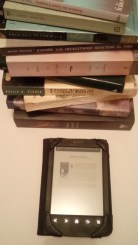
BooksIn a previous post, Reading language, I reflected on the mix of languages about the books that I read. This post, some days later, triggered the idea of taking a look at which format do I use when reading books; paper books or electronic books.

I have had a couple of electronic readers since some time ago. The first one being a gift received in 2010 (1) and the second one, a similar model I bought in 2013 to replace the previous model which got damaged. I have always thought that the business case for the electronic book was clear and positive: after just reading about 20 books in it the purchase was probably justified, especially if those books were classic ones, of which free copies are available in the net.

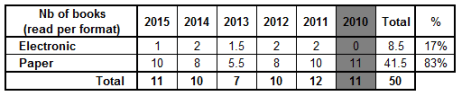
Find below the figures.

ReadingFormat

However, taking a look at the table above, the business case for me it has clearly not yet proven positive… In the past 5 years I have read less than 10 electronic books. So far, the cost of the 2 e-readers that I have had, plus the cost of the ebooks divided by the number of books I read in electronic format (a figure between 20 and 30 euros) surely exceeds the average cost of the books in paper format that I buy (which I haven’t calculated but must be between 10 and 20 euros).

What is actually the electronic book adoption trend nowadays? I found several articles. It seems that the high growth of the e-book market up to 2010 has more or less stopped. In this article from The New York Times, it is mentioned that about 30% of readers read a majority of books in electronic format, whereas this other one mentions that in terms of sales ebooks represent as well around 27-30%.

Finally, on the other hand, there is people like my wife, Luca; if she made the numbers for her reading habits, they would show that she reads books per dozens per year and that she reads a large majority of electronic books. She has a Kindle reader from Amazon, rather than a Sony e-reader as I do. This subtle difference may have a point in the shaping of habits: in the Kindle the shop is in the device itself. In a couple of clicks she has the book with her. In my case, I have to buy or download the books using a computer and then transfer the files from the computer to the reader. I guess that this subtle difference, which eases the availability of books for Kindle readers, may have a big impact.

Note: In 2013 I completed reading “Thinking Fast and Slow” which I started in electronic format, but after my e-reader got damaged I continued and completed in paper format (in the meantime, Luca had bought it in parallel in paper), hence the use of decimals.

(1) I received this gift at the end of 2010 from former work colleagues when I left my job in Madrid for Toulouse. I therefore include in the table for the mix of format, only the books from 2011 onwards (it is obvious that before 2011 all the books I read were in paper format).

3 Comments

Filed under Books

Reading language

In a previous post, Musings on objectives setting, I mentioned about reading:

I found that I am not that fast reader (in English and French and neither in Spanish!) nor all the books that I pick are that easy or short, so I linger every year around the 10 books.

BookShelfIn the second half of 2015 I was able to catch up with the objective by reading 2 books a month as intended. This demanded a rigorous approach, dedicating some time each night to reading (not that I didn’t enjoy it!).

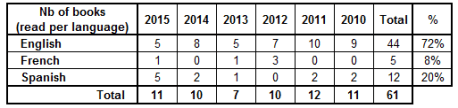
I then reflected on the fact that of the last 8 books I read: 4 were in Spanish (plus 3 in English and 1 in French, a light novel by Saint-Exupéry). Did it help in that last reading rush that I read more books in Spanish than in 2014? In 2014 the mix of the books I read was 8 in English and 2 in Spanish. This reflection triggered the curiosity to find out the language mix of the books I read in the previous years, which I checked with the help of this blog (1). See below:

Booksperlanguage

I do not speak many languages, thus I cannot read all the books I read in their original languages (e.g. “The diary of a young girl” or “Crime and Punishment” lately). However, I try to read books in their original language when the authors write in English, Spanish or French, with few exceptions (normally due to availability of a book). When I cannot read one in the original language, I assume that the different translations to the languages I understand are as good (2) and I normally chose the Spanish version to ease the reading.

Seeing the mix above, in the last 6 years I have read more than three times as many books in English than in Spanish. This was intentional, since over a decade ago, in order to keep learning, improving, and to exercise the mind (3). I considered that each book I read in English (or now in French) met two objectives in one: using a different language and reading. It is only now that I reflect that by pushing myself to this exercise I might be reading a bit less than I could if I read always in Spanish, but I am happy with the mix and I think I will keep up with that policy.

I wonder whether you have similar reading language mixes or policies, feel free to comment below if you like.

(1) Either in a specific post about each year’s personal reading list or in the personal summary of each year provided some info of the books I read. However, in 2011 and 2010 I relied on a then available feature of LinkedIn which enabled you to track and comment books read, not active anymore. I retrieved some info of what books I read in those years via the book reviews I made in the blog but I was not able to retrieve all books from 2010 (over a dozen vs 11 I am able to track now).

(2) This may be a bold assumption, but I never go that far as to knowing or researching about how good translators are (may be I should!).

(3) Similar reasons are behind the fact of writing most of the posts in the blog in English: exercising, learning and improving, plus reaching a much wider audience (including foreign in-laws and friends).

4 Comments

Filed under Books

My 2015 reading list

In this post I wanted to share the list of books I read along the year (1) with a small comment for each one (2), links to Wikipedia articles about the book (if available) and to the authors (in case you want to read about them). I have also included a small rating from one to three “+” depending on how much do I recommend its reading:

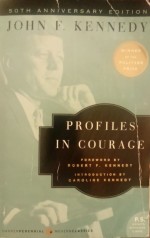
  1. DSC_0342Profiles in Courage (by John F. Kennedy) (++): written by then senator Kennedy when he was convalescent from a back surgery in the 1950s, this book analyzes the context, figures and controvert decisions made by 8 different US senators mainly from the XIX century (from John Quincy Adams, Daniel Webster… to Robert A. Taft), decisions that were not popular at the time in their constituencies but the politicians understood were needed to be taken and demanded courage to do so. For this book Kennedy obtained a Pulitzer prize in 1957. From the analysis, Kennedy extracts some lessons in the last chapter that are well encapsulated in the following dilemma: “[…] the loyalties of every Senator are distributed among his party, his state and section, his country and his conscience. On party issues his party loyalties are normally controlling. In regional disputes, his regional responsibilities will likely guide his course. It is on national issues, on matters of conscience which challenge party and regional loyalties, that the test of courage is presented.” 
  2. “El arte de ser padres” (by Fitzhugh Dodson) (++): a loan from my parents to help us in the quest of upbringing our daughter, the book, written in the late 1970s, did help in removing weight from some situations when the child was at the turn of being 2 years old. Among other things, it teaches you to get more relaxed, laid-back, not to enter into conflict trying to impose things, etc. It was also interesting to see how society and some social conventions have changed from the 1970s to today (e.g. drinking and smoking during pregnancy).
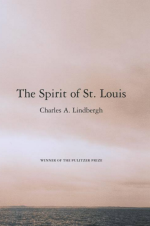
  3. TheSpiritOfStLouisThe Spirit of Saint Louis (by Charles A. Lindbergh) (++): this autobiographic book describes one of the great adventures of the XX century, the first non-stop flight across the Atlantic ocean in May 1927. For this book Lindbergh received a Pulitzer prize in 1954. The beginning of the book covers the days of Lindbergh working for the postal service of Robertson Aircraft Corporation and how he gets engaged into the race of who would be the first pilot(s) to cross the ocean. He later describes the conception, development and testing of the Ryan aircraft he flew for the feat. He finally gives a detailed account of the 33h30′ flight; hour by hour, alone, squeezed in his seat, with scarce food and water supplies, cold, flying day (within the clouds at times) and night, thrilling and semi-unconscious (asleep) at times, until he lands in Le Bourget. I wrote a post review the book, find it here.
  4. El General en su Laberinto (by Gabriel García Márquez) (+): this book is a novel trying to figure out how the last days of the Venezuelan revolutionary Simon Bolivar were. The characters, trips, locations, etc., are real. The dialogues, thoughts, feelings, are the work of Garcia Marquez. As always with Garcia Marquez, there are very vivid dialogues and reflections in the book by way of its characters, however this wasn’t the book I liked the most from him. On the hand, to get a better feeling and description of the last days of a person I very much preferred for the uneasiness it puts you as a reader The Death of Ivan Ilyich by Tolstoy.
  5. Pensar con Arte (by Manuel Conthe) (++): this book shows how our minds work in their way of thinking with their biases and the situations that may arise. The concepts covered are similar to other books that I have read in the past (Thinking Fast and Slow, Seeking Wisdom: From Darwin to Munger or Poor Charlie’s Almanack), the originality here comes from the parallels and connections that the author brings and offers with the arts (literature, paint, cinema, music…), showing examples from different art craft.
  6. España 3.0: Necesitamos resetear el pais (by Javier Santiso) (+++): this book is call for action, for change, for resetting Spain into a country which bases its economy and growth on innovation, education and technology. It starts by offering a rather harsh and in my opinion good diagnostic of many of the ailments of the country. Then shows how several things do work in the country and how in previous occasions the country has raised up to similar challenges and it can and has to do so again. The sooner the better.
  7. The Diary of a young Girl (by Anne Frank) (++): the diary of a 13-year-old girl when she starts writing it and 15-year-old when it finishes, Anne Frank describes how she, her family and some others live day by day in hiding from the Nazis. Throughout the book there are many comments, appreciations, worries, misunderstandings, etc., very typical of that age. Despite of that, at some points of the book Anne provides a great example of resilience, attitude and hope: e.g. at times she reflects that all in all she cannot complain, she doesn’t lose time and imposes onto herself a rigorous studying and reading time schedules, etc. In that extent, her attitude and the diary reminded me of another book I have often seen recommended that I must read, “Man’s Search for Meaning” by Viktor Frankl, a jew imprisoned at a concentration camp.
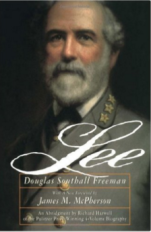
  8. LeeLee (by Douglas Southall Freeman abridged version by Richard Harwell) (++): this is the biography of Rober E. Lee the general of the Army of Northern Virginia on the Confederate side during the US civil war. The book covers from the origins of the family, the birth and early education of Lee, his days at West Point where he specialized as an US army engineer, and how as the different states start seceding and viewing that his allegiance shall remain to Virginia he resigns from the US army. The book then describes the different battles, the style of Lee during the war and the surrender at Appomattox. Then it covers his final years as president of the Washington college in Lexington. For the extended version of this biography, Douglas Southall Freeman received a Pulitzer prize in 1935.
  9. commonstocksCommon stocks and uncommon profits and Other Writings (by Philip A. Fisher) (++): a classic book about investing strongly recommended by many, among others Warren Buffett. The first edition was written in 1950s, the edition I read dates from the 1970s and includes some reflections of what he wrote in the first one. The main contribution of the book is what the author calls the scuttlebutt (rumor, gossip) technique, that is the thorough research ground work an
    investor must make before investing in any stock by way of talking to sales men of competitor companies, customers, experts on the field, academics, management of the company, etc., and which he summarizes in 15 points. A quick takeaway from the book is that, if you lack the time to thoroughly proceed with the scuttlebutt, it might be better to leave for others, who have, the task of picking your stocks. The Other Writings included in the book relate to what is and how it was developed his investment philosophy and on whether the markets are efficient.
  10. The gospel of wealth and other timely essays (by Andrew Carnegie) (++): In the main essay of the book (The Gospel of Wealth), Carnegie, discusses the moral obligation of the wealthy to redistribute their wealth in life back to the society. He positions himself against charity and offers several options that would have a great impact in lifting those among the poor willing to work in their own progress: funding of educational institutions, hospitals, libraries, parks, monuments, etc. Other essays relate to whether the United States (the Republic) should or not follow the path of Britain in having colonies and dependencies (in relation to the Philippines), a speech explaining the arrangements of the American constitution, critiques on proposals for free trade agreements between Britain and its colonies, etc. A good review of business and politics at the end of the XIX century.
  11. Vol de nuit (“Night Flight”, by Antoine de Saint-Exupéry) (++):  in Saint-Exupéry’s second novel he describes the operations of an air mail business based in Buenos Aires and with aircraft incoming from different locations in South America. The book describes the difficulties of night flight at the time and of developing this new type of service. One particular flight under cyclonic conditions will put into question the whole operation and the different characters, the pilot, her wife, the line operations’ chief, radio operators, etc.

(1) You can find here: my 2012 reading list, 2013 (embedded in my summary of 2013) and 2014 ones.

(2) In this 2015 I have not written many dedicated posts about the books I have read (just one about the The Spirit of St. Louis), but I do not discard making a review of some of them in the future.

11 Comments

Filed under Books

The Spirit of St. Louis (book review)

TheSpiritOfStLouisCharles A. Lindbergh is without a doubt one of the aviation (1) figures and legends of the XX century, being the first pilot to fly non-stop across the Atlantic ocean in May 1927, managing to win the Orteig Prize. Lindbergh wrote “The Spirit of St. Louis” in 1953, as an autobiography because he was not comfortable with the previous books written about the flight, especially “WE”, as it did not cover with enough exactitude the experience. For this book Lindbergh was awarded the Pulitzer prize on 1954 in the category biography.

I bought this book at the US Air Force museum in Dayton a place that without a doubt stimulates the passion for aviation and I read it in the months while I was completing the last stages of my training as a private pilot, which also contributed to the setting of the stage for the reading.

The beginning of the book covers the days of Lindbergh working for the postal service of the Robertson Aircraft Corporation, the flights along the USA from Saint Louis to Chicago, the incidents due to the weather or the fall of the night, the landings on fields at night with the help of cars’ lights, etc.

As an aviation enthusiast, Lindbergh gets interested in and then engaged into the race of who would be the first pilot(s) to cross the ocean. A crowded race at the time in which many of the great aviation aces were involved, including names like René Fonck or Charles Nungesser (two of the three top French WWI aces (2)).

He later describes the conception, development and testing of the aircraft by the Ryan Aircraft Company in San Diego, the purpose-built airplane he flew for the feat and how they managed to get a Whirlwind engine from the Wright company.

The author finally describes the days in New York before the departure, where up to 3 teams were getting ready to depart and how in the morning of the 20th May, having received positive weather reports from boats in the Atlantic, he takes off. The flight lasted 33h30′ which he describes hour by hour: how he is feeling at each moment, alone, squeezed in his seat, with scarce food and water supplies, cold, flying day (within the clouds at times) and night, thrilling at times and semi-unconscious (sleep), and how his mind is drifting. Until he sees land in Ireland, finds the route to Paris and lands in Le Bourget.

What I liked the most of the book were the description of the flying experiences as a postal service pilot and the development phase of the aircraft. Those are very interesting pages, full of concepts and anecdotes.

It took me months to complete the reading of the book. Why? I was stuck and I advanced very slowly in different parts of the narrative of the 33-hour-long flight. I would say that Lindbergh did that in purpose: writing hour by hour, a few pages per hour, describing what was going on, how his mind got distracted, how he began to remember memories from years back, how he suddenly found once and again that he had lost the bearing and needed to correct it, how he cursed himself for the lack of attention or being on the verge of falling sleep… I felt caught many nights in the same sleepy, somnolent mood. Unable to read more than one or two pages before falling asleep. If that was really the purpose of Lindbergh I cannot know, but, if it was, he was very skillful in conveying the length of those hours and the risk he went through. However, it goes against the readability of the book itself!

Some quick personal reflections I took from the book:

  • Observation. While crossing the ocean, he didn’t have any support information as to the direction or speed of the wind, therefore he descended to see close enough the waves and try to estimate them himself.
  • Bearing. My flying instructor used to say “in the air, the bearing is the life“. When he is flying over the ocean he finds himself sometimes having to correct up to 10 degrees. On top, due to lack of intermediate points of reference and that he is not sure about the speed and direction of the wind, hours before seeing the land in Ireland he finds himself estimating that he may either see the land in Norway or the gulf of Biscay in Spain.
  • Changing position within seat. In order to prevent falling asleep, at some times he goes systematically changing position within the seat: stretching a leg, then the other, grabbing the commands with a hand, then the other. This is something that we can do also while piloting or driving a car (though preferably mixing it with frequent stops!)

As I always do, I marked several pages and underlined different passages that trigger different thoughts. See some of them below:

“I have divided my reserves for the flight in two categories: reserves for success and reserves for failure.”

“[…] I don’t wish my competitors hard luck. Crashed planes and flyers in hospitals impair all of aviation, and destroy the joy of flight.

Landing on one wheel and a wing tip with a highly loaded plane isn’t very dangerous when a pilot is well acquainted with his craft. […] it has been done many times. The newspapers always make it seem a good deal worse than it really is.”

“On our mail route, the pilots expect forced landings. We don’t average a hundred hours between them.”

“Science, freedom, beauty, adventure: what more could you ask of life? Aviation combined all the elements I loved.”

“A pilot has the right to choose his battlefield – that is the strategy of the flight. But once the battlefield is attained, conflict should be welcomed, not avoided. If a pilot fears to test his skills with the elements, he has chosen the wrong profession.”

I wish I could take an aeronautical engineering course. […] I could work hard to understand the magic in the contours of a wing.”

Now pretty soon you fellows are going to think you’re pretty good. It happens to every pilot. Usually starts when he’s had about 25 or 30 hours solo. I just want you to remember this: in aviation, it may be all right to fool the other fellow about how good you are – if you can. But don’t try to fool yourself.” (advice from his instructor in the Army, Master Sergeant Winston)

“No matter how much training you’ve had, your first solo is far different from all other flights. You are completely independent, hopelessly beyond help, entirely responsible, and terribly alone in space.”

“One old Negro woman came up to me with serious face and asked, ‘Boss, how much you all charge fo’ to take me up to Heaven an’ leave me dah?‘ “

The book includes several very interesting appendices about the flights of the aircraft, technical data and maps, prizes collected…

After completing the flight, Lindbergh made some tours around the world until the airplane was finally retired after 174 flights and 489 hours of flying. Today it can be visited at the National Air and Space Museum in DC.

If you like aviation, I do recommend you the reading of the book.

(1) I would say that the size of his fame, legend and iconic figure is not restricted to the aviation world.

(2) The third of the trio, Guynemer, died in the war.

4 Comments

Filed under Aerospace & Defence, Books

Warren Buffett’s 2014 letter to the shareholders of Berkshire Hathaway

Every last Saturday of February, a must read for the weekend comes out: Warren Buffett’s letter to the Shareholders of Berkshire Hathaway [PDF, 499KB]. This year, it is the 50th anniversary since Buffett took over the company, and thus together with the letter both him and Charlie Munger, his partner and vice chairman, have included as well two letters describing the last 50 years, what made them so successful and what can be expected in the following years. The 3 letters together make up 42 pages, a strongly recommended read.

From this year’s letter, I wanted to bring attention to the following quotes or passages on simplicity of some transactions, on the sale of TESCO, the distinction between volatility and risk, not using borrowed money to invest, consequences of using shares instead of cash for acquisitions, the synergies announced in M&A, the importance of cash, trust and bureaucracy:

***

On simplicity of some transactions and trust. Last year he introduced the acquisition of Nebraska Furniture Mart, this year is the turn of National Indemnity:

[…] since 1967, when we acquired National Indemnity and its sister company, National Fire & Marine, for $8.6 million. Though that purchase had monumental consequences for Berkshire, its execution was simplicity itself.

Jack Ringwalt, a friend of mine who was the controlling shareholder of the two companies, came to my office saying he would like to sell. Fifteen minutes later, we had a deal. Neither of Jack’s companies had ever had an audit by a public accounting firm, and I didn’t ask for one. My reasoning: (1) Jack was honest and (2) He was also a bit quirky and likely to walk away if the deal became at all complicated.

On pages 128-129, we reproduce the 1 1 ⁄2-page purchase agreement we used to finalize the transaction. That contract was homemade: Neither side used a lawyer. Per page, this has to be Berkshire’s best deal: National Indemnity today has GAAP (generally accepted accounting principles) net worth of $111 billion, which exceeds that of any other insurer in the world.

Offer Letter for National Indemnity (retrieved from BRK 2014 annual report [PDF, 2.2MB])

Offer Letter for National Indemnity (retrieved from BRK 2014 annual report [PDF, 2.2MB])

On the advantages of using an animated character as advertising tool in low cost operations:

[…] No one likes to buy auto insurance. Almost everyone, though, likes to drive. The insurance consequently needed is a major expenditure for most families. Savings matter to them – and only a low-cost operation can deliver these. […]

[…] Our gecko never tires of telling Americans how GEICO can save them important money. The gecko, I should add, has one particularly endearing quality – he works without pay. Unlike a human spokesperson, he never gets a swelled head from his fame nor does he have an agent to constantly remind us how valuable he is. I love the little guy.

On his lack of decisiveness in selling TESCO:

[…] An attentive investor, I’m embarrassed to report, would have sold Tesco shares earlier. I made a big mistake with this investment by dawdling.

At the end of 2012 we owned 415 million shares of Tesco, then and now the leading food retailer in the U.K. and an important grocer in other countries as well. Our cost for this investment was $2.3 billion, and the market value was a similar amount.

In 2013, I soured somewhat on the company’s then-management and sold 114 million shares, realizing a profit of $43 million. My leisurely pace in making sales would prove expensive. Charlie calls this sort of behavior “thumb-sucking.” (Considering what my delay cost us, he is being kind.)

During 2014, Tesco’s problems worsened by the month. The company’s market share fell, its margins contracted and accounting problems surfaced. In the world of business, bad news often surfaces serially: You see a cockroach in your kitchen; as the days go by, you meet his relatives.

We sold Tesco shares throughout the year and are now out of the position. (The company, we should mention, has hired new management, and we wish them well.) Our after-tax loss from this investment was $444 million, about 1/5 of 1% of Berkshire’s net worth.

On volatility versus risk:

Stock prices will always be far more volatile than cash-equivalent holdings. Over the long term, however, currency-denominated instruments are riskier investments – far riskier investments – than widely-diversified stock portfolios that are bought over time and that are owned in a manner invoking only token fees and commissions. That lesson has not customarily been taught in business schools, where volatility is almost universally used as a proxy for risk. Though this pedagogic assumption makes for easy teaching, it is dead wrong: Volatility is far from synonymous with risk. Popular formulas that equate the two terms lead students, investors and CEOs astray.

On not using borrowed money to invest:

[…] borrowed money has no place in the investor’s tool kit: Anything can happen anytime in markets. And no advisor, economist, or TV commentator – and definitely not Charlie nor I – can tell you when chaos will occur. Market forecasters will fill your ear but will never fill your wallet.

A confession after having introduce the major mistake of acquiring Berkshire (a sinking textile company) out of stubborness:

Can you believe that in 1975 I bought Waumbec Mills, another New England textile company? Of course, the purchase price was a “bargain” based on the assets we received and the projected synergies with Berkshire’s existing textile business. Nevertheless – surprise, surprise – Waumbec was a disaster, with the mill having to be closed down not many years later.

On his initial strategy of buying low priced small companies and why he changed it:

[…] Most of my gains in those early years, though, came from investments in mediocre companies that traded at bargain prices. Ben Graham had taught me that technique, and it worked.

But a major weakness in this approach gradually became apparent: Cigar-butt investing was scalable only to a point. With large sums, it would never work well.

In addition, though marginal businesses purchased at cheap prices may be attractive as short-term investments, they are the wrong foundation on which to build a large and enduring enterprise. […]

On using shares instead of cash for acquisitions:

Consequently, Berkshire paid $433 million for Dexter and, rather promptly, its value went to zero. GAAP accounting, however, doesn’t come close to recording the magnitude of my error. The fact is that I gave Berkshire stock to the sellers of Dexter rather than cash, and the shares I used for the purchase are now worth about $5.7 billion. As a financial disaster, this one deserves a spot in the Guinness Book of World Records.

Several of my subsequent errors also involved the use of Berkshire shares to purchase businesses whose earnings were destined to simply limp along. Mistakes of that kind are deadly. Trading shares of a wonderful business – which Berkshire most certainly is – for ownership of a so-so business irreparably destroys value.

On the trumpeted synergies announced in M&A:

(As a director of 19 companies over the years, I’ve never heard “dis-synergies” mentioned, though I’ve witnessed plenty of these once deals have closed.) Post mortems of acquisitions, in which reality is honestly compared to the original projections, are rare in American boardrooms. They should instead be standard practice.

On cash:

At a healthy business, cash is sometimes thought of as something to be minimized – as an unproductive asset that acts as a drag on such markers as return on equity. Cash, though, is to a business as oxygen is to an individual: never thought about when it is present, the only thing in mind when it is absent.

American business provided a case study of that in 2008. In September of that year, many long-prosperous companies suddenly wondered whether their checks would bounce in the days ahead. Overnight, their financial oxygen disappeared.

At Berkshire, our “breathing” went uninterrupted. Indeed, in a three-week period spanning late September and early October, we supplied $15.6 billion of fresh money to American businesses.

On trust and bureaucracy:

With only occasional exceptions, furthermore, our trust produces better results than would be achieved by streams of directives, endless reviews and layers of bureaucracy. Charlie and I try to interact with our managers in a manner consistent with what we would wish for, if the positions were reversed.

The books that are recommended this year in the letter are:

  • “Where Are the Customers’ Yachts?”, by Fred Schwed,
  • “The Little Book of Common Sense Investing”, by Jack Bogle,
  • “Berkshire Hathaway Letters to Shareholders”, compilation by Max Olson,
  • a new book in preparation commemorating the 50th anniversary of Berkshire Hathaway under present management.

Another article about Jim Ling in D magazine (from 1982) is recommended to understand the mentality of some CEOs running holdings at the time and why some negative perception towards holdings continue to exist today.

Finally, in the two last letters from Buffett and Munger, in which they review the future prospects of Berkshire there is some language that will no doubt stir again the rumours of whether Buffett may step down as CEO and / or chairman anytime soon. We will see.

For nostalgic investors, in this year’s annual report it is embedded Berkshire’s 1964 annual report (pages 130-142).

See the review I made of 2009, 2012 and 2013 letters.

1 Comment

Filed under Books, Investing

My 2014 reading list

In this post I wanted to share the list of books I read along the year with a small comment for each one, the link to a post about the book in the blog (when applicable), links to Amazon (in case you want to get them) and to the authors. I have also included a small rating from one to three “+” depending on how much do I recommend its reading:

  1. Seeking Wisdom: From Darwin to Munger(by Peter Bevelin) (++): this book is an interesting guide into how to improve our thinking process. It starts with reviewing what influences our thinking, then analyses misjudgments and provides some guidelines for better thinking. It draws heavily on quotations and passages from other authors such as Confucius, Charlie Munger, Charles Darwin, Warren Buffett, Cialdini, Kahneman… therefore if one has read one or several of their books (Thinking Fast and Slow, Influence, letters to the shareholders of Berkshire Hathaway, On the Origin of Species, Poor Charlie’s Almanack…) this book may seem redundant. One thing I liked about the book was the offering of key concepts after each chapter and its appendix on checklists.
  2. What management is (by Joan Magretta) (++): a brief book covering the different aspects of management (from value creation to managing people, business models, strategy, execution) in a very concise way though full of very vivid examples from different companies. While reading the book I marked dozens of passages, and I included one post in the blog about one of the anecdotes related to the Ford Pinto.
  3. The Early History of the Airplane (by Orville and Wilbur Wright) (++): it is a short book or rather a compilation of 3 articles by the brothers (30 pages in the e-reader version I used). The 3 articles are: The Wright Brothers’ Aeroplane (by Orville and Wilbur Wright), How We Made the First Flight (by Orville Wright) and Some Aeronautical Experiments (by Wilbur Wright). In these articles they provide some insight into how they became attracted to the problem of heavier-than-air self-powered controlled flight, what were the difficulties they faced, what schools of thought there were at the moment, who influenced them, what results and experiments from others they relied upon, the experiments they performed, the results at which they arrived… and, yes, they describe their first and subsequent flights. I wrote a post review the book, find it here.
  4. The Racketeer (by John Grisham) (++): in this novel the author has Malcolm Bannister, an attorney half way through his 10-year prison term for racketeering, maneuvering his way out of prison by negotiating with the FBI and helping to solve a crime investigation gone nowhere.
  5. Micro (by Michael Crichton and completed by Richard Preston) (+): the novel is about a group of graduate students seduced by Nanigen, scientific research company, to join them in Hawaii. The story develops in to a hunt of the students in the jungle as they had been miniaturized by the latest technology developed by the company. To my taste, a bit too much on the fantasy side.
  6. Hot, Flat, and Crowded(by Thomas Friedman ) (+++):  In this book, Friedman claims that as we are entering the “Energy-Climate Era” the world is getting hot (global warming), flat and crowded (soaring population growth), and clear action needs to be taken to address these issues. Government need to establish a clear regulatory framework, clear price signals to establish a market in which companies can innovate to solve the problems at hand. The author included in the book dozens of references, quotes from conversations, excerpts of speeches from leading figures, and several examples. I wrote a post review the book, find it here.
  7. The Roaring Nineties(by Joseph E. Stiglitz ) (+++): Stiglitz wrote The Roaring Nineties in 2003 to offer an insider’s view of economic policy making and the economic boom and bust of the nineties. Stiglitz is frank in admitting that all the focus that the Clinton administration had at the beginning of the term in passing laws to improve the living of the disfavored ones was suddenly put aside due to the mantra of deficit reduction. He openly regrets it several times throughout the book and offers some criticism on the administration he took part in and others before and after. Especially Reagan’s and Bush II’s. I wrote a post review the book, find it here.
  8. El amor en los tiempos del cólera (by Gabriel García Márquez) (+++): the author was inspired to write this book by the story of his parents and other old couple who had to keep their relationship in secret all their lives. The novel describes the relationships along all their lives between mainly three characters: Fermina Daza, her husband, Juvenal Urbino, and her ever love from childhood and ever a candidate, Florentino Ariza. I have to say that I liked more this book than “One Hundred Years of Solitude”. I wrote a post review the book, find it here (in Spanish).
  9. Crime and Punishment (by Fyodor Dostoyevsky) (++): the book narrates the story of Rodion Raskolnikov, an poor student in Saint Petersburg who kills an unscrupulous pawnbroker for her cash. Raskolnikov had written an article in which he discussed how some crimes could be seen as acceptable in the name of a greater good by leading individuals. He convinces himself to be one of them. The story gets ever more complicated as his family comes to town for the marriage of his sister, the investigations by the police, the interrogatories, his errors due the constant illness he suffers from malnutrition, etc.
  10. Sycamore Row”  (by John Grisham) (+++): in this book the author writes a kind of sequel to his all time best seller “A Time To Kill” with the appearance of the main characters of the former book: Jake Brigance, Judge Atlee, Harry Rex Vonner, Lucien Wilbanks… this time the case is about a will that is contested. A will from a white businessman leaving all his estate to his black maid, cutting his family out; a tough decision for Ford County, Mississippi.

Note: You can find here my 2012 reading list, and here, embedded in my summary of 2013, the list of that year.

9 Comments

Filed under Books