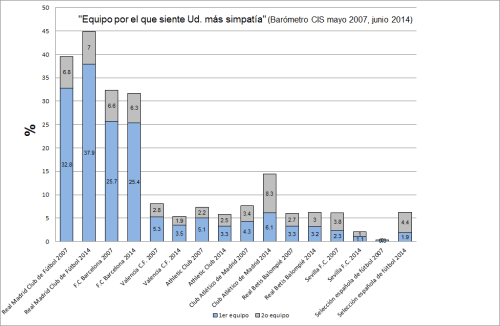
Ésta es una pequeña entrada futbolera para compartir la gráfica de debajo donde se puede comparar el madridismo o simpatía por el Real Madrid en 2007 y 2014 en España con respecto a la simpatía por los otros equipos con mayor afición en España, incluida la propia Selección española de fútbol.
La primera vez que se me ocurrió escribir esta entrada fue el pasado mes de junio, tras el anuncio de fichaje de Lopetegui por el Real Madrid y leer cómo diversos medios y comentaristas indicaban que con ello el Real Madrid creaba antimadridistas. Como digo, en junio preparé la gráfica pero se me quedó pendiente el escribir este post. Es ahora, cuando tras la contratación de Mariano he vuelto a escuchar la cantinela de que con ese proceder el Madrid creaba antimadridistas, que he terminado el post.
La fuente de los datos son los barómetros del CIS (Centro de Investigaciones Sociológicas) de mayo de 2007 y de junio de 2014 [PDF, 217 kB]. En ambos barómetros se incluían varias preguntas sobre actividades de ocio y deportivas. En una de las preguntas se requería lo siguiente: “¿Podría decirme cuál es el equipo por el que siente Ud. más simpatía?”; y en una segunda pregunta: “Además de por este equipo que me ha mencionado, ¿siente Ud. simpatía por algún otro equipo?”
Comentarios a la vista de las respuestas:
El madridismo creció de 2007 a 2014.
Como primer equipo: de 32.8% a 37.9%, esto es 5 puntos más, o un 16% más sobre la referencia de 2007.
Como segundo equipo: de 6.8% a 7%, o 0.2 puntos, un 3%.
El barcelonismo, sin embargo, decreció de 2007 a 2014. Tanto como primer equipo, como segundo equipo. La diferencia no es muy grande, con lo que puede estar dentro del error de muestreo. Según las encuestas, lo que no hizo fue crecer.

La afición por el Atlético de Madrid tuvo en esos años un crecimiento espectacular en términos relativos. En términos absolutos el crecimiento fue más discreto que el del madridismo.
Igual sucede con aquellos que a la primera responden con la Selección española de fútbol: gran crecimiento relativo, pero menor en absoluto que el del madridismo.
La afición por el resto de grandes equipos (Valencia, Athletic, Betis, Sevilla) se mantuvo en parecidos niveles o decreció.
Por poner algo de contexto: En 2014 el Madrid ganó la Décima Copa de Europa, con Ancelotti como entrenador tras 3 años de Mourinho (de quien se decía que generaba antimadridistas por doquier). Quizá la consecución reciente de títulos tenga más influencia que ningún otro aspecto, pero no se puede hacer un seguimiento anual, dado que el CIS no incluye estas preguntas sobre simpatía con equipos de fútbol todos los años. Por otro lado, en 2007 el Madrid entrenado por Capello estaba en la carrera para proclamarse campeón de Liga empatado a puntos con el Barcelona.
Igualmente, uno puede imaginar que los títulos de la Selección entre 2008 y 2012, o la Liga de 2014 para el Atlético de Madrid pueden haber tenido influencia en el crecimiento.
En el caso del Barcelona: en 2006 ganó Liga y Copa de Europa, en 2007 nada. Entre 2008 y 2012 se nos decía poco menos que estaba inventando el fútbol. En 2013 ganó la Liga y en 2014 perdió la final de Copa y quedó segundo en Liga.
Alguien podría todavía decir que el Real Madrid, con Mourinho, con Lopetegui, con Mariano (y con cada argumento que se utiliza cada pocos meses), crea antimadridistas y que los barómetros del CIS no lo desmienten. Y técnicamente es así: Los barómetros no incluyen una pregunta del estilo “¿se considera usted antimadridista?” Podrían incluirla, pero hasta ahora no lo han hecho. Y, por tanto, se podría dar el caso que entre el 60.4% que no declararon simpatía por el Real Madrid en 2007 hubiese menos antimadridistas que en el 55.1% que no declararon simpatía por el Real Madrid en 2014. Pero afirmar eso, sin datos, no deja de ser un brindis al sol.
Por último, la primera vez que vi hablar de estos estudios del CIS fue gracias a un artículo de Kiko Llaneras donde con los datos de las encuestas dibujaba unos mapas de España por aficiones. Os recomiendo ver ese artículo.
On Sunday April 22th, together with my friend Juan and brother Jaime, I took part in the Vienna City Marathon.
At the Wiener Riesenrad in the Prater amusement park.
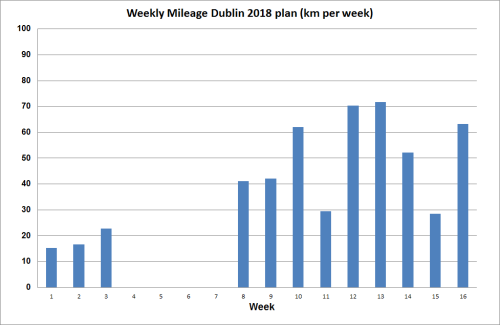
Since some years ago, I always follow the same 16-week training plan to prepare for the marathons. That lead to a start of the plan at the beinning of January. However, I got the flu at the end of January and that got me for a week in bed. It continued with an otitis and then skiing holidays at the end of February. It was not until the beginning of March that I managed to clock some serious training for some weeks in a row. By then the objective had come to get a level of fitness to finish comfortably the race, no more. In the two half marathons I did in the month and half before the race I could already see that my fitness level was the worst in years…
During the 16 weeks of the nominal training plan, I completed:
447 km of running, thanks to a streak of 5 weeks from March in which I averaged 58 km per week.
13 series / intervals training sessions, out of the 28 included in the plan, and many of those I did were not the ones included in the plan but softer sessions trying to catch up.
4 long runs of over 20 km, 2 half marathons and one session of 28 km plus one of 31 km.
The circuit of the marathon would take us from the International Centre to the Prater, the parks by the Danube river, and then to the city centre to make another excursion through the outskirts of the city, this time to the Schönbrunn Palace and back to centre, then back to the park by the river and back again to the centre to finish by the Rathaus. The organization wanted to show off a bit of the centre and mix it with classical music being played at some points, to match their motto “Theatre of emotions“.
The circuit was flat. The only inconvenient of the race was the heat of the day. That Sunday several marathons took place in Europe (Madrid, London…). In all of them the main issue was the heat. We had almost 19° C when I started, it went up to 27° C or more by the end. The organization did not spare the provision of water but when the heat hits like that you need to focus on not getting suffocated and run at a softer pace.
My race strategy was clear: to complete the marathon comfortably at a pace slightly slower than the one I am used to; for that purpose I would try to run a 3h45′ marathon for while to fall back at the second half of the race targeting a 3h55′ or 4h marathon. I quickly found that it would be hard to be under 4 hours. Just before the half marathon point I had to make technical stop which cost me a few minutes. Since then I ran at about 5’45” per km for a few more kilometres.
In my mind I started figuring that I could encounter my brother Jaime, since he had started about 15 minutes before from a different block and was shorter of training. And so it happened. At about the km 30 I saw him at a cross road and I caught him about 5 minutes later. He told me to continue ahead as he was suffering and struggling with the pace (see here his post about the race). I told him that by then I would no longer be under 4 hours but rather 4h06′, 4h16′ or 4h26′, so I’d rather stay with him and finish another marathon together as we had done in Madrid in 2015 or in Millau the same year.
From then on we ran at about 7’15” per km till the end. They were about 11 kilometres of keeping a soft but steady pace under the sun, drinking at every supplies post, chasing the few shades along the circuit and getting prepared for the finish line.
In the end, I clocked a net time of 4h23’08”. It was my 18th marathon completed. It is great feeling of accomplishment to finish a race in such conditions even if with a discrete time, and always happy to still be able to complete them, even more together with my brother and friends.
With the 4h23’08”, my worst marathon since 2001, I finished in the 3236th place, out of 5434 finishers, in 40% percentile, down in the lower half.
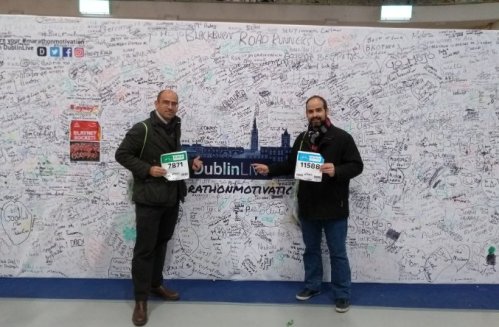
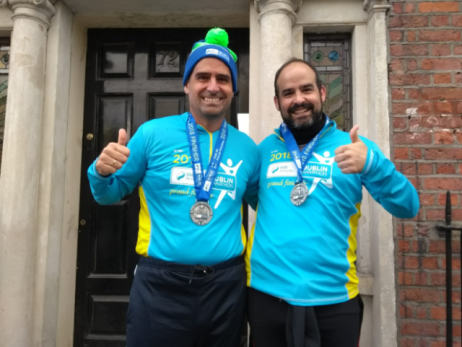
At the finish line we took some pictures with Jaime and with our friend Juan and Balint, a Hungarian fellow that Juan had met in a previous marathon in Madrid.
Two weeks ago, on the second day of Farnborough air show, Boeing Commercial published its yearly update of the Current Market Outlook (CMO) for the next 20 years of commercial aircraft market (2018-2037).
I have just compared the figures for passengeraircraft of the last two years’ CMOs:
CMO 2018 vs. 2017 comparison.
Some comments to it:
You can see that the total number of new aircraft delivered has slightly increased from 40,110 to 41,750, a 4.1%, which is consistent with the 4.7% traffic increase (1) that Boeing predicts (2).
The volume (Bn$) increases by a higher percentage, 4.8% (280 Bn$) up to 6.07 Trn$. This is due to the increase in the single-aisle aircraft expected sales in volume (9%, +300 Bn$) and aircraft (6.2%, +1,830), as the other segments see both a forecast decrease in terms of volume and aircraft.
For years, Boeing has been dowplaying in its CMO the demand for the segment of the large aircraft (seen as mainly 747, A380 and some other high capacity aircraft, depending on the manufacturer). Last year, Boeing stopped to consider them a category by themselves and merged that category with the “intermediate twin-aisle” (i.e. 777, A350…). This year, Boeing has further reduced the detail provided in the wide-body category by merging large aircraft with the small wide-body (i.e. 787, A330…) segments and now provides a single forecast for wide-body.
This year presentation did not include slides showing the accuracy of Boeing’s CMO of 20 years ago in predicting today’s fleet. They used to include such a slide in previous years’ presentations. I will come back to that in a following post.
Find below a slide from the excutive summary [PDF, 263 kB] that provides a good snapshot of the forecast that the guys from Boeing have put up together:
As always, I recommend going through the CMO, as you can learn a lot about the business: from global numbers, to growth, traffic figures, fleet distributions, forecasts, etc… You may find the presentation [PDF, 5.1 MB], a file [XLS, 0.6 MB] with all the data or the full CMO report [PDF, 11 MB].
—
(1) Traffic increased measured in RPKS (revenue passenger kilometers) in trillions.
(2) These two ratios, 4.1% fleet demand and 4.7% traffic growth, point to an implicit increase in the average size of the aircraft in fleet and / or a higher utilization of the aircraft (higher availability).
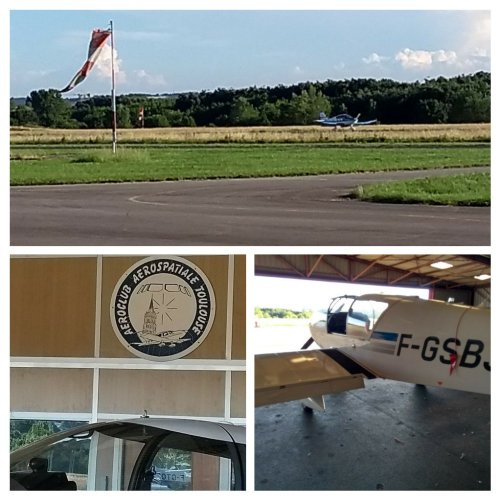
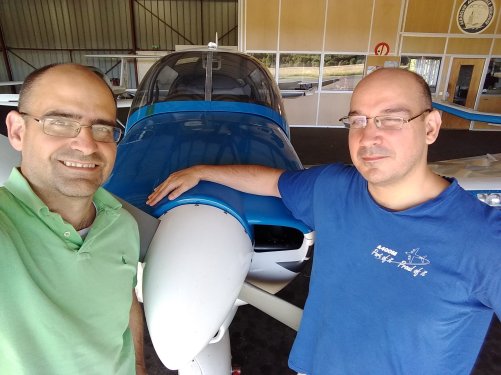
Two weeks ago, Albert, a work colleague, and I took one of the aeroclub’s DR-400 airplanes to make a flight excursion from Toulouse to Northampton Sywell, Old Warden and Duxford (England) as part of a “Fly out” organised by the Aviation Society of the Airbus Staff Council, in which 6 aircraft would make the trip.
The main purpose of the flight was twofold:
Visit the Shuttleworth collection and their evening flight display on Saturday 14th July.
Visit the Flying Legends airshow at Duxford, hosted at the Imperial War Museum, on Sunday 15th July.
Mont Saint Michel.
During the trip we were to make 6 flights: Toulouse Lasbordes (LFCL) – Cherbourg (LFRC), Cherbourg – Sywell (EGBK), Sywell – Old Warden (EGTH), Old Warden – Fowlmere (EGMA), Fowlmere – Laval (LFOV), Laval – Toulouse Lasbordes. In all about 14 hours of flight time, which we split among the two of us, together with sharing the navigation and radio communications workload.
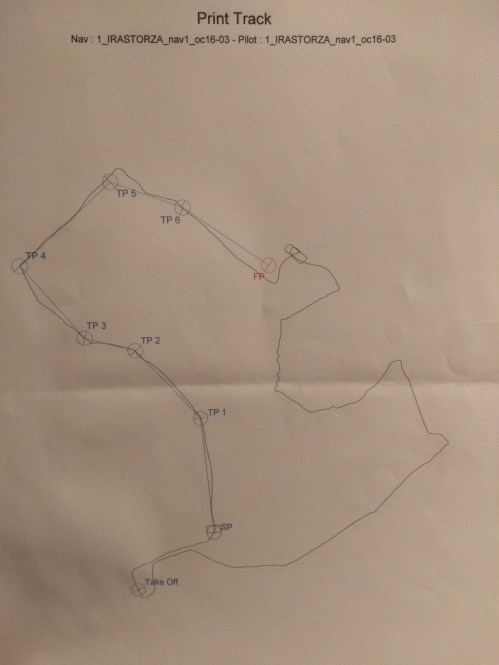
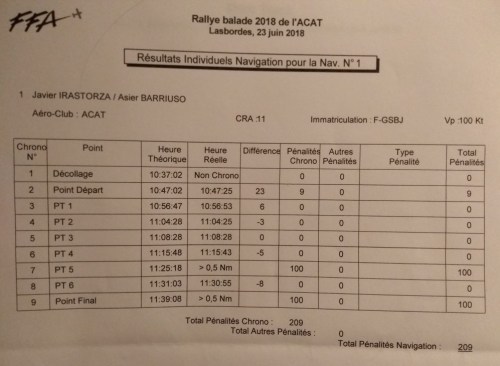
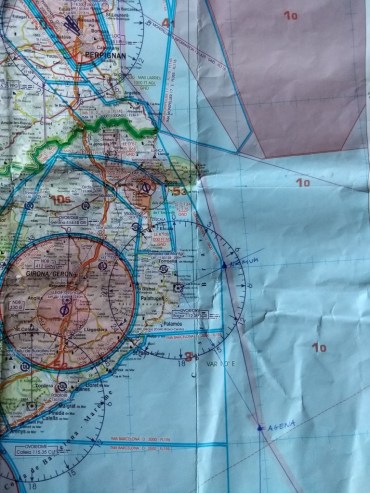
We prepared the flights using Mach 7 online tool, with which we generated the flight logs and routes for GPS, which could only be charged onto Albert’s smartphone, I replicated them in my Air Navigator app on my phone as well, however we did most of the navigation by way of following the paper charts.
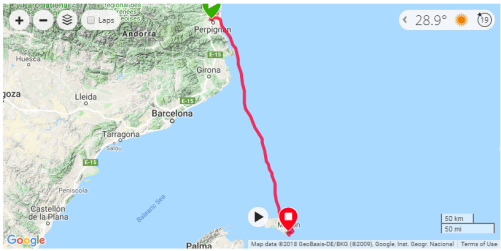
Having to fly most of France from South to North, we decided to overfly some castles of the Loire Valley (Chenonceau, Cheverny and Chambord), the racing circuit of Le Mans and Omaha beach in Normandy (which we couldn’t see well due to the presence of clouds at the time we passed). See below some of the pictures we took of those places (with the smartphone, no pro cameras on board).
Château de Chenonceau.
Château de Cheverny.
Château de Chambord.
Racing circuit of Le Mans.
We then made a stop, refuelled the airplane, ate some energy bars and departed for England. The weather seemed uncertain and there were several air traffic restrictions due to the Royal International Air Tattoo going on at Fairford, preparations for Farnborough air show, and the visit of Donald Trump, staying at Buckinghamshire. However, our colleague found a corridor through which we could fly smoothly past 15 h local time. We over flew the English Channel (La Manche) and approached the islands by first flying over the Isle of Wight (where I stayed one month during the summer of 1999 working at Camp Beaumont in Bembridge, at the eastern corner of the island, pictured below), the Hayling island leaving Portsmouth to our left, then up North by way of Winchester, Reading, Oxford and then Northampton. But as you can imagine, as there are not sign posts in the sky we were flying following the instruments and different navigation references close to those places. We took the opportunity to over fly Silverstone racing circuit.
Isle of Wight.
Silverstone racing circuit.
We then landed at Sywell, where we stayed for a night at the Aviators hotel, by the aerodrome, an ideal place to make an overnight stop.
The following morning we made a short flight to Old Warden, a small grass aerodrome where the Shuttleworth collection is based.
I found about the Shuttleworth collection some years ago in Twitter and started following their account (@Shuttleworth_OW). They happen to have arguably the largest collection of flying aircraft from the 1910s and 1920s. They do have the oldest flying machine in airworthy condition, a Bleriot XI from 1909. Rather than introducing the collection with a few paragraphs, I share here this video from their site:
For me, visiting the collection was a dream come true, moreover on a day in which they would fly most of their airplanes. See below a few pictures.
1909 Bleriot XI. The original oldest airplane in airworthy condition.
1920s biplanes (DX60X Moth, Southern Martlet).
Bristol Boxkite 1910 replica flying.
Avro Triplane 1910 replica.
I wanted to share a short video I took of the Bristol Boxkite 1910 replica flying just after taking off (a replica built in 1965). It took its time to gain some altitude, always at quite low speeds. It never went much higher than 50 ft. It was wonderful to see it flying.
We stayed the night over at the camping by the aerodrome and in the morning we departed for Fowlmere, another grass aerodrome a few miles from Duxford. The taxiway at Fowlmere was fully packed of small airplanes (including the Antonov An-2 coming from Germany that you can see below) and tents of pilots that had been camping the previous night or would camp the following one, as we did.
We got a faboulous breakfast at the airfield and then drove to Duxford to attend the Flying Legends air show and visit the Imperial War Museum.
Our Fly out was organised by a fellow British colleague, Derek. He recalled how being brought to Flying Legends as a child by his father had been a marking moment. He only came again decades later. The air show is one of the biggest and best classic aviation events in the world. If you have the chance to visit it once, do not hesitate, go.
This year the show commemorated the 100th anniversary of the Royal Air Force and the 50th anniversary of the filming of “Battle of Britain“ which had Duxford as one of the locations and some of those very airplanes as main characters of the movie. Other locations of the filming were the Tablada airfield in Seville (where Airbus Defence has facilities), the coast in Huelva passed as Dunkirk or San Sebastian as if it was Berlin.
There are plenty of aircraft to see up close, from the flight line, many exhibitors come with books, models, clothing, memorabilia, etc., you’ve got the museum in itself (!) to visit, you have literally dozens of WWII birds flying, among them: Supermarine Spitfire (we saw a formation of 11 of them flying), Hawker Hurricane, North American P-51 Mustang and resident Boeing B-17 Flying Fortress Sally B (only B-17 in flight in Europe)… By the end of the day you will be more than overwhelmed, exhausted, but with that smile of wonder when watching those jewels fly up in the air while you hear the engines roaring, the music and the explanations from the commentator of the show.
Boeing B-17 Flying Fortress Sally B.
See this short video of the Balbo formation flight at the end of the display with 25 single engine WWII birds flying…
After the show we headed back to Fowlmere where we had dinner with three other colleagues (French and German) before walking to the airfield to camp by our airplane, which felt as the aviation of the beginning of the XX century.
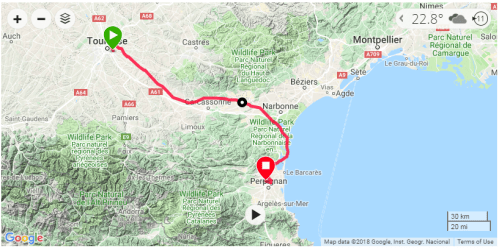
Monday 16th July, feeling exhausted and overwhelmed, was the day to come back to Toulouse. The weather seemed good in England and to cross the channel but not so in France, so we took it with calm. We flew through the East of London, crossed the channel and then overflew all the coast of Normandy down to Omaha beach, then we headed South West to the Mont Saint Michel and then to the airport of Laval. There we rested for a couple of hours, ate more energy bars, studied the meteorological conditions to go further South and finally departed back to Toulouse Lasbordes.
The airshows and visits were totally worth it. Dreams come true.
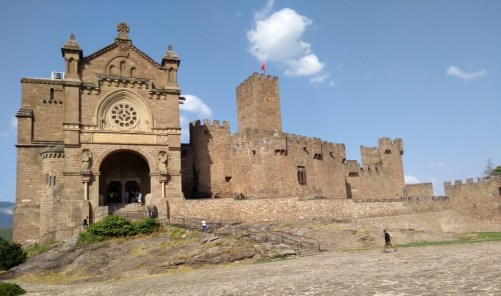
Over flying those castles, circuits, beaches, historical landscapes… you can imagine, breathtaking.
Radio communications: much easier than expected, in England as well (even if the there were lots of radio frequency changes to be made around London). French in France, English in England.
We made ourselves follow in each air space. It forces you to interact more with the control but it adds to the safety of flight (traffic information overflying Saint Michel or the castles is advice-able).
Flight plans: in France they are not required for the long flights we did South-North flying spaces E and G. But we filed them. It allows the control to better follow you. They know your plans, they give clearances for D spaces without hesitation.
All the terrains we visited in England required PPRs (a colleague took care of this).
To fly into England a GAR report must be submitted in advance.
We didn’t touch a single sterling pound in the four days, credit cards almost did the trick for everything. A colleague had to pay for a taxi and a meal. We could have avoided that by selecting alternatives which accepted credit card payment.
We had to divert due to the meteorological conditions when arriving to one of the destinations. Clouds and fog were closing our visibility. We found ourselves with no more than 3-4 km of visibility and flying very low, so we turned back. The two diversion aerodromes we had initially selected would not do the trick (in the middle of the cloud region). We had to look for a third one in flight. That was stressful. Luckily we were two pilots on board: one keeping the airplane on air, the other navigating, looking for a suitable aerodrome and downloading the aerodrome chart (we carried about 30 on board, but not the one we finally needed). Lessons learnt: never spare charts, you may need them; ensure you’ve got batteries and chargers on board (you may need them in the worst situation), if you are the only pilot on board, but have passengers with you, try to get one of them briefed in advance of what can he or she do if something happens.
After this excursion I have completed just above 120 flight hours, and I am quite happy with the flight training provided by the aeroclub and system in France. Before the excursion we had some uncertainties about some aspects of the flight. In the end all of it was much easier than expected.
In this post I wanted to share the speech which I delivered at the Toastmasters International speech contest of this Spring 2018 at my club (Airbus Speakers, in Toulouse) and at the area level (comprised by 4 clubs in the region of Toulouse).
The last time I competed in such contests was in 2012 (see here a post about that speech) and for this year of 2018 I put myself as a personal objective to take part in a contest again, in order to work deeper in a speech: drafting it, editing it, reviewing it with friends, rehearsing it… it is a good exercise. Most Toastmasters’ members do not like much to compete, but I believe it is a good learning experience as I explained in this other post.
See below how the latest speech script was left after different iterations of corrections and annotations:
The message of the speech: share your passion with your children and take time to enjoy it together with them, a kind of carpe diem. With that in mind, I included in the speech most of the ingredients that make a speech as complete and varied as possible, i.e, body language, use of space, eye contact, voice variation, use of props, personal experience, quotations, etc. That is why I wanted to prepare exhaustively a speech as an exercise. See below the criteria used by the judges to evaluate a speech in order identify the ingredients.
Toastmasters’ International Speech Contest judge’s ballot.
I wanted to thank Nacho, Jaime and Luca for helping me with the preparation of the speech.
And, finally, see below the video of the speech as recorded at the area level:
For the last 4 years I have been writting a small series of posts comparing the compensation of Airbus and Boeing CEOs (1). This series started out of conversation with colleagues and I keep it updated to have a record of the evolution and for quick reference in other conversations (2). Thus, this post is just the update with the information for the 2017 fiscal year.
As both Boeing and Airbus are public companies, the information about their CEOs compensation is public and can be found in the annual report and proxy statement from each one. I just share the information and sources below for comparison and future reference.
Airbus CEO, Tom Enders’ 2017 compensation (financial statements here, PDF, 4.0 MB, page 58):
Airbus CEO Tom Enders 2017 compensation.
Enders saw his base salary frozen in relation to 2016 at 1.5 M€. Variable pay decreased in 7.3%, post-employment benefit costs increased, etc. The main change in last year’s remuneration was the line “Termination benefits”, which in the notes it is explaiend as stipulated in 1.5 times the “Total Target Remuneration (defined as Base Salary and target Annual Variable Remuneration)”, as Enders announced that he will retire from the post when his current term expires in 2019. Thus, the overall compensation (9.1 M€) increased.
Boeing CEO, Dennis Muilenburg’s 2017 compensation (2018 proxy statement here, PDF, 6.7 MB, page 30):
Boeing’s CEO Dennis Muilenburg 2017 compensation.
Dennis Muilenburg saw his base salary increased in 50 k$. And with that all other incentive and other compensation concepts. The total compensation (18.45 M$) increased in relation to 2016 and has now raised above the 2014 levels (17.8 M$).
Comparison. It is interesting to note that while the base salary is nearly the same, 1.5 m€ vs 1.69 m$ (more so taking into account average exchange rates in 2017 (~ 1.13 USD/EUR)), the incentive schemes at Boeing end up with a total remuneration for the CEO about the double (x1.8) of that in Airbus.
(1) See the previous comparisons for the years 2013, 2014, 2015 and 2016.
(2) From what I see in the stats of the visits to this blog, other people are having similar conversations as these posts with the compensation comparison have ranked among the top 10 most read ones the last years.
This a short post to share my forecast for the coming football 2018 FIFA World Cup to be played during the following five weeks in Russia.
As I introduced in a similar post four years ago for the 2014 World Cup (here), I have a work colleague who not only is a tremendous aircraft salesman but also has a great sense of humor and manages in his free time late in the night to set up a contest for office staff to try to guess winners, matches’ scores, top scorers, etc., of major international soccer competitions. The 2018 FIFA World Cup in Russia, which will start this week, could not be missed. Nacho managed to set up the contest in time.
I have approached the game of forecasting this World Cup with the same method as previous times, as I have not watched a single match of national teams’ football since the previous World Cup and I have no clue of who is who and how they come to the competition. I have relied on ESPN rankings, and used its offensive and defensive coefficients to build with a simple algorithm all the scores of the competition:
taking into account the coefficients of both sides
when the difference between them was narrow, I put a draw, if resulting coefficients were high 2-2, if low, 0-0.
the same for victories, if the difference was high 3-0, if small and low coefficients, 1-0.
I also checked the numbers that different scores were repeated in the group phase in the previous two World Cups, as the most repeated ones are 2-1, 1-0, 0-0, in order to assign them in similar proportion.
I also checked the amounts of goals scored in the group phase of previous 2 World Cups (100 and 136 goals), to adjust the overall number of goals I would distribute.
Checked the goals the previous top scorers managed in World Cups to a assign a similar number.
What did I forecast?
A World Cup won by Brazil against Spain in the final in the penalty shootout.
An oddity: the algorithm provided that Spain would face 3 shootouts in this World Cup, we will see.
The forecast also provided that England would beat Colombia in a shootout, that may be even odder, given the historical bad luck of England at shootouts.
Today, June 6th, we commemorate the anniversary of the Normandy landings during World War II in 1944, what is often referred to as D-Day.
A few weeks ago, we visited “Omaha beach“, one of the beaches where Americans landed, which you may have seen as, along with many documentaries, it was staged in the film “Saving Private Ryan“. The beach is about 6 kilometres long and extends through different villages. And it is not the only beach where Allied forces landed, as there were Americans landing at Utah beach as well, together with British landing at Sword and Gold beaches, more to the East, and Canadians at Juno beach.
The Germans had fortified the hills, built barracks, installed obstacles in the beach and planted thousands of mines.
The landings, part of the Operation Overlord, code named Neptune, started at 6:30am, and they continued for weeks. Just on D-Day Allied forces counted 10,000 casualties with over 4,000 confirmed dead, with similar figures in the German side.
After the first days, a bridge, “Mulberry” was built to offload vehicles from boats coming from the United Kingdom. Some days during the summer up to 24,000 men or 3,000 vehicles crossed that bridge. An aerodrome was built uphill to evacuate the injured. The original bridge was brought down in the following winter by strong sea tides. Today a relic has been built, with some of the original concrete blocks visible in low tide.
Today, there are several monuments along the beach, one of them Les Braves Omaha Beach Memorial. It is a sculpture that symbolizes wings of hope, freedom, fraternity.
In front of it there is a monument to the 1st US Infantry Division. It has the following inscription engraved in it:
No mission too difficult.
No sacrifice too great. Duty first.
Forced Omaha beach at dawn 6 June.
By the monument visitors leave candles, flowers and some written notes. Most of them stand by in silence watching the vastness of the beach, thinking of the sheer numbers of people involved in the operation and what awaited them, praying for their lost ones. Occasionally a bus comes with veterans, relatives of soldiers who fought there, you name it, and trumpet plays Taps.
Nearby, a panel reminds the lyrics of the song “Remember Omaha” by Jean Goujon.
Esta es una pequeña entrada futbolera para compartir la gráfica de debajo tras la consecución de la decimotercera Copa de Europa de fútbol por el Real Madrid.
La gráfica presenta la evolución de las Copas de Europa conseguidas por el Real Madrid y todos aquellos clubes que en algún momento de la historia han sido el segundo equipo con más copas. Por orden: Benfica (Lisboa), Internazionale (Milan), Milan AC, Ajax Amsterdam, Bayern Munich, Liverpool y de nuevo Milan AC.
La idea me surgió tras un intercambio tuitero con Andrés a raíz de este tuit.
2007: Ay! Que nos empata a Copas de Europa el Milan!
Algunas curiosidades que se observan en la gráfica:
Es ahora, en 2018, cuando con 6 la distancia, medida en Copas de Europa, entre el Real Madrid y el segundo club con más títulos es más grande.
Históricamente la distancia media ha estado en 2,8 copas.
La moda, es decir la distancia más veces repetida entre el Madrid y el segundo, ha sido de 3 copas. Esa fue la distancia en 24 años, el 38% de estos 63 años de Copa de Europa (ver histograma debajo).
La distancia mínima se dio entre 1994 y 1998, tras ganar el Milan AC su quinta Copa de Europa en Atenas y hasta la consecución de La Séptima por el Real Madrid en 1998 en Ámsterdam.
A partir de esas curiosidades, me surgieron después otras tres ideas muy visuales y rápidas de ejecutar y que incluyo más abajo:
Un histograma con el número de años que se ha dado cada distancia en Copas de Europa.
Una tabla donde se muestra en cada momento qué clubes eran los segundos en el palmarés.
Otra tabla donde se muestra cuántos años ha sido cada uno de esos el segundo en el palmarés.
De momento, y hasta la vuelta del gran Milan AC, el Real Madrid podrá disfrutar de la delantera en el palmarés hasta al menos 2026.
A couple of weeks ago I published a post with “My forecast of Boeing Commercial Airplanes 2017 revenues“. In that post I built a forecast of Boeing Commercial revenues based on its 2017 airplanes deliveries, orders, list prices and my estimate of the discounts Boeing applies as a relation to what it reports in the revenues vs. what it publishes as list prices.
“I’ll try to guess the figure of revenues for the Boeing Commercial Airplanes division, not so much trying to be accurate in itself, but to point in advance to the increasing of the discounts as we will see below.” (excerpt from the referred post)
My forecast for Boeing Commercial revenues was 57.0 bn$. A few days later, on January 31st, Boeing announced its 2017 results. Boeing Commercial revenues were 56.7 bn$.
As I already anticipated,
“[…] I see that their discounts have been greatly increased in the last 2017. […]
The implied discount of my revenues forecast would be in the ~ 50% range.”(excerpt from the referred post)
With those 56,729 bn$, the 2017 Boeing list prices, its 763 airplane deliveries and 912 net orders I come to an estimated average discount for Boeing commercial aircraft of 50.4%.