Category Archives: France

French aviation history through the life of its pioneers…

I moved to France about two years ago to work for Airbus in its Blagnac offices. Blagnac is a small village close to Toulouse. The place radiates passion for aviation (I once shared the geek outlook of my dentist’s waiting room).

My office is located at the avenue Didier Daurat, to get there I cross two roundabouts: Maurice Bellonte and Émile Dewoitine… these names probably do not ring a bell to most of you. Neither did to me. But then the back street is called Charles Lindbergh. It is then that you realize what might be going on and wonder who the previous names were.

Many months ago I collected the names of some of the streets of Blagnac and Colomiers (the village at the other side of the airport were Airbus is also located), and then, with the help of Google and Wikipedia, I searched who they were. I started a trip into French aviation history through the life of its pioneers…

Didier Daurat (EN):

Daurat was a fighter pilot during World War I, distinguishing himself by spotting the Paris Gun which was pounding Paris.

After the war, he joined Latécoère’s airline company, (which later became the Compagnie générale aéropostale – Aéropostale, then Air France) where he was a pilot and later operations director.

From this time, the legend of the man with the iron will made Didier Daurat a boss admired by many, feared by all and hated by some. He did not hesitate to dismiss those who showed the slightest sign of weakness, questioned his methods or did not adhere to the ‘spirit of the mail’ (l’esprit du courrier).

Many of his pilots began their careers as grease monkeys, taking apart, cleaning and reassembling engines. According to Daurat, this formed character and taught pilots to respect their machines. But he knew when he saw a talented pilot. When Jean Mermoz presented himself in Toulouse and made a dazzling display of piloting skill, Daurat told him “I don’t need circus artists but bus drivers.” (“Je n’ai pas besoin d’artistes de cirque mais de conducteurs d’autobus”). Nevertheless, he engaged him to clean the engines. […]

Dewoitine D.333 assembly (public domain image).

Émile Dewoitine (EN, FR):

[…] Émile Dewoitine entered the aviation industry by working at Latécoère during World War I. In 1920, he founded his own company, but facing little success at home, went to Switzerland where his Dewoitine D.27 fighter was accepted for operational service.

In 1931, Dewoitine went back to France and founded Société Aéronautique Française – Avions Dewoitine. During the 1930s, several noteworthy aircraft rolled out of the Toulouse-based Dewoitine factories including the Dewoitine D.500, the French Air Force’s first fully metallic, monoplane fighter, as well as the Dewoitine D.338 airliner.

In 1936, part of the French aviation industry was nationalized and Dewoitine’s factories were absorbed by the state-owned SNCAM. During the Battle of France in 1940, the Dewoitine D.520 turned out to be France’s best fighter aircraft. […]

Maurice Bellonte (FR):

Maurice Bellonte […] est un aviateur français. Associé à Dieudonné Costes, il a réussi en 1930, à bord du Breguet XIX “Point d’interrogation”, la première traversée de l’Atlantique Nord d’est en ouest. […]

Dieudonné Costes (EN, FR):

Dieudonné Costes […] was a French aviator who set flight distance records. He was also a fighter ace during World War I. […]

On 26 September 1926 he flew 4,100 km (2,546 miles) from Paris to Assuan, with René de Vitrolles, attempting at breaking a world distance record. He broke the world distance record on 28 October 1926, flying 5,396 km (3,351 miles) from Paris to Jask, Persia, with J. Rignot, as a part of 19,625-km (12,187-mile) Paris-India-Paris flight.

Between 10 October 1927 and 14 April 1928 Costes and Joseph Le Brix flew 57,410 km (35,652 miles) around the world, in Breguet 19GR named Nungesser-Coli, from Paris through Argentina, Brazil, the United States, Japan, India, and Greece, although they traveled across the Pacific Ocean from San Francisco, California, to Tokyo, Japan, by ship.

On 1–2 September 1930, Costes with Maurice Bellonte, flew the Breguet 19 Super Bidon “?” from Paris to New York, as the first heavier-than-air aircraft to cross the North Atlantic in the more difficult westbound direction between the North American and European mainlands. They covered either 5,850 km (3,633 miles) or 6,200 km (3,850 miles), according to different sources, in 37 hours 18 minutes. While flying over Portsmouth, New Hampshire, they lost their navigational map out of an open window of the plane. Two children saw the map falling from the sky while they were watching for the flight to cross over their farm. The children, Louise Stef and her brother John, returned the map to Costes, who had asked for its return through the media.

Joseph Le Brix (EN, FR):

Joseph Le Brix est d’abord un officier de marine, atteignant le grade de lieutenant de vaisseau, avant de se tourner vers l’aviation.

Avec Dieudonné Costes, il réussit, sur un Breguet 19 baptisé Nungesser et Coli en l’honneur des deux aviateurs français disparus dans l’Atlantique nord à bord de l’Oiseau blanc, la traversée de l’Atlantique sud entre Saint-Louis du Sénégal et Natal (Brésil) où ils arrivent le 15 octobre 1927.

Henri Potez (EN, FR):

Henry Potez […] was a French aircraft industrialist.

He studied in the French aeronautics school Supaéro. With Marcel Dassault, he was the inventor of the Potez-Bloch propeller which after 1917, have been set on most of all Allied planes of World War I.

In 1919, he founded his own company Aviations Potez that between the wars built many planes and seaplanes in factories at that time considered the most modern in the world. He bought the Alessandro Anzani company in 1923. Many Potez planes such as the Potez 25, 39, 54, 62, 63 were an international success, with world records. […]

Santos Dumont (EN):

Alberto Santos-Dumont […] was a Brazilian aviation pioneer. The heir of a wealthy family of coffee producers, Santos Dumont dedicated himself to aeronautical study and experimentation in Paris, France, where he spent most of his adult life.

Santos-Dumont designed, built, and flew the first practical dirigible, demonstrating that routine, controlled flight was possible. This “conquest of the air”, in particular his winning the Deutsch de la Meurthe prize on October 19, 1901 on a flight that rounded the Eiffel Tower, made him one of the most famous people in the world during the early 20th century. […]

Alberto Santos Dumont flying the Demoiselle (1909) (public domain image).

Santos-Dumont described himself as the first “sportsman of the air.” He started flying by hiring an experienced balloon pilot and took his first balloon rides as a passenger. He quickly moved on to piloting balloons himself, and shortly thereafter to designing his own balloons. In 1898, Santos-Dumont flew his first balloon design, the Brésil.

[…] his primary interest soon turned to heavier-than-air aircraft. By 1905 he had finished his first fixed-wing aircraft design, and also a helicopter. He finally achieved his dream of flying an aircraft on October 23, 1906 by piloting the 14-bis before a large crowd of witnesses for a distance of 60 metres (197 ft) at a height of about five meters or less (15 ft). This well-documented event was the first flight verified by the Aéro-Club de France of a powered heavier-than-air machine in Europe and won the Deutsch-Archdeacon Price for the first officially observed flight further than 25 meters. On November 12, 1906, Santos-Dumont set the first world record recognized by the Federation Aeronautique Internationale by flying 220 metres in 21.5 seconds.

[…]

The Wrights used a launching rail for their 1903 flights and a launch catapult for their 1904 and 1905 machines, while the aircraft of Santos-Dumont and other Europeans had wheeled undercarriages. The Wright Brothers continued to use skids, which necessitated the use of a dolly running on a track. The Fédération Aéronautique Internationale, founded in France in 1905 to verify aviation records, stated among its rules that an aircraft should be able to take off under its own power in order to qualify for a record. Supporters of Santos-Dumont maintain that this means the 14-bis was, technically, the first successful fixed-wing aircraft.

[…]

The wristwatch had already been invented by Patek Philippe, decades earlier, but Santos-Dumont played an important role in popularizing its use by men in the early 20th century. Before him they were generally worn only by women (as jewels), as men favoured pocket watches.

Clément Ader (EN, FR):

Clément Ader […] was a French inventor and engineer born in Muret, Haute Garonne, and is remembered primarily for his pioneering work in aviation.

Ader was an innovator in a number of electrical and mechanical engineering fields. He originally studied electrical engineering, and in 1878 improved on the telephone invented by Alexander Graham Bell. After this he established the telephone network in Paris in 1880. In 1881, he invented the “théâtrophone”, a system of telephonic transmission where listeners received a separate channel for each ear, enabling stereophonic perception of the actors on a set; it was this invention which gave the first stereo transmission of opera performances, over a distance of 2 miles (3 km) in 1881. In 1903, he devised a V8 engine for the Paris-Madrid race, but although three or four were produced, none were sold.

Following this, he turned to the problem of mechanical flight and until the end of his life gave much time and money to this. Using the studies of Louis Pierre Mouillard (1834–1897) on the flight of birds, he constructed his first flying machine in 1886, the Éole. It was a bat-like design run by a lightweight steam engine of his own invention, with 4 cylinders developing 20 horsepower (15 kW), driving a four-blade propeller. The engine weighed no more than 4 kg/kW (7 pounds per horsepower). The wings had a span of 14 metres and were equipped with a system of warping. All-up weight was 300 kg (650 pounds). On 9 October 1890, Ader attempted a flight of the Éole. It is accepted that the aircraft took off, reaching a height of 20 cm, and flew uncontrolled for approximately 50 m (160 ft), 13 years before the Wright Brothers.

Ader undertook the construction of a second aircraft he called the Avion II, also referred to as the Zephyr or Éole II. Most sources agree that work on this aircraft was never completed, and it was abandoned in favour of the Avion III. Ader’s later claim that he flew the Avion II in August 1892 for a distance of 100 metres in Satory near Paris, was never widely accepted.

[…] In 1909 he published L’Aviation Militaire, a very popular book which went through 10 editions in the five years before the First World War. It is notable for its vision of air warfare and its foreseeing the form of the modern aircraft carrier, with a flat flight deck, an island superstructure, deck elevators and a hangar bay. His idea for an aircraft carrier was relayed by the US Naval Attaché in Paris[8] and were followed by the first trials in the United States in November 1910.

An airplane-carrying vessel is indispensable. These vessels will be constructed on a plan very different from what is currently used. First of all the deck will be cleared of all obstacles. It will be flat, as wide as possible without jeopardizing the nautical lines of the hull, and it will look like a landing field.

—Clément Ader, L’Aviation Militaire, 1909

Marcel Doret (FR):

En 1910, il est apprenti mécanicien. Il s’engage à 18 ans, dès le début de la Grande Guerre dans l’artillerie et combat à Verdun. Il est blessé 3 ans plus tard et reçoit la médaille militaire. Une fois guéri, il demande son transfert dans l’aviation et rejoint Dijon puis Chartres. Lâché seul après moins de deux heures de vol en double commande, il est breveté pilote militaire en 1918, à l’âge de vingt-deux ans, et il poursuit sa formation à l’École de chasse et d’acrobatie de Pau après un court passage à Avord. À la fin de la guerre, il est ouvrier chez Renault, mais Émile Dewoitine le remarque dans un meeting aérien. Le 1er juin 1923, Doret entre comme pilote d’essai dans ses usines à Toulouse, et devient rapidement chef pilote d’essai. Jusqu’en 1939, il met au point quarante-trois prototypes d’appareils très différents, ce qui lui donne une maîtrise presque totale du pilotage. Avec la production des appareils de ligne, comme le D.332 Émeraude, il est amené à les convoyer dans des pays de plus en plus lointains et devient un des premiers pilotes de ligne.

Roland Garros (public domain image).

Roland Garros (EN):

[…] He started his aviation career in 1909 flying Alberto Santos-Dumont’s Demoiselle monoplane, an aircraft that only flew well with a small lightweight pilot. In 1911 Garros graduated to flying Bleriot monoplanes and entered a number of European air races with this type of machine, such as the 1911 Paris to Madrid air race.

He was already a noted aviator before World War I, having visited the U.S. and South America. By 1913 he had switched to flying the faster Morane-Saulnier monoplanes, and gained fame for making the first non-stop flight across the Mediterranean Sea from Fréjus in the south of France to Bizerte in Tunisia. The following year, Garros joined the French army at the outbreak of World War I. […]

In the early stages of the air war in World War I the problem of mounting a forward-firing machine gun on combat aircraft was considered by a number of individuals. The so-called interrupter gear did not come into use until Anthony Fokker developed a synchronization device which had a large impact on air combat; however, Garros also had a significant role in the process of achieving this goal.

As a reconnaissance pilot with the Escadrille MS26, Garros visited the Morane-Saulnier Works in December 1914. Saulnier’s work on metal deflector wedges attached to propeller blades was taken forward by Garros; he eventually had a workable installation fitted to his Morane-Saulnier Type L aircraft. Garros achieved the first ever shooting-down of an aircraft by a fighter firing through a tractor propeller, on 1 April 1915; two more victories over German aircraft were achieved on 15 and 18 April 1915.

On 18 April 1915, either Garros’ fuel line clogged or, by other accounts, his aircraft was downed by ground fire, and he glided to a landing on the German side of the lines. Garros failed to destroy his aircraft before being taken prisoner: most significantly, the gun and armoured propeller remained intact. Legend has it that after examining the plane, German aircraft engineers, led by Fokker, designed the improved interrupter gear system. In fact the work on Fokker’s system had been going for at least six months before Garros’ aircraft fell into their hands. With the advent of the interrupter gear the tables were turned on the Allies, with Fokker’s planes shooting down many Allied aircraft, leading to what became known as the Fokker Scourge.

L’escadrille Normandie Niemen (EN):

[…] was a fighter squadron, later regiment (of three squadrons) of the French Air Force. It served on the Eastern Front of the European Theatre of World War II with the 1st Air Army. The regiment is notable for being one of only two air combat units from an Allied western European country to participate on the Eastern Front during World War II, the other being the British No. 151 Wing RAF, and the only one to fight together with the Soviets until the end of the war in Europe.

[…] It fought in three campaigns on behalf of the Soviet Union between 22 March 1943, and 9 May 1945, during which time it destroyed 273 enemy aircraft and received numerous orders, citations and decorations from both France and the Soviet Union, including the French Légion d’Honneur and the Soviet Order of the Red Banner. Joseph Stalin awarded the unit the name Niemen for its participation in the Battle of the Niemen River (1944).

Georges Guynemer 1917 (public domain image).

Georges Guynemer (EN):

Georges Guynemer […] was a top fighter ace for France during World War I, and a French national hero at the time of his death. […]

He was originally rejected for military service, but was accepted for training as a mechanic in late 1914. With determination, he gained acceptance to pilot training, joining Escadrille MS.3 on 8 June 1915. He remained in the same unit for his entire service. He experienced both victory and defeat in the first plane allocated to him, a Morane-Saulnier L monoplane previously flown by Charles Bonnard, and accordingly named Vieux Charles (Old Charles). Guynemer kept the name and continued to use it for most of his later aircraft.

[…] Flying the more effective plane, Guynemer quickly established himself as one of France’s premier fighter pilots. He became an ace by his fifth victory in February 1916, and was promoted to lieutenant in March. At the year’s end, his score had risen to 25. Capitaine Brocard, commander of Escadrille N.3 (Storks), described Guynemer at that time as “…my most brilliant Stork.” Less than a year later, Guynemer was promoted to captain and commander of the Storks squadron.

[…] as described by one of his flying comrades (name withheld due to security reasons):

Guynemer sighted five machines of the Albatros type D-3. Without hesitation, he bore down on them. At that moment enemy patrolling machines, soaring at a great height, appeared suddenly and fell upon Guynemer. There were forty enemy machines in the air at this time, including Baron von Richthofen and his circus division of machines, painted in diagonal blue and white stripes. Toward Guynemer’s right some Belgian machines hove in sight, but it was too late. Guynemer must have been hit. His machine dropped gently toward the earth, and I lost track of it. All that I can say is that the machine was not on fire.

Only 22 at his death, he continued to inspire the nation with his advice, “Until one has given all, one has given nothing.”

René Fonck (EN, FR):

René Paul Fonck […] was a French aviator who ended the First World War as the top Allied fighter ace, and when all succeeding aerial conflicts of the 20th and 21st centuries are also considered, Fonck still holds the title of “all-time Allied Ace of Aces”. He received confirmation for 75 victories (72 solo and three shared) out of 142 claims. Taking into account his probable claims, Fonck’s final tally could conceivably be nearer 100 or above. […]

Yet for all his skill and success, Fonck never captured the heart of the French public as Guynemer had. Fonck was ascetic and withdrawn. Instead of drinking or socializing with the other pilots, he planned his flying missions and tactics, ironed his uniforms, and stayed physically fit through calisthenics. He seemed to overcompensate for his shyness by constantly mentioning his exploits. As a result, he seemed distant, arrogant, even abrasive. His comrades respected his skills, but even one of his few friends, Marcel Haegelen, considered him a braggart and shameless self-promoter. Fonck may have resented the fact that Georges Guynemer remained more popular in the French press even after he surpassed him in victories. […]

Fonck returned to civilian life after World War I, and published his war memoirs Mes Combats, prefaced by Marechal Foch, in 1920.

During the 1920s, Fonck persuaded Igor Sikorsky to redesign the Sikorsky S-35 for the transatlantic race or Orteig Prize. On 21 September 1926, Fonck crashed on takeoff when the landing gear collapsed, killing two of his three crew members. Charles Lindbergh shortly afterward won the prize in 1927. […]

Charles Lindbergh (EN):

As a 25-year-old U.S. Air Mail pilot, Lindbergh emerged suddenly from virtual obscurity to instantaneous world fame as the result of his Orteig Prize-winning solo non-stop flight on May 20–21, 1927, made from Roosevelt Field located in Garden City on New York’s Long Island to Le Bourget Field in Paris, France, a distance of nearly 3,600 statute miles (5,800 km), in the single-seat, single-engine purpose built Ryan monoplane Spirit of St. Louis. Lindbergh, a U.S. Army Air Corps Reserve officer, was also awarded the nation’s highest military decoration, the Medal of Honor, for his historic exploit. […]

Henri Guillaumet (EN):

[…] He was a pioneer of French aviation in the Andes, the South Atlantic and the North Atlantic. He contributed to the opening up of numerous new routes and is regarded by some as the best pilot of his age. “Je n’en ai pas connu de plus grand” (I’ve never known a greater one), said Didier Daurat, owner of Aéropostale.

Guillaumet carried the mail between Argentina and Chile. On Friday 13 June 1930, while crossing the Andes for the 92nd time, he crashed his Potez 25 at Laguna del Diamante in Mendoza, Argentina, because of bad weather. He walked for a week over three mountain passes. Though tempted to give up, he persisted while thinking of his wife, Noëlle, until June 19 at dawn when he was rescued by a 14-year-old boy named Juan García. He reached a village whose inhabitants could not believe his story. This exploit made him stand out among the ‘stars’ of Aéropostale.

To his friend Antoine de Saint-Exupéry, who had come to find him, he said, “Ce que j’ai fait, je te le jure, aucune bête ne l’aurait fait.” (What I have done, I swear to you, no other animal would have done.) Saint-Exupéry tells the adventure of Guillaumet in his 1939 book Terre des Hommes (published in English as Wind, Sand and Stars).

After a number of south Atlantic crossings, he was appointed managing director of Air France. […]

In 1995, Futuroscope paid homage to Guillaumet with a 3D IMAX film by Jean-Jacques Annaud, Wings of Courage (les Ailes du Courage). […]

Saint-Exupéry (EN, FR):

[…] French aristocrat, writer, poet, and pioneering aviator. He became a laureate of several of France’s highest literary awards and also won the U.S. National Book Award. He is best remembered for his novella The Little Prince (Le Petit Prince) and for his lyrical aviation writings, including Wind, Sand and Stars and Night Flight.

Saint-Exupéry was a successful commercial pilot before World War II, working airmail routes in Europe, Africa and South America. At the outbreak of war, he joined the Armée de l’Air (French Air Force), flying reconnaissance missions until France’s armistice with Germany in 1940. After being demobilized from the French Air Force, he traveled to the United States to convince its government to enter the war against Nazi Germany quickly. Following a 27-month hiatus in North America, during which he wrote three of his most important works, he joined the Free French Air Force in North Africa, although he was far past the maximum age for such pilots and in declining health. He disappeared over the Mediterranean on his last assigned reconnaissance mission in July 1944, and is believed to have died at that time.

Jean Dabry (FR):

Jean Dabry […] est un pilote français de l’Aéropostale puis d’Air France.

D’abord officier au long cours, il entre à l’Aéropostale dès 1928 comme navigateur. Deux ans plus tard avec Jean Mermoz comme pilote et Léopold Gimié à la radio, il participe au record de distance en circuit fermé sur Latécoère 28.

Les 12 et 13 mai 1930, le même équipage effectue la première traversée postale de l’Atlantique Sud sur l’hydravion Laté 28 “Comte de la Vaulx”.

Lucien Servanty (FR):

[…] fut l’un des plus célèbres ingénieurs de l’histoire de l’aviation française.

Diplômé des Arts et Métiers, Servanty débuta en 1931 chez Breguet, puis entra en 1937 à la SNCASO lors de la création de celle-ci. Pendant la Seconde Guerre mondiale, Servanty continua son activité sous le contrôle des autorités d’occupation mais réalisa aussi en secret l’étude du SO.6000 Triton, le premier avion à réaction français, qui effectua son premier vol en novembre 1946.

Par la suite, Servanty dirigea les études de plusieurs avions militaires d’importance tels que le SO.6020 Espadon et le SO.9000 Trident, prototype très innovateur d’un intercepteur à propulsion mixte turboréacteur-fusée. C’est toutefois grâce à une œuvre à vocation civile que Servanty acquit sa notoriété : la direction technique du programme Concorde pour la partie française. L’amitié nouée entre Servanty et son homologue anglais Bill Strang permit en particulier au projet de surmonter les nombreuses difficultés d’une collaboration franco-britannique pas toujours évidente au niveau politique.

Servanty mena à bien la totalité du programme d’essais mais, subitement décédé en 1973 à 64 ans, ne put assister au premier vol commercial de sa création en 1976. […]

Leon Bourrieau (FR):

Bourrieau eut l’honneur d’être le premier à faire voler le Fouga « Sylphe ” modèle probatoire, le 14 juillet 1949. Il mit au point cet appareil ainsi que les bancs volants Fouga « Gémeaux ” pour le réacteur Turbomeca. Finalement, le 23 juillet 1952, il y a trente-cinq ans, il décolla le prototype du « Magister “, dessiné par Robert Castello et Mauboussin (d’ou l’appellation C.M. 170), consacré par 871 exemplaires dont beaucoup volent toujours! Léon Bourrieau fut d’abord militaire. La finesse de son pilotage lui valut d’appartenir à la « Patrouille acrobatique d’Etampes ” et d’assumer les responsabilités de moniteur.

Pierre Nadot (FR):

Le 27 mai 1955, la Caravelle effectue son premier vol, décollant à 19 h 15, pilotée par Pierre Nadot secondé par André Moynet et accompagné de Jean Avril et Roger Béteille, pour un vol de 22 minutes. Pour ce premier essai, l’avion restant à basse vitesse, les volets de bord de fuite ne sont pas sollicités. […]

Yves Brunaud (FR):

Le 30 Janvier 1959, le Br-1150 Atlantic motorisé par des turbopropulseurs Rolls-Royce Tyne fut sélectionné par l’OTAN parmi 21 projets. Le 2 Octobre 1961, la SECBAT (Société Européenne pour la Construction du Breguet Atlantic) fut crée.

Les sociétés suivantes prirent part au programme :

  • Breguet & Dassault-Aviation (France).
  • Fokker (Pays-Bas).
  • Dornier & Siebel (Allemagne)
  • SABCA, Fairey & Fabrique Nationale Herstal (Belgique).

Les turbopropulseurs Tyne étaient fournis par Rolls-Royce, SNECMA-Hispano, FN et MTU; les équipements électroniques par des sociétés Américaines. Les chaînes de production ont été installées dans les usines Breguet de Toulouse.

Quatre prototypes furent construits. Le premier effectua son vol initial le 21 Octobre 1961 avec Bernard Witt, Roméo Zinzoni et René Périneau aux commandes. Le second vola le 23 Février 1962, piloté par Yves Brunaud, M. Raymond et René Périneau.

Franz Joseph Strauss (EN):

Franz Josef Strauss […] was a German politician. He was the chairman of the Christian Social Union, member of the federal cabinet in different positions and long-time minister-president of the state of Bavaria.

As an aerospace enthusiast, Strauss was one of the driving persons to create Airbus in the 1970s. He served as Chairman of Airbus in the late 1980s, until his death in 1988 […]. Munich’s new airport, the Franz Josef Strauss Airport, was named after him in 1992.

This list is far from covering all pioneers, nor all the great engineers that built French aviation during the past century. This is just a random walk through Blagnac streets.

While looking for these characters I stumbled upon a great site with a good collection of French aviation characters: “L’Aviation Française: des Hommes et des Ailes“.

PD1: Be sure that not all streets are named after aviation pioneers… I got to meet several doctors, writers, etc. 😉

PD2: Emphasis are mine. Most of the excerpts come from Wikipedia articles.

5 Comments

Filed under Aerospace & Defence, France

Foie gras poêlé

The picture below represents an all time high of my kitchen:

Cooking foie gras.

In fact it means an all time high of me in any kitchen. I have known the recipe since almost 2 years now. It took us 1 minute to cook it.

After this all time high, I am seriously considering to never cook again.

Leave a comment

Filed under France, Miscellanea

Elections législatives in France

Second round of Elections législatives in France; as I did for the first round of the presidential elections two months ago, I went last Sunday morning to my bureau de vote to see how the process, the ballots, etc., were this time.

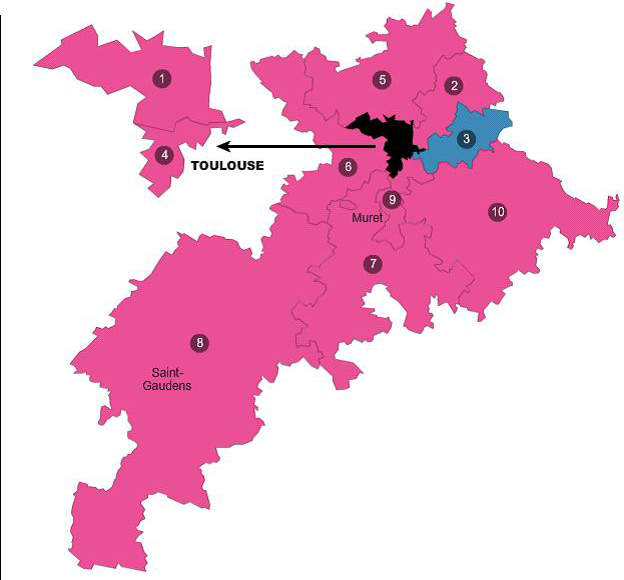
The striking difference with the elections to the congress in Spain is that in France each seat is circumscribed to a specific area, i.e., Haute-Garonne, the department where Toulouse is located has 10 circumscriptions, each one of them sends one and only one representative to the National Assembly in Paris. For each of those seats there is an election, with first and second round, for which absolute majority is required.

Let’s go back to Spain: e.g. the province of Madrid has 36 seats in the parliament, in the last November elections citizens from Madrid voted to the list of a party which proposed 36 names and, depending on the number of votes that each party obtained, those 36 seats were distributed according to the D’Hondt method (see a discussion on the method here – in Spanish). You will now see the effect.

In Madrid last November, the Popular Party obtained 50.84% of the vote (absolute majority), Socialist PSOE obtained 26.03% followed by UPyD (10.29%) and IU-LV (8.04%). The seats 36 were awarded as follows: 19 for PP, 10 PSOE, 4 UPyD and 3 IU-LV.

In the first round of the Elections législatives in Haute-Garonne:

  • In the 1st circumscription: the Socialist Party obtained 43.63% of the votes, followed by UMP (23.34%), Front National (9.96%) and Front de Gauche (9.01%)…
  • In the 2nd circumscription: the Socialist Party obtained 46.38% of the votes, followed by UMP (21.63%), Front National (12.46%) and Front de Gauche (7.86%)…
  • In the 3rd: UMP (35.14%), Europe Écologie Les Verts (22.24%), Divers gauche (21.36)…

If in the first round no candidate obtained an absolute majority in her circumscription (this only happened in the 8th circumscription, where the Socialist Party won the seat in the first round) a second round was needed. Only those parties with more than 20% of the vote in the first round competed in the second round; sometimes there were 2 candidates and in few cases 3.

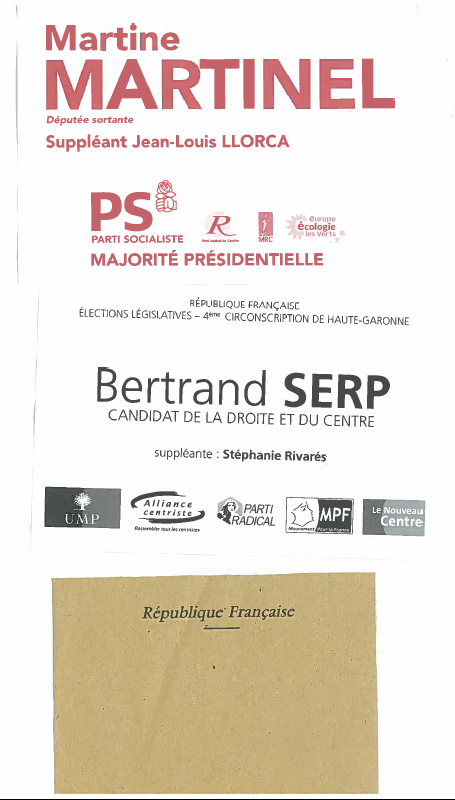
In the week from the first to the second round, those parties not qualifying could elect to support one of the candidates in the second round and that was in the end reflected in the ballot papers, where you can see that the Socialist candidate of my circumscription was backed by 3 parties apart from PS and that one of the UMP by another 4 parties.

In the second round, the socialist party candidates who in the first round had obtained around 45% of the vote were collecting around 65% of the vote, beating one by one the other candidates except for the 3rd circumscription where the UMP won (and the 8th where there wasn’t a 2nd round).

This in the end gave the PS 9 out of 10 seats (90% of the seats) while in the case of Madrid, the PP obtained with about 50% of the vote 19 out of 36 seats (53% of the seats). This is the striking effect and main difference that the second round system provokes.

Result of the elections in Haute-Garonne.

I also found interesting the freedom at the time of arranging the information provided in the ballot paper, it seems that only size and white background are required.

The Socialist ballot doesn’t mention for which circumscription the candidate is competing (they may consider it redundant information, as the voter knows in which circumscription she lives) while they introduce the subtle message “Députée sortante” to let the voter know who won last time or who represented and worked for them during the last term. On the other hand, the UMP not being able to use the last-winner message opts for the inclusive “Candidat de la droite et du centre”. Note as well the difference in the colour, red vs black / grey, I guess that the latter was compromise among the different parties.

Ballot papers and envelope for the second round in the 4th circumscription of Haute-Garonne.

4 Comments

Filed under France

Aerogeek dentist

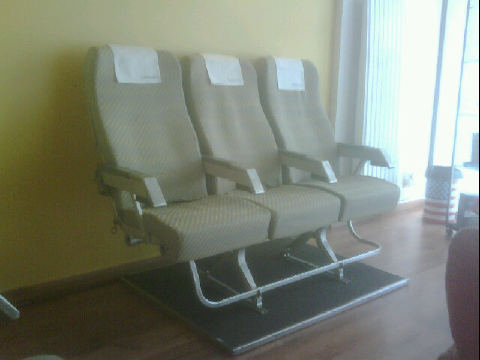
Some time ago I wrote about the impact of Airbus in the employment in the Toulouse area. Some weeks ago I went to a dentist in Blagnac, a village close to Toulouse (where Airbus is in fact based). There I could see how Airbus is impacting Toulouse area in other ways. I then tweeted the following with the picture below attached:

https://twitter.com/#!/javierirastorza/status/185795207676182530

Waiting room seats.

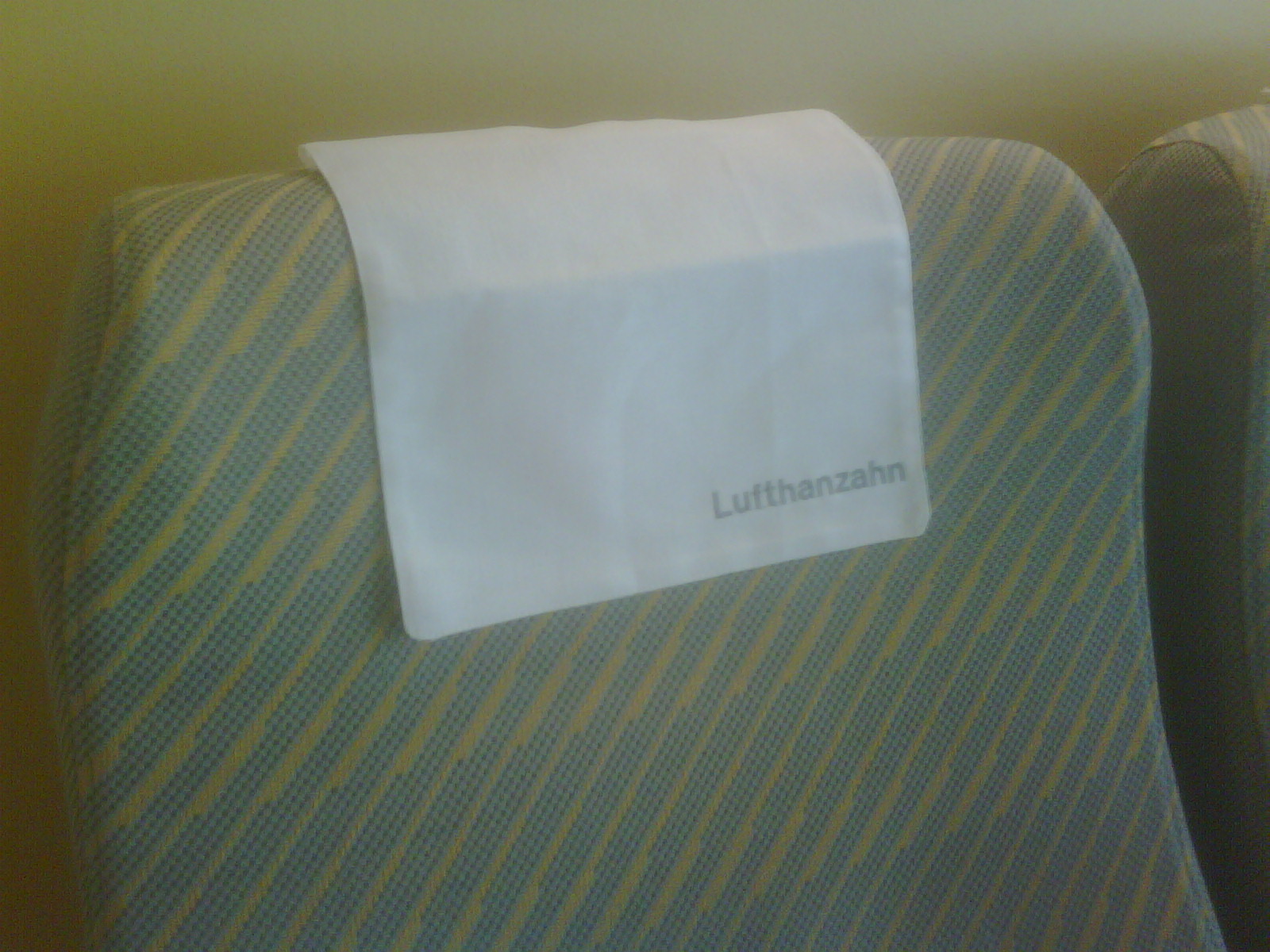
What I missed in that first visit was the geek details of the cloth covers of the seats. Take a closer look in the pictures below…

"Briteeth" Airways.

"Lufthanzahn".

Definitely, my dentist must be another aerogeek.

2 Comments

Filed under Aerospace & Defence, France

Ballot papers in France

Today there is the first round of the Presidential elections in France. According to the latest polls, it seems that Hollande is going to win with Sarkozy coming second and the two going to the second leg of the elections.

After my flying class today, I took the opportunity to go to one of the “bureau de vote” installed at the city hall in Capitole square. As I did 7 years ago while living in Aachen (then with the election between Merkel and Schröder), I wanted to check first-hand how the voting works here in France.

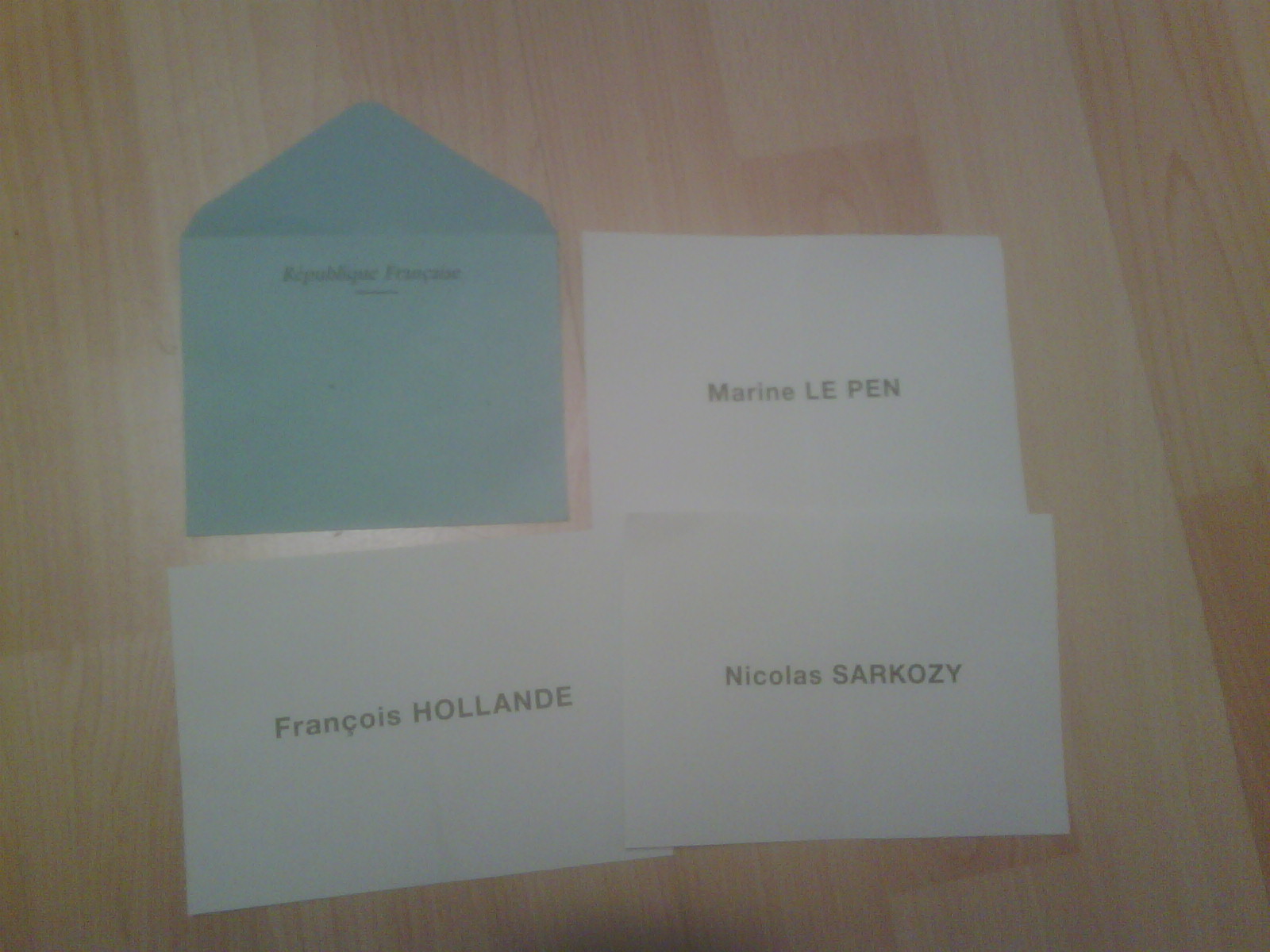
Well, it is very simple and very much like in Spain, even simpler. There were just 10 small stacks of ballots, one stack per candidate. The ballots are much simpler than in Spain. Just white papers with the name of the candidate. No name of the party, no fancy logo of the party. The envelope: simpler as well, just a small blue envelope reading “République Française”, nothing mentioning like “Presidential election 2012”, first or second round…

French Presidential election 2012: Ballot papers.

It raised my attention that there were many isoloirs, these cabins with curtains where you decide which ballot you place in the envelope. There are those as well in Spain. I did this detour today with a colleague coming from the Spanish Basque Country, he mentioned that in his village people also uses those cabins. However, in the village where I come from in Madrid, people almost never uses them. While I agree that their presence is a must, the need to use them is sad.

Finally, the rest of the process is the same. The voter comes to the table, hands her ID to the president of the table, the name is checked in the list and the voter places her vote in the urne.

1 Comment

Filed under France, Miscellanea

Le Petit Prince

Le Petit Prince.

Last summer I visited an exhibition on occasion of the celebration of “2011 Year of Antoine de Saint-Exupéry”. Elsewhere he is mainly known as the author of “The Little Prince” (Le Petit Prince), however I learnt in that exhibition that in Toulouse he is mainly known as an aviation pioneer, flying airmail routes (for the emblematic Aéropostale based in Toulouse) and then for the French Air Force.

I guess that some of you had read Le Petit Prince early in your lives, I didn’t. I received the book as a present from former colleagues when moving to France and only finished it some weeks ago, being the first book I’ve read in French. Not bad for a start, as according to the Wikipedia it is the most read book in French language and was voted as the best book of the 20th century in France.

It has some idealistic messages or fine criticisms, to name a few:

  • “One sees clearly only with the heart. What is essential is invisible to the eye.”
  • A businessman who goes on “owning” stars and counting them not having time for anything else, not knowing what to do with them and having a very serious thought of him.
  • The geographer, proud of his profession, but who lacks any practical knowledge as “that” is the responsibility of someone else, the explorer in this case.
  • The concept of domestication being two-ways. I loved when the prince goes Il y a une fleur… je crois qu’elle m’a apprivoisé… (“There is a flower … I think she domesticated me …”) I believe this could be applicable to many pet owners.

I felt especially caught when the book first said “Les grandes personnes aiment les chiffres” (adults love numbers) and later when it went:

“Si les deux milliards d’habitants qui peuplent la terre se tenaient debout et un peu serrés, comme pour un meeting, ils logeraient aisément sur une place publique de vingt milles de long sur vingt milles de large. On pourrait entasser l’humanité sur le moindre petit îlot du Pacifique.

Les grandes personnes, bien sûr, ne vous croiront pas. Elles s’imaginent tenir beaucoup de place. Elles se voient importantes comme des baobabs. Vous leur conseillerez donc de faire le calcul. Elles adorent les chiffres: ça leur plaira.

(“If the two billion inhabitants who people its surface were all to stand upright and somewhat crowded together, as they do for some big public assembly, they could easily be put into one public square twenty miles long and twenty miles wide. All humanity could be piled up on a small Pacific islet.

The grown-ups, to be sure, will not believe you when you tell them that. They imagine that they fill a great deal of space. They fancy themselves as important as the baobabs. You should advise them, then, to make their own calculations. They adore figures, and that will please them.”)

When I read the first paragraph and before reading the second, I was already writing a remainder note to make the calculation…

In demonstrations, the range of people per square meter is between 2 and 3.5 (4 being “like a rock concert”). A square of 20 miles by 20 miles covers an area of 1,035 millions of square meters. Therefore, in such a square we could pack between 2 and 4 billion people, the population of the Earth at the time, yes.

8 Comments

Filed under Books, France

Impuestos en Francia vs. España

Debido a la subida de impuestos aprobada por el gobierno a finales de 2011, la tabla de este post ha quedado desactualizada. En esta otra entrada (hacer click en el enlace) se encuentra la comparación con las nuevas tablas.

***

Desde que vine a Francia, varias veces me han hecho preguntas acerca de los impuestos. La última hace unos pocos días. Dado que hice la búsqueda recientemente para responder, en esta entrada simplemente voy a dejar una tabla comparativa a la que poder referirme en el futuro.

Tabla comparando tramos del impuesto sobre la renta en Francia y España (ref. 2011, ingresos de 2010)

Aclaración básica: la forma en que se interpretan los tramos es la siguiente. Por ejemplo, para un salario bruto de 35.000€, los primeros 5.983€ están exentos de retención (5.050€ en el caso de España), los siguientes 5.933€ (diferencia entre 11.896€ y 5.963€, en el caso francés) tienen una retención del 5,5%, los siguientes 14.524€ (diferencia entre 26.420€ y 11.896€, en el caso francés) tienen una retención del 14%, y así hasta llegar a los 35.000€.

En resumen, para un salario bruto de 35.000€, en Francia se pagarían 4.934€ (un 14,1%) y en España, 8.131€ (un 23,3%). En Francia se pagarían por tanto 3.198€ menos en impuestos sobre la renta.

Como veis, en Francia el impuesto sobre la renta (“IRPF”) es menor en cada tramo. La contribución que hacen los trabajadores a la Seguridad Social es sin embargo mayor (otro día pondré esa comparación), con lo que al final las cantidades son similares.

20 Comments

Filed under Economy, France

Flight lessons

About a month ago I started taking flight lessons at the ACAT aéro club, based in Lasbordes, a small aerodrome to the East of Toulouse.

I subscribed together with another Airbus colleague and both encouraged by a third colleague who had started some months beforehand.

Yesterday in the morning, the weather was not very good so we were not sure whether we would finally fly or not. Nevertheless, we had a theoretical lesson at first hour in the morning so we went to the aero club. At the break of the class, our instructor arrived and confirmed our flight. We took our stuff and skipped the second part of the class and headed towards the Robin DR-42 (F-GNNI) we flew.

For this second flight I decided to bring my Garmin GPS, which normally I use for sport activities, in order to record our flight, so that my colleague and I could better know where we had been flying. This will hopefully help us in getting to know better the Toulouse area from the air and with the navigation in the near future.

The flight was short and simple: practising pitching up/down, some steady turns and approach.

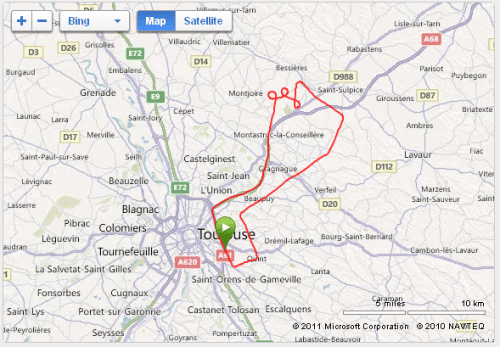
If you click on the map below you will be redirected to the Garmin website where you can read further information about the flight (time of the activity between switching on and off the engine) such as take-off, cruise and landing speeds. Do not pay attention to altitude figures, those reflected by Garmin are the ones of the terrain below (our track footprint).

Route of our flight: LFCL-LFCL

Some more pictures taken in yesterday’s class:

This slideshow requires JavaScript.

Clarification: as we fly two pupils plus the instructor, each time we perform 2 flights, that is why I was siting at the back when I took pictures during flight.

4 Comments

Filed under Aerospace & Defence, Education, France

Toulouse marathon, 10 years later

Finally the 23rd of October came and with it the marathon of Toulouse, an event I planned to run as much as 8 months ago. An event I wrote about twice before in this blog, when I announced that I would run it and on the 23rd of October to publish the funds we raised for the charity I ran for, “Vaincre la mucoviscidose”.

To set the stage, I must say that in January I only had the objective of running some 10km races along the year and subscribing to a half marathon, not necessarily to be run in 2011. But then, on February I started thinking of actually going for a full marathon before year-end. I locked on the Toulouse marathon.

Time went by, and I took part in many races along the year, went from casual running to running a lot, to engaging myself in a formal training plan for the marathon… and to subscribe myself with a friend for an ultramarathon which we completed back in September, a month ago.

In September I completed the half marathon of Toulouse in 1h42’30”, my personal best time ever in the distance, ending with very good feelings. With that reference in mind, and taking into account a “running calculator” that I had been checking from time to time, I had in mind a marathon pace of 5’08″/km for the marathon… that would make a 3h36′ marathon. 24 minutes down from my best time 10 years ago.

One week after the half marathon, a friend and I took part in the 100km of Millau, more than 15 hours of racing. A great experience as I described in the post about it, but it brought some collateral damage in the form of a peroneal tendonitis that hasn’t been healed a month afterwards. During the last 30 days I only ran 3 days: One test prior to the race “Ronde des foies gras”, that race and short test run prior to the marathon.

Knowing that the injure wasn’t yet healed and that I hadn’t trained in a month, I decided to ease a little with the pace for the race: I set the objective in 5’20″/km, that would make a 3h45′ marathon…

Before leaving my home I put a special surgical bandage to strengthen the ankle that had given trouble in the last month. I put some anti inflammatory cream around and took a couple of analgesic pills. Ready for the race.

The marathon started very close to my place so I went to the starting lane jogging, as a warm up exercise. I got acquainted with the departing blocks by times and left my bag to the organization. I started with the group of 3h45′ as was my objective.

The first ~9km went through the centre of Toulouse, already with lots of people cheering in some parts of the city, especially in my neighbourhood, Saint Cyprien, despite of the early departure time.

After the first 10km, and feeling well, I decided to go a bit faster and I went ahead of the 3h45′ group, running by my own, finding another pack of runners going at about 5’10″/km. Everything went fine until km 19 more or less, then I started feeling some stiffnes in the right leg.

The pain wasn’t anymore restricted to the ankle but went up to the outer part of the knee. I managed to keep pace for about 2 kilometres until km 22. From then on, it proved impossible. The leg was not responding. Time was increasing between one kilometre and the next. 5’30”, then 5’50”, 6’30”, 7’00″… You may see the evolution in the following link with the performance along the race recorded by my Garmin GPS.

From that point around km 22 till the end there were some challenges. The first one was the running itself; it was increasingly difficult to move the right leg, but I knew that if I stopped for a few metres walking to calm down the pain it would only get worse, cool down and would be even harder to start again. Another challenge was to defeat the bad mood coming from the fact of knowing that I wouldn’t make the 3h45′ marathon that I aimed at, but would make a time somewhat worse, probably much worse. A final challenge was to get used to the idea of another 17km of pain while running, making some numbers in my mind at some point and figuring out that “ok, it’ll be at most about 1h40′ more of running with this pain, I can handle it”. If I took something from Millau, it was the mind management and coping with pain while running. This time it was less of a challenge.

At some point between km 25 and 27 I was overtaken by the 3h45′ group. One of the guys who lead it told me to try to follow them at the back of the pack. Impossible. I knew they were running at 5’20”, I was wandering at 5’40” by then and worsening. They were like a plane for me.

Later on, in the kilometre 33 I met my friend Juan, who was visiting me in Toulouse during the weekend. He would run the last kilometres together with me. That proved an invaluable help in the form of cheering, small talk, holding some drinks and finally making lots of pictures and videos that you may see below.

By then we were re-entering the city centre and the streets were filled by people cheering the runners. The bibs we carried had our names printed on them. This made people cheering you by your name “Allez, Javier! Courage!”. That was great. If you just had enough strength to run and look at them to thank for it…

By the kilometre 36 more or less I was overtaken by the 4h00 group. I already knew they would pass me, as I was seeing at every moment the times I was making and I had an idea of what final time I could manage. Again, the 4-hour group was like a plane for me, impossible to jump on it. They came at less than 6’/km while I was running at about 7′ by then. But it was only about 6 km to go, at most 40 more minutes. The marathon was almost finished.

I managed my way through the last kilometres seeing that in the end I wouldn’t be above 4h15′, that cheered me up a bit, and when I crossed the 41km line I made a small calculation: if I increased pace I could still be below 4h10′ official time, so I did.

During the next kilometre I increased the pace but still saving some strength to allow my self a last sprint from Wilson square to Capitol, where the finish lane was placed. By then the crowd was almost carrying you, pain was barely felt, the sight was locked on the “Arrivée” sign and the clock below… 4h09’35″… 36″… 37″…

Few more metres of sprint and crossing the line at 4h09’53” (4h08’31” net time), just below the 3rd objective, 25 minutes more than the original 3h45′, almost 10 minutes more than a sub-4-hour marathon. My second best time in a marathon.

On the plus side: I completed again a marathon, 10 years after the last one. The objective from February was accomplished. I could run the whole of it despite the injure and subsequent pain.

Nevertheless, I finished with a bit of bitterness from not having been able to meet my 3h45′ objective, nor the sub-4h one… This teaches me a lesson for the future: when you run a marathon being injured, far from making personal best times, you’ll most probably end up suffering a lot. A lot. After all a marathon is what it is for a reason, and one should never underestimate it. Lesson learned. Now it’s time to finally fully recover from the injure; 2012 will be another season.

This slideshow requires JavaScript.

2 Comments

Filed under France, Sports

100 km de Millau, mi primera ultramaratón

Viernes 23 de septiembre. Recojo a Serna del aeropuerto de Toulouse sobre las 15 horas. Empieza un fin de semana de aventura. De locura.

Antes de dirigirnos a Millau, Aveyron, en el sur de Francia, pasamos por mi piso en el barrio de Saint Cyprien para terminar de preparar las bolsas y comer un poco. Serán al menos 3 horas de viaje, primero por autopista y luego por carreteras nacionales, de dos carriles, donde tampoco podremos ir muy rápido.

De camino a Millau pasamos por Saint Affrique, donde está situada la parada intermedia de la ultramaratón del kilómetro 71. Desde allí comenzamos a ver marcas en el suelo en algunas carreteras, indicando el sentido de la marcha y de vez en cuando el kilometraje. Sin quererlo estamos empezando a reconocer el terreno.

Al llegar a Millau, nos costó algo más reconocerlo. Ni con mapa. Dimos varias vueltas hasta encontrar el parque de la Victoria, prácticamente en el centro de la ciudad, donde se recogían los dorsales y se celebraba la tradicional fiesta de la pasta que hay en las vísperas de las maratones.

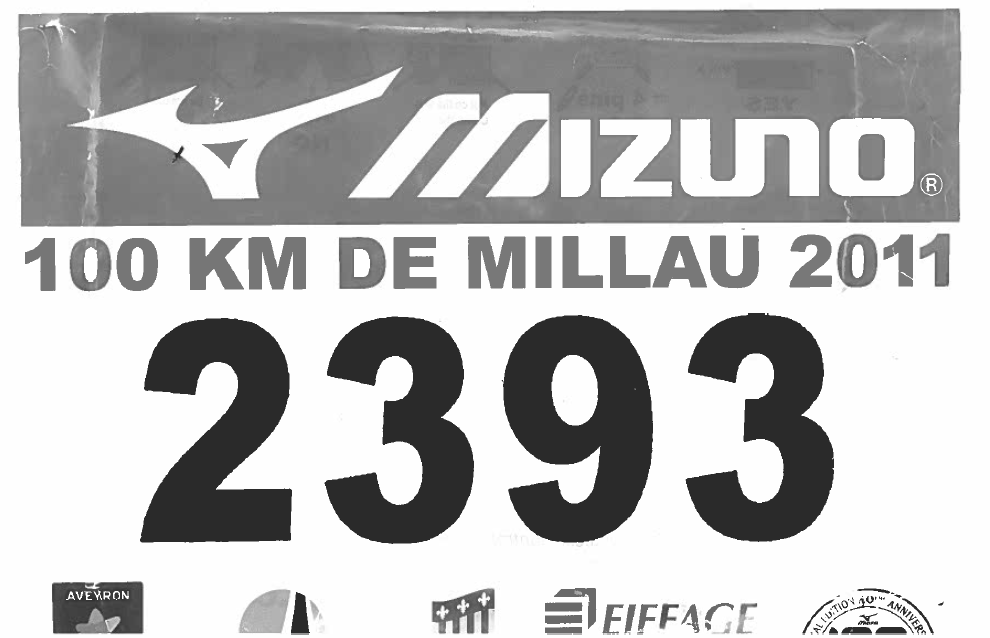
2393 y 2881, serían nuestros dorsales.

Dorsal de Millau.

En la comida de la pasta encontramos, si cabe, el único punto negativo de la organización de la carrera: no estaba incluida en el precio de la inscripción, 55€. Para tomar esa cena a base de pasta la noche anterior había que pagar otros 12€. Una pequeña falta de tacto. En otras carreras está incluido en el precio. Bastaba con subir el precio de la inscripción si hacía falta.

Tras la cena, todavía nos restaba conducir otros casi cincuenta kilómetros por sinuosas carreteras, siguiendo la ribera del río Tarn, en noche cerrada, hasta Meyrueis, donde se encontraba nuestro hotel. Millau y sus alojamientos estaban totalmente ocupados desde mucho antes de que nosotros hiciéramos la reserva. Más de 3200 corredores se apuntaron este año a correr los 100km de Millau, además de otros más de 500 que correrían la maratón que se organizaba al mismo tiempo y en el mismo recorrido.

Antes de echarnos a dormir, pasada la medianoche, estuvimos preparando meticulosamente cuales serían las cosas que dejaríamos en la bolsa a depositar en el km 42, cuales en la bolsa a depositar en el km 71 y con cuales saldríamos.

Llevábamos un arsenal de material: crema solar, gorras, riñoneras, camelbak, pantalones y ropa interior para cada tramo, camisetas técnicas, calcetines y zapatillas para cada tramo, pañuelos, pilas, tiritas, analgilasa y zantac, gel energético para cada docena de kilómetros, sudaderas, cortavientos y forro polar, blackberry, cámara de fotos y bandera de España, guantes, toallas y gel para ducharse en cada punto intermedio, cargador del GPS, algo de dinero y el DNI. Bien parece que nos fuésemos de vacaciones, y lo que íbamos a hacer todo el día era correr y correr. Lo único que no prevenimos fue una botellita de agua que nos tocó comprar en el km42.

Estrategia

Desde hacía semanas, Serna y yo habíamos hablado sobre qué ritmo llevar, qué objetivo marcarnos, etc. La noche anterior todavía seguíamos dándole vueltas. Manejábamos diferentes informaciones: paradas largas con ducha y cambio de ropa, 100km en 13 horas para un corredor de maratón en 4 horas, terminar la maratón fresco…

Yo pensaba que haciendo un ritmo de 7’20’’/km en la maratón y algo más lento después, con dos paradas largas podríamos terminar sobre la 1 de la madrugada, tras unas 15 horas. Serna lo consideraba optimista.

La organización ponía a disposición de los corredores varias “liebres”. Serna y yo nos debatíamos sobre si comenzar siguiendo a algunas de las de 13 horas o a la de 14. Finalmente optamos por una de las de 13.

Logística

El sábado 24 nos levantamos temprano, antes de las 7, para tomar un desayuno en el hotel y poder digerirlo antes de la carrera. Esa noche apenas pude dormir. La incertidumbre, la tensión, las expectativas no me dejaban conciliar el sueño.

Al llegar a Millau conseguimos aparcar el coche no muy lejos del parque de la Victoria. Fuimos andando hasta él y dejamos la segunda bolsa, la de Saint Affrique, en el camión que la trasladaría hasta allí. Luego nos cambiamos y dejamos la otra bolsa, la primera, en el puesto donde se quedaría guardada hasta nuestra vuelta a Millau tras completar la primera maratón.

Una vez listos para correr, nos dirigimos hacia las zonas demarcadas para corredores, desde donde saldríamos dando un paseo por las calles de Millau hasta la salida de la carrera situada en la calle Jean Jaures.

L’autre dimension

A las 10 de la mañana comenzamos la aventura. Mucha emoción contenida en los más de tres mil corredores se libera poco a poco con la salida. Tampoco hubo una gran aglomeración; tardamos menos de un minuto en cruzar la salida. Y no hubo problemas para correr desde el principio: todos íbamos a un ritmo al trote. Al principio en torno a los 6 minutos por kilómetro… de nuevo, una vez más, nuestras estrategias de carrera al garete desde el principio.

Primero nos dijimos que podíamos seguir a ese ritmo más rápido que 7’/km hasta que cogiésemos a la liebre de las 13 horas. Tras cogerla, unos kilómetros después, seguimos a esos ritmos. Eran cómodos. Corríamos “sans difficulté’’, así hasta la media maratón, tal y como decía un periódico local en la edición del viernes al describir el perfil de la carrera.

Esa primera media maratón fue una delicia. Siguiendo por la carretera a Meyrueis, remontando el curso del Tarn, recorrimos 21 kilómetros prácticamente llanos, con unas vistas del valle impresionantes, rodeados de naturaleza y a un ritmo que nos permitía conversar y bromear.

Ravitos

La disposición de avituallamientos durante la carrera y su contenido es algo realmente digno de mención. Tuvimos avituallamiento líquido y sólido cada 4 ó 5 kilómetros prácticamente.  Abundantes y variados. Variados en cada puesto y entre distintos puestos conforme avanzaba la hora del día.

Al principio había frutos secos, uvas pasas, chocolate, plátanos, gajos de naranja, bizcocho, etc., acompañado de agua, coca cola, zumo, bebida energética… Más tarde se fueron añadiendo bocadillitos de jamón, panecillos con queso, con foie, azucarillos, sopa caliente, salchichas, cerveza, café…

Desde el principio, Serna y yo nos prodigamos en los avituallamientos o ravitos. Este será uno de los aspectos a cambiar si alguna vez repetimos y queremos mejorar nuestros tiempos. Pero esta vez, donde no queríamos fallar era en la hidratación y alimentación. Y no lo hicimos. Tanto es así, que en torno al kilómetro 30 le comentaba a Serna que me sentía como el lobo del cuento con la barriga llena de piedras de tantas cosas que había comido.

Suiveurs a vèlo.

A pesar de que Serna y yo corríamos solos, la mayoría de corredores iban acompañados de un seguidor en bici. Los seguidores debían llevar un dorsal al efecto proporcionado por la organización con el mismo número que el corredor.

Los seguidores además de animar y dar un soporte moral, les iban llevando a los corredores diversas bebidas, alimentos, ropa, etc., con lo que en teoría los corredores se ahorran peso en riñoneras o camelbak y se evitan el tener que parar en todos los avituallamientos. De hecho, podrían organizarse para que solo el acompañante en bici se pare, rellene sus botellas, haga acopio de comida y el corredor pueda dedicarse a correr.

Aunque ahora no me imagino cómo se podrían aguantar 13 horas corriendo prácticamente sin parar, seguramente tiene su aspecto positivo dado que no dejas enfriarse a los músculos ni a las articulaciones. Nosotros cada vez sufríamos más tras cada parada al volver a ponernos en marcha. Quizá si no tuviésemos la necesidad de parar en seco unos minutos podríamos continuar con una carrera suave sin tantos dolores.

Los acompañantes en bici esperaban a sus corredores a partir de pasados unos kilómetros, en torno al km 9. Desde entonces, pedaleaban junto a ellos, y lo que ya era una marea humana se convirtió en un continuo de bicis y personas, por lo que a veces se hacía difícil encontrar huecos para progresar.

Se daban ocasiones en que un giro sin avisar, una parada repentina daban lugar a colisiones, pero pasados los kilómetros, el filtrado iba ocurriendo por sí mismo. En el kilómetro 30 ya no había prácticamente problemas de aglomeraciones, en el 50 no había ninguno.

Nosotros en el kilómetro 9 echamos en falta a Pablete, otro compañero de la Escuela, a quien le hubiera gustado participar… quien sabe, quizá haya más oportunidades como ésta.

Maratón

En febrero, hace siete meses, pensaba que mi objetivo del año sería correr la maratón de Toulouse, en el mes de octubre. Es objetivo sigue estando ahí: correr la maratón al ritmo de maratón que me resulte posible aguantar. Sin embargo, el hecho de correr una ultra maratón, tiene el efecto colateral, de que como parte de la prueba se corre una maratón. Y no ha hecho falta esperar a octubre, ya en septiembre he completado mi cuarta maratón, casi 10 años después de la última.

A partir del kilómetro 22 ya estaba corriendo distancias que no había superado desde hacía 10 años y así se lo dije a Serna. A partir de las tres horas y media, él me indicó que estaba corriendo en tiempos inexplorados para él (su única maratón hasta entonces, fue en menos de ese tiempo).

Y así fuimos, subiendo y bajando colinas, a ritmos de 6’20” por kilometro, de un ravito al siguiente, comiendo y bebiendo, hasta que llegamos a Millau y completamos nuestra maratón, en algo menos de 4 horas y 50 minutos. La diferencia es que esta vez, en vez de descanso, nos esperaban otros casi 60km de carrera.

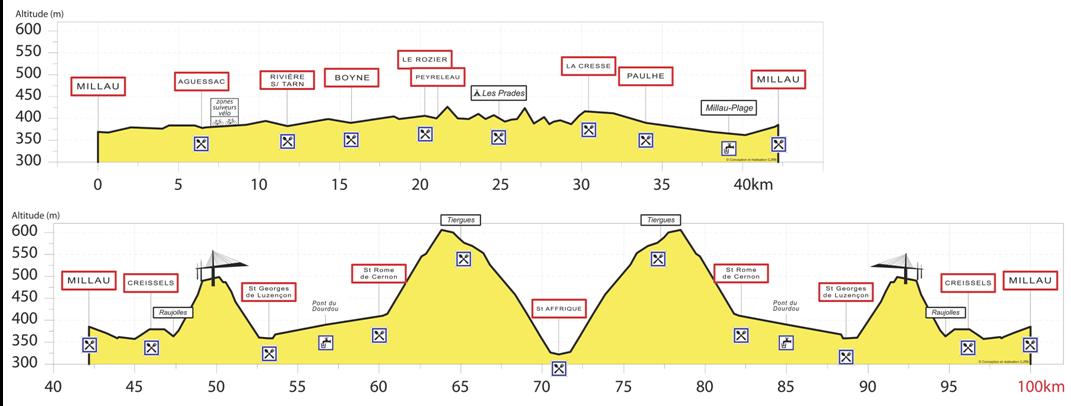
Perfil de la carrera.

Como Serna indicó terminada la carrera, fue una delicia el correr una maratón a un ritmo suave, sin buscar una marca, disfrutando del paisaje y la conversación. Pienso que eso, el quitarse la tensión de la carrera solo puede hacerse cuando la distancia a cubrir es mucho mayor. Solo por ello, el probar una carrera de 100 km, incluso sin intención de terminarla merece la pena, por darse el gusto de probar una maratón relajadamente.

Paradas

Justo antes de entrar en Millau y completar la maratón, la liebre de las 13 horas nos adelantó. Más tarde he sabido, que varios compañeros de la empresa que terminaron en 12 ó 13 horas hasta ese momento iban en nuestros tiempos.

Al llegar a Millau, nosotros seguimos con nuestro plan: comer, hidratarnos, cambiarnos de ropa y ducharnos. Habíamos leído y nos habían dicho que era recomendable, y tampoco teníamos ninguna prisa. Si llegamos sobre las 4 horas y 50 minutos, salimos de allí para continuar con la carrera a las 5 horas y 37 minutos, tras casi 50 minutos de parada.

Psicológicamente nos vino muy bien, y la ducha nos relajó mucho. Incluso íbamos por debajo del tiempo previsto: 5 horas de maratón más una hora de parada. Pero luego nos costó retomar la marcha, nos habíamos enfriado bastante. Igual hubiese necesitado un pequeño masaje, y sin duda menos descanso.

En la parada del km 71, en Saint Affrique volvimos a parar del orden de 45 minutos. Allí no había duchas, pero lo que nos ahorramos en ello lo perdí por un masaje que necesitaba. Si algún día volvemos a correr una prueba similar, esta es otra lección aprendida: se gana y pierde más tiempo en las paradas que en el asfalto, y para ello es necesario contar con un equipo detrás.

Andando

Quizá haya gente a la que oír que en una carrera se hace un tramo andando le suene a derrota, a no haber aguantado. En muchas pruebas se anda en tramos, especialmente de subida. Y andan todos o casi todos. Quizá no anden los primeros, pero ellos juegan otra liga, tienen otra preparación, están hechos de otra pasta.

En muchos trails por el monte se anda porque apenas si se puede mantener la verticalidad, casi se gatea. Otras veces se anda porque se atraviesan zonas de rocas, de troncos. Y otras veces, se anda porque la carrera es muy larga y no tiene sentido quemar todas las fuerzas en un repecho de 2 kilómetros si detrás hay otros 10 en que correr.

En Millau, Serna y yo anduvimos unos 15 kilómetros. Unos 14 en subidas: dos veces hasta el paso por debajo del famoso viaducto y otras dos hasta Tiergues. Los otros metros fueron en llano, cuando la rodilla no respondía, y a 2 kilómetros del final, reservando unas pocas fuerzas para hacer un último kilómetro para recordar.

Otros corredores corrieron más: o porque iban más fuertes, o incluso porque yendo más lento preferían ir más despacio en los llanos y correr todo el tiempo. Otros tantos corrían menos. Caída la noche muchos eran los que ya no podían correr, ni cuesta arriba, ni en llano, ni cuesta abajo. La noche era muy larga y ellos llegarían. Si no en 15 horas, lo harían en 16, 17 ó las que fuese. La heroicidad de Millau no hace distinciones.

Viaducto

Antes de salir de Millau, compramos un par de botellas de agua, y ya totalmente equipados proseguimos la marcha. El discurrir de los kilómetros nos fue llevando al famoso viaducto de Millau.

El viaducto, obra de Norman Foster y Michel Virlogeux, tiene más de dos kilómetros de largo y es el más alto del mundo con casi 270 metros en su punto más profundo. A pesar de lo que yo pensaba, la carrera no lo atraviesa en ningún momento, sino que cruza por debajo de él. En mayo, sí que hay otra carrera popular que lo cruza, pero ésta no.

Viaducto de Millau.

La subida hasta el paso del viaducto es la primera en la que tuvimos que pasar de correr a andar. Andar a un ritmo de 11 minutos por kilómetro, algo más de 5 kilómetros por hora en subida, que no está mal.

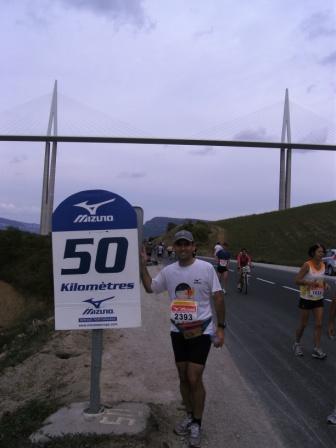
Casi al llegar arriba, echamos a trotar: no podía ser que lo cruzásemos andando, además de que enseguida vendría la bajada y el punto kilométrico 50, parada obligatoria para sacar una de las fotos más recurrentes de la prueba, con el viaducto de fondo.

Dolor

En la bajada del viaducto fue cuando comencé a sentir el primer dolor: flato. Hasta entonces notaba las piernas cargadas, pero era soportable. El flato, en carrera, es prácticamente insoportable. Te obliga a decelerar, pero no quería parar. Seguimos corriendo, más suavemente y forzando una respiración profunda para ver si me recuperaba, y así fue. Poco a poco me fui recuperando, y aunque en otros momentos de carrera sentía un pequeño conato de flato, nunca llegó a reproducirse.

Fue entonces cuando nos cruzamos en carrera con Michaël Boch, flamante ganador de la edición anterior, que iba camino de ganar por segunda vez. Nosotros íbamos por el km 52, y él, ya de vuelta, iba por el 90… lanzado a terminar en poco más de 7 horas, menos de la mitad de nuestro tiempo. Otra liga.

En los siguientes avituallamientos me obligaba a realizar pequeños estiramientos, ya que me notaba acartonado, con poca flexibilidad. Hasta que en torno al kilometro 60 tuve que parar a que me dieran un pequeño masaje para relajar los cuádriceps, bíceps femorales y gemelos. El remedio duró unos pocos cientos metros. Al cabo de unos minutos las sensaciones volvían a ser parecidas: músculos cargados, rodilla muy exigida… la sensación de que un mínimo golpe en la pierna te rompería algo. Estábamos en los últimos metros de los 6 kilómetros de subida tendida antes de comenzar la dura ascensión a Tiergues; segundo momento en el que tuvimos que caminar.

Hasta entonces, habíamos visto alguna ambulancia yendo y viniendo. Unas veces con sirena, llevando a alguien con más o menos urgencia y otras sin ella, buscando gente con problemas. Y es que pasada la maratón, empezábamos a ver más y más personas tumbadas en las cunetas con sus acompañantes al lado. Unos sin fuerzas, otros con dolores, alguno con mareos, hipotermias, etc.

En torno al km 60 nos cruzamos por primera vez con el autobús. La primera vez iba prácticamente vacío. Conforme avanzaba la tarde y la noche cada vez iba más lleno. El autobús recogía a la gente que llegada a Saint Affrique, en el km 71 había dicho basta al sufrimiento. Con todos los dolores que pudiéramos sentir, que fueron muchos e intensos, tuvimos la suerte de no sufrir ninguna lesión que nos impidiera movernos, ni de caer en una cuneta ni nos dejamos vencer por el desánimo hasta el punto de coger aquel fantasmagórico autobús.

Cuando se buscan los límites del cuerpo humano, como en este tipo de pruebas, es muy posible que se encuentren dichos límites.

Mentalidad

La primera subida a Tiergues fue muy dura. Sobretodo mentalmente. Llegaba con varios problemas físicos y todavía quedaban más de 35 kilómetros para meta. Gracias a que Serna venía conmigo, y gracias a que venía más fuerte no cundió el desánimo.

En algún momento llegué a pensar en si dejarlo, pero enseguida me saqué tales pensamientos de la cabeza. Habíamos venido a terminar la prueba. Aunque llevábamos casi 9 horas en la carretera, todavía quedaban 15 para las 24 horas del límite y no teníamos prisa. Al llegar a la cima en Tiergues comenzamos a trotar de nuevo hasta el km 65 donde había un último ravito antes de la bajada a Saint Affrique. Allí pedí que me echasen un sustitutivo del réflex (froid par les genous) y seguimos la carrera trotando, con mucho dolor.

Al cabo de un par de minutos, pensé: “quizá si me dejo ir, yendo a un ritmo más alegre, las articulaciones se calientan y tampoco me va a doler más y llegaremos antes a Saint Affrique. Una vez allí volveremos a subir andando y entonces solo quedarán 22 kilómetros, de los que veremos cuantos puedo correr”.

Los días antes de ir a Millau había leído un relato de un participante en los 101 de Ronda. De cómo anduvo desanimado hasta casi el km 40 y en cierto momento se motivó, sacó fuerzas de donde no había y pasado el ecuador de la carrera se puso a correr y a correr hasta el final. Había compartido con Serna ese relato, y deseaba que algo así me ocurriera. Algo así ocurrió en aquella bajada a Saint Affrique.

A pesar del dolor, bajamos como locos, corriendo todo lo que las piernas nos permitían. Adelantando a todos los corredores que nos encontrábamos. Cada vez mejor. Los dolores se mitigaban por la rabia de llegar abajo y llegar antes de las 20:00, otro hito mental del que habíamos hablado. Y lo conseguimos.

Llegamos a las 19:55. Durante los 40 minutos anteriores, ya sin cronómetro ni GPS, le pedía referencias de tiempo a Serna cada poco. Me iba auto motivando viendo que sí, que lo íbamos a conseguir. Y así fue.

En esa bajada mi perspectiva de carrera cambió completamente. Todavía no habíamos llegado a Saint Affrique, y sabia que no me subiría en aquel bus. Quedaban más de 30 kilómetros, pero me sentía como si solo quedasen 22 y cuesta abajo. Sabía que íbamos a terminar la carrera. A la 1 de la mañana o a las 7, pero llegaríamos a Millau.

Oscuridad

Tras la parada en Saint Affrique comenzamos a correr por las calles del pueblo ya con la linterna frontal en la cabeza, todavía no nos dábamos cuenta de lo imprescindible que iba a ser. Al llegar al borde de la montaña, a las afueras del pueblo, comenzamos a caminar de nuevo, durante más de 6 kilómetros seguidos sin parar. Algo más de una hora. Volvíamos a tener tiempo de hablar.

La noche era cerrada. Solo se veían las luces de las lámparas de los otros corredores. Un par de veces creímos ver un rayo, pero no hubo tormenta, todo lo contrario; la noche era estrellada. Una jornada perfecta para correr.

Pasamos el km 75, seguimos andando y comenzamos a ver a lo lejos el ravito del km 77, que sería el ultimo antes del comienzo de la diversión.

All in

Antes del avituallamiento le dije a Serna, que no sabía cómo me responderían las piernas, pero que intentaría correr de ese momento al final en todos los llanos y descensos. Solo andaríamos la cuesta arriba hasta llegar al viaducto, 2 kilómetros. Para intentar correr de nuevo, en ese avituallamiento me declaré “all in”: pedí que me aplicasen de nuevo réflex en la rodilla, tomé un par de cervezas, un tubo de gel energético, coca cola, dos pastillas de analgilasa y algo de chocolate y roquefort. Si había algo que me podía ayudar a no sentir el dolor y correr, allí lo probé todo, y casi dos horas después de la anterior bajada, volvimos a repetir la experiencia durante otros 4 km. Y luego otros 3, y otros 3… y así fuimos avanzando.

En cada avituallamiento parábamos a rellenar agua y comer un poco. Si acaso beber un café o curar un conato de ampolla, pero ya no más masajes. Intentamos no perder mucho tiempo, no enfriarnos, sino volver al asfalto y correr y correr. Adelantando a la gente. Allí volvimos a correr a 6 minutos el kilómetro. Recuerdo que le preguntaba a Serna por más y más referencias de tiempo. “A ver si a y veinte llegamos al ravito, faltan 3 kilómetros”, y él me decía “¿Tú crees que vamos a 6’/km?”, sí, lo creía. Y sí, íbamos a ese ritmo y llegamos en ese tiempo.

Fueron los mejores momentos del día. Si correr la maratón tranquilos, relativamente frescos, disfrutando del paisaje, hablando, fue una experiencia muy gratificante; correr los últimos veinte kilómetros, sin apenas hablar, con dolor, en completa oscuridad, lo fue todavía más.

Nada nos podía parar. Ni siquiera el contratiempo en el km 88, cuando al salir de ser atendido de los principios de ampollas de los pies, no podía doblar la rodilla. Alarmado, volví a entrar a que me aplicasen réflex. Y al salir caminamos unos 500 metros hasta el comienzo de la rampa al viaducto. Poco más de dos kilómetros. Si en ese tiempo se calentaba de nuevo la rodilla, ya solo nos quedarían unos siete y medio hasta Millau y corriendo como locos o andando estaríamos allí.

Al coronar, volvimos a empezar a trotar despacio y luego acelerar. El mismo proceso de las bajadas anteriores. Pero ya llegando a las calles de Millau. La poca gente que quedaba en las aceras o arcenes nos animaba, “Bon courage!”. Prácticamente nadie corría ya. Se extrañaban al vernos correr con todas nuestras fuerzas y por ello nos animaban. Nosotros se lo agradecíamos y a la vez nos estimulaba a seguir corriendo.

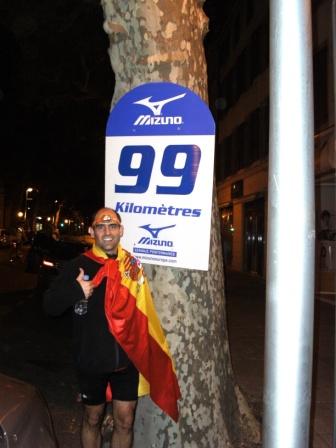
Le preguntaba a Serna referencias. Al paso por el km 95, eran las 00:35, allí ya le dije: “lo siento, no llegaremos antes de la 1”, “¡Qué más da! Ese era nuestro horario más optimista, esta mañana hubiéramos firmado si nos dicen que íbamos a estar aquí ahora”. Los 5 km que quedaban no los cubriríamos en 25 minutos. Los cubrimos en 40, parando en un avituallamiento, andando unos metros tras ponerme una bandera y haciéndonos unas fotos.

Último kilómetro

Unos metros antes le pedí a Serna que anduviésemos unos metros para guardarnos algo para el final. Sacamos la bandera de España que había traído especialmente para estos metros finales. Me la enfundé como capa. Y tras un par de calles, volvimos a trotar.

Cruzamos una zona de bares donde la juventud nos jaleaba. La gente gritaba. Se escuchaba “Viva España”. Nos llevaban en volandas.

Paramos a hacernos la última foto junto al hito del km 99, y proseguimos nuestra carrera hasta el parque de la Victoria. Serna iba fortísimo y le tenía que pedir que se guardase algo para el último sprint del parque, la última subida.

Último kilómetro de los 100km de Millau 2011.

Entramos en el parque donde algunos corredores llegaban andando y nosotros veníamos como aviones, esprintando. Los últimos 300 metros parecían como de una serie de velocidad. No se notaban los casi cien kilómetros que llevábamos en las piernas.

Pasamos por debajo del último arco. Otro empujón para subir a la plataforma metálica que se introducía en el pabellón. Íbamos casi saltando. Últimos 30 metros. Seguimos esprintando hasta la plataforma en el centro del pabellón, donde entramos juntos y tras finalizar nos fundimos en un abrazo.

Lo habíamos conseguido. Habíamos terminado nuestra primera ultra maratón.

Resultado

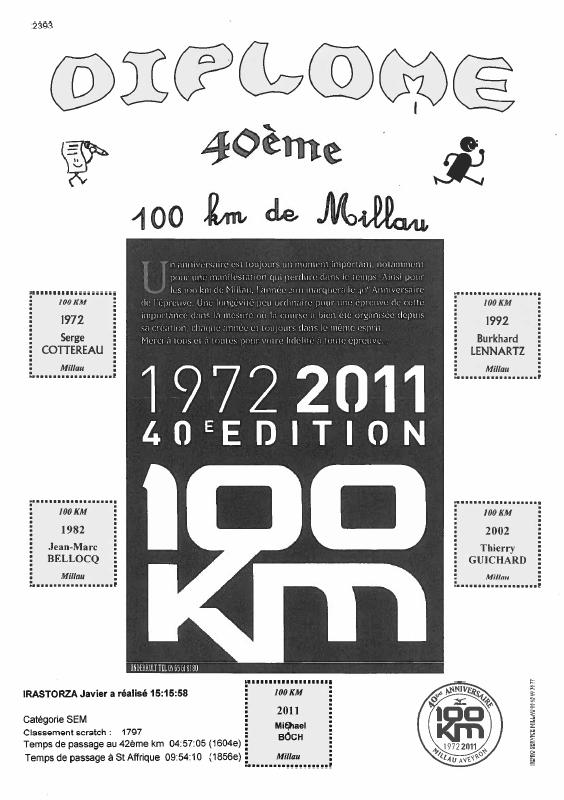
Como siempre digo, el resultado en la clasificación es lo que menos importa, y más en una carrera como esta donde nuestra única ilusión era terminar. Terminamos, luego el objetivo lo cumplimos. Además, conseguimos terminar en 15 horas y 15 minutos, con lo que estuvimos a tan solo 15 minutos de nuestra previsión más optimista. Un masaje menos, 3 avituallamientos más rápidos, un cambio de ropa más eficiente…

Con nuestro tiempo terminamos en las posiciones 1786 y 1787 de los más de 3200 corredores que se inscribieron. Esto nos sitúa en el percentil 44%, en el bloque medio, algo por detrás de la mitad. Si tenemos en cuenta que se retiraron del orden de 800 corredores, de entre los que completaron los 100 km terminamos en el percentil 25%, justo en el último cuarto. Pero esto pone de relevancia ese hecho: terminamos.

De todos modos, alguna vez he hecho la reflexión de que en semejante prueba, tanto coraje exige el terminarla como el retirarse. Los días siguientes a la prueba no puedes entrenar, apenas puedes moverte, y no haces más que descubrir pequeñas o mayores lesiones producidas durante la carrera. El desgaste al que se somete al cuerpo es inmenso. Tomar la decisión de retirarse puede ser sabia, si se quiere evitar un mal mayor. Y por mucho dolor que se tenga, si todavía uno se puede mover es muy difícil aparcar toda la ilusión que uno tiene por terminar y quedarse en Millau al paso de la maratón o subirse al autobús en el km 71.

Terminar puede ser también una decisión difícil. Hace falta mucha capacidad de sufrimiento. Cuando todavía te alejas de la meta, cuando te faltan 35 kilómetros y te duelen las piernas, la espalda, las rodillas y has tenido flato, también hace falta mucha fuerza de voluntad para decir: sigo adelante. La ilusión sigue ahí, pero con la toma de la decisión, sabes que te quedan más de 5 horas de dolor en las carreteras, muchas más si la condición física empeora.

En esos momentos, es cuando se agradecen todos esos pequeños esfuerzos hechos en los meses anteriores y que han ido afianzando la voluntad. Recordaba esas situaciones en que me decía “si no salgo hoy a las 6 de la mañana por dormir un rato más, ¿Cómo voy a continuar en Millau cuando venga alguna adversidad?”.

Famillau

Después de llegar y cambiarnos de ropa, nos quedamos a cenar en el pabellón, repleto de corredores y familiares que estaban cenando, bebiendo, recibiendo a los que llegaban después.

Seguían llegando corredores. De uno en uno, de dos en dos. Un flujo continuo. Paseando entre la multitud estaba el ganador, Michaël, departiendo con unos y otros, más de 7 horas después de haber terminado él. Uno más de lo que vienen en llamar la Famillau, de la que ahora somos parte.

Cada uno de los que estábamos allí nos sentíamos ganadores. Apenas podíamos caminar, nos dolía todo el cuerpo y sin embargo estábamos henchidos de felicidad. Nadie nos podría quitar que habíamos completado los 100 km de Millau, como dice la organización: “Otra dimensión”.

Un sueño nacido de una bravuconada, un año y medio antes. Una experiencia inolvidable un año y medio después.

Diploma 100km Millau 2011.

22 Comments

Filed under France, Sports