Some weeks have passed by since I last wrote in the blog, and today I just wanted to pay homage to Neil Armstrong. In the wonderful obituary dedicated to him in The Economist, he is portrayed as having “engineer’s reserve, mixed with a natural shyness” and someone who didn’t like to be treated as a hero (though as the article goes “the struggle against heroism seemed particularly futile”).
The obituary quotes a self description he made at an address to the America’s National Press Club in 2000 (podcast here):
“I am, and ever will be, a white-socks, pocket-protector, nerdy engineer, born under the second law of thermodynamics, steeped in steam tables, in love with free-body diagrams, transformed by Laplace and propelled by compressible flow.”
I love that description and we may appreciate him even more for his humbleness, but, as the tweet of my brother says, thanks to figures like his, even if due to a collective achievement, there are students that are encouraged to become engineers. Three videos:
The arrival to the Moon…
Neil Armstrong’s address at his college at Purdue University praising the engineering profession:
A nice and short tribute to him I found surfing the web:
Viendo el revuelo producido por las declaraciones donde Cristiano Ronaldo decía que se encontraba triste, no pude más que recordar un par de anécdotas de Alfredo Di Stefano.
Una que recordaba haber leído en internet (“Corazón Blanco“) sobre un telegrama que Di Stéfano envió a Bernabeu que recupero:
Alfredo Di Stéfano regresaba a Argentina, sin fecha de vuelta. La Saeta Rubia envía un telegrama a Santiago Bernabéu, a modo de despedida. La misiva, cuyo original está bastante deteriorado y es casi ilegible, dice: “Don Santiago me voy a mi tierra, no sé si volveré pronto. Nunca en estos años se habló mucho de nosotros. Yo llevé la peor parte. Fue un fenómeno o un gamberro. Si no me acerqué a usted fue porque no quería que creyera que busque un puesto regalado. Por lo menos eso no me lo puede quitar nadie. Lo que gané siempre fue con esfuerzo. Observé que para estar bien con usted había que ser falso. Tuve muchas desilusiones y nadie me dio moral. Usted como padre me falló. Ahí se ve que nunca tuvo hijos porque los padres siempre perdonan. Si no vuelvo más le llegue a usted mi felicitación y mi recuerdo cariñoso. Un abrazo, Alfredo”.
Y la otra sobre su despedida del Madrid, anécdota que leí hace años en su biografía “Gracias, vieja” (libro que aprovecho a recomendar), y que se puede leer en el la web del diario As:
“Muñoz se aferraba a que había que vigilar a Facchetti y nosotros decíamos: ‘¿Y quién agarra a Amancio?’. Amancio era como la luz de rápido y estaba jugando fenomenal. Al final, ¿qué pasó? Que Facchetti no se fue arriba casi nunca en el transcurso del partido… Jugamos el encuentro con uno menos, pero Muñoz me mandó a la mierda y me echaron a mí del club porque lo mandé a la mierda yo también”.
Aquel encuentro fue histórico, puesto que fue la última ocasión oficial en la que Di Stéfano vistió la camiseta blanca. Días después, el Madrid disputó la semifinal de Copa ante el Atlético, pero Muñoz no incluyó a La Saeta en la convocatoria.
Luca wanted to enjoy a weekend out in The Netherlands, I only asked some time during both Saturday and Sunday to run some 8 to 10km each day. We ended up in Papendal: a hotel and sports centre in the country side close to Arnhem.
Papendal centre entrance
At first I didn’t know about it, just what Luca told me “there is forest around where you can run”. Once we arrived she explained to me more about the place and we could read in some posters that the hotel is used by Dutch national sports teams of several disciplines to prepare big competitions such as the Olympics.
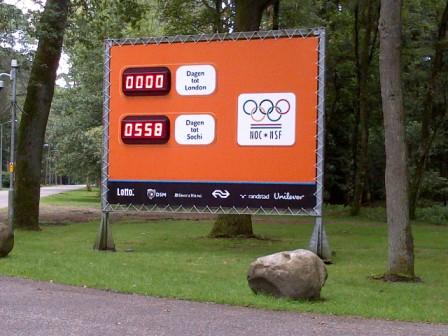
Time to the next Olympics games.
Then, I recalled “I believe that FC Barcelona might have come here as well for summer stages prior to starting the season”. I googled it, and voi là! FC Barcelona has been staged here several times starting as far back as the 70s. I saw an interesting article describing the centre [in Spanish, 237KB] from 1981, when it was already the 4thtime the club visited the centre, in 1982 they repeated the experience and many times afterwards (including one in 1988 when the team captain got himself arrested by Dutch police!). Other Spanish teams have been there as well, e.g. Athletic Bilbao in 2003 & 2007.
Luca & I enjoyed a quiet weekend in which we played again golf, this time in the “Pitch & Putt” installation (close to the Edese golf club), just about 7 weeks after having played in Scotland. The game was entertaining, with some pond and trees in between the holes. We’re already looking forward to play the game in Toulouse.
Playing golf.
Then I could run both days around the installations and in the athletics track. I couldn’t resist the temptation of trying out 400m (1’16”), 100m (15”) and long jump (…m)… though I have to say that after having run 9km each day, the legs are not in the best situation to handle those activities. I’ll have to try again being rested in a track in Toulouse… ideally after Berlin marathon training season is finished.
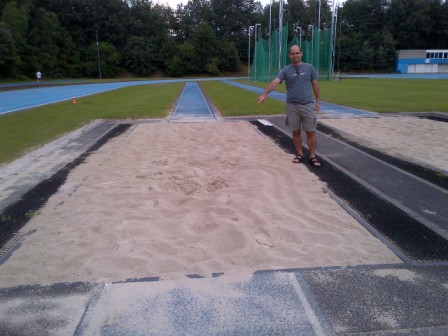
Athletics track where I did some training sessions.
Not that I jumped long, huh?
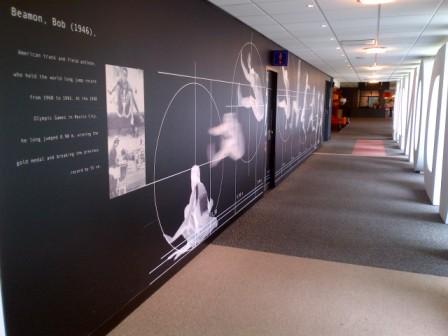
We also enjoyed the sports decoration motives that you can find in several spots in the hotel. They already make you feel in the sportive mood.
This post is the third one of a series describing our flight from Toulouse-Lasbordes to Corsica and back. I recommend to read beforehand the first and second posts of the series.
I dedicated a single post to cover each of the 2 flights that took us to Propriano airfield. I will include in this single post some comments and pictures corresponding to the 3 flights that we needed on the way back to Toulouse.
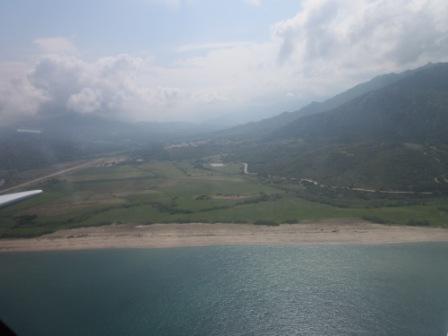
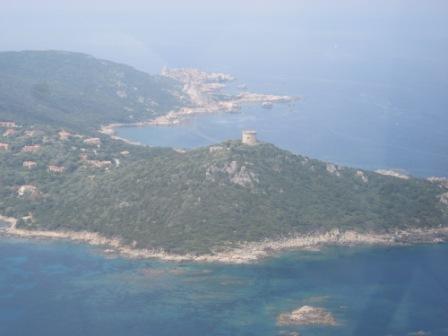
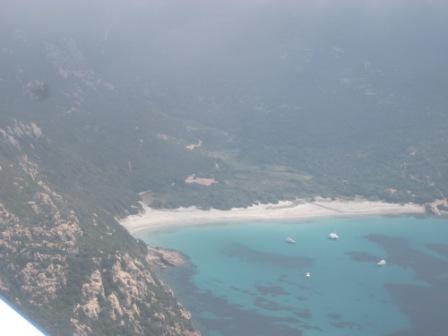
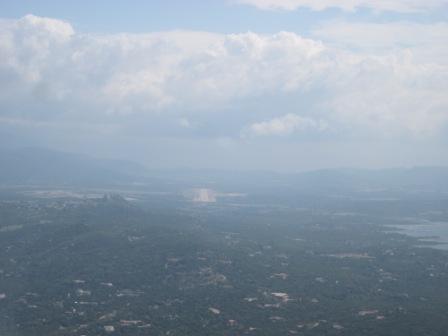
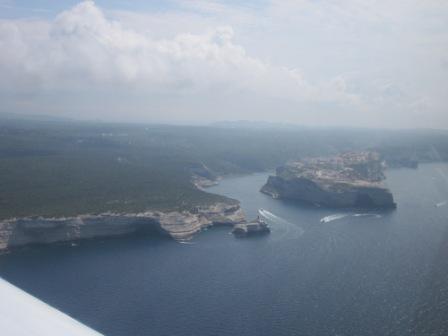
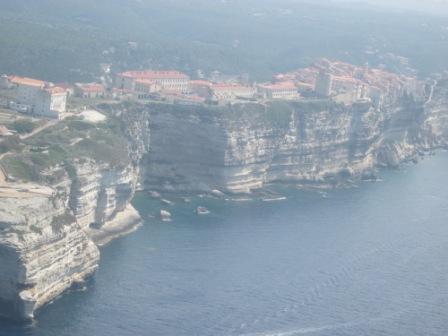
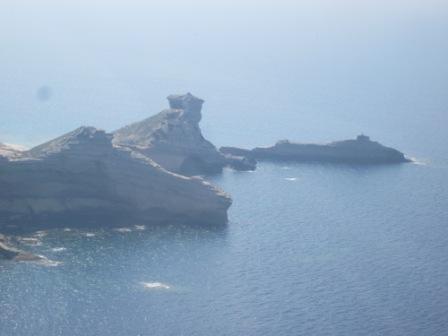
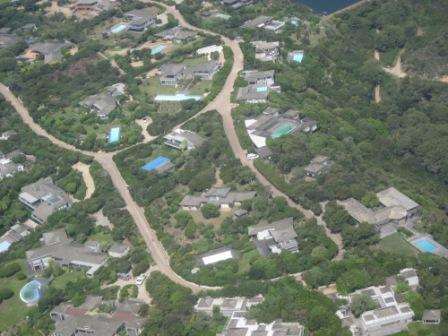
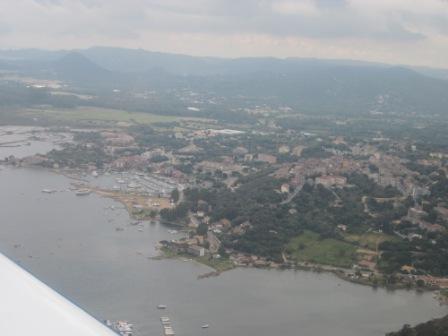
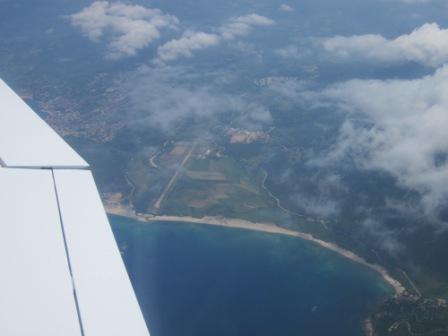
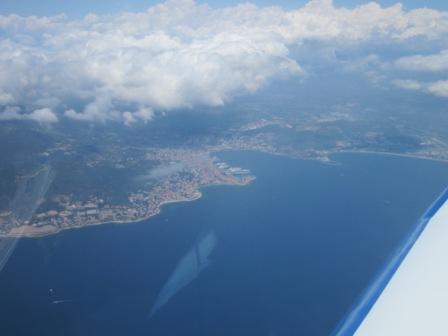
Flight 3 (Asier at the controls): Propriano – Bonifacio – Porto Vecchio – Figari
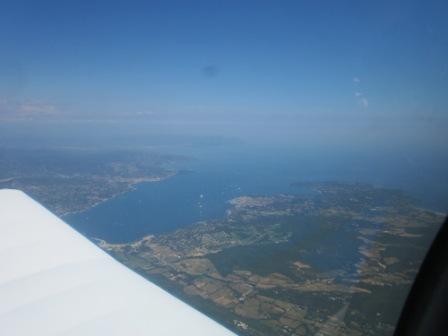
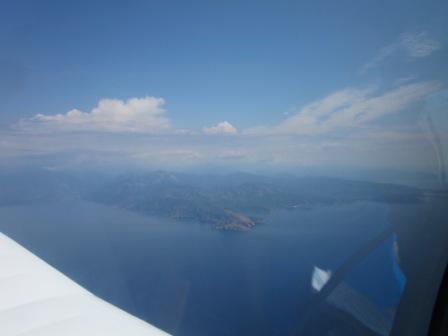
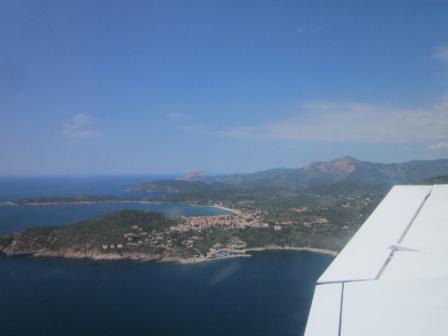
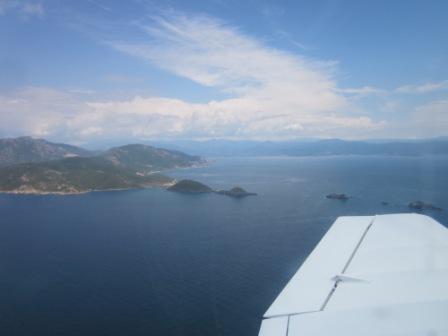
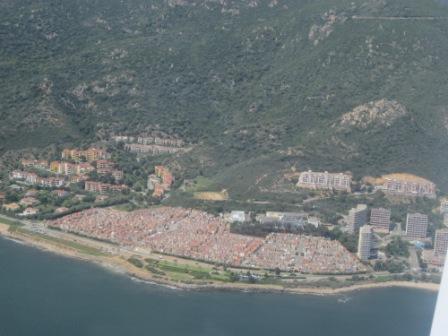
This first flight had 2 purposes: to go to another airport in Corsica where we could refuel the aircraft (Propriano did not have gas station) and to perform a sight-seeing flight around the island. If the weather had permitted it, Jean Louis would have taken us over the mountains. The weather did not permit so, thus we flew over the coast.
I have many other beautiful pictures of Bonifacio, but I believe I will soon write a post entirely dedicated to it. So I can give you a view of the city from the land, air and sea.
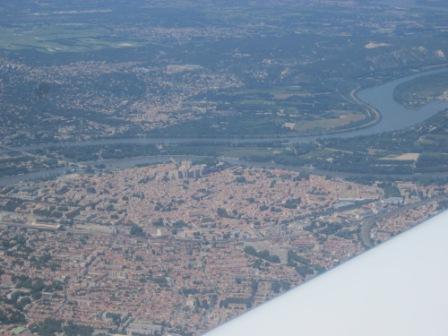
Flight 5 (Javier at the controls): Alès – … Millau… – Montpellier – Béziers – Carcassone – Toulouse Lasbordes
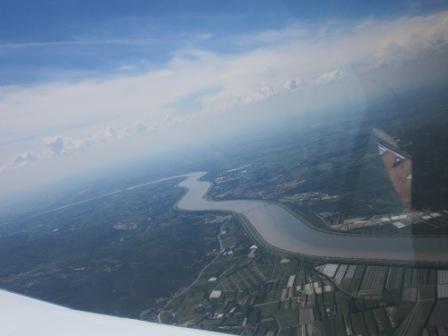
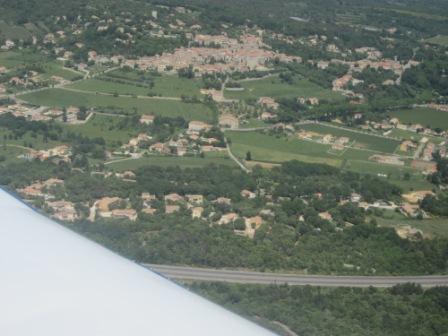
Our original plan was to fly over Millau to see its viaduct (you may see a picture of it in this post about the 100km of Millau). However the weather was quite bad in the mountains between Alès and Millau and we had to change on the spot our plans. Luckily I was flying with Jean Louis who helped me in the preparation of the new route and in buying some time while he was taking the controls.
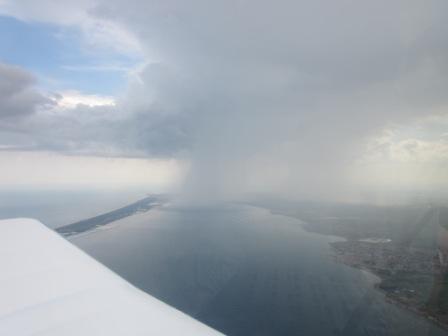
Change of plans due to the bad weather in the mountains, heading south to the coastline, re-calculating the route.
Avoiding further problems ahead (close to Sète).
Mission accomplished :-).
I guess that after seeing these 3 posts you may appreciate the beauty of learning to fly.
This post is a continuation to a previous post in which I described the first leg of our flight from Toulouse-Lasbordes to Corsica. If you haven’t yet taken a look at that one, I would recommend you to do so, as you would miss basic information and dozens of beautiful pictures of the French Mediterranean coast.
In the previous post I included images up until Cuers. There we refueled the aircraft and I took the controls of the aircraft, with Jean Louis (Asier‘s flight instructor) always by our side. This time Asier took the pictures.
Flight 2 (Javier at the controls): Cuers – Saint Tropez – Corsica – Sanguinary islands – Ajaccio – Propriano
the distinction in the horizon between “land” and sky wasn’t very clear thus it was very important to pay attention to the instruments in order not to lose references and keep a horizontal straight trajectory;
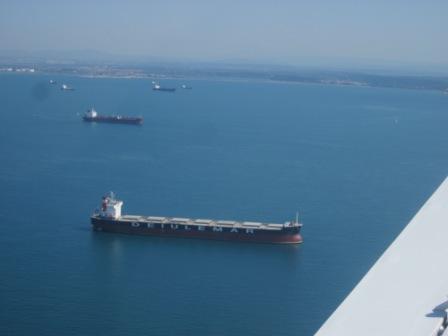
as we progressed we always tried to spot ships down in the sea so in case of accident we would try to reach as close as possible to them, Jean Louis would do a water landing and we could be easily rescued;
we needed to increase altitude up to flight level FL55 (5,500 feet -~1,700m- vs. about 700ft that we held at some times of the first flight along the coast) so we could keep receiving the signals from VOR on ground at the coasts.
First sight of Corsica: Piana.
Flying around the Corsican coastline: Cargèse.
Notice Jean Louis (the instructor) with the life vest on.
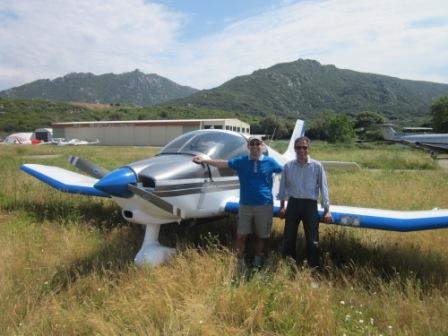
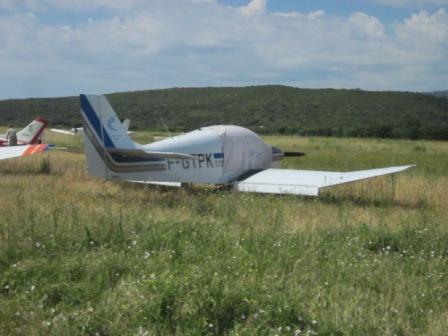
The aircraft, a DR-44, put to rest for the weekend at the airfield.
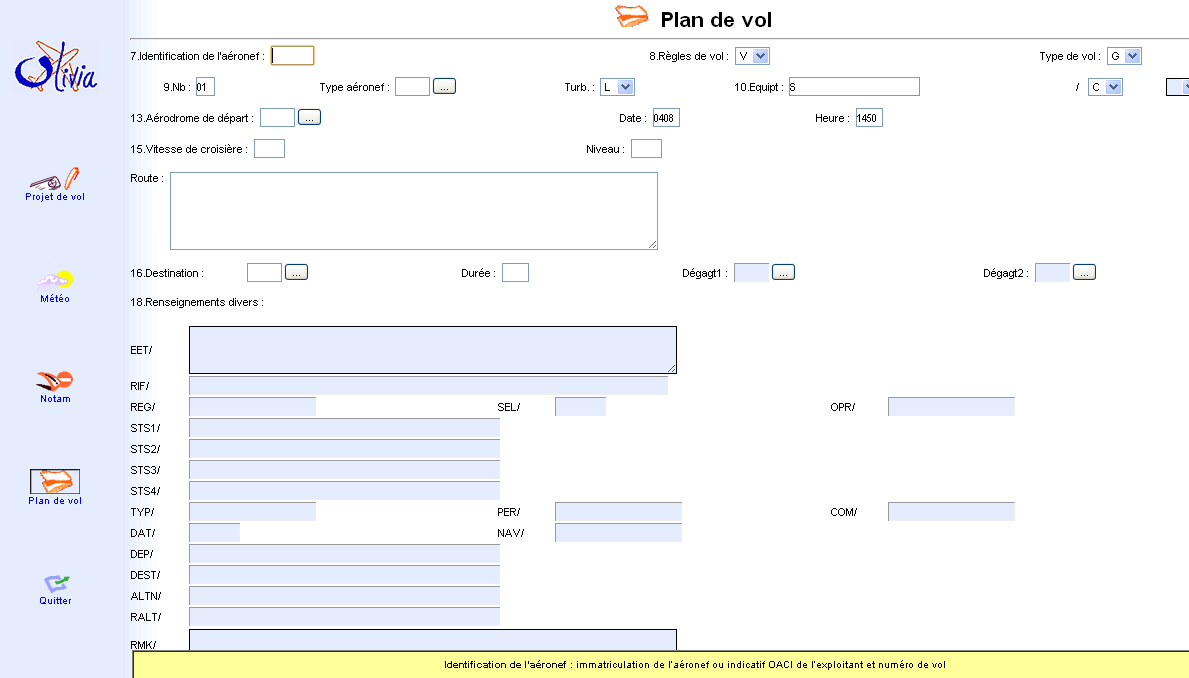
Since we are normally flying within continental France we are not required to produce a flight plan for the air traffic control. This time as we wanted to cross over the sea to Corsica it was required to do so. Thus, this was the first time we prepared one (another learning point!).
“Olivia”, French site where to file a flight plan.
One remark: it is incredible how much eases the communication with air traffic controllers having sent the flight plan beforehand, as they expect you and they know beforehand more or less the information you are going to provide.
And so we made it! We flew from Toulouse to Corsica 🙂
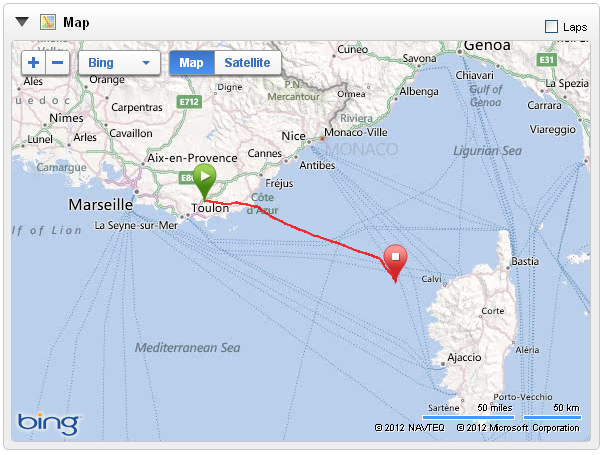
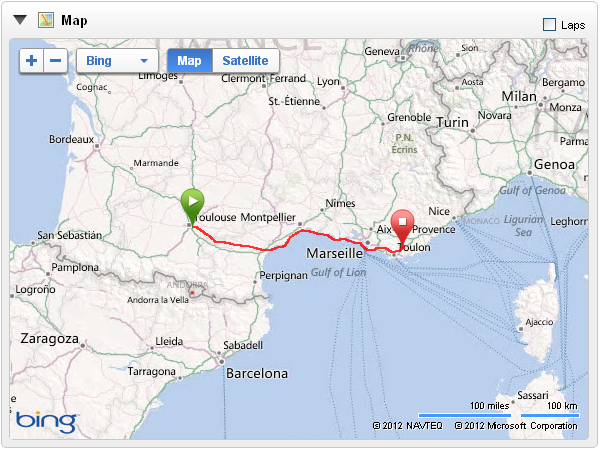
It took us about 4h30′ of flying time (both flights combined). You may check the Garmin records of the first and second flights by clicking on the links, and the route we followed in this second flight in the picture below:
Even though I have mentioned above that we had planned for the contingency of having to water-land in the sea, the fact that the trajectory in the Garmin records stops at half way through Corsica in the middle of the sea does not mean that we indeed carried out such maneuver. Explanation: since we flew so many kilometers as compared to running (the normal use I give to the device), the memory of the GPS reached its maximum as it recorded one “lap” for every kilometer…
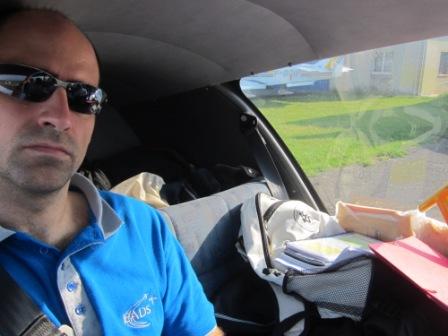
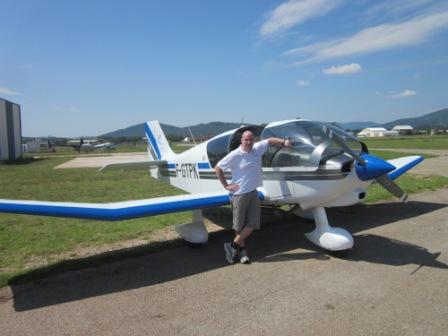
About 3 months ago, my colleague Asier and I went together with his instructor, Jean Louis, to Corsica for a weekend fly out, an activity of our club the Airbus’ Aviation Society.
The experience was terrific in several ways. I learnt a lot about flying and navigation the days prior to the fly out and during the trip. The views along the way by southern coastal France were superb. We enjoyed good weather despite of what had been announced and even found time to do some tourism and trekking in the island. But let’s go back to the flight.
On the way to Corsica, we made one stop at Cuers to refuel the aircraft and change pilot. Asier would start from Toulouse and I would continue to Corsica. On the way back, Asier would fly over the sea all the way to Alès and I would fly over Millau on the way to Toulouse.
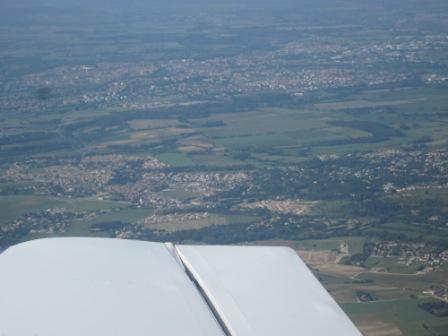
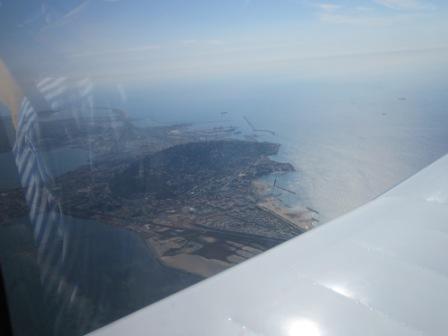
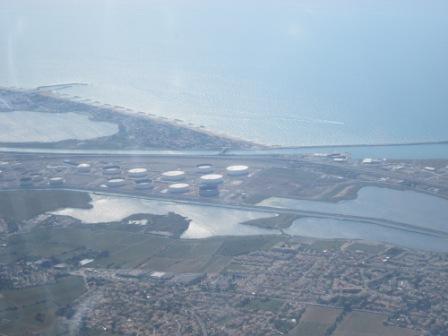
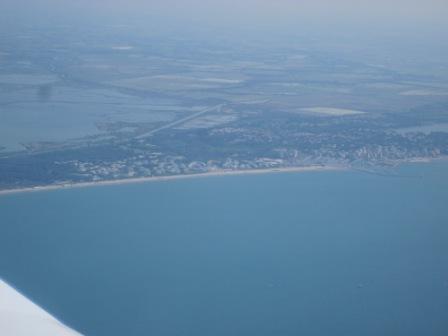
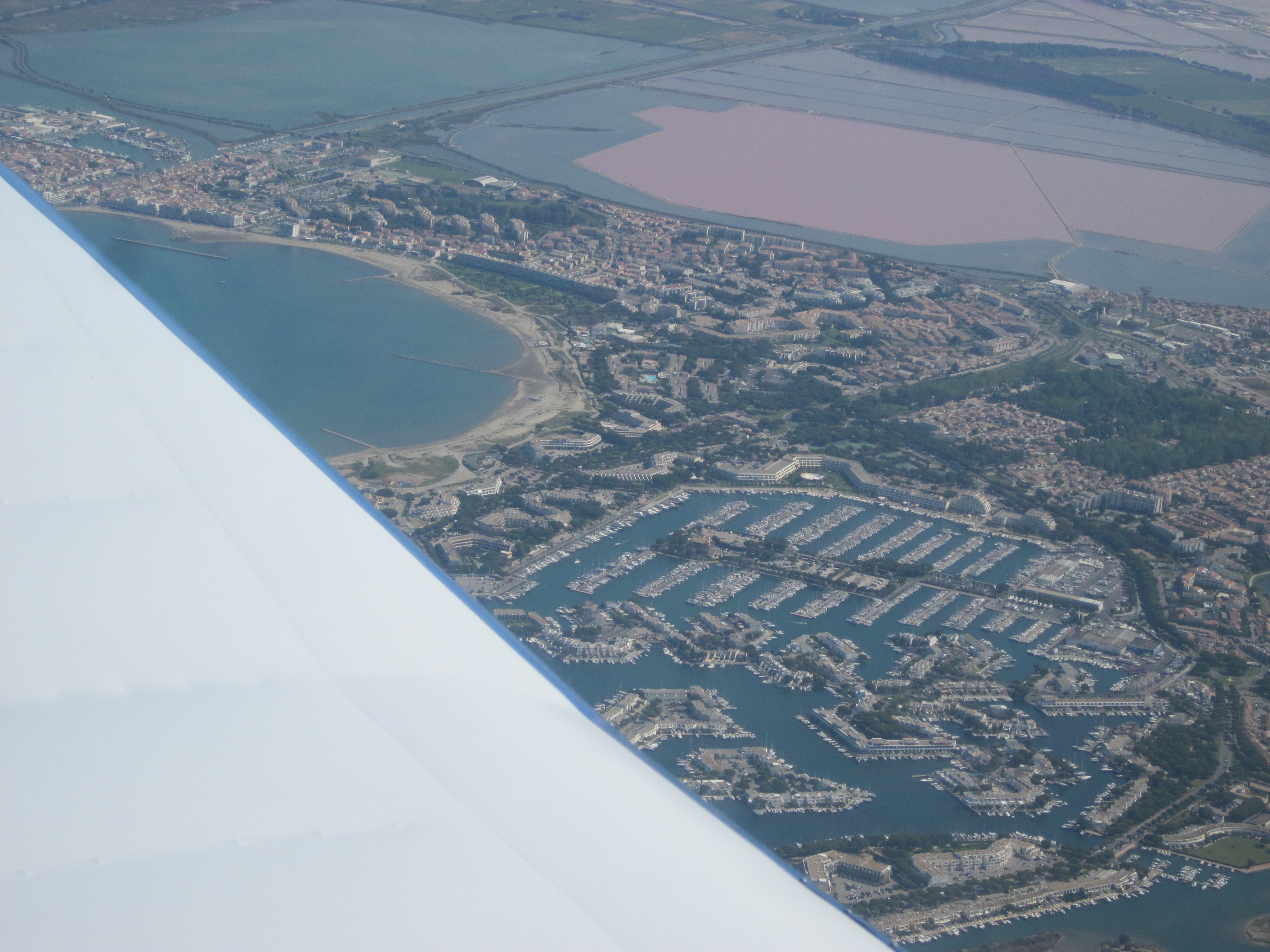
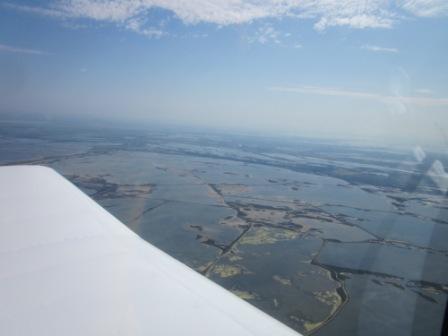
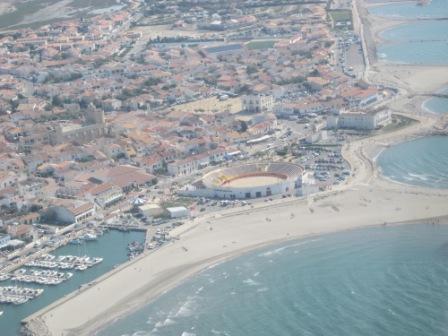
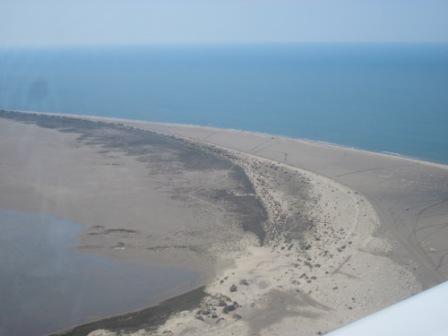
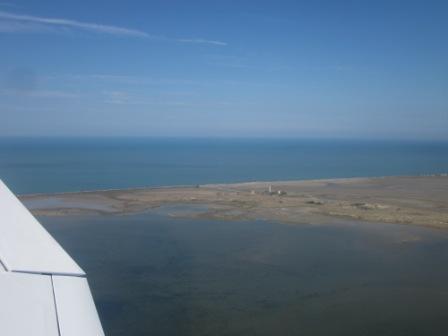
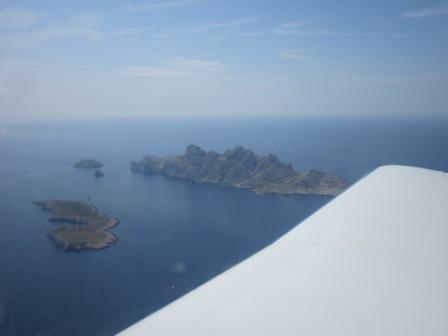
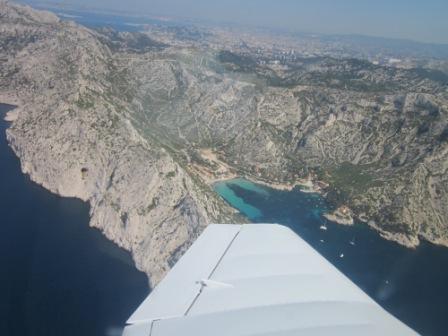
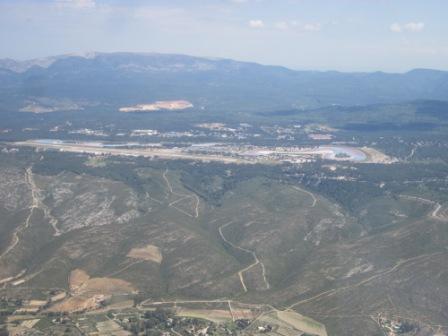
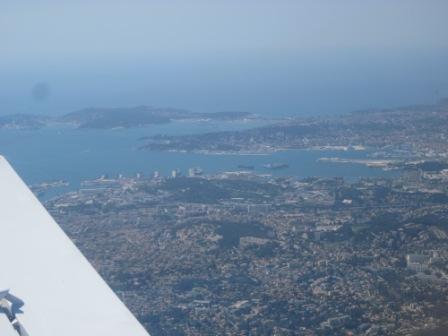
I’ll try to be brief with the explanations and generous with the pictures to give you a flavour of how the French Mediterranean coast looks like. Because of the number of pitures I want to share, I will distribute them in 3 different blog posts, starting with this one dedicated to the first flight.
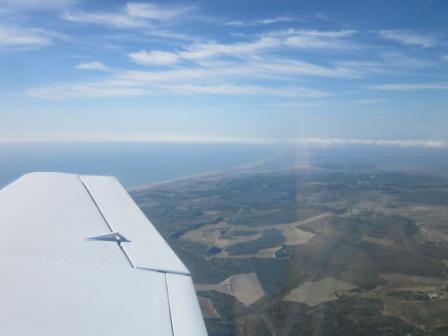
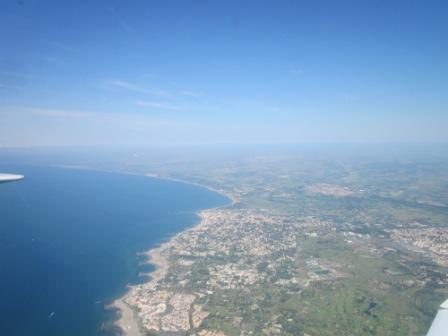
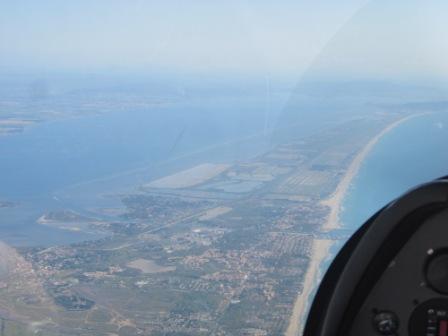
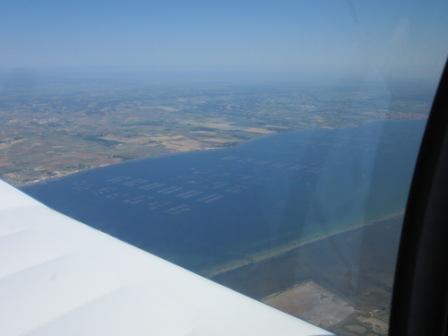
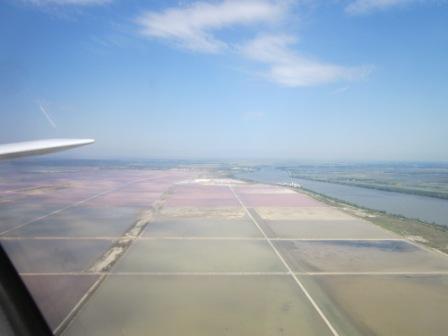
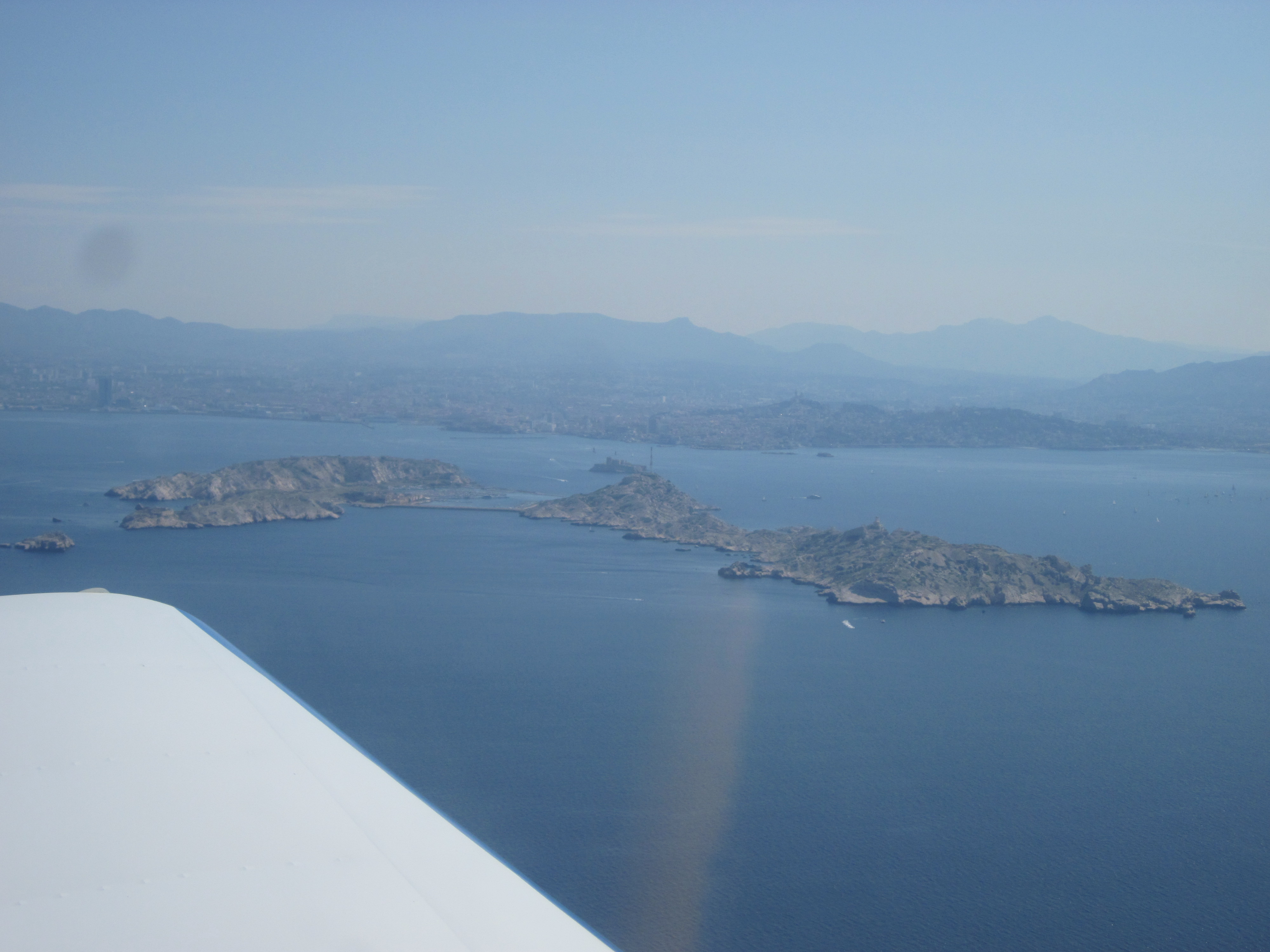
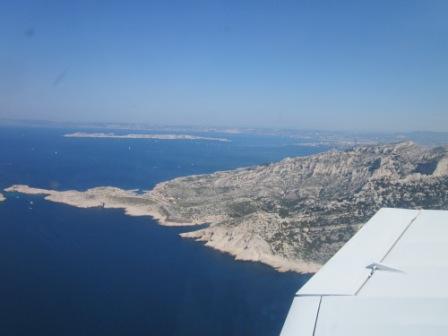
Flight 1 (Asier at the controls): Toulouse Lasbordes – Carcassone – Narbonne – Sète – Montpellier – Saintes Maries de la Mer – Fos-sur-Mer – Marseille – Cassis – Le Castellet – Toulon – Cuers
I encourage you to take a look at a map of France coast at the same time you are watching the pictures and try to identify the places (you may see the route at the bottom of the post as recorded by my Garmin).
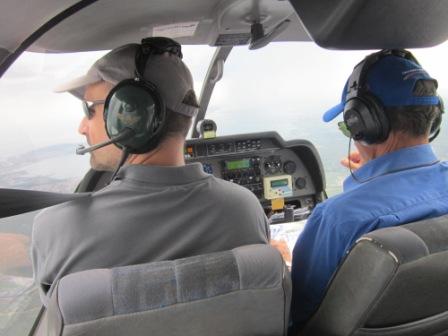
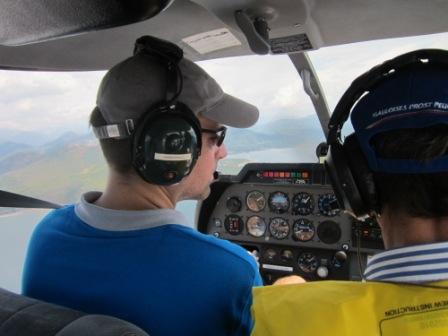
See the life vests (yellow bags) at hand in case of emergency ready at hand. Jean Louis would have his vest always on. In case of emergency he would take the control buying us time to get ours on.
Carcassone from the North.
Narbonne from the North.
Coastline at Cape de Adge.
Peninsula at Étand de Thau.
Seafood plantation at Étand de Thau.
Ville de Sète.
Frontignan.
The touristic village “La grande Motte” built in the ‘60s and ‘70s with its characteristic architecture with forms resembling pyramids.
The intricate Port-Camargue, one of the first “pleasure ports” in Europe, also from the ‘60s.
About a month ago I was struggling to get back into the habit of frequently running. What is more, I had to be starting with the specific training plan for the Berlin marathon (30 September, which I will run together with my friend Serna and my brother Jaime).
At the beginning of July I checked the stats from Garmin connect from the previous year. In July 2011 I had run 283km. I wrote the following tweet to commit myself:
Slowly getting back the habit… in July 2011 I ran 283km… will try to beat that in July 2012… #running
— Javier Irastorza (@javierirastorza) July 5, 2012
In the end, in July I ran 25 days and rested 6. I ran in Toulouse, Sevilla, El Rompido (Huelva, Spain), Madrid and Papendal (The Netherlands). I ran one race in Toulouse, I ran in the beach, did 3 days of treadmill, 4 days of series and one half marathon training. I ran in two different athletics tracks: in Toulouse and Papendal.
And in the end… I completed over 297km, 14km more than in July 2011, fulfilling the objective, setting a new personal record (previous one being 287km from September 2011 – ultramarathon of 100km included) and heading right into the marathon training mode.
Injures permitting: Berlin, see you in less than 2 months.
I started reading the book “Thinking, Fast and Slow“, by the Nobel laureate Daniel Kahneman some months ago, and, even if I am slow progressing with it, I find it extremely interesting.
A recurring topic when reading about how our psychology deceives us is when thinking about probabilities. In this post I wanted to write about a paper he refers to in the book: “The Hot Hand in Basketball: On the Misperception of Random Sequences” [PDF, 1MB], by Thomas Gilovich of Cornell University (1985).
If you have actually made the exercise of coin-tossing several dozens times or have gone several to a casino and watched roulette results, you will believe without effort that seeing long streaks of a certain event (several heads for the coin, over a dozen reds or three 32 in a row for the roulette) is part of the randomness of those games. Basketball players and fans get it consistently wrong when believing in hot hands, and that is precisely what the paper from Gilovich is about and it is a wonderful reading.
It starts with a survey among basketball fans, who no doubt believe in hot hands being behind streaks: 91% believed a player has a better chance of hitting after having converted 2 or 3 throws. They even ventured into assigning probabilities. For a player with 50% in field throws they said the chances of :
hitting after a converted throw were 61%,
missing after a missed a shot, 42%.
Then he studied the performance of Philadelphia 76ers players (Julius Erving among them) during the season, carefully analyzing the chances of a each player hitting or missing a throw after having missed or hit the previous one, two or three consecutive throws. The results are clear, they do not support the existence of such “hot hands”, they are random. In fact, on average, the chances of hitting after a hit were always lower than the field score % of the team while chances of hitting after a miss were higher and higher than the ones of the supposedly hot hands.
He analyzed the numbers of runs (streaks, like the several heads or tails in a row for the case of a coin) and were not different that what could be expected randomly.
He went on to analyze whether the different players had more cold or hot nights than what can be expected by statistics… also discarded.
Of course, in field throws the author understood that there were many variables at play: for instance, if a player had hit 2 consecutive throws the defense might be harder on him… to eliminate those possible factors influencing results, he went to study free throws, in this case taking the figures from Boston Celtics (Larry Bird among them) and NY Knicks. Guess what? No hot hand in free throws either: there were even more players scoring after a miss than the other way around (but again, nothing statistically significant).
He went even further: he made a controlled experiment with college players in which they threw 100 shots from a distance in which their scoring success was 50% (different distance for each one). Throws were made without opposition but from different position each time. Players got paid according to the hits and could bet higher or lower money each time depending on whether they believed that they were having a hot hand… this, again, proved that there were no hot hands and what’s more: players did believe in those hot hands and were completely unreliable in predicting their next throw chance of success.
The paper has only 21 pages: I encourage anyone who likes psychology, statistics or basketball to read it, its wonderful.
I thought that to conclude this post with a funny note, I could link the following short video of Shane Battier’s “clear” hot hand in the first game of this year’s NBA finals:
Impressive, 3 consecutive 3pt-throws converted in the first quarter!
A difference between now and 1985, when the professor wrote his paper, is that now we don’t need to ask the team statistician about the figures, but NBA site records all of them. I went to check what happened to Shane and his hot hand in that match. After those 3 throws converted, he attempted other 3 in that match: he missed 2.
Still, he had a 66% on 3pt throws that night… what could be a hot night. I went to check his percentages during the season and career. During the finals he made a 0.577%, remarkable; during the whole of the play offs, 0.382% in 3pt. And guess what is his average career (13-years) percentage score for 3pt throws: the same 0.382% he showed in the play-offs. That streak you saw was nothing but the random streak expected from Shane.
As I mentioned in my 2011 summary post, I set up some objectives for 2012 during January. This year I have 12 main objectives, each with several milestones or sub-objectives attached to it. And as I did in 2011, now it is time to have a personal mid-year review.
After a bit more than half of the year has passed and as happened to me last year I am behind my objectives, though this time much behind. I’ve met 27,9% so far and I’m lagging behind in practically everyone except for travelling, reading, saving and blogging ones. Despite of what it may seem, I am quite behind the running/sports one! And also behind the continuous learning, languages, and the rest.
The objectives were many and ambitious (some will not be met anyway), but the year still has got 5 months ahead and with the coming of Luca to Toulouse in September many habits will change, let’s see how I do in the final review in December.
I am sure that you have lived awkward situations in a flight. Miscommunications between the crew and passengers or funny messages received from the cockpit. That is precisely the topic of a book I read some months ago.
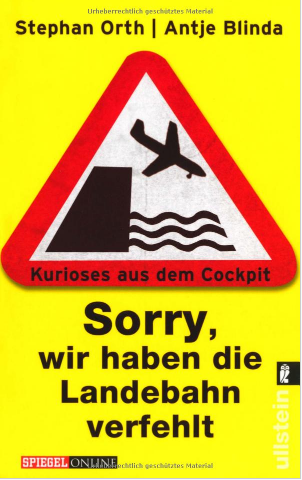
Sorry, we missed the runway
The book originated after a collection of anecdotes posted by readers of the online version of Der Spiegel. Seeing the success of the initiative, the authors, Stephan Orth and Antje Blinda, decided to launch the book with the original German title “Sorry, wir haben die Landebahn verfehlt” (in French “Désolé, nous avons raté la piste”, which is the version I read).
To be honest, what I was looking for it was more a book about serious incidents or accidents, in order to learn about things not to do as a learning activity towards my private pilot licence. Once I started and saw what it was really about I went on for the fun of it (plus the French learning component).
Among the anecdotes, curiosities and messages accounted:
the 747 City of Edinburgh which temporarily lost all 4 engines over Indonesia due to volcano smoke (“We have a small problem. The 4 engines of our aircraft have stopped. We’ll do everything possible to regain control. We hope you’re not very nervous” – they recovered control of 3 engines),
“if you forget anything aboard the airplane you’ll be able to find it tomorrow on eBay” (on a flight Orlando-Sacramento),
despite intuition: chances of surviving an aircraft accident are 70% (in fact, my economy and business administration teacher at the aerospace engineering school had survived 2 accidents!),
(after a heavy landing) “dear Sirs and Madams, please be seated until the captain finishes bringing what is left from the airplane to parking position”,
the following near crash of a A320 in Hamburg due to heavy cross wind and a sudden gust,
I guess that you can get a grasp of the book, though you can read the same stories in the link of Der Spiegel above. Finally, the book includes several sources and proposal further readings, among them: 1001crash.com, which I guess it is more the kind of reading I was originally looking for.





 The Blog by Javier