Flying to Corsica (3/3)

This post is the third one of a series describing our flight from Toulouse-Lasbordes to Corsica and back. I recommend to read beforehand the first and second posts of the series.

I dedicated a single post to cover each of the 2 flights that took us to Propriano airfield. I will include in this single post some comments and pictures corresponding to the 3 flights that we needed on the way back to Toulouse.

Flight 3 (Asier at the controls): Propriano – Bonifacio – Porto Vecchio – Figari

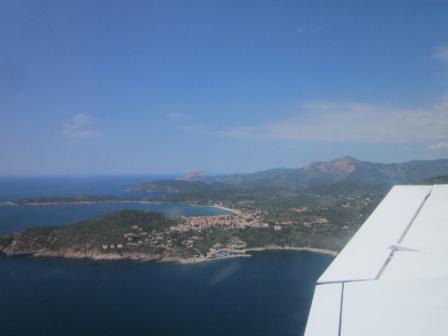
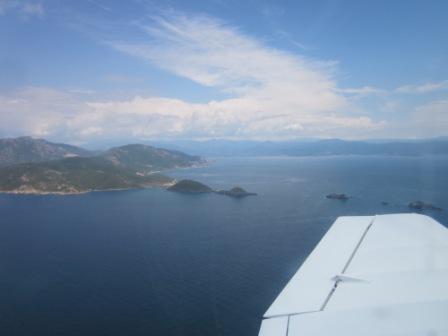
This first flight had 2 purposes: to go to another airport in Corsica where we could refuel the aircraft (Propriano did not have gas station) and to perform a sight-seeing flight around the island. If the weather had permitted it, Jean Louis would have taken us over the mountains. The weather did not permit so, thus we flew over the coast.

Leaving Propriano.

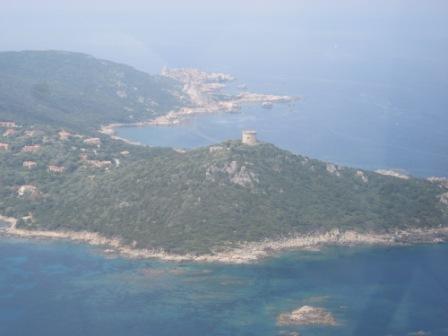
“Torra di Campomoru” at Calanova.

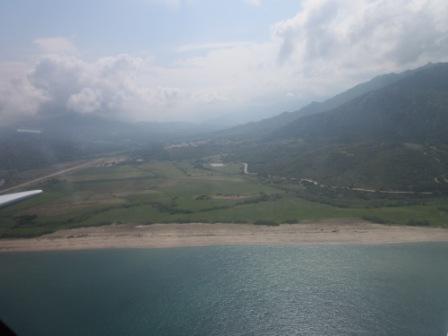
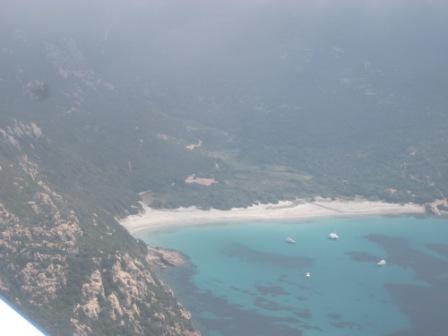
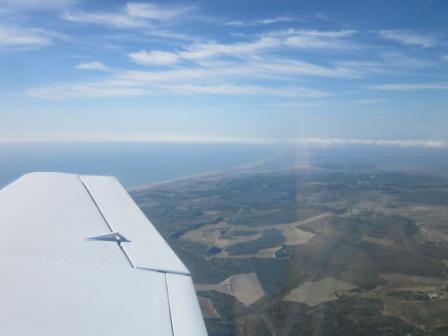
Quiet beach south of Tralicetu.

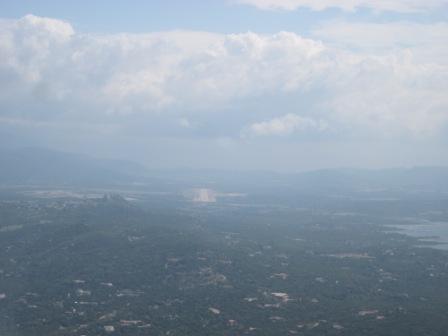
Far sight of the commercial airport of Figari.

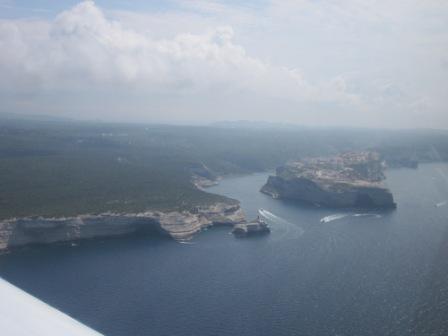
Approaching Bonifacio.

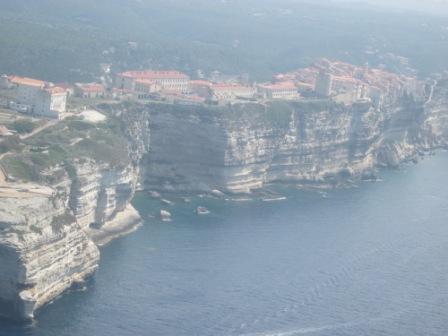
I have many other beautiful pictures of Bonifacio, but I believe I will soon write a post entirely dedicated to it. So I can give you a view of the city from the land, air and sea.

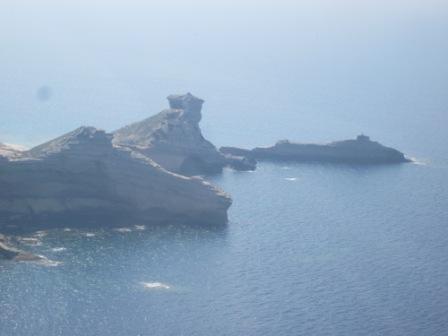
Southernmost point of Corsica.

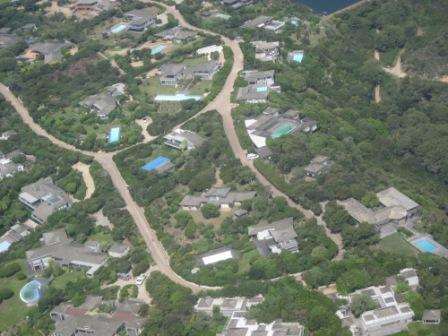
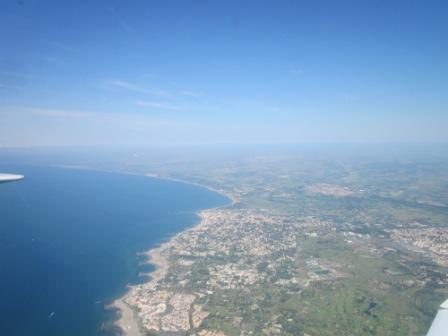
Villas at Sperono.

Flight 4 (Asier at the controls): Figari – Propriano – Ajaccio – Saint Tropez – Avignon – Alès

Having refueled the aircraft at Figari, we commenced our return flight to mainland France, by first bordering again Corsican coast.

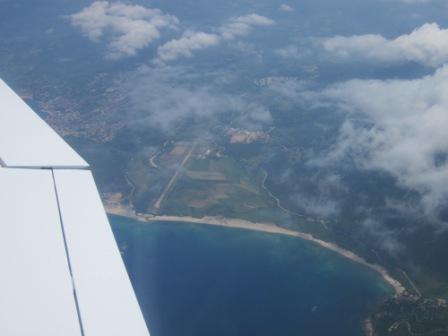
Propriano airfield.

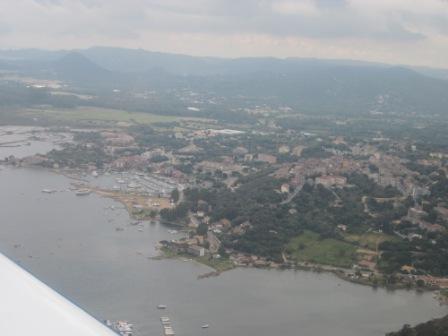
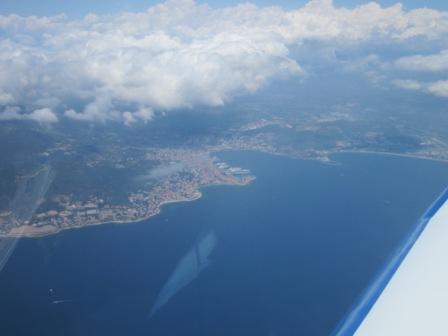
Ajaccio port.

Some hours later…

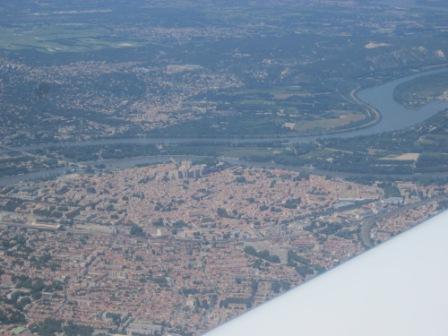
Pope’s palace in Avignon.

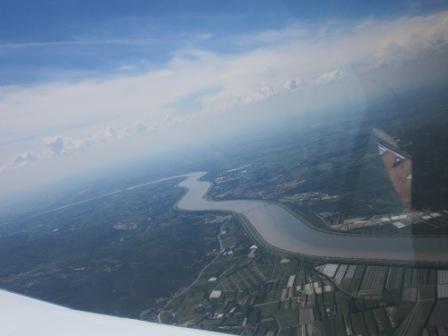
Rhone river at Avignon.

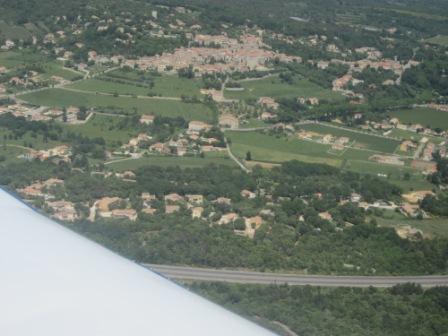
Alès.

Flight 5 (Javier at the controls): Alès –  Millau – Montpellier – Béziers – Carcassone – Toulouse Lasbordes

Our original plan was to fly over Millau to see its viaduct (you may see a picture of it in this post about the 100km of Millau). However the weather was quite bad in the mountains between Alès and Millau and we had to change on the spot our plans. Luckily I was flying with Jean Louis who helped me in the preparation of the new route and in buying some time while he was taking the controls.

Change of plans due to the bad weather in the mountains, heading south to the coastline, re-calculating the route.

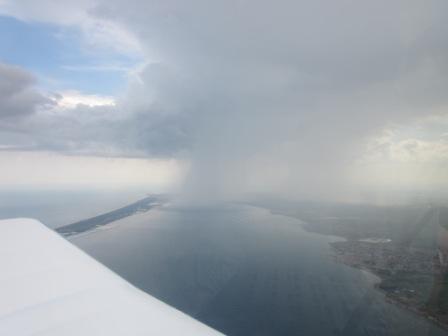
Avoiding further problems ahead (close to Sète).

Mission accomplished :-).
I guess that after seeing these 3 posts you may appreciate the beauty of learning to fly.

Leave a comment

Filed under Aerospace & Defence, Travelling

Flying to Corsica (2/3)

This post is a continuation to a previous post in which I described the first leg of our flight from Toulouse-Lasbordes to Corsica. If you haven’t yet taken a look at that one, I would recommend you to do so, as you would miss basic information and dozens of beautiful pictures of the French Mediterranean coast.

In the previous post I included images up until Cuers. There we refueled the aircraft and I took the controls of the aircraft, with Jean Louis (Asier‘s flight instructor) always by our side. This time Asier took the pictures.

Flight 2 (Javier at the controls): Cuers – Saint Tropez – Corsica – Sanguinary islands – Ajaccio – Propriano

Some curiosities about flying over the sea:

  • the distinction in the horizon between “land” and sky wasn’t very clear thus it was very important to pay attention to the instruments in order not to lose references and keep a horizontal straight trajectory;
  • as we progressed we always tried to spot ships down in the sea so in case of accident we would try to reach as close as possible to them, Jean Louis would do a water landing and we could be easily rescued;
  • we needed to increase altitude up to flight level FL55 (5,500 feet -~1,700m- vs. about 700ft that we held at some times of the first flight along the coast) so we could keep receiving the signals from VOR on ground at the coasts.

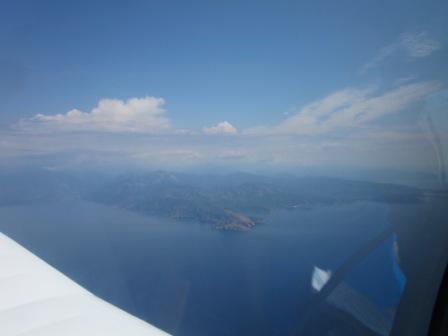
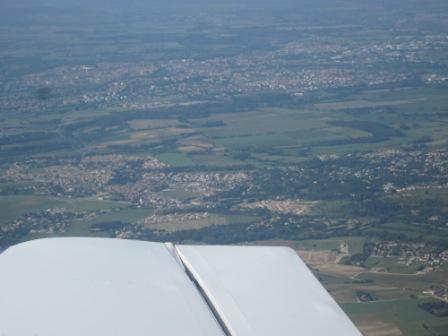
First sight of Corsica: Piana.

Flying around the Corsican coastline: Cargèse.

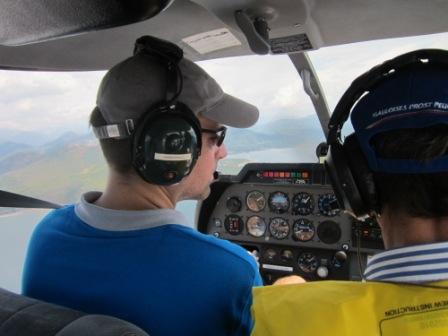
Notice Jean Louis (the instructor) with the life vest on.

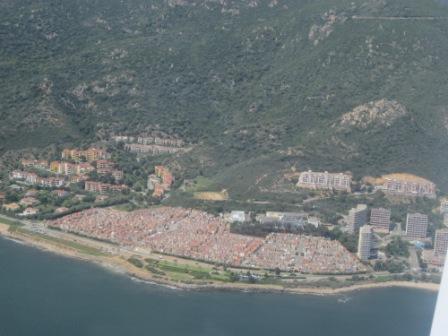
Cemetery of Ajaccio, looking like a village.

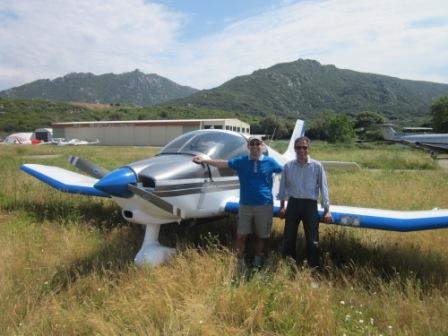
Jean Louis & me, at Propriano airfield.

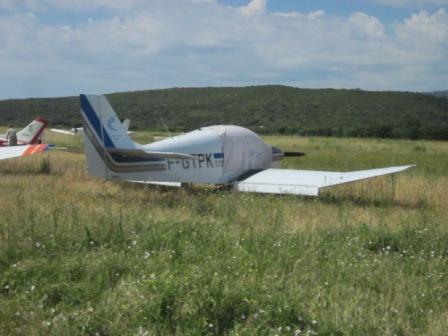
The aircraft, a DR-44, put to rest for the weekend at the airfield.

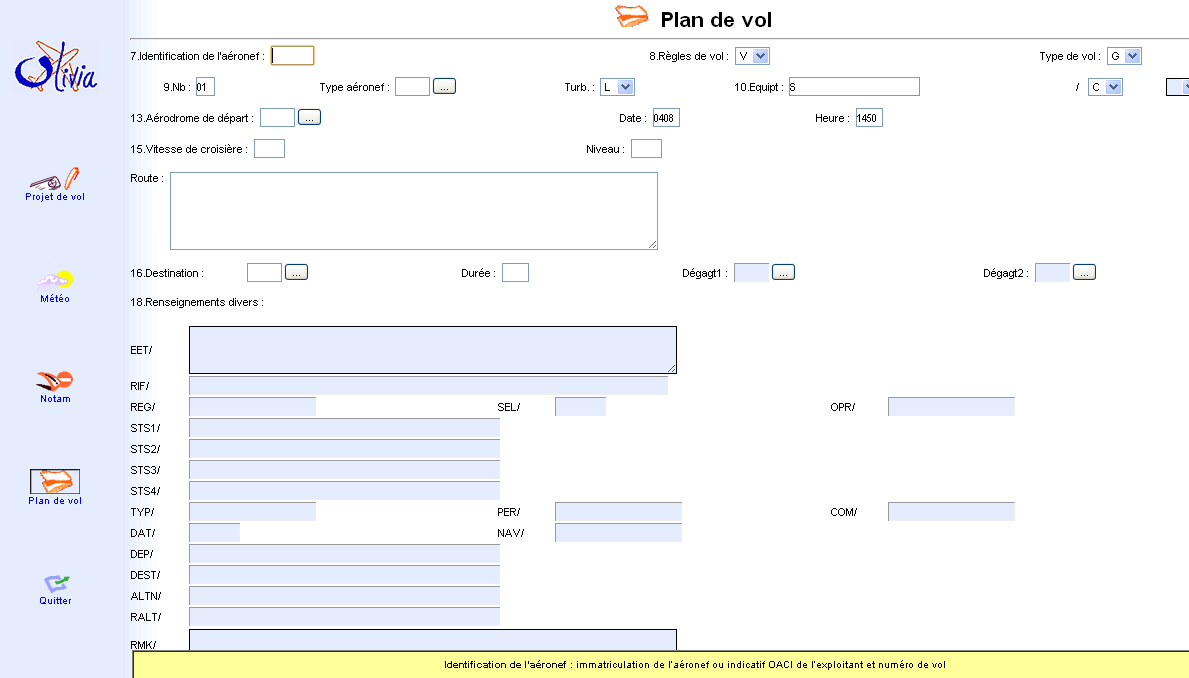
Since we are normally flying within continental France we are not required to produce a flight plan for the air traffic control. This time as we wanted to cross over the sea to Corsica it was required to do so. Thus, this was the first time we prepared one (another learning point!).

“Olivia”, French site where to file a flight plan.

One remark: it is incredible how much eases the communication with air traffic controllers having sent the flight plan beforehand, as they expect you and they know beforehand more or less the information you are going to provide.

And so we made it! We flew from Toulouse to Corsica 🙂

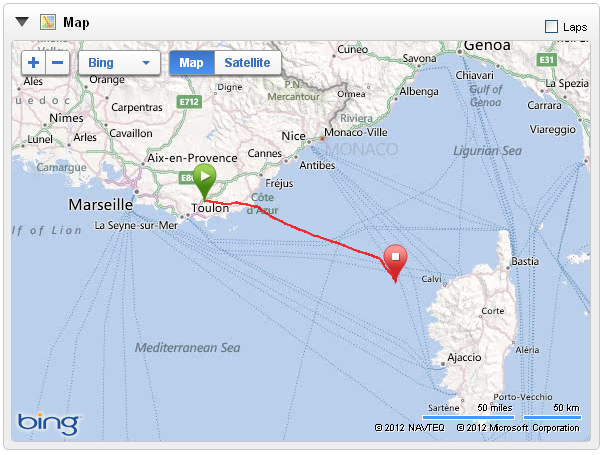
It took us about 4h30′ of flying time (both flights combined). You may check the Garmin records of the first and second flights by clicking on the links, and the route we followed in this second flight in the picture below:

Even though I have mentioned above that we had planned for the contingency of having to water-land in the sea, the fact that the trajectory in the Garmin records stops at half way through Corsica in the middle of the sea does not mean that we indeed carried out such maneuver. Explanation: since we flew so many kilometers as compared to running (the normal use I give to the device), the memory of the GPS reached its maximum as it recorded one “lap” for every kilometer…

(to be continued…)

3 Comments

Filed under Aerospace & Defence, Travelling

Flying to Corsica (1/3)

About 3 months ago, my colleague Asier and I went together with his instructor, Jean Louis, to Corsica for a weekend fly out, an activity of our club the Airbus’ Aviation Society.

The experience was terrific in several ways. I learnt a lot about flying and navigation the days prior to the fly out and during the trip. The views along the way by southern coastal France were superb. We enjoyed good weather despite of what had been announced and even found time to do some tourism and trekking in the island. But let’s go back to the flight.

On the way to Corsica, we made one stop at Cuers to refuel the aircraft and change pilot. Asier would start from Toulouse and I would continue to Corsica. On the way back, Asier would fly over the sea all the way to Alès and I would fly over Millau on the way to Toulouse.

I’ll try to be brief with the explanations and generous with the pictures to give you a flavour of how the French Mediterranean coast looks like. Because of the number of pitures I want to share, I will distribute them in 3 different blog posts, starting with this one dedicated to the first flight.

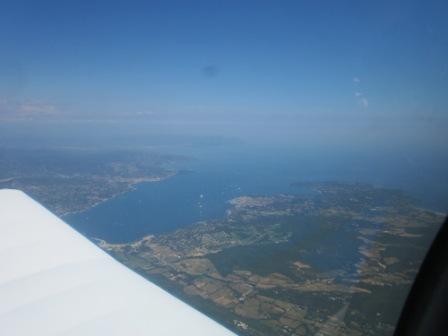
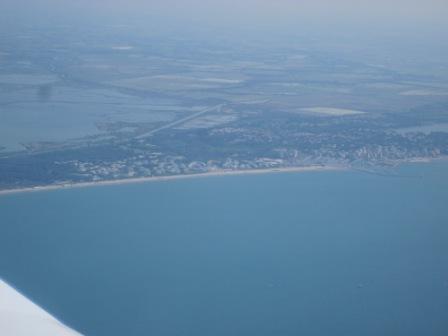
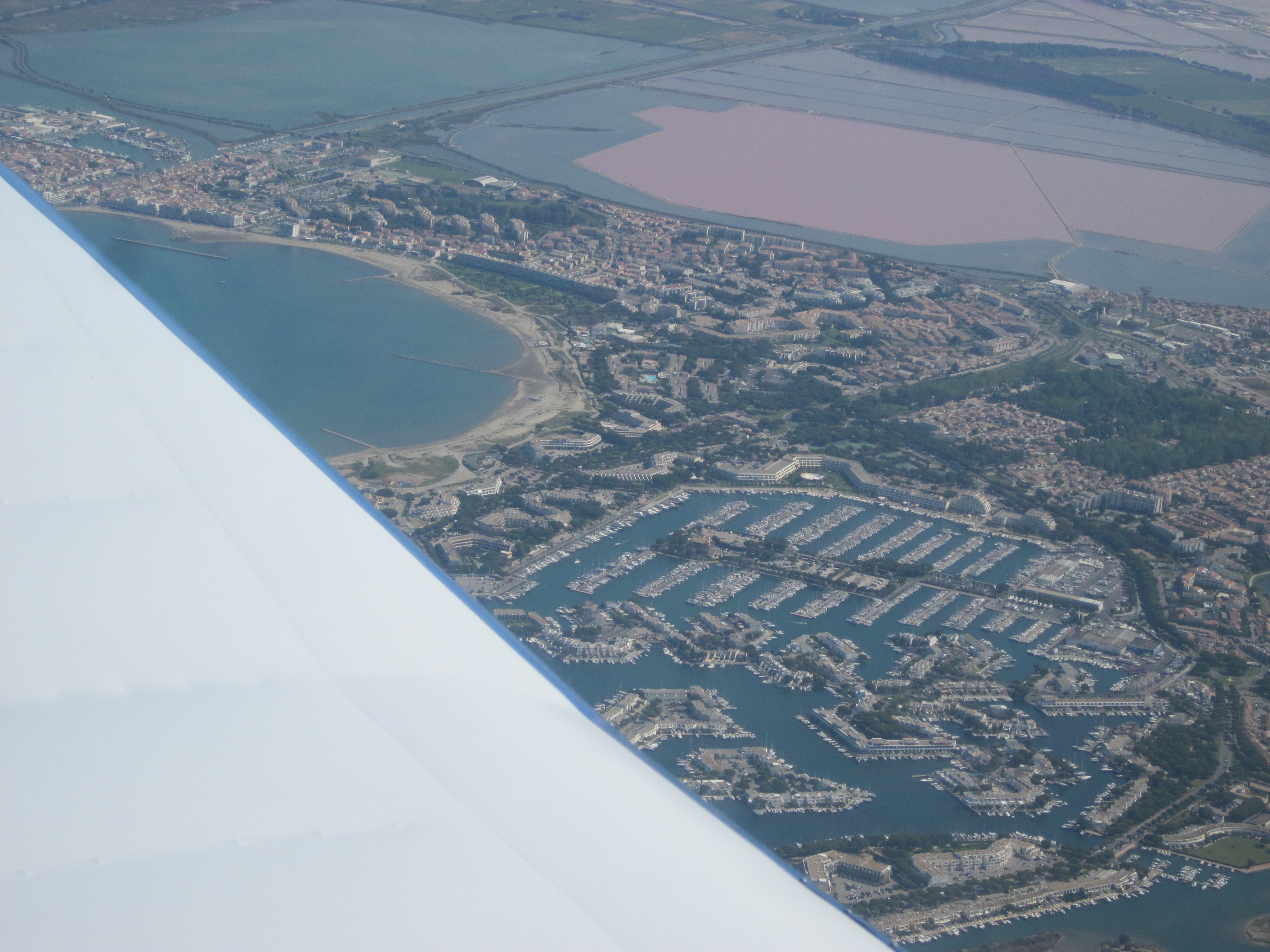
Flight 1 (Asier at the controls): Toulouse Lasbordes – Carcassone – Narbonne – Sète – Montpellier – Saintes Maries de la Mer – Fos-sur-Mer – Marseille – Cassis – Le Castellet – Toulon – Cuers

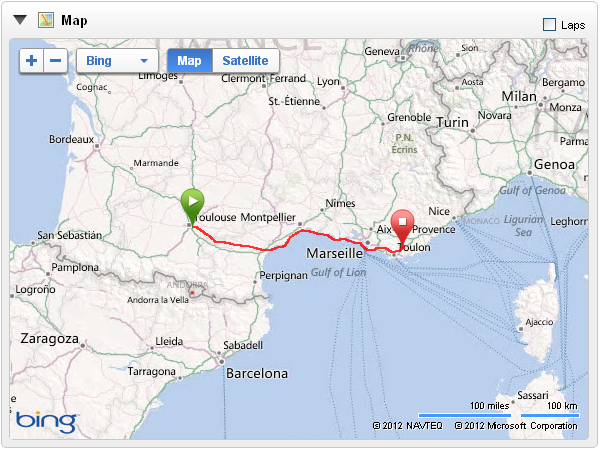
I encourage you to take a look at a map of France coast at the same time you are watching the pictures and try to identify the places (you may see the route at the bottom of the post as recorded by my Garmin).

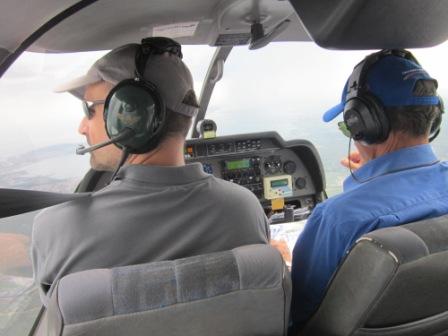
See the life vests (yellow bags) at hand in case of emergency ready at hand. Jean Louis would have his vest always on. In case of emergency he would take the control buying us time to get ours on.

Carcassone from the North.

Narbonne from the North.

Coastline at Cape de Adge.

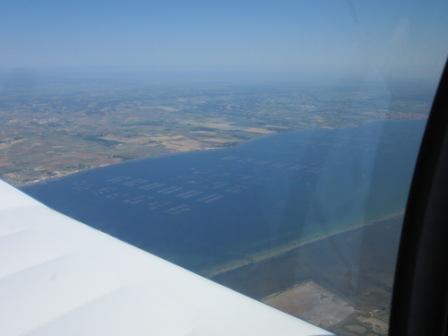
Peninsula at Étand de Thau.

Seafood plantation at Étand de Thau.

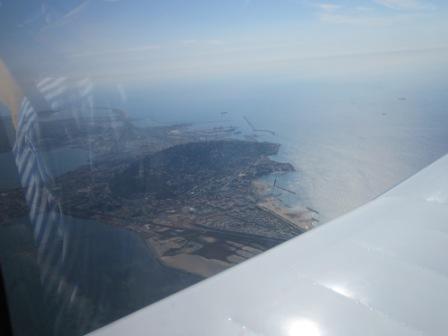
Ville de Sète.

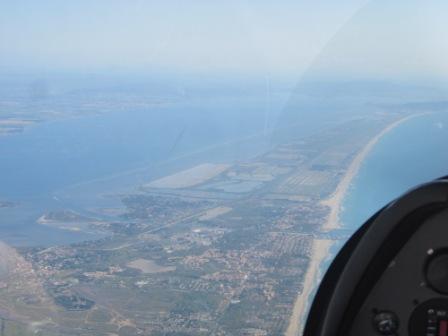
Frontignan.

The touristic village “La grande Motte” built in the ‘60s and ‘70s with its characteristic architecture with forms resembling pyramids.

The intricate Port-Camargue, one of the first “pleasure ports” in Europe, also from the ‘60s.

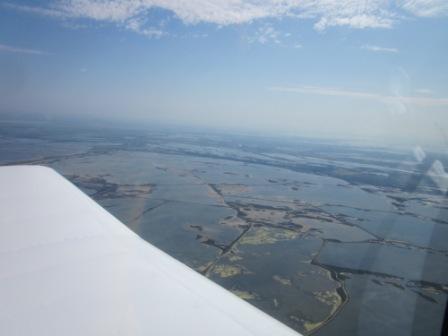
Closed ponds at the mouth of the Rhone.

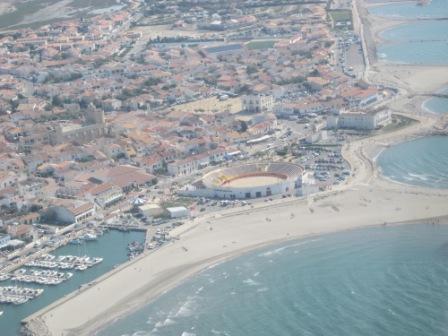
Bull fighting arena at Saintes Maries de la Mer.

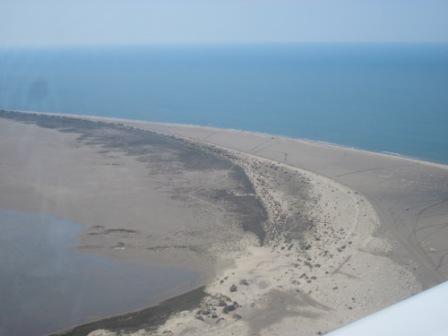
Sands at Lagunes de Beauduc (with its non-paved driveway).

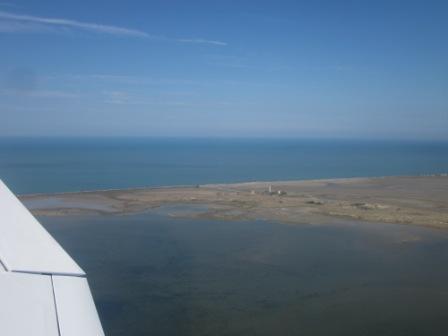
Lighthouse at Lagunes de Beauduc.

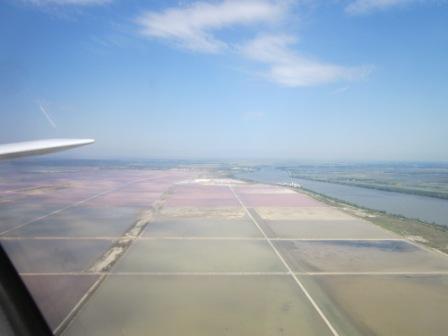
Colourful salt flats at Salins du Giraud.

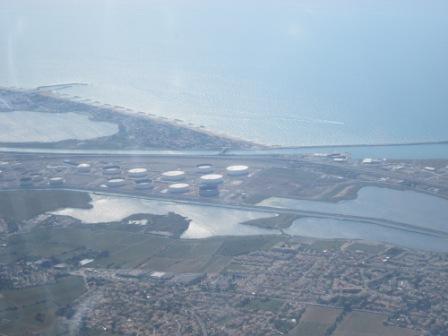
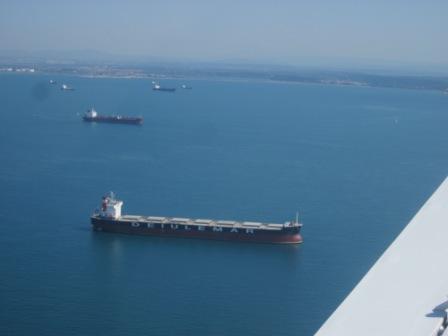
Ships departing from the industrial hub Fos-sur-Mer.

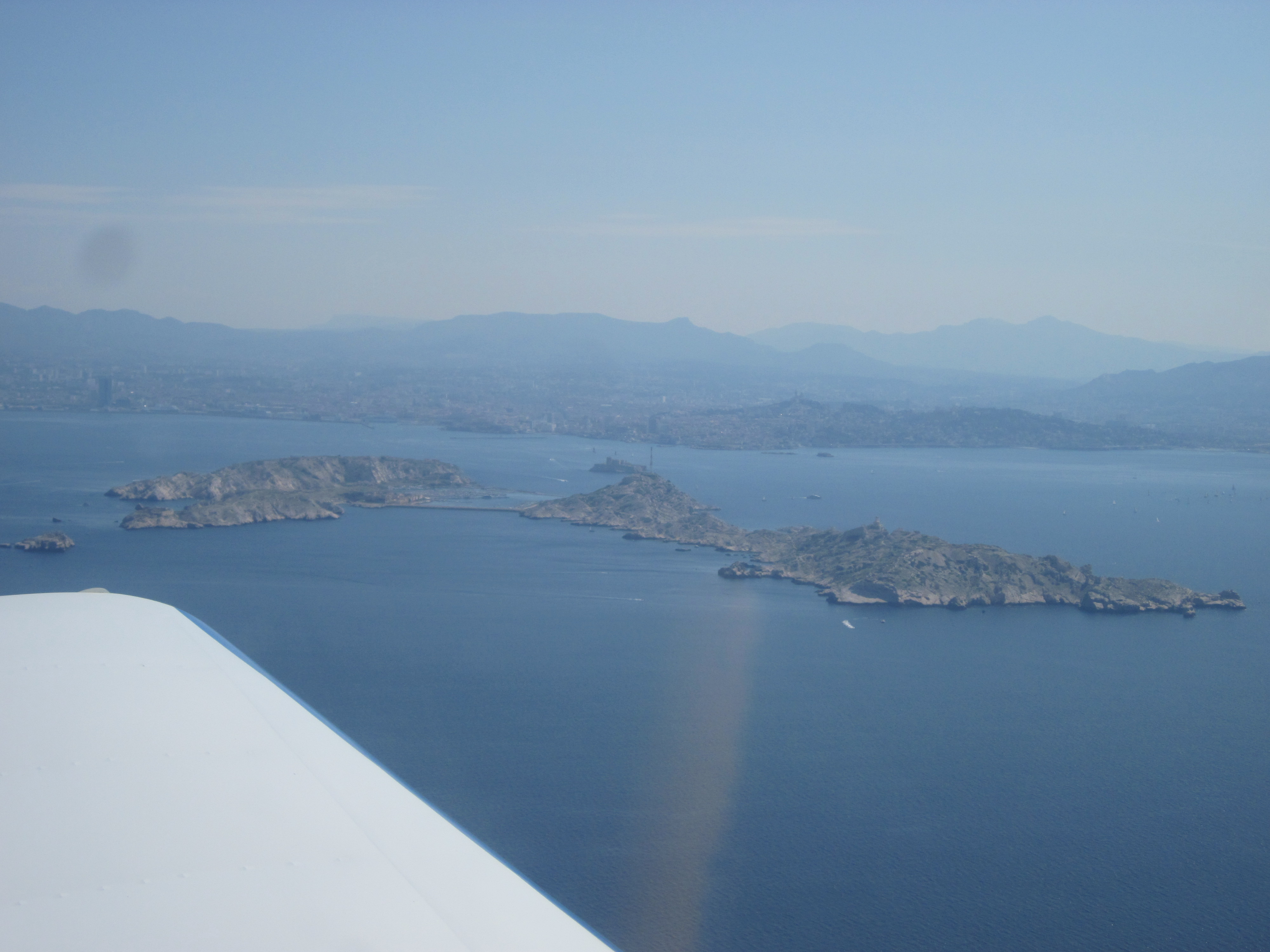
Marseille and “Les Îles”.

Les Goudes and “Les Îles” (past Marseille).

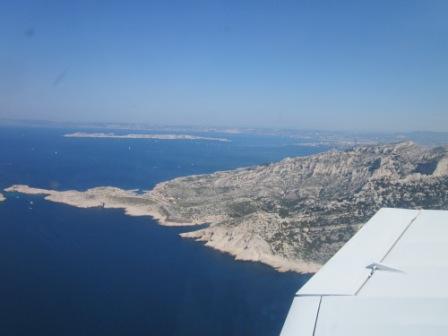
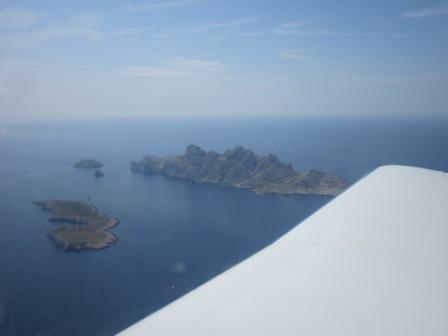
Natural reservation of the “Île de Riou“.

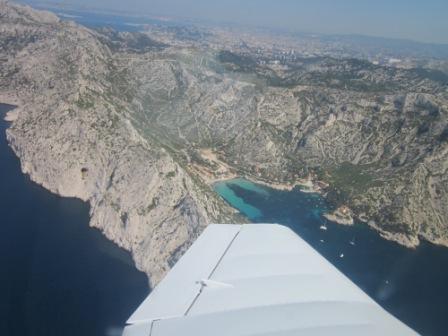
Ideal and quiet spot at Calanque de Sormiu.

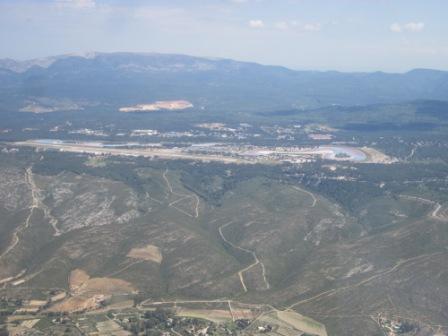
Former F1 “Paul Ricard” racing circuit and aerodrome at Le Castellet.

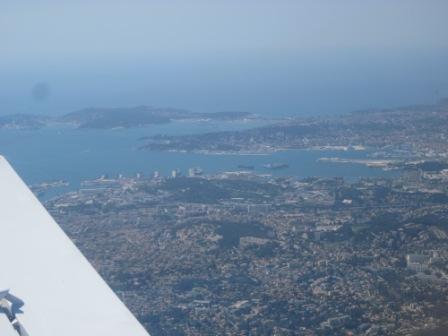
Military port at Toulon (an aircraft carrier can be seen).

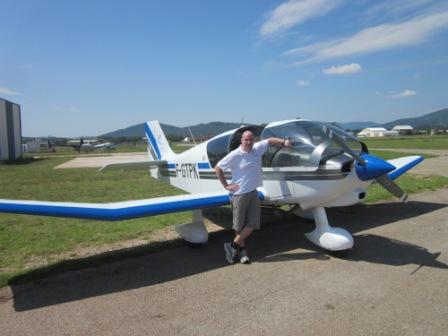
Asier after having flown 2h30′ hours posing side by side our Robin DR-44.

You may check the Garmin records of this first flight by clicking on the link and the route we followed in the picture below:

(to be continued…)

6 Comments

Filed under Aerospace & Defence, Travelling

New high: 297km in July

About a month ago I was struggling to get back into the habit of frequently running. What is more, I had to be starting with the specific training plan for the Berlin marathon (30 September, which I will run together with my friend Serna and my brother Jaime).

At the beginning of July I checked the stats from Garmin connect from the previous year. In July 2011 I had run 283km. I wrote the following tweet to commit myself:

In the end, in July I ran 25 days and rested 6. I ran in Toulouse, Sevilla, El Rompido (Huelva, Spain), Madrid and Papendal (The Netherlands). I ran one race in Toulouse, I ran in the beach, did 3 days of treadmill, 4 days of series and one half marathon training. I ran in two different athletics tracks: in Toulouse and Papendal.

And in the end… I completed over 297km, 14km more than in July 2011, fulfilling the objective, setting a new personal record (previous one being 287km from September 2011 – ultramarathon of 100km included) and heading right into the marathon training mode.

Injures permitting: Berlin, see you in less than 2 months.

3 Comments

Filed under Sports

There are no hot hands in basketball

I started reading the book “Thinking, Fast and Slow“, by the Nobel laureate Daniel Kahneman some months ago, and, even if I am slow progressing with it, I find it extremely interesting.

A recurring topic when reading about how our psychology deceives us is when thinking about probabilities. In this post I wanted to write about a paper he refers to in the book: “The Hot Hand in Basketball: On the Misperception of Random Sequences” [PDF, 1MB], by Thomas Gilovich of Cornell University (1985).

If you have actually made the exercise of coin-tossing several dozens times or have gone several to a casino and watched roulette results, you will believe without effort that seeing long streaks of a certain event (several heads for the coin, over a dozen reds or three 32 in a row for the roulette) is part of the randomness of those games. Basketball players and fans get it consistently wrong when believing in hot hands, and that is precisely what the paper from Gilovich is about and it is a wonderful reading.

It starts with a survey among basketball fans, who no doubt believe in hot hands being behind streaks: 91% believed a player has a better chance of hitting after having converted 2 or 3 throws. They even ventured into assigning probabilities. For a player with 50% in field throws they said the chances of :

  • hitting after a converted throw were 61%,
  • missing after a missed a shot, 42%.

Then he studied the performance of Philadelphia 76ers players (Julius Erving among them) during the season, carefully analyzing the chances of a each player hitting or missing a throw after having missed or hit the previous one, two or three consecutive throws. The results are clear, they do not support the existence of such “hot hands”, they are random. In fact, on average, the chances of hitting after a hit were always lower than the field score % of the team while chances of hitting after a miss were higher and higher than the ones of the supposedly hot hands.

He analyzed the numbers of runs (streaks, like the several heads or tails in a row for the case of a coin) and were not different that what could be expected randomly.

He went on to analyze whether the different players had more cold or hot nights than what can be expected by statistics… also discarded.

Of course, in field throws the author understood that there were many variables at play: for instance, if a player had hit 2 consecutive throws the defense might be harder on him… to eliminate those possible factors influencing results, he went to study free throws, in this case taking the figures from Boston Celtics (Larry Bird among them) and NY Knicks. Guess what? No hot hand in free throws either: there were even more players scoring after a miss than the other way around (but again, nothing statistically significant).

He went even further: he made a controlled experiment with college players in which they threw 100 shots from a distance in which their scoring success was 50% (different distance for each one). Throws were made without opposition but from different position each time. Players got paid according to the hits and could bet higher or lower money each time depending on whether they believed that they were having a hot hand… this, again, proved that there were no hot hands and what’s more: players did believe in those hot hands and were completely unreliable in predicting their next throw chance of success.

The paper has only 21 pages: I encourage anyone who likes psychology, statistics or basketball to read it, its wonderful.

I thought that to conclude this post with a funny note, I could link the following short video of Shane Battier’s “clear” hot hand in the first game of this year’s NBA finals:

Impressive, 3 consecutive 3pt-throws converted in the first quarter!

A difference between now and 1985, when the professor wrote his paper, is that now we don’t need to ask the team statistician about the figures, but NBA site records all of them. I went to check what happened to Shane and his hot hand in that match. After those 3 throws converted, he attempted other 3 in that match: he missed 2.

Still, he had a 66% on 3pt throws that night… what could be a hot night. I went to check his percentages during the season and career. During the finals he made a 0.577%, remarkable; during the whole of the play offs, 0.382% in 3pt. And guess what is his average career (13-years) percentage score for 3pt throws: the same 0.382% he showed in the play-offs. That streak you saw was nothing but the random streak expected from Shane.

Leave a comment

Filed under Books, Sports

Personal mid-year review (2012)

As I mentioned in my 2011 summary post, I set up some objectives for 2012 during January. This year I have 12 main objectives, each with several milestones or sub-objectives attached to it. And as I did in 2011, now it is time to have a personal mid-year review.

After a bit more than half of the year has passed and as happened to me last year I am behind my objectives, though this time much behind. I’ve met 27,9% so far and I’m lagging behind in practically everyone except for travelling, reading, saving and blogging ones. Despite of what it may seem, I am quite behind the running/sports one! And also behind the continuous learning, languages, and the rest.

The objectives were many and ambitious (some will not be met anyway), but the year still has got 5 months ahead and with the coming of Luca to Toulouse in September many habits will change, let’s see how I do in the final review in December.

Leave a comment

Filed under Personal development

Sorry, we missed the runway

I am sure that you have lived awkward situations in a flight. Miscommunications between the crew and passengers or funny messages received from the cockpit. That is precisely the topic of a book I read some months ago.

Sorry, we missed the runway

The book originated after a collection of anecdotes posted by readers of the online version of Der Spiegel. Seeing the success of the initiative, the authors, Stephan Orth and Antje Blinda, decided to launch the book with the original German title “Sorry, wir haben die Landebahn verfehlt” (in French “Désolé, nous avons raté la piste”, which is the version I read).

To be honest, what I was looking for it was more a book about serious incidents or accidents, in order to learn about things not to do as a learning activity towards my private pilot licence. Once I started and saw what it was really about I went on for the fun of it (plus the French learning component).

Among the anecdotes, curiosities and messages accounted:

  • the 747 City of Edinburgh which temporarily lost all 4 engines over Indonesia due to volcano smoke (“We have a small problem. The 4 engines of our aircraft have stopped. We’ll do everything possible to regain control. We hope you’re not very nervous” – they recovered control of 3 engines),
  • “if you forget anything aboard the airplane you’ll be able to find it tomorrow on eBay” (on a flight Orlando-Sacramento),
  • despite intuition: chances of surviving an aircraft accident are 70% (in fact, my economy and business administration teacher at the aerospace engineering school had survived 2 accidents!),
  • (after a heavy landing) “dear Sirs and Madams, please be seated until the captain finishes bringing what is left from the airplane to parking position”,
  • the following near crash of a A320 in Hamburg due to heavy cross wind and a sudden gust,

I guess that you can get a grasp of the book, though you can read the same stories in the link of Der Spiegel above. Finally, the book includes several sources and proposal further readings, among them: 1001crash.com, which I guess it is more the kind of reading I was originally looking for.

1 Comment

Filed under Aerospace & Defence, Books

The Peter Principle

The Peter Principle says: “In a hierarchy, every employee tends to rise to his level of incompetence“.

The Peter Principle.

The book, by Laurence J. Peter, is a hilarious account of situations that arise in companies and institutions of why and how people are promoted, cornered, etc., or in his words is a treatise on hierarchology.

You probably have heard about the principle at some time. The author exposes a lot of other related concepts with invented jargon, including plenty of examples that we may have seen in our companies. The account of those seemingly contradicting, irrational, incomprehensible situations but which are so familiar to us is what makes the book hilarious.

Some of those other concepts and ideas introduced by the book:

  • The percussive sublimation: when someone is kicked upstairs to get him out of the road and unblock other promotions.
  • The lateral arabesque: when an incompetent employee is given a new and longer title and is moved to an office in a remote part of the building (easier in larger hierarchies).
  • Peter’s inversion: when internal consistency is valued more highly than efficient service (“xxx is methodical, consistent, he co-operates, is steady…”).
  • Pretty pass: getting out from under an incompetent to go up the ladder in a parallel circumvallation.
  • Flying T formation: organizations with plenty of VPs with few workers at the bottom… (I’m sure you can picture the T in your mind… and your organization).
  • Occupational incompetence is everywhere (a universal phenomenon).
  • In time, every post tends to be occupied by an employee who is incompetent to carry out its duties.
  • Work is accomplished by those employees who have not yet reached their level of incompetence.
  • You be the judge. Look at the mirror and ask whether… (there are no exceptions to the principle).

Years later, professor Edward P. Lazear, from Stanford Graduate School of Business, published the paper “The Peter Principle: A Theory of Decline“,  where he analyzed the principle and substantiated it with mathematical formulae. As he describes in the abstract of the paper:

Some have observed that individuals perform worse after being promoted. […] Being promoted is evidence that a standard has been met. Regression to the mean implies that future ability will be lower, on average. Firms optimally account for the regression bias in making promotion decisions, but the effect is never eliminated. Rather than evidence of a mistake, the Peter Principle is a necessary consequence of any promotion rule. […] Usually, firms inflate the promotion criterion to offset the Peter Principle effect, and the more important is the transitory component relative to total variation in ability, the larger the amount that the standard is inflated.

If your promotion has been reject, you find yourself overwhelmed with your current job, you have consciously decided to go along in the office with minimum effort trying to be unnoticed, are happy with your current job and do not wish to be promoted by any standard… go and read the book 🙂

***

I have already mentioned sometimes in the blog that every time that I pass by an airport (and that is often) I try to go to the book shop to see if I can grab something interesting. I was after this book since I read about it in another book “Management gurus” in 2010 (of which I already wrote a review – in that post I remarked 4 punching books I wanted to read, one was this) and found it two years later at Dubai International airport, this only reinforces that habit :-).
2 Comments

Filed under Books

Visiting the CERN & Higgs boson

I visited the CERN (European Organization for Nuclear Research), in Geneva, some months ago (I already wrote some posts about two of its museums: Patek Philippe & Science). The CERN and the Large Hadron Collider (LHC) have been widely in the media lately due to the detection of the Higgs boson.
The visit was very interesting despite of the fact of not being able to descend into the under ground to see the tunnels that appear in the media so often. In fact, as we were informed by the researcher who guided our visit, all those images are from archives as at the moment radiation down there is high due to the experiments and no one can get down, everything is controlled from above the ground, being this monitoring room the closest you can get (including researchers from ATLAS, pictured in the photos).

ATLAS monitoring room

ATLAS monitoring room

As I said, tours and explanations were given by researchers contributing some of their time to science outreach: I found that fantastic, even if to some eyes the discourse might seem dull. To complement the visit some videos were displayed and I collected some brochures, that I have scanned and can now share in the blog (you see how timely the visit was!). If you are interested in the brochures, click on the links and you can retrieve them from Google docs:

Guided visits are free of charge but limited in number and group size, thus you need to make a reservation prior to going there. Needless to say that I strongly recommend the visit.

By the way, I’ve seen in many places people criticizing the Higgs boson nick as “God Particle”. The explanation is simple and funny and can be found here.

The book in which this nick first appeared, “The God Particle: If the Universe Is the Answer, What Is the Question?” is a tremendous piece of divulgative physics by the physicist Leon Lederman. I loved it because of the anecdotes he explains of his experiments, the humour he uses and the passion he transmits. I recommended this book once five years ago in Toastmasters, got it borrowed by a member and returned it after a week: “Javier, it’s not *that* easy, funny and entertaining” (obviously the person didn’t read more than 5% of it). Nevertheless, I continue to recommend it, especially if you know some teenager thinking about studying Physics.

1 Comment

Filed under Education, Travelling

A380 & Patrouille de France in Blagnac for the Tour de France

Yesterday (July 20th 2012) the Tour de France departed from Blagnac, the village close to Toulouse which hosts Airbus HQ. In a place wich such an aeronautical tradition what better way to start the race than with an aerial exhibition: the A380 in formation flight with the Patrouille de France (Dassault/Dornier Alpha Jet).

This post is just to share the short video I took from the office (comments in French by my colleague Sylvain):

Leave a comment

Filed under Aerospace & Defence