Project managers and Pencils

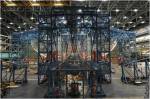
Today I was attending a project management course at Airbus. After some introductions, the teacher came to the always controversial (within such a technological company) comment that “the project leader needs to have experience in project management not in the technical issues related to the project”… she then cited aircraft as an example: “nobody within Airbus may know every technical detail of an aircraft which counts with hundreds of thousands parts, yet there is someone managing its development…”

That example seems very clear. Tonight, while listening to a TED Talk on the exchange of ideas, by Matt Ridley, I got the thread to a way better example: that is the essay “I, Pencil: My Family Tree as told to Leonard E. Read” by Leonard E. Read, which can be found at the Library of Economics and Liberty.

I believe this a much better example because of exactly the same reasons Mr. Pencil gives:

“[…] I have a profound lesson to teach. And I can teach this lesson better than can an automobile or an airplane or a mechanical dishwasher because—well, because I am seemingly so simple.

[…] Simple? Yet, not a single person on the face of this earth knows how to make me.”

Then, the pencil goes explaining where all its components are coming from…

“[…] My family tree begins with what in fact is a tree, a cedar of straight grain that grows in Northern California and Oregon. Now contemplate all the saws and trucks and rope and the countless other gear used in harvesting and carting the cedar logs to the railroad siding. Think of all the persons and the numberless skills that went into their fabrication: the mining of ore, the making of steel and its refinement into saws, axes, motors…”

If it’s clear that nobody knows how to make simple pencil, clearer will be for any other case of a more complex product.

There is indeed a Mr. President of the pencil company, there may even be a Pencil Programme Manager, but as Pencil says: “There is a fact still more astounding: the absence of a master mind, of anyone dictating or forcibly directing these countless actions which bring me into being.”

Leave a comment

Filed under Aerospace & Defence, Economy

Ask octopus Paul to invest for you

By now, everybody probably has heard about the octopus Paul picking winners of World Cup football matches. So far, it got right all the results of Germany. Today it picked Spain as winner of the final next Sunday. See the video of its memorable performance in CNN.

First thought: what a monumental charade this is! Second thought I had today at work: what if Paul was picking stocks for an investment fund?

The thought is not that out of the box: Burton G. Malkiel in his 1973 book, “A Random Walk Down Wall Street” (which I strongly recommend), suggested that a blindfolded monkey throwing darts to select stocks wouldn’t do worse than professional fund managers.

The Wall Street Journal went a step further and tried to prove the point. They did so organizing the 6-months Dartboard contest in 1988, a contest that continued along 14 years in more than a hundred 6-months periods. They didn’t use a monkey but the newspaper staff and they weren’t blindfolded. Nevertheless, the stock picks were quite random. See the explanation of that fun story in this article from Goergette Jansen a few months before the contest was to be finished in 2002.

So, how did the “monkey” do against the pros? Dartboard picks won the contest 39% of the times while pros won 61% of them. So, the pros got better results the majority of the time. Nevertheless, think that 39% of the times you would have been better off leaving your investments decisions to the darts, a monkey or octopus Paul (call it the way you want) than professional managers who get paid to maximize your returns… uh.

After those 14 years, pros racked up an average of 10.2% gain while the darts got a 3.5% gain (this is way better than my company-sponsored BBVA pension fund…).

So, next time you jokingly comment on Paul, think that you might as well ask him where to put your money and even get better results than when listening to the advice of the broker of your bank…

2 Comments

Filed under Books, Investing

Book review: La Hermandad de la Sabana Santa

I was given “La Hermandad de la Sabana Santa”, by Julia Navarro, last Christmas as a present. I had seen it in bookshops for years and even though I liked the synopsis at the back I never bought it because I had lots of books in the to-be-read list. But now that I had it, I took it with pleasure to have an easy read in between more demanding ones (for it is in Spanish among other reasons).

The plot is around some detectives and art experts who are investigating accidents around the Sacred Shroud in Turin, and the find themselves following the thread of the Knights Templar… is it enough? Doesn’t it ring a bell? I found this novel very similar to “The Da Vinci Code”. I checked it, and Dan Brown’s book dates from 2003, while the one from Navarro is from 2004.

Honestly I found this book much simpler than “The Da Vinci Code”: its descriptions, dialogues, the thoughts of the characters… On the positive side: how the plot advances in several parallel timelines in the 1st, 13th and 21st centuries and how they all merge in the last frenzied 200 pages.

If you haven’t yet read “The Da Vinci Code”, I would read it first rather than “La Hermandad de la Sabana Santa”, however if you have read the former and you liked the genre go for the latter as well, and finally, if you read the former and had enough of it… better find another book.

Leave a comment

Filed under Books

Book review: How Soccer Explains the World

I was given the book “How Soccer Explains the World” as a present by Luca & her mother about 2 months ago. They bought it in the London bookshop Daunt Books, and it came with a bookmark of the shop… impressive. Take a virtual tour around the book shop, it definitely deserves a stop in the next visit to London.

The book… since I have been questioned about it many times: no, soccer does not explain the World. However, it is a very interesting book drawing parallels about historical moments in recent history and how they were connected with football issues going on at the moment in the same places.

The first chapter for example tells about Serbian paramilitary groups, their connection with football and how they were instrumental in the Yugoslavian wars. In that chapter you read lots of names that ring a bell from having followed football recently: Obilic, Arkan, the great Red Star of 1991 (Prosinecki), Ognjenovic (a singing of Real Madrid), Zvonimir Boban… all these names let the reader connect with the story. In my case, having been in these locations and having good friends from both Serbia and Croatia increased the interest of it.

Luca & I attending the game Dinamo Zagreb vs. Medimurje (Croatian league) in 2007... because Dinamo offered an open-doors day after having made a good selling of tickets against Werder Bremen the previous week...

There are other chapters that may draw the attention of many: a whole chapter dedicated to F.C. Barcelona (the favourite team of the writer, Franklin Foer… an American, you see), other to Celtic-Rangers rivalry, disdain for soccer in the USA, Ajax, racism in football…

I recommend this book, especially in times of a World Cup.

3 Comments

Filed under Books, Sports, Travelling

Book review: Pirate Latitudes

I bought this book together with some others in the Books & News shop of Schiphol airport in Amsterdam in a recent trip to NL. I have read about this book sometime ago as it had been discovered in the computer files of Michael Crichton after his death.

I had read most of his last books so I was determined to buy this last one as soon as I would find it and so did I.

I found this book quite different from his last novels (Next, State of Fear, Prey…), but still, it was a quite entertaining reading about pirates in the Caribbean hunting treasures, fighting warships, storms, hurricanes, aborigines…

I would remark its very vivid descriptions everything related to sailing, firing cannons, the Caribbean, etc. One more thing I liked it about it is that it leaves the reader rested with all vengeances possible, well taken. I do recommend the book (387 pgs.).

Lastly, I found out in the Wikipedia that there will probably be a movie about this book by Steven Spielberg and even most intriguing: there is yet another novel by Crichton coming posthumously in 2012!

3 Comments

Filed under Books

Opera with subtitles

Last Saturday I went to the Opera with my Dutch family. We went to see “La Clemenza di Tito”, by Mozart, at the Lucent Danstheater in The Hague.

I used to go often to concerts with my parents when I was teen, when they would buy season tickets. From last Saturday’s experience, I wanted to comment on a feature of the theatre that I had never seen before: at the theatre, in The Hague, there was a screen displaying a Dutch translation of the dialogues sang by the opera singers at the play.

When I attended with my parents we had to previously read the programme in order to follow the plot as (1) it isn’t easy to follow dialogues when they are sung and (2) they sang in Italian. Now, all you have to do is to sit comfortably and listen to the music while reading the plot much as if you would watch a movie in original version with subtitles. Dutch society is one step beyond regarding pragmatism.

See in the scheme of the theatre where the screen is located (as you may imagine I couldn’t take pictures of the screen).

Drawing of Lucent theatre.

2 Comments

Filed under Miscellanea

I was disappointed with La Alhambra

I visited La Alhambra in the Easter of 2009 and I was disappointed with it. I have always heard wonderful stories, descriptions… one day it was Bill Clinton bringing Hillary there, other day it was about the sunset… the case is that I didn’t find anything there that I hadn’t seen in the Reales Alcazares in Seville (where I spent a year studying and working) and in a better state of conservation.

Whenever I say this to someone, their reply is “but it’s not only the buildings, it’s the atmosphere, the location, the view…”… mmm… yes, sure, but I came there expecting to see one of the Seven Wonders in the World… and frankly, I have seen other breathtaking places (Machu Picchu, Iguaçu falls…) where you don’t need someone reminding you that “it’s not only this, you need also to take into account that…”.

2 Comments

Filed under Travelling

Giving feedback at Pixar

Reading the a past issue of The Economist I came across the article “Planning for the sequel”, about how Pixar is preparing itself to continue with its creativity levels for the long-term.

The newspaper remarks two aspects of Pixar’s approach: the company puts people before projects and effort in getting people work together. Regarding the second reason, let me paste some of the sentences of the article:

“Employees show unfinished work to one another in daily meetings, so get used to giving and receiving constructive criticism.

[…] This system of constant feedback is designed to bring problems to the surface before they mutate into crises, and to provide creative teams with a source of inspiration.

[…] Pixar demands that each review identify at least five things that did not go well in the film, as well as five that did.”

Having been a member of the public speaking association Toastmasters for two years I have had the chance of seeing hundreds of evaluations. Evaluations of prepared speeches, of impromptu speeches, of meetings, of evaluators, of skilled and beginner speakers… it is not a so easy task to sit and think in a couple of minutes of 5 things that you really liked and some valuable points of improvement. It’s even less easy to speak them up in a structured, candid and, at the same time, encouraging way. And that is another thing that you can learn in Toastmasters: giving feedback through effective evaluations.

See how we do it in written at Madrid Toastmasters club (Excelencia Toastmasters uses the same form in Spanish):

Madrid Toastmasters club evaluation form.

No wonder that the majority of the 12,500 Toastmasters clubs worldwide are corporate clubs.

Leave a comment

Filed under Toastmasters

Scotch whisky

Yesterday I was reading an article in The Economist about the whisky industry, and I found a thread to follow: Spain being the third largest export market of Scotch whisky!

After having travelled through different European countries and seeing the drinking habits in each place I could almost predict that more whisky was consumed here than in other European countries.

I searched for the source of these data, the Scotch Whisky Association (SWA), which published a release in April 15th on the export data from 2009.

Despite the global crisis, whisky exports continued to rise both in terms of revenues and bottles. But let’s dig into the data.

Looking first at the numbers of bottles exported we see that the leading country is France with almost 180 million 70cl bottles, followed by USA and Spain (with 87 million bottles). The first 10 countries account for 60% of the export market.

Because France and USA are more populated than Spain, I was interested in comparing the ratio number of bottles exported by inhabitant… and now the leading country was by far Singapore, with over 10 bottles per inhabitant per year… either there is something we miss in the picture or there is very heavy scotch drinking going on there (taking into account that not everyone drinks whisky, less people imported scotch). Among those 10 main markets Spain again came in third with an average of 1.9 bottles per inhabitant, though we should keep in mind that this number only reflects the bottles exported from Scotland; not whisky consumption in the country (Irish, US or Spanish whisky is not counted here).

Scotch whisky exports, by number of bottles.

There is another statistic given in the same release: revenues. What I wanted to know with this was the export price per bottle.  Not all top ten countries by number of bottles were among the top ten by revenues, but with those which were I did the calculation. The average price resulted 2.9 sterling pounds, around 3.37 €… so the other ~9€ up to the 12€ price you see in the shop are costs related to transportation, retail shops, etc.

Scotch whisky exports, by revenues and bottle price.

In the SWA site you may find very useful information such as distilleries to be visited in Scotland, etc.

2 Comments

Filed under Miscellanea

Largest defence companies

The Stockholm International Peace Research Institute (SIPRI) is, in their own words, an independent international institute dedicated to research into conflict, armaments, arms control and disarmament. Every year they publish their famous SIPRI Yearbook with data about international conflicts, defence spending, defence companies…

In a previous post I showed cartograms of countries relative to their defence spending, etc. In this post I want to show a bit about the industry.

From the information of last year’s book, we find that of the 10 world biggest defence companies 6 are US companies and 4 European, though the biggest one is the British BAE Systems.

Among the first hundred companies (121 including subsidiaries) there are 4 Spanish: CASA (EADS), Navantia, Indra and Santa Barbara (General Dynamics). This places Spain as the 7th country by number of large defence companies. SIPRI publishes as well a fact sheet titled “Trends in International Arms Transfer”; in that one (data from 2005-2009) Spain is placed as the 8th country by arms exports.

Countries by number of large defence companies.

Countries by defence sales.

Finally, with the information provided by SIPRI I built the following (simplified) table where you may see which are the biggest defence companies by revenues and see how much of their business is relying on defence activities (big conglomerates like GE or UTC do not rely heavily on defence).

Defence companies by defence revenues and reliance on defence.

It is also interesting to look at the previous picture but isolating only the US companies…

US Defence companies by defence revenues and reliance on defence.

… and then taking a look at European ones:

European Defence companies by defence revenues and reliance on defence.

You may see that the top-right corner is almost exclusive domain of US companies, except for BAE, which has a big presence in the US defence market.

In this latest table you would see how the complete picture (with all 121 companies) would look like, with an atomization of smaller companies at the bottom.

Complete picture with 121 companies.

3 Comments

Filed under Aerospace & Defence