Cauterets (skiing)

Since the birth of Andrea, there are some activities which are more difficult to undertake and plan, skiing being one of them. The last time we went skiing was in 2013.

The girls went this weekend to The Netherlands, so I took the opportunity to go skiing with the staff council skiing club. All my colleagues in the end dropped, so I would be going alone (meaning no known people among the half-loaded bus that took us to the resort).

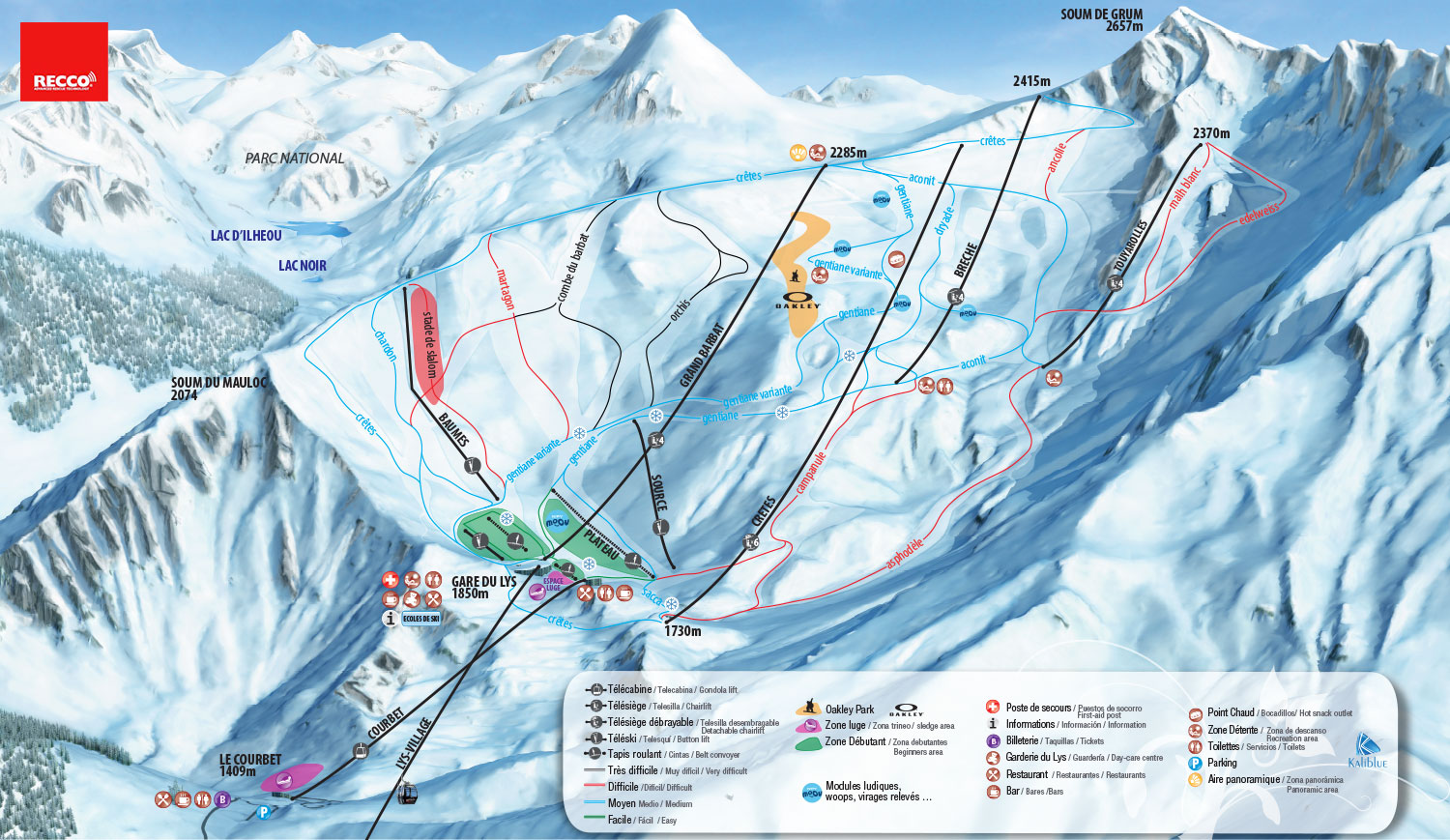
The destination: Cauterets “Cirque du Lys”. It is a medium small resort in the Western part of the French Pyrenees. It has about 36 kilometres spread over 20 runs: 4 green, 7 blue and red, and two black.

Cauterets plan (2014-2015).

Cauterets plan (2014-2015).

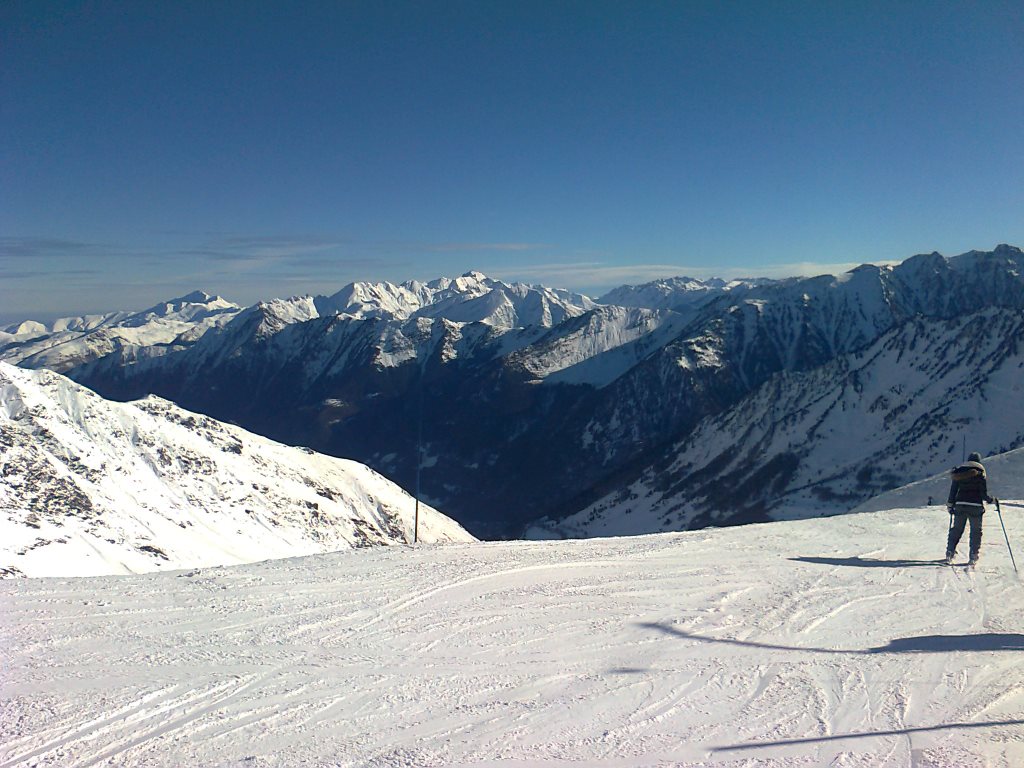
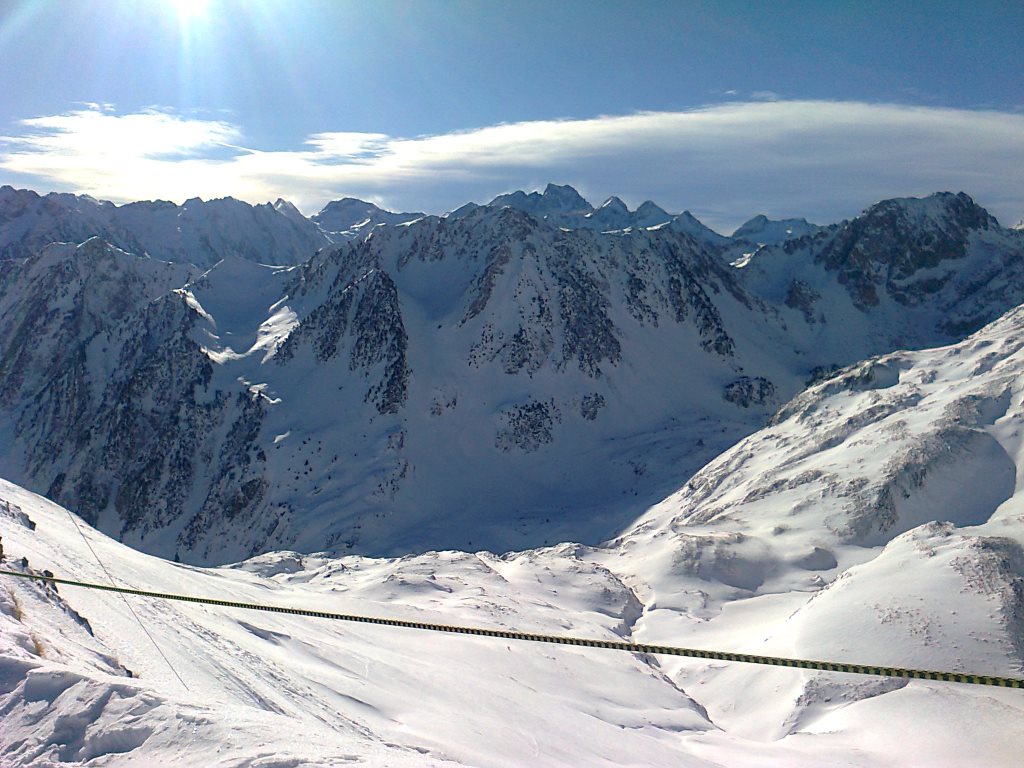
I first had to remember the basics, and re-teach myself a little bit skiing. I went all the way up of the Grand Barbat and descended by the different blues: Aconit, Gentiane, Cretes… I didn’t enjoy much this last one, being a narrow corridor from top to the bottom, however the views from it were stunning:

North East View.

North East view.

South view.

South view.

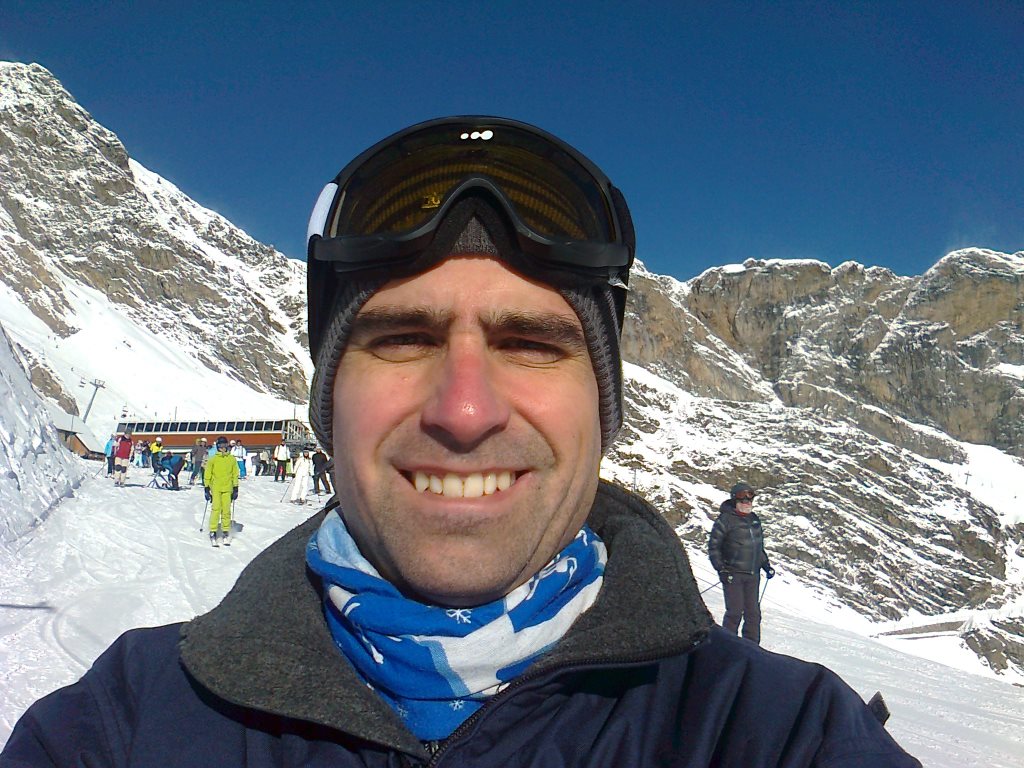
Skiing version of self.

Skiing version of self.

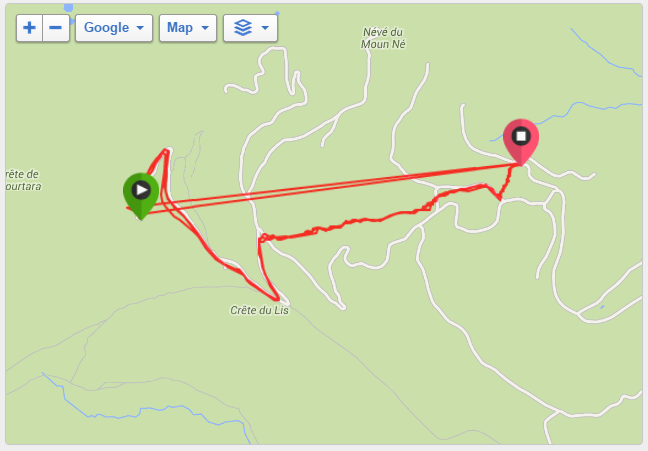
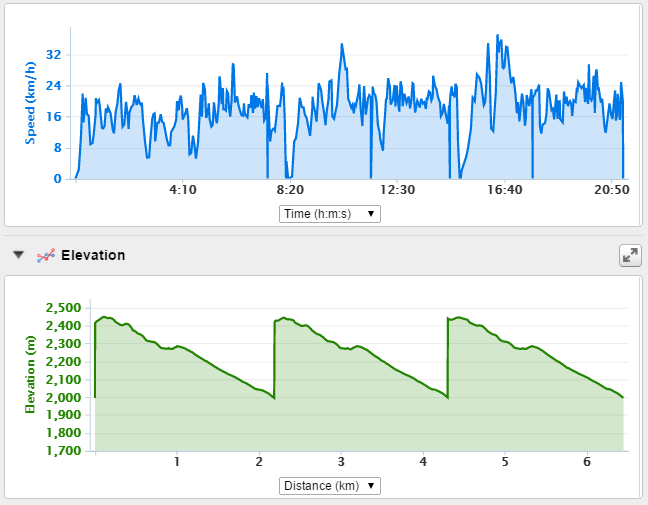
Once I got confident again with the skiing, I was curious on measuring the speed. For that purpose I had brought my Garmin watch. See below the track I recorded (starting from Cretes and diverting to Dryade) and the speed profile, and here the complete record.

Dryade


Speedprofile


As you can see I was not descending that fast (maximum speeds just over 37km/h), but I went improving times with each descent, so at one point I decided not to measure any more and avoid taking risks at less than a month away from our next marathon.

At the end of the day I tried out a couple of the red runs: Malh Blanc and Ancolie, and it went well. Sometimes the border between blue and red is not so clear. Nevertheless, I did not want to take any risks and preferred enjoying more fluent descents so I kept myself to the blues.

Looking forward to the next opportunity!

Leave a comment

Filed under Sports

Capitalism is ingrained in human nature

A former boss I had used to say something like:

Capitalism is so ingrained in human nature, that even in the Soviet Union, not having studied or heard about it and its demand and supply laws, soviets knew how much could be charged for goods or services in the black market(1)

I remembered those words very well when we travelled last year to New York to run its marathon.

On Friday 31st, October, we arrived to New York by car, coming from a tour that had taken us to Dayton. Before going to the hotels and leaving the rental car, we wanted to go by the Marathon Expo to retrieve the running bibs. It was located at the Javits Center, by the 11th Avenue between the 34th and 39th streets, in Manhattan.

Capitalism

In the picture you can see a sign post saying Park (at the 34th). That is where we left the car while we went to the Marathon Expo.

Waiting to be attended at the car park, we were reading a panel with prices: 16$ the 1st hour, the following hours being cheaper. The driver in the car in front of us started a discussion with an employee of the car park which went more or less like this:

  • (employee) The first hour is 30$, two hours, 50$…
  • (customer) Excuse me? In the panel it says it’s 16$ the first hour!
  • Sir, the panel says those are the prices excluding event days, today is an event day.
  • How do you go from 16 to 30$!
  • Sir, 16$ plus x dollars for being event day, plus x for taxes… sir, you are driving a Porsche Cayenne, if you think 30$ is too expensive feel free to back up and park somewhere else…

Speechless, I produced 50$ in notes :-). (2)

(1) He referred to Capitalism as the economic system in which trade seeks for profit and how demand and supply laws work, don’t look any further in the comment.

(2) The driver of the Porsche Cayenne did so, too.

Leave a comment

Filed under Economy

XB-36 tires

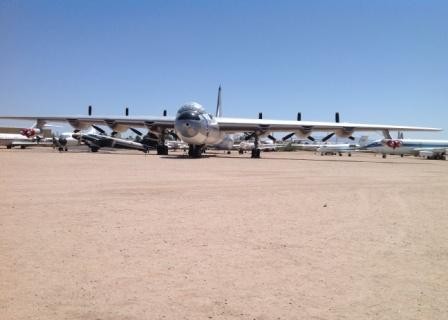
Two years ago, in 2013, I visited the Pima Air and Space Museum near Tucson, Arizona. One of the airplanes that really catches your attention in it is the bomber Convair B-36 Peacemaker, with its 10 engines: six turnin’ and four burnin’ (I wrote a post about it here).

Ten engines: "six turnin' and four burnin' ".

Ten engines: “six turnin’ and four burnin’ “.

When I wrote that post, I received the following comment from a reader, Ian C.

If you are ever back on this side of the pond, the National Museum of the Air Force has an XB-36 tire. It is just ridiculously large.

Last year, in 2014, we travelled again to the USA and this time we visited the National Museum of the Air Force (1) in Dayton, Ohio.

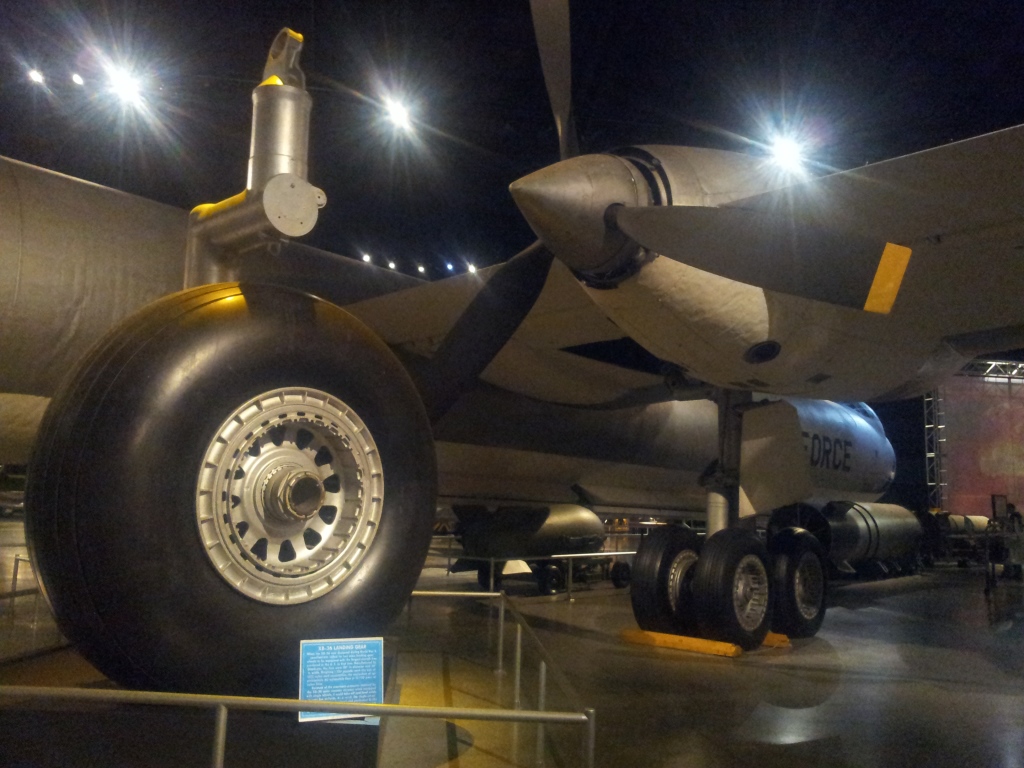
Let me close the loop by showing you this famous tire accompanied by some facts about it.

XB-36 tire

From the Wikipedia:

The XB-36 featured a single-wheel main landing gear whose tires were the largest ever manufactured up to that time, 9 feet 2 inches (2.79 m) tall, 3 feet (91 cm) wide, and weighing 1,320 pounds (600 kg), with enough rubber for 60 automobile tires. These tires placed so much pressure on runways, the XB-36 was restricted to the Fort Worth airfield adjacent to the plant of manufacture, and to a mere two USAF bases beyond that. At the suggestion of General Henry H. Arnold, the single-wheel gear was soon replaced by a four-wheel bogie. At one point, a tank-like tracked landing gear was also tried on the XB-36, but proved heavy and noisy and was quickly abandoned. (2)

(1) See here the post my brother Jaime wrote about our visit to it.

(2) This is not the post to do so, but it triggers the need to write one day about the California Bearing Ratio, doesn’t it?

2 Comments

Filed under Aerospace & Defence

Dayton Aviation Heritage

It is well-known that the first ever flight (1) was made by Orville Wright on December 17, 1903, over 120 feet during 12 seconds at a field in Kitty Hawk, North Carolina. It is less known that Orville was born in Dayton, Ohio (August 19, 1871), and that it was in Dayton where the Wright brothers had their different businesses, where they studied the physics of flight, made several tests, and prepared for the few weeks a year they would spend in the windier Kitty Hawk.

That makes Dayton deserve an Aviation Heritage National Historical Park and a visit from truly yours (and family), in a regular pilgrimage to aviation sites.

The Historical Park is composed by different buildings and sites at different locations in and around Dayton, among them:

  • The Wright Cycle Company and visitor center. The company is located at the original place, however the interior has been renovated and now shows replicas of what could be expected to be found in such a shop. The visitor centre is a museum dedicated to the Wright brothers (their family, their careers, other businesses they had) and the principles of flight and to the understanding of the Dayton at the time (a rather ingenious place measured by the different patents and business the flourished there those days). In the centre you may watch as well a 37′ documentary about the Wright Brothers (2).

  • The Wright Brothers Aviation Center, at the Carillon Historical Park, hosts an original 1905 Wright Flyer III that Orville himself helped to restore.
  • The Huffman Prairie Flying Field and interpretive center. These are located in an open-to-the-public area of the Wright-Patterson Air Force Base (3). The interpretive center houses some displays and the same documentary that at the visitor center. In front of it there is the Wright Memorial, in Wright Brothers Hill. A few kilometres from it there is the Huffman Prairie. There the brothers made hundreds of tests. They began using it in 1904 to make their initial airplane a practical invention. It is there where they trained the first pilots (the first ever flying training school). There you will see both a replica of the hangar they used at the time and of the catapult they used for the take-offs.

Before visiting the prairie go by the interpretive center to make sure it is open. You may also get a ranger to give you some tour. The same goes for the Cycle company, which you will need to ask a ranger at the visitor center to open it for you. All these places can be visited for free, though you will be more than delighted to contribute to their preservation.

I leave here some of the pictures we took.

This slideshow requires JavaScript.

(1) In a heavier than air powered and controlled airplane.

(2) The documentary, Wright Brothers: On Great White Wings, is narrated by Martin Sheen and produced by Finley Holiday Films, which produces documentaries for several national heritage parks. It can be found here (20$).

(3) This Air Force Base hosts the National Museum of the US Air Force, pay a visit to the great account of our visit in my brother’s blog.

Note: Bear no doubt that some pilgrimage will bring me some day to Kitty Hawk…


Leave a comment

Filed under Aerospace & Defence

My forecast of Boeing Commercial Airplanes 2014 revenues

In the previous years I have been estimating the discounts Boeing applies to its list prices of commercial aircraft. You can see here the result of last year estimate (based on 2013 figures). The results I arrived at are that Boeing has been increasing its discounts in the recent years, and that in 2013 they topped ~47%.

Boeing Average Discount Evolution, 2013.

Boeing Average Discount Evolution, 2013.

With this post I wanted to take a step ahead and put the model to the test by using it for forecasting what will be Boeing Commercial Airplanes revenues for the year 2014.

As of today, January 15th, these have not been announced yet. In Boeing’s investor relations website you can see that the 2014 earnings conference call will take place on January 28th.

How will I reach to my forecast?

  1. See here Boeing (net) orders for the year 2014: 1,432 aircraft among all models.
  2. See here Boeing deliveries in the year 2014: 723 aircraft among all models.
  3. See here Boeing 2014 list prices.
  4. See in the above curve the average discount I will use: 47% (unchanged from past year, this is a hypothesis that will be put to test with how accurate the forecast turns out).
  5. See here [PDF, 841KB] Q3 2014 earnings press release. I use it to see how were faring in 2014 Boeing Commercial Airplanes services, deducing it from the reported Sales of Services, Boeing Capital and Global Services & Support. Up to end September 2014, the services figures were declining in comparison to 2013 figures. I will assume the global figure to follow the same proportional decline; arriving at ~589m$ for Boeing Commercial Airplanes services (remember, this figure will not be actually explicitly reported).

With all these ingredients… my forecast is: 60.2bn$ (1).

In the 2014 Q3 report you can see Boeing’s own guidance for year-end figures:

Boeing's 2014 Financial Outlook at Q3 2014 earnings press release.

Boeing’s 2014 Financial Outlook at Q3 2014 earnings press release.

Some comments:

First, you can see that my forecast (60.2bn$) is a bit more optimistic than Boeing’s own outlook 3 months ago, 57.5-59.5bn$ (2).

Second, in the 2014 Q3 release, you can see the revenues up to end September (below). In them, you can see that up to then, revenues of Boeing Commercial Airplanes had increased 13% in relation to 2013 (12.66% to be more precise). My forecast is a bit more optimistic here as well: at year end the increase in revenues will be +13.6%.

Boeing Commercial Airplanes revenues Q3 2014.

Boeing Commercial Airplanes revenues Q3 2014.

Final comment: if Boeing managed in 2014 to command better prices on delivered aircraft, the figure will be even higher. If the figure is lower than the 60.2, and in line with their forecast, it’ll mean that the market is forcing Boeing to apply ever higher discounts to their published list prices.

I am now looking forward to January 28th and Boeing’s earnings call!

++++++++

Update on February 11th:

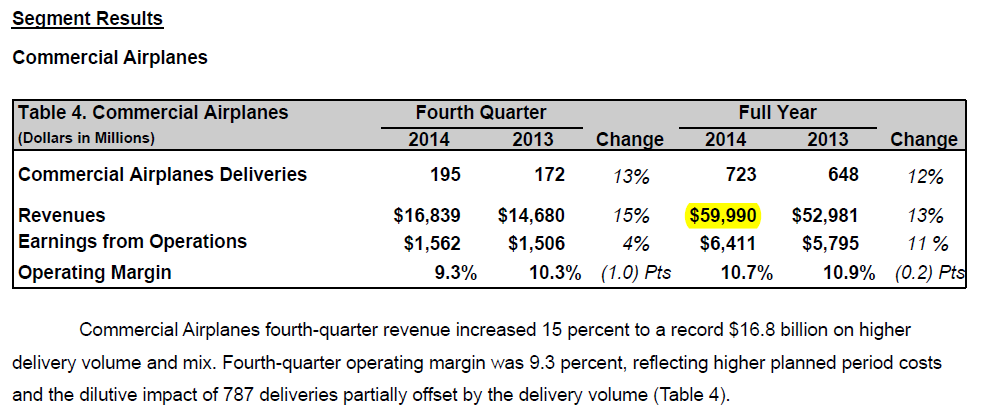
As announced, Boeing published on January 28th its full 2014 results [PDF, 838KB]. Which were the Boeing Commercial Airplanes revenues?

Boeing Commercial Airplanes revenues full 2014.

Boeing Commercial Airplanes revenues full 2014.

That is 59.99bn$, or 206m$ short of my detailed forecast of 60.196bn$. This means that I missed with my forecast by a 0.3%, not bad. Even better taking into account that the main discrepancy have been the lower level of services under the commercial airplanes unit.

The result, as my intuition went was above the upper limit of the bracket Boeing gave as guidance for the full year in the 2014 Q3 report, 57.5-59.5bn$ (see note (2)).

(1) To be more precise the forecast from the model is 60,196m$.

(2) If my forecast turns out correct some may be tempted to say that this is the usual trick played by CFOs: to present better figures than expected.

2 Comments

Filed under Aerospace & Defence

San Silvestre 2014

Otro año más acabándolo corriendo la San Silvestre Vallecana popular de Madrid. Y con esta van 14 desde 1998 (*).

Este año ha sido especial en tanto que:

  • Ha sido la vez que más gente nos hemos juntado en el grupo al empezar: 14 (en el orden de la foto de debajo: Edu, Carlos, Maicol, yo, Kike, Jaime, Álvaro, Juanma, Javier, Nacho, Miguel Ángel, Beatriz, Sara, Lucia).
  • Ha sido la vez que más tiempo hemos invertido en recorrer los 10 kilómetros, 1h11’56”, todo un paseo.
  • Ha sido la primera vez que hemos cruzado la meta los tres hermanos juntos. (del grupo de la foto, entramos juntos en meta 10).

SanSilvestre2014

De los 14 que salimos juntos, solo 3 se habían inscrito, el resto (11) solo salimos a correr por las calles de Madrid sin participar en el circo de Nike. Si no recuerdo mal, la última vez que me inscribí a la carrera fue en 2003, hace 11 años.

Tras llegar a casa me enteré de la noticia de que los 3 primeros clasificados en la San Silvestre popular (Sergio Salinero, Gezaw Bekele y Pablo Villalobos) habían sido descalificados por no llevar (visible) la camiseta-dorsal que la organización da a los participantes.

Los comentarios en foros de atletismo popular no tardaron en hervir. Desde los que simplemente defienden que es una de las normas de la carrera a los que se indignan de la comercialización de un evento deportivo popular como este. Algunos añadían que el propio reglamento de la carrera hace referencia al reglamento de la Federación de Atletismo, que indica que los corredores deben correr con la camiseta de su club (como hicieron esos tres corredores).

Me encantó leer la reacción del 4 clasificado, Santiago de la Fuente,y ganador tras la descalificación de los 3 primeros: “Lo primero que haré, cuando me den el trofeo, es entregárselo a él, porque es amigo mío y me ha ganado con todas las de la ley”; dejando así más en evidencia a la organización de Nike.

https://twitter.com/madogdidit/status/550358447842414593

Creo que seguiré corriendo y disfrutando con amigos de este evento durante muchos años más sin inscribirme…

(*) En tres años no corrí: uno por lesión y otros dos por estar en Holanda en fin de año.

1 Comment

Filed under Sports

Summary of (my) 2014

Brief recap of my 2014. (1)

In the last year recap I mentioned that in 2014 I wanted to give it a try to the processes’ approach at the time of setting goals. Trying to introduce new habits, settle others, etc. I started very focused: waking up earlier, studying Dutch first thing in the morning, arriving at the office earlier, training at lunch time, getting back home earlier, playing with Andrea, spend some family time, read and study at late evening/night. Some of the habits have stayed, some others not, and I have taken new ones along the year… let’s review the year.

The main events of this year:
  • AndreaFFVFRLuca passed the exams to become a lawyer in France, found a job in a law firm and finally sworn before the court as a lawyer.
  • Andrea… many events in her front. From the first flight with me at the controls in February, to her first steps in the summer, to travelling first time to Africa and America…
  • We moved houses, though still living in Toulouse (from the flat in Saint-Cyprien to a house in Sept Deniers).

Avgeek. The stage we had in Paris for Luca’s exams allowed me to visit the Musée de l’Air et de l’Espace (Le Bourget) and to get to know the airfield of Issy-Les-Moulineaux. Our escapades to the Pyrenees made us discover Musée de l’Aéronautique of Luchon. The more recent trip to the USA allowed us to visit the Dayton, where the Wright Brothers originated and the National Museum of the US Air Force, for which I still have to write about, but you can see my brother’s post on the museum. We also had the chance to visit the Francazal air show.

VitrineThe moving to the new house gave me the opportunity to find a well deserved location for the model collection.

Flying. Apart of the mentioned first flight with Andrea on board, in this 2014 I managed to complete some 17 flights totalling almost 15 flight hours, 30 take-offs and landings and including 5 solo flights (one of them a navigation flight).
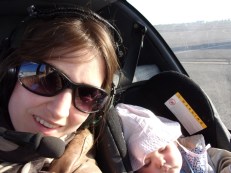
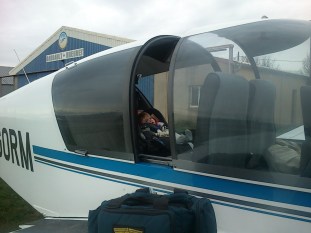
????????????????????????????????Not only Andrea had her baptism regarding flying with me at the controls in 2014, but Juan, Maicol, my mother, my sister Beatriz and brother Jaime had theirs too! Despite some exercise-related incidents (including a runway excursion, through during a solo flight), I am sure they enjoyed it and the experience made it to their 2014 memories.

Since the progress was good, just before the summer my instructor mentioned the taking of the exam! But first I had to pass the theoretical part, which I had postponed so far. I did a first attempt in November in which I cleared half of it, next attempt in a couple of months. Then, some more flight lessons (not having flown since September), flight hours and start thinking on the practical exam!

FinMarLearning. The balance between family, hobbies and work is always tricky. This year I started strong studying Dutch which I dropped after 3 months, and in the second half of the year I had to put hours to the study of the PPL theoretical part (in French), with partial success.

In between, I completed some other online courses (MOOCs): The Age of Sustainable Development (Columbia), An Introduction to Operations Management (Wharton) and Financial Markets (Yale). In parallel, I completed some other very interesting in-company trainings on Airline Engineering and Maintenance, Management of Conflicts and Time Management.

Reading. This year again I didn’t set any objectives in terms of number of books, but I only prepared a shelf with a selection of about 20 books that I wanted to prioritize. In the end I read the following 10 books (about half of them from the selected shelf):  Hot, Flat, and CrowdedThe Roaring NinetiesEl amor en los tiempos del cóleraThe Early History of the AirplaneSeeking Wisdom: From Darwin to MungerWhat management is, Sycamore Row, The Racketeer, Micro, Crime and Punishment (in Spanish). You can find here a brief review of each of them and references to longer reviews I made about them in the blog.

Family 2.0. Despite of the family life and different changes, I managed to write just a bit over 80 posts. Plus the blog received over 80,000 visits in 2014 (a 60% increase in relation to 2013) and is very close to surpassing the 200,000 since I started it in 2010.

On top of that, Luca went forward with her own blog, check it here, Jaime launched his new blog (with especially interesting post on aerospace topics!) and my mother launched a website to promote her therapy business (Terapias ArcoIris). I wonder whether Andrea will start a blog before speaking or writing! (2)
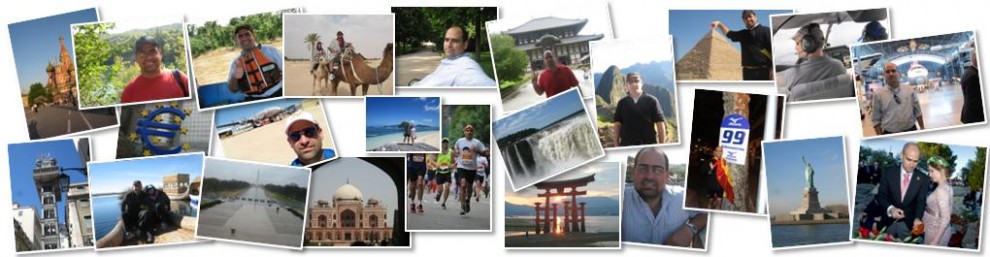
DSC_0161 - CopyTravelling. This year we visited Paris for a week (first time in Versailles and in the château de Chambord for me), made 3 escapades the Pyrenees (with Luca and Andrea alone, with my family and with friends), visited again the United States (NY and some new places for us: Boston, Gettysburg, Dayton, Pittsburgh, Philadelphia – with over 2,100 miles driven and 8 different hotels in less than 2 weeks!) in a very entertaining trip with lots of learning opportunities and experiences, the Dordogne, spent a half resting half discovery week in Mauritius, flew to the Netherlands (3 times, a week each time), five days in Sicily (Siracusa, Milazzo, Taormina; incredibly beautiful places) and these last days of the year in Madrid.
????????????????????????????????Again, those were the leisure trips; on top of that, the job made me go to Madrid another 20-25 times (?), that made it tiresome and difficult to combine with other things but gave my plenty of opportunities to see my family, friends and to run in the Retiro park…

Sports – Running. This year, due to the young age of Andrea, we did not manage to go skiing. We neither played some golf as we wished we had to, nor gave it a try with soccer. What I did was basically, guess… running.

In 2014 I ran well over 1,900 kilometres, which was a goal I set to myself at half way through the year (when I had completed just over 800). As I wanted to reduce the weekends’ agenda, I competed less and just took part in 9 races (3) (versus 16 in 2013) including: 2 marathons (Rotterdam and New York, both under my previous personal best time!), 2 half marathons (Blagnac and Toulouse, no personal best here though), 3 10k‘s (all of them under 45’, with two consecutive personal bests!) and a couple of trails: Cassoulet and Foies Gras. As you read, in 2014 I achieved personal bests in marathon and 10k thanks to the different training plans I combined (more variety), which was great. I did not so in half marathon, I think in 2015 I’ll try to improve the 3 marks.

IMG_0219Following the sentence “the running shoes, always in the suitcase”, the year 2014 caught me running in: Wijchen (9 times), The Hague, Rijswijk, Sevilla, Rotterdam, Paris (x6), New York (x2), Milazzo (x3), Montauban, Mauritius (x5), Madrid (x16), Dayton, Colomiers, Benasque, Barakaldo, Allentown, Verfeil, Mauvezin… plus the tens of times I trained in Toulouse and Blagnac.

This year, apart from the races, I managed to train plenty of long runs: 11 over 20km, including 6 over 25km and 2 over 30km; and did plenty of series’ sessions (too many to mention). That contributed a lot to the improvement of my times.

Other reasons for joy in 2014 have been:

  • My family: My sister moved to Odense (Denmark) to study a master in International Security & Law  (you can follow her in her blog), and once the classes were completed moved to Vilnius (Lithuania) to make a stage at the NATO Energy Security Centre of Excellence. We had the pleasure to have my mother over for a month in July-August. We enjoyed 2 weeks of holidays with Jaime in the States, apart enjoying several runs with him. My father is ever more engaged with NGOs teaching classes to disfavoured people in Madrid.
  • Some more friends got married: Alessandro, Erik, Simone.
  • And we welcome some newborns from family and friends: Guillermo, Cas, Nils, Amelie…

Now it’s time to rest, celebrate and soon to plan how we want the 2015 to turn out. It will again be a year full of personal and professional changes, with plenty of learning opportunities, kilometres to run, marathons to enjoy, airplanes to fly and flights to catch, museums to see, books to read, trips to make and parties to enjoy.

For now, I will close 2014 celebrating my sister’s birthday, running the San Silvestre Vallecana in Madrid with several friends and enjoying a last dinner with the family.

I wish you the best for 2015, enjoy it!

(1) You can see my 20102011, 2012 and 2013 recaps.

(2) I have to confess that at some point I considered the idea of opening a blog for her to register each of her flights… I dropped the idea, because I was incapable of registering all the desired data of so many flights! [over 20 flights in 2014 alone for her]

(3) That figure excludes the San Silvestre Vallecana that I will run the afternoon after this post is published.
16 Comments

Filed under Personal development

My 2014 reading list

In this post I wanted to share the list of books I read along the year with a small comment for each one, the link to a post about the book in the blog (when applicable), links to Amazon (in case you want to get them) and to the authors. I have also included a small rating from one to three “+” depending on how much do I recommend its reading:

  1. Seeking Wisdom: From Darwin to Munger(by Peter Bevelin) (++): this book is an interesting guide into how to improve our thinking process. It starts with reviewing what influences our thinking, then analyses misjudgments and provides some guidelines for better thinking. It draws heavily on quotations and passages from other authors such as Confucius, Charlie Munger, Charles Darwin, Warren Buffett, Cialdini, Kahneman… therefore if one has read one or several of their books (Thinking Fast and Slow, Influence, letters to the shareholders of Berkshire Hathaway, On the Origin of Species, Poor Charlie’s Almanack…) this book may seem redundant. One thing I liked about the book was the offering of key concepts after each chapter and its appendix on checklists.
  2. What management is (by Joan Magretta) (++): a brief book covering the different aspects of management (from value creation to managing people, business models, strategy, execution) in a very concise way though full of very vivid examples from different companies. While reading the book I marked dozens of passages, and I included one post in the blog about one of the anecdotes related to the Ford Pinto.
  3. The Early History of the Airplane (by Orville and Wilbur Wright) (++): it is a short book or rather a compilation of 3 articles by the brothers (30 pages in the e-reader version I used). The 3 articles are: The Wright Brothers’ Aeroplane (by Orville and Wilbur Wright), How We Made the First Flight (by Orville Wright) and Some Aeronautical Experiments (by Wilbur Wright). In these articles they provide some insight into how they became attracted to the problem of heavier-than-air self-powered controlled flight, what were the difficulties they faced, what schools of thought there were at the moment, who influenced them, what results and experiments from others they relied upon, the experiments they performed, the results at which they arrived… and, yes, they describe their first and subsequent flights. I wrote a post review the book, find it here.
  4. The Racketeer (by John Grisham) (++): in this novel the author has Malcolm Bannister, an attorney half way through his 10-year prison term for racketeering, maneuvering his way out of prison by negotiating with the FBI and helping to solve a crime investigation gone nowhere.
  5. Micro (by Michael Crichton and completed by Richard Preston) (+): the novel is about a group of graduate students seduced by Nanigen, scientific research company, to join them in Hawaii. The story develops in to a hunt of the students in the jungle as they had been miniaturized by the latest technology developed by the company. To my taste, a bit too much on the fantasy side.
  6. Hot, Flat, and Crowded(by Thomas Friedman ) (+++):  In this book, Friedman claims that as we are entering the “Energy-Climate Era” the world is getting hot (global warming), flat and crowded (soaring population growth), and clear action needs to be taken to address these issues. Government need to establish a clear regulatory framework, clear price signals to establish a market in which companies can innovate to solve the problems at hand. The author included in the book dozens of references, quotes from conversations, excerpts of speeches from leading figures, and several examples. I wrote a post review the book, find it here.
  7. The Roaring Nineties(by Joseph E. Stiglitz ) (+++): Stiglitz wrote The Roaring Nineties in 2003 to offer an insider’s view of economic policy making and the economic boom and bust of the nineties. Stiglitz is frank in admitting that all the focus that the Clinton administration had at the beginning of the term in passing laws to improve the living of the disfavored ones was suddenly put aside due to the mantra of deficit reduction. He openly regrets it several times throughout the book and offers some criticism on the administration he took part in and others before and after. Especially Reagan’s and Bush II’s. I wrote a post review the book, find it here.
  8. El amor en los tiempos del cólera (by Gabriel García Márquez) (+++): the author was inspired to write this book by the story of his parents and other old couple who had to keep their relationship in secret all their lives. The novel describes the relationships along all their lives between mainly three characters: Fermina Daza, her husband, Juvenal Urbino, and her ever love from childhood and ever a candidate, Florentino Ariza. I have to say that I liked more this book than “One Hundred Years of Solitude”. I wrote a post review the book, find it here (in Spanish).
  9. Crime and Punishment (by Fyodor Dostoyevsky) (++): the book narrates the story of Rodion Raskolnikov, an poor student in Saint Petersburg who kills an unscrupulous pawnbroker for her cash. Raskolnikov had written an article in which he discussed how some crimes could be seen as acceptable in the name of a greater good by leading individuals. He convinces himself to be one of them. The story gets ever more complicated as his family comes to town for the marriage of his sister, the investigations by the police, the interrogatories, his errors due the constant illness he suffers from malnutrition, etc.
  10. Sycamore Row”  (by John Grisham) (+++): in this book the author writes a kind of sequel to his all time best seller “A Time To Kill” with the appearance of the main characters of the former book: Jake Brigance, Judge Atlee, Harry Rex Vonner, Lucien Wilbanks… this time the case is about a will that is contested. A will from a white businessman leaving all his estate to his black maid, cutting his family out; a tough decision for Ford County, Mississippi.

Note: You can find here my 2012 reading list, and here, embedded in my summary of 2013, the list of that year.

12 Comments

Filed under Books

New York marathon 2014

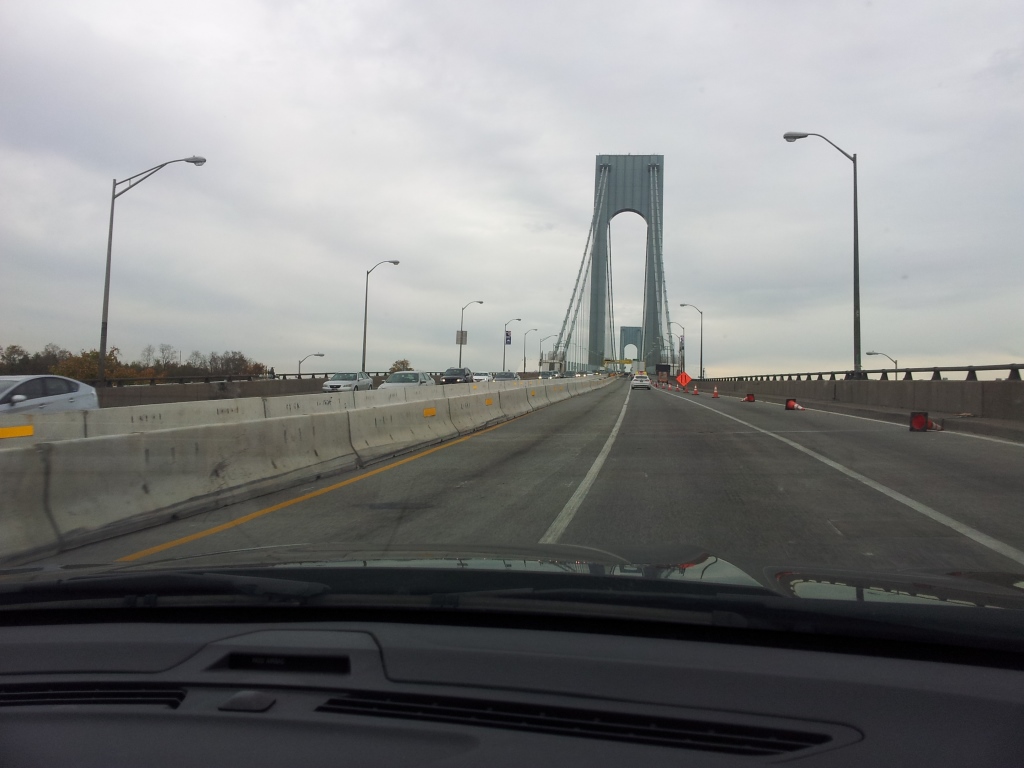
My brother and I in Staten Island, Verrazano bridge in the back.

My brother and I in Staten Island, Verrazano bridge in the back.

… and November 2nd came and we got to run the New York City marathon.

In a previous post I explained what makes this specific marathon so special, an overview of the course and how I came to it regarding my training. In this post I will focus on my experience (1), a hell of a experience!

This marathon is a huge event. We were over 50,000 runners. This means a very serious logistics operation. So everything that you experience can be put into perspective in relation to that. The marathon expo at the convention center, the queues, the volunteers, the supplies, the transportation, the distances to cover, the goodies provided pre and post race, the medical staff, the mobile toilets, the music bands… everything.

The day of the race started with waking up in Manhattan at 4am. I had booked a place into a bus departing from the public Library to bring me to Staten Island, but in the end Jaime got me into one of the buses of the International Travel Partner he got his trip organized with, so that we did not have to look for each other at the island. The bus dropped us at the island at around 6am, and from then on we had some 4 hours until the departing time of our wave.

To me this was the worst part of the event. There are things that could be improved: from providing more covered space to not explicitly forbidding runners to bring blankets, to providing blankets, simply allowing to drop off clothes later or even just honestly communicating the real times at which the starting corrals would be opened.

IMG_3980One could argue that the size of the event makes that part difficult to organize. Fair enough. On the other hand, Berlin marathon also hosts about 40,000 runners and has none of the nonsense of New York marathon. Its start area, finish area and timetables are neatly organized.

The good thing of that waiting time is that I spent it with my brother, talking, joking, getting into the mood of the race. Until we had to leave each one to his corral.

  • Tip one: forget about your assigned corral, if you have friends, arrange to depart from the same corral (apparently there is some grading, orange being more demanding and blue more accessible).
  • Tip two: bring 2 sets of warm clothes. One to be put into the bag that will be transported to the finish line. The other to wear it until you are in Verrazano bridge, then throw it away.

20141105_124551

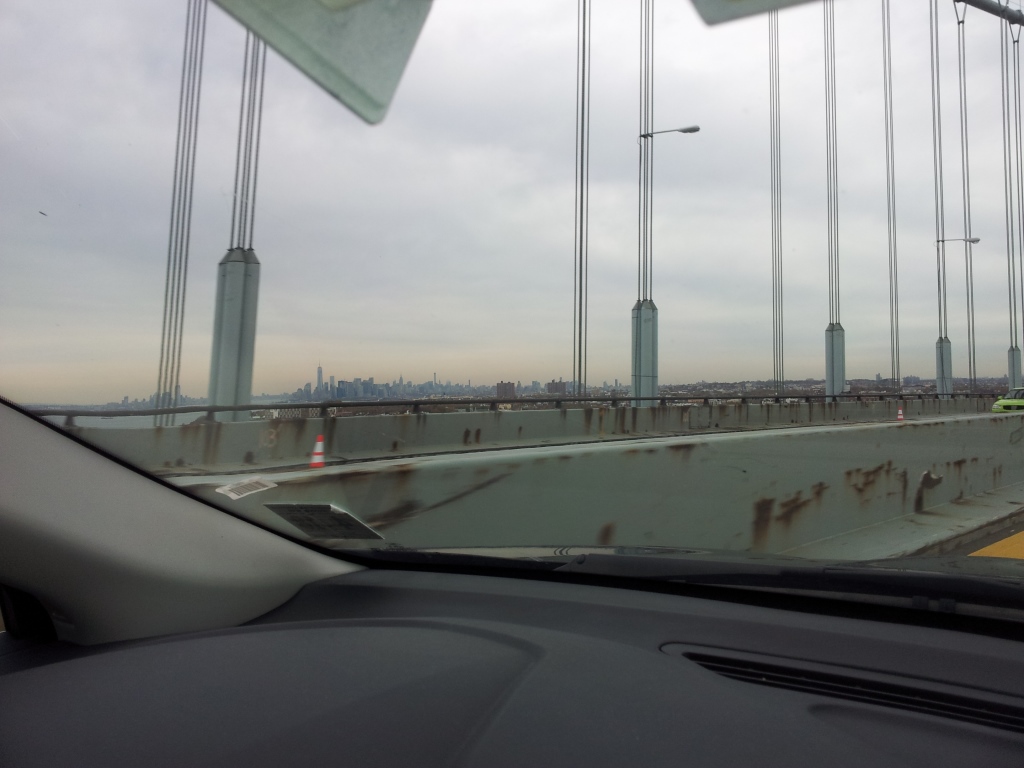
Verrazano bridge is huge; over 2 miles long. At the mid-point you are at the highest point of the race, with great views of Manhattan. Even greater winds if you have the luck to run in a day like the day we ran in. Temperatures were about 6C and winds of over 40km/h. In that conditions, one could only run trying not to fall and forget about best times or anything like that (2).

I had read a post about how to plan the race. It warned about not starting too fast in the bridge (honestly, it almost cautioned not to run too fast until kilometre 42). I found myself running 30″ faster per km on the second half of the bridge. At that point I lost the 3h45′ pacer, and with her the chance of meeting my brother Jaime later on, as we had agreed to follow that pacer to ensure we would meet each other (3).

20141105_124651

Once we left the bridge, we entered in Brooklyn and with it came the crowded streets, the music bands, the contrasts, the cheering crowds (“Vamos España”, “Allez la France” (4), “You’re looking good”… looking good at km. 35, really? :-)). This makes this race apart.

There are parts of the race that are not especially beautiful. You don’t get to run through lower Manhattan, or Broadway. You do not cross Brooklyn bridge. But the streets you run in, with very few exceptions, are packed with cheering crowds, volunteers, music bands, runners… you feel surrounded by a great atmosphere along the complete 42km. Some moments which I especially cherished:

  • Running with a head band with a Spanish flag, receiving lots of dedicated support at different points (especially in one of the last turns in Columbus Circle, mile 26). Thanking that support with some gestures (thumbs up, smiles, waving hands…).
  • Giving some support words each time I overtook an identifiable fellow Spanish.
  • Running along Lafayette avenue surrounded by French runners and a crowd cheering with “Allez la France”.
  • Climbing Queensboro bridge. No spectators, just runners. 2 km long. A good climb at mile 15. Enjoying good views of Manhattan skyline just about to enter it. Time to focus on your pace, notice that there are only 17km to go, overtaking plenty of runners, owning your race.
  • Landing on First avenue. Not seeing the end of a 2.5-mile stretch. Seeing thousands of different flags though. Planning to keep a fast pace thinking these are going to be my 10km like in Rotterdam. Failing to do so.
  • A white woman thanking runners for visiting the Bronx (mile 21).
  • Sustaining a decent pace on a surprising 1.5km-long climb in the 5th Avenue, just before entering Central Park, starting from km 36.5. Tough, very tough. (“that’s a beautiful pace!”, really?)
  • Being overtaken at km 38 by the 3h45′ pacer, the same girl I lost in Verrazano bridge. Thinking for a moment: “they’re going too fast for me now” (5’20″/km pace vs. the over 6′ I did in the previous climb). Thinking in the next moment: “what the hell! I am following them!”. Doing so, and clocking the best 4 kilometres of the second half of the race, allowing me to finish in 3h44’32”, my second best time in the distance!
Pace per km.

Pace per km.

This marathon is not easy, though not that tough (Athens was harder). The trip is expensive. The chances of getting a place into it are few… but if you have the chance to do it, at least once, I would recommend it (5).

  • Tip three: train well, series and long runs, and do start softly, you will need some reserves to go to the Bronx and return and climb up to Central Park.

After the race, I felt so much pain in my back due to the cold suffered in the early morning that I needed a massage to relax my back, remove the cramps and dry my clothes. Afterwards, I met my brother and together we went back to the hotel, savouring the achievement. Our 6th marathon together. 12th marathon (including Millau ultramarathon, for which a 42km time was given), 2nd in the USA (after San Diego).

There will come a day in which I won’t be able to run marathons, then, I’ll be able to look back and relish the day I ran New York City marathon back in November 2nd, 2014. Thanks, Jaime, for suggesting and pushing for it!

(1) Find in my brother’s blog a post about his experience in the same event.

(2) Take the case of the winner, Wilson Kipsang, who in previous days had announced the intention to break the course record (around 2h5′) and he finally finished in almost 2h11′.

(3) I later learned, that he indeed followed the pacer up until km. 25… had I not run faster at the beginning and we would have experienced it together. I owe him one. There will be more marathons, possibly Madrid is the place to enjoy running 42km together.

(4) You can see in the stats of the race that up to over 3,000 French (the 2nd most represented country) were running, over 800 Spanish.

(5) Sins of omission are the ones which hurt the most at the end of the game, don’t they?

3 Comments

Filed under Sports

Shopping in Soviet times

I have been to Moscow about 5 times, all of them in the 2000s, long after the fall of the Soviet Union in 1991. I have not been in Cuba or any other communist country. I however remember the stories that a former boss I had, now retired, used to tell about when he indeed often visited Moscow in the Soviet era.

One of those anecdotes involved the shops of the GUM market in the Red Square (Glavnyi Universalnyi Magazin; “main universal store”), then a department store and now a private shopping mall hosting all the Western luxury brands.

In his experiences, he used to describe the full employment, low labour productivity and poor service received in those shops. He said something along the line:

“… to make the most simple purchase you would have to deal with a dozen attendants. The one who opened the door for you, the one to whom you asked about the product, the one to whom you said you wanted to buy it, the one who would pack it, the one who put it in the bag, the one who checked you out, the one… It took a long time and dozens of interactions to purchase the simplest thing. One thing is for sure, that way full employment was assured”

In a recent viPad miniisit to the US, in Philadelphia, it occurred to us that we could buy an iPad mini and thus we approached the local Apple store on a Tuesday evening.

“You need to wait 30 minutes to be attended”

We left the shop and decided to come back the morning after. We did.

“We will be able to attend you in 15 minutes”

More than 15 minutes passed by, but in the end we succeeded in buying the product. Not without seeing flocks of Apple employees wandering around:

The guards at the entrance (outside and inside the entry door), the ones who just noted down your name (though later on nobody addressed you by your name), the “trainers” (who came in pairs, “no, we cannot take your order, we’re just making customers familiar with the products”), the ones at the “genius bar” (answering specific questions – do not bother them with the purchasing process), the one who brought the iPad from the back of the shop to the cashier, the one who cashed you out…

“Do you want it packed for a gift?” “No, please!” (at that point we only wanted to get out as soon as possible, who knows how many Apple middle men are necessary to wrap colourful paper around a box!)

I think that in 2014, an Apple store is the closest I have found to the communist era of shopping (1).

(1) No wonder that the products themselves are made in China.

Leave a comment

Filed under Travelling