Category Archives: Aerospace & Defence

World commercial aircraft fleet: forecast vs. actual

Some weeks ago I made a comparison about Airbus and Boeing aircraft market forecasts. Last week I published a couple of posts about the evolution in the forecasted aircraft average size and on the accuracy of these market forecasts. For this, I looked for old issues of Boeing Current Market Outlook from as back as 1990.

The next step then it was obvious, I compiled the following graphic showing with the data available information over a 40-year span on:

  • The evolution of world commercial aircraft fleet year by year (blue line) from 1995 to 2011,
  • The forecasted world aircraft fleets by Boeing CMO (red line) from 2000 to 2031 (with some gap years). For 2015 to 2031 the forecast was made 20 years ahead; for 2010-13 it was made 15 years ahead; for 2005-2008, 10 years ahead and for 2000-2003, 5 years ahead.
  • The published 20-year aircraft market forecast year by year.

World commercial aircraft fleet: forecast vs. actual (data source: Boeing CMO).

As you can fleets, forecasted fleets and market fleets have all been increasing year by year. The compounded annual growth rate (CAGR) for each one has been:

  • Actual fleet growth: 3.73% from 1995 to 2011 (2.88% from 2000 to 2011).
  • Forecasted fleet growth: 3.55% from 2000 to 2031 (3.69% from 2000 to 2011).
  • 20-year market forecast: 5.07% from 1992 to 2012 (3.43% from 2001 to 2012).

It is interesting to see that in those years when there is both figures for actuals and forecasted fleets the figures are close (-3.3% average deviation) and so is the trend, though forecasted fleet was lower at the beginning of that period (-7.2% in 2000) and grew at a higher rate until almost matching the numbers in 2011 (+1.2%).

Even though, the 20-year market forecasts have grown at a higher rate than fleets, it is mainly because the first data that I could retrieve come from the economic crisis of the beginning of the 1990’s, when Boeing trimmed down its forecasts. From the 2000’s the figures for market forecast have grown at a similar rate than those of fleets. And so will be the growth of forecasted fleet from 2011 to 2031: 3.5%.

****

Notes:

  • 1990 CMO long-term market forecast is made for 15 years, not 20.
  • Forecast of fleet for the periods 2000-2003, 2005-2008 and 2010-2013 does not come from CMOs published 20 years before, but from 5, 10 and 15-year fleet forecasts included in the CMOs of 1996, 1997, 1998 and 1999.
  • Boeing does not publish 5, 10 and 15-year fleet forecasts anymore.
  • It would be interesting to have a per-segment graphic, however there is not consistent data to produce it for the same time span. Boeing changed singe-aisle cut-off seat size from 1999-2000, in 1996-1997 and 2008 didn’t report the split within twin-aisle, in 2008 it also didn’t report the split within single-aisle.

2 Comments

Filed under Aerospace & Defence

Aircraft market forecasts accuracy

In a previous post I wrote about how the predicted average aircraft size by Boeing in 1990 did not match the actual evolution of that average size since then. In a more general context, how accurate are these aircraft market forecasts? Especially taking into account that they forecast along a 20-year period.

I dug in the archives and found an article in Flight International‘s issue of 10-16 March 1993 which compared Airbus’ GMF and Boeing’s CMO (you can find 2012 comparison here). Some excerpts from that article:

  • “Boeing is projecting deliveries of 12,005 aircraft, worth $815 billion at current values, from 1993 to 2010.”
  • (Boeing) “The trend towards larger aircraft will accelerate so that, although single-aisle types will account for about two-thirds of all deliveries, they will comprise 74% of those up to 2000 and only 60% beyond.”
  • “Airbus Industrie has released an upbeat forecast, predicting market demand for 11,653 new jet airliners to be delivered during 1992-2011, up from the 11,500 deliveries predicted in 1991.”
  • (Airbus) “The manufacturer foresees an accelerating demand for widebodied aircraft, driving average airliner size from today’s 176 seats to 255 seats in 20 years.”
  • (Airbus) “The global jet-airliner fleet will grow to 10,000 by 1998 and to almost 15,000 by 2011.

Now, let’s see what was the fleet at the end of 2011. Seeing Airbus’ Global Market Forecast from 2012, the departing numbers are those of 2011 fleet.

  • Passenger aircraft: 15,556 a/c.
  • Freighter aircraft: 1,615 a/c.

Thus, 17,171 a/c at the end 0f 2011. The GMF from 1992 underestimated the 20-year market by slightly above 2,100 or nearly 15% error. Not a bad shot taking into account the time span used.

Let’s take a more recent example, this time from Boeing. In the CMO from 1997, we find the following chart showing Boeing’s forecasted fleet size and distribution for 2001, 2006, 2011 and 2016 year-ends.

1997 Boeing CMO year-end fleet forecasts for 2001, 2006, 2011 & 2016.

In 2012 CMO, Boeing offered figures of 2011 year-end fleet.

Fleet at year end 2011 according to Boeing 2012 CMO.

We can make a quick comparison:

Comparison of aircraft fleet at year-end 2011: 1997 forecast vs. actual (sources: Boeing CMO 1997 and 2012).

Some reflections:

  • The total fleet figure was missed only by 1%.
  • The single-aisle figure was missed only by 2%, though less larger single-aisle were acquired than expected.
  • Where the forecast is off mark is in both regional jets (underestimated) and twin-aisle, where there are almost 1,800 less aircraft in the current fleet than forecasted… another reason for Boeing to play down on A380 segment.

***

NOTE: Figures of current fleet from Boeing and Airbus differ. Some causes: Airbus does not include figures for regional jets, and definitions between large aircraft and twin-aisle vary from one company to the other. Other than that, figures for freighters are similar, 1,615 (A) vs. 1,740 (B), as they are for passenger single-aisles, 12,161 (A) vs 12,030 (B).

3 Comments

Filed under Aerospace & Defence

Aircraft average size: Boeing’s forecast in 1990 and following evolution

Boeing, in its Commercial Market Outlook forecast, currently downplays the potential of the A380. Two years ago, I wrote a post in which I collected some views from Boeing in 1996:

Most major aerospace companies agree that airlines will require 500 to 700 airplanes capable of carrying more than 500 passengers. Boeing forecasts 500 airplanes will be needed by the year 2015. […]”

Boeing later left a joint study with Airbus for the Very Large Commercial Transport (VLCT).

Going backwards further than 1996, I found in Flight International issue of 5-11 September 1990 the following chart showing Boeing’s estimate for the average size of airplanes up to 2005. It showed an ever increased average size:

Average aircraft size forecast made in 1990.

Seven years later, in the 1997 CMO Boeing forecasted as well an ever-increasing average aircraft size (though trimmed from 1990 forecast):

Average size evolution forecast (source: Boeing CMO 1997).

However, you may see the evolution since then in this other chart from Boeing’s CMO below:

Average aircraft size evolution 1991-2011.

In a following post I will compare how accurate these market forecasts are in general and by segment. As we will see, the general figures for fleet and for some segments were well predicted, not so for other segments.

3 Comments

Filed under Aerospace & Defence

EADS and BAE Systems merger talks

I first learnt about the merger talks between EADS and BAE Systems via a tweet from my brother:

I then suggested that the possible kind of “last supper” might have been the “Defence and Security Co-operation Treaty” signed almost 2 years ago between France and United Kingdom.

Last supper. First, what is that “last supper” my brother was referring to? It refers to a meeting that was called in 1993 by William Perry, then US Deputy Secretary of Defense, in which he explained defence contractors the post-Cold War defense strategy which called for defense industrial base consolidation. In the chart below, you can see the spree of mergers and acquisitions that took place in the following years:

US defence contractors consolidation after “last supper” in 1993.

In Europe at the time there was a similar consolidation trend, which ended in mainly 3 big European aerospace and defence groups: EADS, BAE Systems and Finmeccanica.

Setting the record straight. Prior to the definition of those 3 groups, several discussions took place at the end of the 90s between different companies. Some articles that I have read about the EADS and BAE talks mention that after conversations between German DASA and British Aerospace failed in 1998 (when BA opted for acquiring GEC Marconi), DASA underwent the acquisition of the Spanish Construcciones Aeronáuticas SA (CASA). Well, this is not true. It never happened. DASA merged with French Aerospatiale. Some months later CASA joined the merged when EADS was created. This is well reflected in many other articles. Just as a side note: Tom Enders, current EADS CEO took a role personally in those conversations between DASA and BA already in 1998.
Balance between Defence and Civil business. Most of the articles that we can read today mention the strategic goal of EADS in balancing its defence portfolio with the civil one. Two years ago I wrote a post which included some graphics comparing the then largest world defence companies. I compared the relative size of each company and how defence-oriented their businesses are. Today, I will make use of one of those graphics to show the profile of the two companies, EADS and BAE Systems to weigh that strategic fit:
EADS vs BAE. Size and defence profile.

Stock Market response. The merger talks were announced last Wednesday 12th. The closing prices of each company the previous day were:

  • EADS: 29.67€. This is, a market value of 24.3bn€.
  • BAE Systems: 328pc. This is, a market value of 13.3bn€ (taking that day exchange rate of 1.25).

That is, the combined merger would be 37.6bn€; 64.6% coming from EADS, 35.4% from BAE. However, the announcement mentioned a 60/40 split of the parent company. That is, the announcement pointed investors that either EADS was overvalued (up to +17.7% to get a 60/40 split keeping BAE’s value constant), BAE undervalued (up to -21.5% to get a 60/40 split keeping EADS’ value constant) or somewhere in between.

In the following days, EADS price fell down and then stabilised, BAE went upwards. On Friday they closed at:

  • EADS: 25.31€. This is, a market value of 20.7bn€.
  • BAE Systems: 347pc. This is, a market value of 14.1bn€.

That is a split of 59.5%/40.5%… thus, the market understood EADS was overvalued around -15% while BAE was undervalued around 6%.

Self praise. Taking that price in which now EADS sells, 25.3€ (undoubtedly guided by the 60/40 split), I wanted to bring back another post I wrote about a year ago. In that post, I mentioned that I valued EADS at a price of 24€… Not bad :-).

2 Comments

Filed under Aerospace & Defence, Investing

Airbus vs. Boeing, comparison of market forecasts (2012)

Yesterday, John Leahy, Airbus COO Customers, unveiled at a press conference in London the new figures of the 2012-31 Airbus’ Global Market Forecast (GMF, PDF 5.6MB).

The last two years, I already published comparisons of both Airbus’ and Boeing’s forecasts (Current Market Outlook, CMO, PDF 3.0MB). You can find below the update of such comparison with the latest released figures from both companies.

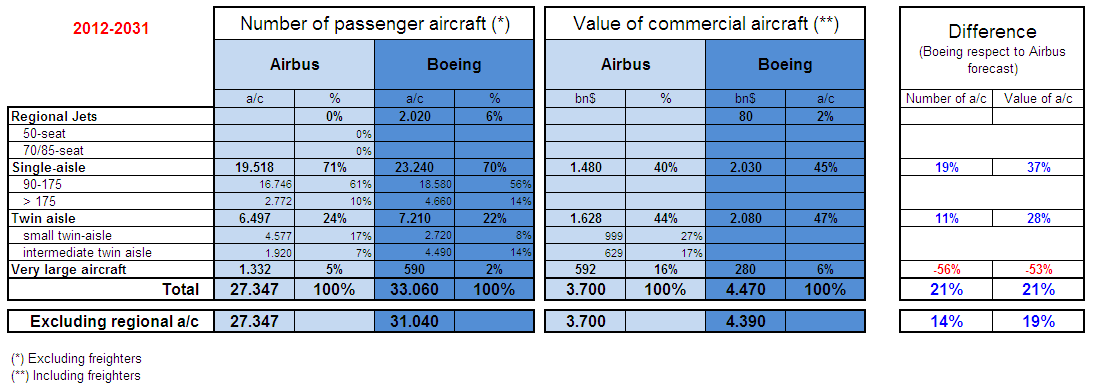
Comparison of Airbus GMF and Boeing CMO 2012-2031.

Some comments about the comparison:

  • Boeing sees demand for 14% more passenger aircraft (excluding regional a/c) with a 19% more value (including freighters).
  • Boeing continues to play down A380 niche potential (56% less a/c than Airbus’ GMF), though for second year in a row it has slightly increased its Very Large market forecast, this time by 20 a/c, or 3.5%.
  • On the other hand, Boeing forecasts about 200 twin-aisle and 4,200 single-aisle more than Airbus, clearly pointing to its point-to-point strategy versus the connecting mega-cities rationale presented by Airbus.
  • In terms of RPKs (“revenue passenger kilometer”), that is, the number of paying passenger by the distance they are transported, they see a similar future: Airbus forecasts for 2031 ~12.8 RPKs (in trillion) (a ~4% increase vs last year GMF) while Boeing forecasts 13.8 (also increased about 3%).

The main changes from last year’s forecasts are:

  • Both manufacturers have increased their passenger aircraft forecast in about 500 a/c, less dramatically than last year’s change.
    • In the case of Airbus it has increased the single aisle segment, probably reflecting the success of the A320neo launch.
    • In the case of Boeing, they decreased both single aisle (130 a/c) and small twin aisle (300 a/c), but increased the intermediate twin-aisle in 900 a/c… selling internally a new version of the 777?
  • Both manufacturers have increased the value of RPKs in 2031.
  • Both manufacturers have increased the volume (trn$) of the market in this 20 years, 12% Airbus (to 3.7trn$) and 10% Boeing (to 4.4trn$).

Some catchy lines for those who have never seen these type of forecasts:

  • Passenger world traffic (RPK) will continue to grow about 4.7% per year (5.0% according to Boeing). This is, doubling every ~15-20 years.
  • Today there are about 15,500 passenger aircraft around the world, this number will more than double in the next 20 years to above 32,500 a/c in 2031.
  • The A380 market equation: Urbanisation + Mega-cities + Wealth = VLAs (Very Large Aircraft, i.e. A380 and B747).
  • Emissions of aviation industry amount to 2% of man-made CO2 emissions.
  • Centre of gravity of world travel will have moved from the Atlantic Ocean (in 1971) to the Middle East (2031).
  • A key driver here is the propensity to fly of the people as the economies of their countries grow. This is captured well by the graphic below, a classic in the industry. This time, Airbus mentioned in the GMF that it has carried out a survey during summer asking 10,000 people around the world whether they expected to fly more in the future. This was true especially in China and India.

Trips per capita vs. GDP per capita (source: Airbus GMF).

Again, I strongly recommend both documents (GMF and CMO) which, differences apart, provide a wealth of information of market dynamics. The complete book from Airbus will be published online next week according to Chris Emerson (SVP for Future Programmes & Market Strategy).

In case you find it tough, to read those kind of booklets, you may take a look at the video of the press conference, a great class on global economy, world aviation, forecasting, trend spotting…

11 Comments

Filed under Aerospace & Defence

Neil Armstrong and engineering

While on holidays I read the following tweet from my brother:

Some weeks have passed by since I last wrote in the blog, and today I just wanted to pay homage to Neil Armstrong. In the wonderful obituary dedicated to him in The Economist, he is portrayed as having “engineer’s reserve, mixed with a natural shyness” and someone who didn’t like to be treated as a hero (though as the article goes “the struggle against heroism seemed particularly futile”).

The obituary quotes a self description he made at an address to the America’s National Press Club in 2000 (podcast here):

“I am, and ever will be, a white-socks, pocket-protector, nerdy engineer, born under the second law of thermodynamics, steeped in steam tables, in love with free-body diagrams, transformed by Laplace and propelled by compressible flow.”

I love that description and we may appreciate him even more for his humbleness, but, as the tweet of my brother says, thanks to figures like his, even if due to a collective achievement, there are students that are encouraged to become engineers. Three videos:

The arrival to the Moon…

Neil Armstrong’s address at his college at Purdue University praising the engineering profession:

A nice and short tribute to him I found surfing the web:

Leave a comment

Filed under Aerospace & Defence

Flying to Corsica (3/3)

This post is the third one of a series describing our flight from Toulouse-Lasbordes to Corsica and back. I recommend to read beforehand the first and second posts of the series.

I dedicated a single post to cover each of the 2 flights that took us to Propriano airfield. I will include in this single post some comments and pictures corresponding to the 3 flights that we needed on the way back to Toulouse.

Flight 3 (Asier at the controls): Propriano – Bonifacio – Porto Vecchio – Figari

This first flight had 2 purposes: to go to another airport in Corsica where we could refuel the aircraft (Propriano did not have gas station) and to perform a sight-seeing flight around the island. If the weather had permitted it, Jean Louis would have taken us over the mountains. The weather did not permit so, thus we flew over the coast.

Leaving Propriano.

“Torra di Campomoru” at Calanova.

Quiet beach south of Tralicetu.

Far sight of the commercial airport of Figari.

Approaching Bonifacio.

I have many other beautiful pictures of Bonifacio, but I believe I will soon write a post entirely dedicated to it. So I can give you a view of the city from the land, air and sea.

Southernmost point of Corsica.

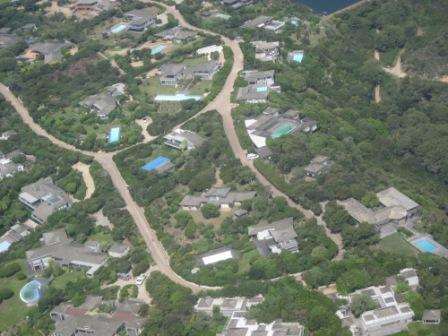
Villas at Sperono.

Flight 4 (Asier at the controls): Figari – Propriano – Ajaccio – Saint Tropez – Avignon – Alès

Having refueled the aircraft at Figari, we commenced our return flight to mainland France, by first bordering again Corsican coast.

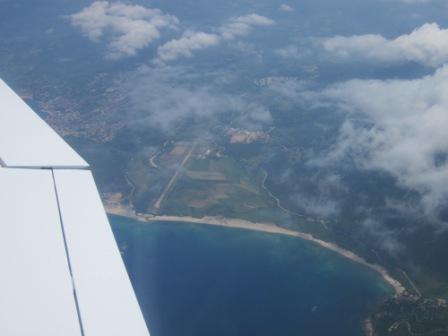
Propriano airfield.

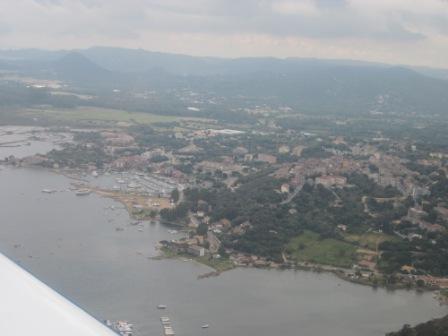
Ajaccio port.

Some hours later…

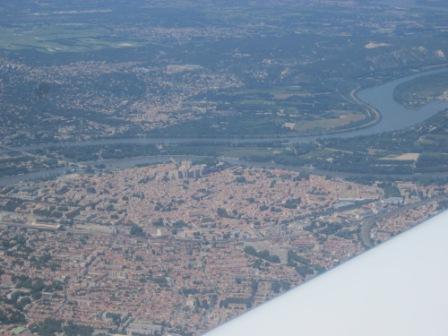
Pope’s palace in Avignon.

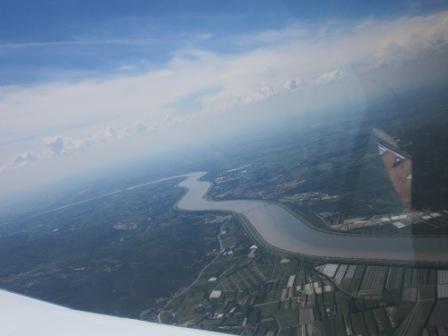
Rhone river at Avignon.

Alès.

Flight 5 (Javier at the controls): Alès –  Millau – Montpellier – Béziers – Carcassone – Toulouse Lasbordes

Our original plan was to fly over Millau to see its viaduct (you may see a picture of it in this post about the 100km of Millau). However the weather was quite bad in the mountains between Alès and Millau and we had to change on the spot our plans. Luckily I was flying with Jean Louis who helped me in the preparation of the new route and in buying some time while he was taking the controls.

Change of plans due to the bad weather in the mountains, heading south to the coastline, re-calculating the route.

Avoiding further problems ahead (close to Sète).

Mission accomplished :-).

I guess that after seeing these 3 posts you may appreciate the beauty of learning to fly.

Leave a comment

Filed under Aerospace & Defence, Travelling

Flying to Corsica (2/3)

This post is a continuation to a previous post in which I described the first leg of our flight from Toulouse-Lasbordes to Corsica. If you haven’t yet taken a look at that one, I would recommend you to do so, as you would miss basic information and dozens of beautiful pictures of the French Mediterranean coast.

In the previous post I included images up until Cuers. There we refueled the aircraft and I took the controls of the aircraft, with Jean Louis (Asier‘s flight instructor) always by our side. This time Asier took the pictures.

Flight 2 (Javier at the controls): Cuers – Saint Tropez – Corsica – Sanguinary islands – Ajaccio – Propriano

Some curiosities about flying over the sea:

  • the distinction in the horizon between “land” and sky wasn’t very clear thus it was very important to pay attention to the instruments in order not to lose references and keep a horizontal straight trajectory;
  • as we progressed we always tried to spot ships down in the sea so in case of accident we would try to reach as close as possible to them, Jean Louis would do a water landing and we could be easily rescued;
  • we needed to increase altitude up to flight level FL55 (5,500 feet -~1,700m- vs. about 700ft that we held at some times of the first flight along the coast) so we could keep receiving the signals from VOR on ground at the coasts.

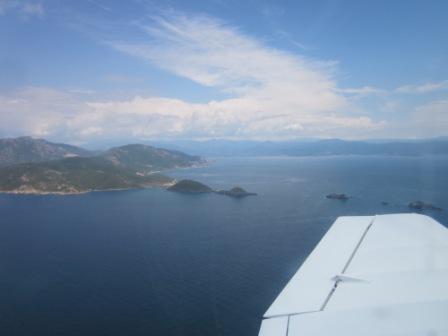
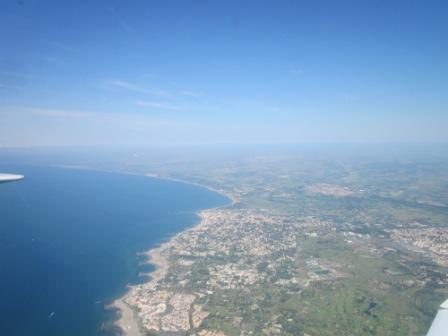
First sight of Corsica: Piana.

Flying around the Corsican coastline: Cargèse.

Notice Jean Louis (the instructor) with the life vest on.

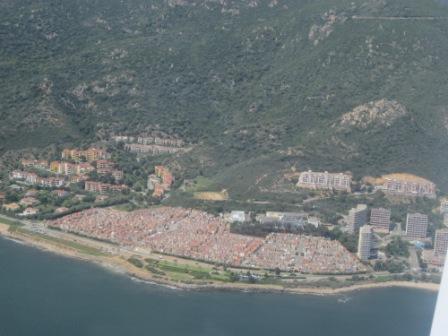
Cemetery of Ajaccio, looking like a village.

Jean Louis & me, at Propriano airfield.

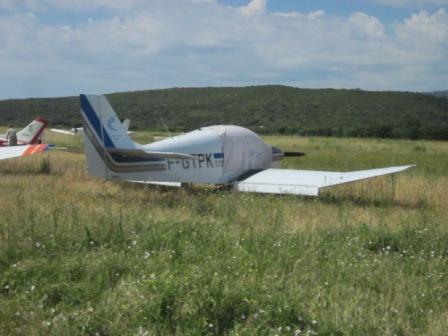
The aircraft, a DR-44, put to rest for the weekend at the airfield.

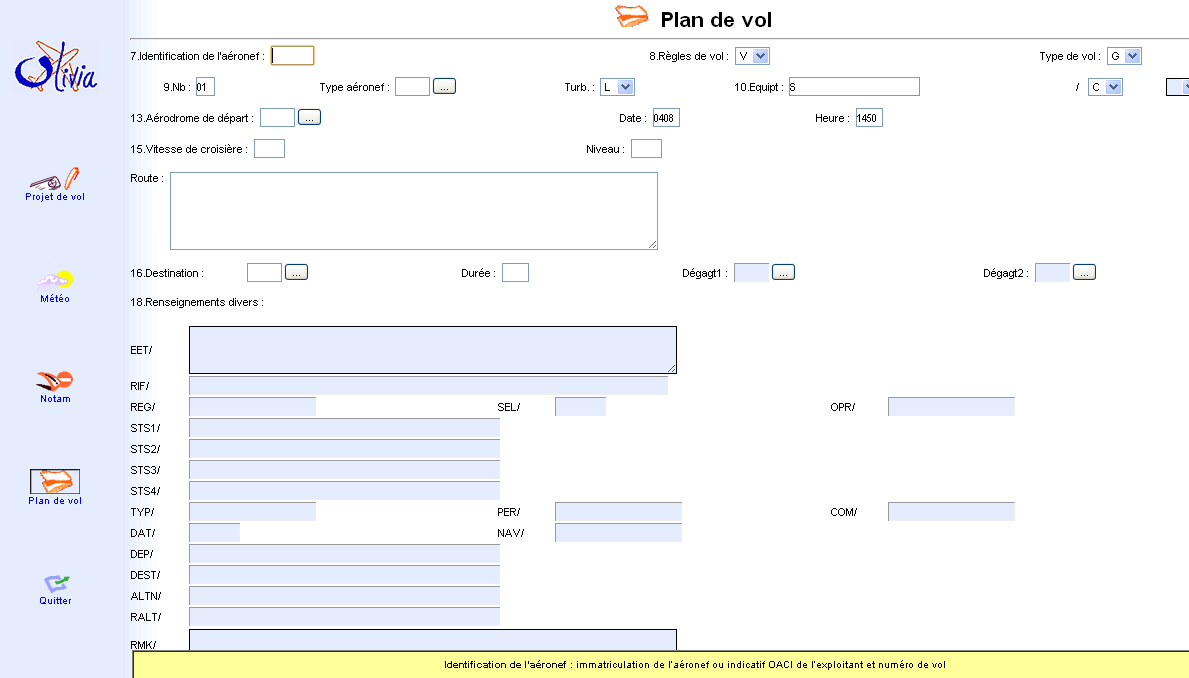
Since we are normally flying within continental France we are not required to produce a flight plan for the air traffic control. This time as we wanted to cross over the sea to Corsica it was required to do so. Thus, this was the first time we prepared one (another learning point!).

“Olivia”, French site where to file a flight plan.

One remark: it is incredible how much eases the communication with air traffic controllers having sent the flight plan beforehand, as they expect you and they know beforehand more or less the information you are going to provide.

And so we made it! We flew from Toulouse to Corsica 🙂

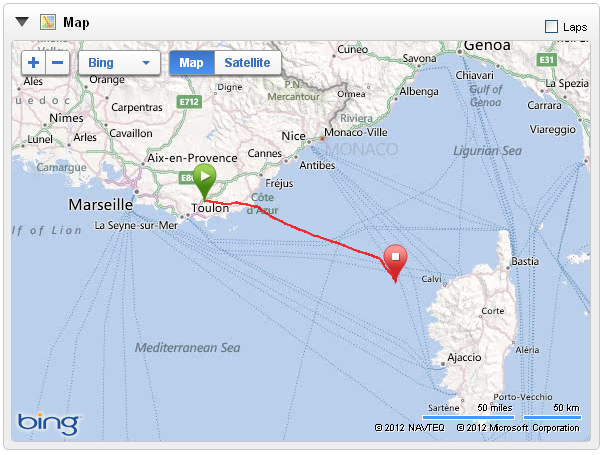
It took us about 4h30′ of flying time (both flights combined). You may check the Garmin records of the first and second flights by clicking on the links, and the route we followed in this second flight in the picture below:

Even though I have mentioned above that we had planned for the contingency of having to water-land in the sea, the fact that the trajectory in the Garmin records stops at half way through Corsica in the middle of the sea does not mean that we indeed carried out such maneuver. Explanation: since we flew so many kilometers as compared to running (the normal use I give to the device), the memory of the GPS reached its maximum as it recorded one “lap” for every kilometer…

(to be continued…)

3 Comments

Filed under Aerospace & Defence, Travelling

Flying to Corsica (1/3)

About 3 months ago, my colleague Asier and I went together with his instructor, Jean Louis, to Corsica for a weekend fly out, an activity of our club the Airbus’ Aviation Society.

The experience was terrific in several ways. I learnt a lot about flying and navigation the days prior to the fly out and during the trip. The views along the way by southern coastal France were superb. We enjoyed good weather despite of what had been announced and even found time to do some tourism and trekking in the island. But let’s go back to the flight.

On the way to Corsica, we made one stop at Cuers to refuel the aircraft and change pilot. Asier would start from Toulouse and I would continue to Corsica. On the way back, Asier would fly over the sea all the way to Alès and I would fly over Millau on the way to Toulouse.

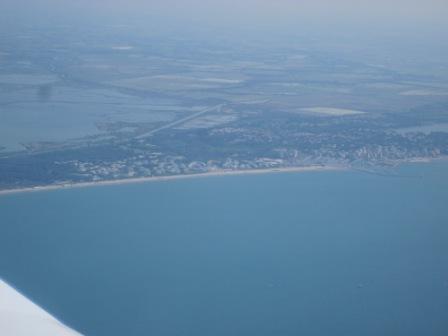
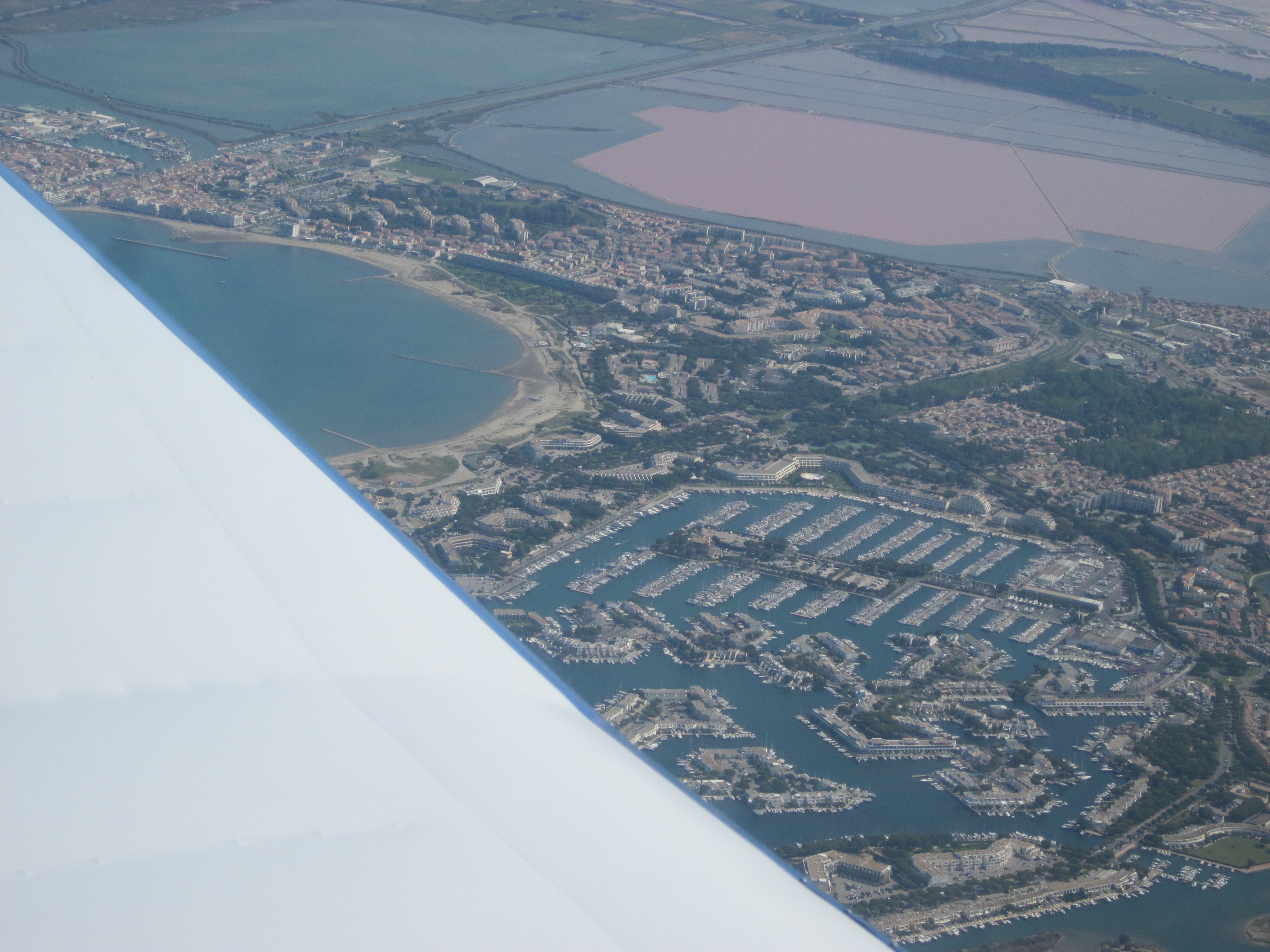
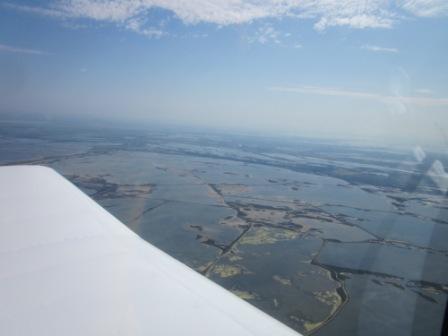
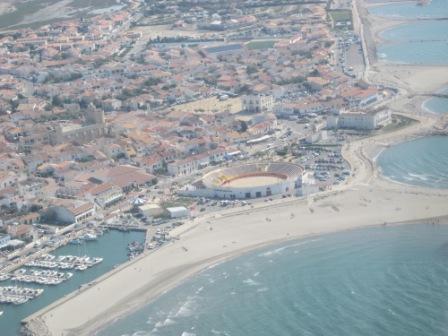
I’ll try to be brief with the explanations and generous with the pictures to give you a flavour of how the French Mediterranean coast looks like. Because of the number of pitures I want to share, I will distribute them in 3 different blog posts, starting with this one dedicated to the first flight.

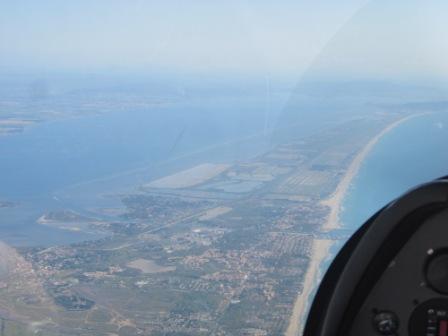
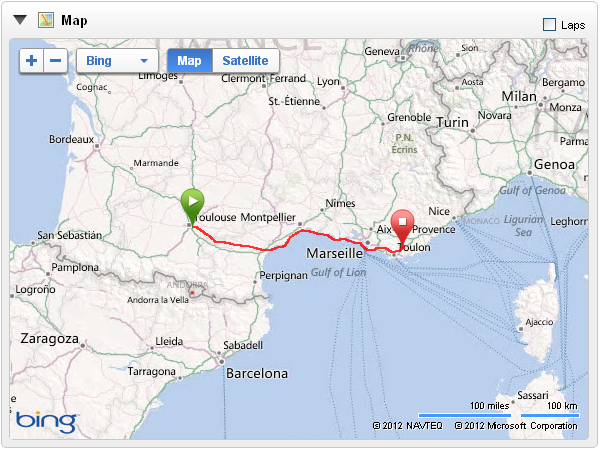
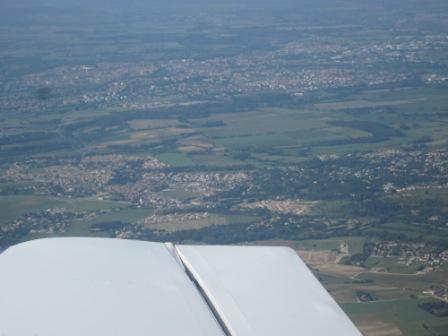
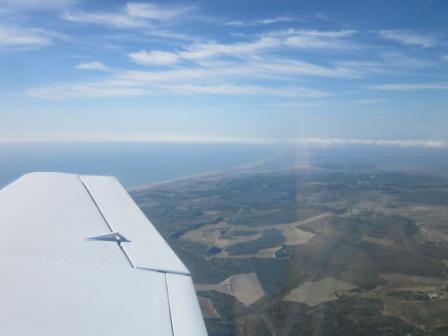
Flight 1 (Asier at the controls): Toulouse Lasbordes – Carcassone – Narbonne – Sète – Montpellier – Saintes Maries de la Mer – Fos-sur-Mer – Marseille – Cassis – Le Castellet – Toulon – Cuers

I encourage you to take a look at a map of France coast at the same time you are watching the pictures and try to identify the places (you may see the route at the bottom of the post as recorded by my Garmin).

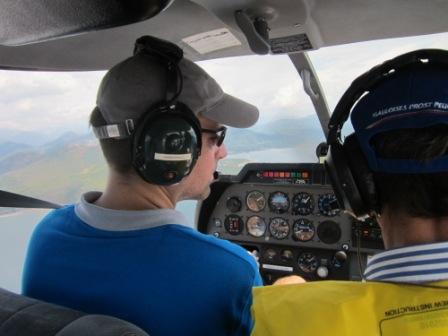
See the life vests (yellow bags) at hand in case of emergency ready at hand. Jean Louis would have his vest always on. In case of emergency he would take the control buying us time to get ours on.

Carcassone from the North.

Narbonne from the North.

Coastline at Cape de Adge.

Peninsula at Étand de Thau.

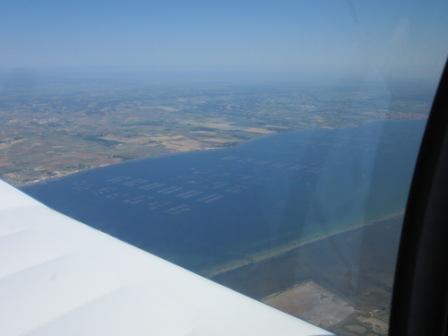
Seafood plantation at Étand de Thau.

Ville de Sète.

Frontignan.

The touristic village “La grande Motte” built in the ‘60s and ‘70s with its characteristic architecture with forms resembling pyramids.

The intricate Port-Camargue, one of the first “pleasure ports” in Europe, also from the ‘60s.

Closed ponds at the mouth of the Rhone.

Bull fighting arena at Saintes Maries de la Mer.

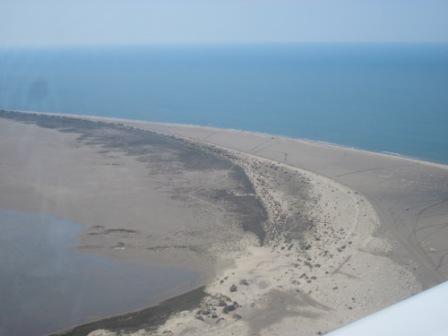
Sands at Lagunes de Beauduc (with its non-paved driveway).

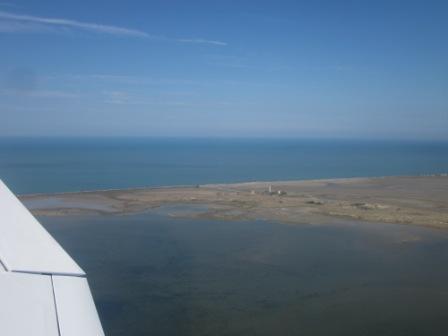
Lighthouse at Lagunes de Beauduc.

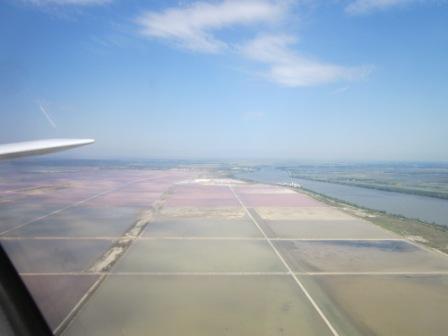
Colourful salt flats at Salins du Giraud.

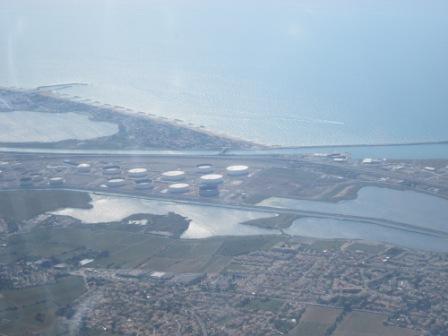
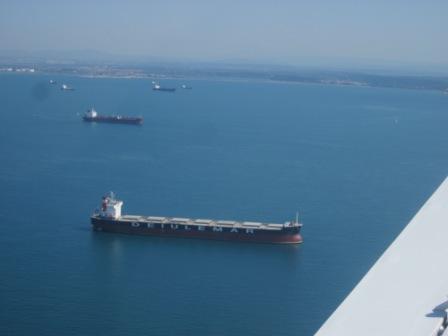
Ships departing from the industrial hub Fos-sur-Mer.

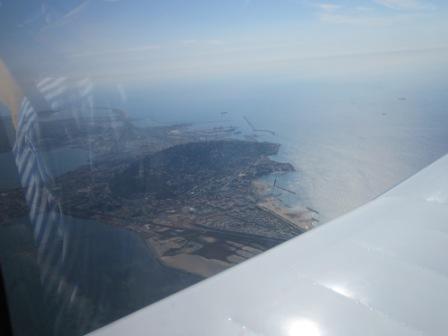
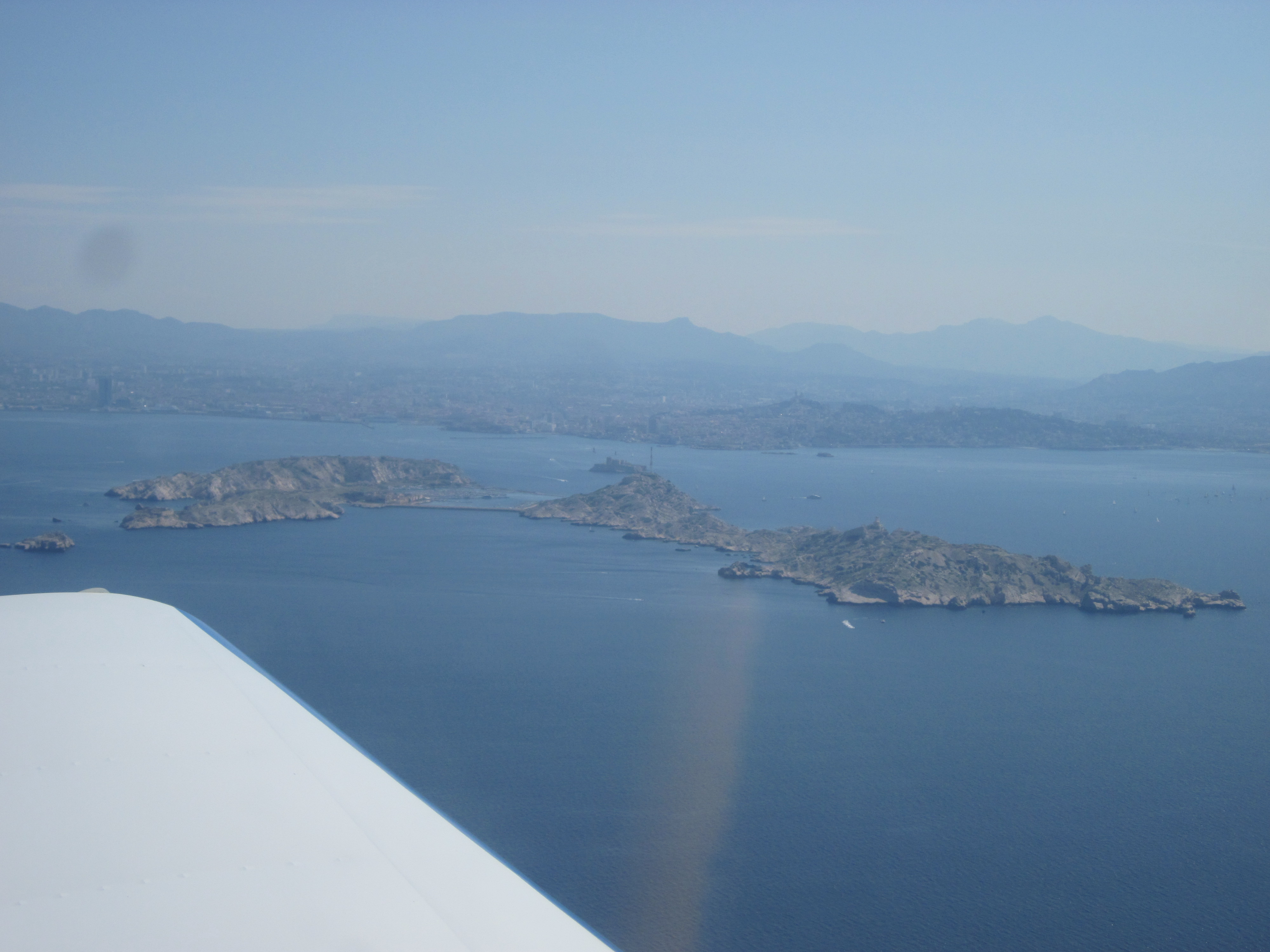
Marseille and “Les Îles”.

Les Goudes and “Les Îles” (past Marseille).

Natural reservation of the “Île de Riou“.

Ideal and quiet spot at Calanque de Sormiu.

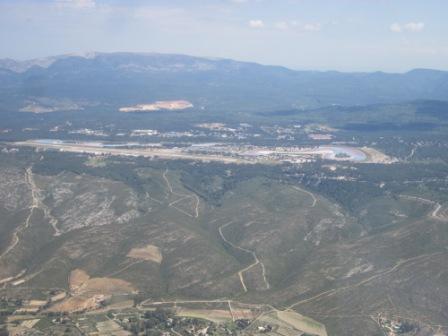
Former F1 “Paul Ricard” racing circuit and aerodrome at Le Castellet.

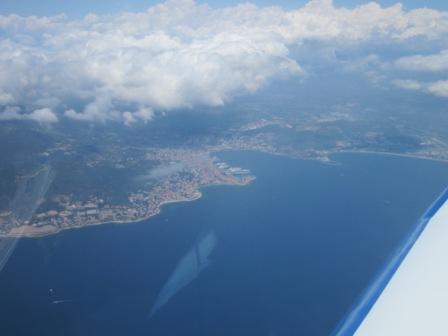
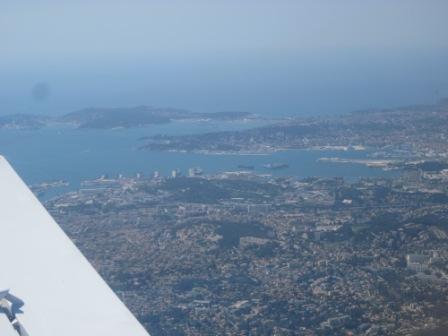
Military port at Toulon (an aircraft carrier can be seen).

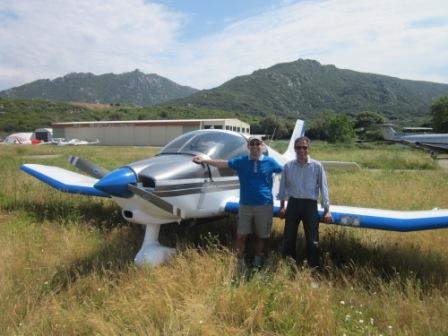
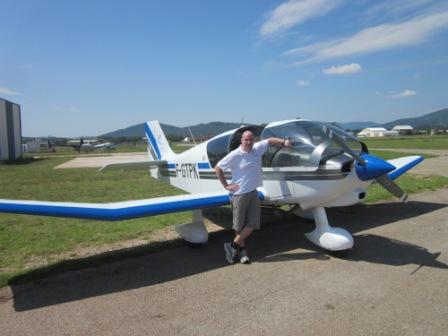
Asier after having flown 2h30′ hours posing side by side our Robin DR-44.

You may check the Garmin records of this first flight by clicking on the link and the route we followed in the picture below:

(to be continued…)

6 Comments

Filed under Aerospace & Defence, Travelling

Sorry, we missed the runway

I am sure that you have lived awkward situations in a flight. Miscommunications between the crew and passengers or funny messages received from the cockpit. That is precisely the topic of a book I read some months ago.

Sorry, we missed the runway

The book originated after a collection of anecdotes posted by readers of the online version of Der Spiegel. Seeing the success of the initiative, the authors, Stephan Orth and Antje Blinda, decided to launch the book with the original German title “Sorry, wir haben die Landebahn verfehlt” (in French “Désolé, nous avons raté la piste”, which is the version I read).

To be honest, what I was looking for it was more a book about serious incidents or accidents, in order to learn about things not to do as a learning activity towards my private pilot licence. Once I started and saw what it was really about I went on for the fun of it (plus the French learning component).

Among the anecdotes, curiosities and messages accounted:

  • the 747 City of Edinburgh which temporarily lost all 4 engines over Indonesia due to volcano smoke (“We have a small problem. The 4 engines of our aircraft have stopped. We’ll do everything possible to regain control. We hope you’re not very nervous” – they recovered control of 3 engines),
  • “if you forget anything aboard the airplane you’ll be able to find it tomorrow on eBay” (on a flight Orlando-Sacramento),
  • despite intuition: chances of surviving an aircraft accident are 70% (in fact, my economy and business administration teacher at the aerospace engineering school had survived 2 accidents!),
  • (after a heavy landing) “dear Sirs and Madams, please be seated until the captain finishes bringing what is left from the airplane to parking position”,
  • the following near crash of a A320 in Hamburg due to heavy cross wind and a sudden gust,

I guess that you can get a grasp of the book, though you can read the same stories in the link of Der Spiegel above. Finally, the book includes several sources and proposal further readings, among them: 1001crash.com, which I guess it is more the kind of reading I was originally looking for.

1 Comment

Filed under Aerospace & Defence, Books