Yesterday, I was referred via a tweet from my friend Javier to an article about a village in Spain, Urueña, a village with more book shops than bars. I strongly suggest the reading of that article (here, in Spanish) as the village seems to be wonderful, a destination for a future trip to Spain.
The article refers to a couple of other such “Village of Books”: Wigtown (United Kingdom), Tuedrestand (Norway) and Fontenoy-la-Joûte (France). This reminded me of another village of books in the South West of France which we visited last November, Montolieu. What best occasion than to share some lines and pictures about Montolieu than today April 23rd, the International Day of the Book.
In fact, it is interesting to know that there is an International Organisation of Book Towns (see here the article about it in the Wikipedia in English and French – more descriptive). There are about 40 such villages, a couple of them in Spain, some 7 of them in France; the first one to become such a Village du Livre in France was Bécherel, the second, Montolieu, in 1989.
Montolieu is located some 20 kilometres North from Carcassonne in the Aube department (1), and it has about 800 inhabitants, 15 book shops and a museum about book making (Musée des Arts et Métiers du Livre). We visited a few book shops, made some purchases, walked around the village and had a traditional lunch over there.
However, when we visited the village it was almost winter time, freezing, and the village was nearly deserted. I imagine that Montolieu is best visited in spring or summer, in order to enjoy lunch in a terrace and longer walks between the book shops (not all were open in last late November).
Until we come there again, I leave some pictures from that first visit.
—
(1) It is also just 5 km South from Saissac and not far from Lastours, two other small villages in the region with nice castles. See here a post I wrote about a flight excursion we did over the Cathar castles with some pictures of them.
Desde hace un par de años tenía en mi estantería de “libros a leer con prioridad” una edición de bolsillo con las dos partes de “El ingenioso hidalgo don Quijote de la Mancha” publicada por la Casa del Libro en 2004 con motivo del cuarto centenario de la publicación de la primera parte (1605).
El pasado mes de marzo, conversaba en red con mi primo Javier sobre la dimensión de la celebración del cuarto centenario de la muerte de Miguel de Cervantes (22 de abril 1616). Y en ese momento pensé: “Javi, antes de pensar en homenajes, estaría bien leer finalmente el Quijote”, así que me propuse leerlo en el algo menos del mes y medio que quedaba desde el 11 de marzo en que acabé el libro con el que estaba en aquel momento y el 22 de abril (aunque finalmente lo terminé el pasado 13 de abril (*)). Y ese, leer su principal obra, y escribir esta entrada sobre la misma, es mi homenaje personal a Cervantes.
En esta entrada no pretendo hacer un resumen ni un análisis de la obra sino sólo (1) confirmar por mi parte lo monumental de la misma: decenas de historias se van sucediendo añadiendo personajes y lugares, recreándose en historias o anécdotas paralelas, haciendo uso de multitud de figuras retóricas en una prosa cargadísima a la vez que rítmica, llena de guiños, giros y refranes, (2) compartir un par de reflexiones que me han llamado la atención durante la lectura y (3) dejar algunas frases o pasajes que me han resultado curiosos.
Los molinos. Si hay una imagen icónica de la locura de don Quijote en el imaginario popular es la de él mismo luchando contra molinos de viento creyendo que son gigantes. Mi sorpresa fue cuando vi que en toda la historia esto ocurre una vez. Don Quijote embiste a un molino. Se da en su segunda salida, en la primera aventura que tiene desde que sale con Sancho Panza (antes había hecho una primera salida en solitario). En el capítulo octavo (8) de cincuenta y dos (52) de la primera parte.
En el segunda parte, lucha contra otro molino, aunque esta vez es un molino de agua (aceña) y no va subido en rocinante, sino en una barca que queda destrozada por las ruedas del propio molino. En este caso no cree que sea un gigante, sino un castillo o fortaleza donde tienen encerrado a algún desaventurado que debe ser liberado. Esta historia del segundo molino se encuentra en el capítulo 29 de 74 de la segunda parte, me temo que sea el hecho de estar más cerca del final, lo que hace que haya recibido poca o ninguna prensa (como la mayor parte del resto de historias).
Sancho Panza. Otra reflexión viene a partir del contrapunto que supuestamente ofrece Sancho Panza a la locura del Quijote. Una vez leída la obra, me parece que en la sociedad se hace mucho hincapié en los dos estereotipos: que Sancho sea una persona cabal, racional, con los pies en el suelo, y que el Quijote sea un loco. A lo largo de la obra hay multitud de ocasiones donde es el Quijote el que ofrece juicios certeros (como ejemplo el capítulo dedicado al discurso sobre las armas y las letras), hace uso de refranes, da buenos consejos, cita pasajes de clásicos, etc. Y también en numerosas ocasiones el propio Sancho queda como necio, que es engañado con facilidad (por ejemplo por los duques, o siendo convencido por el propio Quijote una y otra vez sobre los encantamientos). Me parece que uno y otro andan a la par en cuanto a lucidez.
Algunos pasajes:
“[…] suele decirse que la alabanza propia envilece; pero mi escudero os dirá quién soy”.
“[…] andar de ceca en meca y de zoca en colodra”.
“Sábete, Sancho, que no es un hombre más que otro si no hace más que otro”.
“Ni yo lo digo ni lo pienso –respondió Sancho-; allá se lo hayan; con su pan se lo coman; si fueron amancebados, o no, a Dios habrán dado la cuenta; de mis viñas vengo: no sé nada; no soy amigo de saber vidas ajenas; que el que compra y miente, en su bolsa lo siente. Cuanto más, que desnudo nací, desnudo me hallo: ni pierdo ni gano […]”
“[…] la infinidad de dineros que allí sin provecho se gastaban, sin servir de otra cosa que de conservar la memoria de haberla ganado la felicísima del invictísimo Carlos V […]”
“[…] será mejor que nos estemos quietos, y cada puta hile, y comamos”.
“- No es la miel para la boca del asno –respondió Sancho; a su tiempo lo verás, mujer, […]” (eso es jugar con fuego)
“¿Qué diablos es esto? ¿Qué descaecimiento es este? ¿Estamos aquí, o en Francia?”
“Treinta mil volúmenes se han impreso de mi historia, y lleva camino de imprimirse treinta mil veces de millares, si el cielo no lo remedia”. (eso es confianza)
“- ¿Leoncitos a mí? ¿A mí leoncitos, y a tales horas?”
…
Y por supuesto, recomendar su lectura, “¡viva la andante caballería sobre cuantas cosas viven hoy en la tierra!”
—
(*) Una referencia para el lector que se esté planteando leer el libro y, como me pasaba a mí, lo vaya posponiendo porque le parezca un muro infranqueable: la lectura de las dos partes me ha llevado unas 40-45 horas. Esta cifra es bastante ajustada, dado que he ido leyendo en tramos de 25 minutos. En cada uno de esos tramos no leía mas de 5-8 paginas (en general entre 6 y 7), dependiendo de lo densas que fueran (la edición que tengo tiene la letra pequeña, poco espacio entre líneas, no muy cómoda de leer) y lo despierto que estuviese. Esas 40-45 horas las he empleado en unos 34 días, de los cuales he debido leer en todos alrededor de una hora, excepto en un par de ellos (cenas con amigos) y algo más los fines de semana.
Some months ago we announced that we were expecting a second baby, today we proudly announce that last Sunday, 3rd April 2016, at 23:11, our son was born in Toulouse.
The delivery went smoother than the previous time (her mother’s words) and both Luca and the child enjoy good health at the moment, recovering in the clinique.
His sister, Andrea, looking forward to introduce him to the world.
David, the newcomer (design from uncle Jaime).
David weighed 3,620 grams at birth and measured 51cm tall.
Little David, inscribed on Monday in the Toulouse registry as David Irastorza van Veen (1), seems to have light grey/blue eyes, looks like a good navigator to fly with at the side and asked us to thank you all for the interest and good wishes, and said that is looking forward to meeting you in the following days, weeks, months and years.
—
(1) To be inscribed in the Spanish registry in due time, Consulate time…
Last Sunday, March 27th, the French TV channel M6 played, within its programme 66 minutes, the documentary “Airbus, la plus grande usine de France” (Airbus, the biggest factory of France). It can be watched in the website of the programme here (it lasts about 47′, in French).
The documentary opened with amazing scenes of the transportation of A380 components by road to Toulouse, it then covered different scenes of life at Airbus in Toulouse: the A380 final assembly line, the preparation and execution of flight tests (with again the A380 as flight test bed to test the Trent XWB 97k engine), inspections by the airlines of the finished product at the delivery centre, the factory and the Airbus lycée at Saint Eloi for apprentices, the cabin mock-up centre, last-minute negotiations and payment process at Airbus headquarters in Blagnac (“le quartier chic”)… It provides a good view of the life in Toulouse around aviation, including details down to traffic jams, lunch at the canteen, checks at the security gates, etc.
It was good to see the documentary with the family as it let us show where we wander around along the year.
In this post, apart from sharing the documentary I wanted to reflect on its title, “Airbus, the biggest factory of France“.
Airbus Group (1) employs over 130,000 workers world-wide. Over half of those work for Airbus, the division which builds commercial airliners such as the A380. This was the subject of the documentary. Airbus employs about 30,000 workers in France, over 15,000 in the Toulouse area (2).
To put this into perspective I will refer to and wanted to share the following sources:
The reports and listings published by the French business weekly magazine “L’Usine nouvelle“. You can see here the latest listing of the top 100 factories in France. Be sure of it, Airbus Toulouse is the biggest one, followed by Michelin in Clermont-Ferrand and PSA-Peugeot Citroën in Montbéliard (Airbus Helicopters in Marignane comes 5th).
Even better, they published a handy map downloadable here [PDF, 5.5 MB] with those top 100 factories. If you want to study geography of France, you’d better start with this map.
An old post I wrote about the “Impact of Airbus in Toulouse employment” making some numbers using the concepts of direct, indirect and induced employment to gauge the impact of Airbus in a mid-size city like Toulouse.
—
(1) Formerly EADS, which encompasses Airbus commercial airplanes, Airbus Defence and Space (including military transport aircraft (e.g. A400M), fighters (Eurofighter) and former Astrium) and Airbus Helicopters (former Eurocopter).
(2) Between Airbus Operations and Airbus SAS (the headquarters or “le quartier chic” as labelled in the documentary).
Last Christmas I received a funny gift: a fold-a-paper-plane-a-day calendar for 2016. That is a collection of papers with instructions and colored paper to fold a paper plane each day of the year. Doesn’t it sound great? This is just a short post to share a bit of info about it.
The creators of the collection are Kyong Lee and David Mitchell, apparently two experts in the field of origami with plenty of different models designed between the two. The collection in itself hasn’t got 366 different models. In fact, there are 40 models that after mid February repeat themselves once and again with different colors to complete the whole year. As I got some questions about it, I share here a link where the collection can be found.
After this short introduction let’s go to the best part of it, the airplanes themselves. Even if not all models are based on real airplanes (some models are not even inspired on airplanes but based on animals – birds, etc) some are, and when colored they provide a very good look of the original. Below I share some pictures with a general and some weekly overviews of the different planes and some comparison of the most beautiful and real-model-based ones.
This slideshow requires JavaScript.
Main models:
Rockwell B-1 Lancer supersonic variable-sweep wing strategic bomber. Conceived to retire the B-52 (not quite yet) it entered operations in the late 80s and has played a major role in support of operations ever since.
Boeing 737. Derived from the 707, it first flew in 1967 and still today its newer versions are in production (nearly 9,000 have been delivered to date) and development.
Aérospatiale/BAC Concorde supersonic passenger jet. Supersonic commercial flight was a dream come true from the late 70s to the early 2000s thanks to the Concorde. Only 20 units were built, each one now treasured in museums across the world, since difficult economics and a crash in 2000 ended it its retirement.
Eurofighter Typhoon multi-role fighter. Built by a consortium made by Alenia Aermacchi, Airbus Group and BAE Systems, after its first flew in 1994 it was introduced in operation in 2004, being now the fighter aircraft of the main European air forces.
McDonnell Douglas F-4 Phantom II. Introduced in the 1960s, with more than 5,000 units built, it played a major role in Vietnam.
McDonnell Douglas F-15 Eagle. Since its introduction in the late 1970s, with more than 1,000 units built, it plays the air superiority role for the US air force and several others.
General Dynamics F-16 Falcon. Multi-role fighter introduced in the 1970s, with more than 4,000 built, still in production, now by Lockheed Martin, for export.
Lockheed P-138 Lightning. Introduced in 1941, with more than 10,000 units built, it was the primary US fighter in WWII until the introduction of the P-51 Mustang.
Space Shuttle. Introduced in 1981 and retired in 2011. In those 30 years of services it completed 133 successful launches and landings.
Lockheed SR-71 Blackbird. Long range strategic reconnaissance aircraft that, despite its introduction in the 1960s (now retired) still today keeps several speed and high altitude records.
La semaine dernière j’ai passé le contrôle de compétences linguistiques langue anglaise (FCL.055) VFR (1). Je m’avais mis cet objectif au début de l’année et au moment de démarrer avec la préparation j’avais un peu de difficulté à voir comment préparer l’examen. C’est la raison d’écrire ce petit article, pour partager les quatre ressources que j’ai utilisé.
Le site du « Ministère de l’environnement, de l’énergie et de la mer » (2) offre quelques bonnes exemples de comme le contrôle se déroulera (un exemple de vol fictif et deux exemples de écoute de bande). Je conseille de les reviser, surtout celui du vol fictif pour voir comme le scénario va être présenté au candidat.
Autres exemples d’écoute de bande. Le magazine de la Fédération Française d’Aviation, Info Pilote, a depuis des années une page dédiée à l’utilisation de l’anglais dans les communications aéronautiques.
La compilation des enregistrements de ces bandes se trouvent sur le site « Anglais pour voler ».
Des versions PDF de chaque page dédiées aux communications en anglais des différents numéros d’ Info Pilote pendant des années peuvent se trouver ici. (c’est utile si tu n’étais pas abonné au magazine il y a 10 années ou si tu ne gardes pas les vieux magazines).
Avec ces deux dernières ressources tu peux bien préparer l’exercice d’écoute de bande et voir des différents niveaux de difficulté.
Finalement, pour voir des exemples des situations inhabituelles avec des traductions proposées de français à anglais, cette autre site, Cockpitseeker, a un bonne répertoire (+300 situations).
Effort. Je m’étais mis des horaires pour étudier rigoureusement. Finalement, je n’ai pas suivi ces horaires que dans la moitié de la moitié des jours avant l’épreuve, mais j’ai bien étudié entre 12-15 heures de lecture et écoute de bande, avec un bon résultat à l’examen.
—
(1) Ancienne FCL1.028.
(2) Le nom du ministère peut changer assez suivent, je suggère de cliquer sur les liens ou faire un petit recherche sur l’internet.
(3) Pour l’inscription à l’examen, toute est bien expliqué sur le site du ministère, et la mise en œuvre d’un site internet dédié, OCEAN.
Rocamadour is a small village built in the gorges of a tributary to the Dordogne river. Several of its houses, churches and shops are partially built within the rocks. With about 500 inhabitants it receives 1.5 million of visitors per year, making it one of the most visited places in France and a major attraction for pilgrims, who among other things come to see a black Madonna in a chapel in the rock carved by Saint Amadour, hence the name of the village.
On the way to Rocamdour, flying from Toulouse there is Saint Cirq Lapopie, a small village built on a cliff over the river Lot. Both Rocamadour and Saint Cirq Lapopie are two of the most beautiful villages in the Midi-Pyrénées region and an obvious destination for an excursion, on the ground (which we did years ago) and flying.
Last Saturday, my father in-law and I booked a plane (a DR-400-120) at about 14:10 to fly over those places. In the way we would fly over Montech, to see the “Pente d’eau” from the sky (1), and Moissac, to see the Pont-Canal du Cacor, a bridge over the river Tarn made to allow the canal Lateral (an extension to the canal du Midi) to continue its course towards Bordeaux.
Pente d’eau, in Montech.
Pont-canal du Cacor, in Moissac.
The flight would be over 175 nautical miles (over 320 km) and would last almost 2 hours with the integration to the aerodrome circuit, though in the end we spent 2 hours and 10 minutes with the rounds we made around the different spots. The navigation went rather well with no other help than the chart, compass, heading indicator and VOR (no GPS nor tablets). We had some doubts at a couple of points but we quickly found ourselves, once with the help of the controller.
Navigation log.
This was the first flight in which we used the GoPRO video camera that I got last Christmas together with the suction pad to stick it to the windshield. With it we were able to have over 90 minutes of videos recorded that I have tried to shorten into the following 7 minutes:
At some points in the video the ground below seems to move slowly: we were flying at between 180 and 200 kilometres per hour, but at some 1,500 to 2,000 feet (500-700 m) above ground that is the way it feels. Be assured that the closer you get to the ground the faster it feels :-).
In the chart below you can see the route we followed: departure from Toulouse-Lasbordes (East of Toulouse), waypoint EN, Labastide-St. Pierre, Montech (South West of Montauban), Moissac (West of Castelsarrasin aerodrome), St.Cirq Lapopie (via Cahors) and Rocamadour (North West of Figeac).
Lastly, some pictures with the images of both villages and the flight log as used after the flight.
(2) Actual engine running time: LFCL-LFCL: 2.17 FH (2h10′, with the aircraft registered as F-GORM, with an engine powered with 120 HP) (taking off and landing from runway 15).
Santos is a port city about an hour drive from Sao Paulo, crucial for the development of the coffee industry in Brazil and the inflow of slaves from Africa in the XIX century. But Santos is mainly known today because of the Santos football club. The Santos football club is known because it was there where Peléplayed for the most of his career. And Pelé…
“My name is Ronald Reagan, I’m the President of the United States of America. But you don’t need to introduce yourself, because everyone knows who Pelé is.” Ronald Reagan (at a visit of Pelé to the White House)
In my third trip to Brazil, I wouldn’t let it pass away the opportunity to rent a car, drive from Sao Paulo to Santos and visit Vila Belmiro, the stadium of Santos FC and the museum “Memorial of the conquests” (Memorial das Conquistas).
Named the “Athlete of the Century” by the International Olympic Committee, Pelé joined Santos when he was 15 years old (in the museum you can see his first contract as professional) and in his first complete season he finished as top scorer of the league with just 16 years. At age 17 he scored 58 goals in the league; a record that still stands today… With Pelé, Santos went to win:
10 Campeonato Paulista (in 16 years from 1958 to 1973; in total the club has won to date 21 titles) (1),
6 Brasileirao (including 5 in a row from 1961-65 and 1968) (2),
2 International Cup (1962 and 1963), being the first team to win it twice.
Today, Santos it is neither the team with more Paulistas championships (Corinthians (27), Palmeiras (22) and Sao Paulo (21) are ahead in that ranking), it shares the lead in Brasileiraos with Palmeiras (both with 8), it is not the club with more Libertadores cups (8 teams are ahead in that ranking, led by the Argentinean Independiente (8), Boca Juniors (6), Peñarol (5)… including Brazil’s Sao Paulo with 3) nor is the American club with the most International Cup (Peñarol, Boca Juniors and Nacional de Montevideo won 3). And despite of all that, the club Santos was declared by FIFA as the best club of the XX century in the Americas(4). Because it was in Santos where Pelé played, and with him the team reached the summit in the 1960s when it lived a dream decade, the years of Os Santásticos who achieved 25 titles between 1959 and 1974. Santos, according to FIFA was the first team to reach the 10,000 goals scored and has plenty of other goal records (5). It was in that Santos that Pelé was the first attacker reaching the mark of 1,000 goals scored (6).
Those days are long gone. Nowadays the club, Santos, wanders around the 100th position of the World Best clubs (7), struggles in the Brasileirao (ending between 7th-9th in last 3 seasons) and most great players are continuously sold (8). However, Vila Belmiro still captures very well the essence of the good old times.
Vila Belmiro, or rather the Urbano Caldeira stadium, was built in 1916, close to the port of Santos. It is a small stadium with capacity for barely 17.000 spectators. Thus, for some important matches Santos plays in the bigger stadiums of Sao Paulo (mainly at Pacaembu (9)). Nevertheless, it’s a cozy stadium, where you have a good view of any spot of the field from anywhere. I liked especially the boxes at ground level named after the great players of the history of the club (10).
The tour of the stadium included a visit to the locker rooms (each locker in the local team room named after the club’s legends, with a special spot for Pelé), the tunnel to the field (well separated from the visitor’s tunnel, each at a different corner of the stadium), the field, the benches.
This slideshow requires JavaScript.
An anecdote for Spanish football fans: in the corridors at field’s level a poster with the following sentence from the Spanish football commentator, Julio Maldonado, can be seen:
“Silencio… juega el Santos”, Julio Maldonado, “Maldini” (Silence… Santos’ is playing)
I definitely recommend the visit to the museum and the stadium. You will be submerged into the history of football for a couple of hours (if you chose to read everything) for just 13 R$ (about 3 euros).
—
(1) Arguably the most important of Brazilian states’ tournaments.
(2) Competition founded in 1959.
(3) Created in 1960, is the South American equivalent to the then Europe Cup and nowadays’ European Champion’s League.
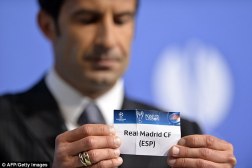
(4) The award was based on a vote by the subscribers of the bi-monthly FIFA World Magazine (see here). For the record, with over a 42% of the vote, Real Madrid was elected as best club of the century.
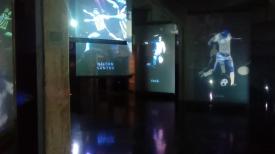
(5) The goal 10,000th was scored in 1998 (the club was founded in 1912). In the museum there is a digital counter updated with each goal scored. At the time of my visit it was above the 12,200 mark. For comparison, Real Madrid had scored about 8,800 goals in official competitions only up to January 2015.
(6) Pelé holds the Guinness World Record for being the player with most goals scored, 1,279.
(8) Unlike Pelé, who in 1961 was declared as a national treasure in order to prevent him from being transferred to richer European clubs.
(9) At the municipal stadium of Pacaembu there is another museum, the Museo do Futebol, which I also visited and about which I may write at a later point.
(10) I only referred to Pelé in this post but in Santos played at some point in time as well: Gilmar, Coutinho, Clodoaldo, Carlos Alberto (the latter two were part of Brazil’s 1970 World Cup final roster), and most recently Robinho, Ganso and Neymar.
“If you’re in the luckiest one per cent of humanity, you owe it to the rest of humanity to think about the other 99 per cent.” Warren Buffett
If there is a blog post that I am looking forward to write each year is this one. Few things can give you more pleasure than helping others (1). And in doing so I try to be as public and noisy as I can, hoping that I may serve the causes we contribute to also from the awareness point of view.
Let’s go and see the different causes we decided to support in this 2016 (2):
I know that between 100 and 200 of you will read this blog post. I bet with any of you that at least 50% of you will be compelled to take a look at some of these organisations above, 10% of you will consider making a donation. Do you dare thinking that 1% of you won’t actually make such donation?
I learnt about Kiva from Bruno back in 2009. Started contributing to Médecins Sans Frontières in 2010 after a conversation with Juan a couple of years before. I learnt from Slavery International at a temporary exhibit at the Museum of London. I started contributing to the sustaining of the Wikipedia after a tweet from Amalia. Discovered the Fundacion Hombres Nuevos thanks to my father’s 6-month volunteering in Bolivia. Learnt of Gapminder in TED. I started donating myself happiness with Fundacion Khanimambo after Nacho and Alberto. I started using the support to cancer research as a way to honour and encourage work colleagues going through therapy. I received the #IceBucketChallenge from Alvaro and Teresa. The latest additions, Avocats sans Frontieres and Movement du Nid, are ideas from Luca… and so on. After each cause there is someone who let me discover them.
If not one of those, I am sure that you will be able to find a cause, a NGO which resonates with you. Do yourself a favour and contribute to it. It can be just 25$, the cost of diner at a restaurant. You’ll feel much better.
“No one has ever become poor by giving.” Anne Frank, diary of Anne Frank
I discovered Najacliterally by flying over on the way to Villefranche des Rouergues (LFCV) during a flight lesson with my instructor back on July 17th, 2014. That day, when I came back home, I immediately told Luca: “we have to go on an excursion to Najac“.
We did.
Back in April 2015 we made a weekend excursion doing a night stop over in Najac and visiting other nice villages (mainly) around the Tarn river. Luca wrote two nice posts about them with plenty of bright pictures: Najac and Route verte (including Castelnau-de-Montmiral, Puycelci, Bruniquel and Saint Antonin Noble Val).
Time passed, and I got my private pilot licence last November (1) and for the first flight with passengers (Luca and Andrea) we decided to go again to Najac.
On the way to Najac we would fly by Cordes-sur-Ciel and on the way back we would partially follow that route verte by St. Antonin de Nobleval, Bruniquel, Puycelci… basically the same trip but up above in the air.
The flight would be short, as estimated when preparing the navigation. It would take about 57 minutes of flight time plus around 10% to take into account the wind, some more minutes for the integration back in Lasbordes… about 1 hour and 10 minutes (2).
Navigation log prepared for the trip Toulouse Lasbordes – Najac.
Find below a view of the chart to have an idea of the circuit:
Chart view of Toulouse Lasbordes – Najac.
Let me share some pictures of the villages and a video taken by Luca:
(2) In the end it took 1.37 engine hours (or 1h22′), a bit more than estimated… due to departing Southbound and not having found Cordes-sur-Ciel straight away plust some time spent in circling villages.