Review of Boeing Current Market Outlook 2015

Just ahead of Paris air show, Boeing Commercial published its yearly update of the Current Market Outlook (CMO) for the next 20 years of commercial aircraft market (2015-2034).

I have just compared the figures for passenger aircraft of the last two years’ CMOs:
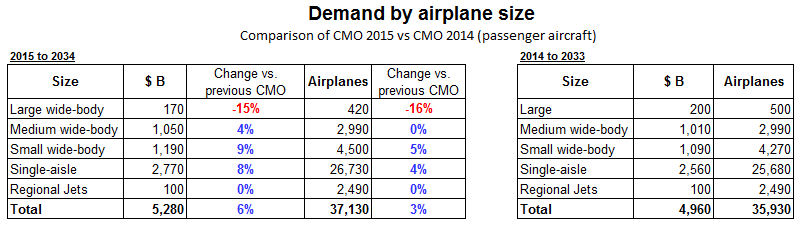
CMO 2015 vs 2014 comparison.

CMO 2015 vs 2014 comparison.

Some comments to it:

  • You can see that the total number of new aircraft delivered has slightly increased from 35,930 to 37,130, a 3.3%, which is consistent with the 4.9% traffic increase (1) that Boeing predicts (2).
  • The volume (Bn$) increases by a larger percentage, 6% (320Bn$)… this is due mainly to the increase in:
    • single-aisle aircraft expected sales in volume (8%, +210Bn$) and aircraft (+210), and
    • small wide-body segment with 230 more aircraft (+5%) and an increase in volume of 100Bn$ (+9%).
  • Two years ago, I wrote about a sudden change between CMO 2013 and CMO 2012 of the mix in wide-bodies; in this respect, CMO 2015 is consistent with last year’s one, showing simply a slight increase in demand for both sub-segments.
  • Interesting to note how Boeing continues to downplay the large aircraft segment (-16% in terms of number of aircraft) at the moment when a A380neo is discussed.

This year study’s figures and presentation focus on single-aisle (737 MAX, “fuelling forecast”) and small wide-bodies (787, “re-shaping long-haul marketplace”), the products to be pushed by the sales force.

Find below the nice infographic [PDF, 2.1MB] that the guys from Boeing have put up together:
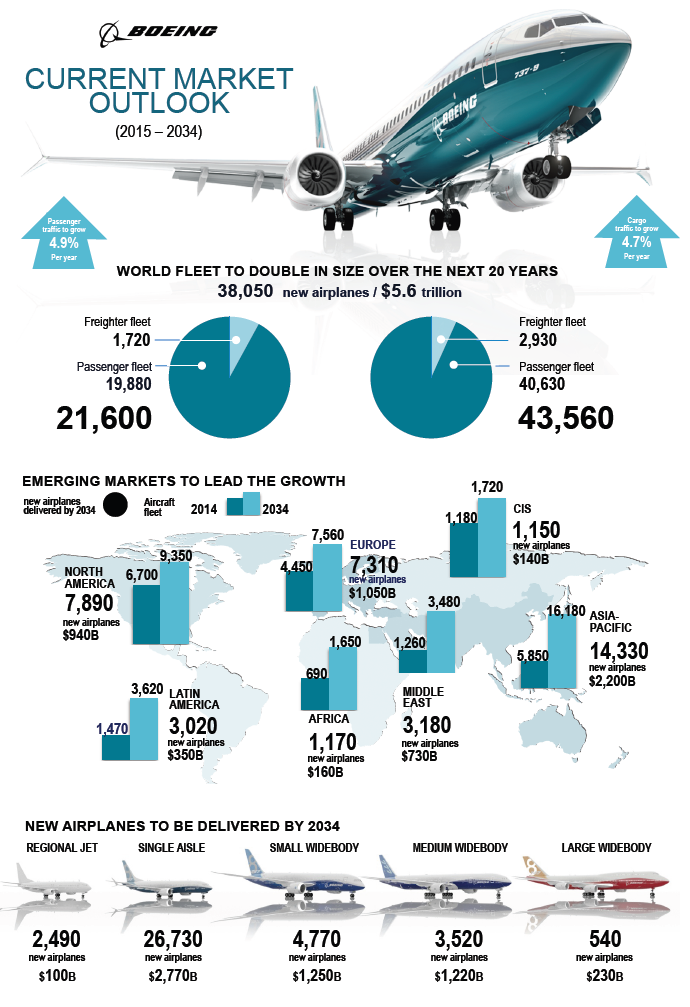
Boeing Commercial Aviation Market Forecast 2015-2034 infographic.

Boeing Commercial Aviation Market Forecast 2015-2034 infographic.

As always, I recommend going through the CMO, as you can learn a lot about the business: from global numbers, to growth, traffic figures, fleet distributions, forecasts, etc… You may find the presentation [PDF, 3.8 MB], a file [XLS, 0.6 MB] with all the data or the full CMO report [PDF, 6.5MB].

For a comparison between this CMO and the respective Airbus’ GMF we will have to wait until after the summer, when Airbus publishes its update. Until then, find here the comparison based on 2014 market studies.

This year together with the CMO, Boeing provides two interesting papers from a couple of years ago: Key Findings on Airplane Economic Life [PDF, 0.3MB, dating from August 2013] and A Discussion of the Capacity Supply -Demand Balance within the Global Commercial Air Transport Industry [PDF, 0.6MB, dating from August 2013].

(1) Traffic increased measured in RPKS (revenue passenger kilometers) in billions.

(2) These two ratios, 3.3% fleet demand and 4.9% traffic growth, point to an implicit increase in the average size of the aircraft in fleet and / or a higher utilization of the aircraft (higher availability).

(3) Find the reviews I wrote comparing 2014 CMO with 2013 CMO and 2013 CMO with 2012 CMO.

2 Comments

Filed under Aerospace & Defence

Hiroshima & Nagasaki, Enola Gay & Bockscar, Little Boy & Fat Man… National Museum of the Air Force

Today, August 6th, in 1945 the Boeing B-29 Superfortress “Enola Gay” dropped over Hiroshima (Japan) the first nuclear bomb, “Little Boy“, used in combat. I guess you have had the chance to read about it in several places along the day. A couple of years ago I wrote a post about that story touching it from different points of view that I had experienced in the previous years: Hiroshima Peace SiteManhattan Project, Einstein’s “The World as I see it“, Genbaku Dome, Sadako Sasaki’s origami,  the  “Enola Gay“, Enola Gay’s Navigator’s Log replica at Pima Air and Space Museum in Tucson…
… last November, we visited the National Museum of the Air Force (1) at Wright-Patterson Air Force Base in Dayton, Ohio. That museum enables the visitor to get more close-up experiences to the story of that August 6th of 1945.

As several other aerospace museums it counts with its own B-29 Superfortress… however, if the Enola Gay is displayed at National Air & Space Museum at Dulles, this one displayed at the National Museum of the Air Force (Dayton) is Bockscar, the aircraft which dropped the Fat Man” atomic bomb on Nagasaki on Aug. 9, 1945, three days after the atomic attack against Hiroshima. You can read about Bockscar in the site of the museum, here.

Bockscar, the B-29 which dropped "Fat Man" atomic bomb over Nagasaki on August 9, 1945.

Bockscar, the B-29 which dropped “Fat Man” atomic bomb over Nagasaki on August 9, 1945.

At Pima Air and Space Museum (Tucson) you could see a replica of Little Boy, however at National Museum of the Air Force (Dayton) they have in display a full size (a 4.4 tonnes, 3m-long bomb) replica of it:

Full size replica of atomica bomb Little Boy, launched over Hiroshima on August 6, 1945.

Full size replica of atomic bomb Little Boy, launched over Hiroshima on August 6, 1945.

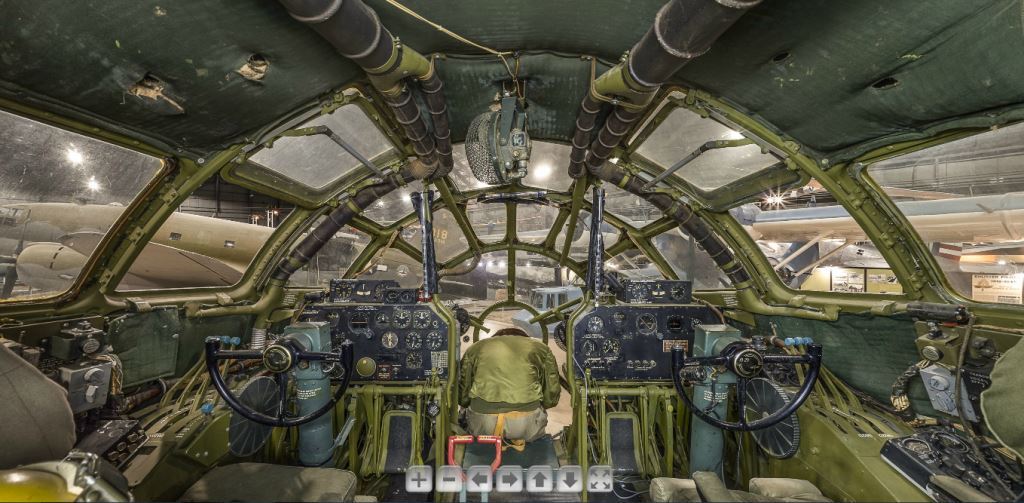
Seeing the bomber B-29 Superfortress from up close is impressive, even more if they are either the Enola Gay or Bockscar, but a completely different experience is going inside the cabin of a B-29. At the National Museum of the Air Force (Dayton) they have at the exhibit dedicated to the Korean War a B-29 walk-through fuselage in display. See here its virtual tour.

B-29 fuselage.

B-29 fuselage.

See below some of the pictures we took of the inside:

Actually, you can get very close to experiencing that by going to the virtual tour at the National Museum of the Air Force (Dayton), where you can go through all sections of the bomber B-29 Superfortress Bockscar. Find the link here.

B-29 Superfortress Bockscar virtual tour.

B-29 Superfortress Bockscar virtual tour.

Finally, see a map displaying US Army Air Forces operations in the Pacific at the time:

Map of US Air Force Pacific operations.

Map of US Air Force Pacific operations.

(1) I haven’t yet written a post about that museum in this blog but my brother Jaime has, find it here; a superb piece of aeronautics information.

Leave a comment

Filed under Aerospace & Defence

Switching jobs to A330neo programme

About four and half-year ago I announced in this blog that I was coming to work to France. I will use this communication channel again to inform those of you who don’t know it, that about a month ago I switched jobs within Airbus Group: I moved from Airbus Defence and Space A400M programme to Airbus Commercial A330neo programme.

Let me share a couple of pictures to depict the move:

Change of lanyards and key chains... a basic integration exercise...

Change of lanyards and key chains… a basic integration exercise…

I will nevertheless keep a close eye in A400M, a programme where I spent the last 5 years working on it…

My first flight on-board the A400M.

My first flight on-board the A400M.

2 Comments

Filed under Aerospace & Defence

La corrida pedestre de Toulouse (2015)

About a month ago, on the evening of July 3rd, it took place the XVI edition of the “Corrida Pedestre de Toulouse“, arguably the most popular race in the region with a participation of about 5,000 runners among the two distances, 3 and 10km (4,089 finishers in the 10km).

In the previous post I stressed how satisfying the experience is of running a race end to end in the company of friends. In the case of this race, I was lucky enough to have my friend Jose visiting us in Toulouse (being an aerospace professor, he made a study trip to Airbus during those days). Thus, we subscribed together to the race and we ran it again end to end together (1).

The Corrida is always a nice run as it goes through all the main streets of Toulouse. This year the organization had announced a revised circuit which had been measured again (2). Strangely enough during the race itself the circuit was also different to what had been announced! [PDF, 782KB] See it below:


But the essence of the race is kept: very good atmosphere in Capitole square both before and after the race, the chance of running through the main streets of downtown Toulouse (Alsace Lorrain, Saint-Rome, Metz, Quai de Tunis, Pont Neuf, Pont Saint Pierre…) emptied of cars for the occasion.

My friend Jose and I finished in the 534th and 535th positions in ~46’19” (that is among the first 13% runners; though that is aided by the amount of casual runners who take to the streets on this day). That is about 3 minutes slower than it took me last year.

Jose and I running the last metres (right side of the photo).

Jose and I running the last metres (right side of the photo).

Within Airbus, we also arranged a team of above 30 runners to take part in the race, with the result of winning the companies challenge with accumulated time among our first 5 runners of 3h20’27”!

(1) To be honest, I lost him at the km 7 when he took some 10 metres of advantage that extended to some 50m  by the 9th kilometre, but he then waited for me so we effectively completed the last stretch together again.

(2) In the previous years there had been complaints that the circuit was shorter than 10km. That had also been my experience (9.63km).

Leave a comment

Filed under France, Sports

Madrid Marathon (MAPOMA) 2015

“Happiness only real when shared”, Christopher McCandless (1)

On April 26 (2015) I completed my 12th marathon (2) by running the Marathon of Madrid, 15 years after having completed the first in the same place. My friend Jose and my brother Jaime completed there their 1oth marathon.

We have run together several marathons: Paris, Berlin, Rome, Athens, Rotterdam, New York, Sevilla… the fact is that we have not run any of those together from the start to the end (3). For these reasons we had decided in the previous days that this time, we would run it together from the beginning to the end, no matter what happened.

After the bad experience in Sevilla, I had found it difficult to find the motivation to train. However, a couple of weeks after Sevilla, I beat my personal best in half marathon and managed to complete a good mileage prior to Madrid. I thus felt that I arrived to Madrid in a good shape. On the other hand, Madrid hasn’t got the best profile to attempt a personal best.

Madrid marathon profile.

Madrid marathon profile.

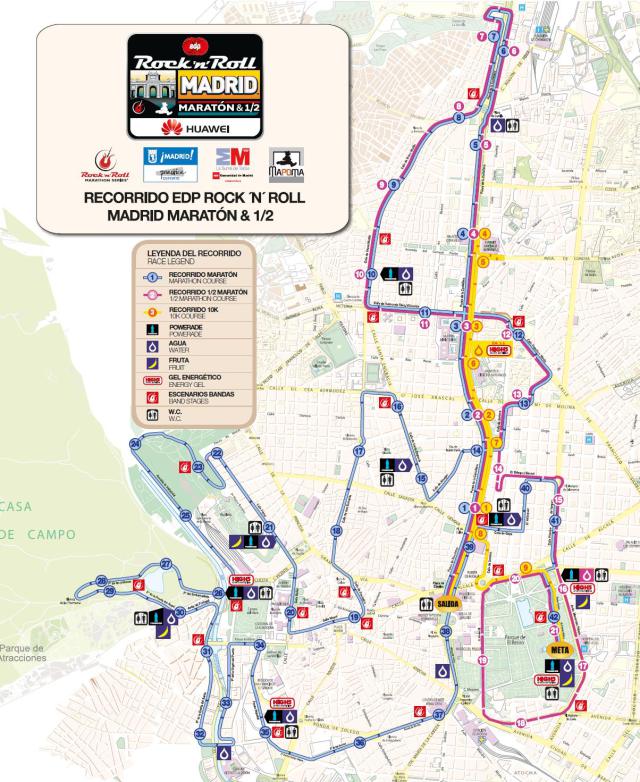
Thus, we decided to take it rather easy. Our quick strategy was something like: run at about 5’20″/km the first climb (7km) then run 5′ till the half marathon, close to that pace till the entrance of the Casa de Campo (~26km), take it easy there, exit it and do the final 6km climb as we can… thinking we could finish in about 3h45′ doing that.

Madrid marathon route.

Madrid marathon route.

… and that is what we did. Give or take some seconds to the paces, and softening a bit more in the second half. Our final net time was about 4h02′, but you would have to discount about 9′ to have the time we were actually running as we had a rather long pit stop at km. 13. Discount those minutes and we would have been at some 3h53′, just a few minutes above the target.

Time splits.

Time splits.

My brother Jaime wrote a very detailed post here about how the race developed. I suggest you to read it.

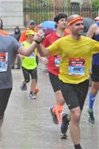
The marathon in Madrid normally is rather hard. It was a pleasant experience this time. Running together with friends. Not being mentally pressured by the time. Running at home; knowing what would be after almost every turn, how long and how hard the climbs would be, where one could relax the legs… The rain, heavy rain at several moments, made it only better. More epic in a way. Helping each other in the last kilometres, cheering my fellow runners. And finally crossing the finish line, sprinting in the Retiro park where I have trained so often with Jaime. As he said to end his blog post,

It was an honour to run with you

(1) In a previous post, “Running in the Incles’ valley“, I described the joy of running alone in the mountains. I then compared it with what the experiences of Christopher McCandless, the man about whom the story of the movie “Into the wild” is based. I quote here one of his latest sentences.

(2) Not counting Millau in 2011 (100km) nor Sevilla 2015 (not completed).

(3) I completed Millau together with Jose in 2011, and I have completed several San Silvestre with Jaime.

5 Comments

Filed under Sports

Montech water slope (Pente d’eau) at Canal du Midi

The Canal du Midi (1) connects the Mediterranean sea with the Atlantic Ocean. It was built at the end of the XVII century under the supervision of Pierre-Paul Riquet. At the time it was one of the most remarkable civil engineering works and that has deserved its recognition as an UNESCO World Heritage Site.

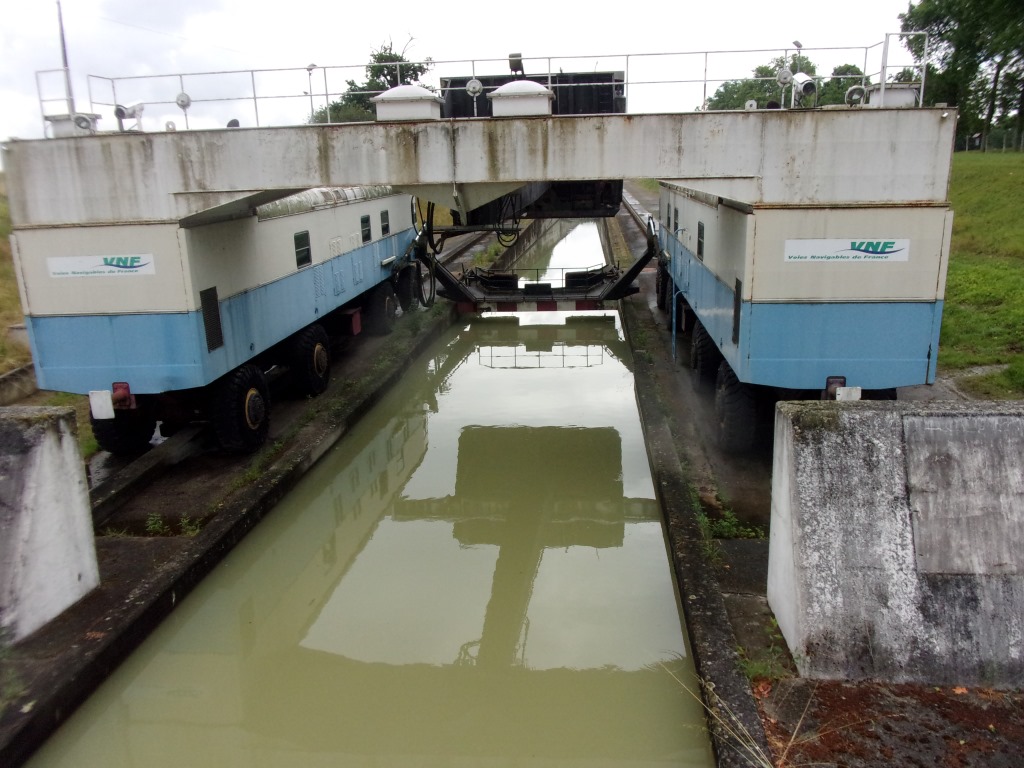
Along the canal there are plenty of beautiful spots and some oddities. Some weeks ago, we visited one of the latter ones: the Pente d’eau of Montech, that is, a water slope. What is a water slope?

When two water streams at different heights need to be connected we are used to see water locks (think of the Panama Canal, or Suez). In the Canal du Midi there are dozens of locks (65 to be precise). However, engineers in the 1970s employed a time-saving different approach. Instead of having the boats go through 5 such locks at Montech they constructed in parallel a water slope, thus saving 45 minutes in the route.

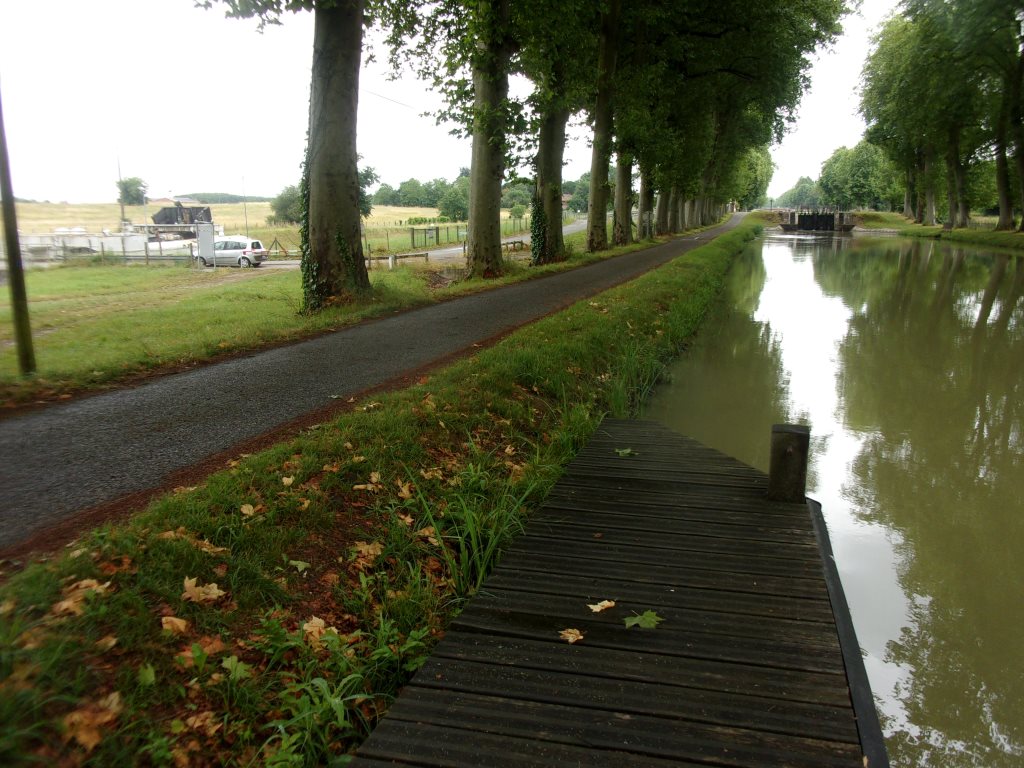
Canal du Midi to the right, water slope to the left.

Canal du Midi to the right, water slope to the left.

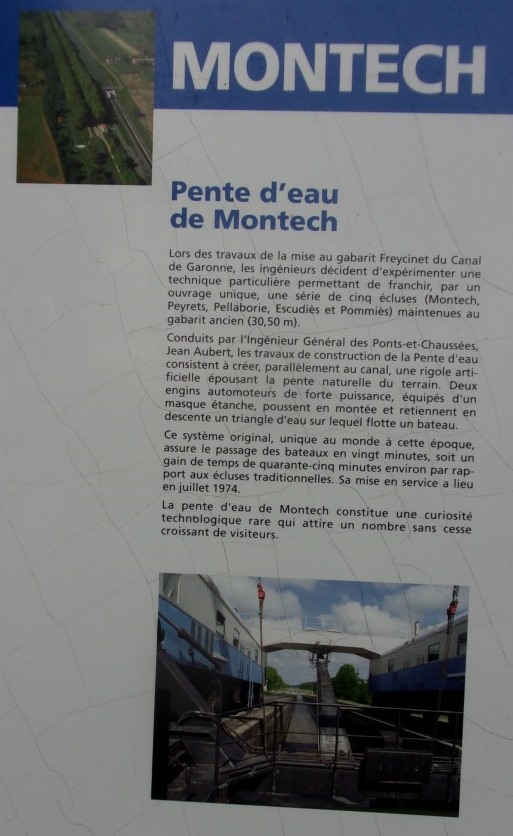
See below the panel with the explanation of the concept at Montech:

Explanation of the water slope (in French).

Explanation of the water slope (in French).

See here the explanation given by the Wikipedia.

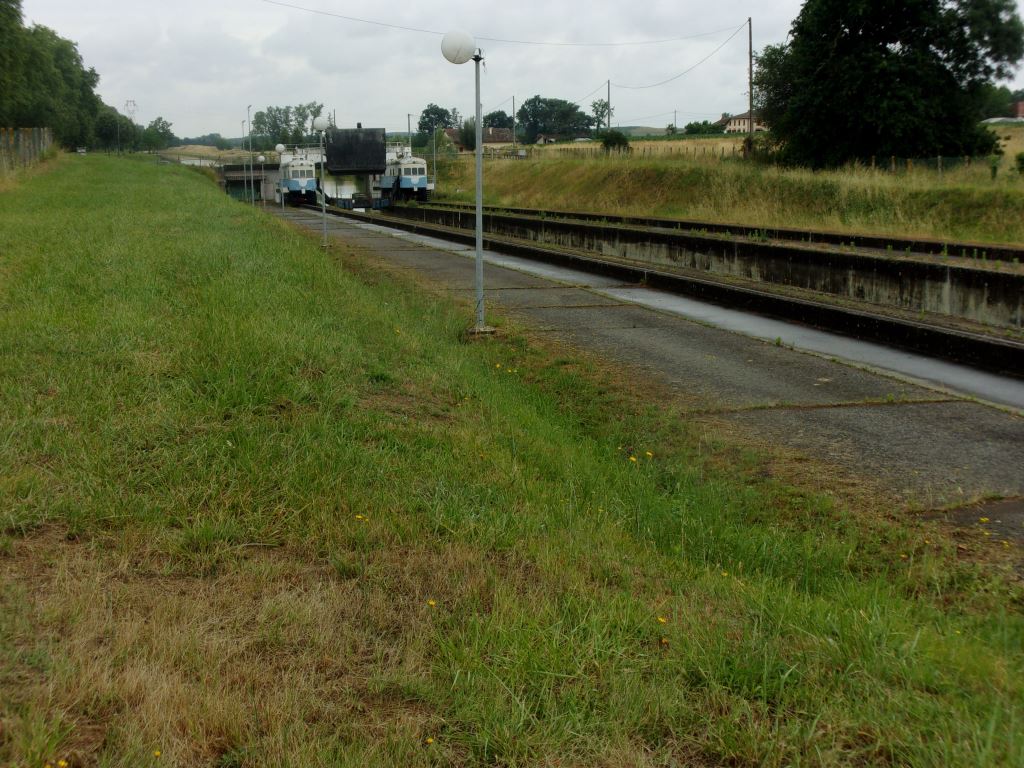
See below a couple of pictures showing the diesel locomotives and the canal.

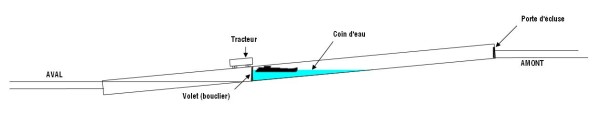
See here a good scheme to ease the visualization of the concept prepared by the L’Association Culture Loisirs Entente Sport (LACLES, see here their blog post with the complete explanation).

Water slope scheme (prepared by L'Association Culture Loisirs Entente Sport)

Water slope scheme (prepared by L’Association Culture Loisirs Entente Sport)

Unfortunately, the water slope is not working nowadays. Nevertheless it’s worth a visit to the place, to get a glimpse of such an engineering feat.

(1) To be precise the Canal du Midi (originally named “Canal royal en Languedoc”) connects the Mediterranean sea with the river Garonne in Toulouse. From there, another canal, the “Canal Latéral de la Garonne” makes the connection to the Garonne itself at Bordeaux, where it is navigable down to the Atlantic Ocean. The combination of both canals is called “Canal des Deux Mers“.

3 Comments

Filed under France

Running in the Incles’ valley (Andorra)

Last weekend, we took the opportunity of July 14th being a national holiday in France to make a short 4-day trip to Andorra. We selected Andorra, in the middle of the Pyrenees Mountains, in order to escape from the hot weather of Toulouse.

On Saturday and Sunday we did some activities including trekking, but with Andrea being just below 2 years it was difficult to cover any meaningful distance.

As I always do, I took my running gear in the suitcase just in case. And on Sunday evening I decided to go out for a run on Monday early morning…

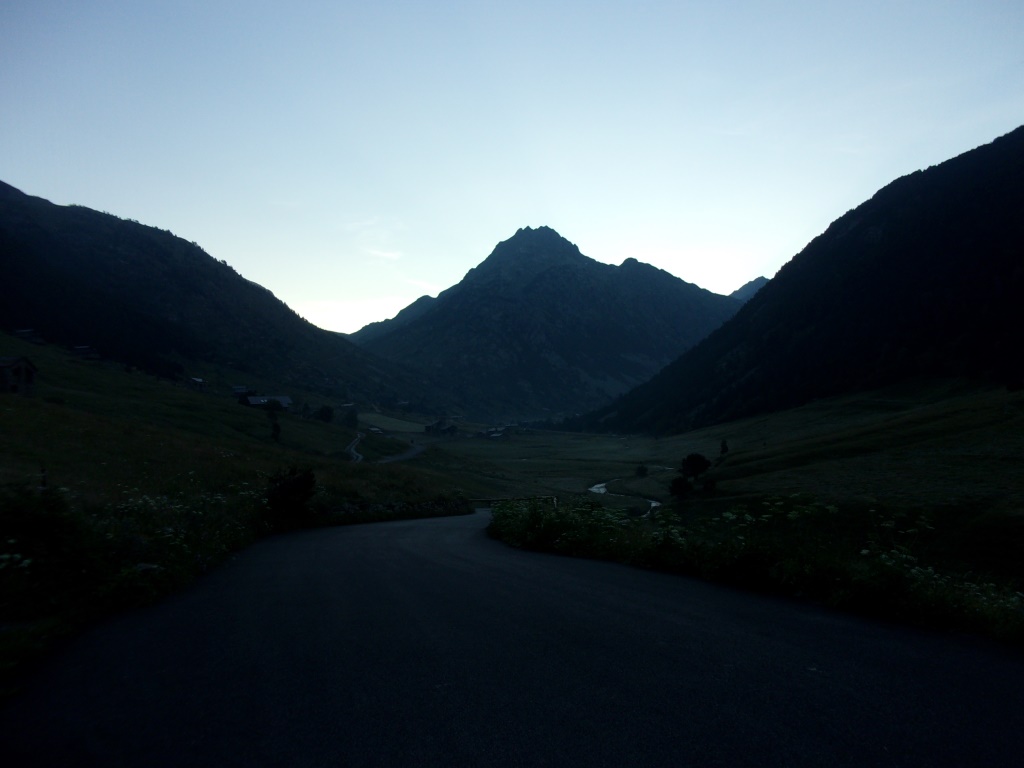
Beginning of the run / trail, at 6h40am.

Beginning of the run / trail, at 6h40am.

… I woke up at 6am, quickly dressed, ate a toast, some orange juice and took the car to go from our rented apartment in El Tarter to the beginning of the Incles river valley. From there a short 3-km route (“easy”) departs to the end of the road CS-270 where the “bar d’Antoine” is located. The previous day we had done that stretch by a touristic electric bus, and it was that hop that triggered the idea. I parked the car and just equipped with the running gear, a baseball cap (Oakland Athletics), a 400mL plastic bottle of water in one hand and a photo camera in the other, I went to complete that Incles’ valley route followed by another one “Lakes of Siscaro” (“medium”) and back.

In all it was just over 13.3km, with about 800m of positive climb (an average slope of +18% in the last 3.8 kilometres to the summit), reaching up to 2560m, leaving the Siscaro lakes (at an altitude of 2325m) behind to complete the climb up to the mountain ridge to see what was at the other side. It took me about 1h20’ to climb (the 2 routes estimated at 45’ + 1h45’) and 1h10’ to come back, in all 2h27’. I made several short stops to take pictures, videos, talk to a Frenchman who was enjoying a morning sandwich at the top of the climb and to take a refreshing bath at one of the lakes in the way back.

Climb elevation of the run.

Climb elevation of the run.

Map of the Incles valley.

Map of the Incles valley.

On the way up, I only saw a man waking up at the Siscaro refuge (~2140m) and the above-mentioned Frenchman at the very top. Other than that the experience was running and climbing for almost 7km alone in the mountains just listening to the water, birds and some other animal, while watching to the changing colours and lights of the dawn. It felt a little bit like the character of the movie “Into the wild.

At some point climbing at ~7h30am.

At some point climbing at ~7h30am.

On the way down, apart from falling twice, it was much lighter if not easier. I crossed paths with several fully-equipped mountaineers who at about 9am still had ahead of them some 3 to 6 hours of trek (if wanted to complete the same route than I did).

View at the other side of the ridge.

View at the other side of the ridge.

When I got back to the parking lot at the bottom of the valley, I changed t’shirts, drank from a bottle of water I had left in the car and felt like “when is the next such solitary mountain climb?”

This slideshow requires JavaScript.

P.S.: Finally, I just wanted to share this video I made for a friend, Maicol, just before taking a bath at the lake.

2 Comments

Filed under Sports, Travelling

Odd examples of price discounts

A quick post to share a couple of odd examples of price discounts based on quantity that I recently found:

Mugs prices at the Museum Espace Air Passion.

Mugs prices at the Museum Espace Air Passion.

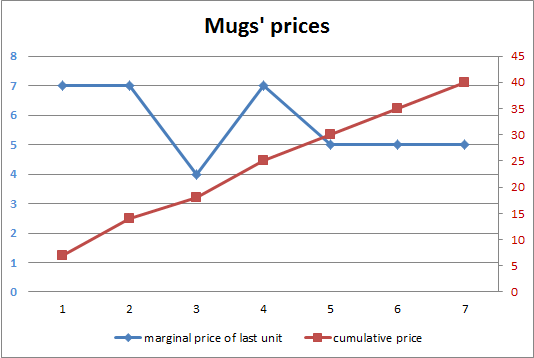
The advertisement clearly indicates that preferential prices are given from the 3rd mug. Let’s see: the first and second sell for 7€ each. The 3rd one comes for an extra 4€. So far, so good. Then the 4th mug is sold for another 7€… (!?) where is the preferential pricing? The fifth and subsequent mugs come for extra 5€ each. See it graphically below:

Mugs' prices.

Mugs’ prices.

Think of a group of friends wanting to pool their purchase to lower the cost. If three friends had already decided to buy a mug, they would pay 18€, or 6€. If then came a fourth friend saying that she also wanted to join the group to buy a mug cheaper than the single one for 7€, the other 3 would have an incentive to reject her, as they would then have to pay 6.25€…

Let’s see this other example.

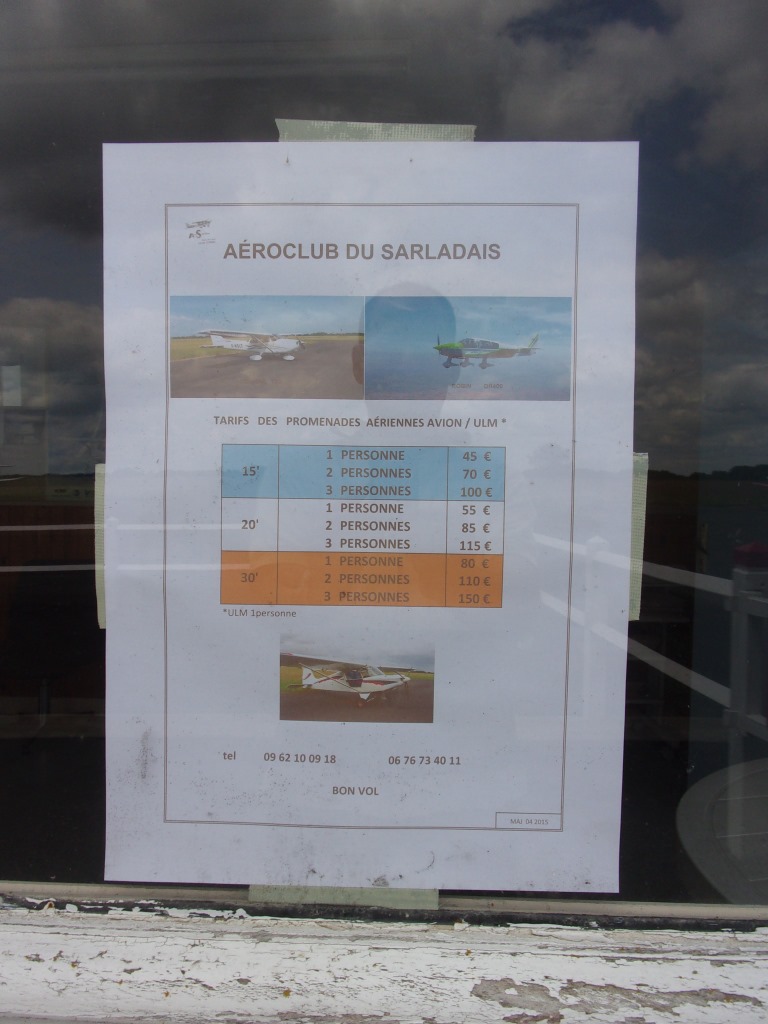
Flight prices at the Aeroclub du Sarladais.

Flight prices at the Aeroclub du Sarladais.

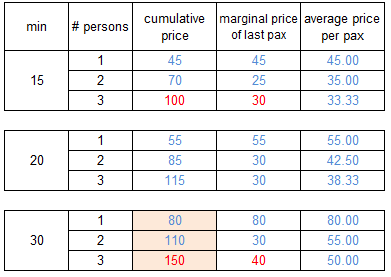
It comes from the colleagues at the Aeroclub du Sarladais. Here there are prices for short flight excursions. They offer 3 different flight durations with different prices for 1, 2 or 3 passengers. If more than 1 passenger flies, there is a discount. As there are several options, I prefer to use a table rather than a graphic to show what caught my attention:

Flights prices.

Flights prices.

In this case, in two of the cases, the marginal price to be paid by the 3rd passenger is more expensive than that to be paid by the 2nd passenger (I highlighted them in red). However, the oddity is not so striking as the average price to be paid by 3 passengers is always cheaper than the one to be paid by 2 passengers, thus, there is no economical incentive for 2 friends rejecting a 3rd wanting to join them in the experience of flying (good!).

I also found a more subtle issue with the pricing per minute for the 30 minute flights. Let’s see it with the flights for 1 passenger:

  • 15′ sell for 45€, that is 3€ per minute.
  • 20′ sell for 55€, that is 2.75€ per minute.
  • 30′ sell for 80€, that is 2.67€ per minute.

So far, so good, however, if you look at the marginal prices of the added flight time:

  • 20′-15′ = 5′, for 55€- 45€ = 10€, that is 2€ per minute.
  • 30′-20′ = 10′, for 80€- 55€ = 25€, that is 2.5€ per minute. Why are these minutes more expensive? 🙂

1 Comment

Filed under Economy

Musée Espace Air Passion (Angers)

In the last post I described the Fly Out to Les Châteaux de la Loire that we made the last weekend. In that post I mentioned that we visited the museum Espace Air Passion in Angers airport. This post will be dedicated to that beautiful museum.

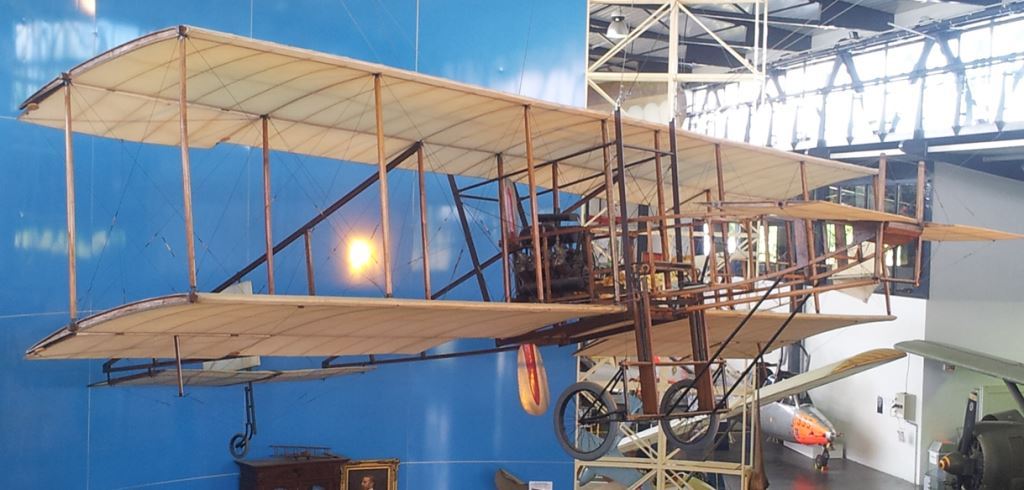
This museum is owned and run by an association, the “Groupement pour la Préservation du Patrimoine Aéronautique” (GPPA), created back in 1981 by a group of friends around the project of restoring an old aircraft (a jewel) from René Gasnier, a local pioneer of French aviation who flew in 1908 along 1km in an airplane built by himself. That airplane is the first one you get to see in the museum:

Rene Gasnier III, built in 1908, restored in 1988.

Rene Gasnier III, built in 1908, restored in 1988.

René Gasnier built his first airplanes between 1907 and 1908. This model, the III was built in 1908. As you can see it was made of wood and cloth. It mounted an Antoinette engine with 8 cylinders in V, with a power of 48hp, wingspan of 10m, less than 500kg at take off. It took the enthusiasts of GPPA over 1000 hours to restore it.

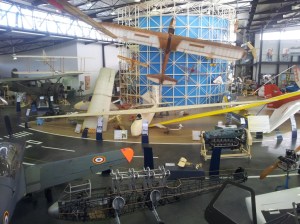
This airplane is surely not the only unique piece of the museum. Take a look at the following two airplanes.

The Gérin “Varivol”, built in 1938 (by the Compagnie Française d’Aviation), was based in the concept of using moving wings which extended themselves increasing the wingspan at the time of take-off when more lift was needed and reducing the wingspan to decrease drag at cruise. A prototype was successfully tested in the wind tunnel of Chalais-Meudon in 1946, however the actual airplane seems to never have flown. Had it flown, it was to have a cruise speed of ~455km/h while only 92km/h for landing speed. The wings were to be extended/retracted 2.75m per side out of a total retracted wingspan of 8.10m.

Alerion Riout 102 T.

Alerion Riout 102 T.

Built in 1937 by René Riout (at the workshop of Louis Breguet) with duralium, the 102 T explored the concept of flying by batting its wings (4, two at each side of the fuselage). During its test in 1938 when the pilot increased the engine regime up to around 4500rpm, after a few seconds, the observers saw torsion vibrations in the tip of one the wings before it broke, closely followed by the other 3 wings. It was then dismounted and forgotten till 2005 when the restoration at GPPA started.

This reminded me of a quote attributed to Igor Sikorsky that goes like:

Our engineers have determined that aerodynamically, the hummingbird shouldn’t be able to fly, but the hummingbird doesn’t know it so it goes on flying anyway.

Another oddity of the museum is one of the only two prototypes (1) ever built of the Moynet Jupiter (designed by André Moynet) which had the rare configuration of two push and pull engines, one in the front and one in the back of the fuselage. It was never sold to any customer, but it flew for the first time on December 17, 1963 (60 years after that glorious day in Kitty Hawk).

Moynet Jupiter.

Moynet Jupiter.

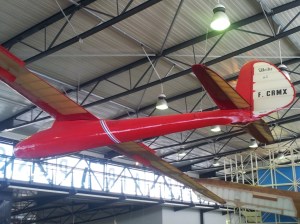
The museum has these other two sailplanes which have been declared patrimoine de l’aviation française due to the records they collected in their high time, the Caudron 800 Épervier and the Avia 40P:

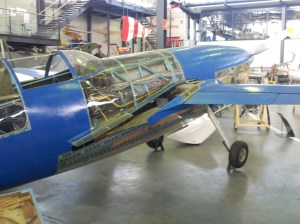
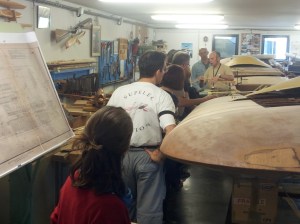
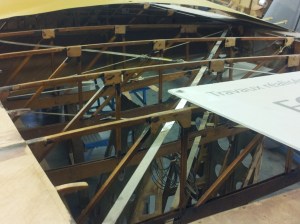
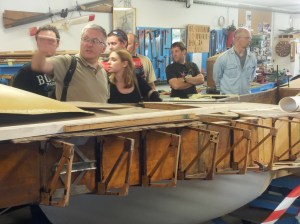
We also enjoyed the visit to the workshops where they restore the fuselages and the wings. Take a look at the pictures and notice the wood and the cloth. Forget about those pictures the next time you get onboard a general aviation airplane.

We were given a guided tour by two members of the association, their explanations, anecdotes, connection with French famous pilots (including former Airbus’ test pilots) were invaluable. On the other hand, the audience couldn’t have been more responsive. Take a look at the pictures above: scores of years of aerospace engineering experience (flight testing, training), thousands of flying hours as pilots, real aviation geeks at its best.

The museum also has playing area for children, a MH-1521 Broussard for children (an adults) to get on and play, and some other beautiful aircraft including a Caudron PC431 Rafale, a Morane Saulnier 505, a Piper L4H Grasshoper, or the car Marcel Leyat Helica… see them below:

This slideshow requires JavaScript.

(1) The other prototype is at  the Musée de l’Air et de l’Espace, at Le Bourget.

1 Comment

Filed under Aerospace & Defence

Fly Out: Les Châteaux de la Loire

Last weekend we took part together with my friend Raphaël and about 20 other members of the Airbus Aviation Society of Toulouse in a Fly Out (1) to Les Châteaux de la Loire. 7 aircraft departed from different airfields around Toulouse to reach Angers, some on Friday evening, some on Saturday morning. From then one we would enjoy some joint activities. In a nutshell:

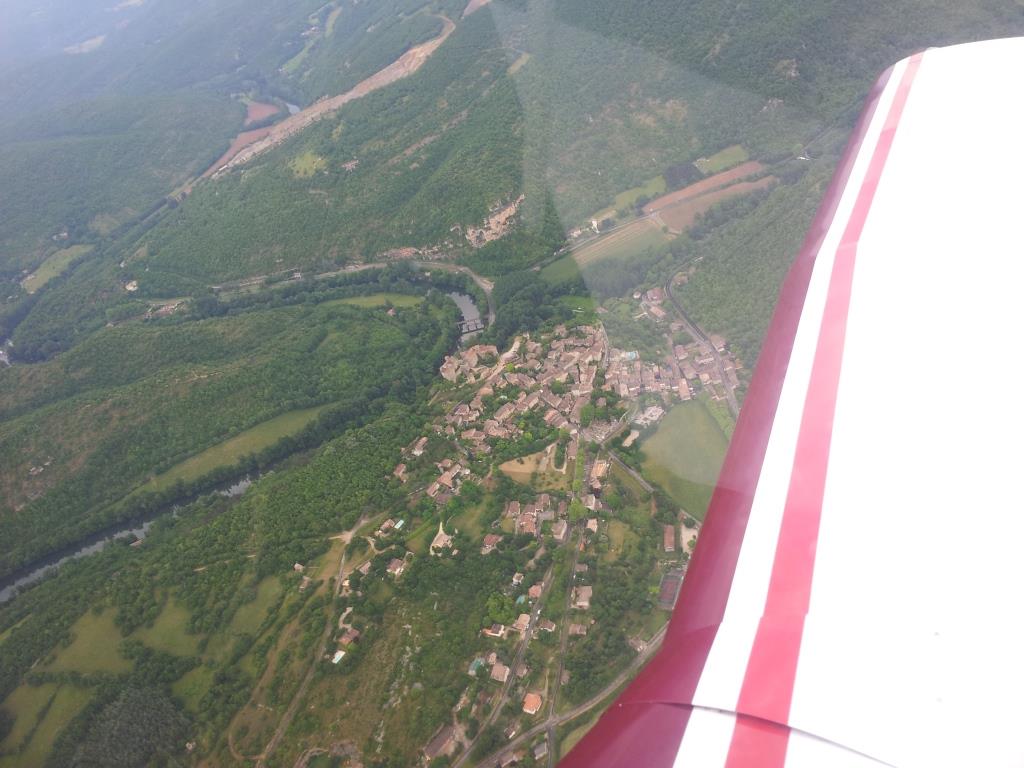
  • On the way to Angers (LFJR, 2h50′ flight), we flew over some very beautiful villages such as Bruniquel, Saint Cirq Lapopie, etc.
  • On Saturday morning, in Angers we visited the castle and walked around the city. We then visited the museum Espace Air Passion.
  • We then took our aircraft and flew over dozens of castles along the Loire valley, from Angers to Chambord and back to Amboise (LFEF).
  • In Amboise we had an evening event with the local aeroclub.
  • The morning after and due to worsening meteorological conditions we decided to skip the “ground” visit to the Chenonceau castle (next time) and depart early back to Toulouse. In the way we stopped for lunch at Sarlat-Dome (LFDS) where we were very warmly welcome by some members of the local aeroclub.

I believe than rather than wandering with long texts explaining all of these experiences it is better to share some of the pictures we took and let you fly along with us with some captions:

Waiting for the departure time at Toulouse Lasbordes (LFCL)

Waiting for the departure time at Toulouse Lasbordes (LFCL).

Dashboard of the Robin DR-48 we flew (F-GGHT).

Dashboard of the Robin DR-48 we flew (F-GGHT). (2)

Bruniquel.

Bruniquel.

Saint Cirq Lapopie.

Saint Cirq Lapopie. (3)

La Roque Gageac.

La Roque Gageac.

Beynac et Cazenac.

Beynac et Cazenac.

Rapha, concentrated in his piloting.

Rapha, concentrated in his piloting.

Arriving at Angers (LFJR) rather late.

Arriving at Angers (LFJR) rather late.

If you arrive at Angers airport in the evening, you'd better know the theory if you want to get out.

If you arrive at Angers airport in the evening, you’d better know the theory if you want to get out.

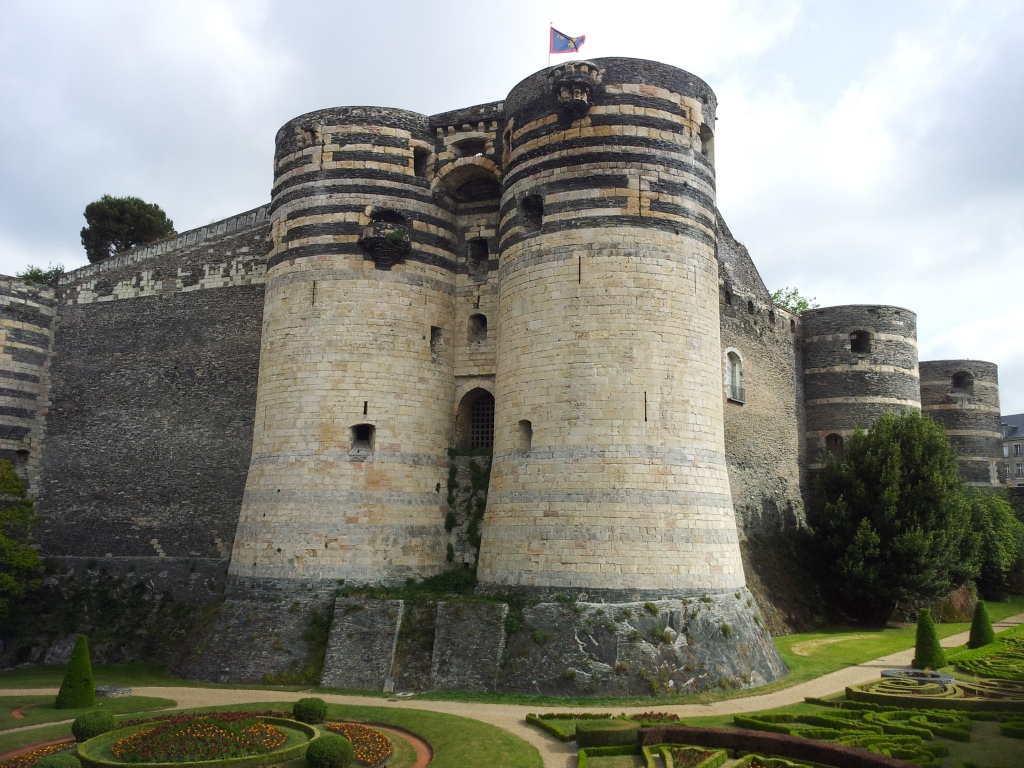
Château d'Angers, founded by the Counts of Anjou.

Château d’Angers, founded by the Counts of Anjou.

"Apocalypse Tapestry" at Angers castle.

“Apocalypse Tapestry” at Angers castle.

Visiting the museum "Espace Air Passion" at Angers airport.

Visiting the museum “Espace Air Passion” at Angers airport. (4)

"Why is Rapha at the controls again, daddy? When do I get to pilot?!"

“Why is Rapha at the controls again, daddy? When do I get to pilot?!”

Chenonceau.

Chenonceau.

Chambord.

Chambord.

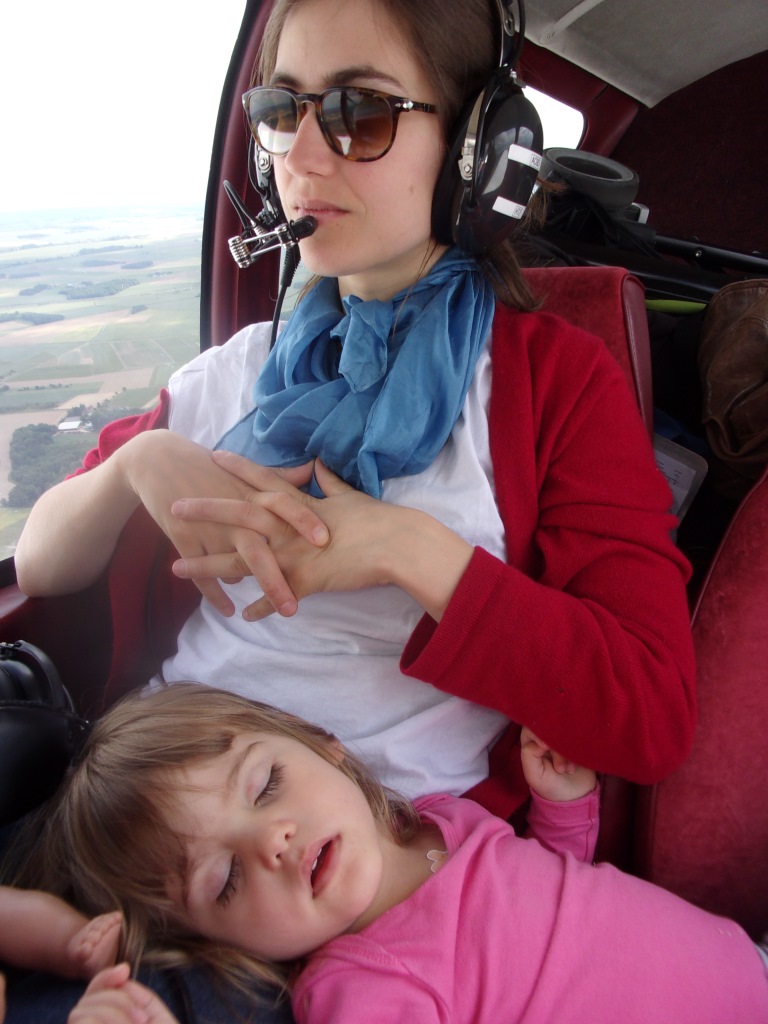
Andrea, a born flyer, and Luca, getting over it.

Andrea, a born flyer, and Luca, getting over it.

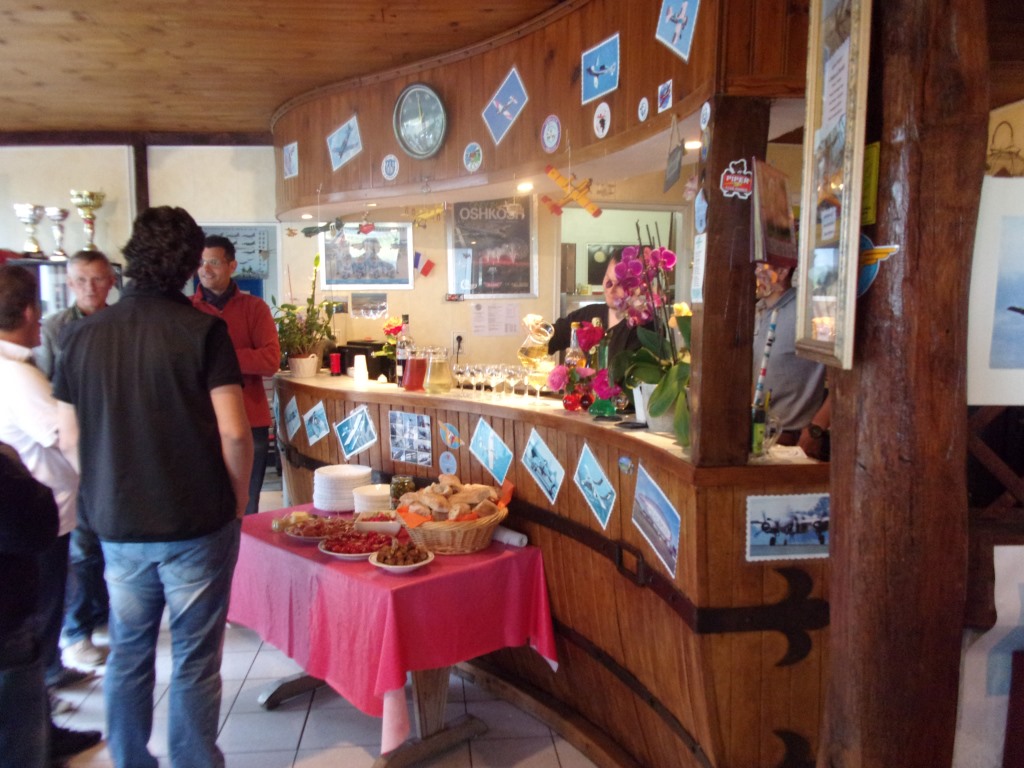
Great evening event organized by the "Aéro-club Les Ailes Tourangelles".

Great evening event organized by the “Aéro-club Les Ailes Tourangelles”. (5)

Our commandan de bord, Raphael preparing the next flight.

Our commandant de bord, Raphael preparing the next flight.

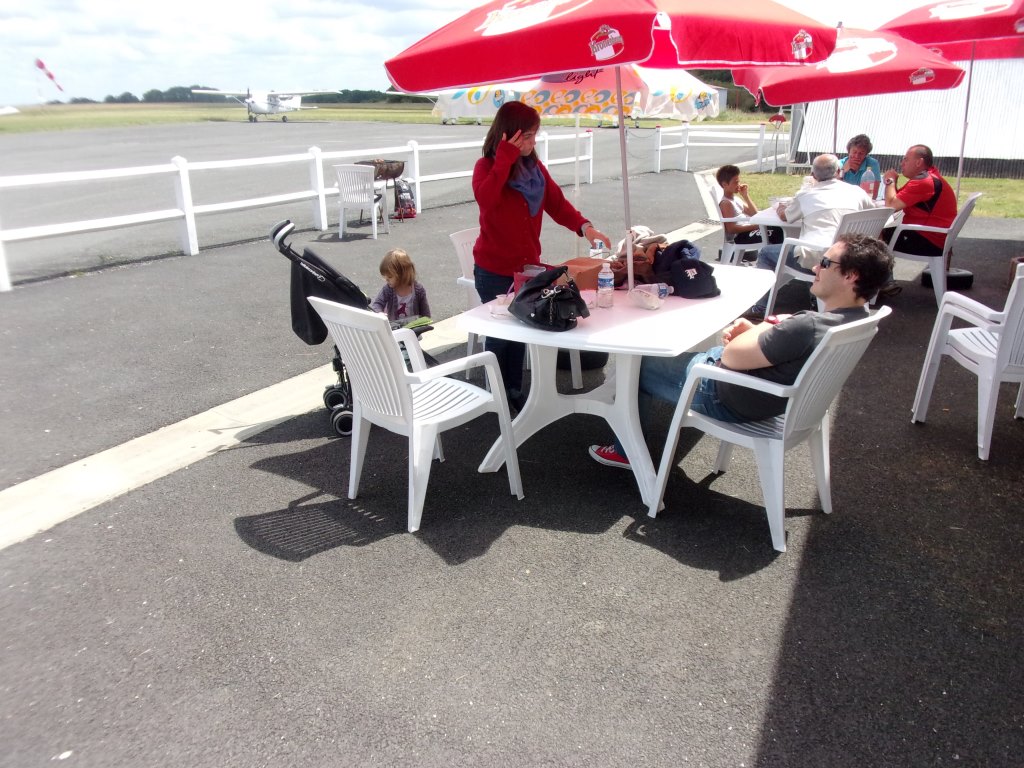
The fellows from the "Aeroclub du Sarladais" got out those table, parasols and chairs for us to have lunch with them.

The fellows from the “Aeroclub du Sarladais” got out those table, parasols and chairs for us to have lunch with them. (5)

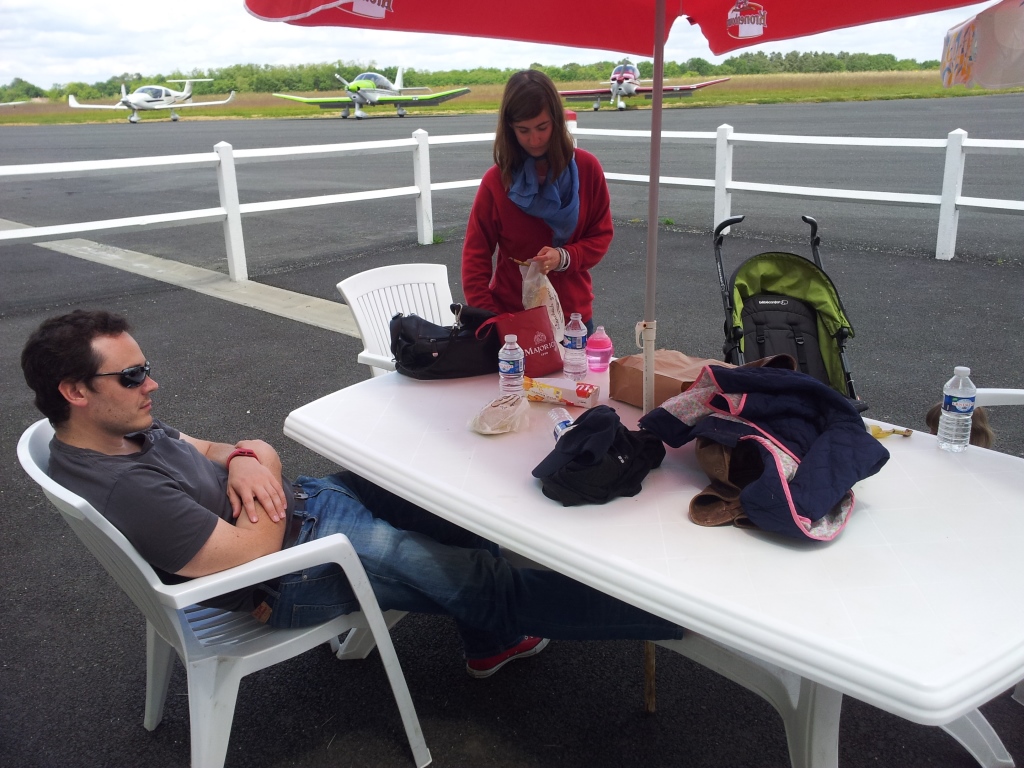
Relaxing at Sarlat-Dome aerodrome (LFDS).

Relaxing at Sarlat-Dome aerodrome (LFDS).

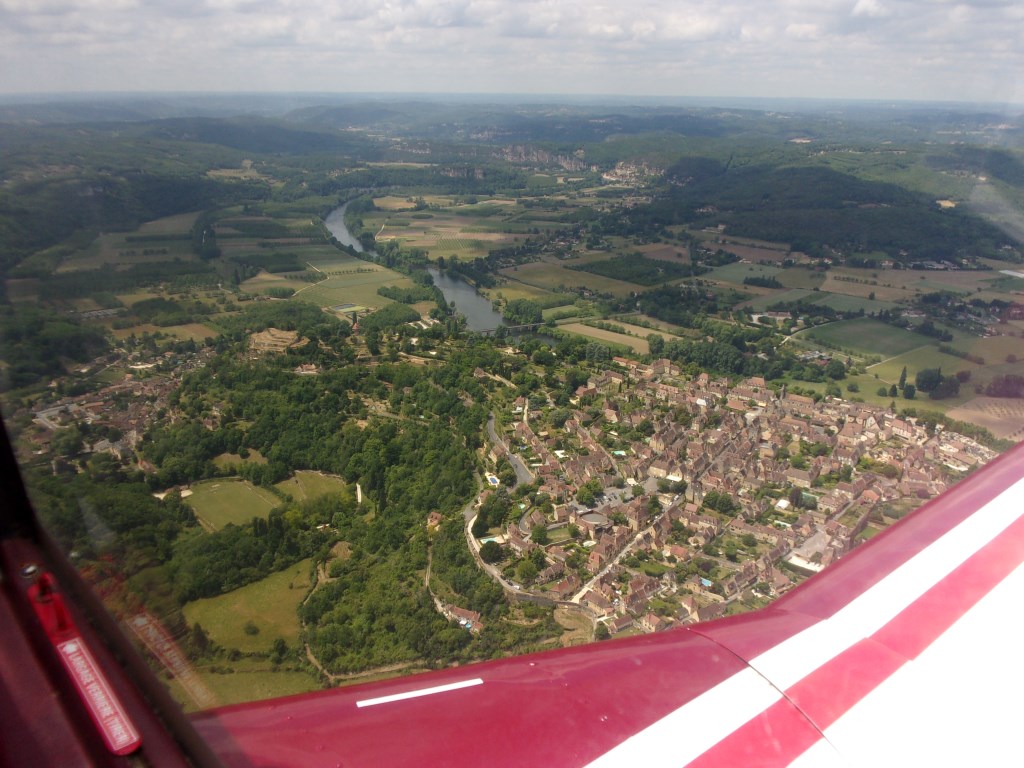
Initial climb at Sarlat-Dome (LFDS), wonderful view of the Dordogne valley and Dome village.

Initial climb at Sarlat-Dome (LFDS), wonderful view of the Dordogne valley and Dome village.

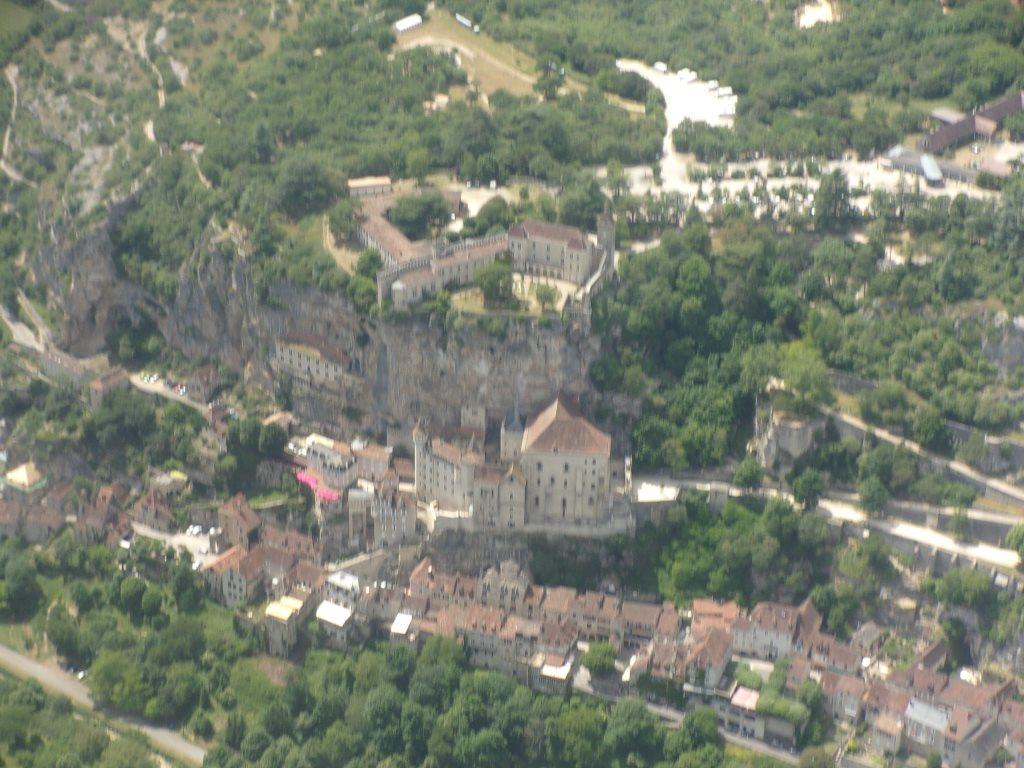
Rocamadour.

Rocamadour.

(1) The term we use for an organized activity in which several aircraft depart together with a common destination.

(2) Check out about the DR-48 here.

(3) Recently selected as the most beautiful village of France.

(4) Be sure that I will dedicate another post about this museum.

(5) If you plan to fly either to Amboise Dierre or Sarlat-Dome, do not hesitate in contacting the local aeroclubs (Les Ailes Tourangelles and Aeroclub du Sarladais, respectively), they will give you a more than warm welcome!

4 Comments

Filed under Aerospace & Defence, France, Travelling