Livonian, an endangered language

The Livonian is a language of the Finnic family, closely related to Estonian and spoken in the region of Livonia, in the North of Latvia and South of Estonia. I first came across the language in March 2003, during a students’ exchange in the framework of the European Commission Youth programme organized by the students associations of AEGEE Zaragoza and Tartu (Estonia).

During that exchange, in one of the evenings we attended an especially arranged concert in a small bar. The place looked like a cellar. The group of music was introduced to us as the only group singing in the Livonian language. I now wonder whether that group was “Tuļļi Lum“. Sincerely, I cannot remember the name of the group that played that night, other than being presented as the only band singing in Livonian. On the other hand, Tulli Lum was already existing then and the singer studied music in Estonia… who knows.

The Livonian is an endangered language. In 2003, it was introduced to us as being spoken by no more than ~120 people in the World. Today the Wikipedia mentions that the last known native Livonian speaker, Grizelda Kristiņa, died in 2013. Livonian may be spoken as a second language by over 200 people, just about 40 of those with a level of B1 or upper.

In that night in 2003, we were explained that the language was being supported by some European institution funds. It was 10 years ago, I cannot recall the details. I guess they referred to the European Bureau for Lesser-Used Languages (EBLUL). The EBLUL was a NGO set up to promote linguistic diversity and languages. It was founded in 1982 and had close ties with both the European Parliament and the Council of Europe, and was funded by both the European Commission and local and regional governmental organisations.

The European Bureau for Lesser-Used Languages was closed by a decision of its Board of Directors on January 27, 2010. The main official reason given was that “the funding mechanism of such an organisational model [was] not suitable in current circumstances”.

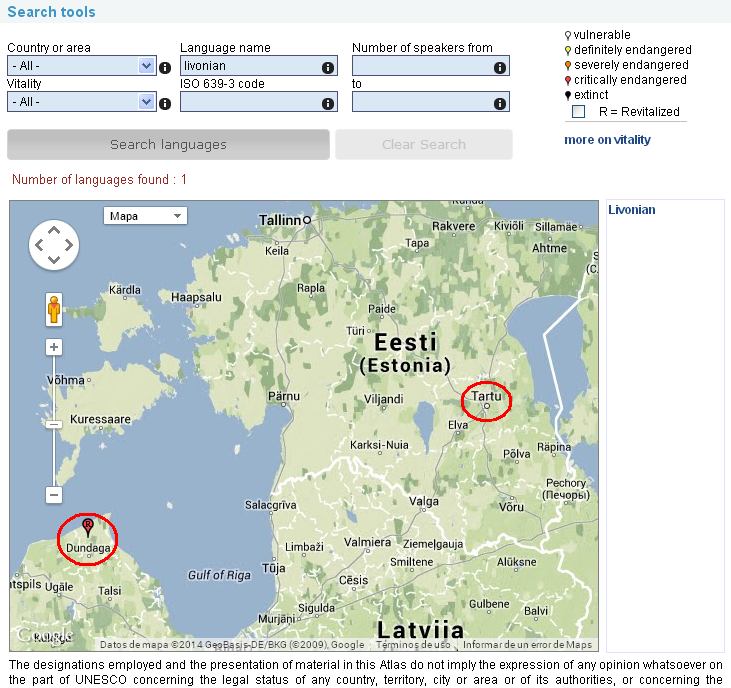
I came across Livonian again when playing with the UNESCO Atlas of the World’s Languages in Danger, which I discovered via Twitter. See a screenshot from the tool below, with the situation of Livonian, “critically endangered” and “revitalized”.

Livonian, UNESCO Atlas of the World's Languages in Danger.

Livonian, UNESCO Atlas of the World’s Languages in Danger.

I found this tool from UNESCO interesting. I suggest you try it out a bit.

In respect to Livonian:

  • I am happy for those people who played music for us that night back in 2003 that the language seems to be revitalized, though I have no way to measure or sense that.
  • On the other hand, and despite of the criticism that my position may create, and as I have mentioned in several conversations in the past: I see no wrong in letting the language die. I do not see the purpose in pumping public European funds so that a language can be taught to non-native students at some universities. I am almost glad to see that the EBLUL has closed down and clearly understand why “the funding mechanism of such an organisational model [was] not suitable in current circumstances”.

Surely, this is my opinion and I respect those who believe that each and every language should be preserved no matter what costs in the name of culture, historical heritage, and you name it. In UNESCO’s words:

Every language reflects a unique world-view with its own value systems, philosophy and particular cultural features. The extinction of a language results in the irrecoverable loss of unique cultural knowledge embodied in it for centuries, including historical, spiritual and ecological knowledge that may be essential for the survival of not only its speakers, but also countless others.

My view: I am a native Spanish speaker thanks to some language evolution that meant that once almighty Latin is no longer spoken outside of the Vatican City, plus the extinction of who knows how many ancient languages spoken by my ancestors.

It especially strikes me the language used by UNESCO: “ecological knowledge that may be essential for the survival of not only its speakers, but also countless others.” I guess it’s quite the contrary. Had a certain language been so essential to the survival of its speakers and its extinction would have not taken place (or am I getting something wrong with what evolution means?). 

Luckily, the same evolution process has happened in all parts around the world: allowing over 400 million of people to speak Spanish as a mother tongue and allowing us to fairly understand each other in several corners of the world.

Language is the human capacity for acquiring and using complex systems of communication, and a language is any specific example of such a system.

2 Comments

Filed under Miscellanea, Travelling

Carta abierta a “La mujer de la terminal”

Carta abierta a “La mujer de la terminal”:

No es la primera vez que nos vemos. El pasado 29 de diciembre nos volvimos a encontrar en la terminal. Esta vez fue en la T4. Hablo del aeropuerto Barajas, cuál si no. Nuestros anteriores encuentros habían sido en la T1; el último hace unos 5 años, el primero hace 7… Tú seguramente de no te acordarás de mí. Confieso que yo casi te había olvidado, pero el pasado día 29, al escuchar tus palabras, tuve un déjà vu instantáneo. Me acordé de ti, pero apenas te dediqué dos palabras.

En nuestro último encuentro yo actué como si fuese con prisa. Me acompañaban Luca y Andrea (sí, en estos años me he casado y he sido padre)  y en un primer instante no tuve el arrojo de darte más conversación. Me arrepentí casi inmediatamente. Luego te estuve buscando con la mirada por si te volvía a ver. Para no volver a olvidar tu cara. Quién sabe si para mantener otra breve conversación. En algún momento pensé hasta en hacerte una foto. Para no volver a olvidar tu cara.

Al principio pensaba que eras malagueña. El último día dudé. Quizá sea asturiana, me dije. No, no es por el acento. Tienes unos 40 años. El pelo, moreno. Estatura, en torno a un metro sesenta. El último día llevabas un abrigo blanco. Hace tanto tiempo, que ya no recuerdo como ibas vestida las veces anteriores. No sé cómo te llamas, pero sí a qué te dedicas.

Las tres veces que te dirigiste a mí me hablabas en primera persona del plural. Nunca llegué a conocerle a él o a ellos, ni quiero. Solo quiero hablar de ti. Además, una parte de mí me hace dudar de su existencia.

Cuando pienso en ti veo a una persona que vive al día, sin ataduras, sin equipajes. Una persona que cuando va al aeropuerto no se fija en los horarios sino en las personas que se cruzan en su camino. Una persona que vive sin prisas y que a su vez no para de moverse. A veces envidio esa actitud. Te confieso que yo siempre llego con prisa. En los últimos años habré perdido ya unos 4 ó 5 vuelos. Y tú, sin embargo, con esa tranquilidad que te caracteriza no creo que nunca hayas perdido ninguno. Te envidio.

Este último encuentro me ha dado una nueva esperanza. Me he prometido a mí mismo que la próxima vez te dedicaré la atención que mereces. Con esta carta quiero hacer público mi compromiso. Basta ya de excusas y respuestas monosilábicas. Suelo pasar por la T4 dos o tres veces al mes, por favor, volvámonos a encontrar…

  • Perdona, ¿habláis español?
  • Sí.
  • Es que hemos perdido el vuelo a Asturias. Es por si tenéis un poco de dinero.
  • No, gracias.

Esta fue nuestra conversación. Las dos veces anteriores, en 2006 y en torno a 2008, en la T1, esta mujer había perdido el vuelo a Málaga (las 2 veces). Entonces era más precisa: pedía 20 euros para ir a Atocha y comprar un billete de tren (las 2 veces).

En 2006 me pregunté a mi mismo ¿y porque si dice que quiere ir en tren no se va a pedir dinero a Atocha? En seguida supuse que era un engaño. No llevaba equipaje. Hablaba en plural, pero sin nadie que la acompañase.

En 2008 de nuevo vino con la misma historia, “hemos perdido el vuelo a Málaga, necesitamos 20 euros para coger un tren en Atocha”. Tenía el recuerdo de la primera ocasión demasiado reciente.

En 2013 ya lo había olvidado. Esta vez me sorprendió. ¿Asturias? Esta vez no habló de tren ni de Atocha. Seguía sin llevar equipaje y sin ir acompañada.

Otra curiosidad que me surge es, si todo lo que te ha ocurrido es haber perdido el vuelo (cosa que a mí me ha pasado en varias ocasiones), ¿qué te impide ir a comprar otro con tu dinero? Nunca me has mencionado ni que te hayan robado (claro, eso haría que la gente te ayudase a buscar a la policía presente en el aeropuerto), ni que hayas perdido la cartera, ¿por qué habrías de necesitar dinero?

Imagino que los que vamos al aeropuerto a coger un vuelo (y no a timar a gente despistada) vamos… despistados, y no reparamos en estos detalles. Algunos de nosotros se sentirán relacionados con tu situación, apresurados por el tiempo y te darán incluso esos 20 euros.  Desde luego, si en 7 años has seguido haciendo esto, es que no te va del todo mal.

Cuenta conmigo para el próximo encuentro. La próxima vez te dedicaré más tiempo. Espero darte conversación mientras saco el móvil. Acto seguido intentaré hacerte una foto para colgar en este blog. Te ruego que no te enfades conmigo (quizá te ofrezca 20 euros por sacarte esa foto…). Y de paso a ver si me entero de si eres malagueña o asturiana, o madrileña…

2 Comments

Filed under Miscellanea

The NSA, the Use of Spies and The Art of War (Sun Tzu)

I reviewed yesterday the book The Art of War (by Sun Tzu) from the point of view teamwork, communication and leadership as that was the interest I had when I have read it this second time. However, there was another chapter that called my attention given the ongoing NSA spying scandal (PRISM surveillance programme) disclosed by The Guardian and The Washington Post in 2013, that was the last on of the book “The Use of Spies“:

Raising a host of a hundred thousand men and marching them great distances entails heavy loss on the people and a drain on the resources of the State. […] There will be commotion at home and abroad, and men will drop down exhausted on the highways. […] Hostile armies may face each other for years, striving for the victory which is decided in a single day. This being so, to remain in ignorance of the enemy’s condition simply because one grudges the outlay of a hundred ounces of silver in honors and emoluments, is the height of inhumanity. One who acts thus is no leader of men, no present help to his sovereign, no master of victory. Thus, what enables the wise sovereign and the good general to strike and conquer, and achieve things beyond the reach of ordinary men, is foreknowledge. Now this foreknowledge cannot be elicited from spirits; it cannot be obtained inductively from experience, nor by any deductive calculation. Knowledge of the enemy’s dispositions can only be obtained from other men.

Hence the use of spies, of whom there are five classes: (1) Local spies; (2) inward spies; (3) converted spies; (4) doomed spies; (5) surviving spies. When these five kinds of spy are all at work, none can discover the secret system. This is called “divine manipulation of the threads.” It is the sovereign’s most precious faculty. Having local spies means employing the services of the inhabitants of a district. Having inward spies, making use of officials of the enemy. Having converted spies, getting hold of the enemy’s spies and using them for our own purposes. Having doomed spies, doing certain things openly for purposes of deception, and allowing our spies to know of them and report them to the enemy. Surviving spies, finally, are those who bring back news from the enemy’s camp.

Hence it is that which none in the whole army are more intimate relations to be maintained than with spies. None should be more liberally rewarded. In no other business should greater secrecy be preserved. Spies cannot be usefully employed without a certain intuitive sagacity. They cannot be properly managed without benevolence and straightforwardness. Without subtle ingenuity of mind, one cannot make certain of the truth of their reports. Be subtle! be subtle! and use your spies for every kind of business. If a secret piece of news is divulged by a spy before the time is ripe, he must be put to death together with the man to whom the secret was told.

Whether the object be to crush an army, to storm a city, or to assassinate an individual, it is always necessary to begin by finding out the names of the attendants, the aides-de-camp, and door-keepers and sentries of the general in command. Our spies must be commissioned to ascertain these. The enemy’s spies who have come to spy on us must be sought out, tempted with bribes, led away and comfortably housed. Thus they will become converted spies and available for our service. It is through the information brought by the converted spy that we are able to acquire and employ local and inward spies. It is owing to his information, again, that we can cause the doomed spy to carry false tidings to the enemy. Lastly, it is by his information that the surviving spy can be used on appointed occasions. The end and aim of spying in all its five varieties is knowledge of the enemy; and this knowledge can only be derived, in the first instance, from the converted spy. Hence it is essential that the converted spy be treated with the utmost liberality.

[…] Hence it is only the enlightened ruler and the wise general who will use the highest intelligence of the army for purposes of spying and thereby they achieve great results. Spies are a most important element in war, because on them depends an army’s ability to move.

And then comes the scandal, the reaction of global leaders subjected to espionage, of private companies, etc.

2 Comments

Filed under Aerospace & Defence, Books

The Art of War

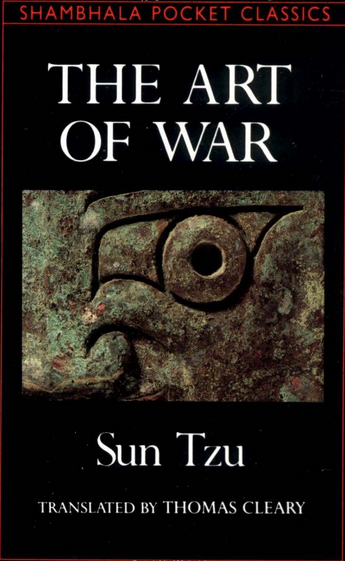
The Art of War, by Sun Tzu.

The Art of War, by Sun Tzu.

I recently finished reading The Art of War for a second time. The book in itself verses on tactics, strategies and concepts related to war. However, today it is recommended for and applied to several fields, from politics, to business management and sports.

The first time I read it I was fresh from having completed an MBA and soon joined the strategy department of Airbus Military, the company I work for. I then took an interest to it from the strategy point of view. However, this time I wanted to read it framing myself from the teamwork, communication and leadership point of view. I found it again, a very enjoyable and useful read.

The book is attributed to Sun Tzu, a Chinese military general, strategist and philosopher who lived in the ancient China (544-496 BC). The version I read is a Spanish translation (by Alfonso Colodrón) from the English translation by Thomas Cleary. If you’re an avid reader of business literature you’ll probably have found some quotes from the book. The ones I remarked this time from the point of view I approached it (the emphasis and comments between brackets are mine):

The Army on the March

If you are careful of your men, and camp on hard ground, the army will be free from disease of every kind, and this will spell victory.

Peace proposals unaccompanied by a sworn covenant indicate a plot. [think of inter-departament relationships]

If there is disturbance in the camp, the general’s authority is weak. [indecision]

The sight of men whispering together in small knots or speaking in subdued tones points to disaffection amongst the rank and file. [engagement]

Too frequent rewards signify that the enemy is at the end of his resources; too many punishments betray a condition of dire distress. [rewards vs. engagement; purpose; self-realization]

To begin by bluster, but afterwards to take fright at the enemy’s numbers, shows a supreme lack of intelligence.

He who exercises no forethought but makes light of his opponents is sure to be captured by them.

If soldiers are punished before they have grown attached to you, they will not prove submissive; and, unless submissive, then will be practically useless. If, when the soldiers have become attached to you, punishments are not enforced, they will still be useless. [reminded me of Jack Welch and the need to discriminate]

Terrain

Regard your soldiers as your children, and they will follow you into the deepest valleys; look upon them as your own beloved sons, and they will stand by you even unto death. If, however, you are indulgent, but unable to make your authority felt; kind-hearted, but unable to enforce your commands; and incapable, moreover, of quelling disorder: then your soldiers must be likened to spoilt children; they are useless for any practical purpose.

Take a look at the book. It can be read in no more than one afternoon. Depending from what perspective you take you will draw some conclusions or others. Some passages will not relate much to your current situation, but several others will.

3 Comments

Filed under Books

San Silvestre 2013

Yet another year running on New Year’s Eve the popular San Silvestre Vallecana.

This year we had some newcomers to the community: Maicol, Alicia, Almudena and Ubaldo with friends (1) and Nacho managed to run again.

Jaime was running his 15th San Silvestre in a row. Impressive!

This race is a tradition that can hardly be matched (2), that is one of the reasons why I try to spend every year New Year’s Eve in Madrid. Again, we had talked a bit about dressing some costume or preparing something for the race but we did not.

This year my second half of the race was less fun than other years. Just after the kilometre 3 I let myself lag behind our main group to join two of our runners to talk a bit. At the km 4.5, not seeing the rest of the group, I decided to go ahead again in pursuit of them. After some 2-3 kilometres running a bit faster (~5’05″/km) than we normally do in this race (~6’30″/km) I realized that I had overtaken them without seeing them. What do I do now? Wait for them? Run softly till the end? Finally, I tried to run moderately fast when the crowd permitted (very difficult in the last 2 km).

I crossed the finish line alone, something which I think had not happened to me in over 10 years… and hopefully the last time.

Final time: ~1h00’51” (best time I have managed in ages, departing at the back of the pack).

(1) Though compared to last year we missed Pablo, Juanma and Abraham.

(2) In 2013, during the honeymoon I run the Bay to Breakers in San Francisco, which in essence is very similar. Except that it is not on New Year’s Eve and there is much less of a crowd cheering the runners.

Leave a comment

Filed under Sports

Summary of (my) 2013

Let me share with you a brief recap of my 2013. (1)

I defined my 2011 as a year on the run and my 2012 as a year of change, and yet 2013 brought more running and more change that either 2011 or 2012! To me 2013 will be a family year: as Luca and I got married and we got a baby, Andrea.

At the beginning of 2013 I did not set a list of objectives to be fulfilled along the year as with the wedding preparations and the coming of Andrea I was going to have plenty of occupations. However, that does not mean that it was a quiet 2013.

Getting married.

Getting married.

May 11, 2013. On that day Luca and I celebrated our wedding. That was our highlight of the first half of the year. We celebrated it close to my parents’ place, in the hills close to Madrid, on a great spring evening , surrounded by most of our relatives and friends (many of you, coming not only from all corners in Spain but from Canada, Brazil, The Netherlands, France, Italy, Switzerland…). Apart from being a very emotive day we had lots of fun.

The monday after the wedding we departed for a honeymoon around the US west coast. We took the opportunity to visit the usual suspects of the area (LA, San Francisco, Grand Canyon, Sequoia Park, Yosemite…) and the not so common places: the aircraft cemetery known as The Boneyard and the AF Flight Test Center (this required visiting 2 US Air Force bases: Davids-Monthan and Edwards), the aviation museums of Pima and Seattle, the Lowell observatory, the Boeing 787 / 777 /747 Final Assembly Lines…

Family Irastorza Van Veen.

In February we announced here that we were expecting a baby. On August 11th, Andrea was born in Toulouse (2).

She weighed 3,610 grams at birth and measured 50cm tall. Now, 4 and half months later she is over 7kg and over 63cm. She has been the highlight of the second half of the year.

Family 2.0. All these events made me slow down the blog posts production rate at some times during the year, though not for the lack of ideas or contents! Nevertheless, I managed to write about 90 posts! Plus the blog received over 50,000 visits in 2013 and surpassed the 100,000 since I started it in 2010.

On top of that, we saw how Luca went forward with her own blog, check it here.

Learning. What did I learn this year? The main job here has been to internalize on time the turn to becoming a father. Once that was assumed, I would say that, with the good health Andrea has had so far, it has been rather easy, albeit energy and time-consuming.

I would say that trickiest that I am finding is the balancing of time between family, hobbies and work. And it has been at the other side of the work-life balance, at the work, where another leap forward was required: in terms of new concepts, new position within the team and several challenges encountered. Though, with the great courage and support from Ruth and Loreto, the year has passed way smoother than one could have suspected.

Other than that, this year I did not manage to formally study neither French (booh! to myself) or Dutch (another big booh! to myself), and this is something that I will have to make up for in 2014 (otherwise I risk to be left out in conversations between wife and daughter!).

Online education: after getting started in 2012 with online courses, in 2013 I completed in Coursera platform the following 4 courses: “Energy 101” (Georgia Tech), “Model Thinking” (Uni. of Michigan), “Nutrition and Physical Activity for Health” (Uni. of Pittsburgh) and “Exercise Physiology: Understanding the Athlete Within” (Uni. of Melbourne). On the down side, I did not fully complete other 3 online courses for which I obtained only about 60% of the credits, even though I enjoyed them even more than the previous ones: “Game Theory” (Stanford), “A Beginner’s Guide to Irrational Behavior” (Duke) and “Understanding Einstein: The Special Theory of Relativity” (Stanford), in all three cases I missed some deadlines due to being travelling without time and proper connections to complete assignments.

Reading. This year I didn’t set any objectives in terms of books due to the reasons mentioned above. Add to that that my eReader broke at the beginning of the year and I only replaced it in June and only started to use the new eReader in December (!). I have only read 7 books in 2013 (“Thinking Fast and Slow”, “Calico Joe”, “Born to Run”, “Les Cow-boys d’Airbus”, “Personal Memoirs of US Grant”, “Moneyball” and “The Art of War” for a second time). I think I will soon write a post about them.

Sports. After about 16 years, I got to practice again skiing (!), which used to be one of my favourite sports. We went with colleagues to Val Louron, Saint-Lary and Baqueira. I also got to play soccer again after about 3 years without playing… with the misfortune of getting injured (left leg adductor) just weeks prior to a marathon.

Skiing in Val Louron (France).

Running the San Diego marathon.

As you can imagine if you are a frequent reader of the blog, what I practiced often was running. In 2013 I managed to run over 2,000 kilometres, I took part in 16 races including: 3 marathons (Rome, San Diego – while on honeymoon!- and Athens), 2 half marathons (La Latina – Madrid – and Toulouse) and 4 trails of around 20km each. For the last marathon I manage to complete a training plan to the end which made me very proud and helped to beat my 10k and half personal records.

I don’t remember from whom I picked the sentence “the running shoes, always in the suitcase”, but I follow it to the point: The year 2012 caught me running in Toulouse (all kind of corners in the French south west region), Gruissan, Madrid (the day I got married included), Torrelodones, Rome, Santander, Murcia, Santa Monica, San Diego, San Francisco (Bay to Breakers race included, and along the Golden Gate bridge), Sequoia National Park, Mojave desert, Tucson, San Diego, Everett, Oakland, San Lorenzo de la Parrilla (Cuenca), Comillas (Cantabria), Athens, Wijchen… so in a way it was also a year on the run. Many of these times I have been running with friends (Jaime, Serna, Manuel, Juan, Kike, Jon, Nacho, Gon, Juan, Nervi, Pablete…), which made it even better.

Investing & helping others: with the organization of the wedding in sight, I had a cash preference for the use of savings. With the wedding gone, I will re-start looking for investment opportunities in 2014 (hopefully the stock market isn’t so hot then).  In a few weeks I will publish how our investments (made in previous years) have fared in 2013, but they have gone well (as most of the stock markets). On the charities side: this year I directed 1.1% of my net income to different NGOs and non-profits (soon I’ll make a similar contribution, check out which ones will I support this time).

Travelling. This year either with Luca, with friends or alone, I visited Santander, Murcia, United States (LA, SF, Seattle, Mojave, Flagstaff, Tucson, San Diego…), Comillas, Greece (Athens, Delphi, Meteora, Marathon), The Netherlands (Wijchen, Den Bosch)… take the case of Andrea, who with just 4 months has been 3 times in Spain, 3 times in The Netherlands and Greece (having flown 11 times already)… those were the leisure trips; the job made me go to Madrid another 20-25 times (?), that made it tiresome and difficult to combine with other things.

My first flight on-board the A400M.

My first flight on-board the A400M.

Flying: again, 2013 has been a difficult year to find slots to fly with the instructor. Due to weather conditions, work, etc., we had to cancelled several sessions. In the end I could only fly over 13 hours. However, on August, 30, I did my first solo flight!. That was another highlight of the year. During the summer time, while my parents and in-laws were visiting to see our newborn, I could take onboard my mother and father-in-law. 

On top of that, on August 29, I got to fly onboard the aircraft I work on at Airbus Military, the A400M! (yet another highlight).

Other reasons for joy in 2013 have been:

  • Family: My brother switched jobs within the same company and will soon depart again for Germany. My sister, after completing her degree in Political Sciences, pursuing a course on Energy Security in Madrid and getting yet another certificate in English, moved to Odense (Denmark) to study a Master in Energy Security (you can follow her in her blog). My mother keeps working on her massage business, and my father is now engaged with 2 or 3 NGOs spending part of is time as a pensioner teaching maths, physics, etc., to disfavoured people in Madrid.
  • Some more friends and relatives got married: Marlies, Pablo, Jose, Unai, Marlies.
  • And apart from Andrea, these newborns will share her promotion: Julia, Aaron, Mencía, Diego, Julia, Maeva

Now it’s time to rest, celebrate and soon to plan how we want the 2014 to turn out. I believe the next year I’m going to give it a try to the processes’ approach at the time of setting goals. I have been repeating to myself for years that each year that passes is getting better than the previous one. If I see at the account above, improving 2013 seems difficult, but who am I to question that 2014 will be, again, the best year of my life!?

I wish you the same: the best for 2014, enjoy it!

Enjoy!

Enjoy!

(1) This post is becoming a classic of the blog (like those talking about aircraft discounts, best and worst posts, charities I support, etc). You can see my 20102011 and 2012 recaps.

(2) For the avoidance of doubt: despite of being born in France and due to her parents being Dutch and Spanish, Andrea is of Spanish and Dutch nationality, not French. Quoting a work colleague: “here [on the possibility of getting French nationality at birth or not], French law protects our children…” 🙂

26 Comments

Filed under Personal development

Rebajas: descuentos de hasta -214%!

Como todos los años, tras las fiestas navideñas, llegará el periodo de las rebajas. Unos y otros iremos a alguna tienda buscando si determinado artículo que necesitamos ha sido rebajado, si encontramos alguna ganga… con un poco de suerte encontraremos descuentos de hasta un 50% o superiores.

¿Qué significa que un artículo ha sido rebajado en un 50%? Pensemos en un artículo, un par de zapatos cuyo precio inicial fuesen 100€. Si el precio final, en rebajas, es de 50€ diremos que ha sido rebajado un 50% porque la diferencia entre el precio inicial (100€) y el precio final (50€) es de 50€, y esa cantidad supone un 50% del precio inicial.

¿Y si los zapatos se vendiesen por 10€? Para ver cuál es el descuento aplicado hay de nuevo que ver la diferencia entre el precio inicial (100€) y el precio final (10€), que sería 90€. Esos 90€ suponen un 90% del precio inicial, por tanto el descuento en ese caso sería de un 90%.

¿Cuál sería el máximo descuento posible? Dentro de la lógica del mercado (1) el máximo descuento sería que el vendedor ofreciese gratis los zapatos (precio final de 0€), y por tanto el descuento sería de 100%.

Hasta aquí todo parece trivial. Nos encontramos cómodos hablando de porcentajes referidos a precios. Veamos el siguiente ejemplo.

El domingo 30 de diciembre El País publicaba un artículo sobre la caída de valoración de los ministros del gobierno según una encuesta del CIS (Centro de Investigaciones Sociológicas). Podéis ver el gráfico que aparecía en la edición impresa:

Caída de valoración de los ministros (fuente El País). [ver las cifras de caída bajo las columnas rojas]

Caída de valoración de los ministros (fuente El País). [ver las cifras de porcentajes de caída bajo las columnas rojas]

Se puede ver en la gráfica que hasta 5 ministros tienen asignada una caída en la valoración superior al 100%. El ministro Wert se lleva la peor parte con un supuesto -214,4%.

¿Es esto posible? Si los encuestados deben puntuar de 0 a 10 a los ministros,  ¿cuál es la máxima caída posible?

Veamos el caso de Wert, procediendo igual que en el caso de los precios y descuentos (donde parece que sí nos sentíamos seguros).

  1. Su puntuación inicial era 4,59, su puntuación final es 1,46.
  2. La diferencia entre ambas. 4,59 – 1, 46 = 3,13.
  3. La caída de valoración en términos porcentuales: 3,13 entre 4,59: 68.2%.
  4. Si la valoración final hubiese sido “0”; la diferencia habría sido 4,59, y la caída un 100%, nunca más de ese 100%. (2)

Este error, tras haber visto los ejemplos con los descuentos en los precios, nos puede parecer de bulto. Y, sin embargo, ni el periodista, ni su redactor, fueron capaces de caer en él antes de que saliese la edición impresa. Al verlo en la edición digital algunos lectores (incluido yo) informaron al periódico y se rectificó en la edición digital, aunque el periodista que firma la noticia (Francesco Manetto) no termina de reconocer que el error fuese suyo…:

Debajo podéis ver la tabla corregida en la edición digital:

Caíde de valoración de los ministros. Versión online corregida.

Caída de valoración de los ministros. Versión online corregida.

Hace semanas escribía un post sobre el informe de PISA 2012. En ese post hacía la siguiente reflexión:

Siempre me ha llamado la atención la cantidad de periodistas, tertulianos y adultos en general que se apresuran a criticar el bajo nivel de la educación que reciben los alumnos hoy en día. Viendo los resultados del informe PISA, parecen tener razón. Quería incluir aquí esta pregunta, porque estoy razonablemente seguro de que no más de un 8% de esos periodistas, tertulianos y adultos en general serían capaces de responder a esta pregunta correctamente. Aún así, viven en la creencia de que ellos sí recibieron una educación de calidad (ni que hablar de que la superaron satisfactoriamente).

Estos periodistas que hacen estos cálculos de porcentajes que se publican en la edición del domingo (la de más tirada) de El País en el informe de PISA no pasarían del nivel 1 o 2 (de 6 niveles).

(1) Aunque no quede dentro de la lógica del mercado, sí se puede hacer el ejercicio conceptual de ver qué supondría un descuento de 214%. Usando el mismo ejemplo de los zapatos con precio inicial de 100€, deberíamos ver a qué precio final corresponde una diferencia de 214%, es decir de 214€. Restando esos 214€ a los 100€ llegamos a -114€, que equivaldría a una situación en la que el vendedor le daría al comprador 114€ cuando se llevase los zapatos (gratis). [en el caso de los zapatos no parece dentro de la lógica del mercado, pero se pueden pensar en casos de final de vida de un producto donde para deshacerse de un producto haya que pagar]

(2) En este caso, la imposibilidad de una caída superior al 100% viene de la forma de valorar a los ministros, de 0 a 10. Si el CIS diese total libertad a los encuestados (3) a la hora de valorar a los ministros sí se podría dar una caída del 214,4%. ¿Cuál sería en ese caso la valoración final del ministro? -5,25 (negativa).

(3) Esto me recuerda una ocasión donde en un centro comercial me pidieron valorar un producto de 1 a 5, y mi respuesta fue “pi”.

Leave a comment

Filed under Twitter & Media

Drones

The use of drones (how unmanned aerial vehicles, UAVs, are commonly called) in military operations has been very criticized in the past years, partly due to the collateral civilian casualties from such operations (close to 300 just in Pakistan in the past years). Nevertheless, the use of drones is here to stay. The US Department of Defense includes as part of its budgetary information an “Aircraft Procurement Plan FY2012-2041” [PDF, 332KB], see in the graphic below how it is planned to almost duplicate the drones in the fleet along the next decade:

xxx

Unammned aerial vehicles in DoD inventory.

The civilian use of drones has been lagging behind these years mainly due to its integration in the air space. To that respect, the Federal Aviation Administration (FAA) announced last month an initial plan for integrating unmanned aircraft  into U.S. airspace by September 2015.

There are plenty of possible civilian applications that have been raised; from monitoring crops, to pipelines, oil rigs, forest fires, photography… to the dispatching of personal packages being announced recently by Amazon (Prime Air). The Economist issue of this week includes an article, Game of drones, which estimates that by 2017 there could be up to 10,000 drones flying in the USA and by 2025 the civilian drone market could have a size of up to 82bn$ per year, according to the Association for Unmanned Vehicle Systems International (AUVSI).

In this general picture Europe has been left behind.

European air forces are still relying on US and Israeli drones (just this week France has received its first 2 MQ-9 Reaper from the USA). That is why I hope that the conclusion at the recent EU Council  (see here a post I wrote about it) in relation to the launching of a European Medium Altitude Long Endurance (MALE) drone programme helps to put an end to that situation and enables Europe and its industry to bridge the gap:

[…] the development of Remotely Piloted Aircraft Systems (RPAS) in the 2020-2025 timeframe: preparations for a programme of a next-generation European Medium Altitude Long Endurance RPAS; the establishment of an RPAS user community among the participating Member States owning and operating these RPAS; close synergies with the European Commission on regulation (for an initial RPAS integration into the European Aviation System by 2016); appropriate funding from 2014 for R&D activities; […]

The bridging of that gap would not only ensure the security of supply of such drones for Europe but would help develop critical technologies to maintain the industrial base, its growth and employment; apart from the fact of being many of such technologies of dual use (as recognised in the EU Council conclusions) they would help Europe to access the market for civilian use of drones.

Leave a comment

Filed under Aerospace & Defence

Common Security and Defence Policy (CSDP)

Security and Defence is a topic which only makes it to the front pages of the media when there are actual war operations. Rarely a debate is centered on whether the country needs to foster its capabilities, invest in new defence technologies, or protect a certain industry base. I cannot recall a single electoral programme calling for such initiatives. The defence is not popular in today’s (European) society.

“The supreme art of war is to subdue the enemy without fighting.” Sun Tzu

Despite of that, and even if some Europeans take them today for granted, defence and security are no less crucial than many other public services which we expect States to provide us. As Javier Solana (former EU High Representative for Foreign and Security Policy, Secretary-General of NATO and Foreign Minister of Spain) put it few days ago in an article titled “Globalizing European Security“:

Global security – a safe and peaceful environment free of conflict – is a public good. In other words, all of the world’s citizens and countries benefit from it, regardless of whether they contribute to supplying it. Given this, free riders (those who enjoy the benefits of the good without investing in its provision) are likely to be plentiful. But, when it comes to global stability, the world simply cannot afford a free-riding Europe.

This obviously includes Europe: Europe cannot afford a free-riding Europe. As Anders Fogh Rasmussen (current Secretary-General of NATO and former Prime Minister of Denmark) put it yesterday:

I truly believe that we should do much more to educate society in the importance of peace, security and defence as goods to be protected and spread, so they can be better valued and supported.

EUCO Conclusions Defence, December 19, 2013 [PDF, 118KB]

EUCO conclusions on Defence, December 19, 2013 [PDF, 118KB]

Having said that, yesterday took place the first session of a 2-day EU Council in which one of the main topics to be dealt with was Security and Defence. Apart from the one cited above, there have been plenty of interesting articles in days prior to the meeting calling for decisions and actions to be taken by the council. To name a few:

In this post I just want to bring the European Council conclusions [PDF, 118KB] as already published and outline some of the passages.

2. The EU and its Member States must exercise greater responsibilities in response to those challenges if they want to contribute to maintaining peace and security through CSDP […]. The European Council calls on the Member States to deepen defence cooperation by improving the capacity to conduct missions and operations and by making full use of synergies in order to improve the development and availability of the required civilian and military capabilities, supported by a more integrated, sustainable, innovative and competitive European Defence Technological and Industrial Base (EDTIB). This will also bring benefits in terms of growth, jobs and innovation to the broader European industrial sector.

4. […] the European Council has identified a number of priority actions built around three axes: increasing the effectiveness, visibility and impact of CSDP; enhancing the development of capabilities and strengthening Europe’s defence industry.

5. […] The European Union and its Member States can bring to the international stage the unique ability to combine, in a consistent manner, policies and tools ranging from diplomacy, security and defence to finance, trade, development and justice. […]

8. […] The European Council emphasises the need to improve the EU rapid response capabilities, including through more flexible and deployable EU Battle groups […]

9. New security challenges continue to emerge. […] the European Council calls for:

  • an EU Cyber Defence Policy Framework in 2014 […]
  • an EU Maritime Security Strategy by June 2014 […]
  • increased synergies between CSDP and Freedom/Security/Justice actors […]
  • progress in developing CSDP support for third states and regions […]
  • further strengthening cooperation to tackle energy security challenges.

10. Cooperation in the area of military capability development is crucial to maintaining key capabilities, remedying shortfalls and avoiding redundancies. Pooling demand, consolidating requirements and realising economies of scale will allow Member States to enhance the efficient use of resources and ensure interoperability, […]

11. The European Council remains committed to delivering key capabilities […]. Bearing in mind that the capacities are owned and operated by the Member States, it welcomes:

  • the development of Remotely Piloted Aircraft Systems (RPAS) in the 2020-2025 timeframe: preparations for a programme of a next-generation European Medium Altitude Long Endurance RPAS; the establishment of an RPAS user community among the participating Member States owning and operating these RPAS; close synergies with the European Commission on regulation (for an initial RPAS integration into the European Aviation System by 2016); appropriate funding from 2014 for R&D activities;
  • the development of Air-to-Air refuelling capacity: progress towards increasing overall capacity and reducing fragmentation, especially as regards the establishment of a Multi-Role Tanker Transport capacity, with synergies in the field of certification, qualification, in-service support and training;
  • Satellite Communication […]
  • Cyber: developing a roadmap and concrete projects […]

13. The European Council welcomes the existing cooperative models, such as the European Air Transport Command (EATC), and encourages Member States to explore ways to replicate the EATC model in other areas.
14. […] It encourages the further development of incentives for and innovative approaches to such cooperation, including by investigating non market-distorting fiscal measures in accordance with existing European law. […]

16. Europe needs a more integrated, sustainable, innovative and competitive defence technological and industrial base (EDTIB) to develop and sustain defence capabilities. This can also enhance its strategic autonomy and its ability to act with partners. The EDTIB should be strengthened to ensure operational effectiveness and security of supply, while remaining globally competitive and stimulating jobs, innovation and growth across the EU. These efforts should be inclusive with opportunities for defence industry in the EU, […]

17. A well-functioning defence market based on openness, equal treatment and opportunities, and transparency for all European suppliers is crucial. […] with a view to opening up the market for subcontractors from all over Europe, ensuring economies of scale and allowing a better circulation of defence products.

18. To ensure the long-term competitiveness of the European defence industry and secure the modern capabilities needed, it is essential to retain defence Research & Technology (R&T) expertise, especially in critical defence technologies. The European Council invites the Member States to increase investment in cooperative research programmes, […]. Civilian and defence research reinforce each other, including in key enabling technologies and on energy efficiency technology. The European Council therefore welcomes the Commission’s intention to evaluate how the results under Horizon 2020 could also benefit defence and security industrial capabilities. […] to develop proposals to stimulate further dual use research. […]

1 Comment

Filed under Aerospace & Defence

Hudson Miracle Approach

Most of you probably heard about the US Airways flight 1549 which on January 15th, 2009, had to land on the river Hudson (New York, USA) due to the loss of engine thrust right after bird strikes in the climb path.

Despite of the recognized initial denial reported by the Captain in the interview below, crucial decisions were taken within the 1st minute after the event. See the captain’s explanations [10 minutes]:

If you want to “re-live” what happened, see the 3-D animation of the flight with the real recorded voices of the conversation between the airplane and air traffic controllers:

This accident had a happy ending thanks to the several layers of safety that exist today in commercial aviation, just to name a few: contained engine failure, pilot training, clear communication protocols and phraseology, etc.

Today we can remember that episode with the following chart I found in Twitter via a work colleague:

Jeppesen KLGA/LGA chart, or "Hudson Miracle Approach".

Jeppesen KLGA/LGA chart, or “Hudson Miracle Approach”.

Leave a comment

Filed under Aerospace & Defence