Musée de l’Air et de l’Espace (Le Bourget)

The Musée de l’Air et de l’Espace, in Le Bourget (north of Paris), is yet another great aerospace museum. It reminded me very much to the Aviodrome (The Netherlands) in the chronological point of view of the visit and the local aspect to it (1), paying special attention to French aviation pioneers, flying aces, French fighter aircraft, etc. This is possible, as the role France has played in the development of aviation is, no doubt, crucial.

You may see the distribution of the museum and its galleries in the plan below:
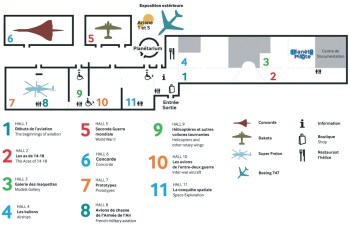
Plan of the museum.

Plan of the museum.

I will now list some of the things that in my opinion make this museum unique (I will leave some anecdotes or details to future blog posts), accompanied by the respective pictures.
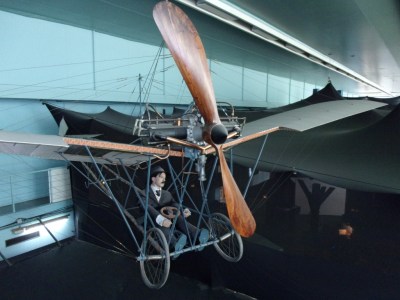
Model of Alberto Santos Dumont's Demoiselle (1908).

Model of Alberto Santos Dumont’s Demoiselle (1908).

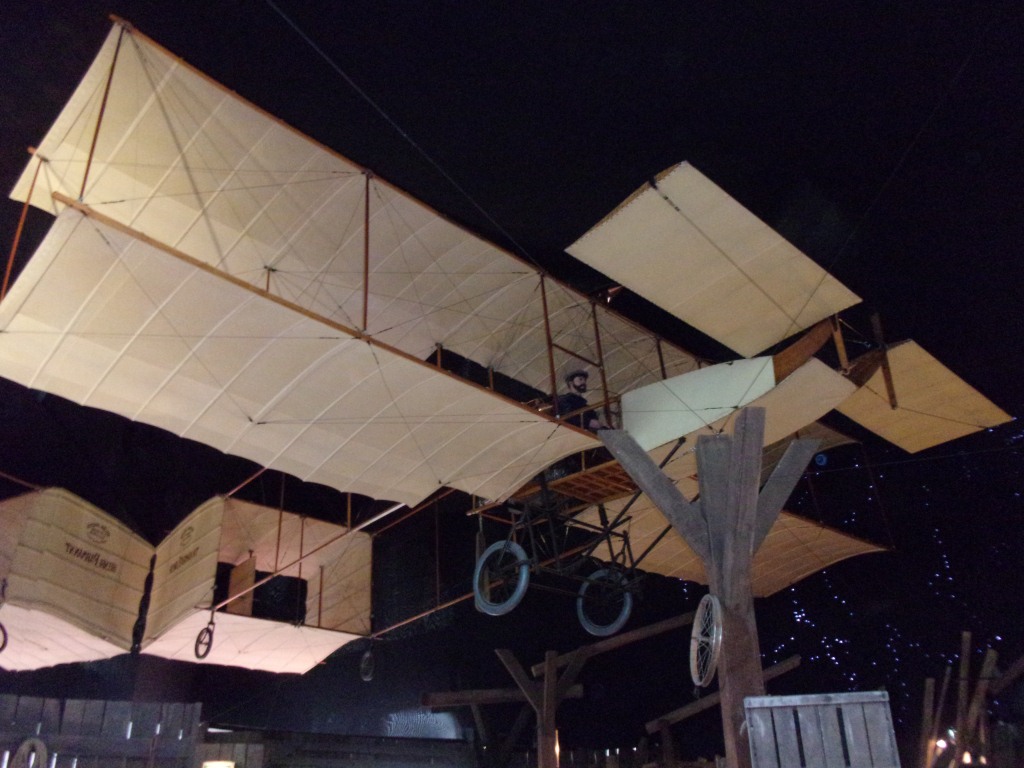
Alberto Santos-Dumont was a Franco-Brazilian aviation pioneer (2) who with his 14-bis, “Oiseau de proie“, on the 23rd of October 1906, in Paris, performed the first officially witnessed unaided takeoff and flight by a heavier-than-air aircraft. In the picture above you can see him aboard another of his early models, a Demoiselle from 1908.
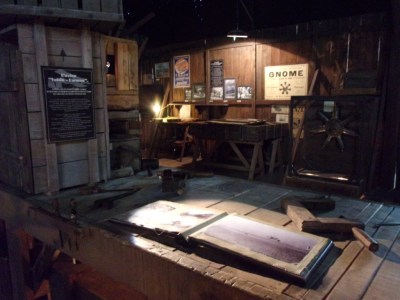
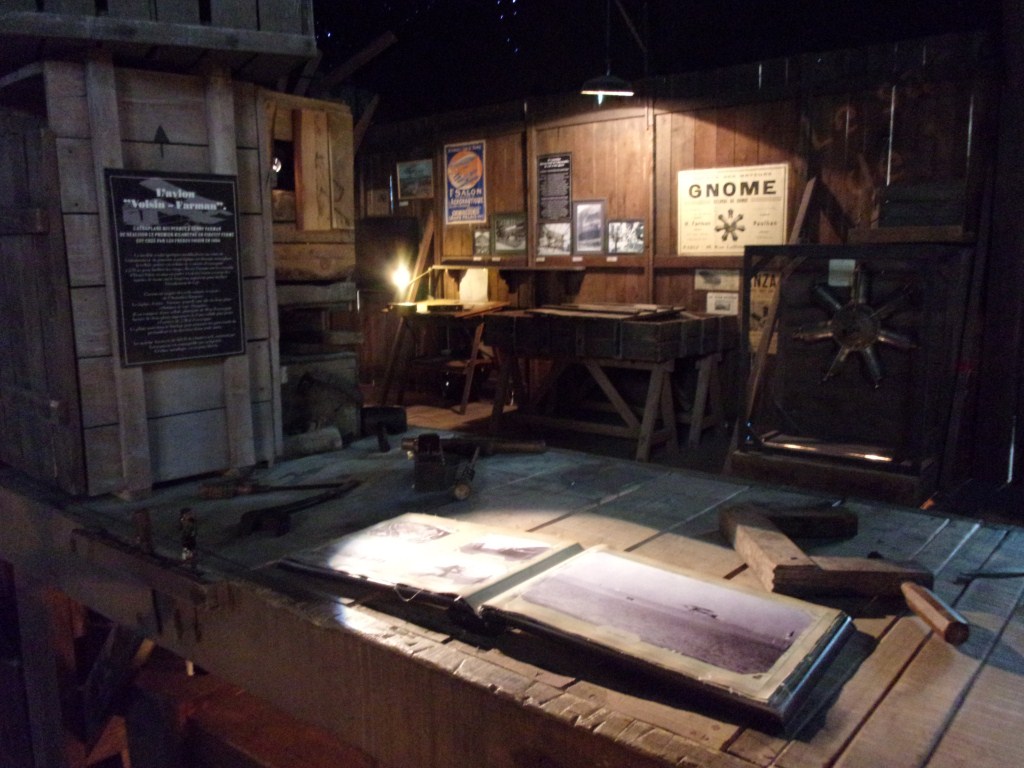
Workshop of the brothers Voisin (L’Atelier des Freres Voisin),

Workshop of the brothers Voisin (L’Atelier des Freres Voisin).

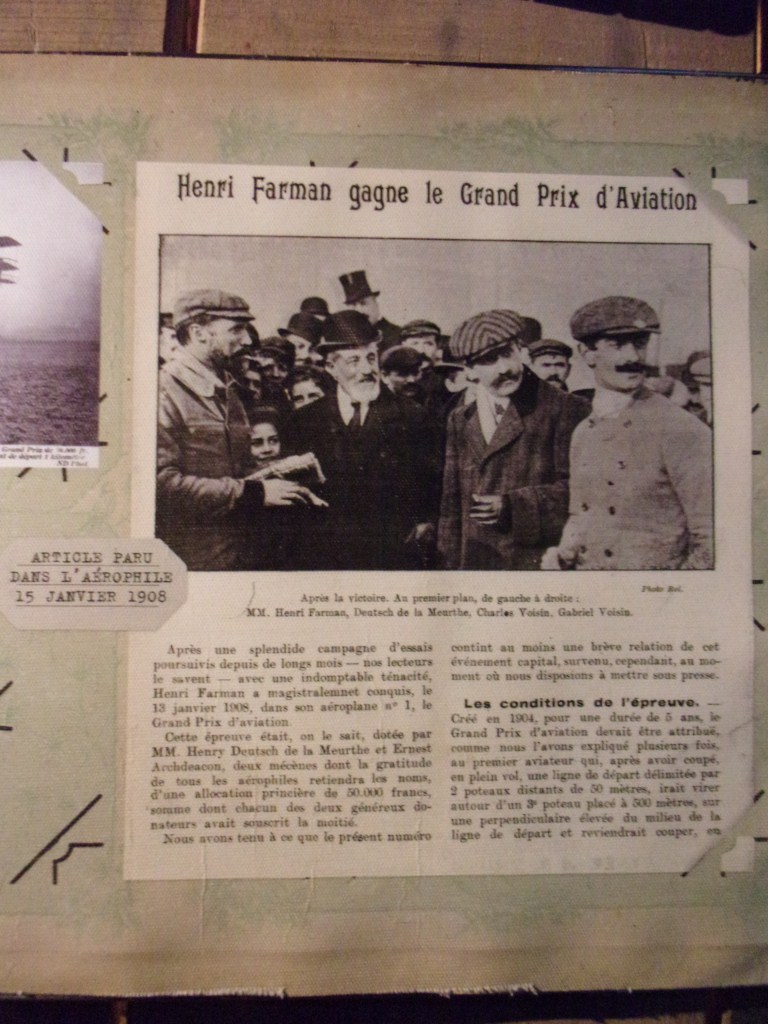
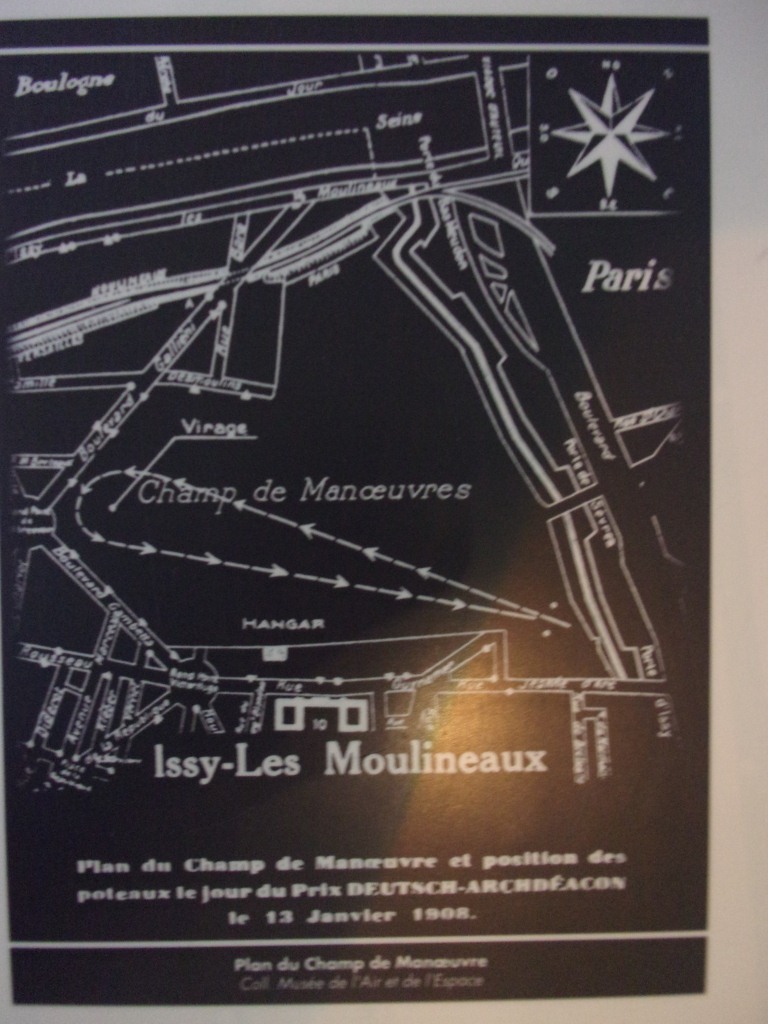
Some of the construction pioneers at the time were the Voisin brothers. The museum has model of how an aircraft construction workshop could look like at the time, “L’Atelier des FrèresVoisin” (this reminded me of the William E. Boeing Red Barn at the Museum of Flight in Seattle, see a post about it here).
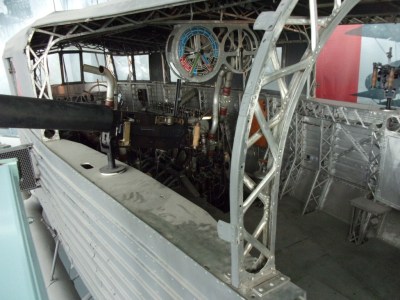
 

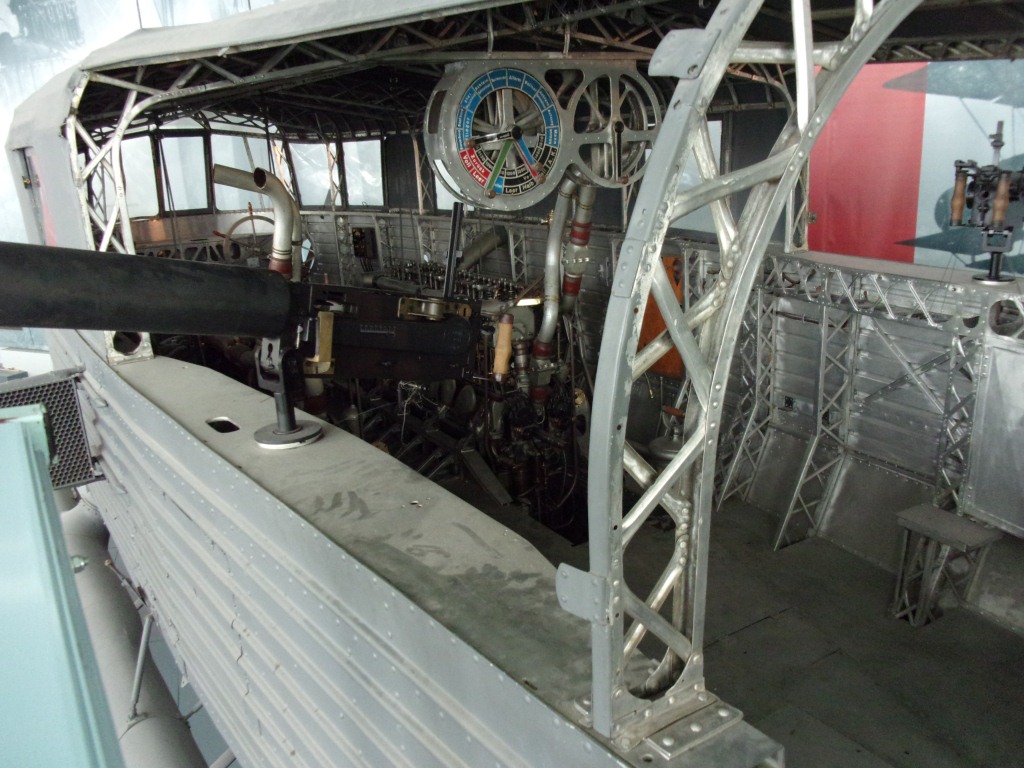
Nacelle of a dirigible  Zeppelin LZ 113.

Nacelle of a dirigible Zeppelin LZ 113.

Not everything in aviation are heavier-than-air machines, above you can see the inside of a nacelle of a Zeppelin LZ 113 used in war operations.

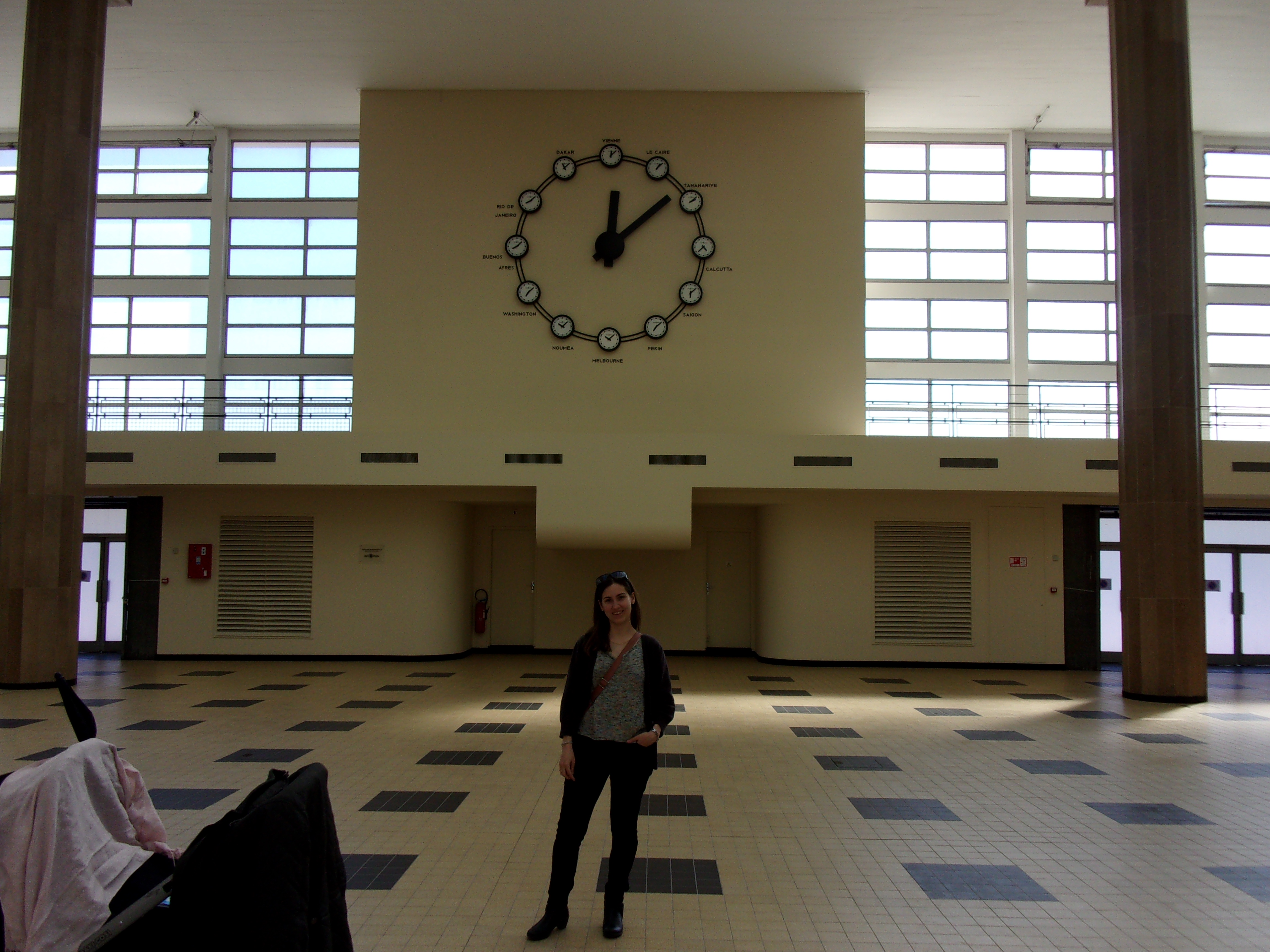
Old Le Bourget airport hall ("8 columns hall").

Old Le Bourget airport hall (“8 columns hall”).

Le Bourget was the first civil airport in Paris, opened in 1919. It was in Le Bourget where Charles Lindbergh landed his Spirit of Saint Louis in on the 27th May 1927 when he first crossed the Atlantic Ocean. The museum today occupies part of the old airport. In the picture above you may see the main hall, designed by the architect Georges Labro in a tender made in 1935 the ministry of aviation. The building was inaugurated in 1937 (this hall reminded me of Berlin Tempelhof, you may see a post I wrote about it here).
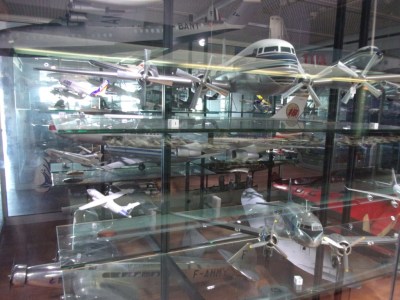
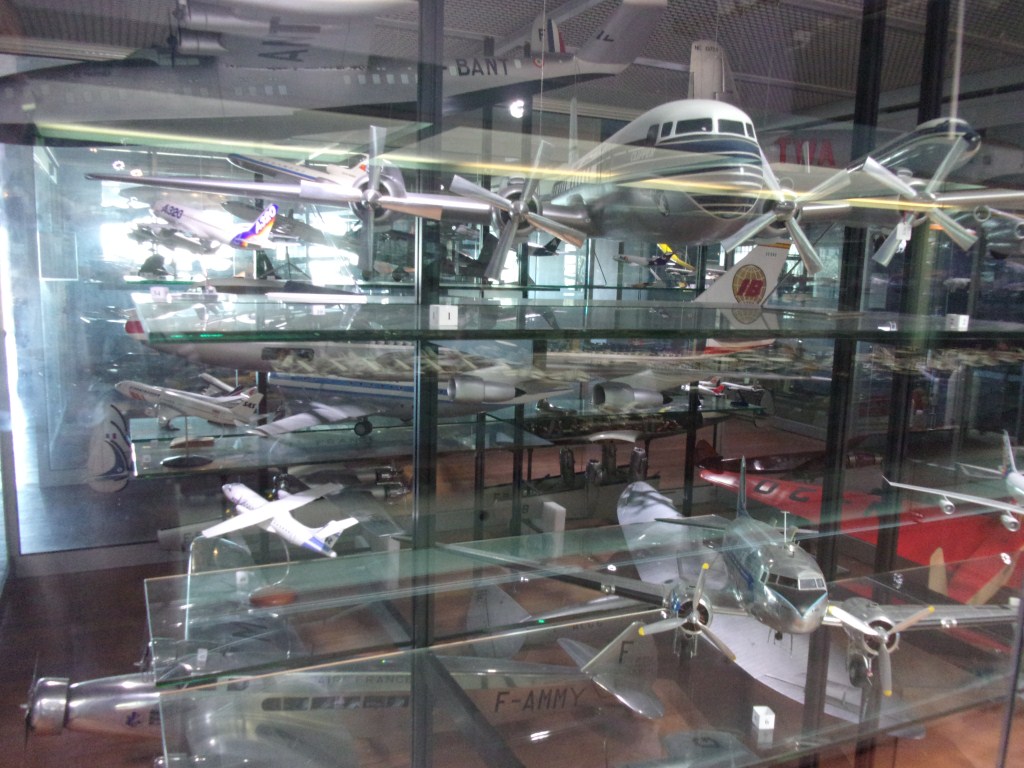
Models gallery.

Models gallery.

The museum includes an aircraft models gallery. As a collector of models, I liked to spend some time wandering through these models. It also helps to test your own capabilities as a spotter without having to walk or wait a lot.

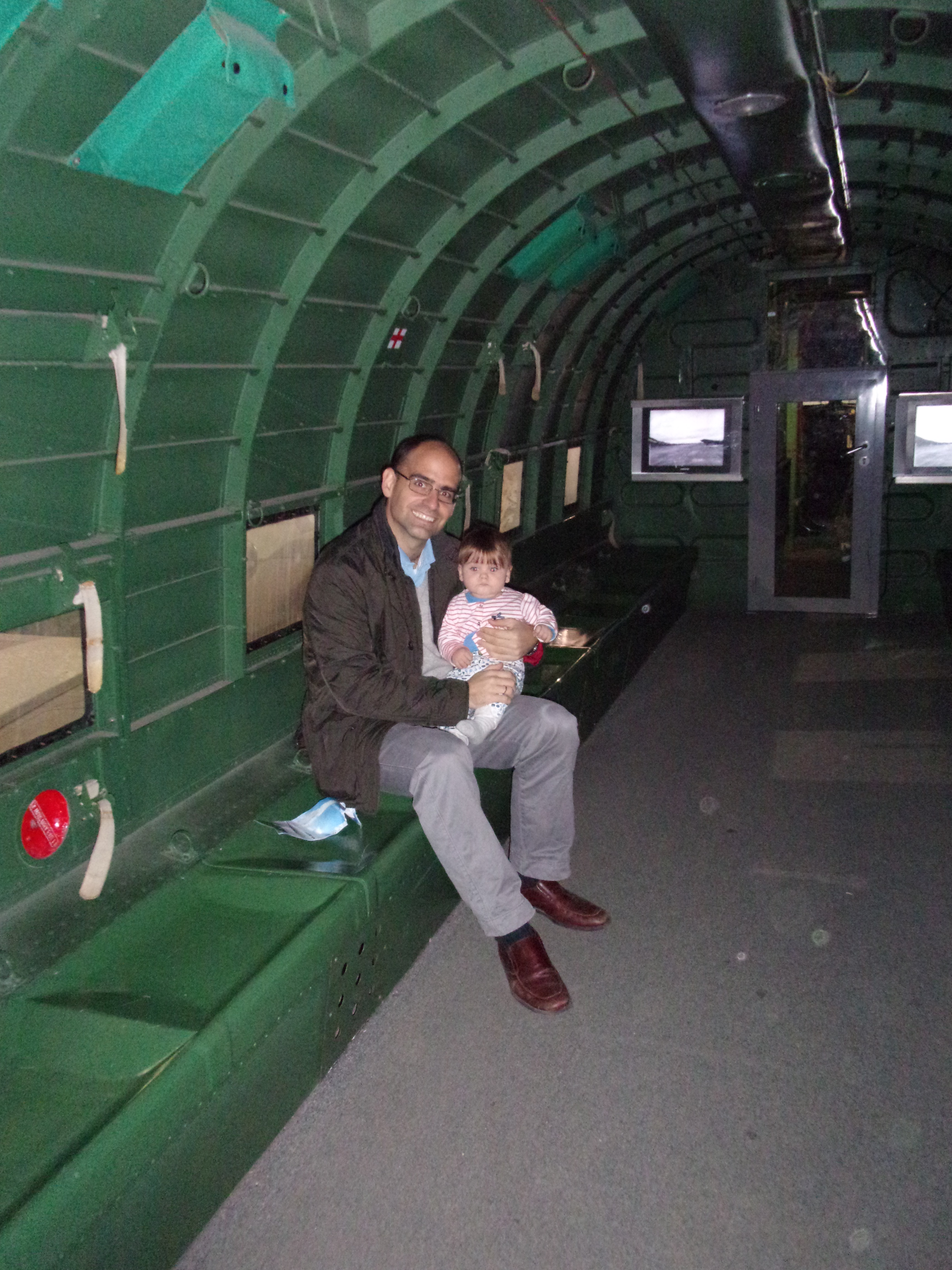
Inside a C-47 Skytrain Dakota

Inside a C-47 Skytrain Dakota.

In this museum you can get on board a C-47 Skytrain (Dakota being the British designation for the airplane). I believe this was the first time I was inside a DC-3 (an aircraft of which importance to aviation cannot be overstated (3)), as if I remember well, in the Aviodrome you could get inside a DC-2 not -3.
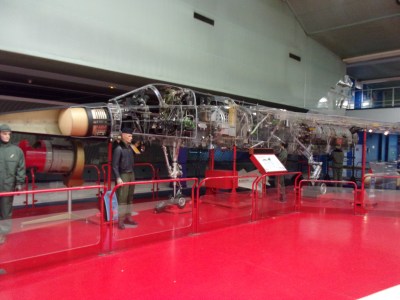
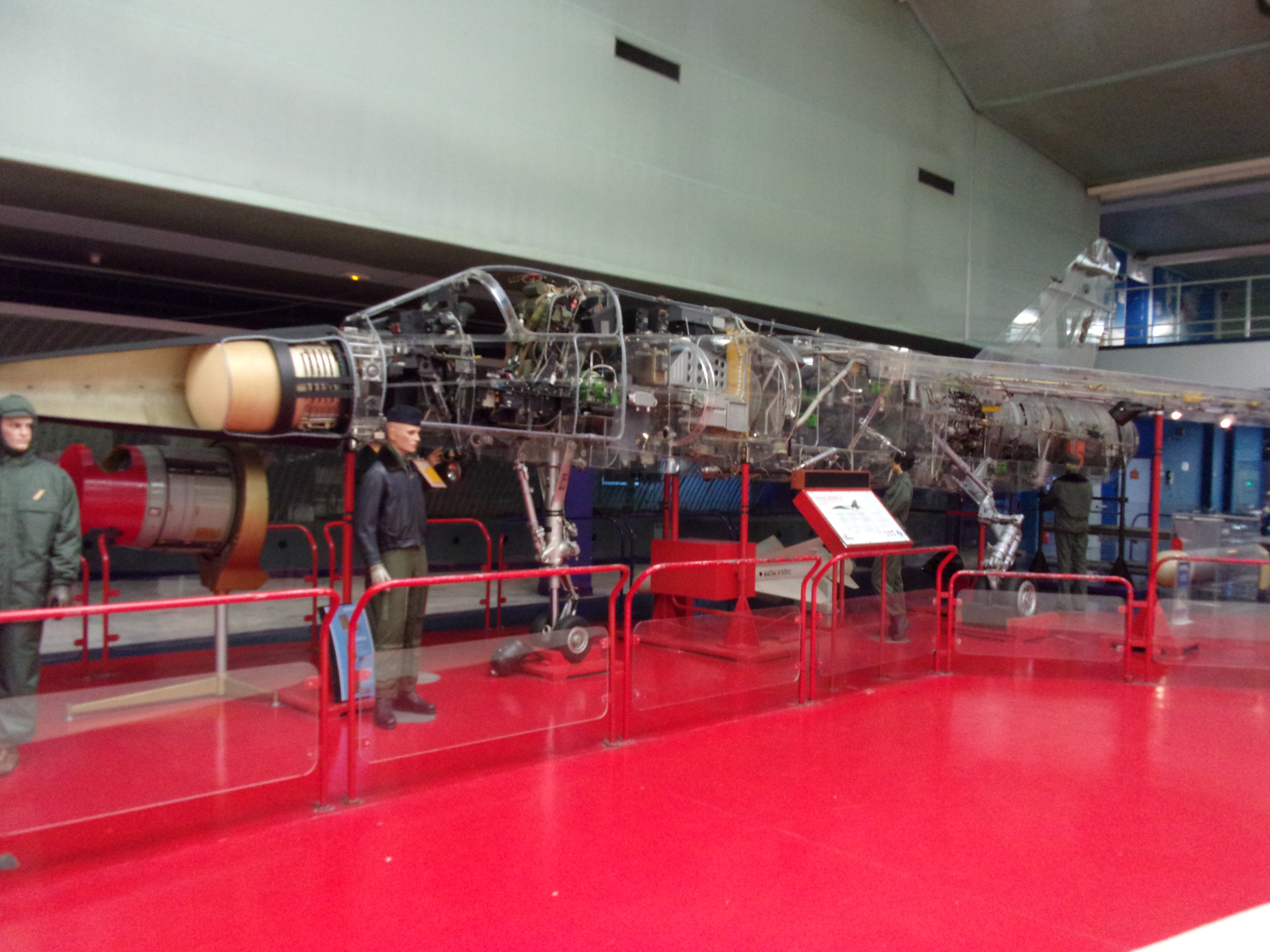
Cut out of a Dassault Mirage F1.

Cut out of a Dassault Mirage F1.

In other museums I had seen cut outs of engines, here in Le Bourget you may see a full size cut out of a Dassault Mirage F1, a wonderful entertainment for engineers and aviation enthusiasts.

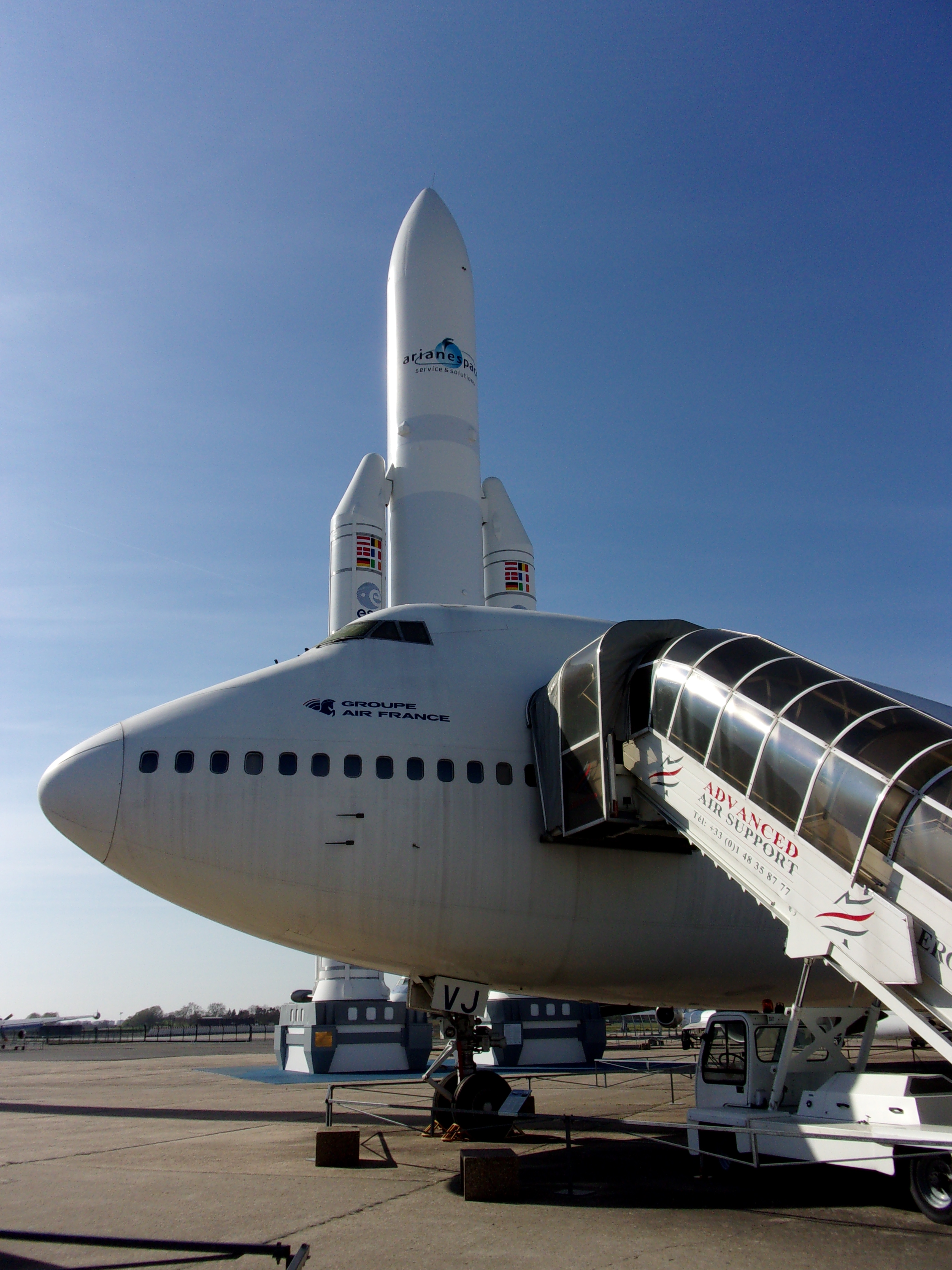
747 and Ariane 5

747 and Ariane 5.

In Le Bourget you can see replicas of the Ariane 4 and Ariane 5 (4). That allows you to get a picture of both in the same frame or to get them with a Boeing 747, as pictured above.
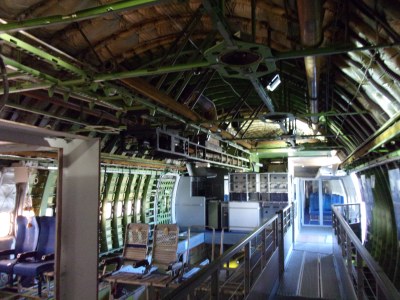
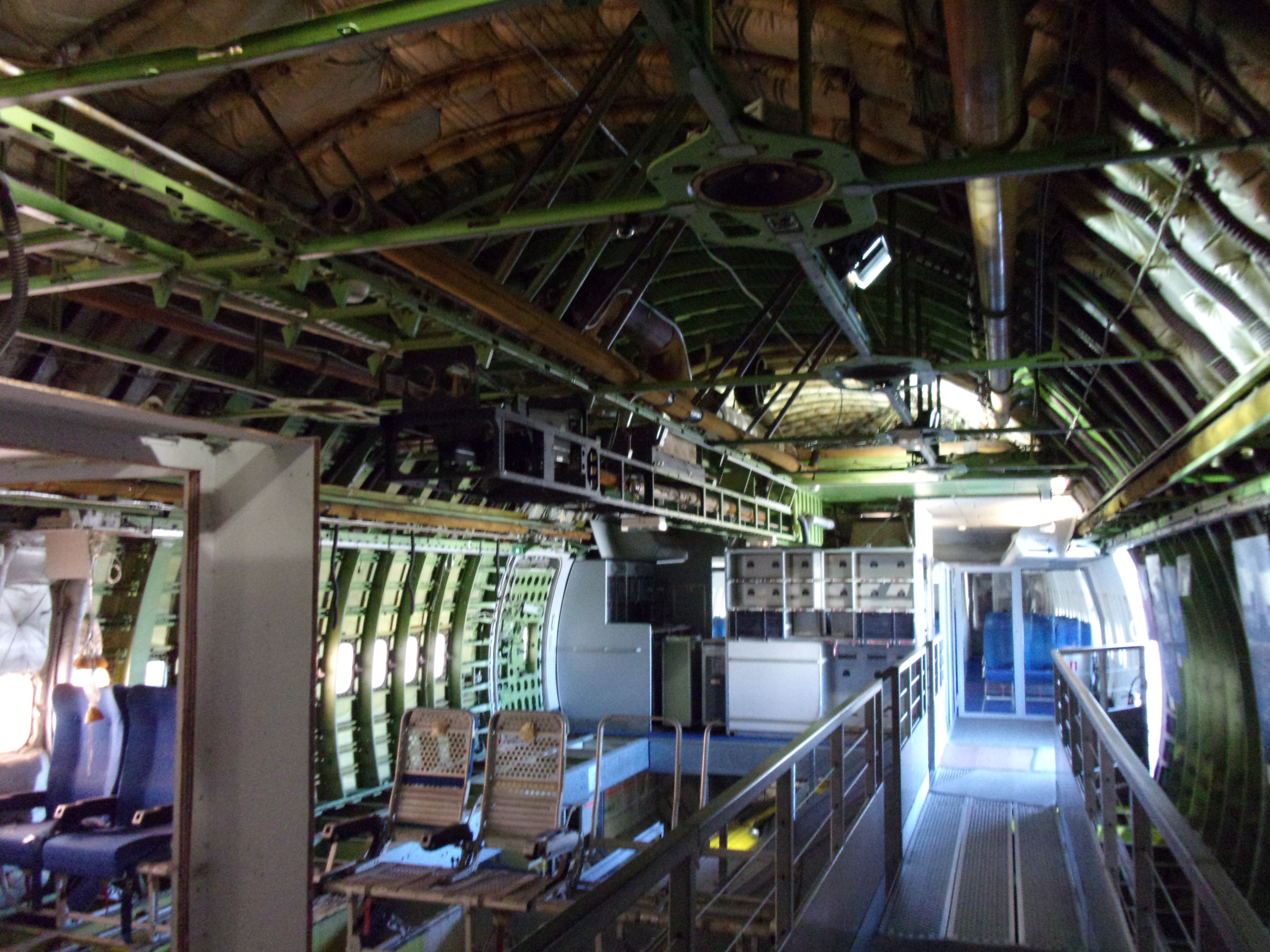
Inside of a Boeing 747 cut out.

Inside of a Boeing 747 cut out.

The Boeing 747 is legendary aircraft in itself (5) and the chances of flying in it are decreasing by the year as more airplanes are being retired from service. In Le Bourget, you get the chance to see it really from the inside, as parts of it are really cut out so you can admire its structure, systems, etc.
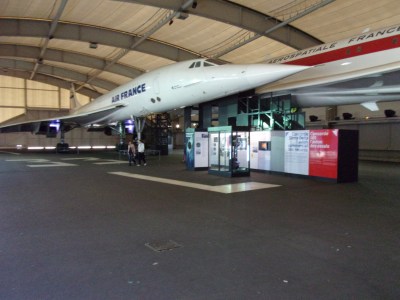
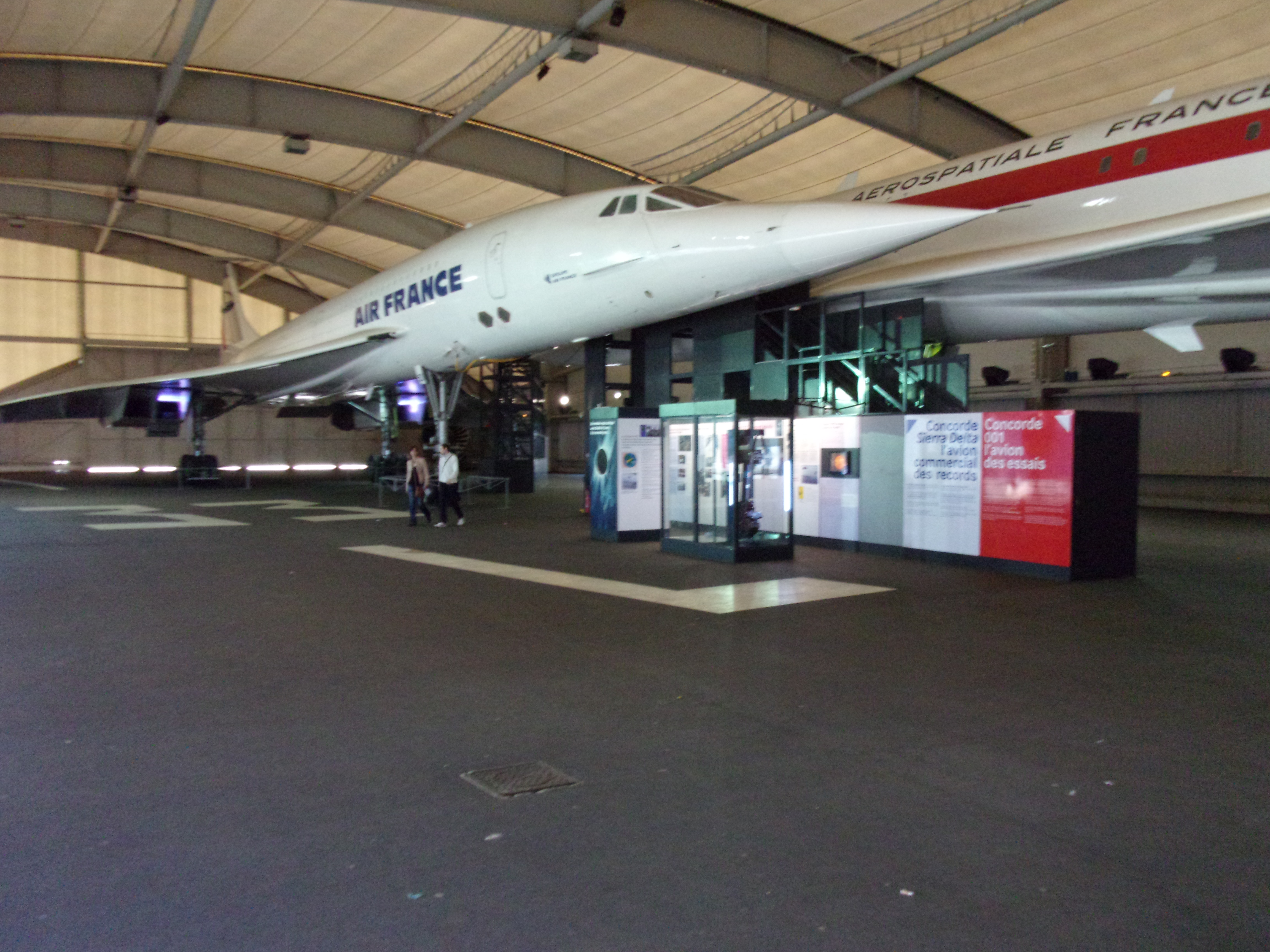
Concorde: prototype 001 and series airliner.

Concorde: prototype 001 and series airliner.

Some museums around the world have the Concorde as a highlight. In some of them you may get into it. Here in Le Bourget you may get into 2, one of them being the prototype 001, where you can see some flight test installations used for different experiments made with it.

I definitely recommend to visit this museum if you happen to be in Paris. It is located at Le Bourget airport and the entrance is free of charge. A ticket to get into some of the aircraft (747, Concorde, C-47) is sold for 8 euros. I would suggest to take no less than 4 hours to visit the museum.

(1) In the Aviodrome the local focus is put into the figure of Anthony Fokker.

(2) See in this post a review of French aviation pioneers.

(3) See more of the DC-3 in this post that a wrote as a tribute to Douglas Aircraft Company.

(4) So far, I had only seen a replica of the Ariane 5 at the Cité de l’Espace in Toulouse, see here a post I wrote about it.

(5) See here a book review I wrote about “747” by Joe Sutter, the programme chief engineer.

5 Comments

Filed under Aerospace & Defence, France

El Clásico: en streaming y de forma legal

Quería compartir en esta entrada como estoy viendo hoy El Clásico entre Real Madrid y Barcelona.

Estamos pasando unos días en París, y dada la hora del partido no me apetecía acercarme a un bar para verlo. ¿Solución? Verlo por streaming en el ordenador desde la habitación del hotel y de forma legal.

Desde hace un par de años estoy suscrito a beIN Sports, la cadena que tiene comprados los derechos televisivos del fútbol español en Francia. La suscripción a beIN Sports la gestioné en su día desde Free, el operador de telefonía e internet, a través del cual también recibo la televisión por cable.

Pues bien, beIN Sports me permite ver sus canales desde cualquier punto por internet (1). Disponibilidad. Esa es una de las claves si se quiere acabar con la piratería, como señalan en las siguientes entradas Jefotecs, “Receta contra la piratería: disponibilidad y precios razonables”, y Enrique Dans, “Una cuestión de disponibilidad y precio” (podría enlazar muchas otras entradas de ambos blogs u otros).

Mucho debe aprender la infame industria de contenidos en España.

El Clásico en beIN Sports.

El Clásico en beIN Sports.

(1) Por no hablar de la posibilidad de ver repeticiones por internet en cualquier momento, de la fracción de banda ancha que reserva Free para que sus usuarios podamos conectarnos por WiFi desde cualquier punto donde haya señal de Free, etc .

Leave a comment

Filed under Twitter & Media

Buffett and Branson on airline business

While reading a few days ago Warren Buffett’s Letter to the Shareholders of Berkshire Hathaway, I was reminded of NetJets, the fractionary ownership of planes business which has as parent company. The fact that BRK owns such a company is quite ironic bearing in mind the following quote from Buffett:

“The worst sort of business is one that grows rapidly, requires significant capital to engender the growth, and then earns little or no money. Think airlines. Here a durable competitive advantage has proven elusive ever since the days of the Wright Brothers. Indeed, if a farsighted capitalist had been present at Kitty Hawk, he would have done his successors a huge favor by shooting Orville down.”

But then again, Richard Branson, another prominent businessman, founded Virgin Atlantic, which is now part of the Virgin Group, chaired by Branson, who is quoted saying:

“The quickest way to become a millionaire in the airline business is to start out as a billionaire.”

Are these cases of “do as I say, not as I do”?

Leave a comment

Filed under Aerospace & Defence, Investing

My first landing in Blagnac (LFBO)

I think this post is better understood just by watching the video (find referenced charts below):

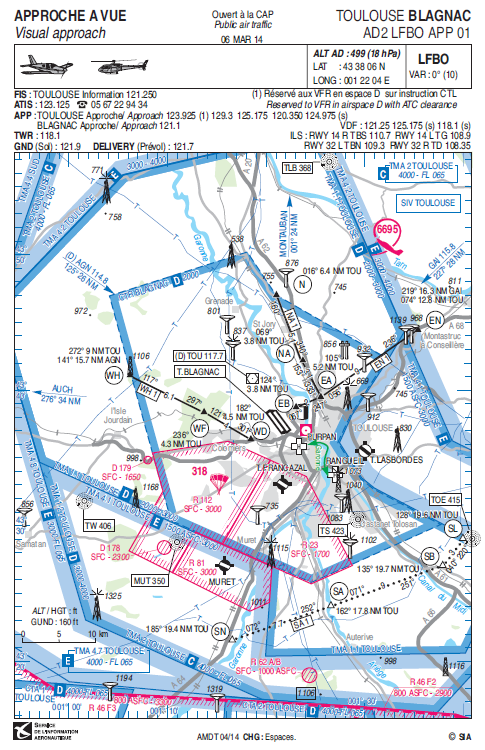
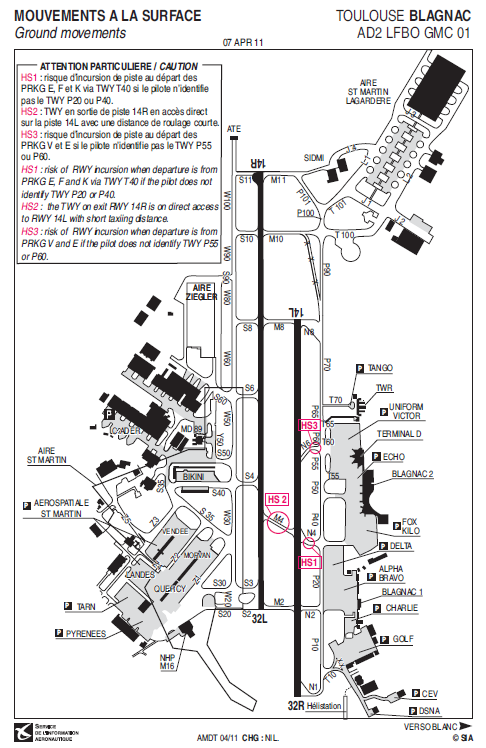
Find the Visual Approach Chart of Toulouse Blagnac (LFBO) [PDF, 846KB] from the Service de l’Information Aeronautique (SIA). Main pages to follow the video are shown below:

Visual Approach to Blagnac. Special attention to route followed from Lasbordes, EN - EA - EB.

Visual Approach to Blagnac. Special attention to route followed from Lasbordes, EN – EA – EB.

Visual Landing in Blagnac. Special attention to waypoint EB (water tower) and clockwise aerodrome circuit to land on 32L.

Visual Landing in Blagnac. Special attention to waypoint EB (water tower) and clockwise aerodrome circuit to land on 32L.

Taxiing in Blagnac. Special attention to the crossing of 32R by way of M4 and N4. Note parking Golf. Departure from 32R by way of N1.

Taxiing in Blagnac. Special attention to the crossing of 32R by way of M4 and N4. Note parking Golf. Departure from 32R by way of N1.

Leave a comment

Filed under Aerospace & Defence

Aerospace & Defence assets employed in the search of Malaysian Airlines Boeing 777 flight MH370

Few months ago I wrote a post about Europe’s Common Security and Defence Policy (CSDP) and the need that EU countries have clearer policies, commitments, roadmaps, resources… I started that post with the following reflection:

Security and Defence is a topic which only makes it to the front pages of the media when there are actual war operations. Rarely a debate is centered on whether the country needs to foster its capabilities, invest in new defence technologies, or protect a certain industry base. I cannot recall a single electoral programme calling for such initiatives. The defence is not popular in today’s (European) society.

These days, we are witnessing a 24/7 coverage of the search operation of the missing Malaysian Airlines Boeing 777 flight MH370. In this post I just wanted to highlight the aerospace and defence assets involved in that operation, as reported by one of The Wall Street Journal’s blogs, “How India’s Effort in Search for MH370 Matches Up Globally“. See the graphic below:

Aerospace and defence assets employed in MH370 B777 airplane search operation.

Aerospace and defence assets employed in MH370 B777 airplane search operation.

According to the article, among those 12 countries, they are employing about 32 aircraft (fixed wing), 14 helicopters, 63 boats (ships, destroyer, patrol boats…) and 10 satellites. It goes without saying that before such an operation can be put in place, the assets shall be owned (acquired) by those states, they need to have been maintained, the crews need to have been trained, etc. All those activities and assets, need to have been performed and funded (ideally) in times of peace, when the public opinion is less prone to think that those assets and activities (and the budget directed to provide them) are needed.

A second after thought I had reading the article is the continuous need to educate about aerospace.

I see (and have circled in red) in the graphic a distinction between “aircraft” and “fixed-wing aircraft“, or “helicopter” and “search and rescue aircraft“. I am aware that the distinction comes not from The Wall Street Journal but from the information source, Jane’s. Jane’s is a well-known publishing group which offers information of aircraft and other warfare, and inventories of those assets owned and operated by different government services around the world (e.g. Malaysian Air Force, Navy, etc.).

  • When Jane’s differentiates aircraft as fixed-wing is to differentiate them from rotary-wing (i.e. helicopters) and not from “aircraft” such as the P-3 Orion or the P-8 Poseidon cited in the graphic, all those are fixed-wing aircraft. Thus, the split between  “aircraft” and “fixed-wing aircraft” was unnecessary.
  • When Jane’s differentiates helicopters (or rotary-wing aircraft) as “search and rescue aircraft” is to differentiate them from others but from the operation point of view, thus, “search and rescue” versus “transport”, “attack”, “gunship”… thus, here, again, the split between “helicopter” and “search and rescue aircraft” (SAR) was unnecessary, as the only SAR included in the graphic is another helicopter.

I am afraid that a similar confusion has been created when using the terms ship/destroyer and maritime vessel/patrol boat, but since I am not an expert in the field I will not comment.

Finally, I wonder where The Wall Street Journal has taken the pictures to symbolize aircraft and helicopters. The icon used to represent the fixed-wing aircraft is a Fairchild Republic A-10 Thunderbolt II, which is indeed a fixed-wing aircraft, but it is a ground attack aircraft (rather than maritime patrol or search and rescue aircraft) only operated by the United States Air Force, not by the Malaysian Maritime Enforcement Agency, Vietnam or Singapore, as the graphic may lead to think.

Leave a comment

Filed under Aerospace & Defence

Turboprop market vs. oil price (ATR figures 2013 update)

Few weeks ago, the Toulouse-based aircraft manufacturer ATR (Avions de Transport Régional) published a press release reporting some of its numbers from 2013 exercise (being a private company, owned by Airbus and Alenia, it does not publish full financial annual report). Some of the key figures were:

  • Revenues increased 13% to 1.63bn$.
  • A new record of 74 deliveries (+16%).
  • Sales of a total of 195 aircraft (89 firm orders and 106 options). (1)
  • Backlog at year-end of 221 firm aircraft orders.

About 3 years ago, I wrote a post, “Turboprops market different dynamic“, in which I discussed:

[…] how civil turboprop market is unrelated to the larger and more known turbofan civil aircraft market and how its dynamics are completely unrelated to World GDP growth and thus world air traffic growth. […]

When calculating correlation between the different variables, I discovered that the correlation between GDP and deliveries is rather low, despite of the time lag applied (be it 2, 3, 4 years…). However I found that the oil prices and deliveries did correlate very well with a lag of 5-6 years, yielding coefficients of 0.55-.65, which are rather high.

I wanted to update the calculations I made then with the information of the last years.

ATR deliveries vs. GDP growth and oil price (2013 update).

ATR deliveries vs. GDP growth and oil price (2013 update).

With the last years’ data, correlations are similar:

  • Between oil prices and deliveries: high, above 0.54 from 1 year time lag, increasing through 6 years time lag (when it reaches a maximum of 0.77).
  • Between GDP growth and deliveries: low, not more than 0.26, and negative correlations up from 1 to 4 years time lag.

If there was causality, we could infer that the from the moment that oil prices are computed, till they are taken into regional airlines’ models, the fleet planners identify the need for new turboprops, the case is approved by airlines’ management, discussions start with ATR, negotiations are closed between the airline and the manufacturer, the aircraft are built and delivered to the airline… it takes about 6 years. (2)

(1) 15 cancellations (4 ATR-42 & 11 ATR-72) that took place in 2013 go untold in the press release, though they are easily deduced comparing orders and backlogs for 2013 and 2012.

(2) About 3 of those 6 years are consumed from placing the firm order to getting the aircraft delivered, as we can see by the current figures of backlog (221 a/c) and yearly deliveries (74 a/c).

1 Comment

Filed under Aerospace & Defence

The coolest boarding pass

Today I started the day working in Madrid. I had to take the 17:10 Iberia 8770 flight to return from Madrid to Toulouse. At 16:05 I was still in the office. I had yet to pick the rental car in the company parking lot, go to the gas station to fill up the tank, return the car at the rental car station in the airport, get the invoice printed… and get the boarding pass.

Yesterday night I tried to check in online but at some point of the process the website did not load. Luckily I had tried. By the time I reached the Iberia counter at the airport the check in for my flight was closed, as the attendant informed me. “Here we close it 45 minutes before the departure time.” But since I had tried it the previous night, I did have an assigned seat, 22D. She would only have to “make the boarding pass manually”.

Boarding Pass for flight IB 8770 on 2014-03-13.

Boarding Pass for flight IB 8770 on 2014-03-13.

Without a doubt, this is the best boarding pass I have been given ever. Just wanted to have it reflected here in the blog. Cool! 😉

Leave a comment

Filed under Miscellanea

Wells Fargo History Museum at San Francisco

While reading Warren Buffett’s 2013 letter to the Shareholders of Berkshire Hathaway a few days ago, I was reminded of the Wells Fargo bank and its History Museum at San Francisco, that we visited during our honeymoon last year.

As we could learn in the museum the history of the bank is very much linked to the expansion of the nation to the West in the XIX century, the discovery of gold in California, and mail and express services.

Both founders, Wells and Fargo, were prominent figures in the express services (what now would be UPS or FedEx). They had already formed American Express, and wanted to expand to the West, however most directors doubted about the idea, and Wells and Fargo decided to start that venture in 1852 independently, with the aim of providing express and banking services in California.

After a bank run in 1855, Wells Fargo emerged as a sound, dependable bank practically without competition in California. The fate of the West expansion was since linked to the bank, which provided not only banking and express services, all types of other services of transportation, communications, the iconic stagecoach service, the Pony Express, etc.

Thus, the visit of the bank’s museum becomes a discovery of some of the details and processes that helped and fueled the expansion to and development of the West coast.

This slideshow requires JavaScript.

The museum is located besides the HQ of the bank at Montgomery Street, the entrance is free and I do recommend the visit.

1 Comment

Filed under Travelling

Boeing real prices (accounting for inflation) after discount

In a previous post I compared for some Boeing airplanes (737-800, 737-900ER, 777-300ER and 787-8) what had been the evolution from 2008 to 2013 of the published list prices against the estimated discounted prices. In that post, I arrived to the following conclusions:

[…] the pricing power of Boeing had remained barely constant during the last 5 years.

  • Through continuous increases, 2013 list prices were between 18% (737 and 777) and 27% (for the 787) higher than in 2008.
  • However, due to increasing discounts from 38% in 2008 to 47% in 2013, the increase in list prices is almost entirely offset.
  • 2013 discounted prices are below 2010 discounted prices for all models.
  • 2013 discounted prices are almost back at 2008 levels for the 737 and 777, only the 787 seems to have stayed at 2010 levels.

I, then, received one interesting comment from a reader, ikkeman, pointing at the fact that if the estimated discounted prices are expressed in then-year dollars (1), if real prices had not increased since 2010, that meant that they had indeed decreased.

See below the graphic I included in the a previous post updated adding the data of US inflation after 2008. [The series is: -0.4% (2009), 1.6% (2010), 3.2% (2011), 2.1% (2012) and 1.5% (2013)]

Boeing List & discount Prices evolution graphic vs. inflation in USA,

Boeing List & discount Prices evolution graphic vs. inflation in USA.

With the information of the inflation (purple line) the following 2 conclusions apply:

  • 787 real price (accounting for inflation) after discount has simply kept up with inflation rate since 2008.
  • 737 and 777 real prices after discounts, however, have lost ground with respect to inflation since 2008. On average they have lost about 8.5% in total or about 1.6% per year.

(1) That is the case as estimated discounted prices have been estimated year by year from the financial reports and list prices of the year, thus, using then-year US dollars.

Leave a comment

Filed under Aerospace & Defence

Implications of the independence of Kosovo in the case of Crimea

From the onset of the current crisis in Ukraine and the increased presence of Russian forces in Crimea I am having in mind the same word: Kosovo.

I was reading in today’s article from the Wall Street Journal, “A Defiant Putin Endorses Crimean Bid to Secede“, the following:

“The steps taken by the legitimate leadership of Crimea are based on the norms of international law and aim to ensure the legal interests of the population of the peninsula,” Mr. Putin said Sunday in the calls, according to a statement from the Kremlin.

I admit that when Kosovo unilaterally declared its independence in 2008 I did not follow in detail the case, other than knowing the basics and Spain’s opposition to it. It was only last year that I got to know a bit more the details of the case due to the fact that my sister Beatriz, pursuing a Masters programme on  International Security and Law at the University of Southern Denmark, wrote a paper about it and asked her brothers to review it.

I am sure that I miss many of the nuances of the case, but my feeling is that the way that case was handled is backfiring at the moment. When I read Putin’s declaration, “based on the norms of international law and aim to ensure the legal interests of the population of the peninsula“, I see some of the details I will try to summarize below.

A rather complete article about the case can be found here in the Wikipedia.

Let’s start from the beginning. In 1999 and in view of the crisis going on for already 2 years in Kosovo, “Determined to resolve the grave humanitarian situation in Kosovo, Federal Republic of Yugoslavia, and to provide for the safe and free return of all refugees and displaced persons to their homes […]”, the United Nations Security Council adopted the Resolution 1244 (1999) [PDF 24KB, 8 pages]. I invite you to go through it. Here I recall some passages to relate it to the current situation in Crimea:

Reaffirming the commitment of all Member States to the sovereignty and territorial integrity of the Federal Republic of Yugoslavia […]

Reaffirming the call in previous resolutions for substantial autonomy and meaningful self-administration for Kosovo […]

(e) Facilitating a political process designed to determine Kosovo’s future status, taking into account the Rambouillet accords (S/1999/648);

(f) In a final stage, overseeing the transfer of authority from Kosovo’s provisional institutions to institutions established under a political settlement; […]

[excerpts from United Nations Security Council Resolution 1244 (1999), PDF 24KB]

On the reference to the Rambouillet accords (S/1999/648):

3. The Federal Republic of Yugoslavia has competence in Kosovo over the following areas, except as specified elsewhere in this Agreement: (a) territorial integrity, […]

[from page 10. Rambouillet Accords (S/1999/648), PDF 3.4MB, 86 pages]

Fast forwarding 7 years (from the Wikipedia):

International negotiations began in 2006 to determine the final status of Kosovo, as envisaged under UN Security Council Resolution 1244 which ended the Kosovo conflict of 1999. Serbia’s continued sovereignty over Kosovo was recognised internationally. The vast majority of the province’s population sought independence.

Fast forwarding 2 more years (from the Wikipedia):

The 2008 Kosovo declaration of independence was adopted on 17 February 2008 by the Assembly of Kosovo

At that point Serbia requested the United Nations General Assembly to seek an opinion from the International Court of Justice (ICJ) on the case, obviously thinking that the ICJ would rule against the declaration of independence. The resolution was passed with 77 countries voting in favor (including Russia, Brazil, India, China, Norway, Spain, Indonesia, Mexico, South Africa…), 6 against (including United States, Albania and some islands from the Pacific ocean) and 74 countries abstaining (including most of Western Europe, Canada, Japan…).

The article of the Wikipedia on the case includes some of the points raised by each country. I find it interesting to bring forward the points from:

United States:

The United States invites the International Court of Justice to leave the declaration of independence intact as an expression of the will of the people of Kosovo, either by refusing to comment on its legality, or by determining that the international law does not prohibit declarations of independence. The declaration of independence did not violate any principle of territorial integrity because under international law, only states must comply with this principle, and not internal entities. […]

Russia:

  • General international law prevents Kosovo from declaring independence, bearing in mind that the people of Kosovo do not enjoy a right to self-determination.
  • Russia rejects claims coming from those countries who support the unilateral declaration that international law “does not regulate independence declarations”, and reminds that the UN Security Council declared Northern Cyprus and Rhodesia’s independence to be illegal, since secession is forbidden outside the colonial context. […]
  • Resolution 1244 cannot be overturned by a decision of UN secretary-general’s envoy Martti Ahtisaari to end the negotiations and recommend independence as the only solution. Quoting the words of Kosovo Albanian representative Skënder Hyseni, who said that the negotiations were led on “whether or not Serbia will accept Kosovo’s independence”, Gevorgian said that Ahtisaari’s failure does not mean that the process has been concluded.
  • We often hear that international law is no law, that it does not apply to precedents, and that power is the law. This case is a chance to demonstrate that international law is in effect.

As requested, the International Court of Justice gave its advisory opinion on the case [PDF 190 KB, 31 pages], and found that:

THE COURT,
(1) Unanimously,
Finds that it has jurisdiction to give the advisory opinion requested;
(2) By nine votes to five,
Decides to comply with the request for an advisory opinion;
(3) By ten votes to four,
Is of the opinion that the declaration of independence of Kosovo adopted on 17 February 2008 did not violate international law.

… to the dismal of Serbia, Russia and others (1). I strongly recommend reading, or skimming through, the summary of the advisory opinion.

While reading the article prepared by my sister, I must confess that the (dissenting) opinion that I sided the most with was from Judge Koroma (2).  You may find it here [PDF 139KB, 22 pages]. I especially enjoyed this paragraph:

19. In addition to resolution 1244 (1999), the Court has considered whether the unilateral declaration of independence has violated certain derivative law promulgated pursuant to it, notably the Constitutional Framework and other UNMIK regulations. It concludes that the declaration of independence did not violate the Constitutional Framework because its authors were not the Provisional Institutions of Self-Government of Kosovo and thus not bound by that Framework. The jurisprudence of the Court is clear that if an organ which has been attributed a limited number of competences transgresses those competences, its acts would be ultra vires […]. However, the majority opinion avoids this result by a kind of judicial sleight-of-hand, reaching a hasty conclusion that the “authors” of the unilateral declaration of independence were not acting as the Provisional Institutions of Self-Government of Kosovo but rather as the direct representatives of the Kosovo people and were thus not subject to the Constitutional Framework and UNMIK regulations. That conclusion simply cannot be correct, since the unilateral declaration of independence was adopted in the context of resolution 1244 (1999) and the Court has acknowledged that the question posed by the General Assembly is a legal question and that resolution 1244 (1999) is the lex specialis and applicable in this case.

I love that expression, “sleight-of-hand”.

I also fail to see how if the resolution 1244 (and the Rambouillet Accords), recognized the sovereignty of Serbia over Kosovo and called for an agreed future status, the unilateral declaration of independence taken by an Assembly created by the Provisional Institutions of Self-Government of Kosovo which was a result of resolution 1244 can suddenly be considered as not acting as the Provisional Institutions of Self-Government of Kosovo and not subject to the Constitutional Framework and UNMIK regulations.

We may call Putin whatever words, we may find him opportunistic, etc., but when Russia stated before the UN General Assembly in 2009 “We often hear that international law is no law, that it does not apply to precedents, and that power is the law. This case is a chance to demonstrate that international law is in effect”, and saw how the ICJ opined afterwards, it can only be taken as a logic conclusion that now Russia finds “The steps taken by the legitimate leadership of Crimea are based on the norms of international law and aim to ensure the legal interests of the population of the peninsula”.

Some times politics and international law can get really entertaining. 

You reap what you sow.

(1) Kosovo has been recognised to date by 108 out of 193 (56%) United Nations member states, though not including Brazil, India, China, Russia, Argentina, Iran, Israel, Mexico, South Africa, Spain, etc. 

(2) To make the riddle even more tricky: Judge Koroma, a natural from Sierra Leone, studied law at the Kiev State University… I would love to hear his opinion today on the case.

3 Comments

Filed under Miscellanea