Category Archives: Aerospace & Defence

Starting up an airline?

Some days ago I came across a post in the blog of Randy Tinseth, VP Marketing  for Boeing Commercial Airplanes, where he explains the concept of StartupBoeing and invites entrepreneurs to take up the opportunity. StartupBoeing is a website which offers information to entrepreneurs in order to help them build their business plan or run their operations. As it is stated in the web itself:

“The StartupBoeing team assists entrepreneurs in launching new airlines. From concept through launch, StartupBoeing offers guidance, review, analysis, data, resources, contacts, and referrals to qualified startup airlines.”

The first thing I thought was “yes, there is the opportunity to lose your investment”. To be fair, Tinseth points at different moments the difficulty of the business and that it is tough to start-up an airline. Airbus does also have the same concept available to entrepreneurs, in this case is called: Start Me Up.

I looked for the last industry outlook from the International Air Transport Association (IATA), the industry association. The figures are appalling (see the table below):

IATA Financial results of the last decade.

Airlines around the world have lost during the last decade 50 billion dollars, with only 2 out of ten years with profits. On average the net profit, loss in this case, was -1.4% of the revenues (over 4 trillion dollars in the decade). Of course, there are airlines making profits, but the industry is not doing well (just remember the last achievements of G. Díaz Ferrán).

I then remembered this other comment from Warren Buffet about the airline industry since its inception:

“I made the comment that if a capitalist had been present at Kittyhawk back in the early 1900s, he should have shot Orville Wright. He would have saved his progeny money.

But seriously, the airline business has been extraordinary. It has eaten up capital over the past century like almost no other business because people seem to keep coming back to it and putting fresh money in.

You’ve got huge fixed costs, you’ve got strong labour unions and you’ve got commodity pricing. That is not a great recipe for success.

I have an 800 (free call) number now that I call if I get the urge to buy an airline stock. I call at two in the morning and I say: “My name is Warren and I’m an aeroholic.” And then they talk me down.”

So, yes, if you are considering whether to start-up an airline, do yourself a favour: call that 800 number, and put your cash somewhere else where it returns more than -1.4%…

The one thing we should definitely praise from these initiatives is the information resources available to the general public, something commented by readers of Randy’s blog and a purpose expressed in the Startup website as well:

“StartupBoeing.com also has a wider purpose as a resource to pass on information to our customers – and also as a resource for existing airlines, financial institutions, consultants and the leasing community. It’s a place for neutral industry data. We want to help make the industry healthy and make airlines safe, reliable and profitable.”

1 Comment

Filed under Aerospace & Defence, Investing, Marketing

A different view of the World

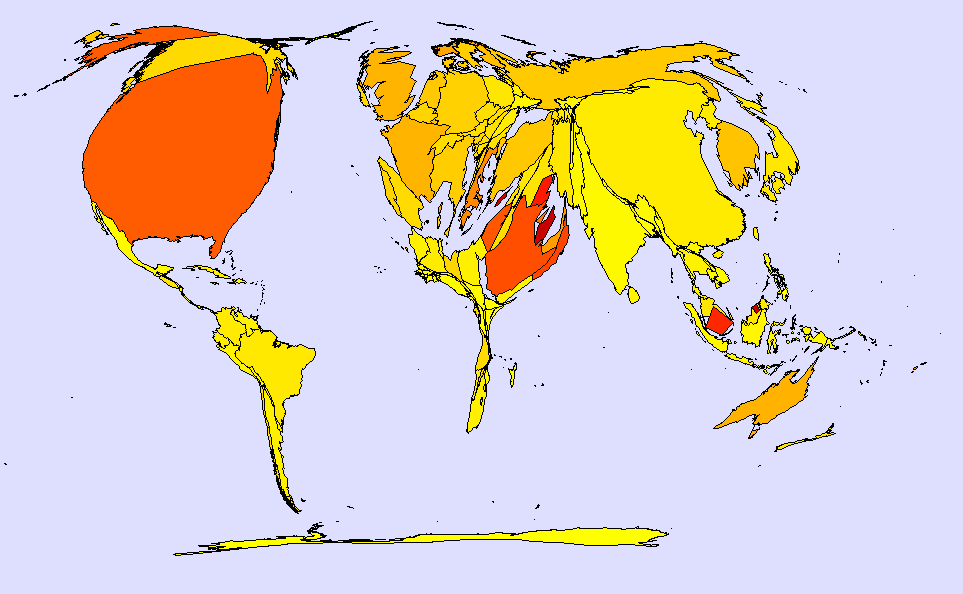
At work I often use different lists of countries by aircraft fleets, GDP, military expenditure, etc. Sometime ago I thought that it would be interesting to produce those kind of maps in which the area of the country represents the value of a variable: cartograms. Surfing through the internet you may find different websites with lots of cartograms to download, explanations about the method to produce them and even some applications that you may use to produce your own cartogram.

Today I have been playing with one of these applications. These are three of the cartograms I made:

  • In the first one: area represents GDP (in purchasing power parity) whereas colour shows GDP per capita (again in PPP).
  • The second one shows: military expenditure (PPP) as the area of countries whereas colour shows military expenditure as a percentage of GDP.
  • The last one has area representing again military expenditure (PPP) and colour showing military expenditure per capita (PPP).

Area showing GDP (PPP); colour showing GDP per capita (PPP).

Area showing Military Expenditure (PPP); colour showing Military Expenditure as percentage of GDP.

Area showing Military Expenditure (PPP); colour showing Military Expenditure per capita (PPP).

The data I used comes from extractions I made from the CIA World FactBook in 2007-2008, which used estimated data of different years, mainly 2006.

The application I used is made by MAPresso, and the quickest explanation on how to work with it I found it in this blog.

1 Comment

Filed under Aerospace & Defence

Video of Iguazu from a helicopter

In this post I want to write the least possible.

Enjoy the short video (5’20”) prepared in my first ever trip on helicopter (a Bell 206) around Iguazu falls… an unforgettable experience.

6 Comments

Filed under Aerospace & Defence, Movies, Travelling

Aerospace, a high-tech sector in Spain

Two years ago, there was a televised debate prior to the general elections in Spain. I remember I was watching it with friends and the incumbent president said “Spain is the leader country in the technology of air refuelling aircraft”. Since those friends watching the debate with me and I work in the aerospace sector we appreciated the comment.

Many things have happened since them, but one has not changed: aerospace sector is one of the most technologically intense in Spain.

For this post I am using mainly two sources: 2008 annual report from ATECMA (Asociación Española de Constructores de Material Aeroespacial, now replaced by TEDAE – Asociación Española de Tecnologías de Defensa, Aeronáutica y Espacio; 2009 report is being cooked) and 2009 report from COTEC (a foundation for technological innovation, “Informe Cotec 2009“).

I already mentioned in a previous post the size of aerospace sector in Spain: 5,577M€ revenues in 2008. In the last 10 years aerospace revenues in Spain have trebled. In 2008 Spanish GDP was about 1,088 bn€, so aerospace sector weighed 0.51% of Spanish economy.

Aerospace sector revenues and R&D evolution.

Regarding the employment, there were 36.160 employees of which over 15,000 were graduates, engineers and managers; 41% of the workforce consists of highly qualified employees. The employment of the sector has been doubled in the last 10 years.

Aerospace sector has presence in 16 regions, with the highest contribution from Madrid (63% of revenues and 57% of employment).

Aerospace sector revenues and employment per region.

There were 335 companies: 6 employing over 1,000 workers and 318 SMEs.

The sector had a positive trade balance of 3.6bn€ (while Spain has a large negative trade balance, of about 100bn$ prior to the crisis, now around 70bn$, 4.5% of GDP).

Aerospace industry is a dual industry: companies involved in it develop both civil and military products. The weight of each depends on the different years, but on average Spanish aerospace industry is 60% civil and 40% military.

After this brief description of some facts (see ATECMA report for a more detailed view of the sector), I want to remark the technological intensity of the sector.

Aerospace sector invests about 10-15% of its revenues in R&D. This is by itself an impressive, figure: Spanish economy as a whole invested in 2007 1.27% in R&D, thus aerospace invests 10 times as much as the economy average. If we said that the weight of the sector was 0.51% of Spanish economy, the aerospace R&D represents 5% of national R&D investments. Even more, if we only count R&D executed by companies, aerospace R&D contributed with 8.5% of total private R&D.

I included in this post the report from COTEC because it makes a distinction among the different sectors dedicated to technology in Spain: manufacturing vs. services, and high technology vs. medium-high. It uses categories derived from INE (Instituto Nacional de Estadística), and there we see 6 sectors classified as “High Technology Manufacturing Sectors”:

  • Pharma
  • Office material and computers equipment
  • Electronics components
  • Radio, TV and communication devices
  • Medical, precision, optics devices and watches
  • Aerospace

R&D investments of high-technology sectors.

Combining the data from this report with data from ATECMA (using 2007 figures for comparison with COTEC), we reach the following findings:

  • Aerospace sector revenues represented 15% of high-tech manufacturing sectors.
  • High-tech manufacturing sectors invested 1.3bn€ in R&D in 2007, this is 4.5% of their revenues, or 10% of total R&D in Spain.
  • Aerospace sector R&D represented 49% of high-tech manufacturing sectors R&D (!).

Indeed, it seems a high-tech sector.

If you wish to compare Spanish A&D with other European countries, please see the ASD reports (AeroSpace and Defence Industries Association of Europe).

1 Comment

Filed under Aerospace & Defence

The real comfort starts from 300 kg seats

In a previous post we introduced some comparisons of aircraft by its price per kilogram. There, we could see a trend in bigger aircraft being cheaper in this per kg basis. This raises the question: do bigger aircraft require less weight per seat? Are they lighter in a kg per seat basis?      

This is what intuition seems to tell us; after all, once you have put in place the engines, wing, tail… what can be the difference between a larger or smaller fuselage…     

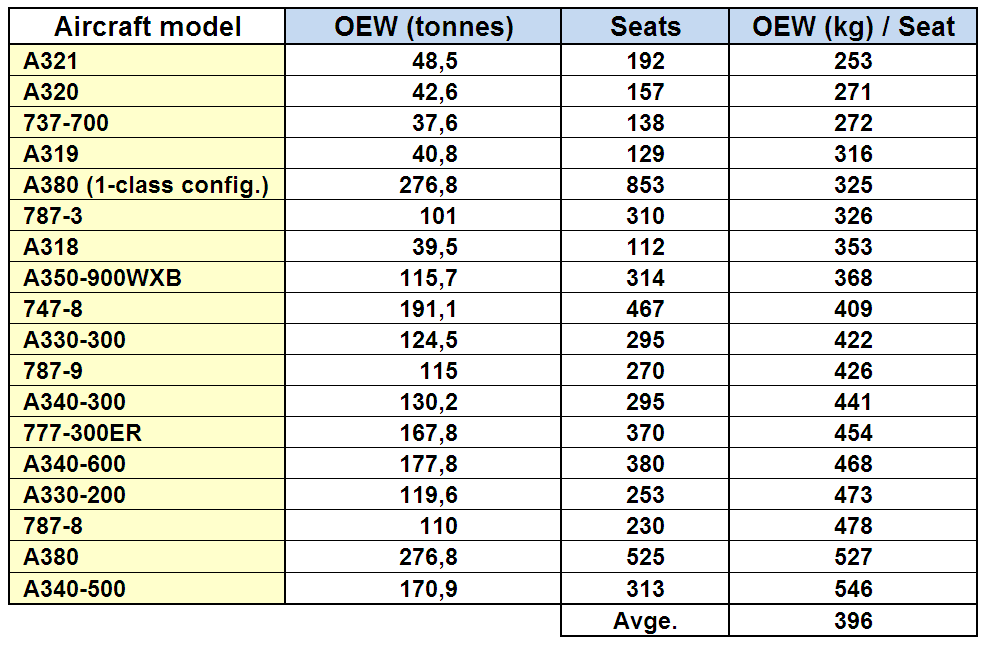
Let’s use the same sources we used in the previous post and take the typical seat configuration that the OEMs (Original Equipment Manufacturer) indicate for each aircraft model. We get the following table:     

Aircraft OEW (kg) per seat.


Our intuition wasn’t very successful again. In the upper part of the table we find the A320 family and 737s aircraft (those used by e.g. Easyjet and Ryanair in short-haul routes). In the bottom of the list we find the A380, A340, A330, 787, 777…, the biggest aircraft.     

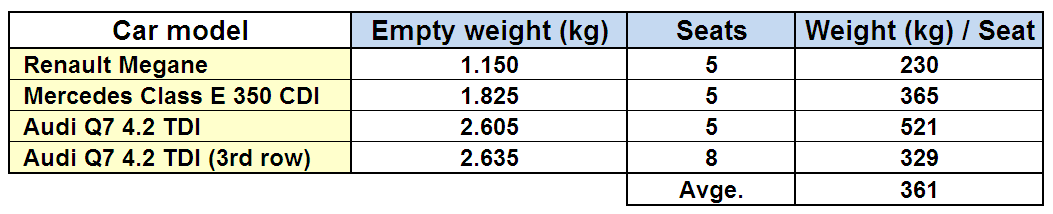
We see that the average is about 400 kg per seat. Let’s compare this figure again with cars, with the same cars as we did in the previous post. We now get following table:     

Cars empty weight (kg) per seat.


It turns out that cars also need around 300-500 kg of structure per seat (an average for these ones of 360 kg). Since most cars carry 5 passengers, here it’s easy to see the trend: bigger cars employ more kilograms per seat.     

Let’s go for a closer comparison:     

  • Small for small: take the A321 with 253 kg/seat, it is quite similar to the Renault Megane with 230 kg/seat.
  • Large for large: take the A380 with 527 kg/seat, it is almost identical to the Audi Q7 with 527 kg/seat.

One step further: The A380 used so far is the 3-class configuration with 525 passengers, but wasn’t there a high density configuration with 853 passengers in a single class? (This matches well with the jargon: cattle-class…). This configuration gives us 325 kg/seat… this is again almost identical to the 329 kg/seat given for the Audi Q7 in “high density” configuration, obtained with the optional 3rd row of seats, which only adds 35 kg to the weight of the car. Aren’t these remarkable coincidences? Is it a constant of the universe? 🙂     

Let’s compare these results with buses, city buses and minibuses:     

Buses empty weight (kg) per passenger.


When we compare the figures of touring and city buses in an all-seated configuration we get again similar figures than planes and cars (~290 kg/seat ~ A320 family). If we take a fully loaded city bus we descend to the crude reality of mass transportation and complete lack of comfort (100 kg/seat; that is cattle-class…). We may notice as well that a minibus weighs less than a Q7 and carries twice or three times as many people.     

Let’s now see the train and subway. For this purpose, we’ll check the coaches R-142A and B of the subway of New York which are built by Kawasaki Heavy Industries (which a supplier for the Boeing787 as well). The train we’ll use is the AVE Series 100 of RENFE, built by Alstom, which was the first high-speed train ever used in Spain in 1992. See them in the following table:       

Subway and high-speed train weight (kg) per passenger.


The subway is below the levels of aircraft, but not that low as city buses. As far as the train is concerned: that’s another story, a luxurious experience (achieved with ~1,200 kg/seat) that can only be improved by Singapore Airlines Suites.     

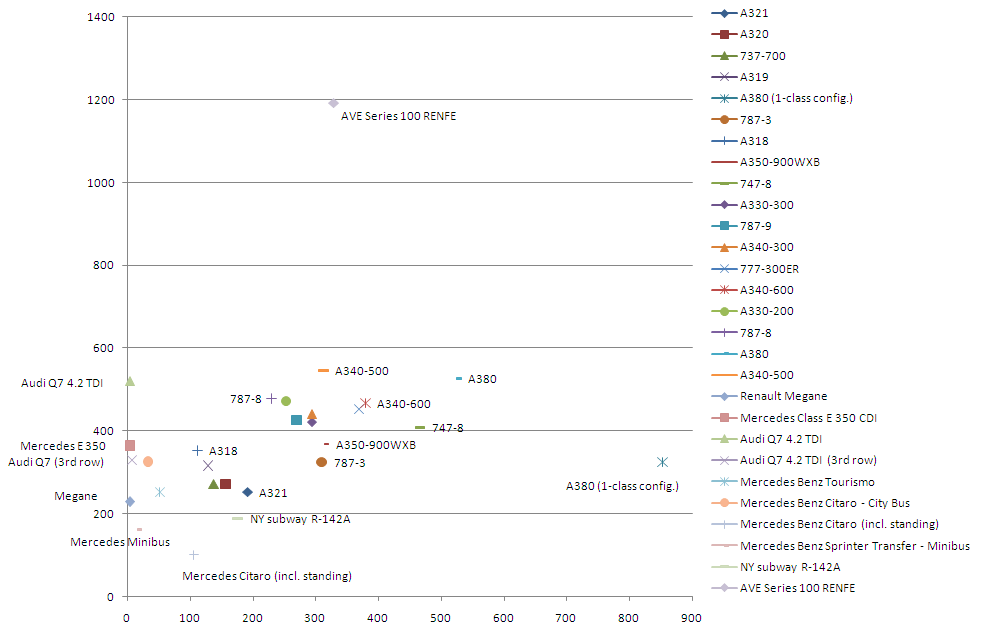
Below we can see again a graphic with all modes of transportation compared, there we may spot some trends.     

Modes of transportation weight (kg) per passenger/seat.


We could say that comfort starts above 300 kg/seat… How heavy is your car?     

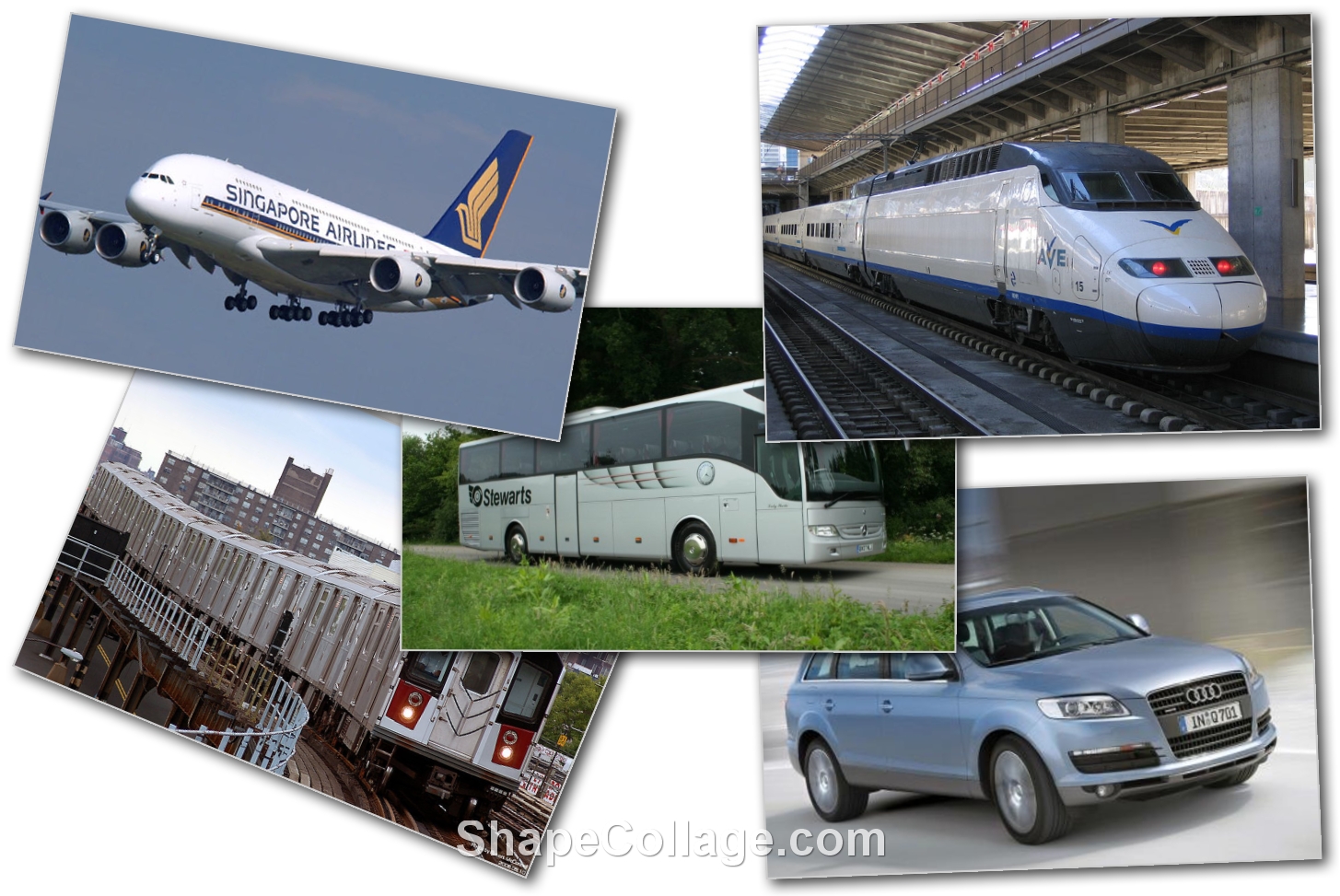
Different modes of transportation.

3 Comments

Filed under Aerospace & Defence

An aircraft worth its weight in gold?

Airbus announced last January that it had raised the list prices of its commercial aircraft by an average of 5.8%. It had not updated its prices since 2008. You may see the current prices here: Airbus list prices. 

Boeing also discloses in its website the range of list prices of its aircraft. Those prices haven’t been increased in the last two years.  

Few years ago, I saw for the first time a comparison of prices of aircraft per kilogram. It was prepared by a teacher I had at EOI Business School in Seville, Felipe Moran, who later has become a co-worker. With this post I will start a series of comparisons, the first one being precisely that one: an update on price per kilogram of aircraft. 

We already saw where to get the prices from. The other input we are going to use is the weight of the aircraft, what is called: Operating Empty Weight (OEW). You may find this information in various places, I recommend you to pay a visit to Boeing’s “Airplane Characteristics for Airport Planning”, where you will find very detailed data of all its commercial aircraft.  (While gathering this info I also came across the following section dedicated to fun facts of the legendary Jumbo 747).  

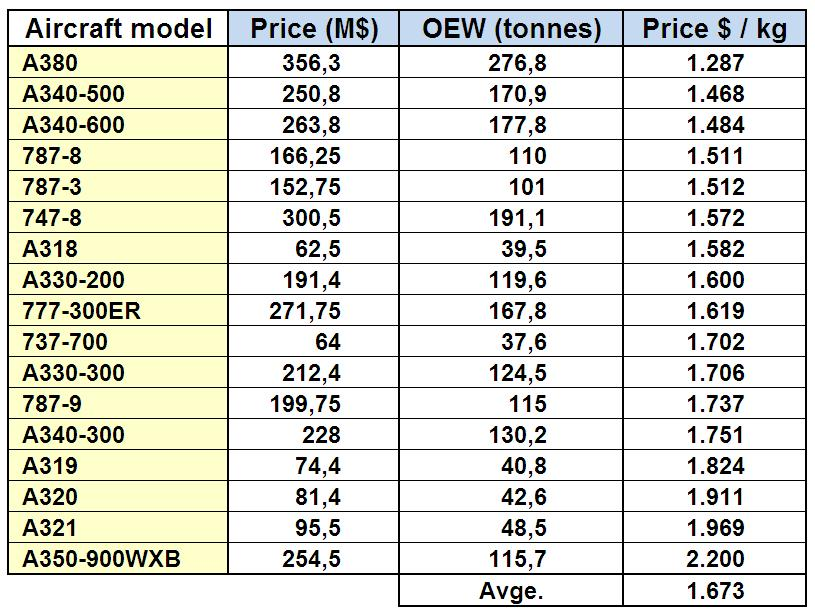
Combining these inputs we can build the following table. 

Price per kg of commercial aircraft.

Some facts may counter intuition: 

  • There doesn’t seem to be a clear discrimination between older and newer aircraft (A380 and some 787 models rank among cheapest, while A350-900 and 787-9 are among the most expensive).
  • Smaller Airbuses rank among the most expensive aircraft in a per kg basis despite the suggested price war that was reported by the specialized press in the recent years.

With the exceptions of A350-900 and 787-9 there seems to be a very slight trend in bigger aircraft being cheaper in this per kg basis. One may argue that once the frame of a certain size is built, building a bigger one might not cost that much. 

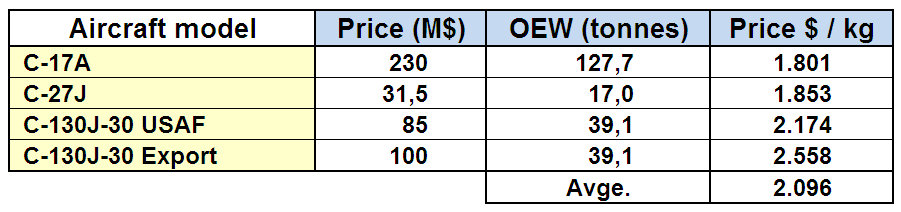
Now, let’s talk about the Military Transport business. Do we think those aircraft are more or less expensive? On one hand, those aircraft are not carrying systems such as the in-flight entertainment and, on the other, the scale of the market is smaller (with few exceptions such as the C-130) and they do carry diverse military systems, protections, etc. What is the trend weighting more in the balance? 

Military transport aircraft price per kg.

As you can see, military transport aircraft are on average 25% more expensive on a per kg basis. There is much more technology in them than people tends to think… they are clearly not just flying trucks. 

As you may have noted I have not included any sources for the prices of these aircraft, since they are rarely disclosed. I have used prices reported by the press and US budgets. 

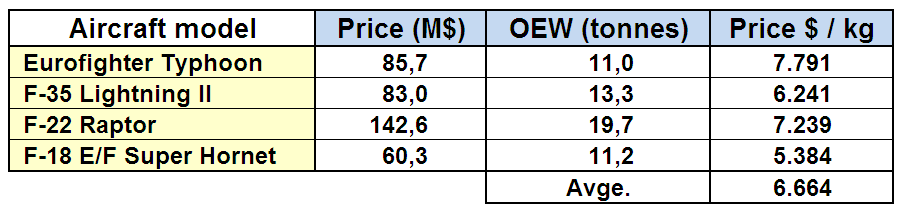
Let’s stretch the argument a bit more… What is the trend for fighter aircraft? This time scales are bigger than in military transport. Does this make them cheaper? See the table. 

Fighter aircraft price per kg.

Not even close. Fighters are around 3.2 and 4 times more expensive than military transport and commercial aircraft, respectively, on a per kg basis.  

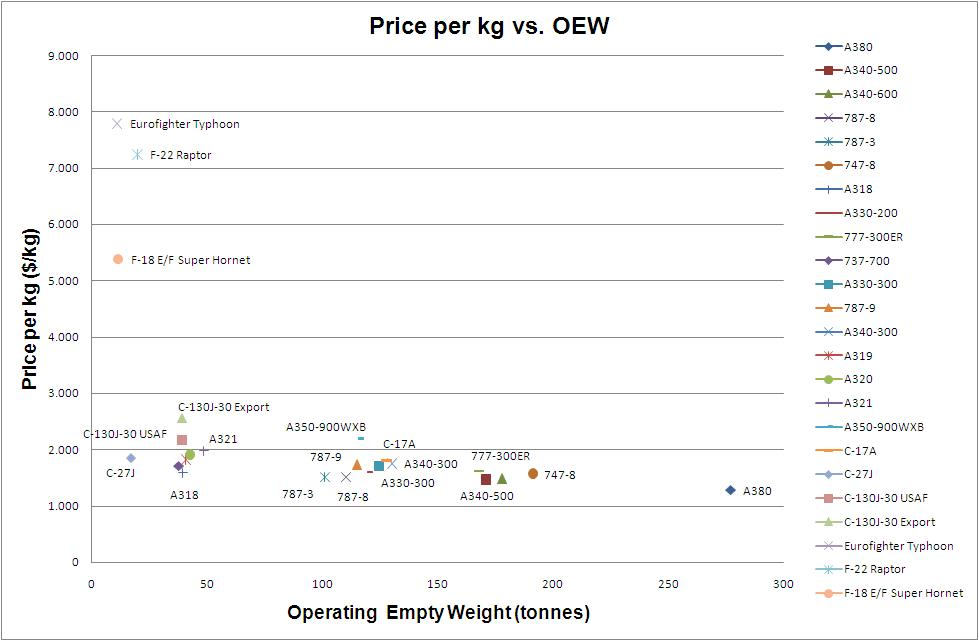
We can see in the following graphic all these aircraft together and maybe spot those trends. 

Aircraft prices per kg.

Now that we have an idea of how much aircraft cost per kg (1,700$ commercial aircraft, 2,100$ military transport aircraft and 6,700$ fighter aircraft)… is this expensive? Expensive compare to what? 

Let’s relate these prices to something closer to us. 

Cars: 

  • The best-selling car in Spain in 2009, was the Renault Megane (with 52,156 cars sold). It costs about 17,700 € (or 24 k$) and weighs 1,150 kg, this yields: 21 $/kg, clearly cheaper, about 80 times cheaper than commercial aircraft on a per kg basis. 
  • More up-scale cars such as the Mercedes Class E 350 CDI (56,000€ and 1,825 kg) or the Audi Q7 4.2 TDI (85,000€ and 2,605 kg) are more expensive per kg, 41$/kg and 44 $/kg, respectively. This is 40 times cheaper than commercial aircraft.

It may be worthy to note that in the cars we see the completely opposite trend than that we saw in airplanes: the bigger the car the more expensive on a per kg basis. 

Let’s compare this yet again with some other unrelated luxury item: Jamón Ibérico Puro de Bellota de Jabugo 5J. Today it was on offer in El Corte Ingles website for only 449€, a piece of about 7 kg, yielding: 87 $/kg. This is twice more expensive than buying a Mercedes (this may be the reason why it was an offer from Sanchez Romero supermarkets) but still 20 times cheaper than a commercial airliner. 

To end this post, let’s answer the question posed in the title of the post: 

The kilogram of gold is in the order of 35,400$, clearly more expensive than any aircraft. 

After all, nowadays, we may find no aircraft worth its weight in gold.

9 Comments

Filed under Aerospace & Defence

From Ramstein to Pandora moon

At the beginning of December 2009, I took part in a conference on Military Airlift Operations in Frankfurt. The day after, we were offered a visit to Ramstein US Air Force and NATO base. In the different ramps of the base, there were several C-130Js Super Hercules (first USAFE squadron), the last remaining C-130E, half a dozen C-17 Globemaster, the same amount of C-5 Galaxy and some other contractors B-747 and DC-10. So far, so good.

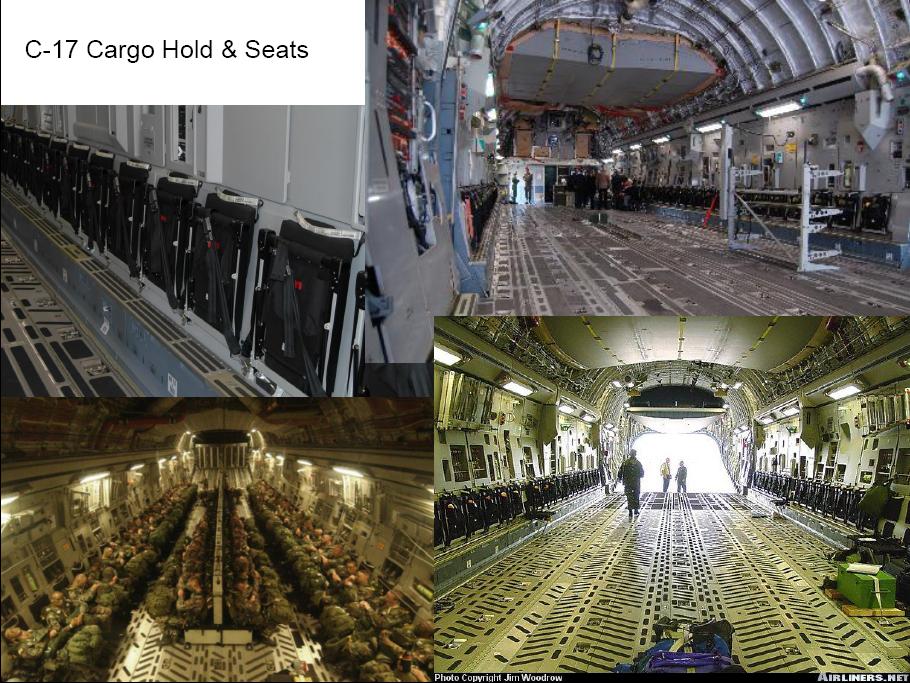
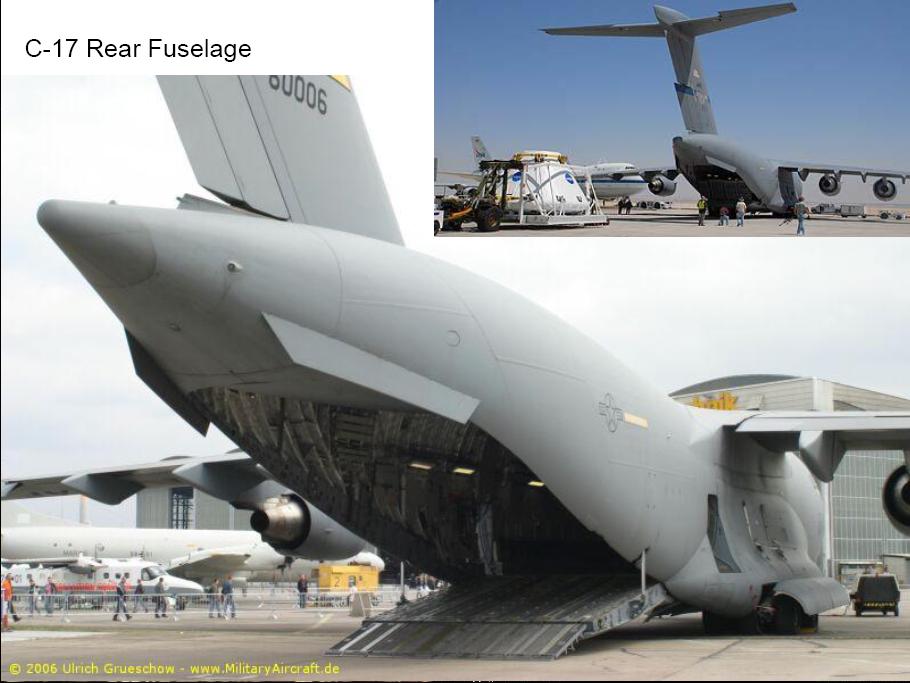
Some weeks later, back in Madrid, I went to the movies to see Avatar, latest James Cameron film. The movie went along well… but it really got me when in the final battle appeared the huge airship carrying a pallet with a bomb to be air dropped. As soon as I saw the seats within the cargo hold, I thought it had to be a C-17. Then came a view of the ramp, and when the plane was crashing, the rear fuselage.

Since then I have tried to find evidence in the web, searched in forums, etc., but I have not found any evidence of it. Then I reviewed the movie and went back and forth through those last minutes. In fact it is a C-17.

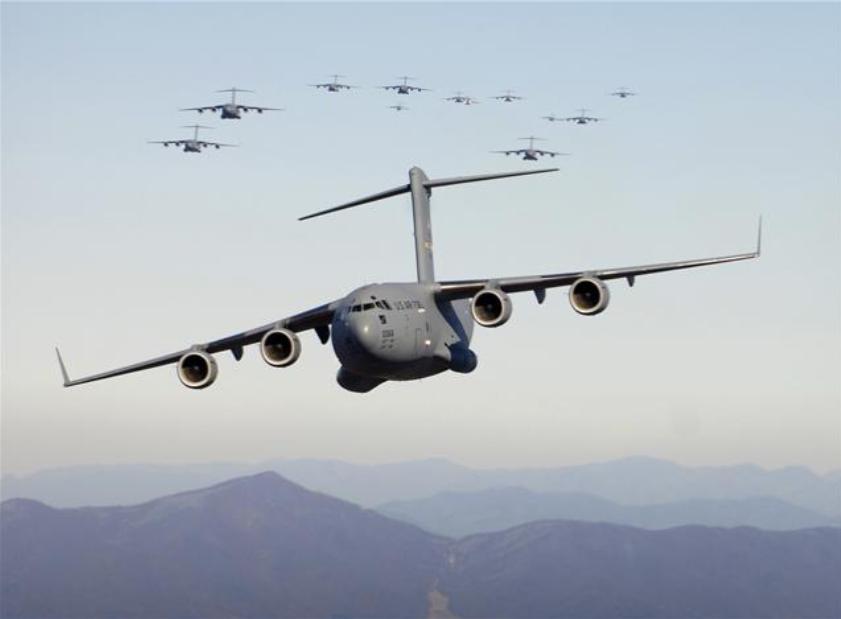
Here I post some pictures of the C-17 for you to compare…

Compare the interior of the cargo hold with the seats seen in Avatar when soldiers start pushing the pallet.

Compare these other pictures with the ramp seen in the movie.

Now see the rear fuselage and compare it with the images seen when the plane in Avatar is about to crash.

Luckily the Na'vi did not face with these fleet of C-17 loaded with bombs...

… I wonder when will the A400M make its debut in Hollywood?

2 Comments

Filed under Aerospace & Defence, Movies

Go and get married…

Tomorrow I will be attending the birthday party of a friend who is getting married this year. In that party there will be another friends who will be getting married as well this year. I have yet other friends getting married this year as well. First thought: “Javier, you are in the age where most of those around you get marry…”.

Second thought: weddings cost money, lots of money. And they do not only cost money but produce many exchanges of cash from one side to another: Buying dresses, rental of suits, nuptial cakes, rental of luxury cars, hotel rooms and saloon, expensive menus, free drinks, buses back and forth for the invitees, professional photographers, flowers, hundreds of haircuts, long lists of gifts from El Corte Ingles, honey moon trip to Bali, musicians (with the corresponding cannon to SGAE, it couldn’t be otherwise…), a voluntary donation to the church…

The Federación de Usuarios-Consumidores Independientes (FUCI) releases every year a study of the cost of a wedding per region and how much each item is costing. The latest study dates back from 2009.

From the study we learn that in 2009 a wedding cost around 18,380 euros on average. They were most expensive in Madrid, and the average cost had decreased 11% from 2008.

The study takes into account the expenses incurred by the ones organising the wedding. Can we assume that those attending it will incur in as many costs in gifts, haircuts, cleaning of suits, hotel rooms, transport, etc…? (This hypothesis comes from the not written rule which states that presents should aim to account at least for the same value of the menu which is ~50% of the cost incurred by spouses-to-be, the main assumption is in the other costs incurred by invitees -transport, hotel…). If so, let’s settle the turnover of a wedding in 35,000 euros.

How many people do get married in Spain in a year? From 2006 to 2008 the average was 204,000 weddings, with a slight decrease of 3.4% from 2007 to 2008.

Now the math is already there: this industry generated in 2008 around 7,000 million euros. Is this much? The same year aerospace industry in Spain had a consolidated turnover of 5,577 million euros. So the wedding sector weighs 25% more than the aerospace sector in Spain or around 0.7% of Spanish GDP (let me not enter in this post in the discussion of the value added of the sector… I still want to get invited to those weddings).

In line with the recent campaign “esto solo lo arreglamos entre todos”, my contribution: please encourage marriages and do get married!

I have a good friend who used to be quite against marriage. I hope this may help turning his opinion.

Aerospace and Weddings, value-adding and value-requiring sectors.

6 Comments

Filed under Aerospace & Defence

Most desired company to work for in Spain…

Today Spanish financial press gave some coverage to a study performed by Randstad, “Employer Branding: cuando la percepción puede convertirse en realidad”. To compile this study Randstad interviewed 10.000 workers between 18 and 65 years old in Spain.

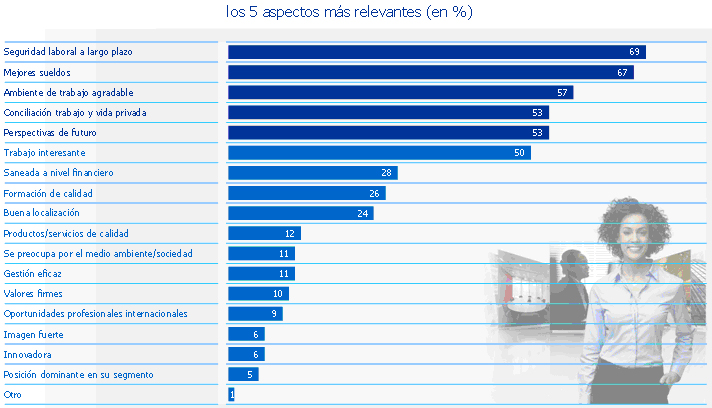
Workers were asked what issues they considered most important at the time of choosing a company to work for, the highest rated ones were:

  1. Long-term stability, 69% of respondents.
  2. Better salaries, 67%.
  3. Good atmosphere in the workplace, 57%…

Most important factors when selecting a company to work for

Randstad found a high variability between men and women respondents and between different age groups.

…

After this introduction… what I wanted to say: EADS CASA (Airbus Military) was rated by respondents as the most desirable company to work for. (period)

Other remarkable companies: GlaxoSmithKline, Nokia Spain, Pfizer, Correos, Coca-Cola and Iberdrola.

1 Comment

Filed under Aerospace & Defence

Augustine’s Laws

Last summer I read a book, a classic: “Augustine’s Laws” by Norman Augustine. Norman served in many positions both in the Administration (Under Secretary of the Army) and in the Aerospace & Defence industry (CEO of Lockheed Martin). Lately he lead the Committee that was reviewing the US Human Space Flight Plans.

I first learnt about this book from a teacher in Seville in 2006. He used a couple of his graphics in the course. One was plotting the trend of fighter aircraft acquisition costs per unit. I remember that the extrapolation of the trend pointed that somewhere in 2054 the whole DoD budget would allow to procure one single aircraft, that would have to be shared by US Air Force and Navy, with the 29th February of the leap years availabe for the US Marines.

Since that moment I wanted to read it, and it was only 3 years later that I had the opportunity to do so. The book reviews A&D programs, especially their mismanagement and failures from the Wright brothers times till the early 80’s, when the book was written. The book is hilarious. Really. Let me show you this by concatenating some of its “findings”:

  • The first one was commented above: aircraft are more and more costly with time.
  • At the same time aircraft developments turn in aircraft always becoming heavier than initially designed, producing more capable and heavier aircraft.
  • Another trend points out that avionics and electronic components are of greater importance in the aircraft of today. Wright brothers didn’t make use of avionics or electronics, however in the 80’s the percentage of OEW dedicated to them was around 20%, and increasing.
  • We also find that electronic components themselves become smaller and cheaper with time (just think of room-size computers of decades ago compared to today’s smart phones).

Thus we find ourselves in front of a paradox: Aircraft that will be heavier and more expensive, but that a certain point will be entirely made of avionics and electronic components which are lighter and cheaper with time! How can this be? As Augustine points out: engineers came to the rescue, they came up with “something” that it’s very expensive, doesn’t add weight and helps to solve the paradox without violating 2nd law of Thermodynamics. They came up with software. Neverending of lines of software… which also contribute to delay developments.

Here you may read the different laws, I’ll just copy the ones I like the most:

  • Law Number V: One-tenth of the participants produce over one-third of the output. Increasing the number of participants merely reduces the average output.
  • Law Number VII: Decreased business base increases overhead. So does increased business base.
  • Law Number XIII: There are many highly successful businesses in the United States. There are also many highly paid executives. The policy is not to intermingle the two.
  • Law Number XXVI: If a sufficient number of management layers are superimposed on each other, it can be assured that disaster is not left to chance.
  • Law Number XXXII: Hiring consultants to conduct studies can be an excellent means of turning problems into gold, your problems into their gold.
  • Law Number XXXVII: Ninety percent of the time things will turn out worse than you expect. The other 10 percent of the time you had no right to expect so much.
  • Law Number XLIV: Aircraft flight in the 21st century will always be in a westerly direction, preferably supersonic, crossing time zones to provide the additional hours needed to fix the broken electronics.
  • Law Number LI: By the time of the United States Tricentennial, there will be more government workers than there are workers.

Clearly this is not something I learnt today, but then, last summer I didn’t have a blog to comment on this. Enjoy the book.

4 Comments

Filed under Aerospace & Defence, Books