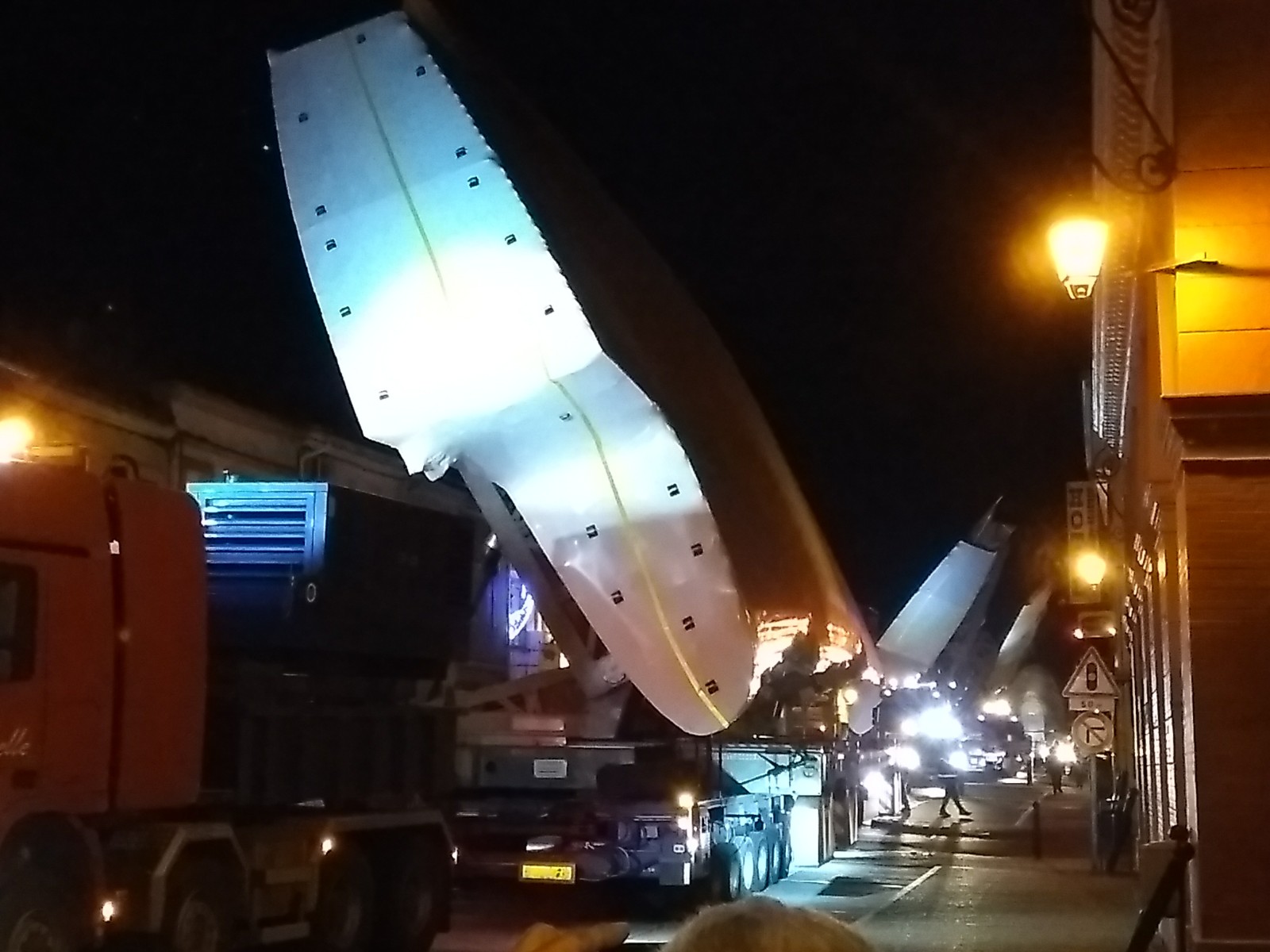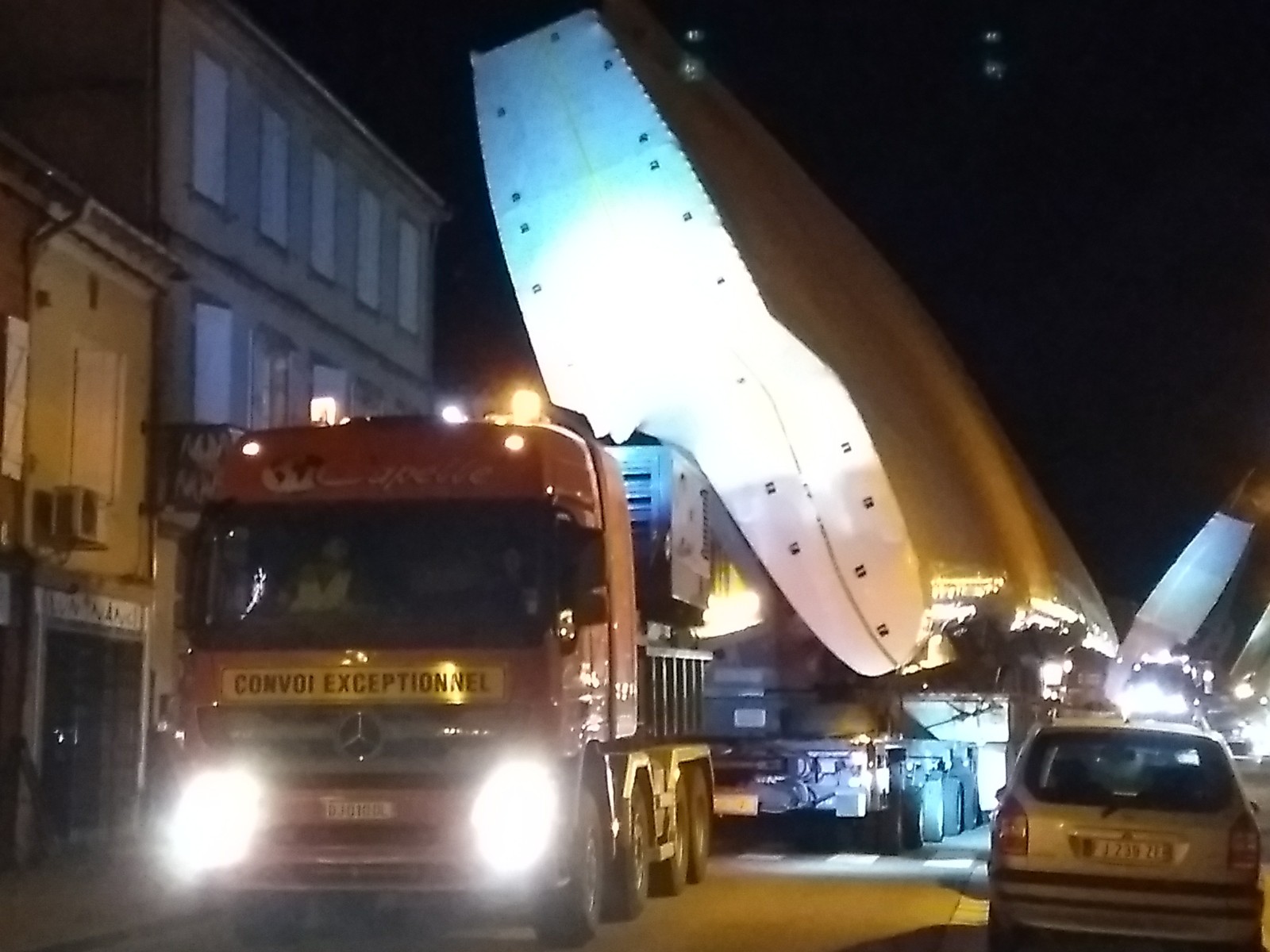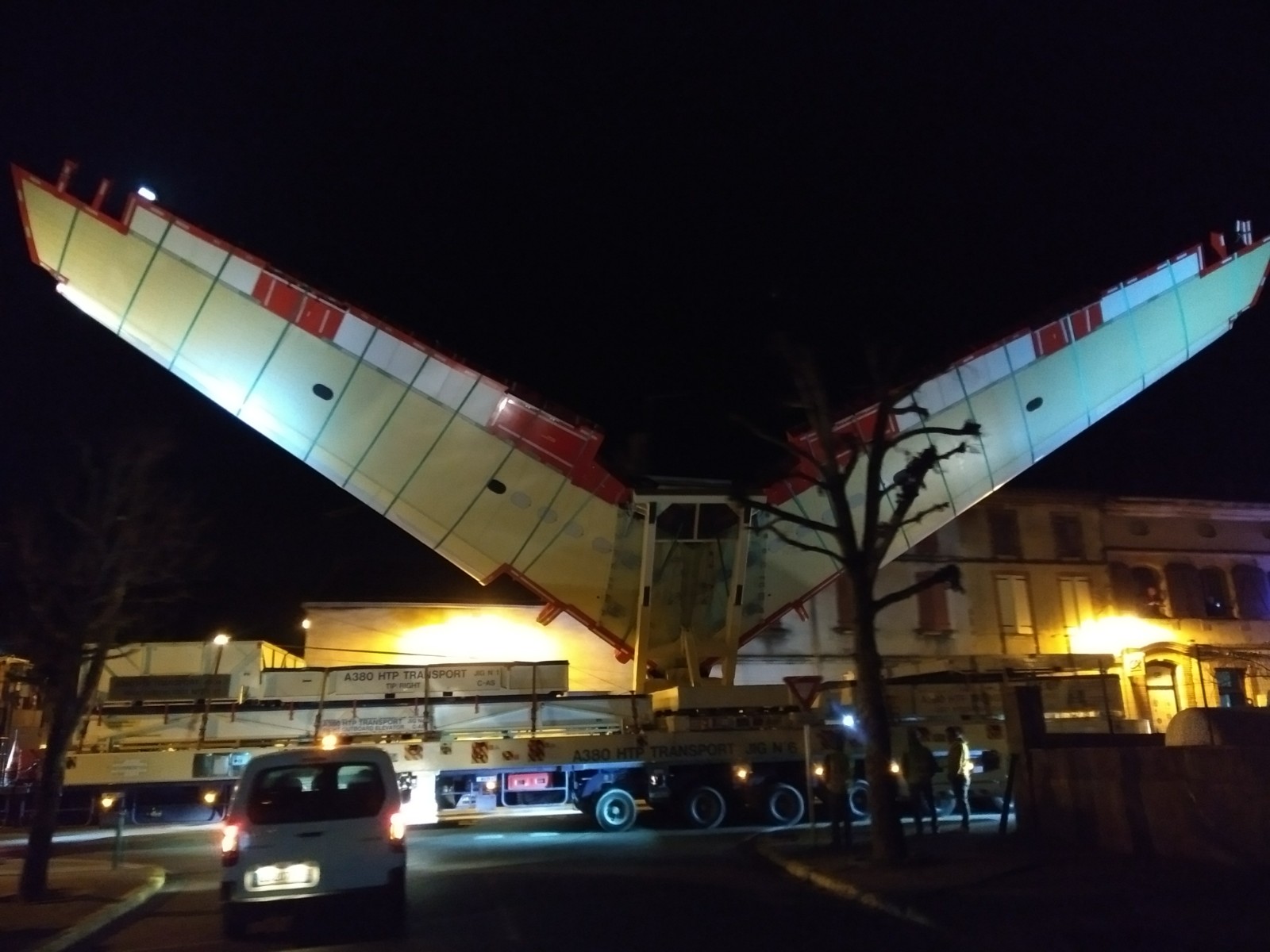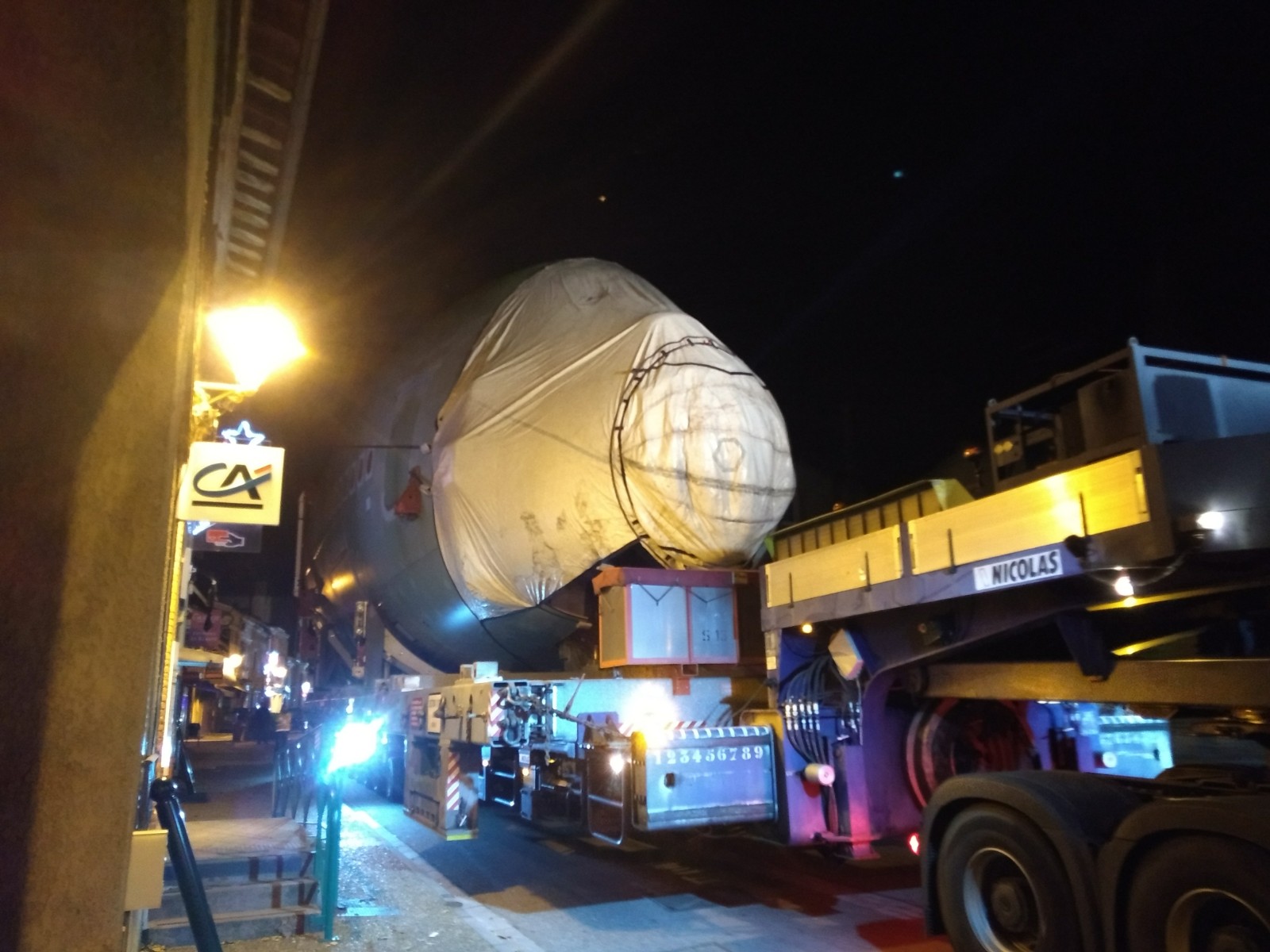
Category Archives: Aerospace & Defence

Aviation safety evolution (2019 update)

Yesterday, the Aviation Safety Network released the 2019 airliner accident statistics showing a total of 20 fatal airliner accidents, resulting in 283 fatalities.

Aviation Safety Network is a private initiative from the Flight Safety Foundation which curates an extensive database with aviation incidents, hijackings and accidents, from 1946 to nowadays.

The tweet with which they made the announcement is below:

Which includes the graphic below.

ASN_infographic_2019

If we take a quick look at the figures (which report commercial aviation flights (passenger and cargo)):

  • Number of accidents: 20, up from 15 in 2020, though still the 7th safest year in history (in number of accidents).
  • Fatalities: 283, down from 556 in 2018, the 3rd safest year in history (in number of fatalities).
  • There were 5 accidents with over 10 fatalities (details here).

The graphic above from the Aviation Safety Network provides the view of the evolution of accidents. However, in their database they provide some more figures with which I produced the graphics below.

Evolution of accidents per million flights

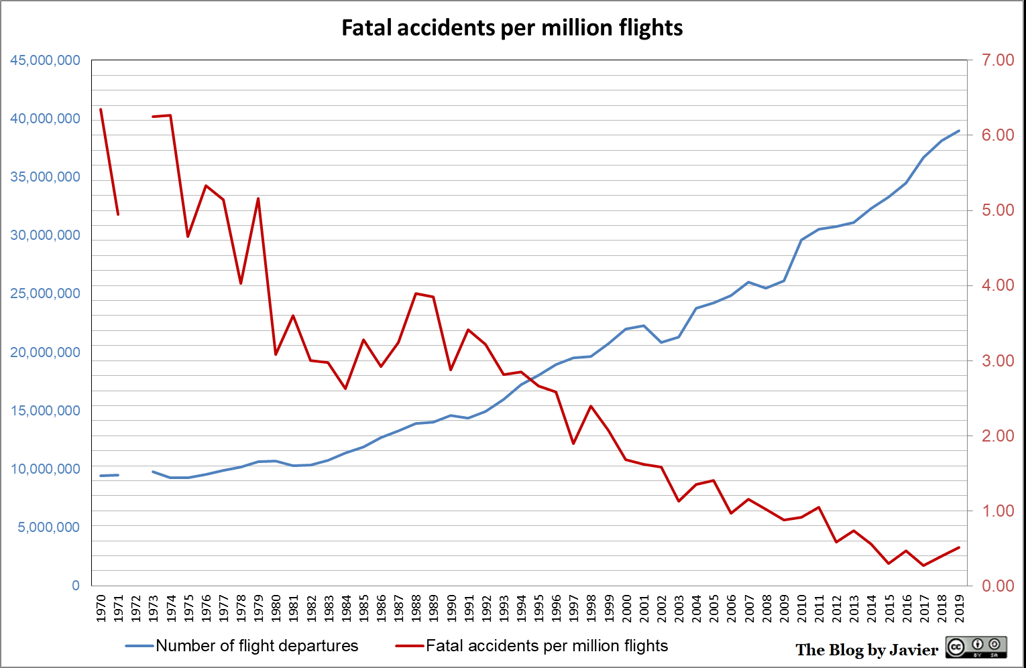
The database provides figures of the evolution of the number of world air departures since 1970, together with the evolution of accidents (above). The database includes a ratio: fatal accidents per million flights, which I have plotted below together with the evolution of flight departures. You can see that the ratio has decreased 12 fold since 1970, from 6.35 to 0.51 last year.

2019_safety_accidents_per_flights


Global air traffic vs fatalities

The database provides no ratio with the figures of fatalities, but they can be related to the amount of passengers carried. In aviation there is the concept of revenue passenger kilometre (RPK) transported, which is compiled year by year and can be found in publications from ICAOIATA or aircraft manufacturers. I have plotted below both the evolution of traffic growth and fatalities since 1970, together with a 5-year moving average for the fatalities.

2019_safety_RPK_vs_fatalities

Within the evolution of traffic there are two variables that have grown over the years: the number of passengers carried per flight departure and the distance covered. Therefore, together with the decrease in the evolution of fatalities (taking the 5 year average) I have plotted below the evolution of the ratio of fatalities per trillion RPK. You can see that the ratio has decreased 81 fold since 1970, from 3,218 to 40 last year (5-year average).

2019_safety_fatalities_per_RPK

5 Comments

Filed under Aerospace & Defence

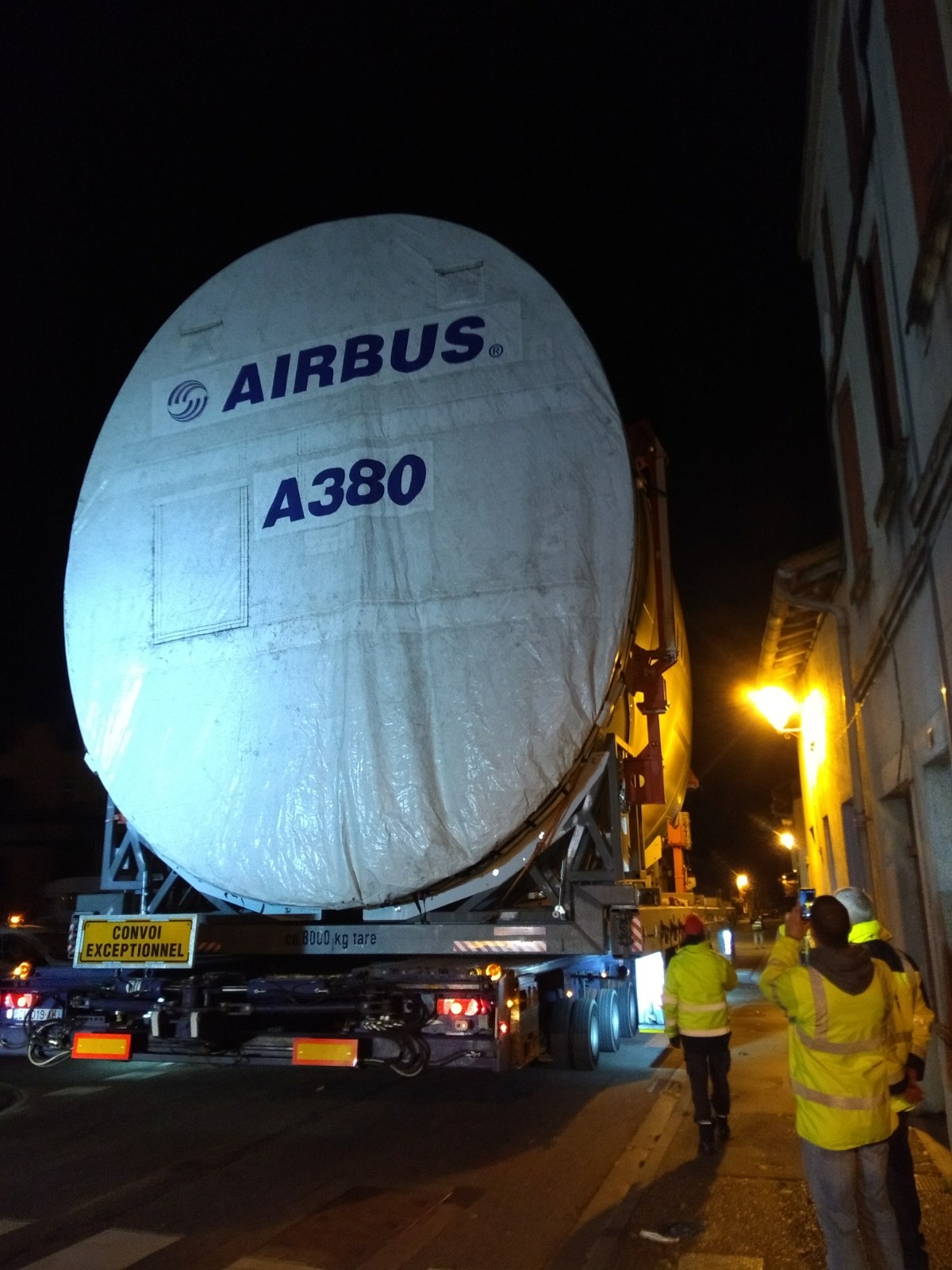
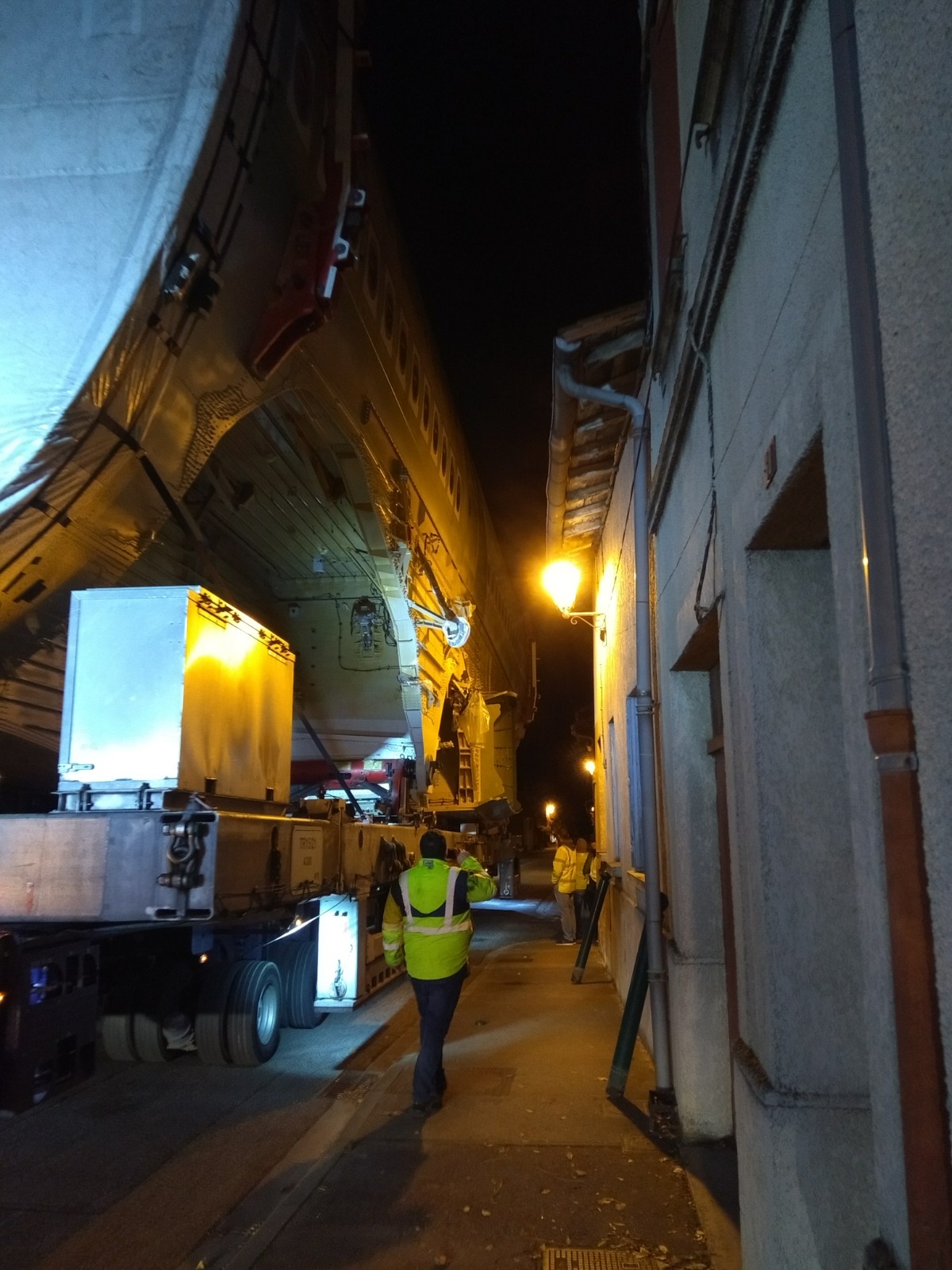
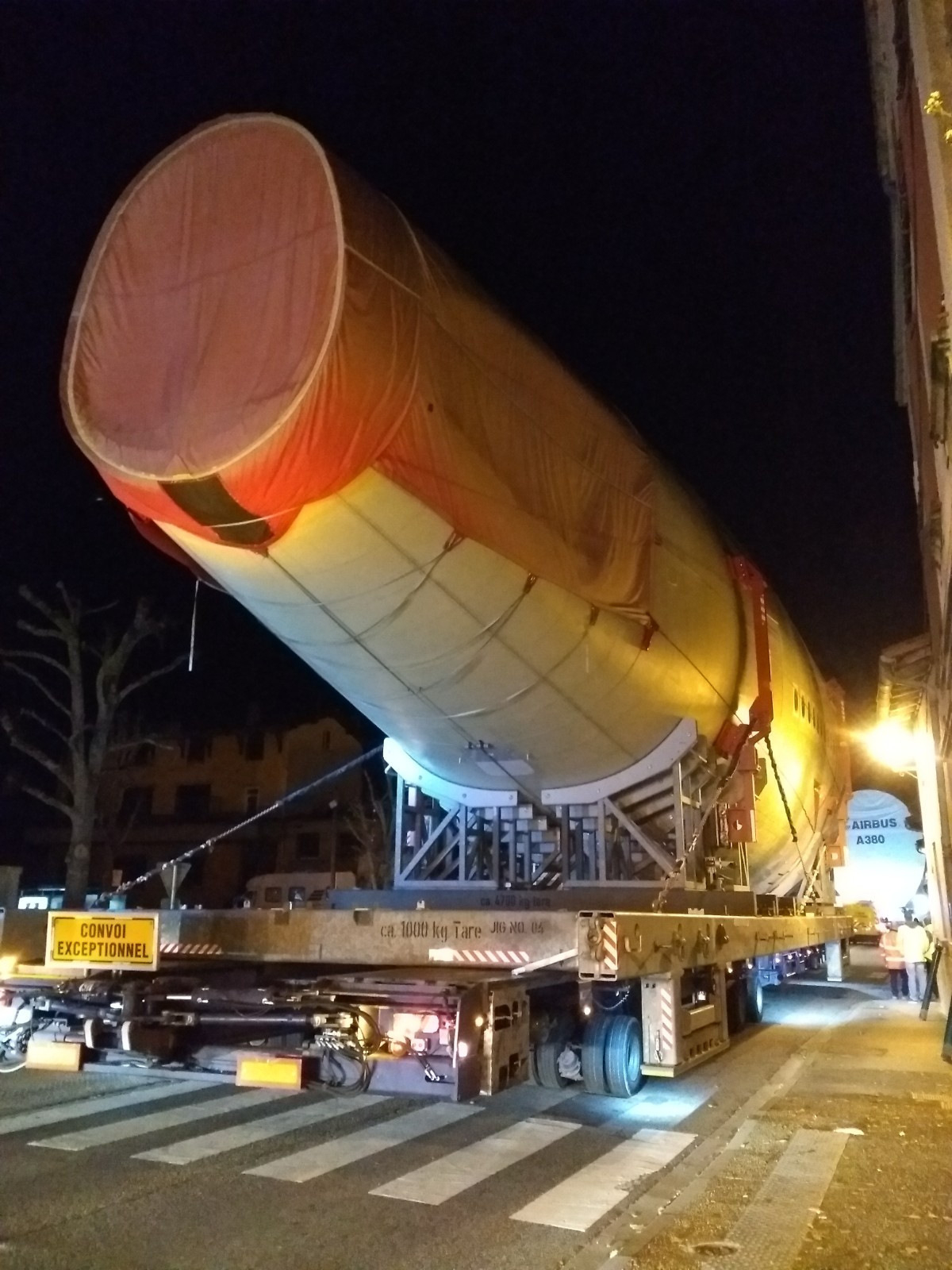
A380 transport convoy (Itinéraire à Grand Gabarit)

One of the most recognizable features of the Airbus industrial system, with factories in different countries, mainly in Germany, Spain, United Kingdom and France, where the main components and the aircraft are assembled, is the transportation of those components by the iconic A300-600ST Beluga aircraft.
Arriving TLS

Image credit to Brian Bukowski.
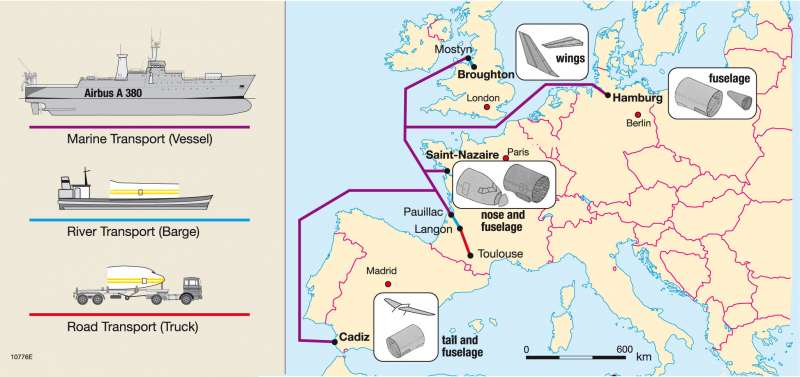
However, as most of the A380 components are too big to be carried onboard of the Beluga, a special transportation system was required to be put in place. It included transportation of the bigger components from the plants in Hamburg, Broughton, Saint-Nazaire and Cadiz by ship to the port of Paulliac, close to Bordeaux. From there, they travel by barge up the river Garonne to Langon. Then they are mounted on special purpose trucks to travel the road from Langon to the final assembly plant near Toulouse.

110776E_Flugzeugbautransport

Ever since I came to work to Toulouse nine years ago, I had wanted to go and see one night the A380 transport convoy on the road. I kept postponing it, until last month. Airbus announced in early 2019 that the A380 programme would come to a close with the last aircraft to be delivered somewhere in 2021. Therefore, not many such transports were left to be seen.

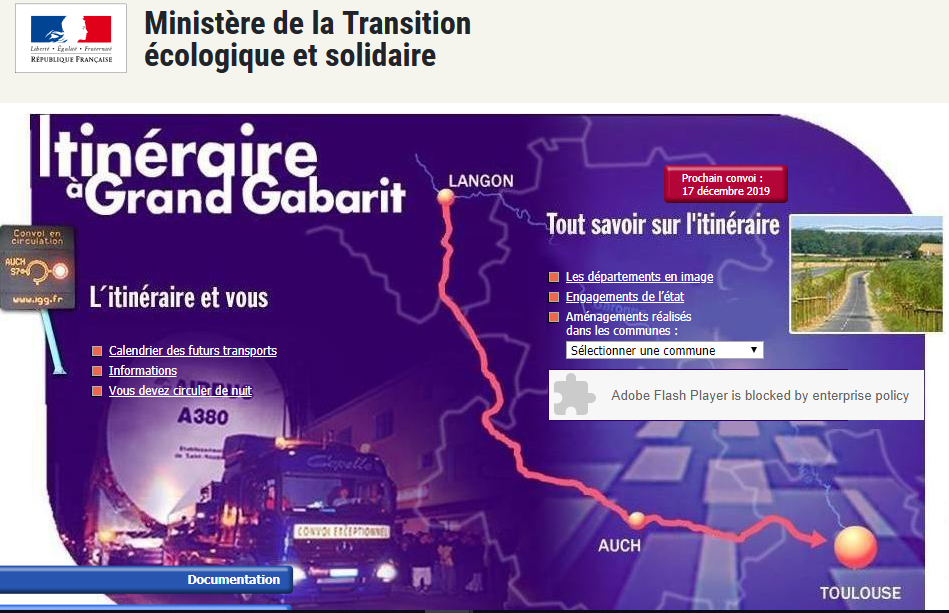
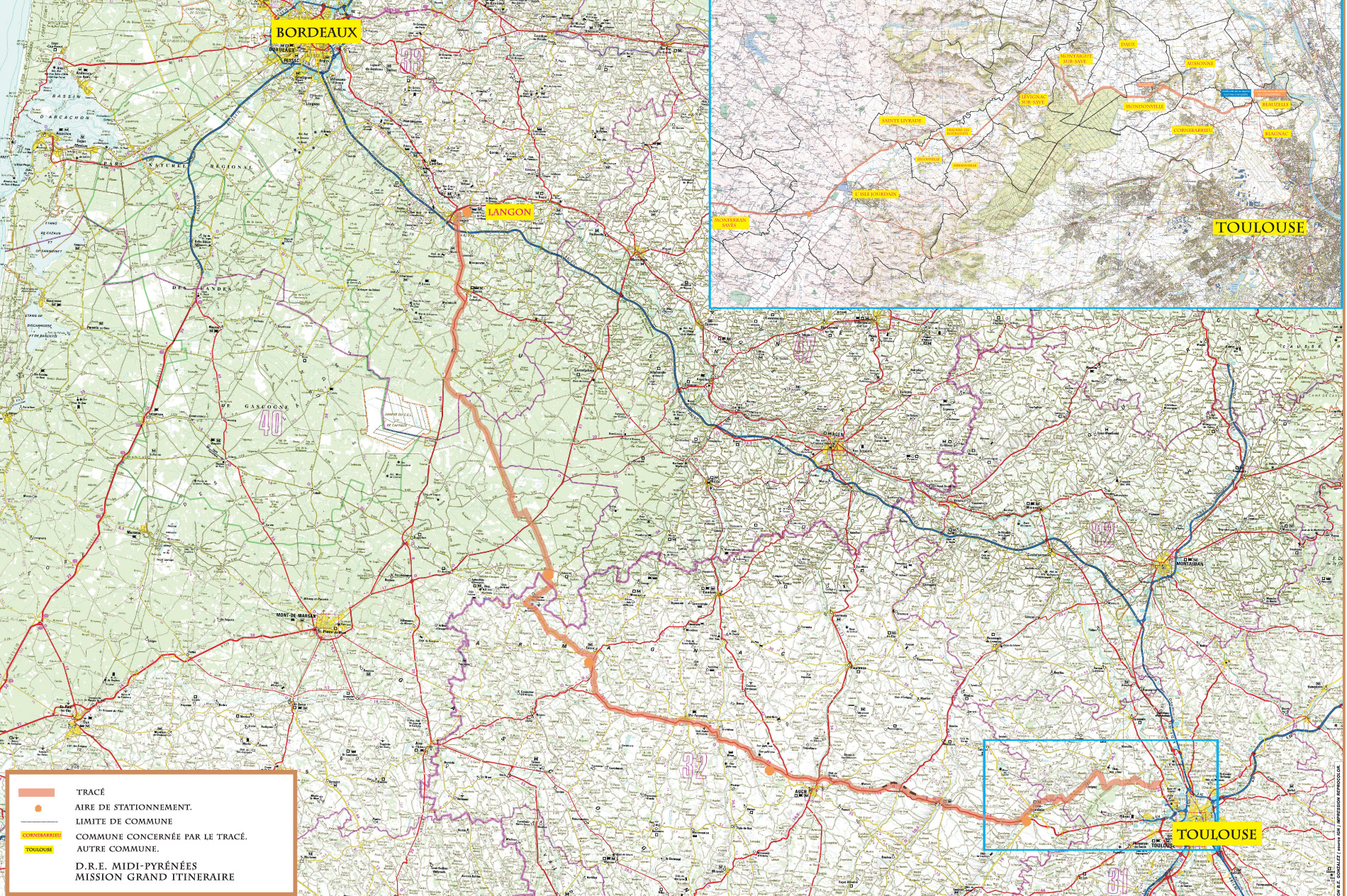
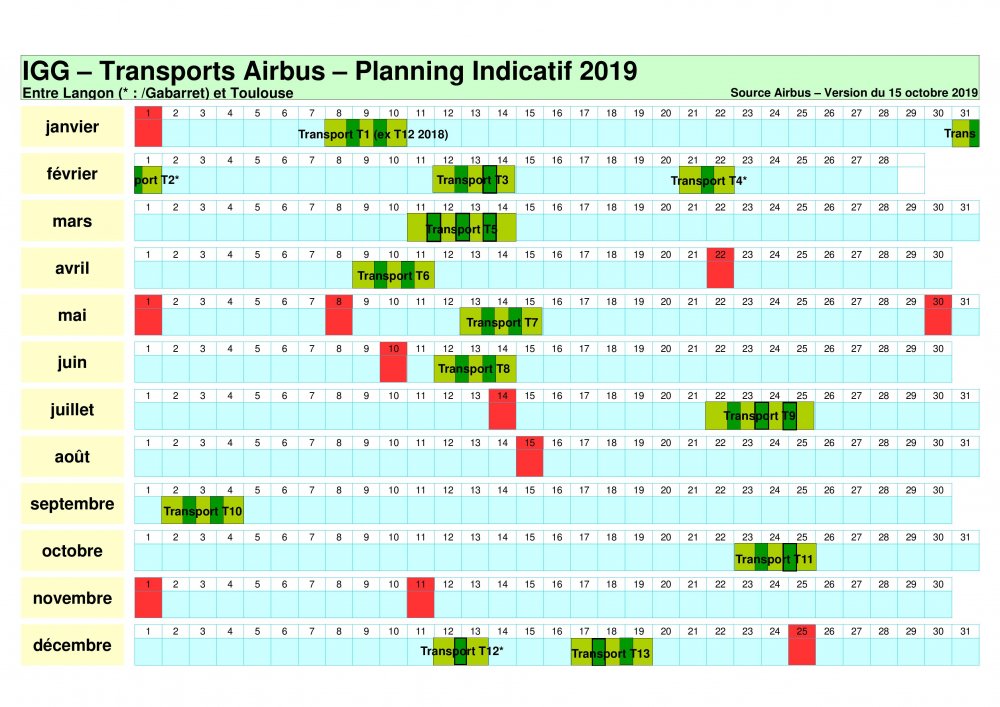
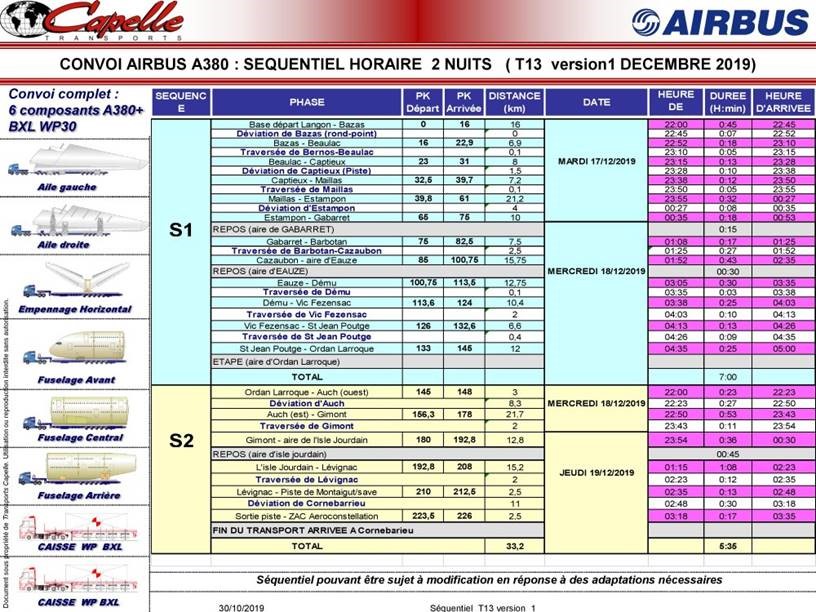
Fortunately there is a public website with all the information required to prepare the visit: Itinéraire à Grand Gabarit. It includes: maps of the route that is followed, a yearly calendar with the days in which the transport will take place, a detailed schedule with the time slot in which the transport will pass by the different villages along the route and support documentation.

IGG

carte_300dpi-2

-97-a7814

Detailed_calendar

With that information I set out to see the convoy last December on the night between the 18th and 19th. Firstly, I went to see the convoy at their stop at L’Isle Jourdan.

IMG_20191219_005940070

I then followed part of the route with the convoy, seeing how the team removed sign posts along the way and marked some points as reference for the truck drivers.

Route_google

20200101_131447-COLLAGE

Then I drove to Lévignac, a village where the pass is rather tight and slow. At Lévignac I found a group of about a dozen enthusiasts dressed in yellow vests who come to see every single convoy since years ago out of pure pleasure of watching such a magnificent sight.

IMG_20191219_025342972

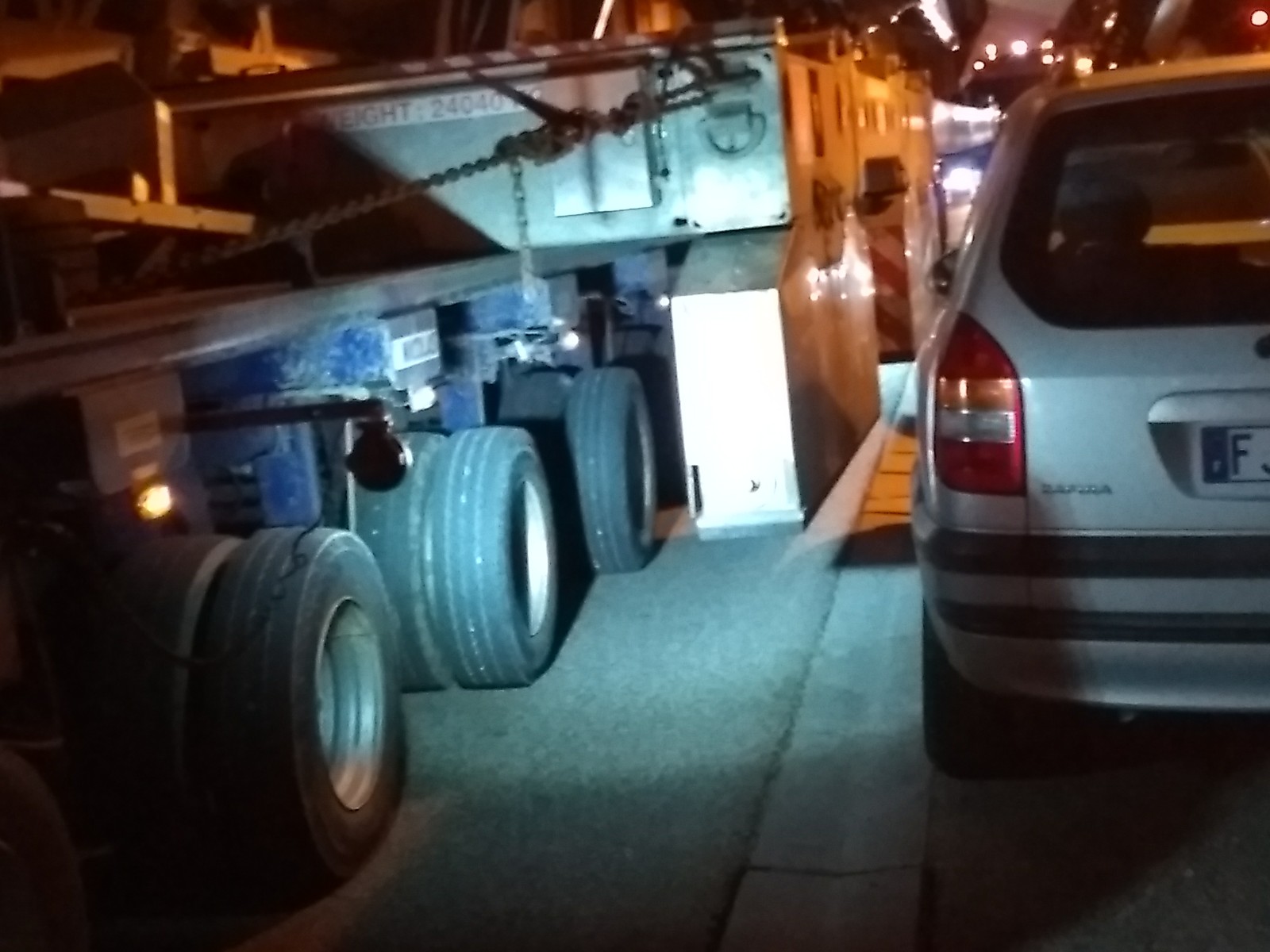
The convoy arrives at Lévignac at 2:23am and normally takes 12 minutes to pass by (see the detailed schedule above), but this time there were many cars parked in the streets which needed to be displaced: either by the tow truck or pushed by hand. Careful measurements were taken by the operators to ensure the convoy would pass.

IMG_20191219_024438095IMG_20191219_030121615IMG_20191219_030507962

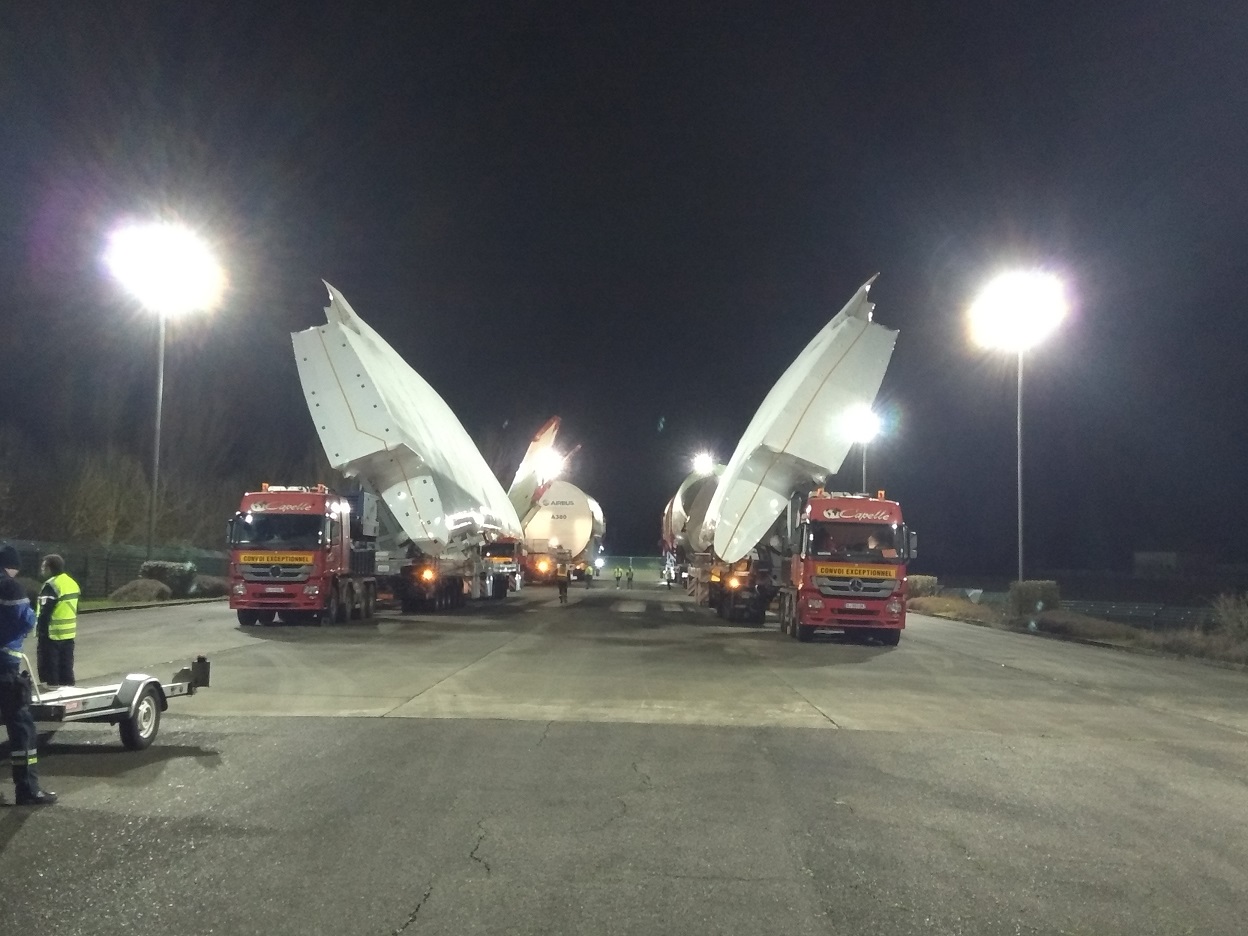
With all the checks properly done and cars removed, we enjoyed the slow pass of the 6 trucks:

IMG_20191219_025911751IMG_20191219_025955330IMG_20191219_031452106_BURST000_COVER_TOPIMG_20191219_032105262_BURST000_COVER_TOPIMG_20191219_032242685_BURST000_COVER_TOPIMG_20191219_032822374IMG_20191219_033027266

I got to see the convoy of MSN (manufacturer serial number) 270, an Emirates aircraft. There will be just two more aircraft to be built after that one, MSNs 271 and 272, with their respective convoys, which dates remain to be announced in the above-mentioned website at the time of writing this post. If you have the chance, do not miss it!

Leave a comment

Filed under Aerospace & Defence

Aeropuerto de Zaragoza y el transporte de mercancía, 2003 – 2018

Hace unos días leí una noticia del diario Expansión titulada Así es el desconocido negocio de la carga aérea en España. La noticia describe los principales aeropuertos de la red de AENA en términos de transporte de mercancía, encabezados por Madrid, seguido de Barcelona, Zaragoza y Vitoria.

El artículo ofrece algunos gráficos, comparando el volumen de la carga transportada desde esos aeropuertos, el crecimiento del volumen total transportado en la red de aeropuertos (+54% entre 2004 y 2018) o una comparación con los grandes aeropuertos europeos en términos de transporte de mercancía.

También se ofrece la pista del porqué el aeropuerto de Zaragoza es un hub de carga, y es debido a que, entre otras empresas, Zara tiene allí su centro logístico, desde el cual se transportan el 40% de las prendas por vía aérea.

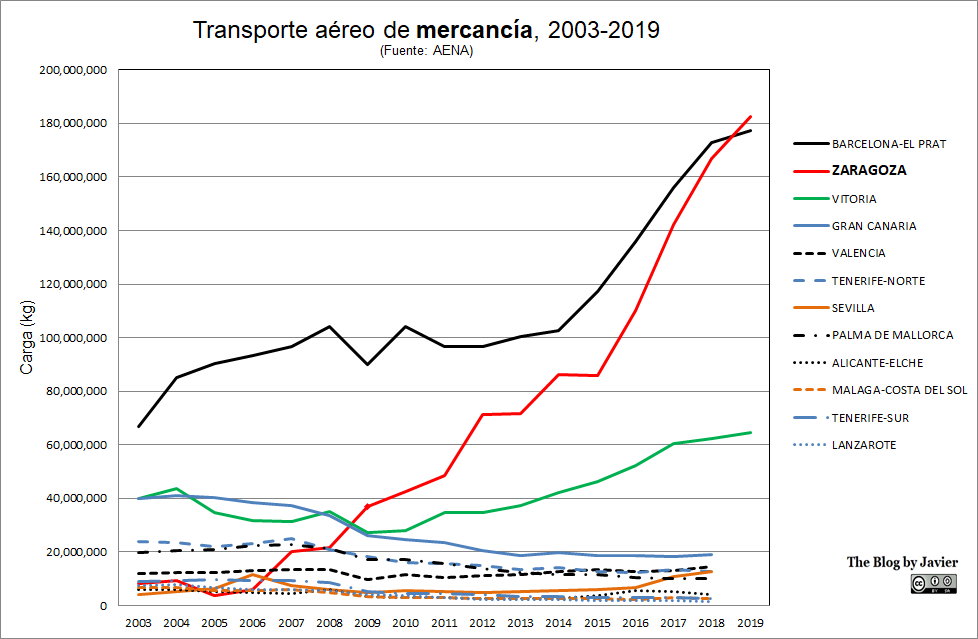
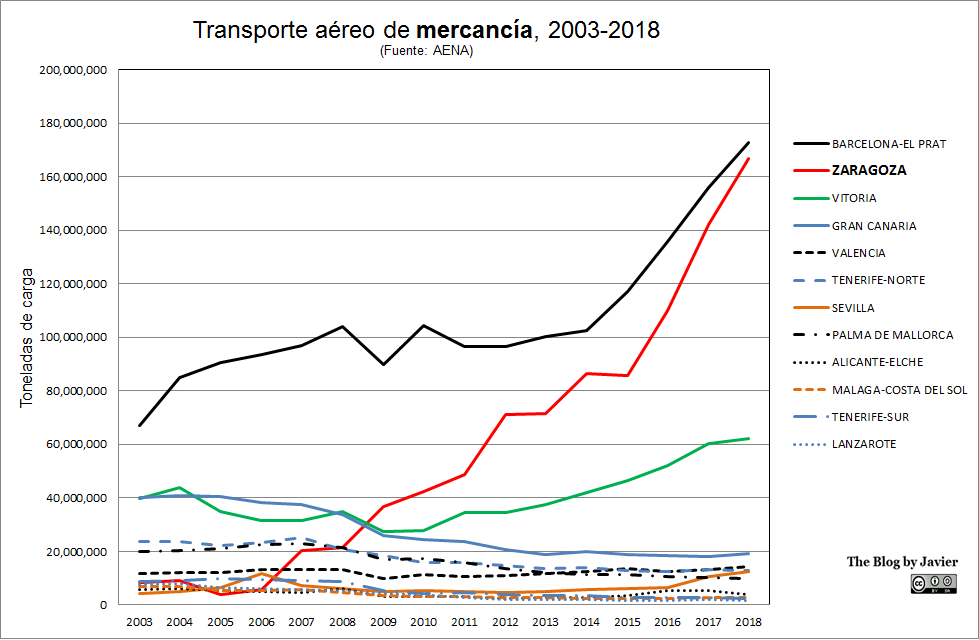
En esta entrada quería compartir la gráfica de debajo que he realizado a partir de los datos publicados por AENA durante los últimos 15 años. En ella se muestra la evolución del volumen de carga en los principales aeropuertos de España (excluyendo Madrid), y entre ellos destaca el crecimiento de Zaragoza.

aena_zaragoza_2003-2018

Algunos comentarios:

  • El centro logístico de Inditex se abre en 2003.
  • En ese año 2003, Zaragoza termina como noveno aeropuerto de España en transporte de mercancía.
  • Seis años más tarde, en 2009, ya es el tercer aeropuerto, solo por detrás de Madrid y Barcelona.
  • En 2009 el volumen transportado en Zaragoza supone un 41% del volumen transportado desde Barcelona. Nueve años más tarde, en 2018, ese porcentaje pasa a ser el 96%, a pesar del fuerte crecimiento de Barcelona en los últimos 5 años.
  • Si el ritmo de crecimiento de 2018 de ambos aeropuertos se mantiene en 2019, este año Zaragoza pasará a ser el segundo aeropuerto de la red.
  • Un último dato: la tasa de crecimiento anual (TCAC o también CAGRCompound annual growth rate, en inglés) del aeropuerto de Zaragoza en estos 15 años ha sido del 22.2%. Los siguientes aeropuertos con mayor crecimiento en ese tiempo han sido Sevilla (7.7%), Barcelona (6.5%) y Madrid (3.6%).

1 Comment

Filed under Aerospace & Defence, Economy

Boeing 737 vs Airbus A320 family deliveries, 1967 – 2018

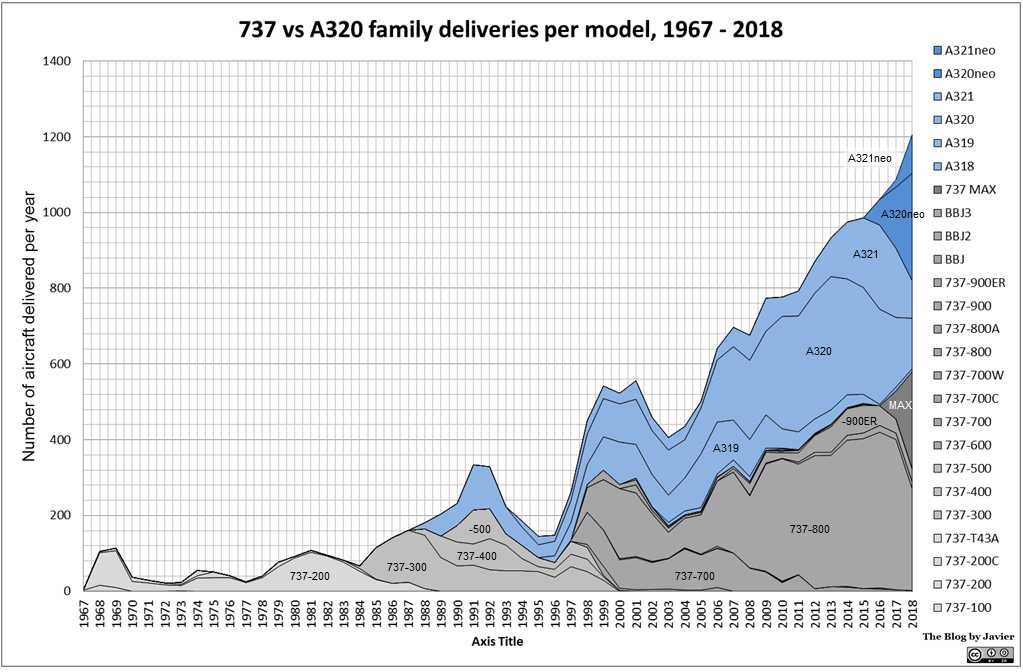
In the previous post I shared a graphic with the Boeing 737 deliveries per year per model since 1967 till 2018. In this post, I want to share a few graphics comparing the evolution of deliveries of the Boeing 737 family with the Airbus A320 family of aircraft.

737_vs_a320_family_deliveries_per_model_1967-2018

In the graphic you can see the tremendous growth in the past years. From the valley in 1995 (with 145 combined deliveries) till 2018 (with 1,206 combined deliveries) there has been a remarkable compound annual growth rate (CAGR) of 9.6%. The greatest sellers: the 737-800 with 4,959 aircraft delivered through end of 2018 and the A320 with 4,700.

The first time that the combined deliveries surpassed the 200 airplanes was in 1989 (204 aircraft). In 1998, the combined figure surpassed the 400 (450 aircraft). In 2012 they reached more than 800 (870). In 2016, more than 1,000 combined deliveries (1,035), reaching 1,206 in 2018.

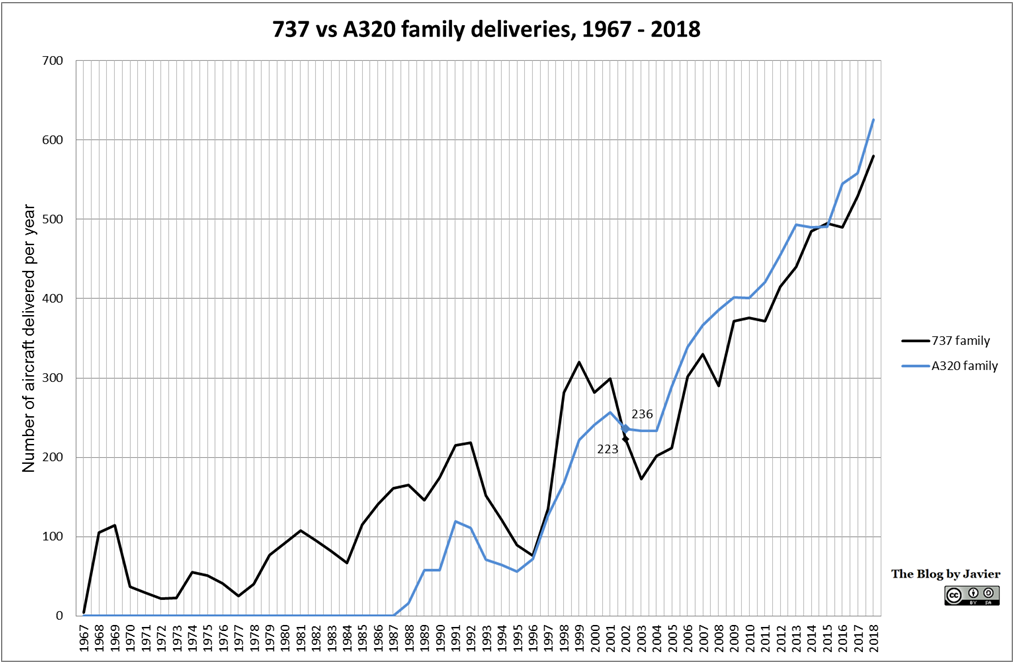
737_vs_a320_family_deliveries_1967-2018

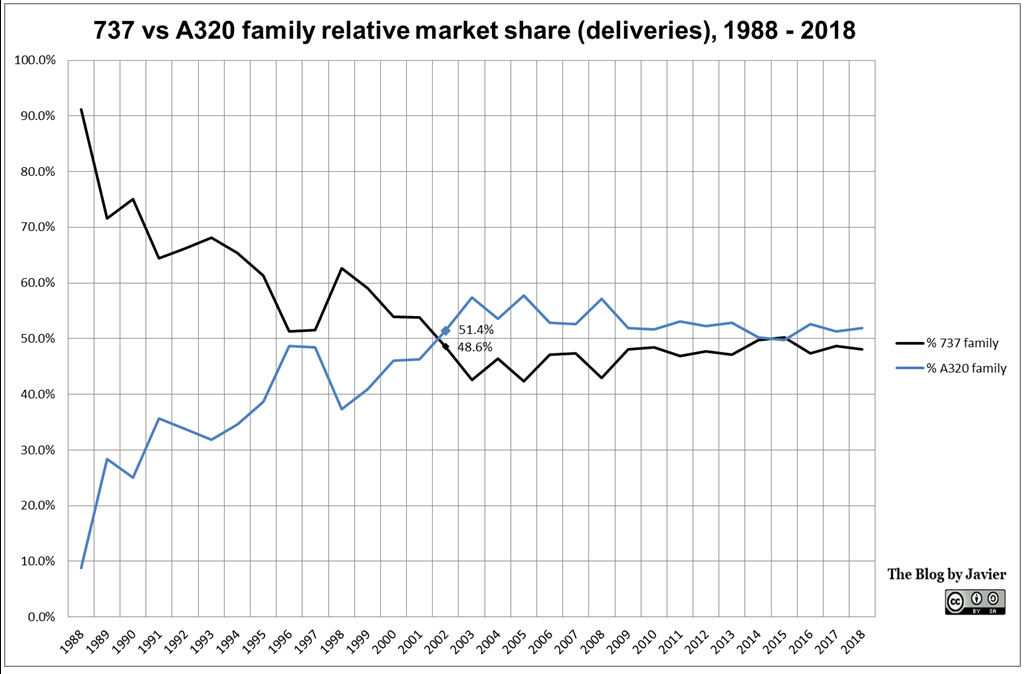
The A320 family surpassed the 737 family in yearly deliveries for the first time in the year 2002, when 236 aircraft of the family were delivered (85 A319, 116 A320 and 35 A321) compared to 223 737s. Since then Airbus has taken the lead in the relative market share between both families, with the exception of 2015 (49.8% – 50.2% for Boeing; with 4 aircraft making the difference – 491 vs 495).

737_vs_a320_family_relative_share_1988-2018

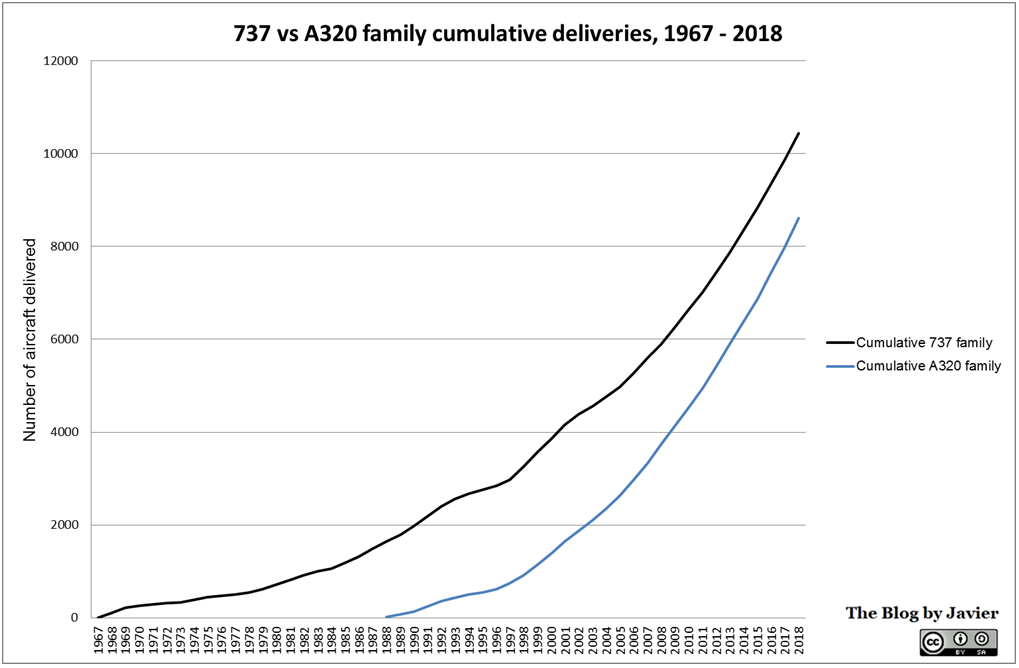
The 737 was introduced in 1967, the A320 in 1988, 21 years later. The 737 led the market for another 14 years, increasing the gap in aircraft deliveries. Since then Airbus has been narrowing it: at the end of 2018 the gap was of 1,839 aircraft with 10,444 cumulative 737s delivered compared to 8,605 A320s.

737_vs_a320_family_cumulative_deliveries_1967-2018


1 Comment

Filed under Aerospace & Defence

737 deliveries per year, 1967-2018

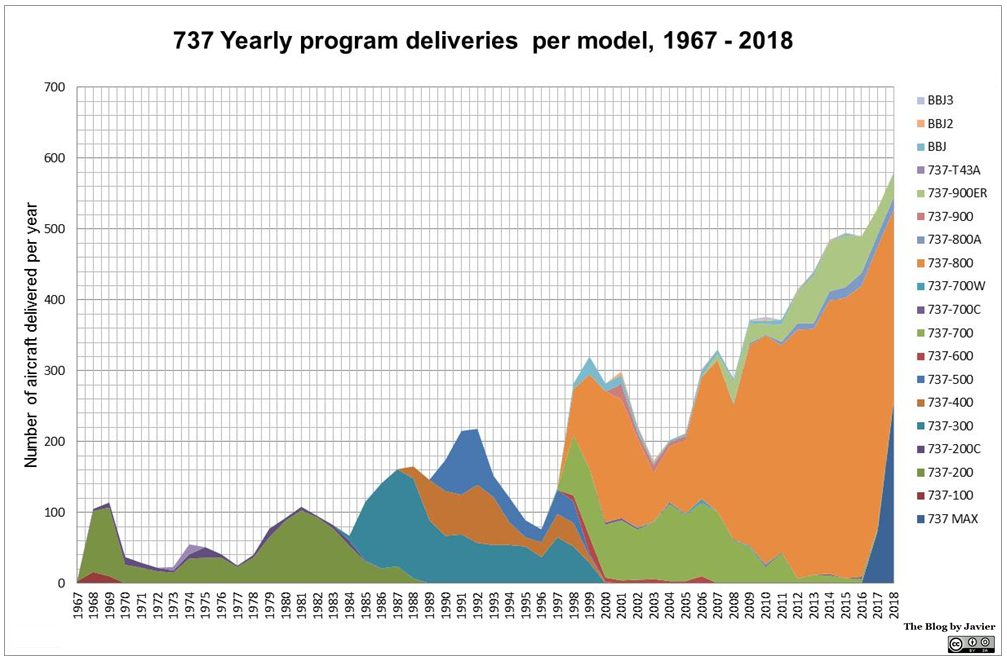
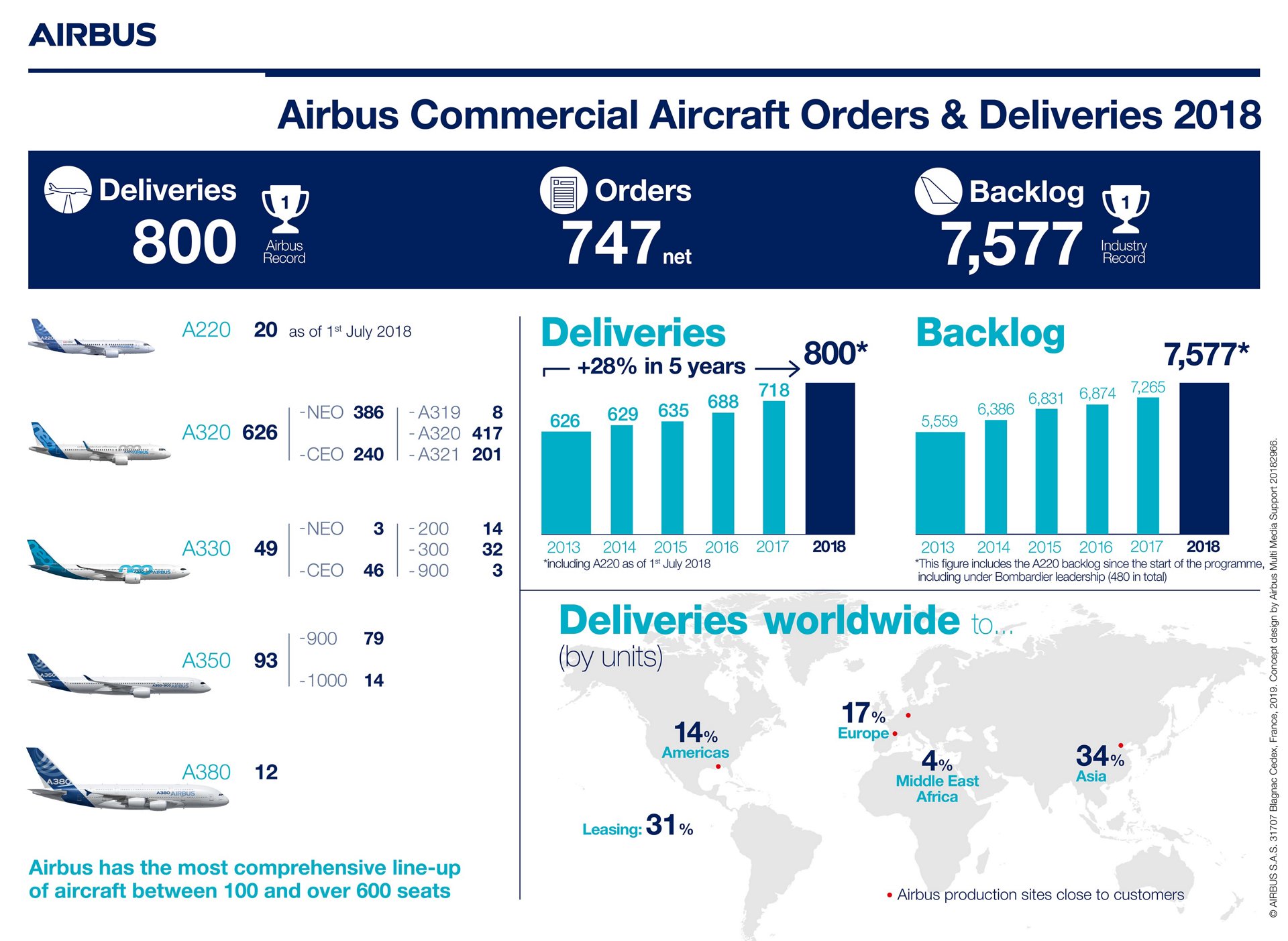
Two weeks ago, both Airbus and Boeing have released the figures of aircraft deliveries for the complete 2018: 800 and 806 airplanes, respectively, in what is a new industry record. This is just a quick post to share the graphic below with the evolution of 737 family deliveries per model since 1967 (year of its introduction) till 2018.

737 deliveries per year, 1967-2018

Through December 2018, up to 10,444 Boeing 737s have been delivered, making it the most successful commercial jet aircraft throughout history. In the graphic you can see the different generations: -100/-200 till the mid-80s, the -300/-400/-500 till the end of the 90s, the Next Gen in the 2000s and 2010s, until the introduction of the MAX a couple of years ago. With the steep ramp up in the recent years, it reached 580 deliveries in 2018.

However, it is worth noting that since 2002 Airbus A320 have delivered more aircraft in every single year with the exception of 2015. The 626 A320 deliveries in 2018 have meant a new industry record for commercial jet aircraft.

infographic-airbus-commercial-aircraft-orders-and-deliveries-2018

1 Comment

Filed under Aerospace & Defence

Boeing 787 orders, cancellations, deliveries & backlog through 2018

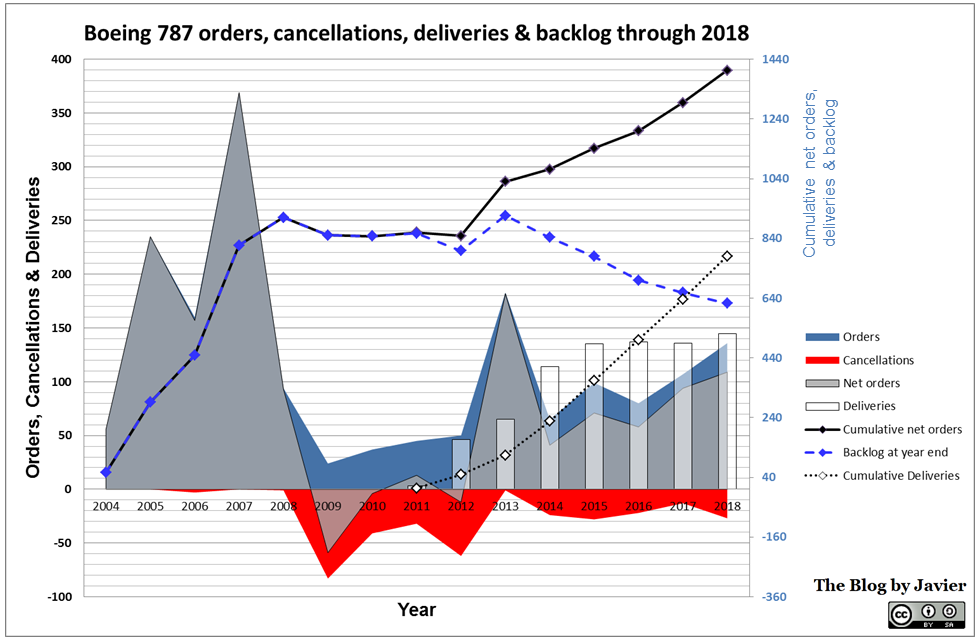
Quick post with the updated figures and graphic of orders, cancellations, deliveries and backlog of the 787 programme at the end of 2018.

For the fifth consecutive year above a hundred 787 airplanes have been delivered in 2018, 145 deliveries, a new industry record for a commercial wide-body aircraft. At that pace, the backlog is being consumed quickly, especially since in the last years the wide-body market has been rather sluggish.

In the last 5 years, 487 gross orders for 787s were placed, offset by 114 cancellations (about 20%) for a total of 373 net orders, 109 of them in 2018, its best selling year since 2013. Book-to-bill ratio was 0.75 in 2018, less than a desired > 1, but better than in the previous years.

Since 2011, there have been 781 cumulative deliveries (or in-service aircraft), that is 56% of the standing 1,403 net orders. Reversely, there is a backlog (1) of 622 aircraft to be delivered, 44% of the orders received so far, or about 4.3 years of production at this rate.

787 orders and cancellations 2018


(1) Since Q1 2018 Boeing has adopted a new revenue Recognition Accounting Standard (ASC 606) which imposes additional criteria for the backlog accounting beyond the existence of a firm contract to deliver. For the purpose of this post, I have kept the previous criteria, knowing that the difference between 787 “unfilled orders” (622) and “backlog” (604) are 18 aircraft.

Leave a comment

Filed under Aerospace & Defence

El tráfico aéreo en Cataluña desde el 1 de Octubre (actualización 2018)

En enero de 2018 escribí una entrada en el blog para ver si a partir de los datos compilados por AENA (Aeropuertos Españoles y Navegación Aérea) se podía detectar algún impacto en el tráfico aéreo en Cataluña entre el 1-O y el 27-O y los meses siguientes. Tras analizar las diferentes curvas que incluí en aquel artículo, no se podía concluir un impacto:

sacar una conclusión clara de que hasta diciembre el 1-O o el 27-O hayan tenido un impacto en el tráfico aéreo de los aeropuertos en Cataluña se hace más difícil que leer los posos del café.

AENA acaba de publicar hoy las estadísticas de tráfico aéreo (medido en pasajeros, operaciones y toneladas de mercancía transportada) de diciembre de 2018 y con ellas las del conjunto del año 2018.

Durante 2018 fui mirando dichas estadísticas regularmente y compilándolas en un archivo para poder sacar ahora de nuevo esta entrada y ver si durante 2018 ha habido algún efecto en el tráfico aéreo debido a las tensiones que se viven en Cataluña.

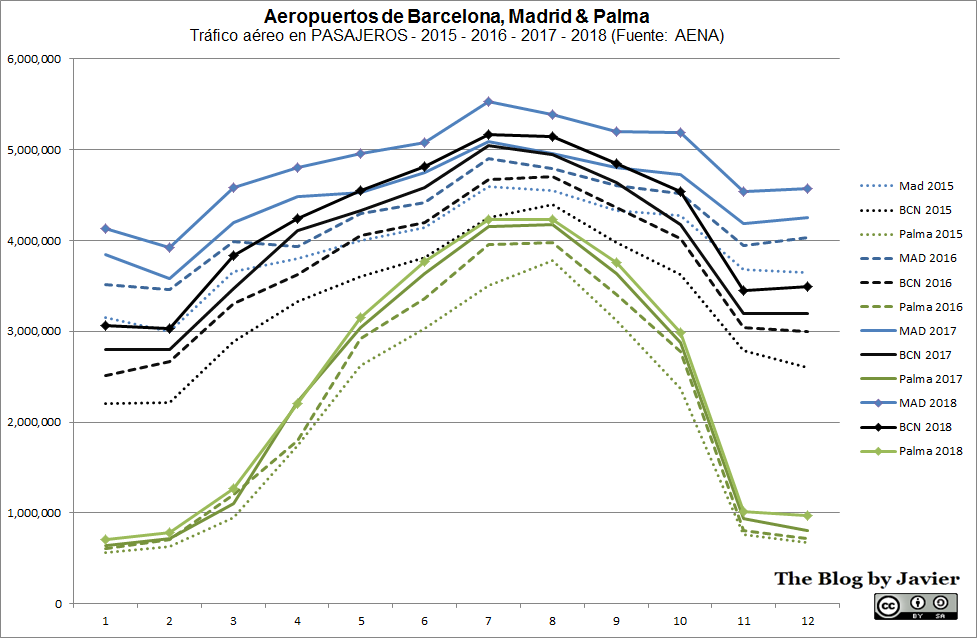
Pasajeros.

pax mad - bcn - palma_2018

El volumen de pasajeros en el aeropuerto de Barcelona creció en todos los meses del año 2018 con respecto a los mismos meses de 2017. En la gráfica se observa que el crecimiento fue menor que el que obtuvo el aeropuerto de Madrid, pero mayor que el que obtuvo el de Palma de Mallorca.

En todo caso, en el global anual, Barcelona creció un 6.1%, por un 8.4% de Madrid, 4.0% de Mallorca y un crecimiento nacional (la consolidación de los 48 aeropuertos de la red) de 5.8%. Por tanto creció más que el volumen total nacional.

Operaciones.

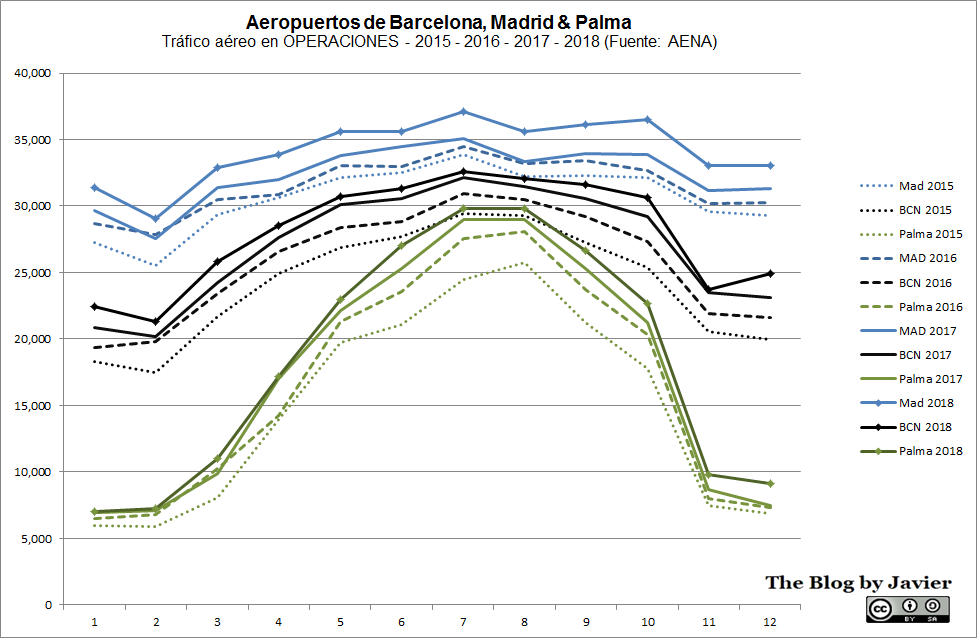
ops mad - bcn - palma_2018

En número de operaciones el aeropuerto de Barcelona creció en todos los meses del año 2018 con respecto a los mismos meses de 2017 (aunque en noviembre ese crecimiento fuese mínimo). En la gráfica se observa que el crecimiento fue menor que el que obtuvo el aeropuerto de Madrid, y aunque no se observa bien, fue también menor en porcentaje que el crecimiento que obtuvo el de Palma de Mallorca.

En todo caso, en el global anual, los tres aeropuertos tuvieron un crecimiento en volumen de operaciones menor que el crecimiento total nacional (5.8%): Barcelona creció un 3.7%, por un 5.7% de Madrid y 5.5% de Mallorca. Por tanto creció menos que el global nacional.

Mercancía.

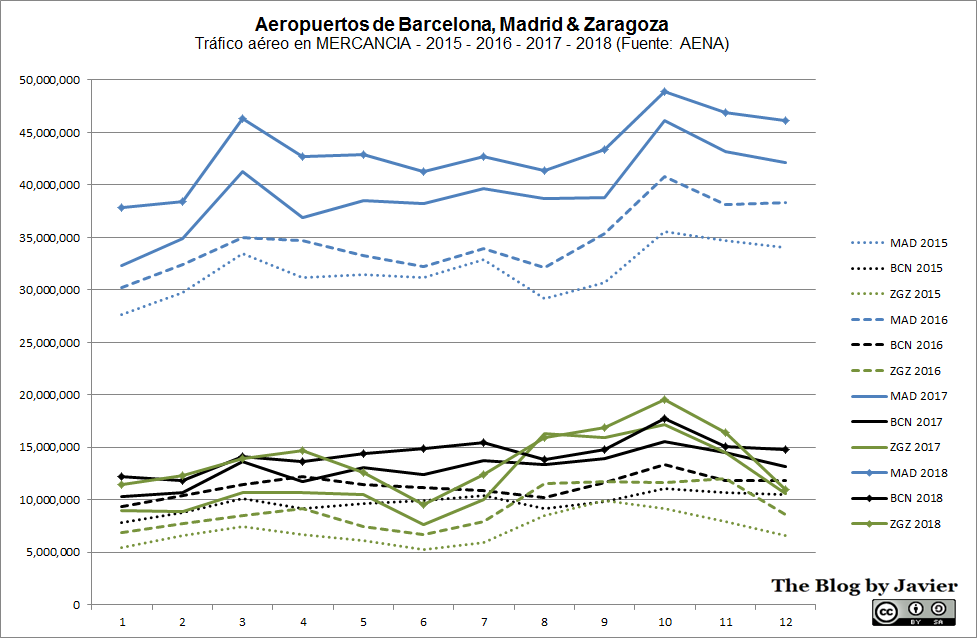
mer mad - bcn - zgz_2018

En volumen de mercancía transportada el aeropuerto de Barcelona creció en todos los meses del año 2018 con respecto al mismo mes de 2017, aunque ese crecimiento sea un tanto irregular según los meses del año (irregularidad que ya se dio en 2017).

En la gráfica se observa un crecimiento menor que el que obtuvo el aeropuerto de Madrid, pero éste es en términos absolutos: 47 millones de toneladas adicionales en Madrid en 2018 con respecto a 2017, por 17 millones más en Barcelona. Sin embargo, en términos relativos, el volumen creció en Barcelona un 10.8% por un 9.9% en Madrid (idéntico porcentaje que el crecimiento total nacional).

En todo caso, ambos aeropuertos crecieron menos que el tercer aeropuerto en carga, Zaragoza, que creció un 17.3%, superando en varios meses el volumen transportado en Barcelona (abril y de agosto a noviembre), aunque no el global anual.

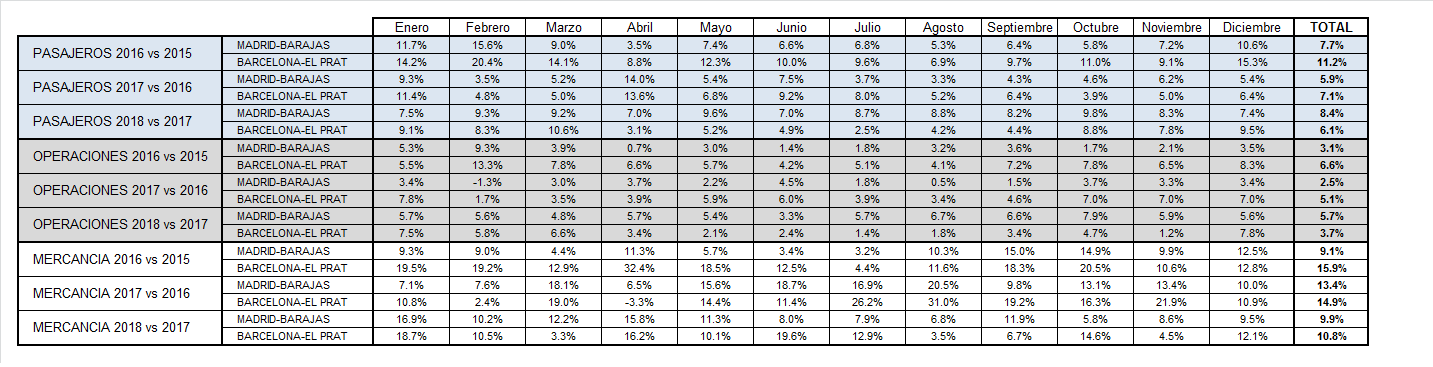
A continuación dejo una tabla resumen con la evolución mes a mes comparada entre Madrid y Barcelona.

tablas comparativas_2018

Como conclusión final: el tráfico en Barcelona ha seguido creciendo en 2018, aunque el crecimiento haya sido menor que el que obtuvo en años anteriores (el crecimiento nacional también se ha desacelerado tanto en pasajeros como operaciones y mercancía). Ha crecido menos que el aeropuerto de Madrid en pasajeros y operaciones, pero más en mercancía. Y creció más que el crecimiento total nacional en pasajeros y mercancías, pero menos en operaciones.

Por tanto, de nuevo la conclusión tras el estudio de los datos y gráficas es que no se observa un impacto en el tráfico aéreo por ninguno de los hechos ocurridos en el último trimestre de 2017, ni por la posterior implantación del 155, ni la inestabilidad política.

Leave a comment

Filed under Aerospace & Defence, Economy

Cumulative wide-body airplanes’ deliveries per model, 1969-2018

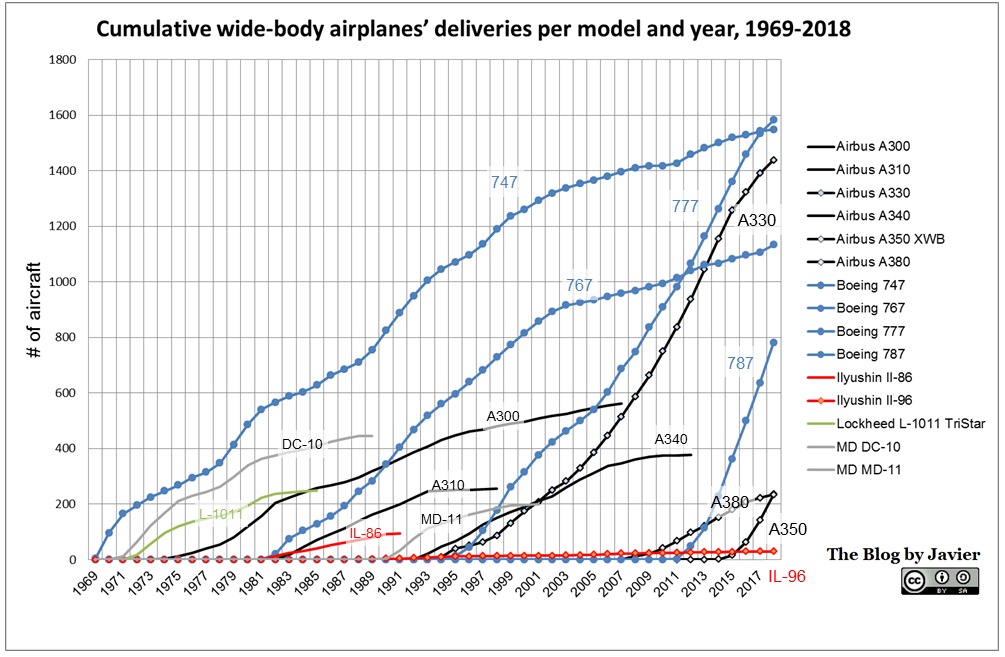
Last week, both Airbus and Boeing have released the figures of aircraft deliveries for the complete 2018: 800 and 806 airplanes, respectively, in what is a new industry record. In a previous post I showed the evolution commercial wide-body airplanes’ deliveries per year since 1969 (year of the introduction of the 747) till 2018. In this article, I wanted to show this other graphic with the evolution of the cumulative wide-body airplanes’ deliveries per model since 1969 until 2018.

cumulative wide-body airplanes' deliveries per model per year, 1969-2018

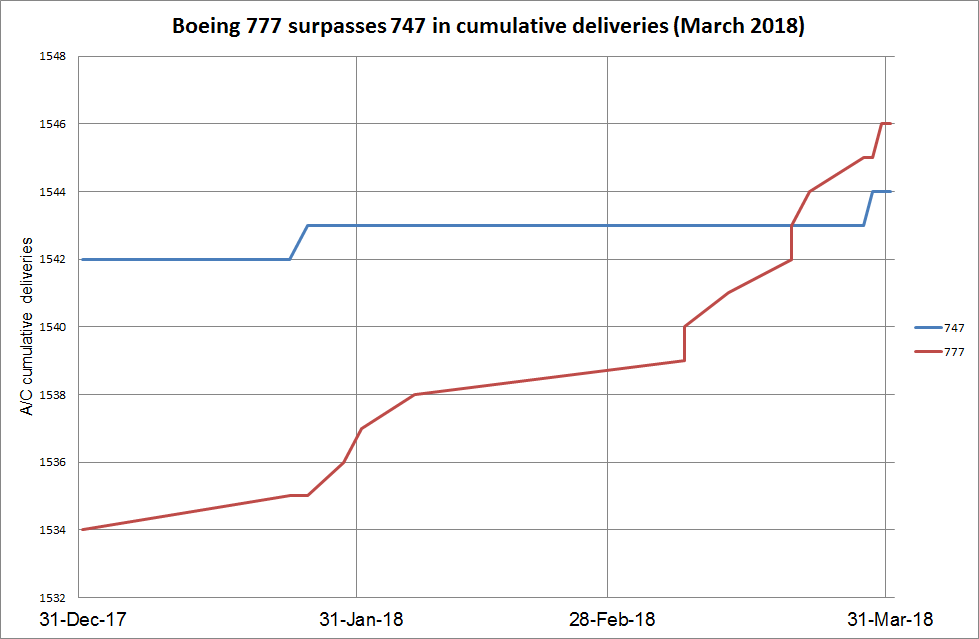
For the first time since 1969, the Boeing 747 is not the most built wide-body airplane in history, as in 2018 it was surpassed by the Boeing 777. At the end of the year cumulative deliveries stood at 1,548 and 1,582, respectively.

Diving into Boeing Commercial Airplanes site, we can see when that happened:

  • On March 20th, with the delivery of a 777-300ER (MSN 64989; LN 1548) to United Airlines (registration N2645U), the 777 programme matched the 1,543 cumulative deliveries that the 747 had achieved until then.
  • On March 22nd, with the delivery of another 777-300ER (MSN 64085; LN 1538) this time to Qatar Airways (registration A7-BEQ), the 777 programme surpassed the 747 programme deliveries, and established a new record with 1,544 cumulative deliveries. Since then, it has taken the lead until year end (1,582) and for the foreseeable near future.

boeing 777 surpasses 747 in cumulative deliveries

Leave a comment

Filed under Aerospace & Defence

Commercial wide-body airplanes’ deliveries per year, 1969-2018

This week, both Airbus and Boeing have released the figures of aircraft deliveries for the complete 2018: 800 and 806 airplanes, respectively, in what is a new industry record. This is just a quick post to update a graphic with the commercial wide-body airplanes’ deliveries per year since 1969 (year of the introduction of the 747) till 2018 (1).

commercial wide-body airplanes' deliveries per year, 1969-2018

Some reflections:

For the first time ever, in 2015 over 400 twin-aisle aircraft were delivered in a year (412), the same feat was achieved in 2016 (402). In 2017 and 2018 production descended below 400, down to 380 twin-aisles last year, still the fourth best year in the wide-body history.

The average number of deliveries for the previous 20-year period (1998-2017) was 249 airplanes per year. Up to now, in the 50 years of twin-aisle market (2), in only 7 years more than 300 airplanes were delivered in a single year, the seven last years, and only in other 9 years more than 200 airplanes had been delivered.

The combined steep production ramp-up during last years has enabled to reach a production rate of about the double of what was produced in 2010 (195). In particular, the combined compound annual growth rate (CAGR) of the rate of deliveries for the last 10 years has been 7.6%. These rates are above the yearly growth of traffic (measured in RPKs).

With the figures up to the end of 2018, above 9,100 wide-body airplanes had been delivered. Thus, around the end of 2020 we will reach reach the 10,000th. However, we won’t know whether the 10,000th twin aisle will be a Boeing or an Airbus.

The share of wide-body deliveries in 2018: 59% Boeing and 41% Airbus.

There were 145 787s delivered in 2018, the largest amount of twin-aisle deliveries of a single model in a single year ever. A remarkable feat and new industry record for the wide body segment, beating its mark of 2016 (137). Only the 787 and the A330 have ever been delivered in excess of 100 aircraft in any given year; 4 times for the A330 (between 2012 and 2015) and the last 5 years in the case of the 787.

The deliveries of the 777 have been decreased by half in the past two years: from 99 in 2016 to 48 in 2018. This is similar output valley than what happened with the A330 when reaching the mark of ~ 2 years before targeted entry into service (EIS) of the new version, the A330neo: delivery decrease in 2016 for an 2018 EIS for the A330neo, and delivery decrease in 2018 for a 2020 Q2 target EIS for the 777X.

a330_b777_valleys


—————

(1) See here a previous post with the figures up to 2017.

(2) On February 9th, it will be the mark of the 50th anniversary of the 747 first flight.

1 Comment

Filed under Aerospace & Defence

Aviation safety evolution (2018 update)

Yesterday, the Aviation Safety Network released the 2018 airliner accident statistics showing a total of 15 fatal airliner accidents, resulting in 556 fatalities.

Aviation Safety Network is a private initiative from the Flight Safety Foundation which curates an extensive database with aviation incidents, hijackings and accidents, from 1946 to nowadays.

The tweet with which they made the announcement is below:

Which includes the graphic below.

ASN_infographic_2018.

If we take a quick look at the figures (which report commercial aviation flights (passenger and cargo)):

  • Number of accidents: 15, up from 10 in 2017, though still the 3rd safest year in history.
  • Fatalities: 556, up from 44 in 2017, the 9th safest year in history.
  • There were a few accidents with large number of fatalities (details here).

The graphic above from the Aviation Safety Network provides the view of the evolution of accidents. However, in their database they provide some more figures with which I produced some graphics.

Evolution of accidents per million flights

The database provides figures of the evolution of the number of world air departures since 1970, together with the evolution of accidents (above). The database includes a ratio: fatal accidents per million flights, which I have plotted below together with the evolution of flight departures. You can see that the ratio has decreased 16 fold since 1970, from 6.35 to 0.39 last year.

2018_safety_accidents_per_flights

Global air traffic vs fatalities

The database provides no ratio with the figures of fatalities, but they can be related to the amount of passengers carried. In aviation there is the concept of revenue passenger kilometre (RPK) transported, which is compiled year by year and can be found in publications from ICAO, IATA or aircraft manufacturers. I have plotted below both the evolution of traffic growth and fatalities since 1970, together with a 5-year moving average for the fatalities.

2018_safety_RPK_vs_fatalities

Within the evolution of traffic there are two variables that have grown over the years: the number of passengers carried per flight departure and the distance covered. Therefore, together with the decrease in the evolution of fatalities (taking the 5 year average) I have plotted below the evolution of the ratio of fatalities per trillion RPK. You can see that the ratio has decreased 54 fold since 1970, from 3,218 to 59 last year (5-year average).

2018_safety_fatalities_per_RPK

Leave a comment

Filed under Aerospace & Defence