Ailes Anciennes Toulouse, Visites Cockpit (April 2015)

Ailes Anciennes Toulouse is an association that preserves and restores old airplanes and helicopters. It is located in Blagnac, close to the museum Aeroscopia. In its collection has over 50 aircraft, some of which are being worked on, some are displayed in their field and others are ceded to Aeroscopia (e.g. the Super Guppy being one of them).

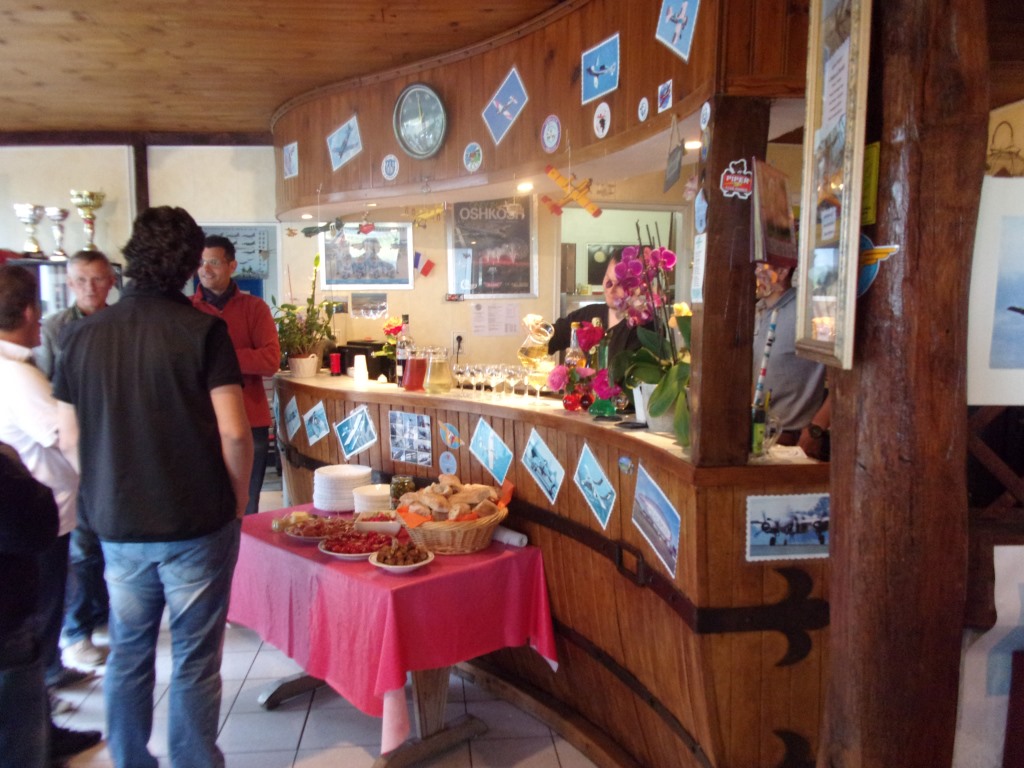
PosterVisiteCockpitApril11About three or four times a year, Ailes Anciennes organizes what they call Visites Cockpit events. In those days, most of the aircraft on display are opened for visitors to enter in them, sit in their cockpits, experience them, get explanations from enthusiast volunteers of the association, walk through their cabins and cargo hold compartments. Last April 11th was one of those days and we took the opportunity to visit it.

If last year we got the chance to see the only airworthy Noratlas flying in Francazal, this time we got to enter in one:

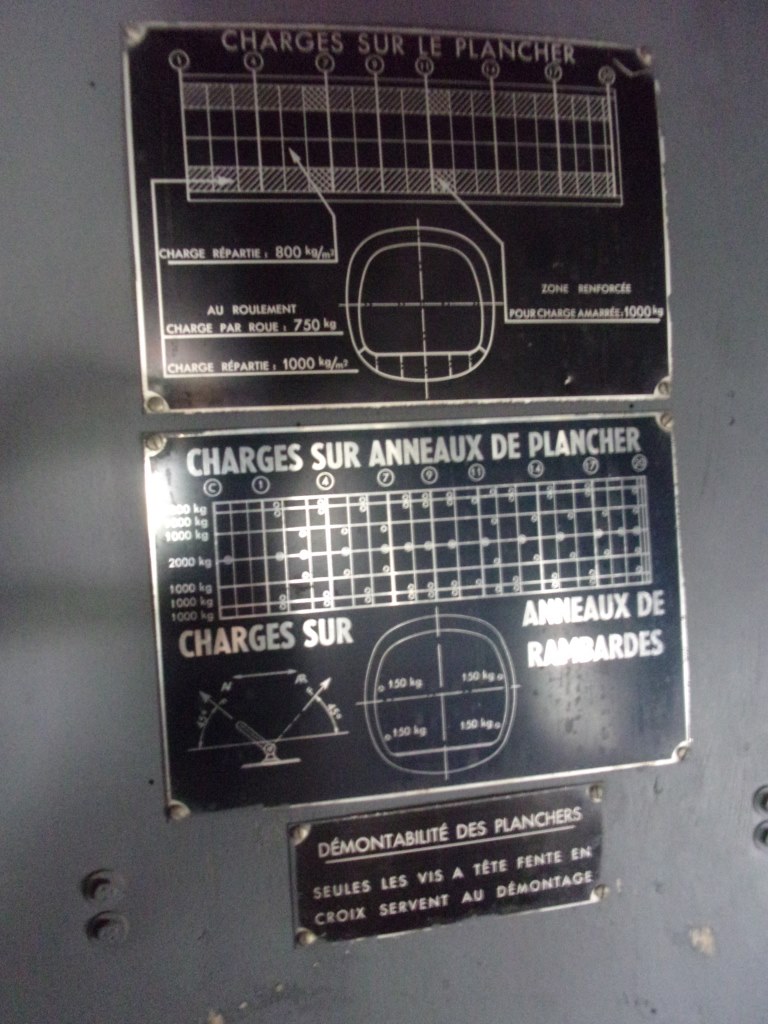
Loading plan of a Nord 2501 Noratlas.

Loading plan of a Nord 2501 Noratlas.

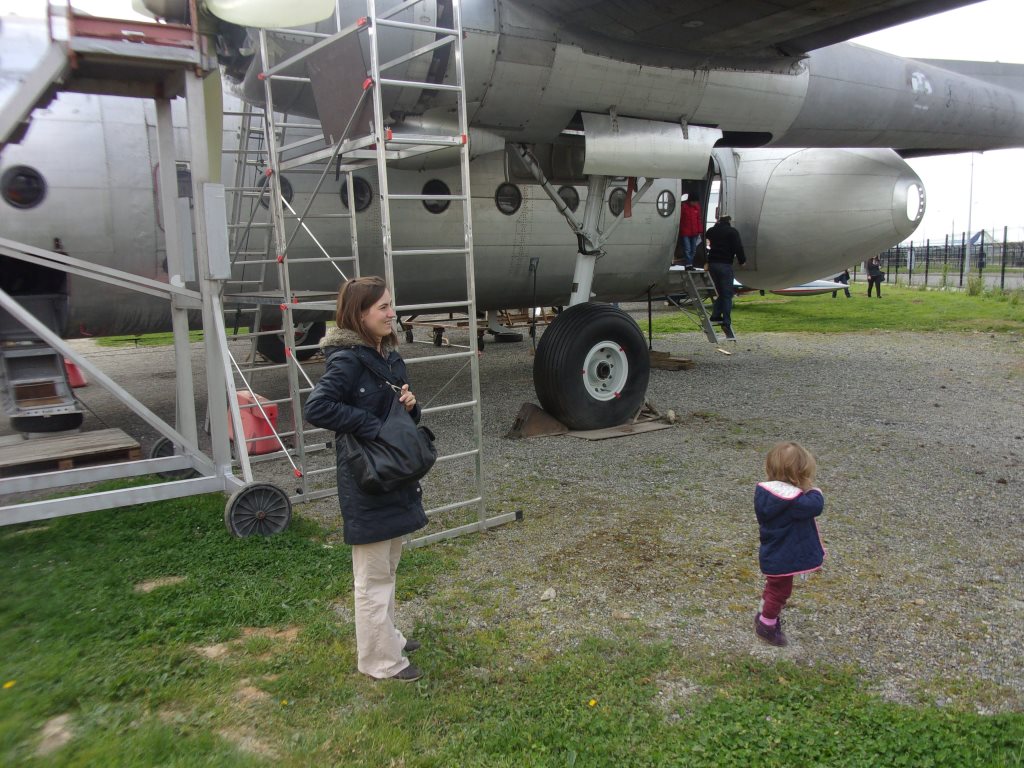
Side view of a Nord 2501 Noratlas.

Side view of a Nord 2501 Noratlas.

View of a Nord 2501 Noratlas

View of a Nord 2501 Noratlas

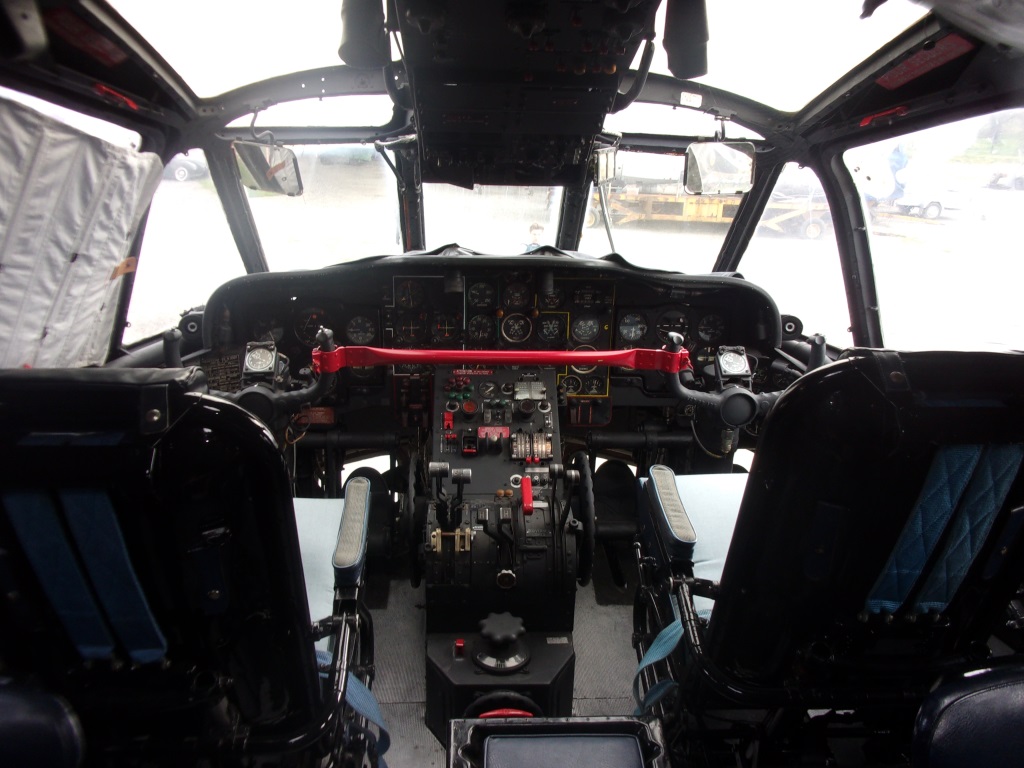
Cockpit of a Nord 2501 Noratlas.

Cockpit of a Nord 2501 Noratlas.

View of an Airbus A350 from the cargo hold of a Nord 2501 Noratlas.

View of an Airbus A350 from the cargo hold of a Nord 2501 Noratlas.

There were some aircraft which I believe I had never seen live before, such as:

Breguet 765 "Sahara".

Breguet 765 “Sahara”.

Andrea inside the trainer Fouga Magister.

Andrea inside the trainer Fouga Magister.

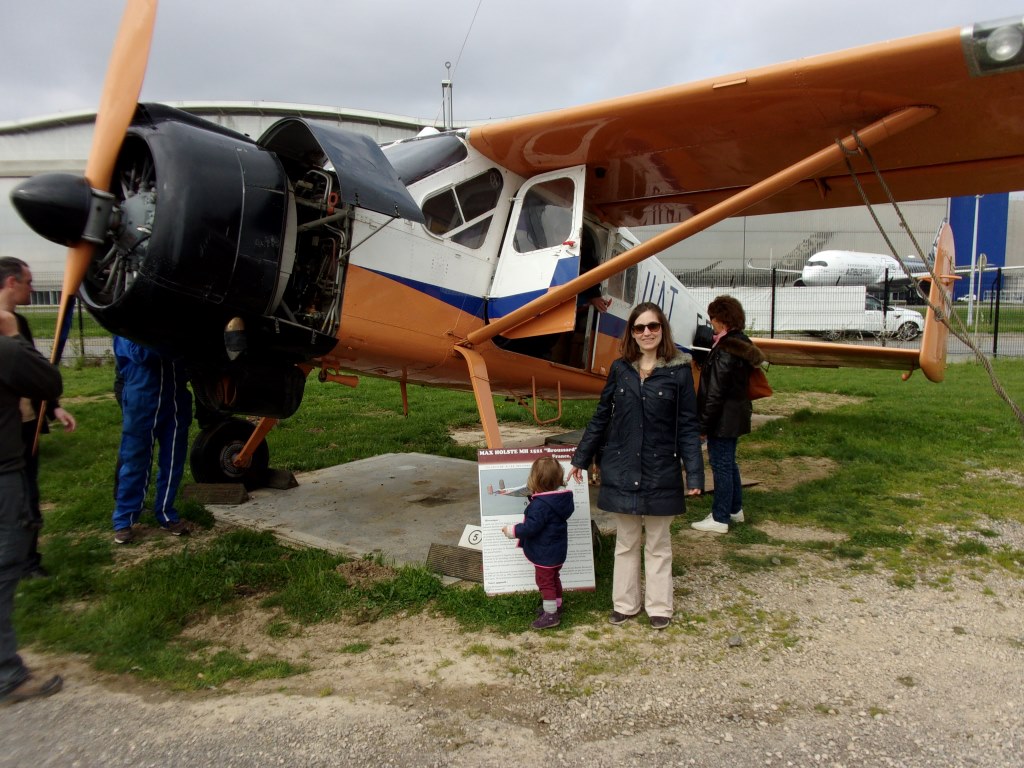
Max Holste MH 1521 "Broussard".

Max Holste MH 1521 “Broussard”.

Panel with limit velocities of a Breguet 941S.

Panel with limit velocities of a Breguet 941S.

Some of the other aircraft we enjoyed include the Sud Aviation Caravelle, the Douglas DC-3 (3), the North American T-6 Texan, the Mikoyan-Gourevitch MiG-21

Mikoyan-Gurevich MiG-21.

Mikoyan-Gurevich MiG-21.

Main dashboard of a MG-21.

Main dashboard of a MG-21.

Side panel of a MG-21.

Side panel of a MG-21.

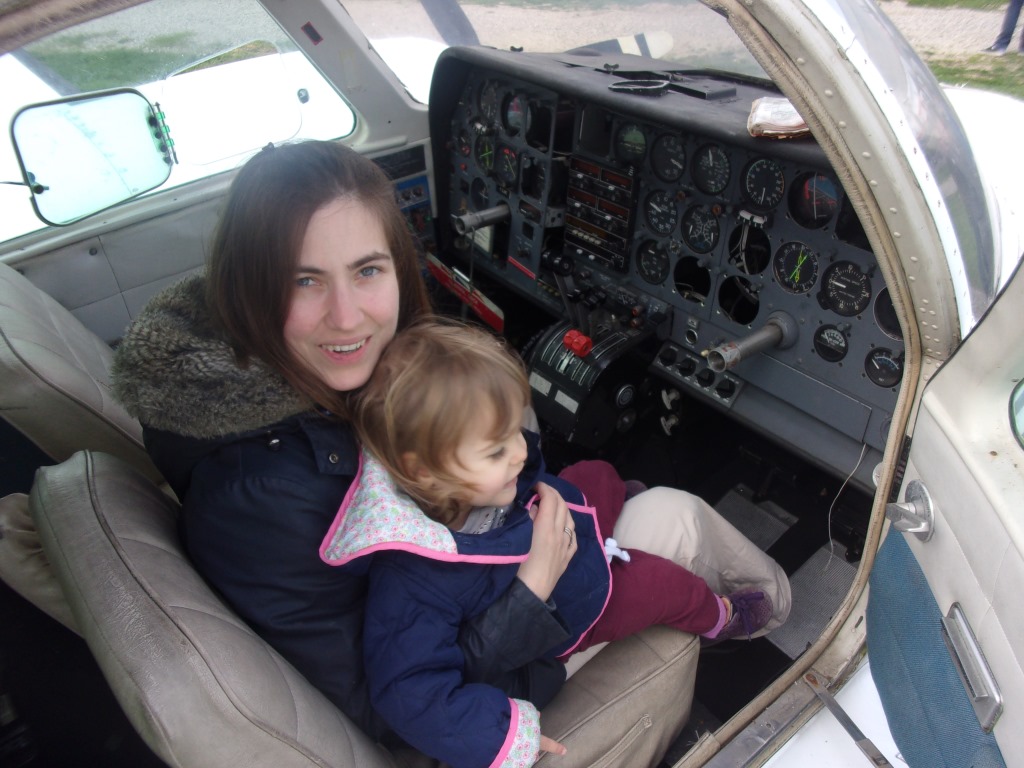
Luca and Andrea inside a Cessna 310.

Luca and Andrea inside a Cessna 310.

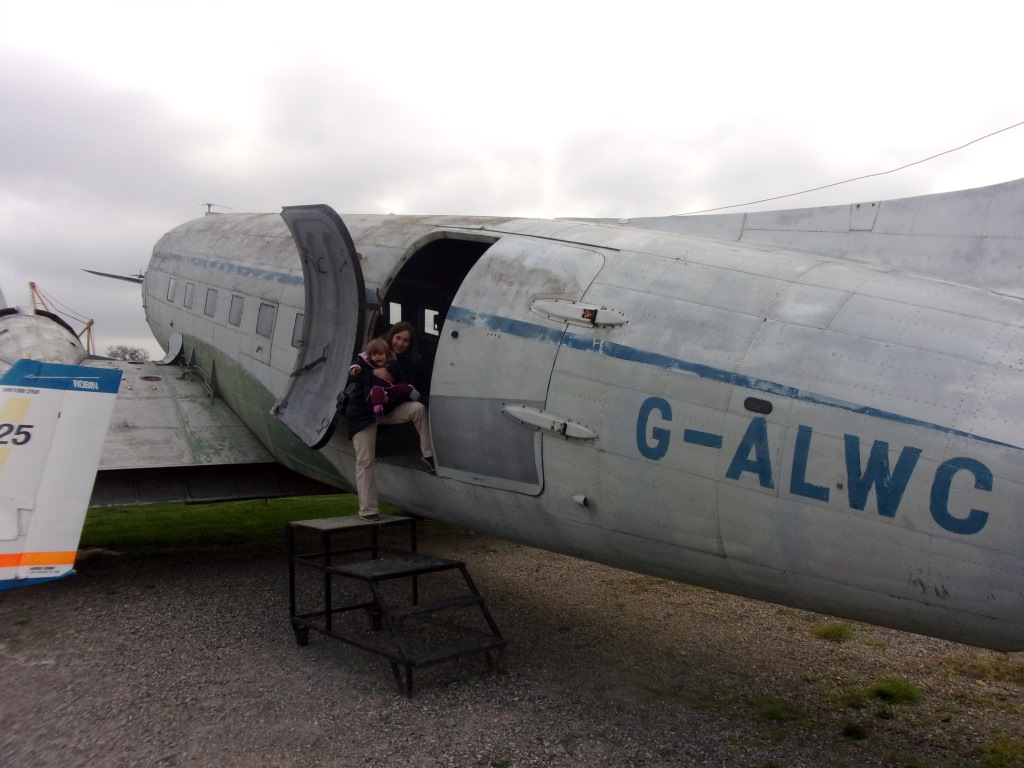
Douglas DC-3.

Douglas DC-3.

Circuit breakers panel of a Sud Aviation Caravelle.

Circuit breakers panel of a Sud Aviation Caravelle.

Posing from the cockpit of a North American T-6G Texan.

Posing from the cockpit of a North American T-6G Texan.

Douglas DC-3 as seen from a North American T-6G Texan.

Douglas DC-3 as seen from a North American T-6G Texan.

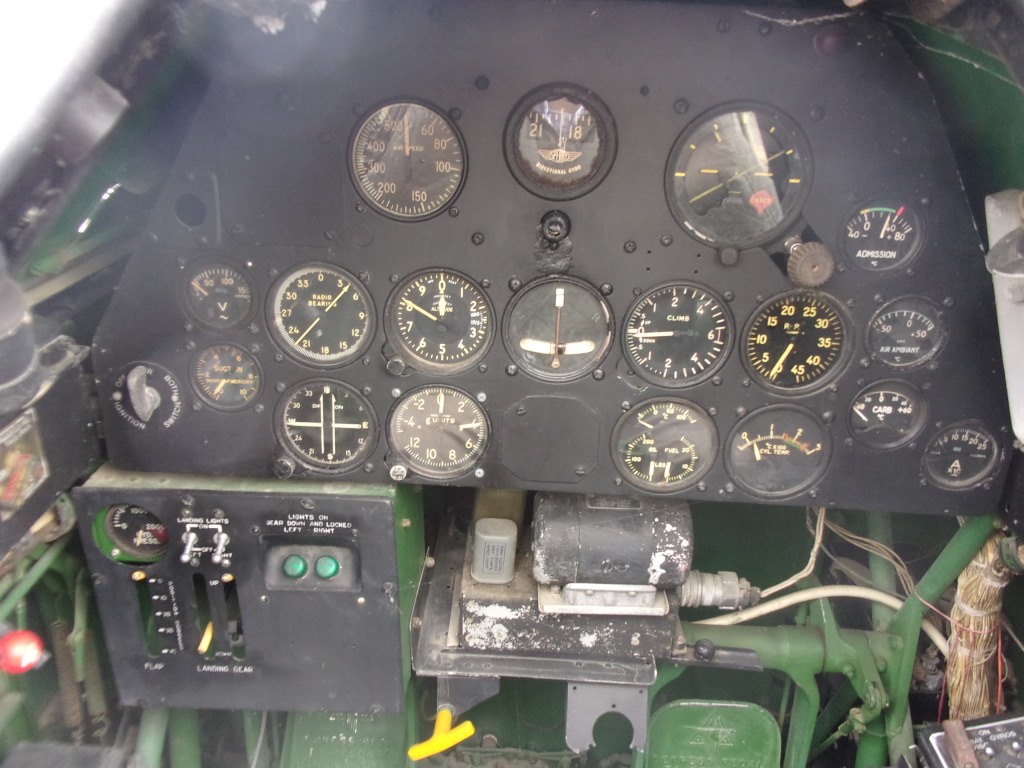
Dashboard of a North American T-6G Texan.

Dashboard of a North American T-6G Texan.

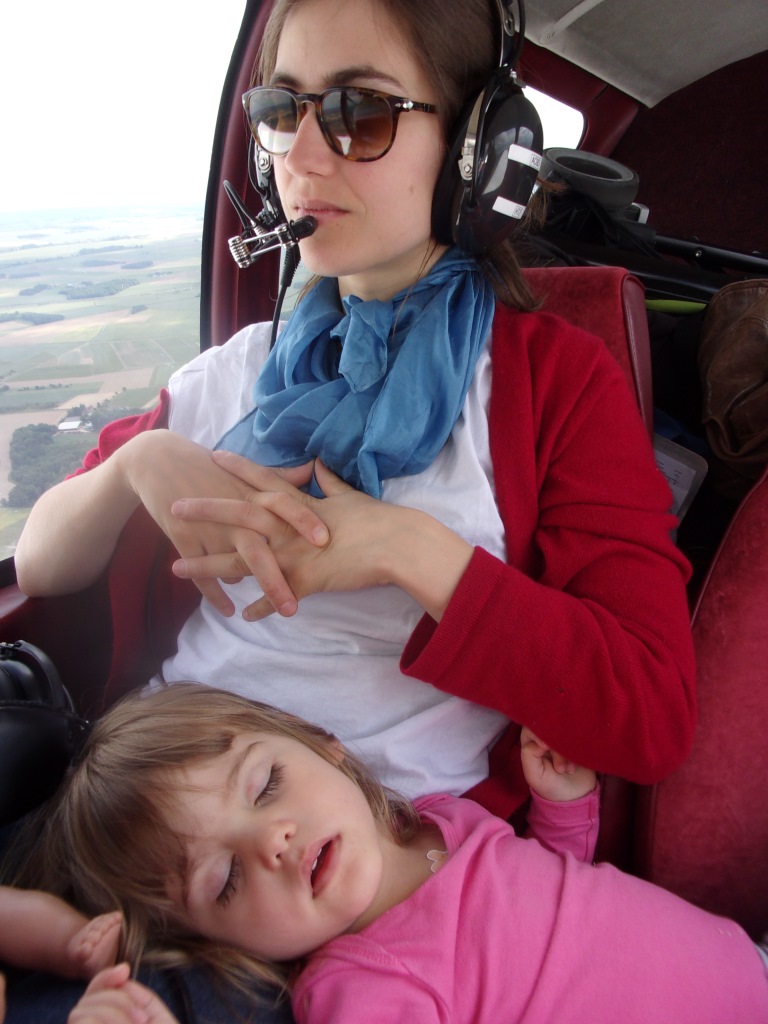
Andrea playing around.

Andrea playing around.

I recommend the visit to Ailes Anciennes in its Cockpit days (10€ for adults). Take a look at their website to see when the next one is scheduled (normally in spring).

(1) See here a video of the Patrouille de France air show in Francazal 2014.

(2) See here a video of a Pratt & Whitney R-985 Wasp Junior radial engine in operation at the National Air & Space Museum of the Smithsonian institution in Washington DC, at Dulles.

(3) Read more about the origins of the Douglas DC-3 here.

1 Comment

Filed under Aerospace & Defence

30 years of AEGEE

AEGEE stands for Association des États Généraux des Étudiants de l’Europe and it is the largest trans-national, interdisciplinary student organisation in Europe. You can find here the Wikipedia article about it and here the organisation’s website.

I was a member of the association from 2000 to 2005, while I was studying at the university. So were my brother and sister, and many friends. A couple of days ago, on the occasion of the 30th anniversary since the creation of the organisation, one of these friends, Juan, shared a reflection along the lines: of the many things that I have stumbled upon in my life, the one which changed it the most was AEGEE. He talked about learning, volunteering in associations, taking part in youth councils, meeting friends, organizing events, learning or practising languages, and experiencing what Europe is, beyond stereotypes. I subscribe his reflection word by word.

I have written over 500 posts in this blog and I now realize that I hadn’t yet dedicated a single one just to AEGEE. This is it.

I joined AEGEE in the spring of 2000, after having read an article in a university newspaper talking about the Summer Universities. I applied for one of those summer events in Istanbul. There I spent 2 weeks with about 30 other students from Slovenia, Croatia, Yugoslavia, Poland, The Netherlands, Austria, Macedonia, Azerbaijan, Turkey, Spain… that experience was life changing, as you read it.

In the following 5 years I took part in another couple of such summer universities in Croatia and Macedonia. I helped to organize several others in Madrid and The Netherlands (and I casually visited some more). I took part and organized several student’s exchanges under the European Commission’s Youth Programme. I took part in the large event Youth 2002 in Denmark. I travelled Europe from one corner to another. I met friends from the several countries with which today, 10 to 15 years later I am still in contact with, many of which I have visited along these years. I made a couple of round-Europe inter-rail trips. I crossed borders on foot, car, bus, train, boat and planes (we even unknowingly crossed some former minefield in the border Macedonia-Kosovo). I learned that not all countries have as dialling out code the 00. I slept in trains, hunter’s cottages, train stations, airport toilets, planes, buses, gyms, students’ dorms, boats, friends’ homes, and even some youth hostels and hotels (and, of course, the house of AEGEE’s Comité Directeur in Brussels). I met Luca in late 2002, who I married in 2013. Surely, I got my parents’ suspicious of the association and they seeing it as a source of distraction from university studies (it was). But as my friend Juan mentioned: it’s not much of an exaggeration if we say AEGEE might be the thing that has changed my life the most.

If you have been raised far from Europe, it may have had no impact on you. If you studied in Europe, the chances are that it had, even if you had not yet realised about it. Take the Erasmus programme just as an example, from its Wikipedia site:

By the time the Erasmus Programme was adopted in June 1987, the European Commission had been supporting pilot student exchanges for 6 years. It proposed the original Erasmus Programme in early 1986, but reaction from the then Member States varied: those with substantial exchange programmes of their own (essentially France, Germany and the United Kingdom) were broadly hostile; the remaining countries were broadly in favour. Exchanges between the Member States and the European Commission deteriorated, and the latter withdrew the proposal in early 1987 to protest against the inadequacy of the triennial budget proposed by some Member States. However, AEGEE, the Association des États Généraux des Étudiants de l’Europe, persuaded French President François Mitterrand to support funding for the Erasmus programme. In the next few months a compromise was worked out with a majority of Member States, and the Programme was adopted by simple majority in June 1987.

In 2005 I also took an Erasmus grant to complete my final career project at the Rheinisch-Westfälische Technische Hochschule Aachen (RWTH Aachen).

AEGEE was born in 1985 out of the EGEE 1 conference (États Généraux des Étudiants de l’Europe) held in Paris in April 1985.

In 2003 while travelling to The Netherlands with a Youth programme students’ exchange, my brother, some friends and I made a stop in Brussels. My friend and then AEGEE-Madrid president, Javier, and I wandered through the files of AEGEE-Europe office and made some copies of old press’ articles. Among them the one you can see below of that EGEE 1 conference in which the problem of students’ exchanges was discussed.

EGEE 1

Coverage of EGEE 1 conference by Le Monde (April 17, 1985).

May this post serve as a first homage to AEGEE and to all the members who sustained it through these first 30 years. And if you are a university student, the chances are that in your town there is an AEGEE antenna; check it out and join it, you won’t regret it!

Leave a comment

Filed under Education, Personal development

Thomas Piketty, Joseph Stiglitz and Paul Krugman debate on inequality

92nd Street Y (92Y) is a multifaceted cultural institution and community center located on the Upper East Side of Manhattan in New York.

A few days ago I stumbled upon a video related to an event they organized about a month ago: “7 days of genius“. The video in particular had economists Thomas Piketty, Joseph Stiglitz and Paul Krugman debate mainly about inequality, with Alex Wagner from MSNBC as moderator. The video lasts 1h15′. If you happen to follow any of these economists (1) you will more than enjoy the time, as it is not only very informative but at points quite humorous too.

Apart from sharing the video, in this post I just wanted to highlight some passages of which I include excerpts transcribed by myself and some mental notes I made from the debate:

Krugman: “What’s not much known is that since those crisis days a lot of basic economics has worked remarkably well […] ” I’ve spent my life not entirely sure o whether I was a fraud or not […] it’s only been on the past 6 or so years that I’ve said “ok, you know, the staff works”,  the sad thing is that half of the economics profession has thrown away things that we know work […] the real sin is not failing to predict the crisis it is clinging to doctrines that are obviously clear are not working

Stiglitz: “all those fears that printing money would be inflationary was absurd” […] “economist who thought that putting the banks in the hospital for a year and a half, giving them not a blood transfusion, but a couple of trillion dollars of money would make them feel happier and that would get the economy working again. It’s clear that was wrong. That you need a clear fiscal policy, you need a real stimulus, and in a fundamental sense the economy was broken before the crisis and was using a bubble to keep that going, and that’s what we should have recognized.”

Krugman: “it’s been a race between us (USA) and Europe to see who can screw up worse, at the moment Europe is winning..”.

The three of them coincided in criticizing the (Euro zone) single currency with several fiscal policies, different interest rates on public debt, several governments… and even with that structural problem: “the situation is exacerbated by bad economic doctrines […] fiscal hypochondria” (Krugman)

Stiglitz: “we are focusing on too much debt… the real problem is that the fruits of our growth have not been widely shared”.

Stiglitz: “one of the things that Walmart raising their wages illustrates the fact that it’s not just market forces that are determining wages, that they had the power, the choice to raise their wages. […] take CEO pay, which has gone from 30x to over 300x the pay of the average worker without any justification, their productivity haven’t growth 10 times that of society”

Stiglitz: “when you have high level of youth unemployment, particularly men, when they can’t use their energy productively they tend to use them unproductively.”

Piketty: “I’m not particularly pessimistic, I see lots of good new, if you take a long perspective […] Europe is a much more prosperous and equal place today than what it was a century ago, when it was extremely unequal and more unequal than the US and today the US is more unequal than Europe, things change and different choices of policies and institutions can make things change. And also in the emerging world, there are lots of positive evolutions going on. I believe that globalization can help to reduce poverty in the world, assuming that we don’t expect that everything from the markets and we adopt the policies that can make globalization benefit broader groups of population, and sometimes governments do it. Take the example of Brazil”

I also enjoyed the criticism from Piketty to Jean Claude Juncker (current president of the European Union Commission and former Luxembourg prime minister) and its weak defense of his responsibilities in the making of Luxemburg a tax haven.

Finally, from the perspective of being Spanish, I found it interesting the following comment from Stiglitz:

“Let me call back to the question of the role of society. I was very pessimistic about Europe, but one hopeful sign of Europe is the growth of new groups like Podemos in Spain which are saying the old parties are note addressing the problems of raising unemployment and inequality. And now it’s a leading party with 27%. In the end is going to have to be political action that is going to address these issues. Civil society can bring the issue to the floor, but the real challenge is going to be to try to get those ideas into the political process […] in Europe it’s partly because it really collapsed, the real failure of old parties”

(1) I happen to like the three economists, both because of what I have read from them and the policies they advocate. As Luca warned me: the watching of the video made me fall in confirmation bias.

Leave a comment

Filed under Economy

Earned Value Management and cash preservation

A few weeks ago I attended a 2-day training course titled “Finance for non financiers”. I found it too basic. However, I wanted to comment on one exercise we were proposed almost at the end of the course.

We had just reviewed some notions of Earned Value Management with its main concepts: Planned Value (or Budgeted Cost of Work Scheduled (BCWS)), Actual Cost (or Actual Cost of Work Performed (ACWP)), Earned Value (or Budgeted Cost of Work Performed (BCWP)), Schedule Performance Index (SPI=Earned Value / Planned Value), Cost Performance Index (CPI=Earned Value / Actual Cost), etc., when the teacher posed the following question:

From a cash management (preservation) point of view rate the following sets of EVM indicators from best to worst:

1) SPI=1.2, CPI=1.2,

2) SPI=1.2, CPI=0.8,

3) SPI=0.8, CPI=1.2,

4) SPI=0.8, CPI=0.8.

Any EVM practitioner or person with some notions of EVM will know that in EVM SPI and CPI above 1 means good, and below 1 means bad. Therefore, from the previous exercise we would be able to immediately say that the best case is 1) (both indicators above 1) and the worst case is 4) (both indicators below one). The tricky situation would be how to value cases 2) and 3) where one of the indices is positive and the other negative.

I remember that in the class I quickly thought “if we want to preserve cash, a positive SPI means we advance faster and if it is coupled with a negative CPI that means we are burning cash at a higher than planned rate, therefore it is better the case 3) where we advance at a slower rate but always below planned budget”.

I was surpised when other colleagues started diverting with thoughts like “if you take the case 3) and are behind schedule you would not receive cash inflows so it would be worse” (?). However, the question from the exercise did not give any hint of whether cash inflows are linked to planned value, earned value or you just start with a pile of cash to be used. It just asked about cash preservation.

In my first year of university studies in aerospace engineering I very well learnt the lesson of not guiding oneself responses by the first intuition that you may have but to apply the knowledge acquired to the question at hand. In relation to this case, it would be as easy as to depict the typical EVM curves for the 4 cases and see which one is burning cash at a higher rate.

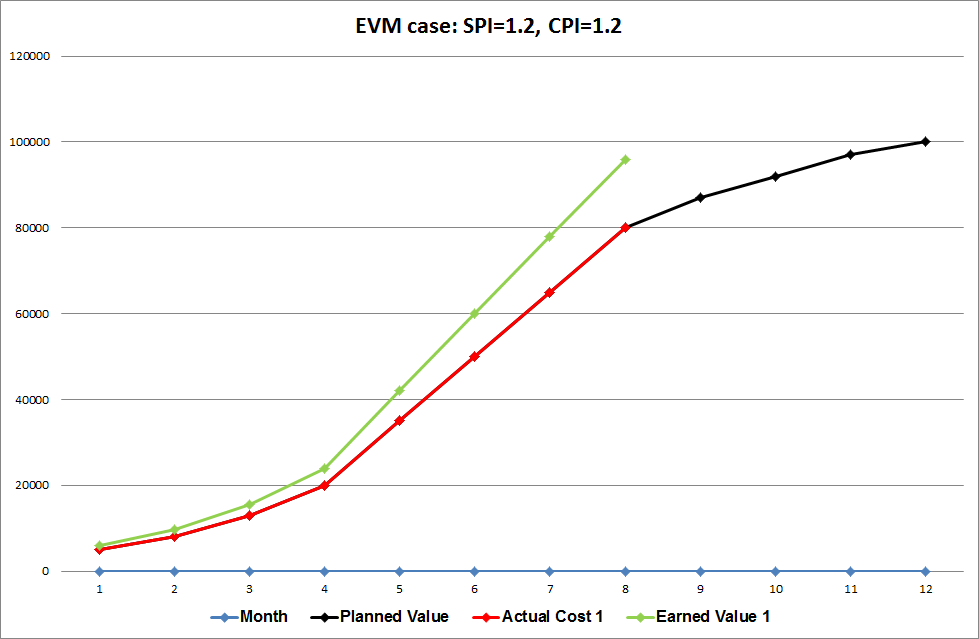
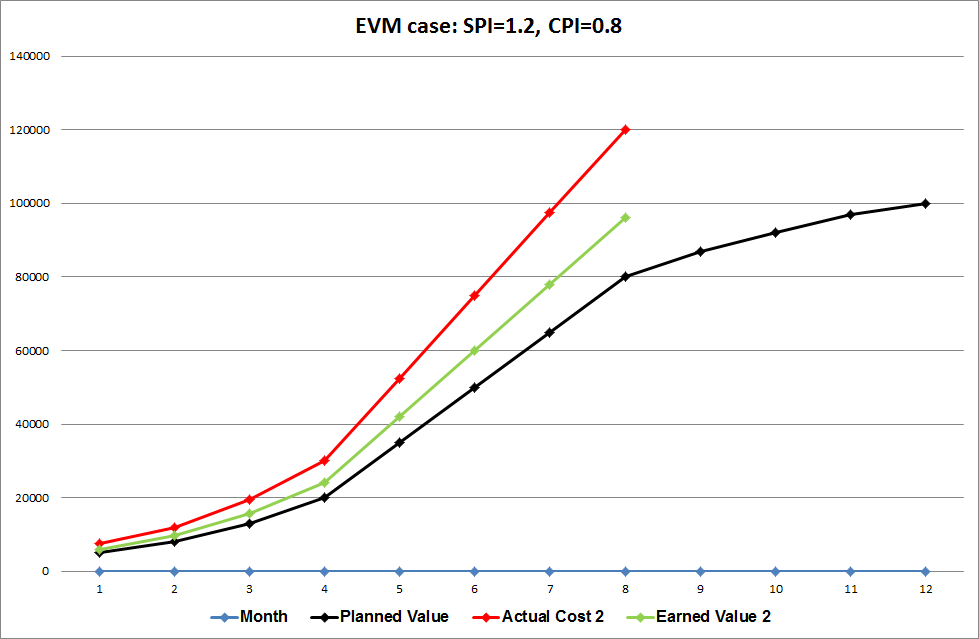
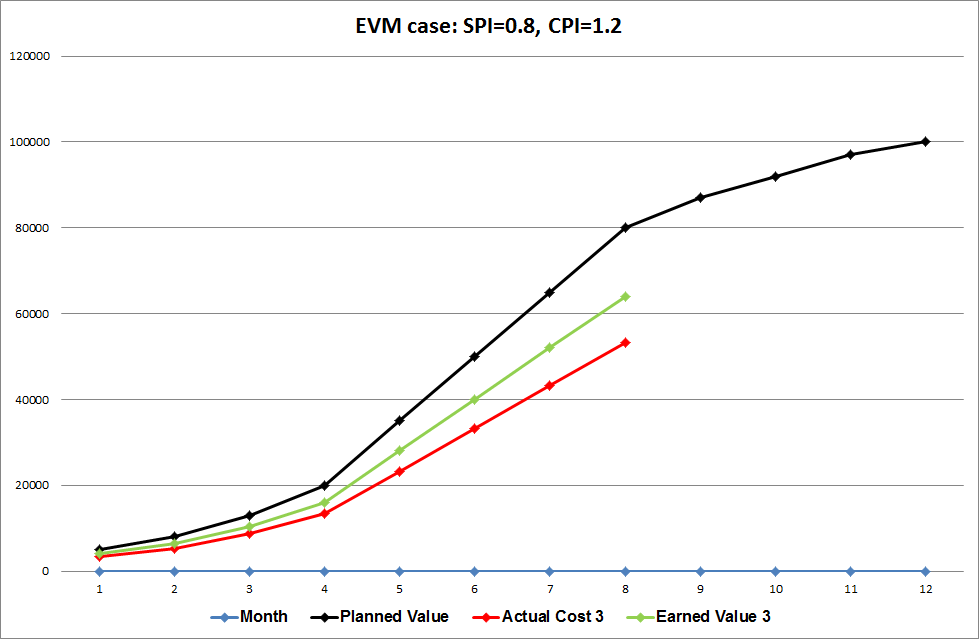
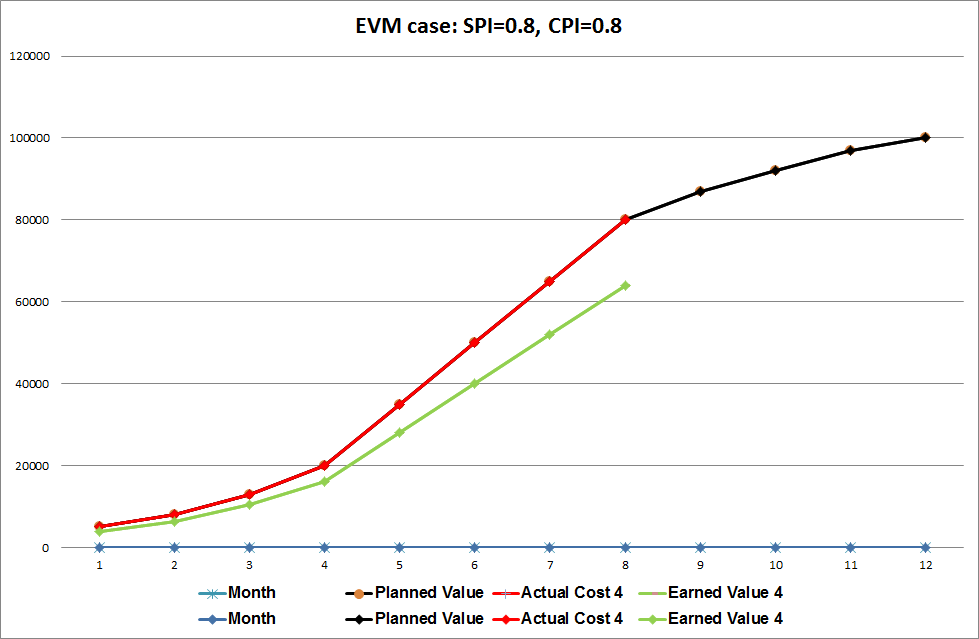
In each of the 4 graphics below you will see a black curve which represents the Planned Value, a green curve which represents the Earned Value and a red curve which represents the Actual Cost. In absence of information of whether the cost in the exercise is equal to cash outflows, we can assume that it is. Therefore, the best case for preserving cash (other things being equal) would be that with the lower Actual Cost curve (red curve). See the different curves below:

EVM case 1: SPI=1.2, CPI=1.2

EVM case 1: SPI=1.2, CPI=1.2

EVM case 2: SPI=1.2, CPI=0.8

EVM case 2: SPI=1.2, CPI=0.8

EVM case 3: SPI=0.8, CPI=1.2

EVM case 3: SPI=0.8, CPI=1.2

EVM case 4: SPI=0.8, CPI=0.8

EVM case 4: SPI=0.8, CPI=0.8

The first interesting point is that both cases 1 and 4 are burning cash at the same rate, however case 1 is ahead of schedule and case 4 is behind schedule. Therefore, case 1 is preferable, because in the end with case 4 we would arrive at the 12th month having consumed all the planned resources but not having completed the project.

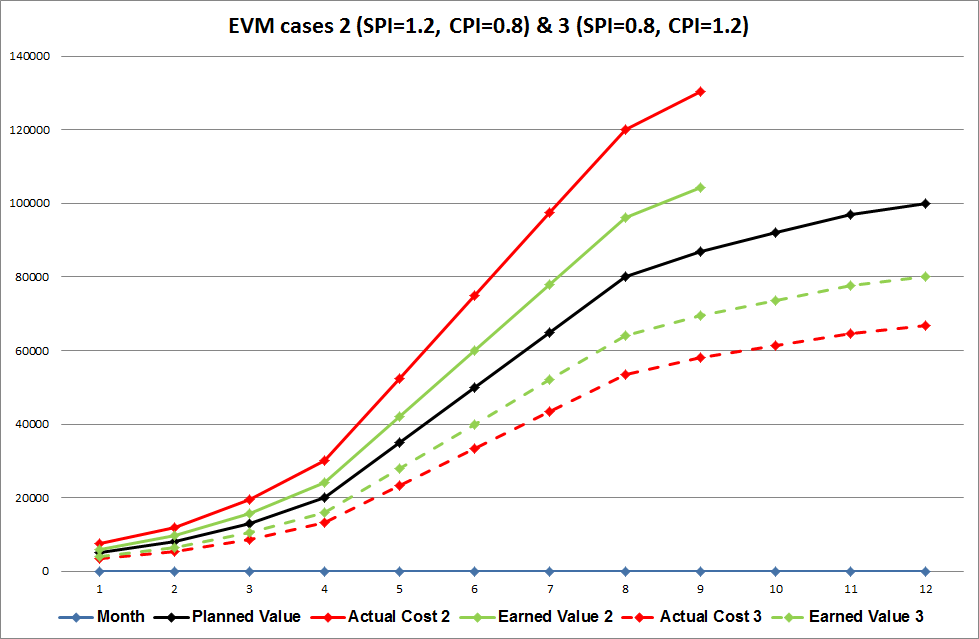
Between the tricky cases, 2 and 3, we can immediately see that case 2 has burned more than twice the cash than case 3 at any given point! We can therefore infer that case 2 is indeed the worst case among the two.
Even if you think along the lines of some of my colleagues, i.e. assuming that cash inflows are linked to earned value (1), you will see that in case 2 the actual costs are always above earned value, whereas in case 3 the actual costs are below! So even following their way of thinking, had they done the math, they would have arrived to the same conclusion!
See in the graphic below how the case 2 burns much more cash than the case 3.

However, if the question had asked about what case is preferred from a schedule point of view the answer would have been different: as in the case 2 the project would have been completed by the 9th month (no matter the cost), whereas in the case 3 by the end of the year only a 80% of the project would have been completed (despite of the savings).

EVM cases 2 and 3.

EVM cases 2 and 3.

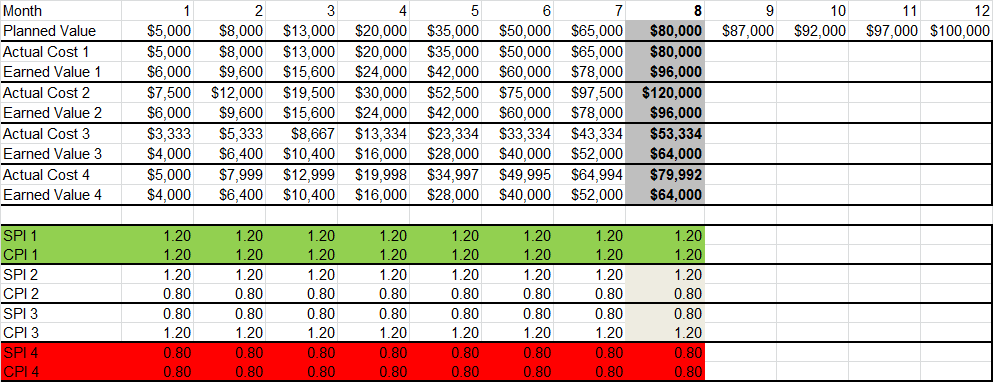
Finally, see below a table the detailed calculations for all 4 examples through the 8th month.

EVM calculations for the 4 cases.

EVM calculations for the 4 cases.

(1) Even in the absence of such information.

Leave a comment

Filed under Education

Goals Gone Wild

In these first months of the year many teams in many firms have gone or are going through annual interviews and goals setting for the year 2015.

Last week I read an interesting Schumpeter column in The Economist, “The quantified serf: Management by goal-setting is making a comeback, its flaws supposedly fixed”.

The article mainly covered two issues: one was the newest trend in goal-setting, “quantified work”, as promoted by BetterWorks, whereby employees collaborate in setting objectives for peers. This apparently improves performance and transparency. The article cautions, however, that rewards should not be linked to these goals and that an attainment of 60-70% of goals set in this way should be viewed as normal rather than failure.

The second issue covered by the article was side-effects of goal-setting. The article introduced the paper “Goals Gone Wild: The Systematic Side Effects of Over-Prescribing Goal Setting” [PDF, 500KB] by Lisa D. Ordóñez, Maurice E. Schweitzer, Adam D. Galinsky and Max H. Bazerman. In this post I wanted to comment on this paper.

Published in 2009, the paper makes a review of literature on goal-setting and even if admitting that studies have demonstrated specific and challenging goals can improve performance, it concludes that:

“For decades, scholars have prescribed goal setting as an all-purpose remedy for employee motivation. Rather than dispensing goal setting as a benign, over-the-counter treatment for students of management, experts need to conceptualize goal setting as a prescription strength medication that requires careful dosing, consideration of harmful side effects, and close supervision. […]”

Before reaching to that conclusion the paper examines several aspects of goals and why they may produce harmful side effects; to name a few:

  • When goals are too specific… people overlook other important features of a task. As an example the authors provide the case of the Ford Pinto, about which I wrote a post in the blog long ago.
  • When there are too many goals… individuals are prone to concentrate on only one goal.
  • When the time horizon is inappropriate… may harm the organization in the long run. Think of quarterly reports and companies trying to beat analysts’ estimates or their own guidance. That is why Coca Cola ceased to provide quarterly guidance back in 2002.
  • When goals are too challenging… they may shift risk attitudes, promote unethical behaviour. An example given describes how Sears’ automotive unit set a target of fee to be charged to customers. This triggered that employees started charging for unnecessary repairs to customers to meet the goals!
  • When goals are complex, specific, challenging… they may inhibit learning.
  • Goals may create a culture of competition instead of cooperation.
  • Goal setting increases extrinsic motivation… and thus can harm intrinsic motivation.

Linked to the message given in the conclusion (“experts need to conceptualize goal setting as a prescription strength medication that requires careful dosing, consideration of harmful side effects, and close supervision”), the authors also propose the following warning signal and a check list to be used when setting goals.

Goals Gone Wild Warning Signal.

Goals Gone Wild warning signal.

Leave a comment

Filed under Personal development

Open letter to Europcar

In the year through November 2014 I had rented cars 24 times with Europcar. I don’t have the exact figure for the last 4 years but it must have exceeded ~60 times.

A few days ago I received the email below from Europcar Loyalty Programs announcing me that I had been granted the Privilege Elite VIP card (the highest in the scale, see below).

Europcar's email

Europcar’s email with the news of being granted the Privilege Elite VIP card.

See below the different cards in the Loyalty Program:

Europcar's fidelity program cards.

Europcar’s fidelity program cards.

See my response to that offer:

My response to Europcar's email.

My response to Europcar’s email.

I am pretty sure this letter will not trigger any change in Europcar’s commercial policy. But I wanted to show them how much I value their commercial policy.

Side note: since November I moved houses. I have not cared about notifying Europcar about the change. That card will be lost somewhere. I don’t care. That is my fidelity and loyalty to Europcar.

On the other hand, I am also fairly sure that at some point Sixt will charge me a similar stupid concept, I will then move to another company, no problem.

4 Comments

Filed under Marketing

KC-46 EMD contract (update March 2015)

About two years ago I wrote a post, KC-46 EMD contract 101, in which I reviewed the nature, implications and status of the Fixed Price plus Incentive Firm (FPIF) that the US Air Force had signed with Boeing for the tanker K-46 Engineering Manufacturing and Development (EMD) contract.

I have been wanting to write an update of that post with how the situation has evolved for some months. The recent article in Bloomberg, Boeing KC-46 Tanker Suppliers Behind on Deliveries, GAO Finds, has finally triggered this review.

A recap of the main points from the Bloomberg article:

[…] The boom for the first KC-46 has been “delayed by eight months due to design changes and late parts deliveries,” […]

The delays have resulted in a slip of at least three months in the initial flight of the first fully equipped development aircraft. […]

[…] GAO said “another supplier has experienced significant delays in manufacturing” aerial refueling wing pods […]

[…] the Air Force projected in a revised estimate this year that Boeing will have to absorb $1.5 billion for exceeding a $4.8 billion ceiling to develop the first four planes.

Bloomberg cites GAO as a source. GAO stands for US Government Accountability Office. Every year, in March, the GAO releases its “Assessments of Selected Weapon Programs” where it reviews the Department of Defense (DoD) main programs. Find here [PDF, 10.4MB] the 2015 report released on March 12. It contains just 2 pages about the “KC-46 Tanker Modernization Program (KC-46A)”. What does it say? Main take aways:

[…] After the critical design review, the program had wiring design changes that led to several delays, including at least a three month delay to KC-46 first flight. The program does not plan to demonstrate a full system-level prototype until April 2015, 21 months after its critical design review. […] 

[…] key suppliers have continued to experience difficulties with the design and manufacture of aerial refueling systems, such as refueling booms and wing aerial refueling pods. The boom that was to be installed on the first KC-46 has been delayed by eight months due to design changes and late parts deliveries. Another supplier has experienced significant delays in manufacturing wing aerial refueling pods for qualification testing and development aircraft due, in part, to challenges with parts delays and engineering design changes. As a result of these delays, first flight of an aircraft that integrates military sub-systems has slipped at least three months to April 2015, 21 months after critical design review. […]

[…] Boeing is encountering more than twice the number of software problems than originally estimated that prevent or adversely affect the accomplishment of an essential operational or test capability.

[…] the program office noted that it has mitigated financial risk with the competitive fixed-price incentive development contract with firm-fixed and not-to-exceed pricing for the production of the aircraft. More than 57 percent of the development work has been completed. Boeing has met or exceeded all contractual requirements. […]

The program performance review that the GAO makes is seen from the Air Force point of view, which, as indicated above, since the contract is a FPIF, the USAF feels protected and thus it does not show any sign of the 1.5bn$ over cost that Bloomberg mentions that Boeing will have to bear:

Program Performance (fiscal year 2015 dollars in millions)

Bloomberg quotes a 1.5bn$ estimated over cost based on Air Force data.

The GAO published in March 2012 [PDF, 1.1MB], February 2013 [PDF, 1.2MB] and April 2014 [PDF, 1MB] three reports reviewing the KC-46 tanker program. Interestingly enough the reports from 2012 and 2013 included such estimates of the over cost using Air Force data, the 2014 report did not. See 2012 and 2013 estimates below:

KC-46 EMD Estimates 2012.

KC-46 EMD Contract & Estimates (March 2012).

KC-46 EMD Contract & Estimates.

KC-46 EMD Contract & Estimates (February 2013).

Why did the GAO not include such estimate in 2014 report? Wasn’t the information available? The release of such estimates in 2012 and 2013 did not sit well in some spheres?

Today is March 21st 2015. I guess we shall see soon the annual report from the GAO with the specific view on the KC-46 program. I wonder whether such cost estimate will be included this time (hopefully yes). In any case, I guess the information from the Air Force estimate has been duly leaked.

The contract was awarded on February 24th 2011; about a year later USAF was already estimating that Boeing suffered already over 750m$ over costs from target price, 260m$ over ceiling price. For the Air Force the picture was bleaker. One year later the figures had increased again. Luckily for USAF the FPIF contract has a point of total assumption on the side of the contractor (Boeing), as I indicated in the post from 2013:

KC-46 EMD FPIF Contract.

KC-46 EMD FPIF Contract (March 2013).

Let’s see where we would be now in the previous curve taking the information from Bloomberg as good (“[…] the Air Force projected in a revised estimate this year that Boeing will have to absorb $1.5 billion for exceeding a $4.8 billion ceiling to develop the first four planes.”):

KC-46 EMD FPIF Contract - 2015

KC-46 EMD FPIF Contract (March 2015 update, based on Bloomberg)

As I mentioned in the blog post from 2 years ago: this is the typical FPIF contract curve, which is the only thing which is missing in ALL the news, budgeting materials, GAO reports, etc., that I have read and is the most illustrative graphic to understand what is going to happen if the cost overruns keep piling and who is going to bear which amount of the cost from which point.

Bloomberg and the US Air Force estimate that those 1.5bn$ over the ceiling price are going to be born by Boeing as the FPIF contract stipulates. However, I wanted to call here the attention to the FY2016 budget request from the USAF (DoD) [here, PDF, 8.5MB], see below:

See "Total Cost" and "Remark" (source: Exhibit R-3, RDT&E Project Cost Analysis: PB 2016 Air Force).

See “Total Cost” and “Remark” (source: Exhibit R-3, RDT&E Project Cost Analysis: PB 2016 Air Force).

As you can see the USAF budget request for the KC-46 program includes the remark:

The contract ceiling price of $4.9B is the government’s maximum financial liability on the prime contract. The “Total Cost” value represents the Milestone B Service Cost Position (SCP), which accounts for the ceiling price of the contract plus the financial risk of potential design changes for the KC-46 Aircraft

I would not discard that through the justification of “design changes” the American tax payer will have to bear part of those estimated 1.5bn$ over the ceiling price. We will see.

Finally, I think it interesing to see the planning included in the budget request from USAF (below), as it indicates a Tanker First Flight in the 3rd quarter of 2015 (not April 2015 as quoted by Bloomberg (“initial flight of the first fully equipped development aircraft”)).

USAF FY2016 budget request - KC-46 Planning.

USAF FY2016 budget request – KC-46 Planning.

You can compare it with the planning presented in February 2012 with FY2013 budget resquest:

USAF FY2013 budget request - KC-46 Planning.

USAF FY2013 budget request – KC-46 Planning.

The GAO talks about a “first flight of an aircraft that integrates military sub-systems has slipped at least three months to April 2015”, but in my view that doesn’t mean a “first fully equipped development aircraft”. In 2012 the planning had a tanker first flight at the beginning of Q2 2015 which in the 2015 plan it is shown in Q3 2015, thus the 3-month delay mentioned by the GAO.

I am indeed looking forward to the KC-46-specific report from the GAO that may be about to be published (1).

(1) I may then have to write another post with a new update.

2 Comments

Filed under Aerospace & Defence

Boeing vs. Airbus: CEO compensation (2013)

Last Friday, while reading the Seattle Times article “Boeing CEO took home almost $29M last year” (referring to 2014) I was reminded of a recent conversation with some colleagues on the compensation of Boeing vs. Airbus Group CEOs.

As both companies are public companies, this information is public and can be found in the annual report and proxy statement from each one. I will just copy the information below for comparison and future reference. I use 2013 references to compare both at the same exercise, as 2014 annual report from Airbus Group is not yet available.

Airbus Group CEO, Tom Enders’ 2013 compensation (annual report here, PDF, 1.4MB)

Airbus Group's Tom Enders 2013 compensation.

Airbus Group’s Tom Enders 2013 compensation.

Boeing CEO, Jim McNerney’s 2013 compensation (proxy statement here, PDF, 1.1MB)

Boeing's Jim McNerney 2013 compensation.

Boeing’s Jim McNerney 2013 compensation.

Just as a complement, see in this article from The Washington Post “The pay gap between CEOs and workers is much worse than you realize“, based on a study by Harvard Business School, how the ratios of compensation between CEO and the average worker are in different countries, compared to what respondents to a poll said those ratios should ideally be.


4 Comments

Filed under Aerospace & Defence

Blagnac half marathon 2015

Just two weeks after an illness forced me to quit in the Seville marathon, I had the chance to test myself in competition again at the half marathon of Blagnac. This was the 3rd time I ran the race, after I took part in the 2012 and 2014 editions. In neither of those I made an especially good time, always slower the in the Toulouse half marathon, even if I think Blagnac’s one is a bit flatter. In those previous two occasions the morning of the race had been very sunny and I felt too hot during the race (in 2014 it was a bit too windy as well). Therefore, this time, being another sunny morning, I decided to run with a cap in order to cover my head from the heat of the sun. As part of the training for Seville marathon I had run by myself alone a half marathon in 1h39’17”, my second best time in the distance, without any support in the form of supplies or other runners around. This made me confident that I could beat my personal best time in the distance, 1h37’29”, achieved in Toulouse in September 2013 (then in the preparation towards Athens marathon). I would have liked to run behind a pacer for 1h35′, but  there wasn’t. There were only pacers for 1h30′, 1h45′ and 2h. I decided to pace myself from the start aiming at 1h35′, that is a pace of 4’30” per km. I managed to keep that pace until about the kilometres 13-14. From then on I was more on 4’40-45″. But I still was making numbers in my head knowing that I would be able to beat my best time. I just needed to be below 5′ per km on average. Therefore, only the margin by how much would I beat it was in question.

Final sprint at Blagnac half marathon.

Final sprint at Blagnac half marathon.

In the end I managed a time of 1h35’48” (net time), that is effectively a new PB or PR (personal best or record), a reduction of 1’41” in comparison to my previous PR. You can see below in the comparison of both performances that this time I was reducing some seconds kilometre per kilometre. In the end a global pace of 4’32” vs the previous record of 4’38”:

Comparison of Blagnac 2015 and Toulouse 2013 half marathon performances.

Comparison of Blagnac 2015 and Toulouse 2013 half marathon performances.

In fact, I passed the 10 kilometre mark in about 44’20”, practically my second best time in the distance. If I had been running a 10k race, I am sure would have been below 44′, beating my personal best in that distance. See below the evolution of the pace, compared with my initial target (4’30”) and the final average pace (4’32”):

ccc

Evolution of pace compared to initial target and average pace.

Another good thing of this race is that I get a good feeling after the bitter experience from Seville. 🙂

2 Comments

Filed under Sports

Marathon Sevilla 2015

“A marathon always offers you the opportunity to do something epic”, Jaime Irastorza (my brother)

After several dozens of races completed in the last years, including 11 marathons and an ultra, on February 22, a race hunted me down. In the last Seville marathon I DNF. I did not finish.

I wrote a post which was published on the morning of the race. In it I explained that I arrived to that marathon in my best shape so far. However, for me the race took place not on the Sunday 22nd February but on Saturday 21st.

I had put much illusion into the event: running in Seville, the attempt at beating my personal best time, being accompanied by family and friends…

On Friday afternoon we went to the marathon expo at the FIBES. There we retrieved our running bibs, got the confirmation that we could start the race together, took our official expo picture and by chance I met elite runner Pablo Villalobos (1), with whom I had exchanged some tweets in the morning.

That evening we had dinner out with friends in the downtown; plenty of different delicious tapas to share. We had some fun… though at the end of the dinner I started feeling weak, and I went back to the hotel instead of staying with the friends to take some drinks.

On Saturday morning I woke up with stomach problems and some diarrhea. I went to the pharmacy to get some pills and rested a few hours. I feared for the race the day after. The hours passed and I felt a little bit better so we went to have lunch with some 14 friends at Puerto Delicia.

Saturday's lunch with friends.

Saturday’s lunch with friends.

After lunch we went for a walk and I started to feel weak again. We went back to the hotel room. By about 18h, in the bed, I started shivering. During the following hour the fever went up and up. At 19h I reached out for the WC to vomit (such a pity of the previous meals!). I called my brother to ask if he could bring me some drinks and food to the room. By 20h he came with some Aquarius and bananas. 10 hours to recover before waking up time, 13 hours to the marathon start time. That was the start of my race during the night in order to take part of the event.

In the following hours I drank, ate and slept bit by bit, until 24h, when I finally put myself to get a long sleep (6 hours).

On Sunday morning at 6am I woke up on the clock alarm. I stood up and it seemed that I felt OK. With that check I went downstairs to have breakfast. I met there Jaime and Juan, who were happy and very surprised to see me there. After the breakfast we took a taxi and departed for the Stadium at La Cartuja, where we met Jose.

The day was sunny though a bit cold. Changing clothes, drinking a bit, seeing the thousands of runners going through the rituals before the race… that cheered me up.

Before the race.

Before the race.

At few minutes before 9am we went to our corral, 3h45’-4h. We chatted with other runners and with that we went off for a good run!

You can see here a good report of the marathon by my brother Jaime.

We went together for the first 13 kilometres. Our target was to run at a pace of 5 minutes per km. We alternated some at a somewhat higher pace with other at a slower pace. At km 7 we saw Luca and Andrea who greeted us from the hotel room.

Passing by the hotel at km 7.

Passing by the hotel at km 7.

By the 10km mark we were just losing some 40″ in relation to our 3h30’ target time.

Running at some point.

Running at some point.

After having drunk at a few supply posts I started feeling some pain in the stomach, like cramps. Something wasn’t working well. I told my brother and Jose to go ahead with their pace and forget about me. I wasn’t sure of the fate of my race. Ten minutes later, at km 15 I stopped at one of the WC cabins. I had to vomit everything I had taken. Not a good signal. I was emptying my reserves and not replenishing sugar nor minerals.

I re-started at a slower pace (~5:15) for some minutes and then decreased it later (~5’20”-5’30”). I passed the half marathon point in 1h52’01”, not a bad time. In theory that would point at a marathon time of around 3h50′. However, the feelings weren’t good.

At the km 22 I was feeling weaker and most important, I started to worry. After the last 24 hours, having vomited everything and not being able to ingest food and liquid, at some point I would run out of glucose. I feared that if I continued to run I would be risking fainting in any moment above around 2 hours. I pondered during some minutes whether to give it a try. “It doesn’t matter if you are well above 4 hours!” I had been there (in those times) before. I had completed other marathons in pain, injured. However, I thought this risk was more serious.

At about km 23 I had decided to quit. I would have other marathons to beat my best time. Other marathons to complete. Other marathon to run with Jaime end to end. But it would not be this one. I continued running softly, seeking out for a taxi. I found it at km 26.6… and then I stepped aside.

With that decision I put an end to my epic fight against the distance of that marathon that day. See the records of my Garmin watch below:

My Garmin data from Seville marathon.

My Garmin data from Seville marathon.

I regretted having quit not even a minute afterwards while seeing the runners along. I even saw Juan from the taxi… but thinking it over a few days later I think it was a good decision. In less than 2 months from that date and just 6 weeks from the date this post is published I will be running the Madrid marathon and there will hopefully be many other marathons to run.

The experience in Seville will teach me to appreciate even more the marathons completed, to value the good health enjoyed on race days so far, and to realize how difficult is to achieve and beat a personal best time… something you do not conquer the day after you have been sick. Nevertheless, I love the distance, the race, the marathon, and I had to give it a try. I tried some thing epic but it could not be.

This slideshow requires JavaScript.

(1) He had placed 2nd and 4th in previous editions of the race. You can check out his blog here. By the way, for Pablo it wasn’t also the best day: he quit in km 26 too, his first marathon not completed, too.

7 Comments

Filed under Sports