Kilkenny

Kilkenny is a small town of about 24,000 inhabitants by the river Nore in the province of Leinster. The city is best known by its Castle, built by William Marshal, 1st Earl of Pembroke (Wales), at the turn of the XII to XIII centuries on the location of a previous fortification built by his father-in-law Richard de Clare, 2nd Earl of Pembroke (of the 1st earldom creation), better known as Strongbow, one of the leaders of the Norman invasion of Ireland in 1170.

dsc02341 dsc02339

The castle was later purchased by James Butler (3rd Earl of Ormond) in 1391 and would be the Butler’s family main residence for the following 6 centuries, until they left it in 1935 and in 1967 was sold to the municipality for 50 pounds.

The castle went under a strong restoration which sought to re-build most of the rooms to what they would have looked like at some points in their history. Today, the castle is open for visits. At the basement, the foundations from the XIII are still visible; other than that, the castle resembles more a XIX century palace, with dining rooms, halls, a library, a “Chinese” room and the large picture gallery with its wooden ceiling, fire place with marble from Carrara, etc.

dsc02334

Picture gallery.

From the visit, I took the following takeaways more or less linked to Spain:

  • The “Moorish” staircase, created by the architects Deane and Woodward, which resembles very much to the style seen at constructions in Cordoba, Sevilla or Granada.

dsc02330

  • The tapestries. Several tapestries, located at the tapestry room and at the picture gallery, show the story of Decius Mus, a Roman consul in 340 BC who sacrificed himself through the ritual of devotio to allow for the victory of his army at the battle of Vesuvius. After 300 years in display, the tapestries needed to go through some conservation work, which was entrusted to the Real Fabrica de Tapices in Madrid.dsc02336
  • The Butler gallery at the basement of the castle offers space to contemporary art. In it there is a collection of the posters of some prominent artists for whom an exhibition was organized, one of them the Spanish Antoni Tapies, in 1992.

dsc02337

Other than the castle, another highlight of Kilkenny is St. Canice’s Cathedral, the second largest in Ireland, after St. Patrick’s in Dublin. It was built in the XIII century at the location where St. Canice had built a small monastery back in the VI century. The cathedral has a typically Irish round tower, with the uniqueness that this is one of the only two in the country that can be climbed to the top.

dsc02357

Some of the main attractions that can be found inside the cathedral are several tombs of the Butler family, an archive with the names of all the Irish who lost their lives in the World War I, or the stone throne of St. Kieran.

dsc02349

Kilkenny was as well for a decade, 1642-1652, the seat of the Irish Catholic Confederation, or the “Confederation of Kilkenny”, which following the Rebellion of 1641, established itself as a self-government, until the conquest of Ireland by Oliver Cromwell (1649-1653).

dsc02358

Stone marking the place were the Confederation Hall stood.

During the visit, after having walked through the lively High, Parliament and St. Kieran streets, I went to look for Tynan’s Bridge House, a pub established in 1703 where I wanted to have taken a beer. I found the pub, but closed.

dsc02360

… and talking about beer, it is in Kilkenny that the beer Smithwick’s is brewed and the brewery can be visited, though I didn’t. Smithwick’s was acquired by Guinness in 1965. We visited Guinness brewery in Dublin some days later (I may write about it one day), which is a giant museum but lacks the artisanal touch that I experienced when visiting Bowmore whisky distillery in Sctoland. I wonder whether at Smithwick’s that would have also been the case.

dsc02362

Nore river.

dsc02344

Black Gate.

Leave a comment

Filed under Travelling

Crónica de una muerte anunciada

cronicaEl día en que lo iban a matar, Santiago Nasar se levantó a las 5.30 de la mañana…”; quizá sea este uno de los comienzos de una novela en lengua española que más se ha quedado grabado en la memoria colectiva (1).  Gabriel García Márquez publicó “Crónica de una muerte anunciada” en 1981; en 1982 obtuvo el premio Nobel de literatura, unos quince años después de haber escrito “Cien años de soledad”.

Crónica de una muerte anunciada” es una novela corta (unas 50 páginas incluyendo el prólogo en la versión digital que leí), parece que basada en un hecho real, en la que García Márquez mezcla un estilo periodístico con la novela policíaca. Con un principio como el descrito arriba es claro que la intriga de la historia no es el final, conocido, sino en cómo se llega a esa final. La tensión va creciendo y el lector termina sintiéndola dentro de sí, frustrándose viendo que unos y otros no terminan de conseguir avisar a Santiago Nasar para evitar su muerte, albergando siempre un hilo de esperanza.

Esta es la quinta (2) obra de García Márquez que he leído y, sin duda, es ésta, junto con “El amor en los tiempos del cólera“, una de las dos que más me han gustado y por tanto la recomiendo.

Leí esta novela a principios de 2016 y, como hago siempre, anoté varios pasajes que quiero dejar aquí para compartirlos y como nota mental para futuras referencias.

“- […] No es justo que todo el mundo sepa que le van a matar al hijo, y que ella sea la única que no lo sabe.

– Tenemos tantos vínculos con ella como con los Vicario – dijo mi padre.

Hay que estar siempre del lado del muerto – dijo ella.”

“Su contrariedad fue mayor cuando cantó la rifa de la ortofónica, en medio de la ansiedad de todos, y en efecto se la ganó Bayardo San Román. No podía imaginarse que él, solo por impresionarla, había comprado todos los números de la rifa.

Esa noche, cuando volvió a su casa, Ángela Vicario encontró allí la ortofónica envuelta en papel de regalo y adornada con un lazo de organza. “Nunca pude saber cómo supo que era mi cumpleaños” […]”

“- Cuando despierte, recuérdame que me voy a casar con ella.”

“[…] y mi madre decía que había nacido como las grandes reinas de la historia con el cordón umbilical enrollado en el cuello.”

“Se casó con esa ilusión. Bayardo San Román, por su parte, debió casarse con la ilusión de comprar la felicidad con el peso descomunal de su poder y su fortuna, pues cuanto más aumentaban los planes de la fiesta, más ideas de delirio se le ocurrían para hacerla más grande.”

“Santiago Nasar era un hombre de fiestas, y su gozo mayor lo tuvo la víspera de su muerte, calculando los costos de la boda. En la iglesia estimó que habían puesto adornos florales por un valor igual al de catorce entierros de primera clase. Esa precisión había de perseguirme durante muchos años, pues Santiago Nasar me había dicho a menudo que el olor de las flores encerradas tenia para él una relación inmediata con la muerte, y aquel día me lo repitió al entrar en el templo. “No quiero flores en mi entierro”, me dijo, sin pensar que yo debía ocuparme al día siguiente de que no las hubiera.”

“[…] la realidad parecía ser que los hermanos Vicario no hicieron nada de lo que convenía para matar a Santiago Nasar de inmediato y sin espectáculo público, sino que hicieron mucho más de lo que era imaginable para que alguien les impidiera matarlo, y no lo consiguieron.”

“Clotilde Armenta sufrió una desilusión más con la ligereza del alcalde, pues pensaba que debía arrestar a los gemelos hasta esclarecer la verdad. El coronel Aponte le mostró los cuchillos como un argumento final.

– Ya no tienen con qué matar –dijo.

– No es por eso –dijo Clotilde Armenta-. Es para librar a esos pobres muchachos del horrible compromiso que les ha caído encima.”

Comer sin medida fue su único modo de llorar […]”

“La versión más corriente, tal vez por ser la más perversa, era que Ángela Vicario estaba protegiendo a alguien a quien de veras amaba, y había escogido el nombre de Santiago Nasar porque nunca pensó que sus hermanos se atreverían contra él.”

“[…] La fatalidad nos hace invisibles. El hecho es que Santiago Nasar entró por la puerta principal, a la vista de todos, y sin hacer nada para no ser visto. […]”

***

(1) “En un lugar de la Mancha, de cuyo nombre no quiero acordarme…” seguramente ocupe un primer lugar dentro de una hipotética lista de comienzos memorables de libros.

(2) Las otras cuatro: “Relato de un náufrago”, “Cien años de soledad”, “El amor en los tiempos del cólera” y “El general en su laberinto”.

1 Comment

Filed under Books

Rock of Cashel

Cashel is a small town of about 4,000 inhabitants, in the county of Tipperary, on the way from Kilkenny to Limerick, which is dominated by the Rock of Cashel, a eclesiastical site on the top of a hill which was once the seat of the over kings of Munster, ever since the Eóganacht, the descendants of Eógan Mor came to prominence around the 4-5th centuries AD.

dsc02364

Conall Corc, a descendant of Eógan Mor, is said to be the founder of the Cashel kingship and according to the tradition St. Patrick baptised the grandsons of Conall Corc at Cashel in the 5th century AD.

Replica of St. Patrick's Cross.

Replica of St. Patrick’s Cross.

Today, the Rock of Cashel is a historical site that can be visited in about an hour. The entrance is 7 euros (free if your B&B happens to have a voucher, ask for it).

The main historical constructions remaining are the round tower (from c. 1100), Cormac’s chapel (consecrated in 1134, though at the time of my visit it was under restoration and not open for visit), the Cathedral (from 1270), St. Patrick’s Cross (from 12th century) and a replica of it in the garden, and the Hall of the Vicars Choral (from the 15th century).

Original St. Patrick's Cross.

Original St. Patrick’s Cross.

Round Tower.

Round Tower.

Cathedral.

Cathedral.

dsc02371

The views of the surroundings from the Rock are impressive, as impressive is the view of the Rock as one approaches it from the bottom of the village, especially from the “Path of the Dead” connecting the Rock with the R505 road at the south-west of the hill. I discovered this path during my early morning run before sunrise, this allowed me to enjoy the view of the Rock with the first rays of light of the morning sun. A nice experience.

dsc02365 dsc02363 dsc02366

Finally, another highlight that I wanted to have visited in Cashel was the Bolton Library collected by the archbishop Theophilus Bolton from 1730 to 1744. The library was recommended in the guide and according to a local brochure was the finest outside of Dublin, including works by Swift,  Dante, Calvin, Erasmus, or Machiavelli. The pity is that since a couple of years ago the library is not anymore housed in Cashel, as the building didn’t meet the best conditions for the preservation of the books. Today the books are conserved at the University of Limerick.

Bolton Library.

Bolton Library.

Leave a comment

Filed under Travelling

The Economic Consequences of the Peace

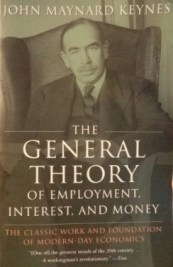
armisticeAfter the Armistice of November 11th, 1918, terminating the World War I in the west front, John Maynard Keynes attended the Paris Peace Conference as a delegate of the British Treasury. It was at that time that he wrote the book “The Economic Consequences of the Peace” (released at the end of 1919) (1).

I read the book back in 2012, and hadn’t yet written a thorough review of it in the blog despite of being reminded of it every year on Armistice Day, a memory day observed in France. In the book, Keynes explained how the disaster in the making was about to be produced; due to lack of communication between representatives from USA, UK, France and Italy, the electoral interests of British representatives and the intention from Clemenceau of taking as much as possible from Germany.

“Moved by insane delusion and reckless self-regard, the German people overturned the foundations on which we all lived and built. But the spokesmen of the French and British peoples have run the risk of completing the ruin, which Germany began, by a Peace which, if it is carried into effect, must impair yet further, when it might have restored, the delicate, complicated organization, already shaken and broken by war, through which alone the European peoples can employ themselves and live.”

economicconsequencesKeynes advocated for softer terms to be imposed on Germany, not only out of justice for its future generations but out of pragmatical economic estimates that he discusses in detail in the book.

“My purpose in this book is to show that the Carthaginian Peace is not practically right or possible. Although the school of thought from which it springs is aware of the economic factor, it overlooks, nevertheless, the deeper economic tendencies which are to govern the future. The clock cannot be set back”

He criticized that from the very beginning, as laid out in the Fourteen Points outlined in a speech by Woodrow Wilson earlier in 1918, the spirit of the conference was not the appropriate one,

“The thoughts which I have expressed in the second chapter were not present to the mind of Paris. The future life of Europe was not their concern; its means of livelihood was not their anxiety. Their preoccupations, good and bad alike, related to frontiers and nationalities, to the balance of power, to imperial aggrandizements, to the future enfeeblement of a strong and dangerous enemy, to revenge, and to the shifting by the victors of their unbearable financial burdens on to the shoulders of the defeated.”

At that time there wasn’t the amount of available open data on economic figures, output, trade, etc., that we enjoy today. This did not deter Keynes in making the estimates himself of the economic provisions that a sound peace treaty should include in his point of view.

The German economic system as it existed before the war depended on three main factors:

  1. Overseas commerce as represented by her mercantile marine, her colonies, her foreign investments, her exports, and the overseas connections of her merchants;
  2. The exploitation of her coal and iron and the industries built upon them;
  3. Her transport and tariff system.

Of these the first, while not the least important, was certainly the most vulnerable. The Treaty aims at the systematic destruction of all three, but principally of the first two”

Under the provisions of the treaty Germany was demanded a yearly contribution to the Allies of 40,000,000 tons of coal. Keynes argued to what extent this, together with other provisions, put Germany in a dire state.

  • Pre war maximum output had been reached in 1913, with 191,500,000 tons of coal. Out of which 19,000,000 tons were consumed in the mines and 33,500,000 tons were exported,
  • This left 139,000,000 for domestic (pre war) consumption.
  • The nominally German output was diminished due to loss of territory (Alsace-Lorraine, Saar Basin, Upper Silesia), which meant a reduction of up to 60,800,000 tons out of 1913 figures… thus, a maximum theoretical output of ~130,000,000 tons.
  • Keynes argued that the destruction of the war, the reduction in working hours (from 8.5h to 7h) and loss of efficiency (due to operators lost in the war, those with deteriorated health, etc.) could account for a loss 30% of output… thus, a maximum theoretical output limited to ~100,000,000 tons.

Requiring Germany to contribute 40,000,000 tons would leave it with only 60,000,000 tons for domestic use, which even when allowing for the loss of territory, meant that its economic future was being jeopardized.

Every million tons she is forced to export must be at the expense of closing down an industry.

But it is evident that Germany cannot and will not furnish the Allies with a contribution of 40,000,000 tons annually. Those Allied Ministers, who have told their peoples that she can, have certainly deceived them for the sake of allaying for the moment the misgivings of the European peoples as to the path along which they are being led.”

A similar criticism is made of the chapter of the treaty that covers the “Reparation“, that is the compensation for the destruction of the war and loss of civilian lives.

“compensation will be made by Germany for all damage done to the civilian population of the Allies and to their property by the aggression of Germany by land, by sea, and from the air.”

Keynes argued that the claims from the different Allies were much too high. He, again, came up with his own estimates, which he later validated with French output statistics of the time and suggested an early settlement, without entering in the painful exercise of calculating every minor detail.

Belgian claims against Germany such as I have seen, amounting to a sum in excess of the total estimated pre-war wealth of the whole country, are simply irresponsible.” […]

“While the French claims are immensely greater, here too there has been excessive exaggeration, as responsible French statisticians have themselves pointed out. Not above 10 per cent of the area of France was effectively occupied by the enemy, and not above 4 per cent lay within the area of substantial devastation. Of the sixty French towns having a population exceeding 35,000, only two were destroyed—Reims (115,178) and St. Quentin (55,571); three others were occupied—Lille, Roubaix, and Douai—and suffered from loot of machinery and other property, but were not substantially injured otherwise.” […]

“…it will be difficult to establish a bill exceeding $2,500,000,000 for physical and material damage in the occupied and devastated areas of Northern France. I am confirmed in this estimate by the opinion of M. René Pupin, the author of the most comprehensive and scientific estimate of the pre-war wealth of France, which I did not come across until after my own figure had been arrived at. […] but to be on the safe side, we will, somewhat arbitrarily, make an addition to the French claim of $1,500,000,000 on all heads, bringing it to $4,000,000,000 in all.

In this speech the French Minister of Finance estimated the total French claims for damage to property (presumably inclusive of losses at sea, etc., but apart from pensions and allowances) at $26,800,000,000 (134 milliard francs), or more than six times my estimate.” […]

(estimate for all countries) “I believe that it would have been a wise and just act to have asked the German Government at the Peace Negotiations to agree to a sum of $10,000,000,000 in final settlement, without further examination of particulars. This would have provided an immediate and certain solution, and would have required from Germany a sum which, if she were granted certain indulgences, it might not have proved entirely impossible for her to pay.”

A similar discussion is presented in relation to the Pensions and Allowances to be added to the Reparation chapter.

Keynes then turned to the ability of Germany to pay,

[…] “I reach, therefore, the final conclusion that, including all methods of payment—immediately transferable wealth, ceded property, and an annual tribute—$10,000,000,000 is a safe maximum figure of Germany’s capacity to pay. In all the actual circumstances, I do not believe that she can pay as much. Let those who consider this a very low figure, bear in mind the following remarkable comparison. The wealth of France in 1871 was estimated at a little less than half that of Germany in 1913. Apart from changes in the value of money, an indemnity from Germany of $2,500,000,000 would, therefore, be about comparable to the sum paid by France in 1871; and as the real burden of an indemnity increases more than in proportion to its amount, the payment of $10,000,000,000 by Germany would have far severer consequences than the $1,000,000,000 paid by France in 1871.”

A capacity of $40,000,000,000 or even of $25,000,000,000 is, therefore, not within the limits of reasonable possibility. It is for those who believe that Germany can make an annual payment amounting to hundreds of millions sterling to say in what specific commodities they intend this payment to be made and in what markets the goods are to be sold. Until they proceed to some degree of detail, and are able to produce some tangible argument in favor of their conclusions, they do not deserve to be believed.”

“… if the Allies were to “nurse” the trade and industry of Germany for a period of five or ten years, supplying her with large loans, and with ample shipping, food, and raw materials during that period, building up markets for her, and deliberately applying all their resources and goodwill to making her the greatest industrial nation in Europe, if not in the world, a substantially larger sum could probably be extracted thereafter; for Germany is capable of very great productivity.” […]

“It is true that in 1870 no man could have predicted Germany’s capacity in 1910. […] The fact that we have no adequate knowledge of Germany’s capacity to pay over a long period of years is no justification (as I have heard some people claim that, it is) for the statement that she can pay $50,000,000,000.”

The future in his view was then going to be bleak:

The Treaty includes no provisions for the economic rehabilitation of Europe,—nothing to make the defeated Central Empires into good neighbors, nothing to stabilize the new States of Europe,” […]

An enormous part of German industry will, therefore, be condemned inevitably to destruction. The need of importing foodstuffs will increase considerably at the same time that the possibility of satisfying this demand is as greatly diminished. In a very short time, therefore, Germany will not be in a position to give bread and work to her numerous millions of inhabitants, who are prevented from earning their livelihood by navigation and trade”

In the last chapter, he offered some alternative measures, which were clearly not taken in 1919 but which may have influenced the Marshall Plan after the World War II.

“I do not intend to enter here into details, or to attempt a revision of the Treaty clause by clause. I limit myself to three great changes which are necessary for the economic life of Europe, relating to Reparation, to Coal and Iron, and to Tariffs.

Reparation.—[…] I suggest, […], the following settlement:—

(1) The amount of the payment to be made by Germany in respect of Reparation and the costs of the Armies of Occupation might be fixed at $10,000,000,000.

(2) The surrender of merchant ships and submarine cables under the Treaty, of war material under the Armistice, of State property in ceded territory, of claims against such territory in respect of public debt, and of Germany’s claims against her former Allies, should be reckoned as worth the lump sum of $2,500,000,000, […].

(3) The balance of $7,500,000,000 should not carry interest pending its repayment, and should be paid by Germany in thirty annual instalments of $250,000,000, beginning in 1923.

Coal and Iron.—(1) The Allies’ options on coal under Annex V. should be abandoned, but Germany’s obligation to make good France’s loss of coal through the destruction of her mines should remain.

Tariffs.—A Free Trade Union should be established under the auspices of the League of Nations of countries undertaking to impose no protectionist tariffs whatever against the produce of other members of the Union, Germany, Poland, the new States which formerly composed the Austro-Hungarian and Turkish Empires, […] The adherence of other States would be voluntary from the outset. But it is to be hoped that the United Kingdom, at any rate, would become an original member.”

I strongly recommend the book. It not only gives an insight into the Peace Conference, the Treaty of Versailles, and how not to end a war, but it also gives a fabulous opportunity to read a very rich and readable book from John Maynard Keynes, a figure of which importance cannot be overstated.

(1) You may find it here at the Guttenberg Project.

Leave a comment

Filed under Books

Reales Ordenanzas de Carlos III

Las Reales Ordenanzas son las normas que establecen el comportamiento, derechos y deberes de los militares de las Fuerzas Armadas de España. Las Reales Ordenanzas de Carlos III fueron realizadas en 1768 bajo su reinado (1759-1788) y estuvieron vigentes hasta 1978, siendo las más longevas de la historia de España.

Durante el MBA que cursé en 2006-2007 en la EOI, Emiliano Mata, quien entonces nos dio clases de estrategia, y más tarde fue compañero de trabajo, recomendaba en ocasiones la lectura de dichas Reales Ordenanzas.

A principio de este año las leí y en esta entrada quería comentarlas brevemente.

reales_ordenanzas

Las Reales Ordenanzas de Carlos III están estructuradas en títulos: “Del Soldado”, “Del Cabo”, “Obligaciones del Soldado”, “Del Sargento”, “Obligaciones del Sargento”… “Crímenes militares, y comunes, y penas que a ellos corresponden”. Cada uno de los títulos se estructura en artículos (entre menos de 10 hasta más de 100 por título).

A continuación quería compartir algunos de sus artículos:

Dentro del Título I,

  1. Desde que se le sienta su plaza, ha de enterársele de que el valor, prontitud en la obediencia, y grande exactitud en el servicio, son objetos a que nunca ha de faltar, y el verdadero espíritu de la profesión.
  1. En el esmero del cuidado de la ropa consiste la ventaja de que el Soldado no se empeñe, como que grangée el aprecio de sus Gefes; y para lograr uno, y otro, se labará, peynará, y vestirá con aseo diariamente, tendrá los zapatos, evillas, y botones delvestido limpios, las medias tiradas, el corbatín bien puesto, su casaca, chupa, y calzón sin manchas, rotura, ni mal remiendo, las caídas del pelo cortas, y con un solo bucle a cada lado, la gorra bien armada, y en todo su porte, y ayre marcial, dará a conocer su buena instrucción, y cuidado.
  1. No ha de llevar en su vestuario prenda alguna que no sea uniforme: nunca se le permitirá ir de capa, ni con redecilla, fumar por la calle; ni fuera de los Cuerpos de Guardia, sentarse en el suelo, en Calles, ni Plazas públicas, ni otra acción alguna, que pueda causar desprecio a su persona.
  1. Se prohibe, baxo de severo castigo, al Soldado, toda conversación, que manifieste tibieza, o desagrado en el servicio, ni sentimiento de la fatiga que exige sus obligación; teniendo entendido, que para merecer ascenso, son cualidades indispensables el invariable deseo de merecerlo, y un grande amor al oficio.
  1. Si, estando en la puerta de una Plaza, viere venir alguna Tropa armada, o pelotón de gente, llamará luego a su Cabo; y a proporción que se acercare, continuará su aviso; y en el caso de que el Cabo no le haya oído, o la celeridad de los que se acercan, no le haya dado tiempo para acudir, la misma Centinela cerrará la barrera, o puerta, si la hubiere, mandará hacer alto a los que se aproximen; y si, en desprecio de este aviso, pasasen adelante, defenderá su puesto con fuego y bayoneta, hasta perder la vida.
  1. Toda Centinela apostada en Muralla, puerta, o parage que pida precaución, desde la Retreta, hasta la Diana, dará el Quién vive a quantos llegaren a su inmediación: y respondiendo: España, preguntará: Qué gente? Y si fuere en Campaña Qué Regimiento? Si los preguntados respondiesen mal, o dexasen de responder, repetirá el Quién vive dos vezes, y sucediendo lo mismo, llamará la Guardia para arrestarle; y en caso de huir entonces, dando con este motivo de sospechar que sea persona malintencionada le hará fuego.

Dentro del Título II,

  1. El Cabo, como Gefe más inmediato del Soldado, se hará querer, y respetar de él, no le disimulará jamás las faltas de subordinación: infundirá en los de su Esquadra amor en el oficio, y mucha exactitud en el desempeño de sus obligaciones; será firme en el mando, graciable en lo que pueda, castigará sin cólera, y será medido en sus palabras, aun quando reprenda.
  1. Los Cabos en su trato con los Soldados serán sostenidos, y decentes; dará a todos el Usted; les llamará por su propio nombre, y nunca se valdrá de apodos, ni permitirán que los Soldados entre usen de vozes, ni chanzas de mala crianza.
  1. Toda tropa que marche sin Armas con qualquiera destino que lleve, cederá a la que vaya con ellas; y toda Tropa que no tuviere Vanderas, o Estandarte, cederá a los que tuviere.

Dentro del Titulo IV,

  1. El Sargento tendrá con los Soldados, y Cabos un trato sostenido, y decente; dará a todos el Usted: no usará, ni permitirá familiaridad alguna, ni permitirá familiaridad alguna, que ofenda a la subordinación: será exacto en el servicio, y se hará obedecer, y respetar.

Dentro del Título X,

El que blasfemare el santo nombre de Dios, de la Virgen, o de los Santos, será inmediatamente preso, y castigado, por la primera vez con la afrenta de ponerle una mordaza dentro del Cuartel, por el término de dos horas por la mañana, y dos por la tarde, en ocho días seguidos, atándole a un poste; y si reincidiere en esta culpa, se le atravesará irremisiblemente la lengua con un hierro caliente `por mano del Verdugo, y se le arrojará ignominiosamente del Regimiento, precediendo Consejo de Guerra.

3. […] los delincuentes en tan enorme delito, en cualquiera número que fueren sin que les releve de esta pena el raro accidente de que no sean Catholicos; pues teniendo prevenido, que no se admita en mi servicio Soldado, que no sea Catholico Apostólico Romano, es mi voluntad, que el que se delata, o se averigue ser de otra Religión, en el caso de hallarse reo, padezca (sin excepción) el castigo, que para el crimen en que incurriere, prescriben mis Ordenanzas.

  1. Todo Soldado, Cabo y Sargento, que en lo que precisamente fuere de mi Real servicio, no obedeciere a todos, y a cualquiera Oficiales de mis Exercitos, será castigado con pena de la vida.
  1. Los que emprendieren cualquiera sedición conspiración, o motín, o indugeren a cometer estos delitos contra mi Real Servicio, seguridad de las Plazas, y Países de mis Dominios, contra la Tropa, su Comandante, u Oficiales, serán ahorcados en cualquiera número que sean; y los que huvieren tenido noticia, y no lo delataran luego que puedan, sufrirán la misma pena.
  1. El Soldado que no se hallare en una al Arma, Campo de Batalla, u otra cualquiera función, con la misma prontitud que sus Oficiales, sin justificación de causa legítima, que se lo haya embarazado, será pasado por las Armas.
  2. Los Espías de ambos sexos serán ahorcados; y si lo fuere algún Paisano, (de cualquiera calidad, y estado que sea) se le aplicará por la Jurisdicción Militar (con inhibición de la de que penda) la pena de muerte, procediendo para el conocimiento de su causa el Comandante Militar, con dictamen del Auditor, o Asesor, si allí lo huviere.
  3. El que forzare a muger honrada, casada, viuda, o doncella, será pasado por las Armas; pero quando solo conste de la intención deliberada, y esfuerzos para conseguirlo, será desterrado a diez años de Presidio de África, o seis de Arsenales, debiendo justificarse, que no haya intervenido actual amenazas de Armas de qualquiera suerte; pues en este caso, o en el de que la muger ofendida haya padecido algún daño notable en su persona, será precisamente condenado a muerte el agresor.

***

Como queda claro al principio, las ordenanzas establecen un reglamento para militares, pero Emiliano recomendaba su lectura por la pertinencia de los principios subyacentes a algunos artículos en el mundo empresarial. El respeto en el trato, el aseo, la prohibición de fumar, el no hablar mal del empleador, el liderazgo de hecho, etc., son principios básicos contemplados en cualquier régimen interno hoy en día.

He querido dejar también como invitación a reflexión artículos relativos al acoso a las mujeres o la sedición,  que son siempre de actualidad debido a diferentes sucesos.

Finalmente, me llamó la atención el artículo sobre los espías, en contraposición con la estimación en que se les tiene en “El Arte de la Guerra” de Sun Tzu (ver esta entrada sobre ello), donde su uso, tanto de los espías propios como de aquellos del enemigo, es considerado esencial.

4 Comments

Filed under Books

The Importance of Being Earnest (Oscar Wilde)

oscar-wildeOne of themes present at all times during a recent visit to Dublin was literature. The tourist guide offers you literary walking tours, a literary pub crawl, suggests to visit different libraries, book shops, major parks are adorned with statues dedicated to Irish writers, etc.Thus far, point taken. Already while in Dublin I was taking note of authors and books to be read in the near future.

During the stay in Dublin, our hotel was close to Merrion square, where Oscar Wilde lived as a child. I, therefore, decided to start with one of his plays, “The Importance of Being Earnest“, which was performed for the first time in 1895 in London.

The play, a critical satire of some of Victorian England social institutions and values (in particular marriage, literary press, religion, honesty, punctuality), is centered around two friends, Algernon and Jack (John Worthing), who go about from criticizing each other’s habits, to sharing each other’s faked relatives, to proposing to each other’s cousin and ward. After drawing several parallels between the two characters and their fiancées, and going about several absurd situations,  the play unravels in the most unexpected way.

The book is rather short (~45 pages in the digital version I read) though it’s full of surprising turns and punch lines. It has a memorable and quotable sentence in every other page. I will share some below:

“[…] I have come up to town expressly to propose to her” – “I thought you had come up for pleasure?”

“More than half of modern culture depends on what one shouldn’t read.”

“Literary criticism is not your forte, my dear fellow. Don’t try it. You should leave that to people who haven’t been at a University. They do it so well in the daily papers.”

“Do you smoke?” – “Well, yes. I must admit I smoke.” – “I am glad to hear it. A man should always have an occupation of some kind.”

“I have lost both my parents.” – “To lose one parent may be regarded as misfortune; to lose both looks like carelessness.”

“I would strongly advise you [..] to make a definite effort to produce at any rate one parent…” – “[…] I can produce the hand-bag at any moment.”

“All women become like their mothers. That is their tragedy. No man does. That’s his.”

“[…] Algernon. It is not at all a bad name. In fact, it is rather an aristocratic name. Half of the chaps who get into the Bankruptcy Court are called Algernon.”

“I never travel without my diary. One should always have something sensational to read in the train.”

“True in matters of grave importance, style, not sincerity is the vital thing.”

“Never speak disrespectfully of Society. Only people who can’t get into it do that.”

“He has nothing but he looks everything. What more can one desire?”

“I see no reason why our dear Cecily should not be even still more attractive at the age you mention (35) than she is at present (18). There will be a large accumulation of property.”

“I never change, except in my affections”.

I strongly recommend the reading of the play (it took me about 3 hours). You may find the ebook here at Guttenberg Project or you may watch below the play in Youtube:

https://www.youtube.com/watch?v=WoOjUMkRuQM

1 Comment

Filed under Books

Glendalough

The first stop I made in my trip to Ireland last week was to visit Glendalough (Gleann Dá Loch, meaning “Valley of two lakes”), in the county of Wicklow, where there is a monastic settlement dating from the Middle Ages, when it was founded by St. Kevin.

The entry to the settlement it’s free and several routes are proposed to visit the place including some walking trails (from 1 to 11 km) around the lower and upper lakes.

Some structures from the X to the XIII centuries remain today, such as the Gateway (unique in Ireland due to its two stories and double arch), the Round Tower (with over 30 m of height and an entrance at 3 m to protect it in case of attack), and the Cathedral.

Gateway

Gateway

Round Tower

Round Tower

Cathedral of St. Peter and St Paul.

Cathedral of St. Peter and St Paul.

On the way to the upper lake, it is found the Deer Stone (where St Kevin would have fed some infants with milk from wild a deer), St. Kevin’s Cell (small circular structure where he retired to pray and meditate) and Reefert Church (Righ Fearta, the “burial place of the kings”, where members of the once important O’Toole family would have been buried).

dsc02306

Deer Stone.

Lower lake.

Lower lake.

St. Kevin's Cell.

St. Kevin’s Cell.

Reefert Church.

Reefert Church.

Reefert Church.

Reefert Church.

Upper lake.

Upper lake.

Leaving on my way to Kilkenny, I still had time to enjoy the views of the valley and find some other ruined churches along St. Kevin’s Way, a pilgrim path that starts at Hollywood and crosses the Wicklow Gap to arrive at Glendalough.

Wicklow Gap.

Wicklow Gap.

dsc02324

The previous night I stayed at the Trooperstown Wood Lodge just a few kilometres from the monastic site and more than recommended. The lodge is run by the same people who manage a nearby restaurant, The Wicklow Heather, which not only serves great food and has a good atmosphere but it’s decorated around Irish literature, especially its “Writers Room”, where customers may discover some of Irish authors and its writings.

This slideshow requires JavaScript.

In the morning I went for a short run from the lodge across the river and nearby forest, in the southern part of the Wicklow Mountains. Thus, you can imagine that the complete experience was wonderful and I can only recommend to visit the place.

Leave a comment

Filed under Travelling

Dublin marathon (2016)

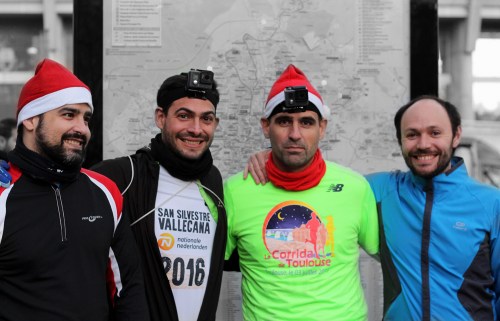
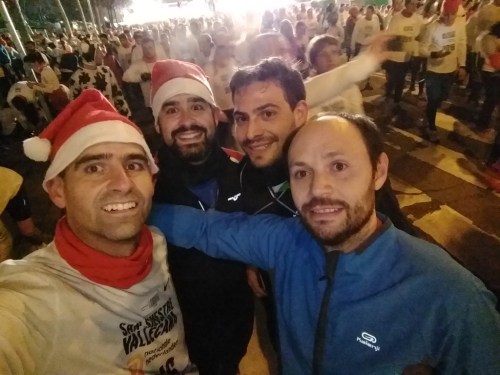
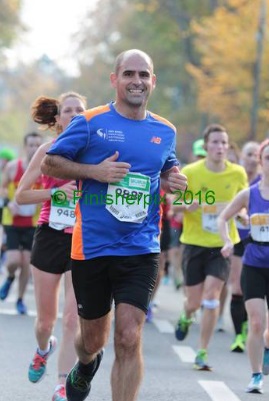
Last Sunday October 30th, at the time that this post is being published, together with my friend Serna, I was in the departure line of the Dublin marathon, the “Friendly marathon” according to one of their lines, the 4th largest marathon in Europe with about 19,000 people registered, almost 17,000 finishers.

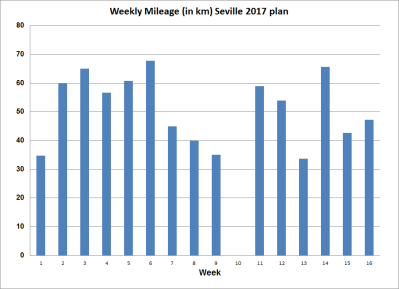
I subscribed to the marathon last July but I had it in mind sometime before, right after having completed the marathon in Albi, which didn’t go very well. This time I tried to follow more closely the training plan and I did it. If I arrived to Albi with just 530 km of training in the legs, I arrived to Dublin with above 660 km (in the previous 16 weeks), still a bit short but somewhat better. I had also managed more long runs and intervals sessions, even if I wasn’t doing them as fast as in previous years.

weekly-mileage

But not everything in the training period of 16 weeks had been rosy. Since late 2011 I use some insoles to compensate for a slight difference in the length of the legs, which normally doesn’t bother me, but when you’re clocking nearly 2,000 km a year hitting the streets you start to notice it. I hadn’t got new insoles since 4 years ago and the ones I used were rather worn out. I knew I had to change them but I kept postponing it, until I ran the Toulouse half marathon on September 18th, after which I simply couldn’t walk for two days. Visits to the doctor, podiatrist (x2), the physiotherapist (x6), plenty of pain killers, medicines, etc., and I managed to continue the training after a 10-day break (week 11-12 of the plan).

Having gone through that I was rather happy with just being able to be at the departure line of the marathon and running it without major problems, knowing that, despite of the injure, I had trained well enough.

dublin-route

At first sight, the route of the race didn’t seem very appealing. It gave the impression that instead of taking the runners through the city centre, we were taken far away around the outskirts. Despite that, the atmosphere during most of the race was great, overwhelming. There were plenty of Dubliners almost in every street, crowds cheering at the runners, “Keep going!”.

The organization of the race was superb. From the management of the departure, with minimum waiting time, plenty of facilities, good spacing between starting waves so running was possible from the beginning, to supplies during the race, and a nice round medal at the end, or goodies that included a finisher t’shirt, a frontal lamp or a reflective running vest.

There were plenty of pacers. We decided to start with those of 3h50′ and see for how long we could keep up with them. The truth is that after about 7 km we took some metres of advantage and we kept running comfortably a bit faster for many kilometres. Some time after the half marathon my friend, who hadn’t managed to complete a moderate weekly mileage along the training season, dropped and I kept going forward. I was telling to myself to go on one more kilometre at pace (“run the kilometre you’re in“) until the moment when I would face the wall and then see how I could manage it. The fact is that I never faced it (“trust the training“).

dublin-pace

This marathon has been the first one in which I have managed to complete what is called a “negative split”, that is running the second half marathon faster than the first one. In my case, I completed the 1st half in 1h53’34” (not very fast, doubling for a 3h47 marathon) and the second half in 1h48’50” (doubling for a 3h37′). Every segment of 10k I did it faster than the previous one. This is something that you’re not fully aware while running, but you notice it. You push forward and the legs respond well. You say, let’s go for the 33rd km and see, for the 34th, 35th, 36th, 37th… at some point you think I am there, I’m not going to slow down at all.

marathon-comparison

It has not been the fastest marathon I have completed (that was in Rotterdam 2014, this one in Dublin has been my second fastest), as I started more conservatively, but I enjoyed every minute of it.

This slideshow requires JavaScript.


3 Comments

Filed under Sports

Kronborg castle and Hamlet

Kronborg castle.

Kronborg castle.

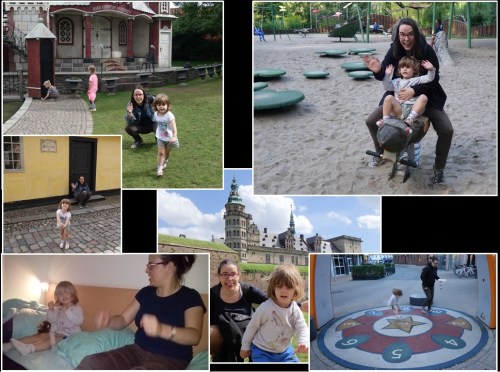
Last August I went together with my daughter Andrea on a trip to Denmark to visit my sister Beatriz, who lives there. Among the cultural visits that we made, we decided to go to the Kronborg castle, in Helsingør. This is known as well as the “Hamlet castle“, referred to in Shakespeare‘s play as Elsinore.

This year 2016 is the 400th anniversary of the death of William Shakespeare, which happened on April 23rd 1616. A series of activities are organized along the year and across the globe to commemorate it. As you can imagine some of those activities take place at the Kronborg castle, therefore in this year, once in Denmark, the visit of that castle was a must.

The visit was superb:

  • There were several actors impersonating the different characters of the play. You would find them at different spots of the castle.
  • There was as well a stage put in place at the courtyard of the castle where in the evenings Hamlet is played (this year produced by Peter Holst-Beck). During the day, the actors were rehearsing the play. An extra of the visit then was to watch some passages of the play. In fact, one exhibition at the castle displayed some of the many renowned actors that have played Hamlet at Kronborg along the years.
  • Other activity included the performing of a puppet show at a room in the castle, together with the characters of the king and the queen (similar to the Act 3 scene 2 of the play).
  • And, of course, another performance consisted of an actor impersonating Hamlet, skull in hand at the ballroom of the castle, acting his lines “To be, or not to be: that is the question…”

This slideshow requires JavaScript.

It was certainly a great visit which I strongly recommend, as for DKK 90 (or about 13 euros) you will spend a very entertaining couple of hours.

Hamlet, the play

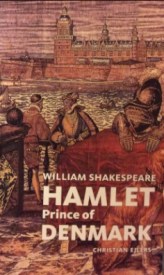
hamlet_bookAt the end of the visit, my sister and I bought copies of the book Hamlet at the castle shop: an edition by Christian Ejlers which includes some pictures of the tapestries with images of different kings of Denmark that can be found in the castle.

A few days after we concluded the trip, I started to read the book, which with 135 pages and despite its difficult old English language it reads in a few hours (spread in a few days in my case).

The plot of the book is rather well-known (no spoiler here): Hamlet’s father, the previous king, has recently died and Hamlet is profoundly affected by his death. A ghost of his father appears to him and this sets Hamlet into the search of who has killed his father.

I wanted to share some passages of the book that called my attention:

Do not, as some ungracious pastors do,

Show me the steep and thorny way to heaven;

Whiles, like a puff’d and reckless libertine,

Himself the primrose path of dalliance treads,

And recks not his own rede.” (Ophelia to her brother Laertes)


“And these few precepts in thy memory

See thou character. Give thy thoughts no tongue,

Not any unproportioned thought his act. […]

Give every man thy ear, but few thy voice;

Take each man’s censure, but reserve thy judgement. […]

Neither a borrower nor a lender be;

For loan oft loses both itself and friend,

And borrowing dulls the edge of husbandry…” (Polonius)


“Ay, sir; to be honest, as this world goes, is to be one man picked out of ten thousand.” (Hamlet)


To be, or not to be: that is the question:

Whether ’tis nobler in the mind to suffer

The slings and arrows of outrageous fortune,

Or to take arms against a sea of troubles,

And by opposing end them? To die: to sleep; […]

ay, there’s the rub;

For in that sleep of death what dreams may come

When we have shuffled off this mortal coil, […]

But that the dread of something after death,

The undiscover’d country from whose bourn

No traveller returns, puzzles the will

And makes rather bear those ills we have

Than fly to others that we know not of?

Thus conscience does make us cowards of us all;

And thus the native hue of resolution

Is sickled o’er with the pale cast of thought, […]” (Hamlet)


“Let me be cruel, not unnatural:

I will speak daggers to her but use none;

My tongue and soul in this be hypocrites; […]” (Hamlet)


“[…] May one be pardon’d and retain the offence? (King Claudius)


“[…] your fat king and your lean beggar is but

variable service, two dishes, but to one table; […]

A man may fish with the worm that hath eat of a

king, and cat of the fish that hath fed of that worm. […]

Nothing but to show you how a king may go a

progress through the guts of a beggar” (Hamlet)


“My words fly up, my thoughts remain below:

Words without thoughts never to heaven go.” (King Claudius)

A classic, a short book, at times quite entertaining and intriguing, even if it requires some effort, it is a must read, strongly recommend. May be in your own language or a version with a more modern language (I later picked up a Spanish version that I found at my parents’ which was much easier to read… and you could clearly see that translations were not literal).

Let this post be my particular homage to the figure of William Shakespeare in this 400th anniversary.

2 Comments

Filed under Books, Travelling

Yeager (book review)

yeagerChuck Yeager was the US Air Force flight test pilot that broke the sound barrier for the first time on October 14, 1947, flying on board of the rocket-propelled Bell X-1. That part of his biography is widely known.

Reading his autobiography you discover that he went from being an uneducated child in rural West Virginia to retiring as a general of the US Air Force, acquainted with several US presidents and other dignitaries, he was the first pilot to become ace in a single day by shooting down 5 German fighters at World War II. Previously, he had been shot down by the enemy when flying over France near Angouleme, he escaped the Germans on ground with the help of the resistance and crossed the border to Spain via the mountains carrying the heavily injured body of a fellow American. He fought as well in Korea and Vietnam, he flight tested dozens of American aircraft and a MIG 15 taken from the North Korea, he set up and led the Air Force Space school which provided for plenty of astronauts for NASA initial space programmes, he became friends of female aviator legend Jackie Cochran, and altogether made him receive plenty of medals and recognitions. Plenty of remarkable achievements in a lifetime.

Many considered Yeager the best pilot in the Air Force at his time. What it seems clear is that he had a privileged eye sight which allowed him to spot enemies, trouble, etc., much earlier than others. He had a deep knowledge of the machines he flew despite of his initial lack of engineering education. He overcame that by eagerness to learn, by continuously asking to the best engineers available to him, and thanks to his experience in maintenance. And he flew a lot. He repeats several times throughout the book that experience, flying continuously, flying plenty of different aircraft, was what made him a great pilot. Despite of those assets, he recognizes as well that luck played a big role in shaping his career. From being born in a time when the flying over the speed of sound was something unknown to surviving various close calls both in war operations and during flight testing.

Let me quote some of the gems I had marked in his book:

“I got sick the first few flights […] like everyone else, I sweated through my first solo.”

“… most of us reached a point where, if a pilot borrowed our Mustang on our day off and was shot down, we became furious at the dead son of a bitch. The dead pilot might have been a friend, but he wasn’t as special as our own P-51…”

“I was still the most junior officer in our squadron […] there were several captains who were rubbed wrong being led by a new lieutenant. One of them was assigned to my flight of four, and refused to follow my orders. […] We were over Germany and this guy was flying as tail-end charlie, but lagging too far back in the rear, and ignoring my order to close up. […] I did a big barrel roll and came in behind him; he never saw me. Then, I fired a burst right over his canopy. The bastard saw that. He closed up immediately, and did what he was told.”

“Flying came with the marriage licence, and I had no problem with that.” (Glennis Yeager)

“I doubt whether there where many who loved to fly as much as I did.”

“Wright Field was a fun place to be, loaded with every airplane in the inventory…”

“[…] the real barrier wasn’t in the sky, but in our knowledge and experience of supersonic flight.”

Arrogance got more pilots in trouble than faulty equipment.”

“The real art to test flying was survival; maybe only a spoonful of more luck and more skill made the critical difference between a live test pilot and a street name.”

“The best pilots fly more often than the others; that’s why they’re the best. Experience is everything. The eagerness to learn how and why every piece of equipment is everything. And luck is everything, too.”

“And luck. The most precious commodity a pilot carries.”

“I was always afraid of dying. Always. It was my fear that made me learn everything I could about my airplane and my emergency equipment […]”

I strongly recommend the reading of this book (423 pages in the paperback edition).

4 Comments

Filed under Aerospace & Defence, Books