Reading language and format (2016 update)

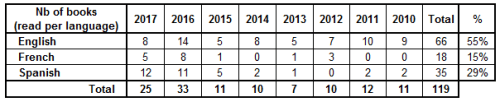
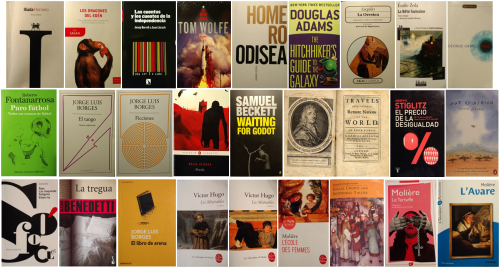
About a year ago, I wrote a couple of blog posts where I reflected on the mix of languages I used when reading books between English, French and Spanish and about the format of the books I read, whether electronic or paper books. After having shared last week my 2016 reading list, this is just a short post to update the two tables I included in those posts:

Reading language

reading_language_2016

From 2010 to 2015 I read mostly in English. This is something I changed in the second half of 2015 and in this 2016 I have continued with a more balanced approach, with 42% of the books I read being in English, 33% in Spanish and 24% in French. I believe I will continue with a similar approach in this 2017.

Reading format

reading_format_2016

In 2016 I have continued with the same ratio of electronic to paper books than in the previous years. As I read more books in 2016 than in any other previous year, I have also read more electronic books, hopefully this will lead to the amortization of the e-reader I have in this year or the next (I estimated here its amortization in about 20 e-books read with it, the first batch of 10 already completed).

1 Comment

Filed under Books

Summary of (my) 2016

Brief recap of my 2016. (1)

In the last year recap I mentioned about the coming 2016 that it would “include the welcoming of the baby, an early trip to Brazil, lots of flying and running, Dutch lessons, some books to read, museums to see, trips to enjoy…“, it is now the time to see how did it go:

The main event of the year: On April 3rd, our second child, David, was born!

collage_mallorca_2016

Having said that: the personal objectives for 2016 have been mostly accomplished. Now, let’s review the year in more detail.

Reading. I ended 2015 with a good reading pace of about 2 books per month, which I more or less have kept or revamped during 2016. This has permitted me to read up to 33 books, including some classics which I had wanted to read for ages such as Don Quixote or “The General Theory of Employment, Interest, and Money” by Keynes. For the complete list of books, see a post I wrote about my 2016 reading list with a brief description of each book plus links to more thorough summaries which I wrote in the blog for some of them.

Avgeek. This year we visited again the Ailes Anciennes in Toulouse for one of their Visites Cockpit, we visited again the Cite de l’Espace in Toulouse (for Airbus Christmas event),  we took part again in the aeroclub Christmas event, I read a few aviation books (see a link to the complete list above) and we attended the great air show at La Ferté Alais, where I got my baptism aboard a Junkers Ju-52. On top of that I spent weeks folding paper planes, take a look at them here.

Playing 1

Flying. After obtaining the licence at the end of 2015, in this 2016 I passed the exam to obtain the FCL055 English proficiency for radio communications. I fulfilled my objective of flying over 20  flight hours (+22), including 22 take-offs and landings, and we made a few flight excursions (see the new section about them in the blog here), notably my first cross border flight with Asier to San Sebastian.

2016_flight_hours

If I recall it well, this year  a few friends and family members had their baptism regarding flying with me at the controls: David, Elena and Nacho. I am sure that in 2017 that will be the case with some more friends. See below the nice video that Nacho compiled of our flight last October (see his blog post about that experience here).

Learning. This year, I took Dutch lessons at the Goethe institute during the first quarter (a gift from Luca) which I interrupted with the birth of David. I have recently engaged in an open online MOOC specialization on Data Science from the Johns Hopkins University in Coursera, of which so far I have completed a single course out of the 10 which form the complete the specialization. As part of Airbus-internal training I completed over 10 class and online training (the best one being on aircraft performance and how they are flight tested).

Family 2.0. Family life and intensive reading during this year are the main causes of having managed to just write 61 blog posts in 2016, 9 posts short of my personal minimum target of 70 posts. Hopefully, I will be a bit more productive on this front in 2017.

The blog received just over 44,000 visits in 2016 (less than in 2015 though) and is close to reaching the 300,000 since I started it in 2010. Andrea still hasn’t yet started her own blog, David neither. Give them a bit more of time.

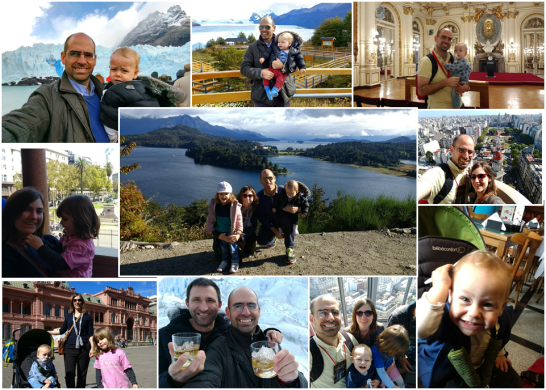
Travelling. This year we, the family together, or I alone, visited Madrid, Brazil (Sao Paulo, Pantanal, Santos), Castro Urdiales, Burgos, Miranda de Ebro, Trevino, Segur Le Chateau, Paris, Fontainebleu, Bassoues, Lupiac, Cazaux, Fuenterrabia, Denmark (Odense, Legoland, Kronborg, Copenhagen), MallorcaIreland (Dublin, Glendalough, Kilkenny, Cashel, Limerick, Moher, Galway, Connemara, Bru na Boinne). On the other hand, this year I almost didn’t have to travel due to the job: just a single trip to Madrid.
denmark

It seems that we will start strong in 2017 on the travelling front, that is always good news.

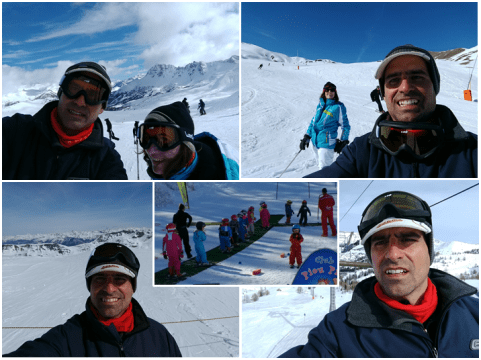
Sports – Running. For yet another year, practicing sports has meant running, apart from a day in which I went skiing and another of playing volley and some swimming during our stay in Mallorca.

dublinmarathon5

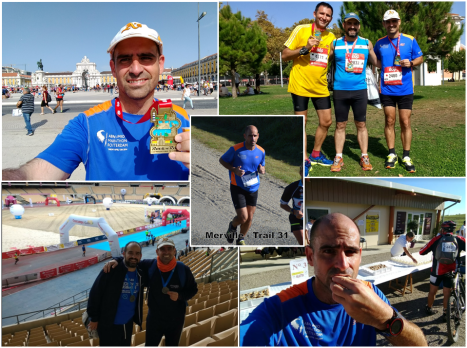
In 2016 I have run well over 2,100 kilometres, which was a goal I set to myself at the beginning of the year (setting a new yearly record surpassing the 2,030 km achieved in 2015). I competed in some 10 races (versus 11 in 2015) including: 2 marathons (Albi and Dublin (where I managed a second best time in the distance)), a couple of half marathons (Blagnac and Toulouse ), a couple of trails (Ronde des Foies Gras and Trail du Cassoulet) and some other 10k races.

Following a mantra I keep to letter, “the running shoes, always in the suitcase”, the year 2016 caught me running in: Pantanal (3 times), Sao Paulo (3), Castro Urdiales (2), Burgos (2), Lacs de l’Essonne, Paris, Montesquiou, Torrelodones (7), Copenhagen, Mallorca (4), Verfeil, Mauvezin, Glendalough, Cashel, Galway, Dublin, Madrid (2), Beauzelle, plus the tens of times I trained in Toulouse, Colomiers and Blagnac.

2016_weekly_mileage


Other reasons for joy in 2016 have been:

  • My family: Andrea and I visited my sister in Denmark in August in what was our first daughter & daddy trip together(see related picture above). My sister got accepted to an internship at NATO in Norfolk (USA) which she will start in 2017.  My brother keeps enjoying the high pace job at the last stages of A400M deliveries (we will visit him again there in Seville in a couple of months). My father started attending the university again, 50 years later, to enjoy history lessons. My mother keeps being as energetic as always doing massages, visiting the family, travelling, reading, etc.
  • Some more friends got married: Carlos, Virginia, Jon and Domingo.
  • And we welcome some newborns from family and friends:  Saúl (in fact, his was a last-minute arrival in 2015), Maria, Toni, Pablo, Jimena, Niels, Diego, Alejandro, Hernán, Lara, Vera

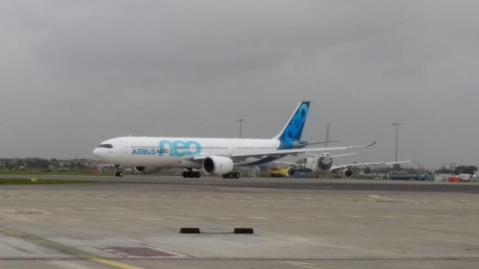
Now it’s time to rest, celebrate and soon to plan how we want the 2017 to turn out. It will include the first flight of the A330neo, the first all-family skiing week in the Alps, a new attempt at the marathon in Seville, a family trip to Argentina, lots of flying and running, R programming lessons, some books to read, museums to see, trips and excursions to enjoy… For now, I will close 2016 celebrating my sister’s birthday (in the distance), running the San Silvestre Vallecana in Madrid with several friends and enjoying a last dinner with the family.

I wish you the best for 2017, enjoy it!

dsc02237

(1) You can see here my 20102011, 2012 , 2013 , 2014  and 2015 recaps.

7 Comments

Filed under Personal development & HR

My 2016 reading list

In this post I wanted to share the list of books I read along the year (1) with a small comment for each one and links to some articles in this blog where I wrote a book review for a few of them. I have also included a small rating from one to three “+” depending on how much do I recommend its reading:

books

  1. Reales Ordenanzas” (by Carlos III, King of Spain 1759-1788) (+): these are the set of rules for the Spanish Armed Forces issued in 1768 under the rule of the king Carlos III and which were kept in use until 1978. They are structured in titles and articles, quite like a legal text. Some of the main values conveyed through the rules are respect for the orders received and education in the dealings with subordinates. Find a post with the book review I wrote about it here.
  2. Cronica de una muerte anunciada” (by Gabriel Garcia Marquez) (+++): in this book Garcia Marquez explores a mix of styles between journalism and crime fiction to cover the plot of the murder of Santiago Nasar, and how despite being widely announced, as the time of the death approaches it cannot be prevented by the people who try to do so. Find a post with the book review I wrote about it here.
  3. The Capital in the XXI century” (by Thomas Piketty) (+++): arguably the economics book of 2013, it is a review of the evolution and distribution of wealth and income from the XVIII century till today mainly in Europe and the United States. It discusses how in times of small growth the rate of return of capital becomes the main source of wealth increase and how that contributes to the increasing and maintaining of inequality. A follow-on conclusion is his call for a global tax on wealth.
  4. Common Sense” (by Thomas Paine) (+): published in 1776, it is one of the best selling books in America of all time. The book is a short treatise on the government, democracy, monarchy and a call for the freedom of independence of the American colonies from England.
  5. Pilote de guerre” (by Antoine de Saint-Exupery) (++): published in 1942 while he was living in New York, this book describes Saint-Exupery’s experiences during the battle of France (1940) when he flew aboard a Bloch MB.170 reconnaissance missions over Germany. The English version of the book was published under the title “Flight to Arras”.
  6. Club Dumas” (by Arturo Perez-Reverte) (+++): this novel is centered on Lucas Corso, a fictional book dealer specialized in finding collectors items. Corso is commissioned to find copies of a book and that will take him to travel between Spain, Portugal and France living situations that resemble very much to those of The Three Musketeers, the novel by Alexandre Dumas. The book in itself is an invitation to read other books and to cultivate a passion for reading.
  7. Gray Mountain” (by John Grisham) (+++): published in the fall of 2014, this legal thriller by Grisham tells the story of the lawyer Samantha Koffer, on leave from a big law firm in NY due to the Great Recession, she joins the practice of a small firm in Virginian Appalachia region where she will defend the victims of big coal mining corporations.
  8. quijoteEl ingenioso hidalgo don Quijote de la Mancha” (by Miguel de Cervantes) (+++): Cervantes published the two books that have become the masterpieces of literature in Spanish language between 1605 and 1615, since then, they have become two of the most sold and read books. They cover the stories and encounters of the hidalgo (knight) Don Quixote with Sancho Panza as his helper. Those adventures are used by Cervantes to reflect by way of the characters on different aspects of life, pose rhetorical questions, criticize institutions, etc. Find a post with the book review I wrote about it here.
  9. El sol de Breda” (by Arturo Perez-Reverte) (++): this book is the third one of the series of the fictional Captain Alatriste. In this book, the story is framed around the siege of Breda (1625). The book covers extensively the detail of life at the trenches, the feelings of some of the characters and how they face the uncertainty of the war. He also reflects on the Spanish history and some features that he sees as part of the national character. Find a post with the book review I wrote about it here.
  10. Terre des hommes” (by Antoine de Saint-Exupery) (+++): this is a compilation book of some memories of the aviator Antoine de Saint-Exupéry of his time at the airmail carrier l’Aéropostale.The book was published in 1939, two years later he received the US National Book Award for it. In the book, Saint-Exupéry pays tribute to some of his colleagues, mainly Henri Guillaumet and Jean Mermoz, and he shares some experiences which today seem unbelievable. Find a post with the book review I wrote about it here.
  11. La falsa bonanza” (by Miguel Sebastian) (+++): Miguel Sebastian is an economist who served in the cabinet of Spanish prime minister as economic adviser and as minister of Industry, Trade and Tourism from 2008 to 2011. Those were the years following the financial crash and in which the bubble who had been going on for years in Spain finally exploded. In this book, Sebastian intends to find the causes that fuelled that bubble, the policies that helped it, the actions that were not taken, the institutions that failed at stopping it, etc., with the aim of being better equipped to avoid a similar development in the future. The book is written in a very readable fashion, provides plenty of tables, graphics and references, and at the same time is very synthetic.
  12. Le Tour du monde en 80 jours” (by Jules Verne) (++): Willeas Fog, a character about whom not much is known, bets with his colleagues of the Reform club in London that he is able to travel around the world in 80 days, and so he does embark himself in such endeavor with his assistant, Passpartout. A the same time, there is an ongoing investigation of a robbery of the Bank of England which makes a police investigator, Fix, to follow Fog all along the trip (as he is a suspect), waiting for an authorization coming from England to arrest him before he evades justice. The reader is conflicted by the suspicion laid upon Fog, as all the acts of the character in the story describe an orderly, integer, compassionate person, even if not much is known about him, his profession, origins or his past. Find a post with the book review I wrote about it here.
  13. Les Parisiens comme ils sont” (by Honoré de Balzac) (+): I approached this book, part of the large series “La Comédie humaine“, as a first encounter with the work of Balzac in advance to a trip to Paris. The style of Balzac in this book is very readable, light, direct. I would even say opinionated. I did not particularly like the book very much, especially the chapters referring to how women should behave, dress, and the comparisons between women of Paris and the provinces. It may reflect a view of his time and class, but did not resonate with me today.
  14. keynesThe General Theory of Employment, Interest, and Money” (by John Maynard Keynes) (+++): this book, published in 1936, is considered the magnum opus of Keynes, a character whose contribution to the development of economics and politics cannot be overstated. The book pointed to some of the shortcomings of the classical theory (lack of competition) and introduced some key concepts such as the propensity to consume, the multiplier, the consumption function, the marginal efficiency of capital, etc. The book was not intended for the general public and I must say that it has been one of the most difficult reads I have encountered so far. Nevertheless, I consider it a must read for those having an interest in economy. I may write a dedicated post reviewing it at a later point in time.
  15. El Junkers Ju-52/3m CASA C-352” (by Luis Gonzalez Pavon) (+++): this is a book written by a colleague from CASA (the former name of the Spanish part of Airbus) where he dives in great detail into the history of the aircraft Junkers 52, from the origins of his designers to its production in Germany and under license in Spain. He collected plenty of information on the aircraft from different sources, serial number by serial number, recording the changes of tail numbers, registry numbers, the roles played by each and every aircraft, and in particular the crucial mission they played during the first stages of the Spanish Civil War on the Nationalist side. The book includes at the end charts, drawings and tables with the technical data of the aircraft.
  16. What I talk about when I talk about running” (by Haruki Murakami) (++): Murakami is a quite accomplished runner since the beginning of the 1980s. In this book, published in 2007, he described what running means and has meant to him. Personally, it was very easy to relate to him, sharing not only his passion for running, but a bunch of experiences, from having run marathons in New York or Athens, to having completed a 100km ultra marathon, to 6am morning runs. Find a post with the book review I wrote about it here.
  17. Man’s search for meaning” (by Viktor E. Frankl) (++): Frankl was a psychiatrist who developed a therapy called logotherapy based on the will for meaning. He later became prisoner at several concentration camps during the second world war, which he survived. He described in this book the experiences he and some of his fellow prisoners endured during those years and how that will helped them to survive. That accounts for about two thirds of the book; the remaining third is dedicated to further explanations and clarifications of his therapy.
  18. Poema del Cid” (anonymous, Pedro Abad) (+++): this is oldest epic poem of Spanish literature, which tells the history of the Castilian knight Rodrigo Díaz de Vivar, better known as Cid Campeador. The story goes from the loss by the Cid of the favor of the king Alfonso VI to his leaving of Castile, his continued profession of allegiance to the king, the fights and the conquest Valencia (where he settles), the coming closer againt to the king via the marriage of his daughters with Castilian noblemen and the following vengeance against his sons-in-law.
  19. Voyage au centre de la Terre” (by Jules Verne) (+): this is a science fiction novel centered around the figure of the fictional professor Otto Lidenbrock who has studied the works of the 16th-century Icelandic Arne Saknussemm and believes that getting into the Snæfellsjökull volcano he will be able to reach the centre of the earth. He is accompanied in his trip by a local guide and his nephew, with whom he discusses the scientific implications of such a trip and the features of the landscape they encounter as they travel downwards.
  20. Exploradores: La historia del yacimiento de Atapuerca” (by José María Bermúdez de Castro) (++): this book is a very informative and fascinating trip into archeological science, the different theories within it, the evolution and the discarding of some of those, the relevant place of the archeological site of Atapuerca in the recent developments in the science, etc.; all described by José María Bermúdez de Castro, one of the co-directors of the site since over 20 years ago and one of the persons who have seen all those developments first-hand, coined some of the theories and wrote the papers.
  21. hamletHamlet, Prince of Denmark” (by William Shakespeare) (+++): one of the best known plays by Shakespeare, the plot can be summarized (without spoiling it) as follows: Hamlet’s father, the previous king, has recently died and Hamlet is profoundly affected by his death. A ghost of his father appears to him and this sets Hamlet into the search of who has killed his father. The play takes place at the Kronborg castle, in Helsingør (Denmark), which we visited in August, take a look at the post about that visit here.
  22. American Capitalism, the concept of countervailing power” (by John K. Galbraith) (++): the American economist explains in this book, published in 1952, the concept of countervailing power, necessary to balance in favor of the weaker part situations in which imperfect competition is established, creating oligopolies or monopolies which otherwise would enjoy an extremely powerful hand against individual wage owners or small (farm) producers. The book is a critique to the classical theory, in that it shows that it assumes perfect competition, a kind of competition which in real life very often it is absent.
  23. Dubliners” (by James Joyce) (+): I came to reading this book ahead of a trip to Ireland and Dublin without knowing about it. The book, published in 1914, is a collection of short unconnected stories of the everyday life of common Dubliners. The book has some importance in the frame of the then-high momentum of Irish nationalism, but I particularly did not like it very much. However, apparently some of the characters and stories appear again and are continued in Ulysses, thus the groundwork of having read it may pay off at a later time.
  24. Yeager” (by General Chuck Yeager & Leo Janos) (+++): Chuck Yeager was the US Air Force flight test pilot that broke the sound barrier for the first time on October 14, 1947, flying on board of the rocket-propelled Bell X-1. Reading his autobiography you discover that he went from being an uneducated child in rural West Virginia to retiring as a general of the US Air Force, acquainted with several US presidents and other dignitaries, he was the first pilot to become ace in a single day by shooting down 5 German fighters at World War II. Find a post with the book review I wrote about it here.
  25. goriotLe Père Goriot” (by Honoré de Balzac) (+): this book, published in 1835 and part of the large series “La Comédie humaine“, is considered to be the most important novel of Balzac. The story is centered around some characters who live in the boarding house of Mme. Vauquer, mainly the young Eugène de Rastignac, who is coming from a rural background and trying to reach the upper levels of Parisian society (initially at the cost of his family), and father Goriot, who had spent all his fortune on his daughters in order to marry them to wealthy individuals. Their lives are intertwined in a quite sad plot in which the daughters ignore the father when he is dying and Eugène befriends them and unsuccessfully tries to get them closer to the father.
  26. Candide, ou l’Optimisme” (by Voltaire) (+): this book, published in 1759 by the French philosopher François-Marie Arouet (Voltaire), follows Candide from the time when he is expelled by his uncle when he declares his love to his cousin Cunégonde. The story then takes Candide through Spain, Lisbon, South America, the Ottoman empire, etc., in a sequence of events in which Candide is confronted by situations and characters that put to the test his innate optimism.
  27. Metamorphosis” (by Franz Kafka) (++): this fiction novel, published in 1925, starts with the transformation of the salesman Gregor Samsa into a large vermin (insect-like creature). As the story goes, Gregor gets to learn how to live in his new condition and so does his family, which initially is profoundly impacted. The state of denial of the parents, the disgusting sight and smell of the creature, added to the discomfort of the new situation take a toll in the mood and relationships within the family.
  28. Romeo and Julliet” (by William Shakespeare) (+++): this play, published in 1597, tells the story of the love of two youngsters from rival families of Verona (Italy). This rivalry causes that both Romeo and Julliet have to hide their love and engage in secret with a priest of their confidence, while the family of Julliet wants her to marry a local nobleman, Paris. The bad timing of different events, miscommunications and bad chance steer the story into a fateful ending.
  29. Rogue Lawyer” (by John Grisham) (+++): published in the fall of 2015, this legal thriller by Grisham tells the story of Sebastian Rudd, a lawyer which does not hesitate to take the cases that nobody wants to take, providing a defense to people convicted for the worst kind of crimes. Working in the dark side of the legal system puts him in the situation to negotiate obscure arrangements with the federal institutions.
  30. The Importance of Being Earnest” (by Oscar Wilde) (+++): The play, a critical satire of some of Victorian England social institutions and values (in particular marriage, literary press, religion, honesty, punctuality), is centered around two friends, Algernon and Jack (John Worthing), who go about from criticizing each other’s habits, to sharing each other’s faked relatives, to proposing to each other’s cousin and ward. After drawing several parallels between the two characters and their fiancées, and going about several absurd situations, the play unravels in the most unexpected way. Find a post with the book review I wrote about it here.
  31. The picture of Dorian Gray” (by Oscar Wilde) (++): this book, published in 1890, created a great controversy at the time due to the backwards morals and social conventions of the time. The use of the language and the style of the novel are impressive. The story itself is centered around Dorian Gray, how he is influenced by Lord Henry and his focus on beauty and pleasure, and the painter Basil, who captured in a portrait of Dorian his essence, to the point that Dorian’s life will be very much influenced and even dominated by his relationship with the painting.
  32. mosqueterosLes Trois Mousquetaires” (by Alexandre Dumas) (+++): published in 1844, this masterpiece of Dumas, recounts the story of d’Artagnan, a real character of the XVII century, even if many of the facts of his life are twisted or made up for the novel. The plot includes several real life characters of XVII century France and some of the events taking place during 1625-28 (such as the siege of La Rochelle, the death of the Duke of Buckingham, etc.), though the plot in itself and the explanation of the causes intertwining the events are fictional. The over 800 pages (of the edition I have) read in a frantic pace thanks to the easy style of Dumas and the parallel progress on the different sides to the story.
  33. Wait” (by Franck Parnoy) (++): in this book the author studies the decision making process in situations that range from super fast trading, to the milliseconds before bating a baseball, to the longer term decisions involved in innovation. From the different stories covered in the book the lesson to be taken is the need to take some pause, to wait, to observe, process the information and orient ourselves before taking action.

During this year and the last quarter of 2015, I have been able to read at a higher pace than during the previous ones. I would suggest the reader of this post, if interested in reading more, to check out the following two tips:

  • a blog post from Farnam Street blog “Just Twenty-Five Pages a Day“, which was published well after I had adopted such an approach to reading but captures it very well,
  • the Wikipedia article about the Pomodoro Technique, which enables you to efficiently use the last hours of the day.

I wish you all very interesting reads in 2017!

(1) You can find here: my 2012 reading list, 20132014 and 2015 ones.

8 Comments

Filed under Books

Belén laico republicano

El pasado 9 de noviembre se publicó una decisión del Consejo de Estado francés sobre la posibilidad de instalar belenes en lugares públicos. En muchos medios (sobre todo en aquellos radicados en España) rápidamente se recogía la noticia como que el Consejo de Estado sí lo permitía.

La opinión del Consejo de Estado había sido requerida, dado que la instalación de belenes en distintos municipios había sido objeto de denuncia, y los respectivos tribunales administrativos habían fallado en distinto sentido.

¿Qué dice exactamente la decisión del Consejo de Estado?

Le Conseil d’État rappelle la portée du principe de laïcité. Celui-ci crée des obligations pour les personnes publiques, en leur imposant notamment :

  • d’assurer la liberté de conscience et de garantir le libre exercice des cultes ;
  • de veiller à la neutralité des agents publics et des services publics à l’égard des cultes, en particulier en n’en reconnaissant, ni en n’en subventionnant aucun.

Le Conseil d’État juge que l’article 28 de la loi de 1905, qui met en œuvre le principe de neutralité, interdit l’installation, par des personnes publiques, de signes ou emblèmes qui manifestent la reconnaissance d’un culte ou marquent une préférence religieuse.

En raison de la pluralité de significations des crèches de Noël, qui présentent un caractère religieux mais sont aussi des éléments des décorations profanes installées pour les fêtes de fin d’année, le Conseil d’État juge que leur installation temporaire à l’initiative d’une personne publique, dans un emplacement public, est légale si elle présente un caractère culturel, artistique ou festif, mais non si elle exprime la reconnaissance d’un culte ou une préférence religieuse.

Pour déterminer si l’installation d’une crèche de Noël présente un caractère culturel, artistique ou festif, ou si elle exprime au contraire la reconnaissance d’un culte ou une préférence religieuse, le Conseil d’État juge qu’il convient de tenir compte du contexte dans lequel a lieu l’installation, des conditions particulières de cette installation, de l’existence ou de l’absence d’usages locaux et du lieu de cette installation.

Compte tenu de l’importance du lieu de l’installation, le Conseil d’État précise qu’il y a lieu de distinguer les bâtiments des autres emplacements publics :

  • dans les bâtiments publics, sièges d’une collectivité publique ou d’un service public, une crèche de Noël ne peut pas être installée, sauf si des circonstances particulières montrent que cette installation présente un caractère culturel, artistique ou festif ;
  • dans les autres emplacements publics, compte tenu du caractère festif des installations liées aux fêtes de fin d’année, l’installation d’une crèche de Noël est légale, sauf si elle constitue un acte de prosélytisme ou de revendication d’une opinion religieuse.

[…]

Si uno toma la molestia de leer la decisión, en ella se aclara, que:

  • los belenes con un carácter religioso quedan prohibidos,
  • se permiten aquellos que presenten sólamente un carácter cultural, artístico o festivo.

La decisión va más allá y ofrece una guía para distinguir los casos, dando especial relevancia al emplazamiento público donde se quiera instalar el belén:

  • la instalación en edificios públicos, o en sedes de colectividades queda prohibida, salvo circunstancias particulares que muestren el carácter cultural, artístico o festivo,
  • en otros lugares públicos, como plazas, se entiende el carácter festivo y queda permitida la instalación, salvo si se considera un acto de proselitismo o reivindicación de opinión religiosa.

La decisión del Consejo de Estado se apoya en el artículo 28 de la ley de 1905, que dice lo siguiente:

Article 28

Il est interdit, à l’avenir, d’élever ou d’apposer aucun signe ou emblème religieux sur les monuments publics ou en quelque emplacement public que ce soit, à l’exception des édifices servant au culte, des terrains de sépulture dans les cimetières, des monuments funéraires, ainsi que des musées ou expositions.

Por último, tenía curiosidad por ver cómo se menciona el laicismo en la constitución francesa, donde queda recogida en el artículo primero dentro del preámbulo:

ARTICLE PREMIER.

La France est une République indivisible, laïque, démocratique et sociale. Elle assure l’égalité devant la loi de tous les citoyens sans distinction d’origine, de race ou de religion. Elle respecte toutes les croyances. Son organisation est décentralisée.

La loi favorise l’égal accès des femmes et des hommes aux mandats électoraux et fonctions électives, ainsi qu’aux responsabilités professionnelles et sociales.

Desde hace unos días, en la escuela (republicana) maternal a la que acude mi hija se ha instalado un árbol de navidad con su preceptivo “belén laico republicano”, con carácter cultural, artístico y festivo, donde se representa una ciudad moderna con un Santa Claus.

belenrepublicano

En el caso español, tenemos el artículo 16 del título primero de la constitución española que define que ninguna confesión tendrá carácter estatal.

Título I. De los derechos y deberes fundamentales

[…]

Artículo 16

  1. Se garantiza la libertad ideológica, religiosa y de culto de los individuos y las comunidades sin más limitación, en sus manifestaciones, que la necesaria para el mantenimiento del orden público protegido por la ley.
  2. Nadie podrá ser obligado a declarar sobre su ideología, religión o creencias.
  3. Ninguna confesión tendrá carácter estatal. Los poderes públicos tendrán en cuenta las creencias religiosas de la sociedad española y mantendrán las consiguientes relaciones de cooperación con la Iglesia Católica y las demás confesiones.

Y a partir de ahí, belenes en colegios, ayuntamientos, plazas, concursos patrocinados por ayuntamientos para elegir el mejor belén, insultos a quien se aleje de la doctrina, etc. Todo ello muy español.

¡Se armó el Belén!

6 Comments

Filed under France, Miscellanea

Why do bad things happen to good companies?

Last week, I attended a Finance conference were one of the speakers (a coach and keynote speaker by the name Martin Carper) delivered a talk titled “Why do bad things happen to good companies?” (1).

Martin opened the speech with the fall of the Medici bank collapse at the end of the XV century, followed by the more recent sound cases of  Enron scandal (fraud accounting), the BP oil spill (in the Gulf of Mexico), Volkswagen emissions scandal (rigged tests on diesel cars). Why all those companies which seemed so good found themselves immersed in such crises. Were they so good? Those companies were filled up with outstanding individuals, following well thought, proven processes, yet they found themselves caught in fire. As it turns out, those companies were not so good after the fact. Investigations revealed major frauds, wrong incentives schemes, bad attitudes.

The reason according to Martin: the key to keep being good is about mindset.

He proposed the audience a couple of quick exercises:

  • triangles“Rate yourself as driver in relation to the rest of the group”. Studies show that 80% of the individuals to whom this question is asked, rate themselves above average. The key: Illusionary superiority.
  • How many triangles do you see here?” “Does anyone see more than 4, 6… 8 triangles?

I was one of those in the audience seeing plenty of triangles. One new triangle after each couple of seconds. But there are none. “A triangle is a polygon with three edges and three vertices“. There are no three edges in any of those figures you may think you see.

This trick helped him to introduce what is commonly known as System 1 thinking, the kind of short-term memory, quick way of thinking, as opposed to System 2 thinking; the more rational way, responsible of the complex thought process used to solve difficult problems. The difference between multiplying mentally 3×3 or 17×23. The difference between driving home or finding your route in an unknown place with the only help of a chart (without a GPS navigator). This terminology of System 1 and 2 was introduced in the book “Thinking, fast and slow” by the 2002 Economics Nobel prize laureate Daniel Kahneman (1).

The speaker then recommended to pause, and, in order to have the correct mindset to avoid those bad things from happening, he invited us to adopt what he called the 3 Ps:

  • Pace. He stressed the need to combine the different ways of thinking, systems 1 and 2, with their respective speeds. Not to be driven always by automatic processes into a purely system 1 way of thinking. He used the classical adage “Festina lente“, meaning “More haste, less speed”.
  • Position. He called for taking a step back to see the overall picture before taking action. To analyze the situation, see all possible options before chosing one. He showed the difference in the layout of a captain’s deck vs. an admiral one in a major British navy ship.
  • Perspective. Here he mentioned an anecdote from Jan Carlzon, the CEO of the SAS airline during the 80s and beginning of the 90s, and credited with the transformation of the company. To stress that small things mattered, Jan would check on and insist that coffee stains be cleaned in the lavatories, as it served as an indicator to the everyone (including the customers) of how seriously SAS took all maintenance procedures. Otherwise, if a coffee stain had slipped through the processes, what other faults could have done so as well.

(1) His speech shares almost squarely the title with but has no relation to the Harvard Business School case study published in the 90s by the authors Benson P. Shapiro, Richard S. Tedlow and Adrian J. Slywotzky, in which they introduced the concept of value migration.

(2) This a fabulous book, published in 2011, on the mental process and the biases of our mind, which references plenty of psychology studies made by different researches along decades. I read it back in 2013 and I strongly recommend it.

Leave a comment

Filed under Education

Leadership perspectives from a TOPGUN pilot

A few days ago, I attended a conference by an executive from Airbus recently founded subsidiary . The talk was on Leadership Perspectives, from his experience in government (as a White House military aide for two US presidents), as an aviator in the US Marines, within the aerospace industry, etc. The resume of David Kalinske is impressive, take a look at his profile here.

The conference in itself was rather classic and straightforward; going from a discussion on the definition of leadership to its main traits (no charisma, extrovert or outspoken type of person among them, by the way), principles of a good leader, a few key lessons learnt, some best experiences and recommendations, with a questions and answers session at the end of it. Plenty of common sense.

nfws_tgThere were, however, two sections from this speech that I found especially interesting and unique, which were the ones based on his takeaways from having served as a military tactical pilot (graduated in the TOPGUN school) and as an aide to presidents G. W. Bush and B. Obama. I will share below some of those takeaways with a few comments from my side.

Lessons learned from tactical aviation:

  • “You are only as good as your last flight”. Which in the business world may be translated as “as good as your last closed sale”, “your last analysis”, “test performed”, “meeting effectively managed”, etc. You need to be constantly aiming for the best performance.
  • “It takes a good wingman to be a good flight lead”. This one highlights the importance of team work, of developing the skills of the team members, empowering the team so they can take good decisions, delegate.
  • “Debrief, debrief, debrief” (1). Continuous effective communication and the importance of feedback loops cannot be overstated. Here I want to comment on the resource of the public speaking organization Toastmasters, which is heavily built around giving and receiving continuous feedback. It really helps oneself to get into that attitude.
  • “Be your own worst critic”. Don’t wait till someone has to point to you your own flaws and errors, be self-critical to improve yourself. In relation to this point, Chuck Yeager mentioned in his autobiography“Arrogance got more pilots in trouble than faulty equipment”. Moreover, Charles A. Lindbergh recalled in his autobiography the following piece of advice from his instructor in the Army (Master Sergeant Winston) “I just want you to remember this: in aviation, it may be all right to fool the other fellow about how good you are – if you can. But don’t try to fool yourself”.
  • “Plan from the target, outward”. Take this one as linked to setting smart objectives, realistic plans.
  • “Always be flexible. Your plan will never withstands first contact”. This relates to risk mitigation, the having a plan B, working on “what if” scenarios, etc. There is a similar line from former boxer Mike Tyson: “Everyone has a plan ’till they get punched in the mouth”.
  • “Make complicated missions understood by all”. The one person that has not understood the mission may become the weakest link on the chain. David mentioned that one striking difference between working in private companies or the military is the widespread knowledge of the organization’s mission, main objectives and how an individual may contribute to them in the latter.
  • “There are no points for 2nd place”. Sometimes there is no place for mistakes. The drive for excellence. Contracts are awarded only to the best offer.
  • “Bearing & discipline. Never appear rattled in the toughest circumstances”. Once there is a plan, the execution of that plan is key. The team, the leader cannot be constantly questioning the plan. My flight instructor used to say: “dans l’air, le cap c’est la vie”, once you have worked out your navigation plan, you need to rigorously stick to it. Charles A. Lindbergh described in his biography how the uncertainty of his flight across the Atlantic Ocean in 1927 made him wonder that, depending on the prevailing winds combined with his precision while flying, the land he would spot first could range from Norway to the gulf of Biscay in Spain. He spotted the Irish coast, right on the middle of his intended track.
  • “Face your fears”. David gave as an example public speaking; for that one I would recommend again Toastmasters. In a  more general context he referred to acquiring new skills, being adaptive to change, to getting out of your comfort zone. Chuck Yeager said “I was always afraid of dying. Always. It was my fear that made me learn everything I could about my airplane and my emergency equipment”.
  • “Nothing is accomplished without a team effort”.

Lessons learned from the White House:

  • You cannot please everybody. In the case of the president, there will always be 150 million people loving you and 150 million people hating you. You cannot take decisions trying to please everybody.
  • Do what you think it’s right based on your principles.
  • Hire the best, learn from them. Surround yourself with the best. As a motivational speaker put it “we are the average of the five people we spend the most time with”.
  • Be optimistic. 
  • Be an expert at dealing with bad news. And don’t let yourself be driven by them.

Conclusion.

The main takeaways, that I personally got from this conference, based on his general presentation and particularly on his experience as a pilot and in the White House, are: effective team work (including trust, empowerment, delegation), continuous candid and constructive feedback and keeping an optimistic attitude (including the reaching out of new experiences, getting yourself out of your comfort zone).

(1) David mentioned that even for dogfight flights that would not last more than 45 minutes they would have a post-flight debrief of up to 8 hours. This impressed me. I write myself a post flight report after every VFR flight, but my report may be about 1 DIN A4 length.

Leave a comment

Filed under Education

Chapecoense, Manchester United and Grande Torino

chapecoenseLast November 28th the LaMia flight 2933 crashed in Colombia killing 71 of the 77 people on board. Many of those victims (19) were players of the Brazilian club Associação Chapecoense de Futebol which headed towards Medellin to play the first leg of the final of the 2016 Copa Sudamericana against the Colombian team  Atlético Nacional.

Shortly after the crash Atlético Nacional expressed their wish that the South American football association, CONMEBOL, declared the club Chapecoense as winner of the competition. That was a very honorable request, fully deserving the “premio del Centenario Conmebol al Fair Play” (Conmebol Centenary prize for Fair Play) as announced in a press release of Conmebol on December 5th.

In that same press release, Conmebol announced that they were declaring Chapecoense as winners of the Copa Sudamericana as had been requested.

A few days before I had written a series of tweets expressing my opinion on the subject, which is: I think that decision is a mistake, it is the wrong homage to pay to Chapecoense. But then I am not the one deciding on the matter.

Manchester United. Munich disaster.

The example I used support my view is that of Manchester United, which suffered a similar tragedy in 1958 in Munich, when it was coming from Belgrade from having qualified to the semifinals of the 3rd edition of the European Cup. That accident took place in February 1958 and it cost the lives of 8 players (one of them at the hospital days later due to the injuries suffered in the crash) and many members of the staff. The other half of the team onboard (9 players plus staff) survived the crash (23 fatal victims out of 44 onboard).

The crash caught Manchester in the middle of the season and they managed to rebuild the club with the youth team plus some players signed at the last months of the competition. Manchester had won the First Division in 1957 and in 1958 they were trying to win the 3rd consecutive title. At the time of the accident they were qualified second to Wolverhampton, 6 points behind with 14 games to go. After the crash the only won 1 match, finishing 9th in a league of 22.

Three months after the accident they played the FA Cup final against Bolton Wanderers, which they lost 2-0. A few days later they played the semi finals of the European Cup against Milan. They won the first leg but were defeated after losing 4-0 in San Siro.

UEFA invited the club Manchester United to play the following edition of the European Cup. A similar recognition to that of Conmebol, though of a lesser degree (1). The English Football Association, the FA, however, denied Manchester United to accept that invitation on the basis that they had not qualified for the competition. It is in this line of thought that my opinion on the subject goes. 82On the one hand we have the recognition, the homage, tribute and compassion for the victims, on the other is the sport itself, the competition and the rules of the game.

Life found its way to pay homage to those players years later. A rebuilt Manchester, around the figures of Bobby Charlton and Mutt Busby (both survivors of the accident) would go to win the European Cup in 1968, ten years after the crash.

Il Grande Torino.

Unfortunately we have yet another similar case in that of the Torino of the 40s. That club was known as the Grande Torino due to the superb game they played and the successes they collected. They won the league in the ’43, ’46, ’47 and ’48. In that last season they won the league reaching 65 points with a lead of 16 over the second, with goal difference of plus 92 (125 goals scored in 40 games).

grande_torino_1949Before the crash, on May 4th 1949, Torino led the league with a difference of 4 points over the second, Internazionale, against whom they had just played for a 0-0 in Milan. They were on the way of winning its 4th consecutive title. All those 31 aboard the aircraft which crashed against the Basilica of Superga died.

A couple of days after the crash, Torino were declared champions of the 1948-49 league, with still 4 games to go. The league did not stop. The last 4 games were played, with Torino putting up the reserve team. At the end they had a lead of 5 points over the second, Internazionale. I haven’t found the chronology of those last 4 games of Torino and Inter, but I guess that once the league result had already been decided, those matches may have not been truly competitive.

Conclusion.

In all these three cases, the federation organizing the championship, Conmebol, UEFA and the Italian Federation, had a recognition action in the sense of interfering in the competition, in two cases deciding the champion of the competition (2).

Only the English FA decided against the accepting of one such decision in the sense of preserving results has having occurred in the fields.

(1) The accident of the Chapecoense took place just prior to the final. The accident of Manchester United after the semifinal, with three other teams in the competition and two months until the next match was to be played.

(2) In the case of Conmebol, they could have declared winners Atletico Nacional but invite Chapecoense to play next year edition of the competition, as did UEFA with Manchester United.

Leave a comment

Filed under Sports

European aerospace sector and regions

A few years ago due to a previous job position, I got used to look at materials of the different aerospace industry associations or agencies, from the AeroSpace and Defence Industries Association of Europe (ASD), the European Defence Agency (EDA), or focusing on Spain, the TEDAE, on France, GIFAS, etc. I would do that to seek relevant figures about the business, employment, trends… Nowadays, I do that from time to time out of curiosity to see the evolution in the recent years.

The documents, yearly reports or facts and figures brochures that those institutions publish provide a good snapshot of the aerospace sector, its main players, locations, trends, civil / military split, resources invested in R&D, orders of magnitude, etc. Let’s take first a brief look at the sources and see what we can learn from them.

Europe – ASD.

The ASD releases every year a “Key Facts & Figures” brochure (2015 issue here, PDF, 1 MB) which provides consolidated European figures of revenue, employment, investment in R&D, the split per sector (aeronautics (civil vs. military), space, land & navel)). Let me share some figures and graphic as teaser. In the year 2015 :

  • The turnover of the industry was 222 bn€ (54% civil / 46% military). Up 11% from 2014.
  • Direct employment: 847,700, out of which 552 k in aeronautics (2/3 in civil).
  • R&D expenditure: 20 bn€ (that is a 9% of revenues), out of which 16 bn€ in aeronautics.

as_2015_synoptic_chart

It is a pity but ASD, in the past, used to provide a more complete view of the business, as it, for example, provided figures of employment per country, compared revenues of the major players in the industry, etc. (see the 2010 brochure as an example). At some point the information provided has turned to be less detailed.

2010 ASD employment figures.

2010 ASD employment figures.

Europe – EDA.

Similarly, the European Defence Agency (EDA), produces a yearly “Defence Data 201x” report with the main figures and trends for the defence: member countries defence expenditures, investment on R&T, equipment, military personnel, etc. The latest one, released in 2016, aggregated defence figures of EDA members states from 2014 (PDF, 300 KB) and previous years. In a few snapshots it can be seen the effect of the crisis and austerity in defence expenditures.

eda_2014_real-defence-expenditure

eda_2014_defence-expenditure-as-a-share-of-gdp

Continued decrease of EDA members defence expenditure as a share of GDP and overall government expenditure.

eda_2014_real-defence-expenditure-breakdown


Spain – TEDAE.

At the national level, yours truly being Spanish, I will focus first on TEDAE, which does a similar exercise for Spain as ASD at the European level. TEDAE makes two different kinds of reports, an annual report of activities (“Informe Anual 201x”) and a brochure with the main figures which contains very insightful infographics (“Cifras TEDAE 201x”). You may retrieve them here. Some figures for the year 2015 (find the report here, PDF, 31 MB):

  • Revenues: 9.7 bn€ (5 bn€ defence). Up from 9.4 bn€ in 2014.
  • 10% of revenues are invested in R&D.
  • Employment: 54,448.
  • 83% of revenues are exports.

cifras_tedae_2015

It is a pity but TEDAE, in the past, used to provide a more complete view of the business, as it, for example, provided figures of employment per region within Spain, compared revenues of the major players in the industry, etc. (see the 2013 brochure as an example). At some point the information provided has turned to be less detailed.

cifras_tedae_2013_empleo-regiones

Source: “Cifras TEDAE 2013”.

In the map you can see that almost half of the aerospace activity in terms of revenues (49.3%) takes place in the Madrid region, mainly in Getafe, where Airbus and Airbus Defence and Space have one of the largest factories in Spain. Nevertheless, you can see that in the region there are up to 172 production centres. In terms of employment, Madrid region accounts for a 43.9%, followed by Andalusia with 29.1%, which has seen a continuous growth in the last decade.

France – GIFAS.

Continuing at the national level, yours truly working and living in France, I will focus secondly on GIFAS (Groupement des industries françaises aéronautiques et spatiales) which does a similar exercise for France as TEDAE does for Spain and ASD at the European level. I must say that nowadays, the report from GIFAS is the most complete of the ones I have been reviewing, showing figures of revenues, new orders, employment (per region, gender, profession), recruitment, investment, exports, revenues per region, etc. Find here the annual report from 2015-2016 (PDF, 7 MB). Some key figures of the French aerospace and defence sector:

  • Revenues (unconsolidated): 58.3 bn€ (77% civil; 68% export). Up 14.8% from 2014.
    • That is a 26% of the European aerospace industry, or 6 times the size of Spanish aerospace and defence industry.
  • 15.9% of the revenues are invested in R&D. (7.1 bn€)
  • Employment: 185,000
    • Up 1.7% from 2014.
    • 42% engineers and managerial staff, 21% women, 92% working in aeronautics (8% in space).
    • Those ~170,000 working in aeronautics represent a 31% of the 552,000 employees working in Europe in aeronautics (refer to ASD figures above).
Source: GIFAS 2015-2016 annual report.

Source: GIFAS 2015-2016 annual report.

The annual report from GIFAS includes a map with the distribution of employment per region (what I mentioned that ASD for Europe and TEDAE for Spain used to do but they do not anymore) and in it, the weight of Toulouse and its region (Languedoc-Rousillon-Midi-Pyrenees) can be appreciated.

gifas_2016_employment_regions

Source: GIFAS 2015-2016 annual report.

Up to 28% of the 185,000 employees of the aerospace and defence sector are based in the area (1). That is about 52,000 employees in the region around Toulouse. If we compare with Europe figures from ASD (though those figures date from 2015), they represent around a 9% of the European aeronautics sector, or about the same size of the whole industry in Spain.  Thus, as expected, truly Toulouse is the centre of gravity of the sector in Europe.

Other European Countries.

I then thought it would be good if there was a thorough database or report with key figures and data for the complete of Europe, its countries and regions and wondered whether there was any such source. A kind of report with the breadth of information provided by GIFAS but compiling data from each an every European country. At first sight that compilation could be done by ASD but they do not. And it is not easy to do. For instance, not all bodies representing each national industry provide the same level of detail nor are as diligent in releasing yearly figures, or the figures correspond squarely to the same sectors:

  • The British Aerospace, Defence, Security and Space Group (ADS) publishes  a yearly “Facts & Figures” (find here the latest from 2016, PDF, 0.4 MB): 65 bn£ in revenues, thereof 31 bn£ in aerospace, of which 81% export, 13% invested in aerospace R&D (3.9 bn£),  128,000 aerospace employees (out of the global 340,000 employees between the 4 sectors).
  • The German Aerospace Industries Association (BDLI) releases a yearly brochure with the key figures of the industry (see here the latest one with 2015 key figures, PDF, 0.9 MB): 34.7 bn€ in revenues (up 8% from 2014), 73% in civil aviation, 70% export, 12.1% invested in R&D (4.2 bn€), 106,800 employees.
  • The Italian Industries Federation for Aerospace Defence & Security (AIAD) releases an annual report with figures (find here the 2015 annual report, PDF, 0.4 MB): 15.3 bn€ in revenues, 80% corresponding to the group Leonardo-Finmeccanica, 50,000 employees.
  • The Swedish Security and Defence Industry Association (SOFF) releases a “Facts” brochure with some of those figures (see here the figures from 2013/2014, PDF, 1 MB) a yearly report with some global figures (sales of 30 bn SEK in 2013, about 3 bn€), with some detail: 60% export, 65% military, 18% invested in R&D, about 52,000 employees.
  • The Netherlands Aerospace Group (NAG) releases a “Factsheet” with a good snapshot of the industry (see here the latest one with 2014 figures, PDF, 0.6 MB): 3.9 bn€ in revenues (up 5.4% from 2013), 69% export, 50% MRO, 16,500 employees.

No wonder that ASD does not undertake the exercise to provide a global picture.

Nevertheless, with a quick review of these sources and their figures we have covered the 7 leading European countries in the aerospace and defence industry, which together combine above 85% of the activity and employment.

Clusters – EACP.

Therefore, unfortunately I have not been able to find in the reports of the existing industry association that global, consistent and detailed view. However, in searching for that information I found out about the European Aerospace Cluster Partnership (EACP), that

provides a permanent platform for mutual exchange, policy learning, and cooperation to achieve high-level performance among European aerospace clusters.

[…]

The EACP aims at initiating an active exchange of information and knowledge between all partners and at developing and realizing concrete steps for long-term trans-national cooperation between clusters and companies for a stronger and more competitive European position in the world aerospace markets.

From what I read, the role of the partnership would be similar to that of ASD, but rather than gathering national industry associations (and companies), their members are regional clusters (34 of them from 13 different countries). The partnership started in 2009, and honestly, it had escaped my radar up to now.

Location of EACP clusters (source: EACP brochure).

Location of EACP clusters (source: EACP brochure).

The good news: they release a brochure (PDF, 22 MB) which provides an overview of the clusters in Europe members of EACP. That report provides some figures of 20 of the 34 clusters and taken together it is the closest exercise to the global approach I was looking for. I have compiled in the table below part of the available data of those 20 clusters.

Ranking of EACP clusters by employment. (Source of the data: EACP brochure 2015).

Ranking of EACP clusters by employment. (Source of the data: EACP brochure 2015).

Some comments and caveats to it:

  • The biggest cluster or region is Aerospace Valley which encompasses the French regions of Midi-Pyrenees and Aquitaine, and thus companies such as Airbus, Airbus Defense and Space, Air France Industries (MRO), ATR, Continental, Dassault Aviation, Latécoère, Liebherr Aerospace, Messier-Bugatti-Dowty, Turbomeca (Safran Group), Alstom Transport, Honeywell Aerospace, Thales Alenia Space, Thales Avionics, Rockwell Collins and several research centres (2).
  • The report informs that the cluster employs 130,000 workers. Recall the figures included at the GIFAS (industry-only) report, where the combined workforce of the regions Midi-Pyrenees (28%) and Aquitaine (10%) is about 70,000 employees (I have taken the percentages from the GIFAS 2014 report, previous to the re-organization of French regions).
  • The largest region in Spain, as we saw before, is Madrid. Madrid Aerospace Cluster would be placed 4th in the ranking above (however the ranking has some caveats that I discuss below). The figure of employment of the Madrid cluster (35,000) is not the same as that provided by TEDAE (industry only) in its 2013 report for the region of Madrid (the 43.9% shown in the map referred to the aeronautics sector only (~41,000 employees of the ~51,000 working in aerospace and defence) and yields a figure of 18,000 employees).
  • In the ranking the main other two Spanish clusters, HEGAN and HELICE (from the Basque country and Andalusia) are reported as very close to each other in terms of employment, however, as seen in the map from TEDAE, the Andalusian aeronautics industry represents a 29% of the national one, whereas the basque one a lower 10%. I guess that the reported figures in EACP from HELICE refer mainly to industry figures (or that the research centres mentioned do not employ many workers) and that HEGAN ones include a considerable figure of researchers.
  • The main caveats:
    • there are several clusters of which employment figures are not provided in the EACP report, in particular, the clusters from the UK (which as seen above is the second largest aerospace industry in Europe with over 128,000 employees; one or several regions from the UK would be placed high up in a regional ranking), the cluster from Paris region (recall that it represents 28% of the French aerospace employment as per GIFAS), other Italian clusters apart from Torino.
    • there are no Swedish or Dutch clusters among the members of EACP, and therefore no info is included either in the report or the table above, and we saw that those 2 countries are among the leading 7 European aerospace industries. Certainly a Swedish and or Dutch cluster would rank high in the list.
    • As reported above, the reported figures of the different clusters seem not to be consistent with each others, some reporting mainly industry employment whereas others include high numbers of researchers from other institutions than industry.

This post was intended mainly to share some sources above, make a review of some of the main figures of European aerospace industry and its regions. Hopefully the next time that I take a look into it I may find a European-wide report as consistent and detailed as that of GIFAS.

(1) Recall that Airbus plant in Toulouse is the biggest factory in France as I commented in this other post, where I included a map with the largest 100 factories from the French industrial weekly “L’Usine nouvelle”.

(2) As an example, on top of industry, the EACP report includes the following research institutes within the French “Aerospace Valley” cluster: Bordeaux University, CEA/CESTA, CEA TECH, CERFACS, CNES, CNRS, Ecoles des Mines d’Albi-Carmaux, INP Toulouse, INRIA, ONERA, Toulouse University… up to 80 research institutions.

2 Comments

Filed under Aerospace & Defence

Terre des hommes (Wind, Sand and Stars)

terreTerre des hommes (of which English version was titled “Wind, Sand and Stars”, and apparently differs greatly from the French version which I read) is a compilation book of some memories of the aviator Antoine de Saint-Exupéry, of his time at the airmail carrier l’Aéropostale.The book was published in 1939, two years later he received the US National Book Award for this book. His most known book, “Le Petit Prince“, was published a few years later, in 1943.

Saint-Exupery failed to enter to Naval Academy and started studies of Fine Arts, which he did not finish. While doing his military service, he took flying lessons and there he discovered his passion. He flew first for the French Air Force, then he was a pioneer in the international postal flight, flying for the Aéropostale between Toulouse and Dakar, and later other lines. Those were years in which aviation differed very much to what it is today, and that is reflected in “Terre des Hommes“, where he pays tribute to some of his colleagues, mainly Henri Guillaumet and Jean Mermoz, and he shares some experiences which seem today unbelievable.Those years at Latécoère (which airline later became L’Aeropostale) must have been truly remarkable.

Henri Guillaumet was another pioneer of French aviation who contributed to the opening of airmail routes through the South Atlantic and the Andes. He was said to be one of the best pilots of his time, “Je n’en ai pas connu de plus grand” (I’ve never known a greater one), said Didier Daurat, director of l’Aéropostale.

Guillaumet taught Saint-Exupéry how to see the land they flew over, noticing every minor detail, every tree, corner of a river, and getting to know the locals, their farms, etc., as that was the ground he would have to land on given the case:

“Mais quelle étrange leçon de géographie je reçus la! Guillaumet ne m’enseignait pas l’Espagne ; il me faisait de l’Espagne une amie. Il ne me parlait ni d’hydrographie, ni de populations, ni de cheptel. Il ne me parlait pas de Guadix, mais des trois orangers qui, près de Guadix, bordent un champ : «Méfie-toi d’eux, marque-les sur ta carte… ».”

Jean Mermoz, another French aviation pioneer, first flew for the Air Force and then for Latécoère. It is famous the quote from Daurat who, after Mermoz performed his entry flying exam, he told Mermoz “We don’t need acrobats here, we need bus drivers.” Of Mermoz, Saint-Exupéry describes when he was captured in Africa or how he opened routes through the Andes.

“Quelques camarades, dont Mermoz, fondèrent la ligne française de Casablanca à Dakar, à travers le Sahara insoumis. Les moteurs d’alors ne résistant guère, une panne livra Mermoz aux Maures ; ils hésitèrent à le massacrer, le gardèrent quinze jours prisonnier, puis le revendirent. Et Mermoz reprit ses courriers au-dessus des mêmes territoires.

Lorsque s’ouvrit la ligne d’Amérique, Mermoz toujours avant-garde, fut chargé d’étudier le tronçon Buenos Aires à Santiago, et après un pont sur le Sahara, de bâtir un pont au-dessus des Andes. On lui confia un avion qui plafonnait à cinq mille deux cents mètres. Les crêtes de la Cordillère s’élèvent a sept mille mètres. Et Mermoz décolla pour chercher des trouées.”

There are two stories in the book which are breathtaking. The first one describes a crash Guillaumet suffered in the middle of the snow-covered Andes. He crashed in the middle of a storm and once on ground, he covered himself with the postal bags for 48 hours. As there would be no one coming to pick him, he then walked for 5 days and 4 nights (without ropes, axes, food supplies, or any other equipment for the hike). In those moments, he only wanted to get some sleep but he kept telling to himself that his wife and his friends, all hoped for him to continue walking and he could not let them down. To keep himself awake he thought of movies or books and tried to mentally review them in his mind from end to end. However at some point he fell down and was not capable to stand up again.

“[…] semblable au boxer qui, vide d’un coup de toute passion, entend les secondes tomber une à une dans un univers étranger, jusqu’à la dixième qui est sans appel.”

But then, he suddenly thought that in the case of a disappearance the legal death would be established four years later and this would impede his wife to immediately receive the compensation from the insurance policy. This gave him the will to continue walking just for 50 more meters until there was a great rock where his body would be clearly visible the following summer.

“«Si je me relève, je pourrai peut-être l’atteindre. Et si je me cale mon corps contre la pierre, l’été venu on le retrouvera.»

Une fois debout, tu marcha deux nuits et trois jours.”

He stood up and continued walking, not only for 50 metres but for 2 days and 3 nights more and he saved his life.

“«Ce qui sauve, c’est de faire un pas. Encore un pas. C’est toujours le même pas que l’on recommence…»”

f-anry-2The second story is from Saint-Exupéry himself, when, together with his mechanic, departed from Senegal to Egypt. The last lap would take them from Benghazi (Libya) to Cairo. During that flight they suffered some engine issue which started with heavy vibrations and finally ended in a crash. This time was not in the snow-covered Andes, but in the middle of the desert (close to Simoun). Again, nobody would come immediately after them. Saint-Exupéry started to make some estimates of whether they would find them in 8 days if they had flown straight or in 6 months if they had suffered some drift (derive), and where to walk to try to be closer to civilization.

In that situation he remembered the words and the example from Guillaumet and he pushed himself one step at a time. It is daunting to read how in the night he buried himself in the sand to keep the warmth of his body.

«Je creuse une fosse dans le sable, je m’y couche, et je me recouvre de sable. Mon visage seul émerge

Four days later, four days of thirst, hunger and lack of sleep, they were found by two Bedouins with camels in the desert in Libya.

The figure of Saint-Exupéry is today of worldly fame and I believe that one has to read this book (1) to really know who he was.

***

(1) Apart from “Le Petit Prince“, which I commented here, I have also read his “Vol de nuit” and “Pilote de guerre“, which are short novels based on experiences very close to what he lived and described in “Terre des Hommes“.

1 Comment

Filed under Aerospace & Defence, Books

The most (and least) read of the first 600 posts

And with this entry the blog reaches 600 posts, a good number to make a recap to see which were the most and least read of the first 600 posts. (1)

Since I started the blog in February 2010, the blog has received over 280,000 visits and hundreds of comments.

Find below the list of the top 10 and bottom 10 posts:

1. Impuestos en Francia vs. España

2. Mi adiós a Ibercaja

3. Will Boeing 787 ever break-even?

4. Monaco GP Walking Tour

5. 787 Break Even for Dummies

6. Impuestos en Francia vs. España (actualización 2012)

7. Beluga vs. Dreamlifter

8. Airbus vs. Boeing, comparison of market forecasts (2012)

9. Airbus vs. Boeing, comparison of market forecasts (2013)

10. Patek Philippe Caliber 89

490. Ailes Anciennes Toulouse, Visites Cockpit (April 2016)

491. Special assistance vs. free ride

492. Kronborg castle and Hamlet

493. Musee Mecanique (San Francisco)

494. Flight excursion to Najac

495. Lincoln and U. S. Grant on the preservation of the Union

496. “Caimaneando”

497. The Spirit of St. Louis (book review)

498. Aerospace, a high-tech sector in Spain

499. Museu do Futebol (São Paulo)

As a curiosity, see below the evolution of the visits to the top 10 blog posts per year:

views-per-post-per-year-600

Let’s see what I’ll write about in the next 100 posts…

(1) I wrote four such posts when I reached the first 100200300, 400 and 500 posts in the blog.

NOTE: the box in the right showing “Current Top Posts” shows the most read ones in the last two days, not the all-time most read ones (the ones above).

Leave a comment

Filed under Miscellanea